SB 924: Insurance: annuity transactions.
- Session Year: 2015-2016
- House: Senate
- Latest Version Date: 2016-08-19
Under existing law, the Insurance Commissioner, who controls the California Department of Insurance, regulates the insurance industry. Existing law requires insurers and insurance producers, as defined, to comply with specified requirements regarding the purchase, exchange, or replacement of an annuity recommended to a consumer, including, but not limited to, having reasonable grounds for the insurance producer believing the annuity transaction would be suitable for the consumer based on suitability information, including, among other factors, age, annual income, and whether the consumer has a reverse mortgage. Existing law authorizes the commissioner to require certain actions by, and impose sanctions and penalties on, insurers and their agents for a violation of these provisions.
This bill would add to the suitability information whether the consumer intends to apply for means-tested government benefits, including, but not limited to, Medi-Cal or the veterans aid and attendance benefit.
Under existing law, the Insurance Commissioner, who controls the California Department of Insurance, regulates the insurance industry. Existing law requires insurers and insurance producers, as defined, to comply with specified requirements regarding the purchase, exchange, or replacement of an annuity recommended to a consumer, including, but not limited to, having reasonable grounds for the insurance producer believing the annuity transaction would be suitable for the consumer based on suitability information, including, among other factors, age, annual income, and whether the consumer has a reverse mortgage. Existing law authorizes the commissioner to require certain actions by, and impose sanctions and penalties on, insurers and their agents for a violation of these provisions.
This bill would add to the suitability information whether the consumer intends to apply for means-tested government benefits, including, but not limited to, Medi-Cal or the veterans aid and attendance benefit.
Under existing law, the Insurance Commissioner, who controls the California Department of Insurance, regulates the insurance industry. Existing law requires insurers and insurance producers, as defined, to comply with specified requirements regarding the purchase, exchange, or replacement of an annuity recommended to a consumer, including, but not limited to, having reasonable grounds for the insurance producer believing the annuity transaction would be suitable for the consumer based on suitability information, including, among other factors, age, annual income, and whether the consumer has a reverse mortgage. Existing law authorizes the commissioner to require certain actions by, and impose sanctions and penalties on, insurers and their agents for a violation of these provisions.
This bill would add to the suitability information whether the consumer intends to apply for means-tested government benefits. benefits, including, but not limited to, Medi-Cal or the veterans aid and attendance benefit.
Under existing law, the Insurance Commissioner, who controls the California Department of Insurance, regulates the insurance industry. Existing law requires insurers and insurance producers, as defined, to comply with specified requirements regarding the purchase, exchange, or replacement of an annuity recommended to a consumer, including, but not limited to, having reasonable grounds for the insurance producer believing the annuity transaction would be suitable for the consumer based on suitability information, including, among other factors, age, annual income, and whether the consumer has a reverse mortgage. Existing law authorizes the commissioner to require certain actions by, and impose sanctions and penalties on, insurers and their agents for a violation of these provisions.
This bill would add to the suitability information whether the consumer intends to apply for government benefits.
(a)Annuity means an annuity that is an insurance product under California law that is individually solicited, regardless of whether or not the product is classified as an individual or group annuity.
(b)Commissioner means the Insurance Commissioner.
(c)Continuing education credit or CE credit means one continuing education credit hour as defined in Section 2188.2(i) of Title 10 of the California Code of Regulations.
(d)Continuing education provider or CE provider means an individual or entity that is certified to offer continuing education courses pursuant to Section 2186.1(b) and Section 2188 of Title 10 of the California Code of Regulations.
(e)Insurance producer means a person required to be licensed under California law to sell, solicit, or negotiate insurance, including annuities. An insurance producer is also referred to in this article as a producer.
(f)Insurer means a company required to be licensed or to hold a certificate of authority, or both, under California law to provide insurance products, including annuities.
(g)Recommendation means advice or guidance provided or made by an insurance producer or by an insurer to an individual consumer that results in a purchase, exchange, or replacement of an annuity in accordance with that advice or guidance.
(h)Replacement means a transaction in which a new policy or contract is to be purchased, and it is known or should be known to the proposing producer, or to the proposing insurer, regardless of whether or not there is a producer, that by reason of the transaction, an existing policy or contract has been or is to be any of the following:
(1)Lapsed, forfeited, surrendered or partially surrendered, assigned to the replacing insurer, or otherwise terminated.
(2)Converted to reduced paid-up insurance, continued as extended term insurance, or otherwise reduced in value by the use of nonforfeiture benefits or other policy values.
(3)Amended so as to effect either a reduction in benefits or a reduction in the term for which coverage would otherwise remain in force or for which benefits would be paid.
(4)Reissued with any reduction in cash value.
(5)Used in a financed purchase.
(i)Suitability information means information that is reasonably appropriate to determine the suitability of a recommendation, including all of the following:
(1)Age.
(2)Annual income.
(3)Financial situation and needs, including the financial resources used for the funding of the annuity.
(4)Financial experience.
(5)Financial objectives.
(6)Intended use of the annuity.
(7)Financial time horizon.
(8)Existing assets, including investment and life insurance holdings.
(9)Liquidity needs.
(10)Liquid net worth.
(11)Risk tolerance.
(12)Tax status.
(13)Whether or not the consumer has a reverse mortgage.
(14)Whether or not the consumer intends to apply for means-tested government benefits, including, but not limited to, Medi-Cal or the veterans aid and attendance benefit.
(a)Annuity means an annuity that is an insurance product under California law that is individually solicited, regardless of whether or not the product is classified as an individual or group annuity.
(b)Commissioner means the Insurance Commissioner.
(c)Continuing education credit or CE credit means one continuing education credit hour as defined in Section 2188.2(i) of Title 10 of the California Code of Regulations.
(d)Continuing education provider or CE provider means an individual or entity that is certified to offer continuing education courses pursuant to Section 2186.1(b) and Section 2188 of Title 10 of the California Code of Regulations.
(e)Insurance producer means a person required to be licensed under California law to sell, solicit, or negotiate insurance, including annuities. An insurance producer is also referred to in this article as a producer.
(f)Insurer means a company required to be licensed or to hold a certificate of authority, or both, under California law to provide insurance products, including annuities.
(g)Recommendation means advice or guidance provided or made by an insurance producer or by an insurer to an individual consumer that results in a purchase, exchange, or replacement of an annuity in accordance with that advice or guidance.
(h)Replacement means a transaction in which a new policy or contract is to be purchased, and it is known or should be known to the proposing producer, or to the proposing insurer, regardless of whether or not there is a producer, that by reason of the transaction, an existing policy or contract has been or is to be any of the following:
(1)Lapsed, forfeited, surrendered or partially surrendered, assigned to the replacing insurer, or otherwise terminated.
(2)Converted to reduced paid-up insurance, continued as extended term insurance, or otherwise reduced in value by the use of nonforfeiture benefits or other policy values.
(3)Amended so as to effect either a reduction in benefits or a reduction in the term for which coverage would otherwise remain in force or for which benefits would be paid.
(4)Reissued with any reduction in cash value.
(5)Used in a financed purchase.
(i)Suitability information means information that is reasonably appropriate to determine the suitability of a recommendation, including all of the following:
(1)Age.
(2)Annual income.
(3)Financial situation and needs, including the financial resources used for the funding of the annuity.
(4)Financial experience.
(5)Financial objectives.
(6)Intended use of the annuity.
(7)Financial time horizon.
(8)Existing assets, including investment and life insurance holdings.
(9)Liquidity needs.
(10)Liquid net worth.
(11)Risk tolerance.
(12)Tax status.
(13)Whether or not the consumer has a reverse mortgage.
(14)Whether or not the consumer intends to apply for means-tested government benefits, including, but not limited to, Medi-Cal or the veterans aid and attendance benefit.
(a)Annuity means an annuity that is an insurance product under California law that is individually solicited, regardless of whether or not the product is classified as an individual or group annuity.
(b)Commissioner means the Insurance Commissioner.
(c)Continuing education credit or CE credit means one continuing education credit hour as defined in Section 2188.2(i) of Title 10 of the California Code of Regulations.
(d)Continuing education provider or CE provider means an individual or entity that is certified to offer continuing education courses pursuant to Section 2186.1(b) and Section 2188 of Title 10 of the California Code of Regulations.
(e)Insurance producer means a person required to be licensed under California law to sell, solicit, or negotiate insurance, including annuities. An insurance producer is also referred to in this article as a producer.
(f)Insurer means a company required to be licensed or to hold a certificate of authority, or both, under California law to provide insurance products, including annuities.
(g)Recommendation means advice or guidance provided or made by an insurance producer or by an insurer to an individual consumer that results in a purchase, exchange, or replacement of an annuity in accordance with that advice or guidance.
(h)Replacement means a transaction in which a new policy or contract is to be purchased, and it is known or should be known to the proposing producer, or to the proposing insurer, regardless of whether or not there is a producer, that by reason of the transaction, an existing policy or contract has been or is to be any of the following:
(1)Lapsed, forfeited, surrendered or partially surrendered, assigned to the replacing insurer, or otherwise terminated.
(2)Converted to reduced paid-up insurance, continued as extended term insurance, or otherwise reduced in value by the use of nonforfeiture benefits or other policy values.
(3)Amended so as to effect either a reduction in benefits or a reduction in the term for which coverage would otherwise remain in force or for which benefits would be paid.
(4)Reissued with any reduction in cash value.
(5)Used in a financed purchase.
(i)Suitability information means information that is reasonably appropriate to determine the suitability of a recommendation, including all of the following:
(1)Age.
(2)Annual income.
(3)Financial situation and needs, including the financial resources used for the funding of the annuity.
(4)Financial experience.
(5)Financial objectives.
(6)Intended use of the annuity.
(7)Financial time horizon.
(8)Existing assets, including investment and life insurance holdings.
(9)Liquidity needs.
(10)Liquid net worth.
(11)Risk tolerance.
(12)Tax status.
(13)Whether or not the consumer has a reverse mortgage.
(14)Whether or not the consumer intends to apply for means-tested government benefits. benefits, including, but not limited to, Medi-Cal or the veterans aid and attendance benefit.
(a)Annuity means an annuity that is an insurance product under California law that is individually solicited, regardless of whether the product is classified as an individual or group annuity.
(b)Commissioner means the Insurance Commissioner.
(c)Continuing education credit or CE credit means one continuing education credit hour as defined in Section 2188.2(i) of Title 10 of the California Code of Regulations.
(d)Continuing education provider or CE provider means an individual or entity that is certified to offer continuing education courses pursuant to Section 2186.1(b) and Section 2188 of Title 10 of the California Code of Regulations.
(e)Insurance producer means a person required to be licensed under California law to sell, solicit, or negotiate insurance, including annuities. An insurance producer is also referred to in this article as a producer.
(f)Insurer means a company required to be licensed or to hold a certificate of authority, or both, under California law to provide insurance products, including annuities.
(g)Recommendation means advice or guidance provided or made, made by an insurance producer or by an insurer, insurer to an individual consumer that results in a purchase, exchange, or replacement of an annuity in accordance with that advice or guidance.
(h)Replacement means a transaction in which a new policy or contract is to be purchased, and it is known or should be known to the proposing producer, or to the proposing insurer, regardless of whether or not there is a producer, that by reason of the transaction, an existing policy or contract has been or is to be any of the following:
(1)Lapsed, forfeited, surrendered or partially surrendered, assigned to the replacing insurer, or otherwise terminated.
(2)Converted to reduced paid-up insurance, continued as extended term insurance, or otherwise reduced in value by the use of nonforfeiture benefits or other policy values.
(3)Amended so as to effect either a reduction in benefits or a reduction in the term for which coverage would otherwise remain in force or for which benefits would be paid.
(4)Reissued with any reduction in cash value.
(5)Used in a financed purchase.
(i)Suitability information means information that is reasonably appropriate to determine the suitability of a recommendation, including all of the following:
(1)Age.
(2)Annual income.
(3)Financial situation and needs, including the financial resources used for the funding of the annuity.
(4)Financial experience.
(5)Financial objectives.
(6)Intended use of the annuity.
(7)Financial time horizon.
(8)Existing assets, including investment and life insurance holdings.
(9)Liquidity needs.
(10)Liquid net worth.
(11)Risk tolerance.
(12)Tax status.
(13)Whether or not the consumer has a reverse mortgage.
(14)Whether the consumer intends to apply for government benefits.
|
Date
|
Status
|
|---|---|
| May 5, 2016 | Read third time. Passed. (Ayes 36. Noes 0. Page 3775.) Ordered to the Assembly. |
| Aug 19, 2016 | Chaptered by Secretary of State. Chapter 148, Statutes of 2016. |
| Aug 19, 2016 | Approved by the Governor. |
| Aug 10, 2016 | Enrolled and presented to the Governor at 10 a.m. |
| Aug 4, 2016 | Read third time. Passed. (Ayes 77. Noes 0. Page 5718.) Ordered to the Senate. |
| Aug 4, 2016 | Read third time. Passed. Ordered to the Senate. |
| Aug 4, 2016 | In Senate. Ordered to engrossing and enrolling. |
| Jun 30, 2016 | Read second time. Ordered to consent calendar. |
| Jun 29, 2016 | From committee: Do pass. Ordered to consent calendar. (Ayes 18. Noes 0.) (June 29). |
| Jun 22, 2016 | From committee: Do pass and re-refer to Com. on APPR. with recommendation: To consent calendar. (Ayes 13. Noes 0.) (June 22). Re-referred to Com. on APPR. |
| May 12, 2016 | Referred to Com. on INS. |
| May 5, 2016 | Read third time. Passed. (Ayes 36. Noes 0.) Ordered to the Assembly. |
| Jan 28, 2016 | Introduced. Read first time. To Com. on RLS. for assignment. To print. |
| May 5, 2016 | In Assembly. Read first time. Held at Desk. |
| May 3, 2016 | Read second time. Ordered to consent calendar. |
| May 2, 2016 | From committee: Be ordered to second reading pursuant to Senate Rule 28.8 and ordered to consent calendar. |
| Apr 22, 2016 | Set for hearing May 2. |
| Apr 14, 2016 | From committee: Do pass and re-refer to Com. on APPR. with recommendation: To consent calendar. (Ayes 8. Noes 0.) (April 13). Re-referred to Com. on APPR. |
| Apr 14, 2016 | From committee: Do pass and re-refer to Com. on APPR. with recommendation: To consent calendar. (Ayes 8. Noes 0. Page 3560.) (April 13). Re-referred to Com. on APPR. |
| Mar 28, 2016 | From committee with author's amendments. Read second time and amended. Re-referred to Com. on INS. |
| Mar 18, 2016 | Set for hearing April 13. |
| Feb 18, 2016 | Referred to Com. on INS. |
| Jan 29, 2016 | From printer. May be acted upon on or after February 28. |
|
Date
|
Description
|
Location
|
Votes
|
|
|---|---|---|---|---|
| Aug 4, 2016 | SB 924 Roth Consent Calendar Second Day Regular Session | Assembly Floor |
Passed |
|
| Jun 29, 2016 | Do pass. To Consent Calendar. | Assembly Standing Committee on Appropriations |
Passed |
|
| Jun 22, 2016 | Do pass and be re-referred to the Committee on [Appropriations] with recommendation: To Consent Calendar | Assembly Standing Committee on Insurance |
Passed |
|
| May 5, 2016 | Consent Calendar 2nd SB924 Roth | Senate Floor |
Passed |
|
| Apr 13, 2016 | Do pass, but first be re-referred to the Committee on [Appropriations] with the recommendation: To Consent Calendar | Senate Standing Committee on Insurance |
Passed |
This list shows positions taken on this bill by organizations on the date displayed, which is linked to the original source.
Positions by individuals are not included.
Date of Hearing: June 29, 2016
ASSEMBLY COMMITTEE ON APPROPRIATIONS
Lorena Gonzalez, Chair
SBPCA Bill Id:SB 924
Author:(Roth) – As Amended Ver:March 28, 2016
Policy Committee: | Insurance | Vote: | 13 - 0 |
Urgency: No State Mandated Local Program: No Reimbursable: No
SUMMARY:
This bill expands the definition of "suitability information" (required information a seller of annuities must seek from a potential purchaser) to include the applicant's intention to apply for means-tested government benefits.
FISCAL EFFECT:
Negligible state fiscal effect.
COMMENTS:
- Purpose. The author indicates unscrupulous brokers have targeted wealthy elderly residents of nursing homes to reposition their assets in order to apply for government benefits, most commonly through those available through Medi-Cal or Department of Veterans' Affairs. This bill is intended to discourage the practice. This bill is sponsored by California Advocates for Nursing Home Reform (CANHR) and supported by California Department of Insurance, Consumer Attorneys of California, and some aging advocacy groups. It has no opposition.
- Background. Legislation enacted in 2011 (AB 689 (Blumenfield), Chapter 295, Statutes of 2011) required insurers to establish a system to supervise the suitability of annuity sale recommendations, to ensure the needs and financial objectives of consumers at the time of the transaction are appropriately addressed. That bill established a list of specified information the consumer must provide to determine suitability, including: age, annual income, financial situation and needs, intended use of the annuity, risk tolerance, net worth and tax status. This bill would add whether the consumer intends to apply for government benefits to the above list.
- Annuities. Annuities are financial products designed to convert premium paid by the purchaser (in either a lump sum or periodic payments) into a stream of payments to the purchaser. They are designed to provide a stable cash flow for the purchaser, most commonly for retirees, and alleviate the risk of outliving one's assets.
Analysis Prepared by: Lisa Murawski / APPR. / (916) 319-2081
Date of Hearing: June 22, 2016
ASSEMBLY COMMITTEE ON INSURANCE
Tom Daly, Chair
SBPCA Bill Id:SB 924
Author:(Roth) – As Amended Ver:March 28, 2016
SENATE VOTE: 36-0
SUBJECT: Insurance: annuity transactions
SUMMARY: Expands the definition of "suitability information" to include the applicant's intention to apply for means tested government benefits.
EXISTING LAW:
- Requires the seller of an annuity to recommend an annuity to the purchaser only if the seller has a reasonable basis to believe that the annuity is "suitable" for the purchaser based the purchaser's financial situation.
- Requires the seller of an annuity to obtain specified "suitability information" from a prospective purchaser, including:
- Age
- Income
- Financial Objectives
- Risk Tolerance
- Tax Status
- Other Assets
- Investment Horizon
- Intended Use of the Annuity
FISCAL EFFECT: The bill was reported out of the Senate Appropriations Committee pursuant to Senate Rule 28.8.
COMMENTS:
- Purpose. According to the author:
"It is illegal for an insurance agent or broker to sell an annuity if the purpose of the sale is for the consumer to qualify for government benefits, including Medi-Cal and the Veteran’s Aid and Attendance Benefit. They also have a statutory duty of good faith and fair dealing. Despite this, some unscrupulous brokers have targeted wealthy elderly residents of nursing homes to reposition their assets in order to apply for certain benefits from the U.S. Department of Veterans Affairs. An integral part of the scheme is selling unwitting retirees unsuitable annuities that earn the brokers large commissions and profits. They can also convince the senior that these benefits are actually entitlements. These annuities can tie up assets for years and carry hefty surrender penalties if the senior is denied the government benefits they have been promised or find they need access to their assets to pay unexpected medical or other expenses.
Legislation was enacted in 2011 (AB 689 Blumenfield, Chap. 295 Statutes of 2011) that required insurers to establish a system to supervise the suitability of annuity sale recommendations so that the insurance needs and financial objectives of consumers at the time of the transaction are appropriately addressed. That bill established a list of specified information the consumer must provide to determine suitability, including age, annual income, financial situation and needs, intended use of the annuity, risk tolerance, net worth and tax status. This bill would add whether the consumer intends to apply for government benefits to the above list."
- Annuities. Annuities are financial products designed to convert premium paid by the purchaser (in either a lump sum or periodic payments) into a stream of payments to the purchaser. They are designed to provide a stable cash flow for the purchaser (most commonly for retirees) and alleviate the risk of outliving one's assets. Annuities can be structured so that payments will continue so long as either the purchaser or their spouse (if survivorship benefit is elected) is alive or to pay out funds for a fixed period of time. Annuities can be structured to provide immediate payments or to defer payments to a later date.
REGISTERED SUPPORT / OPPOSITION:
Support
California Advocates for Nursing Home Reform (sponsor)
California Commission on Aging
Consumer Attorneys of California
Department of Insurance
San Diego County District Attorney
Opposition
None received
Analysis Prepared by: Paul Riches / INS. / (916) 319-2086
Office of Senate Floor Analyses (916) 651-1520 Fax: (916) 327-4478 | SB 924 |
CONSENT
Bill No: SB 924
Amended: 3/28/16
SENATE INSURANCE COMMITTEE: 8-0, 4/13/16
AYES: Roth, Gaines, Berryhill, Glazer, Hall, Liu, Mitchell, Wieckowski
NO VOTE RECORDED: Hernandez
SENATE APPROPRIATIONS COMMITTEE: Senate Rule 28.8
SUBJECT: Insurance: annuity transactions
SOURCE: California Advocates for Nursing Home Reform
DIGEST: This bill adds to the definition of “suitability information” when purchasing an annuity whether or not the consumer intends to apply for means-tested government benefits, including but not limited to, Medi-Cal or the veterans’ aid and attendance benefit.
Existing law:
- Provides that all insurers, brokers, agents and others engaged in the transaction of insurance owe a prospective insured who is 65 or older a duty of honesty, good faith and fair dealing, in addition to any other duty, whether express or implied; (IC §785.5)
- Requires insurers and insurance agents and brokers, in recommending the purchase or exchange of an annuity, to have reasonable grounds for believing that the recommendation is suitable for the consumer based on facts disclosed by the consumer, as specified; (IC §10509.910)
- Defines “suitability information” to be provided by the consumer to include:
- Age;
- Annual income;
- Financial situation and needs, including the financial resources that will be used to fund the annuity;
- Financial experience;
- Financial objectives;
- Intended use of the annuity;
- Financial time horizon;
- Existing assets, including investment and life insurance holdings;
- Liquidity needs;
- Liquid net worth;
- Risk tolerance;
- Tax status;
- Whether or not the consumer has a reverse mortgage; (IC §10509.913)
- Prohibits the sale of an individual annuity to a senior if the purpose of the sale is affect eligibility for Medi-Cal, under specified conditions (Insurance Code §789.9);
- Prohibits an insurance agent or broker from participating in efforts to obtain veterans benefits or services for a senior unless the agent or broker has no direct financial incentive to refer the policyholder or prospective policyholder to any veterans benefits program offered through the government. (IC §785.5)
This bill adds to the definition of “suitability information” when purchasing an annuity whether or not the consumer intends to apply for means-tested government benefits, including but not limited to, Medi-Cal or the veterans’ aid and attendance benefit.
Comments
It is illegal for an insurance agent or broker to sell an annuity to a senior if the purpose of the sale is for the senior to qualify for government benefits, including Medi-Cal and the Veteran’s Aid and Attendance Benefit. They also have a statutory duty of honesty, good faith and fair dealing to all seniors. Despite this, some unscrupulous brokers have targeted wealthy elderly residents of nursing homes to reposition their assets in order to apply for certain means-tested benefits from the U.S. Department of Veterans Affairs (VA). An integral part of the scheme is selling unwitting retirees unsuitable annuities that earn the brokers large commissions and profits. Part of the scam is convincing the senior that these benefits are actually entitlements. These annuities can tie up assets for years and carry hefty surrender penalties if the senior is denied the government benefits they have been promised or find they need access to their assets to pay unexpected medical or other expenses. Some agents have also been accused of selling unsuitable annuities to seniors for the sole purpose of qualifying for Medi-Cal and shielding assets from Medi-Cal recovery.
Legislation was enacted in 2011 (AB 689 Blumenthal, Chapter 295, Statutes of 2011) that required insurers to establish a system to supervise the suitability of annuity sale recommendations so that the insurance needs and financial objectives of consumers at the time of the transaction are appropriately addressed. That bill established a list of specified information the consumer must provide to determine suitability, including age, annual income, financial situation and needs, intended use of the annuity, risk tolerance, net worth and tax status. This bill adds whether the consumer intends to apply for means-tested government benefits to the above list.
FISCAL EFFECT: Appropriation: Fiscal Com.: Local:
California Advocates for Nursing Home Reform (source)
California Commission on Aging
California Department of Insurance
California Long-Term Care Ombudsman Association
Consumer Attorneys of California
Contra Costa Advisory Council on Aging
Retired Public Employees Association
San Diego District Attorney
None received
ARGUMENTS IN SUPPORT: California Advocates for Nursing Home Reform have sponsored SB 924 because on occasion unscrupulous agents will attempt to mislead seniors into believing that government benefits intended for low-wealth or impoverished seniors such as the Veterans Aid and Attendance Benefit are actually entitlements, and in order to qualify it is necessary liquidate assets and convert them into annuities they claim are “government friendly”. These annuities can tie up the senior’s assets for years and can create hefty surrender penalties if the senior needs to access their assets prematurely. The California Department of Insurance states that since these actions by agents are illegal, whether or not a consumer intends to apply for means tested government benefits should be added to the list of suitability criteria for the purchase of annuities.
Prepared by: Erin Ryan / INS. / (916) 651-4110
5/4/16 14:58:08
**** END ****
SENATE COMMITTEE ON
Senator Richard Roth, Chair
2015 - 2016 Regular
Bill No: Hearing Date: April 13, 2016
Author: | |||
Version: |
| ||
Urgency: | Fiscal: | ||
Consultant: | |||
Subject:
SUMMARY
Adds to the definition of “suitability information” whether the consumer intends to apply for means-tested government benefits, including but not limited to, Medi-Cal or the veterans’ aid and attendance benefit.
DIGEST
Existing law
- Provides that all insurers, brokers, agents and others engaged in the transaction of insurance owe a prospective insured who is 65 or older a duty of honesty, good faith and fair dealing, in addition to any other duty, whether express or implied; (IC §785.5)
- Requires insurers and insurance agents and brokers, in recommending the purchase or exchange of an annuity, to have reasonable grounds for believing that the recommendation is suitable for the consumer based on facts disclosed by the consumer, as specified; (IC §10509.910)
- Defines “suitability information” to be provided by the consumer to include:
- Age;
- Annual income;
- Financial situation and needs, including the financial resources that will be used to fund the annuity;
- Financial experience;
- Financial objectives;
- Intended use of the annuity;
- Financial time horizon;
- Existing assets, including investment and life insurance holdings;
- Liquidity needs;
- Liquid net worth;
- Risk tolerance;
- Tax status;
- Whether or not the consumer has a reverse mortgage; (IC §10509.913)
- Prohibits the sale of an individual annuity to a senior if the purpose of the sale is affect eligibility for Medi-Cal, under specified conditions (Insurance Code §789.9);
- Prohibits an insurance agent or broker from participating in efforts to obtain veterans benefits or services for a senior unless the agent or broker has no direct financial incentive to refer the policyholder or prospective policyholder to any veterans benefits program offered through the government. (IC §785.5)
This bill
- Adds to the definition of “suitability information” whether the consumer intends to apply for means-tested government benefits, including but not limited to, Medi-Cal or the veterans’ aid and attendance benefit.
COMMENTS
- Purpose of the bill To ensure that insurance agents and brokers and insurance companies have the information they need to determine if an annuity product is suitable for a senior or is being sold or issued for the purpose of shielding assets to qualify for means-tested government benefits.
- Background It is illegal for an insurance agent or broker to sell an annuity to a senior if the purpose of the sale is for the senior to qualify for government benefits, including Medi-Cal and the Veteran’s Aid and Attendance Benefit. They also have a statutory duty of honesty, good faith and fair dealing to all seniors. Despite this, some unscrupulous brokers have targeted wealthy elderly residents of nursing homes to reposition their assets in order to apply for certain benefits from the U.S. Department of Veterans Affairs (VA). An integral part of the scheme is selling unwitting retirees unsuitable annuities that earn the brokers large commissions and profits. Part of the scam is convincing the senior that these benefits are actually entitlements. These annuities can tie up assets for years and carry hefty surrender penalties if the senior is denied the government benefits they have been promised or find they need access to their assets to pay unexpected medical or other expenses. Some agents have also been accused of selling unsuitable annuities to seniors for the sole purpose of qualifying for Medi-Cal and shielding assets from Medi-Cal recovery.
Legislation was enacted in 2011 (AB 689 Blumenthal, Chap. 295 Statutes of 2011) that required insurers to establish a system to supervise the suitability of annuity sale recommendations so that the insurance needs and financial objectives of consumers at the time of the transaction are appropriately addressed. That bill established a list of specified information the consumer must provide to determine suitability, including age, annual income, financial situation and needs, intended use of the annuity, risk tolerance, net worth and tax status. This bill would add whether the consumer intends to apply for government benefits to the above list.
These benefits provide an essential lifeline for the low-income seniors they were designed to assist, allowing them to stay in their home or the community rather than in an institution. Because of these abuses, the VA has proposed regulations that would make it even more difficult than it already is to qualify for those that really need the benefits.
- Support According to the California Department of Insurance, it is illegal for California insurance agents to sell annuities to seniors if the purpose is for the senior to qualify for the Veterans Aid and Attendance Benefit or under certain circumstances to qualify for Medi-Cal. Since insurers are required to supervise and ultimately take responsibility for producer annuity recommendations and sales, whether or not a consumer intends to apply for government benefits should be added to the suitability criteria.
California Advocates for Nursing Home Reform have sponsored SB 924 because on occasion unscrupulous agents will attempt to mislead seniors into believing that government benefits intended for low-wealth or impoverished seniors such as the Veterans Aid and Attendance Benefit are actually entitlements, and in order to qualify it is necessary liquidate assets and convert them into annuities they claim are “government friendly”. These annuities can tie up the senior’s assets for years and can create hefty surrender penalties if the senior needs to access their assets prematurely.
- Opposition None received.
- Prior and Related Legislation AB 689 Blumenthal, Chap. 295 Statutes of 2011 required insurers to establish a system to supervise the suitability of annuity sale recommendations so that the insurance needs and financial objectives of consumers at the time of the transaction are appropriately addressed.
POSITIONS
Support
California Advocates for Nursing Home Reform (Sponsor)
California Department of Insurance
California Long-Term Care Ombudsman Association
Consumer Attorneys of California
Contra Costa Advisory Council on Aging
Retired Public Employees Association
San Diego County District Attorney
Oppose
None received
-- END --
Discussed in Hearing
 2MIN
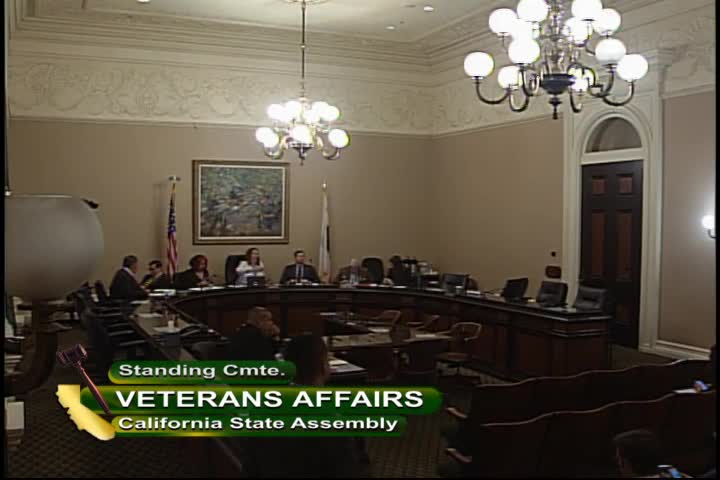
Assembly Standing Committee on Veterans Affairs
Bill Author

Bill Co-Author(s):