SB 927: Public Utility District Act: election of directors.
- Session Year: 2015-2016
- House: Senate
- Latest Version Date: 2016-08-22
The Public Utility District Act authorizes the formation of public utility districts and authorizes a district to acquire, construct, own, operate, or control works for supplying its inhabitants with light, water, power, heat, transportation, telephone service, or other means of communication, or means for the disposition of garbage, sewage, or refuse matter. The act provides for the manner of electing members of the board of directors of a district and generally specifies that, where a district formed and operated pursuant to the act is situated entirely in one county, the directors of the district are elected at large. The act permits directors of any district that is wholly or partially within the County of Placer to be elected at large, by wards, or from wards, as defined.
This bill would permit directors of any district that is wholly or partially within the County of San Diego to be elected at large or by subdistricts, as defined. The bill would make legislative findings and declarations regarding the need for special legislation with regard to the County of San Diego.
This bill would declare that it is to take effect immediately as an urgency statute.
The Public Utility District Act authorizes the formation of public utility districts and authorizes a district to acquire, construct, own, operate, or control works for supplying its inhabitants with light, water, power, heat, transportation, telephone service, or other means of communication, or means for the disposition of garbage, sewage, or refuse matter. The act provides for the manner of electing members of the board of directors of a district and generally specifies that, where a district formed and operated pursuant to the act is situated entirely in one county, the directors of the district are elected at large. The act permits directors of any district that is wholly or partially within the County of Placer to be elected at large, by wards, or from wards, as defined.
This bill would permit directors of any district that is wholly or partially within the County of San Diego to be elected at large, by subdistrict, or from large or by subdistricts, as defined. The bill would make legislative findings and declarations regarding the need for special legislation with regard to the County of San Diego.
This bill would declare that it is to take effect immediately as an urgency statute.
The Public Utility District Act authorizes the formation of public utility districts and authorizes a district to acquire, construct, own, operate, or control works for supplying its inhabitants with light, water, power, heat, transportation, telephone service, or other means of communication, or means for the disposition of garbage, sewage, or refuse matter. The act provides for the manner of electing members of the board of directors of a district and generally specifies that, where a district formed and operated pursuant to the act is situated entirely in one county, the directors of the district are elected at large. The act permits directors of any district that is wholly or partially within the County of Placer to be elected at large, by wards, or from wards, as defined.
This bill would permit directors of any district that is wholly or partially within the County of San Diego to be elected at large, by subdistrict, or from subdistricts, as defined. The bill would make legislative findings and declarations regarding the need for special legislation with regard to the County of San Diego.
This bill would declare that it is to take effect immediately as an urgency statute.
(a)Notwithstanding any other provision of this division, the candidates for director of any district that is wholly or partially within the County of San Diego may be elected at large or by subdistricts upon adoption of a resolution or ordinance to that effect by the board of directors of the district, subject to approval of the board of supervisors, or as a part of a change of organization or a reorganization conducted pursuant to the Cortese-Knox-Hertzberg Local Government Reorganization Act of 2000 (Division 3 (commencing with Section 56000) of Title 5 of the Government Code).
(b)A resolution or ordinance that divides a district into subdistricts adopted pursuant to subdivision (a) shall describe the boundaries of the subdistricts so that the subdistricts shall be as nearly equal in population as may be.
(c)As used in this section, by subdistricts means the election of members of the board of directors by voters of the subdistrict alone.
SEC. 2.The Legislature finds and declares that a special law is necessary and that a general law cannot be made applicable within the meaning of Section 16 of Article IV of the California Constitution because of the need to bring public utility districts in the County of San Diego into compliance with the California Voting Rights Act of 2001 (Chapter 1.5 (commencing with Section 14025) of Division 14 of the Elections Code).
SEC. 3.This act is an urgency statute necessary for the immediate preservation of the public peace, health, or safety within the meaning of Article IV of the Constitution and shall go into immediate effect. The facts constituting the necessity are:
In order that election procedures for public utility districts in the County of San Diego conform to the California Voting Rights Act of 2001 (Chapter 1.5 (commencing with Section 14025) of Division 14 of the Elections Code) as soon as possible, it is necessary for this act to take effect immediately.
(a)Notwithstanding any other provision of this division, the candidates for director of any district that is wholly or partially within the County of San Diego may be elected at large, by subdistricts, or from large or by subdistricts upon adoption of a resolution or ordinance to that effect by the board of directors of the district, subject to approval of the board of supervisors, or as a part of a change of organization or a reorganization conducted pursuant to the Cortese-Knox-Hertzberg Local Government Reorganization Act of 2000 (Division 3 (commencing with Section 56000) of Title 5 of the Government Code).
(b)A resolution or ordinance that divides a district into subdistricts adopted pursuant to subdivision (a) shall describe the boundaries of the subdistricts so that the subdistricts shall be as nearly equal in population as may be.
(c)As used in this section, the following terms have the following meanings: by subdistricts means the election of members of the board of directors by voters of the subdistrict alone.
(1)By subdistricts means the election of members of the board of directors by voters of the subdistrict alone.
(2)From subdistricts means the election of members of the board of directors who are residents of the subdistrict from which they are elected by the voters of the entire district.
SEC. 2.The Legislature finds and declares that a special law is necessary and that a general law cannot be made applicable within the meaning of Section 16 of Article IV of the California Constitution because of the need to bring public utility districts in the County of San Diego into compliance with the California Voting Rights Act of 2001 (Chapter 1.5 (commencing with Section 14025) of Division 14 of the Elections Code).
SEC. 3.This act is an urgency statute necessary for the immediate preservation of the public peace, health, or safety within the meaning of Article IV of the Constitution and shall go into immediate effect. The facts constituting the necessity are:
In order that election procedures for public utility districts in the County of San Diego conform to the California Voting Rights Act of 2001 (Chapter 1.5 (commencing with Section 14025) of Division 14 of the Elections Code) as soon as possible, it is necessary for this act to take effect immediately.
(a)Notwithstanding any other provision of this division, the candidates for director of any district that is wholly or partially within the County of San Diego may be elected at large, by subdistricts, or from subdistricts upon adoption of a resolution or ordinance to that effect by the board of directors of the district, subject to approval of the board of supervisors, or as a part of a change of organization or a reorganization conducted pursuant to the Cortese-Knox-Hertzberg Local Government Reorganization Act of 2000 (Division 3 (commencing with Section 56000) of Title 5 of the Government Code).
(b)A resolution or ordinance that divides a district into subdistricts adopted pursuant to subdivision (a) shall describe the boundaries of the subdistricts so that the subdistricts shall be as nearly equal in population as may be.
(c)As used in this section, the following terms have the following meanings:
(1)By subdistricts means the election of members of the board of directors by voters of the subdistrict alone.
(2)From subdistricts means the election of members of the board of directors who are residents of the subdistrict from which they are elected by the voters of the entire district.
SEC. 2.The Legislature finds and declares that a special law is necessary and that a general law cannot be made applicable within the meaning of Section 16 of Article IV of the California Constitution because of the need to bring public utility districts in the County of San Diego into compliance with the California Voting Rights Act of 2001 (Chapter 1.5 (commencing with Section 14025) of Division 14 of the Elections Code)
SEC. 3.This act is an urgency statute necessary for the immediate preservation of the public peace, health, or safety within the meaning of Article IV of the Constitution and shall go into immediate effect. The facts constituting the necessity are:
In order that election procedures for public utility districts in the County of San Diego conform to the California Voting Rights Act of 2001 (Chapter 1.5 (commencing with Section 14025) of Division 14 of the Elections Code) as soon as possible, it is necessary for this act to take effect immediately.
|
Date
|
Status
|
|---|---|
| Apr 25, 2016 | Read third time. Urgency clause adopted. Passed. (Ayes 37. Noes 0.) Ordered to the Assembly. |
| Aug 22, 2016 | Chaptered by Secretary of State. Chapter 168, Statutes of 2016. |
| Aug 22, 2016 | Approved by the Governor. |
| Aug 10, 2016 | Enrolled and presented to the Governor at 10 a.m. |
| Aug 4, 2016 | Read third time. Urgency clause adopted. Passed. (Ayes 77. Noes 0. Page 5718.) Ordered to the Senate. |
| Aug 4, 2016 | Read third time. Urgency clause adopted. Passed. Ordered to the Senate. |
| Aug 4, 2016 | In Senate. Ordered to engrossing and enrolling. |
| Jun 30, 2016 | Read second time. Ordered to consent calendar. |
| Jun 29, 2016 | From committee: Do pass. Ordered to consent calendar. (Ayes 7. Noes 0.) (June 29). |
| Jun 15, 2016 | From committee: Do pass and re-refer to Com. on E. & R. with recommendation: To consent calendar. (Ayes 9. Noes 0.) (June 15). Re-referred to Com. on E. & R. |
| May 5, 2016 | Referred to Coms. on L. GOV. and E. & R. |
| Apr 26, 2016 | In Assembly. Read first time. Held at Desk. |
| Apr 25, 2016 | Read third time. Urgency clause adopted. Passed. (Ayes 38. Noes 0. Page 3664.) Ordered to the Assembly. |
| Feb 1, 2016 | Introduced. Read first time. To Com. on RLS. for assignment. To print. |
| Apr 21, 2016 | Read second time. Ordered to third reading. |
| Apr 20, 2016 | From committee: Do pass. (Ayes 5. Noes 0.) (April 19). |
| Apr 20, 2016 | From committee: Do pass. (Ayes 5. Noes 0. Page 3608.) (April 19). |
| Apr 5, 2016 | Set for hearing April 19. |
| Mar 31, 2016 | Read second time and amended. Re-referred to Com. on E. & C.A. |
| Mar 30, 2016 | From committee: Do pass as amended and re-refer to Com. on E. & C.A. (Ayes 7. Noes 0.) (March 30). |
| Mar 30, 2016 | From committee: Do pass as amended and re-refer to Com. on E. & C.A. (Ayes 7. Noes 0. Page 3334.) (March 30). |
| Mar 10, 2016 | Set for hearing March 30. |
| Mar 8, 2016 | March 16 hearing postponed by committee. |
| Feb 24, 2016 | Set for hearing March 16. |
| Feb 18, 2016 | Referred to Coms. on GOV. & F. and E. & C.A. |
| Feb 2, 2016 | From printer. May be acted upon on or after March 3. |
|
Date
|
Description
|
Location
|
Votes
|
|
|---|---|---|---|---|
| Aug 4, 2016 | SB 927 Anderson Consent Calendar Second Day | Assembly Floor |
Passed |
|
| Jun 29, 2016 | Do pass. To Consent Calendar. | Assembly Standing Committee on Elections and Redistricting |
Passed |
|
| Jun 15, 2016 | Do pass and be re-referred to the Committee on [Elections and Redistricting] with recommendation: To Consent Calendar | Assembly Standing Committee on Local Government |
Passed |
|
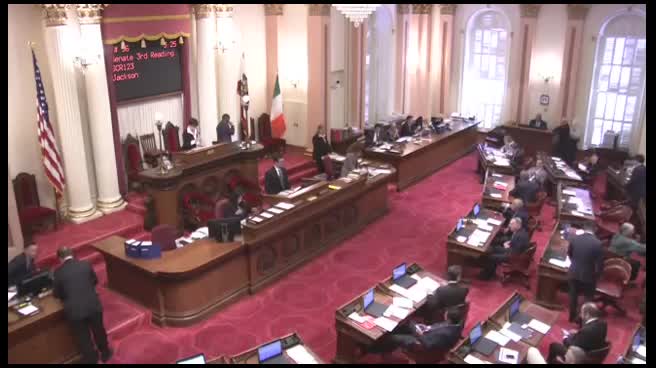
| Apr 25, 2016 | Senate 3rd Reading SB927 Anderson Urgency Clause | Senate Floor |
Passed |
|
| Apr 19, 2016 | Do pass | Senate Standing Committee on Elections and Constitutional Amendments |
Passed |
|
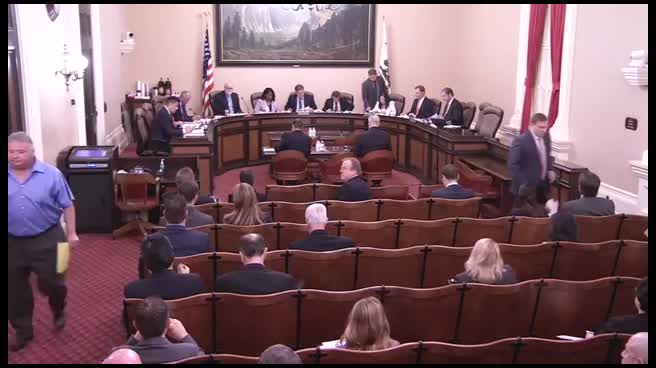
| Mar 30, 2016 | Do pass as amended, but first amend, and re-refer to the Committee on [Elections and Constitutional Amendments] | Senate Standing Committee on Governance and Finance |
Passed |
This list shows positions taken on this bill by organizations on the date displayed, which is linked to the original source.
Positions by individuals are not included.
|
Organization
|
Position
|
Date
|
|---|---|---|
| Association Of California Water Agencies | ** Support | Apr 25, 2016 |
| California Special Districts Association | ** Support | Apr 25, 2016 |
| Fallbrook Public Utility District | ** Support | Apr 25, 2016 |
| Mexican American Legal Defense and Educational Fund | ** Support | Apr 25, 2016 |
| San Diego County Water Authority | ** Support | Apr 25, 2016 |
Date of Hearing: June 29, 2016
ASSEMBLY COMMITTEE ON ELECTIONS AND REDISTRICTING
Shirley Weber, Chair
SBPCA Bill Id:SB 927
Author:(Anderson) – As Amended Ver:March 31, 2016
SENATE VOTE: 38-0
SUBJECT: Public Utility District Act: election of directors.
SUMMARY: Authorizes the board of directors of a public utility district (PUD) within San Diego County to elect directors by subdistricts, as specified. Specifically, this bill:
- Authorizes the candidates for director of any PUD, wholly or partially within San Diego County, to be elected at-large or by subdistricts upon adoption of a resolution or ordinance adopted by the district's board of directors and approved by the board of supervisors, or as part of a change of organization or reorganization conducted pursuant to the Cortese-Knox-Hertzberg Local Government Reorganization Act of 2000 (CKH Act).
- Requires a resolution or ordinance that divides a district into subdistricts adopted, pursuant to the provisions above, to describe the boundaries of the subdistricts so that the subdistricts are as nearly equal in population as may be.
- Defines "by subdistricts" to mean the election of members of the board of directors by voters of the subdistrict alone.
- Contains an urgency clause, allowing this bill to take effect immediately upon enactment.
- Provides the facts constituting the necessity of an urgency clause are to ensure that the election procedures for PUDs in San Diego County conform to the California Voting Rights Act of 2001 (CVRA), as soon as possible.
- Makes Legislative findings and declarations that a special law is necessary because of the need to bring PUDs in San Diego County into compliance with the CVRA.
EXISTING LAW:
- Establishes the Uniform District Election Law which provides that the principal act of a district or agency shall govern whether directors are elected by divisions or by the district at-large.
- Provides definitions for the following terms which govern the election process for most local governments' legislative bodies:
- An "at-large" election allows a voter residing anywhere within the local government's boundaries to vote for any candidate for the governing board;
- A "by district" election allows a voter to vote only for a candidate who runs and resides in the same geographical district in which the voter resides; and,
- A "from district" election allows a voter residing anywhere within a local government’s boundaries to vote for any candidate for a local government’s governing board, but each candidate must run in the geographical district where he or she resides.
- Prohibits, pursuant to the CVRA, an at-large method of election from being imposed or applied in a political subdivision (including a special district) in a manner that impairs the ability of a protected class of voters to elect the candidate of its choice or its ability to influence the outcome of an election, as a result of the dilution or the abridgement of the rights of voters who are members of a protected class.
- Provides that a violation of the CVRA may be established if it is shown that racially polarized voting occurs in elections for members of the governing body of the political subdivision or in elections incorporating other electoral choices by the voters of the political subdivision.
- Requires a court, upon finding a violation of the CVRA, to implement appropriate remedies, including the imposition of district-based elections, which are tailored to remedy the violation.
- Permits any voter who is a member of a protected class and who resides in a political subdivision where a violation of the CVRA is alleged to file an action in the superior court of the county in which the political subdivision is located.
- Establishes the Public Utility District Act (Act) which requires a PUD that lies entirely in one county to have a governing board composed of three directors elected at-large.
FISCAL EFFECT: None. This bill is keyed non-fiscal by the Legislative Counsel.
COMMENTS:
- Purpose of the Bill: According to the author:
Currently, [PUDs] are formed with an at-large model of representation for their directors. Current law does not provide a mechanism by which [PUDs] can modify their representation to reflect directors that are elected from specific districts. As such, districts that have previously wanted to change their composition, in response to an agency reorganization or other voting rights concerns, have been required to pursue district specific legislation. This proposal would allow, not require, a [PUD] located in San Diego County to move from at-large directors to directors elected from specific districts, under specific circumstances.
- Current Practice: Under existing law, a special district can be organized so that its governing board members are elected at-large or elected using districts. Jurisdictions that are organized using district-based methods are usually organized as "by-district" or "from-district." A "by-district" jurisdiction allows only the registered voters in a district to vote in the election to choose the governing board member from that area. A "from-district" jurisdiction permits registered voters in the entire jurisdiction to vote for governing board members from each of the districts. In either case, a candidate for the governing board must reside in the district in which he or she is running.
There is no uniform process for a special district to convert from at-large elections to a district-based method of election. Current law provides that the principal act of a special district shall govern whether the governing board members are elected by districts or by the district at-large. Moreover, depending on the kind of district and its size, existing law may specify which method of election it is required to use to elect its governing board members, as well as the process for conversion.
The principal act for PUDs governs the 54 PUDs in California. The Act authorizes PUDs to maintain the infrastructure to provide electricity, natural gas, water power, heat transportation, telephone service, or the disposition of garbage, sewage, or refuse matter. Additionally, the Act provides for the formation and governance of PUDs. Under existing law, PUDs entirely located within one county are governed by a board of directors elected at-large.
- Previous Legislation: Current law requires a PUD that is entirely located within one county to be governed by a board of directors that is elected at-large. As the author mentions above, current law does not provide a mechanism whereby a PUD can modify its representation to reflect directors that are elected from specific districts. Consequently, if a district desired to change its composition in response to an agency reorganization or voting rights concerns, the district would need to pursue district-specific legislation.
In 1980, the Legislature passed and Governor Brown signed AB 1410 (Waters), Chapter 63, Statutes of 1980, which authorized Georgetown Divide PUD directors to be elected by wards upon the adoption of a resolution or ordinance by the board of directors dividing the district into wards and fixing the boundaries. SB 1393 (Senate Local Government Committee), Chapter 939, Statutes of 1994, authorized any PUD, wholly or partially within Placer County, to elect governing board members at-large, by wards, or from wards upon adoption of a resolution or ordinance by the district board of directors and subject to the approval of the board of supervisors or as a part of a change of organization or reorganization pursuant to the CKH Act.
Similarly, this bill authorizes a PUD, partially or wholly within San Diego County, to adopt a resolution or ordinance to elect directors by subdistricts, instead of at-large. Specifically, this bill requires the PUD’s board of directors to adopt a resolution or ordinance and subsequently requires the San Diego's Board of Supervisors to approve the resolution or ordinance to change the method of election for the district directors. Additionally, this bill requires the ordinance or resolution to describe the boundaries of the subdistricts so that the subdistricts are as nearly equal in population as may be. Additionally, this bill authorizes the election of directors by subdistricts as part of a change of organization or reorganization conducted pursuant to the CKH Act. - Fallbrook PUD. The Fallbrook PUD was formed in 1922 to provide water services for residential and agricultural purposes. Since that time, Fallbrook PUD has significantly expanded and currently has a service boundary of 43.99 square miles and provides retail water, sewer, and recycled water services to approximately 35,000 people residing within its boundaries in northern San Diego County. Fallbrook PUD is governed by a five-member board elected at-large.
A lawsuit was filed against Fallbrook PUD last year in San Diego County Superior Court alleging that the district’s at-large board elections violated the CVRA by diluting the voting strength of Latino voters, thereby impairing their ability to participate meaningfully in the political process and to elect candidates of their choice (Juan Atilano, Carmen Cardoso, Jesus Hernandez, Jesus Hernandez Jr., and Jose Huerta v. Fallbrook Public Utility District). To avoid potentially lengthy and costly litigation, the parties to the lawsuit negotiated a settlement to resolve the claims against Fallbrook PUD. The settlement agreement, which is enforced by a recent court order, requires Fallbrook PUD to change from an at-large method of election to a by-district method of election where directors are elected from five distinct election districts. The settlement provides that candidates reside within the district and are elected only by voters residing within that election district in the November 2016 election. Since the settlement was reached, Fallbrook PUD has held public meetings to provide boundaries for the subdistricts and submitted the lines to San Diego County.
- California Voting Rights Act of 2001: SB 976 (Polanco), Chapter 129, Statutes of 2002, enacted the CVRA to address racial block voting in at-large elections for local office in California. In areas where racial block voting occurs, an at-large method of election can dilute the voting rights of minority communities if the majority typically votes to support candidates that differ from the candidates who are preferred by minority communities. In such situations, breaking a jurisdiction up into districts can result in districts in which a minority community can elect the candidate of its choice or otherwise have the ability to influence the outcome of an election. Accordingly, the CVRA prohibits an at-large method of election from being imposed or applied in a political subdivision in a manner that impairs the ability of a protected class of voters to elect the candidate of its choice or to influence the outcome of an election, as a result of the dilution or the abridgement of the rights of voters who are members of the protected class.
The first case brought under the CVRA was filed in 2004, and the jurisdiction that was the target of that case—the City of Modesto—challenged the constitutionality of the law. Ultimately, the City of Modesto appealed that case all the way to the United States Supreme Court, which rejected the city's appeal in October 2007. The legal uncertainty surrounding the CVRA may have limited the impacts of that law in the first five years after its passage.
Since the case in Modesto was resolved, however, many local jurisdictions have converted or are in the process of converting from an at-large method of election to district-based elections due to the CVRA.
- Why Piecemeal Approach? Background material provided by the author states that the only way in which a PUD may change its method of election is by special legislation or a court order. This bill only applies to PUDs wholly or partially in San Diego County. If other PUDs in California desire to change their method of election in response to CVRA concerns, the PUD would be required to seek special legislation or risk litigation. The committee may wish to consider whether this bill should be expanded to apply to other PUDs in California.
Moreover, according to proponents of the bill, Fallbrook PUD negotiated a settlement that is enforced by a recent court order and has begun implementing the changes required by the settlement. Committee staff is unsure whether special legislation is needed as Fallbrook PUD is already in the process of converting its election method to address CVRA concerns. On the other hand, because this bill allows any PUD that is wholly or partially within San Diego County to utilize this tool to convert from an at-large to a district-based election method, it could theoretically be helpful to other PUDs within San Diego County. - Arguments in Support. In support, the Mexican American Legal Defense and Educational Fund writes:
Current law that governs the formation of public utility districts requires that the members of a board of directors of a public utility district that lie entirely within one county to be elected on an at-large basis, which is how Fallbrook was formed and governed.
Last year, Fallbrook was sued under the [CVRA] over the usage of at-large districts. Fallbrook has worked cooperatively with all parties and has settled the lawsuit and is in the process of complying with a court order to move from at-large to district-based governance structure. SB 927 will provide Fallbrook with specific statutory authority to move to district-based elections.
More than 140 local government bodies have transitioned from at-large to district-based elections since the enactment of the CVRA in 2002. While some jurisdictions did so in response to litigation or threats of litigation, other jurisdictions proactively changed election methods because they believed they could be susceptible to a legal challenge under the CVRA, and they wished to avoid the potential expense of litigation.
- Related Legislation: AB 2389 (Ridley-Thomas), permits a special district to change the method of electing its governing board members from at-large to a by-district method of election without receiving voter approval. AB 2389 passed out this committee on a 5-2 vote and was approved by the Assembly on a 59-16 vote. AB 2389 is pending in Senate Governance and Finance Committee.
- Double-Referral: On June 15, 2016, this bill was approved by the Assembly Local Government Committee on a 9-0 vote.
REGISTERED SUPPORT / OPPOSITION:
Support
Fallbrook Public Utility District (sponsor)
Association of California Water Agencies
California Special Districts Association
Mexican American Legal Defense and Educational Fund
San Diego County Water Authority
Opposition
None on file.
Analysis Prepared by: Nichole Becker / E. & R. / (916) 319-2094
Date of Hearing: June 15, 2016
ASSEMBLY COMMITTEE ON LOCAL GOVERNMENT
Susan Talamantes Eggman, Chair
SBPCA Bill Id:SB 927
Author:(Anderson) – As Amended Ver:March 31, 2016
SENATE VOTE: 38-0
SUBJECT: Public Utility District Act: election of directors.
SUMMARY: Authorizes the board of directors of a public utility district within San Diego County to elect directors by subdistricts. Specifically, this bill:
- Authorizes the directors of any public utility district (PUD), wholly or partially within San Diego County, to be elected at-large or by subdistricts by resolution or ordinance adopted by the district's board of directors and approved by the board of supervisors, or as part of a change of organization or reorganization conducted, pursuant to the Cortese-Knox-Hertzberg Local Government Reorganization Act of 2000 (CKH Act).
- Requires a resolution or ordinance that divides a district into subdistricts adopted, pursuant to 1), above, to describe the boundaries of the subdistricts so that the subdistricts are as nearly equal in population as may be.
- Defines "by subdistricts" to mean the election of members of the board of directors by voters of the subdistrict alone.
- Contains an urgency clause.
- Provides the facts constituting the necessity of an urgency clause are to ensure that the election procedures for PUDs in San Diego County conform to the California Voting Rights Act of 2001 (CVRA), as soon as possible.
- Finds and declares that a special law is necessary because of the need to bring PUDs in San Diego County into compliance with the CVRA.
EXISTING LAW:
- Establishes the Uniform District Elections Law which provides that the principal act shall govern whether directors are elected by divisions or by the district at-large.
- Provides definitions for the following term which govern the election process for most local governments' legislative bodies:
- An "at-large" election allows a voter residing anywhere within the local government's boundaries to vote for any candidate for the governing board;
- A "by district" election allows a voter to vote only for a candidate who runs and resides in the same geographical district in which the voter resides; and,
- A "from district" election allows a voter residing anywhere within a local government’s boundaries to vote for any candidate for a local government’s governing board, but each candidate must run in the geographical district where he or she resides.
- Prohibits, pursuant to the CVRA, an at-large method of election from being imposed or applied in a political subdivision (including a special district) in a manner that impairs the ability of a protected class of voters to elect the candidate of its choice or its ability to influence the outcome of an election, as a result of the dilution or the abridgement of the rights of voters who are members of a protected class.
- Provides that a violation of the CVRA may be established if it is shown that racially polarized voting occurs in elections for members of the governing body of the political subdivision or in elections incorporating other electoral choices by the voters of the political subdivision.
- Requires a court, upon finding a violation of the CVRA, to implement appropriate remedies, including the imposition of district-based elections, which are tailored to remedy the violation.
- Permits any voter who is a member of a protected class and who resides in a political subdivision where a violation of the CVRA is alleged to file an action in the superior court of the county in which the political subdivision is located.
- Establishes the Public Utility District Act which requires a PUD that lies entirely in one county to have a governing board composed of three directors elected at-large.
FISCAL EFFECT: None
COMMENTS:
- Background. Under existing law, a special district can be organized so that its governing board members are elected at-large or elected using districts. Jurisdictions that are organized using district-based methods are usually organized as "by-district" or "from-district." A "by-district" jurisdiction allows only the registered voters in a district to vote in the election to choose the governing board member from that area. A "from-district" jurisdiction permits registered voters in the entire jurisdiction to vote for governing board members from each of the districts. In either case, a candidate for the governing board must reside in the district in which he or she is running.
There is no uniform process for a special district to convert from at-large elections to a district-based method of election. Current law provides that the principal act of a special district shall govern whether the governing board members are elected by districts or by the district at-large. Moreover, depending on the kind of district and its size, existing law may specify which method of election it is required to use to elect its governing board members, as well as the process for conversion.
The principal act for PUDs, the Public Utility District Act, governs the 54 PUDs in California. The Act authorizes PUDs to maintain the infrastructure to provide electricity, natural gas, water power, heat transportation, telephone service, or the disposition of garbage, sewage, or refuse matter. The Act also provides for the formation and governance of PUDs.
Under existing law, PUDs entirely located within one county are governed by a three-director board elected at-large.
AB 1410 (Waters), Chapter 63, Statutes of 1980, authorized Georgetown Divide PUD directors to be elected by wards upon the adoption of a resolution or ordinance by the Board of Director's dividing the district into wards and fixing the boundaries.
AB 1393 (Senate Local Government Committee), Chapter 939, Statutes of 1994, authorized any PUD, wholly or partially, within Placer County to be elected at-large, by wards, or from wards upon adoption of a resolution or ordinance by the District's board of directors and subject to the approval of the Board of supervisors or as a part of a change of organization or reorganization conduced pursuant to the CKH Act.
- Bill Summary. This bill authorizes a PUD, partially or wholly, within San Diego County to adopt a resolution or ordinance to elect directors by subdistricts, instead of at-large. Under this bill, the district's board would adopt a resolution or ordinance and the San Diego Board of Supervisors would approve the ordinance or resolution to change the method of election for district directors. The ordinance or resolution must describe the boundaries of the subdistricts so that the subdistricts are as nearly equal in population as may be. This bill also authorizes the election of directors by subdistricts as part of a change of organization or reorganization conducted pursuant to the CKH Act. Fallbrook PUD is currently the only PUD in San Diego County. This bill is sponsored by the Fallbrook PUD.
- Author's Statement. According to the author, "Under current law, [PUDs] are formed with at-large districts. Under this format all those within the boundaries of the [PUD] vote for all of the directors of the district, as opposed to voting for directors that represent a specific portion of the district. [PUDs] may wish to modify the formation of their board to represent specific portions of the district. This may be done for a number of reasons, including: in response to a consolidation or annexation, [to] allow for broader geographic representation on the board, or in response to concerns over voting rights. Under current law, in order for a district to move from at-large to district-based representation, specific legislation is needed.
"Over the years, several [PUDs] have pursued special legislation to modify their board structure; those districts include: Tahoe City PUD, Johnsville PUD, and Georgetown PUD. While the above-mentioned [PUDs] have been permitted to modify their board structure, the other [PUDs] in California do not enjoy that authority. As a result, should a [PUD] wish to modify its board structure in order to address any concerns with compliance with the [CVRA], a district either needs specific legislation or would need to be taken to court so a judge can order the district to elect its directors by geographic area.
"Additionally, current law limits the ability of a [PUD] to establish geographic districts in response to a consolidation or annexation that is approved through a local LAFCO process. This can result in uncertainties for geographic representation for the entirety of the expanded district. This proposed legislation, which would be permissive, would allow a [PUD], partially or wholly located in San Diego County, to pass an ordinance or resolution, which would be subject to approval by a county board of supervisors, to elect directors from a geographic area. Additionally, this proposal would allow a [PUD], partially or wholly located in San Diego County, to move to district based elections as part of a local LAFCO process."
- Fallbrook PUD. The Fallbrook PUD was formed in 1922 to provide water services for residential and agricultural purposes. Since that time, Fallbrook PUD has significantly expanded and currently has a service boundary of 43.99 square miles and provides retail water, sewer, and recycled water services to approximately 35,000 people residing within its boundaries in northern San Diego County. Fallbrook PUD is governed by a five-member board elected at-large.
A lawsuit was filed against Fallbrook PUD last year in San Diego County Superior Court alleging that the district’s at-large board elections violated the California Voting Rights Act by diluting the voting strength of Latino voters, thereby, impairing their ability to participate meaningfully in the political process and to elect candidates of their choice (Juan Atilano, Carmen Cardoso, Jesus Hernandez, Jesus Hernandez Jr., and Jose Huerta v. Fallbrook Public Utility District). To avoid potentially lengthy and costly litigation, the parties to the lawsuit negotiated a settlement to resolve the claims against Fallbrook PUD. The settlement agreement, which is enforced by a recent court order, requires Fallbrook PUD to change from an at-large method of election to a by-district method of election where directors are elected from five distinct election districts. The settlement provides that candidates reside within the district and are elected only by voters residing within that election district in the November 2016 election. Since the settlement was reached, Fallbrook PUD has held public meetings to provide boundaries for the subdistricts and submitted the lines to San Diego County.
- Urgency Clause. This bill contains an urgency clause and requires a two-thirds vote of each house.
- Related Legislation. AB 2389 (Ridley-Thomas), pending in the Senate, authorizes special districts to change the method of electing governing board members from at-large to a by-district method of election without receiving voter approval.
- Arguments in Support. According to the Mexican American Legal Defense of Education Fund, "Fallbrook has worked cooperatively with all parties and has settled the lawsuit and is in the process of complying with a court order to move from at-large to district-based governance structure. SB 927 will provide Fallbrook with specific statutory authority to move to district-based elections."
- Arguments in Opposition. None on file.
- Double-Referral. This bill is double-referred to the Elections and Redistricting Committee.
REGISTERED SUPPORT / OPPOSITION:
Support
Fallbrook Public Utility District [SPONSOR]
Association of California Water Agencies
California Special Districts Association
Mexican American Legal Defense of Education Fund
San Diego County Water Authority
Opposition
None on file
Analysis Prepared by: Misa Lennox / L. GOV. / (916) 319-3958
Office of Senate Floor Analyses (916) 651-1520 Fax: (916) 327-4478 | SB |
THIRD READING
Bill No: SB 927
:
SENATE GOVERNANCE & FIN. COMMITTEE: 7-0, 3/30/16
AYES: Hertzberg, Nguyen, Beall, Hernandez, Lara, Moorlach, Pavley
SENATE ELECTIONS & C.A. COMMITTEE: 5-0, 4/19/16
AYES: Allen, Anderson, Hancock, Hertzberg, Liu
DIGEST: This bill allows the Fallbrook Public Utility District’s board members to be elected by subdistricts, rather than at-large.
ANALYSIS: Existing law provides that members of most local governments’ legislative bodies are elected using one of three methods:
- An “at-large” election allows a voter residing anywhere within the local government’s boundaries to vote for any candidate for the local government’s governing board.
- A “by district” election allows a voter to vote only for a candidate who runs and resides in the same geographical district in which the voter resides.
- A “from district” election allows a voter residing anywhere within a local government’s boundaries to vote for any candidate for a local government’s governing board, but each candidate must run in the geographical district where he or she resides.
This bill:
- Allows the candidates for director of any public utility district (PUD) that is wholly or partially within San Diego County to be elected by subdistricts either:
- Upon adoption of a resolution or ordinance to that effect by the board of directors of the district, subject to approval of the board of supervisors, or
- As a part of a change of organization or a reorganization conducted pursuant to specified provisions of state law.
- Directs that a resolution or ordinance that divides a district into subdistricts adopted by the district’s board of directors must describe the boundaries of the subdistricts so that the subdistricts shall be nearly equal in population.
- Defines “by subdistricts” as the election of members of the board of directors by voters of the subdistrict alone.
Background
The Public Utility District Act governs California’s 53 PUDs. The Act empowers a PUD to acquire, construct, own, operate, control, or use works for supplying its inhabitants with light, water, power, heat, transportation, telephone service, or other means of communication, or means for disposing of garbage, sewage, or refuse. The Act requires that the members of the board of directors of a PUD that lies entirely within one county must be elected at-large. The Legislature has created two exceptions to this at-large election requirement:
- The Georgetown Divide PUD (El Dorado County) can provide for electing the district’s directors by wards (AB 1410, N. Waters, Chapter 63, Statutes of 1980). Its board is currently elected at-large.
- The board of directors of a PUD located in Placer County can provide for electing the district’s directors by wards or from wards (SB 1393, Senate Local Government Committee, Chapter 939, Statutes of 1994). The North Tahoe PUD’s board is currently elected by-district.
The Fallbrook PUD (FPUD) provides retail water, sewer, and recycled water services to approximately 35,000 people residing within its boundaries in northern San Diego County. A lawsuit filed against the district last year in San Diego County Superior Court alleged that the district’s at-large board elections violated the California Voting Rights Act by diluting the voting strength of Latino voters, thereby impairing their ability to participate meaningfully in the political process and to elect candidates of their choice (Juan Atilano, Carmen Cardoso, Jesus Hernandez, Jesus Hernandez Jr., and Jose Huerta v. Fallbrook Public Utility District). To avoid potentially lengthy and costly litigation, the parties to the lawsuit negotiated a settlement to resolve the claims against FPUD. The settlement agreement, which is enforced by a recent court order, requires FPUD to change from an at-large method of election to a by-district method of election. FPUD has already begun implementing the changes required by the settlement.
In light of the by-district election requirement in the recent court order enforcing the settlement agreement, FPUD officials want the Legislature to grant the district an exemption from the Public Utility District Act’s at-large election requirement.
Comments
Purpose of the bill. Despite the fact that a recent court order enforcing a settlement agreement requires FPUD to use a by-district method for electing members of its governing board, state law still appears to require the district to elect its board members at-large. To avoid any possible confusion about FPUD’s authority to use the by-district election method, this bill enacts an exemption to the statutory at-large election requirement that is similar to exemptions state law grants to two other public utility districts.
FISCAL EFFECT: Appropriation: Fiscal Com.: Local:
Fallbrook Public Utility District
Association of California Water Agencies
California Special Districts Association
Mexican American Legal Defense and Educational Fund
San Diego County Water Authority
OPPOSITION: (Verified 4/21/16)
None received
4/22/16 12:32:06
**** END ****
SENATE COMMITTEE ON
ELECTIONS AND CONSTITUTIONAL AMENDMENTS
Senator Ben Allen, Chair
2015 - 2016 Regular
Bill No: 927 Hearing Date: 4/19/16
Author: | Anderson | ||
Version: |
| ||
Urgency: | Fiscal: | ||
Consultant: | |||
Subject:
DIGEST
This bill permits directors of any public utility district that is wholly or partially within the County of San Diego to be elected at-large or by subdistricts.
ANALYSIS
Existing law:
Provides that members of most local governments’ legislative bodies are elected using one of three methods:
- An “at-large” election which allows a voter residing anywhere within the local government’s boundaries to vote for any candidate for the local government’s governing board.
- A “by district” election which allows a voter to vote only for a candidate who runs and resides in the same geographical district in which the voter resides.
- A “from district” election that allows a voter residing anywhere within a local government’s boundaries to vote for any candidate for a local government’s governing board, but each candidate must run in the geographical district where he or she resides.
This bill:
- Allows the candidates for director of any public utility district that is wholly or partially within San Diego County to be elected by subdistricts as follows:
- Upon adoption of a resolution or ordinance to that effect by the board of directors of the district, subject to approval of the board of supervisors, or
- As a part of a change of organization or a reorganization conducted pursuant to specified provisions of state law.
- Directs that a resolution or ordinance that divides a district into subdistricts adopted by the district’s board of directors must describe the boundaries of the subdistricts so that the subdistricts shall be nearly equal in population.
- Defines “by subdistricts” as the election of members of the board of directors by voters of the subdistrict alone.
- Makes findings and declarations because of the need to bring public utility districts in San Diego County into compliance with the California Voting Rights Act of 2001 (CVRA).
BACKGROUND
The Public Utility District Act. The Public Utility District Act governs California’s 53 public utility districts (PUDs). The Act empowers a PUD to acquire, construct, own, operate, control, or use works for supplying its inhabitants with light, water, power, heat, transportation, telephone service, or other means of communication, or means for disposing of garbage, sewage, or refuse. The Act requires that the members of the board of directors of a PUD that lies entirely within one county must be elected at-large. The Legislature has created two exceptions to this at-large election requirement:
- The Georgetown Divide PUD (El Dorado County) can provide for electing the district’s directors by wards (AB 1410, N. Waters of 1980). Its board is currently elected at-large.
- The board of directors of a PUD located in Placer County can provide for electing the district’s directors by wards or from wards (SB 1393, Senate Local Government Committee of 1993). The North Tahoe PUD’s board is currently elected by-district.
Fallbrook Public Utility District Lawsuit. The Fallbrook PUD (FPUD) provides retail water, sewer, and recycled water services to approximately 35,000 people residing within its boundaries in northern San Diego County. A lawsuit filed against the district last year in San Diego County Superior Court alleged that the district’s at-large board elections violated the California Voting Rights Act by diluting the voting strength of Latino voters, thereby impairing their ability to participate meaningfully in the political process and to elect candidates of their choice (Juan Atilano, Carmen Cardoso, Jesus Hernandez, Jesus Hernandez Jr., and Jose Huerta v. Fallbrook Public Utility District). To avoid potentially lengthy and costly litigation, the parties to the lawsuit negotiated a settlement to resolve the claims against FPUD. The settlement agreement, which is enforced by a recent court order, requires FPUD to change from an at-large method of election to a by-district method of election. FPUD has already begun implementing the changes required by the settlement.
COMMENTS
- According to the author: Under current law, public utility districts are formed with at-large districts. Under this format all those within the boundaries of the public utility district vote for all of the directors of the district, as opposed to voting for directors that represent a specific portion of the district. Public utility districts may wish to modify the formation of their board to represent specific portions of the district. This may be done for a number of reasons, including: in response to a consolidation or annexation, allow for broader geographic representation on the board, or in response to concerns over voting rights. Under current law, in order for a district to move from at-large to district-based representation, specific legislation is needed.
Over the years, several public utility districts have pursued special legislation to modify their board structure; those districts include: Tahoe City PUD (PUC 15961.5), Johnsville PUD (15974), and Georgetown PUD (1s97s).
While the above-mentioned public utility districts have been permitted to modify their board structure, the other public utility districts in California do not enjoy that authority. As a result, should a public utility district wish to modify its Board structure in order to address any concerns with compliance with the California Voting Rights Act, a district either needs specific legislation or would need to be taken to court so a judge can order the district to elect its directors by geographic area.
Additionally, current law limits the ability of a public utility district to establish geographic districts in response to a consolidation or annexation that is approved through a local LAFCO process. This can result in uncertainties for geographic representation for the entirety of the expanded district.
This proposed legislation, which would be permissive, would allow a public utility district, partially or wholly located in San Diego County, to pass an ordinance or resolution which would be subject to approval by a county board of supervisors, to elect directors from a geographic area. Additionally, this proposal would allow a public utility district, partially or wholly located in San Diego County, to move to district based elections as part of a local LAFCO process.
- CVRA Litigation Line Dance? Now that the CVRA has been on the books for over 15 years, it is important to consider the following questions: 1) With the potential for future lawsuits, why aren’t all public utility districts permitted to elect their respective board members by subdistricts? and 2) How many future legislative requests lie ahead for a similar exemption?
PRIOR ACTION
Senate Governance and Finance Committee: 7-0
POSITIONS
Sponsor: Fallbrook Public Utility District
Support: Association of California Water Agencies
California Special Districts Association
Mexican American Legal Defense and Educational Fund
San Diego County Water Authority
Oppose: None received
-- END --
SENATE COMMITTEE ON GOVERNANCE AND FINANCE
Senator Robert M. Hertzberg, Chair
2015 - 2016 Regular
Bill No: | SB 927 | Hearing Date: | 3/30/16 |
Author: | Anderson | Tax Levy: | No |
Version: | 2/1/16 | Fiscal: | No |
Consultant: | Weinberger | ||
Public Utility District Act: election of directors
Allows the Fallbrook Public Utility District’s board members to be elected by subdistricts or from subdistricts, rather than at-large.
Background
Members of most local governments’ legislative bodies are elected using one of three methods:
- An “at-large” election allows a voter residing anywhere within the local government’s boundaries to vote for any candidate for the local government’s governing board.
- A “by district” election allows a voter to vote only for a candidate who runs and resides in the same geographical district in which the voter resides.
- A “from district” election allows a voter residing anywhere within a local government’s boundaries to vote for any candidate for a local government’s governing board, but each candidate must run in the geographical district where he or she resides.
The Public Utility District Act governs California’s 53 public utility districts (PUDs). The Act empowers a PUD to acquire, construct, own, operate, control, or use works for supplying its inhabitants with light, water, power, heat, transportation, telephone service, or other means of communication, or means for disposing of garbage, sewage, or refuse. The Act requires that the members of the board of directors of a PUD that lies entirely within one county must be elected at-large. The Legislature has created two exceptions to this at-large election requirement:
- The Georgetown Divide PUD (El Dorado County) can provide for electing the district’s directors by wards (AB 1410, N. Waters, 1980). Its board is currently elected at-large.
- The board of directors of a PUD located in Placer County can provide for electing the district’s directors by wards or from wards (SB 1393, Senate Local Government Committee, 1993). The North Tahoe PUD’s board is currently elected by-district.
The Fallbrook PUD (FPUD) provides retail water, sewer, and recycled water services to approximately 35,000 people residing within its boundaries in northern San Diego County. A lawsuit filed against the district last year in San Diego County Superior Court alleged that the district’s at-large board elections violated the California Voting Rights Act by diluting the voting strength of Latino voters, thereby impairing their ability to participate meaningfully in the political process and to elect candidates of their choice (Juan Atilano, Carmen Cardoso, Jesus Hernandez, Jesus Hernandez Jr., and Jose Huerta v. Fallbrook Public Utility District). To avoid potentially lengthy and costly litigation, the parties to the lawsuit negotiated a settlement to resolve the claims against FPUD. The settlement agreement, which is enforced by a recent court order, requires FPUD to change from an at-large method of election to a by-district method of election. FPUD has already begun implementing the changes required by the settlement.
In light of the by-district election requirement in the recent court order enforcing the settlement agreement, FPUD officials want the Legislature to grant the district an exemption from the Public Utility District Act’s at-large election requirement.
Proposed Law
Senate Bill 927, notwithstanding any other part of the Public Utility District Act, allows the candidates for director of any PUD that is wholly or partially within San Diego County to be elected by subdistricts or from subdistricts either:
- Upon adoption of a resolution or ordinance to that effect by the board of directors of the district, subject to approval of the board of supervisors, or
- As a part of a change of organization or a reorganization conducted pursuant to specified provisions of state law.
SB 927 directs that a resolution or ordinance that divides a district into subdistricts adopted by the district’s board of directors must describe the boundaries of the subdistricts so that the subdistricts shall be nearly equal in population.
SB 927 defines “by subdistricts” as the election of members of the board of directors by voters of the subdistrict alone.
SB 927 defines “from subdistricts” as the election of members of the board of directors who are residents of the subdistrict from which they are elected by the voters of the entire district.
State Revenue Impact
No estimate.
Comments
1. Purpose of the bill. Despite the fact that a recent court order enforcing a settlement agreement requires FPUD to use a by-district method for electing members of its governing board, state law still appears to require the district to elect its board members at-large. To avoid any possible confusion about FPUD’s authority to use the by-district election method, SB 927 enacts an exemption to the statutory at-large election requirement that is similar to exemptions state law grants to two other public utility districts.
2. Inconsistency. SB 927 grants FPUD the statutory authority to elect its board by subdistricts, which is exactly how the recent court order requires FPUD to conduct its board elections. However, SB 927’s provisions also would allow the district to elect board members from subdistricts. Electing FPUD board members from subdistricts is not consistent with the court order, which says that FPUD’s board members “are required to be residents of their respective electoral districts and to be elected by the resident of their respective electoral districts.” To conform SB 927 more closely to the requirements of the court order governing FPUD’s elections, the Committee may wish to consider amending the bill to delete references to electing board member “from subdistricts.”
3. Special legislation. The California Constitution prohibits special legislation when a general law can apply (Article IV, §16). SB 927 contains findings and declarations explaining the need for legislation that applies only to public utility districts in San Diego County.
4. Urgency. Regular statutes take effect on January 1 following their enactment; bills passed in 2016 take effect on January 1, 2017. The California Constitution allows bills with urgency clauses to take effect immediately if they're needed for the public peace, health, and safety. SB 927 contains an urgency clause declaring that it is necessary for its provisions to go into effect immediately to ensure that election procedures for public utility districts in the County of San Diego conform to the California Voting Rights Act of 2001 as soon as possible.
5. Double-referral. The Senate Rules Committee has ordered a double-referral of SB 927 -- first to the Senate Governance & Finance Committee, which has jurisdiction over bills relating to the governance of special districts, and then to the Senate Elections and Constitutional Amendments Committee, which has jurisdiction over bills relating to local government elections.
Support and Opposition
(3/24/16)
Support: Association of California Water Agencies; California Special Districts Association; Fallbrook Public Utility District.
Opposition: Unknown.
-- END --
Discussed in Hearing
 3MIN
Senate Floor
 4MIN
Senate Standing Committee on Governance and Finance
Bill Author

Bill Co-Author(s):