SB 950: Excluded employees: arbitration.
- Session Year: 2015-2016
- House: Senate
- Latest Version Date: 2016-09-02
The Bill of Rights for State Excluded Employees permits, among other things, excluded employee organizations to represent their excluded members in their employment relations, including grievances, with the state. That law defines excluded employees as all managerial employees, confidential employees, supervisory employees, and specified employees of the Department of Personnel Administration, the Department of Finance, the Controllers office, the Legislative Counsel Bureau, the Bureau of State Audits, the Public Employment Relations Board, the Department of Industrial Relations, and the State Athletic Commission.
This bill would enact the Excluded Employee Arbitration Act to permit an employee organization that represents an excluded employee who has filed certain grievances with the Department of Human Resources (CalHR) to request arbitration of the grievance if specified conditions are met. The bill would require the designation of a standing panel of arbitrators, and, under specified circumstances, the provision of arbitrators from the California State Mediation and Conciliation Service within the Department of Industrial Relations. The bill would then require the arbitrator to be chosen in a specified manner, and would prescribe the duties of that arbitrator. The bill would provide that a party to the arbitration has the right to have a certified shorthand reporter transcribe the proceeding and that the transcription would be the official record of the proceeding. The bill would also require the losing party to bear the costs of arbitration, including the cost of a certified shorthand reporter, except that the bill would prohibit the arbitrator from ordering the excluded employee to pay the costs of arbitration and would prohibit the costs of arbitration from being passed on to the excluded employee. The bill would make a statement of legislative intent with regard to the above.
The Bill of Rights for State Excluded Employees permits, among other things, excluded employee organizations to represent their excluded members in their employment relations, including grievances, with the state. That law defines excluded employees as all managerial employees, confidential employees, supervisory employees, and specified employees of the Department of Personnel Administration, the Department of Finance, the Controllers office, the Legislative Counsel Bureau, the Bureau of State Audits, the Public Employment Relations Board, the Department of Industrial Relations, and the State Athletic Commission.
This bill would enact the Excluded Employee Arbitration Act to permit an employee organization that represents an excluded employee who has filed certain grievances with the Department of Human Resources (CalHR) to request arbitration of the grievance if specified conditions are met. The bill would require the designation of a standing panel of arbitrators, and, under specified circumstances, the provision of arbitrators from the California State Mediation and Conciliation Service within the Department of Industrial Relations. The bill would then require the arbitrator to be chosen in a specified manner, and would prescribe the duties of that arbitrator. The bill would also require the losing party to bear the costs of arbitration, and except that the bill would prohibit the arbitrator from ordering the excluded employee to pay the costs of arbitration and would prohibit the costs of arbitration from being passed on to the excluded employee. The bill would make a statement of legislative intent with regard to the above.
The Bill of Rights for State Excluded Employees permits, among other things, excluded employee organizations to represent their excluded members in their employment relations, including grievances, with the state. That law defines excluded employees as all managerial employees, confidential employees, supervisory employees, and specified employees of the Department of Personnel Administration, the Department of Finance, the Controllers office, the Legislative Counsel Bureau, the Bureau of State Audits, the Public Employment Relations Board, the Department of Industrial Relations, and the State Athletic Commission.
This bill would enact the Excluded Employee Arbitration Act to permit an excluded employee who has filed a grievance with the California Human Resources Administration (CALHR), or an employee organization that represents that employee, an excluded employee who has filed certain grievances with the Department of Human Resources (CalHR) to request arbitration of the grievance if specified conditions are met. The bill would require the designation of a standing panel of arbitrators, and, under specified circumstances, the provision of arbitrators from the California State Mediation and Conciliation Service within the Department of Industrial Relations. The bill would then require the arbitrator to be chosen in a specified manner, and would prescribe the duties of that arbitrator. The bill would also require the losing party to bear the costs of arbitration, and would make a statement of legislative intent with regard to the above.
The Bill of Rights for State Excluded Employees permits, among other things, excluded employee organizations to represent their excluded members in their employment relations, including grievances, with the state. That law defines excluded employees as all managerial employees, confidential employees, supervisory employees, and specified employees of the Department of Personnel Administration, the Department of Finance, the Controllers office, the Legislative Counsel Bureau, the Bureau of State Audits, the Public Employment Relations Board, the Department of Industrial Relations, and the State Athletic Commission.
This bill would enact the Excluded Employee Arbitration Act to permit an excluded employee who has filed a grievance with the California Human Resources Administration (CALHR), or an employee organization that represents that employee, to request arbitration of the grievance if specified conditions are met. The bill would require the designation of a standing panel of arbitrators, and, under specified circumstances, the provision of arbitrators from the California State Mediation and Conciliation Service within the Department of Industrial Relations. The bill would then require the arbitrator to be chosen in a specified manner, and would prescribe the duties of that arbitrator. The bill would also require the losing party to bear the costs of arbitration, and would make a statement of legislative intent with regard to the above.
It is the intent of the Legislature that state excluded employees shall have the right to arbitration as a fifth step to the excluded employee grievance procedure. The present grievance procedure leaves too many grievances unresolved. This lack of resolution has caused more cases to be filed in Californias courts, which could have been resolved at a lower level.
SEC. 2.Chapter 10.6 (commencing with Section 3539.75) is added to Division 4 of Title 1 of the Government Code, to read:10.6.Excluded Employee Arbitration Act3539.75.This chapter shall be known, and may be cited, as the Excluded Employee Arbitration Act.
3539.76.For purposes of this chapter:
(a)Department means the Department of Human Resources (CalHR).
(b)Excluded employee means an excluded employee of the state, as defined in subdivision (b) of Section 3527.
(c)Employee organization means any organization that represents excluded employees of the State of California.
(d)Employer means the State of California.
(e)Arbitration means the binding ruling that resolves an excluded employee grievance at the fifth level of the excluded employee grievance process.
3539.77.An employee organization representing an employee who has filed a grievance with the department may request arbitration of the grievance if all of the following conditions are met:
(a)The grievance alleges a violation of Title 2 of the California Code of Regulations.
(b)The grievance has not been resolved to the employee organizations satisfaction after either of the following, as applicable, pursuant to regulations of the department governing grievances for excluded employees:
(1)The fourth level of review.
(2)In cases where there is no fourth level of review, the third level of review.
(c)The employee organization requests arbitration in writing, submitted to the department, within 21 days of a decision rendered in either of the following, as applicable:
(1)The fourth level of review.
(2)In cases where there is no fourth level of review, the third level of review.
3539.78.(a)After a request for arbitration is made, the department and the employee organization shall designate a standing panel of at least 20 arbitrators who shall be available for arbitration under this chapter.
(b)If there are fewer than three arbitrators available, then the employee organization or the employer may obtain the names of an additional five arbitrators from the California State Mediation and Conciliation Service within the Department of Industrial Relations.
(c)From that standing panel, the employee organization and the employer may consecutively strike any arbitrator from that panel until the name of one arbitrator is agreed upon, or, if no agreement is made, the last remaining person on the panel shall be designated the arbitrator. The name of that arbitrator shall be submitted in writing to the department.
(d)If the employee organization does not submit its choice of an arbitrator within 45 days after requesting arbitration, the request for arbitration shall be considered withdrawn. A request that is withdrawn shall not prevent the employee from pursuing other grievance procedures available by law.
3539.79.(a)A party to the arbitration shall have the right to have a certified shorthand reporter transcribe the proceeding. The transcript shall be the official record of the proceeding.
(b)The arbitrator shall apply California law to the facts. The arbitrator shall issue a decision for each grievance heard during the arbitration. The decision shall be based solely on the written record in the grievance, the grievance response, and the oral presentations made at the arbitration. The arbitrators decision shall be legally binding.
(c)The arbitrator shall issue a written decision within 45 days of the conclusion of the hearing.
(d)The arbitrator shall order the nonprevailing party to pay the cost of the arbitration, including the cost of a certified shorthand reporter. The arbitrator shall not order the excluded employee to pay the cost of arbitration or the cost of a certified shorthand reporter, and the cost of arbitration, including the cost of a certified shorthand reporter, shall not be passed on to the excluded employee.
It is the intent of the Legislature that state excluded employees shall have the right to arbitration as a fifth step to the excluded employee grievance procedure. The present grievance procedure leaves too many grievances unresolved. This lack of resolution has caused more cases to be filed in Californias courts, which should could have been resolved at a lower level.
SEC. 2.Chapter 10.6 (commencing with Section 3539.75) is added to Division 4 of Title 1 of the Government Code, to read:10.6.Excluded Employee Arbitration Act3539.75.This chapter shall be known, and may be cited, as the Excluded Employee Arbitration Act.
3539.76.For purposes of this chapter:
(a)Department means the Department of Human Resources (CalHR).
(b)Excluded employee means an excluded employee of the state, as defined in subdivision (b) of Section 3527.
(c)Employee organization means any organization that represents excluded employees of the State of California.
(d)Employer means the State of California.
(e)Arbitration means the binding ruling that resolves an excluded employee grievance at the fifth level of the excluded employee grievance process.
3539.77.An employee organization representing an employee who has filed a grievance with the department may request arbitration of the grievance if all of the following conditions are met:
(a)The grievance alleges a violation of Title 2 of the California Code of Regulations.
(b)The grievance has not been resolved to the employee organizations satisfaction after either of the following, as applicable, pursuant to regulations of the department governing grievances for excluded employees:
(1)The fourth level of review.
(2)In cases where there is no fourth level of review, the third level of review.
(c)The employee organization requests arbitration in writing, submitted to the department, within 21 days of a decision rendered in either of the following, as applicable:
(1)The fourth level of review.
(2)In cases where there is no fourth level of review, the third level of review.
3539.78.(a)After a request for arbitration is made, the department and the employee organization shall designate a standing panel of at least 20 arbitrators who shall be available for arbitration under this chapter.
(b)If there are fewer than three arbitrators available, then the employee organization or the employer may obtain the names of an additional five arbitrators from the California State Mediation and Conciliation Service within the Department of Industrial Relations.
(c)From that standing panel, the employee organization and the employer may consecutively strike any arbitrator from that panel until the name of one arbitrator is agreed upon, or, if no agreement is made, the last remaining person on the panel shall be designated the arbitrator. The name of that arbitrator shall be submitted in writing to the department.
(d)If the employee organization does not submit its choice of an arbitrator within 45 days after requesting arbitration, the request for arbitration shall be considered withdrawn. A request that is withdrawn shall not prevent the employee from pursuing other grievance procedures available by law.
3539.79.(a)A party to the arbitration shall have the right to have a certified shorthand reporter transcribe the proceeding. The transcript shall be the official record of the proceeding.
(b)The arbitrator shall apply California law to the facts. The arbitrator shall issue a decision for each grievance heard during the arbitration. The decision shall be based solely on the written record in the grievance, the grievance response, and the oral presentations made at the arbitration. The arbitrators decision shall be legally binding.
(b)
(c)The arbitrator shall issue a written decision within 45 days of the conclusion of the hearing.
(c)
(d)The arbitrator shall order the nonprevailing party to pay the cost of the arbitration. arbitration, including the cost of a certified shorthand reporter. The arbitrator shall not order the excluded employee to pay the cost of arbitration, arbitration or the cost of a certified shorthand reporter, and the cost of arbitration arbitration, including the cost of a certified shorthand reporter, shall not be passed on to the excluded employee.
It is the intent of the Legislature that state excluded employees shall have the right to arbitration as a fifth step to the excluded employee grievance procedure. The present grievance procedure leaves too many grievances unresolved. This lack of resolution has caused more cases to be filed in Californias courts, which should have been resolved at a lower level.
SEC. 2.Chapter 10.6 (commencing with Section 3539.75) is added to Division 4 of Title 1 of the Government Code, to read:10.6.Excluded Employee Arbitration Act3539.75.This chapter shall be known, and may be cited, as the Excluded Employee Arbitration Act.
3539.76.For purposes of this chapter:
(a)Department means the Department of Human Resources (CalHR).
(b)Excluded employee means an excluded employee of the state, as defined in subdivision (b) of Section 3527.
(c)Employee organization means any organization that represents excluded employees of the State of California.
(d)Employer means the State of California.
(e)Arbitration means the binding ruling that resolves an excluded employee grievance at the fifth level of the excluded employee grievance process.
3539.77.An employee organization representing an employee who has filed a grievance with the department may request arbitration of the grievance if all of the following conditions are met:
(a)The grievance alleges a violation of Title 2 of the California Code of Regulations.
(b)The grievance has not been resolved to the employee organizations satisfaction after either of the following, as applicable, pursuant to regulations of the department governing grievances for excluded employees:
(1)The fourth level of review.
(2)In cases where there is no fourth level of review, the third level of review.
(c)The employee organization requests arbitration in writing, submitted to the department, within 21 days of a decision rendered in either of the following, as applicable:
(1)The fourth level of review.
(2)In cases where there is no fourth level of review, the third level of review.
3539.78.(a)After a request for arbitration is made, the department and the employee organization shall designate a standing panel of at least 20 arbitrators who shall be available for arbitration under this chapter.
(b)If there are fewer than three arbitrators available, then the employee organization or the employer may obtain the names of an additional five arbitrators from the California State Mediation and Conciliation Service within the Department of Industrial Relations.
(c)From that standing panel, the employee organization and the employer may consecutively strike any arbitrator from that panel until the name of one arbitrator is agreed upon, or, if no agreement is made, the last remaining person on the panel shall be designated the arbitrator. The name of that arbitrator shall be submitted in writing to the department.
(d)If the employee organization does not submit its choice of an arbitrator within 45 days after requesting arbitration, the request for arbitration shall be considered withdrawn.
3539.79.(a)The arbitrator shall issue a decision for each grievance heard during the arbitration. The decision shall be based solely on the written record in the grievance, the grievance response, and the oral presentations made at the arbitration. The arbitrators decision shall be legally binding.
(b)The arbitrator shall issue a written decision within 45 days of the conclusion of the hearing.
(c)The arbitrator shall order the nonprevailing party to pay the cost of the arbitration. The arbitrator shall not order the excluded employee to pay the cost of arbitration, and the cost of arbitration shall not be passed on to the excluded employee.
It is the intent of the Legislature that state excluded employees shall have the right to arbitration as a fifth step to the excluded employee grievance procedure. The present grievance procedure leaves too many grievances unresolved. This lack of resolution has caused more cases to be filed in Californias courts, which should have been resolved at a lower level.
SEC. 2.Chapter 10.6 (commencing with Section 3539.75) is added to Division 4 of Title 1 of the Government Code, to read:10.6.Excluded Employee Mediation Arbitration Act3539.75.This chapter shall be known, and may be cited, as the Excluded Employee Arbitration Act.
3539.76.For purposes of this chapter:
(a)Department means the California Department of Human Resources Administration (CALHR). (CalHR).
(b)Employee Excluded employee means an excluded employee of the state, as defined in subdivision (b) of Section 3527.
(c)Employee organization means any organization that represents excluded employees of the state. State of California.
(d)Employer means the State of California.
(e)Arbitration means the binding ruling that resolves an excluded employee grievance at the fifth level of the excluded employee grievance process.
3539.77.An employee who has filed a grievance with the department or an employee organization representing that employee an employee who has filed a grievance with the department may request arbitration of the grievance if all of the following conditions are met:
(a)The grievance alleges a violation of Title 2 or 15 of the California Code of Regulations, this code, the Labor Code, or a federal statute relating to employeremployee relations. Regulations.
(b)The grievance has not been resolved to the employees or employee organizations satisfaction after the third or fourth level of review either of the following, as applicable, pursuant to regulations of the department governing grievances for excluded employees. employees:
(1)The fourth level of review.
(2)In cases where there is no fourth level of review, the third level of review.
(c)The employee or employee organization requests arbitration in writing, submitted to the department, within 21 days of a decision rendered in the third or fourth level of review. either of the following, as applicable:
(1)The fourth level of review.
(2)In cases where there is no fourth level of review, the third level of review.
3539.78.(a)After a request for arbitration is made, the department and the employee organization shall designate a standing panel of at least 20 arbitrators who shall be available for arbitration under this chapter.
(b)If there are fewer than three arbitrators available, then the employee organization or the employer may obtain the names of an additional five arbitrators from the California State Mediation and Conciliation Service within the Department of Industrial Relations.
(c)From that standing panel, the employee organization and the employer may consecutively strike any arbitrator from that panel until the name of one arbitrator is agreed upon, or, if no agreement is made, the last remaining person on the panel shall be designated the arbitrator. The name of that arbitrator shall be submitted in writing to the department.
(d)If the employee organization does not submit its choice of an arbitrator within 45 days after requesting arbitration, the request for arbitration shall be considered withdrawn.
3539.79.(a)The arbitrator shall issue a decision for each grievance heard during the arbitration. The decision shall be based solely on the written record in the grievance, the grievance response, and the oral presentations made at the arbitration. The arbitrators decision shall be legally binding.
(b)The arbitrator shall issue a written decision within 45 days of the conclusion of the hearing.
(c)The arbitrator shall order the nonprevailing party to pay the cost of the arbitration.
It is the intent of the Legislature that state excluded employees shall have the right to arbitration as a fifth step to the excluded employee grievance procedure. The present grievance procedure leaves too many grievances unresolved. This lack of resolution has caused more cases to be filed in Californias courts, which should have been resolved at a lower level.
SEC. 2.Chapter 10.6 (commencing with Section 3539.75) is added to Division 4 of Title 1 of the Government Code, to read:10.6.Excluded Employee Mediation Act3539.75.This chapter shall be known, and may be cited, as the Excluded Employee Arbitration Act.
3539.76.For purposes of this chapter:
(a)Department means the California Human Resources Administration (CALHR).
(b)Employee means an excluded employee of the state, as defined in subdivision (b) of Section 3527.
(c)Employee organization means any organization that represents excluded employees of the state.
(d)Employer means the State of California.
(e)Arbitration means the binding ruling that resolves an excluded employee grievance at the fifth level of the excluded employee grievance process.
3539.77.An employee who has filed a grievance with the department or an employee organization representing that employee may request arbitration of the grievance if all of the following conditions are met:
(a)The grievance alleges a violation of Title 2 or 15 of the California Code of Regulations, this code, the Labor Code, or a federal statute relating to employeremployee relations.
(b)The grievance has not been resolved to the employees or employee organizations satisfaction after the third or fourth level of review pursuant to regulations of the department governing grievances for excluded employees.
(c)The employee or employee organization requests arbitration in writing, submitted to the department, within 21 days of a decision rendered in the third or fourth level of review.
3539.78.(a)After a request for arbitration is made, the department and the employee organization shall designate a standing panel of at least 20 arbitrators who shall be available for arbitration under this chapter.
(b)If there are fewer than three arbitrators available, then the employee organization or the employer may obtain the names of an additional five arbitrators from the California State Mediation and Conciliation Service within the Department of Industrial Relations.
(c)From that standing panel, the employee organization and the employer may consecutively strike any arbitrator from that panel until the name of one arbitrator is agreed upon, or, if no agreement is made, the last remaining person on the panel shall be designated the arbitrator. The name of that arbitrator shall be submitted in writing to the department.
(d)If the employee organization does not submit its choice of an arbitrator within 45 days after requesting arbitration, the request for arbitration shall be considered withdrawn.
3539.79.(a)The arbitrator shall issue a decision for each grievance heard during the arbitration. The decision shall be based solely on the written record in the grievance, the grievance response, and the oral presentations made at the arbitration. The arbitrators decision shall be legally binding.
(b)The arbitrator shall issue a written decision within 45 days of the conclusion of the hearing.
(c)The arbitrator shall order the nonprevailing party to pay the cost of the arbitration.
|
Date
|
Status
|
|---|---|
| Aug 12, 2016 | From committee: Do pass. (Ayes 20. Noes 0.) (August 11). |
| May 31, 2016 | Read third time. Passed. (Ayes 39. Noes 0. Page 4038.) Ordered to the Assembly. |
| May 31, 2016 | Read third time. Passed. (Ayes 39. Noes 0.) Ordered to the Assembly. |
| Jun 1, 2016 | In Assembly. Read first time. Held at Desk. |
| Jun 6, 2016 | Referred to Coms. on P.E., R., & S.S. and JUD. |
| Jun 22, 2016 | From committee: Do pass and re-refer to Com. on JUD. (Ayes 6. Noes 0.) (June 22). Re-referred to Com. on JUD. |
| Jun 28, 2016 | From committee: Do pass as amended and re-refer to Com. on APPR. (Ayes 10. Noes 0.) (June 28). |
| Jun 29, 2016 | Read second time and amended. Re-referred to Com. on APPR. |
| Aug 3, 2016 | August 3 set for first hearing. Placed on APPR. suspense file. |
| May 27, 2016 | Read second time. Ordered to third reading. |
| Aug 15, 2016 | Read second time. Ordered to third reading. |
| Aug 22, 2016 | In Senate. Concurrence in Assembly amendments pending. |
| Aug 22, 2016 | Read third time. Passed. Ordered to the Senate. |
| Aug 22, 2016 | Read third time. Passed. (Ayes 75. Noes 1. Page 6058.) Ordered to the Senate. |
| Aug 24, 2016 | Ordered to special consent calendar. |
| Aug 29, 2016 | Assembly amendments concurred in. (Ayes 39. Noes 0. Page 5496.) Ordered to engrossing and enrolling. |
| Aug 29, 2016 | Assembly amendments concurred in. (Ayes 39. Noes 0.) Ordered to engrossing and enrolling. |
| Sep 8, 2016 | Enrolled and presented to the Governor at 5 p.m. |
| Apr 20, 2016 | From committee: Do pass and re-refer to Com. on APPR. (Ayes 7. Noes 0.) (April 19). Re-referred to Com. on APPR. |
| Feb 5, 2016 | From printer. May be acted upon on or after March 6. |
| Feb 18, 2016 | Referred to Coms. on P.E. & R. and JUD. |
| Mar 31, 2016 | From committee with author's amendments. Read second time and amended. Re-referred to Com. on P.E. & R. |
| Apr 6, 2016 | Set for hearing April 11. |
| Apr 12, 2016 | From committee: Do pass and re-refer to Com. on JUD. (Ayes 5. Noes 0. Page 3497.) (April 11). Re-referred to Com. on JUD. |
| Apr 12, 2016 | From committee: Do pass and re-refer to Com. on JUD. (Ayes 5. Noes 0.) (April 11). Re-referred to Com. on JUD. |
| Apr 13, 2016 | Set for hearing April 19. |
| Apr 20, 2016 | From committee: Do pass and re-refer to Com. on APPR. (Ayes 7. Noes 0. Page 3610.) (April 19). Re-referred to Com. on APPR. |
| Feb 4, 2016 | Introduced. Read first time. To Com. on RLS. for assignment. To print. |
| Apr 22, 2016 | Set for hearing May 2. |
| Apr 27, 2016 | From committee with author's amendments. Read second time and amended. Re-referred to Com. on APPR. |
| Apr 27, 2016 | May 2 set for first hearing canceled at the request of author. |
| Apr 29, 2016 | Set for hearing May 9. |
| May 9, 2016 | May 9 hearing: Placed on APPR. suspense file. |
| May 20, 2016 | Set for hearing May 27. |
| May 27, 2016 | From committee: Do pass. (Ayes 7. Noes 0. Page 4000.) (May 27). |
| May 27, 2016 | From committee: Do pass. (Ayes 7. Noes 0.) (May 27). |
|
Date
|
Description
|
Location
|
Votes
|
|
|---|---|---|---|---|
| Aug 29, 2016 | Special Consent SB950 Nielsen | Senate Floor |
Passed |
|
| Aug 22, 2016 | SB 950 Nielsen Senate Third Reading By BONTA | Assembly Floor |
Passed |
|
| Aug 11, 2016 | Do pass. | Assembly Standing Committee on Appropriations |
Passed |
|
| Jun 28, 2016 | Do pass as amended and be re-referred to the Committee on [Appropriations] | Assembly Standing Committee on Judiciary |
Passed |
|
| Jun 22, 2016 | Do pass and be re-referred to the Committee on [Judiciary] | Assembly Standing Committee on Public Employees, Retirement, and Social Security |
Passed |
|
| May 31, 2016 | Senate 3rd Reading SB950 Nielsen | Senate Floor |
Passed |
|
| May 27, 2016 | Do pass | Senate Standing Committee on Appropriations |
Passed |
|
| May 9, 2016 | Placed on suspense file | Senate Standing Committee on Appropriations |
Passed |
|
| Apr 19, 2016 | Do pass, but first be re-referred to the Committee on [Appropriations] | Senate Standing Committee on Judiciary |
Passed |
|
| Apr 11, 2016 | Do pass, but first be re-referred to the Committee on [Judiciary] | Senate Standing Committee on Public Employment and Retirement |
Passed |
This list shows positions taken on this bill by organizations on the date displayed, which is linked to the original source.
Positions by individuals are not included.
|
Organization
|
Position
|
Date
|
|---|---|---|
| Association For Los Angeles Deputy Sheriffs | ** Support | Aug 22, 2016 |
| Association Of California State Supervisors | ** Support | Aug 22, 2016 |
| California Association Of Code Enforcement Officers | ** Support | Aug 22, 2016 |
| California College And University Police Chiefs Association | ** Support | Aug 22, 2016 |
| California Correctional Supervisors Organization, Inc. | ** Support | Aug 22, 2016 |
| California Narcotic Officers' Association | ** Support | Aug 22, 2016 |
| Civil Justice Association Of California | ** Support | Aug 22, 2016 |
| Los Angeles County Professional Peace Officers Association | ** Support | Aug 22, 2016 |
| Los Angeles Police Protective League | ** Support | Aug 22, 2016 |
| Professional Engineers In California Government | ** Support | Aug 22, 2016 |
| Riverside Sheriffs' Association | ** Support | Aug 22, 2016 |
Office of Senate Floor Analyses (916) 651-1520 Fax: (916) 327-4478 | SB |
VETO
Bill No: SB 950
:
SENATE PUBLIC EMP. & RET. COMMITTEE: 5-0, 4/11/16
AYES: Pan, Morrell, Beall, Hall, Moorlach
SENATE JUDICIARY COMMITTEE: 7-0, 4/19/16
AYES: Jackson, Moorlach, Anderson, Hertzberg, Leno, Monning, Wieckowski
SENATE APPROPRIATIONS COMMITTEE: 7-0, 5/27/16
AYES: Lara, Bates, Beall, Hill, McGuire, Mendoza, Nielsen
SENATE FLOOR: 39-0, 5/31/16
AYES: Allen, Anderson, Bates, Beall, Berryhill, Block, Cannella, De León, Fuller, Gaines, Galgiani, Glazer, Hall, Hancock, Hernandez, Hertzberg, Hill, Hueso, Huff, Jackson, Lara, Leno, Leyva, Liu, McGuire, Mendoza, Mitchell, Monning, Moorlach, Morrell, Nguyen, Nielsen, Pan, Pavley, Roth, Stone, Vidak, Wieckowski, Wolk
NO VOTE RECORDED: Runner
SENATE FLOOR: 39-0, 8/29/16
AYES: Allen, Anderson, Bates, Beall, Berryhill, Block, Cannella, De León, Fuller, Gaines, Galgiani, Glazer, Hall, Hancock, Hernandez, Hertzberg, Hill, Hueso, Huff, Jackson, Lara, Leno, Leyva, Liu, McGuire, Mendoza, Mitchell, Monning, Moorlach, Morrell, Nguyen, Nielsen, Pan, Pavley, Roth, Stone, Vidak, Wieckowski, Wolk
ASSEMBLY FLOOR: 75-1, 8/22/16 - See last page for vote
SOURCE: Association of California State Supervisors
California Correctional Supervisors Organization
DIGEST: This bill establishes the Excluded Employee Arbitration Act which authorizes binding arbitration on behalf of an excluded state employee for alleged violations of working conditions, as specified, whose grievance has not been resolved after the fourth level of review.
ANALYSIS:
Existing law:
- Establishes the Ralph C. Dills Act (Dills Act) which sets forth a framework that governs labor relations between the State and state employees.
- Excepts from the Dills Act’s definition of state employee: managerial employees, confidential employees, supervisory employees, and other employees, as defined.
- Establishes the Bill of Rights for State Excluded Employees which defines excluded employees as those employees excepted from the Dills Act.
- Provides that the purpose of the Bill of Rights for State Excluded Employees includes informing excluded employees of their rights and terms and conditions of employment and also serves to promote harmonious personnel relations among those representing state management in the conduct of state affairs.
- Prohibits excluded employees from holding office in employee organizations representing rank and file employees or participating in any employee representational matters on behalf of non-excluded employees.
- Provides that excluded employee organizations shall have the right to represent their excluded members in their employment relations, including grievances, with the State of California.
- Authorizes supervisory employees to form, join and participate in the activities of supervisory organizations of their own choosing for purposes of representation on all matters of supervisory employee relations, as provided, or to refrain from so doing. They also have the right to represent themselves individually in their employment relations with the state employer.
- Authorizes the California Department of Human Resources (CalHR) to adopt reasonable rules and regulations for the administration of employer-employee relations.
This bill:
- Creates the Excluded Employee Arbitration Act which authorizes an employee organization that represents an excluded employee to request binding arbitration when the following conditions are met:
- The excluded employee has filed a grievance with CalHR alleging a violation of Title 2, California Code of Regulations.
- The grievance has not been resolved satisfactorily at the fourth level of review.
- In cases where there is no fourth level of review, the employee organization requests arbitration in writing to CalHR within 21 days of a decision rendered at the third level of review.
- Defines arbitration as the binding ruling that resolves an excluded employee grievance at the fifth level of the excluded employee grievance process.
- Requires CalHR and the employee organization, following a request for arbitration, to designate a standing panel of at least 20 arbitrators to be made available for resolving arbitrations authorized by this bill.
- Provides that if fewer than three arbitrators are available, then the employee organization or the employer may obtain the names of an additional five arbitrators from the California State Mediation and Conciliation Service within the Department of Industrial Relations.
- Sets forth a process whereby the employee organization and the employer may consecutively strike any arbitrator from the arbitration panel until the name of one arbitrator is agreed upon, or, if no agreement is made, the last remaining person on the panel shall be designated the arbitrator. The name of that arbitrator shall be submitted in writing to CalHR.
- Requires the arbitrator to issue a decision for each grievance heard during the arbitration. The decision shall be based solely on the written record in the grievance, the grievance response, and the oral presentations made at the arbitration. The arbitrator’s decision shall be legally binding.
- Provides that if the employee organization does not submit its choice of an arbitrator within 45 days after requesting arbitration, the request for arbitration shall be considered withdrawn. However, a withdrawn request shall not be construed to prevent the employee from pursuing other grievance procedures available under law.
- Provides that a party to the arbitration has the right to have a certified shorthand reporter transcribe the proceeding and specifies that the transcript shall be the official record of the proceeding.
- Requires the arbitrator to issue a written decision within 45 days of the conclusion of the hearing. Specifies that the arbitrator shall apply California law to the facts and that the decision shall be based solely on the written record in the grievance, the grievance response, and the oral presentations made at the arbitration. Specifies that the arbitrator's decision shall be legally binding.
- Requires the arbitrator to order that the non-prevailing party pay the cost of the arbitration, including the costs of a certified shorthand reporter. The arbitrator is prohibited from ordering the excluded employee to pay the costs of arbitration or reporter and specifies that the costs of arbitration and reporter cannot be passed on to the excluded employee.
Background
Current law authorizes CalHR to adopt reasonable rules and regulations for the administration of employer-employee relations. CalHR has adopted regulations that set out a Grievance and Appeal Procedure for excluded employees.
Under Title 2, Section 599.859 of the California Code of Regulations, supervisory employee organizations or individual supervisors may pursue resolution of disagreements over issues with their employer that fall within the jurisdiction of CalHR through a grievance procedure that typically includes an informal review and four formal levels of review by the employer according to the following timeline:
- Informal Level: Within five work days of the incident, an informal discussion between the excluded employee and the employee’s supervisor or manager.
- Level 1: If unsatisfied with the informal review, the employee may file a formal grievance within 10 work days of the incident and the employer’s designee for the first level of review must respond within 10 working days.
- Level 2: The employee may appeal the employer’s Level 1 decision within 10 work days of receipt of the employer’s response and the employer’s designee for the second level of review must respond within 15 work days.
- Level 3: The employee may appeal the employer’s Level 2 decision within 10 work days of receipt of the employer’s response and the employer’s designee for the third level of review must respond within 15 work days.
- Level 4: The employee may appeal the employer’s Level 3 decision to CalHR within 10 work days of receipt of the employer’s response and CalHR’s designee for the fourth level of review must respond within 20 work days.
Upon denial at the fourth level of review, the employee or the employee organization representing the employee may pursue a claim with the State Personnel Board, the Department of Fair Employment and Housing, or the State Superior Court depending on the issue in dispute.
Related/Prior Legislation
AB 526 (Evans, 2007), held on suspense in the Senate Appropriations Committee, was identical to AB 1584 (Evans, 2006).
AB 1584 (Evans, 2006), held on suspense in the Senate Appropriations Committee, would have permitted an excluded employee to request mediation after the fourth level of review.
AB 1258 (Matthews, 2003), an identical bill to AB 2802, died at the Assembly Desk without committee referral.
AB 2802 (Strom-Martin, 2002) would have established arbitration procedures for supervisory employees of the Department of Corrections and the Department of the Youth Authority. The bill was held under submission in the Assembly Appropriations Committee.
FISCAL EFFECT: Appropriation: Fiscal Com.: Local:
According to the Assembly Appropriations Committee, unknown fiscal impact. While the additional costs of this new arbitration to CalHR are approximately $40,000 GF per arbitration, there is considerable uncertainty about the total cost to the state. Specifically, the fiscal effect of this bill is dependent on the following factors:
- Case outcomes. The costs of arbitration would be offset in instances when CalHR wins arbitration proceedings and is therefore compensated for its costs.
- The impact of arbitration on other parts of the formal grievance procedure. The new arbitration process could create competing incentives within the grievance process. Currently, CalHR processes an average 150 grievances per year for excluded employees. It can be assumed a number of these would have been elevated to arbitration if such an option were available to employees, since arbitration is perceived as producing better outcomes for workers. Even a handful of additional cases that are elevated to arbitration would result in GF costs in excess of $150,000. However, SB 950 may also result in savings that are difficult to calculate in advance. The threat of arbitration could mean that an agreement between the employee and employer is reached earlier in the formal grievance process, thereby reducing administrative costs. Moreover, to the extent that arbitration is pursued instead of taking a case to court, CalHR could see significant reduction in litigation costs.
Association of California State Supervisors (co-source)
California Correctional Supervisors Organization (co-source)
Association for Los Angeles Deputy Sheriffs
California Association of Code Enforcement Officers
California College and University Police Chiefs Association
California Narcotic Officers’ Association
Civil Justice Association of California
Los Angeles County Professional Peace Officers Association
Los Angeles Police Protective League
Professional Engineers in California Government
Riverside Sheriffs’ Association
OPPOSITION: (Verified 10/6/16)
None received
ARGUMENTS IN SUPPORT: According to the sponsor, “the excluded employee grievance system is virtually illusory for excluded employees.
“Of all the grievances filed, 99% are denied because there is no consequence for the state agency to not follow the rules, and there is no objective oversight.” Thus, employee organizations respond by filing lawsuits in court to combat the most egregious cases that they believe should be granted in the grievance process.
“The inability to have arbitration has cost the state unnecessary litigation costs. This bill will bring a more meaningful effort to resolve issues and problems at a much lower level and save the taxpayer money.”
GOVERNOR'S VETO MESSAGE:
I am returning Senate Bill 950 without my signature.
This bill adds arbitration to the existing four step grievance process for state supervisors.
Expanding the grievance process for the state's managers to include legally binding arbitration will reduce departments' ability to effectively manage state operations and will result in significant unbudgeted state costs.
ASSEMBLY FLOOR: 75-1, 8/22/16
AYES: Achadjian, Alejo, Arambula, Atkins, Baker, Bigelow, Bloom, Bonilla, Bonta, Brown, Burke, Calderon, Campos, Chang, Chau, Chávez, Chiu, Chu, Cooley, Cooper, Dababneh, Daly, Dodd, Eggman, Frazier, Beth Gaines, Gallagher, Cristina Garcia, Eduardo Garcia, Gatto, Gipson, Gomez, Gonzalez, Gordon, Gray, Grove, Hadley, Harper, Holden, Irwin, Jones, Jones-Sawyer, Kim, Lackey, Levine, Linder, Lopez, Low, Maienschein, Mathis, Mayes, McCarty, Medina, Mullin, Nazarian, Obernolte, O'Donnell, Olsen, Patterson, Quirk, Ridley-Thomas, Rodriguez, Salas, Santiago, Steinorth, Mark Stone, Thurmond, Ting, Wagner, Waldron, Weber, Wilk, Williams, Wood, Rendon
NOES: Travis Allen
NO VOTE RECORDED: Brough, Dahle, Roger Hernández, Melendez
10/14/16 12:28:25
Office of Senate Floor Analyses (916) 651-1520 Fax: (916) 327-4478 | SB 950 |
UNFINISHED BUSINESS
Bill No: SB 950
Amended: 6/29/16
SENATE PUBLIC EMP. & RET. COMMITTEE: 5-0, 4/11/16
AYES: Pan, Morrell, Beall, Hall, Moorlach
SENATE JUDICIARY COMMITTEE: 7-0, 4/19/16
AYES: Jackson, Moorlach, Anderson, Hertzberg, Leno, Monning, Wieckowski
SENATE APPROPRIATIONS COMMITTEE: 7-0, 5/27/16
AYES: Lara, Bates, Beall, Hill, McGuire, Mendoza, Nielsen
SENATE FLOOR: 39-0, 5/31/16
AYES: Allen, Anderson, Bates, Beall, Berryhill, Block, Cannella, De León, Fuller, Gaines, Galgiani, Glazer, Hall, Hancock, Hernandez, Hertzberg, Hill, Hueso, Huff, Jackson, Lara, Leno, Leyva, Liu, McGuire, Mendoza, Mitchell, Monning, Moorlach, Morrell, Nguyen, Nielsen, Pan, Pavley, Roth, Stone, Vidak, Wieckowski, Wolk
NO VOTE RECORDED: Runner
ASSEMBLY FLOOR: 75-1, 8/22/16 - See last page for vote
SUBJECT: Excluded employees: arbitration
SOURCE: Association of California State Supervisors
California Correctional Supervisors Organization
DIGEST: This bill establishes the Excluded Employee Arbitration Act which authorizes binding arbitration on behalf of an excluded state employee for alleged violations of working conditions, as specified, whose grievance has not been resolved after the fourth level of review.
Assembly Amendments clarify that the withdrawal of an arbitration request shall not be construed to prevent the employee from pursuing other grievance procedures available under law. The amendments also require an arbitrator to apply California law to the facts and give the excluded employee the right to have a certified shorthand reporter transcribe the proceeding, and make the transcript the official record of the proceeding.
ANALYSIS:
Existing law:
- Establishes the Ralph C. Dills Act (Dills Act) which sets forth a framework that governs labor relations between the State and state employees.
- Excepts from the Dills Act’s definition of state employee: managerial employees, confidential employees, supervisory employees, and other employees, as defined.
- Establishes the Bill of Rights for State Excluded Employees which defines excluded employees as those employees excepted from the Dills Act.
- Provides that the purpose of the Bill of Rights for State Excluded Employees includes informing excluded employees of their rights and terms and conditions of employment and also serves to promote harmonious personnel relations among those representing state management in the conduct of state affairs.
- Prohibits excluded employees from holding office in employee organizations representing rank and file employees or participating in any employee representational matters on behalf of non-excluded employees.
- Provides that excluded employee organizations shall have the right to represent their excluded members in their employment relations, including grievances, with the State of California.
- Authorizes supervisory employees to form, join and participate in the activities of supervisory organizations of their own choosing for purposes of representation on all matters of supervisory employee relations, as provided, or to refrain from so doing. They also have the right to represent themselves individually in their employment relations with the state employer.
- Authorizes the California Department of Human Resources (CalHR) to adopt reasonable rules and regulations for the administration of employer-employee relations.
This bill:
- Creates the Excluded Employee Arbitration Act which authorizes an employee organization that represents an excluded employee to request binding arbitration when the following conditions are met:
- The excluded employee has filed a grievance with CalHR alleging a violation of Title 2, California Code of Regulations.
- The grievance has not been resolved satisfactorily at the fourth level of review.
- In cases where there is no fourth level of review, the employee organization requests arbitration in writing to CalHR within 21 days of a decision rendered at the third level of review.
- Defines arbitration as the binding ruling that resolves an excluded employee grievance at the fifth level of the excluded employee grievance process.
- Requires CalHR and the employee organization, following a request for arbitration, to designate a standing panel of at least 20 arbitrators to be made available for resolving arbitrations authorized by this bill.
- Provides that if fewer than three arbitrators are available, then the employee organization or the employer may obtain the names of an additional five arbitrators from the California State Mediation and Conciliation Service within the Department of Industrial Relations.
- Sets forth a process whereby the employee organization and the employer may consecutively strike any arbitrator from the arbitration panel until the name of one arbitrator is agreed upon, or, if no agreement is made, the last remaining person on the panel shall be designated the arbitrator. The name of that arbitrator shall be submitted in writing to CalHR.
- Requires the arbitrator to issue a decision for each grievance heard during the arbitration. The decision shall be based solely on the written record in the grievance, the grievance response, and the oral presentations made at the arbitration. The arbitrator’s decision shall be legally binding.
- Provides that if the employee organization does not submit its choice of an arbitrator within 45 days after requesting arbitration, the request for arbitration shall be considered withdrawn. However, a withdrawn request shall not be construed to prevent the employee from pursuing other grievance procedures available under law.
- Provides that a party to the arbitration has the right to have a certified shorthand reporter transcribe the proceeding and specifies that the transcript shall be the official record of the proceeding.
- Requires the arbitrator to issue a written decision within 45 days of the conclusion of the hearing. Specifies that the arbitrator shall apply California law to the facts and that the decision shall be based solely on the written record in the grievance, the grievance response, and the oral presentations made at the arbitration. Specifies that the arbitrator's decision shall be legally binding.
- Requires the arbitrator to order that the non-prevailing party pay the cost of the arbitration, including the costs of a certified shorthand reporter. The arbitrator is prohibited from ordering the excluded employee to pay the costs of arbitration or reporter and specifies that the costs of arbitration and reporter cannot be passed on to the excluded employee.
Background
Current law authorizes CalHR to adopt reasonable rules and regulations for the administration of employer-employee relations. CalHR has adopted regulations that set out a Grievance and Appeal Procedure for excluded employees.
Under Title 2, Section 599.859 of the California Code of Regulations, supervisory employee organizations or individual supervisors may pursue resolution of disagreements over issues with their employer that fall within the jurisdiction of CalHR through a grievance procedure that typically includes an informal review and four formal levels of review by the employer according to the following timeline:
- Informal Level: Within five work days of the incident, an informal discussion between the excluded employee and the employee’s supervisor or manager.
- Level 1: If unsatisfied with the informal review, the employee may file a formal grievance within 10 work days of the incident and the employer’s designee for the first level of review must respond within 10 working days.
- Level 2: The employee may appeal the employer’s Level 1 decision within 10 work days of receipt of the employer’s response and the employer’s designee for the second level of review must respond within 15 work days.
- Level 3: The employee may appeal the employer’s Level 2 decision within 10 work days of receipt of the employer’s response and the employer’s designee for the third level of review must respond within 15 work days.
- Level 4: The employee may appeal the employer’s Level 3 decision to CalHR within 10 work days of receipt of the employer’s response and CalHR’s designee for the fourth level of review must respond within 20 work days.
Upon denial at the fourth level of review, the employee or the employee organization representing the employee may pursue a claim with the State Personnel Board, the Department of Fair Employment and Housing, or the State Superior Court depending on the issue in dispute.
Related/Prior Legislation
AB 526 (Evans, 2007), held on suspense in the Senate Appropriations Committee, was identical to AB 1584 (Evans, 2006).
AB 1584 (Evans, 2006), held on suspense in the Senate Appropriations Committee, would have permitted an excluded employee to request mediation after the fourth level of review.
AB 1258 (Matthews, 2003), an identical bill to AB 2802, died at the Assembly Desk without committee referral.
AB 2802 (Strom-Martin, 2002) would have established arbitration procedures for supervisory employees of the Department of Corrections and the Department of the Youth Authority. The bill was held under submission in the Assembly Appropriations Committee.
FISCAL EFFECT: Appropriation: No Fiscal Com.: Yes Local: No
According to Assembly Appropriations Committee, unknown fiscal impact. While the additional costs of this new arbitration to CalHR are approximately $40,000 GF per arbitration, there is considerable uncertainty about the total cost to the state. Specifically, the fiscal effect of this bill is dependent on the following factors:
- Case outcomes. The costs of arbitration would be offset in instances when CalHR wins arbitration proceedings and is therefore compensated for its costs.
- The impact of arbitration on other parts of the formal grievance procedure. The new arbitration process could create competing incentives within the grievance process. Currently, CalHR processes an average 150 grievances per year for excluded employees. It can be assumed a number of these would have been elevated to arbitration if such an option were available to employees, since arbitration is perceived as producing better outcomes for workers. Even a handful of additional cases that are elevated to arbitration would result in GF costs in excess of $150,000. However, SB 950 may also result in savings that are difficult to calculate in advance. The threat of arbitration could mean that an agreement between the employee and employer is reached earlier in the formal grievance process, thereby reducing administrative costs. Moreover, to the extent that arbitration is pursued instead of taking a case to court, CalHR could see significant reduction in litigation costs.
Association of California State Supervisors (co-source)
California Correctional Supervisors Organization (co-source)
Association for Los Angeles Deputy Sheriffs
California Association of Code Enforcement Officers
California College and University Police Chiefs Association
California Narcotic Officers’ Association
Civil Justice Association of California
Los Angeles County Professional Peace Officers Association
Los Angeles Police Protective League
Professional Engineers in California Government
Riverside Sheriffs’ Association
OPPOSITION: (Verified 8/15/16)
None received
ARGUMENTS IN SUPPORT: According to the sponsor, “the excluded employee grievance system is virtually illusory for excluded employees.
“Of all the grievances filed, 99% are denied because there is no consequence for the state agency to not follow the rules, and there is no objective oversight.” Thus, employee organizations respond by filing lawsuits in court to combat the most egregious cases that they believe should be granted in the grievance process.
“The inability to have arbitration has cost the state unnecessary litigation costs. This bill will bring a more meaningful effort to resolve issues and problems at a much lower level and save the taxpayer money.”
ASSEMBLY FLOOR: 75-1, 8/22/16
AYES: Achadjian, Alejo, Arambula, Atkins, Baker, Bigelow, Bloom, Bonilla, Bonta, Brown, Burke, Calderon, Campos, Chang, Chau, Chávez, Chiu, Chu, Cooley, Cooper, Dababneh, Daly, Dodd, Eggman, Frazier, Beth Gaines, Gallagher, Cristina Garcia, Eduardo Garcia, Gatto, Gipson, Gomez, Gonzalez, Gordon, Gray, Grove, Hadley, Harper, Holden, Irwin, Jones, Jones-Sawyer, Kim, Lackey, Levine, Linder, Lopez, Low, Maienschein, Mathis, Mayes, McCarty, Medina, Mullin, Nazarian, Obernolte, O'Donnell, Olsen, Patterson, Quirk, Ridley-Thomas, Rodriguez, Salas, Santiago, Steinorth, Mark Stone, Thurmond, Ting, Wagner, Waldron, Weber, Wilk, Williams, Wood, Rendon
NOES: Travis Allen
NO VOTE RECORDED: Brough, Dahle, Roger Hernández, Melendez
Prepared by: Glenn Miles / P.E. & R. / (916) 651-1519
8/22/16 22:15:46
**** END ****
SENATE THIRD READING
STR Bill Id:SB 950
Author:(Nielsen)
As Amended Ver:June 29, 2016
Majority vote
SENATE VOTE: 39-0
Committee | Votes | Ayes | Noes |
Public Employees | 6-0 | Waldron, Cooley, Cooper, Cristina Garcia, O'Donnell, Wagner | |
Judiciary | 10-0 | Mark Stone, Wagner, Alejo, Chau, Chiu, Gallagher, Cristina Garcia, Holden, Maienschein, Ting |
|
Appropriations | 20-0 | Gonzalez, Bigelow, Bloom, Bonilla, Bonta, Calderon, Chang, Daly, Eggman, Gallagher, Eduardo Garcia, Holden, Jones, Obernolte, Quirk, Santiago, Wagner, Weber, Wood, McCarty |
|
SUMMARY: Establishes the Excluded Employee Arbitration Act which would authorize binding arbitration on behalf of an excluded state employee for alleged violations of working conditions, as specified, whose grievance has not been resolved after the fourth level of review. Specifically, this bill:
- Creates the Excluded Employee Arbitration Act which authorizes an employee organization that represents an excluded employee to request binding arbitration when the following conditions are met:
- The excluded employee has filed a grievance with the California Department of Human Resources (CalHR) alleging a violation of Title 2, California Code of Regulations.
- The grievance has not been resolved satisfactorily at the fourth level of review.
- In cases where there is no fourth level of review, the employee organization requests arbitration in writing to CalHR within 21 days of a decision rendered at the third level of review.
- Defines arbitration as the binding ruling that resolves an excluded employee grievance at the fifth level of the excluded employee grievance process.
- Requires CalHR and the employee organization, following a request for arbitration, to designate a standing panel of at least 20 arbitrators to be made available for resolving arbitrations authorized by this bill.
- Provides that if fewer than three arbitrators are available, then the employee organization or the employer may obtain the names of an additional five arbitrators from the California State Mediation and Conciliation Service within the Department of Industrial Relations.
- Sets forth a process whereby the employee organization and the employer may consecutively strike any arbitrator from the arbitration panel until the name of one arbitrator is agreed upon, or, if no agreement is made, the last remaining person on the panel shall be designated the arbitrator. The name of that arbitrator shall be submitted in writing to CalHR.
- Provides that if the employee organization does not submit its choice of an arbitrator within 45 days after requesting arbitration, the request for arbitration shall be considered withdrawn. A request that is withdrawn will not prevent the employee from pursuing other grievance procedures available by law.
- Specifies that a party to the arbitration has the right to have a certified shorthand reporter transcribe the proceeding and the transcription will be the official record of the proceeding.
- Requires the arbitrator to apply California law to the facts and to issue a decision for each grievance heard during the arbitration. The decision shall be based solely on the written record in the grievance, the grievance response, and the oral presentations made at the arbitration.
- Makes the arbitrator's decision legally binding.
- Requires the arbitrator to issue a written decision within 45 days of the conclusion of the hearing.
- Requires the arbitrator to order that the non-prevailing party pay the cost of the arbitration, including the cost of a certified shorthand reporter. The arbitrator is prohibited from ordering the excluded employee to pay the cost of arbitration and specifies that the cost of arbitration cannot be passed on to the excluded employee.
- Codifies the intent of the Legislature that: a) state excluded employees shall have the right to arbitration as a fifth step to the excluded employee grievance procedure; b) the present grievance procedure leaves too many grievances unresolved; and c) this lack of resolution has caused more cases to be filed in California's courts, which should have been resolved at a lower level.
EXISTING LAW:
- Establishes the Ralph C. Dills Act (Dills Act) which sets forth a framework that governs labor relations between the state and state employees.
- Excepts from the Dills Act's definition of state employee: managerial employees, confidential employees, supervisory employees, and other employees, as defined.
- Establishes the Bill of Rights for State Excluded Employees which defines excluded employees as those employees excepted from the Dills Act.
- Provides that the purpose of the Bill of Rights for State Excluded Employees includes informing excluded employees of their rights and terms and conditions of employment and also serves to promote harmonious personnel relations among those representing state management in the conduct of state affairs.
- Prohibits excluded employees from holding office in employee organizations representing rank and file employees or participating in any employee representational matters on behalf of non-excluded employees.
- Provides that excluded employee organizations shall have the right to represent their excluded members in their employment relations, including grievances, with the State of California.
- Authorizes supervisory employees to form, join and participate in the activities of supervisory organizations of their own choosing for purposes of representation on all matters of supervisory employee relations, as provided, or to refrain from so doing. They also have the right to represent themselves individually in their employment relations with the state employer.
- Authorizes CalHR to adopt reasonable rules and regulations for the administration of employer-employee relations.
FISCAL EFFECT: According to the Assembly Appropriations Committee:
Unknown fiscal impact. While the additional costs of this new arbitration to CalHR are approximately $40,000 General Fund (GF) per arbitration, there is considerable uncertainty about the total cost to the state. Specifically, the fiscal effect of this bill is dependent on the following factors:
- Case outcomes. The costs of arbitration would be offset in instances when CalHR wins arbitration proceedings and is therefore compensated for its costs.
- The impact of arbitration on other parts of the formal grievance procedure. The new arbitration process could create competing incentives within the grievance process. Currently, CalHR processes an average 150 grievances per year for excluded employees. It can be assumed a number of these would have been elevated to arbitration if such an option were available to employees, since arbitration is perceived as producing better outcomes for workers. Even a handful of additional cases that are elevated to arbitration would result in GF costs in excess of $150,000. However, this bill may also result in savings that are difficult to calculate in advance. The threat of arbitration could mean that an agreement between the employee and employer is reached earlier in the formal grievance process, thereby reducing administrative costs. Moreover, to the extent that arbitration is pursued instead of taking a case to court, CalHR could see significant reduction in litigation costs.
COMMENTS: Current law authorizes CalHR to adopt reasonable rules and regulations for the administration of employer-employee relations. CalHR has adopted regulations that set out a Grievance and Appeal Procedure for excluded employees.
Under California Code of Regulations Title 2, Section 599.859, supervisory employee organizations or individual supervisors may pursue resolution of disagreements over issues with their employer that fall within the jurisdiction of CalHR through a grievance procedure that typically includes an informal review and four formal levels of review by the employer according to the following timeline:
Informal Level: Within five work days of the incident, an informal discussion between the excluded employee and the employee's supervisor or manager.
Level 1: If unsatisfied with the informal review, the employee may file a formal grievance within 10 work days of the incident and the employer's designee for the first level of review must respond within 10 working days.
Level 2: The employee may appeal the employer's Level 1 decision within 10 work days of receipt of the employer's response and the employer's designee for the second level of review must respond within 15 work days.
Level 3: The employee may appeal the employer's Level 2 decision within 10 work days of receipt of the employer's response and the employer's designee for the third level of review must respond within 15 work days.
Level 4: The employee may appeal the employer's Level 3 decision to CalHR within 10 work days of receipt of the employer's response and CalHR's designee for the fourth level of review must responds within 20 work days.
Upon denial at the fourth level of review, the employee or the employee organization representing the employee may pursue a claim with the State Personnel Board, the Department of Fair Employment and Housing, or the State Superior Court depending on the issue in dispute.
According to the sponsor, "This bill would improve the excluded employee grievance process to make it effective. Currently, the excluded employee grievance system is virtually illusory for excluded employees and is functioning at an unenforceable level. Of all the grievances filed, 99% are denied because there is no consequence for the state agency to not follow the rules, and there is no objective oversight. As it stands now, the state agencies will deny all grievances because it's in their best interest and there is nowhere for the excluded employee to go, it is a closed system. To combat this, excluded employee organizations have been going to Superior Court of the State Personnel Board. This is very costly for the state and the employee organizations and takes years to resolve. This means that a simple low-cost or no-cost grievance can and has cost the stat thousands of dollars because they do not want to admit when they are wrong."
Prior/Related Legislation:
AB 526 (Evans) of 2007 would have permitted an excluded employee to request mediation after the fourth level of review. The bill was held on suspense in the Assembly Appropriations Committee.
AB 1584 (Evans) of 2006 would have permitted an excluded employee to request mediation after the fourth level of review. The bill was held in the Senate Appropriations Committee.
AB 1258 (Matthews) of 2003 would have established arbitration procedures for supervisory employees of the Department of Corrections and the Department of the Youth Authority. The bill died at the Assembly Desk without committee referral.
AB 2802 (Strom-Martin) of 2002 would have established arbitration procedures for supervisory employees of the Department of Corrections and the Department of the Youth Authority. The bill was held on suspense in the Assembly Appropriations Committee.
Analysis Prepared by: Karon Green / P.E.,R., & S.S. / (916) 319-3957 FN: 0003994
Date of Hearing: August 3, 2016
ASSEMBLY COMMITTEE ON APPROPRIATIONS
Lorena Gonzalez, Chair
SBPCA Bill Id:SB 950
Author:(Nielsen) – As Amended Ver:June 29, 2016
Policy Committee: | Public Employees, Retirement/Soc Sec | Vote: | 6 - 0 |
Judiciary | 10 - 0 | ||
|
|
Urgency: No State Mandated Local Program: No Reimbursable: No
SUMMARY:
This bill creates the Excluded Employee Arbitration Act in order to permit an organization that represents certain excluded employees to request arbitration of an employee grievance. Specifically, this bill:
- Authorizes an employee organization that represents an excluded employee to request binding arbitration if that employee has filed a grievance with the California Department of Human Resources (CalHR) alleging a violation of Title 2, California Code of Regulations, and that grievance has not been resolved by either the fourth or third level review, whichever is applicable.
- Requires CalHR and the employee organization to designate a standing panel of at least 20 arbitrators to be made available for resolving arbitrations, and creates a process by which the employee organization and the employer may select arbitrators.
- Requires the arbitrator to order the non-prevailing party to pay the costs of arbitration and prohibits the arbitrator from ordering the employee to pay the costs of arbitration.
- Requires the arbitrator to apply California law and facts in the decision and that the decision must be based on the written record in the grievance, the grievance response, and the oral presentations. The arbitrator is required to issue a written decision within 45 days of the conclusion of the hearing, and the arbitrator’s decision is legally binding.
FISCAL EFFECT:
Unknown fiscal impact. While the additional costs of this new arbitration to CalHR are approximately $40,000 GF per arbitration, there is considerable uncertainty about the total cost to the state. Specifically, the fiscal effect of this bill is dependent on the following factors:
- Case outcomes. The costs of arbitration would be offset in instances when CalHR wins arbitration proceedings and is therefore compensated for its costs.
- The impact of arbitration on other parts of the formal grievance procedure. The new arbitration process could create competing incentives within the grievance process. Currently, CalHR processes an average 150 grievances per year for excluded employees. It can be assumed a number of these would have been elevated to arbitration if such an option were available to employees, since arbitration is perceived as producing better outcomes for workers. Even a handful of additional cases that are elevated to arbitration would result in GF costs in excess of $150,000. However, SB 950 may also result in savings that are difficult to calculate in advance. The threat of arbitration could mean that an agreement between the employee and employer is reached earlier in the formal grievance process, thereby reducing administrative costs. Moreover, to the extent that arbitration is pursued instead of taking a case to court, CalHR could see significant reduction in litigation costs.
COMMENTS:
- Background. Existing law authorizes excluded employee organizations to represent excluded employees in employment relations, including grievances, with the State. Current state regulations provide a standard grievance procedure which requires each party involved to attempt to resolve the grievance promptly and within the time limits contained in the grievance procedure, unless the parties mutually consent to extend a time limit. The grievance procedure is required to be completed in as few levels of review as possible, but no more than four levels, as follows:
- Informal Discussion. The excluded employee or the excluded employee’s representative shall discuss the grievance with the excluded employee’s immediate supervisor. If the grievance is not settled within five work days, a written grievance may be filed.
- Formal Grievance – Level 1. A formal grievance may be filed no later than 10 work days after the event or circumstances occasioning the grievance. The first level of review shall respond to the grievance in writing within 10 work days after the receipt of the formal grievance.
- Formal Grievance – Level 2. The grievant may appeal the decision of the first level within 10 work days after receipt of the response. Within 15 work days after receipt of the appealed grievance, the person designated by the appointing power as the second level of review shall respond in writing to the grievance.
- Formal Grievance – Level 3. The grievant may appeal the decision of the second level within 10 work days after receipt of the response to the appointing power or his/her designee. Within 15 work days after receipt of the appeal, the appointing power or his/her designee shall respond in writing to the grievance.
- Formal Grievance – Level 4. The grievant may appeal the decision of the third level within 10 work days after receipt of the response to the Director, Department of Personnel Administration or his/her designee. Within 20 work days the Director, or his/her designee shall respond in writing to the grievance
- Purpose. According to the author, SB 950 will improve the excluded grievance process to make it more effective for workers. The author argues that the current system doesn’t function properly for excluded employees, and 99% of all grievances are denied. Therefore, excluded employees have few options except for litigation, which can be costly and prohibitive. SB 950 creates a fifth level of review by allowing an employee organization to request binding arbitration as an alternative to bringing an action in court.
- Arbitration. Arbitration is a form of alternative dispute resolution held outside of courts where a third-party (rather than a judge) makes a binding (and rarely appealable) award. Because most arbitration is created by entering into a contract (usually a contract that is adhesive or take-it-or-leave-it), the arbitration agreement will lay out the procedures that will be followed during the arbitration hearing. For example, the terms of the arbitration agreement may stipulate that the award need not be written or justified (unlike in court), and that the entire process be kept in secret (rather than in public view). Arbitrators do not need to be lawyers, nor do they need to be trained in the law.
Analysis Prepared by: Luke Reidenbach / APPR. / (916) 319-2081
Date of Hearing: June 28, 2016
ASSEMBLY COMMITTEE ON JUDICIARY
Mark Stone, Chair
SBPCA Bill Id:SB 950
Author:(Nielsen) – As Amended Ver:April 27, 2016
As Proposed to be Amended
SENATE VOTE: 39-0
SUBJECT: EXCLUDED EMPLOYEES: ARBITRATION
KEY ISSUE: Should an organization that represents "excluded employees" – primarily managerial and supervisory employees who are not represented by unions – be permitted to request binding arbitration for an aggriEved employee if prior levels of administrative review have not resolved the grievance to THE employee's satisfaction?
SYNOPSIS
Under existing law, certain classifications of employees – most notably managerial, executive, and supervisory employees – are excluded from the provisions of Ralph Dills Act, which guarantees the collective bargaining right of state employees. To provide some level of representation to these employees, in 1990, the Legislature enacted the Excluded Employee Bill of Rights (EEBR), which permits excluded employee organizations to represent excluded employees who have to file a grievance with their state employer. According to the author, however, this existing process under EEBR is not very effective or efficient. EEBR establishes four "levels of review," which in practice appears to consist of an employee filing a written grievance, the employer usually issuing a denial, and the employee filing an appeal of the denial, until it reaches the fourth level of review, where the employee generally appeals to the Department of Personnel Administration. After the fourth level the aggrieved employee's only option is to bring an action in the appropriate Superior Court. This bill would effectively create a fifth level of review by allowing an employee organization to request binding arbitration as an alternative to bringing an action in court. The bill also sets forth a process for selecting arbitrators from a designated panel, requires the arbitrator to issue a written decision within 45 days of the completion of the hearing, and provides that the non-prevailing party shall pay the costs of arbitration, as specified. As proposed to be amended today in this Committee, the bill would also, most significantly, specify that the withdrawal of an arbitration request does not bar pursuit of other remedies available under law; that a party to the arbitration has a right to have a certified reporter transcribe the proceeding; and that the arbitrator shall apply applicable California law to the facts. The bill is supported by several law enforcement groups and professional associations. There is no opposition to this bill, which recently passed out of the Assembly Committee on Public Employees, Retirement, and Social Security on 6-0 vote with one member not voting. The bill summary and analysis reflect the amendments that will be taken in Committee today.
SUMMARY: Enacts the Excluded Employee Arbitration Act in order to permit an organization that represents excluded employees, as defined, to request arbitration of an employee grievance, as specified. Specifically, this bill:
- Creates the Excluded Employee Arbitration Act which authorizes an employee organization that represents an excluded employee to request binding arbitration when the following conditions are met:
- The excluded employee has filed a grievance with the California Department of Human Resources (CalHR) alleging a violation of Title 2, California Code of Regulations.
- The grievance has not been resolved satisfactorily at the fourth level of review.
- In cases where there is no fourth level of review, the employee organization requests arbitration in writing to CalHR within 21 days of a decision rendered at the third level of review.
- Defines arbitration to mean the binding ruling that resolves an excluded employee grievance at the fifth level of the excluded employee grievance process.
- Requires CalHR and the employee organization, following a request for arbitration, to designate a standing panel of at least 20 arbitrators to be made available for resolving arbitrations authorized by this bill and sets forth a process by which the employee organization and employer may select arbitrators from the panel.
- Provides that if the employee organization does not submit its choice of an arbitrator within 45 days after requesting arbitration, the request for arbitration shall be considered withdrawn. However, a withdrawn request shall not be construed to prevent the employee from pursuing other grievance procedures available under law.
- Provides that a party to the arbitration has the right to have a certified shorthand reporter transcribe the proceeding and specifies that the transcript shall be the official record of the proceeding.
- Requires the arbitrator to issue a written decision within 45 days of the conclusion of the hearing. Specifies that arbitrator shall apply California law to the facts and that the decision shall be based solely on the written record in the grievance, the grievance response, and the oral presentations made at the arbitration. Specifies that the arbitrator's decision shall be legally binding.
- Requires the arbitrator to order that the non-prevailing party pay the cost of the arbitration, including the costs of a certified shorthand reporter. The arbitrator is prohibited from ordering the excluded employee to pay the costs of arbitration or reporter and specifies that the costs of arbitration and reporter cannot be passed on to the excluded employee.
- States that it is the intent of the Legislature that state excluded employees shall have the right to arbitration as a fifth step to the excluded employee grievance procedure; that the present grievance procedure leaves too many grievances unresolved; and that this lack of resolution has caused more cases to be filed in California’s courts, which should have been resolved at a lower level.
EXISTING LAW:
- Permits, under the Excluded Employee Bill of Rights, an excluded employee organization to represent an excluded employee in their employment relations, including grievances, with the state. (Government Code Section 3525 et seq.)
- Defines "excluded employees," for purposes of the above, to include all managerial employees, confidential employees, supervisory employees, and specified employees of the Department of Personnel Administration, the Department of Finance, the Controller’s office, the Legislative Counsel Bureau, the Bureau of State Audits, the Public Employment Relations Board, the Department of Industrial Relations, and the State Athletic Commission. (Government Code Section 3526.)
- Establishes the Ralph C. Dills Act (Dills Act) which sets forth a framework that governs labor relations between the state and state employees. Defines "state employee" for purposes of the Dills Act so as to exempt managerial employees, confidential employees, supervisory employees, and other employees, as specifed. (Government Code Section 3512 et seq.)
- Establishes, pursuant to Title 2 of the California Code of Regulations, a grievance procedure and time line by which an excluded employee and his or her state employer may attempt to resolve an employee grievance. The procedures provide for four levels of review, ranging from informal discussions, to formal written grievances and written responses, to appeal to the Director of Department of Personnel Administration or his or her designee. (2 CCR Section 559.859 (d) (1)-(6).)
FISCAL EFFECT: As currently in print this bill is keyed fiscal.
COMMENTS: Justice Brennan once said that, “courts are the central dispute-setting institutions of our society. They are bound to do equal justice under the law, to rich and poor alike.” It comes as no surprise then that the phrase, “Equal Justice Under Law,” is engraved above the entrance to our nation’s highest court. And so it seems, we put a great deal of faith in our courts – but would we expect any less? We anticipate our courts to apply the law in a fair, neutral, and open manner. We hold judges to high standards, and ask that they avoid even the appearance of impropriety. We count on our judiciary to advance the law, issue orders, and render written opinions. And yet, we acknowledge that our system isn’t perfect and that despite their best efforts, courts sometimes get it wrong. Acknowledging the imperfection of our justice system is undoubtedly one reason why it has safeguards. We remember that decisions of courts are reviewed by appellate courts and indeed, reviewed by our elected branches. In order to facilitate the right to appeal, we provide a record of the proceedings, in criminal matters at least. And so, when our families, friends, and neighbors are injured, wronged, or have a dispute, we rely upon that faith that our courts—the institution we trust upon to promote fairness—will deliver equal justice under the law.
As this Committee is well-aware, arbitration is a form of alternative dispute resolution held outside of courts where a third-party (rather than a judge) makes a binding (and rarely appealable) award. Because most arbitration is created by entering into a contract (usually a contract that is adhesive or take-it-or-leave-it), the arbitration agreement will lay-out the procedures that will be followed during the arbitration hearing. For example, the terms of the arbitration agreement may stipulate that the award need not be written or justified (unlike in court), and that the entire process be kept in secret (rather than in public view). Arbitrators do not need to be lawyers, nor do they need to be trained in the law. Arbitrators who issue favorable awards to a particular company can be repeatedly-hired by that same company to serve as the arbitration-neutral without ever notifying the public about that award-history. It’s easy to predict the calls if you can hire the umpire.
Last year, the New York Times issued a three-part series titled, “Beware the Fine Print” – a special report examining how arbitration clauses buried in contracts deprives Americans of their fundamental constitutional rights:
Over the last 10 years, thousands of businesses across the country – from big corporations to storefront shops – have used arbitration to create an alternate system of justice. There, rules tend to favor businesses, and judges and juries have been replaced by arbitrators who commonly consider the companies their clients. The change has been swift and virtually unnoticed, even though it has meant that tens of millions of Americans have lost a fundamental right: their day in court. (Silver-Greenberg & Corkery, In Arbitration, a Privatization of the Justice System, N.Y. Times (Nov. 1, 2015).)
In fact, some legal scholars have stated that, arbitration “amounts to the whole-scale privatization of the justice system.” (Ibid.) In an effort to protect consumers and workers, this Legislature has worked on legislation aimed at leveling the playing field, a turf that has been used by corporate interests to evade public scrutiny, and even, avoid the law. This is because arbitrators do not need to be trained in the law, or even apply the law, or render a decision consistent with the evidence presented to them. What evidence is presented may, in fact, be incomplete because parties in arbitration have no legal right to obtain evidence in support of their claims or defenses, or the claims or defenses of the other party, contrary to the longstanding discovery practice in public courts. Advocates continue to debate about the benefits and harms of mandatory-arbitration. Proponents of arbitration say that arbitration produces quicker results and reduces litigation costs. Opponents argue that arbitration harms consumers and workers because arbitration proceedings render unfair awards.
Labor arbitration. With all of this being said, public arbitration of labor disputes seems to fall into a different category and is generally seen as fair and protective of employees. It has been noted in the legal community that arbitration in the labor context is markedly different from commercial arbitration. Indeed, according to one legal scholar, “[g]rievance arbitration in the unionized workplace is part of the continuing process of collective bargaining....[Involuntary] employment arbitration in the nonunionized workplace does not serve the same function.” (Malin & Ladenson, Privatizing Justice: A Jurisprudential Perspective on Labor and Employment Arbitrartion from the Steelworkers Trilogy to Gilmer (1993) 44 Hastings L.J. 1187, 1239.) In fact, labor arbitration is so favored that in many employment contracts between state bargaining units and the State, both parties will agree to using arbitration as an alternative forum for employees to resolve grievances over their rights provided in the employment contract.
Current employee rights. Current law authorizes CalHR to adopt reasonable rules and regulations for the administration of employer-employee relations. CalHR has adopted regulations that set out a Grievance and Appeal Procedure for excluded employees.
Under Title 2, Section 599.859 of the California Code of Regulations, supervisory employee organizations or individual supervisors may pursue resolution of disagreements over issues with their employer that fall within the jurisdiction of CalHR through a grievance procedure that typically includes an informal review and four formal levels of review by the employer according to the following timeline:
Informal Level: Within 5 work days of the incident, an informal discussion between the excluded employee and the employee's supervisor or manager.
Level 1: If unsatisfied with the informal review, the employee may file a formal grievance within 10 work days of the incident and the employer's designee for the first level of review must respond within 10 working days.
Level 2: The employee may appeal the employer's Level 1 decision within 10 work days of receipt of the employer's response and the employer's designee for the second level of review must respond within 15 work days.
Level 3: The employee may appeal the employer's Level 2 decision within 10 work days of receipt of the employer's response and the employer's designee for the third level of review must respond within 15 work days.
Level 4: The employee may appeal the employer's Level 3 decision to CalHR within 10 work days of receipt of the employer's response and CalHR's designee for the fourth level of review must responds within 20 work days.
Upon denial at the fourth level of review, the employee or the employee organization representing the employee may pursue a claim with the State Personnel Board, the Department of Fair Employment and Housing, or the State Superior Court depending on the issue in dispute.
According to the sponsor, California Correctional Supervisors Organization, this bill is necessary because excluded employees have legitimate grievances and do not have any options, other than litigation, to seek redress for those grievances and litigation does not provide a quick or economical way to resolve routine disputes. The sponsor writes as follows in support of the bill:
This bill would improve the excluded employee grievance process to make it effective. Currently, the excluded employee grievance system is virtually illusory for excluded employees and is functioning at an unenforceable level. Of all the grievances filed, 99% are denied because there is no consequence for the state agency to not follow the rules, and there is no objective oversight. As it stands now, the state agencies will deny all grievances because it's in their best interest and there is nowhere for the excluded employee to go, it is a closed system. To combat this, excluded employee organizations have been going to Superior Court of the State Personnel Board. This is very costly for the state and the employee organizations and takes years to resolve. This means that a simple low-cost or no-cost grievance can and has cost the stat thousands of dollars because they do not want to admit when they are wrong.
Currently, the excluded employee grievance system has proved to be less than effective to the excluded employees and is functioning at an unenforceable level. Of all the grievances filed, most are denied. Consequently, the excluded employee organizations have been going to Superior Court or the State Personnel Board. This is very costly for both the state and the employee organizations and takes years to resolve.
This bill appears to mirror the voluntary arbitration process that is provided to unionized employees, but includes additional provisions to ensure fairness and reliability. Although this bill applies to excluded employees, the arbitration procedures created under this bill are similar to the procedures adopted under traditional labor arbitration. For example, this bill requires the arbitrator to issue a written decision, and requires that the decision be based on the record, and presentations made at the arbitration – common in labor arbitration, but not required in commercial arbitration. Furthermore, as proposed to be amended, the bill gives the excluded employee the right to have a certified shorthand reporter transcribe the proceeding, and makes the transcript the official record of the proceeding; and requires an arbitrator, when conducting an arbitration proceeding involving an excluded employee, to “apply California law to the facts.” These provisions appear to further the author’s goal of ensuring fairness in the arbitration proceeding. Additionally, these provisions enhance the integrity and reliability of the arbitration process.
Author’s statement: In support of the bill, the author writes:
SB 950 would improve the excluded employee grievance process by transforming it to be more effective. The bill seeks to resolve issues and problems swiftly and at a much lower level. This will result in state taxpayer savings.
SB 950 is written in such a way that if the state were correct when answering important excluded employee grievances, they will not have to pay for the arbitration; the excluded employee organization would pay the cost.
Making arbitration a part of the Excluded Employee Bill of Rights would inspire state agencies to answer title two grievances fairly and correctly. Only if there were a true debatable disagreement where both sides feel right, would these issues be taken to arbitration.
The inability to have arbitration has cost the state unnecessary litigation costs. This bill will bring a more meaningful effort to resolve issues and problems and at a much lower level that will save taxpayer money.
Proposed author’s amendments. The author proposes the following technical and substantive amendments, the effect of which is described above.
- Page 2, line 6, strike “should” and insert: “could”
- Page 3, line 33, after the period, insert: “A request that is withdrawn shall not be construed to prevent the employee from pursuing other grievance procedures available under the law.”
- Page 3, line 34, after (a), insert: “A party to the arbitration has the right to have a certified shorthand reporter transcribe the proceeding. The transcript shall be the official record of the proceeding. (b) The arbitrator shall apply California law to the facts.”
- Page 3, line 39, strike (b) and insert: “(c)”
- Page 4, line 1, strike (c) and insert: “(d)”
- Page 4, line 2, strike the period, and insert: “, including the costs of a certified shorthand reporter.”
- Page 4, line 3, after “arbitration,” insert: “or the costs of a certified shorthand reporter”
- Page 4, strike out line 4, and insert: “including the costs of a certified shorthand reporter, shall not be passed on to the excluded employee.”
REGISTERED SUPPORT / OPPOSITION:
Support
California Correctional Supervisors Organization (sponsor)
Association for Los Angeles Deputy Sheriffs
California Association of Code Enforcement Officers
California College and University Police Chiefs Association
California Narcotic Officers Association
Civil Justice Association of California
Los Angeles County Professional Peace Officers Association
Los Angeles Police Protective League
Professional Engineers in California Government
Riverside Sheriffs Association
Opposition
None on file
Analysis Prepared by: Eric Dang and Thomas Clark / JUD. / (916) 319-2334
Office of Senate Floor Analyses (916) 651-1520 Fax: (916) 327-4478 | SB |
THIRD READING
Bill No: SB 950
:
SENATE PUBLIC EMP. & RET. COMMITTEE: 5-0, 4/11/16
AYES: Pan, Morrell, Beall, Hall, Moorlach
SENATE JUDICIARY COMMITTEE: 7-0, 4/19/16
AYES: Jackson, Moorlach, Anderson, Hertzberg, Leno, Monning, Wieckowski
SENATE APPROPRIATIONS COMMITTEE: 7-0, 5/27/16
AYES: Lara, Bates, Beall, Hill, McGuire, Mendoza, Nielsen
SOURCE: Association of California State Supervisors
California Correctional Supervisors Organization
DIGEST: This bill establishes the Excluded Employee Arbitration Act which authorizes binding arbitration on behalf of an excluded state employee for alleged violations of working conditions, as specified, whose grievance has not been resolved after the fourth level of review.
ANALYSIS:
Existing law:
- Establishes the Ralph C. Dills Act (Dills Act) which sets forth a framework that governs labor relations between the State and state employees.
- Excepts from the Dills Act’s definition of state employee: managerial employees, confidential employees, supervisory employees, and other employees, as defined.
- Establishes the Bill of Rights for State Excluded Employees which defines excluded employees as those employees excepted from the Dills Act.
- Provides that the purpose of the Bill of Rights for State Excluded Employees includes informing excluded employees of their rights and terms and conditions of employment and also serves to promote harmonious personnel relations among those representing state management in the conduct of state affairs.
- Prohibits excluded employees from holding office in employee organizations representing rank and file employees or participating in any employee representational matters on behalf of non-excluded employees.
- Provides that excluded employee organizations shall have the right to represent their excluded members in their employment relations, including grievances, with the State of California.
- Authorizes supervisory employees to form, join and participate in the activities of supervisory organizations of their own choosing for purposes of representation on all matters of supervisory employee relations, as provided, or to refrain from so doing. They also have the right to represent themselves individually in their employment relations with the state employer.
- Authorizes the California Department of Human Resources (CalHR) to adopt reasonable rules and regulations for the administration of employer-employee relations.
This bill:
- Creates the Excluded Employee Arbitration Act which authorizes an employee organization that represents an excluded employee to request binding arbitration when the following conditions are met:
- The excluded employee has filed a grievance with CalHR alleging a violation of Title 2, California Code of Regulations.
- The grievance has not been resolved satisfactorily at the fourth level of review.
- In cases where there is no fourth level of review, the employee organization requests arbitration in writing to CalHR within 21 days of a decision rendered at the third level of review.
- Defines arbitration as the binding ruling that resolves an excluded employee grievance at the fifth level of the excluded employee grievance process.
- Requires CalHR and the employee organization, following a request for arbitration, to designate a standing panel of at least 20 arbitrators to be made available for resolving arbitrations authorized by this bill.
- Provides that if fewer than three arbitrators are available, then the employee organization or the employer may obtain the names of an additional five arbitrators from the California State Mediation and Conciliation Service within the Department of Industrial Relations.
- Sets forth a process whereby the employee organization and the employer may consecutively strike any arbitrator from the arbitration panel until the name of one arbitrator is agreed upon, or, if no agreement is made, the last remaining person on the panel shall be designated the arbitrator. The name of that arbitrator shall be submitted in writing to CalHR.
- Provides that if the employee organization does not submit its choice of an arbitrator within 45 days after requesting arbitration, the request for arbitration shall be considered withdrawn.
- Requires the arbitrator to issue a decision for each grievance heard during the arbitration. The decision shall be based solely on the written record in the grievance, the grievance response, and the oral presentations made at the arbitration. The arbitrator’s decision shall be legally binding.
- Mandates that the arbitrator issue a written decision within 45 days of the conclusion of the hearing.
- Orders that the non-prevailing party, i.e. CalHR or the employee organization, pay the cost of the arbitration. Provides that the arbitrator shall not order the excluded employee to pay the cost of arbitration and provides that the cost of arbitration shall not be passed on to the excluded employee.
Background
Current law authorizes CalHR to adopt reasonable rules and regulations for the administration of employer-employee relations. CalHR has adopted regulations that set out a Grievance and Appeal Procedure for excluded employees.
Under Title 2, Section 599.859 of the California Code of Regulations, supervisory employee organizations or individual supervisors may pursue resolution of disagreements over issues with their employer that fall within the jurisdiction of CalHR through a grievance procedure that typically includes an informal review and four formal levels of review by the employer according to the following timeline:
- Informal Level: Within five work days of the incident, an informal discussion between the excluded employee and the employee’s supervisor or manager.
- Level 1: If unsatisfied with the informal review, the employee may file a formal grievance within 10 work days of the incident and the employer’s designee for the first level of review must respond within 10 working days.
- Level 2: The employee may appeal the employer’s Level 1 decision within 10 work days of receipt of the employer’s response and the employer’s designee for the second level of review must respond within 15 work days.
- Level 3: The employee may appeal the employer’s Level 2 decision within 10 work days of receipt of the employer’s response and the employer’s designee for the third level of review must respond within 15 work days.
- Level 4: The employee may appeal the employer’s Level 3 decision to CalHR within 10 work days of receipt of the employer’s response and CalHR’s designee for the fourth level of review must respond within 20 work days.
Upon denial at the fourth level of review, the employee or the employee organization representing the employee may pursue a claim with the State Personnel Board, the Department of Fair Employment and Housing, or the State Superior Court depending on the issue in dispute.
Related/Prior Legislation
AB 2802 (Strom-Martin, 2002) would have established arbitration procedures for supervisory employees of the Department of Corrections and the Department of the Youth Authority. The bill was held under submission in the Assembly Appropriations Committee.
AB 1258 (Matthews, 2003), an identical bill to AB 2802, died at the Assembly Desk without committee referral.
AB 1584 (Evans, 2006), held on suspense in the Senate Appropriations Committee, would have permitted an excluded employee to request mediation after the fourth level of review.
AB 526 (Evans, 2007), held on suspense in the Senate Appropriations Committee, was identical to AB 1584.
FISCAL EFFECT: Appropriation: Fiscal Com.: Local:
According to Senate Appropriations Committee, CalHR indicates that it would incur increased staffing costs representing itself and other departments in arbitration as a result of the bill. The number of additional grievances/arbitrations that would result is unknown; however, CalHR estimates a cost of $40,000 per arbitration (General Fund). However, the bill’s costs would be partially offset to the extent that CalHR were to win arbitration proceedings.
Association of California State Supervisors (co-source)
California Correctional Supervisors Organization (co-source)
Association for Los Angeles Deputy Sheriffs
California Association of Code Enforcement Officers
California College and University Police Chiefs Association
California Narcotic Officers’ Association
Civil Justice Association of California
Los Angeles County Professional Peace Officers Association
Los Angeles Police Protective League
Professional Engineers in California Government
Riverside Sheriffs’ Association
OPPOSITION: (Verified 5/27/16)
None received
ARGUMENTS IN SUPPORT: According to the sponsor, “the excluded employee grievance system is virtually illusory for excluded employees.”
“Of all the grievances filed, 99% are denied because there is no consequence for the state agency to not follow the rules, and there is no objective oversight.” Thus, employee organizations respond by filing lawsuits in court to combat the most egregious cases that they believe should be granted in the grievance process.
“The inability to have arbitration has cost the state unnecessary litigation costs. This bill will bring a more meaningful effort to resolve issues and problems at a much lower level and save the taxpayer money.”
5/28/16 16:45:55
**** END ****
SENATE COMMITTEE ON APPROPRIATIONS
Senator Ricardo Lara, Chair
2015 - 2016 Regular Session
SB 950 (Nielsen) - Excluded employees: arbitration
Version: April 27, 2016 | Policy Vote: P.E. & R. 5 - 0, JUD. 7 - 0 |
Urgency: No | Mandate: No |
Hearing Date: May 2, 2016 | Consultant: Robert Ingenito |
This bill meets the criteria for referral to the Suspense File.
Bill Summary:
SB 950 would authorize binding arbitration on behalf of an excluded state employee for alleged violations of working conditions, as specified, whose grievance has not been resolved after the fourth level of review.
Fiscal Impact:
The California Department of Human Resources (CalHR) indicates that it would incur increased staffing costs representing itself and other departments in arbitration as a result of the bill. The number of additional grievances/arbitrations that would result is unknown; however, CalHR estimates a cost of $40,000 per arbitration (General Fund). However, the bill’s costs would be partially offset to the extent that CalHR were to win arbitration proceedings (See Staff Comments).
Background:
Current law authorizes excluded employee organizations to represent excluded employees in employment relations, including grievances, with the State. Current state regulations (California Code of Regulations, Title 2, Section 599.859(d)) provide a standard grievance procedure which requires each party involved to attempt to resolve the grievance promptly and within the time limits contained in the grievance procedure, unless the parties mutually consent to extend a time limit. The grievance procedure is required to be completed in as few levels of review as possible but no more than four levels, as follows:
- Informal Discussion. The excluded employee or the excluded employee’s representative shall discuss the grievance with the excluded employee’s immediate supervisor. If the grievance is not settled within five work days, a written grievance may be filed.
- Formal Grievance – Level 1. A formal grievance may be filed no later than 10 work days after the event or circumstances occasioning the grievance. The first level of review shall respond to the grievance in writing within 10 work days after the receipt of the formal grievance.
- Formal Grievance – Level 2. The grievant may appeal the decision of the first level within 10 work days after receipt of the response. Within 15 work days after receipt of the appealed grievance, the person designated by the appointing power as the second level of review shall respond in writing to the grievance.
- Formal Grievance – Level 3. The grievant may appeal the decision of the second level within 10 work days after receipt of the response to the appointing power or his/her designee. Within 15 work days after receipt of the appeal, the appointing power or his/her designee shall respond in writing to the grievance.
- Formal Grievance – Level 4. The grievant may appeal the decision of the third level within 10 work days after receipt of the response to the Director, Department of Personnel Administration or his/her designee. Within 20 work days the Director, or his/her designee shall respond in writing to the grievance.
Proposed Law:
This bill would establish the Excluded Employee Arbitration Act, which would, among other things, do the following:
- Create the Excluded Employee Arbitration Act which would authorize an employee organization that represents an excluded employee to request binding arbitration when the following conditions are met:
- The excluded employee has filed a grievance with CalHR alleging a violation of Title 2, California Code of Regulations.
- The grievance has not been resolved satisfactorily at the fourth level of review.
- In cases where there is no fourth level of review, the employee organization requests arbitration in writing to CalHR within 21 days of a decision rendered at the third level of review.
- Define arbitration as the binding ruling that resolves an excluded employee grievance at the fifth level of the excluded employee grievance process.
- Specify a selection process for determining potential arbitrators.
- Require the arbitrator to issue a decision for each grievance heard during the arbitration. The decision shall be based solely on the written record in the grievance, the grievance response, and the oral presentations made at the arbitration. The arbitrator’s decision shall be legally binding.
- Mandate that the arbitrator issue a written decision within 45 days of the conclusion of the hearing.
- Order that the non-prevailing party pay the cost of the arbitration, except that arbitrator would be prohibited from ordering the excluded employee to pay the costs of arbitration and would prohibit the costs of arbitration from being passed on to the excluded employee.
Related Legislation:
AB 1584 (Evans, 2006) would have permitted an excluded employee to request mediation after the fourth level of review. The bill was held under submission on the suspense file of this Committee.
Staff Comments:
As noted above, CalHR indicates that the bill would require additional personnel time representing itself and other departments in arbitration proceedings. In addition, CalHR notes that the cost of this bill could be even greater as it allows for the arbitration of a variety of regulations that fall outside of CalHR’s jurisdiction. Current regulations limit grievances only to matters within CalHR’s jurisdiction. Based on those current regulations, CalHR responds to approximately 150 excluded employee grievances per year.
CalHR’s estimate of $40,000 per arbitration assumes arbitration hearings last two days (and reflects additional time for preparation and decision time), and includes the fee for the arbitrator, attorney fees, court reporter fees, and costs to the employee’s appointing power to produce witnesses and documents. The figure excludes costs related to travel and accommodations. Should CalHR prevail in an arbitration proceeding, its costs would be paid by the excluded state employee’s representing organization, lowering the fiscal impact of the bill.
Staff notes that to the extent that the provision requiring the non-prevailing party to pay the cost of the arbitration incentivizes resolution during one of the initial four levels of review currently in place, costs resulting from the bill could be reduced.
Staff notes that the bill would likely achieve litigation savings. However, the departments realizing the savings would likely not have their budgets correspondingly reduced. Consequently, the aggregate level of state spending would not be impacted.
-- END --
Senator Hannah-Beth Jackson, Chair
2015-2016 Regular Session
Bill No: SB 950 (Author:Nielsen)
Version: March 31, 2016
Hearing Date: April 19, 2016
Fiscal: Yes
Urgency: No
Consultant: TMW
SUBJECT
Excluded employees: arbitration
DESCRIPTION
This bill would enact the Excluded Employee Arbitration Act to permit an employee organization that represents an excluded employee who has filed a grievance with the Department of Human Resources to request arbitration of the grievance. This bill would require the designation of at least 20 arbitrators to a standing panel, as specified. This bill would require the arbitrator to issue a decision for each grievance hearing during the arbitration and require that decision to be based solely on the written record in the grievance, the grievance response, and the oral presentations made at the arbitration. This bill would make the arbitrator’s decision legally binding and require the losing party to bear the costs of arbitration.
BACKGROUND
SB 511 (Ayala, Chapter 1522, Statutes of 1990) enacted the Excluded Employees Bill of Rights (EEBR), which permits, among other things, excluded employee organizations to represent their excluded members in employment relations, including grievances, with the State. The EEBR defines excluded employees as all managerial employees, confidential employees, supervisory employees, and specified employees of the Department of Personnel Administration, the Department of Finance, the Controller’s office, the Legislative Counsel Bureau, the Bureau of State Audits, the Public Employment Relations Board, the Department of Industrial Relations, and the State Athletic Commission.
If an excluded employee has a grievance against his or her employer, the California Codes of Regulation establish levels of administrative review of the grievance before the excluded employee would file a civil action to litigate the matter. Several pieces of legislation have attempted to provide mediation or arbitration of the grievance prior to the filing of a civil action.
First, AB 2802 (Strom-Martin, 2002) would have established arbitration procedures for supervisory employees of the Department of Corrections and the Department of the Youth Authority; that bill was held under submission in the Assembly Appropriations Committee. An identical bill, AB 1258 (Matthews, 2003), died at the Assembly Desk without committee referral.
AB 1584 (Evans, 2006) and AB 526 (Evans, 2007) would have established the Excluded Employees Mediation Act with procedures similar to those in this bill. Both of those bills were held on suspense in the Senate Appropriations Committee.
This bill would enact the Excluded Employee Arbitration Act and establish procedures for the selection of an arbitrator in grievance actions of excluded employees represented by an excluded employee organization. This bill would make the arbitrator’s decision legally binding and require the losing party to bear the costs of the arbitration.
This bill was heard by the Senate Public Employment and Retirement Committee on April 11, and passed out on a vote of 5-0.
CHANGES TO EXISTING LAW
Existing law establishes the Bill of Rights for State Excluded Employees, which generally provides rights for excluded employees in grievances against state employers. (Gov. Code Sec. 3525.)
Existing law provides the following definitions:
- “employee” means a civil service employee of the State of California, which includes those state agencies, boards, and commissions as may be designated by law that employ civil service employees, except the University of California, Hastings College of the Law, and the California State University;
- “excluded employee” means all managerial employees, as defined, all confidential employees, as defined, and all supervisory employees, as defined, and all civil service employees of the Department of Human Resources, professional employees of the Department of Finance engaged in technical or analytical state budget preparation other than the auditing staff, professional employees in the Personnel/Payroll Services Division of the Controller’s office engaged in technical or analytical duties in support of the state’s personnel and payroll systems other than the training staff, employees of the Legislative Counsel Bureau, employees of the Bureau of State Audits, employees of the Public Employment Relations Board, conciliators employed by the California State Mediation and Conciliation Service, employees of the office of the State Chief Information Officer, except as provided, and intermittent athletic inspectors who are employees of the State Athletic Commission;
- “supervisory employee organization” means an organization that represents members who are supervisory employees, as defined;
- “excluded employee organization” means an organization that includes excluded employees of the state, as defined, and that has as one of its primary purposes representing its members in employer-employee relations; and
- “state employer” or “employer,” for purposes of meeting and conferring on matters relating to supervisory employer-employee relations, means the Governor or his or her designated representatives. (Gov. Code Sec. 3527.)
Existing law provides excluded employee organizations the right to represent their excluded members in their employment relations, including grievances, with the State of California. (Gov. Code Sec. 3530.)
Existing law provides that the scope of representation for supervisory employees includes all matters relating to employment conditions and supervisory employer-employee relations including wages, hours, and other terms and conditions of employment. (Gov. Code Sec. 3532.)
This bill would enact the Excluded Employee Arbitration Act and authorize an employee organization representing an employee who has filed a grievance with the Department of Human Resources (department) to request arbitration of the grievance if all of the following conditions are met:
- the grievance alleges a violation of Title 2 of the California Code of Regulations;
- the grievance has not been resolved to the employee organization’s satisfaction after either of the following, as applicable, pursuant to regulations of the department governing grievances for excluded employees: (1) the fourth level of review; or (2) in cases where there is no fourth level of review, the third level of review; and
- the employee organization requests arbitration in writing, submitted to the department, within 21 days of a decision rendered in either of the following, as applicable: (1) the fourth level of review; or (2) in cases where there is no fourth level of review, the third level of review.
This bill would provide the following definitions:
- “excluded employee” means an excluded employee of the state, as defined;
- “employee organization” means any organization that represents excluded employees of the State of California;
- “employer” means the State of California; and
- “arbitration” means the binding ruling that resolves an excluded employee grievance at the fifth level of the excluded employee grievance process.
This bill would require, after a request for arbitration is made, the department and the employee organization to designate a standing panel of at least 20 arbitrators to be available for arbitration.
This bill would provide that if there are fewer than three arbitrators available, then the employee organization or the employer may obtain the names of an additional five arbitrators from the California State Mediation and Conciliation Service within the Department of Industrial Relations.
This bill would authorize the employee organization and the employer to consecutively strike any arbitrator from the standing panel until the name of one arbitrator is agreed upon, or, if no agreement is made, the last remaining person on the panel shall be designated the arbitrator.
This bill would require the name of the chosen or the sole remaining arbitrator to be submitted in writing to the department.
This bill would provide that if the employee organization does not submit its choice of an arbitrator within 45 days after requesting arbitration, the request for arbitration would be considered withdrawn.
This bill would require the arbitrator to issue a decision for each grievance heard during the arbitration and require the decision to be based solely on the written record in the grievance, the grievance response, and the oral presentations made at the arbitration.
This bill would make the arbitrator’s decision legally binding.
This bill would require the arbitrator to issue a written decision within 45 days of the conclusion of the hearing.
This bill would require the arbitrator to order the nonprevailing party to pay the cost of the arbitration.
This bill would codify the intent of the Legislature that: (1) state excluded employees shall have the right to arbitration as a fifth step to the excluded employee grievance procedure; (2) the present grievance procedure leaves too many grievances unresolved; and (3) this lack of resolution has caused more cases to be filed in California’s courts, which should have been resolved at a lower level.
COMMENT
1. Stated need for the bill
The author writes:
In the early [1990s], when the Excluded Employee Bill of Rights was adopted in California government codes, there was a section outlining arbitration rights. This section was taken out because it was worded in such a way that it appeared that there was an unreasonable cost factor.
Currently, the excluded employee grievance system has proved to be less than effective to the excluded employees and is functioning at an unenforceable level. Of all the grievances filed, 99 [percent] are denied.
Consequently, the excluded employee organizations have been going to Superior Court or the State Personnel Board. This is very costly for both the state and the employee organizations and takes years to resolve.
This means that a simple low-cost or no-cost grievance can and has cost the state thousands.
2. Arbitration of excluded employee grievances
Existing law authorizes excluded employee organizations to represent excluded employees in employment relations, including grievances, with the State. (Gov. Code Sec. 3530.) This bill would authorize an excluded employee organization to request arbitration of an excluded employee’s grievance.
The California Code of Regulations, Title 2, Section 599.859(d) provides a standard grievance procedure which requires each party involved to attempt to resolve the grievance promptly and within the time limits contained in the grievance procedure, unless the parties mutually consent to extend a time limit. The grievance procedure is required to be completed in as few levels of review as possible but no more than four levels, as follows:
- Informal Discussion. The excluded employee or the excluded employee’s representative shall discuss the grievance with the excluded employee’s immediate supervisor. If the grievance is not settled within five work days, a written grievance may be filed.
- Formal Grievance – Level 1. A formal grievance may be filed no later than 10 work days after the event or circumstances occasioning the grievance. The first level of review shall respond to the grievance in writing within 10 work days after the receipt of the formal grievance.
- Formal Grievance – Level 2. The grievant may appeal the decision of the first level within 10 work days after receipt of the response. Within 15 work days after receipt of the appealed grievance, the person designated by the appointing power as the second level of review shall respond in writing to the grievance.
- Formal Grievance – Level 3. The grievant may appeal the decision of the second level within 10 work days after receipt of the response to the appointing power or his/her designee. Within 15 work days after receipt of the appeal, the appointing power or his/her designee shall respond in writing to the grievance.
- Formal Grievance – Level 4. The grievant may appeal the decision of the third level within 10 work days after receipt of the response to the Director, Department of Personnel Administration or his/her designee. Within 20 work days the Director, or his/her designee shall respond in writing to the grievance. (Cal. Code Regs., tit. 2, Sec. 599.859(d)(2)-(6).)
The author states that since 1992, the California Correctional Supervisors Organization (CCSO), sponsor, has yet to see a granted grievance from the California Department of Human Resources (CalHR), which reviews grievances alleging state employer violations of the law. The author states that CalHR has no oversite requiring state employers to respond favorably to an excluded employee grievance, even when a clear California Code of Regulations or California Government Code violation occurs.
The author notes that CCSO has a joint legal case pending against CalHR for “Walk Time,” which has been active for six years and is pending in the Court of Appeal. According to the author, the rank and file state employees were granted “walk time” pay and received a salary increase to compensate the rank and file time spent walking to and from their area of work. However, supervisors, who are also required to walk the same distance, were not granted “walk time” pay. The author argues that had excluded employees been able to take this matter to arbitration, this matter would have saved hundreds of thousands of taxpayer dollars.
Proponents argue that this bill “will assure that there is a viable system for resolving grievances for excluded employees by providing for binding arbitration of those grievances. Currently, the excluded employee grievance system is virtually illusory, with the overwhelming majority being automatically denied. Those denials have proven to be a false economy, however, since excluded employee organizations have been going to Superior Court or the State Personnel Board. This is very costly for the state and the employee organizations and takes years to resolve. . . . This [bill] will assure that grievances are resolved in a timely and cost-effective fashion.”
This bill would provide a fifth step, arbitration, to the excluded employee grievance procedure and permit an excluded employee organization to request arbitration on behalf of an excluded employee who has filed a grievance with CalHR. The bill requires a designated standing panel of 20 arbitrators to be designated by the CalHR and the employee organization. The bill also provides that if there are fewer than three arbitrators available, then the employee organization or the employer may obtain the names of an additional five arbitrators from the State Mediation and Conciliation Service in the Department of Industrial Relations. The arbitrator’s selection, duties, and responsibilities are also prescribed in the bill.
3. Arbitrator’s binding decision
As noted in the Background, this bill is similar to AB 1584 and AB 526, which provided procedures for mediation of an excluded employee’s grievances. Those bills would have made the mediator’s decision a legal opinion with no precedential value. This bill, on the other hand, would make the arbitrator’s decision legally binding.
Notably, if the arbitration process described in the bill is truly voluntary, then the excluded employee organization and the employer could decide prior to the arbitration whether or not the arbitrator’s decision would be binding. On the other hand, prescribing the legal authority of the arbitrator’s decisions potentially makes the arbitration procedure less attractive to the excluded employee, who may instead believe that filing a civil action is the only way to receive a fair and impartial review of the grievances. The Committee may wish to consider amending the bill to allow the employee organization and employer to mutually agree on whether the arbitrator’s decision will be binding, rather than statutorily requiring the decision to be binding.
4. Costs of arbitration
This bill would require the arbitrator to order the nonprevailing party to pay the cost of the arbitration. All of the prior bills that would have established either mediation or arbitration procedures for excluded employee grievances also provided for costs of mediation; however, all of those bills would have required both the employer and the employee organization to have equally shared the costs of the mediator or arbitrator.
The author argues that arbitration is more cost-effective than going to trial. Furthermore, the author argues that “utilizing the model in which the non-prevailing party is responsible for the cost of the arbitration differentiates this bill from the Evans bill [, AB 1584,] and greatly reduces the cost to the state.”
Fee-shifting statutes are enacted when society considers a statutory or constitutional right important enough to justify fee shifting. The general rule governing dispute resolution costs in the United States is that each party must bear the cost of his or her own costs, regardless of who prevails in litigation. By prescribing that the losing party in the arbitration would be responsible for the costs of arbitration, the bill potentially dissuades excluded employees and their representing organizations from opting to arbitrate the grievance before considering whether to litigate the matter in civil court. As for the benefit to the State, the cost savings to the State arguably would come in the form of resolution of the grievance at the fifth level created by the bill rather than costs spent defending against the grievance in civil court.
Notably, many collective bargaining agreements between state employers and civil service unions provide that the cost of arbitration shall be shared equally between the parties. Further, those agreements may contain a provision authorizing the union to charge the employee for reasonable costs of union representation in grievance, arbitration, or administrative hearings. Similarly, excluded employee organizations may require, as part of membership in the organization, the excluded employee to pay the costs of representation by the organization. Although this bill provides for arbitration between the excluded employee organization and the employer, the employee may be individually liable for the costs of the entire arbitration should the organization’s representation prove unsuccessful. For this reason, the Committee may wish to consider amending the bill to make the costs of arbitration borne in equal shares by the employer and the employer organization, which would still allow the employer organization to pass the costs on to the employee, but in a much smaller amount than would be required under the current language. Alternatively, the bill could be amended to prohibit the excluded employee organization from passing the costs of the arbitration on to the excluded employee.
Support: Association for Los Angeles Deputy Sheriffs; California Association of Code Enforcement Officers; California College and University Police Chiefs Association; California Narcotic Officers Association; Civil Justice Association of California; Los Angeles County Professional Peace Officers Association; Los Angeles Police Protective League; Riverside Sheriffs Association
Opposition: None Known
HISTORY
Source: California Correctional Supervisors Organization
Related Pending Legislation: AB 1983 (Lackey, 2016) would require, by January 1, 2018, each state entity that employs excluded supervisory employees, other than peace officers, as specified, who are required to work shifts at a workplace that operates with two or more shifts per day to develop policies that provide preference for supervisors based upon classification seniority as it pertains to shift assignments, vacations, and overtime. AB 1983 would also require management of the state entity to develop and maintain these policies by meeting with supervisory employee organizations. AB 1983 is currently in the Assembly Appropriations Committee.
Prior Legislation:
AB 526 (Evans, 2007) See Background; Comments 3, 4.
AB 1584 (Evans, 2006) See Background; Comments 3, 4.
AB 1258 (Matthews, 2003) See Background; Comment 4.
AB 2802 (Strom-Martin, 2002) See Background; Comment 4.
SB 511 (Ayala, Chapter 1522, Statutes of 1990) See Background.
Prior Vote: Senate Committee on Public Employment and Retirement (Ayes 5, Noes 0)
**************
SENATE COMMITTEE ON
PUBLIC EMPLOYMENT AND RETIREMENT
Dr. Richard Pan, Chair
2015 - 2016 Regular
Bill No: SB 950 Hearing Date: 4/11/16
Author: | Nielsen | ||
Version: | 3/31/16 As amended | ||
Urgency: | No | Fiscal: | Yes |
Consultant: | Glenn Miles | ||
Subject: Excluded employees: arbitration
SOURCE: Association of California State Supervisors
California Correctional Supervisors Organization
DIGEST: This bill establishes the Excluded Employee Arbitration Act which would authorize binding arbitration on behalf of an excluded state employee for alleged violations of working conditions, as specified, whose grievance has not been resolved after the fourth level of review.
ANALYSIS:
Existing law:
- Establishes the Ralph C. Dills Act (Dills Act) which sets forth a framework that governs labor relations between the State and state employees.
- Excepts from the Dills Act’s definition of state employee: managerial employees, confidential employees, supervisory employees, and other employees, as defined.
- Establishes the Bill of Rights for State Excluded Employees which defines excluded employees as those employees excepted from the Dills Act.
- Provides that the purpose of the Bill of Rights for State Excluded Employees includes informing excluded employees of their rights and terms and conditions of employment and also serves to promote harmonious personnel relations among those representing state management in the conduct of state affairs.
- Prohibits excluded employees from holding office in employee organizations representing rank and file employees or participating in any employee representational matters on behalf of non-excluded employees.
- Provides that excluded employee organizations shall have the right to represent their excluded members in their employment relations, including grievances, with the State of California.
- Authorizes supervisory employees to form, join and participate in the activities of supervisory organizations of their own choosing for purposes of representation on all matters of supervisory employee relations, as provided, or to refrain from so doing. They also have the right to represent themselves individually in their employment relations with the state employer.
- Authorizes the California Department of Human Resources (CalHR) to adopt reasonable rules and regulations for the administration of employer-employee relations.
This bill:
- Creates the Excluded Employee Arbitration Act which authorizes an employee organization that represents an excluded employee to request binding arbitration when the following conditions are met:
- The excluded employee has filed a grievance with CalHR alleging a violation of Title 2, California Code of Regulations.
- The grievance has not been resolved satisfactorily at the fourth level of review.
- In cases where there is no fourth level of review, the employee organization requests arbitration in writing to CalHR within 21 days of a decision rendered at the third level of review.
- Defines arbitration as the binding ruling that resolves an excluded employee grievance at the fifth level of the excluded employee grievance process.
- Following a request for arbitration, requires CalHR and the employee organization to designate a standing panel of at least 20 arbitrators to be made available for resolving arbitrations authorized by this bill.
- Provides that if fewer than three arbitrators are available, then the employee organization or the employer may obtain the names of an additional five arbitrators from the California State Mediation and Conciliation Service within the Department of Industrial Relations.
- Sets forth a process whereby the employee organization and the employer may consecutively strike any arbitrator from the arbitration panel until the name of one arbitrator is agreed upon, or, if no agreement is made, the last remaining person on the panel shall be designated the arbitrator. The name of that arbitrator shall be submitted in writing to the CalHR.
- Provides that if the employee organization does not submit its choice of an arbitrator within 45 days after requesting arbitration, the request for arbitration shall be considered withdrawn.
- Requires the arbitrator to issue a decision for each grievance heard during the arbitration. The decision shall be based solely on the written record in the grievance, the grievance response, and the oral presentations made at the arbitration. The arbitrator’s decision shall be legally binding.
- Mandates that the arbitrator issue a written decision within 45 days of the conclusion of the hearing.
- Orders that the non-prevailing party pay the cost of the arbitration.
Background
Current law authorizes the California Department of Human Resources (CalHR) to adopt reasonable rules and regulations for the administration of employer-employee relations. CalHR has adopted regulations that set out a Grievance and Appeal Procedure for excluded employees.
Under Title 2, Section 599.859 of the California Code of Regulations, supervisory employee organizations or individual supervisors may pursue resolution of disagreements over issues with their employer that fall within the jurisdiction of CalHR through a grievance procedure that typically includes an informal review and four formal levels of review by the employer according to the following timeline:
- Informal Level: Within 5 work days of the incident, an informal discussion between the excluded employee and the employee’s supervisor or manager.
- Level 1: If unsatisfied with the informal review, the employee may file a formal grievance within 10 work days of the incident and the employer’s designee for the first level of review must respond within 10 working days.
- Level 2: The employee may appeal the employer’s Level 1 decision within 10 work days of receipt of the employer’s response and the employer’s designee for the second level of review must respond within 15 work days.
- Level 3: The employee may appeal the employer’s Level 2 decision within 10 work days of receipt of the employer’s response and the employer’s designee for the third level of review must respond within 15 work days.
- Level 4: The employee may appeal the employer’s Level 3 decision to CalHR within 10 work days of receipt of the employer’s response and CalHR’s designee for the fourth level of review must responds within 20 work days.
Upon denial at the fourth level of review, the employee or the employee organization representing the employee may pursue a claim with the State Personnel Board, the Department of Fair Employment and Housing, or the State Superior Court depending on the issue in dispute.
Related/Prior Legislation
AB 1584 (Evans, 2006), died in Senate Appropriations, would have permitted an excluded employee to request mediation after the fourth level of review.
FISCAL EFFECT: Appropriation: No Fiscal Com.: Yes Local: No
SUPPORT:
Association of California State Supervisors (co-source)
California Correctional Supervisors Organization (co-source)
Association for Los Angeles Deputy Sheriffs
California Association of Code Enforcement Officers
California College and University Police Chiefs Association
California Narcotic Officers’ Association
Civil Justice Association of California
Los Angeles County Professional Peace Officers Association
Los Angeles Police Protective League
Professional Engineers in California Government
Riverside Sheriffs’ Association
OPPOSITION:
None received
ARGUMENTS IN SUPPORT: According to the sponsor, “the excluded employee grievance system is virtually illusory for excluded employees.”
“Of all the grievances filed, 99% are denied because there is no consequence for the state agency to not follow the rules, and there is no objective oversight.” Thus, employee organizations respond by filing lawsuits in court to combat the most egregious cases that they believe should be granted in the grievance process.
“The inability to have arbitration has cost the state unnecessary litigation costs. This bill will bring a more meaningful effort to resolve issues and problems at a much lower level and save the taxpayer money.”
Discussed in Hearing
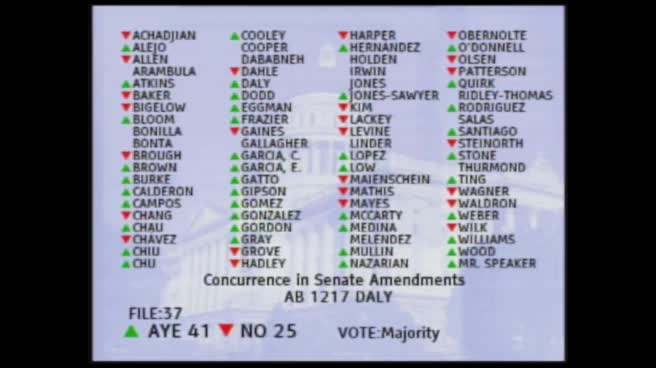 1MIN
Assembly Floor
 2MIN
Senate Floor
 12MIN
Senate Standing Committee on Judiciary
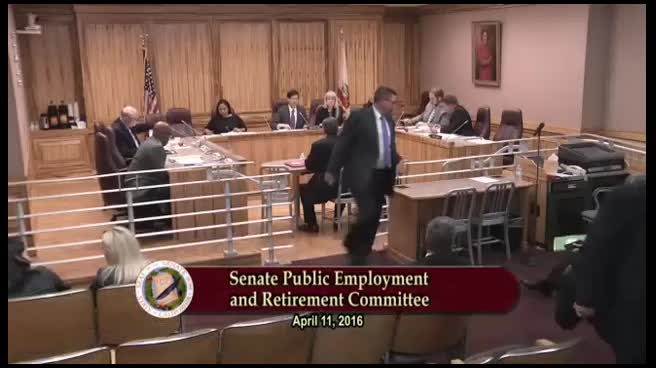 7MIN
Senate Standing Committee on Public Employment and Retirement
Bill Author

Bill Co-Author(s):