SB 957: Health care districts: design-build process.
- Session Year: 2015-2016
- House: Senate
- Latest Version Date: 2016-08-26
Existing law authorizes the Sonoma Valley Health Care District and, until January 1, 2025, the Marin Healthcare District, to use the design-build process when contracting for the construction of a building or improvements directly related to a hospital or health facility building at the Sonoma Valley Hospital or the Marin General Hospital. Existing law sets forth the procurement process for design-build projects, as specified, and requires specified information by submitted design-build entities to be verified under penalty of perjury.
This bill would instead authorize, until January 1, 2025, any health care district to use the design-build process when contracting for the construction of a hospital or health facility building. Because the bill would expand the application of the procurement process to additional design-build entities, the bill would expand the crime of perjury, thereby imposing a state-mandated local program.
The California Constitution requires the state to reimburse local agencies and school districts for certain costs mandated by the state. Statutory provisions establish procedures for making that reimbursement.
This bill would provide that no reimbursement is required by this act for a specified reason.
The Legislature finds and declares all of the following:
(a)Utilizing a design-build contract requires a clear understanding of the roles and responsibilities of each participant in the process.
(b)Cost benefits for health care districts are achieved by shifting liability and risk for cost containment and project completion to the design-build entity.
(c)It is the intent of the Legislature that the design-build process be used by health care districts solely for buildings associated with hospitals and health care facilities, including clinics and skilled nursing facilities, and not for other infrastructure, including, but not limited to, streets, highways, public rail transit, roads, bridges, other water resources facilities, and related infrastructure.
SEC. 2.Section 32132.5 of the Health and Safety Code, as amended by Section 4 of Chapter 931 of the Statutes of 2014, is amended to read:32132.5.(a)Notwithstanding Section 32132 or any other law, upon approval by its board of directors, a health care district may use the design-build procedure described in Chapter 4 (commencing with Section 22160) of Part 3 of Division 2 of the Public Contract Code to assign contracts for the construction of a building or improvements directly related to construction of a hospital or health facility building.
(b)For purposes of this section, except where the context otherwise requires, all references in Chapter 4 (commencing with Section 22160) of Part 3 of Division 2 of the Public Contract Code to local agency shall mean a health care district that owns or operates a hospital or clinic and its board of directors.
(c)A hospital building project utilizing the design-build process authorized by subdivision (a) shall be reviewed and inspected in accordance with the standards and requirements of the Alfred E. Alquist Hospital Facilities Seismic Safety Act of 1983 (Chapter 1 (commencing with Section 129675) of Part 7 of Division 107).
(d)Except as provided in this section, this section shall not be construed to affect the application of any other law.
(e)This section shall remain in effect only until January 1, 2025, and as of that date is repealed.
SEC. 3.No reimbursement is required by this act pursuant to Section 6 of Article XIIIB of the California Constitution because the only costs that may be incurred by a local agency or school district will be incurred because this act creates a new crime or infraction, eliminates a crime or infraction, or changes the penalty for a crime or infraction, within the meaning of Section 17556 of the Government Code, or changes the definition of a crime within the meaning of Section 6 of Article XIIIB of the California Constitution.
The Legislature finds and declares all of the following:
(a)Utilizing a design-build contract requires a clear understanding of the roles and responsibilities of each participant in the process.
(b)Cost benefits for health care districts are achieved by shifting liability and risk for cost containment and project completion to the design-build entity.
(c)It is the intent of the Legislature that the design-build process be used by health care districts solely for buildings associated with hospitals and health care facilities, including clinics and skilled nursing facilities, and not for other infrastructure, including, but not limited to, streets, highways, public rail transit, roads, bridges, other water resources facilities, and related infrastructure.
SEC. 2.Section 32132.5 of the Health and Safety Code, as amended by Section 4 of Chapter 931 of the Statutes of 2014, is amended to read:32132.5.(a)Notwithstanding Section 32132 or any other law, upon approval by its board of directors, a health care district may use the design-build procedure described in Chapter 4 (commencing with Section 22160) of Part 3 of Division 2 of the Public Contract Code to assign contracts for the construction of a building or improvements directly related to construction of a hospital or health facility building.
(b)For purposes of this section, except where the context otherwise requires, all references in Chapter 4 (commencing with Section 22160) of Part 3 of Division 2 of the Public Contract Code to local agency shall mean the a health care district that owns or operates a hospital or clinic and its board of directors.
(c)A hospital building project utilizing the design-build process authorized by subdivision (a) shall be reviewed and inspected in accordance with the standards and requirements of the Alfred E. Alquist Hospital Facilities Seismic Safety Act of 1983 (Chapter 1 (commencing with Section 129675) of Part 7 of Division 107).
(d)Except as provided in this section, this section shall not be construed to affect the application of any other law.
(e)This section shall remain in effect only until January 1, 2025, and as of that date is repealed.
SEC. 3.No reimbursement is required by this act pursuant to Section 6 of Article XIIIB of the California Constitution because the only costs that may be incurred by a local agency or school district will be incurred because this act creates a new crime or infraction, eliminates a crime or infraction, or changes the penalty for a crime or infraction, within the meaning of Section 17556 of the Government Code, or changes the definition of a crime within the meaning of Section 6 of Article XIIIB of the California Constitution.
The Legislature finds and declares all of the following:
(a)Utilizing a design-build contract requires a clear understanding of the roles and responsibilities of each participant in the process.
(b)Cost benefits for health care districts are achieved by shifting liability and risk for cost containment and project completion to the design-build entity.
(c)It is the intent of the Legislature that the design-build process be used by health care districts solely for buildings associated with hospitals and health care facilities, including clinics and skilled nursing facilities, and not for other infrastructure, including, but not limited to, streets, highways, public rail transit, roads, bridges, other water resources facilities, and related infrastructure.
SEC. 2.Section 32132.5 of the Health and Safety Code, as amended by Section 4 of Chapter 931 of the Statutes of 2014, is amended to read:32132.5.(a)Notwithstanding Section 32132 or any other law, upon approval by the board of directors of the Sonoma Valley Health Care District or the Marin Healthcare District, as applicable, its board of directors, a health care district may use the design-build procedure described in Chapter 4 (commencing with Section 22160) of Part 3 of Division 2 of the Public Contract Code may be used to assign contracts for the construction of a building or improvements directly related to construction of a hospital or health facility building at the Sonoma Valley Hospital or the Marin General Hospital. building.
(b)For purposes of this section, except where the context otherwise requires, all references in Chapter 4 (commencing with Section 22160) of Part 3 of Division 2 of the Public Contract Code to local agency shall mean the Sonoma Valley Health Care District and the Marin Healthcare District. health care district and its board of directors.
(c)A hospital building project utilizing the design-build process authorized by subdivision (a) shall be reviewed and inspected in accordance with the standards and requirements of the Alfred E. Alquist Hospital Facilities Seismic Safety Act of 1983 (Chapter 1 (commencing with Section 129675) of Part 7 of Division 107).
(d)Except as provided in this section, this section shall not be construed to affect the application of any other law.
(d)
(e)This section shall remain in effect only until January 1, 2025, and as of that date is repealed.
SEC. 3.No reimbursement is required by this act pursuant to Section 6 of Article XIIIB of the California Constitution because the only costs that may be incurred by a local agency or school district will be incurred because this act creates a new crime or infraction, eliminates a crime or infraction, or changes the penalty for a crime or infraction, within the meaning of Section 17556 of the Government Code, or changes the definition of a crime within the meaning of Section 6 of Article XIIIB of the California Constitution.
|
Date
|
Status
|
|---|---|
| May 12, 2016 | Read third time. Passed. (Ayes 38. Noes 0. Page 3841.) Ordered to the Assembly. |
| Aug 26, 2016 | Chaptered by Secretary of State. Chapter 212, Statutes of 2016. |
| Aug 26, 2016 | Approved by the Governor. |
| Aug 16, 2016 | Enrolled and presented to the Governor at 11:30 a.m. |
| Aug 11, 2016 | Read third time. Passed. (Ayes 78. Noes 0. Page 5778.) Ordered to the Senate. |
| Aug 11, 2016 | Read third time. Passed. Ordered to the Senate. |
| Aug 11, 2016 | In Senate. Ordered to engrossing and enrolling. |
| Aug 4, 2016 | Read second time. Ordered to consent calendar. |
| Aug 3, 2016 | From committee: Do pass. Ordered to consent calendar. (Ayes 20. Noes 0.) (August 3). |
| Jun 30, 2016 | From committee: Do pass and re-refer to Com. on APPR. with recommendation: To consent calendar. (Ayes 9. Noes 0.) (June 29). Re-referred to Com. on APPR. |
| May 19, 2016 | Referred to Com. on L. GOV. |
| May 12, 2016 | Read third time. Passed. (Ayes 38. Noes 0.) Ordered to the Assembly. |
| Feb 4, 2016 | Introduced. Read first time. To Com. on RLS. for assignment. To print. |
| May 12, 2016 | In Assembly. Read first time. Held at Desk. |
| May 3, 2016 | Read second time. Ordered to third reading. |
| May 2, 2016 | From committee: Be ordered to second reading pursuant to Senate Rule 28.8. |
| Apr 22, 2016 | Set for hearing May 2. |
| Apr 14, 2016 | Read second time and amended. Re-referred to Com. on APPR. |
| Apr 13, 2016 | From committee: Do pass as amended and re-refer to Com. on APPR. (Ayes 6. Noes 0.) (April 13). |
| Apr 13, 2016 | From committee: Do pass as amended and re-refer to Com. on APPR. (Ayes 6. Noes 0. Page 3517.) (April 13). |
| Apr 5, 2016 | Set for hearing April 13. |
| Feb 18, 2016 | Referred to Com. on GOV. & F. |
| Feb 5, 2016 | From printer. May be acted upon on or after March 6. |
|
Date
|
Description
|
Location
|
Votes
|
|
|---|---|---|---|---|
| Aug 11, 2016 | SB 957 Hueso Consent Calendar Second Day Regular Session | Assembly Floor |
Passed |
|
| Aug 3, 2016 | Do pass. To Consent Calendar. | Assembly Standing Committee on Appropriations |
Passed |
|
| Jun 29, 2016 | Do pass and be re-referred to the Committee on [Appropriations] with recommendation: To Consent Calendar | Assembly Standing Committee on Local Government |
Passed |
|
| May 12, 2016 | Senate 3rd Reading SB957 Hueso | Senate Floor |
Passed |
|
| Apr 13, 2016 | Do pass as amended, but first amend, and re-refer to the Committee on [Appropriations] | Senate Standing Committee on Governance and Finance |
Passed |
This list shows positions taken on this bill by organizations on the date displayed, which is linked to the original source.
Positions by individuals are not included.
|
Organization
|
Position
|
Date
|
|---|---|---|
| American Council of Engineering Companies - California | ** Support | May 12, 2016 |
| Association of California Healthcare Districts | ** Support | May 12, 2016 |
| Beach Cities Health Care District | ** Support | May 12, 2016 |
| California Special District Association | ** Support | May 12, 2016 |
| District Hospital Leadership Forum | ** Support | May 12, 2016 |
| Economic Development Corporation Of Mariposa County | ** Support | May 12, 2016 |
| John C. Fremont Health Care District | ** Support | May 12, 2016 |
Date of Hearing: August 3, 2016
ASSEMBLY COMMITTEE ON APPROPRIATIONS
Lorena Gonzalez, Chair
SBPCA Bill Id:SB 957
Author:(Hueso) – As Amended Ver:April 14, 2016
Policy Committee: | Local Government | Vote: | 9 - 0 |
|
| ||
|
|
Urgency: No State Mandated Local Program: Yes Reimbursable: No
SUMMARY: This bill expands current law to allow specified health care districts to use design-build contracting for the construction of a hospital or health facility buildings. Specifically, this bill:
- Allows, until January 1, 2025, a health care district that owns or operates a hospital or clinic to use the design-build procedure to construct a building or improvements directly related to the construction of a hospital or health facility building.
- Provides that a health care district must use the design-build procedure that current law establishes for local agencies, as specified.
- Requires a hospital building project using the design-build process authorized by this bill to be reviewed and inspected in accordance with the standards and requirements of the Alfred E. Alquist Hospital Facilities Seismic Safety Act (Hospital Seismic Safety Act) of 1983.
FISCAL EFFECT:
Negligible state fiscal impact.
COMMENTS:
- Purpose. According to the author, "The Legislature has already granted the design build utilization method to four healthcare districts. This bill will ensure that there is uniformity among healthcare districts across all of California rather than utilizing a piece-meal approach. Moreover, this will effectively provide another tool for our healthcare districts to utilize for project deliveries."
- Background. California currently has 80 health care districts. Health care districts are formed to "establish, maintain, and operate health care facilities," including, but not limited to hospitals. Health care districts throughout the state need to retrofit existing buildings or build new facilities in order to comply with the Hospital Seismic Safety Act and are looking for the most cost-effective ways to meet seismic standards.
The Legislature has authorized four health care districts to use design-build (Sonoma Valley Health Care District, the Last Frontier Health Care District, the Marin Healthcare District, and the Mayers Memorial Hospital District) and has restricted that authority to the construction of a building and improvements directly related to a hospital or health facility building. The provisions of this bill are consistent with the limitations and requirements of these prior authorizations.
- Previous Legislation.
- AB 1290 (Dahle), Chapter 34, Statutes of 2015, allowed the Mayers Memorial Hospital District to use the design-build contracting method for the construction of a building or improvements directly related to construction of a hospital or health facility building at the District.
- SB 268 (Gaines), Chapter 18, Statutes of 2014, allowed the Last Frontier Health Care District to use the design-build process when contracting for the construction of a building and improvements directly related to a hospital or health facility building at the Modoc Medical Center.
- SB 785 (Wolk), Chapter 931, Statutes of 2014, repealed existing law authorizing the Department of General Services (DGS), the Department of Corrections and Rehabilitation (CDCR), and local agencies to use the design-build procurement process, and enacted uniform provisions authorizing DGS, CDCR, and most local agencies to utilize the design-build procurement process for specified public works projects. SB 785 did not allow the use of design-build for health care districts generally, but did include a provision allowing the Marin Healthcare District to use the design-build method established for local agencies under SB 785 and required the Sonoma Valley Health Care District to use the design-build procedure outlined in SB 785, instead of its prior design-build authority.
Analysis Prepared by: Jennifer Swenson / APPR. / (916) 319-2081
Date of Hearing: June 29, 2016
ASSEMBLY COMMITTEE ON LOCAL GOVERNMENT
Susan Talamantes Eggman, Chair
SBPCA Bill Id:SB 957
Author:(Hueso) – As Amended Ver:April 14, 2016
SENATE VOTE: 38-0
SUBJECT: Health care districts: design-build process.
SUMMARY: Allows specified health care districts to use design-build contracting for the construction of a hospital or health facility buildings. Specifically, this bill:
- Allows, until January 1, 2025, a health care district that owns or operates a hospital or clinic to use the design-build procedure to construct a building or improvements directly related to the construction of a hospital or health facility building.
- Provides that a health care district must use the design-build procedure that current law establishes for local agencies, as specified.
- Requires a hospital building project using the design-build process authorized by this bill to be reviewed and inspected in accordance with the standards and requirements of the Alfred E. Alquist Hospital Facilities Seismic Safety Act (Hospital Seismic Safety Act) of 1983.
- Makes a number of findings and declarations, and states the Legislature’s intent that health care districts use the design-build process solely for buildings associated with hospitals and health care facilities, including clinics and skilled nursing facilities, and not for other infrastructure, including streets, highways, public rail transit, roads, bridges, and water resources facilities.
- Provides that no reimbursement is required by this bill because the only costs that may be incurred by a local agency or school district will be incurred because this act creates a new crime or infraction, eliminates a crime or infraction, or changes the penalty for a crime or infraction, or changes the definition of a crime, as specified.
EXISTING LAW:
- Requires, pursuant to the Local Agency Public Construction Act (LAPC Act), local officials to invite bids for construction projects and then award contracts to the lowest responsible bidder under the traditional design-bid-build project delivery system.
- Authorizes, until January 1, 2025, cities, counties, and specified special districts and transit agencies to use design-build for their public works contracts in excess of $1 million using either a low bid or best value process.
- Provides for local health care districts, which govern certain health care facilities. Each health care district has specific duties and powers respecting the creation, administration, and maintenance of the districts, including the authority to purchase, receive, take, hold, lease, use, and enjoy property of every kind and description of property within and without the limits of the district.
- Establishes, pursuant to the Hospital Seismic Safety Act, timelines for hospital compliance with seismic safety standards.
- Authorizes the Sonoma Valley Health Care District, the Marin Health Care District, the Last Frontier Health Care District, and the Mayers Memorial Hospital District to use design-build for the construction of a building or improvements directly related to construction of a hospital or health facility.
FISCAL EFFECT: According to the Senate Appropriations Committee, pursuant to Senate Rule 28.8, negligible state costs.
COMMENTS:
- Bill Summary. This bill expands a limited authority for several health care districts to use design-build to include all health care districts that own or operate a hospital or clinic. The authority is limited to the construction of a building or improvements directly related to the construction of a hospital or health facility building, and would expire on January 1, 2025. Districts must use the procedures outlined in existing law that apply to local agencies' authority to use design-build. A hospital building project using the design-build process authorized by this bill must be reviewed and inspected in accordance with the Hospital Seismic Safety Act.
This bill is sponsored by the Association of California Healthcare Districts and the State Building and Construction Trades Council.
- Author's Statement. According to the author, "Under the design-build method, a single contract covers the design and construction of a project with a single company or consortium that acts as both the project designer and builder. The design-build entity arranges all architectural, engineering, and construction services, and is responsible for delivering the project at a guaranteed price and schedule based upon performance criteria set by the public agency. The design-build method can be faster (and therefore, cheaper) than the design-bid-build method.
"The traditional design-bid-build project approach requires: the separate selection of the design consultant or contractor; completion of design; advertising for bids; and selection of the construction contractor. Typically, design-bid-build projects incur many delays, costly change orders and longer Office of Statewide Health Planning and Development review times resulting in increased costs. Design-build avoids those problems due to the fusion of design and construction activities, thereby resulting in additional time savings and lower project costs.
"Legislation passed in 2013, SB 785 (Wolk), amended [the] Government Code relating to the design-build procurement processes already in law and extends the sunset date for such authorization until 2025. The Legislature has already granted the design build utilization method to four healthcare districts. This bill will ensure that there is uniformity among healthcare districts across all of California rather than utilizing a piece-meal approach. Moreover, this will effectively provide another tool for our healthcare districts to utilize for project deliveries."
- Background. The LAPC Act generally requires local officials to invite bids for construction projects and then award contracts to the lowest responsible bidder. This design-bid-build method is the traditional approach to public works construction.
Under the design-build method, a single contract covers the design and construction of a project with a single company or consortium that acts as both the project designer and builder. The design-build entity arranges all architectural, engineering, and construction services, and is responsible for delivering the project at a guaranteed price and schedule based upon performance criteria set by the public agency. The design-build method can be set by the public agency. The design-build method can be faster and, therefore, cheaper, than the design-bid-build method, but it requires a higher level of management sophistication since design and construction may occur simultaneously.
Advocates for the design-build method of contracting for public works contend that project schedule savings can be realized because only a single request for proposals is needed to select the project's designer and builder. The more traditional design-bid-build project approach requires the separate selection of the design consultant or contractor, completion of design, and then advertising for bids and selection of the construction contractor. Proponents add that design-build allows the overlap of design and construction activities, resulting in additional time savings and lower project costs. By avoiding the delays and change orders that result from the traditional design-bid-build method of contracting, proponents argue that design-build can deliver public works faster and cheaper.
Detractors of design-build contend that it eliminates competitive bidding, allows the private contractor or consortium to inspect and sign off on their own work, and increases project delivery costs.
- Design-Build and Healthcare Districts. California currently has 80 health care districts. Health care districts were known as hospital districts prior to 1994. Health care districts are formed to "establish, maintain, and operate health care facilities," including, but not limited to, hospitals. Health care districts are governed by elected boards of directors. Health care districts throughout the state need to retrofit existing buildings or build new facilities in order to comply with the Hospital Seismic Safety Act. These districts are faced with escalating construction costs and are looking for the most cost-effective ways to meet seismic standards and provide well-designed and built state-of-the-art facilities to provide health care to the people of the state. One of these methods is design-build contracting.
The Legislature has authorized four health care districts to use design-build (Sonoma Valley Health Care District, the Last Frontier Health Care District, the Marin Healthcare District, and the Mayers Memorial Hospital District) and has restricted that authority to the construction of a building and improvements directly related to a hospital or health facility building. The provisions of this bill are consistent with the limitations and requirements of these prior authorizations.
- Previous Legislation. AB 1290 (Dahle), Chapter 34, Statutes of 2015, allowed the Mayers Memorial Hospital District to use the design-build contracting method for the construction of a building or improvements directly related to construction of a hospital or health facility building at the District.
SB 268 (Gaines), Chapter 18, Statutes of 2014, allowed the Last Frontier Health Care District to use the design-build process when contracting for the construction of a building and improvements directly related to a hospital or health facility building at the Modoc Medical Center.
SB 785 (Wolk), Chapter 931, Statutes of 2014, repealed existing law authorizing the Department of General Services (DGS), the Department of Corrections and Rehabilitation (CDCR), and local agencies to use the design-build procurement process, and enacted uniform provisions authorizing DGS, CDCR, and most local agencies to utilize the design-build procurement process for specified public works projects. SB 785 did not allow the use of design-build for health care districts generally, but did include a provision allowing the Marin Healthcare District to use the design-build method established for local agencies under SB 785 and required the Sonoma Valley Health Care District to use the design-build procedure outlined in SB 785, instead of its prior design-build authority.
SB 1005 (Cox) of 2010 would have authorized the Tahoe Forest Health Care District and a health care district authorized by the Office of Statewide Health Planning and Development to use a design-build procedure when assigning contracts for the construction of a hospital or health facility building. SB 1005 was held in the Assembly Appropriations Committee.
SB 1699 (Wiggins), Chapter 415, Statutes of 2008, authorized the use of design-build for the Sonoma Valley Health Care District.
- Arguments in Support. The Association of California Healthcare Districts, co-sponsor of this measure, writes, "The Legislature has previously authorized four California Healthcare Districts to utilize design-build for purposes of building new facilities (Sonoma Valley Healthcare District, Marin Healthcare District, Last Frontier Healthcare District, and Mayers Memorial Hospital District) and other Healthcare Districts are seeking similar authorization, especially as seismic retrofit deadlines loom near. SB 957 will allow those Districts that are seeking to expand and modernize their facilities to provide needed services using the efficient and cost-effective means of design-build. Districts can keep costs down, expedite the design and construction process, and save taxpayer dollars while meeting community health care needs."
- Arguments in Opposition. None on file.
REGISTERED SUPPORT / OPPOSITION:
Support
Association of California Healthcare Districts [CO-SPONSOR]
State Building and Construction Trades Council [CO-SPONSOR]
Air Conditioning Sheet Metal Association
Air-conditioning & Refrigeration Contractors Association
Bear Valley Community Healthcare District
California Chapters of the National Electrical Contractors Association
California Hospital Association
California Labor Federation
California Legislative Conference of the Plumbing, Heating and Piping Industry
California Special Districts Association
California State Association of Electrical Workers
California State Pipe Trades Council
District Hospital Leadership Forum
Economic Development Corporation of Mariposa County
Finishing Contractors Association of Southern California
International Union of Elevator Constructors
John C. Fremont Healthcare District
Northern California Allied Trades
Petaluma Valley Hospital
Rural County Representatives of California
Santa Rosa Memorial Hospital
Sharp HealthCare
Southern Mono Healthcare District dba Mammoth Hospital
Tri-City Medical Center
United Contractors
Wall and Ceiling Alliance
Western States Council of Sheet Metal Workers
Opposition
None on file
Analysis Prepared by: Angela Mapp / L. GOV. / (916) 319-3958
Office of Senate Floor Analyses (916) 651-1520 Fax: (916) 327-4478 | SB |
THIRD READING
Bill No: SB 957
:
SENATE GOVERNANCE & FIN. COMMITTEE: 6-0, 4/13/16
AYES: Hertzberg, Beall, Hernandez, Lara, Moorlach, Pavley
NO VOTE RECORDED: Nguyen
SENATE APPROPRIATIONS COMMITTEE: Senate Rule 28.8
DIGEST: This bill allows specified health care districts’ boards of directors to use design-build contracting for the construction of hospital or health facility buildings.
Existing law:
- Requires, pursuant to the Local Agency Public Construction Act, that local officials must invite bids for construction projects and then award contracts to the lowest responsible bidder.
- Allows some state and local officials to use the “design-build” method to procure both design and construction services from a single company before the development of complete plans and specifications.
This bill:
- Allows, until January 1, 2025, the board of directors of any health care district that owns or operates a hospital or clinic, notwithstanding any other law, to use the design-build procedure to construct a building or improvements directly related to the construction of a hospital or health facility building.
- Specifies that a health care district must use the design-build procedure that current law establishes for local agencies and provides that statutory references to a “local agency” means a health care district and its board of directors.
- Requires that a hospital building project using the design-build process authorized by this bill must be reviewed and inspected in accordance with the standards and requirements of the Alfred E. Alquist Hospital Facilities Seismic Safety Act of 1983.
- Finds and declares the Legislature’s intent that health care districts use the design-build process solely for buildings associated with hospitals and health care facilities, including clinics and skilled nursing facilities, and not for other infrastructure, including streets, highways, public rail transit, roads, bridges, and water resources facilities.
Background
State law allows some state and local officials to use the design-build method to procure both design and construction services from a single company before the development of complete plans and specifications. Under design-build, a public agency contracts with a single entity - which can be a single firm, a consortium, or a joint venture - to design and construct a project. Before inviting bids, the agency prepares documents that describe the basic concept of the project, as opposed to a complete set of drawings and specifications of what will be constructed. In the bidding phase, the agency typically evaluates bids on a best-value basis, incorporating technical factors, such as qualifications and design quality, in addition to price.
Until January 1, 2025, all counties and cities can use the design-build method to construct buildings and related improvements and other specified types of public works that cost more than $1 million (SB 785, Wolk, Chapter 931, Statutes of 2014). The Legislature also has authorized some special districts to construct projects using the design-build method, including four local health care districts:
- The Sonoma Valley Healthcare District can use the design-build process when contracting for the construction of a building and improvements directly related to a hospital or health facility building at the Sonoma Valley Hospital (SB 1699, Wiggins, Chapter 415, Statutes of 2008). Following SB 1699’s enactment, the Sonoma Valley Health Care District’s voters approved a $35 million bond to finance earthquake safety improvements to bring the hospital’s emergency room into compliance with the state’s seismic safety standards for hospitals. The District’s upgraded facility, which was constructed using design-build contracts, opened in 2013.
- The Last Frontier Healthcare District can use the design-build process when contracting for the construction of a building and improvements directly related to a hospital or health facility building at the Modoc Medical Center (SB 268, Gaines, Chapter 18, Statutes of 2014).
- The Marin Healthcare District can use the design-build process when contracting for the construction of a building and improvements directly related to a hospital or health facility building at the Marin General Hospital (SB 785, Wolk, Chapter 931, Statutes of 2014).
- The Mayers Memorial Hospital District can use the design-build process when contracting for the construction of a building and improvements directly related to a hospital or health facility building at the Mayers Memorial Hospital District (AB 1290, Dahle, Chapter 34, Statutes of 2015).
Comments
Purpose of this bill. When it comes to public works projects, taxpayers want local officials to hold down costs, but they also want to be sure that their tax dollars are spent wisely. While the traditional contracting process minimizes opportunities for public officials to award construction contracts based on subjective factors, it also can be more time consuming and more expensive than the design-build method. Health care districts, in particular, face unique pressures to hold down costs. They face market pressures to compete with other health care providers while complying with the Brown Act, the Public Records Act, the Political Reform Act, public contracting laws, and other statutory restrictions that are not imposed on their private sector competitors. The Legislature has already allowed four health care districts to use design-build contracting to construct new facilities. This bill grants the same design-build authority to all health care districts, allowing them to keep costs down, expedite the design and construction process, and save taxpayer dollars while fulfilling community health care needs.
FISCAL EFFECT: Appropriation: Fiscal Com.: Local:
Association of California Healthcare Districts
American Council of Engineering Companies – California
Beach Cities Health Care District
California Labor Federation
California Special District Association
District Hospital Leadership Forum
Economic Development Corporation of Mariposa County
John C. Fremont Health Care District
State Building and Construction Trades Council
None received
5/4/16 14:57:58
**** END ****
SENATE COMMITTEE ON GOVERNANCE AND FINANCE
Senator Robert M. Hertzberg, Chair
2015 - 2016 Regular
Bill No: | SB 957 | Hearing Date: | 4/13/16 |
Author: | Hueso | Tax Levy: | No |
Version: | 2/4/16 | Fiscal: | Yes |
Consultant: | Weinberger | ||
Health care districts: design-build process
Allows health care districts’ boards of directors to use design-build contracting for the construction of hospital or health facility buildings.
Background
The Local Agency Public Construction Act requires local officials to invite bids for construction projects and then award contracts to the lowest responsible bidder. This design-bid-build method is the traditional, and most widely-used, approach to public works construction. This approach splits construction projects into two distinct phases: design and construction. During the design phase, the local agency prepares detailed project plans and specifications using its own employees or by hiring outside architects and engineers. Once project designs are complete, local officials invite bids from the construction community and award the contract to the lowest responsible bidder.
State law also allows some state and local officials to use the design-build method to procure both design and construction services from a single company before the development of complete plans and specifications. Under design-build, a public agency contracts with a single entity - which can be a single firm, a consortium, or a joint venture - to design and construct a project. Before inviting bids, the agency prepares documents that describe the basic concept of the project, as opposed to a complete set of drawings and specifications of what will be constructed. In the bidding phase, the agency typically evaluates bids on a best-value basis, incorporating technical factors, such as qualifications and design quality, in addition to price.
Until January 1, 2025, all counties and cities can use the design-build method to construct buildings and related improvements and other specified types of public works that cost more than $1 million (SB 785, Wolk, 2014). The Legislature also has authorized some special districts to construct projects using the design-build method, including four local health care districts:
- The Sonoma Valley Healthcare District can use the design-build process when contracting for the construction of a building and improvements directly related to a hospital or health facility building at the Sonoma Valley Hospital (SB 1699, Wiggins, 2008). Following SB 1699’s enactment, the Sonoma Valley Health Care District’s voters approved a $35 million bond to finance earthquake safety improvements to bring the hospital’s emergency room into compliance with the state’s seismic safety standards for hospitals. The District’s upgraded facility, which was constructed using design-build contracts, opened in 2013.
- The Last Frontier Healthcare District can use the design-build process when contracting for the construction of a building and improvements directly related to a hospital or health facility building at the Modoc Medical Center (SB 268, Gaines, 2014).
- The Marin Healthcare District can use the design-build process when contracting for the construction of a building and improvements directly related to a hospital or health facility building at the Marin General Hospital (SB 785, Wolk, 2014).
- The Mayers Memorial Hospital District can use the design-build process when contracting for the construction of a building and improvements directly related to a hospital or health facility building at the Mayers Memorial Hospital District (AB 1290, Dahle, 2015).
Proposed Law
Senate Bill 957 allows, until January 1, 2025, any health care district’s board of directors, notwithstanding any other law, to use the design-build procedure to construct a building or improvements directly related to the construction of a hospital or health facility building.
SB 957 specifies that a health care district must use the design-build procedure that current law establishes for local agencies and provides that statutory references to a “local agency” means a health care district and its board of directors.
SB 957 requires that a hospital building project using the design-build process authorized by the bill must be reviewed and inspected in accordance with the standards and requirements of the Alfred E. Alquist Hospital Facilities Seismic Safety Act of 1983.
The bill finds and declares the Legislature’s intent that health care districts use the design-build process solely for buildings associated with hospitals and health care facilities, including clinics and skilled nursing facilities, and not for other infrastructure, including, streets, highways, public rail transit, roads, bridges, and water resources facilities.
State Revenue Impact
No estimate.
Comments
1. Purpose of the bill. When it comes to public works projects, taxpayers want local officials to hold down costs, but they also want to be sure that their tax dollars are spent wisely. While the traditional contracting process minimizes opportunities for public officials to award construction contracts based on subjective factors, it also can be more time consuming and more expensive than the design-build method. Health care districts, in particular, face unique pressures to hold down costs. They face market pressures to compete with other health care providers while complying with the Brown Act, the Public Records Act, the Political Reform Act, public contracting laws, and other statutory restrictions that are not imposed on their private sector competitors. The Legislature has already allowed four health care districts to use design-build contracting to construct new facilities. SB 957 grants the same design-build authority to all health care districts, allowing them to keep costs down, expedite the design and construction process, and save taxpayer dollars while fulfilling community health care needs.
2. Which districts? Although SB 957 uniformly extends design-build contracting authority to all 78 of California health care districts, not all health care districts will realize similar benefits from using the design-build method. The four health care districts that have the authority under existing law all own and operate hospitals and were granted authority to use design-build for construction projects that are associated with those hospitals. However, many health care districts throughout the state do not own or operate a hospital, clinic, or other medical facility. These districts collect property tax revenues and, in many cases, receive rental income from district properties that are leased to third-party medical care providers. It is unclear why a health care district that is only responsible for managing property should be allowed to use design-build contracting to construct medical office buildings or other infrastructure that will serve only to generate rental income for the district. One protection against the potential misuse of design-build contracting authority is the requirement in current law that it can only be used for projects that cost at least $1 million, but this cost threshold may not prevent some districts from using design-build to construct large developments that will be rented to third parties. The Committee may wish to consider amending SB 957 to provide greater certainty that design-build contracting will only be used for the construction of hospitals and medical clinics that are owned or operated by health care districts.
3. Mandate. The design-build procedures that SB 957 authorizes all health care districts to use requires that specified information provided by bidders in response to a request for qualifications must be certified under penalty of perjury. By creating a new crime, SB 957 also creates a new state-mandated program. But the bill disclaims the state's responsibility for reimbursing local governments for enforcing these new crimes. That's consistent with the California Constitution, which says that the state does not have to reimburse local governments for the costs of new crimes (Article XIIIB, 6[a][2]).
4. Try again. SB 957 is not the first legislative effort to allow all health care districts to use design build contracting. Early versions of SB 1699 (Wiggins, 2008) would have granted all health care districts the authority to use the design-build method, but the bill was subsequently narrowed to grant the authority only to the Sonoma Valley Health Care District. Similarly, early version of SB 1005 (Cox, 2010) would have allowed all health care districts to construct projects using the design-build contracting method. That bill died in the Assembly Appropriations Committee.
Support and Opposition
(4/7/16)
Support: Association of California Healthcare Districts; American Council of Engineering Companies – California; Beach Cities Health Care District; California Labor Federation; California Special District Association; District Hospital Leadership Forum; Economic Development Corporation of Mariposa County; John C. Fremont Health Care District; State Building and Construction Trades Council.
Opposition: Unknown.
-- END --
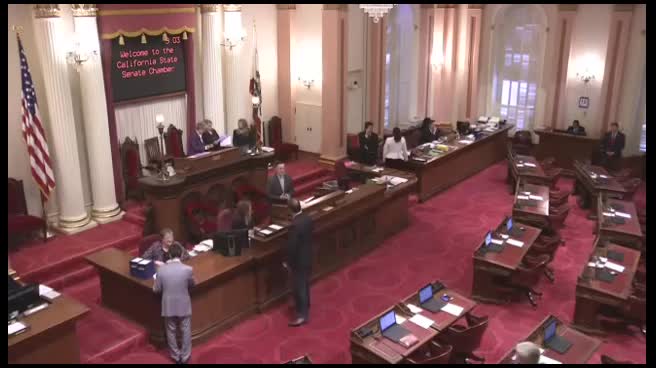
Bill Author