SB 969: Vietnamese rice cakes.
- Session Year: 2015-2016
- House: Senate
- Latest Version Date: 2016-08-25
Existing law, the Sherman Food, Drug, and Cosmetic Law, requires all manufacturers of Korean rice cakes, as defined, to place a label issued by the Korean Rice Cake Association Corporation on the Korean rice cake that indicates the date of manufacture, and requires the label to include a statement that the rice cake must be consumed within one day of manufacture. A violation of these provisions is a crime.
This bill would require, except as provided, a manufacturer of Vietnamese rice cakes, as defined, to place a label, designed by the Vietnamese Rice Cake Association, Inc., on the Vietnamese rice cake that indicates the date and time the cooking process was completed, and would require the label to include a statement that the rice cake must be consumed within 24 hours of the date and time printed on the label. By creating a new crime, this bill would impose a state-mandated local program.
Existing law, the California Retail Food Code, provides for the regulation of health and sanitation standards for food facilities, as defined, by the State Department of Public Health. Under existing law, local health agencies are primarily responsible for enforcing the California Retail Food Code. A violation of these provisions is a crime. Existing law authorizes a food facility to sell Korean rice cakes, as defined, that have been at room temperature for no more than 24 hours, and requires, at the end of the operating day, Korean rice cakes that have been at room temperature for no more than 24 hours to be destroyed in a manner approved by the enforcement agency.
This bill would also authorize a food facility to sell Vietnamese rice cakes that have been at no more than 70 degrees Fahrenheit for no more than 24 hours and would require Vietnamese rice cakes that have been at no more than 70 degrees Fahrenheit but have been stored for more than 24 hours to be destroyed in a manner approved by the enforcement agency. By imposing new enforcement requirements on local health agencies, and by creating a new crime, this bill would impose a state-mandated local program.
The California Constitution requires the state to reimburse local agencies and school districts for certain costs mandated by the state. Statutory provisions establish procedures for making that reimbursement.
This bill would provide that with regard to certain mandates no reimbursement is required by this act for a specified reason.
With regard to any other mandates, this bill would provide that, if the Commission on State Mandates determines that the bill contains costs so mandated by the state, reimbursement for those costs shall be made pursuant to the statutory provisions noted above.
Existing law, the Sherman Food, Drug, and Cosmetic Law, requires all manufacturers of Korean rice cakes, as defined, to place a label issued by the Korean Rice Cake Association Corporation on the Korean rice cake that indicates the date of manufacture, and requires the label to include a statement that the rice cake must be consumed within one day of manufacture. A violation of these provisions is a crime.
This bill would require, except as provided, a manufacturer of Vietnamese rice cakes, as defined, to place a label, issued designed by the Vietnamese Rice Cake Association, Inc., on the Vietnamese rice cake that indicates the date and time the cooking process was completed, and would require the label to include a statement that the rice cake must be consumed within 24 hours of the date and time printed on the label. By creating a new crime, this bill would impose a state-mandated local program.
Existing law, the California Retail Food Code, provides for the regulation of health and sanitation standards for food facilities, as defined, by the State Department of Public Health. Under existing law, local health agencies are primarily responsible for enforcing the California Retail Food Code. A violation of these provisions is a crime. Existing law authorizes a food facility to sell Korean rice cakes, as defined, that have been at room temperature for no more than 24 hours, and requires, at the end of the operating day, Korean rice cakes that have been at room temperature for no more than 24 hours to be destroyed in a manner approved by the enforcement agency.
This bill would also authorize a food facility to sell Vietnamese rice cakes that have been at no more than 70 degrees Fahrenheit for no more than 24 hours and would require Vietnamese rice cakes that have been at no more than 70 degrees Fahrenheit but have been stored for more than 24 hours to be destroyed in a manner approved by the enforcement agency. By imposing new enforcement requirements on local health agencies, and by creating a new crime, this bill would impose a state-mandated local program.
The California Constitution requires the state to reimburse local agencies and school districts for certain costs mandated by the state. Statutory provisions establish procedures for making that reimbursement.
This bill would provide that with regard to certain mandates no reimbursement is required by this act for a specified reason.
With regard to any other mandates, this bill would provide that, if the Commission on State Mandates determines that the bill contains costs so mandated by the state, reimbursement for those costs shall be made pursuant to the statutory provisions noted above.
Existing law, the Sherman Food, Drug, and Cosmetic Law, requires all manufacturers of Korean rice cakes, as defined, to place a label issued by the Korean Rice Cake Association Corporation on the Korean rice cake that indicates the date of manufacture, and requires the label to include a statement that the rice cake must be consumed within one day of manufacture. A violation of these provisions is a crime.
This bill would require, except as provided, a manufacturer of Vietnamese rice cakes, as defined, to place a label label, issued by the Vietnamese Rice Cake Association, Inc., on the Vietnamese rice cake that indicates the date and time the cooking process was completed, and would require the label to include a statement that the rice cake must be consumed within 24 hours of the date and time printed on the label. By creating a new crime, this bill would impose a state-mandated local program.
Existing law, the California Retail Food Code, provides for the regulation of health and sanitation standards for food facilities, as defined, by the State Department of Public Health. Under existing law, local health agencies are primarily responsible for enforcing the California Retail Food Code. A violation of these provisions is a crime. Existing law authorizes a food facility to sell Korean rice cakes, as defined, that have been at room temperature for no more than 24 hours, and requires, at the end of the operating day, Korean rice cakes that have been at room temperature for no more than 24 hours to be destroyed in a manner approved by the enforcement agency.
This bill would also authorize a food facility to sell Vietnamese rice cakes that have been at no more than 70 degrees Fahrenheit for no more than 24 hours and would require Vietnamese rice cakes that have been at no more than 70 degrees Fahrenheit but have been stored for more than 24 hours to be destroyed in a manner approved by the enforcement agency. By imposing new enforcement requirements on local health agencies, and by creating a new crime, this bill would impose a state-mandated local program.
The California Constitution requires the state to reimburse local agencies and school districts for certain costs mandated by the state. Statutory provisions establish procedures for making that reimbursement.
This bill would provide that with regard to certain mandates no reimbursement is required by this act for a specified reason.
With regard to any other mandates, this bill would provide that, if the Commission on State Mandates determines that the bill contains costs so mandated by the state, reimbursement for those costs shall be made pursuant to the statutory provisions noted above.
Existing law, the Sherman Food, Drug, and Cosmetic Law, requires all manufacturers of Korean rice cakes, as defined, to place a label issued by the Korean Rice Cake Association Corporation on the Korean rice cake that indicates the date of manufacture, and requires the label to include a statement that the rice cake must be consumed within one day of manufacture. A violation of these provisions is a crime.
This bill would require, except as provided, a manufacturer of Vietnamese rice cakes, as defined, to place a label on the Vietnamese rice cake that indicates the date and time the cooking process was completed, and would require the label to include a statement that the rice cake must be consumed within 48 24 hours of the date and time printed on the label. By creating a new crime, this bill would impose a state-mandated local program.
Existing law, the California Retail Food Code, provides for the regulation of health and sanitation standards for food facilities, as defined, by the State Department of Public Health. Under existing law, local health agencies are primarily responsible for enforcing the California Retail Food Code. A violation of these provisions is a crime. Existing law authorizes a food facility to sell Korean rice cakes, as defined, that have been at room temperature for no more than 24 hours, and requires, at the end of the operating day, Korean rice cakes that have been at room temperature for no more than 24 hours to be destroyed in a manner approved by the enforcement agency.
This bill would also authorize a food facility to sell Vietnamese rice cakes that have been at no more than 70 degrees Fahrenheit for no more than 48 hours, 24 hours and would require Vietnamese rice cakes that have been at room temperature no more than 70 degrees Fahrenheit but have been stored for no more than 48 24 hours to be destroyed in a manner approved by the enforcement agency. By imposing new enforcement requirements on local health agencies, and by creating a new crime, this bill would impose a state-mandated local program.
The California Constitution requires the state to reimburse local agencies and school districts for certain costs mandated by the state. Statutory provisions establish procedures for making that reimbursement.
This bill would provide that with regard to certain mandates no reimbursement is required by this act for a specified reason.
With regard to any other mandates, this bill would provide that, if the Commission on State Mandates determines that the bill contains costs so mandated by the state, reimbursement for those costs shall be made pursuant to the statutory provisions noted above.
Existing law, the Sherman Food, Drug, and Cosmetic Law, requires all manufacturers of Korean rice cakes, as defined, to place a label issued by the Korean Rice Cake Association Corporation on the Korean rice cake that indicates the date of manufacture, and requires the label to include a statement that the rice cake must be consumed within one day of manufacture. A violation of these provisions is a crime.
This bill would require require, except as provided, a manufacturer of Vietnamese rice cakes cakes, as defined, to place a label on the Vietnamese rice cake that indicates the date of manufacture, and time the cooking process was completed, and would require the label to include a statement that the rice cake must be consumed within 3 days of manufacture. 48 hours of the date and time printed on the label. By creating a new crime, this bill would impose a state-mandated local program.
Existing law, the California Retail Food Code, provides for the regulation of health and sanitation standards for food facilities, as defined, by the State Department of Public Health. Under existing law, local health agencies are primarily responsible for enforcing the California Retail Food Code. A violation of any of these provisions is a crime. Existing law authorizes a food facility to sell Korean rice cakes, as defined, that have been at room temperature for no more than 24 hours, and requires, at the end of the operating day, Korean rice cakes that have been at room temperature for no more than 24 hours to be destroyed in a manner approved by the enforcement agency.
This bill would also authorize a food facility to sell Vietnamese rice cakes that have been at room temperature no more than 70 degrees Fahrenheit for no more than 72 48 hours, and would require, at the end of the operating day, require Vietnamese rice cakes that have been at room temperature for no more than 72 48 hours to be destroyed in a manner approved by the enforcement agency. By imposing new enforcement requirements on local health agencies, and by creating a new crime, this bill would impose a state-mandated local program.
The California Constitution requires the state to reimburse local agencies and school districts for certain costs mandated by the state. Statutory provisions establish procedures for making that reimbursement.
This bill would provide that with regard to certain mandates no reimbursement is required by this act for a specified reason.
With regard to any other mandates, this bill would provide that, if the Commission on State Mandates determines that the bill contains costs so mandated by the state, reimbursement for those costs shall be made pursuant to the statutory provisions noted above.
Existing law, the Sherman Food, Drug, and Cosmetic Law, requires all manufacturers of Korean rice cakes, as defined, to place a label issued by the Korean Rice Cake Association Corporation on the Korean rice cake that indicates the date of manufacture, and requires the label to include a statement that the rice cake must be consumed within one day of manufacture. A violation of these provisions is a crime.
This bill would require a manufacturer of Vietnamese rice cakes to place a label on the Vietnamese rice cake that indicates the date of manufacture, and would require the label to include a statement that the rice cake must be consumed within 3 days of manufacture. By creating a new crime, this bill would impose a state-mandated local program.
Existing law, the California Retail Food Code, provides for the regulation of health and sanitation standards for food facilities, as defined, by the State Department of Public Health. Under existing law, local health agencies are primarily responsible for enforcing the California Retail Food Code. A violation of any of these provisions is a crime. Existing law authorizes a food facility to sell Korean rice cakes, as defined, that have been at room temperature for no more than 24 hours, and requires, at the end of the operating day, Korean rice cakes that have been at room temperature for no more than 24 hours to be destroyed in a manner approved by the enforcement agency.
This bill would also authorize a food facility to sell Vietnamese rice cakes that have been at room temperature for no more than 72 hours, and would require, at the end of the operating day, Vietnamese rice cakes that have been at room temperature for no more than 72 hours to be destroyed in a manner approved by the enforcement agency. By imposing new enforcement requirements on local health agencies, and by creating a new crime, this bill would impose a state-mandated local program.
The California Constitution requires the state to reimburse local agencies and school districts for certain costs mandated by the state. Statutory provisions establish procedures for making that reimbursement.
This bill would provide that with regard to certain mandates no reimbursement is required by this act for a specified reason.
With regard to any other mandates, this bill would provide that, if the Commission on State Mandates determines that the bill contains costs so mandated by the state, reimbursement for those costs shall be made pursuant to the statutory provisions noted above.
For purposes of this article the following definitions shall apply:
(a)Asian rice-based noodle is defined as a rice-based pasta that contains rice powder, water, wheat starch, vegetable cooking oil, and optional ingredients to modify the pH or water activity, or to provide a preservative effect. The ingredients shall not include any animal fats or any other products derived from animals. An Asian rice-based noodle is prepared by using a traditional method that includes cooking by steaming at not less than 130 degrees Fahrenheit, for not less than four minutes.
(b)Korean rice cake is defined as a confection that contains rice powder, salt, sugar, various edible seeds, oil, dried beans, nuts, dried fruits, and dried pumpkin. The ingredients may not include any animal fats or any other products derived from animals. A Korean rice cake is prepared by using a traditional Korean method that includes cooking by steaming at not less than 275 degrees Fahrenheit, for not less than five minutes, nor more than 15 minutes.
(c)Vietnamese rice cake, also known as Banh Tet or Banh Chung, is defined as a confection that contains a combination of rice, beans, and meat or fruit wrapped tightly in banana leaves for cooking. Banh Tet is a rice cake in a cylindrical shape, and Banh Chung is a rice cake in a square shape. A Vietnamese rice cake is prepared using a traditional Vietnamese method that includes cooking by boiling in water for not less than 10 hours. Vietnamese rice cakes are required to be handled, prepared, and stored under sanitary conditions both when they are kept at no more than 70 degrees Fahrenheit upon completion of cooking and after the rice cakes have been cooled to below 70 degrees Fahrenheit. Any Vietnamese rice cakes that are unwrapped from the banana leaves after cooking shall be refrigerated.
SEC. 3.Section 111223 of the Health and Safety Code is amended to read:111223.(a)(1)All manufacturers of Asian rice-based noodles shall place a label on the packaging of Asian rice-based noodles that indicates the date and time that the product first came out of hot holding at temperatures above 135 degrees Fahrenheit and includes a statement that the Asian rice-based noodles are perishable.
(2)The product packaging shall only be labeled once.
(3)Notwithstanding paragraphs (1) and (2), this section shall not apply to Asian rice-based noodles that have a pH of 4.6 or below, have a water activity of 0.85 or below, or have been determined by the department to be nonpotentially hazardous foods based on formulation and supporting laboratory documentation submitted to the department by the manufacturer.
(b)All manufacturers of Korean rice cakes shall place a label issued by the Korean Rice Cake Association Corporation on the Korean rice cake that indicates the date of manufacture. The Korean rice cakes label shall include a statement that the rice cake must be consumed within one day of manufacture.
(c)(1)All manufacturers of Vietnamese rice cakes shall place a label, designed by the Vietnamese Rice Cake Association, Inc., on the Vietnamese rice cake that indicates the date and time the cooking process was completed. The Vietnamese rice cakes label shall include a statement that the rice cake must be consumed within 24 hours of the date and time printed on the label.
(2)Notwithstanding paragraph (1), this section does not apply to Vietnamese rice cakes that have been determined by the department to be nonpotentially hazardous foods based on formulation and supporting laboratory documentation submitted to the department by the manufacturer.
SEC. 4.Section 114429.3 is added to the Health and Safety Code, to read:114429.3.(a)Notwithstanding Sections 113996 and 114343 and if permitted by federal law, a food facility may sell Vietnamese rice cakes that have been at no more than 70 degrees Fahrenheit for no more than 24 hours.
(b)Vietnamese rice cakes that have been at no more than 70 degrees Fahrenheit but have been stored for more than 24 hours shall be destroyed in a manner approved by the enforcement agency.
(c)All Vietnamese rice cakes shall bear a label meeting the requirements of Section 111223.
SEC. 5.No reimbursement is required by this act pursuant to Section 6 of Article XIIIB of the California Constitution for certain costs that may be incurred by a local agency or school district because, in that regard, this act creates a new crime or infraction, eliminates a crime or infraction, or changes the penalty for a crime or infraction, within the meaning of Section 17556 of the Government Code, or changes the definition of a crime within the meaning of Section 6 of Article XIIIB of the California Constitution.
However, if the Commission on State Mandates determines that this act contains other costs mandated by the state, reimbursement to local agencies and school districts for those costs shall be made pursuant to Part 7 (commencing with Section 17500) of Division 4 of Title 2 of the Government Code.
For purposes of this article the following definitions shall apply:
(a)Asian rice-based noodle is defined as a rice-based pasta that contains rice powder, water, wheat starch, vegetable cooking oil, and optional ingredients to modify the pH or water activity, or to provide a preservative effect. The ingredients shall not include any animal fats or any other products derived from animals. An Asian rice-based noodle is prepared by using a traditional method that includes cooking by steaming at not less than 130 degrees Fahrenheit, for not less than four minutes.
(b)Korean rice cake is defined as a confection that contains rice powder, salt, sugar, various edible seeds, oil, dried beans, nuts, dried fruits, and dried pumpkin. The ingredients may not include any animal fats or any other products derived from animals. A Korean rice cake is prepared by using a traditional Korean method that includes cooking by steaming at not less than 275 degrees Fahrenheit, for not less than five minutes, nor more than 15 minutes.
(c)Vietnamese rice cake, also known as Banh Tet or Banh Chung, is defined as a confection that contains a combination of rice, beans, and meat or fruit wrapped tightly in banana leaves for cooking. Banh Tet is a rice cake in a cylindrical shape, and Banh Chung is a rice cake in a square shape. A Vietnamese rice cake is prepared using a traditional Vietnamese method that includes cooking by boiling in water for not less than 10 hours. Vietnamese rice cakes are required to be handled, prepared, and stored under sanitary conditions both when they are kept at no more than 70 degrees Fahrenheit upon completion of cooking and after the rice cakes have been cooled to below 70 degrees Fahrenheit. Any Vietnamese rice cakes that are unwrapped from the banana leaves after cooking shall be refrigerated.
SEC. 3.Section 111223 of the Health and Safety Code is amended to read:111223.(a)(1)All manufacturers of Asian rice-based noodles shall place a label on the packaging of Asian rice-based noodles that indicates the date and time that the product first came out of hot holding at temperatures above 135 degrees Fahrenheit and includes a statement that the Asian rice-based noodles are perishable.
(2)The product packaging shall only be labeled once.
(3)Notwithstanding paragraphs (1) and (2), this section shall not apply to Asian rice-based noodles that have a pH of 4.6 or below, have a water activity of 0.85 or below, or have been determined by the department to be nonpotentially hazardous foods based on formulation and supporting laboratory documentation submitted to the department by the manufacturer.
(b)All manufacturers of Korean rice cakes shall place a label issued by the Korean Rice Cake Association Corporation on the Korean rice cake that indicates the date of manufacture. The Korean rice cakes label shall include a statement that the rice cake must be consumed within one day of manufacture.
(c)(1)All manufacturers of Vietnamese rice cakes shall place a label, issued designed by the Vietnamese Rice Cake Association, Inc., on the Vietnamese rice cake that indicates the date and time the cooking process was completed. The Vietnamese rice cakes label shall include a statement that the rice cake must be consumed within 24 hours of the date and time printed on the label.
(2)Notwithstanding paragraph (1), this section does not apply to Vietnamese rice cakes that have been determined by the department to be nonpotentially hazardous foods based on formulation and supporting laboratory documentation submitted to the department by the manufacturer.
SEC. 4.Section 114429.3 is added to the Health and Safety Code, to read:114429.3.(a)Notwithstanding Sections 113996 and 114343 and if permitted by federal law, a food facility may sell Vietnamese rice cakes that have been at no more than 70 degrees Fahrenheit for no more than 24 hours.
(b)Vietnamese rice cakes that have been at no more than 70 degrees Fahrenheit but have been stored for more than 24 hours shall be destroyed in a manner approved by the enforcement agency.
(c)All Vietnamese rice cakes shall bear a label meeting the requirements of Section 111223.
SEC. 5.No reimbursement is required by this act pursuant to Section 6 of Article XIIIB of the California Constitution for certain costs that may be incurred by a local agency or school district because, in that regard, this act creates a new crime or infraction, eliminates a crime or infraction, or changes the penalty for a crime or infraction, within the meaning of Section 17556 of the Government Code, or changes the definition of a crime within the meaning of Section 6 of Article XIIIB of the California Constitution.
However, if the Commission on State Mandates determines that this act contains other costs mandated by the state, reimbursement to local agencies and school districts for those costs shall be made pursuant to Part 7 (commencing with Section 17500) of Division 4 of Title 2 of the Government Code.
For purposes of this article the following definitions shall apply:
(a)Asian rice-based noodle is defined as a rice-based pasta that contains rice powder, water, wheat starch, vegetable cooking oil, and optional ingredients to modify the pH or water activity, or to provide a preservative effect. The ingredients shall not include any animal fats or any other products derived from animals. An Asian rice-based noodle is prepared by using a traditional method that includes cooking by steaming at not less than 130 degrees Fahrenheit, for not less than four minutes.
(b)Korean rice cake is defined as a confection that contains rice powder, salt, sugar, various edible seeds, oil, dried beans, nuts, dried fruits, and dried pumpkin. The ingredients may not include any animal fats or any other products derived from animals. A Korean rice cake is prepared by using a traditional Korean method that includes cooking by steaming at not less than 275 degrees Fahrenheit, for not less than five minutes, nor more than 15 minutes.
(c)Vietnamese rice cake, also known as Banh Tet or Banh Chung, is defined as a confection that contains a combination of rice, beans, and meat or fruit wrapped tightly in banana leaves for cooking. Banh Tet is a rice cake in a cylindrical shape, and Banh Chung is a rice cake in a square shape. A Vietnamese rice cake is prepared using a traditional Vietnamese method that includes cooking by boiling in water for not less than 10 hours. Vietnamese rice cakes are required to be handled, prepared, and stored under sanitary conditions both when they are kept at no more than 70 degrees Fahrenheit upon completion of cooking and after the rice cakes have been cooled to below 70 degrees Fahrenheit. Any Vietnamese rice cakes that are unwrapped from the banana leaves after cooking shall be refrigerated.
SEC. 3.Section 111223 of the Health and Safety Code is amended to read:111223.(a)(1)All manufacturers of Asian rice-based noodles shall place a label on the packaging of Asian rice-based noodles that indicates the date and time that the product first came out of hot holding at temperatures above 135 degrees Fahrenheit and includes a statement that the Asian rice-based noodles are perishable.
(2)The product packaging shall only be labeled once.
(3)Notwithstanding paragraphs (1) and (2), this section shall not apply to Asian rice-based noodles that have a pH of 4.6 or below, have a water activity of 0.85 or below, or have been determined by the department to be nonpotentially hazardous foods based on formulation and supporting laboratory documentation submitted to the department by the manufacturer.
(b)All manufacturers of Korean rice cakes shall place a label issued by the Korean Rice Cake Association Corporation on the Korean rice cake that indicates the date of manufacture. The Korean rice cakes label shall include a statement that the rice cake must be consumed within one day of manufacture.
(c)(1)All manufacturers of Vietnamese rice cakes shall place a label label, issued by the Vietnamese Rice Cake Association, Inc., on the Vietnamese rice cake that indicates the date and time the cooking process was completed. The Vietnamese rice cakes label shall include a statement that the rice cake must be consumed within 24 hours of the date and time printed on the label.
(2)Notwithstanding paragraph (1), this section does not apply to Vietnamese rice cakes that have been determined by the department to be nonpotentially hazardous foods based on formulation and supporting laboratory documentation submitted to the department by the manufacturer.
SEC. 4.Section 114429.3 is added to the Health and Safety Code, to read:114429.3.(a)Notwithstanding Sections 113996 and 114343 and if permitted by federal law, a food facility may sell Vietnamese rice cakes that have been at no more than 70 degrees Fahrenheit for no more than 24 hours.
(b)Vietnamese rice cakes that have been at no more than 70 degrees Fahrenheit but have been stored for more than 24 hours shall be destroyed in a manner approved by the enforcement agency.
(c)All Vietnamese rice cakes shall bear a label meeting the requirements of Section 111223.
SEC. 5.No reimbursement is required by this act pursuant to Section 6 of Article XIIIB of the California Constitution for certain costs that may be incurred by a local agency or school district because, in that regard, this act creates a new crime or infraction, eliminates a crime or infraction, or changes the penalty for a crime or infraction, within the meaning of Section 17556 of the Government Code, or changes the definition of a crime within the meaning of Section 6 of Article XIIIB of the California Constitution.
However, if the Commission on State Mandates determines that this act contains other costs mandated by the state, reimbursement to local agencies and school districts for those costs shall be made pursuant to Part 7 (commencing with Section 17500) of Division 4 of Title 2 of the Government Code.
For purposes of this article the following definitions shall apply:
(a)Asian rice-based noodle is defined as a rice-based pasta that contains rice powder, water, wheat starch, vegetable cooking oil, and optional ingredients to modify the pH or water activity, or to provide a preservative effect. The ingredients shall not include any animal fats or any other products derived from animals. An Asian rice-based noodle is prepared by using a traditional method that includes cooking by steaming at not less than 130 degrees Fahrenheit, for not less than four minutes.
(b)Korean rice cake is defined as a confection that contains rice powder, salt, sugar, various edible seeds, oil, dried beans, nuts, dried fruits, and dried pumpkin. The ingredients may not include any animal fats or any other products derived from animals. A Korean rice cake is prepared by using a traditional Korean method that includes cooking by steaming at not less than 275 degrees Fahrenheit, for not less than five minutes, nor more than 15 minutes.
(c)Vietnamese rice cake, also known as Banh Tet or Banh Chung, is defined as a confection that contains a combination of rice, beans, and meat or fruit wrapped tightly in banana leaves for cooking. Banh Tet is a rice cake in a cylindrical shape, and Banh Chung is a rice cake in a square shape. A Vietnamese rice cake is prepared using a traditional Vietnamese method that includes cooking by boiling in water for not less than 10 hours. Vietnamese rice cakes are required to be handled, prepared, and stored under sanitary conditions both when they are kept at no more than 70 degrees Fahrenheit upon completion of cooking and after the rice cakes have been cooled to below 70 degrees Fahrenheit. Any Vietnamese rice cakes that are unwrapped from the banana leaves after cooking shall be refrigerated.
SEC. 3.Section 111223 of the Health and Safety Code is amended to read:111223.(a)(1)All manufacturers of Asian rice-based noodles shall place a label on the packaging of Asian rice-based noodles that indicates the date and time that the product first came out of hot holding at temperatures above 135 degrees Fahrenheit and includes a statement that the Asian rice-based noodles are perishable.
(2)The product packaging shall only be labeled once.
(3)Notwithstanding paragraphs (1) and (2), this section shall not apply to Asian rice-based noodles that have a pH of 4.6 or below, have a water activity of 0.85 or below, or have been determined by the department to be nonpotentially hazardous foods based on formulation and supporting laboratory documentation submitted to the department by the manufacturer.
(b)All manufacturers of Korean rice cakes shall place a label issued by the Korean Rice Cake Association Corporation on the Korean rice cake that indicates the date of manufacture. The Korean rice cakes label shall include a statement that the rice cake must be consumed within one day of manufacture.
(c)(1)All manufacturers of Vietnamese rice cakes shall place a label on the Vietnamese rice cake that indicates the date and time the cooking process was completed. The Vietnamese rice cakes label shall include a statement that the rice cake must be consumed within 48 24 hours of the date and time printed on the label.
(2)Notwithstanding paragraph (1), this section does not apply to Vietnamese rice cakes that have been determined by the department to be nonpotentially hazardous foods based on formulation and supporting laboratory documentation submitted to the department by the manufacturer.
SEC. 4.Section 114429.3 is added to the Health and Safety Code, to read:114429.3.(a)Notwithstanding Sections 113996 and 114343 and if permitted by federal law, a food facility may sell Vietnamese rice cakes that have been at no more than 70 degrees Fahrenheit for no more than 48 24 hours.
(b)Vietnamese rice cakes that have been at no more than 70 degrees Fahrenheit but have been stored for no more than 48 24 hours shall be destroyed in a manner approved by the enforcement agency.
(c)All Vietnamese rice cakes shall bear a label meeting the requirements of Section 111223.
SEC. 5.No reimbursement is required by this act pursuant to Section 6 of Article XIIIB of the California Constitution for certain costs that may be incurred by a local agency or school district because, in that regard, this act creates a new crime or infraction, eliminates a crime or infraction, or changes the penalty for a crime or infraction, within the meaning of Section 17556 of the Government Code, or changes the definition of a crime within the meaning of Section 6 of Article XIIIB of the California Constitution.
However, if the Commission on State Mandates determines that this act contains other costs mandated by the state, reimbursement to local agencies and school districts for those costs shall be made pursuant to Part 7 (commencing with Section 17500) of Division 4 of Title 2 of the Government Code.
For purposes of this article the following definitions shall apply:
(a)Asian rice-based noodle is defined as a rice-based pasta that contains rice powder, water, wheat starch, vegetable cooking oil, and optional ingredients to modify the pH or water activity, or to provide a preservative effect. The ingredients shall not include any animal fats or any other products derived from animals. An Asian rice-based noodle is prepared by using a traditional method that includes cooking by steaming at not less than 130 degrees Fahrenheit, for not less than four minutes.
(b)Korean rice cake is defined as a confection that contains rice powder, salt, sugar, various edible seeds, oil, dried beans, nuts, dried fruits, and dried pumpkin. The ingredients may not include any animal fats or any other products derived from animals. A Korean rice cake is prepared by using a traditional Korean method that includes cooking by steaming at not less than 275 degrees Fahrenheit, for not less than five minutes, nor more than 15 minutes.
(c)Vietnamese rice cake, also known as Banh Tet or Banh Chung, is defined as a confection that contains a combination of rice, beans, and meat or fruit wrapped tightly in banana leaves for cooking. Banh Tet is a rice cake in a cylindrical shape, and Banh Chung is a rice cake in a square shape. A Vietnamese rice cake is prepared using a traditional Vietnamese method that includes cooking by boiling in water for not less than 10 hours. Vietnamese rice cakes are required to be handled, prepared, and stored under sanitary conditions both when they are kept at no more than 70 degrees Fahrenheit upon completion of cooking and after the rice cakes have been cooled to below 70 degrees Fahrenheit. Any Vietnamese rice cakes that are unwrapped from the banana leaves after cooking shall be refrigerated.
SEC. 2.SEC. 3.Section 111223 of the Health and Safety Code is amended to read:111223.(a)(1)All manufacturers of Asian rice-based noodles shall place a label on the packaging of Asian rice-based noodles that indicates the date and time that the product first came out of hot holding at temperatures above 135 degrees Fahrenheit and includes a statement that the Asian rice-based noodles are perishable.
(2)The product packaging shall only be labeled once.
(3)Notwithstanding paragraphs (1) and (2), this section shall not apply to Asian rice-based noodles that have a pH of 4.6 or below, have a water activity of 0.85 or below, or have been determined by the department to be nonpotentially hazardous foods based on formulation and supporting laboratory documentation submitted to the department by the manufacturer.
(b)All manufacturers of Korean rice cakes shall place a label issued by the Korean Rice Cake Association Corporation on the Korean rice cake that indicates the date of manufacture. The Korean rice cakes label shall include a statement that the rice cake must be consumed within one day of manufacture.
(c)(1)All manufacturers of Vietnamese rice cakes shall place a label on the Vietnamese rice cake that indicates the date of manufacture. and time the cooking process was completed. The Vietnamese rice cakes label shall include a statement that the rice cake must be consumed within three days of manufacture. 48 hours of the date and time printed on the label.
(2)Notwithstanding paragraph (1), this section does not apply to Vietnamese rice cakes that have been determined by the department to be nonpotentially hazardous foods based on formulation and supporting laboratory documentation submitted to the department by the manufacturer.
SEC. 3.SEC. 4.Section 114429.3 is added to the Health and Safety Code, to read:114429.3.(a)Notwithstanding Sections 113996 and 114343 and if permitted by federal law, a food facility may sell Vietnamese rice cakes that have been at room temperature no more than 70 degrees Fahrenheit for no more than 72 48 hours.
(b)At the end of the operating day, Vietnamese rice cakes that have been at room temperature no more than 70 degrees Fahrenheit for no more than 72 48 hours shall be destroyed in a manner approved by the enforcement agency.
(c)All manufacturers of Vietnamese rice cakes shall place a label on the Vietnamese rice cake as prescribed by bear a label meeting the requirements of Section 111223.
SEC. 4.SEC. 5.No reimbursement is required by this act pursuant to Section 6 of Article XIIIB of the California Constitution for certain costs that may be incurred by a local agency or school district because, in that regard, this act creates a new crime or infraction, eliminates a crime or infraction, or changes the penalty for a crime or infraction, within the meaning of Section 17556 of the Government Code, or changes the definition of a crime within the meaning of Section 6 of Article XIIIB of the California Constitution.
However, if the Commission on State Mandates determines that this act contains other costs mandated by the state, reimbursement to local agencies and school districts for those costs shall be made pursuant to Part 7 (commencing with Section 17500) of Division 4 of Title 2 of the Government Code.
(a)(1)All manufacturers of Asian rice-based noodles shall place a label on the packaging of Asian rice-based noodles that indicates the date and time that the product first came out of hot holding at temperatures above 135 degrees Fahrenheit and includes a statement that the Asian rice-based noodles are perishable.
(2)The product packaging shall only be labeled once.
(3)Notwithstanding paragraphs (1) and (2), this section shall not apply to Asian rice-based noodles that have a pH of 4.6 or below, have a water activity of 0.85 or below, or have been determined by the department to be nonpotentially hazardous foods based on formulation and supporting laboratory documentation submitted to the department by the manufacturer.
(b)All manufacturers of Korean rice cakes shall place a label issued by the Korean Rice Cake Association Corporation on the Korean rice cake that indicates the date of manufacture. The Korean rice cakes label shall include a statement that the rice cake must be consumed within one day of manufacture.
(c)All manufacturers of Vietnamese rice cakes shall place a label on the Vietnamese rice cake that indicates the date of manufacture. The Vietnamese rice cakes label shall include a statement that the rice cake must be consumed within three days of manufacture.
SEC. 3.Section 114429.3 is added to the Health and Safety Code, to read:114429.3.(a)Notwithstanding Sections 113996 and 114343 and if permitted by federal law, a food facility may sell Vietnamese rice cakes that have been at room temperature for no more than 72 hours.
(b)At the end of the operating day, Vietnamese rice cakes that have been at room temperature for no more than 72 hours shall be destroyed in a manner approved by the enforcement agency.
(c)All manufacturers of Vietnamese rice cakes shall place a label on the Vietnamese rice cake as prescribed by Section 111223.
SEC. 4.No reimbursement is required by this act pursuant to Section 6 of Article XIIIB of the California Constitution for certain costs that may be incurred by a local agency or school district because, in that regard, this act creates a new crime or infraction, eliminates a crime or infraction, or changes the penalty for a crime or infraction, within the meaning of Section 17556 of the Government Code, or changes the definition of a crime within the meaning of Section 6 of Article XIIIB of the California Constitution.
However, if the Commission on State Mandates determines that this act contains other costs mandated by the state, reimbursement to local agencies and school districts for those costs shall be made pursuant to Part 7 (commencing with Section 17500) of Division 4 of Title 2 of the Government Code.
|
Date
|
Status
|
|---|---|
| May 10, 2016 | In Assembly. Read first time. Held at Desk. |
| Aug 25, 2016 | Chaptered by Secretary of State. Chapter 193, Statutes of 2016. |
| Aug 25, 2016 | Approved by the Governor. |
| Aug 16, 2016 | Enrolled and presented to the Governor at 11:30 a.m. |
| Aug 11, 2016 | Assembly amendments concurred in. (Ayes 35. Noes 0. Page 4866.) Ordered to engrossing and enrolling. |
| Aug 11, 2016 | Assembly amendments concurred in. (Ayes 34. Noes 0.) Ordered to engrossing and enrolling. |
| Aug 4, 2016 | Read third time. Passed. (Ayes 77. Noes 0. Page 5719.) Ordered to the Senate. |
| Aug 4, 2016 | Read third time. Passed. Ordered to the Senate. |
| Aug 4, 2016 | In Senate. Concurrence in Assembly amendments pending. |
| Jun 30, 2016 | Read second time. Ordered to consent calendar. |
| Jun 29, 2016 | From committee: Do pass. Ordered to consent calendar. (Ayes 18. Noes 0.) (June 29). |
| Jun 21, 2016 | Read second time and amended. Re-referred to Com. on APPR. |
| Jun 20, 2016 | From committee: Do pass as amended and re-refer to Com. on APPR. (Ayes 15. Noes 0.) (June 14). |
| May 27, 2016 | From committee with author's amendments. Read second time and amended. Re-referred to Com. on HEALTH. |
| May 16, 2016 | Referred to Com. on HEALTH. |
| Feb 8, 2016 | Introduced. Read first time. To Com. on RLS. for assignment. To print. |
| May 9, 2016 | Read third time. Passed. (Ayes 37. Noes 0.) Ordered to the Assembly. |
| May 9, 2016 | Read third time. Passed. (Ayes 37. Noes 0. Page 3799.) Ordered to the Assembly. |
| Apr 26, 2016 | Read second time. Ordered to third reading. |
| Apr 25, 2016 | From committee: Be ordered to second reading pursuant to Senate Rule 28.8. |
| Apr 15, 2016 | Set for hearing April 25. |
| Apr 12, 2016 | Read second time and amended. Re-referred to Com. on APPR. |
| Apr 11, 2016 | From committee: Do pass as amended and re-refer to Com. on APPR. (Ayes 9. Noes 0.) (April 6). |
| Apr 11, 2016 | From committee: Do pass as amended and re-refer to Com. on APPR. (Ayes 9. Noes 0. Page 3445.) (April 6). |
| Mar 30, 2016 | Set for hearing April 6. |
| Mar 28, 2016 | March 30 set for first hearing canceled at the request of author. |
| Mar 17, 2016 | Set for hearing March 30. |
| Mar 15, 2016 | From committee with author's amendments. Read second time and amended. Re-referred to Com. on HEALTH. |
| Feb 18, 2016 | Referred to Com. on HEALTH. |
| Feb 9, 2016 | From printer. May be acted upon on or after March 10. |
|
Date
|
Description
|
Location
|
Votes
|
|
|---|---|---|---|---|
| Aug 11, 2016 | Unfinished Business SB969 Nguyen Concurrence | Senate Floor |
Passed |
|
| Aug 4, 2016 | SB 969 Nguyen Consent Calendar Second Day Regular Session | Assembly Floor |
Passed |
|
| Jun 29, 2016 | Do pass. To Consent Calendar. | Assembly Standing Committee on Appropriations |
Passed |
|
| Jun 14, 2016 | Do pass as amended and be re-referred to the Committee on [Appropriations] | Assembly Standing Committee on Health |
Passed |
|
| May 9, 2016 | Senate 3rd Reading SB969 Nguyen | Senate Floor |
Passed |
|
| Apr 6, 2016 | Do pass as amended, but first amend, and re-refer to the Committee on [Appropriations] | Senate Standing Committee on Health |
Passed |
This list shows positions taken on this bill by organizations on the date displayed, which is linked to the original source.
Positions by individuals are not included.
|
Organization
|
Position
|
Date
|
|---|---|---|
| Asian Pacific Islander American Public Affairs Association | ** Support | Aug 11, 2016 |
| Board of Supervisors | * Support | Jul 3, 2018 |
| Board of Supervisors of Solano County | ** Support | Jun 27, 2018 |
| California Association of Environmental Health Administrators | ** Against | Apr 6, 2016 |
| City Of Garden Grove | ** Support | Aug 11, 2016 |
| Consumer Federation Of California | * Support | Jul 3, 2018 |
| Disability Rights California | * For If Amend | Jun 27, 2018 |
| Napa County Board of Supervisors | ** Support | Jun 27, 2018 |
| San Jose Councilmember Tom Nguyen | ** Support | Jun 14, 2016 |
| San Jose, City Of | ** Support | Aug 11, 2016 |
| Santa Ana, City Of | ** Support | Aug 11, 2016 |
| Sonoma County Board of Supervisor | * Support | Jun 27, 2018 |
| Southeast Asia Resource Action Center | ** Support | Aug 11, 2016 |
Office of Senate Floor Analyses (916) 651-1520 Fax: (916) 327-4478 | SB |
UNFINISHED BUSINESS
Bill No: SB 969
:
SENATE HEALTH COMMITTEE: 9-0, 4/6/16
AYES: Hernandez, Nguyen, Hall, Mitchell, Monning, Nielsen, Pan, Roth, Wolk
SENATE APPROPRIATIONS COMMITTEE: Senate Rule 28.8
SENATE FLOOR: 37-0, 5/9/16
AYES: Allen, Anderson, Beall, Berryhill, Block, Cannella, De León, Fuller, Galgiani, Glazer, Hall, Hancock, Hernandez, Hertzberg, Hill, Hueso, Huff, Jackson, Lara, Leno, Leyva, Liu, McGuire, Mendoza, Mitchell, Monning, Moorlach, Morrell, Nguyen, Nielsen, Pan, Pavley, Roth, Stone, Vidak, Wieckowski, Wolk
NO VOTE RECORDED: Bates, Gaines, Runner
ASSEMBLY FLOOR: 77-0, 8/4/16 (Consent) - See last page for vote
DIGEST: This bill permits a food facility to sell Vietnamese rice cakes, as defined, that have been at room temperature for up to 24 hours, notwithstanding provisions of law that require potentially hazardous foods to either be refrigerated or kept hot.
Assembly Amendments specify that the label is required to be designed by the Vietnamese Rice Cake Association.
ANALYSIS:
Existing law:
- Establishes the California Retail Food Code (CRFC) to regulate retail food facilities, which is enforced by local environmental health officers.
- Defines “potentially hazardous food” as a food that requires time or temperature control to limit pathogenic micro-organism growth or toxin formation.
- Excludes from the definition of “potentially hazardous food” any food that has been shown by appropriate microbial challenge studies approved by the enforcement agency to not support the rapid and progressive growth of infectious or toxigenic micro-organisms that may cause food infections.
- Requires potentially hazardous food to be maintained at or above 135 degrees Fahrenheit, or at or below 41 degrees Fahrenheit.
- Defines “Korean rice cake” as a confection that contains rice powder, salt, sugar, various edible seeds, oil, dried beans, nuts, dried fruits, and dried pumpkin, but which does not contain any animal fats or any other products derived from animals.
- Permits a food facility, notwithstanding the requirement that potentially hazardous foods either be kept above or below a certain temperature, to sell Korean rice cakes that have been at room temperature for no more than 24 hours.
- Permits a food facility, notwithstanding the requirement that potentially hazardous foods either be kept above or below a certain temperature, to sell Asian rice-based noodles that have been at room temperature for no more than four hours.
This bill:
- Permits a food facility to sell Vietnamese rice cakes that have been at no more than 70 degrees Fahrenheit for up to 24 hours, notwithstanding provisions of law that require potentially hazardous foods to either be refrigerated or kept above 135 degrees Fahrenheit.
- Specifies that the above provision does not apply to Vietnamese rice cakes that have been determined by the Department of Public Health (DPH) to be non-potentially hazardous foods based on formulation and supporting laboratory documentation submitted to DPH by the manufacturer.
- Requires Vietnamese rice cakes that have been at no more than 70 degrees Fahrenheit but have been stored for more than 24 hours to be destroyed in a manner approved by the enforcement agency.
- Requires manufacturers of Vietnamese rice cakes to place a label, designed by the Vietnamese Rice Cake Association, on the Vietnamese rice cake that indicates the date and time the cooking process was completed, and that includes a statement that the rice cake must be consumed within 24 hours of the date and time printed on the label.
- Defines a “Vietnamese rice cake,” also known as Bánh Tét or Bánh Chung, as a confection that contains a combination of rice, beans, and meat or fruit wrapped tightly in banana leaves for cooking. Defines Bánh Tét as a rice cake in a cylindrical shape, and Bánh Chung as a rice cake in a square shape. The definition specifies the following cooking preparation:
- Requires the Vietnamese rice cake to be prepared using a traditional Vietnamese method that includes cooking by boiling in water for not less than 10 hours;
- Requires the rice cakes to be handled, prepared, and stored under sanitary conditions both when they are kept at no more than 70 degrees Fahrenheit upon completion of cooking and after the rice cakes have been cooled to below 70 degrees Fahrenheit; and,
- Requires any Vietnamese rice cakes that are unwrapped from the banana leaves after cooking to be refrigerated.
Comments
- Author’s statement. According to the author, traditional Vietnamese rice cakes are manufactured primarily around the holiday seasons such as Tet. There are generally two forms of rice cakes that can take more than eight hours to cook; one with meat-filling and one with a fruit-filling. Traditionally, families will keep these rice cakes for up to one week before safely consuming, although many will refrigerate them by the end of the day. Due to current requirements established by the DPH and due to the presence of potentially perishable ingredients, Vietnamese rice cakes must be sold refrigerated or frozen. However, it is against tradition to purchase rice cakes that are cold. This stigma prevents traditional Vietnamese rice cakes from being sold year-round in stores without facing citations from health regulators. Additionally, these cakes are often sold for charitable events to raise money during the holidays. This bill allows for Vietnamese rice cakes that are cooked and served according to traditional recipes to be sold at room temperature with appropriate warning labels.
- DPH report to the Legislature. Pursuant to AB 2214 (Tran, Chapter 610, Statutes of 2006), the DPH was required to conduct a study of the sale and consumption of three traditional Asian foods: Banh Tet, Banh Chung, and Moon Cakes. These products, often consumed at cultural events and during traditional ceremonies, are traditionally held and consumed at room temperature, and enforcement by local jurisdictions to require refrigeration resulted in complaints that the products are unpalatable when refrigerated. AB 2214 required DPH to determine if the products could be safely held at room temperature for longer periods of time.
DPH was unable to identify a producer of Banh Tet to provide samples to be analyzed, but did complete laboratory studies of Banh Chung. According to DPH, when Banh Chung is produced according to the method specified in this bill, and is packaged securely, and is not recontaminated during cooling, packaging, and distributing, the product could be held safely at room temperature for a maximum of 48 hours. However, DPH concluded that the processing and handling conditions that must occur so the product can reasonably be held at ambient temperatures for up to 48 hours will likely prove too elusive to practically implement. For example, DPH stated that it will not be possible for regulatory staff to confirm or determine if Banh Chung products have been subjected to 10 hours of boiling or whether a shorter time period was used given the current equipment and methods used by the industry. Without the ability to confirm critical parameters are met, DPH recommended that Banh Chung not be excluded from being considered a potentially hazardous food.
Related/Prior Legislation
SB 888 (Yee, Chapter 508, Statutes of 2010) required manufacturers of Asian rice based noodles, as defined, to place a label on the product indicating the date and time of manufacture and include a statement that the noodles must be consumed within four hours of manufacture.
SB 144 (Runner, Chapter 23, Statutes of 2006) established the CRFC in order to create uniformity between California's retail food safety laws and those of other states, as well as to enhance food safety laws based on the best available science.
AB 2214 (Tran, Chapter 610, Statutes of 2006) required DPH to conduct a study on the effects of retail food facility health and sanitation standards on the sale and consumption of traditional Asian food.
AB 187 (Liu, Chapter 204, Statutes of 2001) permitted retail food facilities to sell Korean rice cakes, as defined, that have been at room temperature for less than 24 hours, and required manufacturers of Korean rice cakes to provide a date stamp indicating the date of manufacture and a warning label that the rice cake must be consumed within one day of manufacture.
FISCAL EFFECT: Appropriation: Fiscal Com.: Local:
According to the Assembly Appropriations Committee, negligible state costs. Retail food safety laws are locally enforced by environmental health departments and can be funded through local fees on retail facilities.
Asian Pacific Islander American Public Affairs Association
City of Fountain Valley
City of Garden Grove
City of San Jose
City of Santa Ana
City of Westminster
Southeast Asia Resource Action Center
None received
ARGUMENTS IN SUPPORT: This bill is supported by the Cities of Santa Ana, Fountain Valley, Garden Grove and Westminster, which all state that this bill ensures that Vietnamese rice cakes may be sold in their traditional manner without compromising food safety. The City of San Jose states that the current requirements put too much burden and restrictions on the rice cakes, and that while these regulations are intended to keep people safe, the cakes have proven to not be harmful thanks to the traditional wrapping and cooking techniques. This bill is also supported by the Southeast Asia Resource Action Center (SEARAC), which states that Asian-owned businesses make up 17% of businesses in California, and Vietnamese-owned businesses are the second largest within the Asian American community. SEARAC states that legislation such as this bill ensures California is respectful of culturally-specific businesses within California’s diverse community.
ASSEMBLY FLOOR: 77-0, 8/4/16
AYES: Achadjian, Alejo, Travis Allen, Arambula, Atkins, Baker, Bigelow, Bloom, Bonilla, Bonta, Brough, Brown, Burke, Calderon, Campos, Chang, Chau, Chiu, Chu, Cooper, Dababneh, Dahle, Daly, Dodd, Eggman, Frazier, Beth Gaines, Gallagher, Cristina Garcia, Eduardo Garcia, Gatto, Gipson, Gomez, Gonzalez, Gordon, Gray, Grove, Hadley, Harper, Holden, Irwin, Jones, Jones-Sawyer, Kim, Lackey, Levine, Linder, Lopez, Low, Maienschein, Mathis, Mayes, McCarty, Medina, Melendez, Mullin, Nazarian, Obernolte, O'Donnell, Olsen, Patterson, Quirk, Ridley-Thomas, Rodriguez, Salas, Santiago, Steinorth, Mark Stone, Thurmond, Ting, Wagner, Waldron, Weber, Wilk, Williams, Wood, Rendon
NO VOTE RECORDED: Chávez, Cooley, Roger Hernández
8/5/16 13:46:59
**** END ****
Date of Hearing: June 29, 2016
ASSEMBLY COMMITTEE ON APPROPRIATIONS
Lorena Gonzalez, Chair
SBPCA Bill Id:SB 969
Author:(Nguyen) – As Amended Ver:June 21, 2016
Policy Committee: | Health | Vote: | 15 - 0 |
Urgency: No State Mandated Local Program: Yes Reimbursable: No
SUMMARY:
This bill permits a food facility to sell Vietnamese rice cakes that have been at room temperature for up to 24 hours, notwithstanding provisions of law that require potentially hazardous foods to either be refrigerated or kept hot.
It also defines a “Vietnamese rice cake,” also known as Bánh Tét or Bánh Chung, as a confection that contains a combination of rice, beans, and meat or fruit wrapped tightly in banana leaves for cooking, and prepared and handled according to specified requirements.
FISCAL EFFECT:
Negligible state costs. Retail food safety laws are locally enforced by environmental health departments and can be funded through local fees on retail facilities.
COMMENTS:
- Purpose. This bill addresses an issue related to food safety of traditional Vietnamese rice cakes. It creates an exception to rules whereby the cakes, which contain ingredients that are potentially hazardous without refrigeration, can legally and safely be stored at room temperature for a period of time, as long as the cakes were prepared in the specified way and are labeled appropriately.
- Background. Under existing law, Vietnamese rice cakes must be sold refrigerated or frozen due to the presence of potentially perishable ingredients. However, it goes against tradition to purchase rice cakes that are cold. This bill allows for Vietnamese rice cakes that are cooked and served according to traditional recipes to be sold at room temperature with appropriate warning labels. Pursuant to AB 2214 (Tran), Chapter 610, Statutes of 2006, the California Department of Public Health (CDPH) was required to conduct a study of the sale and consumption of three traditional Asian foods, including the cakes that are the subject of this bill. CDPH found careful preparation and handling, as specified in this bill, would allow the cakes to be safely stored at ambient temperatures for up to 48 hours, but did point out it would be impractical for regulatory staff to verify compliance with the preparation and handling requirements. Existing law has similar exceptions for Korean rice cakes.
Analysis Prepared by: Lisa Murawski / APPR. / (916) 319-2081
Date of Hearing: June 14, 2016
ASSEMBLY COMMITTEE ON HEALTH
Jim Wood, Chair
SBPCA Bill Id:SB 969
Author:(Nguyen) – As Amended Ver:May 27, 2016
SENATE VOTE: 37-0
SUBJECT: Vietnamese rice cakes.
SUMMARY: Permits a food facility to sell Vietnamese rice cakes, as defined, that have been at room temperature for up to 24 hours, notwithstanding provisions of law that require potentially hazardous foods to either be refrigerated or kept hot. Specifically, this bill:
- Permits a food facility, if permitted by federal law, to sell Vietnamese rice cakes that have been at no more than 70 degrees Fahrenheit for up to 24 hours, notwithstanding provisions of California law that require potentially hazardous foods to either be refrigerated or kept at or above 135 degrees Fahrenheit.
- Requires Vietnamese rice cakes that have been at no more than 70 degrees Fahrenheit but have been stored for more than 24 hours to be destroyed in a manner approved by the enforcement agency.
- Requires manufacturers of Vietnamese rice cakes to place a label, issued by the Vietnamese Rice Cake Association Inc., on the Vietnamese rice cake that indicates the date and time the cooking process was completed, and that includes a statement that the rice cake must be consumed within 24 hours of the date and time printed on the label.
- Specifies that 3) above does not apply to Vietnamese rice cakes that have been determined by the Department of Public Health (DPH) to be non-potentially hazardous foods based on formulation and supporting laboratory documentation submitted to DPH by the manufacturer.
- Defines a “Vietnamese rice cake,” also known as Bánh Tét or Bánh Chung, as a confection that contains a combination of rice, beans, and meat or fruit wrapped tightly in banana leaves for cooking. Defines Bánh Tét as a rice cake in a cylindrical shape, and Bánh Chung as a rice cake in a square shape. The definition specifies the following cooking preparation:
- Requires the Vietnamese rice cake to be prepared using a traditional Vietnamese method that includes cooking by boiling in water for not less than 10 hours;
- Requires the rice cakes to be handled, prepared, and stored under sanitary conditions both when they are kept at no more than 70 degrees Fahrenheit upon completion of cooking and after the rice cakes have been cooled to below 70 degrees Fahrenheit; and,
- Requires any Vietnamese rice cakes that are unwrapped from the banana leaves, after cooking, to be refrigerated.
- Requires the Vietnamese rice cake to be prepared using a traditional Vietnamese method that includes cooking by boiling in water for not less than 10 hours;
EXISTING LAW:
- Establishes the California Retail Food Code (CRFC) to regulate retail food facilities, which is enforced by local environmental health officers.
- Defines “potentially hazardous food” as a food that requires time or temperature control to limit pathogenic micro-organism growth or toxin formation.
- Excludes from the definition of “potentially hazardous food” any food that has been shown by appropriate microbial challenge studies approved by the enforcement agency to not support the rapid and progressive growth of infectious or toxigenic micro-organisms that may cause food infections.
- Requires potentially hazardous food to be maintained at or above 135 degrees Fahrenheit, or at or below 41 degrees Fahrenheit, and to be discarded within four hours from the time when the food is removed from temperature control.
- Defines “Korean rice cake” as a confection that contains rice powder, salt, sugar, various edible seeds, oil, dried beans, nuts, dried fruits, and dried pumpkin, but which does not contain any animal fats or any other products derived from animals.
- Permits a food facility, notwithstanding the requirement that potentially hazardous foods either be kept above or below a certain temperature, to sell Korean rice cakes that have been at room temperature for no more than 24 hours. Requires manufacturers of Korean rice cakes to place a label issued by the Korean Rice Cake Association that includes the date of manufacture and a statement that the rice cake must be consumed within one day of manufacture.
- Permits a food facility, notwithstanding the requirement that potentially hazardous foods either be kept above or below a certain temperature, to sell Asian rice-based noodles that have been at room temperature for no more than four hours.
FISCAL EFFECT: According to the Senate Appropriations Committee, pursuant to Senate Rule 28.8, negligible state costs.
COMMENTS:
- PURPOSE OF THIS BILL. According to the author, traditional Vietnamese rice cakes are manufactured primarily around the holiday seasons such as Tet (New Year). There are generally two forms of rice cakes that can take more than eight hours to cook; one with a meat-filling and one with a fruit-filling. Traditionally, families will keep these rice cakes for up to one week before safely consuming, although many will refrigerate them by the end of the day. Due to current requirements established by DPH and due to the presence of potentially perishable ingredients, Vietnamese rice cakes must be sold refrigerated or frozen. However, it is against tradition to purchase rice cakes that are cold. This stigma prevents traditional Vietnamese rice cakes from being sold year-round in stores without facing citations from health regulators. Additionally, these cakes are often sold for charitable events to raise money during the holidays. This bill allows for Vietnamese rice cakes that are cooked and served according to traditional recipes to be sold at room temperature with appropriate warning labels.
- BACKGROUND. Pursuant to AB 2214 (Tran), Chapter 610, Statutes of 2006, DPH was required to conduct a study of the sale and consumption of three traditional Asian foods: Bánh Tét, Bánh Chung and, Moon Cakes. These products, often consumed at cultural events and holiday ceremonies, are traditionally held and consumed at room temperature. Enforcement by local jurisdictions that require refrigeration resulted in complaints that the products are unpalatable when refrigerated. AB 2214 required DPH to determine if the products could be safely held at room temperature for longer periods of time.
DPH did not find a producer of Bánh Tét that would provide preparation and processing information and samples to be analyzed. However, DPH did complete laboratory studies of Bánh Chung. According to DPH, when Bánh Chung is produced according to the method specified in this bill, is packaged securely, and is not recontaminated during cooling, packaging, and distributing, the product could be held safely at room temperature for a maximum of 48 hours. However, DPH concluded that the processing and handling conditions that must occur so the product can reasonably be held at ambient temperatures for up to 48 hours will likely prove too elusive to practically implement. For example, DPH stated that it will not be possible for regulatory staff to confirm or determine if Bánh Chung products have been subjected to 10 hours of boiling or whether a shorter time period was used given the current equipment and methods used by the industry. Without the ability to confirm whether critical parameters are met, DPH recommended that Bánh Chung continue to be considered a potentially hazardous food. - SUPPORT. This bill is supported by the Cities of Santa Ana, Fountain Valley, Garden Grove, and Westminster, which all state that this bill ensures that Vietnamese rice cakes may be sold in their traditional manner without compromising food safety. Councilmember Tom Nguyen of the City of San Jose states that the current requirements put too much burden and restrictions on the rice cakes, and that while these regulations are intended to keep people safe, the cakes have proven to not be harmful thanks to the traditional wrapping and cooking techniques. This bill is also supported by the Southeast Asia Resource Action Center (SEARAC), which states that Asian-owned businesses make up 17% of businesses in California, and Vietnamese-owned businesses are the second largest within the Asian American community. SEARAC states that legislation, such as this bill, ensures California is respectful of culturally-specific businesses within California’s diverse community.
- OPPOSE UNLESS AMENDED. The California Association of Environmental Health Administrators (CAEHA) and the California Retail Food Safety Coalition (CRFSC) oppose this bill unless it is amended back to its prior version. CAEHA and CRFSC object to the fact that the current version of this bill requires date labels from one specific private organization, the Vietnamese Rice Cake Association Inc. CAEHA and CRFSC state that it is inappropriate for state law to prescribe the purchase of a product from a sole-source vendor and state further that the vendor is not recognized as a third-party food safety certification institution.
- PREVIOUS LEGISLATION.
- SB 888 (Yee), Chapter 508, Statutes of 2010 required manufacturers of Asian rice based noodles, as defined, to place a label on the product indicating the date and time of manufacture and include a statement that the noodles must be consumed within four hours of manufacture.
- SB 144 (Runner), Chapter 23, Statutes of 2006 established the CRFC in order to create uniformity between California's retail food safety laws and those of other states, as well as to enhance food safety laws based on the best available science.
- AB 187 (Liu), Chapter 204, Statutes of 2001 permitted retail food facilities to sell Korean rice cakes, as defined, that have been at room temperature for less than 24 hours.
- SB 888 (Yee), Chapter 508, Statutes of 2010 required manufacturers of Asian rice based noodles, as defined, to place a label on the product indicating the date and time of manufacture and include a statement that the noodles must be consumed within four hours of manufacture.
REGISTERED SUPPORT / OPPOSITION:
Support
Asian Pacific Islander American Public Affairs Association
City of Fountain Valley
City of Garden Grove
City of Santa Ana
City of Westminster
San Jose Councilmember Tom Nguyen
Southeast Asia Resource Action Center
Opposition
None on file.
Analysis Prepared by: John Gilman / HEALTH / (916) 319-2097
Office of Senate Floor Analyses (916) 651-1520 Fax: (916) 327-4478 | SB |
THIRD READING
Bill No: SB 969
:
SENATE HEALTH COMMITTEE: 9-0, 4/6/16
AYES: Hernandez, Nguyen, Hall, Mitchell, Monning, Nielsen, Pan, Roth, Wolk
SENATE APPROPRIATIONS COMMITTEE: Senate Rule 28.8
DIGEST: This bill permits a food facility to sell Vietnamese rice cakes, as defined, that have been at room temperature for up to 24 hours, notwithstanding provisions of law that require potentially hazardous foods to either be refrigerated or kept hot.
Existing law:
- Establishes the California Retail Food Code (CRFC) to regulate retail food facilities, which is enforced by local environmental health officers.
- Defines “potentially hazardous food” as a food that requires time or temperature control to limit pathogenic micro-organism growth or toxin formation.
- Excludes from the definition of “potentially hazardous food” any food that has been shown by appropriate microbial challenge studies approved by the enforcement agency to not support the rapid and progressive growth of infectious or toxigenic micro-organisms that may cause food infections.
- Requires potentially hazardous food to be maintained at or above 135 degrees Fahrenheit, or at or below 41 degrees Fahrenheit.
- Defines “Korean rice cake” as a confection that contains rice powder, salt, sugar, various edible seeds, oil, dried beans, nuts, dried fruits, and dried pumpkin, but which does not contain any animal fats or any other products derived from animals.
- Permits a food facility, notwithstanding the requirement that potentially hazardous foods either be kept above or below a certain temperature, to sell Korean rice cakes that have been at room temperature for no more than 24 hours.
- Permits a food facility, notwithstanding the requirement that potentially hazardous foods either be kept above or below a certain temperature, to sell Asian rice-based noodles that have been at room temperature for no more than four hours.
This bill:
- Permits a food facility to sell Vietnamese rice cakes that have been at no more than 70 degrees Fahrenheit for up to 24 hours, notwithstanding provisions of law that require potentially hazardous foods to either be refrigerated or kept above 135 degrees Fahrenheit.
- Specifies that the above provision does not apply to Vietnamese rice cakes that have been determined by the Department of Public Health (DPH) to be non-potentially hazardous foods based on formulation and supporting laboratory documentation submitted to DPH by the manufacturer.
- Requires Vietnamese rice cakes that have been at no more than 70 degrees Fahrenheit but have been stored for more than 24 hours to be destroyed in a manner approved by the enforcement agency.
- Requires manufacturers of Vietnamese rice cakes to place a label on the Vietnamese rice cake that indicates the date and time the cooking process was completed, and that includes a statement that the rice cake must be consumed within 24 hours of the date and time printed on the label.
- Defines a “Vietnamese rice cake,” also known as Bánh Tét or Bánh Chung, as a confection that contains a combination of rice, beans, and meat or fruit wrapped tightly in banana leaves for cooking. Defines Bánh Tét as a rice cake in a cylindrical shape, and Bánh Chung as a rice cake in a square shape. The definition specifies the following cooking preparation:
- Requires the Vietnamese rice cake to be prepared using a traditional Vietnamese method that includes cooking by boiling in water for not less than 10 hours;
- Requires the rice cakes to be handled, prepared, and stored under sanitary conditions both when they are kept at no more than 70 degrees Fahrenheit upon completion of cooking and after the rice cakes have been cooled to below 70 degrees Fahrenheit; and,
- Requires any Vietnamese rice cakes that are unwrapped from the banana leaves after cooking to be refrigerated.
Comments
- Author’s statement. According to the author, traditional Vietnamese rice cakes are manufactured primarily around the holiday seasons such as Tet. There are generally two forms of rice cakes that can take more than eight hours to cook; one with meat-filling and one with a fruit-filling. Traditionally, families will keep these rice cakes for up to one week before safely consuming, although many will refrigerate them by the end of the day. Due to current requirements established by the DPH and due to the presence of potentially perishable ingredients, Vietnamese rice cakes must be sold refrigerated or frozen. However, it is against tradition to purchase rice cakes that are cold. This stigma prevents traditional Vietnamese rice cakes from being sold year-round in stores without facing citations from health regulators. Additionally, these cakes are often sold for charitable events to raise money during the holidays. This bill allows for Vietnamese rice cakes that are cooked and served according to traditional recipes to be sold at room temperature with appropriate warning labels.
- DPH report to the Legislature. Pursuant to AB 2214 (Tran, Chapter 610, Statutes of 2006), the DPH was required to conduct a study of the sale and consumption of three traditional Asian foods: Banh Tet, Banh Chung, and Moon Cakes. These products, often consumed at cultural events and during traditional ceremonies, are traditionally held and consumed at room temperature, and enforcement by local jurisdictions to require refrigeration resulted in complaints that the products are unpalatable when refrigerated. AB 2214 required DPH to determine if the products could be safely held at room temperature for longer periods of time.
DPH was unable to identify a producer of Banh Tet to provide samples to be analyzed, but did complete laboratory studies of Banh Chung. According to DPH, when Banh Chung is produced according to the method specified in this bill, and is packaged securely, and is not recontaminated during cooling, packaging, and distributing, the product could be held safely at room temperature for a maximum of 48 hours. However, DPH concluded that the processing and handling conditions that must occur so the product can reasonably be held at ambient temperatures for up to 48 hours will likely prove too elusive to practically implement. For example, DPH stated that it will not be possible for regulatory staff to confirm or determine if Banh Chung products have been subjected to 10 hours of boiling or whether a shorter time period was used given the current equipment and methods used by the industry. Without the ability to confirm critical parameters are met, DPH recommended that Banh Chung not be excluded from being considered a potentially hazardous food.
Prior Legislation
SB 888 (Yee, Chapter 508, Statutes of 2010) required manufacturers of Asian rice based noodles, as defined, to place a label on the product indicating the date and time of manufacture and include a statement that the noodles must be consumed within four hours of manufacture.
SB 144 (Runner, Chapter 23, Statutes of 2006) established the CRFC in order to create uniformity between California's retail food safety laws and those of other states, as well as to enhance food safety laws based on the best available science.
AB 2214 (Tran, Chapter 610, Statutes of 2006) required DPH to conduct a study on the effects of retail food facility health and sanitation standards on the sale and consumption of traditional Asian food.
AB 187 (Liu, Chapter 204, Statutes of 2001) permitted retail food facilities to sell Korean rice cakes, as defined, that have been at room temperature for less than 24 hours, and required manufacturers of Korean rice cakes to provide a date stamp indicating the date of manufacture and a warning label that the rice cake must be consumed within one day of manufacture.
FISCAL EFFECT: Appropriation: Fiscal Com.: Local:
Asian Pacific Islander American Public Affairs Association
City of Fountain Valley
City of Garden Grove
City of San Jose
City of Santa Ana
City of Westminster
Southeast Asia Resource Action Center
OPPOSITION: (Verified 4/27/16)
None received
ARGUMENTS IN SUPPORT: This bill is supported by the Cities of Santa Ana, Fountain Valley, Garden Grove and Westminster, which all state that this bill ensures that Vietnamese rice cakes may be sold in their traditional manner without compromising food safety. The City of San Jose states that the current requirements put too much burden and restrictions on the rice cakes, and that while these regulations are intended to keep people safe, the cakes have proven to not be harmful thanks to the traditional wrapping and cooking techniques. This bill is also supported by the Southeast Asia Resource Action Center (SEARAC), which states that Asian-owned businesses make up 17% of businesses in California, and Vietnamese-owned businesses are the second largest within the Asian American community. SEARAC states that legislation such as this bill ensures California is respectful of culturally-specific businesses within California’s diverse community.
**** END ****
SENATE COMMITTEE ON HEALTH
Senator Ed Hernandez, O.D., Chair
BILL NO: SB 969
AUTHOR: | Nguyen | ||
VERSION: | March 15, 2016 | ||
HEARING DATE: | April 6, 2016 | ||
CONSULTANT: | Vince Marchand | ||
SUBJECT: Vietnamese rice cakes
SUMMARY:
Permits a food facility to sell Vietnamese rice cakes, as defined, that have been at room temperature for up to 48 hours, notwithstanding provisions of law that require potentially hazardous foods to either be refrigerated or kept hot.
Existing law:
- Establishes the California Retail Food Code (CRFC) to regulate retail food facilities, which is enforced by local environmental health officers.
- Defines “potentially hazardous food” as a food that requires time or temperature control to limit pathogenic micro-organism growth or toxin formation.
- Excludes from the definition of “potentially hazardous food” any food that has been shown by appropriate microbial challenge studies approved by the enforcement agency to not support the rapid and progressive growth of infectious or toxigenic micro-organisms that may cause food infections.
- Requires potentially hazardous food to be maintained at or above 135 degrees Fahrenheit, or at or below 41 degrees Fahrenheit.
- Defines “Korean rice cake” as a confection that contains rice powder, salt, sugar, various edible seeds, oil, dried beans, nuts, dried fruits, and dried pumpkin, but which does not contain any animal fats or any other products derived from animals.
- Permits a food facility, notwithstanding the requirement that potentially hazardous foods either be kept above or below a certain temperature, to sell Korean rice cakes that have been at room temperature for no more than 24 hours.
- Permits a food facility, notwithstanding the requirement that potentially hazardous foods either be kept above or below a certain temperature, to sell Asian rice-based noodles that have been at room temperature for no more than four hours.
This bill:
- Permits a food facility to sell Vietnamese rice cakes that have been at no more than 70 degrees Fahrenheit for up to 48 hours, notwithstanding provisions of law that require potentially hazardous foods to either be refrigerated or kept above 135 degrees Fahrenheit.
- Specifies that the above provision does not apply to Vietnamese rice cakes that have been determined by the Department of Public Health (DPH) to be non-potentially hazardous foods based on formulation and supporting laboratory documentation submitted to DPH by the manufacturer.
- Requires Vietnamese rice cakes that have been at no more than 70 degrees Fahrenheit up to 48 hours to be destroyed in a manner approved by the enforcement agency.
- Requires manufacturers of Vietnamese rice cakes to place a label on the Vietnamese rice cake that indicates the date and time the cooking process was completed, and that includes a statement that the rice cake must be consumed within 48 hours of the date and time printed on the label.
- Defines a “Vietnamese rice cake,” also known as Bánh Tét or Bánh Chung, as a confection that contains a combination of rice, beans, and meat or fruit wrapped tightly in banana leaves for cooking. Defines Bánh Tét as a rice cake in a cylindrical shape, and Bánh Chung as a rice cake in a square shape. The definition specifies the following cooking preparation:
- Requires the Vietnamese rice cake to be prepared using a traditional Vietnamese method that includes cooking by boiling in water for not less than 10 hours;
- Requires the rice cakes to be handled, prepared, and stored under sanitary conditions both when they are kept at no more than 70 degrees Fahrenheit upon completion of cooking and after the rice cakes have been cooled to below 70 degrees Fahrenheit; and,
- Requires any Vietnamese rice cakes that are unwrapped from the banana leaves after cooking to be refrigerated.
FISCAL EFFECT:
This bill has not been analyzed by a fiscal committee.
COMMENTS:
- Author’s statement. According to the author, traditional Vietnamese rice cakes are manufactured primarily around the holiday seasons such as Tet. There are generally two forms of rice cakes that can take more than eight hours to cook; one with meat-filling and one with a fruit-filling. Traditionally, families will keep these rice cakes for up to one week before safely consuming, although many will refrigerate them by the end of the day. Due to current requirements established by the Department of Public Health and due to the presence of potentially perishable ingredients, Vietnamese rice cakes must be sold refrigerated or frozen. However, it is against tradition to purchase rice cakes that are cold. This stigma prevents traditional Vietnamese rice cakes from being sold year-round in stores without facing citations from health regulators. Additionally, these cakes are often sold for charitable events to raise money during the holidays. SB 969 would allow for Vietnamese rice cakes that are cooked and served according to traditional recipes to be sold at room temperature with appropriate warning labels.
- DPH report to the Legislature. Pursuant to AB 2214 (Tran, Chapter 610, Statutes of 2006), the Department of Public Health was required to conduct a study of the sale and consumption of three traditional Asian foods: Banh Tet, Banh Chung, and Moon Cakes. These products, often consumed at cultural events and during traditional ceremonies, are traditionally held and consumed at room temperature, and enforcement by local jurisdictions to require refrigeration resulted in complaints that the products are unpalatable when refrigerated. AB 2214 required DPH to determine if the products could be safely held at room temperature for longer periods of time.
DPH was unable to identify a producer of Banh Tet to provide samples to be analyzed, but did complete laboratory studies of Banh Chung. According to DPH, when Banh Chung is produced according to the method specified in this bill, and is packaged securely, and is not recontaminated during cooling, packaging, and distributing, the product could be held safely at room temperature for a maximum of 48 hours. However, DPH concluded that the processing and handling conditions that must occur so the product can reasonably be held at ambient temperatures for up to 48 hours will likely prove too elusive to practically implement. For example, DPH stated that it will not be possible for regulatory staff to confirm or determine if Banh Chung products have been subjected to ten hours of boiling or whether a shorter time period was used given the current equipment and methods used by the industry. Without the ability to confirm critical parameters are met, DPH recommended that Banh Chung not be excluded from being considered a potentially hazardous food. - Related legislation. SB 1067 (Huff) requires the food safety certification examination, which must be completed by at least one person at every retail food facility, to include major food allergens and the symptoms that these allergens could cause in individuals who have allergic reactions. Additionally, revises and recasts provisions of law governing the serving of raw and undercooked meat, and makes various other updates and minor changes to the laws governing retail food facilities. SB 1067 is also pending in this committee.
- Prior legislation. SB 888 (Yee, Chapter 508, Statutes of 2010), required manufacturers of Asian rice based noodles, as defined, to place a label on the product indicating the date and time of manufacture and include a statement that the noodles must be consumed within four hours of manufacture.
SB 144 (Runner, Chapter 23, Statutes of 2006), established the CRFC in order to create uniformity between California's retail food safety laws and those of other states, as well as to enhance food safety laws based on the best available science.
AB 2214 (Tran), Chapter 610, Statutes of 2006), required DPH to conduct a study on the effects of retail food facility health and sanitation standards on the sale and consumption of traditional Asian food.
AB 187 (Liu, Chapter 204, Statutes of 2001), permitted retail food facilities to sell Korean rice cakes, as defined, that have been at room temperature for less than 24 hours, and required manufacturers of Korean rice cakes to provide a date stamp indicating the date of manufacture and a warning label that the rice cake must be consumed within one day of manufacture.
- Support. This bill is supported by the Cities of Santa Ana, Fountain Valley, Garden Grove and Westminster, which all state that this bill ensures that Vietnamese rice cakes may be sold in their traditional manner without compromising food safety. The City of San Jose states that the current requirements put too much burden and restrictions on the rice cakes, and that while these regulations are intended to keep people safe, the cakes have proven to not be harmful thanks to the traditional wrapping and cooking techniques. This bill is also supported by the Southeast Asia Resource Action Center (SEARAC), which states that Asian-owned businesses make up 17% of businesses in California, and Vietnamese-owned businesses are the second largest within the Asian American community. SEARAC states that legislation such as this bill ensures California is respectful of culturally-specific businesses within California’s diverse communities.
- Oppose unless amended. The California Association of Environmental Health Administrators (CAEHA) opposes this bill unless amended to adopt the same standard of only 24 hours at room temperature that has been established for Korean rice cakes. CAEHA states that by establishing time and temperature limits for one kind of food, this bill is circumventing the fundamental food safety standards and tests used to determine whether any food is potentially hazardous. CAEHA states that while it cannot support expanding exemptions further, it acknowledges that the precedent has been set with Korean rice cakes, and urges that the bill be amended to adopt the same standard of 24 hours at room temperature. According to CAEHA, this amendment would provide comparable public health protection and ease in compliance and enforcement.
SUPPORT AND OPPOSITION:
Support: Asian Pacific Islander American Public Affairs Association
City of San Jose
City of Santa Ana
City of Fountain Valley
City of Garden Grove
City of Westminster
Southeast Asia Resource Action Center
Oppose: California Association of Environmental Health Administrators (unless amended)
-- END --
SENATE COMMITTEE ON HEALTH
Senator Ed Hernandez, O.D., Chair
BILL NO: SB 969
AUTHOR: | Nguyen | ||
VERSION: | March 15, 2016 | ||
HEARING DATE: | April 6, 2016 | ||
CONSULTANT: | Vince Marchand | ||
SUBJECT: Vietnamese rice cakes
SUMMARY:
Permits a food facility to sell Vietnamese rice cakes, as defined, that have been at room temperature for up to 48 hours, notwithstanding provisions of law that require potentially hazardous foods to either be refrigerated or kept hot.
Existing law:
- Establishes the California Retail Food Code (CRFC) to regulate retail food facilities, which is enforced by local environmental health officers.
- Defines “potentially hazardous food” as a food that requires time or temperature control to limit pathogenic micro-organism growth or toxin formation.
- Excludes from the definition of “potentially hazardous food” any food that has been shown by appropriate microbial challenge studies approved by the enforcement agency to not support the rapid and progressive growth of infectious or toxigenic micro-organisms that may cause food infections.
- Requires potentially hazardous food to be maintained at or above 135 degrees Fahrenheit, or at or below 41 degrees Fahrenheit.
- Defines “Korean rice cake” as a confection that contains rice powder, salt, sugar, various edible seeds, oil, dried beans, nuts, dried fruits, and dried pumpkin, but which does not contain any animal fats or any other products derived from animals.
- Permits a food facility, notwithstanding the requirement that potentially hazardous foods either be kept above or below a certain temperature, to sell Korean rice cakes that have been at room temperature for no more than 24 hours.
- Permits a food facility, notwithstanding the requirement that potentially hazardous foods either be kept above or below a certain temperature, to sell Asian rice-based noodles that have been at room temperature for no more than four hours.
This bill:
- Permits a food facility to sell Vietnamese rice cakes that have been at no more than 70 degrees Fahrenheit for up to 48 hours, notwithstanding provisions of law that require potentially hazardous foods to either be refrigerated or kept above 135 degrees Fahrenheit.
- Specifies that the above provision does not apply to Vietnamese rice cakes that have been determined by the Department of Public Health (DPH) to be non-potentially hazardous foods based on formulation and supporting laboratory documentation submitted to DPH by the manufacturer.
- Requires Vietnamese rice cakes that have been at no more than 70 degrees Fahrenheit up to 48 hours to be destroyed in a manner approved by the enforcement agency.
- Requires manufacturers of Vietnamese rice cakes to place a label on the Vietnamese rice cake that indicates the date and time the cooking process was completed, and that includes a statement that the rice cake must be consumed within 48 hours of the date and time printed on the label.
- Defines a “Vietnamese rice cake,” also known as Bánh Tét or Bánh Chung, as a confection that contains a combination of rice, beans, and meat or fruit wrapped tightly in banana leaves for cooking. Defines Bánh Tét as a rice cake in a cylindrical shape, and Bánh Chung as a rice cake in a square shape. The definition specifies the following cooking preparation:
- Requires the Vietnamese rice cake to be prepared using a traditional Vietnamese method that includes cooking by boiling in water for not less than 10 hours;
- Requires the rice cakes to be handled, prepared, and stored under sanitary conditions both when they are kept at no more than 70 degrees Fahrenheit upon completion of cooking and after the rice cakes have been cooled to below 70 degrees Fahrenheit; and,
- Requires any Vietnamese rice cakes that are unwrapped from the banana leaves after cooking to be refrigerated.
FISCAL EFFECT:
This bill has not been analyzed by a fiscal committee.
COMMENTS:
- Author’s statement. According to the author, traditional Vietnamese rice cakes are manufactured primarily around the holiday seasons such as Tet. There are generally two forms of rice cakes that can take more than eight hours to cook; one with meat-filling and one with a fruit-filling. Traditionally, families will keep these rice cakes for up to one week before safely consuming, although many will refrigerate them by the end of the day. Due to current requirements established by the Department of Public Health and due to the presence of potentially perishable ingredients, Vietnamese rice cakes must be sold refrigerated or frozen. However, it is against tradition to purchase rice cakes that are cold. This stigma prevents traditional Vietnamese rice cakes from being sold year-round in stores without facing citations from health regulators. Additionally, these cakes are often sold for charitable events to raise money during the holidays. SB 969 would allow for Vietnamese rice cakes that are cooked and served according to traditional recipes to be sold at room temperature with appropriate warning labels.
- DPH report to the Legislature. Pursuant to AB 2214 (Tran, Chapter 610, Statutes of 2006), the Department of Public Health was required to conduct a study of the sale and consumption of three traditional Asian foods: Banh Tet, Banh Chung, and Moon Cakes. These products, often consumed at cultural events and during traditional ceremonies, are traditionally held and consumed at room temperature, and enforcement by local jurisdictions to require refrigeration resulted in complaints that the products are unpalatable when refrigerated. AB 2214 required DPH to determine if the products could be safely held at room temperature for longer periods of time.
DPH was unable to identify a producer of Banh Tet to provide samples to be analyzed, but did complete laboratory studies of Banh Chung. According to DPH, when Banh Chung is produced according to the method specified in this bill, and is packaged securely, and is not recontaminated during cooling, packaging, and distributing, the product could be held safely at room temperature for a maximum of 48 hours. However, DPH concluded that the processing and handling conditions that must occur so the product can reasonably be held at ambient temperatures for up to 48 hours will likely prove too elusive to practically implement. For example, DPH stated that it will not be possible for regulatory staff to confirm or determine if Banh Chung products have been subjected to ten hours of boiling or whether a shorter time period was used given the current equipment and methods used by the industry. Without the ability to confirm critical parameters are met, DPH recommended that Banh Chung not be excluded from being considered a potentially hazardous food. - Related legislation. SB 1067 (Huff) requires the food safety certification examination, which must be completed by at least one person at every retail food facility, to include major food allergens and the symptoms that these allergens could cause in individuals who have allergic reactions. Additionally, revises and recasts provisions of law governing the serving of raw and undercooked meat, and makes various other updates and minor changes to the laws governing retail food facilities. SB 1067 is also pending in this committee.
- Prior legislation. SB 888 (Yee, Chapter 508, Statutes of 2010), required manufacturers of Asian rice based noodles, as defined, to place a label on the product indicating the date and time of manufacture and include a statement that the noodles must be consumed within four hours of manufacture.
SB 144 (Runner, Chapter 23, Statutes of 2006), established the CRFC in order to create uniformity between California's retail food safety laws and those of other states, as well as to enhance food safety laws based on the best available science.
AB 2214 (Tran), Chapter 610, Statutes of 2006), required DPH to conduct a study on the effects of retail food facility health and sanitation standards on the sale and consumption of traditional Asian food.
AB 187 (Liu, Chapter 204, Statutes of 2001), permitted retail food facilities to sell Korean rice cakes, as defined, that have been at room temperature for less than 24 hours, and required manufacturers of Korean rice cakes to provide a date stamp indicating the date of manufacture and a warning label that the rice cake must be consumed within one day of manufacture.
- Oppose unless amended. The California Association of Environmental Health Administrators (CAEHA) opposes this bill unless amended to adopt the same standard of only 24 hours at room temperature that has been established for Korean rice cakes. CAEHA states that by establishing time and temperature limits for one kind of food, this bill is circumventing the fundamental food safety standards and tests used to determine whether any food is potentially hazardous. CAEHA states that while it cannot support expanding exemptions further, it acknowledges that the precedent has been set with Korean rice cakes, and urges that the bill be amended to adopt the same standard of 24 hours at room temperature. According to CAEHA, this amendment would provide comparable public health protection and ease in compliance and enforcement.
SUPPORT AND OPPOSITION:
Support: None received
Oppose: California Association of Environmental Health Administrators (unless amended)
-- END --
Discussed in Hearing
 3MIN
Assembly Standing Committee on Judiciary
 16MIN
Assembly Standing Committee on Housing and Community Development
 1MIN
Senate Floor
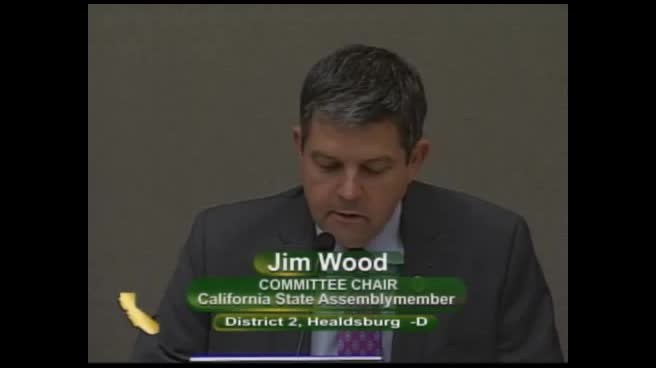 1MIN
Assembly Standing Committee on Health
 5MIN
Senate Floor
Senate Standing Committee on Health
Bill Author