SB 970: Greenhouse Gas Reduction Fund: grant program: recyclable materials.
- Session Year: 2015-2016
- House: Senate
- Latest Version Date: 2016-09-14
The California Global Warming Solutions Act of 2006 designates the State Air Resources Board as the state agency charged with monitoring and regulating sources of emissions of greenhouse gases. The act authorizes the state board to include the use of market-based compliance mechanisms. Existing law requires all moneys, except for fines and penalties, collected by the state board from the market-based compliance mechanism to be deposited in the Greenhouse Gas Reduction Fund and to be available upon appropriation by the Legislature.
Existing law requires certain moneys appropriated by the Legislature from the Greenhouse Gas Reduction Fund to be used by the Department of Resources Recycling and Recovery for a grant program to provide financial assistance to reduce greenhouse gas emissions by promoting in-state development of infrastructure to process organic and other recyclable materials into new, value-added products.
This bill would require the department, in awarding a grant for organics composting or anaerobic digestion under the program, to consider, among other things, the amount of greenhouse gas emissions reductions that may result from the project and the amount of organic material that may be diverted from landfills as a result of the project. This bill would also permit the department, to the degree that funds are available, to provide larger grant awards for large-scale regional integrated projects that provide cost-effective organic waste diversion and maximize environmental benefits.
The California Global Warming Solutions Act of 2006 designates the State Air Resources Board as the state agency charged with monitoring and regulating sources of emissions of greenhouse gases. The act authorizes the state board to include the use of market-based compliance mechanisms. Existing law requires all moneys, except for fines and penalties, collected by the state board from the market-based compliance mechanism to be deposited in the Greenhouse Gas Reduction Fund and to be available upon appropriation by the Legislature.
Existing law requires certain moneys appropriated by the Legislature from the Greenhouse Gas Reduction Fund to be used by the Department of Resources Recycling and Recovery for a grant program to provide financial assistance to reduce greenhouse gas emissions by promoting in-state development of infrastructure to process organic and other recyclable materials into new, value-added products.
This bill would require the department, in awarding a grant for organics composting or anaerobic digestion under the program, to consider, among other things, the amount of greenhouse gas emissions reductions that may result from the project and the amount of organic material that may be diverted from landfills as a result of the project.
The California Global Warming Solutions Act of 2006 designates the State Air Resources Board as the state agency charged with monitoring and regulating sources of emissions of greenhouse gases. The act authorizes the state board to include the use of market-based compliance mechanisms. Existing law requires all moneys, except for fines and penalties, collected by the state board from the market-based compliance mechanism to be deposited in the Greenhouse Gas Reduction Fund and to be available upon appropriation by the Legislature.
Existing law requires certain moneys appropriated by the Legislature from the Greenhouse Gas Reduction Fund to be used by the Department of Resources Recycling and Recovery for a grant program to provide financial assistance to reduce greenhouse gas emissions by promoting in-state development of infrastructure to process organic and other recyclable materials into new, value-added products.
This bill would require the department, in awarding a grant under the program, to consider, among other things, the amount of greenhouse gas emissions reductions that may result from the project and the amount of organic material that may be diverted from landfills as a result of the project.
Existing law requires the Department of Resources Recycling and Recovery to identify and recommend actions to address permitting and siting challenges and to encourage the continued viability of the states organic waste processing and recycling infrastructure, in partnership with the California Environmental Protection Agency and other specified state and regional agencies. Existing law requires the department to cooperate with local jurisdictions and industry to provide assistance for increasing the feasibility of organic waste recycling and to identify certain state financing mechanisms and state funding incentives and post this information on its Internet Web site.
This bill would require the department, in consultation with the State Air Resources Board and the State Energy Resources Conservation and Development Commission, by June 1, 2017, to develop a pilot demonstration program to award matching grant funding for cost effective and efficient integrated organic food waste diversion projects at existing wastewater treatment facilities, as provided.
Existing law requires the Department of Resources Recycling and Recovery to identify and recommend actions to address permitting and siting challenges and to encourage the continued viability of the states organic waste processing and recycling infrastructure, in partnership with the California Environmental Protection Agency and other specified state and regional agencies. Existing law requires the department to cooperate with local jurisdictions and industry to provide assistance for increasing the feasibility of organic waste recycling and to identify certain state financing mechanisms and state funding incentives and post this information on its Internet Web site.
This bill would require, by June 1, 2017, require the department, in consultation with the State Air Resources Board and the State Energy Resources Conservation and Development Commission, by June 1, 2017, to develop a pilot demonstration program that encourages to award matching grant funding for cost effective and efficient integrated organic food waste diversion projects. projects at existing wastewater treatment facilities, as provided.
Existing law requires the Department of Resources Recycling and Recovery to identify and recommend actions to address permitting and siting challenges and to encourage the continued viability of the states organic waste processing and recycling infrastructure, in partnership with the California Environmental Protection Agency and other specified state and regional agencies. Existing law requires the department to cooperate with local jurisdictions and industry to provide assistance for increasing the feasibility of organic waste recycling and to identify certain state financing mechanisms and state funding incentives and post this information on its Internet Web site.
This bill would require, by June 1, 2017, the department, in consultation with the State Air Resources Board and the State Energy Resources Conservation and Development Commission, to develop a pilot program that encourages cost-effective and efficient integrated organic food waste diversion projects.
The Legislature finds and declares the following:
(a)Organic waste diversion policies in California should encourage and incentivize regional integrated projects that maximize the efficient diversion of landfill waste, achieve cost-effective reductions in emissions of greenhouse gases, and maximize resource recovery and environmental benefits through the creation of clean energy and low-carbon transportation fuels.
(b)According to the California Air Resources Board, leveraging existing excess capacity at Californias waste treatment facilities can dramatically reduce the number of new facilities that may be required to handle diverted organic waste and help maximize the environmental and economic potential of organic waste diversion.
SEC. 2.Section 42999 of the Public Resources Code is amended to read:42999.(a)Any additional funds appropriated by the Legislature from the Greenhouse Gas Reduction Fund, established pursuant to Section 16428.8 of the Government Code, to the department shall be used to administer a grant program to provide financial assistance to reduce greenhouse gas emissions by promoting in-state development of infrastructure to process organics and other recyclable materials into new, value-added products. The moneys shall be expended consistent with the requirements of Article 9.7 (commencing with Section 16428.8) of Chapter 2 of Part 2 of Division 4 of Title 2 of the Government Code and Chapter 4.1 (commencing with Section 39710) of Part 2 of Division 26 of the Health and Safety Code.
(b)From moneys appropriated for purposes of this section, the department shall provide grants, incentive payments, contracts, or other funding mechanisms to public and private entities located in the state for any of the following:
(1)Organics composting.
(2)Anaerobic digestion.
(3)Recyclable material manufacturing infrastructure projects or other related activities that reduce greenhouse gas emissions.
(c)For purposes of this section, eligible infrastructure projects that reduce greenhouse gas emissions include, but are not limited to, any of the following:
(1)Capital investments in new facilities and increased throughput at existing facilities for activities, such as converting windrow composting to aerated-static-pile composting to use food waste as feedstock.
(2)Designing and constructing anaerobic digestion facilities to produce biofuels and bioenergy.
(3)Designing and constructing facilities for processing recyclable materials.
(d)In awarding a grant for organics composting or anaerobic digestion pursuant to this section, the department shall consider all of the following:
(1)The amount of greenhouse gas emissions reductions that may result from the project.
(2)The amount of organic material that may be diverted from landfills as a result of the project.
(3)If, and how, the project may benefit disadvantaged communities.
(4)For a grant awarded for an anaerobic digestion project, if, and how, the project maximizes resource recovery, including the production of clean energy or low-carbon or carbon negative transportation fuels.
(5)Project readiness and permitting that the project may require.
(6)Air and water quality benefits that the project may provide.
(e)To the degree that funds are available, the department may provide larger grant awards for large-scale regional integrated projects that provide cost-effective organic waste diversion and maximize environmental benefits.
The Legislature finds and declares the following:
(a)Organic waste diversion policies in California should encourage and incentivize regional integrated projects that maximize the efficient diversion of landfill waste, achieve cost-effective reductions in emissions of greenhouse gases, and maximize resource recovery and environmental benefits through the creation of clean energy and low-carbon transportation fuels.
(b)According to the California Air Resources Board, leveraging existing excess capacity at Californias waste treatment facilities can dramatically reduce the number of new facilities that may be required to handle diverted organic waste and help maximize the environmental and economic potential of organic waste diversion.
SEC. 2.Section 42999 of the Public Resources Code is amended to read:42999.(a)Any additional funds appropriated by the Legislature from the Greenhouse Gas Reduction Fund, established pursuant to Section 16428.8 of the Government Code, to the department shall be used to administer a grant program to provide financial assistance to reduce greenhouse gas emissions by promoting in-state development of infrastructure to process organics and other recyclable materials into new, value-added products. The moneys shall be expended consistent with the requirements of Article 9.7 (commencing with Section 16428.8) of Chapter 2 of Part 2 of Division 4 of Title 2 of the Government Code and Chapter 4.1 (commencing with Section 39710) of Part 2 of Division 26 of the Health and Safety Code.
(b)From moneys appropriated for purposes of this section, the department shall provide grants, incentive payments, contracts, or other funding mechanisms to public and private entities located in the state for any of the following:
(1)Organics composting.
(2)Anaerobic digestion.
(3)Recyclable material manufacturing infrastructure projects or other related activities that reduce greenhouse gas emissions.
(c)For purposes of this section, eligible infrastructure projects that reduce greenhouse gas emissions include, but are not limited to, any of the following:
(1)Capital investments in new facilities and increased throughput at existing facilities for activities, such as converting windrow composting to aerated-static-pile composting to use food waste as feedstock.
(2)Designing and constructing anaerobic digestion facilities to produce biofuels and bioenergy.
(3)Designing and constructing facilities for processing recyclable materials.
(d)In awarding a grant for organics composting or anaerobic digestion pursuant to this section, the department shall consider all of the following:
(1)The amount of greenhouse gas emissions reductions that may result from the project.
(2)The amount of organic material that may be diverted from landfills as a result of the project.
(3)If, and how, the project may benefit disadvantaged communities.
(4)If, and how, the project leverages existing waste water treatment infrastructure.
(5)If,
(4)For a grant awarded for an anaerobic digestion project, if, and how, the project maximizes resource recovery, including the production of clean energy or low-carbon or carbon negative transportation fuels.
(6)If, and how, the project encourages and results in broad regional integrated solutions that maximize the environmental and economic potential of organic waste diversion.
(7)
(5)Project readiness and permitting that the project may require.
(8)
(6)Air and water quality benefits that the project may provide.
(e)To the degree that funds are available, the department may provide larger grant awards for large-scale regional integrated projects that provide cost-effective organic waste diversion and maximize environmental benefits.
The Legislature finds and declares the following:
(a)Organic waste diversion policies in California should encourage and incentivize regional integrated projects that maximize the efficient diversion of landfill waste, achieve cost-effective reductions in emissions of greenhouse gases, and maximize resource recovery and environmental benefits through the creation of clean energy and low-carbon transportation fuels.
(b)According to the California Air Resources Board, leveraging existing excess capacity at Californias waste treatment facilities can dramatically reduce the number of new facilities that may be required to handle diverted organic waste and help maximize the environmental and economic potential of organic waste diversion.
SECTION 1.SEC. 2.Section 42999 of the Public Resources Code is amended to read:42999.(a)Any additional funds appropriated by the Legislature from the Greenhouse Gas Reduction Fund, established pursuant to Section 16428.8 of the Government Code, to the department shall be used to administer a grant program to provide financial assistance to reduce greenhouse gas emissions by promoting in-state development of infrastructure to process organics and other recyclable materials into new new, value-added products. The moneys shall be expended consistent with the requirements of Article 9.7 (commencing with Section 16428.8) of Chapter 2 of Part 2 of Division 4 of Title 2 of the Government Code and Chapter 4.1 (commencing with Section 39710) of Part 2 of Division 26 of the Health and Safety Code.
(b)From moneys appropriated for purposes of this section, the department shall provide grants, incentive payments, contracts, or other funding mechanisms to public and private entities located in the state for any of the following:
(1)Organics composting.
(2)Anaerobic digestion.
(3)Recyclable material manufacturing infrastructure projects or other related activities that reduce greenhouse gas emissions.
(c)For purposes of this section, eligible infrastructure projects that reduce greenhouse gas emissions include, but are not limited to, any of the following:
(1)Capital investments in new facilities and increased throughput at existing facilities for activities, such as converting windrow composting to aerated-static-pile composting to use food waste as feedstock.
(2)Designing and constructing anaerobic digestion facilities to produce biofuels and bioenergy.
(3)Designing and constructing facilities for processing recyclable materials.
(d)In awarding a grant for organics composting or anaerobic digestion pursuant to this section, the department shall consider all of the following:
(1)The amount of greenhouse gas emissions reductions that may result from the project.
(2)The amount of organic material that may be diverted from landfills as a result of the project.
(3)If, and how, the project may benefit disadvantaged communities.
(4)If, and how, the project leverages existing waste water treatment infrastructure.
(5)If, and how, the project maximizes resource recovery, including the production of clean energy or low-carbon or carbon negative transportation fuels.
(6)If, and how, the project encourages and results in broad regional integrated solutions that maximize the environmental and economic potential of organic waste diversion.
(4)
(7)Project readiness and permitting that the project may require.
(5)
(8)Air and water quality benefits that the project may provide.
(e)To the degree that funds are available, the department may provide larger grant awards for large-scale regional integrated projects that provide cost-effective organic waste diversion and maximize environmental benefits.
(a)Any additional funds appropriated by the Legislature from the Greenhouse Gas Reduction Fund, established pursuant to Section 16428.8 of the Government Code, to the department shall be used to administer a grant program to provide financial assistance to reduce greenhouse gas emissions by promoting in-state development of infrastructure to process organics and other recyclable materials into new value-added products. The moneys shall be expended consistent with the requirements of Article 9.7 (commencing with Section 16428.8) of Chapter 2 of Part 2 of Division 4 of Title 2 of the Government Code and Chapter 4.1 (commencing with Section 39710) of Part 2 of Division 26 of the Health and Safety Code.
(b)From moneys appropriated for purposes of this section, the department shall provide grants, incentive payments, contracts, or other funding mechanisms to public and private entities located in the state for any of the following:
(1)Organics composting.
(2)Anaerobic digestion.
(3)Recyclable material manufacturing infrastructure projects or other related activities that reduce greenhouse gas emissions.
(c)For purposes of this section, eligible infrastructure projects that reduce greenhouse gas emissions include, but are not limited to, any of the following:
(1)Capital investments in new facilities and increased throughput at existing facilities for activities, such as converting windrow composting to aerated-static-pile composting to use food waste as feedstock.
(2)Designing and constructing anaerobic digestion facilities to produce biofuels and bioenergy.
(3)Designing and constructing facilities for processing recyclable materials.
(d)In awarding a grant for organics composting or anaerobic digestion pursuant to this section, the department shall consider all of the following:
(1)The amount of greenhouse gas emissions reductions that may result from the project.
(2)The amount of organic material that may be diverted from landfills as a result of the project.
(3)If, and how, the project may benefit disadvantaged communities.
(4)Project readiness and permitting that the project may require.
(5)Air and water quality benefits that the project may provide.
(a)Any additional funds appropriated by the Legislature from the Greenhouse Gas Reduction Fund, established pursuant to Section 16428.8 of the Government Code, to the department shall be used to administer a grant program to provide financial assistance to reduce greenhouse gas emissions by promoting in-state development of infrastructure to process organics and other recyclable materials into new value-added products. The moneys shall be expended consistent with the requirements of Article 9.7 (commencing with Section 16428.8) of Chapter 2 of Part 2 of Division 4 of Title 2 of the Government Code and Chapter 4.1 (commencing with Section 39710) of Part 2 of Division 26 of the Health and Safety Code.
(b)For a grant made pursuant to From moneys appropriated for purposes of this section, the department shall expend the moneys to provide grants, incentive payments, contracts, or other funding mechanisms to public and private entities located in the state for any of the following:
(1)Organics composting.
(2)Anaerobic digestion.
(3)Recyclable material manufacturing infrastructure projects or other related activities that reduce greenhouse gas emissions.
(c)For purposes of this section, eligible infrastructure projects that reduce greenhouse gas emissions include, but are not limited to, any of the following:
(1)Capital investments in new facilities and increased throughput at existing facilities for activities, such as converting windrow composting to aerated-static-pile composting to use food waste as feedstock.
(2)Designing and constructing anaerobic digestion facilities to produce biofuels and bioenergy.
(3)Designing and constructing facilities for processing recyclable materials.
(d)In awarding a grant pursuant to this section, the department shall consider all of the following:
(1)The amount of greenhouse gas emissions reductions that may result from the project.
(2)The amount of organic material that may be diverted from landfills as a result of the project.
(3)If, and how, the project may benefit disadvantaged communities.
(4)Project readiness and permitting that the project may require.
(5)Air and water quality benefits that the project may provide.
SECTION 1.This act shall be known, and may be cited, as the Regional Integrated Organics Diversion and Beneficial Utilization Act.
SEC. 2.The Legislature finds and declares all of the following:
(a)The California Global Warming Solutions Act of 2006 (Division 25.5 (commencing with Section 38500) of the Health and Safety Code) establishes a policy to reduce emissions of greenhouse gases to 1990 levels by 2020 and to continue those reductions of greenhouse gases beyond 2020.
(b)The critical role that short-lived climate pollutants (SLCPs) must play in the states climate efforts is recognized in Chapter 4.2 (commencing with Section 39730) of Part 2 of Division 26 of the Health and Safety Code, which requires the State Air Resources Board to develop a strategy to reduce the emissions of SLCPs.
(c)California must achieve deep reductions in the emissions of SLCPs by 2030 to meet potential or actual future greenhouse gas emissions targets and air quality goals.
(d)Intensified state and global action to reduce the emissions of SLCPs is the only way to immediately slow global warming and manage the damaging effects of climate change.
(e)California has clear goals to reduce waste and to divert organic materials from landfills and put them to beneficial use. The state has a target to reduce landfilling of solid waste by 75 percent by 2020.
(f)Organic waste constitutes more than one-third of Californias waste stream. Food waste alone accounts for about five million tons of landfilled organics each year.
(g)Conservative estimates suggest that publicly owned wastewater treatment agencies have existing capacity to codigest up to 75 percent or more of the food waste currently being landfilled.
(h)The diversion of food waste, fats, oils, and grease from landfills by using existing infrastructure and facilities at wastewater treatment agencies is recognized by the State Air Resources Board as an effective and cost-efficient strategy to maximize the resource recovery of the organic waste. Using existing facilities also ensures projects can be sited, permitted, and constructed in a timely fashion to meet the states ambitious waste diversion goals.
(i)Significant efforts to divert organic materials from landfills, reduce methane emissions, and create clean energy, including low or negative carbon transportation fuels, should be encouraged by state policies.
(j)As future clean energy investments are planned and implemented, state officials should ensure targeted investment, regional cooperation, and public-private partnerships are utilized at existing wastewater agencies to maximize the states organics diversion efforts and achieve cost effective and environmentally beneficial reductions in the emissions of greenhouse gases.
SEC. 3.Section 42649.88 is added to the Public Resources Code, to read:42649.88.(a)No later than June 1, 2017, the department, in consultation with the State Air Resources Board and the State Water Resources Control Board, shall develop a pilot demonstration program to provide matching grant funds for cost effective and efficient regional integrated food waste diversion projects at existing wastewater treatment facilities. The pilot demonstration program shall give priority to projects that provide the following benefits:
(1)Maximize food waste diversion in a cost-effective manner that uses existing facilities and infrastructure.
(2)Maximize resource recovery of diverted waste, including the production of clean energy, or low or negative carbon transportation fuels.
(3)Maximize regional cooperation among publicly owned wastewater treatment agencies, cities or counties, waste haulers, landfill operators, and other relevant regional entities.
(4)Demonstrate effective and efficient organics management strategies that can be duplicated throughout the state.
(b)Projects funded pursuant to the program shall be located at existing wastewater treatment facilities in California and result in all of the following:
(1)Permanent, annual, measurable, and verifiable reductions in the emissions of greenhouse gases from the diversion of food waste through avoidance of methane release at landfill and capture and use of methane at wastewater treatment facilities.
(2)Permanent, annual, measurable, and verifiable increases in the quantity of food waste diverted from landfills to digestion or composting.
(3)Permanent, annual, measurable, and verifiable environmental benefits for disadvantaged communities, as identified pursuant to Section 39711 of the Health and Safety Code.
(c)(1)The department shall give priority to projects with minimal siting and permitting requirements.
(2)In awarding grants pursuant to the program, the department shall seek to maximize the reduction in the emissions of greenhouse gases achieved by a project for each grant dollar awarded.
(d)(1)Projects eligible for matching grant funds pursuant to the program include, but are not limited to, the modification, renovation, or expansion of existing wastewater treatment facilities to accept and process food waste streams.
(2)The department shall identify three to five regional projects for matching grant funds pursuant to the program. The department, upon appropriation by the Legislature, may expend moneys from the Greenhouse Gas Reduction Fund established pursuant to Section 16428.8 of the Government Code for awarding grants pursuant to the program.
(3)The department may award matching funds of up to ten million dollars ($10,000,000) for each project. The amount awarded shall not exceed 50 percent of the project cost.
This act shall be known, and may be cited, as the Regional Integrated Organics Diversion and Beneficial Utilization Act.
SEC. 2.The Legislature finds and declares all of the following:
(a)The California Global Warming Solutions Act of 2006 (Division 25.5 (commencing with Section 38500) of the Health and Safety Code) establishes a policy to reduce emissions of greenhouse gases to 1990 levels by 2020 and to continue those reductions of greenhouse gases beyond 2020.
(b)The critical role that short-lived climate pollutants (SLCPs) must play in the states climate efforts is recognized in Chapter 4.2 (commencing with Section 39730) of Part 2 of Division 26 of the Health and Safety Code, which requires the State Air Resources Board to develop a strategy to reduce the emissions of SLCPs.
(c)California must achieve deep reductions in the emissions of SLCPs by 2030 to meet potential or actual future greenhouse gas emissions targets and air quality goals.
(d)Intensified state and global action to reduce the emissions of SLCPs is the only way to immediately slow global warming and manage the damaging effects of climate change.
(e)California has clear goals to reduce waste and to divert organic materials from landfills and put them to beneficial use. The state has a target to reduce landfilling of solid waste by 75 percent by 2020.
(f)Organic waste constitutes more than one-third of Californias waste stream. Food waste alone accounts for about five million tons of landfilled organics each year.
(g)Efforts to divert organics from landfills and develop infrastructure that makes best use of the material are key elements of an integrated strategy.
(g)Conservative estimates suggest that publicly owned wastewater treatment agencies have existing capacity to codigest up to 75 percent or more of the food waste currently being landfilled.
(h)The diversion of food waste, fats, oils, and grease from landfills by using existing infrastructure and facilities at wastewater treatment agencies is recognized by the State Air Resources Board as an effective and cost-efficient strategy to maximize the resource recovery of the organic waste. Using existing facilities also ensures projects can be sited, permitted, and constructed in a timely fashion to meet the states ambitious waste diversion goals.
(h)
(i)Significant efforts to divert organic materials from landfills and landfills, reduce methane emissions emissions, and develop create clean energy, including low or negative carbon transportation fuels fuels, should be encouraged by state policies.
(i)
(j)As future clean energy investments are planned and implemented, state officials should ensure targeted investment, regional cooperation, and public-private partnerships are utilized at existing wastewater agencies to maximize the states organics diversion efforts and achieve cost effective and environmentally beneficial reductions in the emissions of greenhouse gases.
SEC. 3.Section 42649.88 is added to the Public Resources Code, to read:42649.88.By June 1, 2017, the department, in consultation with the State Air Resources Board and the State Energy Resources Conservation and Development Commission, shall develop a pilot program that encourages cost-effective and efficient integrated organic food waste diversion projects. The pilot program shall give priority to projects that are based on regional cooperation and provide the following benefits:
(a)Cost-effective utilization of existing anaerobic digestion capacity at public wastewater agencies.
(b)Making the best use of diverted organics, including the production of low or negative carbon transportation fuels.
(c)Direct or indirect reduction in the emissions of criteria air pollutants.
(d)Effective use of public-private partnerships.
(e)Environmental benefits for disadvantaged communities, as identified pursuant to Section 39711 of the Health and Safety Code.
(f)Local job creation.
42649.88.(a)No later than June 1, 2017, the department, in consultation with the State Air Resources Board and the State Water Resources Control Board, shall develop a pilot demonstration program to provide matching grant funds for cost effective and efficient regional integrated food waste diversion projects at existing wastewater treatment facilities. The pilot demonstration program shall give priority to projects that provide the following benefits:
(1)Maximize food waste diversion in a cost-effective manner that uses existing facilities and infrastructure.
(2)Maximize resource recovery of diverted waste, including the production of clean energy, or low or negative carbon transportation fuels.
(3)Maximize regional cooperation among publicly owned wastewater treatment agencies, cities or counties, waste haulers, landfill operators, and other relevant regional entities.
(4)Demonstrate effective and efficient organics management strategies that can be duplicated throughout the state.
(b)Projects funded pursuant to the program shall be located at existing wastewater treatment facilities in California and result in all of the following:
(1)Permanent, annual, measurable, and verifiable reductions in the emissions of greenhouse gases from the diversion of food waste through avoidance of methane release at landfill and capture and use of methane at wastewater treatment facilities.
(2)Permanent, annual, measurable, and verifiable increases in the quantity of food waste diverted from landfills to digestion or composting.
(3)Permanent, annual, measurable, and verifiable environmental benefits for disadvantaged communities, as identified pursuant to Section 39711 of the Health and Safety Code.
(c)(1)The department shall give priority to projects with minimal siting and permitting requirements.
(2)In awarding grants pursuant to the program, the department shall seek to maximize the reduction in the emissions of greenhouse gases achieved by a project for each grant dollar awarded.
(d)(1)Projects eligible for matching grant funds pursuant to the program include, but are not limited to, the modification, renovation, or expansion of existing wastewater treatment facilities to accept and process food waste streams.
(2)The department shall identify three to five regional projects for matching grant funds pursuant to the program. The department, upon appropriation by the Legislature, may expend moneys from the Greenhouse Gas Reduction Fund established pursuant to Section 16428.8 of the Government Code for awarding grants pursuant to the program.
(3)The department may award matching funds of up to ten million dollars ($10,000,000) for each project. The amount awarded shall not exceed 50 percent of the project cost.
This act shall be known, and may be cited, as the Regional Integrated Organics Diversion and Beneficial Utilization Act.
SEC. 2.The Legislature finds and declares all of the following:
(a)The California Global Warming Solutions Act of 2006 (Division 25.5 (commencing with Section 38500) of the Health and Safety Code) establishes a policy to reduce emissions of greenhouse gases to 1990 levels by 2020 and to continue those reductions of greenhouse gases beyond 2020.
(b)The critical role that short lived climate pollutants (SLCPs) must play in the states climate efforts is recognized in Chapter 4.2 (commencing with Section 39730) of Part 2 of Division 26 of the Health and Safety Code, which requires the State Air Resources Board to develop a strategy to reduce the emissions of SLCPs.
(c)California must achieve deep reductions in the emissions of SLCPs by 2030 to meet potential or actual future greenhouse gas emissions targets and air quality goals.
(d)Intensified state and global action to reduce the emissions of SLCPs is the only way to immediately slow global warming and manage the damaging effects of climate change.
(e)California has clear goals to reduce waste and to divert organic materials from landfills and put them to beneficial use. The state has a target to reduce landfilling of solid waste by 75 percent by 2020.
(f)Organic waste constitutes more than one-third of Californias waste stream. Food waste alone accounts for about five million tons of landfilled organics each year.
(g)Efforts to divert organics from landfills and develop infrastructure that makes best use of the material are key elements of an integrated strategy.
(h)Significant efforts to divert organic materials from landfills and reduce methane emissions and develop low or negative carbon transportation fuels should be encouraged by state policies.
(i)As future clean energy investments are planned and implemented, state officials should ensure targeted investment, regional cooperation, and public-private partnerships are utilized to maximize the states organics diversion efforts and achieve cost-effective and environmentally beneficial reductions in the emissions of greenhouse gases.
SEC. 3.Section 42649.88 is added to the Public Resources Code, to read:42649.88.By June 1, 2017, the department, in consultation with the State Air Resources Board and the State Energy Resources Conservation and Development Commission, shall develop a pilot program that encourages cost-effective and efficient integrated organic food waste diversion projects. The pilot program shall give priority to projects that are based on regional cooperation and provide the following benefits:
(a)Cost-effective utilization of existing anaerobic digestion capacity at public wastewater agencies.
(b)Making the best use of diverted organics, including the production of low or negative carbon transportation fuels.
(c)Direct or indirect reduction in the emissions of criteria air pollutants.
(d)Effective use of public-private partnerships.
(e)Environmental benefits for disadvantaged communities, as identified pursuant to Section 39711 of the Health and Safety Code.
(f)Local job creation.
|
Date
|
Status
|
|---|---|
| Aug 23, 2016 | Read third time. Passed. Ordered to the Senate. |
| Jun 1, 2016 | In Assembly. Read first time. Held at Desk. |
| Jun 6, 2016 | Referred to Com. on NAT. RES. |
| Jun 20, 2016 | From committee with author's amendments. Read second time and amended. Re-referred to Com. on NAT. RES. |
| Jun 28, 2016 | From committee: Do pass as amended and re-refer to Com. on APPR. (Ayes 8. Noes 0.) (June 27). |
| Jun 29, 2016 | Read second time and amended. Re-referred to Com. on APPR. |
| Aug 3, 2016 | August 3 hearing postponed by committee. |
| Aug 10, 2016 | From committee: Do pass. (Ayes 19. Noes 0.) (August 10). |
| Aug 11, 2016 | Read second time. Ordered to third reading. |
| May 31, 2016 | Read third time. Passed. (Ayes 27. Noes 4.) Ordered to the Assembly. |
| Aug 23, 2016 | Read third time. Passed. (Ayes 77. Noes 0. Page 6076.) Ordered to the Senate. |
| Aug 30, 2016 | In Senate. Concurrence in Assembly amendments pending. |
| Aug 31, 2016 | Assembly amendments concurred in. (Ayes 26. Noes 10. Page 5570.) Ordered to engrossing and enrolling. |
| Aug 31, 2016 | Assembly amendments concurred in. (Ayes 26. Noes 10.) Ordered to engrossing and enrolling. |
| Aug 31, 2016 | Enrolled and presented to the Governor at 6 p.m. |
| Sep 14, 2016 | Approved by the Governor. |
| Sep 14, 2016 | Chaptered by Secretary of State. Chapter 365, Statutes of 2016. |
| Apr 25, 2016 | Read second time and amended. Re-referred to Com. on APPR. |
| Feb 9, 2016 | From printer. May be acted upon on or after March 10. |
| Feb 18, 2016 | Referred to Com. on E.Q. |
| Mar 15, 2016 | Set for hearing April 6. |
| Mar 28, 2016 | From committee with author's amendments. Read second time and amended. Re-referred to Com. on E.Q. |
| Apr 5, 2016 | April 6 set for first hearing canceled at the request of author. |
| Apr 6, 2016 | Set for hearing April 20. |
| Apr 21, 2016 | From committee: Do pass as amended and re-refer to Com. on APPR. (Ayes 7. Noes 0. Page 3642.) (April 20). |
| Apr 21, 2016 | From committee: Do pass as amended and re-refer to Com. on APPR. (Ayes 7. Noes 0.) (April 20). |
| Feb 8, 2016 | Introduced. Read first time. To Com. on RLS. for assignment. To print. |
| Apr 29, 2016 | Set for hearing May 9. |
| May 4, 2016 | May 9 set for first hearing canceled at the request of author. |
| May 6, 2016 | Set for hearing May 16. |
| May 10, 2016 | From committee with author's amendments. Read second time and amended. Re-referred to Com. on APPR. |
| May 17, 2016 | From committee: Be ordered to second reading pursuant to Senate Rule 28.8. |
| May 18, 2016 | Read second time. Ordered to third reading. |
| May 31, 2016 | Read third time. Passed. (Ayes 27. Noes 4. Page 4035.) Ordered to the Assembly. |
|
Date
|
Description
|
Location
|
Votes
|
|
|---|---|---|---|---|
| Aug 31, 2016 | Unfinished Business SB970 Leyva Concurrence | Senate Floor |
Passed |
|
| Aug 23, 2016 | SB 970 Leyva Senate Third Reading By WILLIAMS | Assembly Floor |
Passed |
|
| Aug 10, 2016 | Do pass. | Assembly Standing Committee on Appropriations |
Passed |
|
| Jun 27, 2016 | Do pass as amended and be re-referred to the Committee on [Appropriations] | Assembly Standing Committee on Natural Resources |
Passed |
|
| May 31, 2016 | Senate 3rd Reading SB970 Leyva | Senate Floor |
Passed |
|
| Apr 20, 2016 | Do pass as amended, but first amend, and re-refer to the Committee on [Appropriations] | Senate Standing Committee on Environmental Quality |
Passed |
This list shows positions taken on this bill by organizations on the date displayed, which is linked to the original source.
Positions by individuals are not included.
|
Organization
|
Position
|
Date
|
|---|---|---|
| California Association Of Sanitation Agencies | ** Support | Aug 31, 2016 |
| California Compost Coalition | * Against | Jun 27, 2016 |
| California Compost Coalition | * For If Amend | Jun 27, 2016 |
| Carbon Cycle Institute | ** Support | Aug 31, 2016 |
| County Sanitation Districts Of Los Angeles County | ** Support | Aug 31, 2016 |
| Inland Empire Utilities Agency | ** Support | Aug 31, 2016 |
| Los Angeles County Sanitation District | * Support | Jun 27, 2016 |
| NAT. RES. | ** Against | Jun 27, 2016 |
| Solid Waste Association of North America | * Support | Aug 10, 2016 |
| Sonoma County Water Agency | ** Support | Aug 31, 2016 |
| Southern California Gas Company | ** Support | Aug 31, 2016 |
| Sponsor Inland Empire Utilities Agency | * Support | Aug 10, 2016 |
Office of Senate Floor Analyses (916) 651-1520 Fax: (916) 327-4478 | SB |
UNFINISHED BUSINESS
Bill No: SB 970
:
SENATE ENVIRONMENTAL QUALITY COMMITTEE: 7-0, 4/20/16
AYES: Wieckowski, Gaines, Bates, Hill, Jackson, Leno, Pavley
SENATE APPROPRIATIONS COMMITTEE: Senate Rule 28.8
SENATE FLOOR: 27-4, 5/31/16
AYES: Allen, Beall, Block, De León, Galgiani, Glazer, Hall, Hancock, Hernandez, Hertzberg, Hill, Hueso, Huff, Jackson, Lara, Leno, Leyva, Liu, McGuire, Mendoza, Mitchell, Monning, Pan, Pavley, Roth, Wieckowski, Wolk
NOES: Anderson, Moorlach, Morrell, Vidak
NO VOTE RECORDED: Bates, Berryhill, Cannella, Fuller, Gaines, Nguyen, Nielsen, Runner, Stone
ASSEMBLY FLOOR: 77-0, 8/23/16 - See last page for vote
SOURCE: Inland Empire Utilities Agency
DIGEST: This bill requires the Department of Resources Recycling and Recovery (CalRecycle), in awarding a grant for organics composting or anaerobic digestion projects funded with AB 32 cap-and-trade revenues (Greenhouse Gas Reduction Fund) and authorizes CalRecycle to provide larger grant awards for large-scale regional projects.
Assembly Amendments add a provision authorizing CalRecycle to provide bigger grant awards for large-scale regional integrated projects that provide cost-effective organic waste diversion and maximize environmental benefits.
Existing law:
- Enacts, pursuant to the Integrated Waste Management Act of 1989 (Public Resources Code (PRC) §40000 et seq.), which:
- Establishes a statewide diversion goal of 75% by 2020.
- Requires local agencies to divert, through source reduction, recycling, and composting, 50% of solid waste disposed by their jurisdictions.
- Requires a commercial waste generator, including multi-family dwellings, to arrange for recycling services and requires local governments to implement commercial solid waste recycling programs designed to divert solid waste from businesses.
- Requires generators of specified amounts of organic waste to arrange for recycling services for that material.
- Establishes a statewide diversion goal of 75% by 2020.
- Establishes the Greenhouse Gas Reduction Fund (GGRF) in the State Treasury, requires all moneys, except for fines and penalties, collected pursuant to a market-based mechanism be deposited in the fund and requires the Department of Finance, in consultation with ARB and any other relevant state agency, to develop, as specified, a three-year investment plan for the moneys deposited in the GGRF. (Government Code §16428.8).
- Prohibits the state from approving allocations for a measure or program using GGRF moneys except after determining that the use of those moneys furthers the regulatory purposes of AB 32, and requires moneys from the GGRF be used to facilitate the achievement of reductions of GHG emissions in California. (Health and Safety Code §39712).
- Requires the Department of Resources Recycling and Recovery (CalRecycle) to administer a grant program to provide financial assistance to reduce greenhouse gas (GHG) emissions by promoting in-state development and infrastructure to process organics and other recyclable materials into new value-added products, using funding from GGRF. Specifies that the funding may be used for projects including organics composting, anaerobic digestion, or recyclable material manufacturing infrastructure projects or other related activities that reduce GHG emissions. (PRC §42999).
This bill:
- Requires CalRecycle, in awarding a grant for organics composting or anaerobic digestion to reduce GHG emissions using GGRF funding, to consider the following:
- The amount of GHG emissions reductions that may result from the project;
- The amount of organic material that may be diverted from landfills as a result of the project;
- If, and how, the project may benefit disadvantaged communities;
- For anaerobic digestion projects, if, and how, the project maximizes resource recovery, including the production of clean energy or low-carbon or carbon negative transportation fuels;
- Project readiness and permitting that the project may require; and,
- Air and water quality benefits that the project may provide.
- To the extent funds are available, authorizes CalRecycle to provide larger grant awards for large-scale regional integrated projects that provide cost-effective organic waste diversion and maximize environmental benefits.
Background
- Recycling organic waste. For purposes of recycling, “organic waste” is defined as food waste, green waste, landscape and pruning waste, nonhazardous wood waste, and food-soiled paper waste that is mixed in with food waste. Organic material represents over one-third of the solid waste sent to landfills even though a large percentage can be recycled or composted – approximately 6 million tons of food scraps are thrown away each year.
Recycling technologies for organic waste include anaerobic digestion, composting, and other types of processing that generate renewable fuels, energy, soil amendments, and mulch. Anaerobic digestion, which produces biogas that can be processed into biomethane fuel, is particularly suited to handle food waste. - Waste reduction and GHGs. According to the California Air Resources Board (ARB), a total reduction of 80 million metric tons (MMT), or 16% compared to business as usual, is necessary to reduce statewide GHG emissions to 1990 levels by 2020. ARB intends to achieve approximately 78% of the reductions through direct regulations. ARB proposes to achieve the balance of reductions necessary to meet the 2020 limit (approximately 18 MMT) through its cap-and-trade program.
Landfill gas is generated by the anaerobic decomposition of organic materials such as food, paper, wood, and green material. 50% of landfill gas is methane, a GHG with a much shorter life (also known as a short-lived climate pollutant), but much higher global warming potential than carbon dioxide (methane is approximately 25 times more efficient at trapping heat than carbon dioxide over a 100-year time span). Depending on the types of solid waste, the chemical makeup of landfill biogas can vary greatly from the biogas produced from dairy farms, municipal solid waste, and wastewater treatment facilities. While most modern landfills have systems in place to capture methane, significant amounts continue to escape into the atmosphere. According to ARB’s GHG inventory, approximately 7 million tons of carbon dioxide equivalent are released annually by landfills. That number is expected to increase to 8.5 million tons of carbon dioxide equivalent by 2020.
Composting and other organics processing technologies, including anaerobic digestion, reduce GHGs by avoiding the emissions that would be generated by the material’s decomposition in a landfill. For example, in the case of anaerobic digestion, the process produces methane from the organic waste in a controlled environment for use as a renewable fuel, and results in climate benefits by both reducing GHGs from landfills, and displacing fossil fuels. Recycling organic waste provides significant GHG reductions over landfilling. - Organics Grant Program (OGP). OGP includes a competitive grant program created for the purpose of lowering overall GHG emissions by expanding existing capacity or establishing new facilities in the state to reduce the amount of California-generated green materials, food materials, or alternative daily cover being sent to landfills. Eligible projects include construction, renovation or expansion of facilities in California that compost, anaerobically digest, or use other related digestion or fermentation processes to turn green or food materials into value-added projects. The projects must result in permanent, annual, and measurable: i) reductions in GHG emissions from the handling and landfilling of California-generated green and food materials; and, ii) increases in quantity (tons) of California-generated green materials, food materials, or alternative daily cover diverted from landfills and composted, digested or diverted to other fermentation processes.
- Cap-and-trade auction revenue. Since November 2012, ARB has conducted 14 cap-and-trade auctions, generating over $4 billion in proceeds to the state.
State law specifies that the auction revenues must be used to facilitate the achievement of GHG emissions reductions and outlines various categories of allowable expenditures. Statute further requires the Department of Finance, in consultation with ARB and any other relevant state agency, to develop a three-year investment plan for the auction proceeds, which are deposited in the GGRF.
Legal consideration of cap-and-trade auction revenues. The 2012-13 Budget analysis of cap-and-trade auction revenue by the Legislative Analyst’s Office noted that, based on an opinion from the Office of Legislative Counsel, the auction revenues should be considered mitigation fee revenues, and their use requires that a clear nexus exist between an activity for which a mitigation fee is used and the adverse effects related to the activity on which that fee is levied. Therefore, in order for their use to be valid as mitigation fees, revenues from the cap-and-trade auction must be used to mitigate GHG emissions or the harms caused by GHG emissions.
In 2012, the California Chamber of Commerce filed a lawsuit against the ARB claiming that cap-and-trade auction revenues constitute illegal tax revenue. In November 2013, the superior court ruling declined to hold the auction a tax, concluding that it is more akin to a regulatory fee. In February of 2014, the plaintiffs filed an appeal with the 3rd District Court of Appeal in Sacramento. That case is currently pending.
Comments
Purpose of Bill. According to the author, “California must achieve deep reductions in short-lived climate pollutants by 2030 in order to meet future greenhouse gas emission targets and air quality goals. Short lived climate pollutants (SLCP), also known as “Super Pollutants,” have a much greater warming effect than CO2. This means that reducing SLCPs such as methane will have a significant impact on reducing our greenhouse gas emissions. Cutting methane emissions from solid waste disposal is a key state strategy to slow global warming and reduce the impacts of climate change.”
FISCAL EFFECT: Appropriation: Fiscal Com.: Local:
According to the Assembly Appropriations Committee, “No additional state costs. According to CalRecycle, this bill codifies criteria that are already part of grant award consideration for anaerobic digestion and composting projects. Further, CalRecycle contends they have the ability to award larger grants for large-scale projects under current law.”
California Association of Sanitation Agencies
Carbon Cycle Institute
County Sanitation Districts of Los Angeles County
Inland Empire Utilities Agency
Sonoma County Water Agency
Southern California Gas Company
OPPOSITION: (Verified 8/15/16)
None received
ASSEMBLY FLOOR: 77-0, 8/23/16
AYES: Achadjian, Alejo, Travis Allen, Arambula, Atkins, Baker, Bigelow, Bloom, Bonilla, Bonta, Brough, Brown, Calderon, Campos, Chang, Chau, Chávez, Chiu, Chu, Cooley, Dababneh, Dahle, Daly, Dodd, Eggman, Frazier, Beth Gaines, Gallagher, Cristina Garcia, Eduardo Garcia, Gatto, Gipson, Gomez, Gordon, Gray, Grove, Hadley, Harper, Roger Hernández, Holden, Irwin, Jones, Jones-Sawyer, Kim, Lackey, Levine, Linder, Lopez, Low, Maienschein, Mathis, Mayes, McCarty, Medina, Melendez, Mullin, Nazarian, Obernolte, O'Donnell, Olsen, Patterson, Quirk, Ridley-Thomas, Rodriguez, Salas, Santiago, Steinorth, Mark Stone, Thurmond, Ting, Wagner, Waldron, Weber, Wilk, Williams, Wood, Rendon
NO VOTE RECORDED: Burke, Cooper, Gonzalez
8/29/16 10:34:45
SENATE THIRD READING
STR Bill Id:SB 970
Author:(Leyva)
As Amended Ver:June 29, 2016
Majority vote
SENATE VOTE: 27-4
Committee | Votes | Ayes | Noes |
Natural Resources | 8-0 | Williams, Cristina Garcia, Gomez, Hadley, Harper, McCarty, Mark Stone, Wood | |
Appropriations | 19-0 | Gonzalez, Bigelow, Bloom, Bonilla, Bonta, Calderon, Daly, Eggman, Gallagher, Eduardo Garcia, Holden, Jones, Obernolte, Quirk, Santiago, Wagner, Weber, Wood, Chu |
SUMMARY: Requires the Department of Resources Recycling and Recovery (CalRecycle) to consider specified factors when awarding grants for organic waste projects funded by the Greenhouse Gas Reduction Fund (GGRF.) Specifically, this bill:
- Requires CalRecycle, in awarding a grant for organics composting or anaerobic digestion to reduce greenhouse gas (GHG) emissions using GGRF funding, to consider the following:
- The amount of GHG emissions reductions that may result from the project;
- The amount of organic material that may be diverted from landfills as a result of the project;
- If, and how, the project may benefit disadvantaged communities;
- For anaerobic digestion projects, if, and how, the project maximizes resource recovery, including the production of clean energy or low-carbon or carbon negative transportation fuels;
- Project readiness and permitting that the project may require; and,
- Air and water quality benefits that the project may provide.
- To the extent funds are available, authorizes CalRecycle to provide larger grant awards for large-scale regional integrated projects that provide cost-effective organic waste diversion and maximize environmental benefits.
FISCAL EFFECT: According to the Assembly Appropriations Committee, this bill has no additional state costs. This bill codifies criteria that are already part of grant award consideration for anaerobic digestion and composting projects. Further, CalRecycle contends they have the ability to award larger grants for large-scale projects under current law.
COMMENTS: CalRecycle is tasked with diverting at least 75% of solid waste statewide by 2020. Organic materials make up one-third of the waste stream and food continues to be the greatest single item disposed, making up over 15% of materials landfilled. CalRecycle is also charged with implementing its Strategic Directive 6.1, which calls for reducing organic waste disposal by 50% by 2020. According to CalRecycle, significant gains in organic waste diversion are necessary to meet the 75% goal and to implement Strategic Directive 6.1. Recycling technologies for organic waste include composting, anaerobic digestion, and other types of processing that generate renewable fuels, energy, soil amendments, and mulch. California's state agencies play an essential role in meeting the state's waste reduction requirements.
Recycling provides significant GHG reductions over landfilling. The Air Resources Board's (ARB's) First Update to the Climate Change Scoping Plan identifies waste management as a key sector for GHG emissions reductions and states, "Meeting the [state's] 75% recycling goal is the best path forward to maximizing GHG emission reductions from the Waste Management Sector and putting California on the path for even greater GHG emission reductions in the future." Composting and other organics processing technologies, including anaerobic digestion, reduce GHGs by avoiding the emissions that would be generated by the material's decomposition in a landfill. Landfill gas is generated by the decomposition of organic materials such as food, paper, wood, and yard waste.
Short-lived climate pollutants (SLCPs) are GHGs that remain in the atmosphere for less time than carbon dioxide, but have a much greater climate impact. SLCPs include black carbon, fluorinated gases, and methane. While methane does not linger in the atmosphere as long as carbon dioxide, it is over 80 times more potent than carbon dioxide over the first 20 years. Methane is responsible for about 20% of current climate change, and methane concentrations continue to increase globally.
Fifty percent of landfill gas is methane. While most modern landfills have systems in place to capture methane, significant amounts continue to escape into the atmosphere. According to ARB, landfills generated 20% of the state's methane emissions in 2013. In addition to organic waste, source reduction and recycling reduce GHG emissions associated with the production and transportation of products.
This bill is intended to prioritize grant funding for projects that reduce GHG emissions, divert organic material, provide benefits to disadvantaged communities, require minimal siting and permitting, and provide air and water quality benefits.
Analysis Prepared by: Elizabeth MacMillan / NAT. RES. / (916) 319-2092 FN: 0004108
Date of Hearing: August 10, 2016
ASSEMBLY COMMITTEE ON APPROPRIATIONS
Lorena Gonzalez, Chair
SBPCA Bill Id:SB 970
Author:(Leyva) – As Amended Ver:June 29, 2016
Policy Committee: | Natural Resources | Vote: | 8 - 0 |
Urgency: No State Mandated Local Program: No Reimbursable: No
SUMMARY:
This bill requires CalRecycle to consider various factors when awarding grants for organic waste projects funded with AB 32 cap-and-trade revenues (Greenhouse Gas Reduction Fund) and authorizes CalRecycle to provide larger grant awards for large-scale regional projects. Specifically, this bill:
- Requires CalReycle to consider the following factors when awarding grants for organic composting or anaerobic digestion projects to reduce greenhouse gas (GHG) emissions using Greenhouse Gas Reduction Funds (GGRF):
- The potential amount of GHG emissions.
- The potential amount of organic material that may be diverted from landfills.
- If, and how, the project may benefit disadvantaged communities and leverage existing wastewater treatment infrastructure.
- If, and how, (for anaerobic digestion projects) the project maximizes resource recovery, including the production of clean energy or low-carbon or carbon negative transportation fuels.
- Project readiness and potential permitting requirements.
- Potential air and water quality benefits.
- Authorizes CalRecyle, to the degree funds are available, to provide larger grant awards for large-scale regional integrated projects that provide cost-effective organic waste diversion and maximize environmental benefits.
FISCAL EFFECT:
No additional state costs. According to CalRecycle, this bill codifies criteria that are already part of grant award consideration for anaerobic digestion and composting projects. Further, CalRecycle contends they have the ability to award larger grants for large-scale projects under current law.
COMMENTS:
- Purpose. According to the author, this bill will help the state meet multiple environmental goals as organics are diverted from landfills and methane is recovered and repurposed as clean energy and fuels.
- Background. CalRecycle is tasked with diverting at least 75% of solid waste statewide by 2020. Organic materials make up one-third of the waste stream and food continues to be the greatest single item disposed, making up over 15% of materials in landfills.
CalRecycle is also charged with implementing its Strategic Directive 6.1, which calls for reducing organic waste disposal by 50% by 2020. According to CalRecycle, significant gains in organic waste diversion are necessary to meet the 75% goal and to implement Strategic Directive 6.1. Recycling technologies for organic waste include composting, anaerobic digestion, and other types of processing that generate renewable fuels, energy, soil amendments (organic matter added to soil to improve composition), and mulch.
Recycling provides significant GHG emissions reductions over landfilling. Composting and other organics processing technologies, including anaerobic digestion, reduce GHGs by avoiding the emissions that would be generated by decomposition. Landfill gas is generated by the decomposition of organic materials such as food, paper, wood, and yard waste. Fifty percent of landfill gas is methane. While most landfills have systems to capture methane, significant amounts continue to escape into the atmosphere. Methane does not linger in the atmosphere as long as CO2, but is over 80 times more potent over the first 20 years.
- GGRF. The California Global Warming Solutions Act of 2006 (AB 32, Chapter 488, Statutes of 2006) required ARB to adopt a statewide greenhouse gas (GHG) emissions limit equivalent to 1990 levels by 2020 and adopt regulations to achieve maximum technologically feasible and cost-effective GHG emission reductions. As part of its AB 32 implementation, ARB adopted a cap-and-trade program for which the proceeds from the auction or sale of GHG allowances are deposited in the GGRF and available for appropriation by the Legislature.
To date, cap-and-trade auction revenues have generated over $4 billion. However, the most recent auction, held last month, generated just over $10 million, much less than expected. The previous auction (February, 2016) generated over $500 million.
The Governor proposed spending over $3 billion GGRF for a variety of programs and projects in the transportation, energy, natural resources, and waste diversion sectors in the 2016-17 budget. This included $100 million for CalRecycle's California Climate Investments (CCI) program to implement the goals of AB 32 through the increased in-state diversion of municipal solid waste through waste reduction, diversion, and reuse. However, the Legislature did not act upon these items. According to the Assembly Budget Committee, due to lower-than-expected auction revenues, decisions on cap-and-trade funding were deferred until after June 15, 2016. Although CalRecycle does not currently have CCI funding available for grants, previously approved funding for the CCI loan program is available and CalRecycle is currently accepting 2015–16 loan applications.
Analysis Prepared by: Jennifer Galehouse / APPR. / (916) 319-2081
Date of Hearing: June 27, 2016
ASSEMBLY COMMITTEE ON NATURAL RESOURCES
Das Williams, Chair
SBPCA Bill Id:SB 970
Author:(Leyva) – As Amended Ver:June 20, 2016
SENATE VOTE: 27-4
SUBJECT: Greenhouse Gas Reduction Fund: grant program: recyclable materials
SUMMARY: Requires CalRecycle to consider various factors when awarding grants for organic waste projects funded by the Greenhouse Gas Reduction Fund (GGRF.)
EXISTING LAW:
- Pursuant to the Integrated Waste Management Act:
- Establishes a statewide recycling goal of 75% by 2020;
- Requires local agencies to divert, through source reduction, recycling, and composting, 50% of solid waste disposed by their jurisdictions;
- Requires commercial waste generators, including multi-family dwellings, to arrange for recycling services and requires local governments to implement commercial solid waste recycling programs designed to divert solid waste from businesses; and,
- Requires generators of specified amounts of organic waste to arrange for recycling services for that material.
- Establishes a statewide recycling goal of 75% by 2020;
- Requires the Air Resources Board (ARB), pursuant to California Global Warming Solutions Act of 2006 [AB 32 (Nunez), Chapter 488, Statutes of 2006], to adopt a statewide greenhouse gas (GHG) emissions limit equivalent to 1990 levels by 2020 and adopt regulations to achieve maximum technologically feasible and cost-effective GHG emission reductions. AB 32 authorizes ARB to permit the use of market-based compliance mechanisms to comply with GHG reduction regulations, once specified conditions are met.
- Establishes the GGRF in the State Treasury, requires all moneys, except for fines and penalties, collected pursuant to a market-based mechanism be deposited in the GGRF and requires the Department of Finance, in consultation with ARB and any other relevant state agency, to develop a three-year investment plan for the moneys deposited in the GGRF.
- Specifies that allocations for a measure or program using GGRF moneys must further the regulatory purposes of AB 32, and requires moneys from the GGRF be used to facilitate the achievement of reductions of GHG emissions in California.
- Requires the Department of Resources Recycling and Recovery (CalRecycle) to administer a grant program to provide financial assistance to reduce GHG emissions by promoting in-state development and infrastructure to process organics and other recyclable materials into new value-added products using funding from the GGRF. Specifies that the funding may be used for projects including organics composting, anaerobic digestion, recyclable material manufacturing infrastructure projects, or other related activities that reduce GHG emissions.
THIS BILL:
- Requires CalRecycle, in awarding a grant for organics composting or anaerobic digestion to reduce GHG emissions using GGRF funding, to consider the following:
- The amount of GHG emissions reductions that may result from the project;
- The amount of organic material that may be diverted from landfills as a result of the project;
- If, and how, the project may benefit disadvantaged communities;
- If, and how, the project leverages existing waste water treatment infrastructure;
- If, and how, the project maximizes resource recovery, including the production of clean energy or low-carbon or carbon negative transportation fuels;
- If, and how, the project encourages and results in broad regional solutions that maximize environmental and economic potential;
- Project readiness and permitting that the project may require; and,
- Air and water quality benefits that the project may provide.
- To the extent funds are available, authorizes CalRecycle to provide larger grant awards for large-scale regional integrated projects that provide cost-effective organic waste diversion and maximize environmental benefits.
FISCAL EFFECT: According to the Senate Appropriations Committee, pursuant to Senate Rule 28.8, this bill has negligible state costs.
COMMENTS:
- Meeting the state’s recycling goals. CalRecycle is tasked with diverting at least 75% of solid waste statewide by 2020. Organic materials make up one-third of the waste stream and food continues to be the greatest single item disposed, making up over 15% of materials landfilled. CalRecycle is also charged with implementing its Strategic Directive 6.1, which calls for reducing organic waste disposal by 50% by 2020. According to CalRecycle, significant gains in organic waste diversion are necessary to meet the 75% goal and to implement Strategic Directive 6.1. Recycling technologies for organic waste include composting, anaerobic digestion, and other types of processing that generate renewable fuels, energy, soil amendments, and mulch. California's state agencies play an essential role in meeting the state's waste reduction requirements.
- Waste reduction and GHGs. Recycling provides significant GHG reductions over landfilling. ARB's First Update to the Climate Change Scoping Plan identifies waste management as a key sector for GHG emissions reductions and states, "Meeting the [state's] 75% recycling goal is the best path forward to maximizing GHG emission reductions from the Waste Management Sector and putting California on the path for even greater GHG emission reductions in the future." Composting and other organics processing technologies, including anaerobic digestion, reduce GHGs by avoiding the emissions that would be generated by the material’s decomposition in a landfill. Landfill gas is generated by the decomposition of organic materials such as food, paper, wood, and yard waste.
Short-lived climate pollutants (SLCPs) are GHGs that remain in the atmosphere for less time than carbon dioxide, but have a much greater climate impact. SLCPs include black carbon, fluorinated gases, and methane. While methane does not linger in the atmosphere as long as carbon dioxide, it is over 80 times more potent than carbon dioxide over the first 20 years. Methane is responsible for about 20% of current climate change, and methane concentrations continue to increase globally.
Fifty percent of landfill gas is methane. While most modern landfills have systems in place to capture methane, significant amounts continue to escape into the atmosphere. According to ARB, landfills generated 20% of the state's methane emissions in 2013. In addition to organic waste, source reduction and recycling reduce GHG emissions associated with the production and transportation of products.
- Author statement:
SB 970 would prioritize grant funding for projects that reduce GHG emissions, divert organic material, provide benefits to disadvantaged communities, require minimal siting and permitting, and provide air and water quality benefits.
This bill would help the state meet multiple environmental goals as organics are diverted from landfills and methane is recovered and repurposed as clean energy and fuels. Most importantly, this bill [would] provide an example of how these prioritized projects can reduce criteria pollutants in disadvantaged communities and improve local health outcomes throughout the state.
- Suggested amendment. This bill includes certain provisions that have the potential to grant funding preference to anaerobic digesters located at waste water treatment facilities. The committee may wish to amend the bill to ensure that the bill maintains a level playing field for organic materials recycling facilities.
REGISTERED SUPPORT / OPPOSITION:
Support
California Association of Sanitation Agencies
Inland Empire Utilities Agency
Sanitation Districts of Los Angeles County
Opposition
California Compost Coalition
Analysis Prepared by: Elizabeth MacMillan / NAT. RES. / (916) 319-2092
Office of Senate Floor Analyses (916) 651-1520 Fax: (916) 327-4478 | SB |
THIRD READING
Bill No: SB 970
:
SENATE ENVIRONMENTAL QUALITY COMMITTEE: 7-0, 4/20/16
AYES: Wieckowski, Gaines, Bates, Hill, Jackson, Leno, Pavley
SENATE APPROPRIATIONS COMMITTEE: Senate Rule 28.8
SOURCE: Inland Empire Utilities Agency
DIGEST: This bill requires the Department of Resources Recycling and Recovery (CalRecycle), in awarding a grant for organics composting or anaerobic digestion via the Organics Grant Program (OGP), to consider specified factors, such as the amount of greenhouse gas emissions reductions that may result from the project.
- Enacts the Integrated Waste Management Act of 1989 (Public Resources Code (PRC) §40000 et seq.) which:
- Establishes a statewide diversion goal of 75% by 2020.
- Requires local agencies to divert, through source reduction, recycling, and composting, 50% of solid waste disposed by their jurisdictions.
- Requires a commercial waste generator, including multi-family dwellings, to arrange for recycling services and requires local governments to implement commercial solid waste recycling programs designed to divert solid waste from businesses.
- Requires generators of specified amounts of organic waste to arrange for recycling services for that material.
- Establishes the Greenhouse Gas Reduction Fund (GGRF) in the State Treasury, requires all moneys, except for fines and penalties, collected pursuant to a market-based mechanism be deposited in the fund and requires the Department of Finance, in consultation with ARB and any other relevant state agency, to develop, as specified, a three-year investment plan for the moneys deposited in the GGRF. (Government Code §16428.8).
- Prohibits the state from approving allocations for a measure or program using GGRF moneys except after determining that the use of those moneys furthers the regulatory purposes of AB 32, and requires moneys from the GGRF be used to facilitate the achievement of reductions of GHG emissions in California. (Health and Safety Code §39712).
- Requires the CalRecycle to administer a grant program to provide financial assistance to reduce GHG emissions by promoting in-state development and infrastructure to process organics and other recyclable materials into new value-added products, using funding from GGRF. Specifies that the funding may be used for projects including organics composting, anaerobic digestion, or recyclable material manufacturing infrastructure projects or other related activities that reduce GHG emissions. (PRC §42999).
This bill requires CalRecycle, in awarding a grant for organics composting or anaerobic digestion via the Organics Grant Program (OGP), to consider the following:
- The amount of GHG emissions reductions that may result;
- The amount of organic material that may be diverted from landfills;
- If, and how, the project may benefit disadvantaged communities;
- Project readiness and permitting required; and,
- Air and water quality benefits.
Background
- Statewide waste diversion goals.
CalRecycle is tasked with diverting at least 75% of solid waste statewide by 2020. Currently, an estimated 31 million tons of waste are disposed of in California’s landfills annually, of which 37% is compostable organic materials, 20% is inert and other construction and demolition debris, and 17% is paper and paperboard, 10% plastics, 3% metal, with the remaining 12% consisting of various materials such as glass and other waste.
In addition, CalRecycle is charged with implementing Strategic Directive 6.1, which calls for reducing organic waste disposal by 50% by 2020. According to CalRecycle, significant gains in organic waste diversion (through recycling technologies or organic waste, including composting and anaerobic digestion) are necessary to meet the 75% goal and to implement Strategic Directive 6.1. - Recycling organic waste.
For purposes of recycling, “organic waste” is defined as food waste, green waste, landscape and pruning waste, nonhazardous wood waste, and food-soiled paper waste that is mixed in with food waste. Organic material represents over one-third of the solid waste sent to landfills even though a large percentage can be recycled or composted – Approximately 6 million tons of food scraps are thrown away each year.
Recycling technologies for organic waste include anaerobic digestion, composting, and other types of processing that generate renewable fuels, energy, soil amendments, and mulch. Anaerobic digestion, which produces biogas that can be processed into biomethane fuel, is particularly suited to handle food waste. - Waste reduction and GHGs.
According to the California Air Resources Board (ARB), a total reduction of 80 million metric tons (MMT), or 16% compared to business as usual, is necessary to reduce statewide GHG emissions to 1990 levels by 2020. ARB intends to achieve approximately 78% of the reductions through direct regulations. ARB proposes to achieve the balance of reductions necessary to meet the 2020 limit (approximately 18 MMT) through its cap-and-trade program.
Landfill gas is generated by the anaerobic decomposition of organic materials such as food, paper, wood, and green material. 50% of landfill gas is methane, a GHG with a much shorter life (also known as a short-lived climate pollutant), but much higher global warming potential than carbon dioxide (methane is approximately 25 times more efficient at trapping heat than carbon dioxide over a 100-year time span). Depending on the types of solid waste, the chemical makeup of landfill biogas can vary greatly from the biogas produced from dairy farms, municipal solid waste, and wastewater treatment facilities. While most modern landfills have systems in place to capture methane, significant amounts continue to escape into the atmosphere. According to ARB’s GHG inventory, approximately 7 million tons of carbon dioxide equivalent are released annually by landfills. That number is expected to increase to 8.5 million tons of carbon dioxide equivalent by 2020.
Composting and other organics processing technologies, including anaerobic digestion, reduce GHGs by avoiding the emissions that would be generated by the material’s decomposition in a landfill. For example, in the case of anaerobic digestion, the process produces methane from the organic waste in a controlled environment for use as a renewable fuel, and results in climate benefits by both reducing GHGs from landfills, and displacing fossil fuels. Recycling organic waste provides significant GHG reductions over landfilling. - Organics Grant Program (OGP).
OGP includes a competitive grant program created for the purpose of lowering overall GHG emissions by expanding existing capacity or establishing new facilities in the state to reduce the amount of California-generated green materials, food materials, or alternative daily cover being sent to landfills. Eligible projects include construction, renovation or expansion of facilities in California that compost, anaerobically digest, or use other related digestion or fermentation processes to turn green or food materials into value-added projects. The projects must result in permanent, annual, and measurable: i) reductions in GHG emissions from the handling and landfilling of California-generated green and food materials; and, ii) increases in quantity (tons) of California-generated green materials, food materials, or alternative daily cover diverted from landfills and composted, digested or diverted to other fermentation processes. - Cap-and-trade auction revenue.
Since November 2012, ARB has conducted 14 cap-and-trade auctions, generating over $4 billion in proceeds to the state.
State law specifies that the auction revenues must be used to facilitate the achievement of GHG emissions reductions and outlines various categories of allowable expenditures. Statute further requires the Department of Finance, in consultation with ARB and any other relevant state agency, to develop a three-year investment plan for the auction proceeds, which are deposited in the GGRF.
Disadvantaged communities.
SB 535 (de León, Chapter 830, Statutes of 2012) requires the Department of Finance, in the investment plan, to allocate at least 25% of available moneys in the GGRF to projects that provide benefits to disadvantaged communities, and at least 10% to projects located within disadvantaged communities.
To meet the SB 535 mandate, the Office of Environmental Health Hazard Assessment, under CalEPA’s guidance, developed a tool (termed CalEnviroScreen) to assess and rank census tracts across the state that are disproportionately affected by multiple types of pollution and areas with vulnerable populations. CalEPA has designated 25% of census tracts in California as disadvantaged communities for the purpose of investing cap-and-trade proceeds.
Additionally, SB 862 (Committee on Budget and Fiscal Review, Chapter 36, Statutes of 2014) requires ARB to develop guidelines on maximizing benefits for disadvantaged communities by agencies administering GGRF funds.
Legal consideration of cap-and-trade auction revenues.
The 2012-13 Budget analysis of cap-and-trade auction revenue by the Legislative Analyst’s Office noted that, based on an opinion from the Office of Legislative Counsel, the auction revenues should be considered mitigation fee revenues, and their use requires that a clear nexus exist between an activity for which a mitigation fee is used and the adverse effects related to the activity on which that fee is levied. Therefore, in order for their use to be valid as mitigation fees, revenues from the cap-and-trade auction must be used to mitigate GHG emissions or the harms caused by GHG emissions.
In 2012, the California Chamber of Commerce filed a lawsuit against the ARB claiming that cap-and-trade auction revenues constitute illegal tax revenue. In November 2013, the superior court ruling declined to hold the auction a tax, concluding that it is more akin to a regulatory fee. In February of 2014, the plaintiffs filed an appeal with the 3rd District Court of Appeal in Sacramento. That case is currently pending.
Comments
Purpose of Bill.
According to the author, “California must achieve deep reductions in short-lived climate pollutants by 2030 in order to meet future greenhouse gas emission targets and air quality goals. Short lived climate pollutants (SLCP), also known as “Super Pollutants,” have a much greater warming effect than CO2. This means that reducing SLCPs such as methane will have a significant impact on reducing our greenhouse gas emissions. Cutting methane emissions from solid waste disposal is a key state strategy to slow global warming and reduce the impacts of climate change.”
FISCAL EFFECT: Appropriation: No Fiscal Com.: Yes Local: No
Inland Empire Utilities Agency (source)
OPPOSITION: (Verified 5/18/16)
None received
5/18/16 16:27:51
**** END ****
SENATE COMMITTEE ON ENVIRONMENTAL QUALITY
Senator Wieckowski, Chair
2015 - 2016 Regular
Bill No: SB 970
Author: | Leyva | ||
Version: | 3/28/2016 | Hearing Date: | 4/20/2016 |
Urgency: | No | Fiscal: | Yes |
Consultant: | Joanne Roy | ||
SUBJECT: Organic food waste diversion
ANALYSIS:
Existing law:
- Existing law, pursuant to the Integrated Waste Management Act of 1989 (Public Resources Code (PRC) §40000 et seq.):
- Establishes a statewide diversion goal of 75% by 2020.
- Requires local agencies to divert, through source reduction, recycling, and composting, 50% of solid waste disposed by their jurisdictions.
- Requires a commercial waste generator, including multi-family dwellings, to arrange for recycling services and requires local governments to implement commercial solid waste recycling programs designed to divert solid waste from businesses.
- Requires generators of specified amounts of organic waste to arrange for recycling services for that material.
- Establishes a statewide diversion goal of 75% by 2020.
- Establishes the Greenhouse Gas Reduction Fund (GGRF) in the State Treasury, requires all moneys, except for fines and penalties, collected pursuant to a market-based mechanism be deposited in the fund and requires the Department of Finance, in consultation with ARB and any other relevant state agency, to develop, as specified, a three-year investment plan for the moneys deposited in the GGRF. (Government Code §16428.8).
- Prohibits the state from approving allocations for a measure or program using GGRF moneys except after determining that the use of those moneys furthers the regulatory purposes of AB 32, and requires moneys from the GGRF be used to facilitate the achievement of reductions of GHG emissions in California. (Health and Safety Code §39712).
- Requires the Department of Resources Recycling and Recovery (CalRecycle) to administer a grant program to provide financial assistance to reduce GHG emissions by promoting in-state development and infrastructure to process organics and other recyclable materials into new value-added products, using funding from GGRF. Specifies that the funding may be used for projects including organics composting, anaerobic digestion, or recyclable material manufacturing infrastructure projects or other related activities that reduce GHG emissions. (PRC §42999).
This bill:
- By June 1, 2017, requires CalRecycle, in consultation with the State Air Resources Board (ARB) and the State Energy Resources Conservation and Development Commission (CEC), to develop a pilot demonstration program to award matching funding for cost effective and efficient integrated food waste diversion projects at existing wastewater treatment facilities (WWTF).
- Prioritizes projects that provide various benefits, such as:
- Maximizing food waste diversion in a cost-effective manner that uses existing facilities and infrastructure;
- Maximizing resource recovery of diverted waste, including production of clean energy, or low or negative carbon transportation fuels.
- Maximizing food waste diversion in a cost-effective manner that uses existing facilities and infrastructure;
- Requires CalRecycle to identify three to five regional projects for matching grant funds.
- Authorizes CalRecycle to award matching grants of up to $10 million for each project.
- Funds this proposed grant program using moneys from GGRF.
- Makes several findings and declarations.
Background
- Statewide waste diversion goals.
CalRecycle is tasked with diverting at least 75% of solid waste statewide by 2020. Currently, an estimated 31 million tons of waste are disposed of in California’s landfills annually, of which 37% is compostable organic materials, 20% is inert and other construction and demolition debris, and 17% is paper and paperboard, 10% plastics, 3% metal, with the remaining 12% consisting of various materials such as glass and other waste.
In addition, CalRecycle is charged with implementing Strategic Directive 6.1, which calls for reducing organic waste disposal by 50% by 2020. According to CalRecycle, significant gains in organic waste diversion (through recycling technologies or organic waste, including composting and anaerobic digestion) are necessary to meet the 75% goal and to implement Strategic Directive 6.1. - Recycling organic waste.
For purposes of recycling, “organic waste” is defined as food waste, green waste, landscape and pruning waste, nonhazardous wood waste, and food-soiled paper waste that is mixed in with food waste. Organic material represents over one-third of the solid waste sent to landfills even though a large percentage can be recycled or composted – Approximately 6 million tons of food scraps are thrown away each year.
Recycling technologies for organic waste include anaerobic digestion, composting, and other types of processing that generate renewable fuels, energy, soil amendments, and mulch. Anaerobic digestion, which produces biogas that can be processed into biomethane fuel, is particularly suited to handle food waste. - Waste reduction and GHGs.
According to the California Air Resources Board (ARB), a total reduction of 80 million metric tons (MMT), or 16% compared to business as usual, is necessary to reduce statewide GHG emissions to 1990 levels by 2020. ARB intends to achieve approximately 78% of the reductions through direct regulations. ARB proposes to achieve the balance of reductions necessary to meet the 2020 limit (approximately 18 MMT) through its cap-and-trade program.
Landfill gas is generated by the anaerobic decomposition of organic materials such as food, paper, wood, and green material. 50% of landfill gas is methane, a GHG with a much shorter life (also known as a short-lived climate pollutant), but much higher global warming potential than carbon dioxide (methane is approximately 25 times more efficient at trapping heat than carbon dioxide over a 100-year time span). Depending on the types of solid waste, the chemical makeup of landfill biogas can vary greatly from the biogas produced from dairy farms, municipal solid waste, and wastewater treatment facilities. While most modern landfills have systems in place to capture methane, significant amounts continue to escape into the atmosphere. According to ARB’s GHG inventory, approximately 7 million tons of carbon dioxide equivalent are released annually by landfills. That number is expected to increase to 8.5 million tons of carbon dioxide equivalent by 2020.
Composting and other organics processing technologies, including anaerobic digestion, reduce GHGs by avoiding the emissions that would be generated by the material’s decomposition in a landfill. For example, in the case of anaerobic digestion, the process produces methane from the organic waste in a controlled environment for use as a renewable fuel, and results in climate benefits by both reducing GHGs from landfills, and displacing fossil fuels. Recycling organic waste provides significant GHG reductions over landfilling. - Cap-and-trade auction revenue.
Since November 2012, ARB has conducted 14 cap-and-trade auctions, generating over $4 billion in proceeds to the state.
State law specifies that the auction revenues must be used to facilitate the achievement of GHG emissions reductions and outlines various categories of allowable expenditures. Statute further requires the Department of Finance, in consultation with ARB and any other relevant state agency, to develop a three-year investment plan for the auction proceeds, which are deposited in the GGRF.
Disadvantaged communities.
SB 535 (de León, Chapter 830, Statutes of 2012) requires the Department of Finance, in the investment plan, to allocate at least 25% of available moneys in the GGRF to projects that provide benefits to disadvantaged communities, and at least 10% to projects located within disadvantaged communities.
To meet the SB 535 mandate, the Office of Environmental Health Hazard Assessment, under CalEPA’s guidance, developed a tool (termed CalEnviroScreen) to assess and rank census tracts across the state that are disproportionately affected by multiple types of pollution and areas with vulnerable populations. CalEPA has designated 25% of census tracts in California as disadvantaged communities for the purpose of investing cap-and-trade proceeds.
Additionally, SB 862 (Committee on Budget and Fiscal Review, Chapter 36, Statutes of 2014) requires ARB to develop guidelines on maximizing benefits for disadvantaged communities by agencies administering GGRF funds.
Legal consideration of cap-and-trade auction revenues.
The 2012-13 Budget analysis of cap-and-trade auction revenue by the Legislative Analyst’s Office noted that, based on an opinion from the Office of Legislative Counsel, the auction revenues should be considered mitigation fee revenues, and their use requires that a clear nexus exist between an activity for which a mitigation fee is used and the adverse effects related to the activity on which that fee is levied. Therefore, in order for their use to be valid as mitigation fees, revenues from the cap-and-trade auction must be used to mitigate GHG emissions or the harms caused by GHG emissions.
In 2012, the California Chamber of Commerce filed a lawsuit against the ARB claiming that cap-and-trade auction revenues constitute illegal tax revenue. In November 2013, the superior court ruling declined to hold the auction a tax, concluding that it is more akin to a regulatory fee. In February of 2014, the plaintiffs filed an appeal with the 3rd District Court of Appeal in Sacramento. That case is currently pending.
Budget allocations.
SB 862 (Committee on Budget and Fiscal Review, Chapter 36, Statutes of 2014) established a long-term cap-and-trade expenditure plan by continuously appropriating portions of the funds for designated programs or purposes. The legislation appropriates 25% for the state’s high-speed rail project, 20% for affordable housing and sustainable communities grants, 10% to the Transit and Intercity Rail Capital Program, and 5% for low-carbon transit operations. The remaining 40% is available for annual appropriation by the Legislature.
The Governor’s proposed 2016-17 budget allocates $3.1 billion GGRF revenues to a variety of transportation, energy, and resources programs aimed at reducing GHG emissions.
Comments
- Purpose of Bill.
According to the author:
California must achieve deep reductions in short-lived climate pollutants by 2030 in order to meet future greenhouse gas emission targets and air quality goals. Short lived climate pollutants (SLCP), also known as “Super Pollutants,” have a much greater warming effect than CO2. This means that reducing SLCPs such as methane will have a significant impact on reducing our greenhouse gas emissions. Cutting methane emissions from solid waste disposal is a key state strategy to slow global warming and reduce the impacts of climate change.
SB 970 will help California achieve its world-leading climate change goals by demonstrating effective and efficient food waste diversion through utilizing existing anaerobic digestion capacity at publicly owned treatment works (POTWs). This bill would create a program that demonstrates regional cooperation between POTWs, local governments, waste haulers, and local businesses to divert food waste and other organics to centralized digesters. The demonstration projects will be designed to maximize resource recovery and better position the state to achieve its organic waste diversion and GHG reduction goals.
- Anaerobic digestion project grant funding opportunities available now.
For the types of projects that this bill targets, multiple funding programs currently exist, such as the following:
- Organics Grant Program (OGP).
OGP includes a competitive grant program created for the purpose of lowering overall GHG emissions by expanding existing capacity or establishing new facilities in the state to reduce the amount of California-generated green materials, food materials, or alternative daily cover being sent to landfills. Eligible projects include construction, renovation or expansion of facilities in California that compost, anaerobically digest, or use other related digestion or fermentation processes to turn green or food materials into value-added projects. The projects must result in permanent, annual, and measurable: i) reductions in GHG emissions from the handling and landfilling of California-generated green and food materials; and, ii) increases in quantity (tons) of California-generated green materials, food materials, or alternative daily cover diverted from landfills and composted, digested or diverted to other fermentation processes. The parameters for eligibility to receive moneys through OGP overlap with this bill.
In FY 2014-15, OGP allocated approximately $14.521 million in grants to five projects. Among the grants awarded, $3 million was awarded to Recology to help increase the tonnage of organic wastes diverted from landfills to anaerobic digestion at the East Bay Municipal Utility District (EBMUD) WWTF.
CalRecycle has proposed to increase the total amount of organics grants awarded for FY 2016-17 to $86 million as well as $6 million for demonstration projects and $5 million for loans.
OGP guidelines provide a maximum of $3 million per grant. The author has stated concern that the projects subject to this bill cost more than the grants awarded in OGP. However, the $3 million maximum per grant is not set in statute. Perhaps, CalRecycle may consider adjusting the maximum project grant in the guidelines given the potential and substantial increase from $14.5 million to $86 million for grants in OGP. - The Alternative and Renewable Fuel and Vehicle Technology Program (AB 118).
AB 118 (Núñez, Chapter 750, Statutes of 2007), created the Alternative and Renewable Fuel and Vehicle Technology Program. Among the provisions of the statute, which was subsequently amended and reauthorized, AB 118 allows CEC to develop and deploy alternative and renewable fuels and advanced transportation technologies to help meet the state’s goals for reducing GHG emissions and petroleum dependence in the transportation sector. CEC has an annual program budget of approximately $100 million to support projects such as the ones proposed in SB 970.
For example, as of March 22, 2016, EBMUD was awarded $1,000,000 to develop a process to convert fats, oil, and grease to biodiesel at WWTFs; the City of San Mateo was awarded $2,450,000 to produce low carbon vehicle fuel from the unused digester gas generated at the city’s WWTF; and, Environ IEUA, received $2,442,740 for a 200 tons per day (TPD) foodwaste anaerobic digester in Chino. - Electric Program Investment Charge (EPIC) Program.
EPIC Program supports investments in clean energy technologies and provides approximately $162 million annually from 2012-2020 to address policy and funding gaps related to the development, deployment, and commercialization of next generation clean energy technologies. For example, Organic Energy Solutions was awarded $5,000,000 to install and operate an innovative anaerobic digestion system using a high-rate biodigester technology that will process approximately 50 TPD of organic waste from a large supermarket distribution center and 50 TPD of high-strength slurry created by recovering and concentrating organics in wastewater streams.
- Organics Grant Program (OGP).
As shown above, a substantial amount of state grant funding is available for projects such as the WWTF projects for which this bill seeks to provide grants. It may be noted that in some cases, even though a WWTF may not be the applicant for a grant, it may still benefit from grants awarded to organizations that utilize its facilities. For example, the sponsor states that it was not the lead agency in an AB 118 grant awarded to Burrtec for a small fueling station, but that its food waste operation is operated by Burrtec at IEUA facilities – and although the station would not be sufficient to handle all biogas with an expanded facility, the station could help the sponsor work out potential issues and better understand the conversion to fuel process as they consider increasing biogas production.
The sponsor contends that the point of this bill is to create a program that looks at a project as a whole – from processing through to creation of renewable biomethane for pipeline injection or transportation fuel. However, a question arises as to whether this particular type of project – organic food waste diversion projects at existing WWTFs – is sufficient to distinguish it from other types of eligible projects in order to warrant a narrowly tailored grant program when they are already eligible for hundreds of millions of dollars of existing funding opportunities.
- Big money, small pool.
As mentioned above, OGP is very similar to this bill. The primary difference is that that this bill limits the pool of potential applicants to WWTFs. Furthermore, the sponsor of this bill states that it anticipates about eight agencies throughout the entire state that would possibly be interested in applying to the proposed grant program, which would provide matching funds of up to $10 million/project for three to five projects. A question arises as to whether a new and separate funding mechanism needs to be created for eight agencies that are already eligible for, and some of which have already benefitted from, grants provided by multiple, existing grant programs. - Creating another grant program?
Establishing a new program takes effort and money to administer. For example, public engagement/outreach and workshops are necessary to create the program; staff time is required to review proposals and process funds. For FY 2016-17, CalRecycle expects OGP administration costs of $3 million. Also, anytime a new program is created, and funded through GGRF, there are various requirements that need to be met by the agency administering the program as well as ARB. ARB must provide new program guidance on how to report and quantify GHG reductions and on how to maximize benefits to disadvantaged communities. Each administering agency has to do an expenditure report to document how the program will reduce GHG emissions. Creating new programs that overlap with existing programs that serve the same purpose may create governmental inefficiencies and avoidable expenses.
The committee may wish to consider whether it would be prudent to create another grant program funded by GGRF considering the staff time, cost, and effort in establishing a new program when food waste diversion WWTF projects are already eligible for multiple funding opportunities, including GGRF, already in existence. - Piece by piece.
GGRF investments must facilitate the achievement of GHG emissions reductions. However, after that requirement is fulfilled, there are a number of other policy goals that should be considered, including benefits to environmental quality, resource protection, public health and the economy, as well as benefits to disadvantaged communities. Various policy committees have been referred proposals for investing GGRF moneys, and these committees will likely consider whether proposals meet basic statutory requirements and align with legislative priorities. However, in order to create an optimized investment strategy from GGRF moneys, proposals should not be considered in isolation, but be assessed in aggregate to evaluate which set of proposals best meets the requirements of the fund, uses resources most efficiently, and maximizes policy objectives. As the budget committees are considering the Governor’s proposal of GGRF expenditures, the budget process may be an ideal way to comprehensively consider the numerous policy bills, including SB 970, that propose new programs funded through the GGRF. - Work with what we already have.
As mentioned above, the grant program proposed in SB 970 is substantively similar to OGP, which is expected to increase the amount of grants allocated from $14.5 million in FY 2014-15 to $86 million in FY 2016-17. PRC §42999 provides the types of projects eligible for OGP funding. However, the statute does not include guiding principles for granting the money.
Rather than creating another GGRF funded program, the committee may wish to replace the contents of this bill with amendments to PRC §42999 requiring CalRecycle, when awarding OGP grants, to consider the following:- The amount of GHG emissions reductions that may result;
- The amount of organic material that may be diverted from landfills;
- If, and how, the project may benefit disadvantaged communities;
- Project readiness and permitting required; and,
- Air and water quality benefits.
SOURCE:
Inland Empire Utilities Agency
SUPPORT:
California Association of Sanitation Agencies
OPPOSITION:
None received
-- END --
SENATE COMMITTEE ON
Senator , Chair
Bill No:
Author: | |||
Version: | Hearing Date: | ||
Urgency: | Fiscal: | ||
Consultant: | |||
SUBJECT:
ANALYSIS:
Existing law:
- Existing law, pursuant to the Integrated Waste Management Act of 1989 (Public Resources Code (PRC) §40000 et seq.):
- Establishes a statewide diversion goal of 75% by 2020.
- Requires local agencies to divert, through source reduction, recycling, and composting, 50% of solid waste disposed by their jurisdictions.
- Requires a commercial waste generator, including multi-family dwellings, to arrange for recycling services and requires local governments to implement commercial solid waste recycling programs designed to divert solid waste from businesses.
- Requires generators of specified amounts of organic waste to arrange for recycling services for that material.
- Establishes a statewide diversion goal of 75% by 2020.
- Establishes the Greenhouse Gas Reduction Fund (GGRF) in the State Treasury, requires all moneys, except for fines and penalties, collected pursuant to a market-based mechanism be deposited in the fund and requires the Department of Finance, in consultation with ARB and any other relevant state agency, to develop, as specified, a three-year investment plan for the moneys deposited in the GGRF. (Government Code §16428.8).
- Prohibits the state from approving allocations for a measure or program using GGRF moneys except after determining that the use of those moneys furthers the regulatory purposes of AB 32, and requires moneys from the GGRF be used to facilitate the achievement of reductions of GHG emissions in California. (Health and Safety Code §39712).
- Requires the Department of Resources Recycling and Recovery (CalRecycle) to administer a grant program to provide financial assistance to reduce GHG emissions by promoting in-state development and infrastructure to process organics and other recyclable materials into new value-added products, using funding from GGRF. Specifies that the funding may be used for projects including organics composting, anaerobic digestion, or recyclable material manufacturing infrastructure projects or other related activities that reduce GHG emissions. (PRC §42999).
This bill:
- By June 1, 2017, requires CalRecycle, in consultation with the State Air Resources Board (ARB) and the State Energy Resources Conservation and Development Commission (CEC), to develop a pilot demonstration program to award matching funding for cost effective and efficient integrated food waste diversion projects at existing wastewater treatment facilities (WWTF).
- Prioritizes projects that provide various benefits, such as:
- Maximizing food waste diversion in a cost-effective manner that uses existing facilities and infrastructure;
- Maximizing resource recovery of diverted waste, including production of clean energy, or low or negative carbon transportation fuels.
- Maximizing food waste diversion in a cost-effective manner that uses existing facilities and infrastructure;
- Requires CalRecycle to identify three to five regional projects for matching grant funds.
- Authorizes CalRecycle to award matching grants of up to $10 million for each project.
- Funds this proposed grant program using moneys from GGRF.
- Makes several findings and declarations.
Background
- Statewide waste diversion goals.
CalRecycle is tasked with diverting at least 75% of solid waste statewide by 2020. Currently, an estimated 31 million tons of waste are disposed of in California’s landfills annually, of which 37% is compostable organic materials, 20% is inert and other construction and demolition debris, and 17% is paper and paperboard, 10% plastics, 3% metal, with the remaining 12% consisting of various materials such as glass and other waste.
In addition, CalRecycle is charged with implementing Strategic Directive 6.1, which calls for reducing organic waste disposal by 50% by 2020. According to CalRecycle, significant gains in organic waste diversion (through recycling technologies or organic waste, including composting and anaerobic digestion) are necessary to meet the 75% goal and to implement Strategic Directive 6.1. - Recycling organic waste.
For purposes of recycling, “organic waste” is defined as food waste, green waste, landscape and pruning waste, nonhazardous wood waste, and food-soiled paper waste that is mixed in with food waste. Organic material represents over one-third of the solid waste sent to landfills even though a large percentage can be recycled or composted – Approximately 6 million tons of food scraps are thrown away each year.
Recycling technologies for organic waste include anaerobic digestion, composting, and other types of processing that generate renewable fuels, energy, soil amendments, and mulch. Anaerobic digestion, which produces biogas that can be processed into biomethane fuel, is particularly suited to handle food waste. - Waste reduction and GHGs.
According to the California Air Resources Board (ARB), a total reduction of 80 million metric tons (MMT), or 16% compared to business as usual, is necessary to reduce statewide GHG emissions to 1990 levels by 2020. ARB intends to achieve approximately 78% of the reductions through direct regulations. ARB proposes to achieve the balance of reductions necessary to meet the 2020 limit (approximately 18 MMT) through its cap-and-trade program.
Landfill gas is generated by the anaerobic decomposition of organic materials such as food, paper, wood, and green material. 50% of landfill gas is methane, a GHG with a much shorter life (also known as a short-lived climate pollutant), but much higher global warming potential than carbon dioxide (methane is approximately 25 times more efficient at trapping heat than carbon dioxide over a 100-year time span). Depending on the types of solid waste, the chemical makeup of landfill biogas can vary greatly from the biogas produced from dairy farms, municipal solid waste, and wastewater treatment facilities. While most modern landfills have systems in place to capture methane, significant amounts continue to escape into the atmosphere. According to ARB’s GHG inventory, approximately 7 million tons of carbon dioxide equivalent are released annually by landfills. That number is expected to increase to 8.5 million tons of carbon dioxide equivalent by 2020.
Composting and other organics processing technologies, including anaerobic digestion, reduce GHGs by avoiding the emissions that would be generated by the material’s decomposition in a landfill. For example, in the case of anaerobic digestion, the process produces methane from the organic waste in a controlled environment for use as a renewable fuel, and results in climate benefits by both reducing GHGs from landfills, and displacing fossil fuels. Recycling organic waste provides significant GHG reductions over landfilling. - Cap-and-trade auction revenue.
Since November 2012, ARB has conducted 14 cap-and-trade auctions, generating over $4 billion in proceeds to the state.
State law specifies that the auction revenues must be used to facilitate the achievement of GHG emissions reductions and outlines various categories of allowable expenditures. Statute further requires the Department of Finance, in consultation with ARB and any other relevant state agency, to develop a three-year investment plan for the auction proceeds, which are deposited in the GGRF.
Disadvantaged communities.
SB 535 (de León, Chapter 830, Statutes of 2012) requires the Department of Finance, in the investment plan, to allocate at least 25% of available moneys in the GGRF to projects that provide benefits to disadvantaged communities, and at least 10% to projects located within disadvantaged communities.
To meet the SB 535 mandate, the Office of Environmental Health Hazard Assessment, under CalEPA’s guidance, developed a tool (termed CalEnviroScreen) to assess and rank census tracts across the state that are disproportionately affected by multiple types of pollution and areas with vulnerable populations. CalEPA has designated 25% of census tracts in California as disadvantaged communities for the purpose of investing cap-and-trade proceeds.
Additionally, SB 862 (Committee on Budget and Fiscal Review, Chapter 36, Statutes of 2014) requires ARB to develop guidelines on maximizing benefits for disadvantaged communities by agencies administering GGRF funds.
Legal consideration of cap-and-trade auction revenues.
The 2012-13 Budget analysis of cap-and-trade auction revenue by the Legislative Analyst’s Office noted that, based on an opinion from the Office of Legislative Counsel, the auction revenues should be considered mitigation fee revenues, and their use requires that a clear nexus exist between an activity for which a mitigation fee is used and the adverse effects related to the activity on which that fee is levied. Therefore, in order for their use to be valid as mitigation fees, revenues from the cap-and-trade auction must be used to mitigate GHG emissions or the harms caused by GHG emissions.
In 2012, the California Chamber of Commerce filed a lawsuit against the ARB claiming that cap-and-trade auction revenues constitute illegal tax revenue. In November 2013, the superior court ruling declined to hold the auction a tax, concluding that it is more akin to a regulatory fee. In February of 2014, the plaintiffs filed an appeal with the 3rd District Court of Appeal in Sacramento. That case is currently pending.
Budget allocations.
SB 862 (Committee on Budget and Fiscal Review, Chapter 36, Statutes of 2014) established a long-term cap-and-trade expenditure plan by continuously appropriating portions of the funds for designated programs or purposes. The legislation appropriates 25% for the state’s high-speed rail project, 20% for affordable housing and sustainable communities grants, 10% to the Transit and Intercity Rail Capital Program, and 5% for low-carbon transit operations. The remaining 40% is available for annual appropriation by the Legislature.
The Governor’s proposed 2016-17 budget allocates $3.1 billion GGRF revenues to a variety of transportation, energy, and resources programs aimed at reducing GHG emissions.
Comments
- Purpose of Bill.
According to the author:
California must achieve deep reductions in short-lived climate pollutants by 2030 in order to meet future greenhouse gas emission targets and air quality goals. Short lived climate pollutants (SLCP), also known as “Super Pollutants,” have a much greater warming effect than CO2. This means that reducing SLCPs such as methane will have a significant impact on reducing our greenhouse gas emissions. Cutting methane emissions from solid waste disposal is a key state strategy to slow global warming and reduce the impacts of climate change.
SB 970 will help California achieve its world-leading climate change goals by demonstrating effective and efficient food waste diversion through utilizing existing anaerobic digestion capacity at publicly owned treatment works (POTWs). This bill would create a program that demonstrates regional cooperation between POTWs, local governments, waste haulers, and local businesses to divert food waste and other organics to centralized digesters. The demonstration projects will be designed to maximize resource recovery and better position the state to achieve its organic waste diversion and GHG reduction goals.
- Anaerobic digestion project grant funding opportunities available now.
For the types of projects that this bill targets, multiple funding programs currently exist, such as the following:
- Organics Grant Program (OGP).
OGP includes a competitive grant program created for the purpose of lowering overall GHG emissions by expanding existing capacity or establishing new facilities in the state to reduce the amount of California-generated green materials, food materials, or alternative daily cover being sent to landfills. Eligible projects include construction, renovation or expansion of facilities in California that compost, anaerobically digest, or use other related digestion or fermentation processes to turn green or food materials into value-added projects. The projects must result in permanent, annual, and measurable: i) reductions in GHG emissions from the handling and landfilling of California-generated green and food materials; and, ii) increases in quantity (tons) of California-generated green materials, food materials, or alternative daily cover diverted from landfills and composted, digested or diverted to other fermentation processes. The parameters for eligibility to receive moneys through OGP overlap with this bill.
In FY 2014-15, OGP allocated approximately $14.521 million in grants to five projects. Among the grants awarded, $3 million was awarded to Recology to help increase the tonnage of organic wastes diverted from landfills to anaerobic digestion at the East Bay Municipal Utility District (EBMUD) WWTF.
CalRecycle has proposed to increase the total amount of organics grants awarded for FY 2016-17 to $86 million as well as $6 million for demonstration projects and $5 million for loans.
OGP guidelines provide a maximum of $3 million per grant. The author has stated concern that the projects subject to this bill cost more than the grants awarded in OGP. However, the $3 million maximum per grant is not set in statute. Perhaps, CalRecycle may consider adjusting the maximum project grant in the guidelines given the potential and substantial increase from $14.5 million to $86 million for grants in OGP. - The Alternative and Renewable Fuel and Vehicle Technology Program (AB 118).
AB 118 (Núñez, Chapter 750, Statutes of 2007), created the Alternative and Renewable Fuel and Vehicle Technology Program. Among the provisions of the statute, which was subsequently amended and reauthorized, AB 118 allows CEC to develop and deploy alternative and renewable fuels and advanced transportation technologies to help meet the state’s goals for reducing GHG emissions and petroleum dependence in the transportation sector. CEC has an annual program budget of approximately $100 million to support projects such as the ones proposed in SB 970.
For example, as of March 22, 2016, EBMUD was awarded $1,000,000 to develop a process to convert fats, oil, and grease to biodiesel at WWTFs; the City of San Mateo was awarded $2,450,000 to produce low carbon vehicle fuel from the unused digester gas generated at the city’s WWTF; and, Environ IEUA, received $2,442,740 for a 200 tons per day (TPD) foodwaste anaerobic digester in Chino. - Electric Program Investment Charge (EPIC) Program.
EPIC Program supports investments in clean energy technologies and provides approximately $162 million annually from 2012-2020 to address policy and funding gaps related to the development, deployment, and commercialization of next generation clean energy technologies. For example, Organic Energy Solutions was awarded $5,000,000 to install and operate an innovative anaerobic digestion system using a high-rate biodigester technology that will process approximately 50 TPD of organic waste from a large supermarket distribution center and 50 TPD of high-strength slurry created by recovering and concentrating organics in wastewater streams.
- Organics Grant Program (OGP).
As shown above, a substantial amount of state grant funding is available for projects such as the WWTF projects for which this bill seeks to provide grants. It may be noted that in some cases, even though a WWTF may not be the applicant for a grant, it may still benefit from grants awarded to organizations that utilize its facilities. For example, the sponsor states that it was not the lead agency in an AB 118 grant awarded to Burrtec for a small fueling station, but that its food waste operation is operated by Burrtec at IEUA facilities – and although the station would not be sufficient to handle all biogas with an expanded facility, the station could help the sponsor work out potential issues and better understand the conversion to fuel process as they consider increasing biogas production.
The sponsor contends that the point of this bill is to create a program that looks at a project as a whole – from processing through to creation of renewable biomethane for pipeline injection or transportation fuel. However, a question arises as to whether this particular type of project – organic food waste diversion projects at existing WWTFs – is sufficient to distinguish it from other types of eligible projects in order to warrant a narrowly tailored grant program when they are already eligible for hundreds of millions of dollars of existing funding opportunities.
- Big money, small pool.
As mentioned above, OGP is very similar to this bill. The primary difference is that that this bill limits the pool of potential applicants to WWTFs. Furthermore, the sponsor of this bill states that it anticipates about eight agencies throughout the entire state that would possibly be interested in applying to the proposed grant program, which would provide matching funds of up to $10 million/project for three to five projects. A question arises as to whether a new and separate funding mechanism needs to be created for eight agencies that are already eligible for, and some of which have already benefitted from, grants provided by multiple, existing grant programs. - Creating another grant program?
Establishing a new program takes effort and money to administer. For example, public engagement/outreach and workshops are necessary to create the program; staff time is required to review proposals and process funds. For FY 2016-17, CalRecycle expects OGP administration costs of $3 million. Also, anytime a new program is created, and funded through GGRF, there are various requirements that need to be met by the agency administering the program as well as ARB. ARB must provide new program guidance on how to report and quantify GHG reductions and on how to maximize benefits to disadvantaged communities. Each administering agency has to do an expenditure report to document how the program will reduce GHG emissions. Creating new programs that overlap with existing programs that serve the same purpose may create governmental inefficiencies and avoidable expenses.
The committee may wish to consider whether it would be prudent to create another grant program funded by GGRF considering the staff time, cost, and effort in establishing a new program when food waste diversion WWTF projects are already eligible for multiple funding opportunities, including GGRF, already in existence. - Piece by piece.
GGRF investments must facilitate the achievement of GHG emissions reductions. However, after that requirement is fulfilled, there are a number of other policy goals that should be considered, including benefits to environmental quality, resource protection, public health and the economy, as well as benefits to disadvantaged communities. Various policy committees have been referred proposals for investing GGRF moneys, and these committees will likely consider whether proposals meet basic statutory requirements and align with legislative priorities. However, in order to create an optimized investment strategy from GGRF moneys, proposals should not be considered in isolation, but be assessed in aggregate to evaluate which set of proposals best meets the requirements of the fund, uses resources most efficiently, and maximizes policy objectives. As the budget committees are considering the Governor’s proposal of GGRF expenditures, the budget process may be an ideal way to comprehensively consider the numerous policy bills, including SB 970, that propose new programs funded through the GGRF. - Work with what we already have.
As mentioned above, the grant program proposed in SB 970 is substantively similar to OGP, which is expected to increase the amount of grants allocated from $14.5 million in FY 2014-15 to $86 million in FY 2016-17. PRC §42999 provides the types of projects eligible for OGP funding. However, the statute does not include guiding principles for granting the money.
Rather than creating another GGRF funded program, the committee may wish to replace the contents of this bill with amendments to PRC §42999 requiring CalRecycle, when awarding OGP grants, to consider the following:- The amount of GHG emissions reductions that may result;
- The amount of organic material that may be diverted from landfills;
- If, and how, the project may benefit disadvantaged communities;
- Project readiness and permitting required; and,
- Air and water quality benefits.
SOURCE:
Inland Empire Utilities Agency
SUPPORT:
California Association of Sanitation Agencies
OPPOSITION:
None received
-- END --
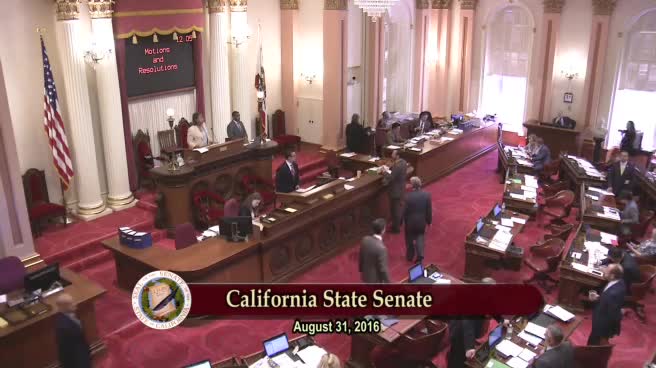
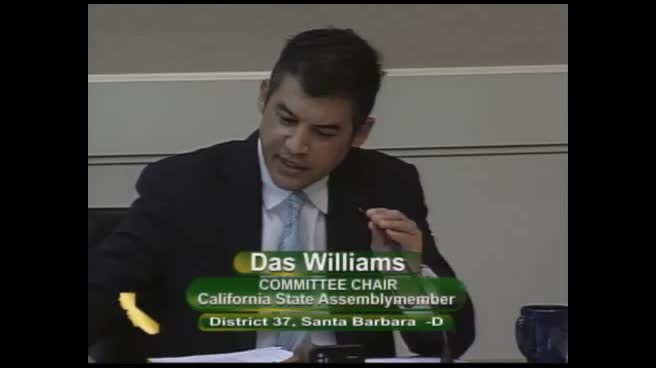
Bill Author

Bill Co-Author(s):