SCR 21: Single Parent Day.
- Session Year: 2015-2016
- House: Senate
- Latest Version Date: 2015-04-27
This measure would proclaim March 21, 2015, as Single Parent Day.
This measure would proclaim March 21, 2015, as Single Parent Day.
This measure would proclaim March 21, 2015, as Single Parent Day.
WHEREAS, On March 21, 1984, President Ronald Reagan proclaimed the first National Single Parent Day and the Congress has designated each March 21st thereafter in commemoration of single parents; and
WHEREAS, President Reagan, in his proclamation, recognized that single parents can and do provide children with the financial, physical, emotional, and social support they need to take their places as productive and mature citizens. He further noted, that with the active support of friends, relatives, and local communities, they can do even more to raise their children in the best possible environment; and
WHEREAS, Single parenthood is very common in the United States. At a given time in 2013, 28 percent of children were living with a single parent. One-half or more of todays children will likely spend at least part of their childhood in a single-parent family; and
WHEREAS, Most single parents are single mothers. In 2013, 77 percent of single parents were single mothers, and 85 percent of the children living with a single parent were living with their mother; and
WHEREAS, The majority of single parents have been married or are married but separated. In 2013, 55 percent of the children in single-parent families were living with a parent who was separated, divorced, or widowed, and 45 percent with a never-married parent; and
WHEREAS, Most single parents have no more than two children. In 2013, 56 percent of single parents had one child and 30 percent had two children; and
WHEREAS, Low wages are very common for United States single parents, and much more common for single parents than for other United States workers. In 2009, 39 percent of employed single mothers were in low-wage employment, with low wage defined as an hourly wage less than two-thirds of the median hourly wage; and
WHEREAS, Single parents struggle to pay for child care. In many cases, the average cost of child care is out of reach for a single parent, especially for those with two or more children; and
WHEREAS, The poverty rate for children in single-parent families is triple the rate for children in two-parent families. In 2012, 42 percent of children in single-parent families were poor, compared to 13 percent of children in two-parent families; and
WHEREAS, Child poverty is linked to poor health and school dropout; to negative adult outcomes including joblessness, and to reduced economic output estimated to be about 4 percent of the Gross Domestic Product; and
WHEREAS, The employment rate for single parents in the United States is above the average single-parent employment rate in comparison to high income countries. Despite the above average employment rate, the poverty rate for single-parent families in the United States is far above the average poverty rate for single-parent families in comparison to high income countries; and
WHEREAS, National Single Parent Day was created to honor and recognize the hard work, devotion, and sacrifices of single parenting; now, therefore, be it
Resolved by the Senate of the State of California, the Assembly thereof concurring, That Saturday, March 21, 2015, be observed as Single Parent Day; and be it further
Resolved, That the California Legislature encourages all Californians to recognize the value and contributions provided by single parents; and be it further
Resolved, That the Secretary of the Senate transmit copies of this resolution to the author for appropriate distribution.
|
Date
|
Status
|
|---|---|
| Feb 24, 2015 | Introduced. Referred to Com. on RLS. |
| Mar 4, 2015 | From committee: Ordered to third reading. |
| Mar 19, 2015 | In Assembly. Held at Desk. |
| Mar 19, 2015 | Read. Adopted. (Ayes 35. Noes 0. Page 357.) Ordered to the Assembly. |
| Apr 6, 2015 | Referred to Com. on RLS. |
| Apr 16, 2015 | From committee: Be adopted. Ordered to consent calendar. (Ayes 11. Noes 0.) (April 16). |
| Apr 23, 2015 | In Senate. Ordered to engrossing and enrolling. |
| Apr 23, 2015 | Read. Adopted. (Ayes 78. Noes 0. Page 1110.) Ordered to the Senate. |
| Apr 27, 2015 | Chaptered by Secretary of State. Res. Chapter 31, Statutes of 2015. |
| Apr 27, 2015 | Enrolled and filed with the Secretary of State at 4 p.m. |
|
Date
|
Description
|
Location
|
Votes
|
|
|---|---|---|---|---|
| Apr 23, 2015 | SCR 21 Jackson Consent Calendar Second Day Regular Session | Assembly Floor |
Passed |
|
| Apr 16, 2015 | Be adopted. To Consent Calendar. | Assembly Standing Committee on Rules |
Passed |
|
| Mar 19, 2015 | Senate 3rd Reading SCR21 Jackson | Senate Floor |
Passed |
This list shows positions taken on this bill by organizations on the date displayed, which is linked to the original source.
Positions by individuals are not included.
|
Organization
|
Position
|
Date
|
|---|---|---|
| Prepared by:Karen Chow | ** Support | Mar 19, 2015 |
| SEE ABOVE | ** Against | Mar 19, 2015 |
SCR 21
Page 2
Date of Hearing: April 16, 2015
ASSEMBLY COMMITTEE ON RULES
Richard Gordon, Chair
SCR 21
(Jackson) – As Introduced February 24, 2015
SENATE VOTE: 35-0
SUBJECT: Single Parent Day.
SUMMARY: Proclaims March 21, 2015, as Single Parent Day. Specifically, this resolution makes the following legislative findings:
On March 21, 1984, President Ronald Reagan proclaimed the first "National Single Parent Day" and the Congress has designated each March 21st thereafter in commemoration of single parents.
President Reagan, in his proclamation, recognized that single parents can and do provide children with the financial, physical, emotional, and social support they need to take their places as productive and mature citizens. He further noted that with the active support of friends, relatives, and local communities, they can do even more to raise their children in the best possible environment.
Low wages are very common for United States single parents, and much more common for single parents than for other United States workers. Single parents struggle to pay for child care. In many cases, the average cost of child care is out of reach for a single parent, especially for those with two or more children.
The employment rate for single parents in the United States is above the average single-parent employment rate in comparison to high income countries. Despite the above average employment rate, the poverty rate for single-parent families in the United States is far above the average poverty rate for single-parent families in comparison to high income countries.
The poverty rate for children in single-parent families is triple the rate for children in two-parent families. In 2012, 42 percent of children in single-parent families were poor, compared to 13 percent of children in two-parent families. Child poverty is linked to poor health and school dropout; to negative adult outcomes including joblessness; which leads to reduced economic output.
National Single Parent Day was created to honor and recognize the hard work, devotion, and sacrifices of single parenting.
FISCAL EFFECT: None
REGISTERED SUPPORT / OPPOSITION:
Support
National Coalition of 100 Black Women, Inc., Sacramento Chapter (SacNCBW)
Opposition
None on file
Analysis Prepared by: Nicole Willis / RLS. / (916) 319-2800
SCR 21
Page 2
|
Office of Senate Floor Analyses (916) 651-1520 Fax: (916) 327-4478 |
THIRD READING
Bill No: SCR 21
Introduced: 2/24/15
DIGEST: This resolution proclaims March 21, 2015, as Single Parent Day.
ANALYSIS: This resolution makes the following legislative findings:
On March 21, 1984, President Ronald Reagan proclaimed the first “National Single Parent Day” and the Congress has designated each March 21st thereafter in commemoration of single parents.
President Reagan, in his proclamation, recognized that single parents can and do provide children with the financial, physical, emotional, and social support they need to take their places as productive and mature citizens. He further noted that with the active support of friends, relatives, and local communities, they can do even more to raise their children in the best possible environment.
Low wages are very common for United States single parents, and much more common for single parents than for other United States workers. Single parents struggle to pay for child care. In many cases, the average cost of child care is out of reach for a single parent, especially for those with two or more children.
The employment rate for single parents in the United States is above the average single-parent employment rate in comparison to high income countries. Despite the above average employment rate, the poverty rate for single-parent families in the United States is far above the average poverty rate for single-parent families in comparison to high income countries.
National Single Parent Day was created to honor and recognize the hard work, devotion, and sacrifices of single parenting.
This resolution proclaims March 21, 2015, as Single Parent Day and encourages all Californians to recognize the value and contributions provided by single parents.
FISCAL EFFECT: Appropriation: No Fiscal Com.: No Local: No
National Coalition of 100 Black Women Inc., Sacramento Chapter
Prepared by: Karen Chow / SFA / (916) 651-1520
3/16/15 9:20:52
SUPPORT/OPPOSITION: SEE ABOVE
**** END ****
SCR 21
Page 2
|
Office of Senate Floor Analyses (916) 651-1520 Fax: (916) 327-4478 |
THIRD READING
Bill No: SCR 21
Introduced: 2/24/15
DIGEST: This resolution proclaims March 21, 2015, as Single Parent Day.
ANALYSIS: This resolution makes the following legislative findings:
On March 21, 1984, President Ronald Reagan proclaimed the first “National Single Parent Day” and the Congress has designated each March 21st thereafter in commemoration of single parents.
President Reagan, in his proclamation, recognized that single parents can and do provide children with the financial, physical, emotional, and social support they need to take their places as productive and mature citizens. He further noted that with the active support of friends, relatives, and local communities, they can do even more to raise their children in the best possible environment.
Low wages are very common for United States single parents, and much more common for single parents than for other United States workers. Single parents struggle to pay for child care. In many cases, the average cost of child care is out of reach for a single parent, especially for those with two or more children.
The employment rate for single parents in the United States is above the average single-parent employment rate in comparison to high income countries. Despite the above average employment rate, the poverty rate for single-parent families in the United States is far above the average poverty rate for single-parent families in comparison to high income countries.
National Single Parent Day was created to honor and recognize the hard work, devotion, and sacrifices of single parenting.
This resolution proclaims March 21, 2015, as Single Parent Day and encourages all Californians to recognize the value and contributions provided by single parents.
FISCAL EFFECT: Appropriation: No Fiscal Com.: No Local: No
Prepared by: Karen Chow / SFA / (916) 651-1520
3/4/15 15:44:37
SUPPORT/OPPOSITION: NONE RECEIVED
**** END ****
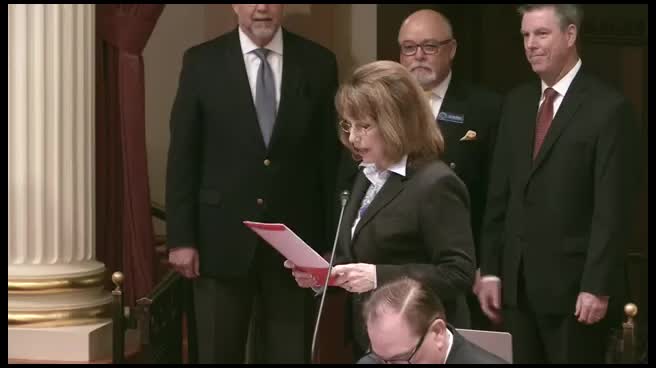
Bill Author

Bill Co-Author(s):