SCR 98: California’s community-based developmental services system: 50th anniversary.
- Session Year: 2015-2016
- House: Senate
- Latest Version Date: 2016-08-16
This measure would recognize the year of 2016 as the 50th anniversary of Californias community-based developmental services system, and would reaffirm the commitment of the Legislature to support this system. This measure would declare the importance of ensuring a sustainable system that protects the rights of individuals with developmental disabilities.
This measure would recognize the year of 2016 as the 50th anniversary of Californias community-based developmental services system, and would reaffirm the commitment of the Legislature to support this system. This measure would declare the importance of ensuring a sustainable system that protects the rights of individuals with developmental disabilities.
This measure would recognize the year of 2016 as the 50th anniversary of Californias community-based developmental services system, and would reaffirm the commitment of the Legislature to support this system. This measure would declare the importance of ensuring a sustainable system that protects the rights of individuals with developmental disabilities.
This measure would recognize the year of 2016 as the 50th anniversary of Californias community-based developmental services system, and would reaffirm the commitment of the Legislature to support this system. This measure would declare the importance of ensuring a sustainable system that protects the rights of individuals with developmental disabilities.
This measure would recognize the year of 2016 as the 50th anniversary of Californias community-based developmental services system, and would reaffirm the commitment of the Legislature to support this system. This measure would declare the importance of ensuring a sustainable system that protects the rights of individuals with developmental disabilities.
WHEREAS, Fifty years ago, the State of California piloted a new approach to serving individuals with developmental disabilities by enacting a bold new direction in public-private partnership that fundamentally changed and dramatically improved the quality of life for individuals with developmental disabilities and their families, and that would become a model for the nation; and
WHEREAS, That partnership model was based on the premise that the services required of a regional center are of such a special and unique nature that they could not be satisfactorily provided by state agencies and thus required private nonprofit entities to contract with the state to meet the unique needs of the different geographic regions; and
WHEREAS, In 1965, Assembly Bill 691 established a pilot program that created two regional centers in 1966, one at Childrens Hospital Los Angeles, later named Frank D. Lanterman Regional Center, and another at San Francisco Aid Retarded Children, Inc., later named Golden Gate Regional Center, with the Regional Center of the East Bay formed later from the latter projects eastern region; and
WHEREAS, The pilot program was so successful that it was turned into a permanent statewide program in 1969 by Assembly Bill 225, known as the Lanterman Mental Retardation Services Act; and
WHEREAS, In 1973, Assembly Bill 846 recast the act as the Lanterman Developmental Disabilities Services Act and proposed expansion of eligibility for regional center services to individuals with cerebral palsy, epilepsy, and autism, among other developmental disabilities; and
WHEREAS, In 1977, the Lanterman Developmental Disabilities Services Act was passed, enumerating various rights to individuals with developmental disabilities, enshrining the role of regional centers as advocates for those rights, and creating an individualized planning process that forms the core of the uniquely tailored services and supports that each participating individual receives; and
WHEREAS, Regional centers provide service coordination to ensure that the needs of individuals with developmental disabilities are met using a combination of natural supports, generic services, and the purchase of vendored services; and
WHEREAS, Community-based service providers offer an array of services in each community to meet the unique needs of every individual with a developmental disability, doing so at significant cost savings to the State of California when compared to the cost of institutional care; and
WHEREAS, Californias network of regional centers and service providers serve nearly 300,000 individuals with developmental disabilities who, as a result of the service, are able to live, work, grow, and thrive in the community; and
WHEREAS, Years of underfunding have reduced access to needed services and supports, have threatened the sustainability of the system as a whole, have strained families, and have reduced the quality of life for individuals with developmental disabilities; and
WHEREAS, The active support and leadership of the Legislature is a critical component of any and all efforts to reinvigorate and renew the community-based developmental services system; now, therefore, be it
Resolved by the Senate of the State of California, the Assembly thereof concurring, That the Legislature hereby recognizes the year of 2016 as the 50th anniversary of Californias community-based developmental services system; and be it further
Resolved, That the Legislature declares the importance of ensuring a sustainable system that protects the rights of individuals with developmental disabilities and their full inclusion into community life; and be it further
Resolved, That the Legislature reaffirms its commitment to defend, support, and advance the community-based developmental services system; and be it further
Resolved, That the Secretary of the Senate transmit copies of this resolution to the author for appropriate distribution.
WHEREAS, Fifty years ago, the State of California piloted a new approach to serving individuals with developmental disabilities by enacting a bold new direction in public-private partnership that fundamentally changed and dramatically improved the quality of life for individuals with developmental disabilities and their families, and that would become a model for the nation; and
WHEREAS, That partnership model was based on the premise that the services required of a regional center are of such a special and unique nature that they could not be satisfactorily provided by state agencies and thus required private nonprofit entities to contract with the state to meet the unique needs of the different geographic regions; and
WHEREAS, In 1965, Assembly Bill 691 established a pilot program that created two regional centers in 1966, one at Childrens Hospital Los Angeles, later named Frank D. Lanterman Regional Center, and another at San Francisco Aid Retarded Children, Inc., later named Golden Gate Regional Center, with the Regional Center of the East Bay formed later from the latter projects eastern region; and
WHEREAS, The pilot program was so successful that it was turned into a permanent statewide program in 1969 by Assembly Bill 225, known as the Lanterman Mental Retardation Services Act; and
WHEREAS, In 1973, Assembly Bill 846 recast the act as the Lanterman Developmental Disabilities Services Act and proposed expansion of eligibility for regional center services to individuals with cerebral palsy, epilepsy, and autism, among other developmental disabilities; and
WHEREAS, In 1977, the Lanterman Developmental Disabilities Services Act was passed, enumerating various rights to individuals with developmental disabilities, enshrining the role of regional centers as advocates for those rights, and creating an individualized planning process that forms the core of the uniquely tailored services and supports that each participating individual receives; and
WHEREAS, Regional centers provide service coordination to ensure that the needs of individuals with developmental disabilities are met through using a combination of natural supports, generic services, and the purchase of vendored services; and
WHEREAS, Community-based service providers offer an array of services in each community to meet the unique needs of every individual with a developmental disability, doing so at significant cost savings to the State of California when compared to the cost of institutional care; and
WHEREAS, Californias network of regional centers and service providers serve nearly 300,000 individuals with developmental disabilities who, as a result of the service, are able to live, work, grow, and thrive in the community; and
WHEREAS, Years of underfunding have reduced access to needed services and supports, have threatened the sustainability of the system as a whole, have strained families, and have reduced the quality of life for individuals with developmental disabilities; and
WHEREAS, The active support and leadership of the Legislature is a critical component of any and all efforts to reinvigorate and renew the community-based developmental services system; now, therefore, be it
Resolved by the Senate of the State of California, the Assembly thereof concurring, That the Legislature hereby recognizes the year of 2016 as the 50th anniversary of Californias community-based developmental services system; and be it further
Resolved, That the Legislature declares the importance of ensuring a sustainable system that protects the rights of individuals with developmental disabilities and their full inclusion into community life; and be it further
Resolved, That the Legislature reaffirms its commitment to defend, support, and advance the community-based developmental services system; and be it further
Resolved, That the Secretary of the Senate transmit copies of this resolution to the author for appropriate distribution.
WHEREAS, Fifty years ago, the State of California piloted a new approach to serving individuals with developmental disabilities by enacting a bold new direction in public-private partnership that fundamentally changed and dramatically improved the quality of life for individuals with developmental disabilities and their families, and that would become a model for the nation; and
WHEREAS, That partnership model was based on the premise that the services required of a regional center are of such a special and unique nature that they could not be satisfactorily provided by state agencies and thus required private nonprofit entities to contract with the state to meet the unique needs of the different geographic regions; and
WHEREAS, In 1965, Assembly Bill 691 established a pilot program that created two regional centers in 1966, one at Childrens Hospital Los Angeles, later named Frank D. Lanterman Regional Center, and another at San Francisco Aid Retarded Children, Inc., later named Golden Gate Regional Center, with the Regional Center of the East Bay formed later from the latter projects eastern region; and
WHEREAS, The pilot program was so successful that it was turned into a permanent statewide program in 1969 by Assembly Bill 225, known as the Lanterman Mental Retardation Services Act; and
WHEREAS, In 1973, Assembly Bill 846 recast the act as the Lanterman Developmental Disabilities Services Act and proposed expansion of eligibility for regional center services to individuals with cerebral palsy, epilepsy, and autism, among other developmental disabilities; and
WHEREAS, In 1977, the Lanterman Developmental Disabilities Services Act was passed, enumerating various rights to individuals with developmental disabilities, enshrining the role of regional centers as advocates for those rights, and creating an individualized planning process that forms the core of the uniquely tailored services and supports that each participating individual receives; and
WHEREAS, Regional centers provide service coordination to ensure that the needs of individuals with developmental disabilities are met through a combination of natural supports, generic services, and the purchase of vendored services; and
WHEREAS, Community-based service providers offer an array of services in each community to meet the unique needs of every individual with a developmental disability, doing so at significant cost savings to the State of California when compared to the cost of institutional care; and
WHEREAS, Californias network of regional centers and service providers serve nearly 300,000 individuals with developmental disabilities who, as a result of the service, are able to live, work, grow, and thrive in the community; and
WHEREAS, Years of underfunding have reduced access to needed services and supports, have threatened the sustainability of the system as a whole, have strained families, and have reduced the quality of life for individuals with developmental disabilities; and
WHEREAS, The active support and leadership of the Legislature is a critical component of any and all efforts to reinvigorate and renew the community-based developmental services system; now, therefore, be it
Resolved by the Senate of the State of California, the Assembly thereof concurring, That the Legislature hereby recognizes the year of 2016 as the 50th anniversary of Californias community-based developmental services system; and be it further
Resolved, That the Legislature declares the importance of ensuring a sustainable system that protects the rights of individuals with developmental disabilities and their full inclusion into community life; and be it further
Resolved, That the Legislature reaffirms its commitment to defend, support, and advance the community-based developmental services system; and be it further
Resolved, That the Secretary of the Senate transmit copies of this resolution to the author for appropriate distribution.
|
Date
|
Status
|
|---|---|
| Jan 15, 2016 | Introduced. Referred to Com. on RLS. |
| Jan 28, 2016 | From committee: Ordered to third reading. |
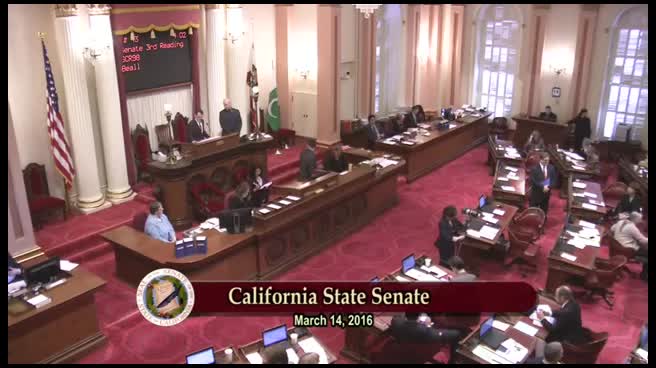
| Mar 14, 2016 | Read. Adopted. (Ayes 38. Noes 0. Page 3219.) Ordered to the Assembly. |
| Mar 15, 2016 | In Assembly. Held at Desk. |
| Mar 31, 2016 | From committee with author's amendments. Read second time and amended. Re-referred to Com. on RLS. |
| Mar 31, 2016 | Referred to Com. on RLS. |
| Apr 11, 2016 | From committee: Be adopted. Ordered to third reading. (Ayes 9. Noes 0.) (April 11). |
| Jun 30, 2016 | Read. Amended. Adopted. Ordered to the Senate. |
| Jun 30, 2016 | Read. Amended. Adopted. (Page 5581.) Ordered to the Senate. |
| Aug 1, 2016 | In Senate. Concurrence in Assembly amendments pending. |
| Aug 3, 2016 | Ordered to special consent calendar. |
| Aug 11, 2016 | Assembly amendments concurred in. (Ayes 36. Noes 0.) Ordered to engrossing and enrolling. |
| Aug 11, 2016 | Assembly amendments concurred in. (Ayes 37. Noes 0. Page 4878.) Ordered to engrossing and enrolling. |
| Aug 16, 2016 | Enrolled and filed with the Secretary of State at 10 a.m. |
| Aug 17, 2016 | Chaptered by Secretary of State. Res. Chapter 109, Statutes of 2016. |
|
Date
|
Description
|
Location
|
Votes
|
|
|---|---|---|---|---|
| Aug 11, 2016 | Special Consent SCR98 Beall Concurrence | Senate Floor |
Passed |
|
| Apr 11, 2016 | Be adopted. To third reading. | Assembly Standing Committee on Rules |
Passed |
|
| Mar 14, 2016 | Senate 3rd Reading SCR98 Beall | Senate Floor |
Passed |
This list shows positions taken on this bill by organizations on the date displayed, which is linked to the original source.
Positions by individuals are not included.
|
Organization
|
Position
|
Date
|
|---|---|---|
| Association Of Regional Center Agencies | ** Support | Jun 30, 2016 |
Office of Senate Floor Analyses (916) 651-1520 Fax: (916) 327-4478 | SCR 98 |
UNFINISHED BUSINESS
Bill No: SCR 98
Author: Beall (D) and De León (D), et al.
Amended: 6/30/16
SENATE FLOOR: 38-0, 3/14/16
AYES: Allen, Anderson, Bates, Beall, Berryhill, Block, Cannella, De León, Fuller, Gaines, Galgiani, Glazer, Hall, Hancock, Hernandez, Hertzberg, Hill, Hueso, Huff, Jackson, Leno, Leyva, Liu, McGuire, Mendoza, Mitchell, Monning, Moorlach, Morrell, Nguyen, Nielsen, Pan, Pavley, Roth, Stone, Vidak, Wieckowski, Wolk
NO VOTE RECORDED: Lara, Runner
ASSEMBLY FLOOR: Read and adopted, 6/30/16
SUBJECT: California’s community-based developmental services system: 50th anniversary
SOURCE: Association of Regional Center Agencies
DIGEST:
This resolution recognizes the year of 2016 as the 50th anniversary of California’s community-based developmental services system, and reaffirms the commitment of the Legislature to support this system. This measure also declares the importance of ensuring a sustainable system that protects the rights of individuals with developmental disabilities.
Assembly Amendments make a technical change and add co-authors.
ANALYSIS: This resolution makes the following legislative findings:
- Fifty years ago, the State of California piloted a new approach to serving individuals with developmental disabilities by enacting a bold new direction in public-private partnership that fundamentally changed and dramatically improved the quality of life for individuals with developmental disabilities and their families, and that would become a model for the nation. That partnership model was based on the premise that the services required of a regional center are of such a special and unique nature that they could not be satisfactorily provided by state agencies and thus required private nonprofit entities to contract with the state to meet the unique needs of the different geographic regions.
- Regional centers provide service coordination to ensure that the needs of individuals with developmental disabilities are met using a combination of natural supports, generic services, and the purchase of vendored services.
- California’s network of regional centers and service providers serve nearly 300,000 individuals with developmental disabilities who, as a result of the service, are able to live, work, grow, and thrive in the community.
- Years of underfunding have reduced access to needed services and supports, have threatened the sustainability of the system as a whole, have strained families, and have reduced the quality of life for individuals with developmental disabilities.
- The active support and leadership of the Legislature is a critical component of any and all efforts to reinvigorate and renew the community-based developmental services system.
This resolution recognizes the year of 2016 as the 50th anniversary of California’s community-based developmental services system, declares the importance of ensuring a sustainable system that protects the rights of individuals with developmental disabilities and their full inclusion into community life, and reaffirms the Legislatures commitment to defend, support, and advance the community-based developmental services system.
FISCAL EFFECT: Appropriation: No Fiscal Com.: No Local: No
Association of Regional Center Agencies (source)
East Bay Developmental Disabilities Legislative Coalition
State Council on Developmental Disabilities
The Arc
United Cerebral Palsy California Collaboration
None received
Prepared by: Jonas Austin / SFA / (916) 651-1520
8/4/16 14:20:13
**** END ****
SENATE THIRD READING
STR Bill Id:SCR 98
Author:(Beall and De León)
As Amended Ver:March 31, 2016
Majority vote
SENATE VOTE: 38-0
Committee | Votes | Ayes | Noes |
Rules | 9-0 | Gordon, Chang, Brough, Cooley, Gomez, Holden, Mullin, Quirk, Rodriguez |
SUMMARY: Recognizes the year of 2016 as the 50th anniversary of California's community-based developmental services system, and would reaffirm the commitment of the Legislature to support this system. Specifically, this resolution makes the following legislative findings:
- Fifty years ago, the State of California piloted a new approach to serving individuals with developmental disabilities by enacting a bold new direction in public-private partnership that fundamentally changed and dramatically improved the quality of life for individuals with developmental disabilities and their families, and that would become a model for the nation. That partnership model was based on the premise that the services required of a regional center are of such a special and unique nature that they could not be satisfactorily provided by state agencies and thus required private nonprofit entities to contract with the state to meet the unique needs of the different geographic regions.
- Regional centers provide service coordination to ensure that the needs of individuals with developmental disabilities are met using a combination of natural supports, generic services, and the purchase of vendor services.
- California's network of regional centers and service providers serve nearly 300,000 individuals with developmental disabilities who, as a result of the service, are able to live, work, grow, and thrive in the community.
- Years of underfunding have reduced access to needed services and supports, have threatened the sustainability of the system as a whole, have strained families, and have reduced the quality of life for individuals with developmental disabilities.
- The active support and leadership of the Legislature is a critical component of any and all efforts to reinvigorate and renew the community-based developmental services system.
FISCAL EFFECT: None
Analysis Prepared by: Nicole Willis / RLS. / (916) 319-2800 FN: 0002729
Date of Hearing: April 11, 2016
ASSEMBLY COMMITTEE ON
, Chair
SBPCA Bill Id:
Author:() – As Ver:March 31, 2016
SENATE VOTE: 38-0
SUBJECT:
SUMMARY: Recognizes the year of 2016 as the 50th anniversary of California's community-based developmental services system, and would reaffirm the commitment of the Legislature to support this system. Specifically, this resolution makes the following legislative findings:
- Fifty years ago, the State of California piloted a new approach to serving individuals with developmental disabilities by enacting a bold new direction in public-private partnership that fundamentally changed and dramatically improved the quality of life for individuals with developmental disabilities and their families, and that would become a model for the nation. That partnership model was based on the premise that the services required of a regional center are of such a special and unique nature that they could not be satisfactorily provided by state agencies and thus required private nonprofit entities to contract with the state to meet the unique needs of the different geographic regions.
- Regional centers provide service coordination to ensure that the needs of individuals with developmental disabilities are met using a combination of natural supports, generic services, and the purchase of vendored services.
- California’s network of regional centers and service providers serve nearly 300,000 individuals with developmental disabilities who, as a result of the service, are able to live, work, grow, and thrive in the community.
- Years of underfunding have reduced access to needed services and supports, have threatened the sustainability of the system as a whole, have strained families, and have reduced the quality of life for individuals with developmental disabilities.
- The active support and leadership of the Legislature is a critical component of any and all efforts to reinvigorate and renew the community-based developmental services system.
FISCAL EFFECT: None
REGISTERED SUPPORT / OPPOSITION:
Support
Association of Regional Center Agencies (ARCA)
Opposition
None on file
Analysis Prepared by:
Office of Senate Floor Analyses (916) 651-1520 Fax: (916) 327-4478 | SCR 98 |
THIRD READING
Bill No: SCR 98
Author: Beall (D) and De León (D), et al.
Introduced: 1/15/16
SUBJECT: California’s community-based developmental services system: 50th anniversary
SOURCE: Association of Regional Center Agencies
DIGEST:
This resolution recognizes the year of 2016 as the 50th anniversary of California’s community-based developmental services system, and reaffirms the commitment of the Legislature to support this system.
ANALYSIS: This resolution makes the following legislative findings:
- Fifty years ago, the State of California piloted a new approach to serving individuals with developmental disabilities by enacting a bold new direction in public-private partnership that fundamentally changed and dramatically improved the quality of life for individuals with developmental disabilities and their families, and that would become a model for the nation. That partnership model was based on the premise that the services required of a regional center are of such a special and unique nature that they could not be satisfactorily provided by state agencies and thus required private nonprofit entities to contract with the state to meet the unique needs of the different geographic regions.
- Regional centers provide service coordination to ensure that the needs of individuals with developmental disabilities are met through a combination of natural supports, generic services, and the purchase of vendored services.
- California’s network of regional centers and service providers serve nearly 300,000 individuals with developmental disabilities who, as a result of the service, are able to live, work, grow, and thrive in the community.
- Years of underfunding have reduced access to needed services and supports, have threatened the sustainability of the system as a whole, have strained families, and have reduced the quality of life for individuals with developmental disabilities.
- The active support and leadership of the Legislature is a critical component of any and all efforts to reinvigorate and renew the community-based developmental services system.
This resolution recognizes the year of 2016 as the 50th anniversary of California’s community-based developmental services system, declares the importance of ensuring a sustainable system that protects the rights of individuals with developmental disabilities and their full inclusion into community life, and reaffirms the Legislatures commitment to defend, support, and advance the community-based developmental services system.
FISCAL EFFECT: Appropriation: No Fiscal Com.: No Local: No
Association of Regional Center Agencies (source)
OPPOSITION: (Verified 1/27/16)
None received
Prepared by: Jonas Austin / SFA / (916) 651-1520
1/29/16 11:24:24
**** END ****
Discussed in Hearing
View Older Hearings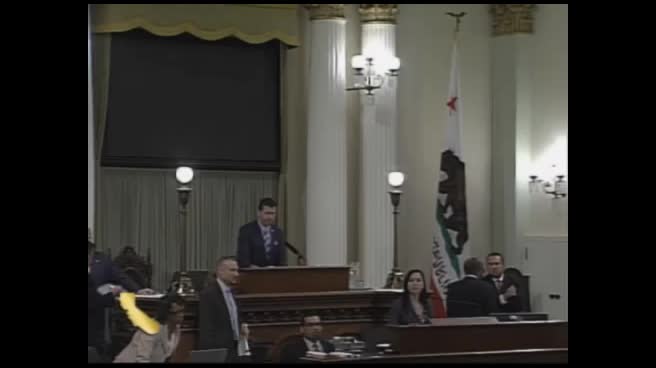

Bill Co-Author(s):