SJR 23: Interim Consolidated Storage Act of 2016: San Onofre Nuclear Generating Station.
- Session Year: 2015-2016
- House: Senate
- Latest Version Date: 2016-06-30
This measure would urge the passage of the Interim Consolidated Storage Act of 2016 and urge the United States Department of Energy to implement the prompt and safe relocation of spent nuclear fuel from the San Onofre Nuclear Generating Station to a licensed and regulated interim consolidated storage facility.
This measure would urge the passage of the Interim Consolidated Storage Act of 2016 and urge the United States Department of Energy to implement the prompt and safe relocation of spent nuclear fuel from the San Onofre Nuclear Generating Station to a licensed and regulated interim consolidated storage facility.
This measure would urge the passage of the Interim Consolidated Storage Act of 2016 and urge the United States Department of Energy to implement the prompt and safe relocation of spent nuclear fuel from the San Onofre Nuclear Generating Station to a licensed and regulated interim consolidated storage facility.
WHEREAS, Millions of ratepayer and taxpayer dollars are spent monitoring and overseeing spent nuclear fuel each year and millions of dollars more are programmed to be spent on settlement payments related to nuclear waste disposition; and
WHEREAS, Much of the spent nuclear fuel and high-level radioactive waste currently stored is at sites that are vulnerable to natural disasters and located near large metropolitan centers; and
WHEREAS, The United States Department of Energy concluded in 2013 that a geologic repository for the permanent disposal of spent nuclear fuel and high-level radioactive waste will not be available until 2048, at the earliest; and
WHEREAS, The Presidents Blue Ribbon Commission on Americas Nuclear Future recommended that efforts be made to develop a permanent disposal site for spent nuclear fuel and high-level radioactive waste; and
WHEREAS, The spent nuclear fuel at the San Onofre Nuclear Generating Station, a decommissioning site, should be promptly and safely moved to a consolidated storage site, as recommended by the Presidents Blue Ribbon Commission on Americas Nuclear Future, and as would be advanced by H.R. 4745, the Interim Consolidated Storage Act of 2016, which would give priority for storage to high-level nuclear waste and spent nuclear fuel located on a site without an operating nuclear reactor; now, therefore, be it
Resolved by the Senate and the Assembly of the State of California, jointly, That the Legislature of the State of California respectfully urges the passage of H.R. 4745 and supports the development and passage of complementary legislation; and be it further
Resolved, That the Legislature of the State of California respectfully urges the United States Department of Energy to implement the prompt and safe relocation of spent nuclear fuel from the San Onofre Nuclear Generating Station to a licensed and regulated interim consolidated storage facility; and be it further
Resolved, That the Secretary of the Senate transmit copies of this resolution to the President of the United States, to the Speaker of the House of Representatives, to the Majority Leader of the Senate, to each Senator and Representative from California in the Congress of the United States, and to the Secretary of Energy.
|
Date
|
Status
|
|---|---|
| Mar 28, 2016 | Introduced. Referred to Com. on RLS. |
| Apr 7, 2016 | Re-referred to Com. on E., U., & C. |
| Apr 13, 2016 | Set for hearing April 19. |
| Apr 19, 2016 | From committee: Be adopted. Ordered to third reading. (Ayes 11. Noes 0. Page 3594.) (April 19). |
| Apr 19, 2016 | From committee: Be adopted. Ordered to third reading. (Ayes 11. Noes 0.) (April 19). |
| Apr 28, 2016 | In Assembly. Held at Desk. |
| Apr 28, 2016 | Read. Adopted. (Ayes 37. Noes 0. Page 3709.) Ordered to the Assembly. |
| Apr 28, 2016 | Read. Adopted. (Ayes 37. Noes 0.) Ordered to the Assembly. |
| May 9, 2016 | Referred to Com. on U. & C. |
| Jun 2, 2016 | June 8 hearing postponed by committee. |
| Jun 15, 2016 | From committee: Be adopted. Ordered to consent calendar. (Ayes 15. Noes 0.) (June 15). |
| Jun 23, 2016 | In Senate. Ordered to engrossing and enrolling. |
| Jun 23, 2016 | Read. Adopted. Ordered to the Senate. |
| Jun 23, 2016 | Read. Adopted. (Ayes 79. Noes 0. Page 5487.) Ordered to the Senate. |
| Jun 30, 2016 | Chaptered by Secretary of State. Res. Chapter 76, Statutes of 2016. |
| Jun 30, 2016 | Enrolled and filed with the Secretary of State at 9 a.m. |
|
Date
|
Description
|
Location
|
Votes
|
|
|---|---|---|---|---|
| Jun 23, 2016 | SJR 23 Bates Consent Calendar Second Day | Assembly Floor |
Passed |
|
| Jun 15, 2016 | Be adopted. To Consent Calendar. | Assembly Standing Committee on Utilities and Commerce |
Passed |
|
| Apr 28, 2016 | Senate 3rd Reading SJR23 Bates | Senate Floor |
Passed |
|
| Apr 19, 2016 | Be adopted. Ordered to third reading | Senate Standing Committee on Energy, Utilities and Communications |
Passed |
This list shows positions taken on this bill by organizations on the date displayed, which is linked to the original source.
Positions by individuals are not included.
|
Organization
|
Position
|
Date
|
|---|---|---|
| City of Oceanside | ** Support | Apr 28, 2016 |
| City of San Clemente | ** Support | Apr 28, 2016 |
Date of Hearing: June 15, 2016
ASSEMBLY COMMITTEE ON UTILITIES AND COMMERCE
Mike Gatto, Chair
SBPCA Bill Id:SJR 23
Author:(Bates) – As Introduced Ver:March 28, 2016
SENATE VOTE: 37-0
SUBJECT: Interim Consolidated Storage Act of 2016: San Onofre Nuclear Generating Station
SUMMARY: Urges the Congress of the United States to pass the Interim Consolidated Storage Act of 2016 and implement relocation of spent nuclear fuel from the San Onofre Nuclear Generating Station (SONGS). Specifically, this resolution:
- Urges the passage of House Resolution (H.R.) 4745, the Interim Consolidated Storage Act of 2016.
- Urges the United States Department of Energy (US DOE) to implement the prompt and safe relocation of spent nuclear fuel from SONGS to a licensed and regulated interim consolidated storage facility.
EXISTING LAW:
- Prohibits any nuclear fission thermal powerplant requiring the reprocessing of fuel rods from being permitted unless the federal government has identified and approved, and there exists a technology for the construction and operation of, nuclear fuel rod reprocessing plants. (Public Resources Code Sections 25524.1 to 25524.3)
- States, pursuant to the California Nuclear Facility Decommissioning Act of 1985, that the citizens of California should be protected from exposure to radiation from nuclear facilities. (Public Utilities Code Section 8321, et seq.)
- Requires the California Energy Commission (CEC) to assess existing scientific studies to determine the vulnerability of very large generation facilities (1,700 megawatts or greater) to major disruptions due to aging or major earthquake and the resulting impacts on reliability, public safety, and the economy. Requires the CEC, in the absence of a long-term nuclear waste storage facility, assess the potential state and local costs and impacts associated with accumulating waste at California's nuclear powerplants. (Public Resources Code Section 25303)
FISCAL EFFECT: Unknown. This resolution is keyed non-fiscal by the Legislative Counsel.
COMMENTS:
- Author's Statement: "For decades, the federal government has made promises to provide for the safe storage of America's nuclear waste. The failure of the government to act on its duty to take possession and provide safe storage of nuclear waste has beleaguered communities across the nation, including areas surrounding the SONGS. […] The Interim Consolidated Storage Act creates an innovative solution to a long-debated problem. This resolution would allow regions volunteering to host an interim waste storage facility to serve the needs of communities around the country that have nuclear waste. […] The Interim Consolidated Storage Act is a reasonable, bipartisan step toward making American communities safer."
- Background: California has one operational nuclear power plant and a number of plants that are no longer in service:
Nuclear Power Plants in California | ||||
Name of Plant | Capacity (MW) | Period In Service | Owner | |
Diablo Canyon | ||||
Unit 1 | 1,073 | 1985 | PG&E | |
San Onofre | ||||
Unit 1 | 436 | 1968 - 1992 | SCE/SDG&E | |
Humboldt Bay | ||||
Unit 3 * | 65 | 1963 - 1976 | PG&E | |
Rancho Seco | ||||
913 | 1975 - 1989 | SMUD | ||
Vallecitos | ||||
30 | 1957 - 1967 | PG&E/GE | ||
Santa Susana | ||||
7.5 to 20 (electric) | 1957 - 1964 | SCE | ||
- Spent Fuel: Nuclear fuel rods are ceramic pellets of uranium oxide (UO2), about the size of a finger joint, stacked and sealed inside a long metal tube (cladding) about as big around as a Sharpie pen. The space between the pellets and cladding is filled with helium. "Spent fuel" refers to fuel used in a commercial nuclear reactor that has been removed because it can no longer economically sustain a nuclear reaction.
According to SCE's Irradiated Fuel Management Plan filed with the Nuclear Regulatory Commission:
The safe initial interim storage of SONGS Units 2 and 3 irradiated fuel will be "wet storage" in each unit's respective spent fuel pool. The spent fuel pools will be isolated from their normal support systems and those systems replaced by stand-alone cooling and filtration units (also termed a "spent fuel pool island"). Doing so facilitates earlier system abandonment and parallel decommissioning activities.
Subsequently, all irradiated fuel in the SONGS Units 2 and 3 spent fuel pools will be safely transferred to "dry storage" at the common Independent Spent Fuel Storage Installation (ISFSI) located on the SONGS site. Dry storage is also considered interim storage pending transfer to the US DOE.
A total of 1,726 irradiated fuel assemblies have been generated in SONGS Unit 2 and1,734 irradiated fuel assemblies have been generated in SONGS Unit 3, for a total of 3,460 irradiated fuel assemblies. At present, 792 SONGS Units 2 and 3 irradiated fuel assemblies have already been transferred to the common ISFSI. The remaining 2,668 irradiated fuel assembles will be loaded into Dry Shielded Canisters (DSCs) and transferred to the ISFSI.
The current ISFSI is located inside the Owner Controlled Area. It was constructed to accommodate SONGS Unit 1 irradiated fuel and provides additional capacity for a limited amount of SONGS Units 2 and 3 irradiated fuel.
The ISFSI currently contains 18 DSCs storing Unit 1 fuel and Greater than Class C (GTCC) waste.
The ISFSI also contains 33 DSCs which store Units 2 and 3 fuel.
Also according to the SCE document:
"The current plans are to obtain necessary permits for the ISFSI to be expanded to accommodate the remaining inventory of the SONGS Units 2 and 3 spent fuel pools."
And:
"This plan is based upon a 2024 start date for U.S. DOE acceptance of spent fuel from the industry and the SONGS Units 2 and 3 positions in the queue. … SCE is therefore assuming all fuel will be removed from the SONGS site as of 2049. Based on this assumption, the ISFSI will be subsequently decommissioned by the 2051 final license termination date."
In October 2015 the California Coastal Commission approved construction and expansion of the ISFSI.
- Concerns about the Potential for Natural Disasters Affecting the Stored Fuel: Approximately 65,000 people reside in San Clemente, five miles northwest of SONGS. Cities within 20 miles of SONGS include Laguna Beach in Orange County and Oceanside in San Diego County.
According to the 2015 State Working Group on Earthquake Probabilities, California faces a 99.7% chance of a magnitude 6.7 or larger earthquake during the next 30 years. The likelihood of an even more powerful quake of magnitude 7.5 or greater in the next 30 years is 46%.
According to SCE, the commonly known Richter scale is not used to determine earthquake building safety for any building. Instead, building safety relies on a value known as "peak ground acceleration," which is based on the anticipated ground movement at the site during the largest potential earthquake, estimated by geologists. Additionally, the proximity of the fault and soil conditions must also be considered. SONGS was built to withstand a peak ground acceleration of at least 0.67g (g refers to the force of gravity).
According to the National Institute of Building Sciences, the following definitions are commonly used to characterize or measure the effect of an earthquake on the ground (a.k.a. ground motion):
- Acceleration is the rate of change of speed, measured in "g"s at 980 cm/sec² or 1.00 g. For example,
- 0.001g or 1 cm/sec2 is perceptible by people
- 0.02 g or 20 cm/sec2 causes people to lose their balance
- 0.50g is very high but buildings can survive it if the duration is short and if the mass and configuration has enough damping
- Velocity (or speed) is the rate of change of position, measured in centimeters per second.
- Displacement is the distance from the point of rest, measured in centimeters.
- Duration is the length of time the shock cycles persists.
- Magnitude is the "size" of the earthquake, measured by the Richter scale, which ranges from 1-10. The Richter scale is based on the maximum amplitude of certain seismic waves, and seismologists estimate that each unit of the Richter scale is a 31 times increase of energy. Moment Magnitude Scale is a recent measure that is becoming more frequently used.
- Acceleration is the rate of change of speed, measured in "g"s at 980 cm/sec² or 1.00 g. For example,
The Institute points out that if the level of acceleration is combined with duration, the power of destruction is defined. Usually, the longer the duration, the less acceleration the building can endure. A building can withstand very high acceleration for a very short duration in proportion with damping measures incorporated in the structure.
- Local Concern Following Fukushima: SCE points out that there are differences between SONGS and the Fukushima reactors, specifically: the presence of a tsunami wall; the spent fuel storage pools are located in a separate building adjacent to the containment structure that encloses the reactor or primary system; and the used fuel rods are stored much closer to ground level than they are at Fukushima Daiichi, making it easier to add water if necessary.
- Arguments in Support: The cities of San Clemente, Oceanside, and Laguna Woods support SJR 23 and express a strong desire to promptly and safely relocate the nuclear fuel stored at SONGS.
- Licensed Storage at or away from reactor sites. The NRC authorizes ISFSI, including several that are located at or away from reactor sites. These include the Department of Energy Idaho Spent Fuel Facility and a private fuel storage facility in Utah.
- Related Legislation:
AJR 29 (Chávez) of 2016, urges the passage of H.R. 3643 and urges the US DOE to implement the prompt and safe relocation of spent nuclear fuel from the SONGS to a licensed and regulated interim consolidated storage facility. The bill is pending in the Senate Energy, Utilities and Communications Committee.
H.R. 3643, 114th Congress (Michael Conaway, 11th Congressional District, 2015) authorizes the U.S. Secretary of Energy to enter into contracts for the storage of high-level radioactive waste or spent nuclear fuel with any person that holds a license for an interim consolidated storage facility. Referred to the U.S. House Energy and Commerce Subcommittee on Environment and the Economy in October 2015.
H.R. 4745, 114th Congress (Mick Mulvaney, 5th Congressional District) authorizes the U.S. Secretary of Energy to enter into new contracts or modify existing contracts with any person who generates or holds title to high-level radioactive waste or spent nuclear fuel of domestic origin for the acceptance of title and subsequent storage of such waste or fuel at an interim consolidated storage facility, with priority for storage given to high-level radioactive waste and spent nuclear fuel located on sites without an operating nuclear reactor. Referred to the U.S. House Energy and Commerce Subcommittee on Environment and the Economy in March 2016.
REGISTERED SUPPORT / OPPOSITION:
Support
Laguna Woods, City of
Oceanside, City of
San Clemente, City of
Opposition
None on file.
Analysis Prepared by: Sue Kateley / U. & C. / (916) 319-2083
Office of Senate Floor Analyses (916) 651-1520 Fax: (916) 327-4478 | SJR |
THIRD READING
Bill No: SJR 23
:
SENATE ENERGY, U. & C. COMMITTEE: 11-0, 4/19/16
AYES: Hueso, Morrell, Cannella, Gaines, Hertzberg, Hill, Lara, Leyva, McGuire, Pavley, Wolk
DIGEST: This resolution urges Congress to pass the Interim Consolidated Storage Act of 2016 (House of Representatives (H.R.) 4745) and the United States Department of Energy (US DOE) to implement the prompt and safe relocation of spent nuclear fuel from the San Onofre Nuclear Generating Station (SONGS) to a licensed and regulated interim consolidated storage facility.
Existing federal law, under the Nuclear Waste Policy Act of 1982 (NWPA) (42 U.S.C. §10101, et seq.):
- Supports the use of deep geologic repositories for the safe storage and/or disposal of radioactive waste. Establishes procedures to evaluate and select sites for geologic repositories and for the interaction of state and federal governments.
- Directs the US DOE to consider Yucca Mountain as the primary site for the first geologic repository.
- Prohibits the US DOE from conducting site specific activities at a second site unless authorized by Congress.
- Establishes a commission to study the need and feasibility of a monitored retrievable storage facility.
Existing state law:
- Prohibits any nuclear fission thermal powerplant requiring the reprocessing of fuel rods from being permitted unless the federal government has identified and approved, and there exists a technology for the construction and operation of, nuclear fuel rod reprocessing plants. (Public Resources Code §§25524.1 – 25524.3)
- States, pursuant to the California Nuclear Facility Decommissioning Act of 1985, that the citizens of California should be protected from exposure to radiation from nuclear facilities. (Public Utilities Code §8321, et seq.)
- Requires the California Energy Commission (CEC) to assess existing scientific studies to determine the vulnerability of very large generation facilities (1,700 megawatts or greater) to major disruptions due to aging or major earthquake and the resulting impacts on reliability, public safety, and the economy. Requires the CEC, in the absence of a long-term nuclear waste storage facility, to assess the potential state and local costs and impacts associated with accumulating waste at California’s nuclear powerplants. (Public Resources Code §25303)
This resolution urges Congress to pass the Interim Consolidated Storage Act of 2016 (H.R. 4745) and the US DOE to implement the prompt and safe relocation of spent nuclear fuel from SONGS to a licensed and regulated interim consolidated storage facility.
Background
The United States Congress is currently considering a bill – H.R. 4745 – that would amend the NWPA of 1982 to authorize the Secretary of Energy to enter into contracts for the storage of certain high-level radioactive waste and spent nuclear fuel and take title to certain high-level radioactive waste and spent nuclear fuel. As used in the House bill, the term “interim consolidated storage facility” means a facility that possesses a specific license issued by the Nuclear Regulatory Commission (NRC) that authorizes storage of high-level radioactive waste or spent nuclear fuel received from the Secretary or from two or more persons that generate or hold title to high-level radioactive waste or spent nuclear fuel generated at a civilian nuclear power reactor. [A bill to create an Interim Consolidated Storage Act 2016, 114th Cong., 2016 H.R. 4745, (accessed April 13, 2016); available from govtrack.com.]
Federal Nuclear Waste Policy. Under the provisions of the NWPA of 1982, the federal government has responsibility for managing spent nuclear fuel produced by commercial reactors, and generators are responsible for bearing the costs of permanent disposal. The NWPA authorizes and requires the US DOE to locate and build a permanent repository and an interim storage facility and to develop a system to safely transport spent fuel from nuclear power plants to the repository and interim storage facility.
In 1987, Congress designated Yucca Mountain, a complex of underground tunnels in Nevada, as a federal long-term geological repository for nuclear waste. However, the Obama Administration has decided not to use the site and has appointed the Blue Ribbon Commission on America's Nuclear Future (Commission) to find a solution for permanent storage. The Commission recommended that efforts be made to develop a permanent disposal site for spent nuclear fuel and high-level radioactive waste.
Plant owners thus continue to be responsible for the safe storage of their spent fuel.
Nuclear power in California. There are four nuclear power plants in California: the Diablo Canyon Power Plant, the Humboldt Bay Nuclear Power Plant, the Rancho Seco Nuclear Power Plant, and SONGS, the latter three of which have been closed or decommissioned.
Natural disaster. According to the 2007 State Working Group on Earthquake Probabilities, California faces a 99.7 percent chance of a magnitude 6.7 or larger earthquake during the next 30 years. The likelihood of an even more powerful quake of magnitude 7.5 or greater in the next 30 years is 46 percent.
According to the powerplant’s owner, SONGS is designed to withstand a magnitude 7.0 earthquake. SONGS is located five miles away from the Rose Canyon fault, which has the potential to reach a magnitude 6.9 to 7.2 earthquake.
H.R. 4745 allows nuclear waste from SONGS to be temporarily stored off-site. If the bill passes, it would (1) allow the Secretary of Energy to enter into contracts and settle agreements with NRC–licensed nuclear reactor operators in order to move used fuel and high level nuclear waste into an interim consolidated storage facility; (2) provide a priority for removal of used fuel and high-level nuclear waste for storage at sites where there is no longer an operating nuclear reactor (like SONGS); and (3) maintain the principal balance in the federal Nuclear Waste Fund designated for Yucca Mountain, and authorize the interest paid on the fund to be used for titles fees and the safe transportation of the used fuel or high-level nuclear waste from the decommissioned reactor to the interim consolidated storage facility.
Related Legislation
AJR 29 (Chavez, 2016) urges the passage of H.R. 3643 and urges the US DOE to implement the prompt and safe relocation of spent nuclear fuel from SONGS to a licensed and regulated interim consolidated storage facility. The bill is waiting to be considered on the Assembly Floor.
H.R. 3643 (Michael Conaway, 11th Congressional District, 2015) amends the NWPA of 1982 to authorize the DOE to enter into new contracts (or modify existing contracts) with the licensee of an interim consolidated storage facility in order to take title to and store in it either high-level radioactive waste or spent nuclear fuel of domestic origin. The bill is waiting to be considered in the House Energy and Commerce Subcommittee on Environment and the Economy.
H.R. 4745 (Mick Mulvaney, 5th Congressional District) amends the NWPA of 1982 to authorize the Secretary of Energy to enter into contracts for the storage of certain high-level radioactive waste and spent nuclear fuel and take title to certain high-level radioactive waste and spent nuclear fuel. The bill is waiting to be considered in the House Committee on Energy and Commerce.
FISCAL EFFECT: Appropriation: No Fiscal Com.: No Local: No
City of Oceanside
City of San Clemente
OPPOSITION: (Verified 4/19/16)
None received
ARGUMENTS IN SUPPORT:
According to the author:
For decades, the federal government has made promises to provide for the safe storage of America’s nuclear waste. The failure of the government to act on its duty to take possession and provide safe storage of nuclear waste has beleaguered communities across the nation, including areas surrounding SONGS. The waste from the SONGS sits near an active fault line, adjacent to the heavily-trafficked Interstate 5 and the Pacific Ocean, and sandwiched between densely-populated Orange and San Diego Counties.
The Interim Consolidated Storage Act creates an innovative solution to a long-debated problem. This resolution would allow regions volunteering to host an interim waste storage facility to serve the needs of communities around the country that have nuclear waste.
This resolution would neither replace the Yucca Mountain plan nor would it take from Yucca Mountain’s funding, taking only from the interest that has accrued to the Nuclear Waste Fund.
Continuing to kick the can down the road is not a viable option. The Interim Consolidated Storage Act is a reasonable, bipartisan step toward making American communities safer.
4/20/16 16:06:02
**** END ****
SENATE COMMITTEE ON ENERGY, UTILITIES AND COMMUNICATIONS
Senator Ben Hueso, Chair
2015 - 2016 Regular
Bill No: Hearing Date: 4/19/2016
Author: | |||
Version: | As Introduced | ||
Urgency: | Fiscal: | ||
Consultant: | , Genesis Tang | ||
SUBJECT:
DIGEST: This resolution urges Congress to pass the Interim Consolidated Storage Act of 2016 (House of Representatives (H.R.) 4745) and the United States Department of Energy (US DOE) to implement the prompt and safe relocation of spent nuclear fuel from the San Onofre Nuclear Generating Station (SONGS) to a licensed and regulated interim consolidated storage facility.
ANALYSIS:
Existing law:
UNDER FEDERAL LAW: Nuclear Waste Policy Act of 1982 (NWPA) (42 U.S.C. §10101, et seq.):
- Supports the use of deep geologic repositories for the safe storage and/or disposal of radioactive waste. Establishes procedures to evaluate and select sites for geologic repositories and for the interaction of state and federal governments.
- Directs the US DOE to consider Yucca Mountain as the primary site for the first geologic repository.
- Prohibits the US DOE from conducting site specific activities at a second site unless authorized by Congress.
- Establishes a commission to study the need and feasibility of a monitored retrievable storage facility.
UNDER STATE LAW:
- Prohibits any nuclear fission thermal powerplant requiring the reprocessing of fuel rods from being permitted unless the federal government has identified and approved, and there exists a technology for the construction and operation of, nuclear fuel rod reprocessing plants. (Public Resources Code §§25524.1 – 25524.3)
- States, pursuant to the California Nuclear Facility Decommissioning Act of 1985, that the citizens of California should be protected from exposure to radiation from nuclear facilities. (Public Utilities Code §8321, et seq.)
- Requires the California Energy Commission (CEC) to assess existing scientific studies to determine the vulnerability of very large generation facilities (1,700 megawatts or greater) to major disruptions due to aging or major earthquake and the resulting impacts on reliability, public safety, and the economy. Requires the CEC, in the absence of a long-term nuclear waste storage facility, assess the potential state and local costs and impacts associated with accumulating waste at California’s nuclear powerplants. (Public Resources Code §25303)
This resolution urges Congress to pass the Interim Consolidated Storage Act of 2016 H.R. 4745 and the US DOE to implement the prompt and safe relocation of spent nuclear fuel from the SONGS to a licensed and regulated interim consolidated storage facility.
Background
The United States Congress is currently considering a bill – H.R. 4745 – that would amend the NWPA of 1982 to authorize the Secretary of Energy to enter into contracts for the storage of certain high-level radioactive waste and spent nuclear fuel and take title to certain high-level radioactive waste and spent nuclear fuel. As used in the House bill, the term “interim consolidated storage facility” means a facility that possesses a specific license issued by the Nuclear Regulatory Commission (NRC) that authorizes storage of high-level radioactive waste or spent nuclear fuel received from the Secretary or from two or more persons that generate or hold title to high-level radioactive waste or spent nuclear fuel generated at a civilian nuclear power reactor.[1]
Federal Nuclear Waste Policy. Under the provisions of the NWPA of 1982, the federal government has responsibility for managing spent nuclear fuel produced by commercial reactors, and generators are responsible for bearing the costs of permanent disposal. The NWPA authorizes and requires the US DOE to locate and build a permanent repository and an interim storage facility and to develop a system to safely transport spent fuel from nuclear power plants to the repository and interim storage facility.
In 1987, Congress designated Yucca Mountain, a complex of underground tunnels in Nevada, as a federal long-term geological repository for nuclear waste. However, the Obama Administration has decided not to use the site and has appointed the Blue Ribbon Commission on America's Nuclear Future (Commission) to find a solution for permanent storage. The Commission recommended that efforts be made to develop a permanent disposal site for spent nuclear fuel and high-level radioactive waste.
Plant owners thus continue to be responsible for the safe storage of their spent fuel.
Nuclear power in California. There are four nuclear power plants in California: the Diablo Canyon Power Plant, the Humboldt Bay Nuclear Power Plant, the Rancho Seco Nuclear Power Plant, and SONGS, the latter three of which have been closed or decommissioned.
Natural disaster. According to the 2007 State Working Group on Earthquake Probabilities, California faces a 99.7 percent chance of a magnitude 6.7 or larger earthquake during the next 30 years. The likelihood of an even more powerful quake of magnitude 7.5 or greater in the next 30 years is 46 percent.
According to the powerplant’s owner, SONGS is designed to withstand a magnitude 7.0 earthquake. SONGS is located five miles away from the Rose Canyon fault, which has the potential to reach a magnitude 6.9 to 7.2 earthquake.
H.R. 4745 allows nuclear waste from SONGS to be temporarily stored off-site. If the bill passes, it would (1) allow the Secretary of Energy to enter into contracts and settle agreements with NRC–licensed nuclear reactor operators in order to move used fuel and high level nuclear waste into an interim consolidated storage facility; (2) provide a priority for removal of used fuel and high-level nuclear waste for storage at sites where there is no longer an operating nuclear reactor (like SONGS); and (3) maintain the principal balance in the federal Nuclear Waste Fund designated for Yucca Mountain, and authorize the interest paid on the fund to be used for titles fees and the safe transportation of the used fuel or high-level nuclear waste from the decommissioned reactor to the interim consolidated storage facility.
Prior/Related Legislation
AJR 29 (Chavez) urges the passage of H.R. 3643 and urges the US DOE to implement the prompt and safe relocation of spent nuclear fuel from the SONGS to a licensed and regulated interim consolidated storage facility. The bill is waiting to be considered on the Assembly floor.
H.R. 3643 (Michael Conaway, 11th Congressional District, 2015) amends the NWPA of 1982 to authorize the DOE to enter into new contracts (or modify existing contracts) with the licensee of an interim consolidated storage facility in order to take title to and store in it either high-level radioactive waste or spent nuclear fuel of domestic origin. The bill is waiting to be considered in the House Energy and Commerce Subcommittee on Environment and the Economy.
H.R. 4745 (Mick Mulvaney, 5th Congressional District) amends the NWPA of 1982 to authorize the Secretary of Energy to enter into contracts for the storage of certain high-level radioactive waste and spent nuclear fuel and take title to certain high-level radioactive waste and spent nuclear fuel. The bill is waiting to be considered in the House Committee on Energy and Commerce.
FISCAL EFFECT: Appropriation: No Fiscal Com.: No Local:
SUPPORT:
City of San Clemente
OPPOSITION:
None received
ARGUMENTS IN SUPPORT: According to the author:
For decades, the federal government has made promises to provide for the safe storage of America’s nuclear waste. The failure of the government to act on its duty to take possession and provide safe storage of nuclear waste has beleaguered communities across the nation, including areas surrounding SONGS. The waste from the SONGS sits near an active fault line, adjacent to the heavily-trafficked Interstate 5 and the Pacific Ocean, and sandwiched between densely-populated Orange and San Diego Counties.
The Interim Consolidated Storage Act creates an innovative solution to a long-debated problem. This resolution would allow regions volunteering to host an interim waste storage facility to serve the needs of communities around the country that have nuclear waste.
This resolution would neither replace the Yucca Mountain plan nor would it take from Yucca Mountain’s funding, taking only from the interest that has accrued to the Nuclear Waste Fund.
Continuing to kick the can down the road is not a viable option. The Interim Consolidated Storage Act is a reasonable, bipartisan step toward making American communities safer.
-- END --
A bill to create an Interim Consolidated Storage Act 2016, 114th Cong., 2016 H.R. 4745, (accessed April 13, 2016); available from govtrack.com. ↑
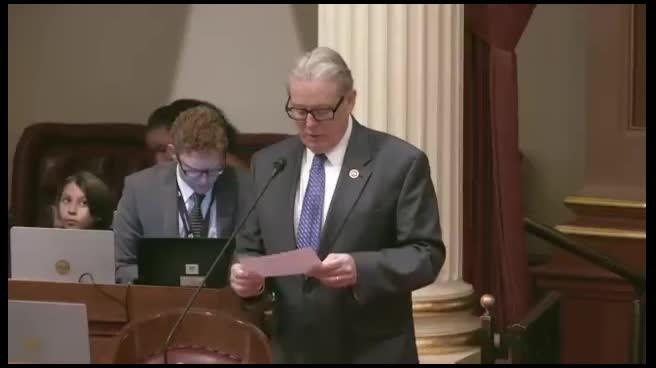
Bill Author

Bill Co-Author(s):
