SJR 9: The Chronic Kidney Disease Improvement in Research and Treatment Act of 2015.
- Session Year: 2015-2016
- House: Senate
- Latest Version Date: 2015-09-18
This measure would urge the President and the Congress of the United States to enact the Chronic Kidney Disease Improvement in Research and Treatment Act of 2015.
This measure would urge the President and the Congress of the United States to enact the Chronic Kidney Disease Improvement in Research and Treatment Act of 2015.
This measure would urge the President and the Congress of the United States to enact the Chronic Kidney Disease Improvement in Research and Treatment Act.
This measure would urge the President and the Congress of the United States to enact the Chronic Kidney Disease Improvement in Research and Treatment Act.
This measure would urge the President and the Congress of the United States to enact the Chronic Kidney Disease Improvement in Research and Treatment Act.
WHEREAS, Approximately 50 years ago, kidney failure was a death sentence; and
WHEREAS, In 1972, Congress developed the Medicare End-Stage Renal Disease benefit. In doing so, Congress ensured that regardless of age or income, any American would have access to lifesaving dialysis care. That was the turning point in kidney care; and
WHEREAS, The Chronic Kidney Disease Improvement in Research and Treatment Act of 2015 (HR 1130) was introduced in the House of Representatives by Representative Tom Marino to address kidney disease care; and
WHEREAS, House Resolution 1130 is built on three primary tenets. First, for individuals living with chronic diseases, especially when those diseases are complicated by multiple comorbid conditions, coordinated care is key to improving outcomes and lowering health care costs. Second, increased research can lead to a deeper understanding of kidney disease prevention and ultimately to significant innovations in treatment. Lastly, stability in the Medicare Program is central to an end-stage renal disease program that ensures quality and produces optimal results; and
WHEREAS, If left untreated, chronic kidney disease can progress to kidney failure, also known as end-stage renal disease, and early cardiovascular death; and
WHEREAS, More than 20 million adults in the United States, or more than 10 percent of the adult population, are estimated to have chronic kidney disease and most are undiagnosed; and
WHEREAS, Kidney disease is the ninth leading cause of death in the United States; and
WHEREAS, In the United States, diabetes and high blood pressure are the leading causes of kidney failure, accounting for 72 percent or about three out of four new cases of kidney failure; and
WHEREAS, The number of kidney failure cases in the United States population has more than tripled since 1990 and is expected to grow because of an aging population and the increasing number of people with conditions, such as diabetes and high blood pressure, that place them at the risk of developing chronic kidney disease; now, therefore, be it
Resolved by the Senate and the Assembly of the State of California, jointly, That the Legislature urges the President and the Congress of the United States to enact the Chronic Kidney Disease Improvement in Research and Treatment Act of 2015 (HR 1130); and be it further
Resolved, That the Secretary of the Senate transmit copies of this resolution to the President of the United States, to each Senator and Representative from California in the Congress of the United States, and to the author for appropriate distribution.
WHEREAS, Approximately 50 years ago, kidney failure was a death sentence; and
WHEREAS, In 1972, Congress developed the Medicare End-Stage Renal Disease benefit. In doing so, Congress ensured that regardless of age or income, any American would have access to life-saving dialysis care. That was the turning point in kidney care; and
WHEREAS, The Chronic Kidney Disease Improvement in Research and Treatment Act (HR 1130) was introduced in the House of Representatives by Representative Tom Marino to address kidney disease care; and
WHEREAS, House Resolution 1130 is built on three primary tenets. First, for individuals living with chronic diseases, especially when those diseases are complicated by multiple comorbid conditions, coordinated care is key to improving outcomes and lowering health care costs. Second, increased research can lead to a deeper understanding of kidney disease prevention and ultimately to significant innovations in treatment. Lastly, stability in the Medicare program is central to an end-stage renal disease program that ensures quality and produces optimal results; and
WHEREAS, If left untreated, chronic kidney disease can progress to kidney failure, also known as end-stage renal disease, and early cardiovascular death; and
WHEREAS, More than 20 million adults in the United States, or more than 10 percent of the adult population, are estimated to have chronic kidney disease and most are undiagnosed; and
WHEREAS, Kidney disease is the ninth leading cause of death in the United States; and
WHEREAS, In the United States, diabetes and high blood pressure are the leading causes of kidney failure, accounting for 72 percent or about three out of four new cases of kidney failure; and
WHEREAS, The number of kidney failure cases in the United States population has more than tripled since 1990 and is expected to grow because of an aging population and the increasing number of people with conditions, such as diabetes and high blood pressure, that place them at the risk of developing chronic kidney disease; now, therefore, be it
Resolved by the Senate and the Assembly of the State of California, jointly, That the Legislature urges the President and the Congress of the United States to enact the Chronic Kidney Disease Improvement in Research and Treatment Act (HR 1130); and be it further
Resolved, That the Secretary of the Senate transmit copies of this resolution to the President of the United States, to each Senator and Representative from California in the Congress of the United States, and to the author for appropriate distribution.
WHEREAS, Approximately 50 years ago, kidney failure was a death sentence; and
WHEREAS, In 1972, Congress developed the Medicare End-Stage Renal Disease benefit. In doing so, Congress ensured that regardless of age or income, any American would have access to life-saving dialysis care. That was the turning point in kidney care; and
WHEREAS, The Chronic Kidney Disease Improvement in Research and Treatment Act (HR 1130) was introduced in the House of Representatives by Representative Tom Marino to address kidney disease care; and
WHEREAS, House Resolution 1130 is built on three primary tenets. First, for individuals living with chronic diseases, especially when those diseases are complicated by multiple comorbid conditions, coordinated care is key to improving outcomes and lowering health care costs. Second, increased research can lead to a deeper understanding of kidney disease prevention and ultimately to significant innovations in treatment. Lastly, stability in the Medicare program is central to an end-stage renal disease program that ensures quality and produces optimal results; and
WHEREAS, If left untreated, chronic kidney disease can progress to kidney failure, also known as end-stage renal disease, and early cardiovascular death; and
WHEREAS, More than 20 million adults in the United States, or more than 10 percent of the adult population, are estimated to have chronic kidney disease and most are undiagnosed; and
WHEREAS, Kidney disease is the ninth leading cause of death in the United States; and
WHEREAS, In the United States, diabetes and are the leading causes of kidney failure, accounting for 72 percent or about three out of four new cases of kidney failure; and
WHEREAS, The number of kidney failure cases in the United States population has more than tripled since 1990 and is expected to grow because of an aging population and the increasing number of people with conditions, such as diabetes and high blood pressure, that place them at the risk of developing chronic kidney disease; now, therefore, be it
Resolved by the Senate and the Assembly of the State of California, jointly, That the Legislature urges the President and the Congress of the United States to enact the Chronic Kidney Disease Improvement in Research and Treatment Act (HR 1130); and be it further
Resolved, That the Secretary of the Senate transmit copies of this resolution to the President of the United States, to each Senator and Representative from California in the Congress of the United States, and to the author for appropriate distribution.
|
Date
|
Status
|
|---|---|
| Aug 17, 2015 | Referred to Com. on HEALTH. |
| Sep 18, 2015 | Enrolled and filed with the Secretary of State at 10:15 a.m. |
| Sep 18, 2015 | Chaptered by Secretary of State. Res. Chapter 181, Statutes of 2015. |
| Sep 18, 2015 | (Corrected September 16). |
| Sep 11, 2015 | In Senate. Concurrence in Assembly amendments pending. |
| Sep 11, 2015 | Assembly amendments concurred in. (Ayes 39. Noes 0.) Ordered to engrossing and enrolling. |
| Sep 11, 2015 | Assembly amendments concurred in. (Ayes 39. Noes 0. Page 2762.) Ordered to engrossing and enrolling. |
| Sep 10, 2015 | Read. Amended. Adopted. (Ayes 79. Noes 0. Page 3093.) Ordered to the Senate. |
| Sep 10, 2015 | Read. Amended. Adopted. Ordered to the Senate. |
| Aug 31, 2015 | Withdrawn from committee. |
| Aug 31, 2015 | Ordered to third reading. |
| May 22, 2015 | Introduced. Referred to Com. on RLS. |
| Jul 16, 2015 | Read. Adopted. (Ayes 37. Noes 0.) Ordered to the Assembly. |
| Jul 16, 2015 | Read. Adopted. (Ayes 37. Noes 0. Page 1984.) Ordered to the Assembly. |
| Jul 16, 2015 | In Assembly. Held at Desk. |
| Jul 2, 2015 | Ordered to third reading. |
| Jul 2, 2015 | From consent calendar on motion of Senator Stone. |
| Jun 29, 2015 | Read second time and amended. Ordered to consent calendar. |
| Jun 25, 2015 | From committee: Be adopted as amended. Ordered to consent calendar. (Ayes 8. Noes 0.) (June 24). |
| Jun 25, 2015 | From committee: Be adopted as amended. Ordered to consent calendar. (Ayes 8. Noes 0. Page 1643.) (June 24). |
| Jun 17, 2015 | Set for hearing June 24. |
| Jun 4, 2015 | Re-referred to Com. on HEALTH. |
|
Date
|
Description
|
Location
|
Votes
|
|
|---|---|---|---|---|
| Sep 11, 2015 | Unfinished Business (Supplemental File 1) SJR9 Stone Concurrence | Senate Floor |
Passed |
|
| Sep 10, 2015 | SJR 9 Stone Senate Third Reading By MCCARTY | Assembly Floor |
Passed |
|
| Jul 16, 2015 | Senate 3rd Reading SJR9 Stone | Senate Floor |
Passed |
|
| Jun 24, 2015 | Be adopted as amended, and be ordered to the Consent Calendar | Senate Standing Committee on Health |
Passed |
This list shows positions taken on this bill by organizations on the date displayed, which is linked to the original source.
Positions by individuals are not included.
|
Organization
|
Position
|
Date
|
|---|---|---|
| California Dialysis Council | ** Support | Sep 11, 2015 |
| Davita | ** Support | Sep 11, 2015 |
SJR 9
Page 5
|
Office of Senate Floor Analyses (916) 651-1520 Fax: (916) 327-4478 |
UNFINISHED BUSINESS
Bill No: SJR 9
Amended: 9/10/15
Vote: 21
SENATE HEALTH COMMITTEE: 8-0, 6/24/15
AYES: Hernandez, Nguyen, Mitchell, Monning, Nielsen, Pan, Roth, Wolk
NO VOTE RECORDED: Hall
SENATE FLOOR: 37-0, 7/16/15
AYES: Allen, Anderson, Bates, Beall, Berryhill, Block, De León, Fuller, Gaines, Galgiani, Glazer, Hall, Hancock, Hernandez, Hertzberg, Hill, Hueso, Huff, Jackson, Lara, Leno, Leyva, Liu, McGuire, Mendoza, Moorlach, Morrell, Nguyen, Nielsen, Pan, Pavley, Roth, Runner, Stone, Vidak, Wieckowski, Wolk
NO VOTE RECORDED: Cannella, Mitchell, Monning
ASSEMBLY FLOOR: 79-0, 9/10/15 - See last page for vote
SUBJECT: The Chronic Kidney Disease Improvement in Research and Treatment Act
DIGEST: This resolution urges the President and the Congress of the United States to enact the Chronic Kidney Disease Improvement in Research and Treatment Act (HR 1130). This resolution makes other findings and declarations about the prevalence, risks, and research efforts of chronic kidney disease.
Assembly Amendments add coauthors.
This resolution declares the following:
Approximately 50 years ago, kidney failure was a death sentence.
In 1972, Congress developed the Medicare End-Stage Renal Disease benefit. In doing so, Congress ensured that regardless of age or income, any American would have access to life-saving dialysis care. That was the turning point in kidney care.
The Chronic Kidney Disease Improvement in Research and Treatment Act (HR 1130) was introduced in the House of Representatives by Representative Tom Marino to address kidney disease care.
House Resolution 1130 is built on three primary tenets. First, for individuals living with chronic diseases, especially when those diseases are complicated by multiple comorbid conditions, coordinated care is key to improving outcomes and lowering health care costs. Second, increased research can lead to a deeper understanding of kidney disease prevention and ultimately to significant innovations in treatment. Lastly, stability in the Medicare program is central to an end-stage renal disease program that ensures quality and produces optimal results.
If left untreated, chronic kidney disease (CKD) can progress to kidney failure, also known as end-stage renal disease, and early cardiovascular death.
More than 20 million adults in the United States, or more than 10% of the adult population, are estimated to have CKD and most are undiagnosed.
Kidney disease is the ninth leading cause of death in the United States.
In the United States, diabetes and high blood pressure are the leading causes of kidney failure, accounting for 72% or about three out of four new cases of kidney failure.
The number of kidney failure cases in the United States population has more than tripled since 1990 and is expected to grow because of an aging population and the increasing number of people with conditions, such as diabetes and high blood pressure, that place them at the risk of developing CKD.
Comments
Author’s statement. According to the author, kidney diseases are the ninth leading cause of death in the U.S. More than 20 million adults in the U.S., or more than 10% of the adult population, are estimated to have CKD. Most cases are undiagnosed. SJR 9 urges Congress, which created the Medicare End-Stage Renal Disease benefit back in 1972, to further the goal of treating and curing CKDs by passing HR 1130.
Chronic Kidney Disease. According to the National Kidney Foundation, CKD is a condition characterized by a gradual loss of kidney function over time in which bodily wastes are not properly excreted from the body. Increased levels of waste can develop into other debilitating symptoms, such as hypertension, anemia, nerve damage, and poor nutritional health. According to DaVita, CKD progresses over a period of years across five stages, stages defined by the level of functionality of the kidneys. According to the National Institute of Health’s National Library of Medicine, diabetes and high blood pressure are the leading causes of kidney failure.
HR 1130. HR 1130, introduced in February of this year, is currently pending in the House Committee on Energy and Commerce, specifically the Subcommittee on Health. HR 1130 includes three provisions that aim to lessen the severity of the ninth leading cause of death in the U.S. – CKD.
The first provision is an effort to improve the understanding of CKD through expanded research and coordination. Specifically:
Requires the Comptroller General to submit a report to Congress assessing the adequacy of federal funding in CKD research. The report shall include:
Analysis of the current kidney research projects currently funded by federal monies;
Identification of knowledge gaps in areas of CKD research;
The amount of federal funding on CKD research as compared to the amount of federal funding to treat individuals with CKD; and,
Identification of knowledge gaps in research to assess treatment patterns associated with providing care to minority populations that are disproportionately affected by kidney failure.
Requires the Department of Health and Human Services Agency (HHS) to establish an interagency committee responsible for improving the coordination of CKD research. The committee will issue reports that include recommendations for communication and coordination among federal agencies, procedures for monitoring Federal CKD research activities, and ways to maximize the efficiency of the federal CKD research investment and minimize the potential for unnecessary duplication.
Requires the Secretary of HHS to issue a complete study on:
The social, behavioral, and biological factors leading to kidney disease;
Efforts to slow the progression of kidney disease in minority populations that are disproportionately affected by such disease; and
Treatment patterns associated with providing care, under the Medicare program, the Medicaid program, and through private health insurance, to minority populations that are disproportionately affected by kidney failure.
The second provision is an effort to promote access to CKD treatments. In order to do so, HR 1130 will allow dialysis facilities to provide kidney disease education services and will allow physician assistants, nurse practitioners, or clinical nurse specialists to refer individuals to those services. Similarly, HR 1130 aims to improve access to CKD treatment in underserved and rural areas by including dialysis as a service provided by the National Health Service Corps in health professional shortage areas.
The third provision is an effort to create economic stability for providers caring for individuals with CKD. Specifically, HR 1130 revises Medicare payments for dialysis services provided to individuals with end stage renal disease and acute kidney injury by ensuring that payment adjustments will not take into account comorbidities. Additionally, the time by which private health insurers shall not consider a group health plan enrollee’s end stage renal disease in determining benefits is extended to a 42 month period prior to the date in which services are furnished beginning on or after January 1, 2016. Lastly, requires HHS, no later than January 1, 2017, to establish an ESRD Care Coordination gainsharing program for nephrologists, renal dialysis facilities, and providers of services that develop coordinated care organizations to provide a full range of clinical and supportive services to individuals determined to have end stage renal disease.
FISCAL EFFECT: Appropriation: No Fiscal Com.: No Local: No
DaVita (source)
California Dialysis Council
OPPOSITION: (Verified 9/10/15)
None received
ARGUMENTS IN SUPPORT: DaVita, the sponsor of the resolution, states that recognition of CKD as a major health care challenge is at an all-time high among medical experts, health policy makers, numerous health-centered non-profit organizations and the American public. The California Dialysis Council (Council) states that while medical advancements have permitted kidney failure to no longer be a death sentence for patients, those living with CKD still face very difficult medical procedures and treatment options. Council states that medical research and advances are needed concerning CKD.
ASSEMBLY FLOOR: 79-0, 9/10/15
AYES: Achadjian, Alejo, Travis Allen, Baker, Bigelow, Bloom, Bonilla, Bonta, Brough, Brown, Burke, Calderon, Campos, Chang, Chau, Chávez, Chiu, Chu, Cooley, Cooper, Dababneh, Dahle, Daly, Dodd, Eggman, Frazier, Beth Gaines, Gallagher, Cristina Garcia, Eduardo Garcia, Gatto, Gipson, Gomez, Gonzalez, Gordon, Gray, Grove, Hadley, Roger Hernández, Holden, Irwin, Jones, Jones-Sawyer, Kim, Lackey, Levine, Linder, Lopez, Low, Maienschein, Mathis, Mayes, McCarty, Medina, Melendez, Mullin, Nazarian, Obernolte, O'Donnell, Olsen, Patterson, Perea, Quirk, Rendon, Ridley-Thomas, Rodriguez, Salas, Santiago, Steinorth, Mark Stone, Thurmond, Ting, Wagner, Waldron, Weber, Wilk, Williams, Wood, Atkins
NO VOTE RECORDED: Harper
Prepared by: Juan Reyes / HEALTH /
9/11/15 8:54:04
**** END ****
SJR 9
Page 1
SENATE THIRD READING
SJR 9
(Stone)
As Amended June 29, 2015
Majority vote
SENATE VOTE: 37-0
SUMMARY: Urges the President and the Congress of the United States to enact the Chronic Kidney Disease Improvement in Research and Treatment Act (HR 1130). Makes other findings and declarations about the prevalence, risks, and research efforts of chronic kidney disease. This resolution declares the following:
Approximately 50 years ago, kidney failure was a death sentence.
In 1972, Congress developed the Medicare End-Stage Renal Disease benefit. In doing so, Congress ensured that regardless of age or income, any American would have access to life-saving dialysis care. That was the turning point in kidney care.
The Chronic Kidney Disease Improvement in Research and Treatment Act (HR 1130) was introduced in the House of Representatives by Representative Tom Marino to address kidney disease care.
House Resolution 1130 is built on three primary tenets. First, for individuals living with chronic diseases, especially when those diseases are complicated by multiple comorbid conditions, coordinated care is key to improving outcomes and lowering health care costs. Second, increased research can lead to a deeper understanding of kidney disease prevention and ultimately to significant innovations in treatment. Lastly, stability in the Medicare program is central to an end-stage renal disease program that ensures quality and produces optimal results.
If left untreated, chronic kidney disease (CKD) can progress to kidney failure, also known as end-stage renal disease, and early cardiovascular death.
More than 20 million adults in the United States, or more than 10% of the adult population, are estimated to have CKD and most are undiagnosed.
Kidney disease is the ninth leading cause of death in the United States.
In the United States, diabetes and [sic] are the leading causes of kidney failure, accounting for 72% or about three out of four new cases of kidney failure.
The number of kidney failure cases in the United States population has more than tripled since 1990 and is expected to grow because of an aging population and the increasing number of people with conditions, such as diabetes and high blood pressure, that place them at the risk of developing CKD.
FISCAL EFFECT: None. This resolution is keyed non-fiscal by the Legislative Counsel.
Analysis Prepared by: Nicole Willis / RLS. / (916) 319-2800 FN: 0001770
SJR 9
Page 5
|
Office of Senate Floor Analyses (916) 651-1520 Fax: (916) 327-4478 |
THIRD READING
Bill No: SJR 9
Amended: 6/29/15
SENATE HEALTH COMMITTEE: 8-0, 6/24/15
AYES: Hernandez, Nguyen, Mitchell, Monning, Nielsen, Pan, Roth, Wolk
NO VOTE RECORDED: Hall
SUBJECT: The Chronic Kidney Disease Improvement in Research and Treatment Act
DIGEST: This resolution urges the President and the Congress of the United States to enact the Chronic Kidney Disease Improvement in Research and Treatment Act (HR 1130). This resolution makes other findings and declarations about the prevalence, risks, and research efforts of chronic kidney disease.
This resolution declares the following:
Approximately 50 years ago, kidney failure was a death sentence.
In 1972, Congress developed the Medicare End-Stage Renal Disease benefit. In doing so, Congress ensured that regardless of age or income, any American would have access to life-saving dialysis care. That was the turning point in kidney care.
The Chronic Kidney Disease Improvement in Research and Treatment Act (HR 1130) was introduced in the House of Representatives by Representative Tom Marino to address kidney disease care.
House Resolution 1130 is built on three primary tenets. First, for individuals living with chronic diseases, especially when those diseases are complicated by multiple comorbid conditions, coordinated care is key to improving outcomes and lowering health care costs. Second, increased research can lead to a deeper understanding of kidney disease prevention and ultimately to significant innovations in treatment. Lastly, stability in the Medicare program is central to an end-stage renal disease program that ensures quality and produces optimal results.
If left untreated, chronic kidney disease (CKD) can progress to kidney failure, also known as end-stage renal disease, and early cardiovascular death.
More than 20 million adults in the United States, or more than 10% of the adult population, are estimated to have CKD and most are undiagnosed.
Kidney disease is the ninth leading cause of death in the United States.
In the United States, diabetes and high blood pressure are the leading causes of kidney failure, accounting for 72% or about three out of four new cases of kidney failure.
The number of kidney failure cases in the United States population has more than tripled since 1990 and is expected to grow because of an aging population and the increasing number of people with conditions, such as diabetes and high blood pressure, that place them at the risk of developing CKD.
Comments
Author’s statement. According to the author, kidney diseases are the ninth leading cause of death in the U.S. More than 20 million adults in the U.S., or more than 10% of the adult population, are estimated to have CKD. Most cases are undiagnosed. SJR 9 urges Congress, which created the Medicare End-Stage Renal Disease benefit back in 1972, to further the goal of treating and curing CKDs by passing HR 1130.
Chronic Kidney Disease. According to the National Kidney Foundation, CKD is a condition characterized by a gradual loss of kidney function over time in which bodily wastes are not properly excreted from the body. Increased levels of waste can develop into other debilitating symptoms, such as hypertension, anemia, nerve damage, and poor nutritional health. According to DaVita, CKD progresses over a period of years across five stages, stages defined by the level of functionality of the kidneys. According to the National Institute of Health’s National Library of Medicine, diabetes and high blood pressure are the leading causes of kidney failure.
HR 1130. HR 1130, introduced in February of this year, is currently pending in the House Committee on Energy and Commerce, specifically the Subcommittee on Health. HR 1130 includes three provisions that aim to lessen the severity of the ninth leading cause of death in the U.S. – CKD.
The first provision is an effort to improve the understanding of CKD through expanded research and coordination. Specifically:
Requires the Comptroller General to submit a report to Congress assessing the adequacy of federal funding in CKD research. The report shall include:
Analysis of the current kidney research projects currently funded by federal monies;
Identification of knowledge gaps in areas of CKD research;
The amount of federal funding on CKD research as compared to the amount of federal funding to treat individuals with CKD; and,
Identification of knowledge gaps in research to assess treatment patterns associated with providing care to minority populations that are disproportionately affected by kidney failure.
Requires the Department of Health and Human Services Agency (HHS) to establish an interagency committee responsible for improving the coordination of CKD research. The committee will issue reports that include recommendations for communication and coordination among federal agencies, procedures for monitoring Federal CKD research activities, and ways to maximize the efficiency of the federal CKD research investment and minimize the potential for unnecessary duplication.
Requires the Secretary of HHS to issue a complete study on:
The social, behavioral, and biological factors leading to kidney disease;
Efforts to slow the progression of kidney disease in minority populations that are disproportionately affected by such disease; and
Treatment patterns associated with providing care, under the Medicare program, the Medicaid program, and through private health insurance, to minority populations that are disproportionately affected by kidney failure.
The second provision is an effort to promote access to CKD treatments. In order to do so, HR 1130 will allow dialysis facilities to provide kidney disease education services and will allow physician assistants, nurse practitioners, or clinical nurse specialists to refer individuals to those services. Similarly, HR 1130 aims to improve access to CKD treatment in underserved and rural areas by including dialysis as a service provided by the National Health Service Corps in health professional shortage areas.
The third provision is an effort to create economic stability for providers caring for individuals with CKD. Specifically, HR 1130 revises Medicare payments for dialysis services provided to individuals with end stage renal disease and acute kidney injury by ensuring that payment adjustments will not take into account comorbidities. Additionally, the time by which private health insurers shall not consider a group health plan enrollee’s end stage renal disease in determining benefits is extended to a 42 month period prior to the date in which services are furnished beginning on or after January 1, 2016. Lastly, requires HHS, no later than January 1, 2017, to establish an ESRD Care Coordination gainsharing program for nephrologists, renal dialysis facilities, and providers of services that develop coordinated care organizations to provide a full range of clinical and supportive services to individuals determined to have end stage renal disease.
FISCAL EFFECT: Appropriation: No Fiscal Com.: No Local: No
DaVita (source)
California Dialysis Council
OPPOSITION: (Verified 6/29/15)
None received
ARGUMENTS IN SUPPORT: DaVita, the sponsor of the resolution, states that recognition of CKD as a major health care challenge is at an all-time high among medical experts, health policy makers, numerous health-centered non-profit organizations and the American public. The California Dialysis Council (Council) states that while medical advancements have permitted kidney failure to no longer be a death sentence for patients, those living with CKD still face very difficult medical procedures and treatment options. Council states that medical research and advances are needed concerning CKD.
Prepared by: Reyes Diaz / HEALTH /
7/2/15 15:33:28
**** END ****
SJR 9 (Stone) Page 3 of 3
SENATE COMMITTEE ON HEALTH
Senator Ed Hernandez, O.D., Chair
BILL NO: SJR 9
AUTHOR: |
Stone |
||
VERSION: |
May 22, 2015 |
||
HEARING DATE: |
June 24, 2015 |
|
|
CONSULTANT: |
Juan Reyes |
||
SUBJECT: The Chronic Kidney Disease Improvement in Research and Treatment Act
SUMMARY:
Urges the President and the Congress of the United States to enact the Chronic Kidney Disease Improvement in Research and Treatment Act (HR 1130). Makes other findings and declarations about the prevalence, risks, and research efforts of chronic kidney disease.
This resolution declares the following:
Approximately 50 years ago, kidney failure was a death sentence.
In 1972, Congress developed the Medicare End-Stage Renal Disease benefit. In doing so, Congress ensured that regardless of age or income, any American would have access to life-saving dialysis care. That was the turning point in kidney care.
The Chronic Kidney Disease Improvement in Research and Treatment Act (HR 1130) was introduced in the House of Representatives by Representative Tom Marino to address kidney disease care.
House Resolution 1130 is built on three primary tenets. First, for individuals living with chronic diseases, especially when those diseases are complicated by multiple comorbid conditions, coordinated care is key to improving outcomes and lowering health care costs. Second, increased research can lead to a deeper understanding of kidney disease prevention and ultimately to significant innovations in treatment. Lastly, stability in the Medicare program is central to an end-stage renal disease program that ensures quality and produces optimal results.
If left untreated, chronic kidney disease (CKD) can progress to kidney failure, also known as end-stage renal disease, and early cardiovascular death.
More than 20 million adults in the United States, or more than 10% of the adult population, are estimated to have CKD and most are undiagnosed.
Kidney disease is the ninth leading cause of death in the United States.
In the United States, diabetes and [sic] are the leading causes of kidney failure, accounting for 72% or about three out of four new cases of kidney failure.
The number of kidney failure cases in the United States population has more than tripled since 1990 and is expected to grow because of an aging population and the increasing number of people with conditions, such as diabetes and high blood pressure, that place them at the risk of developing CKD.
FISCAL EFFECT:
This resolution is keyed non-fiscal.
COMMENTS:
Author’s statement. According to the author, kidney diseases are the ninth leading cause of death in the U.S. More than 20 million adults in the U.S., or more than 10% of the adult population, are estimated to have CKD. Most cases are undiagnosed. SJR 9 urges Congress, which created the Medicare End-Stage Renal Disease benefit back in 1972, to further the goal of treating and curing CKDs by passing HR 1130.
Chronic Kidney Disease. According to the National Kidney Foundation, CKD is a condition characterized by a gradual loss of kidney function over time in which bodily wastes are not properly excreted from the body. Increased levels of waste can develop into other debilitating symptoms, such as hypertension, anemia, nerve damage, and poor nutritional health. According to DaVita, CKD progresses over a period of years across five stages, stages defined by the level of functionality of the kidneys. According to the National Institute of Health’s National Library of Medicine, diabetes and high blood pressure are the leading causes of kidney failure.
HR 1130. HR 1130, introduced in February of this year, is currently pending in the House Committee on Energy and Commerce, specifically the Subcommittee on Health. HR 1130 includes three provisions that aim to lessen the severity of the ninth leading cause of death in the U.S. – CKD.
The first provision is an effort to improve the understanding of CKD through expanded research and coordination. Specifically:
Requires the Comptroller General to submit a report to Congress assessing the adequacy of federal funding in CKD research. The report shall include:
Analysis of the current kidney research projects currently funded by federal monies;
Identification of knowledge gaps in areas of CKD research;
The amount of federal funding on CKD research as compared to the amount of federal funding to treat individuals with CKD; and,
Identification of knowledge gaps in research to assess treatment patterns associated with providing care to minority populations that are disproportionately affected by kidney failure.
Requires the Department of Health and Human Services Agency (HHS) to establish an interagency committee responsible for improving the coordination of CKD research. The committee will issue reports that include recommendations for communication and coordination among federal agencies, procedures for monitoring Federal CKD research activities, and ways to maximize the efficiency of the federal CKD research investment and minimize the potential for unnecessary duplication.
Requires the Secretary of HHS to issue a complete study on:
The social, behavioral, and biological factors leading to kidney disease;
Efforts to slow the progression of kidney disease in minority populations that are disproportionately affected by such disease; and
Treatment patterns associated with providing care, under the Medicare program, the Medicaid program, and through private health insurance, to minority populations that are disproportionately affected by kidney failure.
The second provision is an effort to promote access to CKD treatments. In order to do so, HR 1130 will allow dialysis facilities to provide kidney disease education services and will allow physician assistants, nurse practitioners, or clinical nurse specialists to refer individuals to those services. Similarly, HR 1130 aims to improve access to CKD treatment in underserved and rural areas by including dialysis as a service provided by the National Health Service Corps in health professional shortage areas.
The third provision is an effort to create economic stability for providers caring for individuals with CKD. Specifically, HR 1130 revises Medicare payments for dialysis services provided to individuals with end stage renal disease and acute kidney injury by ensuring that payment adjustments will not take into account comorbidities. Additionally, the time by which private health insurers shall not consider a group health plan enrollee’s end stage renal disease in determining benefits is extended to a 42 month period prior to the date in which services are furnished beginning on or after January 1, 2016. Lastly, requires HHS, no later than January 1, 2017, to establish an ESRD Care Coordination gainsharing program for nephrologists, renal dialysis facilities, and providers of services that develop coordinated care organizations to provide a full range of clinical and supportive services to individuals determined to have end stage renal disease.
Support. DaVita, the sponsor of the resolution, states that recognition of CKD as a major health care challenge is at an all-time high among medical experts, health policy makers, numerous health-centered non-profit organizations and the American public. The California Dialysis Council (Council) states that while medical advancements have permitted kidney failure to no longer be a death sentence for patients, those living with CKD still face very difficult medical procedures and treatment options. Council states that medical research and advances are needed concerning CKD.
Amendments. On page 2, line 15:
“WHEREAS, In the United States, diabetes and high blood pressure are the leading…”
SUPPORT AND OPPOSITION:
Support: DaVita (sponsor)
California Dialysis Council
Oppose: None received.
-- END --
Discussed in Hearing
View Older Hearings
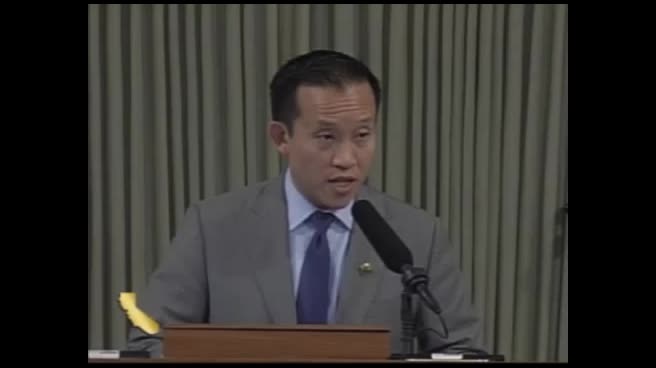

Bill Author

Bill Co-Author(s):