AB 1425: Apprentices.
- Session Year: 2017-2018
- House: Assembly
- Latest Version Date: 2017-03-28
Existing law requires contractors on public works projects to comply with various requirements for employing apprentices, including, among others, requiring every contractor to submit contract award information to an applicable apprenticeship program that can supply apprentices to the site of the public work. Existing law imposes penalties for a violation of requirements relating to apprentices.
This bill would require a contractor, within a designated time period, to provide specific written information to applicable apprenticeship committees whose geographic area of operation includes the area of the public works project. The bill would impose additional penalties for a violation of these various requirements, including, among others, prohibiting a contractor who knowingly commits 4 or more violations within a 3-year period to be ineligible to bid on or to be awarded or perform work on any public works contract for one year.
Existing law requires that, except as specified, not less than the general prevailing rate of per diem wages, determined by the Director of Industrial Relations, be paid to workers employed on public works projects. Under existing law, an apprentice employed upon public works is required to be paid the prevailing rate of per diem wages for apprentices in the trade to which he or she is registered and to be employed only at the work of the craft or trade to which he or she is registered, as specified.This bill would make technical, nonsubstantive changes to the above provision.Existing law requires that, except as specified, not less than the general prevailing rate of per diem wages, determined by the Director of Industrial Relations, be paid to workers employed on public works projects. Under existing law, an apprentice employed upon public works is required to be paid the prevailing rate of per diem wages for apprentices in the trade to which he or she is registered and to be employed only at the work of the craft or trade to which he or she is registered, as specified.
This bill would make technical, nonsubstantive changes to the above provision.
(a)This chapter does not prevent the employment of properly registered apprentices upon public works.
(b)(1)Every apprentice employed upon public works shall be paid the prevailing rate of per diem wages for apprentices in the trade to which he or she is registered and shall be employed only at the work of the craft or trade to which he or she is registered.
(2)Unless otherwise provided by a collective bargaining agreement, when a contractor requests the dispatch of an apprentice pursuant to this section to perform work on a public works project and requires the apprentice to fill out an application or undergo testing, training, an examination, or other preemployment process as a condition of employment, the apprentice shall be paid for the time spent on the required preemployment activity, including travel time to and from the required activity, if any, at the prevailing rate of per diem wages for apprentices in the trade to which he or she is registered. Unless otherwise provided by a collective bargaining agreement, a contractor is not required to compensate an apprentice for the time spent on preemployment activities if the apprentice is required to take a preemployment drug or alcohol test and he or she fails to pass that test.
(c)Only apprentices, as defined in Section 3077, who are in training under apprenticeship standards that have been approved by the Chief of the Division of Apprenticeship Standards and who are parties to written apprentice agreements under Chapter 4 (commencing with Section 3070) of Division 3 are eligible to be employed at the apprentice wage rate on public works. The employment and training of each apprentice shall be in accordance with either of the following:
(1)The apprenticeship standards and apprentice agreements under which he or she is training.
(2)The rules and regulations of the California Apprenticeship Council.
(d)If the contractor to whom the contract is awarded by the state or any political subdivision, in performing any of the work under the contract, employs workers in any apprenticeable craft or trade, the contractor shall employ apprentices in at least the ratio set forth in this section and may apply to any apprenticeship program in the craft or trade that can provide apprentices to the site of the public work for a certificate approving the contractor under the apprenticeship standards for the employment and training of apprentices in the area or industry affected. However, the decision of the apprenticeship program to approve or deny a certificate shall be subject to review by the Administrator of Apprenticeship. The apprenticeship program or programs, upon approving the contractor, shall arrange for the dispatch of apprentices to the contractor. A contractor covered by an apprenticeship programs standards shall not be required to submit any additional application in order to include additional public works contracts under that program. Apprenticeable craft or trade, as used in this section, means a craft or trade determined as an apprenticeable occupation in accordance with rules and regulations prescribed by the California Apprenticeship Council. As used in this section, contractor includes any subcontractor under a contractor who performs any public works not excluded by subdivision (o).
(e)Before commencing work on a contract for public works, every contractor shall submit contract award information to an applicable apprenticeship program that can supply apprentices to the site of the public work. The information submitted shall include an estimate of journeyman hours to be performed under the contract, the number of apprentices proposed to be employed, and the approximate dates the apprentices would be employed. A copy of this information shall also be submitted to the awarding body, if requested by the awarding body. Within 60 days after concluding work on the contract, each contractor and subcontractor shall submit to the awarding body, if requested, and to the apprenticeship program a verified statement of the journeyman and apprentice hours performed on the contract. The information under this subdivision shall be public. The apprenticeship programs shall retain this information for 12 months.
(f)The apprenticeship program supplying apprentices to the area of the site of the public work shall ensure equal employment and affirmative action in apprenticeship programs for women and minorities.
(g)The ratio of work performed by apprentices to journeymen employed in a particular craft or trade on the public work may be no higher than the ratio stipulated in the apprenticeship standards under which the apprenticeship program operates if the contractor agrees to be bound by those standards. However, except as otherwise provided in this section, in no case shall the ratio be less than one hour of apprentice work for every five hours of journeyman work.
(h)This ratio of apprentice work to journeyman work shall apply during any day or portion of a day when any journeyman is employed at the jobsite and shall be computed on the basis of the hours worked during the day by journeymen so employed. Any work performed by a journeyman in excess of eight hours per day or 40 hours per week shall not be used to calculate the ratio. The contractor shall employ apprentices for the number of hours computed as above before the end of the contract or, in the case of a subcontractor, before the end of the subcontract. However, the contractor shall endeavor, to the greatest extent possible, to employ apprentices during the same time period that the journeymen in the same craft or trade are employed at the jobsite. When an hourly apprenticeship ratio is not feasible for a particular craft or trade, the Administrator of Apprenticeship, upon application of an apprenticeship program, may order a minimum ratio of not less than one apprentice for each five journeymen in a craft or trade classification.
(i)A contractor covered by this section who has agreed to be covered by an apprenticeship programs standards upon the issuance of the approval certificate, or who has been previously approved for an apprenticeship program in the craft or trade, shall employ the number of apprentices or the ratio of apprentices to journeymen stipulated in the applicable apprenticeship standards, but in no event less than the 1-to-5 ratio required by subdivision (g).
(j)Upon proper showing by a contractor that he or she employs apprentices in a particular craft or trade in the state on all of his or her contracts on an annual average of not less than one hour of apprentice work for every five hours of labor performed by journeymen, the Administrator of Apprenticeship may grant a certificate exempting the contractor from the 1-to-5 hourly ratio, as set forth in this section for that craft or trade.
(k)An apprenticeship program has the discretion to grant to a participating contractor or contractor association a certificate, which shall be subject to the approval of the Administrator of Apprenticeship, exempting the contractor from the 1-to-5 ratio set forth in this section when it finds that any one of the following conditions is met:
(1)Unemployment for the previous three-month period in the area exceeds an average of 15 percent.
(2)The number of apprentices in training in the area exceeds a ratio of 1 to 5.
(3)There is a showing that the apprenticeable craft or trade is replacing at least one-thirtieth of its journeymen annually through apprenticeship training, either on a statewide basis or on a local basis.
(4)Assignment of an apprentice to any work performed under a public works contract would create a condition that would jeopardize his or her life or the life, safety, or property of fellow employees or the public at large, or the specific task that the apprentice is to be assigned to is of a nature that training cannot be provided by a journeyman.
(l)If an exemption is granted pursuant to subdivision (k) to an organization that represents contractors in a specific trade from the 1-to-5 ratio on a local or statewide basis, the member contractors shall not be required to submit individual applications for approval to local joint apprenticeship committees, if they are already covered by the local apprenticeship standards.
(m)(1)A contractor to whom a contract is awarded, who, in performing any of the work under the contract, employs journeymen or apprentices in any apprenticeable craft or trade shall contribute to the California Apprenticeship Council the same amount that the director determines is the prevailing amount of apprenticeship training contributions in the area of the public works site. A contractor may take as a credit for payments to the council any amounts paid by the contractor to an approved apprenticeship program that can supply apprentices to the site of the public works project. The contractor may add the amount of the contributions in computing his or her bid for the contract.
(2)At the conclusion of the 200203 fiscal year and each fiscal year thereafter, the California Apprenticeship Council shall distribute training contributions received by the council under this subdivision, less the expenses of the Department of Industrial Relations for administering this subdivision, by making grants to approved apprenticeship programs for the purpose of training apprentices. The funds shall be distributed as follows:
(A)If there is an approved multiemployer apprenticeship program serving the same craft or trade and geographic area for which the training contributions were made to the council, a grant to that program shall be made.
(B)If there are two or more approved multiemployer apprenticeship programs serving the same craft or trade and county for which the training contributions were made to the council, the grant shall be divided among those programs based on the number of apprentices from that county registered in each program.
(C)All training contributions not distributed under subparagraphs (A) and (B) shall be used to defray the future expenses of the Department of Industrial Relations for the administration and enforcement of apprenticeship standards and requirements under this code.
(3)All training contributions received pursuant to this subdivision shall be deposited in the Apprenticeship Training Contribution Fund, which is hereby created in the State Treasury. Upon appropriation by the Legislature, all moneys in the Apprenticeship Training Contribution Fund shall be used for the purpose of carrying out this subdivision and to pay the expenses of the Department of Industrial Relations.
(n)The body awarding the contract shall cause to be inserted in the contract stipulations to effectuate this section. The stipulations shall fix the responsibility of compliance with this section for all apprenticeable occupations with the prime contractor.
(o)This section does not apply to contracts of general contractors or to contracts of specialty contractors not bidding for work through a general or prime contractor when the contracts of general contractors or those specialty contractors involve less than thirty thousand dollars ($30,000).
(p)An awarding body that implements an approved labor compliance program in accordance with subdivision (b) of Section 1771.5 may, with the approval of the director, assist in the enforcement of this section under the terms and conditions prescribed by the director.
(q)(1)(A)A contractor shall provide contract award information to the apprenticeship committee for each applicable apprenticeable craft or trade in the area of the site of the public works project that has approved the contractor to train apprentices.
(B)A contractor who is not approved to train an apprentice by an apprenticeship program sponsor shall provide contract award information to all of the applicable apprenticeship committees whose geographic area of operation includes the area of the public works project.
(C)A contractor shall provide the information required by subparagraphs (A) and (B) within 10 days of the date of the execution of the prime contract or subcontract, but in no event later than the first day in which a contractor has workers employed upon the public work.
(2)(A)A contractor shall provide the information required by paragraph (1) in a writing that contains all of the following information:
(i)Contractors name, address, telephone number, and state license number.
(ii)Full name and address of the public work awarding body.
(iii)Exact location of the public work site.
(iv)Date of the contract award.
(v)Expected start date of the work.
(vi)Estimated journeyman hours.
(vii)Number of apprentices to be employed.
(viii)Approximate dates apprentices will be employed.
(B)The Department of Industrial Relations may create a form for a contractor to use to comply with subparagraph (A).
(3)A contractors failure to provide contract award information that is known by the contractor shall be deemed a continuing violation for the duration of the contract, ending when a Notice of Completion is filed by the awarding body, for the purpose of determining the accrual of penalties under Section 1777.7 of the Labor Code.
SEC. 2.Section 1777.7 of the Labor Code is amended to read:1777.7.(a)(1)If the Labor Commissioner or his or her designee determines after an investigation that a contractor or subcontractor knowingly violated Section 1777.5, the contractor and any subcontractor responsible for the violation shall forfeit, as a civil penalty to the state or political subdivision on whose behalf the contract is made or awarded, not more than one hundred dollars ($100) for each full calendar day of noncompliance. The amount of this penalty may be reduced by the Labor Commissioner if the amount of the penalty would be disproportionate to the severity of the violation. A contractor or subcontractor that knowingly commits a second or subsequent violation within a three-year period, if the noncompliance results in apprenticeship training not being provided as required by this chapter, shall forfeit as a civil penalty the sum of not more than three hundred dollars ($300) for each full calendar day of noncompliance. A contractor or subcontractor that knowingly commits four or more violations within a three-year period shall be ineligible to bid on or to be awarded or perform work as a subcontractor on any public works contract for one year from the date the determination of noncompliance by the Labor Commissioner becomes a final order.
(2)In lieu of the penalty provided for in this subdivision, the Labor Commissioner may, for a first-time violation and with the concurrence of an apprenticeship program described in subdivision (d) of Section 1777.5, order the contractor or subcontractor to provide apprentice employment equivalent to the work hours that would have been provided for apprentices during the period of noncompliance.
(b)The Labor Commissioner shall consider, in setting the amount of a monetary penalty, all of the following circumstances:
(1)Whether the violation was intentional.
(2)Whether the party has committed other violations of Section 1777.5.
(3)Whether, upon notice of the violation, the party took steps to voluntarily remedy the violation.
(4)Whether, and to what extent, the violation resulted in lost training opportunities for apprentices.
(5)Whether, and to what extent, the violation otherwise harmed apprentices or apprenticeship programs.
(c)(1)The Labor Commissioner or his or her designee shall issue a civil wage and penalty assessment, in accordance with the provisions of Section 1741, upon determination of penalties assessed under subdivisions (a) and (b). Review of a civil wage and penalty assessment issued under this subdivision may be requested in accordance with the provisions of Section 1742. The regulations of the Director of Industrial Relations, which govern proceedings for review of civil wage and penalty assessments and the withholding of contract payments under Article 1 (commencing with Section 1720) and Article 2 (commencing with Section 1770), shall apply.
(2)For purposes of this section, a determination issued pursuant to subdivision (a) or (b) includes a determination that has been approved by the Labor Commissioner and issued by an awarding body that has been authorized to assist the director in the enforcement of Section 1777.5 pursuant to subdivision (p) of that section. The Labor Commissioner may intervene in any proceeding for review of a determination issued by an awarding body. If the involvement of the Labor Commissioner in a labor compliance program enforcement action is limited to a review of the determination and the matter is resolved without litigation by or against the Labor Commissioner or the department, the awarding body shall enforce any applicable penalties, as specified in this section, and shall deposit any penalties and forfeitures collected in the General Fund.
(d)The determination of the Labor Commissioner as to the amount of the penalty imposed under subdivisions (a) and (b) shall be reviewable only for an abuse of discretion.
(e)If a subcontractor is found to have violated Section 1777.5, the prime contractor of the project is not liable for any penalties under subdivision (a) unless the prime contractor had knowledge of the subcontractors failure to comply with the provisions of Section 1777.5 or unless the prime contractor fails to comply with any of the following requirements:
(1)The contract executed between the contractor and the subcontractor for the performance of work on the public works project shall include a copy of the provisions of Sections 1771, 1775, 1776, 1777.5, 1813, and 1815.
(2)The contractor shall continually monitor a subcontractors use of apprentices required to be employed on the public works project pursuant to subdivision (d) of Section 1777.5, including, but not limited to, periodic review of the certified payroll of the subcontractor.
(3)Upon becoming aware of a failure of the subcontractor to employ the required number of apprentices, the contractor shall take corrective action, including, but not limited to, retaining funds due to the subcontractor for work performed on the public works project until the failure is corrected.
(4)Prior to making the final payment to the subcontractor for work performed on the public works project, the contractor shall obtain a declaration signed under penalty of perjury from the subcontractor that the subcontractor has employed the required number of apprentices on the public works project.
(f)The Division of Labor Standards Enforcement shall notify the contractor on a public works project within 15 days of the receipt by the division of a complaint that a subcontractor on that public works project knowingly violated Section 1777.5.
(g)The interpretation of Section 1777.5 and the substantive requirements of this section applicable to contractors or subcontractors shall be in accordance with the regulations of the California Apprenticeship Council.
(h)The Director of Industrial Relations may adopt regulations to establish guidelines for the imposition of monetary penalties.
(a)This chapter does not prevent the employment of properly registered apprentices upon public works.
(b)(1)Every apprentice employed upon public works shall be paid the prevailing rate of per diem wages for apprentices in the trade to which he or she is registered and shall be employed only at the work of the craft or trade to which he or she is registered.
(2)Unless otherwise provided by a collective bargaining agreement, when a contractor requests the dispatch of an apprentice pursuant to this section to perform work on a public works project and requires the apprentice to fill out an application or undergo testing, training, an examination, or other preemployment process as a condition of employment, the apprentice shall be paid for the time spent on the required preemployment activity, including travel time to and from the required activity, if any, at the prevailing rate of per diem wages for apprentices in the trade to which he or she is registered. Unless otherwise provided by a collective bargaining agreement, a contractor is not required to compensate an apprentice for the time spent on preemployment activities if the apprentice is required to take a preemployment drug or alcohol test and he or she fails to pass that test.
(c)Only apprentices, as defined in Section 3077, who are in training under apprenticeship standards that have been approved by the Chief of the Division of Apprenticeship Standards and who are parties to written apprentice agreements under Chapter 4 (commencing with Section 3070) of Division 3 are eligible to be employed at the apprentice wage rate on public works. The employment and training of each apprentice shall be in accordance with either of the following:
(1)The apprenticeship standards and apprentice agreements under which he or she is training.
(2)The rules and regulations of the California Apprenticeship Council.
(d)If the contractor to whom the contract is awarded by the state or any political subdivision, in performing any of the work under the contract, employs workers in any apprenticeable craft or trade, the contractor shall employ apprentices in at least the ratio set forth in this section and may apply to any apprenticeship program in the craft or trade that can provide apprentices to the site of the public work for a certificate approving the contractor under the apprenticeship standards for the employment and training of apprentices in the area or industry affected. However, the decision of the apprenticeship program to approve or deny a certificate shall be subject to review by the Administrator of Apprenticeship. The apprenticeship program or programs, upon approving the contractor, shall arrange for the dispatch of apprentices to the contractor. A contractor covered by an apprenticeship programs standards shall not be required to submit any additional application in order to include additional public works contracts under that program. Apprenticeable craft or trade, as used in this section, means a craft or trade determined as an apprenticeable occupation in accordance with rules and regulations prescribed by the California Apprenticeship Council. As used in this section, contractor includes any subcontractor under a contractor who performs any public works not excluded by subdivision (o).
(e)Before commencing work on a contract for public works, every contractor shall submit contract award information to an applicable apprenticeship program that can supply apprentices to the site of the public work. The information submitted shall include an estimate of journeyman hours to be performed under the contract, the number of apprentices proposed to be employed, and the approximate dates the apprentices would be employed. A copy of this information shall also be submitted to the awarding body, if requested by the awarding body. Within 60 days after concluding work on the contract, each contractor and subcontractor shall submit to the awarding body, if requested, and to the apprenticeship program a verified statement of the journeyman and apprentice hours performed on the contract. The information under this subdivision shall be public. The apprenticeship programs shall retain this information for 12 months.
(f)The apprenticeship program supplying apprentices to the area of the site of the public work shall ensure equal employment and affirmative action in apprenticeship programs for women and minorities.
(g)The ratio of work performed by apprentices to journeymen employed in a particular craft or trade on the public work may be no higher than the ratio stipulated in the apprenticeship standards under which the apprenticeship program operates if the contractor agrees to be bound by those standards. However, except as otherwise provided in this section, in no case shall the ratio be less than one hour of apprentice work for every five hours of journeyman work.
(h)This ratio of apprentice work to journeyman work shall apply during any day or portion of a day when any journeyman is employed at the jobsite and shall be computed on the basis of the hours worked during the day by journeymen so employed. Any work performed by a journeyman in excess of eight hours per day or 40 hours per week shall not be used to calculate the ratio. The contractor shall employ apprentices for the number of hours computed as above before the end of the contract or, in the case of a subcontractor, before the end of the subcontract. However, the contractor shall endeavor, to the greatest extent possible, to employ apprentices during the same time period that the journeymen in the same craft or trade are employed at the jobsite. When an hourly apprenticeship ratio is not feasible for a particular craft or trade, the Administrator of Apprenticeship, upon application of an apprenticeship program, may order a minimum ratio of not less than one apprentice for each five journeymen in a craft or trade classification.
(i)A contractor covered by this section who has agreed to be covered by an apprenticeship programs standards upon the issuance of the approval certificate, or who has been previously approved for an apprenticeship program in the craft or trade, shall employ the number of apprentices or the ratio of apprentices to journeymen stipulated in the applicable apprenticeship standards, but in no event less than the 1-to-5 ratio required by subdivision (g).
(j)Upon proper showing by a contractor that he or she employs apprentices in a particular craft or trade in the state on all of his or her contracts on an annual average of not less than one hour of apprentice work for every five hours of labor performed by journeymen, the Administrator of Apprenticeship may grant a certificate exempting the contractor from the 1-to-5 hourly ratio, as set forth in this section for that craft or trade.
(k)An apprenticeship program has the discretion to grant to a participating contractor or contractor association a certificate, which shall be subject to the approval of the Administrator of Apprenticeship, exempting the contractor from the 1-to-5 ratio set forth in this section when it finds that any one of the following conditions is met:
(1)Unemployment for the previous three-month period in the area exceeds an average of 15 percent.
(2)The number of apprentices in training in the area exceeds a ratio of 1 to 5.
(3)There is a showing that the apprenticeable craft or trade is replacing at least one-thirtieth of its journeymen annually through apprenticeship training, either on a statewide basis or on a local basis.
(4)Assignment of an apprentice to any work performed under a public works contract would create a condition that would jeopardize his or her life or the life, safety, or property of fellow employees or the public at large, or the specific task to which that the apprentice is to be assigned to is of a nature that training cannot be provided by a journeyman.
(l)If an exemption is granted pursuant to subdivision (k) to an organization that represents contractors in a specific trade from the 1-to-5 ratio on a local or statewide basis, the member contractors shall not be required to submit individual applications for approval to local joint apprenticeship committees, if they are already covered by the local apprenticeship standards.
(m)(1)A contractor to whom a contract is awarded, who, in performing any of the work under the contract, employs journeymen or apprentices in any apprenticeable craft or trade shall contribute to the California Apprenticeship Council the same amount that the director determines is the prevailing amount of apprenticeship training contributions in the area of the public works site. A contractor may take as a credit for payments to the council any amounts paid by the contractor to an approved apprenticeship program that can supply apprentices to the site of the public works project. The contractor may add the amount of the contributions in computing his or her bid for the contract.
(2)At the conclusion of the 200203 fiscal year and each fiscal year thereafter, the California Apprenticeship Council shall distribute training contributions received by the council under this subdivision, less the expenses of the Department of Industrial Relations for administering this subdivision, by making grants to approved apprenticeship programs for the purpose of training apprentices. The funds shall be distributed as follows:
(A)If there is an approved multiemployer apprenticeship program serving the same craft or trade and geographic area for which the training contributions were made to the council, a grant to that program shall be made.
(B)If there are two or more approved multiemployer apprenticeship programs serving the same craft or trade and county for which the training contributions were made to the council, the grant shall be divided among those programs based on the number of apprentices from that county registered in each program.
(C)All training contributions not distributed under subparagraphs (A) and (B) shall be used to defray the future expenses of the Department of Industrial Relations for the administration and enforcement of apprenticeship standards and requirements under this code.
(3)All training contributions received pursuant to this subdivision shall be deposited in the Apprenticeship Training Contribution Fund, which is hereby created in the State Treasury. Upon appropriation by the Legislature, all moneys in the Apprenticeship Training Contribution Fund shall be used for the purpose of carrying out this subdivision and to pay the expenses of the Department of Industrial Relations.
(n)The body awarding the contract shall cause to be inserted in the contract stipulations to effectuate this section. The stipulations shall fix the responsibility of compliance with this section for all apprenticeable occupations with the prime contractor.
(o)This section does not apply to contracts of general contractors or to contracts of specialty contractors not bidding for work through a general or prime contractor when the contracts of general contractors or those specialty contractors involve less than thirty thousand dollars ($30,000).
(p)An awarding body that implements an approved labor compliance program in accordance with subdivision (b) of Section 1771.5 may, with the approval of the director, assist in the enforcement of this section under the terms and conditions prescribed by the director.
|
Date
|
Status
|
|---|---|
| Sep 7, 2017 | Ordered to inactive file at the request of Senator Bradford. |
| Jun 27, 2017 | Read second time. Ordered to third reading. |
| Jun 26, 2017 | From committee: Be ordered to second reading pursuant to Senate Rule 28.8. |
| Jun 14, 2017 | From committee: Do pass and re-refer to Com. on APPR. (Ayes 4. Noes 1.) (June 14). Re-referred to Com. on APPR. |
| May 18, 2017 | Referred to Com. on L. & I.R. |
| May 8, 2017 | In Senate. Read first time. To Com. on RLS. for assignment. |
| May 8, 2017 | Read third time. Passed. Ordered to the Senate. (Ayes 52. Noes 23. Page 1426.) |
| May 4, 2017 | Read second time. Ordered to third reading. |
| May 3, 2017 | From committee: Do pass. (Ayes 11. Noes 5.) (May 3). |
| Apr 20, 2017 | From committee: Do pass and re-refer to Com. on APPR. (Ayes 5. Noes 2.) (April 19). Re-referred to Com. on APPR. |
| Mar 29, 2017 | Re-referred to Com. on L. & E. |
| Mar 28, 2017 | From committee chair, with author's amendments: Amend, and re-refer to Com. on L. & E. Read second time and amended. |
| Mar 27, 2017 | Referred to Com. on L. & E. |
| Feb 19, 2017 | From printer. May be heard in committee March 21. |
| Feb 17, 2017 | Read first time. To print. |
|
Date
|
Description
|
Location
|
Votes
|
|
|---|---|---|---|---|
| Jun 14, 2017 | Do pass, but first be re-referred to the Committee on [Appropriations] | Senate Standing Committee on Labor and Industrial Relations |
Passed |
|
| May 8, 2017 | AB 1425 KALRA Assembly Third Reading | Assembly Floor |
Passed |
|
| May 3, 2017 | Do pass. | Assembly Standing Committee on Appropriations |
Passed |
|
| Apr 19, 2017 | Do pass and be re-referred to the Committee on [Appropriations] | Assembly Standing Committee on Labor and Employment |
Passed |
This list shows positions taken on this bill by organizations on the date displayed, which is linked to the original source.
Positions by individuals are not included.
|
Organization
|
Position
|
Date
|
|---|---|---|
| American Fire Sprinkler Association | ** Against | Jun 27, 2017 |
| Associated Builders and Contractors | ** Against | Jun 27, 2017 |
| Associated General Contractors | ** Against | Jun 27, 2017 |
| California Labor Federation, Afl-Cio | * Support | Apr 19, 2017 |
| California State Association Of Electrical Workers | ** Support | Jun 27, 2017 |
| california state pipe and trades council | ** Support | Jun 12, 2017 |
| California State Pipe Trades Council | ** Support | Jun 12, 2017 |
| Construction Employers' Association | ** Against | Jun 27, 2017 |
| Independent Roofing Contractors of California, Inc. | ** Against | Jun 27, 2017 |
| International Union of Elevator Constructors | ** Support | Jun 12, 2017 |
| Plumbing- Heating- Cooling Contractors Association Of California | ** Against | Jun 12, 2017 |
| Plumbing-Heating-Cooling Contractors Association | ** Against | Jun 27, 2017 |
| State Building and Construction Trades Council, AFL-CIO | ** Support | Jun 27, 2017 |
| the western states council of sheet metal workers | ** Support | Jun 12, 2017 |
| Western Electrical Contractors Association | ** Against | Jun 27, 2017 |
Office of Senate Floor Analyses (916) 651-1520 Fax: (916) 327-4478 | AB |
THIRD READING
Bill No: AB 1425
:
SENATE LABOR & IND. REL. COMMITTEE: 4-1, 6/14/17
AYES: Bradford, Atkins, Jackson, Mitchell
NOES: Stone
SENATE APPROPRIATIONS COMMITTEE: Senate Rule 28.8
ASSEMBLY FLOOR: 52-23, 5/8/17 - See last page for vote
SOURCE: California State Association of Electrical Workers
DIGEST:
This bill increase the penalty from a monetary fine to a yearlong ban for contractors who fail to notify local apprenticeship programs of contract award information necessary to ensure compliance with the required apprentice ratio on the worksite.
Existing law:
- Defines “public works” to include, construction, alteration, demolition, or repair work done under contract and paid for, in whole or in part, out of public funds, including among other things the following:
- The payment of money or the equivalent of money by the state or political subdivision directly to or on behalf of the public works contractor, subcontractor, or developer.
- The performance of construction work by the state or political subdivision in execution of the project.
- Fees, costs, rents, insurance or bond premiums, loans, interest rates, or other obligations that would normally be required in the execution of the contract, that are paid, reduced, charged at less than fair market value, waived, or forgiven by the state or political subdivision.
- Money loaned by the state or political subdivision that is to be repaid on a contingent basis.
(Labor Code §1720)
- Requires contractors to employ apprentices in a set one hour of apprentice work to five hours of journeyman work ratio on public works projects for on the job training. (Labor Code § 1777.5 (g))
- Requires that before starting a public works project that every contractor submits contract award information, such as, an estimate of journeyman hours to be performed under the contract, the number of apprentices proposed to be employed, and the approximate dates the apprentices would be employed, to the applicable apprenticeship programs. (Labor Code § 1777.5 (e))
- Requires that every apprentice employed on public works projects be paid the prevailing rate of per diem wages for the trade in which they are employed. (Labor Code § 1777.5 (b)(1))
- Provides exemptions for a contractor not to have an apprentice on a specific public works projects if the following conditions are met.
- Unemployment for the previous three-month period in the area exceeds an average of 15 percent.
- The number of apprentices in training in the area exceeds a ratio of one to five.
- There is a showing that the apprenticeable craft or trade is replacing at least 1/30 of its journeymen annually through apprenticeship training, either on a statewide basis or on a local basis.
- Assignment of an apprentice to any work performed under a public works contract would create a condition that would jeopardize his or her life or the life, safety, or property of fellow employees or the public at large, or the specific task that the apprentice is to be assigned to is of a nature that training cannot be provided by a journeyman.
(Labor Code § 1777.5 (k))
- Excludes, for the purposes of these provisions, any contracts involving less than $30,000. (Labor Code § 1777.5 (o))
- Provides that if the Labor Commissioner finds that a contractor violated Labor Code Section 1777.5 then a civil penalty of $100 can be imposed for each full calendar day of noncompliance. (Labor Code § 1777.7 (a)(1))
- Provides that if a second violation within a three-year period is found the contractor shall forfeit no more than $300 for each full calendar day of noncompliance. (Labor Code § 1777.7 (a) (1))
- Provides as an alternative to a penalty, that the Labor Commissioner may for a first-time violation, order the contractor or subcontractor to provide apprentice employment equal to the work hours during the period of noncompliance. (Labor Code § 1777.7 (a) (2))
- Provides that if a subcontractor is found to have violated Labor Code Section 1777.5, the main contractor is not liable for any penalties unless the main contractor had knowledge of failure to comply or if the prime contractor fails to comply with other specified requirements. (Labor Code § 1777.7 (e))
This bill:
- Requires contractors, within a specified amount of time, to provide the contract award information to the apprenticeship committees for each applicable apprenticeable craft or trade in the area of the site of the public works project that has approved the contractor to train apprentices.
- Requires all contractors who are not approved to train an apprentice by an apprenticeship program sponsor, to provide contract award information to all of the applicable apprenticeship committees whose geographic area of operation includes the area of the public works project.
- Requires contractors to provide the required information within 10 days of the date of execution of the prime contract or subcontract, but no later than the first day in which workers are employed on the public works project.
- Requires a contractor to provide the required contract information in writing, containing all of the following information:
- Contractor’s name, address, telephone number, and state license number.
- Full name and address of the public work awarding body.
- Exact location of the public work site.
- Date of the contract award.
- Expected start date of the work.
- Estimated journeyman hours.
- Number of apprentices to be employed.
- Approximate dates apprentices will be employed.
- Provides that the Department of Industrial Relations may create a form for contractors to use in order to comply with the required information sharing.
- States that a contractor’s failure to provide contract award information that is known by the contractor shall be deemed a continuing violation for the duration of the contract, ending when a Notice of Completion (NOC) is filed by the awarding body, for the purpose of determining the accrual of penalties under Section 1777.7 of the Labor Code.
- Provides that a contractor or subcontractor that knowingly commits four or more violations within a three-year period shall be ineligible to bid on or to be awarded or perform work as a subcontractor on any public works contract for one year from the date the determination of noncompliance by the Labor Commissioner becomes a final order.
Comments
Apprenticeship programs. Under current public works requirements, all public works contracts valued at $30,000 or more are required to hire apprentices at the specified work hour ratio, unless that specific craft or trade does not require apprentices. The Department of Apprenticeship Standards (DAS), under the Department of Industrial Relations, aims to create opportunities for Californians to gain valuable skills for obtaining employment that strengthen our job force through apprenticeship programs. Some benefits of an apprenticeship programs are the opportunity to learn while you earn, career advancement opportunities, excellent wages and benefits, and safe working conditions which, as a result, has allowed these programs to become an integral part of shaping California’s workforce.
The goals of DAS are to match “the needs of workers in the acquisition of skills that allow them to obtain and keep a well-paying job with those of employers seeking motivated workers with the skills they need for open positions, and strengthening the alliance among industry, labor, education, and government to recruit workers and teach them the skills needed to support industry. Because it is funded and driven by the industry’s needs, the apprenticeship system provides an effective balance between learning-by-doing and theoretical instruction, thus developing workers with marketable skills.” One of the most important factors of the apprenticeship program is that the wages they are paid are a portion of the skilled wage rate that increases during the training program, which helps ensure that the apprentices are being properly paid for their labor and efforts.
By working with employers locally to develop new apprenticeship training programs these programs are able to teach the specific skills needed to perform a job at all levels. After completion of the apprenticeship program, apprentices are issued a certificate of completion from the State of California.
Need for this bill? Under California Labor Code, contractors are required to provide contract information to the appropriate apprenticeship committees. This contract information is required in writing and must be given within 10 days of an award, but no later than the first day that the contractor has employed other workers, so that apprenticeship committees have the time to place apprentices properly on the site to meet the ratio requirements and for appropriate on the job training. Apprenticeship programs offer on-the-job training for apprentices on public works projects, which gives them valuable job training and the chance to strengthen their skills in a specific trade. When contractors fail to give notice to the appropriate apprenticeship program of upcoming public works projects in a reasonable timeframe then this emerging workforce misses out on the chance to develop their skills further and the contractor risks being out of compliance per the required apprentice to worker ratio.
Under current law, a penalty is imposed on contractors who violate public works contract award notification requirements. The California Code of Regulations goes a step further by requiring that this information be shared within ten days of the award. Both current law and California Code of Regulations impose penalties for violators. However, according to the author, the existing penalty does not seem to discourage repeat offenders from violating this requirement. AB 1425 aims to rectify this by imposing a contracting ban in an effort to ensure that contractors will do their due-diligence and notify apprenticeship programs in the proper time frame in order to avoid incurring a ban to work on public works projects. This bill also codifies the 10-day submission deadline.
FISCAL EFFECT: Appropriation: Fiscal Com.: Local:
California State Association of Electrical Workers (source)
California Legislative Conference of Plumbing, Heating and Piping Industry
State Building and Construction Trades Council, AFL-CIO
OPPOSITION: (Verified 6/26/17)
American Fire Sprinkler Association
Associated Builders and Contractors
Associated General Contractors
Construction Employers’ Association
Independent Roofing Contractors of California, Inc.
Plumbing-Heating-Cooling Contractors Association
Western Electrical Contractors Association
ARGUMENTS IN SUPPORT: According to proponents, this bill will ensure that a contractor, within a designated time period, will provide notice to applicable local apprenticeship committees that a project has been awarded in their area and that the contractor has been approved to train apprentices.
They note that the importance of this notice cannot be overstated. In order for an apprentice to journey through their apprenticeship training they must complete a certain number of hours of on the job training. This hands-on training makes up the bulk of an apprentice’s training program and if their apprenticeship program is not aware of where and to which contractor they can send apprentices that training will be hindered.
The California State Association of Electrical Workers is the sponsor of this bill and argues that although current law requires reporting, this bill goes further and enhances the penalties for failure to comply with the statute. If a contractor or subcontractor knowingly commits four or more violations within a three-year period, they shall be ineligible to bid on or to be awarded to perform work on a public works contract for one year.
ARGUMENTS IN OPPOSITION: Opponents of AB 1425 argue that, although they believe that contractors should be held to a high standard of compliance in regards to the apprenticeship requirements, that this bill is duplicative of existing regulations and its penalties are too severe and could constitute a death penalty for a contractor who makes an unintentional mistake in their paperwork.
Opponents claim that under AB 1425 a contractor’s failure to provide contract award information that is known by the contractor is a continuing violation for the duration of the contract, ending when a NOC is filed by the awarding body, for the purpose of determining the accrual of penalties under Section 1777.7 of the Labor Code. For a multi-year project, a contractor could be liable for hundreds of thousands of dollars in penalties even if they have completed their work because the penalties do not end until the NOC is filed by the public agency. It is worth noting that ministerial errors are commonplace as the DAS 140 form must be submitted by every general contractor and subcontractor prior to commencement of work. Changes in start dates and estimations of manpower are normal and most mistakes related to the DAS 140 form are ministerial. To the extent that there are ministerial violations that are not corrected, such as listing the wrong address, this bill will subject the violator to penalties until the NOC is filed. They also question what could potentially happen if the public agency never files a NOC and who would be liable.
Additionally, opponents note that AB 1425 amends Labor Code Section 1777.7 to debar a contractor who knowingly commits four or more violations within a three-year period. It is important to remember that California Courts have concluded that “knowing” does not mean the contractor actually “knows” his or her conduct is illegal – only that the conduct was intentional.
Opponents also argue that there appears to be a misconception that mistakes are limited to non-union employers. This bill will likely result in the debarment of more signatory entities versus non-signatory entities because signatory employers tend to be larger and preform more public work than their non-union counterparts.
ASSEMBLY FLOOR: 52-23, 5/8/17
AYES: Aguiar-Curry, Arambula, Berman, Bloom, Bocanegra, Bonta, Burke, Caballero, Calderon, Cervantes, Chau, Chiu, Chu, Cooley, Cooper, Dababneh, Daly, Eggman, Cristina Garcia, Eduardo Garcia, Gipson, Gloria, Gomez, Gonzalez Fletcher, Gray, Grayson, Holden, Irwin, Jones-Sawyer, Kalra, Levine, Limón, Low, McCarty, Mullin, Muratsuchi, Nazarian, O'Donnell, Quirk, Quirk-Silva, Reyes, Ridley-Thomas, Rodriguez, Rubio, Salas, Santiago, Mark Stone, Thurmond, Ting, Weber, Wood, Rendon
NOES: Acosta, Travis Allen, Baker, Bigelow, Brough, Chen, Choi, Cunningham, Dahle, Flora, Fong, Gallagher, Harper, Kiley, Lackey, Maienschein, Mathis, Mayes, Melendez, Obernolte, Steinorth, Voepel, Waldron
NO VOTE RECORDED: Chávez, Frazier, Friedman, Medina, Patterson
6/27/17 16:57:52
FSENATE COMMITTEE ON LABOR AND INDUSTRIAL RELATIONS
Senator Steven Bradford, Chair
2017 - 2018 Regular
Bill No: AB 1425 Hearing Date: June 14, 2017
Author: | Kalra | ||
Version: | March 28, 2017 | ||
Urgency: | No | Fiscal: | Yes |
Consultant: | Maya Van Peebles | ||
Subject: Apprentices
KEY ISSUE
Should the Legislature increase the penalty from a monetary fine to a yearlong ban for contractors who fail to notify local apprenticeship programs of contract award information necessary to ensure compliance with the required apprentice ratio on the worksite?
ANALYSIS
Existing law
- Defines “public works” to include, construction, alteration, demolition, or repair work done under contract and paid for, in whole or in part, out of public funds, including among other things the following:
- The payment of money or the equivalent of money by the state or political subdivision directly to or on behalf of the public works contractor, subcontractor, or developer.
- The performance of construction work by the state or political subdivision in execution of the project.
- Fees, costs, rents, insurance or bond premiums, loans, interest rates, or other obligations that would normally be required in the execution of the contract, that are paid, reduced, charged at less than fair market value, waived, or forgiven by the state or political subdivision.
- Money loaned by the state or political subdivision that is to be repaid on a contingent basis.
(Labor Code §1720)
- Requires contractors to employ apprentices in a set 1 hour of apprentice work to 5 hours of journeyman work ratio on public works projects for on the job training. [Labor Code § 1777.5 (g)]
- Requires that before starting a public works project that every contractor submits contract award information, such as, an estimate of journeyman hours to be performed under the contract, the number of apprentices proposed to be employed, and the approximate dates the apprentices would be employed, to the applicable apprenticeship programs.
[Labor Code § 1777.5 (e)]
- Requires that every apprentice employed on public works projects be paid the prevailing rate of per diem wages for the trade in which they are employed.
[Labor Code § 1777.5 (b)(1)]
- Provides exemptions for a contactor not to have an apprentice on a specific public works projects if the following conditions are met.
- Unemployment for the previous three-month period in the area exceeds an average of 15 percent.
- The number of apprentices in training in the area exceeds a ratio of 1 to 5.
- There is a showing that the apprenticeable craft or trade is replacing at least one-thirtieth of its journeymen annually through apprenticeship training, either on a statewide basis or on a local basis.
- Assignment of an apprentice to any work performed under a public works contract would create a condition that would jeopardize his or her life or the life, safety, or property of fellow employees or the public at large, or the specific task that the apprentice is to be assigned to is of a nature that training cannot be provided by a journeyman.
[Labor Code § 1777.5 (k)]
- For the purposes of these provisions, excludes any contracts involving less than $30,000. [Labor Code § 1777.5 (o)]
- Provides that if the Labor Commissioner finds that a contractor violated 1777.5 then a civil penalty of $100 can be imposed for each full calendar day of noncompliance. [Labor Code § 1777.7 (a)(1)]
- Provides that if a second violation within a three-year period is found the contractor shall forfeit no more than $300 for each full calendar day of noncompliance.
[Labor Code § 1777.7 (a) (1)]
- Provides as an alternative to a penalty, that the Labor Commissioner may for a first- time violation, order the contractor or subcontractor to provide apprentice employment equal to the work hours during the period of noncompliance.
[Labor Code § 1777.7 (a) (2)]
- Provides that if a subcontractor is found to have violated §1777.5, the main contractor is not liable for any penalties unless the main contractor had knowledge of failure to comply or if the prime contractor fails to comply with other specified requirements. [Labor Code § 1777.7 (e)]
This Bill
- Requires contractors, within a specified amount of time, to provide the contract award information to the apprenticeship committees for each applicable apprenticeable craft or trade in the area of the site of the public works project that has approved the contractor to train apprentices.
- Requires all contractors who are not approved to train an apprentice by an apprenticeship program sponsor, to provide contract award information to all of the applicable apprenticeship committees whose geographic area of operation includes the area of the public works project.
- Requires contractors to provide the required information within 10 days of the date of execution of the prime contract or subcontract, but no later than the first day in which workers are employed on the public works project.
- Requires a contractor to provide the required contract information in writing, containing all of the following information:
- Contractor’s name, address, telephone number, and state license number.
- Full name and address of the public work awarding body.
- Exact location of the public work site.
- Date of the contract award.
- Expected start date of the work.
- Estimated journeyman hours.
- Number of apprentices to be employed.
- Approximate dates apprentices will be employed.
- Provides that the Department of Industrial Relations may create a form for contractors to use in order to comply with the required information sharing.
- States that a contractor’s failure to provide contract award information that is known by the contractor shall be deemed a continuing violation for the duration of the contract, ending when a Notice of Completion is filed by the awarding body, for the purpose of determining the accrual of penalties under Section 1777.7 of the Labor Code.
- Provides that a contractor or subcontractor that knowingly commits four or more violations within a three-year period shall be ineligible to bid on or to be awarded or perform work as a subcontractor on any public works contract for one year from the date the determination of noncompliance by the Labor Commissioner becomes a final order.
COMMENTS
- Background on Apprenticeship Programs
Under current public works requirements, all public works contracts valued at $30,000 or more are required to hire apprentices at the specified work hour ratio, unless that specific craft or trade does not require apprentices. The Department of Apprenticeship Standards (DAS), under the Department of Industrial Relations, aims to create opportunities for Californians to gain valuable skills for obtaining employment that strengthen our job force through apprenticeship programs. Some benefits of an apprenticeship programs are the opportunity to learn while you earn, career advancement opportunities, excellent wages and benefits, and safe working conditions which, as a result, has allowed these programs to become an integral part of shaping California’s workforce.
The goals of DAS are to match “the needs of workers in the acquisition of skills that allow them to obtain and keep a well-paying job with those of employers seeking motivated workers with the skills they need for open positions, and strengthening the alliance among industry, labor, education, and government to recruit workers and teach them the skills needed to support industry. Because it is funded and driven by the industry’s needs, the apprenticeship system provides an effective balance between learning-by-doing and theoretical instruction, thus developing workers with marketable skills.” One of the most important factors of the apprenticeship program is that the wages they are paid are a portion of the skilled wage rate that increases during the training program, which helps ensure that the apprentices are being properly paid for their labor and efforts.
By working with employers locally to develop new apprenticeship training programs these programs are able to teach the specific skills needed to perform a job at all levels. After completion of the apprenticeship program, apprentices are issued a certificate of completion from the State of California.
- Need for this bill?
Under California Labor Code, contractors are required to provide contract information to the appropriate apprenticeship committees. This contract information is required in writing and must be given within ten days of an award, but no later than the first day that the contractor has employed other workers, so that apprenticeship committees have the time to place apprentices properly on the site to meet the ratio requirements and for appropriate on the job training. Apprenticeship programs offer on-the-job training for apprentices on public works projects, which gives them valuable job training and the chance to strengthen their skills in a specific trade. When contractors fail to give notice to the appropriate apprenticeship program of upcoming public works projects in a reasonable timeframe then this emerging workforce misses out on the chance to develop their skills further and the contractor risks being out of compliance per the required apprentice to worker ratio.
Under current law, a penalty is imposed on contractors who violate public works contract award notification requirements. The California Code of Regulations goes a step further by requiring that this information be shared within ten days of the award. Both current law and California Code of Regulations impose penalties for violators. However, according to the author, the existing penalty does not seem to discourage repeat offenders from violating this requirement. AB 1425 aims to rectify this by imposing a contracting ban in an effort to ensure that contractors will do their due-diligence and notify apprenticeship programs in the proper time frame in order to avoid incurring a ban to work on public works projects. This bill would also codify the 10-day submission deadline.
3. Proponent Arguments:
According to proponents, this bill will ensure that a contractor, within a designated time period, will provide notice to applicable local apprenticeship committees that a project has been awarded in their area and that the contractor has been approved to train apprentices.
They note that the importance of this notice cannot be overstated. In order for an apprentice to journey through their apprenticeship training they must complete a certain number of hours of on the job training. This hands-on training makes up the bulk of an apprentice’s training program and if their apprenticeship program is not aware of where and to which contractor they can send apprentices that training will be hindered.
The California State Association of Electrical Workers is the sponsor of this measure and argues that although current law requires reporting, this bill goes further and enhances the penalties for failure to comply with the statute. If a contractor or subcontractor knowingly commits four or more violations within a three-year period, they shall be ineligible to bid on or to be awarded to perform work on a public works contract for one year.
4. Opponent Arguments:
Opponents of AB 1425 argue that, although they believe that contractors should be held to a high standard of compliance in regards to the apprenticeship requirements, that this bill is duplicative of existing regulations and its penalties are too severe and could constitute a death penalty for a contractor who makes an unintentional mistake in their paperwork.
Opponents claim that under AB 1425 a contractor’s failure to provide contract award information that is known by the contractor is a continuing violation for the duration of the contract, ending when a Notice of Completion (NOC) is filed by the awarding body, for the purpose of determining the accrual of penalties under §1777.7 of the Labor Code. For a multi-year project, a contractor could be liable for hundreds of thousands of dollars in penalties even if they have completed their work because the penalties do not end until the NOC is filed by the public agency. It is worth noting that ministerial errors are commonplace as the DAS 140 form must be submitted by every general contractor and subcontractor prior to commencement of work. Changes in start dates and estimations of manpower are normal and most mistakes related to the DAS 140 form are ministerial. To the extent that there are ministerial violations that are not corrected, such as listing the wrong address, this measure will subject the violator to penalties until the NOC is filed. They also question what could potentially happen if the public agency never files a NOC and who would be liable.
Additionally, opponents note that AB 1425 amends LC§1777.7 to debar a contractor who knowingly commits four or more violations within a three-year period. It is important to remember that California Courts have concluded that “knowing” does not mean the contractor actually “knows” his or her conduct is illegal – only that the conduct was intentional.
Opponents also argue that there appears to be a misconception that mistakes are limited to non-union employers. This measure will likely result in the debarment of more signatory- entities versus non-signatory entities because signatory employers tend to be larger and preform more public work than their non-union counterparts.
SUPPORT
California State Association of Electrical Workers (Sponsor)
California State Pipe Trades Council
California State Pipe and Trades Council
International Union of Elevator Constructors
State Building and Construction Trades Council
The Western States Council of Sheet Metal Workers
OPPOSITION
American Fire Sprinkler Association
Associated Builders and Contractors
Construction Employers’ Association
Independent Roofing Contractors of California, Inc.
Plumbing- Heating- Cooling Contractors Association of California
Western Electrical Contractors Association
-- END --
ASSEMBLY THIRD READING
ATR Bill Id:AB 1425
Author:(Kalra)
As Amended Ver:March 28, 2017
Majority vote
Committee | Votes | Ayes | Noes |
Labor | 5-2 | Thurmond, Chiu, Jones-Sawyer, Kalra, McCarty | Flora, Harper |
Appropriations | 11-5 | Gonzalez Fletcher, Bloom, Bocanegra, Bonta, Calderon, Chau, Eggman, Friedman, Eduardo Garcia, Muratsuchi, Reyes | Bigelow, Brough, Fong, Gallagher, Obernolte |
SUMMARY: Requires a contractor within a designated time period, to provide specific written information to applicable apprenticeship committees whose geographic area of operation includes the area of the public works project and, would impose additional penalties for a violation of these provisions. Specifically, this bill:
- Requires a contractor to provide contract award information to the apprenticeship committee for each applicable apprenticeable craft or trade in the area of the site of the public works project that has approved the contractor to train apprentices.
- Mandates a contractor who is not approved to train an apprentice by an apprenticeship program sponsor, to provide contract award information to all of the applicable apprenticeship committees who geographic area of operation includes the area of the public works project.
- Requires a contractor to provide the information, as specified, within 10 days of the date of the execution of the prime contract or subcontract, but in no event later than the first day in which a contractor has workers employed upon the public work.
- Mandates a contractor to provide the information required in these provisions in a writing that contains all of the information, as specified.
- Provides that the Department of Industrial Relations may create a form for a contractor to use to comply with these provisions.
- States that a contractor's failure to provide contract award information that is known by the contractor shall be deemed a continuing violation for the duration of the contract, ending when a Notice of Completion (NOC) is filed by the awarding body, for the purpose of determining the accrual of penalties under Labor Code Section 1777.7 .
- Provides that a contractor or subcontractor that knowingly commits four or more violations within a three-year period shall be ineligible to bid on or to be awarded or perform work as a subcontractor on any public works contract for one year from the date the determination of noncompliance by the Labor Commissioner becomes a final order.
FISCAL EFFECT: According to the Assembly Appropriations Committee, this bill has minor and absorbable costs for the Department of Industrial Relations (DIR).
COMMENTS: The author argues, "AB 1425 will ensure the state's apprenticeship programs are operating to their fullest potential. Contractors need to be fully aware and committed to their requirements, codifying them in statute will assist in this effort and increase the likelihood that contractors adhere to these practices. While current law imposes a penalty fee for contractors that violate the 10-day apprenticeship notification regulation, the fee alone is not enough to tackle the issue for repeat offenders. AB 1425 raises the stakes on these contractors that violate their requirements by denying bids on future public works projects if they are in violation over four times in a three-year period. AB 1425 protects an existing gateway for those entering steady careers through apprenticeships and provides adequate deterrence against those contractors from skirting the law. Because every public works project utilizes taxpayer money, it is important that these projects provide a benefit to the state's emerging workforce."
Background on existing law, public works, per diem wages and apprenticeship programs can be found in the policy committee analysis.
Arguments in Support
The California State Association of Electrical Workers is the sponsor of this measure and writes in support, "AB 1425 adds to the Labor Code the requirement that a contractor shall provide award information to the apprenticeship committee for each applicable craft or trade in the area of the site of the public works project that has approved the contractor to train apprentices. This mandate is currently found at 8 California Code of Regulations 230, but the bill goes further and enhances the penalties for failure to comply with the statute. If a contractor or subcontractor knowingly commits four or more violations within a three-year period, they shall be ineligible to bid on or to be awarded to perform work on a public works contract for one year. It is critical to a successful apprenticeship program to dispatch these men and women to actual job sites. The purpose behind notifying apprenticeship committees is to ensure that they have time to ensure that apprentices will be available."
Arguments in Opposition
The Western Electrical Contractors Association (WECA), Plumbing-Heating-Cooling Contractors Association of California (CAPHCC), American Fire Sprinkler Association (AFSA), Independent Roofing Contractors of California, Inc. and Associated Builders and Contractors write in opposition that, "While my clients are sponsors of apprenticeship programs and believe that contractors should be held to a high standard of compliance with apprenticeship requirements, they believe elements in AB 1425 are duplicative of existing regulations, confusing and the penalties are too severe and could constitute a "death penalty" for a contractor who makes even unintentional mistakes in their paperwork associated with apprenticeship utilization. Under AB 1425 a contractor's failure to provide contract award information that is known by the contractor is a continuing violation for the duration of the contract, ending when a Notice of Completion is filed by the awarding body, for the purpose of determining the accrual of penalties under Section 1777.7 of the Labor Code. For a multi-year project, a contractor could be liable for hundreds of thousands of dollars in penalties even if they have completed their work because the penalties do not end until the NOC is filed by the public agency. AB 1425 debars a contractor who knowingly commits four or more violations within a three-year period. As I am sure you know, California Courts have concluded that knowing does not mean the contractor actually knows his or her conduct is illegal only that the conduct was intentional."
Analysis Prepared by: Taylor Jackson / L. & E. / 916-319-2091 FN: 0000231
Date of Hearing: May 3, 2017
ASSEMBLY COMMITTEE ON APPROPRIATIONS
Lorena Gonzalez Fletcher, Chair
ABPCA Bill Id:AB 1425
Author:(Kalra) – As Amended Ver:March 28, 2017
Policy Committee: | Labor and Employment | Vote: | 5 - 2 |
|
| ||
|
|
Urgency: No State Mandated Local Program: No Reimbursable: No
SUMMARY:
This bill requires a contractor to provide specific written information to apprenticeship committees and imposes additional penalties for a violation of these provisions. Specifically, this bill:
- Requires a contractor to provide contract award information to the apprenticeship committee for each applicable apprenticeable craft or trade within the geographic area of the public works project. This information has to be provided within 10 days of executing the contract, but cannot be later than the first day in which a worker becomes employed for the project.
- States that a contractor’s failure to provide the specified information is a continuing violation for the duration of the contract, ending when a Notice of Completion is filed by the awarding body.
- Prohibits a contractor or subcontractor that knowingly commits four or more violations with a three-year period from bidding or performing work as a subcontractor on any public works contract for one year.
FISCAL EFFECT:
Minor and absorbable costs for the Department of Industrial Relations (DIR).
COMMENTS:
Background and Purpose. Under existing regulations, contracts that are awarded a prime contract must provide the contract information to apprenticeship committees. Failure to comply with these requirements results in a $100 penalty per day for every full day violation and $300 per day for each subsequent violation within a three-year period.
According to the author, AB 1425 will help ensure that apprenticeship programs are operating to their fullest potential. The author notes that job-site training is a critical component of any apprenticeship program, and it is vital for apprenticeship committees to be properly informed of contracts in order to prepare the adequate number of apprentices for that project. AB 1425 aims to achieve these goals by putting existing regulatory requirements for contractors to notify apprenticeship committees into statute and by strengthening the penalties for not doing so.
Analysis Prepared by: Luke Reidenbach / APPR. / (916) 319-2081
Date of Hearing: April 19, 2017
ASSEMBLY COMMITTEE ON LABOR AND EMPLOYMENT
Tony Thurmond, Chair
ABPCA Bill Id:AB 1425 (
Author:Kalra) – As Amended Ver:March 28, 2017
SUBJECT: Apprentices
SUMMARY: Requires a contractor with a designated time period, to provide specific written information to applicable apprenticeship committees whose geographic area of operation includes the area of the public works project and, would impose additional penalties for a violation of these provisions. Specifically, this bill:
- Requires a contractor to provide contract award information to the apprenticeship committee for each applicable apprenticeable craft or trade in the area of the site of the public works project that has approved the contractor to train apprentices.
- Mandates a contractor who is not approved to train an apprentice by an apprenticeship program sponsor, to provide contract award information to all of the applicable apprenticeship committees who geographic area of operation includes the area of the public works project.
- Requires a contractor to provide the information, as specified, within 10 days of the date of the execution of the prime contract or subcontract, but in no event later than the first day in which a contractor has workers employed upon the public work.
- Mandates a contractor to provide the information required in these provisions in a writing that contains all of the information, as specified.
- Provides that the Department of Industrial Relations may create a form for a contractor to use to comply with these provisions.
- States that a contractor’s failure to provide contract award information that is known by the contractor shall be deemed a continuing violation for the duration of the contract, ending when a Notice of Completion is filed by the awarding body, for the purpose of determining the accrual of penalties under Section 1777.7 of the Labor Code.
- Provides that a contractor or subcontractor that knowingly commits four or more violations within a three-year period shall be ineligible to bid on or to be awarded or perform work as a subcontractor on any public works contract for one year from the date the determination of noncompliance by the Labor Commissioner becomes a final order.
EXISTING LAW:
- Requires contractors on public works projects to comply with various requirements for employing apprentices, including, among others, requiring every contractor to submit contract award information to an applicable apprenticeship program that can supply apprentices to the site of the public work.
- Defines public works, to include among other things, construction, alteration, demolition, installation, or repair work done under contract and paid for in whole or in part out of public funds, except as specified.
- Provides that private residential projects built on private property are not subject to the requirements of public works provisions, unless the projects are built pursuant to an agreement with a state agency, redevelopment agency, or local public housing authority.
- Requires that the applicable general prevailing rate of per diem wages for apprentices in the trade to which he or she is registered be paid to apprentices employed on public works projects in California.
- Provides that this rate is determined by the Director of the Department of Industrial Relations (DIR) for each locality in which the public work is to be performed and for each craft, classification, or type of apprentice needed to execute the public works project.
- Provides for penalties for a violation of requirements relating to apprentices.
FISCAL EFFECT: Unknown
COMMENTS: The author argues, “California Code of Regulations, Title 8, Section 230, requires that contractors awarded a prime contract shall provide contract information to the appropriate apprenticeship committee for each applicable craft or trade in the area of the site. The contract award information is required to be in writing and provided within ten days of the award but in no event later than the first day in which the contractor has workers employed on the public work. Contractors that fail to comply with these requirements are penalized $100 per day for every full day violation and $300 per day for subsequent violations within a three-year period.
The purpose of notifying apprenticeship committees is to ensure that they have adequate time to place apprentices on job-sites for public works projects. This job-site training is a critical component of the apprenticeship program and ensures that the programs can provide the apprentices. Apprenticeships for public works provide invaluable opportunities for many in the crafts and trades to activate their careers. As such, it is important for apprenticeship committees to be properly informed of newly awarded contracts in order to prepare the adequate amount of apprentices for the job-site. By requiring public works contractors to provide contract information to the apprenticeship committee within a reasonable time-frame, AB 1425 will ensure the state’s apprenticeship programs are operating to their fullest potential.
Contractors need to be fully aware and committed to their requirements. Codifying them in statute will assist in this effort and increase the likelihood that contractors adhere to these practices. While current law imposes a penalty fee for contractors that violate the 10-day apprenticeship notification regulation, the fee alone is not enough to tackle the issue for repeat offenders.
AB 1425 raises the stakes on these contractors that violate their requirements by denying bids on future public works projects if they are in violation over four times in a three-year period. AB 1425 protects an existing gateway for those entering steady careers through apprenticeships and provides adequate deterrence against those contractors from skirting the law.
Because every public works project utilizes taxpayer money, it is important that these projects provide a benefit to the state’s emerging workforce.
While current law imposes a penalty fee for contractors that violate the 10-day apprenticeship notification regulation, the fee alone is not enough to tackle the issue for repeat offenders. AB 1425 raises the stakes on these contractors that violate their requirements by denying bids on future public works projects if they are in violation over four times in a three-year period.
AB 1425 protects an existing gateway for those entering steady careers through apprenticeships and provides adequate deterrence against those contractors from skirting the law. Because every public works project utilizes taxpayer money, it is important that these projects provide a benefit to the state’s emerging workforce.”
Apprenticeship Programs
Apprenticeship is a system of learning while earning, and learning by doing. It combines training on the job with related and supplemental instruction at school. Today, it is utilized chiefly in the skilled crafts. Each program operates under apprenticeship training standards agreed to by labor and management in accordance with state and federal laws, under which a person works with a skilled worker and gains on the job skills and knowledge and in turn becomes an important part of the occupation and industry. In those crafts in which management and labor organizations exist, each selects an equal number of members to serve on the joint apprenticeship committee. The joint apprenticeship committee determines the standards for training of its occupation and supervises the training of apprentices. In many cases the local apprenticeship committees have guidelines in the form of national and/or statewide standards recommended by the advisory organizations. But these are minimums and the local groups usually have complete autonomy in developing and administering their own programs.
Training is spelled out in apprenticeship standards developed by the local apprenticeship committees, with the assistance of consultants of the Division of Apprenticeship Standards, and registered with the State. The processes of the trade and the number of hours to be spent learning each process are defined. The period of training is from 1 to 6 years, depending upon the trade; most programs are for 4 years.
Apprentices start at a percentage of the skilled worker's wage and receive increases at regular intervals. Starting rates are usually 35% to 50%, and increases are given every six months in most trades. Upon successful completion of training, they are issued a certificate of completion by the State of California. Industry coordinators and apprenticeship consultants of the Division of Apprenticeship Standards visit establishments to determine on-the-job progress of apprentices, seek new apprenticeship openings, and discuss problems with apprentices, supervisors and employers. The enforcement of apprenticeship requirements is the responsibility of the Division of Labor Standards Enforcement.
Arguments in Support
The California State Association of Electrical Workers is the sponsor of this measure and writes in support, “AB 1425 adds to the Labor Code the requirement that a contractor shall provide award information to the apprenticeship committee for each applicable craft or trade in the area of the site of the public works project that has approved the contractor to train apprentices. This mandate is currently found at 8 California Code of Regulations 230, but the bill goes further and enhances the penalties for failure to comply with the statute. If a contractor or subcontractor knowingly commits four or more violations within a three-year period, they shall be ineligible to bid on or to be awarded to perform work on a public works contract for one year.
It is critical to a successful apprenticeship program to dispatch these men and women to actual job sites. The purpose behind notifying apprenticeship committees is to ensure that they have time to ensure that apprentices will be available.”
Arguments in Opposition
The Western Electrical Contractors Association (WECA), Plumbing-Heating-Cooling Contractors Association of California (CAPHCC), American Fire Sprinkler Association (AFSA), Independent Roofing Contractors of California, Inc. and Associated Builders and Contractors write in opposition that, “While my clients are sponsors of apprenticeship programs and believe that contractors should be held to a high standard of compliance with apprenticeship requirements, they believe elements in AB 1425 are duplicative of existing regulations, confusing and the penalties are too severe and could constitute a “death penalty” for a contractor who makes even unintentional mistakes in their paperwork associated with apprenticeship utilization. First, the proposed language in (q) is completely duplicative of an existing regulation, 8 CCR 230. We do not believe it is necessary to adopt a statute when there is already an existing regulation in place.
Second, the proposed requirements in (q) (2) (A) (VI), (vii), (viii) [that the notice of contract award contain information re: estimated journeyman hours, number of apprentices to be employed and the approximate dates apprentices will be employed] already exist in subsection (e) of the very same statute [1777.5(e)]. We do not believe the same statute needs to contain the same requirements twice. Third, running penalties through the filing of the Notice of Completion (NOC) is contrary to DLSE’s stated practice in its Public Works Manual, which is to run penalties through the last date the contractor has apprentices in any trade employed on the project. [See Division of Labor Standards Enforcement Public Works Manual, page 29]. Fourth, under AB 1425 a “contractor’s failure to provide contract award information that is known by the contractor” is “a continuing violation for the duration of the contract, ending when a Notice of Completion is filed by the awarding body, for the purpose of determining the accrual of penalties under Section 1777.7 of the Labor Code.” For a multi-year project, a contractor could be liable for hundreds of thousands of dollars in penalties even if they have completed their work because the penalties do not end until the NOC is filed by the public agency. And what if the public agency never files a NOC? Finally, AB 1425 amends LC§1777.7 to debar a contractor who “knowingly commits four or more violations within a three-year period.” As I am sure you know, California Courts have concluded that “knowing” does not mean the contractor actually “knows” his or her conduct is illegal – only that the conduct was intentional. We believe that AB 1425 is duplicative of existing law and thus adds confusion, furthermore, the new penalties in AB 1425 are excessive.”
REGISTERED SUPPORT / OPPOSITION:
Support
California State Association of Electrical Workers (sponsor)
California State Pipe Trades Council
Western States Council of Sheet Metal Workers
International Union of Elevator Constructors
Opposition
Associated Builders and Contractors
American Fire Sprinkler Association
Independent Roofing Contractors of California, Inc.
Plumbing-Heating-Cooling Contractors Association of California
Western Electrical Contractors Association
Analysis Prepared by: Taylor Jackson / L. & E. / 916-319-2091
Discussed in Hearing
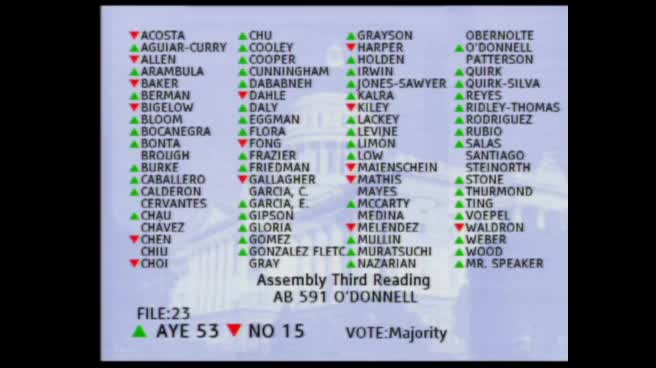 1MIN
Assembly Floor
 2MIN
Assembly Standing Committee on Appropriations
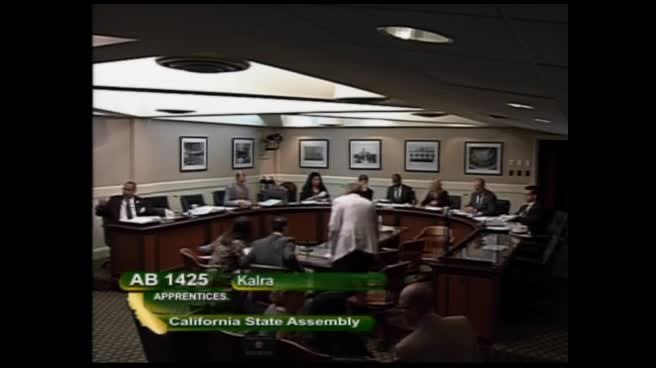 8MIN
Assembly Standing Committee on Labor and Employment
Bill Author

Bill Co-Author(s):