AB 776: School district elections: school bond measures.
- Session Year: 2017-2018
- House: Assembly
- Latest Version Date: 2017-05-02
If a school measure qualifies for the ballot, existing law requires the county counsel or district attorney to prepare an impartial analysis of the measure. Existing law prescribes the manner in which a school bond measure is to appear on the ballot, and it specifies information to be included in the statement of the proposition.
This bill would require the ballot label containing the statement of a school bond measure to include an estimate of the total cost of the bond to taxpayers and an estimate of the increase to taxpayers annual property taxes. direct voters to the voter information guide for information about the bonds effects on property taxes. By increasing the duties of local elections officials, this bill would impose a state-mandated local program.
The California Constitution requires the state to reimburse local agencies and school districts for certain costs mandated by the state. Statutory provisions establish procedures for making that reimbursement.
This bill would provide that, if the Commission on State Mandates determines that the bill contains costs mandated by the state, reimbursement for those costs shall be made pursuant to the statutory provisions noted above.
If a school measure qualifies for the ballot, existing law requires the county counsel or district attorney to prepare an impartial analysis of the measure. Existing law prescribes the manner in which a school bond measure is to appear on the ballot, and it specifies information to be included in the statement of the proposition.
This bill would require the ballot label containing the statement of a school bond measure to include an estimate of the total cost of the bond to taxpayers and an estimate of the increase to each taxpayers taxpayers annual property tax. taxes.
The California Constitution requires the state to reimburse local agencies and school districts for certain costs mandated by the state. Statutory provisions establish procedures for making that reimbursement.
This bill would provide that, if the Commission on State Mandates determines that the bill contains costs mandated by the state, reimbursement for those costs shall be made pursuant to the statutory provisions noted above.
If a school measure qualifies for the ballot, existing law requires the county counsel or district attorney to prepare an impartial analysis of the measure. Existing law prescribes the manner in which a school bond measure is to appear on the ballot, and it specifies information to be included in the statement of the proposition.
This bill would require the ballot label containing the statement of a school bond measure to include an estimate of the total cost of the bond to taxpayers and an estimate of the increase to each taxpayers annual property tax.
The California Constitution requires the state to reimburse local agencies and school districts for certain costs mandated by the state. Statutory provisions establish procedures for making that reimbursement.
This bill would provide that, if the Commission on State Mandates determines that the bill contains costs mandated by the state, reimbursement for those costs shall be made pursuant to the statutory provisions noted above.
If a proposition relating to the approval of a district bond is to be submitted to the voters of the district, an estimate of both of the following shall be included in the ballot label containing the statement of the measure: the ballot label shall include the following sentence:
See Voter Information Guide for effects on your property taxes.
(a)The total cost of the bond to taxpayers, including principal and interest.(b)The increase to taxpayers annual property taxes, represented as a number of dollars per one-hundred thousand dollars ($100,000) of assessed value.SEC. 2.If the Commission on State Mandates determines that this act contains costs mandated by the state, reimbursement to local agencies and school districts for those costs shall be made pursuant to Part 7 (commencing with Section 17500) of Division 4 of Title 2 of the Government Code.
If a proposition relating to the approval of a district bond is to be submitted to the voters of the district, an estimate of both of the following shall be included in the ballot label containing the statement of the measure:
(a)The total cost of the bond to taxpayers, including principal and interest.
(b)The increase to each taxpayers taxpayers annual property tax, taxes, represented as a number of dollars per one-hundred thousand dollars ($100,000) of assessed value.
SEC. 2.If the Commission on State Mandates determines that this act contains costs mandated by the state, reimbursement to local agencies and school districts for those costs shall be made pursuant to Part 7 (commencing with Section 17500) of Division 4 of Title 2 of the Government Code.
REVISIONS: HeadingLine 2.If a proposition relating to the approval of a district bond is to be submitted to the voters of the district, an estimate of both of the following shall be included in the ballot label containing the statement of the measure:
(a)The total cost of the bond to taxpayers, including principal and interest.
(b)The increase to each taxpayers annual property tax, represented as a number of dollars per one-hundred thousand dollars ($100,000) of assessed value.
SEC. 2.If the Commission on State Mandates determines that this act contains costs mandated by the state, reimbursement to local agencies and school districts for those costs shall be made pursuant to Part 7 (commencing with Section 17500) of Division 4 of Title 2 of the Government Code.
|
Date
|
Status
|
|---|---|
| Jul 12, 2017 | In committee: Set, first hearing. Failed passage. Reconsideration granted. |
| Jun 14, 2017 | Referred to Com. on E. & C.A. |
| Jun 1, 2017 | In Senate. Read first time. To Com. on RLS. for assignment. |
| May 31, 2017 | Read third time. Passed. Ordered to the Senate. (Ayes 53. Noes 17. Page 1905.) |
| May 11, 2017 | Read second time. Ordered to third reading. |
| May 10, 2017 | From committee: Do pass. (Ayes 9. Noes 4.) (May 10). |
| May 3, 2017 | Re-referred to Com. on APPR. |
| May 2, 2017 | Read second time and amended. |
| May 1, 2017 | From committee: Amend, and do pass as amended and re-refer to Com. on APPR. (Ayes 7. Noes 0.) (April 26). |
| Apr 5, 2017 | Coauthors revised. |
| Mar 22, 2017 | Re-referred to Com. on E. & R. |
| Mar 21, 2017 | From committee chair, with author's amendments: Amend, and re-refer to Com. on E. & R. Read second time and amended. |
| Mar 2, 2017 | Referred to Com. on E. & R. |
| Feb 16, 2017 | From printer. May be heard in committee March 18. |
| Feb 15, 2017 | Read first time. To print. |
|
Date
|
Description
|
Location
|
Votes
|
|
|---|---|---|---|---|
| Jul 12, 2017 | [First] hearing set for [07-13-2017]: Failed passage in Committee. Reconsideration granted | Senate Standing Committee on Elections and Constitutional Amendments |
Passed |
|
| Jul 12, 2017 | Do pass, but first be re-referred to the Committee on [Appropriations] | Senate Standing Committee on Elections and Constitutional Amendments |
Failed |
|
| May 31, 2017 | AB 776 HARPER Assembly Third Reading | Assembly Floor |
Passed |
|
| May 10, 2017 | Do pass. | Assembly Standing Committee on Appropriations |
Passed |
|
| Apr 26, 2017 | Do pass as amended and be re-referred to the Committee on [Appropriations] | Assembly Standing Committee on Elections and Redistricting |
Passed |
This list shows positions taken on this bill by organizations on the date displayed, which is linked to the original source.
Positions by individuals are not included.
|
Organization
|
Position
|
Date
|
|---|---|---|
| Association Of California School Administrators | ** Against | Jul 10, 2017 |
| California Association Of School Business Officials | ** Against | Jul 10, 2017 |
| California School Boards Association | ** Against | Jul 10, 2017 |
| California Taxpayers Association | ** Support | Jul 10, 2017 |
| Coalition For Adequate School Housing | ** Against | Jul 10, 2017 |
| Election Integrity Project, California Inc. | ** Support | Jul 10, 2017 |
| Riverside County Of Superintendent Of Schools | ** Against | Jul 10, 2017 |
SENATE COMMITTEE ON
ELECTIONS AND CONSTITUTIONAL AMENDMENTS
Senator Henry Stern, Chair
2017 - 2018 Regular
Bill No: 776 Hearing Date: 7/12/17
Author: | Harper | ||
Version: |
| ||
Urgency: | Fiscal: | ||
Consultant: | |||
Subject:
DIGEST
This bill requires the ballot label for a local school bond measure to include a specified sentence.
ANALYSIS
Existing law:
- Requires the county counsel or district attorney, if a school measure qualifies for the ballot, to prepare an impartial analysis of the measure, showing the effect of the measure on existing law and the operation of the measure, as specified.
- Requires the ballot, if a proposed local initiative imposes a tax or raises the rate of a tax, to include in the statement of the ordinance to be voted on the amount of money to be raised annually and the rate and duration of the tax to be levied.
- Requires a local government agency, when submitting for voter approval bond measures that will be secured by an ad valorem tax, to mail a statement to voters with the sample ballot for the bond election. Requires the statement to include all of the following:
- The best estimate from official sources of the tax rate that would be required to be levied to fund that bond issue during the first fiscal year after the first sale of the bonds based on assessed valuations available at the time of the election or a projection based on the experience within the same jurisdiction or other demonstrable factors;
- The best estimate from official sources of the tax rate that would be required to be levied to fund that bond issue during the first fiscal year after the last sale of the bonds if the bonds are proposed to be sold in series, and an estimate of the year in which that rate will apply, based on assessed valuations available at the time of the election or a projection based on the experience within the same jurisdiction or other demonstrable factors;
- The best estimate from official sources of the highest tax rate that would be required to be levied to fund that bond issue, and an estimate of the year in which that rate will apply, based on assessed valuations available at the time of the election or a projection based on the experience within the same jurisdiction or other demonstrable factors; and,
- The best estimate from official sources of the total debt service, including principal and interest, that would be required to be repaid if all bonds are issued and sold. Permits the estimate to include information about the assumptions used to determine the estimate.
- The best estimate from official sources of the tax rate that would be required to be levied to fund that bond issue during the first fiscal year after the first sale of the bonds based on assessed valuations available at the time of the election or a projection based on the experience within the same jurisdiction or other demonstrable factors;
- Defines the words "tax rate" to mean tax rate per one hundred dollars ($100) of assessed valuation on all property to be taxed to fund a bond issue.
- Requires the statement of all measures submitted to the voters to be abbreviated on the ballot in a ballot label. Prohibits the ballot label from containing more than 75 words and requires it to be the condensed version of the ballot title and summary including the financial impact summary prepared pursuant to existing law.
This bill:
Provides that if a proposition relating to the approval of a district bond is to be submitted to the voters of the district, the ballot label shall include the following sentence:
“See Voter Information Guide for effects on your property taxes.”
BACKGROUND
Ballot Form and 75 Word Ballot Label Restriction. Current law requires a ballot to comply with a variety of laws that dictate its content. For example, a ballot must contain the title of each office, the names of all qualified candidates, as specified, ballot designations, as specified, titles and summaries of measures submitted to voters, and instructions to voters, among other things. Moreover, current law requires a ballot to be printed in a certain form, as specified. Once all of these requirements are met, there is limited space left on the ballot to accommodate further requirements. Consequently, it is common practice to include other important election information in the sample ballot or ballot pamphlet that is sent to all registered voters. This bill adds more information to the ballot label for school bond measures. Specifically, this bill requires the ballot label to include the following sentence: “See Voter Information Guide for effects on your property taxes.”
Current law requires the statement of all measures submitted to the voters to be abbreviated on the ballot in a ballot label. Additionally existing law prohibits the ballot label from containing more than 75 words and requires it to be the condensed version of the ballot title and summary including the financial impact summary prepared pursuant to existing law. Because this bill requires an additional sentence to be included on the ballot label for a school bond measure, that sentence will count toward the 75 word limit in current law.
COMMENTS
- According to the author: Assembly Bill (AB) 776 pprovides that if a proposed school bond is on the ballot, the ballot label must inform voters that they may refer to the Voter Information Guide to see the effect of the measure on their property taxes.
When school districts place bond measures on the ballot, they highlight all the good things they will do with the proceeds, but they often neglect to mention how much it will cost voters to pay back the bond, and how the bond will impact homeowners’ property tax bills.
When voters approve local school construction bonds, they are simultaneously agreeing to pay higher property taxes to retire the debt. Most school districts choose not to mention this in the 75-word summary on the ballot.
In the November 2016 election cycle, dozens of local school bonds were approved, adding hundreds of millions of dollars of new debt onto property tax rolls. However, the ballot label is often the only description of proposed bond measures that voters see on the ballot before voting.
Currently, ballot labels typically include all sorts of information about what projects will be funded, but very little information concerning the financial impact of the bond itself or the impact on voters. Therefore, this bill is needed to increase transparency in order to help voters make informed and educated decisions about the benefits and costs of proposed bond measures.
AB 776 is needed to give voters the transparency they deserve and will ensure that voters know how much it will cost to repay proposed school bond measures. - Argument in Opposition: The Association of California School Administrators, the California Association of School Business Officials, and the California School Board Association write in opposition:
[W]e are writing to express our opposition to AB 776 (Harper). This bill would require an additional statement about a school bond measure’s effects on property taxes on the ballot label.
This bill only targets school districts to perform an additional administrative and duplicative responsibility, without any justification or rationale, ignoring that current law (Elections Code Sections 9400-9404) already requires school districts to provide the following components as part of the statement mailed to voters with the sample ballot:
- The best estimate from official sources of the tax rate that would be required to be levied to fund that bond issued during the first fiscal year after the first sale of the bonds based on assessed valuations available at the time of the election or a projection based on experience within the same jurisdiction or other demonstrable factors.
- The best estimate from official sources of the tax rate that would be required to be levied to fund that bond issue during the first fiscal year after the last sale of the bonds if the bonds are proposed to be sold in series, and an estimate of the year in which that rate will apply, based on assessed valuations available at the time of the election or a projection based on experience within the same jurisdiction or other demonstrable factors.
- The best estimate from official sources of the highest tax rate that would be required to be levied to fund that bond issue, and an estimate of the year in which that rate will apply, based on assessed valuations available at the time of the election or a projection based on experience within the same jurisdiction or other demonstrable factors.
- The best estimate from official sources of the total debt service, including the principal and interest that would be required to be repaid if all the bonds are issued and sold. The estimate may include information about the assumptions used to determine the estimate.
- Why single out school bonds? State and local voter information guides contain summaries, analyses, and arguments for every measure appearing on the ballot but this bill only requires ballot labels for school bond measures to refer voters back to the guide. State law could theoretically require the ballot label for every measure to include a similar statement regarding possible “effects.” Is it fair to single out ballot labels for school bond measures?
RELATED/PRIOR LEGISLATION
AB 1194 (Dababneh), which is also being heard in this committee today, requires certain fiscal information to be included in the sample ballot for bond measures, as specified.
AB 195 (Obernolte), which is pending before the Governor, requires the ballot statement for all local ballot measures that impose a tax or raise the rate of a tax to include specified information about the tax, instead of making such a requirement applicable only to local initiative measures.
PRIOR ACTION
Assembly Floor: | 53 - 17 |
Assembly Appropriations Committee: | 9 - 4 |
Assembly Committee: | 7 - 0 |
POSITIONS
Sponsor: Author
Support: California Taxpayers Association
Election Integrity Project, California Inc.
Oppose: Association of California School Administrators
California Association of School Business Officials
California School Boards Association
Coalition for Adequate School Housing
Riverside County of Superintendent of Schools
-- END –
ASSEMBLY THIRD READING
ATR Bill Id:AB 776
Author:(Harper)
As Amended Ver:May 2, 2017
Majority vote
Committee | Votes | Ayes | Noes |
Elections | 7-0 | Berman, Harper, Santiago, Cunningham, Low, Mullin, Weber | |
Appropriations | 9-4 | Bigelow, Brough, Calderon, Chau, Fong, Gallagher, Eduardo Garcia, Gray, Obernolte | Gonzalez Fletcher, Bloom, Bonta, Friedman |
SUMMARY: Requires the ballot label for a local school bond measure to include specified fiscal information. Specifically, this bill requires the ballot label for a school district bond measure that is submitted to the voters of the district to include the following sentence: "See Voter Information Guide for effects on your property taxes."
FISCAL EFFECT: According to the Assembly Appropriations Committee, this bill is not likely to create a reimbursable state mandate because it does not change the 75 word limit for ballot labels, instead this bill requires that the specified 10-word statement be included and count toward the 75 word limit. As such, this bill would not change the size of a local bond measure's space on a ballot.
COMMENTS: According to the author, "Assembly Bill 776 is needed to give voters the transparency they deserve and will ensure that voters know how much it will cost to repay proposed school bond measures."
Current law requires the statement of all measures submitted to the voters to be abbreviated on the ballot in a ballot label. Additionally existing law prohibits the ballot label from containing more than 75 words and requires it to be the condensed version of the ballot title and summary including the financial impact summary prepared pursuant to existing law. Because this bill requires a statement to be included on the ballot label for a school bond measure, that information will count toward the 75 word limit in current law.
Analysis Prepared by: Nichole Becker / E. & R. / (916) 319-2094 FN: 0000350
Date of Hearing: May 10, 2017
ASSEMBLY COMMITTEE ON APPROPRIATIONS
Lorena Gonzalez Fletcher, Chair
ABPCA Bill Id:AB 776
Author:(Harper) – As Amended Ver:May 2, 2017
Policy Committee: | Elections and Redistricting | Vote: | 7 - 0 |
|
| ||
|
|
Urgency: No State Mandated Local Program: Yes Reimbursable: No
SUMMARY:
This bill requires the ballot label for a local school bond measure to include the 10-word statement “See Voter Information Guide for effects on your property taxes.”
FISCAL EFFECT:
This bill is not likely to create a reimbursable state mandate because it does not change the 75- word limit for ballot labels, instead this bill requires that the specified 10-word statement be included and count toward the 75-word limit. As such, this bill would not change the size of a local bond measure’s space on a ballot.
COMMENTS:
- Background. Existing law requires the county counsel or district attorney, if a school measure qualifies for the ballot, to prepare an impartial analysis of the measure, showing the effect of the measure on existing law and the operation of the measure, as specified. Existing law also requires the ballot, if a proposed local initiative imposes a tax or raises the rate of a tax, to include in the statement of the ordinance to be voted on the amount of money to be raised annually and the rate and duration of the tax to be levied.
- Purpose. According to the author, “When school districts place bond measures on the ballot, they highlight all the good things they will do with the proceeds, but they often neglect to mention how much it will cost voters to pay back the bond, and how the bond will impact homeowners’ property tax bills.”
- Related Legislation. AB 1194 (Dababneh) requires certain fiscal information be included in the statement that is mailed to voters when a local bond measure is on the ballot. In addition, AB 1194 requires a specific 11-word statement, similar to the statement required by this bill, be included as part of the ballot label for all local bond measures.
Analysis Prepared by: Jessica Peters / APPR. / (916) 319-2081
Date of Hearing: April 26, 2017
ASSEMBLY COMMITTEE ON ELECTIONS AND REDISTRICTING
Marc Berman, Chair
ABPCA Bill Id:AB 776 (
Author:Harper) – As Amended Ver:March 21, 2017
SUBJECT: School district elections: school bond measures.
SUMMARY: Requires the ballot label for a local school bond measure to include specified fiscal information. Specifically, this bill requires the ballot label for a school district bond measure that is submitted to the voters of the district to provide an estimate of both of the following:
- The total cost of the bond to taxpayers, including principal and interest; and,
- The increase to taxpayers' annual property taxes, represented as a number of dollars per one hundred thousand dollars ($100,000), of assessed value.
EXISTING LAW:
- Requires the county counsel or district attorney, if a school measure qualifies for the ballot, to prepare an impartial analysis of the measure, showing the effect of the measure on existing law and the operation of the measure, as specified.
- Requires the ballot, if a proposed local initiative imposes a tax or raises the rate of a tax, to include in the statement of the ordinance to be voted on the amount of money to be raised annually and the rate and duration of the tax to be levied.
- Requires a local government agency, when submitting for voter approval bond measures that will be secured by an ad valorem tax, to mail a statement to voters with the sample ballot for the bond election. Requires the statement to include all of the following:
- The best estimate from official sources of the tax rate that would be required to be levied to fund that bond issue during the first fiscal year after the first sale of the bonds based on assessed valuations available at the time of the election or a projection based on the experience within the same jurisdiction or other demonstrable factors;
- The best estimate from official sources of the tax rate that would be required to be levied to fund that bond issue during the first fiscal year after the last sale of the bonds if the bonds are proposed to be sold in series, and an estimate of the year in which that rate will apply, based on assessed valuations available at the time of the election or a projection based on the experience within the same jurisdiction or other demonstrable factors;
- The best estimate from official sources of the highest tax rate that would be required to be levied to fund that bond issue, and an estimate of the year in which that rate will apply, based on assessed valuations available at the time of the election or a projection based on the experience within the same jurisdiction or other demonstrable factors; and,
- The best estimate from official sources of the total debt service, including principal and interest, that would be required to be repaid if all bonds are issued and sold. Permits the estimate to include information about the assumptions used to determine the estimate.
- The best estimate from official sources of the tax rate that would be required to be levied to fund that bond issue during the first fiscal year after the first sale of the bonds based on assessed valuations available at the time of the election or a projection based on the experience within the same jurisdiction or other demonstrable factors;
- Defines the words "tax rate" to mean tax rate per one hundred dollars ($100) of assessed valuation on all property to be taxed to fund a bond issue.
- Requires the statement of all measures submitted to the voters to be abbreviated on the ballot in a ballot label. Prohibits the ballot label from containing more than 75 words and requires it to be the condensed version of the ballot title and summary including the financial impact summary prepared pursuant to existing law.
FISCAL EFFECT: Unknown. State-mandated local program; contains reimbursement direction.
COMMENTS:
- Purpose of the Bill: According to the author:
Assembly Bill (AB) 776 will require that the description of a proposed measure on the voter’s ballot include the total cost of the bond including principal and interest, and the annual cost per $100,000 of the assessed value of a homeowner’s property.
When school districts place bond measures on the ballot, they highlight all the good things they will do with the proceeds, but they often neglect to mention how much it will cost voters to pay back the bond, and how the bond will impact homeowners’ property tax bills.
“Bond proceeds are often portrayed as an almost free source of funds,” said former Assembly Member Joe Canciamilla, who is currently the Contra Costa County Clerk/Recorder-Registrar. “The actual costs to the districts or the taxpayers who will ultimately pay the bills are buried in hard-to-find locations, usually at the very end of long and tedious pages of legalese that make it virtually impossible to decipher.”
When voters approve local school construction bonds, they are simultaneously agreeing to pay higher property taxes to retire the debt. Most school districts choose not to mention this in the 75-word summary on the ballot.
In the November 2016 election cycle, dozens of local school bonds were approved, adding hundreds of millions of dollars of new debt onto property tax rolls. However, the ballot label is often the only description of proposed bond measures that voters see on the ballot before voting.
Currently, ballot labels typically include all sorts of information about what projects will be funded, but very little information concerning the financial impact of the bond itself or the impact on voters. Therefore, this bill is needed to increase transparency in order to help voters make informed and educated decisions about the benefits and costs of proposed bond measures.
Assembly Bill 776 is needed to give voters the transparency they deserve and will ensure that voters know how much it will cost to repay proposed school bond measures.
- Ballot Form: Current law requires a ballot to comply with a variety of laws that dictate its content. For example, a ballot must contain the title of each office, the names of all qualified candidates, as specified, ballot designations, as specified, titles and summaries of measures submitted to voters, and instructions to voters, among other things. Moreover, current law requires a ballot to be printed in a certain form, as specified. Once all of these requirements are met, there is limited space left on the ballot to accommodate further requirements. Consequently, it is common practice to include other important election information in the sample ballot or ballot pamphlet that is sent to all registered voters. This bill adds more information to the ballot label for school bond measures. Specifically, this bill requires the school bond measure ballot label to include the total cost of the bond to taxpayers, including principal and interest, and the increase to taxpayers' annual property taxes, as specified. This information, however, is already provided to the voter in the sample ballot. Specifically, existing law requires a statement in the sample ballot to include estimates of the tax rate increase for the first and last issuance of the bond, an estimate of the highest tax rate over the life of the bond, as well as an estimate of the total debt service, including principal and interest, as specified.
- 75 Word Ballot Label Restriction: Current law requires the statement of all measures submitted to the voters to be abbreviated on the ballot in a ballot label. Additionally existing law prohibits the ballot label from containing more than 75 words and requires it to be the condensed version of the ballot title and summary including the financial impact summary prepared pursuant to existing law. Because this bill requires certain fiscal information to be included on the ballot label for a school bond measure, that information will count toward the 75 word limit in current law.
- Arguments in Support: In support, the California Taxpayers Association writes:
In 2016 alone, voters decided the fate of more than 175 school bonds. While many ballot questions contain the total value of bonds being issued, very few contain critical information like principal and interest details and the timeline for repayment.
For example, consider the following ballot question submitted to voters by Albany Unified School District:
“To relieve Albany Middle School overcrowding, construct classrooms, science labs, and flexible learning spaces that meet seismic safety and accessibility codes, replace old portables with modern classrooms, and acquire technology and equipment at all schools to support science, engineering, math, and the humanities; shall Albany Unified School District issue $25 Million of bonds at legal rates, with independent oversight, no money for administrators' salaries, and all funds benefitting Albany schools?”
The ballot question omits critical information regarding bonds such as tax rate, length of time bonds will be sold and interest rates. Instead, this information is often buried in the voter’s guide in independent statements.
AB 776 will bring the most critical information directly to the voter’s ballot. Voters have the right to know every piece of critical information before deciding whether to raise their taxes.
- Arguments in Opposition: The Association of California School Administrators, the California School Boards Association, and the California Association of School Business Officials, write in opposition:
Our organizations oppose this bill for two reasons. First, Elections Code 9401 already requires a tax rate statement to be provided to voters in the sample ballot. This statement includes tax rate per assessed valuation at various points in time, and the best estimate from official sources of the total debt service, including the principal and interest, that would be required to be repaid if all the bonds are issued and sold. It would be a disservice to voters to take up space on the ballot
label—which is limited to 75 words—to convey information that is already provided elsewhere in the ballot pamphlet. This would also unfairly limit the ability of the local educational agency to describe the benefits of the proposed tax.
Second, placing the tax rate increase and total cost of the bond into the ballot label could increase the cost of borrowing or adversely impact the ability to local educational agencies to sell the authorized bonds. This is because bond counsels could interpret the tax rate statement in the ballot label as a “not to exceed” amount, establishing an annual cap. Such a limitation would cause concern among investors regarding repayment, and would increase the cost of financing.
Similarly, including the total cost of the bond in the ballot label could leave the [local educational agency] unable to use all of its bond authority if interest rates rise beyond what was anticipated at the time of the election.
- Related Legislation: AB 195 (Obernolte) requires the ballot statement for all local ballot measures that impose a tax or raise the rate of a tax to include specified information about the tax, instead of making such a requirement applicable only to local initiative measures. AB 195 passed out of the Assembly Elections & Redistricting Committee on a 7-0 vote.
AB 1194 (Dababneh), which is also being heard in this committee today, requires certain fiscal information to be included in the sample ballot for bond measures, as specified.
REGISTERED SUPPORT / OPPOSITION:
Support
California Taxpayers Association
Election Integrity Project, California Inc.
Opposition
Association of California School Administrators
California Association of School Business Officials
California School Boards Association
Coalition for Adequate School Housing
Analysis Prepared by: Nichole Becker / E. & R. / (916) 319-2094
Discussed in Hearing
 12MIN
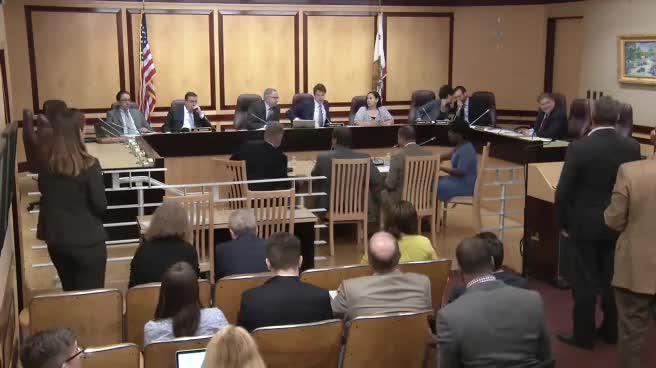
Senate Standing Committee on Elections and Constitutional Amendments
 3MIN
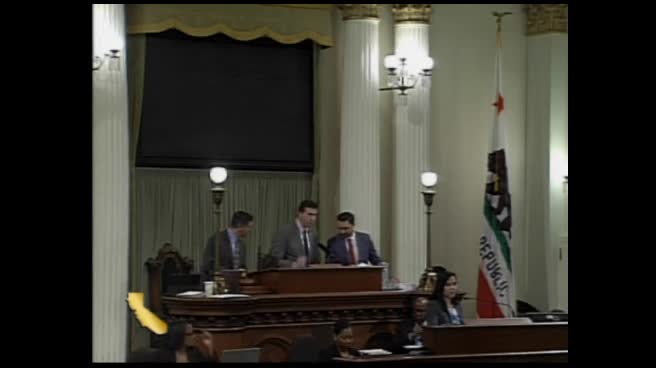
Assembly Floor
 3MIN
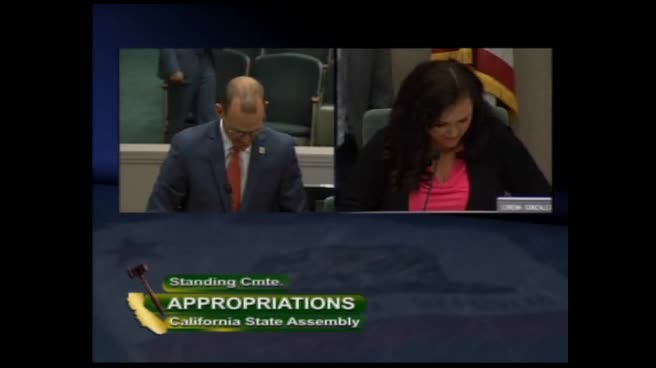
Assembly Standing Committee on Appropriations
Bill Author