ACR 12: Civil Grand Jury Awareness Month.
- Session Year: 2017-2018
- House: Assembly
- Latest Version Date: 2017-04-26
This measure would proclaim the month of March 2017 to be Civil Grand Jury Awareness Month in California, would recognize those who volunteer to serve on civil grand juries, and would encourage all Californians to learn about the role of civil grand juries in our government.
This measure would proclaim the month of March 2017 to be Civil Grand Jury Awareness Month in California, would recognize those who volunteer to serve on civil grand juries, and would encourage all Californians to learn about the role of civil grand juries in our government.
This measure would proclaim the month of March 2017 to be Civil Grand Jury Awareness Month in California, would recognize those who volunteer to serve on civil grand juries, and would encourage all Californians to learn about the role of civil grand juries in our government.
This measure would proclaim the month of February March 2017 to be Civil Grand Jury Awareness Month in California, would recognize those who volunteer to serve on civil grand juries, and would encourage all Californians to learn about the role of civil grand juries in our government.
This measure would proclaim the month of February 2017 to be Civil Grand Jury Awareness Month in California, would recognize those who volunteer to serve on civil grand juries, and would encourage all Californians to learn about the role of civil grand juries in our government.
WHEREAS, Californias grand jury system is a component of our states government, comprised of citizens selected by the superior courts serving in each of the states 58 counties; and
WHEREAS, A number of California counties have grand juries that perform only civil functions; and
WHEREAS, Civil grand juries perform the vital functions of overseeing our local government, reporting on local government operations, and investigating public corruption and misconduct; and
WHEREAS, Our civil grand juries, which exist through the dedication of the people, help to ensure that our local governments are maintaining the highest legal and ethical standards; and
WHEREAS, The hard work done by our civil grand juries has had great impact throughout our communities and has helped to make California a better place; and
WHEREAS, These accomplishments have only been possible through the outstanding dedication and tenacity of those who volunteer to serve as grand jurors; now, therefore, be it
Resolved by the Assembly of the State of California, the Senate thereof concurring, That the Legislature hereby proclaims the month of March 2017 to be Civil Grand Jury Awareness Month in California; and be it further
Resolved, That the Legislature recognizes those who volunteer for service on a civil grand jury, encourages all Californians to learn about the great role of the civil grand jury in our system of government, and applauds those who have made the civil grand jury a successful institution; and be it further
Resolved, That the Chief Clerk of the Assembly transmit copies of this resolution to the author for appropriate distribution.
WHEREAS, Californias civil grand jury system is a unique component of our states government, comprised of citizens selected by the superior courts serving in each of the states 58 counties; and
WHEREAS, Civil grand juries perform the vital functions of overseeing our local government, reporting on local government operations, and investigating public corruption and misconduct, and presenting indictments against public officials; misconduct; and
WHEREAS, Our civil grand juries, which exist through the dedication of the people, help to ensure that our local governments are maintaining the highest legal and ethical standards; and
WHEREAS, The hard work done by our civil grand juries has had great impact throughout our communities and has helped to make California a better place; and
WHEREAS, These accomplishments have only been possible through the outstanding dedication and tenacity of those who volunteer to serve as grand jurors; now, therefore, be it
Resolved by the Assembly of the State of California, the Senate thereof concurring, That the Legislature hereby proclaims the month of February March 2017 to be Civil Grand Jury Awareness Month in California; and be it further
Resolved, That the Legislature recognizes those who volunteer for service on a grand jury, encourages all Californians to learn about the great role of the civil grand jury in our system of government, and applauds those who have made the civil grand jury a successful institution; and be it further
Resolved, That the Chief Clerk of the Assembly transmit copies of this resolution to the author for appropriate distribution.
WHEREAS, Californias civil grand jury system is a unique component of our states government, comprised of citizens selected by the superior courts serving in each of the states 58 counties; and
WHEREAS, Civil grand juries perform the vital functions of overseeing our local government, reporting on local government operations, investigating public corruption and misconduct, and presenting indictments against public officials; and
WHEREAS, Our civil grand juries, which exist through the dedication of the people, help to ensure that our local governments are maintaining the highest legal and ethical standards; and
WHEREAS, The hard work done by our civil grand juries has had great impact throughout our communities and has helped to make California a better place; and
WHEREAS, These accomplishments have only been possible through the outstanding dedication and tenacity of those who volunteer to serve as grand jurors; now, therefore, be it
Resolved by the Assembly of the State of California, the Senate thereof concurring, That the Legislature hereby proclaims the month of February 2017 to be Civil Grand Jury Awareness Month in California; and be it further
Resolved, That the Legislature recognizes those who volunteer for service on a grand jury, encourages all Californians to learn about the great role of the civil grand jury in our system of government, and applauds those who have made the civil grand jury a successful institution; and be it further
Resolved, That the Chief Clerk of the Assembly transmit copies of this resolution to the author for appropriate distribution.
|
Date
|
Status
|
|---|---|
| Apr 26, 2017 | Chaptered by Secretary of State - Res. Chapter 33, Statutes of 2017. |
| Apr 26, 2017 | Enrolled and filed with the Secretary of State at 2:35 p.m. |
| Apr 24, 2017 | In Assembly. Ordered to Engrossing and Enrolling. |
| Apr 24, 2017 | Adopted and to Assembly. (Ayes 37. Noes 0. Page 804.) |
| Apr 19, 2017 | Ordered to special consent calendar. |
| Apr 5, 2017 | From committee: Ordered to third reading. |
| Mar 27, 2017 | In Senate. To Com. on RLS. |
| Mar 23, 2017 | Coauthors revised. |
| Mar 16, 2017 | From Consent Calendar by request of Assembly Member Gallagher. To Third Reading. |
| Mar 14, 2017 | From committee: Be adopted. To Consent Calendar. (Ayes 11. Noes 0.) (March 14). |
| Mar 13, 2017 | Re-referred to Com. on JUD. |
| Mar 9, 2017 | From committee chair, with author's amendments: Amend, and re-refer to Com. on JUD. Amended. |
| Feb 23, 2017 | Re-referred to Com. on JUD. |
| Feb 22, 2017 | From committee chair, with author's amendments: Amend, and re-refer to Com. on JUD. Amended. |
| Feb 6, 2017 | Referred to Com. on JUD. |
| Jan 19, 2017 | From printer. |
| Jan 18, 2017 | Introduced. To print. |
|
Date
|
Description
|
Location
|
Votes
|
|
|---|---|---|---|---|
| Apr 24, 2017 | Special Consent ACR12 Gallagher et al. | Senate Floor |
Passed |
|
| Mar 14, 2017 | Be adopted. To Consent Calendar. | Assembly Standing Committee on Judiciary |
Passed |
This list shows positions taken on this bill by organizations on the date displayed, which is linked to the original source.
Positions by individuals are not included.
|
Organization
|
Position
|
Date
|
|---|---|---|
| California Grand Jurors Association | ** Support | Apr 5, 2017 |
| California Grand Jurors' Association | ** Support | Apr 5, 2017 |
| California Special Districts Association | ** Support | Apr 5, 2017 |
| Sutter County Grand Jurors Association | ** Support | Apr 5, 2017 |
| Sutter County Grand Jurors' Association | ** Support | Apr 5, 2017 |
Office of Senate Floor Analyses (916) 651-1520 Fax: (916) 327-4478 | ACR 12 |
THIRD READING
Bill No: ACR 12
Amended: 3/9/17 in Assembly
ASSEMBLY FLOOR: Read and adopted, 3/23/17
SUBJECT: Civil Grand Jury Awareness Month
SOURCE: Sutter County Grand Jurors’ Association
DIGEST:
This resolution proclaims the month of March 2017 to be Civil Grand Jury Awareness Month in California, recognizes those who volunteer to serve on civil grand juries, and encourages all Californians to learn about the role of civil grand juries in our government.
ANALYSIS: This resolution makes the following legislative findings:
- California’s grand jury system is comprised of citizens selected by the superior courts serving in each of the state’s 58 counties.
- Civil grand juries perform the vital functions of overseeing our local government, reporting on local government operations, and investigating public corruption and misconduct.
- Our civil grand juries, which exist through the dedication of the people, help to ensure that our local governments are maintaining the highest legal and ethical standards.
- The hard work done by our civil grand juries has had great impact throughout our communities and has helped to make California a better place.
- These accomplishments have only been possible through the outstanding dedication and tenacity of those who volunteer to serve as grand jurors.
This resolution proclaims the month of March 2017 to be Civil Grand Jury Awareness Month in California; and recognizes those who volunteer for service on a civil grand jury, encourages all Californians to learn about the great role of the civil grand jury in our system of government, and applauds those who have made the civil grand jury a successful institution.
Related/Prior Legislation
ACR 114 (Gallagher, Resolution Chapter 22, Statutes of 2016) proclaimed the month of March 2016 as Grand Jury Awareness Month in California, recognized those who volunteer in a grand jury, and encouraged all Californians to learn about its role in the judicial system.
FISCAL EFFECT: Appropriation: No Fiscal Com.: No Local: No
Sutter County Grand Jurors’ Association (source)
California Grand Jurors’ Association
California Special Districts Association
None received
ARGUMENTS IN SUPPORT: According to the author, “Civil Grand Juries are integral to the administration and accountability of our state and carry out the essential self-governance of a strong democratic state. These tasks require tireless effort and scrupulous attention to detail. These men and women are most worthy of our recognition for their hard work and dedication to this great state. This resolution is intended to promote public awareness of civil grand juries in California and recognize their vital role in maintaining public accountability of California’s local governments.”
Prepared by: Melissa Ward / SFA / (916) 651-1520
4/5/17 14:59:04
**** END ****
ASSEMBLY THIRD READING
ATR Bill Id:
Author:(Gallagher)
As Amended Ver:March 9, 2017
Majority vote
Committee | Votes | Ayes | Noes |
Judiciary | 11-0 | Mark Stone, Cunningham, Chau, Chiu, Cristina Garcia, Holden, Kalra, Kiley, Maienschein, Reyes, Ting |
SUMMARY: Proclaims March 2017 as Civil Grand Jury Awareness Month, and recognizes those who volunteer to serve on a grand jury. Encourages all Californians to learn about the great role of the civil grand jury in our system of government, and applauds those who have made the civil grand jury a successful institution. This resolution makes the following findings:
- California's grand jury system is a component of our state's government, comprised of citizens selected by the superior courts serving in each of the state's 58 counties; and
- A number of California counties have grand juries that perform only civil functions; and
- Civil grand juries perform the vital functions of overseeing our local government, reporting on local government operations, and investigating public corruption and misconduct; and
- Our civil grand juries, which exist through the dedication of the people, help to ensure that our local governments are maintaining the highest legal and ethical standards; and
- The hard work done by our civil grand juries has had great impact throughout our communities and has helped to make California a better place; and
- These accomplishments have only been possible through the outstanding dedication and tenacity of those who volunteer to serve as grand jurors.
EXISTING LAW:
- Requires that one or more grand juries shall be drawn and summoned at least once a year in each county. (California Constitution, Article I, Section 23; see also Penal Code Section 905. Unless stated otherwise, all further statutory references are to the Penal code.)
- Provides that a person is competent to act as a grand juror only if he possesses each of the following qualifications:
- He is a citizen of the United States of the age of 18 years or older who shall have been a resident of the state and of the county or city and county for one year immediately before being selected and returned.
- He is in possession of his natural faculties, of ordinary intelligence, of sound judgment, and of fair character.
- He is possessed of sufficient knowledge of the English language. (Section 888.)
- Provides that a person is not competent to act as a grand juror if any of the following applies:
- The person is serving as a trial juror in any court of this state.
- The person has been discharged as a grand juror in any court of this state within one year.
- The person has been convicted of malfeasance in office or any felony or other high crime.
- The person is serving as an elected public officer. (Section 893.)
- Allows a grand jury to inquire into all public offenses committed or triable within the county and present them to the court by indictment. (Section 917 (a).)
- Requires a grand jury to investigate the operations, accounts, and records of the officers, departments, or functions of the county. (Section 925.)
- Prohibits a grand jury from inquiring into an offense that involves a shooting or use of excessive force by a peace officer, as provided, that led to the death of a person being detained or arrested by the peace officer, except as provided in 9). (Section 917 (b).) However, this Section has been enjoined as unconstitutional in People ex rel. Pierson (2017) 7 Cal.App.5th 402, 414.
- Provides that a grand juror is to be paid $15 a day for each day serving as a grand juror, and the mileage reimbursement applicable to county employees for each mile actually traveled in attending court as a grand juror unless a higher fee or rate of mileage is otherwise provided by statute or county or city and county ordinance. (Section 890.)
FISCAL EFFECT: None
COMMENTS: This resolution acknowledges the efforts of civil grand juries. Specifically, this resolution recognizes those who volunteer for service on a grand jury, and encourages all Californians to learn about the great role of the civil grand jury in our system of government. Additionally, this resolution applauds those who have made the civil grand jury a successful institution. According to the author, the intent behind this resolution is to bring awareness to the role of civil grand juries in fettering out public corruption and misconduct.
Although this resolution recognizes civil grand juries, it might be more appropriate to characterize this resolution as a recognition of civil grand juries that perform civil functions. While the author has taken recent amendments to clarify that intent, it is still not abundantly clear that the resolution is intended to recognize only those grand juries that only perform civil functions.
The term "civil grand jury" may be a misnomer. Unlike a petit jury, a civil grand jury considers accusations against public officials, and acts as the public's watchdog over local government affairs. (McClatchy Newspapers v. Superior Court (1988) 44 Cal.3d 1162.) While these functions are often characterized as a grand jury's "civil functions," civil grand juries also have authority in criminal matters. Specifically, civil grand juries have the authority to authorize criminal prosecutions and return criminal indictments. Accordingly, the fact that these entities are called civil grand juries does not mean that they necessarily perform only civil functions.
Public scrutiny over grand juries in the performance of criminal functions. While some grand juries have been lauded for their "civil" watchdog efforts, recent officer-related shootings have placed a national spotlight on civil grand juries acting in their criminal capacity. In fact the scrutiny was so great that the Legislature sought to prohibit a grand jury's review of certain criminal matters, specifically those involving officer-related shootings when it enacted SB 227 (Mitchell), Chapter 175, Statutes of 2015. SB 227 would have prohibited a grand jury from inquiring into an offense or misconduct involving a shooting or use of excessive force by a peace officer that led to the death of the person being detained or arrested by the peace officer. (Penal Code Section 917 (b).) However, this law was recently held to be unconstitutional as an unlawful restriction on grand jury powers under the California Constitution. (People ex rel. Pierson v. Superior Court (2017) 7 Cal.App.5th 402, 414.)
The work of civil grand juries in criminal matters continues to raise ire. As noted in the Assembly Public Safety Committee analysis of Senate Bill 227, some have called for the abolishment of grand juries, citing the secrecy and the lack of procedural oversight during grand jury proceedings:
No judges or defense attorneys participate. The rules of evidence do not apply; there are no cross-examinations of witnesses, and there are no objections. How prosecutors explain the law to the jurors and what prosecutors say about the evidence are subject to no oversight. And the proceedings are shrouded in secrecy. In high-profile, controversial cases, where officers use lethal force, prosecutors face a dilemma. If they don't file charges against officers, they risk the wrath of the community; if they do file charges, they risk the wrath of the police and their powerful unions. By opting for secret grand jury proceedings, prosecutors pass the buck, using grand jurors as pawns for political cover. The Michael Brown and Eric Garner cases are examples of how prosecutors manipulate the grand jury process. (Judge LaDoris Hazard Cordell, Grand Juries Should be Abolished, Slate (December 9, 2014); see Assembly Public Safety Committee analysis of SB 227; June 16, 2015.)
Not surprisingly, some counties impanel grand juries to perform only civil functions and then impanel special grand juries in order to investigate specific criminal matters. Under the California Constitution, every county must impanel at least one grand jury once a year. Although counties use a variety of ways to conduct the grand jury selection process, many select jurors from a pool of volunteer applicants. To be selected, grand jurors must be competent and possess his or her natural faculties, have ordinary intelligence and sound judgment, and be of fair character. Like prospective jurors on a petit jury—which considers evidence presented during a trial—persons who have been convicted of "any felony or other high crime" are ineligible to serve on a grand jury. Grand jurors sit for an entire year, and depending on the county, serve several days a week. Each juror is compensated $15 a day unless the county provides additional funding for compensation. While the compensation that jurors receive is meager—which arguably interferes with the ability to obtain a grand jury that represents a fair cross-section of the community—some grand jurors find the work rewarding.
To encourage more volunteers and diversity on grand juries, the Legislature may wish to consider raising the juror compensation. The author notes that this resolution is intended to help address the shrinking pool of volunteers, raise awareness, and increase citizen participation and diversity among civil grand jurors. While this is a laudable goal, it is unclear whether this resolution will help achieve that result. Grand jurors must spend a significant amount of time serving as jurors (i.e., at least several days a week for an entire year.) It seems fair to say that working families are unlikely to give up that much time to serve on grand juries when the stipend or compensation is as meager ($15/day). Thus, it could be argued that raising the grand juror compensation would likely be a more helpful way to increase the number and diversity of volunteers than enactment of a non-binding resolution.
Analysis Prepared by: Eric Dang / JUD. / (916) 319-2334 FN: 0000034
Date of Hearing: March 14, 2017
ASSEMBLY COMMITTEE ON JUDICIARY
Mark Stone, Chair
ABPCA Bill Id:ACR 12
Author:(Gallagher) – As Amended Ver:March 9, 2017
PROPOSED CONSENT
SUBJECT: CIVIL GRAND JURY AWARENESS MONTH
KEY ISSUE: SHOULD THE LEGISLATURE RECOGNIZE MARCH AS CIVIL GRAND JURY AWARENESS MONTH?
SYNOPSIS
This resolution declares March 2017 as Civil Grand Jury Awareness Month, recognizes those who volunteer for service on a grand jury, and encourages all Californians to learn about the great role of the civil grand jury in our system of government. According to the author, the intent behind this resolution is to bring awareness to the role of civil grand juries in fettering out public corruption and misconduct. The resolution is sponsored by Sutter County Grand Jurors’ Association, and supported by the California Grand Jurors’ Association and the California Special Districts Association. There is no opposition on file.
While some grand juries have been lauded for their “civil” watchdog efforts, recent officer-related shootings have placed a national spotlight on the role of civil grand juries in criminal investigations. Civil grand juries are not limited to reviewing civil matters; indeed, civil grand juries have the authority to initiate investigations and investigate criminal matters.
Although this resolution recognizes civil grand juries, it might be more appropriate to characterize this resolution as a recognition of civil grand juries that perform civil functions. The recent amendments seek to clarify that intent. While the clarification is helpful, the author may wish to consider further amendments that make it abundantly clear that the resolution is intended to recognize only those grand juries that only perform civil functions.
SUMMARY: Proclaims March 2017 as Civil Grand Jury Awareness Month, and recognizes those who volunteer to serve on a grand jury. Encourages all Californians to learn about the great role of the civil grand jury in our system of government, and applauds those who have made the civil grand jury a successful institution. This resolution makes the following findings:
- California’s grand jury system is a component of our state’s government, comprised of citizens selected by the superior courts serving in each of the state’s 58 counties; and
- A number of California counties have grand juries that perform only civil functions; and
- Civil grand juries perform the vital functions of overseeing our local government, reporting on local government operations, and investigating public corruption and misconduct; and
- Our civil grand juries, which exist through the dedication of the people, help to ensure that our local governments are maintaining the highest legal and ethical standards; and
- The hard work done by our civil grand juries has had great impact throughout our communities and has helped to make California a better place; and
- These accomplishments have only been possible through the outstanding dedication and tenacity of those who volunteer to serve as grand jurors.
EXISTING LAW:
- Requires that one or more grand juries shall be drawn and summoned at least once a year in each county. (Cal. Const., Art. I, Section 23.)
- Provides that a grand jury is a body of citizens of the county before the court and sworn to inquire into public offenses committed or triable within the county. (Penal Code Section 888. Unless stated otherwise, all further statutory references are to that code.)
- Provides that a person is competent to act as a grand juror only if he possesses each of the following qualifications:
- He is a citizen of the United States of the age of 18 years or older who shall have been a resident of the state and of the county or city and county for one year immediately before being selected and returned.
- He is in possession of his natural faculties, of ordinary intelligence, of sound judgment, and of fair character.
- He is possessed of sufficient knowledge of the English language. (Section 893.)
- Provides that a person is not competent to act as a grand juror if any of the following applies:
- The person is serving as a trial juror in any court of this state.
- The person has been discharged as a grand juror in any court of this state within one year.
- The person has been convicted of malfeasance in office or any felony or other high crime.
- The person is serving as an elected public officer. (Section 893.)
- Requires all counties to draw and impanel at least one grand jury each year. (Section 905.)
- Allows a grand jury to inquire into all public offenses committed or triable within the county and present them to the court by indictment. (Section 917 (a).)
- Allows a grand jury to inquire into the case of a person imprisoned, in the jail of the county or any public jail in the county, on a criminal charge and not indicted. (Section 919.)
- Requires a grand jury to investigate the operations, accounts, and records of the officers, departments, or functions of the county. (Section 925.)
- Provides that if a member of a grand jury knows, or has reason to believe, that a public offense, triable within the county, has been committed, the juror may declare it to other grand jurors, who may thereupon investigate it. (Section 918.)
- Prohibits a grand jury from inquiring into an offense that involves a shooting or use of excessive force by a peace officer, as provided, that led to the death of a person being detained or arrested by the peace officer, except as provided in 9). (Section 917 (b).) However, this Section has been enjoined as unconstitutional in People ex rel. Pierson (2017) 7 Cal.App.5th 402, 414.
- Provides that a grand juror is to be paid fifteen dollars ($15) a day for each day serving as a grand juror, and the mileage reimbursement applicable to county employees for each mile actually traveled in attending court as a grand juror unless a higher fee or rate of mileage is otherwise provided by statute or county or city and county ordinance. (Section 890.)
FISCAL EFFECT: As currently in print this resolution is keyed non-fiscal.
COMMENTS: The grand jury is a vestige of early English rule. Under the English justice system, private prosecutors would bring criminal suits (in honor of the King) and present the proposed indictment before a grand jury for its consideration. (Hale v. Henkel (1906) 201 U.S. 43.) The grand jury would “stand between the prosecutor and the accused” to ensure that a criminal charge was based on evidence, not malice. (Id.) While we have jettisoned kings and private prosecutors since then, grand juries remain.
Under the California Constitution, every county must impanel at least one grand jury once a year. Although counties use a variety of ways to conduct the grand jury selection process, many select jurors from a pool of volunteer applicants. To be selected, grand jurors must be competent and possess his or her natural faculties, have ordinary intelligence and sound judgment, and be of fair character. Like prospective jurors on a petit jury—which considers evidence presented during a trial—persons who have been convicted of “any felony or other high crime” are ineligible to serve on a grand jury. (Section 893 (c), Compare with: CCP Section 203 (a)(5).) Grand jurors sit for an entire year, and depending on the county, serve several days a week. Each juror is compensated $15 a day unless the county provides additional funding for compensation. While the compensation that jurors receive is meager—which arguably interferes with the ability to obtain a grand jury that represents a fair cross-section of the community—some grand jurors find the work rewarding.
The term “civil grand jury” may be a misnomer. Unlike a petit jury, a civil grand jury considers accusations against public officials, and acts as the public’s watchdog over local government affairs. (McClatchy Newspapers v. Superior Court (1988) 44 Cal.3d 1162.) While these functions are often characterized as a grand jury’s “civil functions,” civil grand juries also have authority in criminal matters. Specifically, civil grand juries have the authority to authorize criminal prosecutions and return criminal indictments. (Ibid.) Accordingly, the fact that these entities are called civil grand juries does not mean that they necessarily perform only civil functions.
Public scrutiny over grand juries in the performance of criminal functions. While some grand juries have been lauded for their “civil” watchdog efforts, recent officer-related shootings have placed a national spotlight on civil grand juries acting in their criminal capacity. In fact the scrutiny was so great that the Legislature sought to prohibit a grand jury’s review of certain criminal matters, specifically those involving officer-related shootings when it enacted Senate Bill 227 (Mitchell, Ch. 175, Statutes of 2015). SB 227 would have prohibited a grand jury from inquiring into an offense or misconduct involving a shooting or use of excessive force by a peace officer that led to the death of the person being detained or arrested by the peace officer. (Penal Code Section 917 (b).) However, this law was recently held to be unconstitutional as an unlawful restriction on grand jury powers under the California Constitution. (People ex rel. Pierson v. Superior Court (2017) 7 Cal.App.5th 402, 414.)
The work of civil grand juries in criminal matters continues to raise ire. As noted in the Assembly Public Safety Committee analysis of Senate Bill 227, some have called for the abolishment of grand juries, citing the secrecy and the lack of procedural oversight during grand jury proceedings:
No judges or defense attorneys participate. The rules of evidence do not apply; there are no cross-examinations of witnesses, and there are no objections. How prosecutors explain the law to the jurors and what prosecutors say about the evidence are subject to no oversight. And the proceedings are shrouded in secrecy. In high-profile, controversial cases, where officers use lethal force, prosecutors face a dilemma. If they don’t file charges against officers, they risk the wrath of the community; if they do file charges, they risk the wrath of the police and their powerful unions. By opting for secret grand jury proceedings, prosecutors pass the buck, using grand jurors as pawns for political cover. The Michael Brown and Eric Garner cases are examples of how prosecutors manipulate the grand jury process. (Judge LaDoris Hazard Cordell, Grand Juries Should be Abolished, Slate (December 9, 2014); see Assembly Public Safety Committee analysis of SB 227; June 16, 2015.)
Not surprisingly, some counties impanel grand juries to perform only civil functions and then impanel special grand juries in order to investigate specific criminal matters.
About this resolution. This resolution acknowledges the efforts of civil grand juries. Specifically, this resolution recognizes those who volunteer for service on a grand jury, and encourages all Californians to learn about the great role of the civil grand jury in our system of government. Additionally, this resolution applauds those who have made the civil grand jury a successful institution. According to the author, the intent behind this resolution is to bring awareness to the role of civil grand juries in fettering out public corruption and misconduct:
This resolution recognizes citizens selected to serve in grand juries for their hard work and dedication, ensuring that our local governments are maintaining the highest legal and ethical standards. Additionally, this resolution addresses the shrinking pool of volunteers, raising awareness and increasing citizen participation and diversity among civil grand jurors.
Although this resolution recognizes civil grand juries, it might be more appropriate to characterize this resolution as a recognition of civil grand juries that perform civil functions. Although this resolution recognizes civil grand juries, it might be more appropriate to characterize this resolution as a recognition of civil grand juries that perform civil functions. The recent amendments seek to clarify that intent. While the clarification is helpful, the author could consider further amendments that make it abundantly clear that the resolution is intended to recognize only those grand juries that only perform civil functions.
To encourage more volunteers and diversity on grand juries, the Legislature may wish to consider raising the juror compensation. The author notes that this resolution is intended to help address the shrinking pool of volunteers, raise awareness, and increase citizen participation and diversity among civil grand jurors. While this is a laudable goal, it is unclear whether this resolution will help achieve that result. Grand jurors must spend a significant amount of time serving as jurors (i.e., at least several days a week for an entire year.) It seems fair to say that working families are unlikely to give up that much time to serve on grand juries when the stipend or compensation is as meager ($15/day). Thus, it could be argued that raising the grand juror compensation would likely be a more helpful way to increase the number and diversity of volunteers than enactment of a non-binding resolution.
REGISTERED SUPPORT / OPPOSITION:
Support
Sutter County Grand Jurors’ Association (sponsor)
California Grand Jurors’ Association
California Special Districts Association
Opposition
None on file
Analysis Prepared by: Eric Dang and Karim Troost / JUD. / (916) 319-2334
Discussed in Hearing
 4MIN
Assembly Standing Committee on Revenue and Taxation
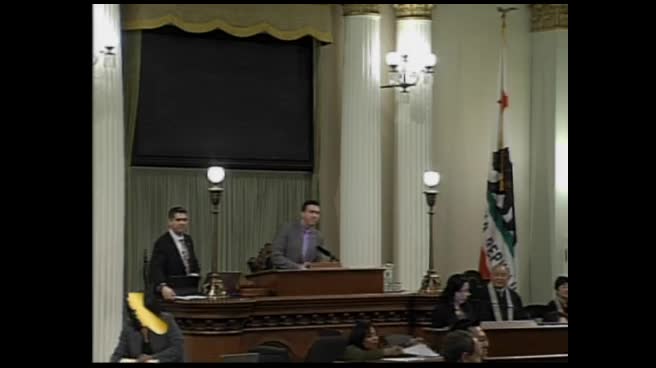 4MIN
Assembly Floor
Bill Author

Bill Co-Author(s):