ACR 197: Children: from at-risk to at-promise.
- Session Year: 2017-2018
- House: Assembly
- Latest Version Date: 2018-06-26
This measure would encourage the people of the State of California to recognize the potential and possibilities of our children, instead of focusing on their deficits.
This measure would encourage the people of the State of California to recognize the potential and possibilities of our children, instead of focusing on their deficits.
This measure would encourage the people of the State of California to recognize the potential and possibilities of our children, instead of focusing on their deficits.
WHEREAS, Society uses the phrase at-risk youth to describe youth in different living situations that lead them toward failure in the educational system, and into the mass incarceration system or low-skilled jobs; and
WHEREAS, At-risk youth is a label to describe children in lower socioeconomic standings, children whose parents have little formal education, and students from undocumented working-class families; and
WHEREAS, At-risk youth is a label that describes the potential number of youth who are predicted to fail, despite never being given a chance to prove otherwise, never being given the same access to resources and guidance as other young people, and never enjoying the privileges and opportunities afforded other young people; and
WHEREAS, When describing how our at-risk children are viewed in the education system, the terminology has shifted from culturally deprived and deficient, which are phrases that were widely used in the 1960s and 1970s, to disadvantaged, which is a term that was used in the 1980s, to the currently popular label at risk; and
WHEREAS, The previous at-risk model was a deficit model that was based on the assumption that if the criteria fit the child, then the child must have some sort of deficit. In contrast, the at-promise model is based on assessing the childs strengths; and
WHEREAS, Labeling youth as at risk often tends to have negative effects on the child and may even be damaging; and
WHEREAS, At-Promise Youth focuses on the raw potential that each individual can access within himself or herself if he or she is treated as if he or she shows promise; and
WHEREAS, At-Promise Youth is a strength-based approach that honors the strengths and gifts innate to youth; and
WHEREAS, At-Promise Youth broadens our perspectives and attempts to focus our attention on some of the details regarding youth and their individual strengths, and reminds us that we all have natural gifts, positive qualities, and potential for goodness. The act of focusing on strengths is different from the cultural norm of focusing on what needs improvement; now, therefore, be it
Resolved by the Assembly of the State of California, the Senate thereof concurring, That the Legislature hereby encourages the people of the State of California to recognize the potential and possibilities of our children, instead of focusing on their deficits; and be it further
Resolved, That the Chief Clerk of the Assembly transmit copies of this resolution to the author for appropriate distribution.
|
Date
|
Status
|
|---|---|
| Jun 26, 2018 | Chaptered by Secretary of State - Res. Chapter 106, Statutes of 2018. |
| Jun 26, 2018 | Enrolled and filed with the Secretary of State at 11:30 a.m. |
| Jun 21, 2018 | In Assembly. Ordered to Engrossing and Enrolling. |
| Jun 21, 2018 | Adopted and to Assembly. |
| May 23, 2018 | From committee: Ordered to third reading. |
| May 14, 2018 | In Senate. To Com. on RLS. |
| May 10, 2018 | Coauthors revised. |
| May 8, 2018 | From committee: Be adopted. Ordered to Third Reading. (Ayes 5. Noes 0.) (May 8). |
| Apr 24, 2018 | In committee: Hearing postponed by committee. |
| Mar 15, 2018 | Referred to Com. on PUB. S. |
| Mar 9, 2018 | From printer. |
| Mar 8, 2018 | Introduced. To print. |
|
Date
|
Description
|
Location
|
Votes
|
|
|---|---|---|---|---|
| Jun 21, 2018 | Assembly 3rd Reading ACR197 Jones-Sawyer et al. By Jackson | Senate Floor |
Passed |
|
| May 8, 2018 | Be adopted. To third reading. | Assembly Standing Committee on Public Safety |
Passed |
This list shows positions taken on this bill by organizations on the date displayed, which is linked to the original source.
Positions by individuals are not included.
|
Organization
|
Position
|
Date
|
|---|---|---|
| California Alliance Of Child And Family Services | ** Support | May 24, 2018 |
| California Public Defenders Association | ** Support | May 24, 2018 |
| Los Angeles County Office Of Education | ** Support | May 24, 2018 |
| SIATech | ** Support | May 24, 2018 |
Office of Senate Floor Analyses (916) 651-1520 Fax: (916) 327-4478 | ACR 197 |
THIRD READING
Bill No: ACR 197
Author: Jones-Sawyer (D), et al.
Introduced: 3/8/18
ASSEMBLY FLOOR: Read and adopted, 5/10/18
SUBJECT: Children: from at-risk to at-promise
SOURCE: Los Angeles County Office of Education
SIATech
DIGEST:
This resolution encourages the people of the State of California to recognize the potential and possibilities of our children, instead of focusing on their deficits.
ANALYSIS: This resolution makes the following legislative findings:
- Labeling youth as “at risk” often tends to have negative effects on the child and may even be damaging.
- Society uses the phrase “at-risk youth” to describe youth in different living situations that lead them toward failure in the educational system, and into the mass incarceration system or low-skilled jobs. It is a label describing children in lower socioeconomic standings, children whose parents have little formal education, students from undocumented working-class families, and the potential number of youth predicted to fail.
- When describing how our “at-risk” children are viewed in the education system, the terminology has shifted from “culturally deprived” and “deficient” (phrases widely used in the 1960s/1970s), to “disadvantaged” (term used in the 1980s), to the currently popular label “at risk”.
- The previous “at-risk” model was a deficit model based on the assumption that if the criteria fit the child, then the child must have some sort of deficit. In contrast, the “at-promise” model is based on assessing the child’s strengths.
- “At-Promise Youth” focuses on the raw potential each individual can access within himself/herself if he/she is treated as if he/she shows promise; and is a strength-based approach that honors the strengths and gifts innate to youth.
- At-Promise Youth broadens our perspectives and attempts to focus our attention on some of the details regarding youth and their individual strengths, and reminds us that we all have natural gifts, positive qualities, and potential for goodness. The act of focusing on strengths is different from the cultural norm of focusing on what needs improvement.
This resolution encourages the people of the State of California to recognize the potential and possibilities of our children, instead of focusing on their deficits.
FISCAL EFFECT: Appropriation: No Fiscal Com.: No Local: No
Los Angeles County Office of Education (co-source)
SIATech (co-source)
California Alliance of Child and Family Services
California Public Defenders Association
OPPOSITION: (Verified 5/24/18)
None received
ARGUMENTS IN SUPPORT: According to the author, “There is a movement amongst educators and community leaders to stop referring to youth as ‘at-risk.’ It is time the state moves away from using this term to label our most vulnerable youth. We should refer to our youth as ‘at-promise,’ a term that comes from a mindset of growth and that focuses on a child’s individual strengths and immense potential.”
According to the Los Angeles County Office of Education, “ACR 197 recognizes the need for all of those who serve youth to abandon the deficit mindset and adopt a model of service that sees all children show promise of success rather than at risk of failure.”
Prepared by: Melissa Ward / SFA / (916) 651-1520
5/24/18 13:41:59
ASSEMBLY THIRD READING
ATR Bill Id:ACR 197
Author:(Jones-Sawyer)
As Introduced Ver:March 8, 2018
Majority vote
Committee | Votes | Ayes | Noes |
Public Safety | 5-0 | Jones-Sawyer, Carrillo, Kamlager-Dove, Quirk, Santiago |
|
SUMMARY: Encourages the people of the State of California to recognize the potential possibilities of our children, instead of focusing on their deficits. Specifically, this resolution:
- States that the term ''at-risk youth,'' describes youth in different living situations that lead them toward failure.
- Provides that ''at-risk youth'' describes children in lower socioeconomic standings, whose parents have little formal education, and students from undocumented working class families.
- States that the ''at-risk youth'' label describes youth who are predicted to fail, despite never being given a chance to prove otherwise, and never being given the same access to resources, guidance, privileges, and opportunities as other young people.
- Provides that labeling a youth as ''at-risk'' has negative effects on a child.
- Explains that the ''at-risk'' model is based on an assumption that if the criteria fit the child, that the child must have a deficit.
- States that the term ''at-promise youth'' describes a youth's potential if treated as if he or she shows promise.
- Provides that ''at-promise youth'' is a strength-based term that broadens our perspectives and attempts to focus our attention on a youth's individual strengths, natural gifts, positive qualities, and potential for goodness.
- Explains that ''at-promise youth'' is a term based on assessing a child's strengths and gifts.
EXISTING LAW:
- Establishes the Governor's Mentoring Partnership, and for the purposes of this chapter, defines "at-risk youth" as an individual under 21 years of age whose environment increases their chance of academic failure, alcohol and other drug use, involvement in the criminal justice system, or teen pregnancy.
- Establishes the California Gang, Crime, and Violence Prevention Partnership Program, administered by the Department of Justice for the purposes of reducing gang, criminal activity, and youth violence in communities with a disproportionate at-risk youth population and defines "at-risk youth" as youth who live in a high-crime or high-violence neighborhood; live in a low-economic neighborhood; are excessively absent from school or are doing poorly in school; come from a socially dysfunctional family; have had one or more contacts with the police; have entered the juvenile justice system; are current or former gang members; have one or more family members living at home who are current or former members of a gang; or are identified as wards of the court.
- Authorizes counties to establish an At-Risk Youth Early Intervention Program, designed to assess and serve families with children who have chronic behavioral problems that place the child at risk of becoming a ward of the juvenile court and allows a minor to be referred to the program if at risk of justice system involvement due to chronic disobedience to parents, curfew violations, repeat truancy, incidents of running away from home, experimentation with drugs or alcohol, or other serious behavior problem.
- Establishes the Safe Neighborhood Parks, Clean Water, Clean Air, and Coastal Protection Grant Program, provides that not less than 20% of the funds shall be available for development of at risk youth recreational facilities, and defines "at-risk youth" as persons who have not attained the age of 21 years and are at high risk of being involved in, or are involved in, one or more of the following: gangs, juvenile delinquency, criminal activity, substance abuse, adolescent pregnancy, or school failure or dropout.
FISCAL EFFECT: Unknown. This resolution is keyed non-fiscal by the Legislative Counsel.
COMMENTS: According to the author, ''Our education system has adopted the term "at-risk" to label our most vulnerable students. This label comes from a mindset of deficit. It focuses on what children lack to succeed in school. As a state, we need to move away from this mindset that tells students they are likely to fail. We should start referring to our youth as "at-promise" instead, a term that focuses on a child's immense potential.''
Please see the policy committee analysis for a full discussion of this resolution.
Analysis Prepared by: Liah Burnley / PUB. S. / (916) 319-3744 FN: 0002812
Date of Hearing:
Counsel: Liah Burnley
ASSEMBLY COMMITTEE ON PUBLIC SAFETY
Reginald Byron Jones-Sawyer, Sr., Chair
ABPCA Bill Id:ACR 197
Author:(Jones-Sawyer) – As Introduced Ver:March 8, 2018
SUMMARY:
Encourages the people of the State of California to recognize the potential possibilities of our children, instead of focusing on their deficits. Specifically, this resolution:
- States that the term “at-risk youth,” describes youth in different living situations that lead them toward failure.
- Provides that “at-risk youth” describes children in lower socioeconomic standings, whose parents have little formal education, and students from undocumented working class families.
- States that the “at-risk youth” label describes youth who are predicted to fail, despite never being given a chance to prove otherwise, and never being given the same access to resources, guidance, privileges, and opportunities as other young people.
- Provides that labeling a youth as “at-risk” has negative effects on a child.
- Explains that the “at-risk” model is based on an assumption that if the criteria fit the child, that the child must have a deficit.
- States that the term “at-promise youth” describes a youth’s potential if treated as if he or she shows promise.
- Provides that “at-promise youth” is a strength-based term that broadens our perspectives and attempts to focus our attention on a youth’s individual strengths, natural gifts, positive qualities, and potential for goodness.
- Explains that “at-promise youth” is a term based on assessing a child’s strengths and gifts.
EXISTING LAW:
- Establishes the Governor’s Mentoring Partnership, and for the purposes of this chapter, defines “at-risk youth” as an individual under 21 years of age whose environment increases their chance of academic failure, alcohol and other drug use, involvement in the criminal justice system, or teen pregnancy. (Welf. & Inst. Code, § 2104.)
- Establishes the California Gang, Crime, and Violence Prevention Partnership Program, administered by the Department of Justice for the purposes of reducing gang, criminal activity, and youth violence in communities with a disproportionate at-risk youth population and defines “at-risk youth” as youth who live in a high-crime or high-violence neighborhood; live in a low-economic neighborhood; are excessively absent from school or are doing poorly in school; come from a socially dysfunctional family; have had one or more contacts with the police; have entered the juvenile justice system; are current or former gang members; have one or more family members living at home who are current or former members of a gang; or are identified as wards of the court. (Pen. Code, § 13825.2.)
- Authorizes counties to establish an At-Risk Youth Early Intervention Program, designed to assess and serve families with children who have chronic behavioral problems that place the child at risk of becoming a ward of the juvenile court and allows a minor to be referred to the program if at risk of justice system involvement due to chronic disobedience to parents, curfew violations, repeat truancy, incidents of running away from home, experimentation with drugs or alcohol, or other serious behavior problem. (Welf. & Inst. Code, § 601.5.)
- Establishes the Safe Neighborhood Parks, Clean Water, Clean Air, and Coastal Protection Grant Program, provides that not less than 20 percent of the funds shall be available for development of at risk youth recreational facilities, and defines “at-risk youth” as persons who have not attained the age of 21 years and are at high risk of being involved in, or are involved in, one or more of the following: gangs, juvenile delinquency, criminal activity, substance abuse, adolescent pregnancy, or school failure or dropout. (Pub. Res. Code, § 5096.334.)
FISCAL EFFECT:
Unknown
COMMENTS:
- Author’s Statement: According to the author, “Our education system has adopted the term “at-risk” to label our most vulnerable students. This label comes from a mindset of deficit. It focuses on what children lack to succeed in school. As a state, we need to move away from this mindset that tells students they are likely to fail. We should start referring to our youth as “at-promise” instead, a term that focuses on a child’s immense potential.”
- The term “at -promise,” focuses on a student’s potential when treated with promise as opposed to “at-risk” which focuses on the challenges they face because of their environment. Research from Arizona State University, which examines the rhetoric of “risk,” suggests that we should conceptualize all children as “at promise” for success, versus “at risk” for failure. (https://www.researchgate.net/publication/277994772_At_Risk_or_At_Promise_From_Deficit_Constructions_of_the_Other_Childhood_to_Possibilities_for_Authentic_Alliances_with_Children_and_Families.) In making a case for reconstructing our views and the language used to describe children at the margins of our communities and educational institutions, ASU Professor Beth Swadener states, we must “honestly interrogate our own biases, or we will never be able to hear their pride or see their promise.” (Id.) In the classroom, the phrase “at-promise” as opposed to “at-risk” breeds a “combination of respect for children’s families, ability to listen to both children and their parents, and the use of learning projects that actively involve and empower children can go far in helping future teachers find promise even in the most desolate inner city landscapes.” (Id.)
In a 2012 TEDx Talk, Dr. Victor Rios, a sociology professor at University of California Santa Barbara, weighed in on the choice to label a child in the negative, “at-risk” versus in the positive, “at-promise.” (https://www.youtube.com/watch?v=JZ5D_Je8tvo.) During the Talk, Dr. Rios discussed the stigma associated with negative labels, and how the term “at-risk” places lowered and problematic expectations on individuals. (Id.) As Dr. Rios explained, “what you call someone determines how you treat them; the discourse you create about someone often determines the treatment that they receive.” (Id.)
Linguistic researchers, sociologists, and early child educators argue that labeling someone “at-risk,” this sends a message to the youth and others that the person is in a precarious situation, may engage in risky behavior, and lacks agency. We may feel bad for the youth, and we do not expect much of a youth that is “at-risk.” However, in changing the discourse, we may change the outcome. (https://www.researchgate.net/publication/277994772_At_Risk_or_At_Promise_From_Deficit_Constructions_of_the_Other_Childhood_to_Possibilities_for_Authentic_Alliances_with_Children_and_Families.) Our views toward youth’s labeled “at-promise” change in a positive way. Larry Bell, the co-chair of the Reaching At-Promise Students Association, describes it as a “paradigm shift,” that “encourages teachers to approach students from a positive place, one that keeps in mind the students’ promise, not their failures.” (https://www.philanthropy.com/article/Are-They-At-Promise-Youth-/193613.)
A growing number of educators across the country are referring to such youth as “at promise.” Each year the Reaching At-Promise Students Association holds a conference to provide classroom, community and policy strategies to support at promise youth. The keynote speaker for the 2017 conference, Dr. Howard Fuller, told the audience, “Too often we use words and concepts that define our neediest brothers and sisters in the most negative terms possible even when we are attempting to be thoughtful and well meaning.”
- Argument in Support: According to the Los Angeles County Office of Education, “ACR 197 recognizes the need for all of those who serve youth to abandon the deficit mindset and adopt a model of service that sees all children show promise of success rather than at risk of failure.”
- Related Legislation:
- AB 2701 (Rubio), of the 2017-2018 Legislative Session, would authorize the Victims Compensation and Government Claims Board, upon appropriation by the Legislature, to award grants to school based trauma recovery centers. AB 2701 is pending in Assembly Appropriations Committee.
- AB 2944 (Jones-Sawyer), of the 2017-2018 Legislative Session, would create the “Schools Not Prisons” contribution fund to allow Californians to donate a portion of their state tax return to dismantle the school to prison pipeline. AB 2944 is pending in Assembly Appropriations Committee.
- AB 2701 (Rubio), of the 2017-2018 Legislative Session, would authorize the Victims Compensation and Government Claims Board, upon appropriation by the Legislature, to award grants to school based trauma recovery centers. AB 2701 is pending in Assembly Appropriations Committee.
REGISTERED SUPPORT / OPPOSITION:
Support
Los Angeles County Office of Education (Co-sponsor)
SIATech (Co-sponsor)
California Alliance of Child and Family Services
California Public Defenders Association
Opposition
None
Analysis Prepared by:
Liah Burnley / PUB. S. / (916) 319-3744
Discussed in Hearing
View Older Hearings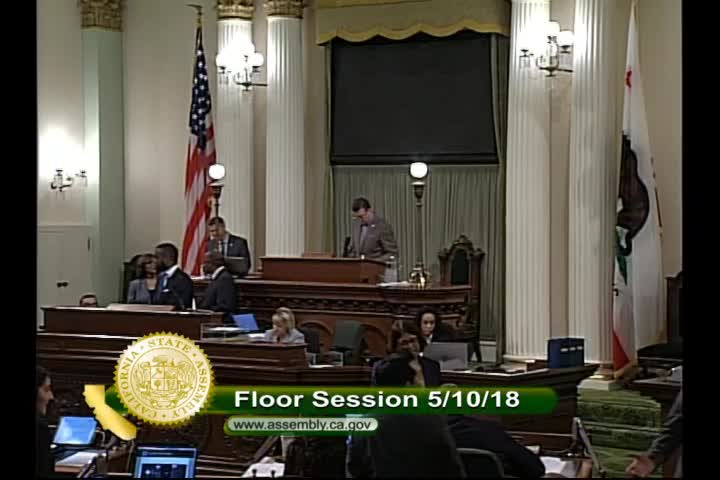
Bill Author

Bill Co-Author(s):
















































