AJR 47: Climate change and coastal resources.
- Session Year: 2017-2018
- House: Assembly
- Latest Version Date: 2018-07-02
This measure would affirm the Legislatures support for science-based action to conserve, protect, restore, and effectively manage Californias coastal and ocean ecosystems, which the state holds in trust for the people of California, in the face of challenges presented by climate change, ocean acidification, hypoxia, and other changing ocean conditions, and would urge federal and state government entities to take specified actions to preserve the states ocean and coastal resources as well as protect disadvantaged and low-income communities impacted by these challenges.
WHEREAS, California law recognizes that the states coastal and marine ecosystems are distinct and valuable natural resources of vital and enduring interest to all people, that their permanent protection is of paramount concern to present and future residents of the state and nation, and that a commitment to science-based action is necessary to prevent their deterioration and destruction; and
WHEREAS, Californias economy is one of the worlds largest, with a gross domestic product (GDP) of $2.6 trillion in 2016, including the largest ocean- and coast-dependent economy in the nation worth nearly $45 billion, and, in 2015, Californias ocean economy employed over half a million people, generated approximately $22 billion in wages, and contributed an estimated 2 percent of Californias GDP; and
WHEREAS, Hundreds of millions of California residents and visitors enjoy the states ocean and coast for relief from extreme heat in inland communities, for recreation and tourism, and these activities are a main driver of the states ocean economy; and
WHEREAS, California has one of the largest and most lucrative commercial fishing and seafood industries in the country, and is home to five of the nations top 50 fishing ports by weight of landed catch, and, in 2015, industries involving seafood processing, commercial fishing, aquaculture, and hatcheries employed more than 6,500 people in California and generated more than $135 million in wages and $350 million in GDP; and
WHEREAS, Californias coastal communities are reliant upon the financial, cultural, and infrastructure contributions of the commercial, recreational, and sport charter fishing industries, which facilitate the maintenance of harbor and port facilities for the benefit of all residents, visitors, and ocean stakeholders; and
WHEREAS, The coast and ocean are spaces of value and importance to all Californians, including inland communities, particularly as sea levels rise, temperatures increase, and the availability of green outdoor spaces becomes more limited; and
WHEREAS, Coastal and ocean ecosystems are significantly impacted by climate change, which harms the industries and communities that depend on them; and
WHEREAS, Sea level rise poses an extreme threat to Californias coastal communities, ecosystems, and infrastructure, and the state has already experienced sea level rise impacts that include increased coastal and tidal flooding and extensive coastal erosion; and
WHEREAS, The 2016 California Coastal Commission Sea Level Rise Vulnerability Synthesis Report found that, under intermediate sea level rise projections, the number of miles of roads threatened by flooding and erosion could increase by 60 percent, leaving over 200,000 coastal residents vulnerable to flooding during a typical 100-year storm, which could drive up housing costs, harm workers, destroy critical infrastructure, and result in the loss of shoreline and public access trails, and restrict free and low-cost recreational opportunities; and
WHEREAS, Sea level rise and extreme weather events will disproportionately impact disadvantaged and low-income communities due to impacts to jobs and affordable housing, as well as limited access to preparedness and adaptation tools; and
WHEREAS, Ocean acidification, hypoxia, and other changing ocean conditions in California waters present a significant and direct threat to the states marine life and ecosystems, fisheries, and farmed shellfish, negatively impact many shell-forming species, including oysters, mussels, abalone, crabs, and the microscopic plankton that form the base of the oceanic food chain, and cause significant changes in behavior and physiology of fish and invertebrates requiring flexible, adaptive, and responsive state action to address these challenges; and
WHEREAS, In the summer of 2015, an unprecedented toxic bloom of the marine diatom, Pseudo-nitzschia, was found in the waters from central California to the Alaskan Peninsula, disrupting coastal economies and threatening public health, and causing multiple, prolonged shellfish fisheries closures and losses to crab fishermen of approximately $100 million during the 201516 fishing season; and
WHEREAS, In 2017, another large-scale toxic algae bloom stretched from central California to Baja California, Mexico, resulting in additional closures of commercial fisheries and widespread impacts to wildlife; and
WHEREAS, Scientific evidence suggests that well-designed marine protected area (MPA) networks can contribute to the protection and resilience of marine species as ocean conditions change, and California has invested significant resources in establishing a globally recognized MPA network that protects marine species and habitats and safeguards Californias coastal resources and economy; and
WHEREAS, The Under2 Coalition, which was initiated with leadership from California and Germany, and was signed in 2015, now includes a global community of government entities committed to long-term efforts to reduce the effects of carbon emissions on the oceans and support the Paris Agreements climate goal of keeping the rise in global average temperature well below 2 degrees Celsius; and
WHEREAS, Signatories to the Under2 Coalition include over 200 states, provinces, regions, cities, and national government endorsers comprising almost 40 percent of the global economy; and
WHEREAS, Californias Legislature has made considerable investments to enhance resilience of our coast and ocean to changing conditions and in the 201718 Regular Session alone, it passed Chapter 852 of the Statutes of 2017 (the California Drought, Water, Parks, Climate, Coastal Protection, and Outdoor Access For All Act of 2018), which authorizes $40 million to be deposited into the California Ocean Protection Trust Fund and expended for projects that assist coastal communities to adapt to climate change, including projects that conserve, protect, and restore marine wildlife and healthy ocean and coastal ecosystems and also approved more than $35 million for fiscal year 201819 in the Budget Act of 2018; and
WHEREAS, The Budget Act of 2017 allocated $6 million from the Greenhouse Gas Reduction Fund to the State Coastal Conservancy, California Coastal Commission, and San Francisco Bay Conservation and Development Commission to address the impacts of climate change on Californias coast; and
WHEREAS, California has made significant investments in developing resources for communities to incorporate climate change adaptation into local planning, permitting, and investment decisions, and local governments are now required to incorporate emergency planning and environmental justice components into their general plans, which dictate development and investments in cities and counties; and
WHEREAS, In 2018, the Natural Resources Agency released its fourth edition of the California Climate Adaptation Strategy (Safeguarding California Plan), which provides a roadmap of climate adaptation actions for state agencies to take to address global warming, including a first-ever climate justice section developed in partnership with environmental justice leaders from throughout the state; and
WHEREAS, This year the Ocean Protection Council also released the third edition of its Sea Level Rise Guidance Document, which incorporates the findings of a comprehensive scientific review of sea level rise science undertaken by the council in 2017, and both the California Coastal Commission and State Water Resources Control Board have adopted climate change and sea level rise resolutions to address and respond to climate-driven threats to Californias ocean and water supplies; and
WHEREAS, Since 2012, the California Legislature has passed a number of laws directing state agencies to plan for and address sea level rise and other climate impacts, including Chapter 611 of the Statutes of 2012, Chapter 592 of the Statutes of 2013, Chapter 522 of the Statutes of 2014, Chapter 603 of the Statutes of 2015, Chapter 606 of the Statutes of 2015, Chapter 580 of the Statutes of 2016, Chapter 135 of the Statutes of 2017, and Chapter 338 of the Statutes of 2017; and
WHEREAS, California, along with British Columbia, Canada, and the states of Washington and Oregon, through participation in the Pacific Coast Collaborative, is a founding and lead member of the International Alliance to Combat Ocean Acidification (OA Alliance), which is a global partnership established in 2016 to assist governments in taking meaningful action to anticipate, mitigate, and adapt to the significant changes to global ocean chemistry worldwide as a result of excess carbon dioxide (CO2) emissions, and the OA Alliance now has 20 government members and 31 affiliated institutions and organizations; and
WHEREAS, In 2016, California partnered with Oregon, Washington, and British Columbia, Canada, to convene the West Coast Ocean Acidification and Hypoxia Science Panel; and
WHEREAS, In 2016, the Legislature enacted Chapter 352 of the Statutes of 2016 and Chapter 846 of the Statutes of 2016, which authorize the Ocean Protection Council to study and mitigate ocean acidification and hypoxia based on the recommendations of the West Coast Ocean Acidification and Hypoxia Science Panel, and enter agreements with other public and private entities to advance joint objectives; now, therefore, be it
Resolved by the Assembly and the Senate of the State of California, jointly, That the Legislature affirms its support for science-based action to conserve, protect, restore, and effectively manage Californias coastal and ocean ecosystems, which the state holds in trust for the people of California, in the face of the challenges presented by climate change, ocean acidification and hypoxia, and other changing ocean conditions, and urges federal and state government entities to take actions to preserve the states ocean and coastal resources, including all of the following:
(a)Promote environmental and climate justice principles in climate change policy, and continue to convene community experts to ensure the needs of disadvantaged and low-income communities are met in the pursuit of a healthy coast and ocean.
(b)Promote the use of natural systems and natural infrastructure when working to build resilience to climate change and related changing ocean conditions.
(c)Provide new and ongoing funding for programs, planning, and projects that, where feasible, address and build resiliency to climate change and related impacts to the coast and ocean, and support coastal communities and industries to adapt to these impacts, including emergency response.
(d)Support inland and disadvantaged community access to, use of, and enjoyment of the coast and ocean in the midst of climate change impacts through community consultation and consideration in land use, economic, and recreational planning processes and investments.
(e)Support Californias continued global and regional leadership efforts to address climate change and related changing ocean conditions, through participation in institutions such as the International Alliance to Combat Ocean Acidification and the Pacific Coast Collaborative.
(f)Support state policy and management actions to address the biological and economic effects of climate change, ocean acidification, harmful algal blooms, and other impacts from changing ocean conditions.
(g)Maintain and enhance Californias existing coastal habitats, conserve and restore potential future habitat, and responsibly adapt the built environment in the face of sea level rise and other climate-induced stressors; and be it further
Resolved, That the Chief Clerk of the Assembly transmit copies of this resolution to the President and Vice President of the United States, to the Speaker of the House of Representatives, to the Majority Leader of the Senate, to each Senator and Representative from California in the Congress of the United States, to the United States Secretary of the Interior, to the United States Secretary of Commerce, to the United States Secretary of Energy, to the Office of the Administrator of the National Oceanic and Atmospheric Administration, to the White House Council for Environmental Quality, to the Secretary of the California Natural Resources Agency, to the California Secretary for Environmental Protection, and to the author for appropriate distribution.
|
Date
|
Status
|
|---|---|
| Aug 31, 2018 | In Senate. To Com. on RLS. |
| Aug 30, 2018 | Coauthors revised. |
| Aug 27, 2018 | From committee: Be adopted. Ordered to Third Reading. (Ayes 12. Noes 2.) (August 27). |
| Aug 24, 2018 | Joint Rule 62(a), file notice suspended. |
| Aug 21, 2018 | Coauthors revised. |
| Aug 6, 2018 | Referred to Com. on NAT. RES. |
| Jul 3, 2018 | From printer. |
| Jul 5, 2018 | From printer. |
| Jul 2, 2018 | Introduced. To print. |
|
Date
|
Description
|
Location
|
Votes
|
|
|---|---|---|---|---|
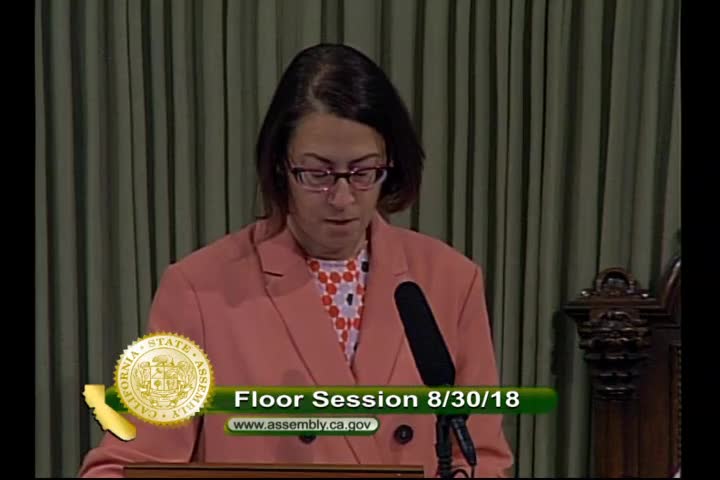
| Aug 30, 2018 | AJR 47 BLOOM Assembly Third Reading | Assembly Floor |
Passed |
|
| Aug 27, 2018 | Be adopted. To third reading. | Assembly Standing Committee on Appropriations |
Passed |
|
| Aug 20, 2018 | Be adopted and re-referred to the Committee on [Appropriations] | Assembly Standing Committee on Natural Resources |
Passed |
This list shows positions taken on this bill by organizations on the date displayed, which is linked to the original source.
Positions by individuals are not included.
|
Organization
|
Position
|
Date
|
|---|---|---|
| Azul | ** Support | Aug 17, 2018 |
| California Coastal Protection Network | ** Support | Aug 17, 2018 |
| California Coastkeeper Alliance | ** Support | Aug 17, 2018 |
| California League Of Conservation Voters | ** Support | Aug 17, 2018 |
| California Marine Sanctuary Foundation | ** Support | Aug 17, 2018 |
| Environment California | ** Support | Aug 17, 2018 |
| Environmental Action Committee of West Marin | ** Support | Aug 17, 2018 |
| Heal The Bay | ** Support | Aug 17, 2018 |
| Humboldt Baykeeper | ** Support | Aug 17, 2018 |
| Inland Empire Waterkeeper | ** Support | Aug 17, 2018 |
| Los Angeles Waterkeeper | ** Support | Aug 17, 2018 |
| Los Cerritos Wetlands Land Trust | ** Support | Aug 17, 2018 |
| Monterey Bay Aquarium | ** Support | Aug 17, 2018 |
| Monterey Coastkeeper | ** Support | Aug 17, 2018 |
| National Audubon Society | ** Support | Aug 17, 2018 |
| Natural Resources Defense Council | ** Support | Aug 17, 2018 |
| Orange County Coastkeeper | ** Support | Aug 17, 2018 |
| Plastic Pollution Coalition | ** Support | Aug 17, 2018 |
| Russian Riverkeeper | ** Support | Aug 17, 2018 |
| San Diego Coastkeeper | ** Support | Aug 17, 2018 |
| Santa Barbara Channelkeeper | ** Support | Aug 17, 2018 |
| Save The Albatross Coalition | ** Support | Aug 17, 2018 |
| Seventh Generation Advisors | ** Support | Aug 17, 2018 |
| Surfrider Foundation | ** Support | Aug 17, 2018 |
| The 5 Gyres Institute | ** Support | Aug 17, 2018 |
| The Center for Oceanic Awareness, Research, and Education | ** Support | Aug 17, 2018 |
| The Otter Project | ** Support | Aug 17, 2018 |
| Zero Waste USA | ** Support | Aug 17, 2018 |
ASSEMBLY THIRD READING
ATR Bill Id:AJR 47
Author:(Bloom, et al.)
As Introduced Ver:July 2, 2018
Majority vote
Committee | Votes | Ayes | Noes |
Natural Resources | 8-1 | Muratsuchi, Acosta, Chau, Eggman, Flora, Limón, McCarty, Mark Stone | Melendez |
Appropriations | 12-2 | Gonzalez Fletcher, Bloom, Bonta, Calderon, Carrillo, Chau, Eggman, Friedman, Nazarian, Obernolte, Quirk, Reyes | Bigelow, Brough |
SUMMARY: Affirms the Legislature's support for science-based action to conserve, protect, restore, and effectively manage California's coastal and ocean ecosystems in the face of challenges presented by climate change, ocean acidification, hypoxia, and other changing ocean conditions, and urges federal and state government entities to take specified actions to preserve the state's ocean and coastal resources as well as protect disadvantaged and low-income communities impacted by these challenges.
THIS RESOLUTION:
- States a number of findings related to California's coastal and marine economy, including:
- The state's coastal and marine ecosystems are distinct and valuable natural resources and that their permanent protection is of paramount concern to present and future residents of the state and nation;
- The state's nearly $45 billion ocean- and coast-dependent economy is the largest in the country, and that, in 2015, California's ocean economy employed over half a million people, generated approximately $22 billion in wages, and contributed an estimated 2 percent of California's gross domestic product;
- The state's coastal and ocean ecosystems are significantly impacted by climate change impacts including sea level rise and ocean acidification;
- Climate change impacts will disproportionately impact disadvantaged and low- income communities;
- Roads threatened by sea level rise and extreme weather events could increase by 60 percent in coming decades;
- Ocean acidification, hypoxia, and other changing ocean conditions in California waters present a significant and direct threat to the state's marine life and ecosystems, fisheries, and farmed shellfish;
- The Legislature has made considerable investments to enhance resilience of our coast and ocean to changing conditions, and developed resources for communities to incorporate climate change adaptation into local planning, permitting, and investment decisions; and,
- Since 2012, the California Legislature has passed a number of laws directing state agencies to plan for and address sea level rise and other climate impacts.
- Resolves that:
- The Legislature affirms its support for science-based action to conserve, protect, restore, and effectively manage California's coastal and ocean ecosystems in the face of the challenges presented by climate change, ocean acidification and hypoxia, and other changing ocean conditions; and,
- The Legislature urges federal and state government entities to take actions to preserve the state's ocean and coastal resources, including:
- Promote environmental and climate justice principles in climate change policy and support disadvantaged community access to the coast and ocean;
- Promote the use of natural systems and natural infrastructure for climate adaptation efforts;
- Continue funding programs related to resiliency to climate change and related impacts to the coast and ocean;
- Support state policy and management actions to address the biological and economic effects of climate change;
- Maintain and enhance California's existing coastal habitats, conserve and restore potential future habitat.
FISCAL EFFECT: According to the Assembly Natural Resources Committee, unknown cost pressures, likely in the hundreds of millions of dollars, to continue funding programs related to resiliency to climate change and related impacts to the coast and ocean.
COMMENTS: Climate change continues to be a major threat to human and ecosystem health in California and worldwide. The general scientific consensus affirms that even if all greenhouse gas emissions stopped today, the amount of CO2 in the earth's atmosphere would still drive global changes necessitating climate adaptation efforts. The importance of continued scientific analysis to understand the impacts of climate change on coastal and marine resources in California is critical. Global atmospheric conditions influence ocean conditions, and both are highly complex systems where prediction is dependent on ongoing, real-time data analysis to produce robust outcomes. In coastal areas, this data interacts significantly with ever-expanding information on issues like land subsidence, which also influences the extent to which sea level rise will impact communities and infrastructure. Recent years have seen rapid updates to projections related to the impact of climate change on the oceans, with estimates substantially exceeding previous scenarios. This highlights the fact that climate models are dynamic and require ongoing work to improve model accuracy.
Over a million state residents live in coastal floodplains, over 85% of the state's population lives in coastal counties. As stated in the resolution, the state's coastal and marine economy is worth nearly $45 billion annually, and is at risk from climate change. "From Boom to Bust: Climate Risk in the Golden State," a 2015 study by the Risky Business Project estimated that by 2050, between $8 billion and $10 billion of existing coastal property will be below mean sea-level, with $6 billion to $10 billion at risk during high tide. By 2100, the value of property below mean sea-level will likely grow to $19 billion, with $33 billion at risk during high tides. In addition to these property risks, the report highlights the risk that climate change poses for infrastructure including water supply and delivery, energy, and transportation systems. For example, saltwater intrusion into the Delta resulting from sea level rise could reduce the amount of available freshwater by up to 25% by 2100.
For a number of reasons, disadvantaged communities bear a disproportionate share of the risks associated with climate change. Health, employment, and housing are all equity issues that are likely to be impacted by climate change, and thus need to be considered as part of building statewide resilience. To adequately address climate adaptation needs in communities with histories of environmental injustice, future strategies must directly incorporate not only current science, but also perspectives from these communities into climate planning plans. In addition to fostering an active, continually updated scientific repository to plan for climate change, state efforts must also incorporate current community-level data and information.
Natural infrastructure is an important part of the state's climate adaptation toolkit. In the long-term, natural solutions have the potential to provide important co-benefits in addition to helping the state adapt to climate change. A 2017 study estimated that wetlands in the region most impacted by Hurricane Sandy in 2012 avoided $625 million in direct flood damages. Critically, this figure only incorporates the direct dollar value of a single storm event. The full economic benefit of these natural infrastructure features includes avoided damages from other storms, carbon storage and sequestration, wildlife habitat, and public access. These additive benefits make natural infrastructure an effective use of available funds.
Marine Protected Areas (MPAs) were formalized by the California Legislature in 1999 with the passage of the Marine Life Protection Act. MPAs are established with the goal of preserving marine life and resources, and can also encompass a variety of recreational and commercial applications depending on their design. MPAs are managed using science and can serve as an empirical reference point for non-protected areas. Research indicates that MPAs generally positively impact marine ecosystem health, and that reserve design impacts the magnitude of the effect. Proper management of MPAs has the potential to increase ecosystem resilience to climate change.
The world's oceans absorb about 25% of the CO2 released into the atmosphere every year. This excess CO2 increases the ocean's acidity, which can negatively impact the growth of coral, shellfish, and other marine life. In the ocean and freshwater environments, hypoxia refers to low levels of dissolved oxygen, often resulting from overgrowth of certain algal species. These conditions have the potential to create areas called "dead zones," where the lack of oxygen causes die offs of marine life. Interactions between hypoxia and ocean acidification can have additive negative benefits for marine life. California has worked with western states and Canada to address hypoxia and ocean acidification along the west coast, and continued maintenance of the scientific data to drive response and ecosystem management will be necessary to effectively respond to the increased rate of these impacts expected as a result of climate change.
Analysis Prepared by: Dylan Chapple / NAT. RES. / (916) 319-2092 FN: 0004994
Date of Hearing: August 27, 2018
ASSEMBLY COMMITTEE ON APPROPRIATIONS
Lorena Gonzalez Fletcher, Chair
ABPCA Bill Id:AJR 47
Author:(Bloom) – As Introduced Ver:July 2, 2018
Policy Committee: | Natural Resources | Vote: | 8 - 1 |
|
| ||
|
|
Urgency: No State Mandated Local Program: No Reimbursable: No
SUMMARY:
This resolution states a number of findings related to California’s coastal and marine economy and resolves the following:
- The Legislature affirms its support for science-based action to conserve, protect, restore, and effectively manage California’s coastal and ocean ecosystems in the face of the challenges presented by climate change, ocean acidification and hypoxia, and other changing ocean conditions.
- The Legislature urges federal and state government entities to take actions to preserve the state’s ocean and coastal resources, including:
- Promote environmental and climate justice principles in climate change policy and support disadvantaged community access to the coast and ocean.
- Promote the use of natural systems and natural infrastructure for climate adaptation efforts.
- Continue funding programs related to resiliency to climate change and related impacts to the coast and ocean.
- Support state policy and management actions to address the biological and economic effects of climate change.
- Maintain and enhance California’s existing coastal habitats, conserve and restore potential future habitat.
FISCAL EFFECT:
Unknown cost pressures, likely in the hundreds of millions of dollars, to continue funding programs related to resiliency to climate change and related impacts to the coast and ocean.
COMMENTS:
The purpose of this resolution is to recognize the environmental and economic importance of the state’s coastal communities and ocean resources as well as the state’s efforts and investments in resource protection and climate adaptation strategies and to urge the state and federal governments to continue and enhance those efforts.
Analysis Prepared by: Jennifer Galehouse / APPR. / (916) 319-2081
Date of Hearing: August 20, 2018
ASSEMBLY COMMITTEE ON NATURAL RESOURCES
Al Muratsuchi, Acting Chair
ABPCA Bill Id:AJR 47 (
Author:Bloom) – As Introduced Ver:July 2, 2018
SUBJECT: Climate change and coastal resources
SUMMARY: Affirms the Legislature’s support for science-based action to conserve, protect, restore, and effectively manage California’s coastal and ocean ecosystems in the face of challenges presented by climate change, ocean acidification, hypoxia, and other changing ocean conditions, and urges federal and state government entities to take specified actions to preserve the state’s ocean and coastal resources as well as protect disadvantaged and low-income communities impacted by these challenges.
EXISTING LAW:
- Requires that one member of the California Coastal Commission (commission) work with low-income communities to represent their priorities.
- Allows the commission to consider environmental justice issues as part of commission decision-making.
- Requires the California Natural Resources Agency (NRA), in collaboration with the Ocean Protection Council, to create, update biannually, and post on an Internet Web site a Planning for Sea Level Rise Database describing steps being taken throughout the state to prepare for, and adapt to, sea level rise.
- Requires that various public agencies and private entities provide to the NRA, on a biannual basis, sea level rise planning information, as defined, that is under the control or jurisdiction of the public agencies or private entities, and requires the agency to determine the information necessary for inclusion in the database, as prescribed.
- Requires state agencies, as part of the state’s climate adaptation strategy, to take into account the current and future impacts of climate change when planning, designing, building, operating, maintaining and investing in state infrastructure.
- Authorizes the Ocean Protection Council to study and mitigate ocean acidification and hypoxia based on the recommendations of the West Coast Ocean Acidification and Hypoxia Science Panel.
THIS RESOLUTION:
- States a number of findings related to California’s coastal and marine economy, including:
- The state’s coastal and marine ecosystems are distinct and valuable natural resources and that their permanent protection is of paramount concern to present and future residents of the state and nation;
- The state’s nearly $45 billion ocean- and coast-dependent economy is the largest in the country, and that, in 2015, California’s ocean economy employed over half a million people, generated approximately $22 billion in wages, and contributed an estimated 2 percent of California’s gross domestic product;
- The state’s coastal and ocean ecosystems are significantly impacted by climate change impacts including sea level rise and ocean acidification;
- Climate change impacts will disproportionately impact disadvantaged and low-income communities;
- Roads threatened by sea level rise and extreme weather events could increase by 60 percent in coming decades;
- Ocean acidification, hypoxia, and other changing ocean conditions in California waters present a significant and direct threat to the state’s marine life and ecosystems, fisheries, and farmed shellfish;
- The Legislature has made considerable investments to enhance resilience of our coast and ocean to changing conditions, and developed resources for communities to incorporate climate change adaptation into local planning, permitting, and investment decisions; and,
- Since 2012, the California Legislature has passed a number of laws directing state agencies to plan for and address sea level rise and other climate impacts.
- Resolves that:
- The Legislature affirms its support for science-based action to conserve, protect, restore, and effectively manage California’s coastal and ocean ecosystems in the face of the challenges presented by climate change, ocean acidification and hypoxia, and other changing ocean conditions; and,
- The Legislature urges federal and state government entities to take actions to preserve the state’s ocean and coastal resources, including:
- Promote environmental and climate justice principles in climate change policy and support disadvantaged community access to the coast and ocean;
- Promote the use of natural systems and natural infrastructure for climate adaptation efforts;
- Continue funding programs related to resiliency to climate change and related impacts to the coast and ocean;
- Support state policy and management actions to address the biological and economic effects of climate change;
- Maintain and enhance California’s existing coastal habitats, conserve and restore potential future habitat.
FISCAL EFFECT: Unknown
COMMENTS:
- Climate change in coastal California: Climate change continues to be a major threat to human and ecosystem health in California and worldwide. The general scientific consensus affirms that even if all greenhouse gas emissions stopped today, the amount of CO2 in the earth’s atmosphere would still drive global changes necessitating climate adaptation efforts. The importance of continued scientific analysis to understand the impacts of climate change on coastal and marine resources in California is critical. Global atmospheric conditions influence ocean conditions, and both are highly complex systems where prediction is dependent on ongoing, real-time data analysis to produce robust outcomes. In coastal areas, this data interacts significantly with ever-expanding information on issues like land subsidence, which also influences the extent to which sea level rise will impact communities and infrastructure. Recent years have seen rapid updates to projections related to the impact of climate change on the oceans, with estimates substantially exceeding previous scenarios. This highlights the fact that climate models are dynamic and require ongoing work to improve model accuracy.
Over a million state residents live in coastal floodplains, over 85% of the state’s population lives in coastal counties. As stated in the resolution, the state’s coastal and marine economy is worth nearly $45 billion annually, and is at risk from climate change. “From Boom to Bust: Climate Risk in the Golden State,” a 2015 study by the Risky Business Project estimated that by 2050, between $8 billion and $10 billion of existing coastal property will be below mean sea-level, with $6 billion to $10 billion at risk during high tide. By 2100, the value of property below mean sea-level will likely grow to $19 billion, with $33 billion at risk during high tides. In addition to these property risks, the report highlights the risk that climate change poses for infrastructure including water supply and delivery, energy, and transportation systems. For example, saltwater intrusion into the Delta resulting from sea level rise could reduce the amount of available freshwater by up to 25% by 2100.
For a number of reasons, disadvantaged communities bear a disproportionate share of the risks associated with climate change. Health, employment, and housing are all equity issues that are likely to be impacted by climate change, and thus need to be considered as part of building statewide resilience. To adequately address climate adaptation needs in communities with histories of environmental injustice, future strategies must directly incorporate not only current science, but also perspectives from these communities into climate planning plans. In addition to fostering an active, continually updated scientific repository to plan for climate change, state efforts must also incorporate current community-level data and information.
- Natural infrastructure: Natural infrastructure is an important part of the state’s climate adaptation toolkit. In the long-term, natural solutions have the potential to provide important co-benefits in addition to helping the state adapt to climate change. A 2017 study estimated that wetlands in the region most impacted by Hurricane Sandy in 2012 avoided $625 million in direct flood damages. Critically, this figure only incorporates the direct dollar value of a single storm event. The full economic benefit of these natural infrastructure features includes avoided damages from other storms, carbon storage and sequestration, wildlife habitat, and public access. These additive benefits make natural infrastructure an effective use of available funds.
- Marine Protected Areas, ocean acidification and hypoxia: Marine Protected Areas (MPAs) were formalized by the California Legislature in 1999 with the passage of the Marine Life Protection Act. MPAs are established with the goal of preserving marine life and resources, and can also encompass a variety of recreational and commercial applications depending on their design. MPAs are managed using science and can serve as an empirical reference point for non-protected areas. Research indicates that MPAs generally positively impact marine ecosystem health, and that reserve design impacts the magnitude of the effect. Proper management of MPAs has the potential to increase ecosystem resilience to climate change.
The world’s oceans absorb about 25% of the CO2 released into the atmosphere every year. This excess CO2 increases the ocean’s acidity, which can negatively impact the growth of coral, shellfish, and other marine life. In the ocean and freshwater environments, hypoxia refers to low levels of dissolved oxygen, often resulting from overgrowth of certain algal species. These conditions have the potential to create areas called “dead zones,” where the lack of oxygen causes die offs of marine life. Interactions between hypoxia and ocean acidification can have additive negative benefits for marine life. California has worked with western states and Canada to address hypoxia and ocean acidification along the west coast, and continued maintenance of the scientific data to drive response and ecosystem management will be necessary to effectively respond to the increased rate of these impacts expected as a result of climate change.
REGISTERED SUPPORT / OPPOSITION:
Support
Azul
California Coastkeeper Alliance
California Coastal Protection Network
California League of Conservation Voters
California Marine Sanctuary Foundation
Environment California
Environmental Action Committee of West Marin
Heal the Bay
Humboldt Baykeeper
Inland Empire Waterkeeper
Los Angeles Waterkeeper
Los Cerritos Wetlands Land Trust
Monterey Bay Aquarium
Monterey Coastkeeper
National Audubon Society
Natural Resources Defense Council
Orange County Coastkeeper
Plastic Pollution Coalition
Russian Riverkeeper
San Diego Coastkeeper
Santa Barbara Channelkeeper
Save the Albatross Coalition
Seventh Generation Advisors
Surfrider Foundation
The 5 Gyres Institute
The Center for Oceanic Awareness, Research, and Education
The Otter Project
Zero Waste USA
Opposition
None on file
Analysis Prepared by: Dylan Chapple / NAT. RES. /
Discussed in Hearing
 1MIN
Assembly Floor
 1MIN
Assembly Standing Committee on Appropriations
 3MIN
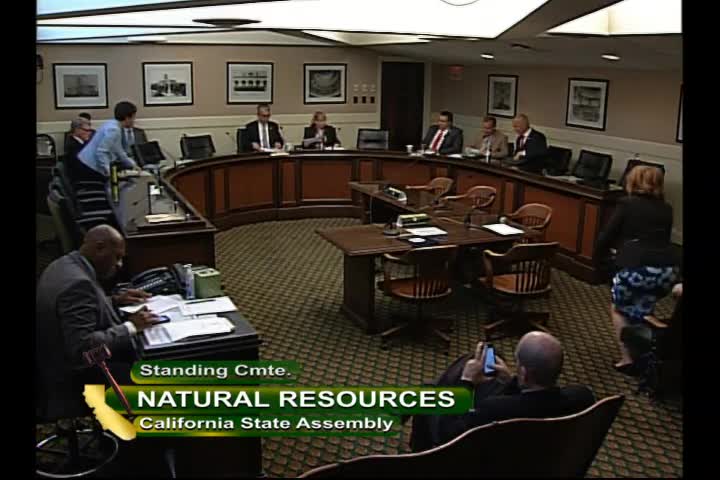
Assembly Standing Committee on Natural Resources



Bill Co-Author(s):