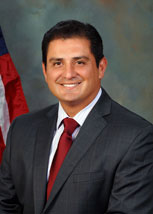
AB 352: Wildfire Prevention, Safe Drinking Water, Drought Preparation, and Flood Protection Bond Act of 2020.
- Session Year: 2019-2020
- House: Assembly
- Latest Version Date: 2019-08-14
|
Date
|
Status
|
|---|---|
| Aug 14, 2019 | From committee chair, with author's amendments: Amend, and re-refer to committee. Read second time, amended, and re-referred to Com. on EQ. |
| Jun 18, 2019 | In committee: Set, first hearing. Hearing canceled at the request of author. |
| Jun 12, 2019 | Referred to Com. on EQ. |
| May 30, 2019 | In Senate. Read first time. To Com. on RLS. for assignment. |
| May 30, 2019 | Read third time. Passed. Ordered to the Senate. |
| May 21, 2019 | Read second time. Ordered to third reading. |
| May 20, 2019 | From committee: Amend, and do pass as amended. (Ayes 13. Noes 1.) (May 16). |
| Apr 10, 2019 | In committee: Set, first hearing. Referred to APPR. suspense file. |
| Mar 26, 2019 | From committee: Do pass and re-refer to Com. on APPR. (Ayes 8. Noes 0.) (March 25). Re-referred to Com. on APPR. |
| Mar 18, 2019 | Re-referred to Com. on NAT. RES. |
| Mar 14, 2019 | From committee chair, with author's amendments: Amend, and re-refer to Com. on NAT. RES. Read second time and amended. |
| Feb 11, 2019 | Referred to Com. on NAT. RES. |
| Feb 5, 2019 | From printer. May be heard in committee March 7. |
| Feb 4, 2019 | Read first time. To print. |
|
Date
|
Description
|
Location
|
Votes
|
|
|---|---|---|---|---|
| May 30, 2019 | AB 352 Eduardo Garcia Assembly Third Reading | Assembly Floor |
Passed |
|
| May 16, 2019 | Do pass as amended. | Assembly Standing Committee on Appropriations |
Passed |
|
| Mar 25, 2019 | Do pass and be re-referred to the Committee on [Appropriations] | Assembly Standing Committee on Natural Resources |
Passed |
This list shows positions taken on this bill by organizations on the date displayed, which is linked to the original source.
Positions by individuals are not included.
ASSEMBLY THIRD READING
ATR Bill Id:AB 352
Author:(Eduardo Garcia)
As Amended Ver:May 20, 2019
Majority vote
SUMMARY:
Beginning July 1, 2020, this bill requires state agencies that administer Greenhouse Gas Reduction Fund (GGRF) grant programs
Major Provisions
- Beginning July 1, 2020, requires state agencies administering competitive grant programs that allocate moneys from the GGRF to ensure there are at least three months between the first call for applications or proposals for grant funding and the due date of the application or proposal.
- Requires the report prepared by the Department of Finance (DOF) about GGRF expenditures to include applications received for each grant program allocating moneys from the GGRF, including, but not limited to:
- The status of projects funded and their outcomes.
- The applications received for each grant program allocating moneys from the GGRF, including locations of projects proposed; amount of moneys requested for each project; names of lead applicants; and, whether the projects were funded in whole or in part with moneys from the GGRF.
- Specifies that the Transformative Climate Communities Program (TCCP) includes low-income communities.
- Specifies that TCCP grant applications from the Imperial and San Diego counties may include daytime population numbers.
COMMENTS:
TCCP. The TCCP was established to "fund the development and implementation of neighborhood-level transformative climate community plans that include multiple, coordinated greenhouse gas emissions reduction projects that provide local economic, environmental, and health benefits to disadvantaged communities."
The TCC Program funds community-led development and infrastructure projects that achieve environmental, health, and economic benefits in California's most disadvantaged communities. Current investments focus on the top 5% of disadvantaged communities. The program is administered by SGC and implemented by the Department of Conservation, along with other partnering state agencies.
This bill requires SGC to make low-income communities that are not identified as disadvantaged communities eligible for grants awarded under the TCCP.
California-Mexico Border. Air pollution along the California-Mexico border poses significant threats to adjacent communities in California. OEHHA is participating in pilot projects with community groups to monitor air quality in the border region, and has found that pollution levels in border adjacent cities are substantially higher than in cities farther from the border. ARB estimates that Imperial County would be able to meet the national standard for 2.5 micrometer particulate matter if pollution from Mexico was not crossing the border. An estimated 196,120 people commute daily from Mexico to San Diego and Imperial Counties and back again, and in July of 2015, an estimated 1.1 million passenger cars, 29,000 trucks, and 230 buses crossed through the two ports of entry in Calexico. Border crossings often involve considerable time, sometimes hours, waiting to pass through customs, which leads to idling vehicles that exacerbate pollution. Communities in these areas are not authorized to account for daytime population in applications for CCI programs, so exposure to pollutants is likely higher in these areas than current estimates account for.
Application lead time. To apply for GGRF funding, the administering state agency issues a request for proposals with a specified due date, and the time between announcement and due date varies between programs. Last year, for example, the Natural Resources Agency Urban Greening program solicited applications in January with a due date of April 16, the Department of Food and Agriculture Healthy Soils Program solicited applications on March 6 with a due date of April 16, and the Department of Community Service and Development Low-Income Weatherization Program solicited applications on March 27 with a due date of April 27. Short turn-around times for grant applications have the potential to limit the applicant pool and favor groups that have existing capacity to apply for grants. The three-month minimum time between the initial grant solicitation and due date for competitive GGRF programs across agencies could help less sophisticated applicants engage in the process.
According to the Author:
Imperial County and San Diego County see approximately 200,000 people cross the US-Mexico Border every day. However, those jurisdictions are unable to count that daytime population in their applications for funding, meaning significant emissions reduction opportunities are not feasible because the funding for those projects cannot be justified with the resident population numbers.
Finally, while ARB is charged with coordinating the GGRF programs on behalf of the DOF, they are not currently tracking and reporting applications received for funding. This data could help decision-makers understand where there is unmet funding need, or barriers to accessing funding that need to be addressed.
Arguments in Support:
Supporters of this bill state that this bill would make improvements to the GGRF process by requiring reporting on applications received so the Legislature can better understand where outstanding funding needs persist. AB 352 also asks administering agencies to ensure there is at least a three month gap between a competitive call for proposals and due dates for those proposals, and to reevaluate their scoring criteria to ensure jurisdictions are able to compete regardless of their baseline residential size or density.
Arguments in Opposition:
None
FISCAL EFFECT:
According to the Assembly Appropriations Committee:
- Unknown increased Strategic Growth Council costs, likely less than $300,000 annually (GGRF).
- Unknown increased ARB costs, likely less than $1 million annually (GGRF).
VOTES:
ASM NATURAL RESOURCES: 8-0-3
YES: Friedman, Chau, Eggman, Cristina Garcia, Limón, McCarty, Muratsuchi, Mark Stone
ABS, ABST OR NV: Flora, Mathis, Melendez
ASM APPROPRIATIONS: 13-1-4
YES: Gonzalez, Bloom, Bonta, Calderon, Carrillo, Chau, Eggman, Gabriel, Eduardo Garcia, Maienschein, Petrie-Norris, Quirk, Robert Rivas
NO: Brough
ABS, ABST OR NV: Bigelow, Diep, Fong, Obernolte
UPDATED:
VERSION: May 20, 2019
CONSULTANT: Elizabeth MacMillan / NAT. RES. / (916) 319-2092 FN: 0000970
Date of Hearing: April 10, 2019
ASSEMBLY COMMITTEE ON APPROPRIATIONS
Lorena Gonzalez, Chair
ABPCA Bill Id:AB 352
Author:(Eduardo Garcia) – As Amended Ver:March 14, 2019
Policy Committee: | Natural Resources | Vote: | 8 - 0 |
|
| ||
|
|
Urgency: No State Mandated Local Program: No Reimbursable: No
SUMMARY:
Beginning July 1, 2020, this bill requires state agencies that administer Greenhouse Gas Reduction Fund (GGRF) grant programs to ensure all of the following:
- Communities identified for community emissions reduction programs pursuant to AB 617 (C. Garcia), Chapter 136, Statutes of 2017, are given preferential points for air quality improvement grants.
- State agencies allow at least three months between releasing grant solicitations and the due date for proposals.
- Applicants from the counties of Imperial and San Diego are allowed to include daytime population numbers in grant applications. Daytime population estimates shall not include residents of the state.
- Grant eligibility and scoring shall not preclude low income-communities, as defined, from applying for or being awarded a grant.
This bill requires applications to programs that involve housing, transportation, urban forestry, urban greening or planning to be scored based on the size and density of the jurisdiction where the project is based, as specified, and requires an administering agency to create at least three tiers and scoring criteria for applications.
This bill adds the following express uses for GGRF expenditures, where applicable and to the extent feasible, to:
- Increase water supply resilience.
- Reduce or prevent increases in transportation, energy or fuel costs, particularly in disadvantaged communities, as specified.
- Accelerate the development and implementation of low-carbon technology.
- Reduce vehicle miles traveled.
- Promote zoning and development activities that increase public access to essential services or amenities.
- Promote partnerships between multiple jurisdictions.
- Promote climate change adaptation capacity.
- Improve community access to green space.
Lastly, this bill requires the Department of Finance’s annual report to report on the applications received for each grant program allocating GGRF funds, including, but not limited to, all of the following:
a) location of projects proposed; b) amount of funds requested for each project; c) name of lead applicants; and d) whether the projects were funded, in whole or in part, with GGRF funds.
FISCAL EFFECT:
Increased annual ongoing ARB costs of approximately $2 million including 12 PY and $300,000 in contracting funds to meet the requirements of the bill (GGRF).
COMMENTS:
- Background and Purpose. AB 617 (C. Garcia) Chapter 136, Statutes of 2017, among other things, requires ARB to improve air pollution data collection and reporting, requires ARB to adopt a statewide emissions reduction strategy targeting pollution-burdened communities and requires ARB and local air districts to implement community emissions reduction programs.
Currently, several important potential co-benefits are not identified in ARB’s list for administering agencies. That means projects to ensure additional community benefits – including projects that serve communities identified by ARB as suffering from cumulative pollution burden pursuant to AB 617 – are not necessarily prioritized over projects that do not result in those benefits.
Approximately 200,000 people cross the US-Mexico border into San Diego and Imperial counties every day. These jurisdictions are unable to count the extra daytime populations in their applications for GGRF funding, which may result in lost funding opportunities because projects cannot be justified using resident population numbers only.
This bill aligns funding priorities with AB 617 and recognizes the impact daytime populations have on our border communities.
ARB is charged with coordinating the GGRF programs on behalf of the Department of Finance, but is not currently tracking and reporting applications received for each grant program allocating GGRF. This bill requires DOF to provide additional information, which may help decision makers understand where funds are going or where barriers to accessing funding may exist.
- Prior Legislation. AB 1945 (Garcia), of the 2017-2018 Legislative Session, was substantially similar to this bill. AB 1945 was vetoed by Governor Brown who stated in his veto message:
This bill creates requirements that would apply to a broad range of climate change competitive grant programs, including criteria to prioritize certain communities and projects over others. The general goals of this bill have merit but would be better achieved through the budget process.
Analysis Prepared by: Jennifer Galehouse / APPR. / (916) 319-2081
Date of Hearing: March 25, 2019
ASSEMBLY COMMITTEE ON NATURAL RESOURCES
Laura Friedman, Chair
ABPCA Bill Id:AB 352 (
Author:Eduardo Garcia) – As Amended Ver:March 14, 2019
SUBJECT: California Global Warming Solutions Act of 2006: Greenhouse Gas Reduction Fund: investment plan: Transformative Climate Communities Program
SUMMARY: Adds specified co-benefits to be included in Greenhouse Gas Reduction Fund (GGRF) project quantification and revises the criteria for various GGRF grant programs.
EXISTING LAW:
- Requires the Air Resources Board (ARB), pursuant to California Global Warming Solutions Act of 2006 [AB 32 (Núñez), Chapter 488, Statutes of 2006], to adopt a statewide greenhouse gas (GHG) emissions limit equivalent to 1990 levels by 2020 and adopt regulations to achieve maximum technologically feasible and cost-effective GHG emission reductions. AB 32 authorizes ARB to permit the use of market-based compliance mechanisms to comply with GHG reduction regulations once specified conditions are met. Requires ARB to approve a statewide GHG emissions limit equivalent to 40% below the 1990 level by 2030.
- Establishes the GGRF and requires all moneys, except for fines and penalties, collected by ARB from the auction or sale of allowances pursuant to a market-based compliance mechanism (i.e., the cap-and-trade program adopted by ARB under AB 32) to be deposited in the GGRF and available for appropriation by the Legislature.
- Establishes the GGRF Investment Plan and Communities Revitalization Act (Act) to set procedures for the investment of GHG allowance auction revenues. Authorizes a range of GHG reduction investments and establishes several policy objectives:
- Maximize economic, environmental, and public health benefits;
- Foster job creation;
- Complement efforts to improve air quality;
- Direct investment toward the most disadvantaged communities and households in the state;
- Provide opportunities for businesses, public agencies, nonprofits, and other community institutions to participate in and benefit from statewide efforts to reduce GHG emissions; and,
- Lessen the impacts and effects of climate change on the state's communities, economy, and environment.
- Specifies that moneys appropriated from the GGRF for investments may include funding to reduce GHG emissions through:
- Energy efficiency, clean and renewable energy generation, distributed renewable energy generation, transmission and storage, and other related actions;
- The development of state-of-the-art systems to move goods and freight, advanced technology vehicles and vehicle infrastructure, advanced biofuels, and low-carbon and efficient public transportation;
- Strategic planning and development of sustainable infrastructure projects;
- Investments in programs implemented by local and regional agencies, local and regional collaboratives, and nonprofit organizations coordinating with local governments; and,
- Funding research, development, and deployment of innovative technologies, measures, and practices related to programs and projects funded pursuant to the Act.
- Requires the investment plan to allocate a minimum of 25% of the available moneys in the GGRF to projects that provide benefits to identified disadvantaged communities, and additional minimum of 5% to projects that benefit low-income households or to projects located within and benefitting individuals living in low-income communities, and an additional minimum of 5% to projects that benefit low-income households that are outside of, but within a 1/2 mile of, disadvantaged communities, or to projects located within the boundaries of, and benefiting individuals living in, low-income communities that are outside of, but within a 1/2 mile of, disadvantaged communities.
- Directs ARB and agencies administering GGRF funding to maximize the co-benefits associated with funded projects.
- Requires the Department of Finance (DOF) to submit an annual report and a triennial investment plan to the Legislature on the status of projects funded by GGRF moneys.
- Requires the Strategic Growth Council (SCG) to administer the Transformative Climate Communities Program (TCCP), to award competitive grants for the development and implementation of neighborhood-level TCCP plans that include GHG emissions reduction projects that provide local economic, environmental, and health benefits to disadvantaged communities.
- Requires ARB to prepare, in consultation with specified entities, a statewide strategy to reduce emissions of toxic air contaminants and criteria air pollutants in communities affected by a high cumulative exposure burden. Requires the strategy to include criteria for the development of community emission reduction programs.
THIS BILL:
- Beginning July 1, 2020, requires state agencies administering competitive grant programs that allocate moneys from the GGRF to ensure the following:
- Communities identified for community emission reduction programs are given preferential points during grant application and scoring for grant programs intended to improve air quality.
- There are at least three months between the first call for applications or proposals for grant funding and the due date of the application or proposal.
- Applicants from the counties of San Diego and Imperial are allowed to include daytime population numbers in grant applications. Specifies that daytime population estimates be based on the best available estimates of daily northbound border crossings and shall not include residents of the state.
- Grant eligibility and scoring criteria shall not preclude low-income communities, as defined, from applying for or being awarded a grant.
- Applications to programs that involve housing, transportation, urban forestry, urban greening, or planning, but not agriculture, as specified, are scored based on the size and density of the jurisdiction where the project is based, as specified, and requires an administering agency to create at least three tiers and scoring criteria for applications, as follows:
- Tier 1 includes projects in jurisdictions with more than 4,000 people per square mile or more than 450,000 people.
- Tier 2 includes projects in jurisdictions with between 300-4,000 people per square mile, and less than 450,000 people, but does not include an area that:
- Has a population not exceeding 10,000, or has a population not exceeding 20,000 and is contained within a nonmetropolitan area.
- Has any open country, place, town, village, or city located within a Standard Metropolitan Statistical Area if the population thereof does not exceed 20,000 and the area is not part of, or associated with, an urban area and is rural in character.
- Tier 3 includes projects in jurisdictions with less than 300 people per square mile and those excluded from Tier 2.
- Adds, in addition to GHG emissions reductions, the following co-benefits to the list of co-benefits that GGRF moneys should facilitate:
- Increase water supply resilience.
- Reduce or prevent increases in transportation, energy, or fuel costs.
- Accelerate the development and implementation of low-carbon technology.
- Reduce vehicle miles traveled.
- Promote zoning and development activities that increase public access to essential services or amenities.
- Promote partnerships between multiple jurisdictions.
- Promote climate change adaptation capacity, including, but not limited to:
- Higher average temperatures;
- Decreased air and water quality;
- The spread of infectious and vector-borne diseases or other public health impacts;
- Extreme weather events;
- Sea level rise;
- Flooding;
- Heat waves;
- Wildfires; and,
- Drought.
- Improve community access to green space.
- Requires the report prepared by DOF about GGRF expenditures to include applications received for each grant program allocating moneys from the GGRF, including, but not limited to:
- The status of projects funded and their outcomes.
- The applications received for each grant program allocating moneys from the GGRF, including:
- Locations of projects proposed;
- Amount of moneys requested for each project;
- Names of lead applicants; and,
- Whether the projects were funded in whole or in part with moneys from the GGRF.
- Specifies that the TCCP includes low-income communities.
- When SGC gives priority to plans and projects that cover areas that have a high proportion of census tracts identified as disadvantaged communities or low-income communities.
- When adopting guidelines for the TCCP, requires that low-income communities are included.
FISCAL EFFECT: Unknown. According to the Senate Appropriations Committee, a bill that was substantially similar to this bill [AB 1945 (E. Garcia), 2018] had ongoing costs of approximately $3 million to ARB to support 17 positions and $125,000 in contracting funds.
COMMENTS:
- Author’s statement:
Several important potential co-benefits are not currently identified in ARB's list for administering agencies. That means that projects that would ensure additional community benefits – including projects that serve communities identified by ARB as suffering from cumulative pollution burden pursuant to AB 617 [(Cristina Garcia) Chapter 136, Statutes of 2017] – are not necessarily prioritized over projects that do not result in those benefits.
Imperial County and San Diego County see approximately 200,000 people cross the US-Mexico Border every day. However, those jurisdictions are unable to count that daytime population in their applications for funding, meaning significant emissions reduction opportunities are not feasible because the funding for those projects cannot be justified with the resident population numbers.
Finally, while ARB is charged with coordinating the GGRF programs on behalf of the DOF, they are not currently tracking and reporting applications received for funding. This data could help decision-makers understand where there is unmet funding need, or barriers to accessing funding that need to be addressed.
- AB 32. The Global Warming Solutions Act (AB 32) requires ARB to adopt a statewide GHG emissions limit equivalent to 1990 levels by 2020 and adopt regulations, including market-based compliance mechanisms, to achieve maximum technologically feasible and cost-effective GHG emission reductions.
As part of the implementation of AB 32 market-based compliance measures, ARB adopted a cap-and-trade program that caps the allowable statewide emissions and provides for the auctioning of emission credits, the proceeds of which are deposited into the GGRF to be available for appropriation by the Legislature.
The Budget continuously appropriates 35% of cap-and-trade funds for investments in transit, affordable housing, and sustainable communities. Twenty-five percent of the revenues are continuously appropriated to continue the construction of high-speed rail. The remaining 40% is to be appropriated annually by the Legislature for investments in programs that include low-carbon transportation, energy efficiency and renewable energy, and natural resources and waste diversion. - Environmental justice. According to the Office of Environmental Health Hazard Assessment (OEHHA), approximately 8 million Californians (21%) live in zip codes that are considered "highly impacted" by environmental, public health, and socioeconomic stressors. Nearly half of all Californians live within six miles of a facility that is a significant greenhouse gas emitter (46%), and they are disproportionately people of color (62%). Throughout California, people of color face a 50% higher risk of cancer from ambient concentrations of air pollutants listed under the Clean Air Act. These impacts are felt by all Californians. ARB estimates that air pollution exposure accounts for 19,000 premature deaths, 280,000 cases of asthma, and 1.9 million lost work days every year.
In 2000, legislation [SB 89 (Escutia), Chapter 728] required CalEPA to convene the Environmental Justice Working Group and develop an agency-wide environmental justice strategy. In 2001, follow up legislation [SB 828 (Alarcon), Chapter 765] established a
timeline for these requirements and required CalEPA to update its report to the Legislature every three years. In October of 2004, CalEPA released its Environmental Justice Action Plan, but did not complete the required updates for a decade.
SB 535 (de León), Chapter 850, Statutes of 2012, requires the Cap and Trade Proceeds Investment Plan to direct a minimum of 25% of the available moneys in the fund to projects that provide benefits to identified disadvantaged communities; and, a minimum of 10% of the available moneys in the fund to projects located within identified disadvantaged communities. SB 535 also required CalEPA to identify disadvantaged communities (i.e., environmental justice communities). In order to accurately identify environmental justice communities, OEHHA, on behalf of CalEPA, created the California Communities Environmental Health Screening Tool (CalEnviroScreen). CalEnviroScreen is a screening methodology that can be used to help identify California communities that are disproportionately burdened by multiple sources of pollution.
In February of 2014, CalEPA issued an Environmental Justice Program Update, which included four main areas for future actions: 1) increase efforts to eliminate discrimination on the basis of race, national origin, ethnic group identification, religion, age, sex, sexual orientation, color, genetic information, or disability in any program or activity conducted or funded by the state; 2) develop guidance to promote a sound legal framework for CalEPA to advance environmental justice goals and objectives; 3) lead an agency-wide working group dedicated to increase compliance with environmental laws in communities with relatively higher environmental burdens; and, 4) add additional indicators to CalEnviroScreen.
- Co-benefits in GGRF projects. Proceeds from the state's Cap-and-Trade program are used to fund a variety of projects across state agencies that reduce GHG through California Climate Investments (CCI). As the ultimate oversight agency for distribution of GGRF funds, ARB is directed by statute to provide guidance to administering agencies on quantifying co-benefits associated with CCI investments. For example, efforts to control diesel emissions simultaneously reduce carbon dioxide and particulate matter, which can reduce rates of asthma and respiratory disease. These positive public health outcomes are co- benefits associated with this GHG intervention, and are slated to be tracked as part of the CCI reporting process.
ARB is currently working with researchers from University of California, Berkeley to develop quantification methods for co-benefits that can be used in project evaluation, and has identified a list of these co-benefits on its website. In its current form, the bill suggests adding co-benefits that cover related topics, but do not align with ongoing ARB efforts to quantify co-benefits. Further, the proposed code location for the co-benefit additions is not adjacent to existing statutory language around co-benefits. The bill would benefit from aligning language around proposed additions to the co-benefit sections with the language used in ongoing ARB efforts and locating the co-benefit language adjacent to existing statutory language. It would also benefit from re-locating the language that prioritizes projects that benefit communities identified for community emissions reductions programs to the code sections relevant to project scoring and selection.
- Transformative Climate Communities Program. Enacted by AB 2722 (Burke), Chapter 371, Statutes of 2016, the TCCP has received $190 million in GGRF funding and an additional $40 million is proposed in the Governor's 2019-20 Budget. The TCCP was established to “fund the development and implementation of neighborhood-level transformative climate community plans that include multiple, coordinated greenhouse gas emissions reduction projects that provide local economic, environmental, and health benefits to disadvantaged communities.”
The TCC Program funds community-led development and infrastructure projects that achieve environmental, health, and economic benefits in California’s most disadvantaged communities. Current investments focus on the top 5% of disadvantaged communities. The program is administered by SGC and implemented by the Department of Conservation, along with other partnering state agencies.
This bill requires SGC to make low-income communities that are not identified as disadvantaged communities eligible for grants awarded under the TCCP. - California-Mexico Border. Air pollution along the California-Mexico border poses significant threats to adjacent communities in California. OEHHA is participating in pilot projects with community groups to monitor air quality in the border region, and has found that pollution levels in border adjacent cities are substantially higher than in cities farther from the border. ARB estimates that Imperial County would be able to meet the national standard for 2.5 micrometer particulate matter if pollution from Mexico was not crossing the border. An estimated 196,120 people commute daily from Mexico to San Diego and Imperial Counties and back again, and in July of 2015, an estimated 1.1 million passenger cars, 29,000 trucks, and 230 buses crossed through the two ports of entry in Calexico. Border crossings often involve considerable time, sometimes hours, waiting to pass through customs, which leads to idling vehicles that exacerbate pollution. Communities in these areas are not authorized to account for daytime population in applications for CCI programs, so exposure to pollutants is likely higher in these areas than current estimates account for.
- Application lead time. To apply for GGRF funding, the administering state agency issues a request for proposals with a specified due date, and the time between announcement and due date varies between programs. Last year, for example, the Natural Resources Agency Urban Greening program solicited applications in January with a due date of April 16, the Department of Food and Agriculture Healthy Soils Program solicited applications on March 6 with a due date of April 16, and the Department of Community Service and Development Low-Income Weatherization Program solicited applications on March 27 with a due date of April 27. Short turn-around times for grant applications have the potential to limit the applicant pool and favor groups that have existing capacity to apply for grants. The three-month minimum time between the initial grant solicitation and due date for competitive GGRF programs across agencies could help less sophisticated applicants engage in the process.
- Previous legislation. This bill is substantially similar to AB 1945 (E. Garcia) of 2017, which was vetoed by Governor Brown.
REGISTERED SUPPORT / OPPOSITION:
Support
Bear Yuba Land Trust
California Park & Recreation Society
Coachella Valley Association Of Governments
Comite Civico Del Valle
East Bay Regional Park District
Eastern Sierra Land Trust
Imperial County Transportation Commission
Imperial County
Mammoth Lakes Recreation
Mammoth Lakes Trails And Public Access Foundation
Placer Land Trust
San Bernardino County
Sierra Foothill Conservancy
Sierra Business Council
Sierra Nevada Alliance
Sonoma County Regional Parks
Tahoe City Public Utility District
Truckee Donner Land Trust
Watershed Conservation Authority
Opposition
None on file
Analysis Prepared by: Elizabeth MacMillan / NAT. RES. /
Bill Author

Bill Co-Author(s):