ACR 221: Sudden cardiac arrest: student athletes.
- Session Year: 2025-2026
- House: Assembly
- Latest Version Date: 2026-08-27
Current Status:
Passed
(2026-08-27: Chaptered by Secretary of State - Res. Chapter 214, Statutes of 2026.)
Introduced
In Committee
Awaiting First Chamber Vote
Passed First Chamber
In Committee
Awaiting Second Chamber Vote
Passed Second Chamber
Enacted
This measure would recognize that sudden cardiac arrest is a critical issue facing student athletes and provide that the Legislature supports the important work nonprofit organizations are doing to raise awareness of sudden cardiac arrest, increase preventative screenings, and reduce the number of cases.
This measure would recognize that sudden cardiac arrest is a critical issue facing student athletes and provide that the Legislature supports the important work nonprofit organizations are doing to raise awareness of sudden cardiac arrest, increase preventative screenings, and reduce the number of cases.
This measure would recognize that sudden cardiac arrest is a critical issue facing student athletes and provide that the Legislature supports the important work nonprofit organizations are doing to raise awareness of sudden cardiac arrest, increase preventative screenings, and reduce the number of cases.
WHEREAS, Sudden cardiac arrest is the leading cause of death for student athletes, with about 2,000 young people under 25 years of age dying each year in the United States; and
WHEREAS, Sports-related sudden cardiac arrest accounts for 5.4 percent of overall cases of sudden cardiac arrest in the pediatric population, and most cases occur during recreational or noncompetitive sports activity, with soccer and running being the most frequently involved sports; and
WHEREAS, According to the National Institutes of Health, the risk of sudden cardiac arrest in competitive athletes is significantly higher than in nonathletes, with male athletes nearly four times more likely to have an episode of sudden cardiac arrest than female athletes, and Black athletes nearly three times more likely than their white counterparts; and
WHEREAS, Survival disparities exist by race, with Black athletes showing lower survival rates than white, non-Hispanic athletes; and
WHEREAS, A two-year study of young athletes, between 11 and 27 years of age, from 2014 to 2016, identified 132 cases with an overall survival rate of 48 percent, and that survival rate was higher when a certified athletic trainer and an onsite automated external defibrillator (AED) were involved, at 83 percent and 89 percent, respectively; and
WHEREAS, According to a 2023 Scientific Session from the American Heart Association, sudden cardiac death (SCD) was the leading medical cause of death among NCAA athletes, comprising 13 percent of 1,102 total deaths, with male, Black, and Division 1 basketball players facing the highest risk; however, SCD incidence declined by 29 percent every five years over a 20-year study period, possibly due to improved CPR training, AED access, and emergency response planning; and
WHEREAS, With sudden cardiac arrest being caused by a wide range of cardiac diseases, early detection of heart issues and genetic testing can reduce risk factors of sudden cardiac death; and
WHEREAS, Annual physician examinations and sports preparticipation physician exams may miss about 85 to 90 percent of issues that may cause sudden cardiac arrest in youth; and
WHEREAS, The very low proportion of sports-related sudden cardiac arrest cases with warning symptoms strongly suggests that screening questionnaires reliant on symptoms alone are not an effective strategy for risk stratification in this age group; and
WHEREAS, Organizations, including, but not limited to, the Eric Paredes Save a Life Foundation, the Kyle J. Taylor Foundation, Who We Play For, Project ADAM, the California Youth Heart Coalition, the Saving Hearts Foundation, and Heartfelt Cardiac Projects, work toward increasing awareness about the prevalence of youth sudden cardiac arrest and increasing preventative youth heart screenings, as well as providing CPR trainings for youth communities; now, therefore, be it
Resolved by the Assembly of the State of California, the Senate thereof concurring, That the Legislatures recognizes that sudden cardiac arrest is a critical issue facing student athletes and supports the important work nonprofit organizations are doing to raise awareness of sudden cardiac arrest, increase preventative screenings, and reduce the number of cases; and be it further
Resolved, That the Chief Clerk of the Assembly transmit copies of this resolution to the author for appropriate distribution.
|
Date
|
Status
|
|---|---|
| Aug 27, 2026 | Chaptered by Secretary of State - Res. Chapter 214, Statutes of 2026. |
| Aug 27, 2026 | Enrolled and filed with the Secretary of State at 3 p.m. |
| Aug 20, 2026 | In Assembly. Ordered to Engrossing and Enrolling. |
| Aug 20, 2026 | Adopted and to Assembly. (Ayes 39. Noes 0.) |
| Aug 20, 2026 | Adopted and to Assembly. (Ayes 39. Noes 0. Page 5594.) |
| Aug 19, 2026 | Ordered to special consent calendar. |
| Aug 12, 2026 | From committee: Ordered to third reading. |
| Aug 11, 2026 | In Senate. To Com. on RLS. |
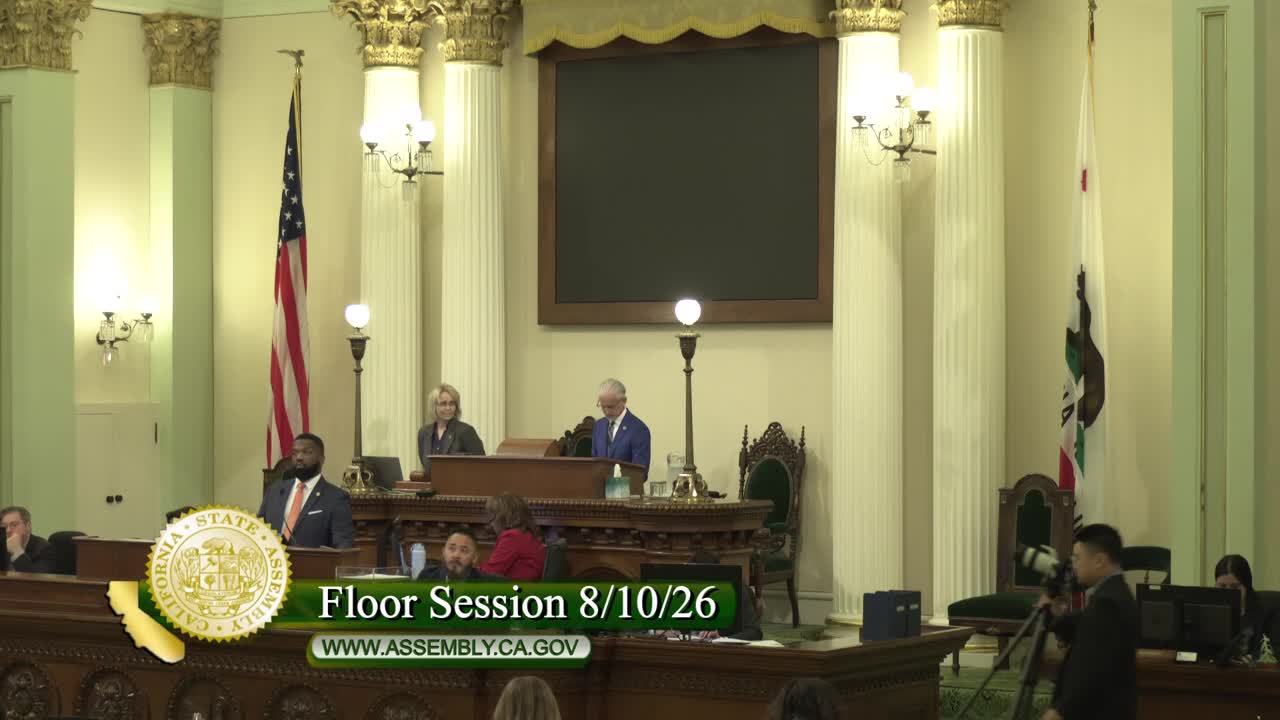
| Aug 10, 2026 | Adopted and to Senate. (Page 6103.) |
| Aug 10, 2026 | Adopted and to Senate. |
| Aug 3, 2026 | Ordered to third reading. |
| Aug 3, 2026 | From Consent Calendar. |
| Jul 2, 2026 | Ordered to Consent Calendar. |
| Jun 23, 2026 | From committee: Be adopted. Ordered to Third Reading. (Ayes 9. Noes 0.) (June 23). |
| Jun 8, 2026 | Referred to Com. on A.,E.,S., & T. |
| Jun 4, 2026 | From printer. |
| Jun 3, 2026 | Introduced. To print. |
|
Date
|
Description
|
Location
|
Votes
|
|
|---|---|---|---|---|
| Aug 20, 2026 | Special Consent ACR221 Garcia | Senate Floor |
Passed |
|
| Jun 23, 2026 | Be adopted. To third reading. | Assembly Standing Committee on Arts, Entertainment, Sports, and Tourism |
Passed |
This list shows positions taken on this bill by organizations on the date displayed, which is linked to the original source.
Positions by individuals are not included.
|
Organization
|
Position
|
Date
|
|---|---|---|
| California Youth Heart Coalition | ** Support | |
| Eric Paredes Save a Life Foundation | ** Support | |
| Heartfelt Cardiac Projects | ** Support | |
| Kyle J. Taylor Foundation | ** Support | |
| Project ADAM | ** Support | |
| Saving Hearts Foundation | ** Support | |
| Who We Play For | ** Support |
SENATE RULES COMMITTEE Office of Senate Floor Analyses (916) 651-4171 | ACR 221 |
THIRD READING
Bill No: ACR 221
Author: Garcia (D)
Introduced: 6/3/26
Vote: 21
SUBJECT: Sudden cardiac arrest: student athletes
SOURCE: Author
DIGEST:
This resolution recognizes that sudden cardiac arrest is a critical issue facing student athletes and supports the important work nonprofit organizations are doing to raise awareness of sudden cardiac arrest, increase preventative screenings, and reduce the number of cases.
ANALYSIS: This resolution makes the following legislative findings:
- Sudden cardiac arrest is the leading cause of death for student athletes, with about 2,000 young people under 25 years of age dying each year in the United States.
- A two-year study of young athletes, between 11 and 27 years of age, from 2014 to 2016, identified 132 cases with an overall survival rate of 48%, and that survival rate was higher when a certified athletic trainer and an onsite automated external defibrillator (AED) were involved, at 83% and 89%, respectively.
- Organizations, including, but not limited to, the Eric Paredes Save a Life Foundation, the Kyle J. Taylor Foundation, Who We Play For, Project ADAM, the California Youth Heart Coalition, the Saving Hearts Foundation, and Heartfelt Cardiac Projects, work toward increasing awareness about the prevalence of youth sudden cardiac arrest and increasing preventative youth heart screenings, as well as providing CPR trainings for youth communities.
This resolution recognizes that sudden cardiac arrest is a critical issue facing student athletes and supports the important work nonprofit organizations are doing to raise awareness of sudden cardiac arrest, increase preventative screenings, and reduce the number of cases.
Related/Prior Legislation
SR 98 (Jones, 2024) – Adopted in the Senate.
FISCAL EFFECT: Appropriation: No Fiscal Com.: No Local: No
SUPPORT: (Verified 8/11/26)
None received
OPPOSITION: (Verified 8/11/26)
None received
Prepared by: Aizenia Randhawa / SFA / (916) 651-4171
8/12/26 14:01:55
**** END ****
ASSEMBLY THIRD READING
ATR Bill Id:ACR 221
Author:(Garcia)
As Introduced Ver:June 3, 2026
Majority vote
SUMMARY
ACR 221 recognizes that sudden cardiac arrest is a critical issue facing student athletes and supports the important work nonprofit organizations are doing to raise awareness of sudden cardiac arrest, to increase preventative screenings, and to reduce the number of cases.
Major Provisions
- Sudden cardiac arrest is the leading cause of death for student athletes, with about 2,000 young people under 25 years of age dying each year in the United States.
- Sports-related sudden cardiac arrest accounts for 5.4% of overall cases of sudden cardiac arrest in the pediatric population, and most cases occur during recreational or noncompetitive sports activity, with soccer and running being the most frequently involved sports.
- According to the National Institutes of Health, the risk of sudden cardiac arrest in competitive athletes is significantly higher than in nonathletes, with male athletes nearly four times more likely to have an episode of sudden cardiac arrest than female athletes, and Black athletes nearly three times more likely than their White counterparts.
- Survival disparities exist by race, with Black athletes showing lower survival rates than White, non-Hispanic athletes.
- A two-year study of young athletes, between 11 and 27 years of age, from 2014 to 2016, identified 132 cases with an overall survival rate of 48%, and that survival rate was higher when a certified athletic trainer and an onsite automated external defibrillator (AED) were involved, at 83% and 89%, respectively.
- According to a 2023 Scientific Session from the American Heart Association, sudden cardiac death (SCD) was the leading medical cause of death among NCAA athletes, comprising 13 percent of 1,102 total deaths, with male, Black, and Division 1 basketball players facing the highest risk; however, SCD incidence declined by 29% every five years over a 20-year study period, possibly due to improved CPR training, AED access, and emergency response planning.
- With sudden cardiac arrest being caused by a wide range of cardiac diseases, early detection of heart issues and genetic testing can reduce risk factors of sudden cardiac death.
- Annual physician examinations and sports preparticipation physician exams may miss about 85% to 90 % of issues that may cause sudden cardiac arrest in youth.
- The very low proportion of sports-related sudden cardiac arrest cases with warning symptoms strongly suggests that screening questionnaires reliant on symptoms alone are not an effective strategy for risk stratification in this age group.
- Organizations, including, but not limited to, the Eric Paredes Save a Life Foundation, the Kyle J. Taylor Foundation, Who We Play For, Project ADAM, the California Youth Heart Coalition, the Saving Hearts Foundation, and Heartfelt Cardiac Projects, work toward increasing awareness about the prevalence of youth sudden cardiac arrest and increasing preventative youth heart screenings, as well as providing CPR trainings for youth communities.
- The Legislatures recognizes that sudden cardiac arrest is a critical issue facing student athletes and supports the important work nonprofit organizations are doing to raise awareness of sudden cardiac arrest, increase preventative screenings, and reduce the number of cases.
COMMENTS
According to the Author
″As a parent and lifelong educator, I believe that we must begin to recognize the seriousness of sudden cardiac arrest in our student athlete population. Recent studies have shown that Sudden Cardiac Arrest disorder is the leading cause of death in NCAA Division 1 Athletes, particularly impacting student athletes of color. Not only is this unacceptable, but through implementation of appropriate measures, it is entirely preventable. The best and cheapest medical care is one that is preventative. ACR 221 provides us that opportunity to engage with, encourage, and elevate the important work being done by nonprofit organizations committed to raising awareness of sudden cardiac arrest and increase access to preventative screenings, thereby reducing the number of fatal cases among our student athletes by identifying abnormal cardiac conditions before it is too late.″
Arguments in Support
None on file.
Arguments in Opposition
None on file.
FISCAL COMMENTS
None. This measure is keyed nonfiscal by the Legislative Counsel.
VOTES
ASM ARTS, ENTERTAINMENT, SPORTS, AND TOURISM: 9-0-0
YES: Ward, Lackey, Elhawary, Jeff Gonzalez, McKinnor, Ortega, Quirk-Silva, Valencia, Zbur
UPDATED
VERSION: June 3, 2026
CONSULTANT: Brian V. Anderson, Jr. / A.,E.,S., & T. / (916) 319-3450 FN: 0003196
Date of Hearing: June 23, 2026
ASSEMBLY COMMITTEE ON ARTS, ENTERTAINMENT, SPORTS, AND TOURISM
Christopher M. Ward, Chair
ABPCA Bill Id:ACR 221 (
Author:Garcia) – As Introduced Ver:June 3, 2026
SUBJECT: Sudden cardiac arrest: student athletes
SUMMARY: ACR 221 recognizes that sudden cardiac arrest is a critical issue facing student athletes and supports the important work nonprofit organizations are doing to raise awareness of sudden cardiac arrest, to increase preventative screenings, and to reduce the number of cases.
Specifically, this resolution makes the following legislative findings:
- Sudden cardiac arrest is the leading cause of death for student athletes, with about 2,000 young people under 25 years of age dying each year in the United States.
- Sports-related sudden cardiac arrest accounts for 5.4 percent of overall cases of sudden cardiac arrest in the pediatric population, and most cases occur during recreational or noncompetitive sports activity, with soccer and running being the most frequently involved sports.
- According to the National Institutes of Health, the risk of sudden cardiac arrest in competitive athletes is significantly higher than in nonathletes, with male athletes nearly four times more likely to have an episode of sudden cardiac arrest than female athletes, and Black athletes nearly three times more likely than their White counterparts.
- Survival disparities exist by race, with Black athletes showing lower survival rates than White, non-Hispanic athletes.
- A two-year study of young athletes, between 11 and 27 years of age, from 2014 to 2016, identified 132 cases with an overall survival rate of 48 percent, and that survival rate was higher when a certified athletic trainer and an onsite automated external defibrillator (AED) were involved, at 83 percent and 89 percent, respectively.
- According to a 2023 Scientific Session from the American Heart Association, sudden cardiac death (SCD) was the leading medical cause of death among NCAA athletes, comprising 13 percent of 1,102 total deaths, with male, Black, and Division 1 basketball players facing the highest risk; however, SCD incidence declined by 29 percent every five years over a 20-year study period, possibly due to improved CPR training, AED access, and emergency response planning.
- With sudden cardiac arrest being caused by a wide range of cardiac diseases, early detection of heart issues and genetic testing can reduce risk factors of sudden cardiac death.
- Annual physician examinations and sports preparticipation physician exams may miss about 85 to 90 percent of issues that may cause sudden cardiac arrest in youth.
- The very low proportion of sports-related sudden cardiac arrest cases with warning symptoms strongly suggests that screening questionnaires reliant on symptoms alone are not an effective strategy for risk stratification in this age group.
- Organizations, including, but not limited to, the Eric Paredes Save a Life Foundation, the Kyle J. Taylor Foundation, Who We Play For, Project ADAM, the California Youth Heart Coalition, the Saving Hearts Foundation, and Heartfelt Cardiac Projects, work toward increasing awareness about the prevalence of youth sudden cardiac arrest and increasing preventative youth heart screenings, as well as providing CPR trainings for youth communities.
FISCAL EFFECT: None. This measure is keyed nonfiscal by the Legislative Counsel.
COMMENTS:
- Author’s Statement. According to the author, “As a parent and lifelong educator, I believe that we must begin to recognize the seriousness of sudden cardiac arrest in our student athlete population. Recent studies have shown that Sudden Cardiac Arrest disorder is the leading cause of death in NCAA Division 1 Athletes, particularly impacting student athletes of color. Not only is this unacceptable, but through implementation of appropriate measures, it is entirely preventable. The best and cheapest medical care is one that is preventative. ACR 221 provides us that opportunity to engage with, encourage, and elevate the important work being done by nonprofit organizations committed to raising awareness of sudden cardiac arrest and increase access to preventative screenings, thereby reducing the number of fatal cases among our student athletes by identifying abnormal cardiac conditions before it is too late.”
REGISTERED SUPPORT / OPPOSITION:
Support
None on file.
Opposition
None on file.
Analysis Prepared by: Brian V. Anderson, Jr. / A.,E.,S., & T. / (916) 319-3450
Bill Author

Bill Co-Author(s):