SB 14: State agencies: solid waste diversion: single-use plastic bottles.
- Session Year: 2025-2026
- House: Senate
- Latest Version Date: 2025-07-09
Current Status:
In Progress
(2025-08-29: August 29 hearing: Held in committee and under submission.)
Introduced
In Committee
Awaiting First Chamber Vote
Passed First Chamber
In Committee
Awaiting Second Chamber Vote
Passed Second Chamber
Enacted
(1)The California Integrated Waste Management Act of 1989, which is administered by the Department of Resources Recycling and Recovery, establishes an integrated waste management program. The act requires each state agency to divert at least 50% of all solid waste through source reduction, recycling, and composting activities. State agency is defined, for purposes of these requirements, to include the California Community Colleges. The act requires each state agency to develop and adopt an integrated waste management plan to reduce solid waste, reuse materials whenever possible, recycle recyclable materials, and procure products with recycled content in all state agency offices and facilities, including any leased locations, as provided. The act requires each state agency to submit an annual report to the department summarizing its progress in reducing solid waste by at least 50%, as provided.
This bill would require a state agency to include in its integrated waste management plan descriptions of actions to be taken to source reduce certain materials, as specified. The bill would require, on or before July 15, 2027, each state agency to submit an adopted integrated waste management plan to the department for review and approval, and would, on or before January 1, 2028, require the department to complete its review of the plans, as specified. The bill would require a state agencys annual report to include summaries of the state agencys compliance with the requirement to reduce solid waste by 50% and the requirements relating to the adoption of an integrated waste management plan. By imposing new duties on community colleges, the bill would impose a state-mandated local program.
This bill would require the department to provide advice to help state agencies and facilities reduce solid waste by at least 50%. The bill would, on or before January 1, 2027, require the department to publish on its internet website a list of products available for purchase by state agencies that would reduce the overall amount of plastic or paper waste generated.
(2)Existing law generally governs the state procurement of materials, supplies, equipment, and services. Existing law also provides various procedures and requirements pertaining to the purchase of recycled items by the state, including minimum content requirements for recycled plastic products. Existing law requires the Department of General Services, in consultation with specified parties, to provide state agencies with information and assistance regarding environmentally preferable purchasing, including, but not limited to, the promotion of environmentally preferable purchasing and the development and implementation of a strategy to increase environmentally preferable purchasing.This bill would, with certain exceptions, prohibit state agencies from entering into, modifying, amending, or renewing a contract, on or after January 1, 2026, to purchase single-use plastic bottles, as defined, made of less than 90% recycled plastic for internal use or resale and would require state agencies to take appropriate steps to replace the use of single-use plastic bottles at food service facilities with nonplastic, recyclable, and reusable alternatives, as specified. The bill would require the Department of General Services to ensure that any new, modified, or renewed agreements, contracts, or procurement undertaken by a food service facility as part of a contract or agreement with the Department of General Services comply with the bill, as specified. The bill would require state agencies to submit a report, on or before January 1, 2027, to the Joint Legislative Budget Committee, confirming its compliance with these requirements. The bill would define a state agency for these purposes to include various agencies.(2)Existing law requires plastic beverage containers sold by a beverage manufacturer, as specified, to contain a specified average percentage of postconsumer recycled plastic. Between January 1, 2025, and December 31, 2029, inclusive, existing law requires that percentage to be no less than 25% postconsumer recycled plastic per year, and on and after January 1, 2030, no less than 50% postconsumer recycled plastic per year.
This bill would require, on and after January 1, 2026, reportable purchases by state agencies of plastic beverage containers to be of plastic beverage containers with no less than those above-referenced percentages of postconsumer recycled plastic per year.
(3)The California Constitution requires the state to reimburse local agencies and school districts for certain costs mandated by the state. Statutory provisions establish procedures for making that reimbursement.
This bill would provide that, if the Commission on State Mandates determines that the bill contains costs mandated by the state, reimbursement for those costs shall be made pursuant to the statutory provisions noted above.
(1)The California Integrated Waste Management Act of 1989, which is administered by the Department of Resources Recycling and Recovery, establishes an integrated waste management program. The act requires each state agency to divert at least 50% of all solid waste through source reduction, recycling, and composting activities. State agency is defined, for purposes of these requirements, to include the California Community Colleges. The act requires each state agency to develop and adopt an integrated waste management plan to reduce solid waste, reuse materials whenever possible, recycle recyclable materials, and procure products with recycled content in all state agency offices and facilities, including any leased locations, as provided. The act requires each state agency to submit an annual report to the department summarizing its progress in reducing solid waste by at least 50%, as provided.
This bill would require a state agency to include in its integrated waste management plan descriptions of actions to be taken to source reduce certain materials, as specified. The bill would require, on or before July 15, 2027, each state agency to submit an adopted integrated waste management plan to the department for review and approval, and would, on or before January 1, 2028, require the department to complete its review of the plans, as specified. The bill would require a state agencys annual report to include summaries of the state agencys compliance with the requirement to reduce solid waste by 50% and the requirements relating to the adoption of an integrated waste management plan. By imposing new duties on community colleges, the bill would impose a state-mandated local program.
This bill would require the department to provide advice to help state agencies and facilities reduce solid waste by at least 50%. The bill would, on or before January 1, 2027, require the department to publish on its internet website a list of products available for purchase by state agencies that would reduce the overall amount of plastic or paper waste generated.
(2)Existing law generally governs the state procurement of materials, supplies, equipment, and services. Existing law also provides various procedures and requirements pertaining to the purchase of recycled items by the state, including minimum content requirements for recycled plastic products. Existing law requires the Department of General Services, in consultation with specified parties, to provide state agencies with information and assistance regarding environmentally preferable purchasing, including, but not limited to, the promotion of environmentally preferable purchasing and the development and implementation of a strategy to increase environmentally preferable purchasing.
This bill would, with certain exceptions, prohibit state agencies from entering into, modifying, amending, or renewing a contract, on or after January 1, 2026, to purchase single-use plastic bottles, as defined, made of less than 90% recycled plastic for internal use or resale and would require state agencies to take appropriate steps to replace the use of single-use plastic bottles at food service facilities with nonplastic, recyclable, and reusable alternatives, as specified. The bill would require the Department of General Services to ensure that any new, modified, or renewed agreements, contracts, or procurement undertaken by a food service facility as part of a contract or agreement with the Department of General Services comply with the bill, as specified. The bill would require state agencies to submit a report, on or before January 1, 2027, to the Joint Legislative Budget Committee, confirming its compliance with these requirements. The bill would define a state agency for these purposes to include various agencies.
(3)The California Constitution requires the state to reimburse local agencies and school districts for certain costs mandated by the state. Statutory provisions establish procedures for making that reimbursement.
This bill would provide that, if the Commission on State Mandates determines that the bill contains costs mandated by the state, reimbursement for those costs shall be made pursuant to the statutory provisions noted above.
Existing law requires the Department of Resources Recycling and Recovery to develop and adopt requirements relating to adequate areas for collecting, storing, and loading recyclable materials in state buildings. Existing law requires the department to develop guidance for collecting and recycling recyclable materials in office buildings of state agencies and large state facilities, as provided, and requires, at least once each year, a covered state agency and large state facility to review the adequacy and condition of receptacles for recyclable material and of associated signage, education, and staffing.This bill would make a nonsubstantive change to the latter provision.Existing law requires the Department of Resources Recycling and Recovery to develop and adopt requirements relating to adequate areas for collecting, storing, and loading recyclable materials in state buildings. Existing law requires the department to develop guidance for collecting and recycling recyclable materials in office buildings of state agencies and large state facilities, as provided, and requires, at least once each year, a covered state agency and large state facility to review the adequacy and condition of receptacles for recyclable material and of associated signage, education, and staffing.
This bill would make a nonsubstantive change to the latter provision.
Each state agency shall ensure each of the following:
(a)(1)Before January 1, 2020, at least 50 percent of reportable purchases are recycled products.
(2)(A)On and after January 1, 2020, at least 75 percent of reportable purchases are recycled products, except for paint, antifreeze, and tires.
(B)On and after January 1, 2026, plastic beverage containers subject to the California Redemption Value, pursuant to Chapter 5 (commencing with Section 14560) of Division 12.1 of the Public Resources Code, shall meet or exceed the postconsumer recycled content requirements established by Section 14547 of the Public Resources Code.
(3)On and after January 1, 2020, at least 50 percent of reportable purchases of paint, antifreeze, and tires are recycled products.
(b)The requirements specified in this article apply to all reportable purchases of goods by state agencies for product categories listed in this article.
(c)The reportable purchases of state agencies shall meet each requirement for, and be applied to the total dollar amount of, each specified product category as defined in this article. The purchase of a recycled product from one category may not be applied toward the requirements for, or the total dollar amount of, any other category listed in this article.
(d)Each state agency shall require the businesses with whom it contracts to use, to the maximum extent economically feasible in the performance of the contract work, recycled products.
SEC. 2.Section 42920 of the Public Resources Code is amended to read:42920.(a)The department shall adopt a state agency model integrated waste management plan for source reduction, recycling, and composting activities.
(b)(1)Each state agency shall develop and adopt, in consultation with the department, an integrated waste management plan, in accordance with the requirements of this chapter. The plan shall build upon existing programs and measures, including the state agency model integrated waste management plan adopted by the department pursuant to subdivision (a), that will reduce solid waste, reuse materials whenever possible, recycle recyclable materials, and procure products with recycled content in all state agency offices and facilities, including any leased locations. It is the intent of the Legislature that the local jurisdiction and the state agency or large state facility located within that jurisdiction work together to implement the state agency integrated waste management plan.
(2)An integrated waste management plan shall include a description of actions to be taken to source reduce materials, including, but not limited to, all of the following:
(A)Actions to achieve 50-percent reusable options for foodware, including utensils and containers.
(B)Actions to source reduce organic material waste and single-use plastics at state facilities.
(C)Actions to reduce paper purchasing relative to 2024 levels by at least 30 percent by 2030.
(D)Actions to divert solid waste in accordance with Section 42921.
(E)Actions to provide adequate educational tools to inform occupants of each facility under its purview on best practices for recycling and composting to achieve higher composting and recycling outcomes.
(F)Actions to have recyclable and organic material reach responsible end markets.
(G)(i)Actions to promote the use of water bottle refill stations for reusable or refillable beverage containers.
(ii)For purposes of this subparagraph, water bottle refill station means a bottle filler that dispenses potable drinking water downward that complies with Section 116875 of the Health and Safety Code, applicable standards under the federal Americans with Disabilities Act of 1990 (P.L. 101-336; 42 U.S.C. 12101 et seq.), and accessibility requirements applicable to drinking fountains under the California Building Standards Code.
(3)Each state agency shall submit an adopted integrated waste management plan to the department for review and approval on or before July 15, 2027. The department shall adopt procedures for reviewing and approving those integrated waste management plans. The department shall complete its plan review process on or before January 1, 2028.
(4)If a state agency has not submitted an adopted integrated waste management plan or the model integrated waste management plan with revisions to the department by January 1, 2028, or if the department has disapproved the plan that was submitted, then the model integrated waste management plan, as revised by the department in consultation with the agency, shall take effect on that date, or on a later date as determined by the department, and shall have the same force and effect as if adopted by the state agency.
(c)Notwithstanding subdivision (e) of Section 12217 of the Public Contract Code, at least one solid waste reduction and recycling coordinator shall be designated by each state agency. The coordinator shall perform the duties imposed pursuant to this chapter using existing resources. The coordinator shall be responsible for implementing the integrated waste management plan and shall serve as a liaison to other state agencies and coordinators.
(d)(1)The department shall provide technical assistance to a state agency for the purpose of implementing an integrated waste management plan.
(2)The department shall provide advice to help state agencies and facilities comply with Section 42921.
(e)On or before January 1, 2027, the department shall publish on its internet website a list of products available for purchase by state agencies that would reduce the overall amount of plastic or paper waste generated.
SEC. 3.Section 42926 of the Public Resources Code is amended to read:42926.(a)In addition to the information provided to the department pursuant to Section 12167.1 of the Public Contract Code, each state agency shall submit an annual report to the department summarizing its progress in reducing solid waste as required by Section 42921. The annual report shall be due on or before May 1 of each year. The information in this report shall encompass the previous calendar year.
(b)A state agencys annual report to the department shall, at a minimum, include all of the following:
(1)Calculations of annual disposal reduction.
(2)Information on the changes in waste generated or disposed of due to increases or decreases in employees, economics, or other factors.
(3)A summary of progress made in implementing the integrated waste management plan, including, but not limited to, efforts and progress made regarding recycling and composting within state buildings.
(4)The extent to which the state agency intends to utilize programs or facilities established by the local agency for the handling, diversion, and disposal of solid waste. If the state agency does not intend to utilize those established programs or facilities, the state agency shall identify sufficient disposal capacity for solid waste that is not source reduced, recycled, or composted.
(5)A summary of the state agencys compliance with the requirements specified in Sections 42920 and 42921 and subdivisions (c) and (d) of Section 42924.5.
(6)A summary of the state agencys compliance with Chapter 12.8 (commencing with Section 42649) and Chapter 12.9 (commencing with Section 42649.8), if applicable.
(7)Other information relevant to compliance with Section 42921.
(c)The department shall use, but is not limited to the use of, the annual report in the determination of whether the agencys integrated waste management plan needs to be revised.
(d)For purposes of this section, the meaning of state agency does not include a district agricultural association, as defined in Section 3951 of the Food and Agricultural Code.
SEC. 4.If the Commission on State Mandates determines that this act contains costs mandated by the state, reimbursement to local agencies and school districts for those costs shall be made pursuant to Part 7 (commencing with Section 17500) of Division 4 of Title 2 of the Government Code.
(a)(1)Except as provided in paragraph (4), a state agency shall not enter into, modify, amend, or renew a contract to purchase single-use plastic bottles made of less than 90 percent recycled plastic for internal use or resale.
(2)The Legislature encourages every state agency to install and maintain at least one, or maintain at least one existing, water bottle refill station located to ensure maximum access by all visitors and to allow visitors to bring their own reusable beverage bottle for use at water bottle refill stations.
(3)A state agency shall take appropriate steps to replace the use of single-use plastic bottles at food service facilities with nonplastic, recyclable, and reusable alternatives, including, but not limited to, glass bottles, aluminum cans, water fountains, or water bottle refill stations for reusable or refillable beverage containers.
(4)(A)A state agency may enter into or renew a contract to purchase single-use plastic bottles made of less than 90 percent recycled plastic only when reasonably necessary to protect the general health, safety, and welfare in preparing for or responding to an emergency.
(B)The Department of Corrections and Rehabilitation may enter into or renew a contract to purchase single-use plastic bottles made of less than 90 percent recycled plastic for either of the following reasons:
(i)To provide single-use plastic bottles for sale in a canteen pursuant to Section 5005 of the Penal Code.
(ii)To provide bottled water as required by, or for the purposes of, Sections 3408 and 4023.8 of the Penal Code.
(5)(A)The Department of General Services shall ensure that any new, modified, or renewed agreements, contracts, or procurement undertaken by a food service facility as part of a contract or agreement with the Department of General Services complies with the requirements of this section.
(B)The Department of General Services shall take appropriate steps, including, but not limited to, revising relevant state contracting and procurement rules and procedures, in order to fulfill the requirements of subparagraph (A).
(b)(1)On or before January 1, 2027, a state agency shall submit a report to the Joint Legislative Budget Committee confirming its compliance with this section.
(2)The report shall be submitted in conformance with Section 9795 of the Government Code.
(c)This section applies only to contracts entered into, modified, amended, or renewed on or after January 1, 2026.
(d)This section does not limit the duties of a state agency under a collective bargaining agreement entered into or renewed before January 1, 2026.
(e)For purposes of this section, the following definitions apply:
(1)Food service facility means an operation or business that is located in a state-owned facility, operating on or acting as a concessionaire on state property, or under contract to provide food service to a state agency and that stores, serves, vends, or offers for sale bottled beverages. Food service facility may include, but is not limited to, a cafeteria, commissary, restaurant, deli, store, shop, market, or mobile food unit.
(2)Plastic has the same meaning as in subdivision (t) of Section 42041 of the Public Resources Code.
(3)Reusable has the same meaning as in subdivision (af) of Section 42041 of the Public Resources Code.
(4)Single-use plastic bottle means a beverage in a sealed plastic bottle or plastic-coated carton with a capacity of less than 24 fluid ounces, but does not include milk or 100 percent fruit juice.
(5)State agency has the same meaning as set forth in subdivision (m) of Section 12200, and but does not include the California State University.
(6)Water bottle refill station means a bottle filler that dispenses potable drinking water downward that complies with Section 116875 of the Health and Safety Code, applicable standards under the federal Americans with Disabilities Act of 1990 (P.L. 101-336; 42 U.S.C. 12101 et seq.), and accessibility requirements applicable to drinking fountains under the California Building Standards Code.
SEC. 2.Section 42920 of the Public Resources Code is amended to read:42920.(a)The department shall adopt a state agency model integrated waste management plan for source reduction, recycling, and composting activities.
(b)(1)Each state agency shall develop and adopt, in consultation with the department, an integrated waste management plan, in accordance with the requirements of this chapter. The plan shall build upon existing programs and measures, including the state agency model integrated waste management plan adopted by the department pursuant to subdivision (a), that will reduce solid waste, reuse materials whenever possible, recycle recyclable materials, and procure products with recycled content in all state agency offices and facilities, including any leased locations. It is the intent of the Legislature that the local jurisdiction and the state agency or large state facility located within that jurisdiction work together to implement the state agency integrated waste management plan.
(2)An integrated waste management plan shall include a description of actions to be taken to source reduce materials, including, but not limited to, all of the following:
(A)Actions to achieve 50-percent reusable options for foodware, including utensils and containers.
(A)(B)Actions to completely remove, by January 1, 2030, source reduce organic material waste and single-use plastic foodware, including, but not limited to, utensils and containers. plastics at state facilities.
(B)(C)Actions to reduce paper purchasing relative to 2024 levels by at least 30 percent by 2030.
(C)(D)Actions to divert solid waste in accordance with Section 42921.
(D)(E)Actions to provide adequate educational tools to inform occupants of each facility under its purview on best practices for recycling and composting to achieve higher composting and recycling outcomes.
(E)(F)Actions to have recyclable and organic material reach responsible end markets.
(3)Each state agency shall submit an adopted integrated waste management plan to the department for review and approval on or before July 15, 2027. The department shall adopt procedures for reviewing and approving those integrated waste management plans. The department shall complete its plan review process on or before January 1, 2028.
(4)If a state agency has not submitted an adopted integrated waste management plan or the model integrated waste management plan with revisions to the department by January 1, 2028, or if the department has disapproved the plan that was submitted, then the model integrated waste management plan, as revised by the department in consultation with the agency, shall take effect on that date, or on a later date as determined by the department, and shall have the same force and effect as if adopted by the state agency.
(c)Notwithstanding subdivision (e) of Section 12217 of the Public Contract Code, at least one solid waste reduction and recycling coordinator shall be designated by each state agency. The coordinator shall perform the duties imposed pursuant to this chapter using existing resources. The coordinator shall be responsible for implementing the integrated waste management plan and shall serve as a liaison to other state agencies and coordinators.
(d)(1)The department shall provide technical assistance to a state agency for the purpose of implementing an integrated waste management plan.
(2)The department shall provide advice to help state agencies and facilities comply with Section 42921.
(e)On or before January 1, 2027, the department shall publish on its internet website a list of products available for purchase by state agencies that would reduce the overall amount of plastic or paper waste generated.
SEC. 3.Section 42926 of the Public Resources Code is amended to read:42926.(a)In addition to the information provided to the department pursuant to Section 12167.1 of the Public Contract Code, each state agency shall submit an annual report to the department summarizing its progress in reducing solid waste as required by Section 42921. The annual report shall be due on or before May 1 of each year. The information in this report shall encompass the previous calendar year.
(b)A state agencys annual report to the department shall, at a minimum, include all of the following:
(1)Calculations of annual disposal reduction.
(2)Information on the changes in waste generated or disposed of due to increases or decreases in employees, economics, or other factors.
(3)A summary of progress made in implementing the integrated waste management plan, including, but not limited to, efforts and progress made regarding recycling and composting within state buildings.
(4)The extent to which the state agency intends to utilize programs or facilities established by the local agency for the handling, diversion, and disposal of solid waste. If the state agency does not intend to utilize those established programs or facilities, the state agency shall identify sufficient disposal capacity for solid waste that is not source reduced, recycled, or composted.
(5)A summary of the state agencys compliance with the requirements specified in Sections 42920 and 42921 and subdivisions (c) and (d) of Section 42924.5.
(6)A summary of the state agencys compliance with Chapter 12.8 (commencing with Section 42649) and Chapter 12.9 (commencing with Section 42649.8), if applicable.
(7)Other information relevant to compliance with Section 42921.
(c)The department shall use, but is not limited to the use of, the annual report in the determination of whether the agencys integrated waste management plan needs to be revised.
(d)For purposes of this section, the meaning of state agency does not include a district agricultural association, as defined in Section 3951 of the Food and Agricultural Code.
SEC. 4.If the Commission on State Mandates determines that this act contains costs mandated by the state, reimbursement to local agencies and school districts for those costs shall be made pursuant to Part 7 (commencing with Section 17500) of Division 4 of Title 2 of the Government Code.
(a)(1)Except as provided in paragraph (4), a state agency shall not enter into, modify, amend, or renew a contract to purchase single-use plastic bottles made of less than 90 percent recycled plastic for internal use or resale.
(2)The Legislature encourages every state agency to install and maintain at least one, or maintain at least one existing, water bottle refill station located to ensure maximum access by all visitors and to allow visitors to bring their own reusable beverage bottle for use at water bottle refill stations.
(3)A state agency shall take appropriate steps to replace the use of single-use plastic bottles at food service facilities with nonplastic, recyclable, and reusable alternatives, including, but not limited to, aluminum cans, glass bottles, aluminum cans, water fountains, or water bottle refill stations for reusable or refillable beverage containers.
(4)(A)A state agency may enter into or renew a contract to purchase single-use plastic bottles made of less than 90 percent recycled plastic only when reasonably necessary to protect the general health, safety, and welfare in preparing for or responding to an emergency.
(B)The Department of Corrections and Rehabilitation may enter into or renew a contract to purchase single-use plastic bottles made of less than 90 percent recycled plastic for either of the following reasons:
(i)To provide single-use plastic bottles for sale in a canteen pursuant to Section 5005 of the Penal Code.
(ii)To provide bottled water as required by, or for the purposes of, Sections 3408 and 4023.8 of the Penal Code.
(5)(A)The Department of General Services shall ensure that any new, modified, or renewed agreements, contracts, or procurement undertaken by a food service facility as part of a contract or agreement with the Department of General Services complies with the requirements of this section.
(B)The Department of General Services shall take appropriate steps, including, but not limited to, revising relevant state contracting and procurement rules and procedures, in order to fulfill the requirements of subparagraph (A).
(b)(1)On or before January 1, 2027, a state agency shall submit a report to the Joint Legislative Budget Committee confirming its compliance with this section.
(2)The report shall be submitted in conformance with Section 9795 of the Government Code.
(c)This section applies only to contracts entered into, modified, amended, or renewed on or after January 1, 2026.
(d)This section does not limit the duties of a state agency under a collective bargaining agreement entered into or renewed before January 1, 2026.
(e)For purposes of this section, the following definitions apply:
(1)Food service facility means an operation or business that is located in a state-owned facility, operating on or acting as a concessionaire on state property, or under contract to provide food service to a state agency and that stores, serves, vends, or offers for sale bottled beverages. Food service facility may include, but is not limited to, a cafeteria, commissary, restaurant, deli, store, shop, market, or mobile food unit.
(2)Plastic has the same meaning as in subdivision (t) of Section 42041 of the Public Resources Code.
(3)Reusable has the same meaning as in subdivision (af) of Section 42041 of the Public Resources Code.
(4)Single-use plastic bottle means a beverage in a sealed plastic bottle or plastic-coated carton with a capacity of less than 24 fluid ounces, but does not include milk or 100 percent fruit juice.
(5)State agency has the same meaning as set forth in subdivision (m) of Section 12200, and does not include the California State University.
(6)Water bottle refill station means a bottle filler that dispenses potable drinking water downward that complies with Section 116875 of the Health and Safety Code, applicable standards under the federal Americans with Disabilities Act of 1990 (P.L. 101-336; 42 U.S.C. 12101 et seq.), and accessibility requirements applicable to drinking fountains under the California Building Standards Code.
SEC. 2.Section 42920 of the Public Resources Code is amended to read:42920.(a)The department shall adopt a state agency model integrated waste management plan for source reduction, recycling, and composting activities.
(b)(1)Each state agency shall develop and adopt, in consultation with the department, an integrated waste management plan, in accordance with the requirements of this chapter. The plan shall build upon existing programs and measures, including the state agency model integrated waste management plan adopted by the department pursuant to subdivision (a), that will reduce solid waste, reuse materials whenever possible, recycle recyclable materials, and procure products with recycled content in all state agency offices and facilities, including any leased locations. It is the intent of the Legislature that the local jurisdiction and the state agency or large state facility located within that jurisdiction work together to implement the state agency integrated waste management plan.
(2)An integrated waste management plan shall include a description of actions to be taken to source reduce materials, including, but not limited to, all of the following:
(A)Actions to completely remove, by January 1, 2030, single-use plastic foodware, including, but not limited to, utensils and containers.
(B)Actions to reduce paper purchasing relative to 2024 levels by at least 30 percent by 2030.
(C)Actions to divert solid waste in accordance with Section 42921.
(D)Actions to provide adequate educational tools to inform occupants of each facility under its purview on best practices for recycling and composting to achieve higher composting and recycling outcomes.
(E)Actions to have recyclable and organic material reach responsible end markets.
(3)Each state agency shall submit an adopted integrated waste management plan to the department for review and approval on or before July 15, 2027. The department shall adopt procedures for reviewing and approving those integrated waste management plans. The department shall complete its plan review process on or before January 1, 2028.
(4)If a state agency has not submitted an adopted integrated waste management plan or the model integrated waste management plan with revisions to the department by January 1, 2028, or if the department has disapproved the plan that was submitted, then the model integrated waste management plan, as revised by the department in consultation with the agency, shall take effect on that date, or on a later date as determined by the department, and shall have the same force and effect as if adopted by the state agency.
(c)Notwithstanding subdivision (e) of Section 12217 of the Public Contract Code, at least one solid waste reduction and recycling coordinator shall be designated by each state agency. The coordinator shall perform the duties imposed pursuant to this chapter using existing resources. The coordinator shall be responsible for implementing the integrated waste management plan and shall serve as a liaison to other state agencies and coordinators.
(d)(1)The department shall provide technical assistance to a state agency for the purpose of implementing an integrated waste management plan.
(2)The department shall provide advice to help state agencies and facilities comply with Section 42921.
(e)On or before January 1, 2027, the department shall publish on its internet website a list of products available for purchase by state agencies that would reduce the overall amount of plastic or paper waste generated.
SEC. 3.Section 42926 of the Public Resources Code is amended to read:42926.(a)In addition to the information provided to the department pursuant to Section 12167.1 of the Public Contract Code, each state agency shall submit an annual report to the department summarizing its progress in reducing solid waste as required by Section 42921. The annual report shall be due on or before May 1 of each year. The information in this report shall encompass the previous calendar year.
(b)A state agencys annual report to the department shall, at a minimum, include all of the following:
(1)Calculations of annual disposal reduction.
(2)Information on the changes in waste generated or disposed of due to increases or decreases in employees, economics, or other factors.
(3)A summary of progress made in implementing the integrated waste management plan, including, but not limited to, efforts and progress made regarding recycling and composting within state buildings.
(4)The extent to which the state agency intends to utilize programs or facilities established by the local agency for the handling, diversion, and disposal of solid waste. If the state agency does not intend to utilize those established programs or facilities, the state agency shall identify sufficient disposal capacity for solid waste that is not source reduced, recycled, or composted.
(5)A summary of the state agencys compliance with the requirements specified in Sections 42920 and 42921 and subdivisions (c) and (d) of Section 42924.5.
(6)A summary of the state agencys compliance with Chapter 12.8 (commencing with Section 42649) and Chapter 12.9 (commencing with Section 42649.8), if applicable.
(7)Other information relevant to compliance with Section 42921.
(c)The department shall use, but is not limited to the use of, the annual report in the determination of whether the agencys integrated waste management plan needs to be revised.
(d)For purposes of this section, the meaning of state agency does not include a district agricultural association, as defined in Section 3951 of the Food and Agricultural Code.
SEC. 4.If the Commission on State Mandates determines that this act contains costs mandated by the state, reimbursement to local agencies and school districts for those costs shall be made pursuant to Part 7 (commencing with Section 17500) of Division 4 of Title 2 of the Government Code.
(a)(1)Except as provided in paragraph (4), a state agency shall not enter into, modify, amend, or renew a contract to purchase single-use plastic bottles made of less than 90 percent recycled plastic for internal use or resale.
(2)The Legislature encourages every state agency to install and maintain at least one, or maintain at least one existing, water bottle refill station located to ensure maximum access by all visitors and to allow visitors to bring their own reusable beverage bottle for use at water bottle refill stations.
(3)A state agency shall take appropriate steps to replace the use of single-use plastic bottles at food service facilities with nonplastic, recyclable, and reusable alternatives, including, but not limited to, aluminum cans, glass bottles, water fountains, or water bottle refill stations for reusable or refillable beverage containers.
(4)(A)A state agency may enter into or renew a contract to purchase single-use plastic bottles made of less than 90 percent recycled plastic only when reasonably necessary to protect the general health, safety, and welfare in preparing for or responding to a declaration of an emergency.
(B)The Department of Corrections and Rehabilitation may enter into or renew a contract to purchase single-use plastic bottles made of less than 90 percent recycled plastic for either of the following reasons:
(i)To provide single-use plastic bottles for sale in a canteen pursuant to Section 5005 of the Penal Code.
(ii)To provide bottled water as required by, or for the purposes of, Sections 3408 and 4023.8 of the Penal Code.
(5)(A)The Department of General Services shall ensure that any new, modified, or renewed agreements, contracts, or procurement undertaken by a food service facility as part of a contract or agreement with the Department of General Services complies with the requirements of this section.
(B)The Department of General Services shall take appropriate steps, including, but not limited to, revising relevant state contracting and procurement rules and procedures, in order to fulfill the requirements of subparagraph (A).
(b)(1)On or before January 1, 2027, a state agency shall submit a report to the Joint Legislative Budget Committee confirming its compliance with this section.
(2)The report shall be submitted in conformance with Section 9795 of the Government Code.
(c)This section applies only to contracts entered into, modified, amended, or renewed on or after January 1, 2026.
(d)This section does not limit the duties of a state agency under a collective bargaining agreement entered into or renewed before January 1, 2026.
(e)For purposes of this section, the following definitions apply:
(1)Food service facility means an operation or business that is located in a state-owned facility, operating on or acting as a concessionaire on state property, or under contract to provide food service to a state agency and that stores, serves, vends, or offers for sale bottled beverages. Food service facility may include, but is not limited to, a cafeteria, commissary, restaurant, deli, store, shop, market, or mobile food unit.
(2)Plastic has the same meaning as in subdivision (t) of Section 42041 of the Public Resources Code.
(3)Reusable has the same meaning as in subdivision (af) of Section 42041 of the Public Resources Code.
(4)Single-use plastic bottle means a beverage in a sealed plastic bottle or plastic-coated carton with a capacity of less than 24 fluid ounces, but does not include milk contained in cartons. or 100 percent fruit juice.
(5)State agency has the same meaning as set forth in subdivision (m) of Section 12200, and does not include the California State University.
(6)Water bottle refill station means a bottle filler that dispenses potable drinking water downward that complies with Section 116875 of the Health and Safety Code, applicable standards under the federal Americans with Disabilities Act of 1990 (P.L. 101-336; 42 U.S.C. 12101 et seq.), and accessibility requirements applicable to drinking fountains under the California Building Standards Code.
SEC. 2.Section 42920 of the Public Resources Code is amended to read:42920.(a)The department shall adopt a state agency model integrated waste management plan for source reduction, recycling, and composting activities.
(b)(1)Each state agency shall develop and adopt, in consultation with the department, an integrated waste management plan, in accordance with the requirements of this chapter. The plan shall build upon existing programs and measures, including the state agency model integrated waste management plan adopted by the department pursuant to subdivision (a), that will reduce solid waste, reuse materials whenever possible, recycle recyclable materials, and procure products with recycled content in all state agency offices and facilities, including any leased locations. It is the intent of the Legislature that the local jurisdiction and the state agency or large state facility located within that jurisdiction work together to implement the state agency integrated waste management plan.
(2)An integrated waste management plan shall include a description of actions to be taken to source reduce materials, including, but not limited to, all of the following:
(A)Actions to completely remove, by January 1, 2030, single-use plastic foodware, including, but not limited to, utensils and containers.
(B)Actions to reduce paper purchasing relative to 2024 levels by at least 30 percent by 2030.
(C)Actions to divert solid waste in accordance with Section 42921.
(D)Actions to provide adequate educational tools to inform occupants of each facility under its purview on best practices for recycling and composting to achieve higher composting and recycling outcomes.
(E)Actions to have recyclable and organic material reach responsible end markets.
(3)Each state agency shall submit an adopted integrated waste management plan to the department for review and approval on or before July 15, 2027. The department shall adopt procedures for reviewing and approving those integrated waste management plans. The department shall complete its plan review process on or before January 1, 2028.
(4)If a state agency has not submitted an adopted integrated waste management plan or the model integrated waste management plan with revisions to the department by January 1, 2028, or if the department has disapproved the plan that was submitted, then the model integrated waste management plan, as revised by the department in consultation with the agency, shall take effect on that date, or on a later date as determined by the department, and shall have the same force and effect as if adopted by the state agency.
(c)Notwithstanding subdivision (e) of Section 12217 of the Public Contract Code, at least one solid waste reduction and recycling coordinator shall be designated by each state agency. The coordinator shall perform the duties imposed pursuant to this chapter using existing resources. The coordinator shall be responsible for implementing the integrated waste management plan and shall serve as a liaison to other state agencies and coordinators.
(d)(1)The department shall provide technical assistance to a state agency for the purpose of implementing an integrated waste management plan.
(2)The department shall provide advice to help state agencies and facilities comply with Section 42921.
(e)On or before January 1, 2027, the department shall publish on its internet website a list of products available for purchase by state agencies that would reduce the overall amount of plastic or paper waste generated.
SEC. 3.Section 42926 of the Public Resources Code is amended to read:42926.(a)In addition to the information provided to the department pursuant to Section 12167.1 of the Public Contract Code, each state agency shall submit an annual report to the department summarizing its progress in reducing solid waste as required by Section 42921. The annual report shall be due on or before May 1 of each year. The information in this report shall encompass the previous calendar year.
(b)A state agencys annual report to the department shall, at a minimum, include all of the following:
(1)Calculations of annual disposal reduction.
(2)Information on the changes in waste generated or disposed of due to increases or decreases in employees, economics, or other factors.
(3)A summary of progress made in implementing the integrated waste management plan, including, but not limited to, efforts and progress made regarding recycling and composting within state buildings.
(4)The extent to which the state agency intends to utilize programs or facilities established by the local agency for the handling, diversion, and disposal of solid waste. If the state agency does not intend to utilize those established programs or facilities, the state agency shall identify sufficient disposal capacity for solid waste that is not source reduced, recycled, or composted.
(5)A summary of the state agencys compliance with the requirements specified in Sections 42920 and 42921 and subdivisions (c) and (d) of Section 42924.5.
(6)A summary of the state agencys compliance with Chapter 12.8 (commencing with Section 42649) and Chapter 12.9 (commencing with Section 42649.8), if applicable.
(7)Other information relevant to compliance with Section 42921.
(c)The department shall use, but is not limited to the use of, the annual report in the determination of whether the agencys integrated waste management plan needs to be revised.
(d)For purposes of this section, the meaning of state agency does not include a district agricultural association, as defined in Section 3951 of the Food and Agricultural Code.
SEC. 4.If the Commission on State Mandates determines that this act contains costs mandated by the state, reimbursement to local agencies and school districts for those costs shall be made pursuant to Part 7 (commencing with Section 17500) of Division 4 of Title 2 of the Government Code.
(a)(1)Except as provided in paragraph (4), a state agency shall not enter into, modify, amend, or renew a contract to purchase single-use plastic bottles made of less than 90 percent recycled plastic for internal use or resale.
(2)The Legislature encourages every state agency to install and maintain at least one, or maintain at least one existing, water bottle refill station located to ensure maximum access by all visitors and to allow visitors to bring their own reusable beverage bottle for use at water bottle refill stations.
(3)A state agency shall take appropriate steps to replace the use of single-use plastic bottles at food service facilities with nonplastic, recyclable, and reusable alternatives, including, but not limited to, aluminum cans, glass bottles, water fountains, or water bottle refill stations for reusable or refillable beverage containers.
(4)(A)A state agency may enter into or renew a contract to purchase single-use plastic bottles made of less than 90 percent recycled plastic only when reasonably necessary to protect the general health, safety, and welfare in preparing for or responding to a declaration of emergency.
(B)The Department of Corrections and Rehabilitation may enter into or renew a contract to purchase single-use plastic bottles made of less than 90 percent recycled plastic for either of the following reasons:
(i)To provide single-use plastic bottles for sale in a canteen pursuant to Section 5005 of the Penal Code.
(ii)To provide bottled water as required by, or for the purposes of, Sections 3408 and 4023.8 of the Penal Code.
(5)(A)The Department of General Services shall ensure that any new, modified, or renewed agreements, contracts, or procurement undertaken by a food service facility as part of a contract or agreement with the Department of General Services complies with the requirements of this section.
(B)The Department of General Services shall take appropriate steps, including, but not limited to, revising relevant state contracting and procurement rules and procedures, in order to fulfill the requirements of subparagraph (A).
(b)(1)On or before January 1, 2027, a state agency shall submit a report to the Joint Legislative Budget Committee confirming its compliance with this section.
(2)The report shall be submitted in conformance with Section 9795 of the Government Code.
(c)This section applies only to contracts entered into, modified, amended, or renewed on or after January 1, 2026.
(d)This section does not limit the duties of a state agency under a collective bargaining agreement entered into or renewed before January 1, 2026.
(e)For purposes of this section, the following definitions apply:
(1)Food service facility means an operation or business that is located in a state-owned facility, operating on or acting as a concessionaire on state property, or under contract to provide food service to a state agency and that stores, serves, vends, or offers for sale bottled beverages. Food service facility may include, but is not limited to, a cafeteria, commissary, restaurant, deli, store, shop, market, or mobile food unit.
(2)Plastic has the same meaning as in subdivision (t) of Section 42041 of the Public Resources Code.
(3)Reusable has the same meaning as in subdivision (af) of Section 42041 of the Public Resources Code.
(4)Single-use plastic bottle means a beverage in a sealed plastic bottle or plastic-coated carton with a capacity of less than 24 fluid ounces, but does not include milk contained in cartons.
(5)State agency has the same meaning as set forth in subdivision (m) of Section 12200, and does not include the California State University.
(6)Water bottle refill station means a bottle filler that dispenses potable drinking water downward that complies with Section 116875 of the Health and Safety Code, applicable standards under the federal Americans with Disabilities Act of 1990 (P.L. 101-336; 42 U.S.C. 12101 et seq.), and accessibility requirements applicable to drinking fountains under the California Building Standards Code.
SEC. 2.Section 42920 of the Public Resources Code is amended to read:42920.(a)On or before February 15, 2000, the board The department shall adopt a state agency model integrated waste management plan for source reduction, recycling, and composting activities.
(b)(1)On or before July 1, 2000, each Each state agency shall develop and adopt, in consultation with the board, department, an integrated waste management plan, in accordance with the requirements of this chapter. The plan shall build upon existing programs and measures, including the state agency model integrated waste management plan adopted by the board department pursuant to subdivision (a), that will reduce solid waste, reuse materials whenever possible, recycle recyclable materials, and procure products with recycled content in all state agency offices and facilities, including any leased locations. It is the intent of the Legislature that the local jurisdiction and the state agency or large state facility located within that jurisdiction work together to implement the state agency integrated waste management plan.
(2)An integrated waste management plan shall include a description of actions to be taken to source reduce materials, including, but not limited to, all of the following:
(A)Actions to completely remove, by January 1, 2030, single-use plastic foodware, including, but not limited to, utensils and containers.
(B)Actions to reduce paper purchasing relative to 2024 levels by at least 30 percent by 2030.
(C)Actions to divert solid waste in accordance with Section 42921.
(D)Actions to provide adequate educational tools to inform occupants of each facility under its purview on best practices for recycling and composting to achieve higher composting and recycling outcomes.
(E)Actions to have recyclable and organic material reach responsible end markets.
(2)(3)Each state agency shall submit an adopted integrated waste management plan to the board department for review and approval on or before July 15, 2000. 2027. The board department shall adopt procedures for reviewing and approving those integrated waste management plans. The board department shall complete its plan review process on or before January 1, 2001. 2028.
(3)(4)If a state agency has not submitted an adopted integrated waste management plan or the model integrated waste management plan with revisions to the board department by January 1, 2001, 2028, or if the board department has disapproved the plan that was submitted, then the model integrated waste management plan, as revised by the board department in consultation with the agency, shall take effect on that date, or on a later date as determined by the board, department, and shall have the same force and effect as if adopted by the state agency.
(c)Notwithstanding subdivision (e) of Section 12217 of the Public Contract Code, at least one solid waste reduction and recycling coordinator shall be designated by each state agency. The coordinator shall perform the duties imposed pursuant to this chapter using existing resources. The coordinator shall be responsible for implementing the integrated waste management plan and shall serve as a liaison to other state agencies and coordinators.
(d)(1)The board department shall provide technical assistance to a state agency for the purpose of implementing an integrated waste management plan.
(2)The department shall provide advice to help state agencies and facilities comply with Section 42921.
(e)On or before January 1, 2027, the department shall publish on its internet website a list of products available for purchase by state agencies that would reduce the overall amount of plastic or paper waste generated.
SEC. 3.Section 42926 of the Public Resources Code is amended to read:42926.(a)In addition to the information provided to the department pursuant to Section 12167.1 of the Public Contract Code, each state agency shall submit an annual report to the department summarizing its progress in reducing solid waste as required by Section 42921. The annual report shall be due on or before May 1 of each year. The information in this report shall encompass the previous calendar year.
(b)A state agencys annual report to the department shall, at a minimum, include all of the following:
(1)Calculations of annual disposal reduction.
(2)Information on the changes in waste generated or disposed of due to increases or decreases in employees, economics, or other factors.
(3)A summary of progress made in implementing the integrated waste management plan. plan, including, but not limited to, efforts and progress made regarding recycling and composting within state buildings.
(4)The extent to which the state agency intends to utilize programs or facilities established by the local agency for the handling, diversion, and disposal of solid waste. If the state agency does not intend to utilize those established programs or facilities, the state agency shall identify sufficient disposal capacity for solid waste that is not source reduced, recycled, or composted.
(5)A summary of the state agencys compliance with the requirements specified in Sections 42920 and 42921 and subdivisions (c) and (d) of Section 42924.5.
(6)A summary of the state agencys compliance with Chapter 12.8 (commencing with Section 42649) and Chapter 12.9 (commencing with Section 42649.8), if applicable.
(7)Other information relevant to compliance with Section 42921.
(c)The department shall use, but is not limited to the use of, the annual report in the determination of whether the agencys integrated waste management plan needs to be revised.
(d)For purposes of this section, the meaning of state agency does not include a district agricultural association, as defined in Section 3951 of the Food and Agricultural Code.
SEC. 4.If the Commission on State Mandates determines that this act contains costs mandated by the state, reimbursement to local agencies and school districts for those costs shall be made pursuant to Part 7 (commencing with Section 17500) of Division 4 of Title 2 of the Government Code.
SECTION 1.Section 42924.5 of the Public Resources Code is amended to read:42924.5.(a)On or before July 1, 2017, the department shall develop guidance for collecting and recycling recyclable materials in office buildings of state agencies and large state facilities.(b)For purposes of this section, recyclable materials shall include, but are not limited to, paper, plastic, metal, and organic waste.(c)On and after July 1, 2018, a state agency and large state facility, for each office building of the state agency or large state facility, shall provide adequate receptacles, signage, education, and staffing, and arrange for recycling services consistent with Sections 42649.2 and 42649.81.(d)At least once each year, a state agency and large state facility shall review the adequacy and condition of receptacles for recyclable material and of associated signage, education, and staffing.(e)For purposes of this section, state agency and large state facility do not include buildings or facilities of community college districts or their campuses.(a)On or before July 1, 2017, the department shall develop guidance for collecting and recycling recyclable materials in office buildings of state agencies and large state facilities.
(b)For purposes of this section, recyclable materials shall include, but are not limited to, paper, plastic, metal, and organic waste.
(c)On and after July 1, 2018, a state agency and large state facility, for each office building of the state agency or large state facility, shall provide adequate receptacles, signage, education, and staffing, and arrange for recycling services consistent with Sections 42649.2 and 42649.81.
(d)At least once per each year, a state agency and large state facility shall review the adequacy and condition of receptacles for recyclable material and of associated signage, education, and staffing.
(e)For purposes of this section, state agency and large state facility do not include buildings or facilities of community college districts or their campuses.
|
Date
|
Status
|
|---|---|
| Aug 29, 2025 | August 29 hearing: Held in committee and under submission. |
| Aug 20, 2025 | August 20 set for first hearing. Placed on APPR. suspense file. |
| Jul 10, 2025 | Re-referred to Com. on APPR. pursuant to Assembly Rule 96. |
| Jul 9, 2025 | Read second time and amended. Re-referred to Com. on G.O. |
| Jul 8, 2025 | From committee: Do pass as amended and re-refer to Com. on G.O. (Ayes 11. Noes 0.) (July 7). |
| Jul 7, 2025 | Joint Rule 62(a) suspended. |
| Jul 7, 2025 | Assembly Rule 56 suspended. |
| Jun 16, 2025 | Referred to Coms. on NAT. RES. and G.O. |
| Jun 5, 2025 | In Assembly. Read first time. Held at Desk. |
| Jun 4, 2025 | Read third time. Passed. (Ayes 21. Noes 10. Page 1512.) Ordered to the Assembly. |
| May 27, 2025 | Read second time. Ordered to third reading. |
| May 23, 2025 | Read second time and amended. Ordered to second reading. |
| May 23, 2025 | From committee: Do pass as amended. (Ayes 5. Noes 1. Page 1187.) (May 23). |
| May 20, 2025 | Set for hearing May 23. |
| May 19, 2025 | May 19 hearing: Placed on APPR. suspense file. |
| May 9, 2025 | Set for hearing May 19. |
| May 7, 2025 | Read second time and amended. Re-referred to Com. on APPR. |
| May 6, 2025 | From committee: Do pass as amended and re-refer to Com. on APPR. (Ayes 5. Noes 2. Page 962.) (April 30). |
| Apr 23, 2025 | Read second time and amended. Re-referred to Com. on E.Q. |
| Apr 22, 2025 | From committee: Do pass as amended and re-refer to Com. on E.Q. (Ayes 8. Noes 5. Page 829.) (April 22). |
| Apr 17, 2025 | Set for hearing April 30 in E.Q. pending receipt. |
| Apr 8, 2025 | Set for hearing April 22. |
| Apr 3, 2025 | Withdrawn from committee. |
| Apr 3, 2025 | Re-referred to Coms. on G.O. and E.Q. |
| Apr 2, 2025 | Re-referred to Coms. on E.Q. and G.O. |
| Mar 24, 2025 | From committee with author's amendments. Read second time and amended. Re-referred to Com. on RLS. |
| Jan 29, 2025 | Referred to Com. on RLS. |
| Dec 3, 2024 | From printer. May be acted upon on or after January 2. |
| Dec 2, 2024 | Introduced. Read first time. To Com. on RLS. for assignment. To print. |
|
Date
|
Description
|
Location
|
Votes
|
|
|---|---|---|---|---|
| Jul 7, 2025 | Do pass as amended and be re-referred to the Committee on [Governmental Organization] | Assembly Standing Committee on Natural Resources |
Passed |
|
| Jun 4, 2025 | Senate 3rd Reading SB14 Blakespear | Senate Floor |
Passed |
|
| May 23, 2025 | Do pass as amended | Senate Standing Committee on Appropriations |
Passed |
|
| May 19, 2025 | Placed on suspense file | Senate Standing Committee on Appropriations |
Passed |
|
| Apr 30, 2025 | Do pass as amended, but first amend, and re-refer to the Committee on [Appropriations] | Senate Standing Committee on Environmental Quality |
Passed |
|
| Apr 22, 2025 | Do pass as amended, but first amend, and re-refer to the Committee on [Environmental Quality] | Senate Standing Committee on Governmental Organization |
Passed |
This list shows positions taken on this bill by organizations on the date displayed, which is linked to the original source.
Positions by individuals are not included.
|
Organization
|
Position
|
Date
|
|---|---|---|
| A Voice for Choice Advocacy | ** Support | |
| American Beverage Association | ** Against | |
| California Compost Coalition | ** Support | |
| California Manufacturer & Technology Association | ** Against | |
| California Product Stewardship Council | ** Support | |
| Californians Against Waste | ** Support | |
| cleanearth4kids.org | ** Support | |
| Consumer Brands Association | ** Against | |
| Cr&R | ** Support | |
| Cr&R, Inc. | ** Support | |
| International Bottled Water Association | ** Against | |
| Pet Recycling Corp of California | ** Against | |
| Republic Services | ** Support | |
| South Bayside Waste Management Authority Dba Rethinkwaste | ** Support | |
| Wildcoast | ** Support |
Date of Hearing: August 20, 2025
ASSEMBLY COMMITTEE ON APPROPRIATIONS
Buffy Wicks, Chair
SBPCA Bill Id:SB 14
Author:(Blakespear) – As Amended Ver:July 9, 2025
Policy Committee: | Natural Resources | Vote: | 11 - 0 |
|
| ||
|
|
Urgency: No State Mandated Local Program: Yes Reimbursable: Yes
SUMMARY:
This bill requires each state agency’s reportable purchases of plastic beverage containers to meet or exceed certain postconsumer recycled content requirements, and requires each state agency to include in its integrated waste management plan (IWMP) descriptions of actions to be taken to source reduce materials.
Specifically, this bill, among other things:
- Requires, on and after January 1, 2026, each state agency’s reportable purchases of plastic beverage containers subject to the California Redemption Value (CRV) to meet or exceed specified postconsumer recycled content requirements.
- Requires each state agency’s IWMP to include a description of actions to be taken to source reduce materials, including, but not limited to: (a) actions to achieve 50% reusable options for foodware, (b) actions to source reduce organic material waste and single-use plastics, (c) actions to reduce paper purchasing relative to 2024 levels by at least 30% by 2030, (d) actions to divert solid waste, as specified, (e) actions to provide adequate educational tools to inform occupants of each facility under its purview on best practices for recycling and composting to achieve higher composting and recycling outcomes, (f) actions to have recyclable and organic material reach responsible end markets, and (g) actions to promote the use of water bottle refill stations, as defined, for reusable or refillable beverage containers.
- Requires each state agency to submit its IWMP to the Department of Resources Recycling and Recovery (CalRecycle) for review and approval on or before July 15, 2027. If a state agency does not have an approved IWMP by January 1, 2028, specifies that the model IWMP shall take effect on that date.
- Requires CalRecycle to provide advice to help state agencies and facilities meet specified solid waste diversion requirements. Requires CalRecycle, by January 1, 2027, to publish a list of products available for purchase by state agencies that would reduce the overall amount of plastic or paper waste generated.
- Requires each state agency to include information relating to efforts and progress made regarding recycling and composting within state buildings in its annual report to CalRecycle.
FISCAL EFFECT:
1) Ongoing costs to CalRecycle of an unknown amount, likely in the hundreds of thousands of dollars, annually to implement the requirements of this bill. For its part, CalRecycle estimates ongoing annual costs of approximately $524,000 to hire four staff beginning in fiscal year 2026-27. Specifically, CalRecycle estimates it will need three positions costing $336,000 (Beverage Container Recycling Fund) to support the implementation of the new purchase reporting requirements; verify if beverage container purchases are subject to existing statutory recycled content standards; educate and provide guidance to state agencies regarding CRV beverage containers subject to reporting requirements; and provide support to CalRecycle staff implementing the State Agency Buy Recycled Campaign (see background) in providing information related to CRV beverage containers. The fourth position costing $188,000 annually (Integrated Waste Management Account (IWMA)) will update procedures for reviewing and approving IWMPs, provide guidance and technical assistance to state agencies, review plans, research and maintain the list of products required by the bill, and perform other tasks. CalRecycle notes the IWMA cannot support these costs at this time.
2) The Department of General Services (DGS) estimates $600,000 in one-time costs for a waste audit and $912,000 in ongoing annual costs to hire staff, for custodian training and tenant education on new policies, and to expand source reduction (General Fund). Tasks include overseeing waste reporting, implementing new waste management policies, coordinating with CalRecycle on other aspects of implementation, providing training courses for custodians on implementing new policies, providing educational tools to facility occupants, and increasing source reduction efforts.
3) Costs of an unknown amount to state agencies to update their IWMPs and annual reporting and to ensure their purchases comply with minimum recycled content standards (various funds).
As an example, the California Department of Corrections and Rehabilitation (CDCR) notes that due to the unique safety and security environment within correctional facilities, CDCR faces operational challenges that necessitate greater reliance on single-use plastic materials than in non-custodial settings. Alternatives such as reusable containers and glass bottles can pose significant safety risks in prisons, and the cost of alternatives for materials such as recycled paper products is approximately double per unit. CDCR estimates this bill may cost the department hundreds of thousands of dollars to source compliant alternatives. CDCR additionally anticipates the need to hire one new staff (costing roughly $163,000 annually, General Fund) to revise purchasing policies and procedures, for ongoing monitoring and reporting, and to update its IWMP pursuant to the requirements of the bill.
4) “State agency” includes, for purposes of this bill, the California Community Colleges (CCCs). By imposing new duties on CCCs, this bill imposes a state-mandated local program. If the Commission on State Mandates determines the bill’s requirements to be a reimbursable state mandate, the state would need to reimburse these costs to CCCs from the Proposition 98 General Fund.
COMMENTS:
1) Purpose. According to the author:
Single-use plastic are among the most extractive, wasteful and harmful products in our society. One way to tackle the problem and reduce the enormous flow of waste is to move to a circular economy, which focuses on reusing and recycling products…Pursuing a circular economy helps California achieve its environmental and clean energy goals. SB 14 ensures that state agencies are leading the charge.
2) Background. Minimum Recycled Content. AB 793 (Ting), Chapter 115, Statutes of 2020, establishes recycled content standards for plastic beverage containers subject to the CRV. The law requires a postconsumer plastic recycled content standard of 15% beginning January 1, 2022, 25% on January 1, 2025, and 50% on January 1, 2030.
State Agency Buy Recycled Campaign (SABRC). SABRC is a joint effort between CalRecycle and DGS to implement laws that require state agencies and the Legislature to purchase recycled content products and track those purchases. SABRC requires state agencies to ensure specific percentages of reportable purchases are recycled products.
IWMPs. State agencies and large state facilities are required to develop IWMPs and implement waste prevention, reuse, and recycling programs to reduce waste and meet waste diversion goals. As discussed in the Assembly Natural Resources Committee’s analysis of this bill, the requirements for state agencies have not kept pace with other state policies that expand waste management policies to focus on circularity – moving beyond a focus on diversion to ensuring that materials diverted from in-state disposal are actually recycled into new products.
Californians Against Waste writes in support of this bill:
SB 14 will ensure state operations lead by example in reducing waste and supporting circular systems…Although implementation will involve modest costs to develop plans and track performance, the benefits are substantial. Over time, reducing reliance on disposable materials will lower procurement expenses, reduce landfill tipping fees, and decrease the public costs associated with litter and cleanup.
The opposition letters on file at the time this analysis was prepared do not reflect the current version of the bill.
Analysis Prepared by: Nikita Koraddi / APPR. / (916) 319-2081
SENATE RULES COMMITTEE Office of Senate Floor Analyses (916) 651-1520 Fax: (916) 327-4478 | SB 14 |
THIRD READING
Bill No: SB 14
Author: Blakespear (D)
Amended: 5/23/25
Vote: 21
SENATE GOVERNMENTAL ORG. COMMITTEE: 8-5, 4/22/25
AYES: Padilla, Archuleta, Ashby, Blakespear, Cervantes, Smallwood-Cuevas, Wahab, Weber Pierson
NOES: Valladares, Dahle, Jones, Ochoa Bogh, Richardson
NO VOTE RECORDED: Hurtado, Rubio
SENATE ENVIRONMENTAL QUALITY COMMITTEE: 5-2, 4/30/25
AYES: Blakespear, Gonzalez, Menjivar, Padilla, Pérez
NOES: Valladares, Dahle
NO VOTE RECORDED: Hurtado
SENATE APPROPRIATIONS COMMITTEE: 5-1, 5/23/25
AYES: Caballero, Cabaldon, Grayson, Richardson, Wahab
NOES: Seyarto
NO VOTE RECORDED: Dahle
SUBJECT: State agencies: solid waste diversion: single-use plastic bottles
SOURCE: Author
DIGEST: This bill prohibits, with certain exceptions, state agencies from entering into a contract to purchase single-use plastic bottles, as defined, and requires state agencies to take appropriate steps to replace the use of single-use plastic bottles at food service facilities with nonplastic, recyclable, and reusable alternatives, as specified. Additionally, this bill requires state agencies to include in their integrated waste management plan descriptions of actions to be taken to source reduce materials, as specified, and submit an adopted integrated waste management plan to California’s Department of Resources Recycling and Recovery (CalRecycle) for review and approval, as specified.
ANALYSIS:
Existing law:
- Establishes, through the Integrated Waste Management Act of 1989 (IWMA), the integrated waste management program which requires each state agency to divert at least 50% of all solid waste through source reduction, recycling, and composting activities. The IWMA also requires state agencies to submit an annual report for the prior calendar year, a summary of compliance, disposal amounts, and an explanation of diversion activities.
- Establishes CalRecycle within the California Environmental Protection Agency to administer and oversee the IWMA, the Beverage Container Recycling and Litter Reduction Act, and related laws pertaining to solid waste management.
- Requires, through the IWMA, each state agency to develop and adopt an integrated waste management plan to reduce solid waste, reuse materials whenever possible, recycle recyclable materials, and procure products with recycled content in all state agency offices and facilities, including any leased locations, as provided.
- Establishes the Sustainable Packaging for the State of California Act of 2018, which prohibits food service facilities, as defined, located in a state-owned facility or operating on state property from dispensing prepared food using food service packaging unless the food service packaging has been determined by CalRecycle as reusable, recyclable, or compostable. (Public Resources Code 42370-42370.7)
- Generally governs state procurement of materials, supplies, equipment, and services and provides various procedures and requirements pertaining to the purchase of recycled items by the state, including minimum content requirements for recycled plastic products.
- Requires the Department of General Services (DGS) to provide state agencies with information and assistance regarding environmentally preferable purchasing, including, but not limited to, the promotion of environmentally preferable purchasing and the development and implementation of a strategy to increase environmentally preferable purchasing.
This bill:
- Requires state agencies to include in their integrated waste management plan descriptions of actions to be taken to source reduce materials, as specified.
- Requires, on or before July 15, 2027, each state agency to submit an adopted integrated waste management plan to CalRecycle for review and approval, and would, on or before January 1, 2028, require CalRecycle to complete its review of the plan, as specified.
- Requires a state agency’s annual report to include summaries of the state agency’s compliance with the requirement to reduce solid waste by 50% and the requirements relating to adoption of an integrated waste management plan.
- Requires a state agency’s annual report to include efforts and progress made regarding recycling and composting within state buildings.
- Requires CalRecycle to provide advice to help state agencies and facilities reduce solid waste by at least 50%.
- Requires CalRecycle, on or before January 1, 2027, to publish on its internet website a list of products available for purchase by state agencies that would reduce the overall amount of plastic or paper waste generated.
- Prohibits a state agency from modifying, amending, or renewing a contract to purchase single-use plastic bottles made of less than 90% of recycled plastic, as specified.
- Defines “single-use plastic bottle” to mean a beverage in a sealed plastic bottle with a capacity of less than 24 fluid ounces, but does not milk or 100 percent fruit juice
- Encourages every state agency to install and maintain at least one water refill station located to ensure maximum access to all visitors and to allow visitors to bring their own reusable beverage bottle for use at water bottle refill stations.
- Requires state agencies to take appropriate steps to replace the use of single-use plastic bottles at food-service facilities with nonplastic, recyclable, and reusable alternatives, including, but not limited to, aluminum cans, glass bottles, water fountains, or water bottle refill stations for reusable or refillable beverage containers.
- Allows a state agency to enter or renew a contract to purchase single-use plastic bottles made of less than 90% recycled plastic only when reasonably necessary to protect the general health, safety, and welfare in preparing for or responding to an emergency.
- Allows the Department of Corrections and Rehabilitation (CDCR) to enter into a contract to purchase single-use plastic bottles for either of the following reasons:
- To provide single-use plastic bottles for sale in a canteen at an active prison or institution under CDCR’s jurisdiction for the sale to incarcerated persons, as specified.
- To provide bottled water to incarcerated pregnant persons as required by specified sections in the Penal Code.
- Requires a state agency, on or before January, 1 2027, to submit a report to the Joint Legislative Budget Committee confirming compliance with the provisions of this bill.
- Defines “state agency” to mean every state office, officer, department, division, bureau, board, and commission but does not include the California State University.
Background
Author Statement. According to the author’s office, “everyday, California sends 12,000 tons of plastic to landfills – enough to fill 219 Olympic-sized swimming pools. Across the United States, only 5-6% of plastic was recycled in 2021. Waste that isn’t sent to landfills often ends up polluting communities and the environment. Single-use plastic are among the most extractive, wasteful and harmful products in our society. One way to tackle the problem and reduce the enormous flow of waste is to move to a circular economy, which focuses on reusing and recycling products. This, in turn, slows resource consumption and prevents today’s products from becoming tomorrow’s throwaway garbage. The circular economy principle applies not only to plastic, but to all waste, including organics, which can be turned into useful products like compost or energy.”
Furthermore, “pursuing a circular economy helps California achieve its environmental and clean energy goals. SB 14 ensures that state agencies are leading the charge. The legislation requires state agencies to purchase and sell only single-use plastic bottles that contain at least 90% postconsumer recycled content. This will not only reduce the amount of plastic generated, it will also leverage the state’s considerable purchasing power to support recycling markets. In addition, the bill will require state agencies to take more measures to reduce waste and recycle plastic and organic material, as part of their integrated waste management plans.”
Integrated Waste Management Act of 1989. Among other things, the IWMA requires state agencies to develop and adopt an integrated waste management plan to reduce solid waste, reuse solid waste, reuse materials whenever possible, recycle recyclable materials and procure products with recycled content in all state agencies office and facilities in order to divert at least 50% of all solid waste produced by that state agency. The IWMA requires each state agency to submit an annual report to CalRecycle summarizing its progress in reducing solid waste by at least 50%.
This bill requires state agencies to include, as part of their integrated waste management plan, a description of actions to be taken to source reduce materials. This shall include all of the following:
- Actions to completely remove, by January 1, 2030, single-use plastic foodware.
- Actions to reduce paper purchasing relative to 2024 levels by at least 30% by 2030.
- Actions to divert at least 50% of all solid waste through source reduction, recycling, and composting activities.
- Actions to provide adequate educational tools to inform occupants of each facility under its purview on best practices for recycling and composting to achieve higher composting outcomes.
- Actions to have recyclable and organic material reach responsible end markets.
Additionally, this bill requires, on or before July 15, 2027, each state agency to submit an adopted integrated waste management plan to CalRecycle for review and approval, and would, on or before January 1, 2028, require CalRecycle to complete its review of the plan. A state agency would be required, as part of their annual report to include summaries of the state agency’s compliance with the requirement to reduce solid waste by 50% and the requirements relating to the adoption of an integrated waste management plan. Finally, this bill requires CalRecycle to provide advice to help state agencies and facilities to reduce solid waste by at least 50% and require CalRecycle to publish on its internet website a list of products available for purchase by state agencies that would reduce the overall amount of plastic or paper waste generated.
State Administrative Manual and Bottled Water. The State Administrative Manual (SAM) is a resource for statewide policies, procedures, requirements and information developed and issued by authoring agencies, which include the Governor’s office, the Department of Finance, Department of Human Resources, DGS, and the California Department of Technology. In order to provide a uniform approach to statewide management policy, the contents are published under the authority of the Director of the Department of Finance and DGS. In short, the SAM covers administrative practices that all state agencies must follow and acts as a “how-to” manual for managing state operations responsible, efficiently, and in compliance with law.
The SAM includes a longstanding policy that restricts purchases of bottled water. It is intended to prohibit state agencies from acquiring bottled water service when drinking fountains are available. Specifically the SAM states that is the policy of the State to provide adequate facilities for cold drinking water from fountains connected to the building water supply. When an agency enters into or renews a lease, the lessor should, if possible, be required to provide adequate cold drinking water facilities at no cost to the State. Before renewing a lease, state agencies are required to determine the fitness or palpability of available drinking water facilities.
Bottled drinking water may be purchased by a state agency where it has been determined that building water supply is not fit for human consumption or where the cost of connecting a drinking fountain to the building water supply renders it impractical. No other purchases of bottled drinking water will be made unless otherwise authorized. Where building drinking water supply in existing State occupancies is so tepid as to render it unpalatable, consideration will be given to agency requests for the purchase of water coolers.
It is important to note that this bill is not limited to bottled water. All beverages in plastic bottles would fall under the purview of this bill. While this bill exempts milk in cartons there is no such exemption for 100% fruit juice.
Example of State Contracts for Bottle Water. While this does not represent the total contracts for bottled beverages by all state agencies in California, the committee is aware of the following bottled water purchase examples:
- DGS has a bottled water contract intended for emergency use. DGS made a large purchase of bottled water in February 2025 under a mission by the Office of Emergency Services for distribution to communities affected by the Eaton Fire when the regular water supply was under a do-not-drink warning. This bill would exempt such a purchase.
- The California Department of Transportation (Caltrans), The California Department of Corrections and Rehabilitation (CDCR), the California Department of Forestry and Fire Protection (Cal Fire), and other agencies purchase individual-sized water bottles for staff working outdoors because employers in California are required to provide adequate water supplies to people working outside in the heat. While the committee was not able to verify that all of these purchases would be prohibited under the provisions of this bill, this bill would nonetheless require that all of these purchases not be single-use plastic bottles made of less than 90% of recycled plastic.
- Some Caltrans facilities have bottled water service (water coolers) because no other source of drinking water is available. This bill would likely not apply to these purchases since water cooler bottles would not fall under the definition of single-use plastic bottle.
- Recent legislation, AB 2527 (Bauer-Kahan) requires CDCR to supply bottled water to pregnant inmates. This bill exempts these contracts.
Food Service Facilities in State Buildings. This bill requires a state agency to take appropriate steps to replace the use of single-use plastic bottles at food service facilities with nonplastic, recyclable, and reusable alternatives. Additionally this bill requires DGS to ensure that any new, modified, or renewed agreement undertaken by a food service facility as part of a contract with DGS complies with the provisions of this bill. The intent of both of these requirements is to prohibit food service facilities from purchasing and selling single use plastic bottles.
It’s important to note that DGS does not have an enforcement role in buildings the department does not control unless DGS is the contracting entity. For example, in the Swing Space building, Joint Rules Committee contracts with a vendor that operates a food service business. DGS has no control over that contract or the types of products that are served there. DGS does have some control in buildings where the department leases directly to a concession provider. Since DGS leases space to that provider, DGS does have the ability through the lease to limit what they can offer.
Regardless of which state agencies control the type of products sold at food service facilities in their buildings, any limitations that might hurt the provider’s bottom line, if badly enough, could lead to state agencies losing providers.
Prior/Related Legislation
AB 2648 (Bennet, 2024) would have prohibited state agencies from purchasing single-use plastic bottles, as specified. (Died on the Assembly Floor Inactive File)
SB 1335 (Allen, Chapter 610, Statutes of 2018) prohibits a state food service facility from dispensing prepared food using type of food service packaging unless the packaging is on a specified list maintain by CalRecycle and has been determined to be reusable, recyclable, or compostable.
AB 2812 (Gordon, Chapter 530, Statutes of 2016) requires state agencies to provide and maintain recycling receptacle in state buildings and large state facilities based on standards adopted by CalRecycle. Additionally, the bill required CalRecycle, on or before July 1, 2017, to develop guidelines for adequate receptacles and staffing for collecting and recycling recyclable materials in state office buildings.
AB 939 (Sher, Chapter 1095, Statues of 1989) requires, among other things, state agencies by 2000 to divert 50% of their waste through recycling, composting, source reduction, and reuse. The bill also requires state agencies to submit to annual reports to CalRecycle.
FISCAL EFFECT: Appropriation: No Fiscal Com.: Yes Local: Yes
According to the Senate Appropriations Committee, “CalRecycle reports ongoing costs of approximately $188,000 beginning in Fiscal Year (FY) 2025-26 for one additional personnel year (PY) to develop, review, and approve IWMPs. CalRecycle notes that its primary fund source, the Integrated Waste Management Account (IWMA), cannot support the additional workload resulting from this bill. Staff notes if the fiscal impact of this bill cannot be absorbed through the IWMA, cost will likely be from the General Fund.
Additionally, the California Department of Corrections and Rehabilitation (CDCR) reports a significant fiscal impact, potentially ranging in the hundreds of thousands to millions of dollars, to source compliant alternatives to single-use plastic bottles and foodware in its custodial settings. Other costs to CDCR include workload related to revising purchasing policies, updating IWMPs, and for additional staff time for ongoing compliance monitoring and reporting
Additionally, DGS reports a one-time cost of approximately $340,000 for a limited-term PY over a period of two years to develop policy and training materials, update the State Contracting and Administrative Manuals, and monitor compliance with contract requirements (Service Revolving Fund).
Also, unknown significant fiscal impact across all state agencies, totaling into the high hundreds to millions of dollars, to update IWMPs and to revise purchasing policies (General Fund and various special funds). For example, the Department of Transportation (Caltrans) anticipates costs in the low hundreds of thousands of dollars for a limited-term staff to develop and update its IWMP for over 1,000 SB 14 (Blakespear) Page 2 of 2 buildings, implement the plan, and provide education and training on recycling and composting best practices for its 22,000 employees cross the state. While not all state agencies may require the same resources as Caltrans, total costs to comply with the bill will still be significant.
Furthermore, unknown significant increase in contracting costs, potentially ranging in the millions of dollars annually, for state agencies to adhere to procurement requirements as specified in this bill. The actual impact on overall contracting costs will depend on the extent that state agencies may already be phasing out the use and procurement of single-use plastic bottles and other single-use plastics, and providing reusable options for foodware.
Finally, unknown state reimbursable mandate costs. By requiring state agencies to comply with specified contracting and reporting requirements, this bill creates a state-mandated local program. To the extent the Commission on State Mandates determines that the provisions of this bill create a new program or impose a higher level of service on local agencies, local agencies could claim reimbursement of those costs. The magnitude is unknown, but potentially in excess of $50,000 annually (General Fund).”
SUPPORT: (Verified 5/23/25)
A Voice for Choice Advocacy
California Compost Coalition
California Product Stewardship Council
Cleanearth4kids.org
CR&R
Republic Services
WILDCOAST
OPPOSITION: (Verified 5/23/25)
American Beverage Association
California Manufacturer & Technology Association
Consumer Brands Association
International Bottled Water Association
PET Recycling Corp of California
ARGUMENTS IN SUPPORT: According to the California Product Stewardship Council, “[c]urrently, nearly 50% of all plastic produced is for single-use purposes: it is used for just minutes and then thrown away. Single-use plastic bottles are an easy first step to reduce reliance on newly produced plastic. With SB 14, state facilities can lead the way towards a more circular economy that reduces, reuses, and recycles products and slows resource consumption. SB 14 encourages the use of refillable water stations to reduce waste, and promotes recycling by requiring that new contracts only include plastic bottles that are at least 90% postconsumer recycled content in state facilities.”
ARGUMENTS IN OPPOSITION: According to opponents of the bill, “SB 14 takes a step backwards by mandating a separate packaging stream for beverages sold exclusively on state property. This will result in a costly and inefficient ‘state bottle’ standard, adding logistical and financial burdens for manufacturers, state facilities, and ultimately, consumers – including students, state workers, and visitors- without delivering meaningful environmental benefit. It risks discouraging the use of PET – the most sustainable and lowest-impact beverage container option available – across a broad range of products including water, milk, juices, teas, and carbonated beverages.
Prepared by: Felipe Lopez / G.O. / (916) 651-1530
5/27/25 10:49:58
**** END ****
SENATE COMMITTEE ON
Senator Anna Caballero, Chair
2025 - 2026 Regular Session
SB 14 (Blakespear) - State agencies: solid waste diversion: single-use plastic bottles
Version: | Policy Vote: |
Urgency: | Mandate: |
Hearing Date: | Consultant: |
Bill Summary:
SB 14 prohibits, with certain exceptions, state agencies from entering into a contract to purchase single-use plastic bottles, take appropriate steps to replace the use of single-use plastic bottles at food service facilities, submit a report to the Joint Legislative Budget Committee on their compliance with these requirements, and include actions to be taken to source reduce materials in their integrated waste management plans (IWMPs), as specified. SB 14 also requires the Department of General Services (DGS) to update relevant state contracting and procurement rules and procedures and requires the Department of Resources Recycling and Recovery (CalRecycle) to review and approve IWMPs, as specified.
*********** ANALYSIS ADDENDUM – SUSPENSE FILE ***********
The following information is revised to reflect amendments
adopted by the committee on May 23, 2025
Fiscal Impact:
- CalRecycle reports ongoing costs of approximately $188,000 beginning in Fiscal Year (FY) 2025-26 for one additional personnel year (PY) to develop, review, and approve IWMPs. CalRecycle notes that its primary fund source, the Integrated Waste Management Account (IWMA), cannot support the additional workload resulting from this bill. Staff notes if the fiscal impact of this bill cannot be absorbed through the IWMA, costs will likely be from the General Fund.
- The California Department of Corrections and Rehabilitation (CDCR) reports a significant fiscal impact, potentially ranging in the hundreds of thousands to millions of dollars, to source compliant alternatives to single-use plastic bottles and foodware in its custodial settings. Other costs to CDCR include workload related to revising purchasing policies, updating IWMPs, and for additional staff time for ongoing compliance monitoring and reporting.
- DGS reports a one-time cost of approximately $340,000 for a limited-term PY over a period of two years to develop policy and training materials, update the State Contracting and Administrative Manuals, and monitor compliance with contract requirements (Service Revolving Fund).
- Unknown significant fiscal impact across all state agencies, totaling into the high hundreds to millions of dollars, to update IWMPs and to revise purchasing policies (General Fund and various special funds). For example, the Department of Transportation (Caltrans) anticipates costs in the low hundreds of thousands of dollars for a limited-term staff to develop and update its IWMP for over 1,000 buildings, implement the plan, and provide education and training on recycling and composting best practices for its 22,000 employees cross the state. While not all state agencies may require the same resources as Caltrans, total costs to comply with the bill will still be significant.
- Unknown significant increase in contracting costs, potentially ranging in the millions of dollars annually, for state agencies to adhere to procurement requirements as specified in this bill. The actual impact on overall contracting costs will depend on the extent that state agencies may already be phasing out the use and procurement of single-use plastic bottles and other single-use plastics, and providing reusable options for foodware.
- Unknown state reimbursable mandate costs. By requiring state agencies to comply with specified contracting and reporting requirements, this bill creates a state-mandated local program. To the extent the Commission on State Mandates determines that the provisions of this bill create a new program or impose a higher level of service on local agencies, local agencies could claim reimbursement of those costs. The magnitude is unknown, but potentially in excess of $50,000 annually (General Fund).
Author Amendments:
- Strike plastic-coated cartons from the definition of “single-use plastic bottle,” thereby removing cartons as containers that must be 90 percent postconsumer recycled content for state facilities’ internal use or resale.
- Strike requirement for state agencies’ IWMPs to include actions to completely remove plastic foodware, including utensils and containers, by January 1, 2030.
- Require state agencies’ IWMPs to include actions to achieve 50 percent reusable options for foodware, and to source reduce organic material waste and single-use plastics at state facilities.
- Make other technical and conforming changes.
-- END --
SENATE COMMITTEE ON
Senator Anna Caballero, Chair
2025 - 2026 Regular Session
SB 14 (Blakespear) - State agencies: solid waste diversion: single-use plastic bottles
Version: | Policy Vote: |
Urgency: | Mandate: |
Hearing Date: | Consultant: |
Bill Summary:
SB 14 prohibits, with certain exceptions, state agencies from entering into a contract to purchase single-use plastic bottles, take appropriate steps to replace the use of single-use plastic bottles at food service facilities, submit a report to the Joint Legislative Budget Committee on their compliance with these requirements, and include actions to be taken to source reduce materials in their integrated waste management plans (IWMPs), as specified. SB 14 also requires the Department of General Services (DGS) to update relevant state contracting and procurement rules and procedures and requires the Department of Resources Recycling and Recovery (CalRecycle) to review and approve IWMPs, as specified.
Fiscal Impact:
- CalRecycle reports ongoing costs of approximately $188,000 beginning in Fiscal Year (FY) 2025-26 for one additional personnel year (PY) to develop, review, and approve IWMPs. CalRecycle notes that its primary fund source, the Integrated Waste Management Account (IWMA), cannot support the additional workload resulting from this bill. Staff notes if the fiscal impact of this bill cannot be absorbed through the IWMA, costs will likely be from the General Fund.
- The California Department of Corrections and Rehabilitation (CDCR) reports a significant fiscal impact, potentially ranging in the hundreds of thousands to millions of dollars, to source compliant alternatives to single-use plastic bottles and foodware in its custodial settings. Other costs to CDCR include workload related to revising purchasing policies, updating IWMPs, and for additional staff time for ongoing compliance monitoring and reporting.
- DGS reports a one-time cost of approximately $340,000 for a limited-term PY over a period of two years to develop policy and training materials, update the State Contracting and Administrative Manuals, and monitor compliance with contract requirements (Service Revolving Fund).
- Unknown significant fiscal impact across all state agencies, totaling into the high hundreds to millions of dollars, to update IWMPs and to revise purchasing policies (General Fund and various special funds). For example, the Department of Transportation (Caltrans) anticipates costs in the low hundreds of thousands of dollars for a limited-term staff to develop and update its IWMP for over 1,000 buildings, implement the plan, and provide education and training on recycling and composting best practices for its 22,000 employees cross the state. While not all state agencies may require the same resources as Caltrans, total costs to comply with the bill will still be significant.
- Unknown significant increase in contracting costs, potentially ranging in the millions of dollars annually, for state agencies to adhere to procurement requirements as specified in this bill. The actual impact on overall contracting costs will depend on the extent that state agencies may already be phasing out the use and procurement of single-use plastic bottle and foodware utensils and containers.
- Unknown state reimbursable mandate costs. By requiring state agencies to comply with specified contracting and reporting requirements, this bill creates a state-mandated local program. To the extent the Commission on State Mandates determines that the provisions of this bill create a new program or impose a higher level of service on local agencies, local agencies could claim reimbursement of those costs. The magnitude is unknown, but potentially in excess of $50,000 annually (General Fund).
Background:
The State Administrative Manual. The State Administrative Manual (SAM) is a resource for statewide policies, procedures, requirements and information developed and issued by authoring agencies, which include the Governor’s office, the Department of Finance, Department of Human Resources, DGS, and the California Department of Technology. In order to provide a uniform approach to statewide management policy, the contents are published under the authority of the Director of the Department of Finance and DGS. In short, the SAM covers administrative practices that all state agencies must follow and acts as a “how-to” manual for managing state operations responsible, efficiently, and in compliance with law.
The SAM includes a longstanding policy that restricts purchases of bottled water. It is intended to prohibit state agencies from acquiring bottled water service when drinking fountains are available. Specifically the SAM states that is the policy of the State to provide adequate facilities for cold drinking water from fountains connected to the building water supply. When an agency enters into or renews a lease, the lessor should, if possible, be required to provide adequate cold drinking water facilities at no cost to the State. Before renewing a lease, state agencies are required to determine the fitness or palpability of available drinking water facilities.
Bottled drinking water may be purchased by a state agency where it has been determined that building water supply is not fit for human consumption or where the cost of connecting a drinking fountain to the building water supply renders it impractical. No other purchases of bottled drinking water will be made unless otherwise authorized. Where building drinking water supply in existing State occupancies is so tepid as to render it unpalatable, consideration will be given to agency requests for the purchase of water coolers.
Integrated Waste Management Act of 1989. The Integrated Waste Management Act (IWMA), among other things, requires state agencies to develop and adopt an IWMP to reduce and solid waste and recycle recyclable materials and procure products with recycled content in all state agencies office and facilities in order to divert at least 50% of all solid waste produced by that state agency. The IWMA requires each state agency to submit an annual report to CalRecycle summarizing its progress in reducing solid waste by at least 50%.
Proposed Law:
- Prohibits a state agency from entering into, modifying, amending, or renewing a contract to purchase single-use plastic bottles made of less than 90 percent recycled plastic for internal use or resale.
- Provides an exemption to state agencies only when preparing for or responding to an emergency, and for CDCR when providing bottled water to pregnant persons or providing bottles for sale in a canteen, as specified.
- Encourages every state agency to install and maintain at least one water bottle refill station in a location ensuring maximum access by all visitors bringing their own reusable beverage bottle for use at a refill station.
- Requires a state agency to take appropriate steps to replace the use of single-use plastic bottles at food service facilities with nonplastic, recyclable, and reusable alternatives, including but not limited to: glass bottles, aluminum cans, water fountains, or water bottle refill stations for reusable or refillable beverage containers.
- Requires DGS to ensure any new, modified, or renewed agreements, contracts, or procurement undertaken by a food service facility as part of a contract or agreement with DGS complies with the requirements of this bill.
- Requires DGS to revise relevant state contracting and procurement rules and procedures to ensure compliance by state agencies.
- By January 1, 2027, requires a state agency to submit a report to the Joint Legislative Budget Committee confirming their compliance with the above-proscribed procurement and contracting requirements.
- Requires state agencies to include in their IWMP descriptions of actions to be taken to source reduce materials, including, but not limited to, all of the following:
- Actions to completely remove, by January 1, 2030, single-use plastic foodware, including but not limited to, utensils and containers.
- Actions to reduce paper purchasing relative to 2024 levels by at least 30 percent by 2030.
- Actions to divert solid waste, as specified.
- Actions to provide adequate educational tools to inform occupants of each facility under its purview on best practices for recycling and composting to achieve higher composting and recycling outcomes.
- Actions to have recyclable and organic material reach responsible end markets.
- By July 15, 2027, requires each state agency to submit an adopted IWMP to CalRecycle for review and approval; and by January 1, 2028, requires CalRecycle to complete its review of the plan, as specified.
- Requires CalRecycle to provide advice to help state agencies and facilities reduce solid waste by at least 50 percent through reduction, recycling, and composting.
- By January 1, 2027, requires CalRecycle to publish a list on its website of products available for purchase by state agencies that would reduce the overall amount of plastic or paper waste generated.
- Defines “single-use plastic bottle” as a beverage in a sealed plastic bottle or plastic-coated carton with a capacity of less than 24 fluid ounces, but does not include milk or 100 percent fruit juice.
- Defines “food service facility” as an operation or business that is located in a state-owned facility, operating on or acting as a concessionaire on state property, or under contract to provide food service to a state agency and that stores, serves, vends, or offers for sale bottled beverages. “Food service facility” may include, but is not limited to, a cafeteria, commissary, restaurant, deli, store, shop, market, or mobile food unit.
- Makes technical and conforming changes.
Related Legislation:
AB 2648 (Bennet, 2024) would have prohibited state agencies from purchasing single-use plastic bottles, as specified. AB 2648 died on the Assembly Floor Inactive File.
SB 1335 (Allen, Chapter 610, Statutes of 2018) prohibits a state food service facility from dispensing prepared food using type of food service packaging unless the packaging is on a specified list maintain by CalRecycle and has been determined to be reusable, recyclable, or compostable.
-- END --
SENATE COMMITTEE ON ENVIRONMENTAL QUALITY
Senator Blakespear, Chair
2025 - 2026 Regular
Bill No: SB 14
Author: | Blakespear | ||
Version: | 3/24/2025 | Hearing Date: | 4/30/2025 |
Urgency: | No | Fiscal: | Yes |
Consultant: | Brynn Cook | ||
SUBJECT: State agencies: solid waste diversion: single-use plastic bottles
DIGEST: This bill requires that state agencies only procure or sell single use plastic bottles that contain 90% or more postconsumer recycled content, and that state agencies update their integrated waste management plans to advance recycling and waste reduction goals.
ANALYSIS:
Existing law:
- Establishes the California Beverage Container Recycling and Litter Reduction Act (Bottle Bill), which requires beverage containers, as defined, to have a California redemption value (CRV) of 5 cents for containers that hold fewer than 24 ounces and 10 cents for containers that hold 24 ounces or more. Requires beverage distributors to pay a redemption payment to CalRecycle for every beverage container sold in the state. Provides that these funds are continuously appropriated to CalRecycle for, among other things, the payment of refund values and processing payments. (Public Resources Code (PRC) § 14500 et seq.)
- Establishes the Sustainable Packaging for the State of California Act of 2018, which requires food service facilities, as defined, located in a state-owned facility or operating on state property from dispensing prepared food using food service packaging unless the food service packaging has been determined by the Department of Resources Recycling and Recovery (CalRecycle) as reusable, recyclable, or compostable. (PRC § 42370-42370.7)
- Establishes the Plastic Pollution Prevention and Packaging Producer Responsibility Act (SB 54), which imposes minimum recycled content requirements and source reduction requirements for single-use packaging and food service ware, as defined. Requires compliance with the requirements to take place through an expanded producer responsibility program. Excludes beverage containers subject to the Bottle Bill from the definition of single-use packaging and food service ware. (PRC § 42040 et seq.)
- Requires state agencies to develop waste management plans and requires agencies and large state facilities to provide adequate receptacles, signage, education, and staffing for collecting and recycling recyclable materials. (PRC § 42924.5)
- Establishes the State Agency Buy Recycled Campaign (SABRC), which:
- Requires agencies to purchase products that contain specified minimum amounts of postconsumer recycled content material in 16 reportable product categories defined in statute. (Public Contracts Code (PCC) §12209)
- Requires, fitness and quality being equal, that each state agency purchase recycled products instead of nonrecycled products whenever recycled products are available at the same or lesser total cost than recycled products. (PCC §12201)
- Requires state agencies to ensure that at least 75% of the purchases in the product categories are for recycled products, except for paint, antifreeze, and tires, which require 50% of the purchases are for recycled products. (PCC §12203)
- Requires agencies to report annually to CalRecycle its progress in meeting the recycled product purchasing requirements, as specified. (PCC §12211)
- Require DGS, if a requirement has not been met, in consultation with CalRecycle, to review purchasing policies and make recommendations for immediate revisions to ensure that the recycled product purchasing requirements are met, as specified. (PCC §12217)
This bill
- Requires state agencies to include in their integrated waste management plan descriptions of actions to be taken to source reduce materials, including, but not limited to, all of the following:
- Actions to completely remove, by January 1, 2030, single-use plastic foodware, including but not limited to, utensils and containers.
- Actions to reduce paper purchasing relative to 2024 levels by at least 30%.
- Actions to divert solid waste, as specified.
- Actions to provide adequate educational tools to inform occupants of each facility under its purview on best practices for recycling and composting to achieve higher composting and recycling outcomes.
- Actions to have recyclable and organic material reach responsible end markets.
- Requires CalRecycle, on or before January 1, 2027, to publish on its internet website a list of products available for purchase by state agencies that would reduce the overall amount of plastic or paper waste generated.
- Prohibits a state agency from modifying, amending, or renewing a contract to purchase single-use plastic bottles made of less than 90% of recycled plastic, including:
- Defining “single-use plastic bottle” to mean a beverage in a sealed plastic bottle or plastic-coated carton with a capacity of less than 24 fluid ounces, but does not include milk or 100% fruit juice.
- Excluding from this requirement contracts that:
- Are reasonably necessary to protect the general health, safety, and welfare in preparing for or responding to a declaration of emergency.
- Are by the Department of Corrections and Rehabilitation (CDCR) for sale in canteen at an active prison or institution or to provide water for incarcerated pregnant persons.
- Specifying that provisions of this bill do not limit the duties of a state agency under a collective bargaining agreement entered into or renewed before January 1, 2026.
- Encourages every state agency to install water refill stations and to take steps to replace single-use plastic bottles at food-service facilities with nonplastic, recyclable, and reusable alternatives.
- Requires DGS to ensure that any new, modified, or renewed agreements, contracts, or procurement undertaken by a food service facility as part of a contract or agreement with DGS complies with the provisions of this bill.
- Requires a state agency, on or before January 1, 2027, to submit a report to the Joint Legislative Budget Committee confirming compliance with the provisions of this bill.
- Defines “food service facility” which may include, a cafeteria, commissary, restaurant, deli, store, shop, market, or mobile food unit.
Background
- More plastic, more problems. In 2021, global plastics production was estimated at 390.7 million metric tons. Plastics production and pollution have the potential to negatively impact human health, the environment, and ecosystems. Plastic manufacturing emits air pollutants that are linked to health risks including increased cancer risk.[1], [2] Nearly all plastic (99%) is made from fossil fuels, and the plastic industry is the fastest-growing source of industrial greenhouse gases in the world: the plastic industry’s greenhouse gas emissions are expected to surpass those of coal-fired power in the United States by 2030.[3]
Plastic is also harmful when it enters the environment as litter. Each year, roughly 11 million tons of plastic enter the ocean. Plastic litter can entangle animals, or cause plasticosis (where the rough edges of plastic cause internal injuries and scarring that reduces the ability of animals to break down nutrients[4]) when ingested.[5], [6], [7] Plastics also have concerning impacts on the environment and human health when they degrade into microplastics. Microplastics’ small size allows them to bioaccumulate up the food chain. Plastics in water, for instance, can be consumed by fish and shellfish and become part of their tissue. The fish and shellfish can in turn be eaten by humans or other animals. With each step up the food web, the concentration of microplastics accumulates. Microplastics can also act as vectors for pollutants such as pesticides and heavy metals, effectively “piggybacking” these harmful pollutants wherever the microplastics go, including into the living tissues of plants, animals, and humans. Current studies have found microplastics in human lungs, brains, and placentas.
- Postconsumer recycled content for plastic reduction. Recycling plastic can reduce the harms associated with producing new plastic and reduce the overall amount of plastic in the environment. Plastic recycling saves between 30 and 80% of the carbon emissions associated with virgin plastic.[8],[9] The UK Plastics Pact 2020/21 annual report found that it takes 75% less energy to make a plastic bottle from recycled plastic, depending on the recycling technology used. Recycling plastic material also has the potential to reduce plastic pollution; using recycled plastic instead of creating new plastic means that there is less plastic overall to end up as litter. In addition, viewing plastic as a valuable source of material that can be converted into new products may support a circular economy where plastic is not viewed as waste and discarded.
- State Agency Buy Recycled Campaign (SABRC). The SABRC is a joint effort between CalRecycle and DGS to implement state laws requiring state agencies and the Legislature to purchase recycled-content products and track those purchases. Under SABRC, if fitness and quality are equal, each state agency must purchase recycled products instead of nonrecycled products whenever recycled products are available at the same or a lesser total cost than nonrecycled products. These products are lumped into 16 reportable categories, including paper printing products, mulch and compost, glass, oil, plastic, paint, antifreeze, tires, tire derived products, and metal products
At least 75% of the total reportable purchases shall contain postconsumer recycled-content materials for these 16 categories, except for paint, antifreeze, and tires only have to have 50% of the money spent on products that contain postconsumer recycled content. Within each of these categories, SABRC also identifies specific products (identified products) that are subject to the program. Identified plastic products include items such as office products, wastebaskets, tables, trays, fencing, containers, benches, posts, mats, and packaging, plastic food service ware, among others. For plastic products, SABRC requires a 20% PCR content rate to count towards the 75% of spending that must be spent on products containing PCR. Glass products must have at least 25% PCR content to count as “PCR products”, and metal products must have 10% PCR content.
Each state agency must report annually to CalRecycle its progress in meeting the recycled product purchasing requirements. If DGS determines a requirement has not been met, DGS must, in consultation with CalRecycle, review purchasing policies and recommend immediate revisions to ensure the recycled product purchasing requirements are met.
- State agency integrated waste management plans. Existing law requires state agencies and large facilities to develop plans and reach waste prevention, reuse, and recycling programs to reduce waste and increase diversion goals. State agencies and large state facilities are required to:
- Divert at least 50 percent of their solid waste.
- Arrange for recycling and organics recycling services.
- Designate at least one solid waste reduction and recycling coordinator to oversee waste management plans and programs.
- Provide adequate receptacles, signage, education, and staffing to implement the waste and recycling programs.
- Review the adequacy and condition of recycling receptacles, associated signage, education, and staffing for each covered state agency and large state facility at least once per year.
- Submit an annual report for the prior calendar year, a summary of compliance, disposal amounts, and an explanation of diversion activities.
- Postconsumer recycled content requirements for bottles in California. The Bottle Bill was established in 1986 to achieve the goals of reducing litter and achieving a recycling rate of 80% for eligible containers. The program works by requiring consumers to pay a deposit (California Redemption Value, or CRV) when they purchase containers, which they can then redeem if they return a container with a CRV to a certified recycler. This Bottle Bill generates a consistent, uncontaminated stream of recycled materials with minimal processing.
The bottles that are captured in the Bottle Bill program are mostly made of polyethylene terephthalate (PET) plastic. PET is highly recyclable plastic, and many markets that include postconsumer recycle content material in their products use recycled PET (rPET) that is sourced from the Bottle Bill program. In 2017, 47% of all available rPET in the United States was used for fiber products (e.g., carpet, clothes, and shoes), according to the Association of Plastic Recyclers and NAPCOR’s “Report on Postconsumer PET Container Recycling Activity in 2017.” Food and beverage products were the second-largest users of rPET, at 21%.
To promote more closed-loop recycling, where bottles are recycled into bottles, the Legislature passed AB 793 (Ting, Chapter 115, Statutes of 2020). This law requires plastic beverage containers subject to the Bottle Bill to contain increasing amounts of postconsumer recycled (PCR) plastic. Specifically, bottles must contain 15% PCR plastic by 2022, 25% by 2025, and 50% by 2030. AB 793 grants the director of CalRecycle the ability to review and determine to adjust the minimum PCR content percentage, which may be informed by information submitted by producers.
- State Administrative Manual and Bottled Water. The State Administrative Manual (SAM) is a resource for statewide policies, procedures, requirements and information developed and issued by authoring agencies, which include the Governor’s office, the Department of Finance, the Department of Human Resources, DGS, and the California Department of Technology. In order to provide a uniform approach to statewide management policy, the contents are published under the authority of the Director of the Department of Finance and DGS. In short, the SAM covers administrative practices that all state agencies must follow and acts as a “how-to” manual for managing state operations responsibly, efficiently, and in compliance with law.
The SAM includes a longstanding policy that restricts purchases of bottled water. It is intended to prohibit state agencies from acquiring bottled water service when drinking fountains are available. Specifically, the SAM states that is the policy of the State to provide adequate facilities for cold drinking water from fountains connected to the building water supply. When an agency enters into or renews a lease, the lessor should, if possible, be required to provide adequate cold drinking water facilities at no cost to the State.
Only if this fails does a state agency purchase bottled drinking water for coolers etc.
Comments
- Purpose of Bill. According to the author: “Everyday, California sends 12,000 tons of plastic to landfills – enough to fill 219 Olympic-sized swimming pools. Across the United States, only 5-6% of plastic was recycled in 2021. Waste that isn’t sent to landfills often ends up polluting communities and the environment. Single-use plastic are among the most extractive, wasteful and harmful products in our society. One way to tackle the problem and reduce the enormous flow of waste is to move to a circular economy, which focuses on reusing and recycling products. This, in turn, slows resource consumption and prevents today’s products from becoming tomorrow’s throwaway garbage. The circular economy principle applies not only to plastic, but to all waste, including organics, which can be turned into useful products like compost or energy.
“Pursuing a circular economy helps California achieve its environmental and clean energy goals. SB 14 ensures that state agencies are leading the charge. The legislation requires state agencies to purchase and sell only single-use plastic bottles that contain at least 90% postconsumer recycled content. This will not only reduce the amount of plastic generated, it will also leverage the state’s considerable purchasing power to support recycling markets. In addition, the bill will require state agencies to take more measures to reduce waste and recycle plastic and organic material, as part of their integrated waste management plans.”
- PCR requirements vs. Bans. Requiring PCR content vs. outright banning new bottles have overlapping but distinctly different goals. Both reduce production of new plastic. Given that there are numerous alternatives to single use plastic bottles, including reusable options and beverage containers made from other matierals, like aluminium, it is possible to ban single-use plastic bottles in the limited use of state facilities. However, while banning plastic outright is a more straightforward way to reduce plastic, setting high PCR requirements for some bottles can help drive recycling infrastructure. California is already moving towards a statewide goal of achieving PCR rates of 50% for plastic bottles by 2030: setting even higher standards for state purchases can help advance that recycling infrastructure and lead the way towards achieving statewide goals.
- The problem with PCR… Setting ambitious PCR content requirements only reduces plastic if the PCR really is recycled content. Recycled plastic can be indistinguishable from newly synthesized plastic, and making recycled content is typically more expensive than making new plastic. This creates an unfortunate incentive for unscrupulous businesses that want to sell new plastic as PCR. Recent concerns have been raised that postconsumer recycled content may in fact be sourced from new material or that the accounting for postconsumer recycled content rates in bottles may lead to inflated PCR rates on paper that do not map onto the reality of PCR content in bottles.
- Updating and expanding state agency integrated waste management plans. Existing State agencies integrated waste management requires each state agency to submit an annual report to CalRecycle summarizing its progress in reducing solid waste by at least 50%. Since this requirement became law, however, the State has advanced numerous other, more ambitious statewide policies on waste diversion and recycling.
Notably, under SB 54 (Allen Chapter 75, Statutes of 2022) plastic packaging and foodware must meet ambitious source-reduction, recyclability, or compostability goals. These include:
- Requiring all foodware and packaging in the state to be recyclable or compostable by January 1, 2032;
- Requiring that all plastic-covered material sold in the state meet a recycling rate of 65% by Jan 1, 2032, with interim goals beginning in 2028;
Under SB 1383 (Lara, Chapter 395, Statutes of 2016), the state is on a path to achieve a 75% organics recycling rate
In addition to their strong quantitative goals, both these landmark statewide measures are grappling with the challenge of ensuring that material that is put into the waste stream actually becomes recycled.
Current state agency integrated waste management plans do not require state agencies or facilities to ensure that recyclable material is in fact being recycled when it leaves state facilities, and the existing plan goal of diverting 50% of all waste lags behind the more ambitious goals of SB 1383 and SB 54 for organics and plastics.
SB 14 updates the integrated waste management plans to be more ambitious, requiring state agencies to get rid of single-use plastic foodware by January 1, 2030, and to develop a plan to ensure that organic and plastic material are ultimately being recycled once they leave state facilities.
Finally, AB 793 (Ting, 2021), established a statewide goal requiring that single use plastic beverage containers have 25% recycled content by January 1, 2025, and 50% recycled content by January 1, 2030. SABRC postconsumer recycled content requirements for plastic are set at 20% PCR for 75% of purchases, the state agencie’s PCR goals now lag behind the statewide goals. SB 14 sets ambitious targets of 90% PCR for state facilities, pushing ahead of the statewide goals.
DOUBLE REFERRAL:
This measure was heard in Senate Governmental Operations Committee on April 22, 2025, and passed out of committee with a vote of 8-4.
Related/Prior Legislation
AB 2648 (Bennet, 2024) Prohibits state agencies from purchasing single-use plastic bottles, as specified. This bill died on the assembly floor.
AB 661 (Bennet Makes numerous changes to SABRC, including; Mandates CalReycle, with DGS and in consultation with impacted agencies, to update the list of identified products and update the minimum recycled content percentages commencing January 1, 2026, and every three years thereafter; Requires a state agency to purchase recycled products instead of nonrecycled products whenever recycled products are available at no more than 10% greater total cost than nonrecycled products; Substantially revises product categories; Requires CalRecycle to update the list of products and minimum recycled content percentages, as specified; and Requires the DGS to maintain procedures for complying with SABRC.
AB 793 (Ting, Chapter 115, Statutes of 2020) establishes a tiered program requiring the total number of plastic beverage containers sold by a beverage manufacturer to contain certain average amounts of postconsumer recycled plastic content starting January 1, 2022, and reaching at least 50% recycled content by January 1, 2030.
SOURCE:
Author
SUPPORT:
A Voice for Choice Advocacy
California Compost Coalition
California Product Stewardship Council
Cleanearth4kids.org
Cr&r, INC.
Republic Services - Western Region
South Bayside Waste Management Authority (sbwma ) Dba Rethinkwaste
Wildcoast
OPPOSITION:
American Beverage Association
California Manufacturers & Technology Association
Consumer Brands Association
International Bottled Water Association
Pet Recycling Corp of California (PRCC)
-- END --
HERRERA, V., & COFFEE, D. (2024). What Defines a Plastic-Burdened Community?. ↑
(Lu et al., 2020, p. 1; Ren et al., 2024, p. 5). ↑
Vallette, J. (2021). The New Coal: Plastics and Climate Change. ↑
Marine Debris Impacts | U.S. Department of the Interior (doi.gov) ↑
Wilcox, C., E. V. Sebille, and B. D. Hardesty. 2015. Plastic in seabirds is pervasive and increasing. Proceedings of the National Academy of Sciences 201502108; DOI: 10.1073/pnas.1502108112. ↑
Alshawafi, A., Analla, M., Alwashali, E., et al., 2017.. Assessment of marine debris on the coastal wetland of Martil in the North-East of Morocco. Marine Pollution Bulletin. 117(1–2), 302–10. ↑
Thrift, E., Nouvellet, P., Mathews, F., 2023. Plastic entanglement poses a potential hazard to European hedgehogs erinaceus europaeus in Great Britain. Animals. 13(15), 2448 ↑
#tide ocean material | Life Cycle Analysis| #tide eco-facts ↑
SENATE COMMITTEE ON GOVERNMENTAL ORGANIZATION
Senator Steve Padilla
Chair
2025 - 2026 Regular
Bill No: SB Hearing Date: 4/22/2025
Author: | Blakespear | ||
Version: | Amended | ||
Urgency: | Fiscal: | ||
Consultant: | |||
SUBJECT:
DIGEST: This bill prohibits, with certain exceptions, state agencies from entering into a contract to purchase single-use plastic bottles, as defined, and requires state agencies to take appropriate steps to replace the use of single-use plastic bottles at food service facilities with nonplastic, recyclable, and reusable alternatives, as specified. Additionally, the bill requires state agencies to include in their integrated waste management plan descriptions of actions to be taken to source reduce materials, as specified, and submit an adopted integrated waste management plan to California’s Department of Resources Recycling and Recovery (CalRecycle) for review and approval, as specified.
ANALYSIS:
Existing law:
- Establishes, through the Integrated Waste Management Act of 1989 (IWMA), the integrated waste management program which requires each state agency to divert at least 50% of all solid waste through source reduction, recycling, and composting activities. The IWMA also requires state agencies to submit an annual report for the prior calendar year, a summary of compliance, disposal amounts, and an explanation of diversion activities.
- Establishes CalRecycle within the California Environmental Protection Agency to administer and oversee the IWMA, the Beverage Container Recycling and Litter Reduction Act, and related laws pertaining to solid waste management.
- Requires, through the IWMA, each state agency to develop and adopt an integrated waste management plan to reduce solid waste, reuse materials whenever possible, recycle recyclable materials, and procure products with recycled content in all state agency offices and facilities, including any leased locations, as provided.
- Establishes the Sustainable Packaging for the State of California Act of 2018, which prohibits food service facilities, as defined, located in a state-owned facility or operating on state property from dispensing prepared food using food service packaging unless the food service packaging has been determined by CalRecycle as reusable, recyclable, or compostable. (Public Resources Code 42370-42370.7)
- Generally governs state procurement of materials, supplies, equipment, and services and provides various procedures and requirements pertaining to the purchase of recycled items by the state, including minimum content requirements for recycled plastic products.
- Requires the Department of General Services (DGS) to provide state agencies with information and assistance regarding environmentally preferable purchasing, including, but not limited to, the promotion of environmentally preferable purchasing and the development and implementation of a strategy to increase environmentally preferable purchasing.
This bill:
- Requires state agencies to include in their integrated waste management plan descriptions of actions to be taken to source reduce materials, including, but not limited to, all of the following:
- Actions to completely remove, by January 1, 2030, single-use plastic foodware, including but not limited to, utensils and containers.
- Actions to reduce paper purchasing relative to 2024 levels by at least 30%.
- Actions to divert solid waste, as specified.
- Actions to provide adequate educational tools to inform occupants of each facility under its purview on best practices for recycling and composting to achieve higher composting and recycling outcomes.
- Actions to have recyclable and organic material reach responsible end markets.
- Requires, on or before July 15, 2027, each state agency to submit an adopted integrated waste management plan to CalRecycle for review and approval, and would, on or before January 1, 2028, require CalRecycle to complete its review of the plan, as specified.
- Requires a state agency’s annual report to include summaries of the state agency’s compliance with the requirement to reduce solid waste by 50% and the requirements relating to adoption of an integrated waste management plan.
- Requires a state agency’s annual report to include efforts and progress made regarding recycling and composting within state buildings.
- Requires CalRecycle to provide advice to help state agencies and facilities reduce solid waste by at least 50%.
- Requires CalRecycle, on or before January 1, 2027, to publish on its internet website a list of products available for purchase by state agencies that would reduce the overall amount of plastic or paper waste generated.
- Prohibits a state agency from modifying, amending, or renewing a contract to purchase single-use plastic bottles made of less than 90% of recycled plastic, as specified.
- Defines “single-use plastic bottle” to mean a beverage in a sealed plastic bottle or plastic-coated carton with a capacity of less than 24 fluid ounces, but does not include milk contained in cartons.
- Encourages every state agency to install and maintain at least one water refill station located to ensure maximum access to all visitors and to allow visitors to bring their own reusable beverage bottle for use at water bottle refill stations.
- Requires state agencies to take appropriate steps to replace the use of single-use plastic bottles at food-service facilities with nonplastic, recyclable, and reusable alternatives, including, but not limited to, aluminum cans, glass bottles, water fountains, or water bottle refill stations for reusable or refillable beverage containers.
- Allows a state agency to enter or renew a contract to purchase single-use plastic bottles made of less than 90% recycled plastic only when reasonably necessary to protect the general health, safety, and welfare in preparing for or responding to a declaration of emergency.
- Allows the Department of Corrections and Rehabilitation (CDCR) to enter into a contract to purchase single-use plastic bottles for either of the following reasons:
- To provide single-use plastic bottles for sale in a canteen at an active prison or institution under CDCR’s jurisdiction for the sale to incarcerated persons, as specified.
- To provide bottled water to incarcerated pregnant persons as required by specified sections in the Penal Code.
- Requires DGS to ensure that any new, modified, or renewed agreements, contracts, or procurement undertaken by a food service facility as part of a contract or agreement with DGS complies with the provisions of this bill. The bill requires DGS to take appropriate steps, including, but limited to, revisiting relevant state contracting and procurement rules and procedures, in order to fulfill this requirement.
- Requires a state agency, on or before January, 1 2027, to submit a report to the Joint Legislative Budget Committee confirming compliance with the provisions of this bill.
- Provides that the provisions of this bill do not limit the duties of a state agency under a collective bargaining agreement entered into or renewed before January 1, 2026.
- Defines “state agency” to mean every state office, officer, department, division, bureau, board, and commission but does not include the California State University.
- Defines “food service facility” to mean an operation or business that is located in a state-owned facility, operating on or acting as a concessionaire on state property, or under contract to provide food service to a state agency and that stores, serves, vends, or offers for sale bottled beverages. “Food service facility” may include, but is not limited to, a cafeteria, commissary, restaurant, deli, store, shop, market, or mobile food unit.
Background
Author Statement. According to the author’s office, “everyday, California sends 12,000 tons of plastic to landfills – enough to fill 219 Olympic-sized swimming pools. Across the United States, only 5-6% of plastic was recycled in 2021. Waste that isn’t sent to landfills often ends up polluting communities and the environment. Single-use plastic are among the most extractive, wasteful and harmful products in our society. One way to tackle the problem and reduce the enormous flow of waste is to move to a circular economy, which focuses on reusing and recycling products. This, in turn, slows resource consumption and prevents today’s products from becoming tomorrow’s throwaway garbage. The circular economy principle applies not only to plastic, but to all waste, including organics, which can be turned into useful products like compost or energy.”
Furthermore, “pursuing a circular economy helps California achieve its environmental and clean energy goals. SB 14 ensures that state agencies are leading the charge. The legislation requires state agencies to purchase and sell only single-use plastic bottles that contain at least 90% postconsumer recycled content. This will not only reduce the amount of plastic generated, it will also leverage the state’s considerable purchasing power to support recycling markets. In addition, the bill will require state agencies to take more measures to reduce waste and recycle plastic and organic material, as part of their integrated waste management plans.”
Integrated Waste Management Act of 1989. Among other things, the IWMA requires state agencies to develop and adopt an integrated waste management plan to reduce solid waste, reuse solid waste, reuse materials whenever possible, recycle recyclable materials and procure products with recycled content in all state agencies office and facilities in order to divert at least 50% of all solid waste produced by that state agency. The IWMA requires each state agency to submit an annual report to CalRecycle summarizing its progress in reducing solid waste by at least 50%.
This bill requires state agencies to include, as part of their integrated waste management plan, a description of actions to be taken to source reduce materials. This shall include all of the following:
- Actions to completely remove, by January 1, 2030, single-use plastic foodware.
- Actions to reduce paper purchasing relative to 2024 levels by at least 30% by 2030.
- Actions to divert at least 50% of all solid waste through source reduction, recycling, and composting activities.
- Actions to provide adequate educational tools to inform occupants of each facility under its purview on best practices for recycling and composting to achieve higher composting outcomes.
- Actions to have recyclable and organic material reach responsible end markets.
Additionally, the bill requires, on or before July 15, 2027, each state agency to submit an adopted integrated waste management plan to CalRecycle for review and approval, and would, on or before January 1, 2028, require CalRecycle to complete its review of the plan. A state agency would be required, as part of their annual report to include summaries of the state agency’s compliance with the requirement to reduce solid waste by 50% and the requirements relating to the adoption of an integrated waste management plan. Finally, the bill would require CalRecycle to provide advice to help state agencies and facilities to reduce solid waste by at least 50% and require CalRecycle to publish on its internet website a list of products available for purchase by state agencies that would reduce the overall amount of plastic or paper waste generated.
State Administrative Manual and Bottled Water. The State Administrative Manual (SAM) is a resource for statewide policies, procedures, requirements and information developed and issued by authoring agencies, which include the Governor’s office, the Department of Finance, Department of Human Resources, DGS, and the California Department of Technology. In order to provide a uniform approach to statewide management policy, the contents are published under the authority of the Director of the Department of Finance and DGS. In short, the SAM covers administrative practices that all state agencies must follow and acts as a “how-to” manual for managing state operations responsible, efficiently, and in compliance with law.
The SAM includes a longstanding policy that restricts purchases of bottled water. It is intended to prohibit state agencies from acquiring bottled water service when drinking fountains are available. Specifically the SAM states that is the policy of the State to provide adequate facilities for cold drinking water from fountains connected to the building water supply. When an agency enters into or renews a lease, the lessor should, if possible, be required to provide adequate cold drinking water facilities at no cost to the State. Before renewing a lease, state agencies are required to determine the fitness or palpability of available drinking water facilities.
Bottled drinking water may be purchased by a state agency where it has been determined that building water supply is not fit for human consumption or where the cost of connecting a drinking fountain to the building water supply renders it impractical. No other purchases of bottled drinking water will be made unless otherwise authorized. Where building drinking water supply in existing State occupancies is so tepid as to render it unpalatable, consideration will be given to agency requests for the purchase of water coolers.
It is important to note that this bill is not limited to bottled water. All beverages in plastic bottles would fall under the purview of this bill. While the bill exempts milk in cartons there is no such exemption for 100% fruit juice.
Example of State Contracts for Bottle Water. While this does not represent the total contracts for bottled beverages by all state agencies in California, the committee is aware of the following bottled water purchase examples:
- DGS has a bottled water contract intended for emergency use. DGS made a large purchase of bottled water in February 2025 under a mission by the Office of Emergency Services for distribution to communities affected by the Eaton Fire when the regular water supply was under a do-not-drink warning. This bill would exempt such a purchase.
- The California Department of Transportation (Caltrans), The California Department of Corrections and Rehabilitation (CDCR), the California Department of Forestry and Fire Protection (Cal Fire), and other agencies purchase individual-sized water bottles for staff working outdoors because employers in California are required to provide adequate water supplies to people working outside in the heat. While the committee was not able to verify that all of these purchases would be prohibited under the provisions of this bill, this bill would nonetheless require that all of these purchases not be single-use plastic bottles made of less than 90% of recycled plastic.
- Some Caltrans facilities have bottled water service (water coolers) because no other source of drinking water is available. This bill would likely not apply to these purchases since water cooler bottles would not fall under the definition of single-use plastic bottle.
- Recent legislation, AB 2527 (Bauer-Kahan) requires CDCR to supply bottled water to pregnant inmates. This bill exempts these contracts.
Food Service Facilities in State Buildings. This bill requires a state agency to take appropriate steps to replace the use of single-use plastic bottles at food service facilities with nonplastic, recyclable, and reusable alternatives. Additionally the bill requires DGS to ensure that any new, modified, or renewed agreement undertaken by a food service facility as part of a contract with DGS complies with the provisions of this bill. The intent of both of these requirements is to prohibit food service facilities from purchasing and selling single use plastic bottles.
It’s important to note that DGS does not have an enforcement role in buildings the department does not control unless DGS is the contracting entity. For example, in the Swing Space building, Joint Rules Committee contracts with a vendor that operates a food service business. DGS has no control over that contract or the types of products that are served there. DGS does have some control in buildings where the department leases directly to a concession provider. Since DGS leases space to that provider, DGS does have the ability through the lease to limit what they can offer.
Regardless of which state agencies control the type of products sold at food service facilities in their buildings, any limitations that might hurt the provider’s bottom line, if badly enough, could lead to state agencies losing providers.
Possible Increased Cost to the State. Generally, any bill that reduces competition or prohibits the state from purchasing certain products will undoubtedly have the potential to increase the cost to the state. While the bill does not require that the state only purchase beverages in aluminum cans, comparing retail prices of bottled water in single-use plastic bottles versus aluminum cans helps to illustrate what the possible impact can be to the state.
Generally, raw materials cost for single-use plastic bottles are approximately 25-30% lower than for aluminum bottles. These production cost differences often translate to higher retail prices for water sold in aluminum cans compared to water sold in single-use plastic bottles. For example, Koz Water, an Oregon based business offering canned water reported that their products costs $.50 and $.60 more per unit than plastic-bottled water. While that might not be a dramatic cost per bottle, if a state agency is buying thousands of bottles at this increased cost, the cost can be significant. Of course, the increased cost must be measured against the cost of possible increased in pollution that single-use plastic bottles have on the environment.
Committee Amendments. The author has agreed to the amendments below.
- While the bill currently authorizes a state agency from purchasing single use plastic bottles in preparing for or responding to a “declaration” of an emergency, as currently written the bill seems to apply only when an emergency is declared. This could lead to confusion. As such, the author has agreed to the amendment below to ensure that state agencies can purchase single use plastic bottled during and before an expected emergency.
On page 4, beginning on line 3. A state agency may enter into or renew a contract to purchase single-use plastic bottles made of less than 90 percent recycled plastic only when reasonably necessary to protect the general health, safety, and welfare in preparing for or responding to a declaration of an emergency.
- While the current definition of “single-use plastic bottle” exempts “milk in cartons,” it’s unclear if it would exempt milk in plastic-lines cartons. Additionally, in order to ensure that individuals visiting or working in state buildings have access to one-hundred percent fruit juice, the author has agreed to the amendment below.
On page 5, beginning on line 7. (4) “Single-use plastic bottle” means a beverage in a sealed plastic bottle or plastic-coated carton with a capacity of less than 24 fluid ounces, but does not include milk contained in cartons. or one-hundred percent fruit juice.
Prior/Related Legislation
AB 2648 (Bennet, 2024) would have prohibited state agencies from purchasing single-use plastic bottles, as specified. (Died on the Assembly Floor Inactive File)
SB 1335 (Allen, Chapter 610, Statutes of 2018) prohibits a state food service facility from dispensing prepared food using type of food service packaging unless the packaging is on a specified list maintain by CalRecycle and has been determined to be reusable, recyclable, or compostable.
AB 2812 (Gordon, Chapter 530, Statutes of 2016) requires state agencies to provide and maintain recycling receptacle in state buildings and large state facilities based on standards adopted by CalRecycle. Additionally, the bill required CalRecycle, on or before July 1, 2017, to develop guidelines for adequate receptacles and staffing for collecting and recycling recyclable materials in state office buildings.
AB 939 (Sher, Chapter 1095, Statues of 1989) requires, among other things, state agencies by 2000 to divert 50% of their waste through recycling, composting, source reduction, and reuse. The bill also requires state agencies to submit to annual reports to CalRecycle.
FISCAL EFFECT: Appropriation: No Fiscal Com.: Yes Local: Yes
SUPPORT:
A Voice for Choice Advocacy
California Product Stewardship Council
Cleanearth4kids.org
Republic Services
WILDCOAST
OPPOSITION:
None received
ARGUMENTS IN SUPPORT: According to the California Product Stewardship Council, “[c]urrently, nearly 50% of all plastic produced is for single-use purposes: it is used for just minutes and then thrown away. Single-use plastic bottles are an easy first step to reduce reliance on newly produced plastic. With SB 14, state facilities can lead the way towards a more circular economy that reduces, reuses, and recycles products and slows resource consumption. SB 14 encourages the use of refillable water stations to reduce waste, and promotes recycling by requiring that new contracts only include plastic bottles that are at least 90% postconsumer recycled content in state facilities.”
DUAL-REFERRAL: Senate Governmental Organization Committee & Senate Environmental Quality Committee
Discussed in Hearing
 9MIN
Assembly Standing Committee on Natural Resources
 9MIN
Senate Floor
 5SEC
Senate Standing Committee on Appropriations
 16MIN
Senate Standing Committee on Environmental Quality
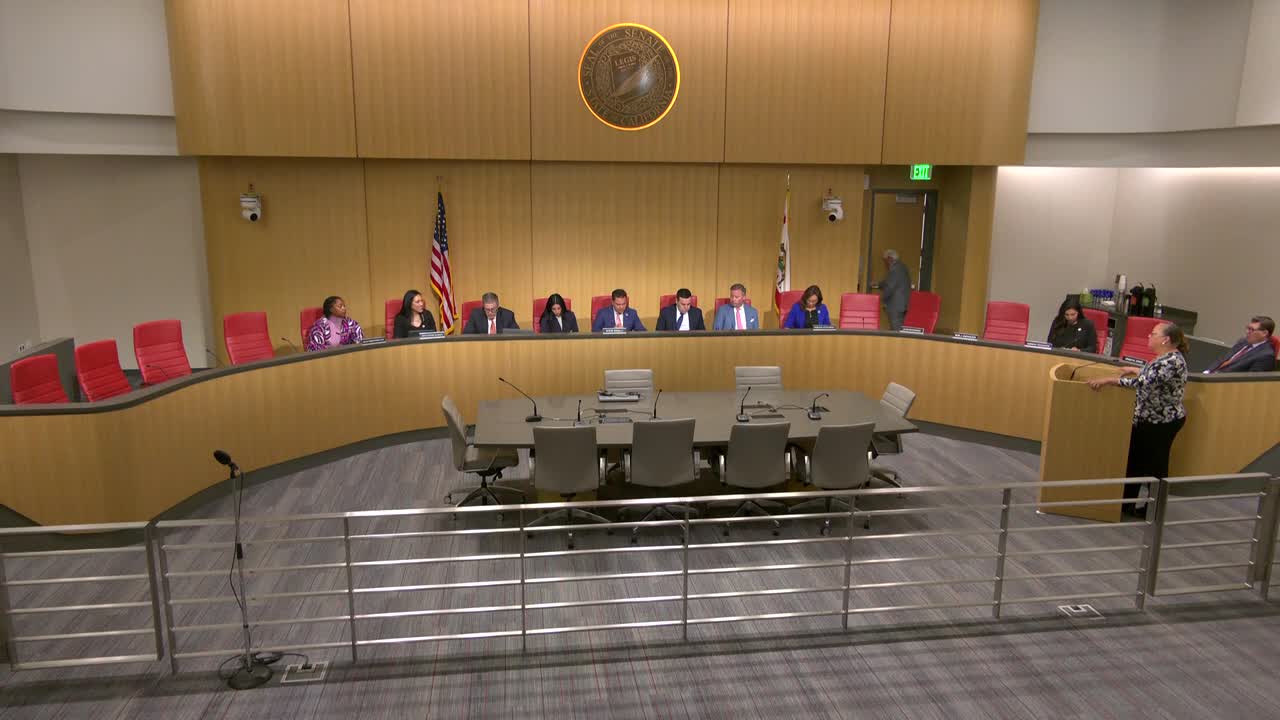 30MIN
Senate Standing Committee on Governmental Organization
Bill Author

Bill Co-Author(s):