SB 234: Wildfires: workgroup: toxic heavy metals.
- Session Year: 2025-2026
- House: Senate
- Latest Version Date: 2025-06-27
Current Status:
In Progress
(2025-08-29: August 29 hearing: Held in committee and under submission.)
Introduced
In Committee
Awaiting First Chamber Vote
Passed First Chamber
In Committee
Awaiting Second Chamber Vote
Passed Second Chamber
Enacted
Existing law requires the Department of Forestry and Fire Protection to do certain things with respect to fire prevention, including organizing fire crews and patrols.
This bill would require, upon appropriation by the Legislature, the Department of Forestry and Fire Protection, the Office of Emergency Services, and the Department of Toxic Substances Control, in consultation with specified entities, to form a workgroup related to exposure to toxic heavy metals after a wildfire. The bill would require the workgroup to do certain things, including establishing best practices and recommendations for wildfire-impacted communities, first responders, and other personnel engaged in wildfire response and cleanup to avoid exposure to heavy metals after a wildfire, including outreach. The bill would authorize the Department of Forestry and Fire Protection to contract with public universities, research institutions, and other technical experts to support the work of the workgroup. The bill would require the Department of Forestry and Fire Protection, the Office of Emergency Services, and the Department of Toxic Substances Control to report their findings to the Legislature on or before January 1, 2027. not more than 3 years after the convening of the first meeting of the workgroup.
Existing law requires the Department of Forestry and Fire Protection to do certain things with respect to fire prevention, including organizing fire crews and patrols.
This bill would require, upon appropriation by the Legislature, the Department of Forestry and Fire Protection, the Office of Emergency Services, and the Department of Toxic Substances Control, in consultation with specified entities, to form a workgroup related to exposure of to toxic heavy metals after a wildfire. The bill would require the workgroup to do certain things, including establishing best practices and recommendations for wildfire-impacted communities, first responders, and other personnel engaged in wildfire response and cleanup to avoid exposure to heavy metals after a wildfire, including outreach. The bill would authorize the Department of Forestry and Fire Protection to contract with public universities, research institutions, and other technical experts to support the work of the workgroup. The bill would require the Department of Forestry and Fire Protection, the Office of Emergency Services, and the Department of Toxic Substances Control to report their findings to the Legislature on or before January 1, 2027.
Existing law requires the Department of Forestry and Fire Protection to do certain things with respect to fire prevention, including organizing fire crews and patrols.
This bill would require, upon appropriation by the Legislature, the Department of Forestry and Fire Protection, the Office of Emergency Services, and the Department of Toxic Substances Control, in consultation with specified entities, to form a workgroup related to exposure of toxic heavy metals after a wildfire. The bill would require the workgroup to do certain things, including establishing best practices and recommendations for wildfire-impacted communities and first responders communities, first responders, and other personnel engaged in wildfire response and cleanup to avoid exposure to heavy metals after a wildfire. wildfire, including outreach. The bill would authorize the Department of Forestry and Fire Protection to contract with public universities, research institutions, and other technical experts to support the work of the workgroup. The bill would require the Department of Forestry and Fire Protection, the Office of Emergency Services, and the Department of Toxic Substances Control to report their findings to the Legislature on or before January 1, 2027.
Existing law requires the Department of Forestry and Fire Protection to do certain things with respect to fire prevention, including organizing fire crews and patrols.
This bill would require, upon appropriation by the Legislature, the Department of Forestry and Fire Protection, the Office of Emergency Services, and the Department of Toxic Substances Control, in consultation with specified entities, to form a workgroup related to exposure of toxic heavy metals after a wildfire. The bill would require the workgroup to do certain things, including establishing best practices and recommendations for wildfire-impacted communities and first responders to avoid exposure to heavy metals after a wildfire. The bill would authorize the Department of Forestry and Fire Protection to contract with public universities, research institutions, and other technical experts to support the work of the workgroup. The bill would require the Department of Forestry and Fire Protection, the Office of Emergency Services, and the Department of Toxic Substances Control to report their findings to the Legislature on or before January 1, 2027.
The Legislature finds and declares all of the following:
(a)During the years 2018 to early 2025, inclusive, fire seasons in California were among the most destructive on record, with millions of acres burned, thousands of homes destroyed, and dozens of lives lost.
(b)According to the Department of Forestry and Fire Protection (CAL-FIRE), over 10,000,000 acres burned in California between 2018 and early 2025, which is double the 756,000-acre annual average for the prior 10 years 2008 to 2017, inclusive.
(c)During this time period, multiple large-scale wildfires, including the Camp Fire, Woolsey Fire, Thomas Fire, Palisades Fire, and Eaton Fire, caused significant damage and destruction to homes and communities across the state.
(d)The magnitude and scale of these wildfires have created unprecedented challenges for affected Californians, including years-long site cleanup and hazardous material removal, prolonged displacement, and serious health complications. There is emerging evidence that wildfire processing and post-wildfire processing of certain metals found in soil, vegetation, and the built environment can be converted to toxic forms and incorporated into airborne particulate matter.
(e)For example, a recent Stanford University study showed that unmanaged wildfires can release toxic metal particles. Specifically, the study showed extreme high heat wildfires can transform a natural element in soils into a potentially cancer-causing and airborne metal known as hexavalent chromium, or chromium 6.
(f)Chromium 6 can possibly increase cancer risk when inhaled or ingested. Other serious health consequences include asthma, heart attacks, and early death, due to its toxicity.
(g)These health risks to firefighters, disaster response workers, other personnel engaged in wildfire response and cleanup, including, but not limited to, those in support roles such as fire mechanics and local public works employees, and California residents living and working near or downwind from conflagrations from airborne chromium 6 and other potential toxic metals need to be further vetted and mitigated.
(h)More research and study is needed to better understand how to limit high-heat fires, which may increase exposure to chromium 6 and other potential toxic metals, by implementing strategies, including controlled burns and other forest clean-up measures.
(i)Further research and mitigation strategies will better protect humans and ecosystems, including waterways and groundwater.
(j)More research and study is needed to better understand how exposure to key heavy metals impacts firefighters, first responders, first responder supporters, disaster response workers, and California residents from inhalation, ingestion, and dermal exposures.
SEC. 2.Section 4114.1 is added to the Public Resources Code, to read:4114.1.SEC. 2.Section 4114.2 is added to the Public Resources Code, to read:4114.2.(a)Upon appropriation by the Legislature, the department, the Office of Emergency Services, and the Department of Toxic Substances Control, in consultation with academic and research institutions with demonstrated relevant expertise, and any other governmental agency, educational institution, or representatives of other organizations representing people exposed to potential toxic heavy metals in response to a wildfire, that has experience in occupational and public health and wildfires, shall form a workgroup related to exposure to toxic heavy metals after a wildfire.
(b)The workgroup shall do all of the following:
(1)Establish best practices and recommendations for wildfire-impacted communities, first responders, and other personnel engaged in wildfire response and cleanup to avoid exposure to heavy metals after a wildfire, including outreach.
(2)Study and consider ways that communities can mitigate and prevent exposure to heavy metals from a wildfire.
(3)Study and consider ways that communities can mitigate or remediate the accumulation of heavy metals in the environment after a wildfire, including, but not limited to, bioremediation through vegetation, fungal, or bacterial treatments.
(4)Study and consider ways that fire departments, agencies, and other organizations can develop and implement best practices and policies for avoiding, minimizing, and mitigating exposure risk.
(c)The department may contract with public universities, research institutions, and other technical experts to support the work of the workgroup.
(d)(1)On or before January 1, 2027, Not more than three years after the convening of the first meeting of the workgroup, the department, the Office of Emergency Services, and the Department of Toxic Substances Control shall report to the Legislature their findings pursuant to this section.
(2)A report submitted to the Legislature pursuant to this subdivision shall be submitted in compliance with Section 9795 of the Government Code.
(3)The requirement for submitting a report imposed by this subdivision is inoperative on January 1, 2031, pursuant to Section 10231.5 of the Government Code.The Legislature finds and declares all of the following:
(a)During the years 2018 to early 2025, inclusive, fire seasons in California were among the most destructive on record, with millions of acres burned, thousands of homes destroyed, and dozens of lives lost.
(b)According to the Department of Forestry and Fire Protection (CAL-FIRE), over 10,000,000 acres burned in California between 2018 and early 2025, which is double the 756,000-acre annual average for the prior 10 years 2008 to 2017, inclusive.
(c)During this time period, multiple large-scale wildfires, including the Camp Fire, Woolsey Fire, Thomas Fire, Palisades Fire, and Eaton Fire, caused significant damage and destruction to homes and communities across the state.
(d)The magnitude and scale of these wildfires have created unprecedented challenges for affected Californians, including years-long site cleanup and hazardous material removal, prolonged displacement, and serious health complications. There is emerging evidence that wildfire processing and post-wildfire processing of certain metals found in soil, vegetation, and the built environment can be converted to toxic forms and incorporated into airborne particulate matter.
(e)For example, a recent Stanford University study showed that unmanaged wildfires can release toxic metal particles. Specifically, the study showed extreme high heat wildfires can transform a natural element in soils into a potentially cancer-causing and airborne metal known as hexavalent chromium, or chromium 6.
(f)Chromium 6 can possibly increase cancer risk when inhaled or ingested. Other serious health consequences include asthma, heart attacks, and early death, due to its toxicity.
(g)These health risks to firefighters, fire mechanics, first responders, first responder supporters, disaster response workers, and other personnel engaged in wildfire response and cleanup, including, but not limited to, those in support roles such as fire mechanics and local public works employees, and California residents living and working near or downwind from conflagrations from airborne chromium 6 and other potential toxic metals need to be further vetted and mitigated.
(h)More research and study is needed to better understand how to limit high-heat fires, which may increase exposure to chromium 6 and other potential toxic metals, by implementing strategies, including controlled burns and other forest clean-up measures.
(i)Further research and mitigation strategies will better protect humans and ecosystems, including waterways and groundwater.
(j)More research and study is needed to better understand how exposure to key heavy metals impacts firefighters, first responders, first responder supporters, disaster response workers, and California residents from inhalation, ingestion, and dermal exposures.
SEC. 2.Section 4114.1 is added to the Public Resources Code, to read:4114.1.(a)Upon appropriation by the Legislature, the department, the Office of Emergency Services, and the Department of Toxic Substances Control, in consultation with academic and research institutions with demonstrated relevant expertise, and any other governmental agency, educational institution, or representatives of other organizations representing people exposed to potential toxic heavy metals in response to a wildfire, that has experience in occupational and public health and wildfires, shall form a workgroup related to exposure of to toxic heavy metals after a wildfire.
(b)The workgroup shall do all of the following:
(1)Establish best practices and recommendations for wildfire-impacted communities, first responders, and other personnel engaged in wildfire response and cleanup to avoid exposure to heavy metals after a wildfire, including outreach.
(2)Study and consider ways that communities can mitigate and prevent exposure to heavy metals from a wildfire.
(3)Study and consider ways that communities can mitigate or remediate the accumulation of heavy metals in the environment after a wildfire, including, but not limited to, bioremediation through vegetation, fungal, or bacterial treatments.
(4)Study and consider ways that fire departments, agencies, and other organizations can develop and implement best practices and policies for avoiding, minimizing, and mitigating exposure risk.
(c)The department may contract with public universities, research institutions, and other technical experts to support the work of the workgroup.
(d)(1)On or before January 1, 2027, the department, the Office of Emergency Services, and the Department of Toxic Substances Control shall report to the Legislature their findings pursuant to this section.
(2)A report submitted to the Legislature pursuant to this subdivision shall be submitted in compliance with Section 9795 of the Government Code.
(3)The requirement for submitting a report imposed by this subdivision is inoperative on January 1, 2031, pursuant to Section 10231.5 of the Government Code.
The Legislature finds and declares all of the following:
(a)During the years 2018 to 2021, early 2025, inclusive, fire seasons in California were among the most destructive on record, with millions of acres burned, thousands of homes destroyed, and dozens of lives lost.
(b)According to the Department of Forestry and Fire Protection (CAL-FIRE), over 4,000,000 10,000,000 acres burned in California between 2018 and 2021, early 2025, which is more than double the 1,600,000-acre 756,000-acre annual average for the prior 10 years. years 2008 to 2017, inclusive.
(c)During this time period, multiple large-scale wildfires, including the Camp Fire, Woolsey Fire, and Thomas Fire, Palisades Fire, and Eaton Fire, caused significant damage and destruction to homes and communities across the state.
(d)The magnitude and scale of these wildfires have created unprecedented challenges for affected Californians, including years-long site cleanup and hazardous material removal, prolonged displacement, and serious health complications. There is emerging evidence that wildfire processing and post-wildfire processing of certain metals found in soil, vegetation, and the built environment can be converted to toxic forms and incorporated into airborne particulate matter.
(e)A For example, a recent Stanford University study showed that unmanaged wildfires can release toxic metal particles. Specifically, the study showed extreme high heat wildfires can transform a natural element in soils into a potentially cancer-causing and airborne metal known as hexavalent chromium, or chromium 6.
(f)Chromium 6 can possibly increase cancer risk when inhaled or ingested. Other serious health consequences include asthma, heart attacks, and early death, due to its toxicity.
(g)These health risks to firefighters, fire mechanics, first responders, first responder supporters, disaster response workers, and California residents living and working near or downwind from conflagrations from airborne chromium 6 and other potential toxic metals need to be further vetted and mitigated.
(h)More research and study is needed to better understand how to limit high-heat fires, which may increase exposure to chromium 6, 6 and other potential toxic metals, by implementing strategies, including controlled burns and other forest clean-up measures.
(i)Further research and mitigation strategies will better protect humans and ecosystems, including waterways and groundwater.
(j)More research and study is needed to better understand how exposure to key heavy metals impacts firefighters, first responders, first responder supporters, disaster response workers, and California residents from inhalation, ingestion, and dermal exposures.
SEC. 2.Section 4114.1 is added to the Public Resources Code, to read:4114.1.(a)Upon appropriation by the Legislature, the department, the Office of Emergency Services, and the Department of Toxic Substances Control, in consultation with academic and research institutions with demonstrated relevant expertise, and any other governmental agency or agency, educational institution that may have institution, or representatives of other organizations representing people exposed to potential toxic heavy metals in response to a wildfire, that has experience in occupational and public health and wildfires, shall form a workgroup related to exposure of toxic heavy metals after a wildfire.
(b)The workgroup shall do all of the following:
(1)Establish best practices and recommendations for wildfire-impacted communities and first responders communities, first responders, and other personnel engaged in wildfire response and cleanup to avoid exposure to heavy metals after a wildfire. wildfire, including outreach.
(2)Study and consider ways that communities can mitigate and prevent exposure to heavy metals from a wildfire.
(3)Study and consider ways that communities can mitigate or remediate the accumulation of heavy metals in the environment after a wildfire, including through including, but not limited to, bioremediation through vegetation, fungal, or bacterial treatments.
(4)Study and consider ways that fire departments, agencies, and other organizations can develop and implement best practices and policies for avoiding, minimizing, and mitigating exposure risk.
(c)The department may contract with public universities, research institutions, and other technical experts to support the work of the workgroup.
(d)(1)On or before January 1, 2027, the department, the Office of Emergency Services, and the Department of Toxic Substances Control shall report to the Legislature their findings pursuant to this section.
(2)A report submitted to the Legislature pursuant to this subdivision shall be submitted in compliance with Section 9795 of the Government Code.
(3)The requirement for submitting a report imposed by this subdivision is inoperative on January 1, 2031, pursuant to Section 10231.5 of the Government Code.
The Legislature finds and declares all of the following:
(a)During the years 2018 to 2021, inclusive, fire seasons in California were among the most destructive on record, with millions of acres burned, thousands of homes destroyed, and dozens of lives lost.
(b)According to the Department of Forestry and Fire Protection (CAL-FIRE), over 4,000,000 acres burned in California between 2018 and 2021, which is more than double the 1,600,000-acre average for the prior 10 years.
(c)During this time period, multiple large-scale wildfires, including the Camp Fire, Woolsey Fire, and Thomas Fire, caused significant damage and destruction to homes and communities across the state.
(d)The magnitude and scale of these wildfires have created unprecedented challenges for affected Californians, including years-long site cleanup and hazardous material removal, prolonged displacement, and serious health complications.
(e)A recent Stanford University study showed that unmanaged wildfires can release toxic metal particles. Specifically, the study showed extreme high heat wildfires can transform a natural element in soils into a potentially cancer-causing and airborne metal known as hexavalent chromium, or chromium 6.
(f)Chromium 6 can possibly increase cancer risk when inhaled or ingested. Other serious health consequences include asthma, heart attacks, and early death, due to its toxicity.
(g)These health risks to firefighters, disaster response workers, and California residents living and working near or downwind from conflagrations from airborne chromium 6 need to be further vetted and mitigated.
(h)More research and study is needed to better understand how to limit high-heat fires, which increase exposure to chromium 6, by implementing strategies, including controlled burns and other forest clean-up measures.
(i)Further research and mitigation strategies will better protect humans and ecosystems, including waterways and groundwater.
SEC. 2.Section 4114.1 is added to the Public Resources Code, to read:4114.1.(a)Upon appropriation by the Legislature, the department, the Office of Emergency Services, and the Department of Toxic Substances Control, in consultation with academic and research institutions with demonstrated relevant expertise, and any other governmental agency or educational institution that may have experience in public health and wildfires, shall form a workgroup related to exposure of toxic heavy metals after a wildfire.
(b)The workgroup shall do all of the following:
(1)Establish best practices and recommendations for wildfire-impacted communities and first responders to avoid exposure to heavy metals after a wildfire.
(2)Study and consider ways that communities can mitigate and prevent exposure to heavy metals from a wildfire.
(3)Study and consider ways that communities can mitigate or remediate the accumulation of heavy metals in the environment after a wildfire, including through bioremediation through vegetation, fungal, or bacterial treatments.
(c)The department may contract with public universities, research institutions, and other technical experts to support the work of the workgroup.
(d)(1)On or before January 1, 2027, the department, the Office of Emergency Services, and the Department of Toxic Substances Control shall report to the Legislature their findings pursuant to this section.
(2)A report submitted to the Legislature pursuant to this subdivision shall be submitted in compliance with Section 9795 of the Government Code.
(3)The requirement for submitting a report imposed by this subdivision is inoperative on January 1, 2031, pursuant to Section 10231.5 of the Government Code.
|
Date
|
Status
|
|---|---|
| Aug 29, 2025 | August 29 hearing: Held in committee and under submission. |
| Jul 16, 2025 | July 16 set for first hearing. Placed on APPR. suspense file. |
| Jul 2, 2025 | From committee: Do pass and re-refer to Com. on APPR. with recommendation: To consent calendar. (Ayes 7. Noes 0.) (July 1). Re-referred to Com. on APPR. |
| Jun 27, 2025 | From committee with author's amendments. Read second time and amended. Re-referred to Com. on E.S & T.M. |
| Jun 24, 2025 | From committee: Do pass and re-refer to Com. on E.S & T.M. with recommendation: To consent calendar. (Ayes 14. Noes 0.) (June 23). Re-referred to Com. on E.S & T.M. |
| Jun 5, 2025 | Referred to Coms. on NAT. RES. and E.S & T.M. |
| May 28, 2025 | In Assembly. Read first time. Held at Desk. |
| May 28, 2025 | Read third time. Passed. (Ayes 37. Noes 0. Page 1282.) Ordered to the Assembly. |
| May 27, 2025 | Read second time. Ordered to third reading. |
| May 23, 2025 | From committee: Do pass as amended. (Ayes 6. Noes 0. Page 1192.) (May 23). |
| May 23, 2025 | Read second time and amended. Ordered to second reading. |
| May 16, 2025 | Set for hearing May 23. |
| May 12, 2025 | May 12 hearing: Placed on APPR. suspense file. |
| May 2, 2025 | Set for hearing May 12. |
| May 1, 2025 | From committee: Do pass and re-refer to Com. on APPR. with recommendation: To consent calendar. (Ayes 8. Noes 0. Page 963.) (April 30). Re-referred to Com. on APPR. |
| Apr 9, 2025 | From committee with author's amendments. Read second time and amended. Re-referred to Com. on E.Q. |
| Apr 2, 2025 | Set for hearing April 30. |
| Mar 25, 2025 | From committee: Do pass and re-refer to Com. on E.Q. with recommendation: To consent calendar. (Ayes 7. Noes 0. Page 532.) (March 25). Re-referred to Com. on E.Q. |
| Mar 12, 2025 | Set for hearing March 25. |
| Feb 5, 2025 | Referred to Coms. on N.R. & W. and E.Q. |
| Jan 29, 2025 | From printer. May be acted upon on or after February 28. |
| Jan 28, 2025 | Introduced. Read first time. To Com. on RLS. for assignment. To print. |
|
Date
|
Description
|
Location
|
Votes
|
|
|---|---|---|---|---|
| Jul 1, 2025 | Do pass and be re-referred to the Committee on [Appropriations] with recommendation: To Consent Calendar | Assembly Standing Committee on Environmental Safety and Toxic Materials |
Passed |
|
| Jun 23, 2025 | Do pass and be re-referred to the Committee on [Environmental Safety and Toxic Materials] with recommendation: To Consent Calendar | Assembly Standing Committee on Natural Resources |
Passed |
|
| May 28, 2025 | Senate 3rd Reading SB234 Niello et al. | Senate Floor |
Passed |
|
| May 23, 2025 | Do pass as amended | Senate Standing Committee on Appropriations |
Passed |
|
| May 12, 2025 | Placed on suspense file | Senate Standing Committee on Appropriations |
Passed |
|
| Apr 30, 2025 | Do pass, but first be re-referred to the Committee on [Appropriations] with the recommendation: To Consent Calendar | Senate Standing Committee on Environmental Quality |
Passed |
|
| Mar 25, 2025 | Do pass, but first be re-referred to the Committee on [Environmental Quality] with the recommendation: To Consent Calendar | Senate Standing Committee on Natural Resources and Water |
Passed |
This list shows positions taken on this bill by organizations on the date displayed, which is linked to the original source.
Positions by individuals are not included.
|
Organization
|
Position
|
Date
|
|---|---|---|
| American Federation Of State, County And Municipal Employees, Afl-Cio | ** Support | |
| California Fire Chiefs Association | ** Support | |
| California Forestry Association | ** Support | |
| California Professional Firefighters | ** Support | |
| cleanearth4kids.org | ** Support | |
| Democratic Club of Claremont | ** Support | |
| Fire Districts Association Of California | ** Support | |
| Humboldt Redwood Company LLC | ** Support | |
| Union Of Concerned Scientists | ** Support |
Date of Hearing: July 16, 2025
ASSEMBLY COMMITTEE ON APPROPRIATIONS
Buffy Wicks, Chair
SBPCA Bill Id:SB 234
Author:(Niello) – As Amended Ver:June 27, 2025
Policy Committee: | Natural Resources | Vote: | 14 - 0 |
Environmental Safety and Toxic Materials | 7 - 0 | ||
|
|
Urgency: No State Mandated Local Program: No Reimbursable: No
SUMMARY:
This bill requires, upon appropriation, specified state agencies to, in consultation with specified entities, form a workgroup related to exposure to toxic heavy metals after a wildfire.
Specifically, this bill, among other things:
- Requires, upon appropriation by the Legislature, the Department of Forestry and Fire Protection (CAL FIRE), the Office of Emergency Services (Cal OES), and the Department of Toxic Substances Control (DTSC), in consultation with academic and research institutions with demonstrated relevant expertise and any other governmental agency, educational institution, or representatives of other organizations representing people exposed to potential toxic heavy metals in response to a wildfire, as specified, to form a workgroup related to exposure to toxic heavy metals after a wildfire.
- Requires the workgroup to do all of the following:
- Establish best practices, including outreach, and recommendations for wildfire-impacted communities, first responders, and other personnel engaged in wildfire response and cleanup to avoid exposure to heavy metals after a wildfire.
- Study and consider ways that communities can mitigate and prevent exposure to heavy metals from a wildfire.
- Study and consider ways that communities can mitigate or remediate the accumulation of heavy metals in the environment after a wildfire, including, but not limited to, bioremediation through vegetation, fungal, or bacterial treatments.
- Study and consider ways that fire departments, agencies, and other organizations can develop and implement best practices and policies for avoiding, minimizing, and mitigating exposure risk.
- Authorizes CAL FIRE to contract with public universities, research institutions, and other technical experts to support the work of the workgroup.
- Requires, not more than three years after the convening of the first meeting of the workgroup, CAL FIRE, Cal OES, and DTSC to report the workgroup's findings to the Legislature.
FISCAL EFFECT:
CAL FIRE, DTSC, and Cal OES will incur significant costs, ranging from the low hundreds of thousands to low millions of dollars, to convene and participate in the working group. While the author intends for the working group to disband once the report to the Legislature is complete, the bill does not make this explicit or include a sunset date for the working group. As discussed below, while CAL FIRE and DTSC anticipate one-time or limited-term costs, Cal OES anticipates the need for ongoing costs and permanent positions.
1) CAL FIRE estimates a one-time General Fund cost of approximately $15 million to partner with an academic institution or non-governmental entity to conduct the research and develop the report required by the bill. This includes $8 million for research on toxic heavy metal exposure prevention for firefighters and impacted communities (CAL FIRE notes this estimate is based on the cost of similar current and past research efforts undertaken by the department) and $7 million to support bioremediation research of heavy metal toxins through vegetation, fungal, or bacterial treatments, including a lab-based study, field studies, and an examination of broad-scale application.
2) DTSC estimates annual General Fund costs of approximately $240,000 for one limited-term position for three years to participate in the working group and undertake post-wildfire management planning work, such as evaluating exposures, reviewing risk assessments, establishing screening levels, and assisting with risk communication.
3) Cal OES estimates ongoing annual General Fund costs of approximately $1.1 million to hire a fire and rescue coordinator assistant chief, an environmental scientist program manager, an emergency services coordinator, and an associate governmental program analyst to implement the requirements of the bill. Tasks include, among other things, conducting technical research, establishing and publishing consensus best practices, and stakeholder and public outreach.
COMMENTS:
1) Purpose. According to the author:
The magnitude and scale of these wildfires have created unprecedented challenges for affected Californians, including years-long site cleanup and hazardous material removal, prolonged displacement, and serious health complications…These health risks to firefighters, disaster response workers, and California residents living and working near or downwind from conflagrations from airborne chromium 6 need to be further vetted and mitigated. More research and study is needed to better understand how to limit high-heat fires, which increase exposure to chromium 6, by implementing strategies, including controlled burns and other forest clean-up measures.
2) Background. Wildfires have been growing in size, duration, and severity over the past 20 years. The major components of wildfire emissions are particulate matter and gases, including carbon dioxide, carbon monoxide, nitrogen oxides, and volatile organic compounds, such as formaldehyde and benzene. If fires reach the wildland-urban interface (WUI), other toxic chemicals are likely to be released from the burning of household or industrial materials, such as plastics, pesticides, and other hazardous waste.
Among others in support of the bill, the California Professional Firefighters writes that while research related to the exact composition of the smoke from wildfires that take place in urban environments and the WUI is ongoing, “increasing research shows that extremely toxic heavy metals such as hexavalent chromium may be released during wildfires.” The American Federation of State, County, and Municipal Employees (AFSCME), AFL-CIO, writes that the magnitude and scale of recent wildfires have created unprecedented challenges for public employees tasked with clean-up and debris removal, including years-long site cleanup and hazardous material removal, and serious health complications. The union notes that, “public works and parks and recreation employees in LA County have been working over-time to help restore their communities with little training on how to protect themselves with properly fitted PPE and respirators.”
3) Prior Legislation. SB 1176 (Niello), of the 2023-2024 Legislative Session, was substantially similar to this bill and was held on this committee’s suspense file.
Analysis Prepared by: Nikita Koraddi / APPR. / (916) 319-2081
Date of Hearing: July 1, 2025
ASSEMBLY COMMITTEE ON ENVIRONMENTAL SAFETY AND TOXIC MATERIALS
Damon Connolly, Chair
SBPCA Bill Id:SB 234
Author:(Niello) – As Amended Ver:June 27, 2025
SENATE VOTE: 37-0
SUBJECT: Wildfires: workgroup: toxic heavy metals
SUMMARY: Creates a workgroup among state agencies to, among other requirements, establish best practices and recommendations for wildfire-impacted communities, first responders, and other people engaged in wildfire response and cleanup to avoid exposure to heavy metals after a wildfire. Specifically, this bill:
- Makes legislative findings about the impacts of wildfires on California, including about the health risks associated with wildfires.
- Requires, upon appropriation by the Legislature, the Department of Forestry and Fire Protection (CAL FIRE), the Office of Emergency Services (Cal OES), and the Department of Toxic Substances Control (DTSC), in consultation with academic and research institutions with demonstrated relevant expertise and any other governmental agency, educational institution, or representatives of other organizations representing people exposed to potential toxic heavy metals in response to a wildfire, as specified, to form a workgroup related to exposure to toxic heavy metals after a wildfire.
- Requires the workgroup to do all of the following:
- Establish best practices, including outreach, and recommendations for wildfire-impacted communities, first responders, and other personnel engaged in wildfire response and cleanup to avoid exposure to heavy metals after a wildfire;
- Study and consider ways that communities can mitigate and prevent exposure to heavy metals from a wildfire;
- Study and consider ways that communities can mitigate or remediate the accumulation of heavy metals in the environment after a wildfire, including, but not limited to, bioremediation through vegetation, fungal, or bacterial treatments; and,
- Study and consider ways that fire departments, agencies, and other organizations can develop and implement best practices and policies for avoiding, minimizing, and mitigating exposure risk.
- Authorizes CAL FIRE to contract with public universities, research institutions, and other technical experts to support the work of the workgroup.
- Requires, not more than three years after the convening of the first meeting of the workgroup, CAL FIRE, Cal OES, and DTSC to report the workgroup's findings to the Legislature.
EXISTING LAW:
- Establishes CAL FIRE within the California Natural Resources Agency and vests CAL FIRE with responsibility for fire protection, fire prevention, maintenance, and enhancement of the state’s forest, range, and brushland resources, contract fire protection, associated emergency services, and assistance in civil disasters and other nonfire emergencies. Requires CAL FIRE to coordinate programs of fire protection, fire prevention, pest control, and forest and range maintenance and enhancement. (Public Resources Code (PRC) § 701 et seq.)
- Establishes Cal OES within the Governor’s Office under the supervision of the Director of Emergency Services. Vests CAL OES with responsibility for the state’s emergency and disaster response services for natural, technological, or man-made disasters and emergencies, including responsibility for activities necessary to prevent, respond to, recover from, and mitigate the effects of emergencies and disasters to people and property. (Government Code (GC) § 8585 et seq.))
- Establishes the Hazardous Waste Control Law (HWCL) and authorizes DTSC to regulate the management of hazardous wastes in California. (Health and Safety Code (HSC) § 25100 et seq.)
- Requires DTSC to prepare, adopt and revise when appropriate, a listing of wastes that are determined to be hazardous, and a listing of wastes that are determined to be extremely hazardous. Requires DTSC, when identifying such wastes, to consider, but not be limited to, the immediate or persistent toxic effects to humans and wildlife and the resistance to natural degradation or detoxification of the wastes. (HSC § 25140)
FISCAL EFFECT: Unknown.
COMMENTS:
Need for the bill: According to the author,
"Between 2018 and 2025, California’s fire seasons were among the most destructive on record, with millions of acres burned, thousands of homes destroyed, and dozens of lives lost.
The magnitude and scale of these wildfires have created unprecedented challenges for affected Californians, including years-long site cleanup and hazardous material removal, prolonged displacement, and serious health complications.
A recent Stanford University study showed that unmanaged wildfires can release toxic metal particles. Specifically, the study showed extreme high heat wildfires can transform a natural element in soils into a potentially cancer-causing and airborne metal known as hexavalent chromium, or chromium 6. Chromium 6 can possibly increase cancer risk when inhaled or ingested. Other serious health consequences include asthma, heart attacks, and early death, due to its toxicity.
These health risks to firefighters, disaster response workers, and California residents living and working near or downwind from conflagrations from airborne chromium 6 need to be further vetted and mitigated. More research and study is needed to better understand how to limit high-heat fires, which increase exposure to chromium 6, by implementing strategies, including controlled burns and other forest clean-up measures.
Further research and mitigation strategies will better protect humans and ecosystems, including waterways and groundwater."
Wildfires in California: According to the California Air Resources Board (CARB), climate change, primarily caused by the burning of fossil fuels, is increasing the frequency and severity of wildfires, not only in California but also all over the world. The Office of Environmental Health Hazard Assessment (OEHHA) noted in 2022 that the area burned by wildfires and the number of large fires (10,000 acres or more) across the state have increased markedly in the last 20 years—trends influenced by altered fuel conditions and climate change. Wildfires in 2020 burned an unprecedented 4 million acres across California. In 2021, about 2.6 million acres burned, making it the second highest burn year, followed by 2018, with 1.5 million acres burned. CAL FIRE data shows that as of 2024, half of the state's 20 largest fires in recorded history had occurred over the previous five years, with all but one of the state's largest fires occurring in the 21st century. CAL FIRE data also show that four out of the five most destructive wildfires in California history happened in just the last 10 years. In 2025, the Eaton and Palisades fires in Los Angeles County destroyed over 16,000 structures and burned 38,000 acres combined; in 2018, the Camp Fire in Butte County destroyed nearly 19,000 structures and burned 153,000 acres; and in 2017, the Tubbs Fire in Napa and Sonoma counties destroyed more than 5,500 structures and burned nearly 37,000 acres.
Wildfires and toxic exposure: CARB states that California is facing increasingly catastrophic wildfire seasons, and notes that wildfire smoke – a complex mixture of air pollutants – is unhealthy to breathe and can be especially dangerous for children, the elderly, pregnant women, and people with heart or respiratory conditions. According to CARB, air pollutants from wildfires include particulate matter and toxic air contaminants. CARB specifies that when wildfires burn structures, they produce a range of harmful and toxic substances, including metals, carbon monoxide, hydrogen cyanide, and toxic volatile organic compounds. To illustrate this point, on July 2021, CARB released the report, "Camp Fire Air Quality Data Analysis." This analysis compares the air quality data from the 2018 Camp Fire, which burned 19,000 structures, to the air quality data of other large wildfires in 2018 that mostly burned vegetation. In the analysis CARB found elevated levels of lead, zinc, calcium, iron, and manganese from the Camp Fire, some of which were detected 150 miles from the wildfire site (in San Jose and Modesto, CA).
Chromium 6 and wildfires. Senate Bill (SB) 234 includes findings that highlight a December 2023 study by researchers at Stanford University. The study, "Metal toxin threat in wildland fires determined by geology and fire severity," published in Nature Communication, found that toxic metals – specifically hexavalent chromium (chromium 6) – may be released into the environment following an extreme high heat fire event. In nature, chromium most commonly occurs in a form known as trivalent chromium (chromium 3), but may also occur in the form of chromium 6 in rocks. Chromium can enter groundwater by the weathering of rocks or from industrial contamination. Oxidizing chromium 3, such as by high heat, produces chromium 6. Chromium 6 is the most toxic form of the metal chromium.
The Nature Communication study reported that in naturally occurring chromium-rich areas in California where wildfires burned at high heat for long time periods, toxic chromium 6 concentrations were found at levels approximately seven times higher than in unburned areas. Additionally, relatively dry post-fire weather contributed to the persistence of elevated levels of chromium 6 in surface soil layers for up to 10 months after the fire, suggesting that the potential for elevated particulate matter concentrations of chromium 6 in the atmosphere likely persisted, as well. While metals in soils and ash have been linked to structural burning within wildland-urban interfaces for a while, this study highlights another source of potential chromium 6 contamination.
Humans are exposed to chromium 6 is through inhalation by breathing polluted air, ingestion by drinking contaminated water, or dermal contact by touching contaminated soil. Research has shown that chromium 6 can cross the placenta barrier – passing from mother to baby. Chromium 6 is listed on California's Proposition 65 list, pursuant to the Safe Drinking Water and Toxic Enforcement Act of 1986, as a carcinogen (since 02/27/1987), a developmental toxicant (since 12/19/2008), and as a reproductive toxicant for both sexes (since 12/19/2008). In 2023, CARB adopted a rule to phase out chromium 6 at industrial facilities, noting that there was "no known safe level of exposure" to chromium 6.
Firefighters and cancer: According to the National Institute for Occupational Safety and Health (NIOSH), cancer is the leading cause of death among firefighters. Research suggests that firefighters are at higher risk of certain types of cancers compared to the general population. During fire events, firefighters can be exposed to hundreds of different chemicals in the form of gases, vapors, and particulates. Exposure can be through inhalation, ingestion, through their eyes, or by handling protective clothing.
In 2022, the International Agency for Research on Cancer (IARC) published an IARC Monograph on, "Occupational Exposure as a Firefighter." In this publication, IARC classified occupational exposure as a firefighter as "carcinogenic to humans." This classification is based on sufficient evidence for cancer in humans, specifically mesothelioma and bladder cancer, from firefighters' occupational exposure. IARC also concluded there was limited evidence for colon cancer, prostate cancer, testicular cancer, melanoma, and non-Hodgkin lymphoma related to firefighters' occupational exposure.
Wildfire Debris Removal and Recovery Operations: The Department of Resources Recycling and Recovery (Cal Recycle) implements the Consolidated Debris Removal Program, and notes that wildfire debris must be safely removed to prevent more harm to people and communities. Cal Recycle describes the two phase wildfire debris removal and recovery process as: Phase 1: visible household hazardous waste removal happens right away; and, Phase 2: remaining contaminated ash and debris is safely removed taking environmental precautions.
DTSC or the United States Environmental Protection Agency are tasked with Phase 1 of the process, which is the removal of visible household hazardous waste, such as household batteries, bulk pesticides, paints, household cleaners, and bulk asbestos from impacted areas. This Phase is meant to reduce public and recovery workers’ toxic exposure. Under Phase 1, toxic materials such as lead, mercury, arsenic, and asbestos remain under heavy debris and mixed into ash and soil.
Following DTSC's work, Cal Recycle implements Phase 2. Phase 2 consists of debris removal such as concrete, metal, ash and the top 3 - 6 inches of contaminated soil. Soil testing and contaminated soil removal are part of the process because toxins like arsenic, lead, mercury, and chlorine can be present. Since Phase 1 does not remove all asbestos, Phase 2 crews will conduct a full asbestos assessment and removal.
This bill: This bill requires, upon appropriation by the Legislature, CAL FIRE, Cal OES, and DTSC, in consultation with academic and research institutions with demonstrated relevant expertise, and any other governmental agency, educational institution, or representatives of other organizations representing people exposed to potential toxic heavy metals in response to a wildfire that has experience in occupational and public health and wildfires, to form a workgroup related to exposure to toxic heavy metals after a wildfire. This bill requires the workgroup to establish best practices and recommendations for wildfire-impacted communities, first responders, and other personnel engaged in wildfire response and cleanup to avoid exposure to heavy metals after a wildfire; study and consider ways that communities can mitigate and prevent exposure to heavy metals from a wildfire; study and consider ways that communities can mitigate or remediate the accumulation of heavy metals in the environment after a wildfire; and, study and consider ways that fire departments, agencies, and other organizations can develop and implement best practices and policies for avoiding, minimizing, and mitigating exposure risk.
This bill then requires, not more than three years after the convening of the first meeting of the workgroup, CAL FIRE, Cal OES, and DTSC to report the workgroup's findings to the Legislature.
Arguments in support:
The American Federation of State, County, and Municipal Employees (AFSCME), AFL-CIO writes in support of the bill,
"Catastrophic wildfires, such as those recently experienced in Los Angeles, have numerous adverse human health and environmental impacts that may continue even after the wildfire has been extinguished. There is extensive body of research on the health impacts of exposure to wildfire smoke and the risk of exposure to carcinogenic materials and incidence of cancer amongst firefighters who are front and center in firefighting, yet there is little research on the health risks that non-emergency public employees engaged in recovery response are exposed to.
In 2019, AFSCME worked with our affiliate, Local 119, the skilled Automotive/Helicopter Mechanics and Equipment Maintenance Workers and Repairmen, employed by the County of Los Angeles on AB 1400 (Chapter 717, Statutes of 2019.) to have the Commission on Health and Safety and Workers Compensation (CHSWC) research health risks related to exposure to carcinogens on the equipment they service. Local 119 members continue to experience clusters of members being diagnosed with and dying from cancer. The study is expected to begin this year, despite a five-year delay, yet the more time that lapses, these men and women continue to face ever-increasing risks of developing adverse health risks.
The magnitude and scale of recent wildfires have created unprecedented challenges for our public employees tasked with clean-up and debris removal, including years-long site cleanup and hazardous material removal, and serious health complications. Public works and parks and recreation employees in LA County have been working over-time to help restore their communities with little training on how to protect themselves with properly fitted PPE and respirators.
SB 234 is an opportunity to develop a model for local governments to mitigate their employees’ health risks following a catastrophic wildfire, and most importantly, can help save lives."
The California Fire Chiefs Association (CalChiefs) and the Fire Districts Association of California (FDAC) writes in support of the bill, "Emerging research, including findings from Stanford University, has revealed that high-heat wildfires can transform naturally occurring elements in soil into airborne toxins such as hexavalent chromium (chromium 6)—a dangerous, cancer-causing compound. These toxins pose significant risks to firefighters, emergency personnel, and nearby communities, with potential long-term impacts on respiratory and cardiovascular health… SB 234 takes a proactive and science-based approach to protecting both the public and first responders by developing best practices to minimize exposure and informing strategies for future wildfire response and forest management."
Arguments in opposition: None on file.
Related legislation:
- AB 372 (Bennett, 2025). Establishes, contingent upon funding appropriated from a 2024 bond act, the Rural Water Infrastructure for Wildfire Resilience Program for the distribution of state matching funds to urban wildland interface communities in high and very high fire hazard severity zones. This bill is pending before the Senate Committee on Natural Resources and Water.
- SB 223 (Alvarado-Gil, 2025). Would have required the State Department of Public Health to create, operate, and maintain a statewide integrated wildfire smoke and health data platform, as specified. This bill was held on the suspense file in the Senate Appropriations Committee.
- SB 326 (Becker and Laird, 2025). Requires CAL FIRE to develop a Wildfire Risk Mitigation Planning Framework, to prepare a Wildfire Risk Baseline and Forecast every three years, and a Wildfire Mitigation Scenarios Report, as provided, in part to address health risks. This bill is pending before the Assembly Committee on Emergency Management.
- SB 945 (Alvarado-Gil, 2024). Would have required the State Department of Public Health to create, operate, and maintain a statewide integrated wildfire smoke and health data platform, as provided. This bill was held on the suspense file in the Assembly Appropriations Committee.
- SB 1014 (Dodd, 2024). Would have required Cal OES to develop a Wildfire Risk Mitigation Planning Framework, to prepare a Wildfire Risk Baseline and Forecast every three years, and a Wildfire Mitigation Scenarios Report, as provided, in part to address health risks. This bill was held on the suspense file in the Assembly Appropriations Committee.
- SB 1176 (Niello, 2024). Would have required CAL FIRE, Cal OES, and DTSC to form a workgroup and, by January 1, 2026, report to the Legislature on exposure to toxic heavy metals after a wildfire. This bill was held on the suspense file in the Assembly Appropriations Committee
- AB 102 (Ting, Chapter 38, Statutes of 2023). Appropriates $7 million from the General Fund to the University of California, in partnership with the State Department of Public Health and the FIRESCOPE Program Cancer Prevention Subcommittee, for the California Firefighter Cancer Prevention and Research Program.
- AB 700 (Grayson, Chapter 268, Statutes of 2023). Establishes the California Firefighter Cancer Prevention and Research Program, and requests the University of California to develop a research grant program to understand firefighter exposures to chemical carcinogens.
- SB 436 (Dodd, 2023). Would have required Cal OES to develop a Wildfire Risk Mitigation Planning Framework to prepare a Wildfire Risk Baseline and Forecast every three years, and a Wildfire Mitigation Scenarios Report, as provided, in part to address health risks. This bill was held on the suspense file in the Senate Appropriations Committee.
Double referral: This bill was double referred to the Assembly Committees on Natural Resources and on Environmental Safety and Toxic Materials. It passed out of the Committee on Natural Resources on a 14 - 0 vote on June 23, 2025.
REGISTERED SUPPORT / OPPOSITION:
Support
American Federation of State, County and Municipal Employees, AFL-CIO
California Fire Chiefs Association
California Forestry Association
California Professional Firefighters
Fire Districts Association of California
Opposition
None on file.
Analysis Prepared by: Shannon McKinney / E.S. & T.M. / (916) 319-3965
Date of Hearing: June 23, 2025
ASSEMBLY COMMITTEE ON NATURAL RESOURCES
Isaac G. Bryan, Chair
SBPCA Bill Id:SB 234
Author:(Niello) – As Amended Ver:May 23, 2025
SENATE VOTE: 37-0
SUBJECT: Wildfires: workgroup: toxic heavy metals
SUMMARY: Requires, upon appropriation by the Legislature, the Department of Forestry and Fire Protection (CAL FIRE), the Office of Emergency Services (CalOES), and the Department of Toxic Substances Control (DTSC), in consultation with specified entities, to form a workgroup related to exposure to toxic heavy metals after a wildfire.
EXISTING LAW:
- Establishes CAL FIRE within the California Natural Resources Agency, and establishes various programs for the prevention and suppression of wildfires at CAL FIRE, as provided. (Public Resources Code 701)
- Vests DTSC, as part of the hazardous waste control laws, to regulate the management and handling of hazardous waste and hazardous materials. (Health & Safety Code 25100 et seq.)
- Establishes Cal OES within the Office of the Governor, under the California Emergency Services Act, for the purpose of mitigating the effects of natural, manmade, or war-caused emergencies. (Government Code 8550)
THIS BILL:
- Requires, upon appropriation by the Legislature, CAL FIRE, CalOES, and DTSC, in consultation with academic and research institutions with demonstrated relevant expertise, and any other governmental agency or educational institution that may have experience in public health and wildfires, to form a workgroup related to exposure of toxic heavy metals after a wildfire.
- Requires the workgroup to do all of the following:
- Establish best practices and recommendations for wildfire-impacted communities and first responders to avoid exposure to heavy metals after a wildfire;
- Study and consider ways that communities can mitigate and prevent exposure to heavy metals from a wildfire;
- Study and consider ways that communities can mitigate or remediate the accumulation of heavy metals in the environment after a wildfire, including through bioremediation through vegetation, fungal, or bacterial treatments; and,
- Study and consider ways that fire departments, agencies, and other organizations can develop and implement best practices and policies for avoiding, minimizing, and mitigating exposure risk.
- Authorizes DTSC to contract with public universities, research institutions, and other technical experts to support the work of the workgroup.
- Requires, on or before January 1, 2027, CAL FIRE, CalOES, and DTSC to report their findings to the Legislature.
- Sunsets the reporting requirement on January 1, 2031.
FISCAL EFFECT: According to the Senate Appropriations Committee:
- DTSC estimates costs of $738,000 annually until January 1, 2027 (General Fund) for three positions for post-wildfire management planning work such as evaluating exposures, reviewing risk assessments, establishing screening levels, helping with risk communication.
- Unknown but potentially significant costs (General Fund) for CAL FIRE and CalOES to participate in the workgroup.
- Unknown but likely significant cost pressure (various funds) to provide funding for implementing the findings, recommendations, and best practices as determined by the workgroup.
COMMENTS:
- Author’s statement:
Between 2018 and 2025, California’s fire seasons were among the most destructive on record, with millions of acres burned, thousands of homes destroyed, and dozens of lives lost. The magnitude and scale of these wildfires have created unprecedented challenges for affected Californians, including years-long site cleanup and hazardous material removal, prolonged displacement, and serious health complications.
A recent Stanford University study showed that unmanaged wildfires can release toxic metal particles. Specifically, the study showed extreme high heat wildfires can transform a natural element in soils into a potentially cancer-causing and airborne metal known as hexavalent chromium, or chromium 6. Chromium 6 can possibly increase cancer risk when inhaled or ingested. Other serious health consequences include asthma, heart attacks, and early death, due to its toxicity.
These health risks to firefighters, disaster response workers, and California residents living and working near or downwind from conflagrations from airborne chromium 6 need to be further vetted and mitigated. More research and study is needed to better understand how to limit high-heat fires, which increase exposure to chromium 6, by implementing strategies, including controlled burns and other forest clean-up measures. Further research and mitigation strategies will better protect humans and ecosystems, including waterways and groundwater.
- Wildfires. Wildfires have been growing in size, duration, and destructivity over the past 20 years. Since 2005, wildfires have destroyed more than 97,000 structures. In fact, California is home to eight of the top 10 most destructive wildfires and has more than half of all United States structure losses. The Camp Fire of 2018 alone destroyed more than 18,800 structures in Butte County, making it the most destructive wildfire in California history.
The major components of wildfire emissions are particulate matter and gases, including carbon dioxide, carbon monoxide, nitrogen oxides, and volatile organic compounds (VOCs), such as formaldehyde and benzene. If fires reach the wildland-urban interface, other toxic chemicals are likely to be released from the burning of household or industrial materials, such as plastics, pesticides, and other hazardous waste. The Air Resources Board (ARB) compared air quality data from the 2018 Camp Fire with three other large wildfires that burned mostly vegetation. ARB’s analysis showed that elevated levels of lead, zinc, iron, and manganese were located as far as 150 miles away.
DTSC’s Emergency Response Program oversees the cleanup of hazardous waste that is released after wildfires burn residential and commercial properties. DTSC is mission tasked by CalOES to begin assessing fire-impacted properties and remove harmful household hazardous wastes and bulk asbestos that threaten public health and the environment.
- Toxic wake of wildfires. In nature, chromium mostly occurs in a form known as trivalent chromium or chromium 3, an essential nutrient that bodies use to break down glucose. Chromium 6 most often results from industrial processes. High levels of chromium 6 historically have entered the environment from industrial runoff and wastewater.
Scientists believe the heat of severe wildfires can transform the benign version of hexavalent chromium (chromium 3) which is found commonly in California soil, into chromium 6, which increases cancer risk when inhaled or ingested via contaminated drinking water, according to research published last December in the journal Nature Communications.
Chromium 6 is a metallic element which generally occurs in small quantities associated with other metals, particularly iron. Chromium is used to harden steel, in the manufacture of stainless steel, and in the production of a number of industrially alloys which are used in making of pigments, in leather tanning for welding and plating produces. The metal is present in the atmosphere in particulate form and is naturally found in crustal rock (basalts and serpentine) and soil.
Chromium 6 is identified as a known carcinogen on the Proposition 65 list pursuant to the Safe Drinking Water and Toxic Enforcement Act of 1986, and there is substantial evidence that chromium 6 can damage DNA. The ARB this year adopted a rule to phase out chromium 6 at industrial facilities, noting that there was “no known safe level of exposure.”
Researchers visited the sites of wildfires in California’s North Coast Range, including the 2019 Kincade Fire and the Hennessey Fire in 2020, to look for hexavalent chromium. Soil sampling resulted in finding “dangerous” levels of hexavalent chromium levels at sites where wildfires burned intensely in chaparral shrubs growing in areas that had serpentine soils relatively rich with metal. In addition to the soil findings, the researchers believe hexavalent chromium can travel in wildfire smoke, blown as dust after a fire is out and persist for months afterward. More research is needed to better understand the risk.
- This bill. SB 234 would require, upon appropriation, CAL FIRE, CalOES, and DTSC, in consultation with academic and research institutions with demonstrated relevant expertise, and any other governmental agency or educational institution that may have experience in public health and wildfires, to form a workgroup related to exposure of toxic heavy metals after a wildfire.
Further research into wildfire-related toxic chromium exposure could help inform public health guidance, such as recommendations to wear an N95 mask when visiting a burn site; lead to additional protections for fire fighters; inform how to protect surface and groundwater from polluted runoff; and, other protections for which we may be unaware.
- Double referral. This bill is also referred to the Assembly Environmental Safety & Toxic Materials Committee.
- Related legislation. SB 1176 (Niello, 2023) would have required, upon appropriation by the Legislature, CAL FIRE, CalOES, and DTSC, in consultation with specified entities, to form a workgroup related to exposure of toxic heavy metals after a wildfire and report to the Legislature on or before January 1, 2026. This bill was held on the Assembly Suspense File.
REGISTERED SUPPORT / OPPOSITION:
Support
American Federation of State, County and Municipal Employees
California Fire Chiefs Association
California Forestry Association
California Professional Firefighters
Cleanearth4kids.org
Fire Districts Association of California
Humboldt Redwood Company LLC
Union of Concerned Scientists
Opposition
None on file
Analysis Prepared by: Paige Brokaw / NAT. RES. /
SENATE RULES COMMITTEE Office of Senate Floor Analyses (916) 651-1520 Fax: (916) 327-4478 | SB 234 |
THIRD READING
Bill No: SB 234
Author: Niello (R), et al.
Amended: 5/23/25
Vote: 21
SENATE NATURAL RES. & WATER COMMITTEE: 7-0, 3/25/25
AYES: Limón, Seyarto, Allen, Grove, Hurtado, Laird, Stern
SENATE ENVIRONMENTAL QUALITY COMMITTEE: 8-0, 4/30/25
AYES: Blakespear, Valladares, Dahle, Gonzalez, Hurtado, Menjivar, Padilla, Pérez
SENATE APPROPRIATIONS COMMITTEE: 6-0, 5/23/25
AYES: Caballero, Seyarto, Cabaldon, Grayson, Richardson, Wahab
NO VOTE RECORDED: Dahle
SUBJECT: Wildfires: workgroup: toxic heavy metals
SOURCE: Author
DIGEST:
This bill directs the Department of Forestry and Fire Protection (CAL FIRE), the Governor’s Office of Emergency Services (CalOES), and the Department of Toxic Substances Control (DTSC) to form a workgroup to establish best practices and recommendations, and study and consider ways to prevent, avoid, and mitigate exposure to heavy metals after a wildfire, as provided.
ANALYSIS:
Existing law:
- Establishes CAL FIRE in the California Natural Resources Agency (CNRA) under the leadership of the CAL FIRE Director.
- Provides that CAL FIRE is responsible for the fire protection, fire prevention, maintenance, and enhancement of the state’s forest, range, and brushland resources, contract fire protection, associated emergency services, and assistance in civil disasters and other nonfire emergencies. (Public Resources Code §§ 701, 713)
- Establishes CalOES within the Governor’s Office under the supervision of the Director of Emergency Services. CalOES is responsible for the state’s emergency and disaster response services for natural, technological, or man-made disasters and emergencies, including responsibility for activities necessary to prevent, respond to, recover from, and mitigate the effects of emergencies and disasters to people and property. (Government Code § 8585)
- Directs CalOES to establish and administer the FIRESCOPE Program, in cooperation with CAL FIRE, including the Office of the State Fire Marshal, to maintain and enhance the efficiency and effectiveness of managing multiagency firefighting resources in responding to an incident. (Health and Safety Code (HSC) §§ 13070 et seq.)
- The Governor’s Reorganization Plan No. 1 of 1991 created DTSC in the California Environmental Protection Agency and transferred to DTSC the toxic substances control program from the State Department of Health Services. DTSC regulates the handling, management, and remediation of hazardous substances, materials, and waste. (HSC §§ 25100 et seq.)
This bill:
- Directs, upon appropriation by the Legislature, CAL FIRE, CalOES, and DTSC, in consultation with specified entities with relevant expertise or experience, to form a workgroup related to exposure of toxic heavy metals after a wildfire.
- Directs the workgroup to:
- Establish best practices and recommendations for wildfire-impacted communities, first responders, and other personnel engaged in wildfire response and cleanup to avoid exposure to heavy metals after a wildfire;
- Study and consider ways that communities can mitigate and prevent exposure to heavy metals from a wildfire;
- Study and consider ways that communities can mitigate or remediate the accumulation of heavy metals in the environment after a wildfire; and
- Study and consider ways that fire departments, agencies and other organizations can develop and implement best practices and policies for mitigating exposure risk.
- Authorizes CAL FIRE to contract with public universities, research institutions, and other technical experts to support the work of the workgroup.
- Directs CAL FIRE, CalOES, and DTSC, by January 1, 2027, to report their findings to the Legislature, as specified.
- Makes a series of related findings and declarations.
Background
Catastrophic wildfires, such as those recently experienced in Los Angeles, have numerous adverse human health and environmental impacts that may continue even after the wildfire has been extinguished.
Wildfire smoke is a complex chemical mixture of organic and inorganic materials in gas and particulate phases. Its composition can evolve over time through processing in the wildfire and then subsequently in the atmosphere.
Research on the impacts of wildfires has shown that exposure to wildfire smoke can have adverse impacts on the health of humans and the environment. An under-recognized risk factor is the creation of toxic forms of metals by the wildfire that may be incorporated into the wildfire smoke or subsequently become part of dust or debris stemming from the wildfire.
[NOTE: See the Senate Natural Resources and Water and Environmental Quality Committees’ analyses for detailed information about this bill.]
FISCAL EFFECT: Appropriation: No Fiscal Com.: Yes Local: No
According to the Senate Appropriations Committee:
- Limited-term costs likely in the high hundreds of thousands of dollars annually until January 1, 2027 (General Fund) to DTSC for 3 positions for post-wildfire management planning work such as evaluating exposures, reviewing risk assessments, establishing screening levels, helping with risk communication. DTSC notes that should it be required to take on responsibilities beyond its current scope of work in post-wildfire management, DTSC may require significantly more resources in future fiscal years depending on the scope and level of the increase, such as converting limited term positions into permanent positions and requesting additional resources. Absent additional resources, DTSC would need to redirect staff who would otherwise prioritize emergency response activities across the state.
- Unknown but potentially significant costs (General Fund) for the Department of Forestry and Fire Protection (CalFire) and Office of Emergency Services (CalOES) to participate in the workgroup.
- Unknown but likely significant cost pressure (various funds) to provide funding for implementing the findings, recommendations, and best practices as determined by the workgroup.
SUPPORT: (Verified 5/19/25)
American Federation of State, County, and Municipal Employees, AFL-CIO
California Fire Chiefs Association
California Forestry Association
California Professional Firefighters
CleanEarth4Kids.org
Democratic Club of Claremont
Fire Districts Association of California
Humboldt Redwood Company, LLC
Union of Concerned Scientists
OPPOSITION: (Verified 5/19/25)
None received
ARGUMENTS IN SUPPORT: According to the author, “Between 2018 and 2021, California’s fire seasons were among the most destructive on record, with millions of acres burned, thousands of homes destroyed, and dozens of lives lost.”
“The magnitude and scale of these wildfires have created unprecedented challenges for affected Californians, including years-long site cleanup and hazardous material removal, prolonged displacement, and serious health complications.”
“A recent Stanford University study showed that unmanaged wildfires can release toxic metal particles. Specifically, the study showed extreme high heat wildfires can transform a natural element in soils into a potentially cancer-causing and airborne metal known as hexavalent chromium, or chromium 6. Chromium 6 can possibly increase cancer risk when inhaled or ingested. Other serious health consequences include asthma, heart attacks, and early death, due to its toxicity.”
“These health risks to firefighters, disaster response workers, and California residents living and working near or downwind from conflagrations from airborne chromium 6 need to be further vetted and mitigated. More research and study is needed to better understand how to limit high-heat fires, which increase exposure to chromium 6, by implementing strategies, including controlled burns and other forest clean-up measures. Further research and mitigation strategies will better protect humans and ecosystems, including waterways and groundwater.
Prepared by: Katharine Moore / N.R. & W. / (916) 651-4116
5/27/25 12:52:29
**** END ****
SENATE COMMITTEE ON
Senator Anna Caballero, Chair
2025 - 2026 Regular Session
SB 234 (Niello) - Wildfires: workgroup: toxic heavy metals
Version: | Policy Vote: |
Urgency: | Mandate: |
Hearing Date: | Consultant: |
Bill Summary:
This bill would direct the Department of Forestry and Fire Protection (CalFire), the Governor’s Office of Emergency Services (CalOES), and the Department of Toxic Substances Control (DTSC) to form a workgroup to establish best practices and recommendations, and study and consider ways to prevent, avoid, and mitigate exposure to heavy metals after a wildfire, as provided.
*********** ANALYSIS ADDENDUM – SUSPENSE FILE ***********
The following information is revised to reflect amendments
adopted by the committee on May 23, 2025
Fiscal Impact:
- Limited-term costs likely in the high hundreds of thousands of dollars annually until January 1, 2027 (General Fund) to DTSC for 3 positions for post-wildfire management planning work such as evaluating exposures, reviewing risk assessments, establishing screening levels, helping with risk communication. DTSC notes that should it be required to take on responsibilities beyond its current scope of work in post-wildfire management, DTSC may require significantly more resources in future fiscal years depending on the scope and level of the increase, such as converting limited term positions into permanent positions and requesting additional resources. Absent additional resources, DTSC would need to redirect staff who would otherwise prioritize emergency response activities across the state.
- Unknown but potentially significant costs (General Fund) for the Department of Forestry and Fire Protection (CalFire) and Office of Emergency Services (CalOES) to participate in the workgroup.
- Unknown but likely significant cost pressure (various funds) to provide funding for implementing the findings, recommendations, and best practices as determined by the workgroup.
Author Amendments:
Author amendments would clarify affected and eligible stakeholders that may be included in the workgroup.
-- END --
SENATE COMMITTEE ON APPROPRIATIONS
Senator Anna Caballero, Chair
2025 - 2026 Regular Session
SB 234 (Niello) - Wildfires: workgroup: toxic heavy metals
Version: April 9, 2025 | Policy Vote: N.R. & W. 7 - 0, E.Q. 8 - 0 |
Urgency: No | Mandate: No |
Hearing Date: May 12, 2025 | Consultant: Ashley Ames |
Bill Summary:
This bill would direct the Department of Forestry and Fire Protection (CalFire), the Governor’s Office of Emergency Services (CalOES), and the Department of Toxic Substances Control (DTSC) to form a workgroup to establish best practices and recommendations, and study and consider ways to prevent, avoid, and mitigate exposure to heavy metals after a wildfire, as provided.
Fiscal Impact:
- DTSC estimates costs of $738,000 annually until January 1, 2027 (General Fund) for 3 positions for post-wildfire management planning work such as evaluating exposures, reviewing risk assessments, establishing screening levels, helping with risk communication. DTSC notes that should it be required to take on responsibilities beyond its current scope of work in post-wildfire management, DTSC may require significantly more resources in future fiscal years depending on the scope and level of the increase, such as converting limited term positions into permanent positions and requesting additional resources. Absent additional resources, DTSC would need to redirect staff who would otherwise prioritize emergency response activities across the state.
- Unknown but potentially significant costs (General Fund) for the Department of Forestry and Fire Protection (CalFire) and Office of Emergency Services (CalOES) to participate in the workgroup.
- Unknown but likely significant cost pressure (various funds) to provide funding for implementing the findings, recommendations, and best practices as determined by the workgroup.
Background:
Wildfire smoke is a complex chemical mixture of organic and inorganic materials in gas and particulate phases. An under-recognized risk factor is the creation of toxic metals by the wildfire that may be incorporated into the wildfire smoke or subsequently become part of dust or debris stemming from the wildfire. The composition of these toxins can evolve over time through processing in the wildfire and then subsequently in the atmosphere. First responders to the fire and people living near the fire would likely have the highest risk of initial exposure to toxic materials stemming from the wildfire. Personnel involved in clean-up efforts and downwind communities, among others, would potentially continue to experience some risk of exposure to toxic materials for an extended period after the fire.
While the health risks of wildfire, and particularly urban wildfire, smoke are still being explored, exposure to the toxins within the smoke may contribute to cell damage, cancer, and cardiovascular, neurological, and respiratory diseases. The health risks to first responders from exposure to toxics has been recognized. CalOES, CalFire and the Office of the State Fire Marshal (also part of CalFire) jointly administer the FIRESCOPE program to maintain and enhance the efficiency and effectiveness of managing multiagency firefighting resources in responding to a wildfire incident. In August 2022, FIRESCOPE established the Cancer Prevention Subcommittee to develop and promote best practices for fire service members to optimize healthy workplace standards. There is a growing body of research that suggests the health risks from wildfire impact more than the first responders and those whose health is directly impacted through contact with the wildfire smoke during the fire.
Proposed Law:
This bill would:
- Direct, upon appropriation by the Legislature, CalFire, CalOES, and DTSC, in consultation with specified entities with relevant expertise or experience, to form a workgroup related to exposure of toxic heavy metals after a wildfire.
- Direct the workgroup to:
- Establish best practices and recommendations for wildfire-impacted communities, first responders, and other personnel engaged in wildfire response and cleanup to avoid exposure to heavy metals after a wildfire;
- Study and consider ways that communities can mitigate and prevent exposure to heavy metals from a wildfire;
- Study and consider ways that communities can mitigate or remediate the accumulation of heavy metals in the environment after a wildfire; and
- Study and consider ways that fire departments, agencies and other organizations can develop and implement best practices and policies for mitigating exposure risk.
- Authorize CalFire to contract with public universities, research institutions, and other technical experts to support the work of the workgroup.
- Direct CalFire, CalOES, and DTSC, by January 1, 2027, to report their findings to the Legislature, as specified.
- Makes related findings and declarations.
Related Legislation:
SB 223 (Alvarado-Gil, 2025), the Wildfire Smoke and Health Outcomes Act, would require the State Department of Public Health to create, operate, and maintain a statewide integrated wildfire smoke and health data platform, as provided.
SB 326 (Becker and Laird, 2025), the California Wildfire Mitigation Strategic Planning Act, would require CalFire to develop a Wildfire Risk Mitigation Planning Framework, to prepare a Wildfire Risk Baseline and Forecast every three years, and a Wildfire Mitigation Scenarios Report, as provided, in part to address health risks.
AB 1003 (Calderon, 2025) would create the Wildfire Smoke Research and Education Fund in the General Fund, and require certain wildfire smoke plans to be developed, as provided. This bill is pending before the Assembly Committee on Emergency Management.
SB 945 (Alvarado-Gil, 2024), the Wildfire Smoke and Health Outcomes Act, required the State Department of Public Health to create, operate, and maintain a statewide integrated wildfire smoke and health data platform, as provided. This bill was held on the suspense file in the Assembly Appropriations Committee.
SB 1014 (Dodd, 2024), the California Wildfire Mitigation Strategic Planning Act, required CalOES to develop a Wildfire Risk Mitigation Planning Framework, to prepare a Wildfire Risk Baseline and Forecast every three years, and a Wildfire Mitigation Scenarios Report, as provided, in part to address health risks. This bill was held on the suspense file in the Assembly Appropriations Committee.
AB 102 (Ting, Chapter 38, Statutes of 2023) appropriates $7 million from the General Fund to the University of California, in partnership with the State Department of Public Health and the FIRESCOPE Program Cancer Prevention Subcommittee, for the California Firefighter Cancer Prevention and Research Program.
AB 700 (Grayson, Chapter 268, Statutes of 2023) establishes the California Firefighter Cancer Prevention and Research Program, and requests the University of California to develop a research grant program to understand firefighter exposures to chemical carcinogens.
SB 436 (Dodd, 2023), the California Wildfire Mitigation Strategic Planning Act, required CalOES to develop a Wildfire Risk Mitigation Planning Framework, to prepare a Wildfire Risk Baseline and Forecast every three years, and a Wildfire Mitigation Scenarios Report, as provided, in part to address health risks. This bill was held on the suspense file in this committee.
-- END --
SENATE COMMITTEE ON ENVIRONMENTAL QUALITY
Senator Blakespear, Chair
2025 - 2026 Regular
Bill No: SB 234
Author: | Niello | ||
Version: | 4/9/2025 | Hearing Date: | 4/30/2025 |
Urgency: | No | Fiscal: | Yes |
Consultant: | Taylor McKie | ||
SUBJECT: Wildfires: workgroup: toxic heavy metals
DIGEST: This bill would direct the Department of Forestry and Fire Protection (CAL FIRE), the Governor’s Office of Emergency Services (CalOES), and the Department of Toxic Substances Control (DTSC) to form a workgroup to establish best practices and recommendations, and study and consider ways to prevent, avoid, and mitigate exposure to heavy metals after a wildfire, as provided.
ANALYSIS:
Existing law:
- Establishes CAL FIRE in the California Natural Resources Agency (CNRA) under the leadership of the CAL FIRE Director.
- Provides that CAL FIRE is responsible for the fire protection, fire prevention, maintenance, and enhancement of the state’s forest, range, and brushland resources, contract fire protection, associated emergency services, and assistance in civil disasters and other non-fire emergencies. (Public Resources Code (PRC) §§ 701, 713)
- Establishes CalOES within the Governor’s Office under the supervision of the Director of Emergency Services. CalOES is responsible for the state’s emergency and disaster response services for natural, technological, or man-made disasters and emergencies, including responsibility for activities necessary to prevent, respond to, recover from, and mitigate the effects of emergencies and disasters to people and property. (Government Code (GC) § 8585)
- Directs CalOES to establish and administer the FIRESCOPE Program, in cooperation with CAL FIRE, including the Office of the State Fire Marshal, to maintain and enhance the efficiency and effectiveness of managing multiagency firefighting resources in responding to an incident. (Health and Safety Code (HSC) §§13070 et seq.)
- Created, pursuant to the Governor’s Reorganization Plan No. 1 of 1991, DTSC in the California Environmental Protection Agency and transferred to DTSC the toxic substances control program from the State Department of Health Services. DTSC regulates the handling, management, and remediation of hazardous substances, materials, and waste. (HSC §§ 25100 et seq.)
This bill:
- Directs, upon appropriation by the Legislature, CAL FIRE, CalOES, and DTSC, in consultation with specified entities with relevant expertise or experience, to form a workgroup related to exposure of toxic heavy metals after a wildfire.
- Directs the workgroup to:
- Establish best practices and recommendations for wildfire-impacted communities, first responders, and other personnel engaged in wildfire response and cleanup to avoid exposure to heavy metals after a wildfire;
- Study and consider ways that communities can mitigate and prevent exposure to heavy metals from a wildfire;
- Study and consider ways that communities can mitigate or remediate the accumulation of heavy metals in the environment after a wildfire; and
- Study and consider ways that fire departments, agencies and other organizations can develop and implement best practices and policies for mitigating exposure risk.
- Authorizes CAL FIRE to contract with public universities, research institutions, and other technical experts to support the work of the workgroup.
- Directs CAL FIRE, CalOES, and DTSC, by January 1, 2027, to report their findings to the Legislature, as specified.
- Makes related findings and declarations.
Background
- Wildfires and public health impacts. Catastrophic wildfires, such as those recently experienced in Los Angeles, and exposure to their smoke have numerous adverse human health and environmental impacts that may continue, even after the wildfire has been extinguished. Wildfire smoke is a complex chemical mixture of organic and inorganic materials in gas and particulate phases. An under-recognized risk factor is the creation of toxic metals by the wildfire that may be incorporated into the wildfire smoke or subsequently become part of dust or debris stemming from the wildfire. The composition of these toxins can evolve over time through processing in the wildfire and then subsequently in the atmosphere. First responders to the fire and people living near the fire would likely have the highest risk of initial exposure to toxic materials stemming from the wildfire. Personnel involved in clean-up efforts and downwind communities, among others, would potentially continue to experience some risk of exposure to toxic materials for an extended period after the fire.
While the health risks of wildfire, and particularly urban wildfire, smoke are still being explored, exposure to the toxins within the smoke may contribute to cell damage, cancer, and cardiovascular, neurological, and respiratory diseases.[1] The health risks to first responders from exposure to toxics has been recognized. CalOES, CAL FIRE and the Office of the State Fire Marshal (also part of CAL FIRE) jointly administer the FIRESCOPE program to maintain and enhance the efficiency and effectiveness of managing multiagency firefighting resources in responding to a wildfire incident. In August 2022, FIRESCOPE established the Cancer Prevention Subcommittee to develop and promote best practices for fire service members to optimize healthy workplace standards. There is a growing body of research that suggests the health risks from wildfire impact more than the first responders and those whose health is directly impacted through contact with the wildfire smoke during the fire.
- Hexavalent chromium release. The bill’s findings and declarations highlight a recent Stanford University study that found that toxic metals – specifically hexavalent chromium (chromium-6) – may be released into the environment following an extreme high heat fire event.[2] In nature, chromium most commonly occurs in a form known as trivalent chromium (chromium-3), but may also occur in the form of chromium-6. Both forms of chromium occur naturally in rocks and may enter groundwater by the weathering of rocks or from industrial contamination.[3] Oxidizing chromium-3, such as by high heat, produces more chromium-6.
Chromium-6 is the most toxic form of the metal chromium. The study found that in naturally occurring chromium-rich areas in California where wildfires burned at high heat for long time periods, toxic chromium-6 concentrations were found at levels approximately seven times higher than unburned areas. Additionally, relatively dry post-fire weather contributed to the persistence of elevated levels of chromium-6 in surface soil layers for up to 10 months after the fire, suggesting that the potential for elevated particulate matter concentrations of chromium-6 in the atmosphere likely persisted too. Human exposure to chromium-6 may be through inhalation by breathing polluted air, ingestion by drinking contaminated water, or dermal contact by touching contaminated soil.
Comments
- Purpose of Bill. According to the author, “Between 2018 and 2025, California’s fire seasons were among the most destructive on record, with millions of acres burned, thousands of homes destroyed, and dozens of lives lost. The magnitude and scale of these wildfires have created unprecedented challenges for affected Californians, including years-long site cleanup and hazardous material removal, prolonged displacement, and serious health complications.
A recent Stanford University study showed that unmanaged wildfires can release toxic metal particles. Specifically, the study showed extreme high heat wildfires can transform a natural element in soils into a potentially cancer-causing and airborne metal known as hexavalent chromium (chromium-6). Chromium-6 can possibly increase cancer risk when inhaled or ingested. Other serious health consequences include asthma, heart attacks, and early death, due to its toxicity. These health risks to firefighters, disaster response workers, and California residents living and working near or downwind from conflagrations from airborne chromium-6 need to be further vetted and mitigated. More research and study is needed to better understand how to limit high-heat fires, which increase exposure to chromium-6, by implementing strategies, including controlled burns and other forest clean-up measures. Further research and mitigation strategies will better protect humans and ecosystems, including waterways and groundwater.
The discovery of chromium-6 in the environment post an extreme heat fire event is a new finding that requires further investigation to protect Californians. Chromium-6 is not something that can be taken lightly and given its possible airborne effects can potentially have a far reach affecting all Californians. SB 234 brings together top experts in both state agencies and research/education institutions and will provide our best path forward for getting this threat under control.”
- Heavy metals and other substances. Though the author highlights chromium-6 as part of the intent of this bill, the bill proposes an evaluation of exposure mitigation from other toxic metals as well. Of note, there already are published observations from a new highly-instrumented atmospheric chemistry research measurement location in southern Los Angeles showing that atmospheric particulate matter lead concentrations in the smoke plume from the Palisades and Eaton Fires increased ambient particulate lead concentrations by a factor of up to 110. Lead is a toxic metal, and is a federal criteria pollutant for which there is a National Ambient Air Quality Standard.
Besides toxic metals, there are other hazardous chemicals that can be released during a wildfire, especially if the wildfire takes place in an urban setting. The burning of building structures and vehicles may contribute to harmful levels of cancer-causing compounds, such as isocyanates, chlorinated hydrocarbons, volatile organic compounds, formaldehyde, particulate matter, and polycyclic aromatic hydrocarbons (PAHs).[4] While the actual health impacts from exposure to these high short-term concentrations of toxic substances are unclear, research suggests the need to address and mitigate potential exposure pathways, particularly for sensitive individuals.
Agencies may be knowledgeable of the breadth of hazards, and though it would expand the scope of the bill, it may be more efficient to evaluate exposure to any chemical of concern that results from wildfires such that affected communities and personnel will have guidance to protect them from all hazards involved. A trade-off of expanding the scope in this manner, however, may increase administrative costs and require more time to complete the report. Agencies may have to assess the risks of exposure and mitigation techniques specific to a class of chemicals. The author may wish to consider exposure to other chemicals that result from wildfires, including those in urban settings, to include in the report.
- A feasible timeline. This report calls for best practices and recommendations to mitigate exposure to toxic metals in various contexts and situations. As mentioned in the above comment, it would also be ideal to consider other substances of concern after wildfires, which would expand the scope. With toxic metals alone, this is a huge undertaking to investigate and finalize a report over the course of one year. Additionally, this report also requires interagency coordination as well as engagement with outside relevant expertise and community partners, thus more time would be beneficial to allow for such collaboration. The author may wish to consider engaging with the proposed reporting parties to determine a feasible deadline for this report to be finalized for the Legislature.
DOUBLE REFERRAL:
This measure was heard in Senate Committee on Natural Resources and Water on March 25, 2025, and passed out of committee with a vote of 7-0.
Related/Prior Legislation
SB 223 (Alvarado-Gil, 2025), the Wildfire Smoke and Health Outcomes Act, would require the State Department of Public Health to create, operate, and maintain a statewide integrated wildfire smoke and health data platform, as provided. This bill is pending before the Senate Committee on Natural Resources and Water.
SB 326 (Becker and Laird, 2025), the California Wildfire Mitigation Strategic Planning Act, would require CAL FIRE to develop a Wildfire Risk Mitigation Planning Framework, to prepare a Wildfire Risk Baseline and Forecast every three years, and a Wildfire Mitigation Scenarios Report, as provided, in part to address health risks. This bill is pending before the Senate Committee on Natural Resources and Water.
AB 1003 (Calderon, 2025) would create the Wildfire Smoke Research and Education Fund in the General Fund, and require certain wildfire smoke plans to be developed, as provided. This bill is pending before the Assembly Committee on Emergency Management.
SB 945 (Alvarado-Gil, 2024), the Wildfire Smoke and Health Outcomes Act, required the State Department of Public Health to create, operate, and maintain a statewide integrated wildfire smoke and health data platform, as provided. This bill was held on the suspense file in the Assembly Appropriations Committee.
SB 1014 (Dodd, 2024), the California Wildfire Mitigation Strategic Planning Act, required CalOES to develop a Wildfire Risk Mitigation Planning Framework, to prepare a Wildfire Risk Baseline and Forecast every three years, and a Wildfire Mitigation Scenarios Report, as provided, in part to address health risks. This bill was held on the suspense file in the Assembly Appropriations Committee.
AB 102 (Ting, Chapter 38, Statutes of 2023) appropriates $7 million from the General Fund to the University of California, in partnership with the State Department of Public Health and the FIRESCOPE Program Cancer Prevention Subcommittee, for the California Firefighter Cancer Prevention and Research Program.
AB 700 (Grayson, Chapter 268, Statutes of 2023) establishes the California Firefighter Cancer Prevention and Research Program, and requests the University of California to develop a research grant program to understand firefighter exposures to chemical carcinogens.
SB 436 (Dodd, 2023), the California Wildfire Mitigation Strategic Planning Act, required CalOES to develop a Wildfire Risk Mitigation Planning Framework, to prepare a Wildfire Risk Baseline and Forecast every three years, and a Wildfire Mitigation Scenarios Report, as provided, in part to address health risks. This bill was held on the suspense file in the Senate Appropriations Committee.
SOURCE:
Author
SUPPORT:
California Fire Chiefs Association
California Forestry Association
Cleanearth4kids.org
Democratic Club of Claremont
Fire Districts Association of California
Humboldt Redwood Company LLC
Union of Concerned Scientists
OPPOSITION:
None received
-- END --
Jordan, R. (2025). What we know about the health effects of wildfire. ↑
Lopez, A. M., et. al. (2023). Metal toxin threat in wildland fires determined by geology and fire severity. ↑
National Institute of Environmental Health Sciences (2024). Hexavalent Chromium. ↑
Holder, A. L., et. al. (2023). Hazardous air pollutant emissions estimates from wildfires in the wildland urban interface. ↑
SENATE COMMITTEE ON NATURAL RESOURCES AND WATER
Senator Monique Limón, Chair
2025 - 2026 Regular
Bill No: SB Hearing Date: March 25, 2025
Author: | Niello | ||
Version: | January 28, 2025 Introduced | ||
Urgency: | No | Fiscal: | Yes |
Consultant: | Katharine Moore | ||
Subject: Wildfires: workgroup: toxic heavy metals
SUMMARY
This bill would direct the Department of Forestry and Fire Protection (CAL FIRE), the Governor’s Office of Emergency Services (CalOES), and the Department of Toxic Substances Control (DTSC) to form a workgroup to establish best practices and recommendations, and study and consider ways to prevent, avoid, and mitigate exposure to heavy metals after a wildfire, as provided.
BACKGROUND AND EXISTING LAW
- Catastrophic wildfires, such as those recently experienced in Los Angeles, have numerous adverse human health and environmental impacts that may continue even after the wildfire has been extinguished.
- Wildfire smoke is a complex chemical mixture of organic and inorganic materials in gas and particulate phases. Its composition can evolve over time through processing in the wildfire and then subsequently in the atmosphere.
- Research on the impacts of wildfires has shown that exposure to wildfire smoke can have adverse impacts on the health of humans and the environment. An under-recognized risk factor is the creation of toxic forms of metals by the wildfire that may be incorporated into the wildfire smoke or subsequently become part of dust or debris stemming from the wildfire.
- A recent Stanford University study found that toxic metals – specifically hexavalent chromium (Cr(VI) or chromium 6) – may be released into the environment following an extreme high heat fire event. The study found that in naturally occurring chromium-rich areas in California where wildfires burned at high heat for long time periods, toxic hexavalent chromium concentrations were found at levels approximately seven times higher than unburned areas. Additionally, relatively dry post-fire weather contributed to the persistence of elevated levels of hexavalent chromium in surface soil layers for up to 10 months after the fire, suggesting that the potential for elevated particulate matter concentrations of hexavalent chromium in the atmosphere likely persisted too.
- In nature, chromium most commonly occurs in a form known as trivalent chromium (Cr(III) or chromium 3). Trivalent chromium is an essential nutrient that the human body uses to break down glucose.
- Hexavalent chromium is the most toxic form of the metal chromium. Chromium, in nature, most commonly occurs in a form known as trivalent chromium (Cr(III) or chromium 3), and is an essential human nutrient. Oxidizing trivalent chromium, such as by high heat, produces hexavalent chromium. Hexavalent chromium occurs naturally in rocks and may enter groundwater by the weathering of rocks or from industrial contamination (as most famously recorded in the 2000 film, Erin Brockovich). Human exposure to hexavalent chromium may be through inhalation by breathing polluted air, ingestion by drinking contaminated water, or dermal contact by touching contaminated soil.
- First responders to the fire and people living near the fire would likely have the highest risk of initial exposure to toxic materials stemming from the wildfire, and personnel cleaning up wildfire debris and downwind communities, among others, would potentially continue to experience some risk of exposure to toxic materials for an extended period after the fire.
- The health risks to first responders from exposure to toxics has been recognized. CalOES, CAL FIRE and the Office of the State Fire Marshal (also part of CAL FIRE) jointly administer the FIRESCOPE program to maintain and enhance the efficiency and effectiveness of managing multiagency firefighting resources in responding to a wildfire incident. In August 2022, FIRESCOPE established the Cancer Prevention Subcommittee to develop and promote best practices for fire service members to optimize healthy workplace standards.
- There is a growing body of research that suggests the health risks from wildfire impact more than the first responders and those whose health is directly impacted through contact with the wildfire smoke during the fire.
Existing law:
- Establishes CAL FIRE in the California Natural Resources Agency (CNRA) under the leadership of the CAL FIRE Director.
- Provides that CAL FIRE is responsible for the fire protection, fire prevention, maintenance, and enhancement of the state’s forest, range, and brushland resources, contract fire protection, associated emergency services, and assistance in civil disasters and other nonfire emergencies. (Public Resources Code §§701, 713)
- Establishes CalOES within the Governor’s Office under the supervision of the Director of Emergency Services. CalOES is responsible for the state’s emergency and disaster response services for natural, technological, or man-made disasters and emergencies, including responsibility for activities necessary to prevent, respond to, recover from, and mitigate the effects of emergencies and disasters to people and property. (Government Code §8585)
- Directs CalOES to establish and administer the FIRESCOPE Program, in cooperation with CAL FIRE, including the Office of the State Fire Marshal, to maintain and enhance the efficiency and effectiveness of managing multiagency firefighting resources in responding to an incident. (Health and Safety Code (HSC) §§13070 et seq.)
- The Governor’s Reorganization Plan No. 1 of 1991 created DTSC in the California Environmental Protection Agency and transferred to DTSC the toxic substances control program from the State Department of Health Services. DTSC regulates the handling, management, and remediation of hazardous substances, materials, and waste. (HSC §§25100 et seq.)
PROPOSED LAW
This bill would direct CAL FIRE, CalOES, and DTSC to form a workgroup to establish best practices and recommendations, and study and consider ways to prevent, avoid, and mitigate exposure to heavy metals after a wildfire, as provided.
Specifically, this bill would:
- Direct, upon appropriation by the Legislature, CAL FIRE, CalOES, and DTSC, in consultation with specified entities with relevant expertise or experience, to form a workgroup related to exposure of toxic heavy metals after a wildfire.
- Direct the workgroup to:
- Establish best practices and recommendations for wildfire-impacted communities and first responders to avoid exposure to heavy metals after a wildfire.
- Study and consider ways that communities can mitigate and prevent exposure to heavy metals from a wildfire.
- Study and consider ways that communities can mitigate or remediate the accumulation of heavy metals in the environment after a wildfire, including through bioremediation through vegetation, fungal, or bacterial treatments.
- Authorize CAL FIRE to contract with public universities, research institutions, and other technical experts to support the work of the workgroup.
- Direct CAL FIRE, CalOES, and DTSC, by January 1, 2027, to report their findings to the Legislature, as specified.
- Makes a series of findings and declarations, including:
- A recent Stanford University study showed that unmanaged wildfires can release toxic metal particles, like hexavalent chromium, or chromium 6.
- The need for more research and study to better understand how to limit high-heat fires and that further research and mitigation strategies will better protect humans and ecosystems, including waterways and groundwater.
ARGUMENTS IN SUPPORT
According to the author, “Between 2018 and 2021, California’s fire seasons were among the most destructive on record, with millions of acres burned, thousands of homes destroyed, and dozens of lives lost.”
“The magnitude and scale of these wildfires have created unprecedented challenges for affected Californians, including years-long site cleanup and hazardous material removal, prolonged displacement, and serious health complications.”
“A recent Stanford University study showed that unmanaged wildfires can release toxic metal particles. Specifically, the study showed extreme high heat wildfires can transform a natural element in soils into a potentially cancer-causing and airborne metal known as hexavalent chromium, or chromium 6. Chromium 6 can possibly increase cancer risk when inhaled or ingested. Other serious health consequences include asthma, heart attacks, and early death, due to its toxicity.”
“These health risks to firefighters, disaster response workers, and California residents living and working near or downwind from conflagrations from airborne chromium 6 need to be further vetted and mitigated. More research and study is needed to better understand how to limit high-heat fires, which increase exposure to chromium 6, by implementing strategies, including controlled burns and other forest clean-up measures. Further research and mitigation strategies will better protect humans and ecosystems, including waterways and groundwater.”
ARGUMENTS IN OPPOSITION
None received
COMMENTS
This bill is double-referred. This bill is referred to both this Committee and the Senate Environmental Quality Committee. Elements of the bill under the Senate Environmental Quality Committee’s jurisdiction will be discussed before that Committee, and are included here for context and completeness only.
Wildfire processing of metals, metal concentrations in wildfire smoke, and health impacts associated with exposure to wildfire smoke are an active area of research. A recent[1] “virtual” special issue of the prestigious and widely-cited American Chemical Society journal Environmental Science & Technology: Air titled “Wildland Fires: Emissions, Chemistry, Contamination, Climate, and Human Health” includes more than 20 scientific papers. Virtually all of the included papers are germane to the subject of this bill, and report on observations and modeling studies of the impacts of wildland fire to the surrounding environment and human health. Wildfires increase the potential for exposure to various metals liberated from soils, vegetation, and the built environment, and the chemical processing of the metals in the wildfire, or subsequent to it, can substantially increase the potential toxicity of the metal. In addition to the chromium study cited by the author, mercury, for example, may be changed from a relatively stable to highly reactive (and toxic) form. Numerous observations show that wildland fire results in increased ambient particulate matter concentrations containing elevated amounts of certain metals downwind, and strong associations are shown between exposure to wildland smoke and adverse health outcomes, such as premature deaths associated with cardiovascular and respiratory illness. Health risk mitigation strategies to improve the protection of public health have been developed, and additional research is needed to improve the understanding of the various factors involved.
Of note, there already are published observations from a new highly-instrumented atmospheric chemistry research measurement location in southern Los Angeles showing that atmospheric particulate matter lead concentrations in the smoke plume from the Palisades and Eaton Fires increased ambient particulate lead concentrations by a factor of up to 110.[2] Lead is a toxic metal, and is a federal criteria pollutant for which there is a National Ambient Air Quality Standard. While the actual health impacts from exposure to these high short-term lead concentrations are unclear, these observations suggest the need to address and mitigate potential exposure pathways, particularly for sensitive individuals.
Additional considerations. Conversations with relevant stakeholders revealed concerns that the proposed workgroup and study may not address all people, including those personnel that support wildfire response and clean-up, who may be at elevated risk of exposure by various pathways to potentially toxic wildfire-generated particulate matter and debris. For example, exposure to toxic metals may be through inhalation, ingestion, dermal contact, or some or all of these pathways which will affect the potential adverse health impact and appropriate protection measures. Should this bill move forward, the author may wish to consider addressing that concern, as well as generalizing and updating the legislative findings and declarations to, for example, include more metals. Further, the Committee may wish to direct Committee staff to provide assistance.
Recent related legislation
SB 223 (Alvarado-Gil, 2025), the Wildfire Smoke and Health Outcomes Act, would require the State Department of Public Health to create, operate, and maintain a statewide integrated wildfire smoke and health data platform, as provided. (This bill is pending before the Senate Health Committee.)
SB 326 (Becker and Laird, 2025), the California Wildfire Mitigation Strategic Planning Act, would require CAL FIRE to develop a Wildfire Risk Mitigation Planning Framework, to prepare a Wildfire Risk Baseline and Forecast every three years, and a Wildfire Mitigation Scenarios Report, as provided, in part to address health risks. (This bill is pending before the Senate Governmental Organization Committee.)
AB 1003 (Calderon, 2025) would create the Wildfire Smoke Research and Education Fund in the General Fund, and require certain wildfire smoke plans to be developed, as provided. (This bill is pending before the Assembly Health Committee.)
SB 945 (Alvarado-Gil, 2024), the Wildfire Smoke and Health Outcomes Act, would have required the State Department of Public Health to create, operate, and maintain a statewide integrated wildfire smoke and health data platform, as provided. (This bill was held on the suspense file in the Assembly Appropriations Committee.)
SB 1014 (Dodd, 2024), the California Wildfire Mitigation Strategic Planning Act, would have required CalOES to develop a Wildfire Risk Mitigation Planning Framework, to prepare a Wildfire Risk Baseline and Forecast every three years, and a Wildfire Mitigation Scenarios Report, as provided, in part to address health risks. (This bill was held on the suspense file in the Assembly Appropriations Committee.)
AB 102 (Ting, Chapter 38, Statutes of 2023) appropriates $7 million from the General Fund to the University of California, in partnership with the State Department of Public Health and the FIRESCOPE Program Cancer Prevention Subcommittee, for the California Firefighter Cancer Prevention and Research Program.
AB 700 (Grayson, Chapter 268, Statutes of 2023) establishes the California Firefighter Cancer Prevention and Research Program, and requests the University of California to develop a research grant program to understand firefighter exposures to chemical carcinogens
SB 436 (Dodd, 2023), the California Wildfire Mitigation Strategic Planning Act, would have required CalOES to develop a Wildfire Risk Mitigation Planning Framework, to prepare a Wildfire Risk Baseline and Forecast every three years, and a Wildfire Mitigation Scenarios Report, as provided, in part to address health risks. (This bill was held on the suspense file in the Senate Appropriations Committee.)
SUGGESTED AMENDMENTS: none
SUPPORT
California Forestry Association
CleanEarth4Kids.org
Humboldt Redwood Company, LLC
Union of Concerned Scientists
OPPOSITION
None Received
-- END --
Discussed in Hearing
View Older Hearings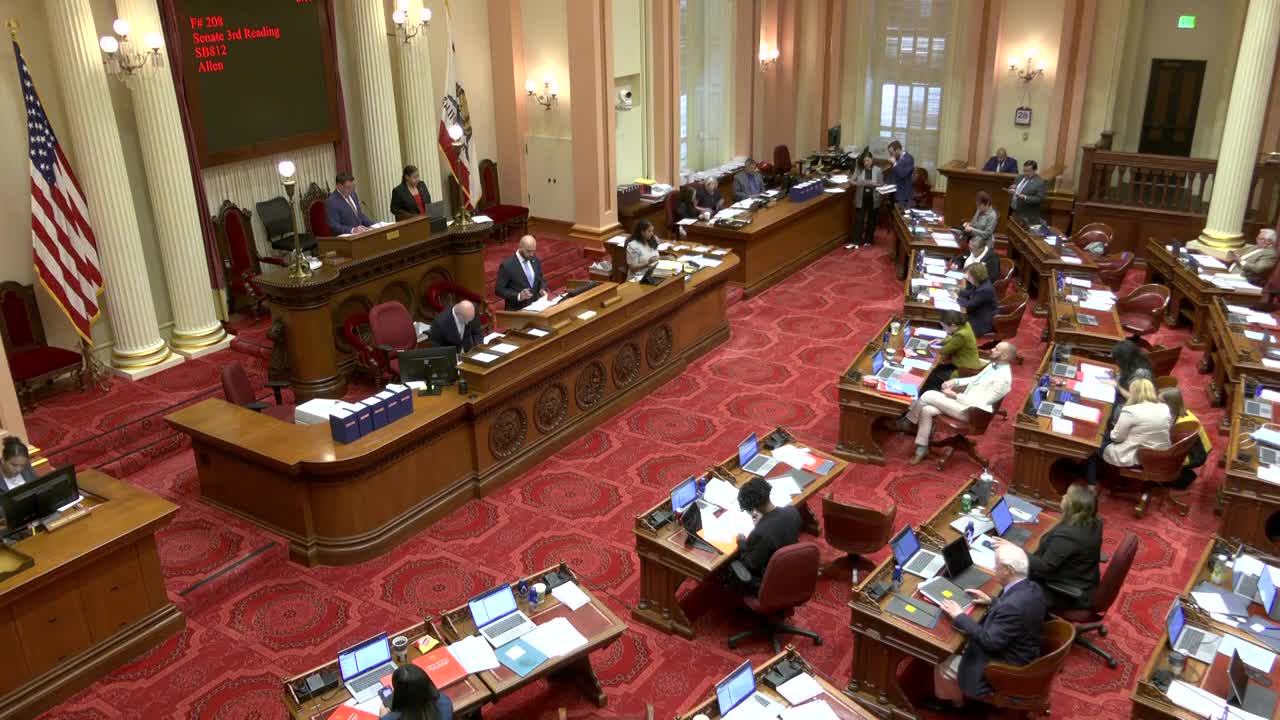
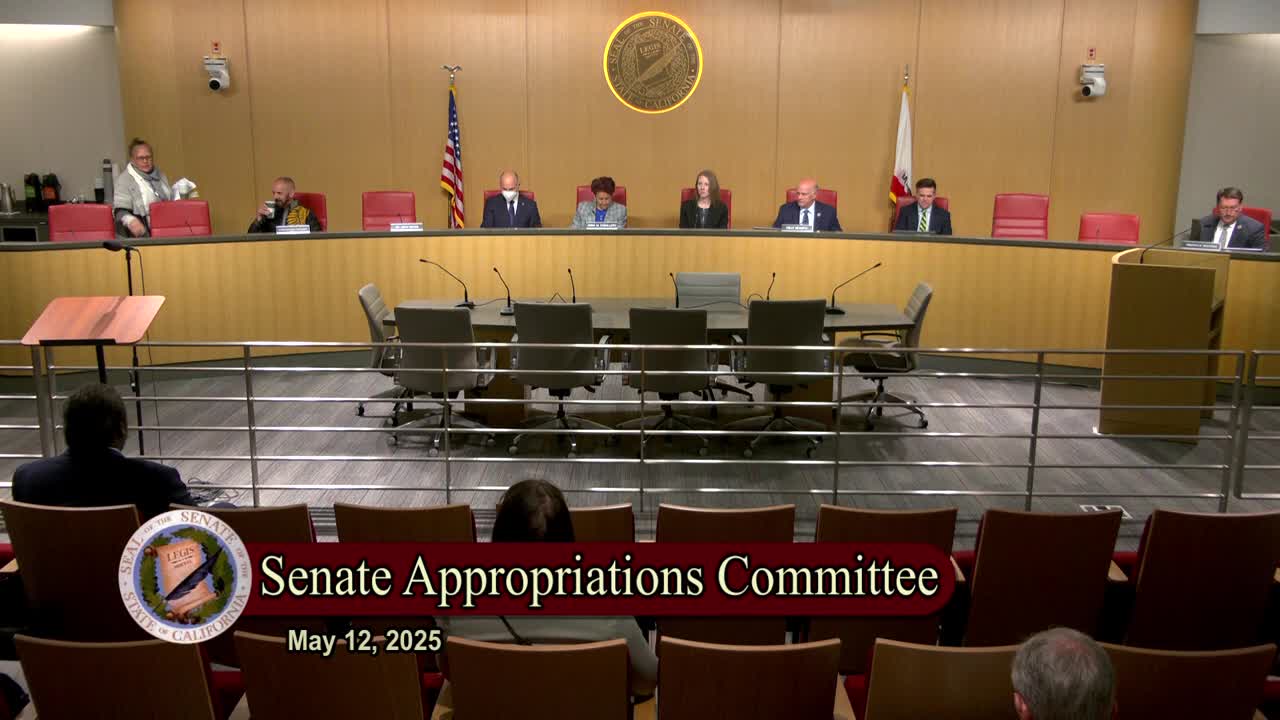
Bill Author
Bill Co-Author(s):
