SB 248: Firearms: information to new owners.
- Session Year: 2025-2026
- House: Senate
- Latest Version Date: 2025-06-24
Current Status:
In Progress
(2025-08-29: August 29 hearing: Held in committee and under submission.)
Introduced
In Committee
Awaiting First Chamber Vote
Passed First Chamber
In Committee
Awaiting Second Chamber Vote
Passed Second Chamber
Enacted
Existing law requires any sale, loan, or transfer of a firearm to be processed through a licensed firearms dealer. Existing law exempts from this requirement certain transfers such as those made by gift, bequest, intestate succession, or operation of law, among others. Existing law requires a person who receives a firearm pursuant to these provisions to submit to the Department of Justice a report, as prescribed by the department, describing the firearm and providing personal information. Existing law requires, for a firearm purchase when the register is used, 2 copies of the original sheet of the register containing certain information to be mailed to the department, and when the electronic or telephonic transfer of applicant information is used, the record of applicant information be transmitted to the department by electronic or telephonic transfer. Existing law requires that fees charged by the department for the processing of these forms be deposited in the Dealers Record of Sale Special Account, which is available, upon appropriation by the Legislature, to offset certain costs relating to the regulation of firearms, among other things.
This bill would, beginning July 1, 2027, require the department to mail to each purchaser of a firearm, within 10 days of the application, or any person who notifies the department pursuant to the above-described reports of a firearm transaction transaction, within 10 days of the notification, a letter that includes certain information relevant to firearm ownership, such as information on how to legally transfer or relinquish a firearm and resources regarding gun violence restraining orders, among others.
Existing law requires any sale, loan, or transfer of a firearm to be processed through a licensed firearms dealer. Existing law exempts from this requirement certain transfers such as those made by gift, bequest, intestate succession, or operation of law, among others. Existing law requires a person who receives a firearm pursuant to these provisions to submit to the Department of Justice a report, as prescribed by the department, describing the firearm and providing personal information. Existing law requires that fees charged by the department for the processing of these forms be deposited in the Dealers Record of Sale Special Account, which is available, upon appropriation by the Legislature, to offset certain costs relating to the regulation of firearms, among other things.
This bill would, beginning July 1, 2027, require the department to mail to any person who notifies the department pursuant to the above-described reports of a firearm transaction a letter that includes certain information relevant to firearm ownership, such as information on how to legally transfer or relinquish a firearm and resources regarding gun violence restraining orders, among others. The bill would state that the Dealers Record of Sale Special Account may, upon an appropriation by the Legislature for this purpose, be used for any costs associated with this laws implementation.
Beginning July 1, 2027, the department shall mail a letter to the listed residential address of each purchaser of a firearm within 10 days of each purchaser making an application and of any person who notifies the department pursuant to Section 27560, 27875, 27920, or 28000. 28000, within 10 days of being notified. This letter shall include all of the following and any other information the department deems relevant to firearm ownership:
(a)The importance of secure storage of firearms, including, at a minimum, a summary of applicable secure storage and child access prevention laws.
(b)Overview of basic state and federal laws and obligations related to gun ownership and possession in California.
(c)Information and data about the risks of gun ownership purchase, ownership, and possession.
(d)Information on how to legally transfer or relinquish a firearm.
(e)Information and resources regarding gun violence restraining orders.
(f)Information and resources related to suicide prevention.
(g)Information and resources related to domestic violence.
REVISIONS: HeadingLine 3.(a)Beginning July 1, 2027, the department shall mail a letter to the listed residential address of any person who notifies the department pursuant to Section 27560, 27875, 27920, or 28000. This letter shall include all of the following and any other information the department deems relevant to firearm ownership:
(1)(a)The importance of secure storage of firearms, including, at a minimum, a summary of applicable secure storage and child access prevention laws.
(2)(b)Overview of basic laws and obligations related to gun ownership and possession in California.
(3)(c)Information and data about the risks of gun ownership and possession.
(4)(d)Information on how to legally transfer or relinquish a firearm.
(5)(e)Information and resources regarding gun violence restraining orders.
(6)(f)Information and resources related to suicide prevention.
(7)(g)Information and resources related to domestic violence.
(b)The Dealers Record Of Sale Special Account may, upon an appropriation by the Legislature for this purpose, be used for any costs associated with this laws implementation and ongoing expenses.(c)The department may adopt regulations to implement this section.(a)Beginning July 1, 2027, the department shall mail a letter to the listed residential address of any person who notifies the department pursuant to Section 27560, 27875, 27920, or 28000. This letter shall include all of the following and any other information the department deems relevant to firearm ownership:
(1)The importance of secure storage of firearms, including, at a minimum, a summary of applicable secure storage and child access prevention laws.
(2)Overview of basic laws and obligations related to gun ownership and possession in California.
(3)Information and data about the risks of gun ownership and possession.
(4)Information on how to legally transfer or relinquish a firearm.
(5)Information and resources regarding gun violence restraining orders.
(6)Information and resources related to suicide prevention.
(7)Information and resources related to domestic violence.
(b)The Dealers Record Of Sale Special Account may, upon an appropriation by the Legislature for this purpose, be used for any costs associated with this laws implementation and ongoing expenses.
(c)The department may adopt regulations to implement this section.
|
Date
|
Status
|
|---|---|
| Aug 29, 2025 | August 29 hearing: Held in committee and under submission. |
| Aug 20, 2025 | August 20 set for first hearing. Placed on APPR. suspense file. |
| Jul 2, 2025 | From committee: Do pass and re-refer to Com. on APPR. (Ayes 8. Noes 0.) (July 1). Re-referred to Com. on APPR. |
| Jul 2, 2025 | Coauthors revised. |
| Jun 24, 2025 | From committee with author's amendments. Read second time and amended. Re-referred to Com. on PUB. S. |
| Jun 16, 2025 | Referred to Com. on PUB. S. |
| Jun 5, 2025 | In Assembly. Read first time. Held at Desk. |
| Jun 4, 2025 | Read third time. Passed. (Ayes 28. Noes 11. Page 1513.) Ordered to the Assembly. |
| May 27, 2025 | Read second time. Ordered to third reading. |
| May 23, 2025 | Read second time and amended. Ordered to second reading. |
| May 23, 2025 | From committee: Do pass as amended. (Ayes 5. Noes 1. Page 1193.) (May 23). |
| May 16, 2025 | Set for hearing May 23. |
| Apr 7, 2025 | April 7 hearing: Placed on APPR. suspense file. |
| Mar 28, 2025 | Set for hearing April 7. |
| Mar 25, 2025 | From committee: Do pass and re-refer to Com. on APPR. (Ayes 5. Noes 1. Page 533.) (March 25). Re-referred to Com. on APPR. |
| Mar 7, 2025 | Set for hearing March 25. |
| Feb 14, 2025 | Referred to Com. on PUB. S. |
| Feb 3, 2025 | From printer. May be acted upon on or after March 2. |
| Jan 30, 2025 | Introduced. Read first time. To Com. on RLS. for assignment. To print. |
|
Date
|
Description
|
Location
|
Votes
|
|
|---|---|---|---|---|
| Jul 1, 2025 | Do pass and be re-referred to the Committee on [Appropriations] | Assembly Standing Committee on Public Safety |
Passed |
|
| Jun 4, 2025 | Senate 3rd Reading SB248 Rubio | Senate Floor |
Passed |
|
| May 23, 2025 | Do pass as amended | Senate Standing Committee on Appropriations |
Passed |
|
| Apr 7, 2025 | Placed on suspense file | Senate Standing Committee on Appropriations |
Passed |
|
| Mar 25, 2025 | Do pass, but first be re-referred to the Committee on [Appropriations] | Senate Standing Committee on Public Safety |
Passed |
This list shows positions taken on this bill by organizations on the date displayed, which is linked to the original source.
Positions by individuals are not included.
|
Organization
|
Position
|
Date
|
|---|---|---|
| Brady United Against Gun Violence | ** Support | |
| California Rifle and Pistol Association | ** Against | |
| Consumer Protection Policy Center at USD School of Law | ** Support | |
| Everytown for Gun Safety Action Fund | ** Support | |
| Giffords Law Center To Prevent Gun Violence | ** Support | |
| Gun Owners Of California Inc | ** Against | |
| GUN OWNERS OF CALIFORNIA, INC. | ** Against | |
| San Diegans For Gun Violence Prevention | ** Support |
Date of Hearing: August 20, 2025
ASSEMBLY COMMITTEE ON APPROPRIATIONS
Buffy Wicks, Chair
SBPCA Bill Id:SB 248
Author:(Rubio) – As Amended Ver:June 24, 2025
Policy Committee: | Public Safety | Vote: | 8 - 0 |
|
| ||
|
|
Urgency: No State Mandated Local Program: No Reimbursable: No
SUMMARY:
This bill requires the Department of Justice (DOJ) to, beginning July 1, 2027, mail a letter to each person who applies to purchase a firearm and other specified prospective firearm owners. The letter must contain information about secure firearms storage, state and federal laws pertaining to firearm ownership, and the risks associated with firearm ownership.
FISCAL EFFECT:
Ongoing costs (General Fund) to DOJ, likely in the millions of dollars annually. DOJ anticipates the bill will require it to mail approximately 876,000 letters each year to prospective firearm owners. The department estimates costs of $800,000 in fiscal year (FY) 2026-27, $3.1 million in FY 2027-28, and $2.9 million ongoing thereafter. These costs cover 21 staff positions and workload to existing staff in the department’s Bureau of Firearms (BOF) and California Justice Information Services division to create, process, and prepare the letters, and to make changes to DOJ’s existing firearms databases to facilitate sending the letters. These costs also include consultation by BOF attorneys and $735,534 beginning in FY 2026-27 and ongoing for postage.
DOJ reports these costs cannot be funded from the Dealers’ Record of Sale Account because its current revenues are insufficient to cover them. As such, for the DOJ to fulfill the requirements of this bill, DOJ anticipates needing a General Fund appropriation.
COMMENTS:
A person who wishes to purchase a firearm in California must go through multiple steps, many of which involve receiving information about firearms ownership. A member of the public who wishes to purchase, transfer, receive, or sell a firearm in California must first obtain a firearm safety certificate (FSC) from DOJ by passing a written safety exam administered by a certified instructor. The FSC exam covers many topics related to firearms safety and risks, including firearm instruction and safe handling, safe firearms storage, types of firearms and ammunition, and California law that applies to firearm ownership and use. Existing law requires DOJ to publish and make available on its website an FSC study guide that covers all of this information.
After a person obtains an FSC, they may purchase a firearm from a firearms dealer. Where they sell firearms, firearm dealers are required to display information regarding California’s safe firearm storage laws, the phone numbers for suicide and crisis lifelines, and information about the risks associated with having access to a firearm in one’s home, among other information. Additionally, existing law requires DOJ to publish and make available on its website a pamphlet about firearm safety and the risks of owning a firearm. The current version of the pamphlet includes information about the risks of death by suicide, homicide, or accident associated with firearm ownership; basic firearm safety rules; and phone number for the national suicide prevention lifeline. DOJ must also publish a summary of current firearm laws, which is also available on the department’s website.
This bill additionally requires DOJ to send an informative letter to people seeking to purchase or otherwise lawfully acquire a firearm in California. The letter must include information about secure firearms storage, state and federal laws pertaining to firearm ownership, and the risks associated with firearm ownership.
Analysis Prepared by: Annika Carlson / APPR. / (916) 319-2081
SENATE RULES COMMITTEE Office of Senate Floor Analyses (916) 651-1520 Fax: (916) 327-4478 | SB 248 |
THIRD READING
Bill No: SB 248
Author: Rubio (D)
Amended: 5/23/25
Vote: 21
SENATE PUBLIC SAFETY COMMITTEE: 5-1, 3/25/25
AYES: Arreguín, Caballero, Gonzalez, Pérez, Wiener
NOES: Seyarto
SENATE APPROPRIATIONS COMMITTEE: 5-1, 5/23/25
AYES: Caballero, Cabaldon, Grayson, Richardson, Wahab
NOES: Seyarto
NO VOTE RECORDED: Dahle
SUBJECT: Firearms: information to new owners
SOURCE: Brady United Against Gun Violence
DIGEST:
This bill requires the Department of Justice (DOJ), beginning July 1, 2027, to mail specified firearm transferees a letter that includes certain information relevant to firearm ownership, as specified.
ANALYSIS:
Existing law:
- Prohibits, generally the sale, lease or transfer of firearms unless the person has been issued a license by the California Department of Justice, and establishes various exceptions to this prohibition. (Penal (Pen.) Code, §§26500 – 26625.)
- Provides that a license to sell firearms is subject to forfeiture for any violation of a number of specified prohibitions and requirements, with limited exceptions. (Pen. Code §§26800 – 26915.)
- Includes several exemptions from the requirement that transfers go through a licensed dealer requirement, including for the transfer of a firearm by bequest or intestate succession, or to a surviving spouse, or transfers by a person acting pursuant to operation of law, a court order, or pursuant to other specified laws. (Pen. Code, §§ 26505, 26515.)
- Provides that where neither party to a firearms transaction holds a dealer’s license (i.e. a “private party transaction”), the parties shall complete the transaction through a licensed firearms dealer. (Pen. Code, §27545.)
- Sets forth various exemptions to the requirement that a private party transaction occur through a licensed dealer. (Pen. Code, §§ 27850 – 27970.)
- Requires certain firearms transferors and transferees to report a transfer to the DOJ under specified circumstances, including people who import a firearm into the state, certain individuals and entities that are exempt from the requirement that a transfer be completed through a licensed dealer, law enforcement entities transferring to museums or institutional collections, specified private collectors, transferees who receive a firearm by operation of law or via gift, bequest, or intestate succession, and others. (Pen. Code, §§ 27560, 27565, 27855, 27860, 27875, 27920, 27966.)
- Provides that a person exempt from the requirement that a private party transaction occur through a licensed dealer or is otherwise exempt from reporting the acquisition, ownership, destruction, or disposal of a firearm, or who moves out of this state with the person's firearm, may report that information to the DOJ in a format prescribed by the department. (Pen. Code, §28000.)
- Requires firearms dealers to keep a register or record of electronic or telephonic transfer of firearms (also known as the Dealers’ Record of Sale, or DROS), unless certain specified circumstances apply. Makes a failure to comply a misdemeanor. (Pen. Code, § 28100.)
- Establishes the DROS Special Account within the General Fund, which shall be available, upon appropriation by the Legislature, for expenditure by the department to offset the reasonable costs of firearms-related regulatory and enforcement activities related to the sale, purchase, manufacturing, lawful or unlawful possession, loan, or transfer of firearms, as specified. (Pen. Code, § 28233).
- Establishes the intent of the Legislature in enacting specified provisions to require that persons who obtain firearms have a basic familiarity with those firearms, including, but not limited to, the safe handling and storage of those firearms. (Pen. Code, §31610).
- Requires the DOJ to develop firearm safety certificates to be issued by instructors certified by the department to those persons who have complied with specified requirements regarding firearm safety, and which expire 5 years after the date of issuance. (Pen. Code, §31655, subds. (a), (c).)
- Provides that a licensed firearm dealer shall not deliver a firearm unless the person receiving the firearm presents to the dealer a valid firearm safety certificate. The firearm dealer shall retain a photocopy of the firearm safety certificate as proof of compliance. (Pen. Code, §26840, subd. (a).).
- Provides that a person shall not purchase or receive any firearm, except an antique firearm, without a valid firearm safety certificate, except that in the case of a handgun, an unexpired handgun safety certificate may be used. (Pen. Code, §31615, subd. (a).)
- Provides that a person shall not sell, deliver, loan, or transfer any firearm, except an antique firearm, to any person who does not have a valid firearm safety certificate, except that in the case of a handgun, an unexpired handgun safety certificate may be used. (Pen. Code, §31615, subd. (a).)
- Requires the DOJ to prepare a pamphlet that summarizes California firearms laws as they pertain to persons other than law enforcement officers or members of the armed services, which shall cover specified topics. (Pen. Code, §34205, subd. (a),(b).)
- Requires the DOJ to offer copies of the pamphlet above at actual cost to firearms dealers who shall have copies of the most current version available for sale to retail purchasers or transferees of firearms. (Pen. Code, §34205, subd. (c).)
- Requires the DOJ to prepare a pamphlet in several languages that explains the reasons for and risks of owning a firearm and bringing a firearm into the home, including the increased risk of death to someone in the household by suicide, homicide, or unintentional injury. (Pen. Code, §34210.)
- Requires licensed firearm dealers to provide the purchaser or transferee of a firearm, or person being loaned a firearm, with a copy of the most current version of the pamphlet above at the start of the 10-day waiting period. (Pen. Code, § 26866.)
This bill:
- Provides that, beginning July 1, 2027, the DOJ shall mail a letter to the listed residential address of any person who provides a specified notice to the department regarding the acquisition or transfer of a firearm, which shall include the following and any other information the department deems relevant to firearm ownership:
- The importance of secure storage of firearms, including, at a minimum, a summary of applicable secure storage and child access prevention laws.
- Overview of basic laws and obligations related to gun ownership and possession in California.
- Information and data about the risks of gun ownership and possession.
- Information on how to legally transfer or relinquish a firearm.
- Information and resources regarding gun violence restraining orders.
- Information and resources related to suicide prevention.
- Information and resources related to domestic violence.
Comments
The DOJ maintains a robust system of firearm transfer and ownership records comprised of several interrelated databases. Under existing law, almost all firearm transactions must be completed through a licensed firearm dealer, which collects specified information about the purchaser or transferee pursuant to the DROS process and transfers that information to DOJ via the DROS Entry System (DES). While most reports of firearm ownership are reported to DOJ via the DROS process, existing law requires individuals to report firearm ownership, acquisition and transfer to the DOJ in a host of situations where dealers are not involved. These situations include, but are not limited to, new residents entering the state with a firearm, acquisitions of curios and relics, certain probate transfers and transfers by operation of law, transfers of a firearm to a museum or institutional collection, and intra-familial firearm transactions. Existing law also allows for voluntary reporting of firearm ownership or acquisition by individuals who are not otherwise required by law to report ownership or acquisition to the DOJ. While the forms required to complete these reports are available on the DOJ website with instructions to submit the form by mail to the DOJ, most reporting can be completed through the California Firearms Application Reporting System, or (CFARS).
Existing law imposes several requirements on DOJ related to providing purchasers and transferees of firearms with information similar to the information required under this bill. Specifically, existing law requires DOJ to prepare a pamphlet (hereinafter, “Firearms Laws Pamphlet”) that summarizes California firearms laws and covers other firearm-related topics as they pertain to persons other than law enforcement officers and military personnel. While not required to distribute this pamphlet to firearm purchasers, dealers must have these pamphlets available for sale to any firearm purchaser or transferee. Additionally, existing law requires DOJ to prepare a different pamphlet (hereinafter, “Firearms Risks Pamphlet”) that explains the reasons for and risks of owning a firearm and bringing a firearm into the home. Unlike the Firearms Laws Pamphlet, existing law requires licensed dealers to provide the Firearms Risks Pamphlet to any firearm purchaser or transferee, as specified.
This bill requires the DOJ, beginning July 1, 2027, to provide certain information regarding firearm ownership to specified individuals who are required to report or elect to voluntarily report the acquisition or ownership of a firearm to DOJ. Specifically, the bill requires DOJ to mail a letter – distinct from the Firearms Laws Pamphlet and the Firearms Risks Pamphlet – to these individuals containing information on the following topics: safe storage, basic laws and obligations of firearm ownership, risks of firearm ownership, how to transfer or relinquish a firearm, gun violence restraining orders (GVROs), suicide prevention, and domestic violence. The bill does not require DOJ to send this information to every firearm purchaser or transferee. The only individuals required to receive the information are: 1) “firearm importers” (i.e. new California residents who bring a gun into the state); 2) individuals who acquire a firearm as a gift, bequest or via intestate succession, provided the transfer is intra-familial; 3) individuals who take title or possession of a firearm by operation of law, or import a firearm in their capacity as an executor, personal representative, or administrator of an estate, and 4) individuals who voluntarily report firearm ownership or acquisition.
FISCAL EFFECT: Appropriation: No Fiscal Com.: Yes Local: No
According to the Senate Appropriations Committee:
DOJ indicates a fiscal impact (General Fund) of $250,000 to implement this bill. DOJ notes that implementation of this bill will be dependent upon the appropriation of funds. The DOJ will be unable to absorb the costs to comply with or implement the requirements of the bill within existing budgeted resources.
DOJ further indicates that the estimated expenditures for this bill cannot be funded from the Dealers’ Record of Sale (DROS) Account. Current revenues are insufficient to cover the increased cost of this bill. As such, for the DOJ to fully fund the associated costs inherent with the mandates of this bill, a General Fund appropriation is required.
According to DOJ, in order to implement the mandates of SB 248, the Division of Law Enforcement (DLE), Bureau of Firearms (BOF) would require new resources beginning July 1, 2027. The BOF would require 160 overtime hours from an Associate Governmental Program Analyst (AGPA) in the Firearms Applicant and Release Unit (FARU) to develop a new letter template that addresses all points listed in Penal Code Section 28222. BOF would also require 1.0 new permanent Program Technician (PT) II within FARU to process and mail the mandated letters to all approved applicants. Additionally, this resource would conduct necessary research for return letters and letters identified as having incorrect addresses. BOF would also require funding in FY 2027-28 for Deputy Attorney General (DAG) consultant costs during the updates of procedure manuals, training materials, and letter drafting. Lastly, BOF would require ongoing funding, beginning in FY 2027-28, in the amount of $84,000 for the production, printing, postage, and mailing of approximately 100,000 letters to applicants.
SUPPORT: (Verified 5/23/25)
Brady United Against Gun Violence (Source)
Consumer Protection Policy Center – USD School of Law
Everytown for Gun Safety Action Fund
Giffords Law Center to Prevent Gun Violence
San Diegans for Gun Violence Prevention
OPPOSITION: (Verified 5/23/25)
California Rifle and Pistol Association
Gun Owners of California, Inc.
1 Individual
Prepared by: Alex Barnett / PUB. S. /
5/27/25 11:54:05
**** END ****
SENATE COMMITTEE ON
Senator Anna Caballero, Chair
2025 - 2026 Regular Session
SB 248 (Rubio) - Firearms: information to new owners
Version: | Policy Vote: |
Urgency: | Mandate: |
Hearing Date: | Consultant: |
Bill Summary:
SB 248 requires the Department of Justice (DOJ) to mail firearm transferees a letter that includes information about firearm ownership, as specified.
*********** ANALYSIS ADDENDUM – SUSPENSE FILE ***********
The following information is revised to reflect amendments
adopted by the committee on May 23, 2025
Fiscal Impact:
DOJ indicates a fiscal impact (General Fund) of $250,000 to implement this bill. DOJ notes that implementation of this bill will be dependent upon the appropriation of funds. The DOJ will be unable to absorb the costs to comply with or implement the requirements of the bill within existing budgeted resources.
DOJ further indicates that the estimated expenditures for this bill cannot be funded from the Dealers’ Record of Sale (DROS) Account. Current revenues are insufficient to cover the increased cost of this bill. As such, for the DOJ to fully fund the associated costs inherent with the mandates of this bill, a General Fund appropriation is required.
According to DOJ, in order to implement the mandates of SB 248, the Division of Law Enforcement (DLE), Bureau of Firearms (BOF) would require new resources beginning July 1, 2027. The BOF would require 160 overtime hours from an Associate Governmental Program Analyst (AGPA) in the Firearms Applicant and Release Unit (FARU) to develop a new letter template that addresses all points listed in Penal Code Section 28222. BOF would also require 1.0 new permanent Program Technician (PT) II within FARU to process and mail the mandated letters to all approved applicants. Additionally, this resource would conduct necessary research for return letters and letters identified as having incorrect addresses. BOF would also require funding in FY 2027-28 for Deputy Attorney General (DAG) consultant costs during the updates of procedure manuals, training materials, and letter drafting. Lastly, BOF would require ongoing funding, beginning in FY 2027-28, in the amount of $84,000 for the production, printing, postage, and mailing of approximately 100,000 letters to applicants.
Committee Amendments:
- Strike provisions that state that the Dealers’ Record of Sale Special Account may, upon an appropriation by the Legislature for this purpose, be used for any costs associated with this law’s implementation.
- Strike provisions allowing the DOJ to adopt regulations.
-- END --
SENATE COMMITTEE ON APPROPRIATIONS
Senator Anna Caballero, Chair
2025 - 2026 Regular Session
SB 248 (Rubio) - Firearms: information to new owners
Version: January 30, 2025 | Policy Vote: PUB. S. 5 - 1 |
Urgency: No | Mandate: No |
Hearing Date: April 7, 2025 | Consultant: Liah Burnley |
Bill Summary:
SB 248 requires the Department of Justice (DOJ) to mail firearm transferees a letter that includes information about firearm ownership, as specified.
Fiscal Impact:
DOJ indicates a fiscal impact (General Fund) of $250,000 to implement this bill. DOJ notes that implementation of this bill will be dependent upon the appropriation of funds. The DOJ will be unable to absorb the costs to comply with or implement the requirements of the bill within existing budgeted resources.
DOJ further indicates that the estimated expenditures for this bill cannot be funded from the Dealers’ Record of Sale (DROS) Account. Current revenues are insufficient to cover the increased cost of this bill. As such, for the DOJ to fully fund the associated costs inherent with the mandates of this bill, a General Fund appropriation is required. (See staff comments.)
According to DOJ, in order to implement the mandates of SB 248, the Division of Law Enforcement (DLE), Bureau of Firearms (BOF) would require new resources beginning July 1, 2027. The BOF would require 160 overtime hours from an Associate Governmental Program Analyst (AGPA) in the Firearms Applicant and Release Unit (FARU) to develop a new letter template that addresses all points listed in Penal Code Section 28222. BOF would also require 1.0 new permanent Program Technician (PT) II within FARU to process and mail the mandated letters to all approved applicants. Additionally, this resource would conduct necessary research for return letters and letters identified as having incorrect addresses. BOF would also require funding in FY 2027-28 for Deputy Attorney General (DAG) consultant costs during the updates of procedure manuals, training materials, and letter drafting. Lastly, BOF would require ongoing funding, beginning in FY 2027-28, in the amount of $84,000 for the production, printing, postage, and mailing of approximately 100,000 letters to applicants.
Background:
Existing law imposes several requirements on DOJ related to providing purchasers and transferees of firearms with information about firearms. Specifically, existing law requires DOJ to prepare a Firearms Laws Pamphlet” that summarizes California firearms laws and covers other firearm-related topics as they pertain to persons other than law enforcement officers and military personnel. While not required to distribute this pamphlet to firearm purchasers, dealers must have these pamphlets available for sale to any firearm purchaser or transferee. Additionally, existing law requires DOJ to prepare a different pamphlet that explains the reasons for and risks of owning a firearm and bringing a firearm into the home. Existing law requires licensed dealers to provide this pamphlet to any firearm purchaser or transferee, as specified.
Proposed Law:
- Beginning July 1, 2027, requires the DOJ to mail a letter to the listed residential address of any person who notifies the DOJ of any acquisition or transfer of a firearm. This letter shall include all of the following and any other information the DOJ deems relevant to firearm ownership:
- The importance of secure storage of firearms, including, at a minimum, a summary of applicable secure storage and child access prevention laws;
- Overview of basic laws and obligations related to gun ownership and possession in California;
- Information and data about the risks of gun ownership and possession;
- Information on how to legally transfer or relinquish a firearm;
- Information and resources regarding gun violence restraining orders;
- Information and resources related to suicide prevention; and,
- Information and resources related to domestic violence.
- Provides that the Dealers’ Record of Sale Special Account (DROS) may, upon an appropriation by the Legislature for this purpose, be used for any costs associated with this law’s implementation and ongoing expenses.
- States that DOJ may adopt regulations to implement this section.
Staff Comments:
DOJ has indicated to staff that numerous bills this session may result in no significant impact to the DOJ, should an aggregate of these bills chapter, the DOJ would submit a workload BCP for additional resources to process the increase to the DOJ workload. The Governor’s 2025-26 Budget proposes augmentations to support workload within the DOJ including the Bureau of Firearms Workload. To address ongoing workload within the Bureau, the Budget provides $3.2 million ($2.7 million General Fund and $519,000 Fingerprint Fees Account) and 26.0 positions in 2025-26 and ongoing to help the Bureau process an increased number of concealed carry weapon permit applications as a result of the New York State Rifle & Pistol Association v. Bruen U.S. Supreme Court decision. Additionally, the Budget proposes $2.2 million General Fund and 14.0 positions in 2025-26 and $1.9 million in 2026-27 and ongoing for the Firearms Clearance Section within the Bureau to process an increased number of Dealers Record of Sale transactions on specified timelines. The Budget also proposes $2.4 million ($2.3 million General Fund and $100,000 Special Fund) and 7.0 positions in 2025-26 and $1.2 million General Fund ongoing for DOJ to address workload from recently chaptered legislation related to the storage, sale, transfer, and relinquishment of firearms.
-- END --
SENATE COMMITTEE ON PUBLIC SAFETY
Senator Jesse Arreguín, Chair
2025 - 2026 Regular
Bill No: SB 248 Hearing Date: March 25, 2025
Author: | Rubio | ||
Version: | January 30, 2025 | ||
Urgency: | No | Fiscal: | Yes |
Consultant: | AB | ||
Subject: Firearms: information to new owners
HISTORY
Source: Brady United Against Gun Violence
Prior Legislation: AB 1598 (Berman), Ch. 248, stats. of 2023
AB 2883 (Ting), held in Assembly Appropriations, 2022
Support: Consumer Protection Policy Center – USD School of Law; Everytown for Gun Safety Action Fund; Giffords Law Center to Prevent Gun Violence; San Diegans for Gun Violence Prevention
Opposition: California Rifle and Pistol Association; Gun Owners of California, Inc.
PURPOSE
The purpose of this bill is to require the Department of Justice (DOJ), beginning July 1, 2027, to mail specified firearm transferees a letter that includes certain information relevant to firearm ownership, as specified.
Existing law generally prohibits the sale, lease or transfer of firearms unless the person has been issued a license by the California Department of Justice, and establishes various exceptions to this prohibition. (Pen. Code, §§26500 – 26625.)
Existing law provides that a license to sell firearms is subject to forfeiture for any violation of a number of specified prohibitions and requirements, with limited exceptions. (Pen. Code §§26800 – 26915.)
Existing law includes several exemptions from the requirement that transfers go through a licensed dealer requirement, including for the transfer of a firearm by bequest or intestate succession, or to a surviving spouse, or transfers by a person acting pursuant to operation of law, a court order, or pursuant to other specified laws. (Pen. Code, §§ 26505, 26515.)
Existing law provides that where neither party to a firearms transaction holds a dealer’s license (i.e. a “private party transaction”), the parties shall complete the transaction through a licensed firearms dealer. (Pen. Code, §27545.)
Existing law sets forth various exemptions to the requirement that a private party transaction occur through a licensed dealer (Pen. Code, §§ 27850 – 27970.)
Existing law requires certain firearms transferors and transferees to report a transfer to the DOJ under specified circumstances, including people who import a firearm into the state, certain individuals and entities that are exempt from the requirement that a transfer be completed through a licensed dealer, law enforcement entities transferring to museums or institutional collections, specified private collectors, transferees who receive a firearm by operation of law or via gift, bequest, or intestate succession, and others. (Pen. Code, §§ 27560, 27565, 27855, 27860, 27875, 27920, 27966.)
Existing law provides that a person exempt from the requirement that a private party transaction occur through a licensed dealer or is otherwise exempt from reporting the acquisition, ownership, destruction, or disposal of a firearm, or who moves out of this state with the person's firearm, may report that information to the DOJ in a format prescribed by the department. (Pen. Code, §28000.)
Existing law requires firearms dealers to keep a register or record of electronic or telephonic transfer of firearms (also known as the Dealers’ Record of Sale, or DROS), unless certain specified circumstances apply. Makes a failure to comply a misdemeanor. (Pen. Code, § 28100.)
Existing law provides that the register required above shall be prepared by and obtained from the State Printer, and that DOJ shall prescribe the form of the register and the record of electronic transfer. (Pen. Code, §§28105, 28155.)
Existing law establishes the DROS Special Account within the General Fund, which shall be available, upon appropriation by the Legislature, for expenditure by the department to offset the reasonable costs of firearms-related regulatory and enforcement activities related to the sale, purchase, manufacturing, lawful or unlawful possession, loan, or transfer of firearms, as specified. (Pen. Code, § 28233).
Existing law establishes the intent of the Legislature in enacting specified provisions to require that persons who obtain firearms have a basic familiarity with those firearms, including, but not limited to, the safe handling and storage of those firearms. (Pen. Code, §31610)
Existing law requires the DOJ to develop firearm safety certificates to be issued by instructors certified by the department to those persons who have complied with specified requirements regarding firearm safety, and which expire 5 years after the date of issuance. (Pen. Code, §31655, subds. (a), (c).)
Existing law provides that a licensed firearm dealer shall not deliver a firearm unless the person receiving the firearm presents to the dealer a valid firearm safety certificate. The firearm dealer shall retain a photocopy of the firearm safety certificate as proof of compliance. (Pen. Code, §26840, subd. (a).)
Existing law provides that a person shall not purchase or receive any firearm, except an antique firearm, without a valid firearm safety certificate, except that in the case of a handgun, an unexpired handgun safety certificate may be used. (Pen. Code, §31615, subd. (a).)
Existing law provides that a person shall not sell, deliver, loan, or transfer any firearm, except an antique firearm, to any person who does not have a valid firearm safety certificate, except that in the case of a handgun, an unexpired handgun safety certificate may be used. (Pen. Code, §31615, subd. (a).)
Existing law requires the DOJ to prepare a pamphlet that summarizes California firearms laws as they pertain to persons other than law enforcement officers or members of the armed services, which shall cover specified topics. (Pen. Code, §34205, subd. (a),(b).)
Existing law requires the DOJ to offer copies of the pamphlet above at actual cost to firearms dealers who shall have copies of the most current version available for sale to retail purchasers or transferees of firearms. (Pen. Code, §34205, subd. (c).)
Existing law requires the DOJ to prepare a pamphlet in several languages that explains the reasons for and risks of owning a firearm and bringing a firearm into the home, including the increased risk of death to someone in the household by suicide, homicide, or unintentional injury. (Pen. Code, §34210.)
Existing law requires licensed firearm dealers to provide the purchaser or transferee of a firearm, or person being loaned a firearm, with a copy of the most current version of the pamphlet above at the start of the 10-day waiting period. (Pen. Code, § 26866.)
This bill provides that, beginning July 1, 2027, the DOJ shall mail a letter to the listed residential address of any person who provides a specified notice to the department regarding the acquisition or transfer of a firearm, which shall include the following and any other information the department deems relevant to firearm ownership:
- The importance of secure storage of firearms, including, at a minimum, a summary of applicable secure storage and child access prevention laws.
- Overview of basic laws and obligations related to gun ownership and possession in California.
- Information and data about the risks of gun ownership and possession.
- Information on how to legally transfer or relinquish a firearm.
- Information and resources regarding gun violence restraining orders.
- Information and resources related to suicide prevention.
- Information and resources related to domestic violence.
This bill provides that the DROS Special Account may, upon an appropriation by the Legislature for this purpose, be used for any costs associated with this law’s implementation and ongoing expenses.
This bill authorizes the DOJ to adopt regulations to implement its provisions.
COMMENTS
- Need for This Bill
According to the Author:
It is alarming to see how we have normalized gun violence in this country. As a former classroom teacher, I am heartbroken every time I hear of another shooting at a school or the death of a young child because of gun violence. Our families – our children – need to know we take this seriously. California has taken significant steps to support responsible gun ownership and reduce gun violence, but too many Californians are still suffering. Their deaths are preventable, and SB 248 will help by expanding awareness about gun safety laws, suicide prevention, and domestic violence.
- Reporting Firearm Ownership in California
The Department of Justice maintains a robust system of firearm transfer and ownership records comprised of several interrelated databases. Under existing law, almost all firearm transactions must be completed through a licensed firearm dealer, which collects specified information about the purchaser or transferee pursuant to the DROS process and transfers that information to DOJ via the DROS Entry System (DES). While most reports of firearm ownership are reported to DOJ via the DROS process, existing law requires individuals to report firearm ownership, acquisition and transfer to the DOJ in a host of situations where dealers are not involved. These situations include, but are not limited to, new residents entering the state with a firearm, acquisitions of curios and relics, certain probate transfers and transfers by operation of law, transfers of a firearm to a museum or institutional collection, and intra-familial firearm transactions.[1] Existing law also allows for voluntary reporting of firearm ownership or acquisition by individuals who are not otherwise required by law to report ownership or acquisition to the DOJ.[2] While the forms required to complete these reports are available on the DOJ website with instructions to submit the form by mail to the DOJ, most reporting can be completed through the California Firearms Application Reporting System, or (CFARS).[3]
- Firearm Safety Certificate
Existing law requires most individuals who acquire a firearm to possess certain knowledge regarding the operation of firearms and firearms laws via the firearm safety certificate requirement. Beginning in 1993, possession of a handgun safety certificate was required to transfer firearms, and the DOJ was required to develop the process for individuals to obtain a handgun safety certificate. Exemptions were provided for specific classes of individuals who did not need to obtain a firearm safety certificate, such as peace officers and persons with concealed carry permits, and for specific firearm transfers.[4] Senate Bill 52 (Scott) Ch. 942, Stats. of 2001, repealed the basic firearms safety certificate scheme and replaced it with the more stringent handgun safety certificate scheme. SB 52 provided that, effective January 1, 2003, no person may purchase, transfer, receive, or sell a handgun without a Handgun Safety Certificate (HSC). SB 1080 (Committee on Public Safety) Ch. 711, Stats. of 2010, required DOJ to prepare a pamphlet that summarizes California firearms laws as they pertain to a person other than law enforcement officers of members of the armed services. This pamphlet included, but was not limited to, the following: lawful possession, licensing procedures, transportation and use of firearms, the acquisition of hunting licenses, and other provisions as specified.
Senate Bill 683 (Block) Ch. 761, Stats. of 2013, which took effect January 1, 2015, changed the name of the Handgun Safety Certificate program to the Firearm Safety Certificate (FSC) program and applied the requirements to all firearms, including handguns and long guns. Under SB 693, the DOJ was required to develop a firearm safety certificate instruction manual and make the manual available to licensed firearms dealers, who were in turn required to provide the manual to the general public.[5] These materials educate the public about their legal responsibilities and risks related to firearm ownership and includes information on firearm accidents and misuse.
Existing law requires a person to obtain an FSC before purchasing or receiving any firearm except an antique firearm and requires the recipient of the sale, delivery, loan or transfer of any firearm except an antique firearm to possess a valid FSC.[6] Exempt from this requirement are concealed carry permit holders, active and retired peace officers, licensed firearm dealers, federally licensed collectors, hunting licensees, and specified individuals who receive a firearm via operation of law.[7]
- Existing Firearm Information Requirements for Transferees and Effect of This Bill
Existing law imposes several requirements on DOJ related to providing purchasers and transferees of firearms with information similar to the information required under this bill. Specifically, existing law requires DOJ to prepare a pamphlet (hereinafter, “Firearms Laws Pamphlet”) that summarizes California firearms laws and covers other firearm-related topics as they pertain to persons other than law enforcement officers and military personnel. While not required to distribute this pamphlet to firearm purchasers, dealers must have these pamphlets available for sale to any firearm purchaser or transferee. Additionally, existing law requires DOJ to prepare a different pamphlet (hereinafter, “Firearms Risks Pamphlet”) that explains the reasons for and risks of owning a firearm and bringing a firearm into the home. Unlike the Firearms Laws Pamphlet, existing law requires licensed dealers to provide the Firearms Risks Pamphlet to any firearm purchaser or transferee, as specified.
This bill requires the DOJ, beginning July 1, 2027, to provide certain information regarding firearm ownership to specified individuals who are required to report or elect to voluntarily report the acquisition or ownership of a firearm to DOJ. Specifically, the bill requires DOJ to mail a letter – distinct from the Firearms Laws Pamphlet and the Firearms Risks Pamphlet – to these individuals containing information on the following topics: safe storage, basic laws and obligations of firearm ownership, risks of firearm ownership, how to transfer or relinquish a firearm, gun violence restraining orders (GVROs), suicide prevention, and domestic violence. The bill does not require DOJ to send this information to every firearm purchaser or transferee. The only individuals required to receive the information are: 1) “firearm importers” (i.e. new California residents who bring a gun into the state); 2) individuals who acquire a firearm as a gift, bequest or via intestate succession, provided the transfer is intra-familial; 3) individuals who take title or possession of a firearm by operation of law, or import a firearm in their capacity as an executor, personal representative, or administrator of an estate, and 4) individuals who voluntarily report firearm ownership or acquisition.
Given that DOJ is already required to prepare the Firearm Risks Pamphlet and Firearms Laws Pamphlet, the Author and Committee may wish to consider whether it is more efficient to simply require DOJ to send these pamphlets to individuals who report firearm acquisition or ownership and would thus receive the informational letter from DOJ pursuant to the bill’s provisions.
- Prior Study on DOJ Letters to Gun Owners
In 2007, an interagency group comprised, in part, of the DOJ, the Los Angeles Police Department (LAPD), and the Los Angeles City Attorney’s Office, collaborated to conduct research oriented towards understanding the workings of illegal gun markets in Los Angeles. The study’s primary goal was to evaluate whether sending letters informing new gun buyers of existing gun laws could modify their behavior. From May 2007 to September 2008, the study focused on two neighborhoods in particular. These two neighborhoods were known for having large numbers of residents legally buying guns that ended up being recovered as crime guns in the possession of other individuals. When a resident located in one the neighborhoods purchased a firearm, DOJ would notify the LA City Attorney’s office, and letters were randomly sent to approximately half of such purchasers. This letter, among other things, outlined the requirements for properly transferring a firearm, and reminded recipients that it noncompliance was a crime.
Ultimately the experiment found that sending the letter did not seem to result in deterring straw purchases, but it did find a statistically significant increase in reporting stolen firearms. The study found that those who received a letter reported their gun stolen at more than twice the rate of those that did not receive the letter. While the study represents useful historical context, given the time that has elapsed since this study was conducted, and the different category of gun owners that this bill impacts compared to the study, it is uncertain whether it truly provides any insight into the likely impacts of this bill on preventing gun violence.
- Prior Legislation
In 2022, Assemblymember Ting introduced AB 2883, which, for a period of 5 years from 2023-2028, would have required the DOJ to mail notifications to all firearm owners of record within the City of San Jose informing them of any city code or ordinance imposing any new requirement upon firearm owners within the city, and would have required the city to pay the cost of processing and mailing the notifications. The bill also directed the California Firearm Violence Research Center at UC Davis to conduct a study analyzing the impact of the notification letters on compliance with local code or ordinance. AB 2883 was held in the Assembly Appropriations Committee.
- Argument in Support
According to the bill’s sponsor, the Brady Campaign:
Because firearms are lethal weapons, it is crucial that responsible gun owners exercise precautions to ensure their weapons are not used to cause preventable injuries and death. California has a strong system of gun safety regulations designed to prevent such tragedies. Still, those regulations can be effective only if gun owners are informed about what is required of them and of the tools and resources available to them to keep themselves and their families safe. This bill will require that the California Department of Justice mail information to gun purchasers, new residents who own firearms, and people who report intra-familial firearm transactions to provide them with information concerning specified gun laws, including those related to buying a firearm for another person and gun trafficking, as well as lifesaving information about gun ownership and possession. In furtherance of our goal to reduce firearm violence across the state, Brady and Brady California are the proud sponsors of Senate Bill 248.
- Argument in Opposition
According to the California Rifle and Pistol Association:
The author is bringing forth legislation that will require the California Department of Justice (CADOJ) to send out information to any resident who per Section 27560, 27875, 27920 or 28000 of the California Penal Code. The funding for this new task is coming from the already overburdened Dealer Record of Sale (DROS) Special Account. The DROS Special Account is for the purpose of fulfilling the mission of CADOJ as directed by the legislature. The CADOJ still has over twenty-five thousand criminals in the Armed Prohibitive Persons System (APPS) that they have yet to apprehend and diverting their attention and resources to this bill’s intent does not make Californian’s safer.
The bill in its current form is designed to discourage firearm’s ownership often when people are at their most vulnerable moment. When people move from another state to California (27560), when receiving upon the passing of a loved one (27875) or in the remaining cases individuals are already receiving this information while acquiring their Firearms Safety Certificate (FSC). The information requested by the author is already on display at Federal Firearms License Dealers and Firearms Trainers statewide. The intent seems to be to discourage firearm’s ownership during a stressful moment instead of affirming their safety through exercising their constitutional right.
-- END –
See Penal Code, §§ 27560, 27565, 27855, 27860, 27875, 27920, 27966. ↑
See Panel Code § 28000. ↑
Firearms Reporting & Law Enforcement Release Application | State of California - Department of Justice - Office of the Attorney General ↑
See Penal Code §§31700 et. seq. ↑
See Penal Code § 31630. See also Firearm Safety Certificate Publications | State of California - Department of Justice - Office of the Attorney General ↑
SB 1253 (Gonzalez, 2024), would have required firearm importers (those who move into the state with a firearm) to obtain an FSC within 60 days, but was held in Assembly Appropriations. ↑
Penal Code, §§ 31640, 31641, 31645. ↑
Discussed in Hearing
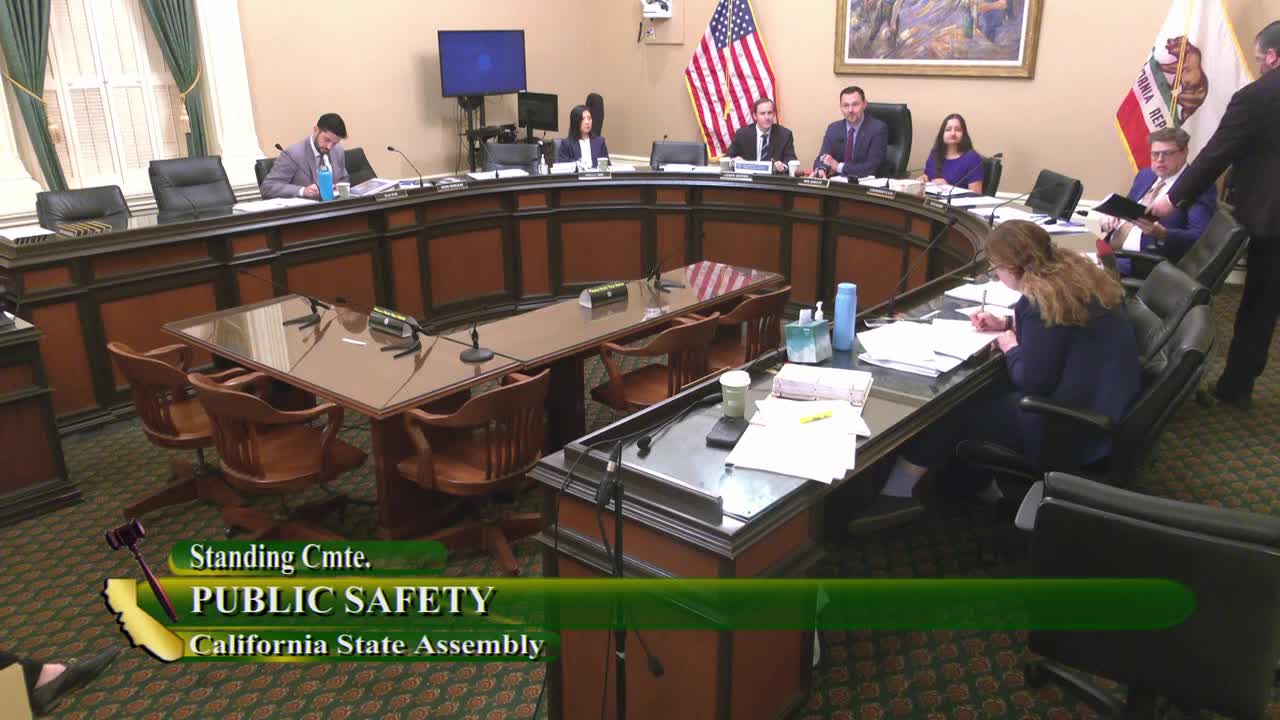 9MIN
Assembly Standing Committee on Public Safety
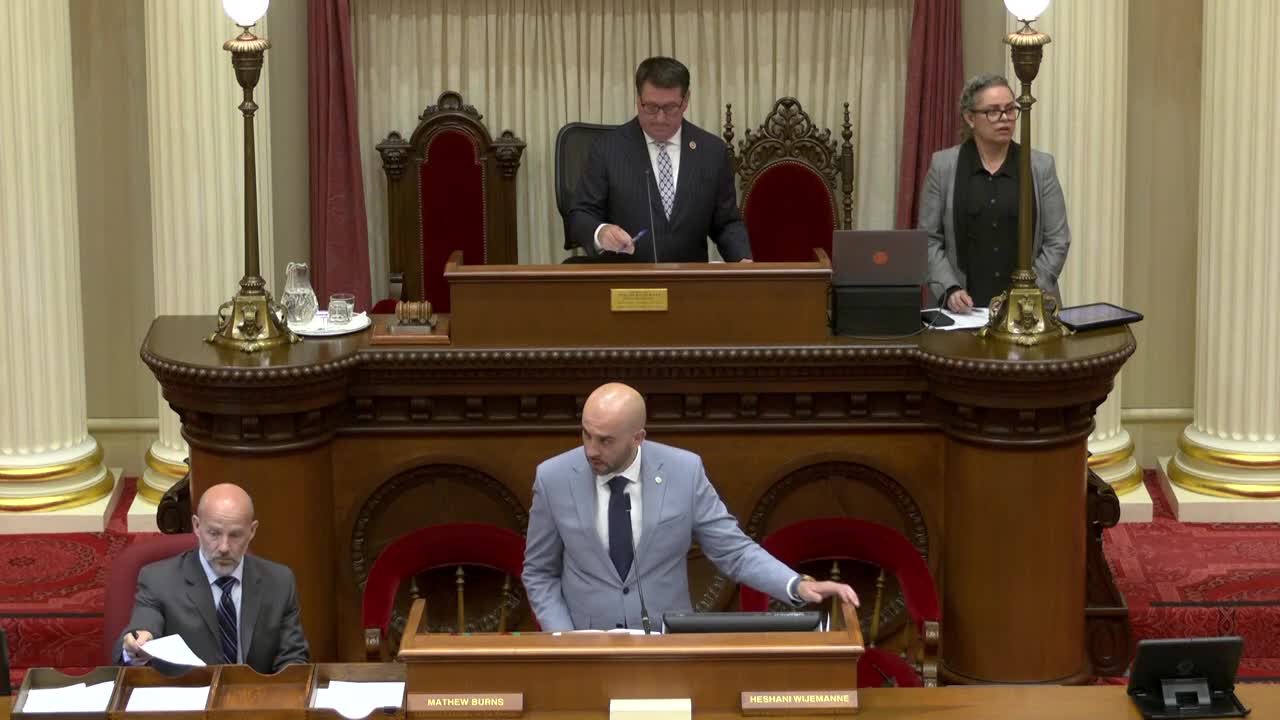 4MIN
Senate Floor
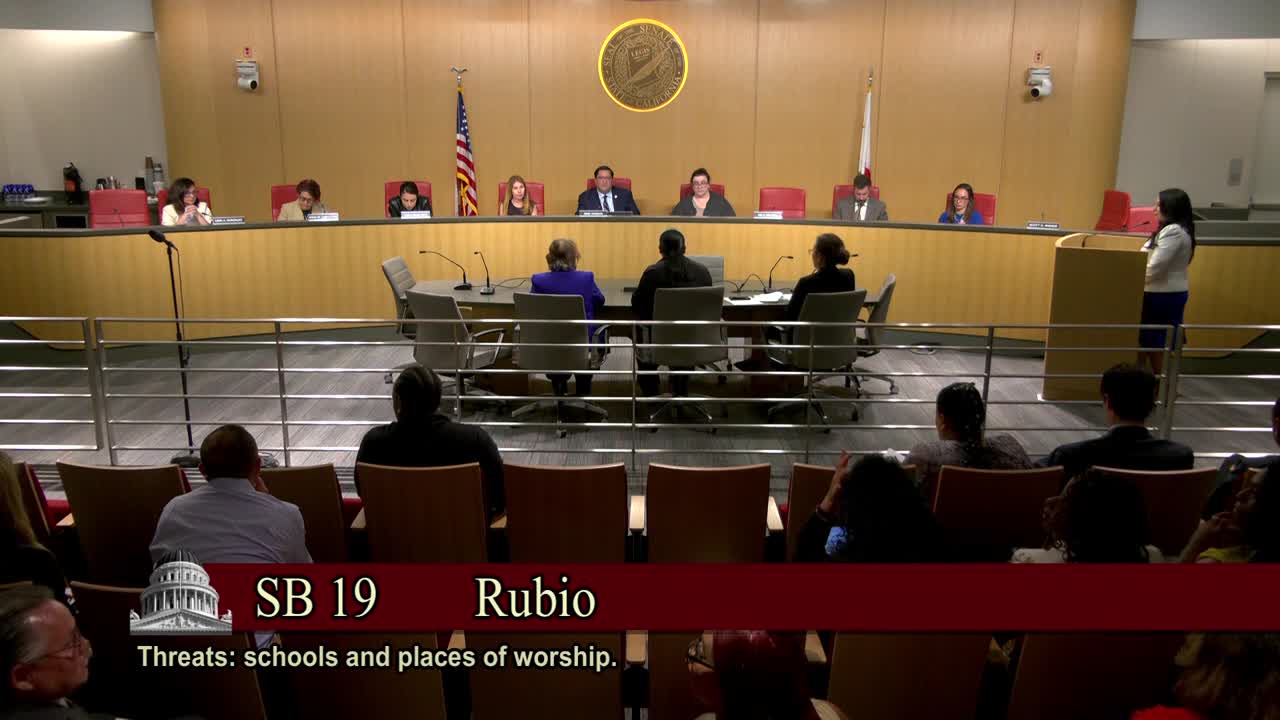 19MIN
Senate Standing Committee on Public Safety
Bill Author