SB 290: CalWORKs.
- Session Year: 2025-2026
- House: Senate
- Latest Version Date: 2025-07-17
Current Status:
In Progress
(2025-08-29: August 29 hearing: Held in committee and under submission.)
Introduced
In Committee
Awaiting First Chamber Vote
Passed First Chamber
In Committee
Awaiting Second Chamber Vote
Passed Second Chamber
Enacted
What does this bill do?
The bill removes the CalWORKs rule that required children who are not yet in school to show proof of age‑appropriate vaccinations and ends the penalty that reduced parents’ benefits when that proof wasn’t provided. Instead, CalWORKs applicants and recipients will receive a notice about the existing vaccination requirements for children who attend school or childcare and information on where to get the shots.
The summary is provided by generative AI which can make mistakes. For original language, please view the details in the table below.
Existing law generally prohibits the governing authority of a school or other institution from unconditionally admitting any person as a pupil of any public or private elementary or secondary school, childcare center, day nursery, nursery school, family daycare home, or development center, unless prior to the persons admission to that institution they have been fully immunized against various diseases, including measles, mumps, and pertussis, subject to any specific age criteria.
Existing law establishes the California Work Opportunity and Responsibility to Kids (CalWORKs) program, under which each county provides cash assistance and other benefits to qualified low-income families using federal, state, and county funds. Existing law also requires all applicants for or recipients of CalWORKs to ensure and provide documentation that each child in the assistance unit who is not required to be enrolled in school has received all age-appropriate immunizations, as specified, and prohibits the needs of all parents or caretaker relatives in the assistance unit from being considered in determining the grant to the assistance unit until the required documentation is provided. Existing law requires a notice of that immunization requirement to be given to an applicant or recipient at the time of application and at the next redetermination of eligibility for aid.
This bill would, commencing July 1, 2026, or the date when the State Department of Social Services has made a specified determination, whichever is later, repeal the requirement under CalWORKs for children who are not required to be enrolled in school to be immunized and repeal the prohibition on considering the needs of parents or caretaker relatives in determining the grant to the assistance unit until the required documentation is provided. The bill would instead require that notice to advise applicants and recipients of the existing obligation for children admitted to a public or private elementary or secondary school, childcare center, day nursery, nursery school, family daycare home, or development center, to secure the immunizations required for that admission.
Existing law continuously appropriates moneys from the General Fund to defray a portion of county costs under the CalWORKs program.
This bill would provide that the continuous appropriation would not be made for the purposes of implementing the bill.
(a)All applicants for aid under this chapter, within 30 days of the determination of eligibility for Medi-Cal benefits under Chapter 7 (commencing with Section 14000), and 45 days for applicants already eligible for benefits under Chapter 7 (commencing with Section 14000), and all recipients of aid under this chapter within 45 days of a full or financial redetermination of eligibility for aid under this chapter, shall provide documentation that all children in the assistance unit not required to be enrolled in school have received all age appropriate immunizations, unless it has been medically determined that an immunization for a child is not appropriate or the applicant or recipient has filed with the county welfare department an affidavit that the immunizations are contrary to the applicants or recipients beliefs. If the county determines that good cause exists for not providing the required documentation due to lack of reasonable access to immunization services, the period shall be extended by an additional 30 days. A circumstance that shall constitute good cause includes, but is not limited to, the applicant or recipient does not have reasonable access to immunization services due to a situation of domestic violence. If the documentation is not provided within the required time period, the needs of all parents or caretaker relatives in the assistance unit shall not be considered in determining the grant to the assistance unit under Section 11450 until the required documentation is provided. The department shall track and maintain information concerning the number of sanctions imposed under this section.
(b)At the time of application and at the next redetermination of eligibility for aid under this chapter, all applicants and recipients shall be given notice advising them of their obligation to secure the immunizations required in subdivision (a). The notice shall also contain all of the following:
(1)The Recommended Childhood Immunization Schedule, United States, and the Recommended Immunization Schedule for Children Not Immunized on Schedule in the First Year of Life, as appropriate, approved by the Advisory Committee on Immunization Practices, the American Academy of Pediatrics, and the American Academy of Family Physicians.
(2)A description of how to obtain the immunizations through a fee-for-service provider that accepts Medi-Cal, a Medi-Cal managed care plan, a county public health clinic, or any other source that may be available in the county as appropriate.
(3)A statement that the applicant or recipient may file an affidavit claiming that the immunizations are contrary to the applicants or recipients beliefs.
(c)This section shall become inoperative on July 1, 2026, or when the department notifies the Legislature that the Statewide Automated Welfare System can perform the necessary automation to implement this section, as added by Section 2 of the act that added this subdivision, whichever date is later, and, as of the following January 1, is repealed.
SEC. 2.Section 11265.8 is added to the Welfare and Institutions Code, to read:11265.8.(a)At the time of application and at the next redetermination of eligibility for aid under this chapter, all applicants and recipients shall be given notice advising them of their obligation to secure the immunizations required in Chapter 1 (commencing with Section 120325) of Chapter 1 of Part 2 of Division 105 of the Health and Safety Code. The notice shall also contain both of the following:
(1)The Recommended Childhood Immunization Schedule, United States, and the Recommended Immunization Schedule for Children Not Immunized on Schedule in the First Year of Life, as appropriate, approved by the Advisory Committee on Immunization Practices, the American Academy of Pediatrics, and the American Academy of Family Physicians.(2)A a description of how to obtain the immunizations through a fee-for-service provider that accepts Medi-Cal, a Medi-Cal managed care plan, a county public health clinic, or any other source that may be available in the county as appropriate.
(b)This section shall become operative on July 1, 2026, or when the department notifies the Legislature that the Statewide Automated Welfare System can perform the necessary automation to implement this section, whichever date is later.
SEC. 3.No appropriation pursuant to Section 15200 of the Welfare and Institutions Code shall be made for purposes of this act.
(a)All applicants for aid under this chapter, within 30 days of the determination of eligibility for Medi-Cal benefits under Chapter 7 (commencing with Section 14000), and 45 days for applicants already eligible for benefits under Chapter 7 (commencing with Section 14000), and all recipients of aid under this chapter within 45 days of a full or financial redetermination of eligibility for aid under this chapter, shall provide documentation that all children in the assistance unit not required to be enrolled in school have received all age appropriate immunizations, unless it has been medically determined that an immunization for a child is not appropriate or the applicant or recipient has filed with the county welfare department an affidavit that the immunizations are contrary to the applicants or recipients beliefs. If the county determines that good cause exists for not providing the required documentation due to lack of reasonable access to immunization services, the period shall be extended by an additional 30 days. A circumstance that shall constitute good cause includes, but is not limited to, the applicant or recipient does not have reasonable access to immunization services due to a situation of domestic violence. If the documentation is not provided within the required time period, the needs of all parents or caretaker relatives in the assistance unit shall not be considered in determining the grant to the assistance unit under Section 11450 until the required documentation is provided. The department shall track and maintain information concerning the number of sanctions imposed under this section.
(b)At the time of application and at the next redetermination of eligibility for aid under this chapter, all applicants and recipients shall be given notice advising them of their obligation to secure the immunizations required in subdivision (a). The notice shall also contain all of the following:
(1)The Recommended Childhood Immunization Schedule, United States, and the Recommended Immunization Schedule for Children Not Immunized on Schedule in the First Year of Life, as appropriate, approved by the Advisory Committee on Immunization Practices, the American Academy of Pediatrics, and the American Academy of Family Physicians.
(2)A description of how to obtain the immunizations through a fee-for-service provider that accepts Medi-Cal, a Medi-Cal managed care plan, a county public health clinic, or any other source that may be available in the county as appropriate.
(3)A statement that the applicant or recipient may file an affidavit claiming that the immunizations are contrary to the applicants or recipients beliefs.
(c)This section shall become operative on July 1, 2018.(c)This section shall become inoperative on July 1, 2026, or when the department notifies the Legislature that the Statewide Automated Welfare System can perform the necessary automation to implement this section, as added by Section 2 of the act that added this subdivision, whichever date is later, and, as of the following January 1, is repealed.
SEC. 2.Section 11265.8 is added to the Welfare and Institutions Code, to read:11265.8.(a)At the time of application and at the next redetermination of eligibility for aid under this chapter, all applicants and recipients shall be given notice advising them of their obligation to secure the immunizations required in Chapter 1 (commencing with Section 120325) of Chapter 1 of Part 2 of Division 105 of the Health and Safety Code. The notice shall also contain both of the following:
(1)The Recommended Childhood Immunization Schedule, United States, and the Recommended Immunization Schedule for Children Not Immunized on Schedule in the First Year of Life, as appropriate, approved by the Advisory Committee on Immunization Practices, the American Academy of Pediatrics, and the American Academy of Family Physicians.
(2)A description of how to obtain the immunizations through a fee-for-service provider that accepts Medi-Cal, a Medi-Cal managed care plan, a county public health clinic, or any other source that may be available in the county as appropriate.
(b)This section shall become operative on July 1, 2026, or when the department notifies the Legislature that the Statewide Automated Welfare System can perform the necessary automation to implement this section, whichever date is later.
SEC. 3.No appropriation pursuant to Section 15200 of the Welfare and Institutions Code shall be made for purposes of this act.
|
Date
|
Status
|
|---|---|
| Aug 29, 2025 | August 29 hearing: Held in committee and under submission. |
| Aug 20, 2025 | August 20 set for first hearing. Placed on APPR. suspense file. |
| Jul 17, 2025 | Read second time and amended. Re-referred to Com. on APPR. |
| Jul 16, 2025 | From committee: Do pass as amended and re-refer to Com. on APPR. (Ayes 7. Noes 0.) (July 15). |
| Jul 2, 2025 | July 1 set for first hearing canceled at the request of author. |
| Jun 5, 2025 | Referred to Com. on HUM. S. |
| May 29, 2025 | In Assembly. Read first time. Held at Desk. |
| May 29, 2025 | Read third time. Passed. (Ayes 38. Noes 0. Page 1324.) Ordered to the Assembly. |
| May 27, 2025 | Ordered to special consent calendar. |
| May 23, 2025 | Read second time. Ordered to third reading. |
| May 23, 2025 | From committee: Do pass. (Ayes 6. Noes 0. Page 1194.) (May 23). |
| May 16, 2025 | Set for hearing May 23. |
| Apr 21, 2025 | April 21 hearing: Placed on APPR. suspense file. |
| Apr 21, 2025 | Set for hearing April 21. |
| Apr 8, 2025 | From committee: Do pass and re-refer to Com. on APPR. with recommendation: To consent calendar. (Ayes 5. Noes 0. Page 682.) (April 7). Re-referred to Com. on APPR. |
| Mar 13, 2025 | Set for hearing April 7. |
| Feb 19, 2025 | Referred to Com. on HUMAN S. |
| Feb 7, 2025 | From printer. May be acted upon on or after March 9. |
| Feb 6, 2025 | Introduced. Read first time. To Com. on RLS. for assignment. To print. |
|
Date
|
Description
|
Location
|
Votes
|
|
|---|---|---|---|---|
| Jul 15, 2025 | Do pass as amended and be re-referred to the Committee on [Appropriations] | Assembly Standing Committee on Human Services |
Passed |
|
| May 29, 2025 | Special Consent SB290 Smallwood-Cuevas | Senate Floor |
Passed |
|
| May 23, 2025 | Do pass | Senate Standing Committee on Appropriations |
Passed |
|
| Apr 21, 2025 | Placed on suspense file | Senate Standing Committee on Appropriations |
Passed |
|
| Apr 7, 2025 | Do pass, but first be re-referred to the Committee on [Appropriations] with the recommendation: To Consent Calendar | Senate Standing Committee on Human Services |
Passed |
This list shows positions taken on this bill by organizations on the date displayed, which is linked to the original source.
Positions by individuals are not included.
|
Organization
|
Position
|
Date
|
|---|---|---|
| California Coalition of California Welfare Rights Advocates | ** Support | |
| California Partnership To End Domestic Violence | ** Support | |
| California State Council of Service Employees International Union | ** Support | |
| California Women's Law Center | ** Support | |
| Child Care Providers United | ** Support | |
| Coalition of California Welfare Rights Organizations | ** Support | |
| County Welfare Directors Association of California | ** Support | |
| End Poverty in California | ** Support | |
| Grace Institute - End Child Poverty in Ca | ** Support | |
| Parent Voices CA | ** Support | |
| western center on law & poverty | ** Support |
Date of Hearing: August 20, 2025
ASSEMBLY COMMITTEE ON APPROPRIATIONS
Buffy Wicks, Chair
SBPCA Bill Id:SB 290
Author:(Smallwood-Cuevas) – As Amended Ver:July 17, 2025
Policy Committee: | Human Services | Vote: | 7 - 0 |
|
| ||
|
|
Urgency: No State Mandated Local Program: No Reimbursable: No
SUMMARY:
This bill repeals the requirement that California Work Opportunity and Responsibility to Kids (CalWORKs) applicants and recipients provide documentation that each child who is not required to be in school has received all age appropriate immunizations, and revises the notice requirements advising families of their obligation to secure immunizations.
Specifically, this bill:
- Beginning July 1, 2026, or when the California Department of Social Services (CDSS) notifies the Legislature that the Statewide Automated Welfare System(CalSAWS) can perform the necessary automation, whichever date is later:
- Repeals the requirement that CalWORKs applicants and recipients submit documentation showing the children in their households are immunized and the related prohibition on considering the needs of parents or caretaker relatives in determining the cash grant to the assistance unit until the required documentation is provided.
- Repeals the corresponding requirement that, at the time of application and the next redetermination of eligibility for aid, notice be given to all CalWORKs applicants and recipients advising them of their obligation to secure immunizations for all children in the assistance units not required to be in school.
- Instead requires notice be given to all CalWORKs applicants and recipients advising them of the obligation under existing law for children admitted to a public or private elementary or secondary school, childcare center, day nursery, nursery school, family daycare home, or development center to secure the immunizations required for that admission.
- Requires the immunization notice referenced in item c, above, to contain a description of how to obtain immunizations through Medi-Cal, a county public health clinic, or any other source that may be available in the county as appropriate.
FISCAL EFFECT:
- CDSS estimates ongoing General Fund (GF) costs of approximately $9.2 million annually, for increased cash aid grants for CalWORKs families who currently have an immunization penalty. CDSS estimates an average of 3,134 adults receive the immunization penalty annually.
- CDSS estimates one-time GF automation costs of $1.2 million in 2026-27, and $59,000 annually ongoing.
COMMENTS:
- Purpose. According to the Author:
California's CalWORKs program serves as a crucial safety net for families experiencing financial hardship by ensuring that children and their caregivers receive essential support to meet basic needs. Unfortunately, under existing law, aid eligibility requires a parent or caretaker to provide immunization documentation, which many low-income families do not have, and if not produced harms the very children whose health is the focus of the immunization requirement, by cutting the family’s CalWORKs aid. [This bill] seeks to remove this barrier to ensure that families in need are not penalized for administrative challenges unrelated to their economic struggles. [This bill] shifts the focus from penalization to education, ensuring that CalWORKs recipients are fully informed of existing immunization mandates for school-aged children.
- Background. CalWORKs, the state’s largest anti-poverty program, provides eligible low-income families with cash grants and supportive services and resources, such as subsidized child care, employment training, mental health counseling, and housing assistance, aimed at moving children out of poverty and helping qualified low income families meet their basic needs.
Existing state law requires every applicant for, and every recipient of, CalWORKs benefits to provide documentation that every child in the assistance unit not required to be enrolled in school has received all age-appropriate immunizations. An applicant or recipient may be exempt from this requirement if they submit documentation from a healthcare professional that an immunization is not appropriate for medical reasons, or if the applicant or recipient has filed with the county welfare department an affidavit stating immunizations are contrary the applicant’s or recipient’s beliefs.
CalWORKs applicants must provide proof of immunization within 30 days of approval for Medi-Cal or within 45 days from date of application for CalWORKs if a person is already enrolled in Medi-Cal. CalWORKs recipients must submit documentation within 45 days of the county notifying the recipient that proof of immunization is required. If the applicant or recipient does not meet the specified deadline, the family is “sanctioned,” whereby their cash aid is reduced by the parent or caretaker relative’s share until the required documentation is provided. CDSS indicates an average of 3,134 adults receive this immunization penalty annually.
Existing state law also requires counties to provide applicants and recipients a notice advising them of their obligation to secure immunizations for each child not required to be in school. The notice must include recommended childhood immunization schedules, as specified, and information on obtaining immunizations using Medi-Cal or through a county public health clinic or other available sources, and a statement indicating the applicant or recipient may file an affidavit claiming the immunizations are contrary to their beliefs.
This bill repeals the CalWORKs requirement that a child not required to be enrolled in school must be immunized and the accompanying sanctions on families who fail to provide timely immunization documentation.
This bill also revises the notice provided to applicants and recipients regarding immunizations by deleting the existing requirement and instead requiring notice of the existing-law obligation for children admitted to school or a childcare setting to secure immunizations required for admission. The notice must still contain a description of how to obtain the immunizations through Medi-Cal, a county public health clinic, or other available source in the county, but not the recommended childhood immunization schedules and the now-irrelevant statement indicating an applicant or recipient may file an affidavit claiming immunizations are contrary to their beliefs.
- Related Legislation. AB 1074 (Patel), of this legislative session, among other provisions, requires a CalWORKs sanction imposed for failing to verify the immunization of a child to end upon the removal of the child from the assistance unit and their placement into out-of-home care. AB 1074 is pending hearing in the Senate Appropriations Committee.
Analysis Prepared by: Jennifer Swenson / APPR. / (916) 319-2081
Date of Hearing: July 15, 2025
ASSEMBLY COMMITTEE ON HUMAN SERVICES
Alex Lee, Chair
SBPCA Bill Id:SB 290
Author:(Smallwood-Cuevas) – As Introduced Ver:February 6, 2025
SENATE VOTE: 38-0
SUBJECT: CalWORKs
SUMMARY: Repeals vaccine requirements for California Work Opportunity and Responsibility to Kids (CalWORKs) recipients on July 1, 2026, or when the California Department of Social Services (CDSS) notifies the Legislature that the Statewide Automated Welfare System can perform the necessary automation. Specifically, this bill, removes the CalWORKs immunization penalty by deleting provisions of current law that, as specified:
- Require all CalWORKs applicants and recipients, within 30 to 45 days depending on the circumstances, with an additional 30 days when good cause is determined to exist, to provide documentation that all children in the assistance unit who are not required to be enrolled in school have received all age-appropriate immunizations unless: it has been medically determined that an immunization for a child is not appropriate, or the applicant or recipient has filed an affidavit with the county welfare department attesting that the immunizations are contrary to their beliefs; and,
- Require, at the time of application and at the next redetermination of eligibility for aid, for the notice advising recipients of their obligation to secure immunizations, to contain a statement that the applicant or recipient may file an affidavit claiming that the immunizations are contrary to the applicant’s or recipient’s beliefs.
EXISTING LAW:
- Establishes the CalWORKs program to provide cash assistance and other social services for low-income families through the federal Temporary Assistance for Needy Families (TANF) program. Under CalWORKs, each county provides assistance through a combination of state, county, and federal TANF funds. (Welfare and Institutions Code [WIC] § 11200 et seq.)
- Establishes the maximum aid for qualifying families. (WIC § 11450)
- Requires all children in a CalWORKs assistance unit for whom school attendance is compulsory to be required to attend school, as specified. (WIC § 11253.5)
- Requires CalWORKs applicants and recipients to provide documentation showing that all children in the assistance unit who are not required to be enrolled in school have received all age-appropriate immunizations within 30 to 45 days, as specified. Provides exemptions in cases where it has been determined that immunizations are not medically appropriate, or when an affidavit attesting that immunizations are contrary to the applicant's or recipient's beliefs has been filed with the county welfare department. (WIC 11265.8)
- Prohibits an aid payment for any adult in the assistance unit if the required documentation of immunization is not provided within the specified time period. (WIC § 11265.8)
- Establishes qualifying welfare-to-work activities to include employment, on-the-job training, community service, adult basic education, and other specified activities, and requires a specified number of weekly hours of welfare-to-work participation to remain eligible for aid. (WIC § 11322.6)
- Provides that a recipient is eligible to participate in family stabilization if the county determines that the recipient’s family is experiencing an identified situation or crisis that is destabilizing the family and would interfere with participation in welfare-to-work activities and services. A situation or a crisis that is destabilizing the family may include, but shall not be limited to:
- Homelessness or imminent risk of homelessness;
- A lack of safety due to domestic violence; or,
- Untreated or undertreated behavioral needs, including mental health or substance use disorder-related needs. (WIC § 11325.24)
- Homelessness or imminent risk of homelessness;
- Directs the Department of Public Health, in consultation with the Department of Education, to adopt and enforce regulations to carry out the stated legislative intent to fully immunize appropriate age groups against certain childhood diseases, including diphtheria, measles, mumps, and others, as specified. Allows for certain medical exemptions to immunization requirements, provided specified documentation is supplied. (Health and Safety Code Section 120325 et seq.)
FISCAL EFFECT: According to the Senate Committee on Appropriations on April 21, 2025, the CDSS estimates the following:
- No fiscal impact to state operations.
- Ongoing General Fund costs, ranging from $7 million to $10 million, resulting from increasing the cash aid grants for families who currently have an immunization penalty.
- One-time costs in 2026-27, ranging from $1 million to $2 million, and approximately $50,000 to $60,000 ongoing thereafter for automation (General Fund).
COMMENTS:
Background: CalWORKs Eligibility and Program Requirements. CalWORKs is the state’s primary cash assistance program. More specifically, CalWORKs implements the federal TANF program, which is a federal block grant with the objective of providing income and support to families with children. CalWORKs provides eligible low-income families with cash grants and supportive services and resources, such as subsidized child care, employment training, mental health counseling, and housing assistance.
To qualify for CalWORKs, families generally must earn less than about 80% of the federal poverty level. In 2024-25, the administration estimates the average CalWORKs grant amount to be $1,001 per month across all family sizes and income levels. Only families with children generally qualify for CalWORKs. Further, to qualify, recipients are required to participate in welfare-to-work programs unless exempt.
CalWORKs is administered at the county level; it is funded largely through the federal TANF block grant and state maintenance-of-effort contributions. The federal Personal Responsibility and Work Opportunity Reconciliation Act (PRWORA) of 1996 (P.L. 104-193) adopted the TANF program. TANF provides block grants (to be supplemented by state maintenance-of-effort funds) to states to design their own welfare programs that meet federal requirements, including the establishment of work requirements and imposition of a lifetime limit of no more than five years on receipt of TANF benefits. Among many other provisions, PRWORA authorized states to create individual responsibility plans for program participants, whereby states could opt to establish a number of obligations related to receipt of TANF benefits, including requiring school attendance, health screenings, and immunizations.
CalWORKs Immunization Requirements. As such, AB 1542 (Ducheny), Chapter 270, Statutes of 1997, adopted a requirement that that all applicants for, and recipients of, CalWORKs benefits provide documentation that any children in the assistance unit under the age of 6 not required to be enrolled in school have received all age-appropriate immunizations. Applicants and recipients can secure an exemption from this requirement if they file an affidavit with the county stating that immunizations are against their beliefs, or if they supply documentation stating that it has been medically determined that immunizations are inappropriate. Counties are required to give individuals applying for or receiving CalWORKs aid a notice regarding their obligation to provide proof of immunization; these individuals must also be provided information on, among other things, the relevant childhood immunization schedules and how to obtain immunizations using Medi-Cal or through a county public health clinic or other available sources.
Adults applying for CalWORKs must supply the required proof of immunization within 30 days of approval for Medi-Cal, unless they are already receiving Medi-Cal – in those instances, they have 45 days to submit documentation. Parents and caretaker relatives who are already receiving CalWORKs have 45 days after redetermination of CalWORKs eligibility to submit immunization documentation. An additional 30 days may be granted if the county finds that good cause exists for a CalWORKs applicant or recipient failing to submit verification in the timeframe allowed. If a parent or caretaker relative does not submit the required documentation by the specified deadline, their needs will not be considered in determining the family’s grant amount until such documentation is supplied.
According to CalWORKs immunization rules, if a recipient does not submit proof of immunization for all children under 6 years of age in the assistance unit, their cash aid will be lowered by an amount equal to the share of the cash aid for the parent or caretaker relative. Once proof is submitted, the share of cash aid will be restored for the parent/caretaker relative.
This bill would remove proof of immunization as a program requirement to receive CalWORKs, but will still require applicants, at the time of application and redetermination, to be given notice advising of their obligation to secure the required age-appropriate immunizations. The notice will no longer include a statement that the applicant or recipient may file an affidavit claiming that the immunizations are contrary to their belief.
Author’s Statement: According to the Author, “California's CalWORKs program serves as a crucial safety net for families experiencing financial hardship by ensuring that children and their caregivers receive essential support to meet basic needs. Unfortunately, under existing law, aid eligibility requires a parent or caretaker to provide immunization documentation, which many low-income families do not have, and if not produced harms the very children whose health is the focus of the immunization requirement, by cutting the family’s CalWORKs aid. [This bill] seeks to remove this barrier to ensure that families in need are not penalized for administrative challenges unrelated to their economic struggles. [This bill] does not eliminate immunization requirements for children entering school or childcare settings. Instead, it shifts the focus from penalization to education, ensuring that CalWORKs recipients are fully informed of existing immunization mandates for school-aged children. Families seeking aid through CalWORKs are often facing multiple intersecting challenges, including housing instability, food insecurity, and limited access to healthcare. Rather than compounding these difficulties with restrictive and bureaucratic eligibility conditions, [this bill] provides a more compassionate, effective, and equitable approach to supporting California's most vulnerable families.”
Equity Implications: According to the Legislative Analyst's Office, on June 16, 2025, in 2023, approximately 64% of families living in poverty were headed by women, compared to 50% of all families in California. Hispanic families made up about 59% of those in poverty. Regionally, the highest concentrations of families in poverty were found in Los Angeles County (28%) and the San Joaquin Valley (20%).
Families experiencing poverty often face barriers to obtaining medical appointments, documentation of medical appointments, and then providing the documentation to county workers. The administrative burden of turning in such documentation may result in barriers to receive aid. This bill may alleviate such burdens.
Policy Considerations: Current law requires that applicants for initial and redetermination of eligibility for CalWORKs receive a notice including the Recommended Childhood Immunization Schedule, United States, and the Recommended Immunization Schedule for Children Not Immunized on Schedule in the First Year of Life, as appropriate, approved by the Advisory Committee on Immunization Practices, the American Academy of Pediatrics, and the American Academy of Family Physicians. However, on June 9, 2025, the entire advisory committee was dismissed, replaced with eight new members, and staff dedicated to immunization at the Centers for Disease Control have been significantly reduced. This change has prompted concern from the American Medical Association (AMA) and doctors. The AMA issued the following statement:
“For generations, the Advisory Committee on Immunization Practices (ACIP) has been a trusted national source of science-and data-driven advice and guidance on the use of vaccines to prevent and control disease. Physicians, parents, community leaders and public health officials rely on them for clinical guidance, public health information, and knowledge. Today’s action to remove the 17 sitting members of ACIP undermines that trust and upends a transparent process that has saved countless lives. With an ongoing measles outbreak and routine child vaccination rates declining, this move will further fuel the spread of vaccine-preventable illnesses.”
Should this bill move forward, the Author may wish to remove the requirement to share information from ACIP.
Proposed Committee Amendments: In order to address the above policy considerations, the Committee proposes the author take the following amendments:
SEC. 2. Section 11265.8 is added to the Welfare and Institutions Code, to read:
11265.8. (a) At the time of application and at the next redetermination of eligibility for aid under this chapter, all applicants and recipients shall be given notice advising them of their obligation to secure the immunizations required in Chapter 1 (commencing with Section 120325) of Chapter 1 of Part 2 of Division 105 of the Health and Safety Code. The notice shall also contain both of the following:
(1) The Recommended Childhood Immunization Schedule, United States, and the Recommended Immunization Schedule for Children Not Immunized on Schedule in the First Year of Life, as appropriate, approved by the Advisory Committee on Immunization Practices, the American Academy of Pediatrics, and the American Academy of Family Physicians.
(2) A description of how to obtain the immunizations through a fee-for-service provider that accepts Medi-Cal, a Medi-Cal managed care plan, a county public health clinic, or any other source that may be available in the county as appropriate.
RELATED AND PRIOR LEGISLATION:
AB 283 (Chu) of 2019, would have revised the requirements regarding mandatory school attendance, eliminate the personal belief exemption for immunization within CalWORKs, delete the requirement that the needs of all parents or caretaker relatives in the assistance unit shall not be considered in determining the amount of the monthly grant if immunization documentation is not provided and, instead permit $50 per month to be withheld from the monthly grant until the required immunization documentation is provided, regardless of the size of the family. AB 283 was vetoed by Governor Newsom.
AB 376 (Lopez) of 2015, would have required CalWORKs applicants or recipients provide immunization records only if the county obtains a report from the California Immunization Registry but is unable to verify that the immunizations have been performed. AB 376 was vetoed by Governor Brown.
REGISTERED SUPPORT / OPPOSITION:
Support
Coalition of California Welfare Rights Organizations (Co-Sponsor)
GRACE Institute - End Child Poverty in CA (Co-Sponsor)
Western Center on Law & Poverty (Co-Sponsor)
California Coalition of California Welfare Rights Advocates
California Partnership to End Domestic Violence
California State Council of Service Employees International Union (SEIU California)
California Women's Law Center
Child Care Providers United (CCPU)
County Welfare Directors Association of California
End Poverty in California (EPIC)
Parent Voices CA
Opposition
None on file.
Analysis Prepared by: Alexandria Smith / HUM. S. / (916) 319-2089
SENATE RULES COMMITTEE Office of Senate Floor Analyses (916) 651-1520 Fax: (916) 327-4478 | SB 290 |
THIRD READING
Bill No: SB 290
Author: Smallwood-Cuevas (D)
Introduced: 2/6/25
Vote: 21
SENATE HUMAN SERVICES COMMITTEE: 5-0, 4/7/25
AYES: Arreguín, Ochoa Bogh, Becker, Limón, Pérez
SENATE APPROPRIATIONS COMMITTEE: 6-0, 5/23/25
AYES: Caballero, Seyarto, Cabaldon, Grayson, Richardson, Wahab
NO VOTE RECORDED: Dahle
SUBJECT: CalWORKs
SOURCE: Coalition of California Welfare Rights Organizations
GRACE/ End Child Poverty California
Western Center on Law and Poverty
DIGEST:
This bill sunsets the requirement that California Work Opportunity and Responsibility to Kids (CalWORKs) recipients must provide evidence of vaccination for children under the age of six years old and requires the California Department of Social Services (CDSS) to provide CalWORKs recipients and applicants information on childhood immunizations and where to access immunizations through fee-for- service Medical providers.
ANALYSIS:
Existing Federal Law, establishes the federal Temporary Assistance for Needy Families (TANF) program, which provides block grants to states to develop and implement their own state welfare-to-work programs designed to provide cash assistance and other supports and services to low-income families. (42 United States Code 601 et seq.)
Existing State Law:
- Establishes the CalWORKS program to provide cash assistance and other social services for low-income families through the federal TANF program. Under CalWORKs, each county provides assistance through a combination of state, county, and federal TANF funds. (Welfare and Institutions Code [WIC] §11200 et seq.)
- Establishes income, asset, and real property limits used to determine eligibility for the CalWORKs program, and CalWORKs grant amounts, based on family size and county of residence. (WIC § 11150 to 11160; 11450 et seq.)
- Requires all children in a CalWORKs assistance unit for whom school attendance is compulsory to attend school, with specified exceptions. States that a child shall be presumed to be attending school unless they have been deemed a chronic truant, as specified, and prohibits, unless specified conditions exist, the consideration of the needs of a child in an assistance unit who is 16 years old or older from being considered in the calculation of the family’s CalWORKs cash grant in any month in which the county is informed that the child did not attend school. (WIC § 11253.5)
- Requires CalWORKs participants to submit documentation showing that all the children in a CalWORKs assistance unit who are not required to be enrolled in school have received the appropriate immunizations unless they provide evidence that it is medically inappropriate or against their beliefs, within 45 days of eligibility determination. Also requires CDSS to provide recipients with information about childhood vaccinations, where to get them, and a notice saying a recipient may file an affidavit claiming that the immunizations are contrary to the applicant’s or recipient’s beliefs. (WIC §11265.8)
- Prohibits an aid payment for any adult in the assistance unit if the required documentation of immunization is not provided within the specified time period. (WIC § 11265.8)
- Generally requires a recipient of CalWORKs benefits to participate in welfare-to-work activities as a condition of eligibility for aid. (WIC § 11320 et. seq.)
- Prohibits a governing authority from admitting any person or student in certain facilities including, child care centers, day nurseries, nursery schools, family day care homes, or development centers, unless they have been fully immunized prior to their first admission. The following immunizations are required to be documented:
- Diphtheria.
- Haemophilus influenzae type b.
- Measles
- Mumps.
- Pertussis (whooping cough).
- Poliomyelitis.
- Rubella.
- Tetanus.
- Hepatitis B.
- Varicella (chickenpox).
- Any other disease deemed appropriate by the Department of Public Health, taking into consideration the recommendations of the Advisory Committee on Immunization Practices of the United States Department of Health and Human Services, the American Academy of Pediatrics, and the American Academy of Family Physicians. (Health and Safety Code § 120335)
This Bill:
- Sunsets, on July 1, 2026, or whenever CDSS notifies the Legislature that the Statewide Automated Welfare System can perform the automation necessary to implement the requirements of this bill, whichever is later, the requirement that CalWORKs applicants or recipients must submit documentation showing the children in their household have been immunized.
- Sunsets, on July 1, 2026, or whenever CDSS notifies the Legislature that Statewide Automated Welfare System can perform the automation necessary to implement the requirements of this bill, whichever is later, the requirement that an applicant or recipient of CalWORKs may file an affidavit claiming that immunizations are contrary to the applicant’s or recipient’s beliefs.
- Requires CDSS to provide, at the time of application or next redetermination, a notice to CalWORKS applicants and recipients of their obligation to vaccinate their children as required by law.
- Requires the notice to include the Recommended Childhood Immunization Schedule and the Recommended Immunization Schedule for Children Not Immunized on Schedule in the First Year of Life, as appropriate, and approved by the Advisory Committee on Immunization Practices, the American Academy of Pediatrics, and the American Academy of Family Physicians.
- Requires the notice to include a description of how to receive immunizations from a fee-for-service provider that accepts Medi-Cal.
- States this bill shall become operative on July 1, 2026 or when the department notifies the Legislature that the Statewide Automated Welfare System can perform the necessary automation to implement this section, whichever date is later.
Comments
According to the author, “California’s CalWORKs program serves as a crucial safety net for families experiencing financial hardship by ensuring that young children and their caregivers receive essential support to meet basic needs. Unfortunately, under existing law, aid eligibility requires a parent or caretaker to provide immunization documentation for children under the age of six—those not yet required to be enrolled in school. Many low-income families lack access to these records due to systemic barriers and limited healthcare access. Additionally, they must provide proof of application for unemployment benefits. Senate Bill 290 seeks to remove these administrative barriers, ensuring that families with young children are not penalized for challenges unrelated to their financial need.
SB 290 does not eliminate immunization requirements for children entering school or licensed childcare settings. Instead, it shifts the focus from penalization to education, ensuring that CalWORKs recipients are fully informed of existing immunization mandates. Families seeking aid through CalWORKs often face multiple intersecting challenges, including housing instability, food insecurity, and limited access to healthcare. Rather than compounding these difficulties with restrictive eligibility conditions, SB 290 provides a more compassionate, effective, and equitable approach to supporting California’s most vulnerable families—especially those with children under age six years old.”
CalWORKs. As the California’s version of the federal TANF program, CalWORKs is the state’s largest anti-poverty program. CalWORKs provides temporary cash assistance aimed at moving children out of poverty and helping qualified low-income families meet their basic needs, such as rent, clothing, utility bills, food, and other items needed to ensure children are cared for at home and safely remain with their families. In addition to cash assistance, adult CalWORKs recipients are provided education, employment, and training services designed to help remove barriers to work and promote self-sufficiency. These services are typically outlined in a welfare-to-work plan. CDSS is the designated state agency responsible for program supervision at the state level, and counties are responsible for administering the program at the local level.
CalWORKs is funded through federal, state, county and realignments funds. The federal government gives the state a TANF block grant and CalWORKs receives a majority of that allocation. California and local governments spend a maintenance-of-effort amount as well as required by federal law. The state also uses General Fund money for state-only programs and provides counties with a single allocation to fund many CalWORKs services. Funds from the 1991 realignment are also used to fund assistance payments and are part of the single allocation.
Eligibility for CalWORKs is based on family size, income level, and region. Families must show economic hardship through income and asset tests and participation in the program is also time limited. Adults are only allowed to use CalWORKs for 60 months in their lifetime. Children of adults who receive cash aid can continue to receive benefits until they are 18 years old in California. Based on the welfare-to-work plan, families can have cash aid temporarily cut through “sanctions” for not complying with certain required elements of CalWORKs or their plan. According to the California Budget and Policy Center, in 2022, an average of 60,000 children were affected by sanctions. For single parent homes those sanctions averaged a cash aid cut of $120 and for two parent home a cut of $235. Aid can be restored but this can be a long and complex process depending on why the sanction happened.
CalWORKs Immunization Policy. Though CalWORKs is administered by the state, benefits are funded by the federal government and the program abides by federal laws and regulations. Within the bounds of those federal laws, California has the ability to add additional regulations. Currently, California has CalWORKS requirements for childhood vaccinations that are state specific. In California, recipients of CalWORKs must submit proof that any children in the household under the age of six have received age appropriate vaccinations. For CalWORKs applicants, documentation must be submitted within 30 days of approval of Medi-Cal or within 45 days from date of application for CalWORKs if a person is already enrolled in Medi-Cal. For CalWORKs recipients, documentation must be submitted 45 days after the county notifies the recipient that proof of immunization is required. If documentation is not submitted, the household will be sanctioned and cash aid will be lowered until proof is submitted. However, there are exemptions; if a parent submits documentation from a healthcare professional that the child should not be vaccinated for medical reasons or submits an affidavit stating that immunizations are against their beliefs, they will not be sanctioned.
This bill would remove the requirement that CalWORKs recipients and applicants must submit proof of vaccination and instead only provide information about what immunizations are recommended and where they can be acquired with Medi-Cal coverage.
Related/Prior Legislation
AB 1074 (Patel, 2025) makes various changes to CalWORKs sanctions and welfare-to-work policies including requiring that a sanction imposed for failing to verify the immunization of a child ends upon the removal of the child from the assistance unit and their placement into out-of-home care. This bill is pending on the Assembly Floor.
AB 283 (Chu, 2019) would have revised the requirements regarding mandatory school attendance, eliminate the personal belief exemption for immunization within CalWORKs, delete the requirement that the needs of all parents or caretaker relatives in the assistance unit shall not be considered in determining the amount of the monthly grant if immunization documentation is not provided and, instead permit $50 per month to be withheld from the monthly grant until the required immunization documentation is provided, regardless of the size of the family. This bill was vetoed.
AB 376 (Lopez, 2015) would have required CalWORKs applicants or recipients provide immunization records only if the county obtains a report from the California Immunization Registry but is unable to verify that the immunizations have been performed. This bill was vetoed.
FISCAL EFFECT: Appropriation: No Fiscal Com.: Yes Local: No
According to the Senate Appropriations Committee “the California Department of Social Services (CDSS) estimates the following:
- No fiscal impact to state operations.
- Ongoing General Fund costs, ranging from $7 million to $10 million, resulting from increasing the cash aid grants for families who currently have an immunization penalty.
- One-time costs in 2026-27, ranging from $1 million to $2 million, and approximately $50,000 to $60,000 ongoing thereafter for automation (General Fund).
SUPPORT: (5/23/25)
Coalition of California Welfare Rights Organizations (Sponsor)
Grace Institute - End Child Poverty in Ca (Co-Sponsor)
Western Center on Law & Poverty (Co-Sponsor)
California State Council of Service Employees International Union (SEIU California)
Child Care Providers United
County Welfare Directors Association of California
OPPOSITION: (5/23/25)
None received
Prepared by: Naima Ford Antal / HUMAN S. / (916) 651-1524
5/25/25 14:55:52
**** END ****
290SENATE COMMITTEE ON
Senator Anna Caballero, Chair
2025 - 2026 Regular Session
SB 290 (Smallwood-Cuevas) - CalWORKs
Version: | Policy Vote: |
Urgency: | Mandate: |
Hearing Date: | Consultant: |
Bill Summary:
SB 290 would repeal the existing requirement that CalWORKs applicants provide documentation that children have received all age appropriate immunizations, as specified.
Fiscal Impact:
The California Department of Social Services (CDSS) estimates the following:
- No fiscal impact to state operations.
- Ongoing General Fund costs, ranging from $7 million to $10 million, resulting from increasing the cash aid grants for families who currently have an immunization penalty.
- One-time costs in 2026-27, ranging from $1 million to $2 million, and approximately $50,000 to $60,000 ongoing thereafter for automation (General Fund).
Background:
CalWORKs provides temporary cash assistance aimed at moving children out of poverty and helping qualified low-income families meet their basic needs, such as rent, clothing, utility bills, food, and other items needed to ensure children are cared for at home and safely remain with their families. Current law requires CalWORKs applicants to provide documentation that all children in the assistance unit not required to be enrolled in school have received all age appropriate immunizations, unless it has been medically determined that an immunization for a child is not appropriate or the applicant or recipient has filed with the county welfare department an affidavit that the immunizations are contrary to the applicant’s or recipient’s beliefs. If the documentation is not provided within the required time period, as specified, the family will be sanctioned whereby the needs of all parents or caretaker relatives in the assistance unit will not be considered in determining the grant to the assistance unit until the required documentation is provided.
At the time of application and at the next redetermination of eligibility for CalWORKs, all applicants and recipients must be given notice advising them of their obligation to secure the immunizations. The notice must contain all of the following:
- The Recommended Childhood Immunization Schedule, United States, and the Recommended Immunization Schedule for Children Not Immunized on Schedule in the First Year of Life, as appropriate, approved by the Advisory Committee on Immunization Practices, the American Academy of Pediatrics, and the American Academy of Family Physicians.
- A description of how to obtain the immunizations through a fee-for-service provider that accepts Medi-Cal, a Medi-Cal managed care plan, a county public health clinic, or any other source that may be available in the county as appropriate.
- A statement that the applicant or recipient may file an affidavit claiming that the immunizations are contrary to the applicant’s or recipient’s beliefs.
Current law prohibits admittance for any person as a pupil of any private or public elementary or secondary school, child care center, day nursery, nursery school, family day care home, or development center, unless, prior to his or her first admission to that institution, he or she has been fully immunized. Current law specifies a list of childhood diseases for which immunizations must be documented, including a process for medical exemptions.
Proposed Law:
SB 290 would, on July 1, 2026, or when CDSS notifies the Legislature that the Statewide Automated Welfare System can perform the necessary automation to implement the bill, whichever date is later, repeal the existing requirement for documentation of children’s immunizations for purposes of the CalWORKs application and revise the notice requirements advising families of their obligation to secure immunizations, as specified.
Related Legislation:
AB 1074 (Patel) would, among other provisions, require that a CalWORKs sanction imposed for failing to verify the immunization of a child, end upon the removal of the child from the assistance unit and their placement into out-of-home care. The bill is currently in the Assembly Appropriations Committee.
-- END --
SENATE COMMITTEE ON HUMAN SERVICES
Senator Arreguín, Chair
2025 - 2026 Regular
Bill No: | SB 290 | ||
Author: | Smallwood-Cuevas | ||
Version: | February 6, 2025 | Hearing Date: | April 7, 2025 |
Urgency: | No | Fiscal: | Yes |
Consultant: | Naima Ford Antal | ||
Subject: CalWORKs
SUMMARY
This bill sunsets the requirement that California Work Opportunity and Responsibility to Kids (CalWORKs) recipients must provide evidence of vaccination for children under the age of six years old and requires the California Department of Social Services (CDSS) to provide CalWORKs recipients and applicants information on childhood immunizations and where to access immunizations through fee-for- service Medical providers.
ABSTRACT
Existing Law:
- Establishes the federal Temporary Assistance for Needy Families (TANF) program, which provides block grants to states to develop and implement their own state welfare-to-work programs designed to provide cash assistance and other supports and services to low-income families. (42 United States Code 601 et seq.)
- Establishes the California Work Opportunity and Responsibility to Kids (CalWORKs) program to provide cash assistance and other social services for low-income families through the federal TANF program. Under CalWORKs, each county provides assistance through a combination of state, county, and federal TANF funds. (WIC 11200 et seq.)
- Establishes income, asset, and real property limits used to determine eligibility for the CalWORKs program, and CalWORKs grant amounts, based on family size and county of residence. (WIC 11150 to 11160; 11450 et seq.)
- Requires all children in a CalWORKs assistance unit for whom school attendance is compulsory to attend school, with specified exceptions. States that a child shall be presumed to be attending school unless they have been deemed a chronic truant, as specified, and prohibits, unless specified conditions exist, the consideration of the needs of a child in an assistance unit who is 16 years old or older from being considered in the calculation of the family’s CalWORKs cash grant in any month in which the county is informed that the child did not attend school. (WIC 11253.5)
- Requires CalWORKs participants to submit documentation showing that all the children in a CalWORKs assistance unit who are not required to be enrolled in school have received the appropriate immunizations unless they provide evidence that it is medically inappropriate or against their beliefs, within 45 days of eligibility determination. Also requires CDSS to provide recipients with information about childhood vaccinations, where to get them, and a notice saying a recipient may file an affidavit claiming that the immunizations are contrary to the applicant’s or recipient’s beliefs. (WIC 11265.8)
- Prohibits an aid payment for any adult in the assistance unit if the required documentation of immunization is not provided within the specified time period. (WIC 11265.8)
- Generally requires a recipient of CalWORKs benefits to participate in welfare-to-work activities as a condition of eligibility for aid. (WIC 11320 et. seq.)
- Prohibits a governing authority from admitting any person or student in certain facilities including, child care centers, day nurseries, nursery schools, family day care homes, or development centers, unless they have been fully immunized prior to their first admission. The following immunizations are required to be documented:
- Diphtheria.
- Haemophilus influenzae type b.
- Measles
- Mumps.
- Pertussis (whooping cough).
- Poliomyelitis.
- Rubella.
- Tetanus.
- Hepatitis B.
- Varicella (chickenpox).
- Any other disease deemed appropriate by the Department of Public Health, taking into consideration the recommendations of the Advisory Committee on Immunization Practices of the United States Department of Health and Human Services, the American Academy of Pediatrics, and the American Academy of Family Physicians. (Health and Safety Code 120335)
This Bill:
- On July 1, 2026, or whenever CDSS notifies the Legislature that the Statewide Automated Welfare System can perform the automation necessary to implement the requirements of this bill, whichever is later, the requirement that CalWORKs applicants or recipients must submit documentation showing the children in their household have been immunized will sunset.
- On July 1, 2026, or whenever CDSS notifies the Legislature that Statewide Automated Welfare System can perform the automation necessary to implement the requirements of this bill, whichever is later, sunsets the requirement that an applicant or recipient of CalWORKs may file an affidavit claiming that immunizations are contrary to the applicant’s or recipient’s beliefs., .
- Requires CDSS to provide, at the time of application or next redetermination, a notice to CalWORKS applicants and recipients of their obligation to vaccinate their children as required by law.
- Requires the notice to include the Recommended Childhood Immunization Schedule and the Recommended Immunization Schedule for Children Not Immunized on Schedule in the First Year of Life, as appropriate and approved by the Advisory Committee on Immunization Practices, the American Academy of Pediatrics, and the American Academy of Family Physicians.
- Requires the notice to include a description of how to receive immunizations from a fee-for-service provider that accepts Medi-Cal.
- States the bill shall become operative on July 1, 2026 or when the department notifies the Legislature that the Statewide Automated Welfare System can perform the necessary automation to implement this section, whichever date is later.
FISCAL IMPACT
This bill has not been analyzed by a fiscal committee.
BACKGROUND AND DISCUSSION
Purpose of the Bill:
According to the author, “California’s CalWORKs program serves as a crucial safety net for families experiencing financial hardship by ensuring that young children and their caregivers receive essential support to meet basic needs. Unfortunately, under existing law, aid eligibility requires a parent or caretaker to provide immunization documentation for children under the age of six—those not yet required to be enrolled in school. Many low-income families lack access to these records due to systemic barriers and limited healthcare access. Additionally, they must provide proof of application for unemployment benefits. Senate Bill 290 seeks to remove these administrative barriers, ensuring that families with young children are not penalized for challenges unrelated to their financial need.
SB 290 does not eliminate immunization requirements for children entering school or licensed childcare settings. Instead, it shifts the focus from penalization to education, ensuring that CalWORKs recipients are fully informed of existing immunization mandates. Families seeking aid through CalWORKs often face multiple intersecting challenges, including housing instability, food insecurity, and limited access to healthcare. Rather than compounding these difficulties with restrictive eligibility conditions, SB 290 provides a more compassionate, effective, and equitable approach to supporting California’s most vulnerable families—especially those with children under age six years old.”
California Work Opportunity and Responsibility to Kids (CalWORKs)
As the California’s version of the federal TANF program, CalWORKs is the state’s largest anti-poverty program. CalWORKs provides temporary cash assistance aimed at moving children out of poverty and helping qualified low-income families meet their basic needs, such as rent, clothing, utility bills, food, and other items needed to ensure children are cared for at home and safely remain with their families. In addition to cash assistance, adult CalWORKs recipients are provided education, employment, and training services designed to help remove barriers to work and promote self-sufficiency. These services are typically outlined in a welfare-to-work plan. CDSS is the designated state agency responsible for program supervision at the state level, and counties are responsible for administering the program at the local level.
CalWORKs is funded through federal, state, county and realignments funds. The federal government gives the state a TANF block grant and CalWORKs receives a majority of that allocation. California and local governments spend a maintenance-of-effort amount as well as required by federal law. The state also uses General Fund money for state-only programs and provides counties with a single allocation to fund many CalWORKs services. Funds from the 1991 realignment are also used to fund assistance payments and are part of the single allocation.
Eligibility for CalWORKs is based on family size, income level, and region. Families must show economic hardship through income and asset tests and participation in the program is also time limited. Adults are only allowed to use CalWORKs for 60 months in their lifetime. Children of adults who receive cash aid can continue to receive benefits until they are 18 years old in California. Based on the welfare-to-work plan, families can have cash aid temporarily cut through “sanctions” for not complying with certain required elements of CalWORKs or their plan. According to the California Budget and Policy Center, in 2022, an average of 60,000 children were affected by sanctions. For single parent homes those sanctions averaged a cash aid cut of $120 and for two parent home a cut of $235.[1] Aid can be restored but this can be a long and complex process depending on why the sanction happened.
CalWORKs Immunization Policy
Though CalWORKs is administered by the state benefits are funded by the federal government and the program abides by federal laws and regulations. Within the bounds of those federal laws, California has the ability to add additional regulations. Currently California has CalWORKS requirements about childhood vaccinations are state specific. Specifically, that recipients of CalWORKs must submit proof that any children in the household under the age of six have received age appropriate vaccinations. For CalWORKs applicants, documentation must be submitted within 30 days of approval of Medi-Cal or within 45 days from date of application for CalWORKs if a person is already enrolled in Medi-Cal. For CalWORKs recipients, documentation must be submitted 45 days after the county notifies the recipient that proof of immunization is required. If documentation is not submitted, the household will be sanctioned and cash aid will be lowered until proof is submitted. However, there are exemptions; if a parent submits documentation from a healthcare professional that the child should not be vaccinated for medical reasons or submits an affidavit stating that immunizations are against their beliefs, they will not be sanctioned.
This bill would remove the requirement that CalWORKs recipients and applicants must submit proof of vaccination and instead only provide information about what immunizations are recommended and where they can be acquired with Medi-Cal coverage.
Related/Prior Legislation:
AB 1074 (Patel, 2025) makes various changes to CalWORKs sanctions and welfare-to-work policies including requiring that a sanction imposed for failing to verify the immunization of a child ends upon the removal of the child from the assistance unit and their placement into out-of-home care. This bill is pending in the Assembly Human Services Committee.
AB 283 (Chu, 2019) would have revised the requirements regarding mandatory school attendance, eliminate the personal belief exemption for immunization within CalWORKs, delete the requirement that the needs of all parents or caretaker relatives in the assistance unit shall not be considered in determining the amount of the monthly grant if immunization documentation is not provided and, instead permit $50 per month to be withheld from the monthly grant until the required immunization documentation is provided, regardless of the size of the family. This bill was vetoed.
AB 376 (Lopez, 2015) would have required CalWORKs applicants or recipients provide immunization records only if the county obtains a report from the California Immunization Registry but is unable to verify that the immunizations have been performed. This bill was vetoed.
COMMENTS
This bill removes one risk of sanction for CalWORKs families with babies and small children by ending the requirement that proof of vaccination be submitted for children under the age of six years old. Children are still required to be vaccinated to enter childcare or school. They are also still encouraged to get vaccinations on the appropriate timeline. This bill only eliminates the documentation requirement and sanctions that punish families, whether their children are immunized or not. The bill instead encourages education about what vaccinations are needed and how to access them affordably.
POSITIONS
Support:
Coalition of California Welfare Rights Organizations (Sponsor)
Grace Institute - End Child Poverty in Ca (Co-Sponsor)
Western Center on Law & Poverty (Co-Sponsor)
California State Council of Service Employees International Union (SEIU California)
Child Care Providers United (CCPU)
County Welfare Directors Association of California
Oppose:
None
-- END --
https://calbudgetcenter.org/resources/reforming-calworks-sanctions-can-better-support-children-and-families/ ↑
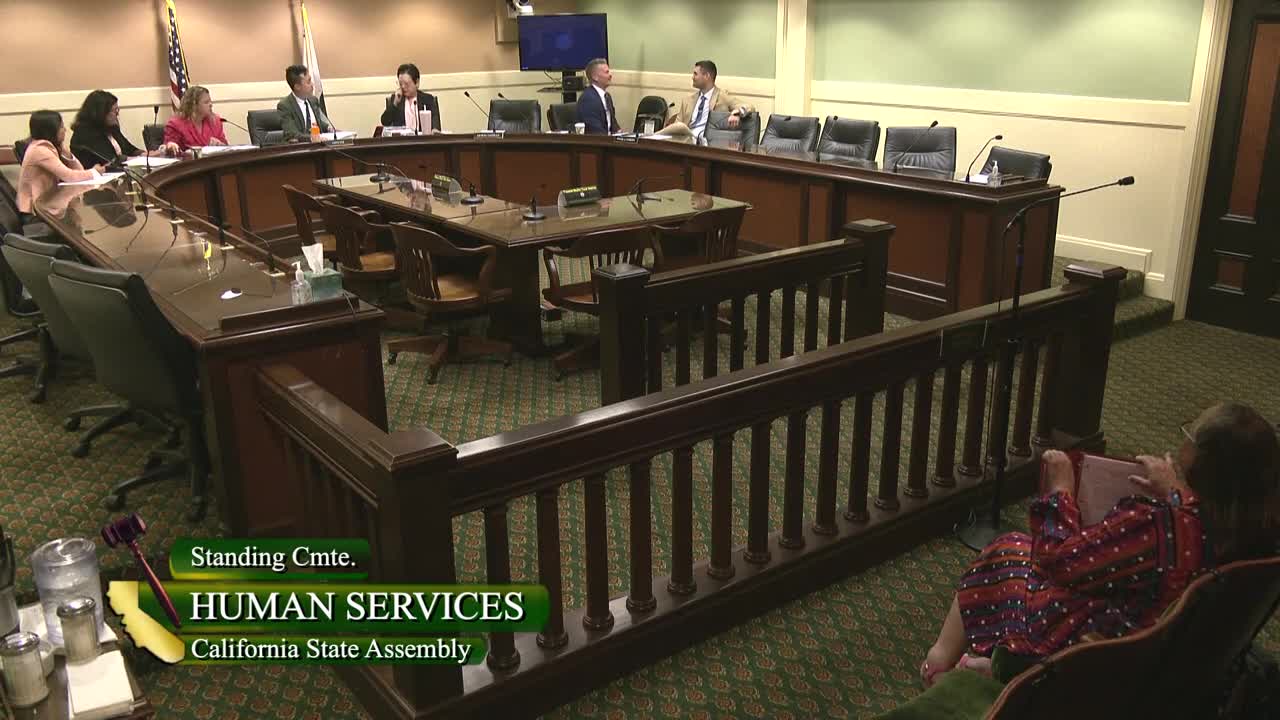
Discussed in Hearing
 9MIN
Assembly Standing Committee on Human Services
Bill Author

Bill Co-Author(s):