AB 1090: Cannabis use: location restrictions.
- Session Year: 2017-2018
- House: Assembly
- Latest Version Date: 2017-07-10
The Control, Regulate and Tax Adult Use of Marijuana Act (AUMA), an initiative statute enacted by the approval of Proposition 64 at the November 8, 2016, statewide general election, authorizes a person 21 years of age or older to possess and use specified amounts of marijuana. cannabis. AUMA specifies that possessing, smoking, or ingesting marijuana or marijuana cannabis or cannabis products in or upon the grounds of a school, day care center, or youth center while children are present is prohibited. AUMA makes a violation of this location restriction punishable as an infraction or a misdemeanor, as specified. AUMA authorizes the Legislature to amend its provisions with a 2/3 vote of each house of the Legislature, if the amendments are consistent with and further the purposes and intent of the act.
This bill would prohibit the possession, smoking, or ingesting of marijuana or marijuana cannabis or cannabis products in or upon the grounds of a school, day care center, or youth center, regardless of whether children are present. By expanding the scope of a crime, this bill would impose a state-mandated local program.
The California Constitution requires the state to reimburse local agencies and school districts for certain costs mandated by the state. Statutory provisions establish procedures for making that reimbursement.
This bill would provide that no reimbursement is required by this act for a specified reason.
The Control, Regulate and Tax Adult Use of Marijuana Act (AUMA), an initiative statute enacted by the approval of Proposition 64 at the November 8, 2016, statewide general election, authorizes a person 21 years of age or older to possess and use specified amounts of marijuana. AUMA specifies that this authorization is not construed to permit a person to smoke marijuana or marijuana products within 1,000 feet of a school, day care center, or youth center while children are present at those locations. AUMA also specifies that possessing, smoking, or ingesting marijuana or marijuana products in or upon the grounds of a school, day care center, or youth center while children are present is not permitted. prohibited. AUMA makes a violation of these location restrictions this location restriction punishable as an infraction or a misdemeanor, as specified. AUMA authorizes the Legislature to amend its provisions with a 2/3 vote of each house of the Legislature, provided that if the amendments are consistent with and further the purposes and intent of the act.
This bill would prohibit the possession, smoking, or ingesting of marijuana around or marijuana products in or upon the grounds of a school, day care center, or youth center, as specified, center, regardless of whether children are present. By expanding the scope of a crime, this bill would impose a state-mandated local program.
The California Constitution requires the state to reimburse local agencies and school districts for certain costs mandated by the state. Statutory provisions establish procedures for making that reimbursement.
This bill would provide that no reimbursement is required by this act for a specified reason.
The Control, Regulate and Tax Adult Use of Marijuana Act (AUMA), an initiative statute enacted by the approval of Proposition 64 at the November 8, 2016, statewide general election, authorizes a person 21 years of age or older to possess and use specified amounts of marijuana. AUMA specifies that this authorization is not construed to permit a person to smoke marijuana or marijuana products within 1,000 feet of a school, day care center, or youth center while children are present at those locations. AUMA also specifies that possessing, smoking, or ingesting marijuana or marijuana products in or upon the grounds of a school, day care center, or youth center while children are present is not permitted. AUMA makes a violation of these location restrictions punishable as an infraction or a misdemeanor, as specified. AUMA authorizes the Legislature to amend its provisions with a 2/3 vote of each house of the Legislature, provided that the amendments are consistent with and further the purposes and intent of the act.
This bill would prohibit the possession, smoking, or ingesting of marijuana around a school, day care center, or youth center, as specified, regardless of whether children are present. By expanding the scope of a crime, this bill would impose a state-mandated local program.
The California Constitution requires the state to reimburse local agencies and school districts for certain costs mandated by the state. Statutory provisions establish procedures for making that reimbursement.
This bill would provide that no reimbursement is required by this act for a specified reason.
Existing law classifies certain controlled substances into designated schedules and generally makes it a crime to possess or sell controlled substances.This bill would state the intent of the Legislature to enact legislation relating to controlled substances.Existing law classifies certain controlled substances into designated schedules and generally makes it a crime to possess or sell controlled substances.
This bill would state the intent of the Legislature to enact legislation relating to controlled substances.
(a)Section 11362.1 does not permit any person to:
(1)Smoke or ingest cannabis or cannabis products in a public place, except in accordance with Section 26200 of the Business and Professions Code.
(2)Smoke cannabis or cannabis products in a location where smoking tobacco is prohibited.
(3)Smoke cannabis or cannabis products within 1,000 feet of a school, day care center, or youth center while children are present at the school, day care center, or youth center, except in or upon the grounds of a private residence or in accordance with Section 26200 of the Business and Professions Code and only if such smoking is not detectable by others on the grounds of the school, day care center, or youth center while children are present.
(4)Possess an open container or open package of cannabis or cannabis products while driving, operating, or riding in the passenger seat or compartment of a motor vehicle, boat, vessel, aircraft, or other vehicle used for transportation.
(5)Possess, smoke, or ingest cannabis or cannabis products in or upon the grounds of a school, day care center, or youth center while children are present. center.
(6)Manufacture concentrated cannabis using a volatile solvent, unless done in accordance with a license under Division 10 (commencing with Section 26000) of the Business and Professions Code.
(7)Smoke or ingest cannabis or cannabis products while driving, operating a motor vehicle, boat, vessel, aircraft, or other vehicle used for transportation.
(8)Smoke or ingest cannabis or cannabis products while riding in the passenger seat or compartment of a motor vehicle, boat, vessel, aircraft, or other vehicle used for transportation except as permitted on a motor vehicle, boat, vessel, aircraft, or other vehicle used for transportation that is operated in accordance with Section 26200 of the Business and Professions Code and while no persons under 21 years of age are present.
(b)For purposes of this section, the following definitions apply:
(1)Day care center has the same meaning as in Section 1596.76.
(2)Smoke means to inhale, exhale, burn, or carry any lighted or heated device or pipe, or any other lighted or heated cannabis or cannabis product intended for inhalation, whether natural or synthetic, in any manner or in any form. Smoke includes the use of an electronic smoking device that creates an aerosol or vapor, in any manner or in any form, or the use of any oral smoking device for the purpose of circumventing the prohibition of smoking in a place.
(3)Volatile solvent means a solvent that is or produces a flammable gas or vapor that, when present in the air in sufficient quantities, will create explosive or ignitable mixtures.
(4)Youth center has the same meaning as in Section 11353.1.
(c)Nothing in this section shall be construed or interpreted to amend, repeal, affect, restrict, or preempt laws pertaining to the Compassionate Use Act of 1996.
SECTION 1.Section 11362.3 of the Health and Safety Code is amended to read:11362.3.(a)Nothing in Section 11362.1 shall be construed to permit any person to:(1)Smoke or ingest marijuana or marijuana products in any public place, except in accordance with Section 26200 of the Business and Professions Code.(2)Smoke marijuana or marijuana products in a location where smoking tobacco is prohibited.(3)Smoke marijuana or marijuana products within 1,000 feet of a school, day care center, or youth center while children are present at such a school, day care center, or youth center, except in or upon the grounds of a private residence or in accordance with Section 26200 of, or Chapter 3.5 (commencing with Section 19300) of Division 8 of, the Business and Professions Code and only if such smoking is not detectable by others on the grounds of such a school, day care center, or youth center while children are present.(4)Possess an open container or open package of marijuana or marijuana products while driving, operating, or riding in the passenger seat or compartment of a motor vehicle, boat, vessel, aircraft, or other vehicle used for transportation.(5)Possess, smoke, or ingest marijuana or marijuana products in or upon the grounds of a school, day care center, or youth center.(6)Manufacture concentrated cannabis using a volatile solvent, unless done in accordance with a license under Chapter 3.5 (commencing with Section 19300) of Division 8 of, or Division 10 of, the Business and Professions Code.(7)Smoke or ingest marijuana or marijuana products while driving, operating a motor vehicle, boat, vessel, aircraft, or other vehicle used for transportation.(8)Smoke or ingest marijuana or marijuana products while riding in the passenger seat or compartment of a motor vehicle, boat, vessel, aircraft, or other vehicle used for transportation except as permitted on a motor vehicle, boat, vessel, aircraft, or other vehicle used for transportation that is operated in accordance with Section 26200 of the Business and Professions Code and while no persons under 21 years of age are present.(b)For purposes of this section, day care center has the same meaning as in Section 1596.76.(c)For purposes of this section, smoke means to inhale, exhale, burn, or carry any lighted or heated device or pipe, or any other lighted or heated marijuana or marijuana product intended for inhalation, whether natural or synthetic, in any manner or in any form. Smoke includes the use of an electronic smoking device that creates an aerosol or vapor, in any manner or in any form, or the use of any oral smoking device for the purpose of circumventing the prohibition of smoking in a place.(d)For purposes of this section, volatile solvent means volatile organic compounds, including: (1) explosive gases, such as Butane, Propane, Xylene, Styrene, Gasoline, Kerosene, O2 or H2; and (2) dangerous poisons, toxins, or carcinogens, such as Methanol, Iso-propyl Alcohol, Methylene Chloride, Acetone, Benzene, Toluene, and Trichloro-ethylene.(e)For purposes of this section, youth center has the same meaning as in Section 11353.1.(f)Nothing in this section shall be construed or interpreted to amend, repeal, affect, restrict, or preempt laws pertaining to the Compassionate Use Act of 1996.SEC. 2.No reimbursement is required by this act pursuant to Section 6 of Article XIIIB of the California Constitution because the only costs that may be incurred by a local agency or school district will be incurred because this act creates a new crime or infraction, eliminates a crime or infraction, or changes the penalty for a crime or infraction, within the meaning of Section 17556 of the Government Code, or changes the definition of a crime within the meaning of Section 6 of Article XIIIB of the California Constitution.
(a)Nothing in Section 11362.1 shall be construed to permit any person to:
(1)Smoke or ingest marijuana or marijuana products in any public place, except in accordance with Section 26200 of the Business and Professions Code.
(2)Smoke marijuana or marijuana products in a location where smoking tobacco is prohibited.
(3)Smoke marijuana or marijuana products within 1,000 feet of a school, day care center, or youth center while children are present at such a school, day care center, or youth center, except in or upon the grounds of a private residence or in accordance with Section 26200 of, or Chapter 3.5 (commencing with Section 19300) of Division 8 of, the Business and Professions Code and only if such smoking is not detectable by others on the grounds of such a school, day care center, or youth center. center while children are present.
(4)Possess an open container or open package of marijuana or marijuana products while driving, operating, or riding in the passenger seat or compartment of a motor vehicle, boat, vessel, aircraft, or other vehicle used for transportation.
(5)Possess, smoke, or ingest marijuana or marijuana products in or upon the grounds of a school, day care center, or youth center.
(6)Manufacture concentrated cannabis using a volatile solvent, unless done in accordance with a license under Chapter 3.5 (commencing with Section 19300) of Division 8 of, or Division 10 of, the Business and Professions Code.
(7)Smoke or ingest marijuana or marijuana products while driving, operating a motor vehicle, boat, vessel, aircraft, or other vehicle used for transportation.
(8)Smoke or ingest marijuana or marijuana products while riding in the passenger seat or compartment of a motor vehicle, boat, vessel, aircraft, or other vehicle used for transportation except as permitted on a motor vehicle, boat, vessel, aircraft, or other vehicle used for transportation that is operated in accordance with Section 26200 of the Business and Professions Code and while no persons under 21 years of age are present.
(b)For purposes of this section, day care center has the same meaning as in Section 1596.76.
(c)For purposes of this section, smoke means to inhale, exhale, burn, or carry any lighted or heated device or pipe, or any other lighted or heated marijuana or marijuana product intended for inhalation, whether natural or synthetic, in any manner or in any form. Smoke includes the use of an electronic smoking device that creates an aerosol or vapor, in any manner or in any form, or the use of any oral smoking device for the purpose of circumventing the prohibition of smoking in a place.
(d)For purposes of this section, volatile solvent means volatile organic compounds, including: (1) explosive gases, such as Butane, Propane, Xylene, Styrene, Gasoline, Kerosene, O2 or H2; and (2) dangerous poisons, toxins, or carcinogens, such as Methanol, Iso-propyl Alcohol, Methylene Chloride, Acetone, Benzene, Toluene, and Trichloro-ethylene.
(e)For purposes of this section, youth center has the same meaning as in Section 11353.1.
(f)Nothing in this section shall be construed or interpreted to amend, repeal, affect, restrict, or preempt laws pertaining to the Compassionate Use Act of 1996.
SEC. 2.No reimbursement is required by this act pursuant to Section 6 of Article XIIIB of the California Constitution because the only costs that may be incurred by a local agency or school district will be incurred because this act creates a new crime or infraction, eliminates a crime or infraction, or changes the penalty for a crime or infraction, within the meaning of Section 17556 of the Government Code, or changes the definition of a crime within the meaning of Section 6 of Article XIIIB of the California Constitution.
(a)Nothing in Section 11362.1 shall be construed to permit any person to:
(1)Smoke or ingest marijuana or marijuana products in any public place, except in accordance with Section 26200 of the Business and Professions Code.
(2)Smoke marijuana or marijuana products in a location where smoking tobacco is prohibited.
(3)Smoke marijuana or marijuana products within 1,000 feet of a school, day care center, or youth center while children are present at such a school, day care center, or youth center, center, except in or upon the grounds of a private residence or in accordance with Section 26200 of, or Chapter 3.5 (commencing with Section 19300) of Division 8 of, the Business and Professions Code and only if such smoking is not detectable by others on the grounds of such a school, day care center, or youth center while children are present. center.
(4)Possess an open container or open package of marijuana or marijuana products while driving, operating, or riding in the passenger seat or compartment of a motor vehicle, boat, vessel, aircraft, or other vehicle used for transportation.
(5)Possess, smoke smoke, or ingest marijuana or marijuana products in or upon the grounds of a school, day care center, or youth center while children are present. center.
(6)Manufacture concentrated cannabis using a volatile solvent, unless done in accordance with a license under Chapter 3.5 (commencing with Section 19300) of Division 8 of, or Division 10 of, the Business and Professions Code.
(7)Smoke or ingest marijuana or marijuana products while driving, operating a motor vehicle, boat, vessel, aircraft, or other vehicle used for transportation.
(8)Smoke or ingest marijuana or marijuana products while riding in the passenger seat or compartment of a motor vehicle, boat, vessel, aircraft, or other vehicle used for transportation except as permitted on a motor vehicle, boat, vessel, aircraft, or other vehicle used for transportation that is operated in accordance with Section 26200 of the Business and Professions Code and while no persons under the age of 21 years of age are present.
(b)For purposes of this section, day care center has the same meaning as in Section 1596.76.
(c)For purposes of this section, smoke means to inhale, exhale, burn, or carry any lighted or heated device or pipe, or any other lighted or heated marijuana or marijuana product intended for inhalation, whether natural or synthetic, in any manner or in any form. Smoke includes the use of an electronic smoking device that creates an aerosol or vapor, in any manner or in any form, or the use of any oral smoking device for the purpose of circumventing the prohibition of smoking in a place.
(d)For purposes of this section, volatile solvent means volatile organic compounds, including: (1) explosive gases, such as Butane, Propane, Xylene, Styrene, Gasoline, Kerosene, O2 or H2; and (2) dangerous poisons, toxins, or carcinogens, such as Methanol, Iso-propyl Alcohol, Methylene Chloride, Acetone, Benzene, Toluene, and Trichloro-ethylene.
(e)For purposes of this section, youth center has the same meaning as in Section 11353.1.
(f)Nothing in this section shall be construed or interpreted to amend, repeal, affect, restrict, or preempt laws pertaining to the Compassionate Use Act of 1996.
SEC. 2.No reimbursement is required by this act pursuant to Section 6 of Article XIIIB of the California Constitution because the only costs that may be incurred by a local agency or school district will be incurred because this act creates a new crime or infraction, eliminates a crime or infraction, or changes the penalty for a crime or infraction, within the meaning of Section 17556 of the Government Code, or changes the definition of a crime within the meaning of Section 6 of Article XIIIB of the California Constitution.
SECTION 1.It is the intent of the Legislature to enact legislation relating to controlled substances.It is the intent of the Legislature to enact legislation relating to controlled substances.
|
Date
|
Status
|
|---|---|
| Sep 1, 2017 | In committee: Held under submission. |
| Aug 21, 2017 | In committee: Referred to APPR. suspense file. |
| Jul 10, 2017 | From committee chair, with author's amendments: Amend, and re-refer to committee. Read second time, amended, and re-referred to Com. on APPR. |
| Jun 29, 2017 | From committee: Do pass and re-refer to Com. on APPR. (Ayes 7. Noes 0.) (June 28). Re-referred to Com. on APPR. |
| Jun 14, 2017 | Referred to Com. on HEALTH. |
| Jun 1, 2017 | In Senate. Read first time. To Com. on RLS. for assignment. |
| May 31, 2017 | Read third time. Passed. Ordered to the Senate. (Ayes 75. Noes 0. Page 1900.) |
| May 30, 2017 | Read second time. Ordered to third reading. |
| May 26, 2017 | Read second time and amended. Ordered returned to second reading. |
| May 25, 2017 | From committee: Amend, and do pass as amended. (Ayes 17. Noes 0.) (May 24). |
| Apr 26, 2017 | From committee: Do pass and re-refer to Com. on APPR. (Ayes 15. Noes 0.) (April 25). Re-referred to Com. on APPR. |
| Mar 29, 2017 | Re-referred to Com. on HEALTH. |
| Mar 28, 2017 | From committee chair, with author's amendments: Amend, and re-refer to Com. on HEALTH. Read second time and amended. |
| Mar 27, 2017 | Referred to Com. on HEALTH. |
| Feb 19, 2017 | From printer. May be heard in committee March 21. |
| Feb 17, 2017 | Read first time. To print. |
|
Date
|
Description
|
Location
|
Votes
|
|
|---|---|---|---|---|
| Aug 21, 2017 | Placed on suspense file | Senate Standing Committee on Appropriations |
Passed |
|
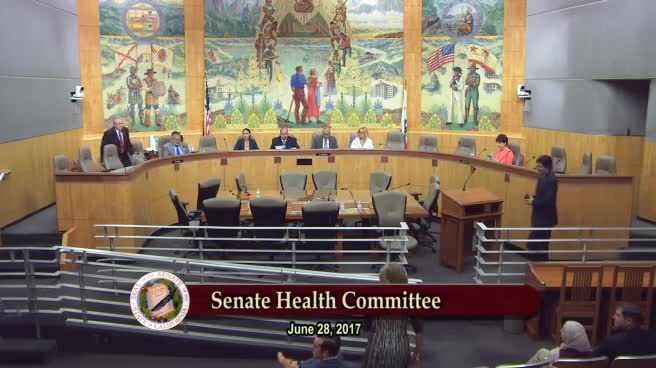
| Jun 28, 2017 | Do pass, but first be re-referred to the Committee on [Appropriations] | Senate Standing Committee on Health |
Passed |
|
| May 31, 2017 | AB 1090 CUNNINGHAM Assembly Third Reading | Assembly Floor |
Passed |
|
| May 24, 2017 | Do pass as amended. | Assembly Standing Committee on Appropriations |
Passed |
|
| Apr 25, 2017 | Do pass and be re-referred to the Committee on [Appropriations] | Assembly Standing Committee on Health |
Passed |
This list shows positions taken on this bill by organizations on the date displayed, which is linked to the original source.
Positions by individuals are not included.
|
Organization
|
Position
|
Date
|
|---|---|---|
| California ACLU | * Against | Jun 28, 2017 |
| California District Attorneys Association | ** Support | Jun 26, 2017 |
| California NORML | ** Against | Jun 26, 2017 |
| california peace officers' association | ** Support | Jun 26, 2017 |
| California Police Chiefs Association | * Support | Jun 28, 2017 |
| Drug Policy Alliance | ** Against | Jun 26, 2017 |
| Peace Officers Research Association Of California | ** Support | Jun 26, 2017 |
SENATE COMMITTEE ON APPROPRIATIONS
Senator Ricardo Lara, Chair
2017 - 2018 Regular Session
AB 1090 (Cunningham) - Cannabis use: location restrictions
Version: July 10, 2017 | Policy Vote: HEALTH 7 - 0 |
Urgency: No | Mandate: Yes |
Hearing Date: August 21, 2017 | Consultant: Brendan McCarthy |
This bill does not meet the criteria for referral to the Suspense File.
Bill Summary:
AB 1090 would prohibit the possession, smoking, or ingesting of cannabis or cannabis products on the grounds of a school, day care center, or youth center at any time.
Fiscal Impact:
- No state enforcement costs are anticipated, as enforcement of law relating to personal possession or use of cannabis are performed at the local level.
- No state reimbursable mandate costs are anticipated. The only costs that may be incurred by a local agency relate to crimes and infractions. Under the California Constitution, such costs are not reimbursable by the state.
Background:
The Medical Cannabis Regulation and Safety Act (MCRSA) was enacted by the legislature to regulate the production and sale of medical cannabis. The MCRSA created a regulatory structure and licensing requirements for a variety of entities involved in the production, distribution, and sale of medical cannabis.
The Control, Regulate, and Tax Adult Use of Marijuana Act (AUMA, Proposition 64 of 2016) legalized the sale, possession, and use of marijuana for individuals over the age of 21. The AUMA created a regulatory structure for the recreational marijuana industry, similar to that created under the MCRSA, but with some differences in licensing requirements.
SB 94 (Committee on Budget and Fiscal Review, Statutes of 2017) consolidated and harmonized the requirements of the two bodies of law relating to both medicinal and recreational cannabis (and changed the official terminology to cannabis).
Under current law, it is illegal to possess, smoke, or ingest cannabis or cannabis products on the grounds of a school, day care center, or youth center, when children are present. Current law generally prohibits smoking on school grounds and at day care centers, at all times. Because current law prohibits smoking cannabis in any public place and where smoking tobacco is prohibited, this would include schools and youth centers. Therefore, there is an ambiguity between these two provisions of law.
Proposed Law:
AB 1090 would prohibit the possession, smoking, or ingesting cannabis or cannabis products on the grounds of a school, day care center, or youth center at any time.
Related Legislation:
There are a number of other bills that generally relate to cannabis and its regulation that will be heard in this committee.
-- END --
SENATE COMMITTEE ON HEALTH
Senator Ed Hernandez, O.D., Chair
BILL NO: AB 1090
AUTHOR: | Cunningham | ||
VERSION: | May 26, 2017 | ||
HEARING DATE: | June 28, 2017 | ||
CONSULTANT: | Reyes Diaz | ||
SUBJECT: Marijuana use: location restrictions
SUMMARY:
Prohibits the possessing, smoking, or ingesting of marijuana or marijuana products in or upon the grounds of a school, day care center, or youth center at all times, instead of only while children are present.
Existing law:
- Pursuant to the Control, Regulate and Tax Adult Use of Marijuana Act (AUMA), an initiative statute enacted by the approval of Proposition 64 on November 8, 2016, authorizes a person 21 years of age or older to possess and use specified amounts of marijuana.
- Establishes the Medical Cannabis Regulation and Safety Act (MCRSA) to regulate medical cannabis in California, including its cultivation, transportation, storage, distribution, and sale, as specified.
- Prohibits, pursuant to AUMA, possessing, smoking, or ingesting marijuana or marijuana products in or upon the grounds of a school, day care center, or youth center while children are present. Defines “youth center” as any public or private facility that is primarily used to host recreational or social activities for minors, including, but not limited to, private youth membership organizations or clubs, social service teenage club facilities, video arcades, or similar amusement park facilities. Prohibits smoking marijuana or marijuana products in any public place and where smoking tobacco is prohibited.
- Prohibits the smoking or consumption of marijuana or marijuana products within 1,000 feet of a school, day care center, or youth center while children are present, except as specified.
- Defines “smoking” as inhaling, exhaling, burning, or carrying any lighted or heated cigar, cigarette, or pipe, or any other lighted or heated tobacco or plant product intended for inhalation, whether natural or synthetic, in any manner or in any form. “Smoking” includes the use of an electronic smoking device that creates an aerosol or vapor, in any manner or in any form, or the use of any oral smoking device for the purpose of circumventing the prohibition of smoking.
- Prohibits the use of tobacco and nicotine products at any time in a county office of education, charter school or school district-owned or leased buildings, on school or district property, and in school or district vehicles. Includes in this prohibition smokeless tobacco, snuff, chew, clove cigarettes, and other nicotine delivery devices, such as electronic cigarettes. Prohibits the smoking of a tobacco product on premises of a licensed day care center.
- Requires group homes, foster family agencies, small family homes, transitional housing placement providers, and crisis nurseries, as specified, to maintain a smoke-free environment in the facility.
This bill: Prohibits the possessing, smoking, or ingesting of marijuana or marijuana products in or upon the grounds of a school, day care center, or youth center at all times, instead of only while children are present, as specified in 3) above.
FISCAL EFFECT:
According to the Assembly Appropriations Committee, this bill would have negligible state fiscal effect.
PRIOR VOTES:
Assembly Floor: | 75 - 0 |
Assembly Appropriations Committee: | 17 - 0 |
Assembly Health Committee: | 15 - 0 |
COMMENTS:
- Author’s statement. According to the author, post Proposition 64's legalization for adult use, the state needs to focus on ensuring marijuana does not fall into the hands of children. This bill would close a loophole created by Proposition 64 and make it crystal clear that California does not allow marijuana on school grounds, regardless of whether or not children are present.
- Marijuana. Marijuana is still an illegal drug under federal law, and its use, possession, distribution, cultivation, or sale carries criminal penalties. Under California law, marijuana is listed as a hallucinogenic substance in Schedule I of the California Uniform Controlled Substances Act. Under federal law, possession of marijuana, even by medical users, continues to be a crime. The federal Controlled Substances Act specifies that, except as provided, it is unlawful for any person knowingly or intentionally to manufacture, distribute, or dispense, or possess with intent to manufacture, distribute, or dispense a controlled substance. The only exception provided in the federal Controlled Substances Act for marijuana is for use in government-controlled research projects.
- AUMA. As a result of the 2016 initiative, those who are aged 21 years or older are allowed to possess, cultivate, and use marijuana for recreational purposes, particularly in a private home or at a business licensed for onsite marijuana consumption. However, smoking marijuana remains illegal while driving a vehicle, anywhere smoking tobacco is prohibited, and in all public places. AUMA, in addition to allowing adult consumption of marijuana and marijuana products for recreational purposes, established numerous controls and safeguards to protect the public, specifically children under the age of 21, including: allowing local governments to enforce state laws and regulations for nonmedical marijuana businesses and enact additional local requirements for nonmedical marijuana businesses; requiring a rigid track and trace management process from cultivation to sale; comprehensive testing; strict environmental and product safety standards; prohibiting the sale of nonmedical marijuana by businesses that also sell alcohol or tobacco; prohibiting the marketing and advertising of nonmedical marijuana to persons younger than 21 years of age, or near schools or other places where children are present.
- Safeguards for minors from harmful substances. In addition to current laws that prohibit smoking in county offices of education, charter schools, or school district-owned or leased buildings, on school or district property, and in school district vehicles, California has enacted other laws in recent years to ensure minors are not exposed to harmful substances. SBX2 7 (Hernandez, Chapter 8, Statutes of 2016), among other things, raised the minimum age for smoking to 21. SBX2 5 (Leno, Chapter 7, Statutes of 2016), among other changes to the state’s various smoke-free laws, requires all cartridges for electronic cigarettes and solutions for filling or refilling an electronic cigarette to be in child-resistant packaging. SB 977 (Pan, Chapter 537, Statutes of 2016) prohibits a person located in the same park or facility where a youth sports event is taking place from using a tobacco product, as defined, within 250 feet of a youth sports event, as defined, and makes a violation an infraction punishable by a fine of $250 for each violation.
- Journal of the American Medical Association (JAMA) Article. A JAMA Pediatrics article was published in 2016 entitled “Unintentional Pediatric Exposures to Marijuana in Colorado, 2009-2015.” The authors examined the effect of the legalization of recreational marijuana on unintentional pediatric exposures by evaluating data on hospital admissions at a tertiary children’s hospital and cases at a regional poison center (RPC) between 2009 and 2015. Study participants included children younger than 10 years who were evaluated at the hospital’s emergency department, urgent care centers, or an inpatient unit and RPC cases for marijuana exposure. The authors identified 81 children (62 included in the analysis), evaluated at the hospital and 163 marijuana exposure calls to a Colorado RPC. For 10 exposure scenarios, the product was not in a child-resistant container; for an additional 40 scenarios (34%), poor child supervision or product storage was reported. Edible products were responsible for 51 exposures (52%).
- Bureau of Medical Cannabis (BMC). With the passage of AUMA, inconsistencies were created between implementation of MCRSA and implementation of AUMA. Several proposals to address the differences between MCRSA and AUMA are being considered this legislative session, including adoption of AUMA’s vertical integrated licensing structure for both adult use and medicinal cannabis licensees; maintenance of AUMA’s open distribution model allowing for a business to hold multiple licenses; amendments to AUMA to include the same environmental protection requirements as MCRSA; and moving licensure of testing laboratories from DPH to the BMC.
- Related legislation. AB 175 (Chau) requires a manufacturer, prior to introducing an edible marijuana product into commerce in California, to submit the packaging and labeling to the BMC for approval, as specified, to ensure the packaging is child resistant and not attractive to children. AB 175 is set for hearing on June 26, 2017, in the Senate Business, Professions, and Economic Development Committee.
AB 350 (Salas) specifies that a marijuana product is deemed to be appealing to children or easily confused with commercially sold candy if it is in the shape of a person, animal, insect, fruit, or in another shape normally associated with candy, but would not prohibit a licensee from making an edible marijuana product in the shape of the licensee’s logo. AB 350 passed out of the Senate Business, Professions, and Economic Development Committee by a vote of 9-0 on June 12, 2017.
SB 794 (Stern) requires each single serving of an edible marijuana product to be stamped, marked, or otherwise imprinted directly on the product with a universal symbol, as specified. Requires edible marijuana products to be sold in packaging that is tamper-proof, child resistant, and, if the product contains more than one serving, re-sealable. SB 794 is pending in the Assembly Health Committee.
- Prior legislation. SB 977 (Pan, Chapter 537, Statutes of 2016) prohibits a person located in the same park or facility where a youth sports event is taking place from using a tobacco product, as defined, within 250 feet of the youth sports event, and makes a violation an infraction punishable by a fine of $250 for each violation.
SBX2 7 (Hernandez, Chapter 8, Statutes of 2016) among other things, raised the minimum age for smoking to 21.
SBX2 5 (Leno, Chapter 7, Statutes of 2016) among other things, expands the definition of “smoking” and requires all cartridges for electronic cigarettes and solutions for filling or refilling an electronic cigarette to be in child-resistant packaging.
AB 243 (Wood, Chapter 688, Statutes of 2015) requires the Department of Food and Agriculture, Department of Pesticide Regulation, DPH, the Department of Fish and Wildlife, and the State Water Resources Control Board to promulgate regulations or standards relating to medical cannabis and its cultivation, as specified, and establishes licensing fees, fines, and penalties.
AB 266 (Bonta et al., Chapter 689, Statutes of 2015) established MCRSA for the licensure and regulation of medical cannabis and establishes the BMC within DCA.
SB 643 (McGuire, Chapter 719, Statutes of 2015) set standards for the licensed cultivation and physician prescription of medical cannabis; establishes a track and trace program for the transportation of medical cannabis; and authorizes counties to impose a tax on medical cannabis.
- Support. The California District Attorneys Association (CDAA) argues that allowing marijuana possession or use on the grounds of a school, day care center, or youth center when children are not present, and school staff and security are not around to monitor the grounds, increases the likelihood of drugs and drug paraphernalia being left behind and discovered by children returning to school. CDAA and the California Police Chiefs Association state that existing law, which prohibits use or possession only when children are present, sends conflicting messages about the appropriateness of marijuana possession and use on the grounds of those facilities. The California Peace Officers’ Association states that this bill wisely takes steps to ensure that students and others are not exposed to marijuana paraphernalia or burnt residue.
- Opposition. The American Civil Liberties Union of California and the Drug Policy Alliance argue that this bill vastly expands the reach of criminal penalties related to marijuana, undermining the voter-approved AUMA initiative. They, along with California NORML, argue that existing provisions in AUMA are sufficient to ensure that children will not be exposed to marijuana. California NORML states that if local governments wish to ban this conduct, they are free to do so by local ordinance.
- Policy comment. While language in AUMA prohibits possessing, smoking, or ingesting marijuana or marijuana products in or upon the grounds of a school, day care center, or youth center while children are present, current law prohibits smoking on school grounds and at day care centers at all times. AUMA further prohibits smoking marijuana or marijuana products in any public place and where smoking tobacco is prohibited. The definition of “youth center” in existing law arguably includes public spaces. These sections in existing law are in conflict and would be corrected by the passage of this bill.
SUPPORT AND OPPOSITION:
Support: California District Attorneys Association
California Peace Officers’ Association
California Police Chiefs Association
Peace Officers Research Association of California
Oppose: American Civil Liberties Union of California
California NORML
Drug Policy Alliance
-- END --
ASSEMBLY THIRD READING
ATR Bill Id:AB 1090
Author:(Cunningham)
As Amended Ver:May 26, 2017
2/3 vote
Committee | Votes | Ayes | Noes |
Health | 15-0 | Wood, Maienschein, Bonta, Burke, Gallagher, Limón, McCarty, Nazarian, Patterson, Quirk-Silva, Ridley-Thomas, Rodriguez, Santiago, Chiu, Waldron | |
Appropriations | 17-0 | Gonzalez Fletcher, Bigelow, Bloom, Bocanegra, Bonta, Brough, Gloria, Chau, Quirk, Fong, Friedman, Gallagher, Eduardo Garcia, Jones-Sawyer, Muratsuchi, Obernolte, Reyes |
|
SUMMARY: Prohibits possessing, smoking, or ingesting marijuana or marijuana products in or upon the grounds of a school, day care center, or youth center at all times. Makes other, technical and clarifying changes.
FISCAL EFFECT: According to the Assembly Appropriations Committee, negligible state fiscal effect.
COMMENTS: According to the author, the existence of the qualifier "while children are present" in the current prohibition on the use of marijuana or marijuana products on school grounds and day care or youth centers sends conflicting messages that marijuana possession or use is permissible after children have gone home for the day or the weekend. Drug use should not be permitted at night or over the weekends when the school staff is not around to police the grounds. This bill closes a loophole created by Proposition (Prop) 64 and makes it crystal clear that California does not allow marijuana on school grounds, regardless of whether or not children are present.
California has a history of enacting laws to prevent minor children under the age of 18 from being exposed on school grounds to substances that have been deemed to be unsuitable. Current law makes it illegal to use tobacco and nicotine products in county offices of education, charter schools, or school district-owned or leased buildings, on school or district property, and in school district vehicles. It is against the law to possess, consume, sell, give, or deliver any alcoholic beverage on the grounds of a public educational facility, unless as specified. Current law prohibits the smoking or consumption of marijuana or marijuana products within 1,000 feet of a school, day care center, or youth center while children are present and also prohibits the possession, smoking, or ingesting of marijuana or marijuana products in or upon the grounds of a school, day care center, or youth center while children are present.
The California District Attorneys Association states in support of this bill, that while Prop 64 was drafted to prevent marijuana from being marketed or made available to minors, existing law sends a conflicting message about the appropriateness of marijuana possession and use on school grounds. Allowing marijuana possession or use in these areas at times when children are not present, and when school staff and security are not around to monitor the grounds, increases the likelihood of drugs and drug paraphernalia being left behind, only to be discovered by children returning to school.
In its opposition, the Drug Policy Alliance states that it is concerned about new infractions that this bill would create. Similarly, California Norml states that Prop 64 already bans such activity in the presence of children. There is no reason to do so in their absence. Different kinds of conduct can be appropriate at the same location at different times of day. If local governments wish to ban this conduct, they are free to do so by local ordinance. A new state law in this regard is unwarranted.
Analysis Prepared by: Rosielyn Pulmano / HEALTH / (916) 319-2097 FN: 0000526
Date of Hearing: May 24, 2017
ASSEMBLY COMMITTEE ON APPROPRIATIONS
Lorena Gonzalez Fletcher, Chair
ABPCA Bill Id:AB 1090
Author:(Cunningham) – As Amended Ver:March 28, 2017
Policy Committee: | Health | Vote: | 15 - 0 |
|
| ||
|
|
Urgency: No State Mandated Local Program: Yes Reimbursable: No
SUMMARY:
This bill tightens restrictions on the use of marijuana near schools. Specifically, this bill:
- Prohibits possessing, smoking, or ingesting marijuana or marijuana products in or upon the grounds of a school, day care center, or youth center at all times, instead of just when children are present.
- Prohibits smoking marijuana or marijuana products within 1,000 feet of a school, day care center, or youth center at all times, instead of just when children are present.
FISCAL EFFECT:
Negligible state fiscal effect.
COMMENTS:
- Purpose. According to the author, the existence of the qualifier “while children are present” in the current prohibition on the use of marijuana or marijuana products on school grounds and day care or youth centers sends conflicting messages that marijuana possession or use is permissible after children have gone home for the day or the weekend. This bill is supported by the California District Attorneys Association and Peace Officers Research Association of California.
- Background. Non-medical adult use of marijuana was legalized in November 2016, through AUMA (Proposition 64). The language being amended in this bill was added through Proposition 64, to restrict the locations where marijuana could legally be used. Current law places prohibitions on the use of tobacco on school grounds and includes sentencing enhancements for individuals convicted of illegal drug-related distribution activities that have occurred within 1,000 feet of schools, school-related programs, or playgrounds during operational hours.
- Opposition. The American Civil Liberties Union (ACLU) writes in opposition that a significant area of urban environments falls within 1,000 feet of a school or day care site. They assert extending existing prosecutions for this conduct to times when children are not present provides no public safety benefit. Racial disparities have historically plagued implementation of marijuana laws, and ACLU is concerned this bill undermines the voter intent to decriminalize marijuana and makes it more likely that laws will target people of color.
- Staff Comment. It is worth noting someone 1,000 feet from a school on the weekend is over 3 football fields away. Existing law makes smoking marijuana within 1,000 feet of a school site illegal when children are present. Is extending the time period in order to police the smoking of marijuana on a Saturday night blocks away from a school site an important state priority, and are there any unintended consequences?
Analysis Prepared by: Lisa Murawski / APPR. / (916) 319-2081
Date of Hearing: April 25, 2017
ASSEMBLY COMMITTEE ON HEALTH
Jim Wood, Chair
ABPCA Bill Id:AB 1090
Author:(Cunningham) – As Amended Ver:March 28, 2017
SUBJECT: Marijuana use: location restrictions.
SUMMARY: Prohibits possessing, smoking, or ingesting marijuana or marijuana products in or upon the grounds of a school, day care center, or youth center at all times. Prohibits smoking marijuana or marijuana products within 1,000 feet of a school, day care center, or youth center at all times. Makes other, technical and clarifying changes.
EXISTING LAW:
1) Establishes through the voter initiative process, Proposition 64 (Prop 64) or the Adult Use of Marijuana Act (AUMA) which permits adults 21 years of age or older to legally grow, posses, and use cannabis for non-medical purposes, as specified. Authorizes, beginning January 1, 2018, the selling and distributing of cannabis through a regulated business.
2) Establishes the Medical Cannabis Regulation and Safety Act (MCRSA) to regulate medical cannabis in California, including its cultivation, transportation, storage, distribution, and sale, as specified in AB 243 (Wood), Chapter 688, Statutes of 2015; AB 266 (Bonta), Chapter 689, Statutes of 2015; and, SB 643 (McGuire), Chapter 719, Statutes of 2015.
3) Establishes within the Department of Consumer Affairs, the Bureau of Medical Cannabis Regulation for the licensure and regulation of medical cannabis. Renames the Bureau of Medical Cannabis Regulation to the Bureau of Marijuana Control (Bureau).
4) Prohibits the marketing and advertising of nonmedical marijuana to persons younger than 21 years of age or near schools or other places where children are present.
5) Requires that prior to the delivery or sale of marijuana and marijuana products, they must be labeled and placed in a resealable, child resistant package, and must not be made attractive to children.
6) Prohibits the use of tobacco and nicotine products at any time in a county office of education, charter school or school district-owned or leased buildings, on school or district property, and in school or district vehicles. Includes in this prohibition smokeless tobacco, snuff, chew, clove cigarettes, and other nicotine delivery devices, such as electronic cigarettes.
7) Makes it a misdemeanor for any person to possess, consume, sell, give or deliver to another person, except as specified, an alcoholic beverage in or on a public schoolhouse or the grounds of the schoolhouse.
FISCAL EFFECT: This bill has not yet been analyzed by a fiscal committee.
COMMENTS:
- PURPOSE OF THIS BILL. According to the author, the existence of the qualifier “while children are present” in the current prohibition on the use of marijuana or marijuana products on school grounds and day care or youth centers sends conflicting messages that marijuana possession or use is permissible after children have gone home for the day or the weekend. Drug use should not be permitted at night or over the weekends when the school staff is not around to police the grounds. This bill closes a loophole created by Prop 64 and makes it crystal clear that California does not allow marijuana on school grounds, regardless of whether or not children are present.
- BACKGROUND.
- AUMA. Prop 64 was passed by the voters in November 2016. As a result of the passage of Prop 64, adults, aged 21 years or older, are allowed to possess, cultivate and use marijuana for recreational purposes. AUMA, in addition to allowing adult consumption of marijuana and marijuana products for recreational purposes, established numerous controls and safeguards to protect the public, specifically children under the age of 21, including: allowing local governments to enforce state laws and regulations for nonmedical marijuana businesses and enact additional local requirement for nonmedical marijuana businesses; requiring a rigid track and trace management process from cultivation to sale; comprehensive testing; strict environmental and product safety standards; prohibiting the sale of nonmedical marijuana by businesses that also sell alcohol or tobacco; prohibiting the marketing and advertising of nonmedical marijuana to persons younger than 21 years of age or near schools or other places where children are present.
- Prohibitions on School Grounds. California has a history of enacting laws to prevent minor children under the age of 18 from being exposed on school grounds to substances that have been deemed to be unsuitable. Current law makes it illegal to use tobacco and nicotine products in county offices of education, charter schools, or school district-owned or leased buildings, on school or district property, and in school district vehicles. It is against the law to possess, consume, sell, give, or deliver any alcoholic beverage on the grounds of a public educational facility, unless as specified. California law also includes sentencing enhancements for individuals convicted of illegal drug-related distribution activities that have occurred within 1,000 feet of schools, school-related programs, or playgrounds during operational hours. Current law prohibits the smoking or consumption of marijuana or marijuana products within 1,000 feet of a school, day care center, or youth center while children are present and also prohibits the possession, smoking, or ingesting of marijuana or marijuana products in or upon the grounds of a school, day care center, or youth center while children are present.
- Governor’s Budget Trailer Proposal. With the passage of AUMA, inconsistencies were created between implementation of MCRSA and implementation of AUMA. The Governor, through a proposed budget trailer bill, is recommending several proposals to address the differences between MCRSA and AUMA. Among other provisions, the proposed trailer bill provides for: i) maintenance of local autonomy of zoning and planning decisions while providing state regulators with local compliance information; ii) adoption of AUMA’s vertical integrated licensing structure for both adult use and medicinal cannabis licensees; iii) maintenance of AUMA’s open distribution model allowing for a business to hold multiple licenses; iv) limitations on the number of Type 3 (medium size) cultivation licenses consistent with MCRSA; v) amendment of AUMA to include the same environmental protection requirements as MCRSA; and, vi) moving licensure of testing laboratories from the Department of Public Health (DPH) to the Bureau.
- SUPPORT. The California District Attorneys Association states in support of this bill, that while Prop 64 was drafted to prevent marijuana from being marketed or made available to minors, existing law sends a conflicting message about the appropriateness of marijuana possession and use on school grounds. Allowing marijuana possession or use in these areas at times when children are not present, and when school staff and security are not around to monitor the grounds, increases the likelihood of drugs and drug paraphernalia being left behind, only to be discovered by children returning to school.
- RELATED LEGISLATION.
- AB 175 (Chau) requires a manufacturer, prior to introducing an edible marijuana product into commerce in California, to submit the packaging and labeling to the Bureau for approval and would require the Bureau to determine whether the packaging and labeling are in compliance with the requirements of prescribed provisions of AUMA, including the requirements that the packaging be child resistant and not attractive to children. AB 175 is pending in Assembly Health Committee.
- AB 350 (Salas) specifies that a marijuana product is deemed to be appealing to children or easily confused with commercially sold candy if it is in the shape of a person, animal, insect, fruit, or in another shape normally associated with candy, but would not prohibit a licensee from making an edible marijuana product in the shape of the licensee’s logo. AB 350 is pending in Assembly Health Committee.
- SB 794 (Stern) requires each single serving of an edible marijuana product to be stamped, marked, or otherwise imprinted directly on the product with a universal symbol, as specified. Requires edible marijuana products to be sold in packaging that is tamper-proof, child resistant, and if the product contains more than one serving, resealable. SB 794 is pending in Senate Business, Professions and Economic Development Committee.
- AB 175 (Chau) requires a manufacturer, prior to introducing an edible marijuana product into commerce in California, to submit the packaging and labeling to the Bureau for approval and would require the Bureau to determine whether the packaging and labeling are in compliance with the requirements of prescribed provisions of AUMA, including the requirements that the packaging be child resistant and not attractive to children. AB 175 is pending in Assembly Health Committee.
- PRIOR LEGISLATION. SB 420 (Vasconcellos), Chapter 875, Statutes of 2003, requires DPH to establish and maintain a voluntary program for the issuance of identification cards to qualified patients and establishes procedures under which a qualified patient with an identification card may use marijuana for medical purposes. SB 420 further clarifies that persons with identification cards are prohibited from smoking in: a) any place where smoking is already prohibited; b) in or within 1,000 feet of the grounds of a school, recreation center, or youth center; c) on a school bus; d) while in a motor vehicle that is being operated; and, e) while operating a boat.
REGISTERED SUPPORT / OPPOSITION:
Support
California District Attorneys Association
Peace Officers Research Association of California
Opposition
None on file.
Analysis Prepared by: Judith Babcock / HEALTH / (916) 319-2097
Discussed in Hearing
 11MIN
Senate Standing Committee on Health
 2MIN
Assembly Floor
 59SEC
Assembly Standing Committee on Appropriations
 20MIN
Assembly Standing Committee on Health
Bill Author