AB 1098: Child death investigations: review teams.
- Session Year: 2017-2018
- House: Assembly
- Latest Version Date: 2017-05-26
(1)Existing law authorizes each county to establish an interagency child death review team to assist local agencies in identifying and reviewing suspicious child deaths and facilitating communication among persons who perform autopsies and the various persons and agencies involved in child abuse or neglect cases. Existing law also authorizes each county to develop a protocol to be used as a guideline by persons performing autopsies on children to assist coroners and other persons who perform autopsies in the identification of child abuse or neglect, in the determination of whether child abuse or neglect contributed to death or whether child abuse or neglect had occurred prior to but was not the actual cause of death, and in the proper written reporting procedures for child abuse or neglect, including the designation of the cause and mode of death.
This bill would make the provisions described above mandatory for each county. instead require the autopsy-related protocol described above to be developed by the State Department of Public Health, and would authorize the department to consult with the Counties of Los Angeles and Sacramento in developing the protocol. The bill would additionally require the protocol described above to include data collection, confidentiality, and reporting provisions. The bill would require that data collection process to include specified information about a deceased child including, among other things, race, age, and cause of death. By increasing the duties of counties, the bill would impose a state-mandated local program. The bill would require the department to provide access to the protocol free of charge to any county that requests a copy.
(2)Existing law requires each child death review team to, no less than once each year, make available to the public findings, conclusions, and recommendations of the team, including aggregate statistical data on the incidences and causes of child deaths.
This bill would instead require each child death review team to, no less than once every 3 years, make available to the public findings, conclusions, and recommendations of the team, including, but not limited to, aggregate statistical data on the incidences and causes of child deaths and recommendations to prevent future deaths.
(3)The California Constitution requires the state to reimburse local agencies and school districts for certain costs mandated by the state. Statutory provisions establish procedures for making that reimbursement.This bill would provide that, if the Commission on State Mandates determines that the bill contains costs mandated by the state, reimbursement for those costs shall be made pursuant to the statutory provisions noted above.(1)Existing law authorizes each county to establish an interagency child death review team to assist local agencies in identifying and reviewing suspicious child deaths and facilitating communication among persons who perform autopsies and the various persons and agencies involved in child abuse or neglect cases. Existing law also authorizes each county to develop a protocol to be used as a guideline by persons performing autopsies on children to assist coroners and other persons who perform autopsies in the identification of child abuse or neglect, in the determination of whether child abuse or neglect contributed to death or whether child abuse or neglect had occurred prior to but was not the actual cause of death, and in the proper written reporting procedures for child abuse or neglect, including the designation of the cause and mode of death.
This bill would make the provisions described above mandatory for each county. The bill would additionally require the protocol described above to include data collection, confidentiality, and reporting provisions. The bill would require that data collection process to include specified information about a deceased child including, among other things, race, age, and cause of death. By increasing the duties of counties, the bill would impose a state-mandated local program.
(2)Existing law requires each child death review team to, no less than once each year, make available to the public findings, conclusions, and recommendations of the team, including aggregate statistical data on the incidences and causes of child deaths.
This bill would instead require each child death review team to, no less than once every 3 years, make available to the public findings, conclusions, and recommendations of the team, including, but not limited to, aggregate statistical data on the incidences and causes of child deaths and recommendations to prevent future deaths.
(3)The California Constitution requires the state to reimburse local agencies and school districts for certain costs mandated by the state. Statutory provisions establish procedures for making that reimbursement.
This bill would provide that, if the Commission on State Mandates determines that the bill contains costs mandated by the state, reimbursement for those costs shall be made pursuant to the statutory provisions noted above.
(a)Each county shall may establish an interagency child death review team to assist local agencies in identifying and reviewing suspicious child deaths and facilitating communication among persons who perform autopsies and the various persons and agencies that have case-specific information involving involved in child abuse or neglect cases. Interagency child death review teams have been used successfully to ensure that incidents of child abuse or neglect are recognized and other siblings and nonoffending family members receive the appropriate services in cases where a child has expired.
(b)(1)Each county (A) The State Department of Public Health shall develop a protocol that may be used as a guideline by persons performing autopsies on children to assist coroners and other persons who perform autopsies in the identification of child abuse or neglect, in the determination of whether child abuse or neglect contributed to death or whether child abuse or neglect had occurred prior to but was not the actual cause of death, and in the proper written reporting procedures for child abuse or neglect, including the designation of the cause and mode of death.
(2)Sharing of best practices among child death review teams is authorized and encouraged to facilitate newly established teams. Child death review teams may also consult the National Center for Child Death Review, The Child Abuse Prevention Center, or both of those centers, for direction in establishing or improving a child death review team.(B)The department may consult with the Counties of Los Angeles and Sacramento in developing the protocol.
(2)The department shall provide access to the protocol, free of charge, to any county that requests a copy.
(3)The protocol required by this subdivision shall include data collection, confidentiality, and reporting provisions.
(4)A child death review team shall implement a data collection process that includes, but is not limited to, all of the following information about a deceased child:
(A)Race.
(B)Gender.
(C)Cause of death.
(D)Age.
(c)In developing an interagency child death review team and an autopsy protocol, team, each county, working in consultation with local members of the California State Coroners Association and county child abuse prevention coordinating councils, may solicit suggestions and final comments from persons, including, but not limited to, the following:
(1)Experts in the field of forensic pathology.
(2)Pediatricians with expertise in child abuse.
(3)Coroners and medical examiners.
(4)Criminologists.
(5)District attorneys.
(6)Child protective services staff.
(7)Law enforcement personnel.
(8)Representatives of local agencies which are involved with child abuse or neglect reporting.
(9)County health department staff who deals deal with childrens health issues.
(10)Local professional associations of persons described in paragraphs (1) to (9), inclusive.
(d)Records exempt from disclosure to third parties pursuant to state or federal law shall remain exempt from disclosure when they are in the possession of a child death review team.
(e)Written and oral information pertaining to the childs death as requested by a child death review team may be disclosed to a child death review team established pursuant to this section. The team may make a request, in writing, for the information sought and any person with information of the kind described in paragraph (2) may rely on the request in determining whether information may be disclosed to the team.
(1)An individual or agency that has information governed by this subdivision shall not be required to disclose information. The intent of this subdivision is to allow the voluntary disclosure of information by the individual or agency that has the information.
(2)The following information may be disclosed pursuant to this subdivision:
(A)Notwithstanding Section 56.10 of the Civil Code, medical information, unless disclosure is prohibited by federal law.
(B)Notwithstanding Section 5328 of the Welfare and Institutions Code, mental health information.
(C)Notwithstanding Section 11167.5, information from child abuse reports and investigations, except the identity of the person making the report, which shall not be disclosed.
(D)State summary criminal history information, criminal offender record information, and local summary criminal history information, as defined in Sections 11105, 11075, and 13300, respectively.
(E)Notwithstanding Section 11163.2, information pertaining to reports by health practitioners of persons suffering from physical injuries inflicted by means of a firearm or of persons suffering physical injury where the injury is a result of assaultive or abusive conduct.
(F)Notwithstanding Section 10850 of the Welfare and Institutions Code, records of in-home supportive services, unless disclosure is prohibited by federal law.
(3)Written or oral information disclosed to a child death review team pursuant to this subdivision shall remain confidential, and shall not be subject to disclosure or discovery by a third party unless otherwise required by law.
(f)(1)No less than once every three years, each child death review team shall make available to the public findings, conclusions, and recommendations of the team, including, but not limited to, aggregate statistical data on the incidences and causes of child deaths and recommendations to prevent future deaths.
(2)In its report, the child death review team shall withhold the last name of the child that is subject to a review or the name of the deceased childs siblings unless the name has been publicly disclosed or is required to be disclosed by state law, federal law, or court order.
SEC. 2.If the Commission on State Mandates determines that this act contains costs mandated by the state, reimbursement to local agencies and school districts for those costs shall be made pursuant to Part 7 (commencing with Section 17500) of Division 4 of Title 2 of the Government Code.(a)Each county may shall establish an interagency child death review team to assist local agencies in identifying and reviewing suspicious child deaths and facilitating communication among persons who perform autopsies and the various persons and agencies involved in that have case-specific information involving child abuse or neglect cases. Interagency child death review teams have been used successfully to ensure that incidents of child abuse or neglect are recognized and other siblings and nonoffending family members receive the appropriate services in cases where a child has expired.
(b)(1)Each county may shall develop a protocol that may be used as a guideline by persons performing autopsies on children to assist coroners and other persons who perform autopsies in the identification of child abuse or neglect, in the determination of whether child abuse or neglect contributed to death or whether child abuse or neglect had occurred prior to but was not the actual cause of death, and in the proper written reporting procedures for child abuse or neglect, including the designation of the cause and mode of death.
(2)Sharing of best practices among child death review teams is authorized and encouraged to facilitate newly established teams. Child death review teams may also consult the National Center for Child Death Review, The Child Abuse Prevention Center, or both of those centers, for direction in establishing or improving a child death review team.
(3)The protocol required by this subdivision shall include data collection, confidentiality, and reporting provisions.
(4)A child death review team shall implement a data collection process that includes, but is not limited to, all of the following information about a deceased child:
(A)Race.
(B)Gender.
(C)Cause of death.
(D)Age.
(c)In developing an interagency child death review team and an autopsy protocol, each county, working in consultation with local members of the California State Coroners Association and county child abuse prevention coordinating councils, may solicit suggestions and final comments from persons, including, but not limited to, the following:
(1)Experts in the field of forensic pathology.
(2)Pediatricians with expertise in child abuse.
(3)Coroners and medical examiners.
(4)Criminologists.
(5)District attorneys.
(6)Child protective services staff.
(7)Law enforcement personnel.
(8)Representatives of local agencies which are involved with child abuse or neglect reporting.
(9)County health department staff who deals with childrens health issues.
(10)Local professional associations of persons described in paragraphs (1) to (9), inclusive.
(d)Records exempt from disclosure to third parties pursuant to state or federal law shall remain exempt from disclosure when they are in the possession of a child death review team.
(e)Written and oral information pertaining to the child's death as requested by a child death review team may be disclosed to a child death review team established pursuant to this section. The team may make a request, in writing, for the information sought and any person with information of the kind described in paragraph (2) may rely on the request in determining whether information may be disclosed to the team.
(1)An individual or agency that has information governed by this subdivision shall not be required to disclose information. The intent of this subdivision is to allow the voluntary disclosure of information by the individual or agency that has the information.
(2)The following information may be disclosed pursuant to this subdivision:
(A)Notwithstanding Section 56.10 of the Civil Code, medical information, unless disclosure is prohibited by federal law.
(B)Notwithstanding Section 5328 of the Welfare and Institutions Code, mental health information.
(C)Notwithstanding Section 11167.5, information from child abuse reports and investigations, except the identity of the person making the report, which shall not be disclosed.
(D)State summary criminal history information, criminal offender record information, and local summary criminal history information, as defined in Sections 11105, 11075, and 13300, respectively.
(E)Notwithstanding Section 11163.2, information pertaining to reports by health practitioners of persons suffering from physical injuries inflicted by means of a firearm or of persons suffering physical injury where the injury is a result of assaultive or abusive conduct.
(F)Notwithstanding Section 10850 of the Welfare and Institutions Code, records of in-home supportive services, unless disclosure is prohibited by federal law.
(3)Written or oral information disclosed to a child death review team pursuant to this subdivision shall remain confidential, and shall not be subject to disclosure or discovery by a third party unless otherwise required by law.
(f)(1)No less than once each year, every three years, each child death review team shall make available to the public findings, conclusions conclusions, and recommendations of the team, including including, but not limited to, aggregate statistical data on the incidences and causes of child deaths. deaths and recommendations to prevent future deaths.
(2)In its report, the child death review team shall withhold the last name of the child that is subject to a review or the name of the deceased childs siblings unless the name has been publicly disclosed or is required to be disclosed by state law, federal law, or court order.
SEC. 2.If the Commission on State Mandates determines that this act contains costs mandated by the state, reimbursement to local agencies and school districts for those costs shall be made pursuant to Part 7 (commencing with Section 17500) of Division 4 of Title 2 of the Government Code.
|
Date
|
Status
|
|---|---|
| Sep 1, 2017 | In committee: Held under submission. |
| Aug 21, 2017 | In committee: Referred to APPR. suspense file. |
| Jul 12, 2017 | From committee: Do pass and re-refer to Com. on APPR. with recommendation: To Consent Calendar. (Ayes 7. Noes 0.) (July 11). Re-referred to Com. on APPR. |
| Jun 14, 2017 | Referred to Com. on PUB. S. |
| Jun 1, 2017 | In Senate. Read first time. To Com. on RLS. for assignment. |
| May 31, 2017 | Read third time. Passed. Ordered to the Senate. (Ayes 77. Noes 0. Page 1881.) |
| May 30, 2017 | Read second time. Ordered to third reading. |
| May 26, 2017 | From committee: Amend, and do pass as amended. (Ayes 17. Noes 0.) (May 26). |
| Apr 26, 2017 | In committee: Set, first hearing. Referred to APPR. suspense file. |
| Apr 4, 2017 | From committee: Do pass and re-refer to Com. on APPR. with recommendation: To Consent Calendar. (Ayes 7. Noes 0.) (April 4). Re-referred to Com. on APPR. |
| Mar 6, 2017 | Referred to Com. on PUB. S. |
| Feb 19, 2017 | From printer. May be heard in committee March 21. |
| Feb 17, 2017 | Read first time. To print. |
|
Date
|
Description
|
Location
|
Votes
|
|
|---|---|---|---|---|
| Aug 21, 2017 | Placed on suspense file | Senate Standing Committee on Appropriations |
Passed |
|
| Jul 11, 2017 | Do pass, but first be re-referred to the Committee on [Appropriations] with the recommendation: To Consent Calendar | Senate Standing Committee on Public Safety |
Passed |
|
| May 31, 2017 | AB 1098 MCCARTY Assembly Third Reading | Assembly Floor |
Passed |
|
| May 26, 2017 | Do pass as amended. | Assembly Standing Committee on Appropriations |
Passed |
|
| Apr 4, 2017 | Do pass and be re-referred to the Committee on [Appropriations] with recommendation: To Consent Calendar | Assembly Standing Committee on Public Safety |
Passed |
This list shows positions taken on this bill by organizations on the date displayed, which is linked to the original source.
Positions by individuals are not included.
|
Organization
|
Position
|
Date
|
|---|---|---|
| Children Now | ** Support | Jul 10, 2017 |
SENATE COMMITTEE ON
Senator Ricardo Lara, Chair
2017 - 2018 Regular Session
AB 1098 (McCarty) - Child death investigations: review teams
Version: | Policy Vote: |
Urgency: | Mandate: |
Hearing Date: | Consultant: |
This bill meets the criteria for referral to the Suspense File.
Bill Summary:
AB 1098 would require the State Department of Public Health (DPH) to develop a protocol to be used as a guideline by persons investigating child abuse and neglect and require a child death review team to collect specified information.
Fiscal Impact:
Approximately $350,000 (General Fund, federal funds) to DPH in personnel costs and local reimbursement costs. See comments below.
Background:
Existing law allows counties to establish an interagency child death review team to assist local agencies in identifying and reviewing suspicious child deaths and facilitating communication among persons who perform autopsies and the various persons and agencies involved in child abuse or neglect cases. Every child death review team that is established is required to, no less than once each year, make available to the public findings, conclusions, and recommendations of the team, including aggregate statistical data on the incidences and causes of child deaths.
Additionally, counties are allowed to develop a protocol to be used as a guideline by persons performing autopsies on children to assist coroners and other persons who perform autopsies in the identification of child abuse or neglect, in the determination of whether child abuse or neglect contributed to death or whether child abuse or neglect had occurred prior to but was not the actual cause of death, and in the proper written reporting procedures for child abuse or neglect, including the designation of the cause and mode of death.
Proposed Law:
This bill would:
- Require DPH to develop an autopsy-related protocol for use as a guideline by persons performing autopsies on children to assist in determining if abuse or neglect contributed to a death. The department be would authorized to consult with the Counties of Los Angeles and Sacramento in developing the protocol.
- Require the protocol to include data collection, confidentiality, and reporting provisions.
- Require that data collection process to include specified information about a deceased child including, among other things, race, age, and cause of death.
- Require DPH to provide access to the protocol free of charge to any county that requests a copy.
- Require each child death review team to, no less than once every three years, make available to the public findings, conclusions, and recommendations of the team, including, but not limited to, aggregate statistical data on the incidences and causes of child deaths and recommendations to prevent future deaths.
Staff Comments:
Writing in opposition to the bill, DPH indicates that it “does not possess the necessary level of medical expertise in forensic pathology to create the autopsy protocol required by this bill. In addition, the creation and dissemination of the protocol to Medical Examiners and coroners will not necessarily contribute to its integration with the child death review team processes. Protocols for coroner investigations are defined at the local level and are dependent on availability of local resources.”
For the creation of the autopsy protocol, DPH expects to convene an expert advisory committee and facilitate a development process. The department anticipates that it would need one Research Scientist I and one Associate Governmental Program Analyst for this task with a combined cost of $254,000. Committee staff questions whether these new positions are needed on an ongoing basis, as this bill does not require the department to revise the protocol annually or on any other basis once it has been developed.
The department anticipates this bill would result in additional child death review teams being formed and submitting data. Currently, DPH receives a $150,000 set aside from the federal Maternal Child and Adolescent Health Title V Block Grant to reimburse local teams for data collection on reviewed cases. These funds cover up to 1,000 child deaths reviews per year for an average cost of $150 each. The department expects an additional 500 to 700 cases to be reported annually with an additional cost of approximately $100,000 per year. To the extent that the federal grant is exhausted because of increased reporting, there would be cost pressure to the General Fund to backfill reimbursements.
-- END --
SENATE COMMITTEE ON PUBLIC SAFETY
Senator Nancy Skinner, Chair
2017 - 2018 Regular
Bill No: AB 1098 Hearing Date: July 11, 2017
Author: | McCarty | ||
Version: | May 26, 2017 | ||
Urgency: | No | Fiscal: | Yes |
Consultant: | SJ | ||
Subject: Child Death Investigations: Review Teams
HISTORY
Source: Author
Prior Legislation: AB 2083 (Chu) Ch. 297, Stats. of 2016
AB 1737 (McCarty) 2016 failed Assembly Appropriations
SB 39 (Migden) Ch. 468, Stats. of 2007
SB 1668 (Bowen) Ch. 813, Stats. of 2006
SB 525 (Polanco) Ch. 1012, Stats. of 1999
AB 4585 (Polanco) Ch. 1580, Stats of 1988
Support: Children Now
Opposition: None known
Assembly Floor Vote: 77 - 0
PURPOSE
The purpose of this bill is to require the State Department of Public Health (DPH) to develop a protocol to be used as a guideline by persons investigating child abuse and neglect, and to require a child death review team to collect specified information.
Existing law allows, but does not require, counties to establish interagency child death review teams to assist local agencies in identifying and reviewing suspicious child deaths and facilitating communication among persons who perform autopsies and the various persons and agencies involved in child abuse or neglect cases. (Pen. Code, § 11174.32, subd. (a).)
Existing law states that interagency child death teams have been used successfully to ensure that incidents of child abuse or neglect are recognized and other siblings and non-offending family members receive the appropriate services in cases where a child has expired. (Pen. Code, § 11174.32, subd. (a).)
Existing law provides that each county may develop a protocol that may be used as a guideline by persons performing autopsies on children to assist coroners and other persons who perform autopsies in the identification of child abuse or neglect, in the determination of whether child abuse or neglect contributed to death or whether child abuse or neglect had occurred prior to but
was not the actual cause of death, and in the proper written reporting procedures for child abuse or neglect, including the designation of the cause and mode of death. (Pen. Code, § 11174.32, subd. (b).)
Existing law provides that in developing an interagency child death review team and an autopsy protocol, each county, working in consultation with local members of the California State Coroner’s Association and county child abuse prevention coordinating councils, may solicit suggestions and final comments from persons, including, but not limited to, the following:
- Experts in the field of forensic pathology;
- Pediatricians with expertise in child abuse;
- Coroners and medical examiners;
- Criminologists;
- District attorneys;
- Child protective services staff;
- Law enforcement personnel;
- Representatives of local agencies which are involved with child abuse or neglect reporting;
- County health department staff who deals with children’s health issues; and
- Local professional associations of persons described above. (Pen. Code, § 11174.32, subd. (c).)
Existing law provides that records exempt from disclosure to third parties pursuant to state or federal law shall remain exempt from disclosure when they are in the possession of a child death review team. (Pen. Code, § 11174.32, subd. (d).)
Existing law requires that no less than once each year, each child death review team make available to the public findings, conclusions and recommendations of the team, including aggregate statistical data on the incidences and causes of child deaths. In its report, the team is required to withhold the last name of the child that is the subject to a review or the name of the deceased child’s siblings, except as specified. (Pen. Code, § 11174.32, subd. (f)(1)&(2).)
This bill requires the DPH to develop a protocol that may be used as a guideline by persons performing autopsies on children to assist coroners and other persons who perform autopsies in the identification of child abuse or neglect, in the determination of whether child abuse or neglect contributed to death or whether child abuse or neglect had occurred prior to but was not the actual cause of death.
This bill provides that DPH may consult with the Counties of Los Angeles and Sacramento in developing the protocol.
This bill requires the DPH provide access to the protocol, free of charge, to any county that requests a copy.
This bill requires the protocol to include data collection, confidentiality, and reporting provisions.
This bill requires a child death review team to implement a data collection process that includes, but is not limited to, all of the following information about a deceased child:
- Race;
- Gender;
- Cause of death; and,
- Age.
This bill requires no less than once every three years, each child death review team make available to the public findings, conclusions and recommendations of the team, including, but not limited to, aggregate statistical data on the incidences and causes of child deaths and recommendations to prevent future deaths.
COMMENTS
1. Need for This Bill
According to the author:
The child death review teams in California began as informal gatherings of concerned parents and professionals that wanted to take proper steps in order to review child deaths and learn from them in order to save other children’s lives.
In 1988, California legislation was enacted to establish child death review teams in order to investigate suspicious child deaths and facilitate communication among the various entities that could provide useful information for the annual report.
The Centers for Disease Control and Prevention, recorded over 23,000 infant deaths in the United States for 2014. In California, the Department of Social Services (CDSS) reported that 88 child fatalities resulted from abuse and/or neglect for 2014, but a complete summary of child death reports had not been finalized at the time the data was collected. Despite efforts to produce an annual child death report, there are only an estimated 22 active child death review teams throughout the state, leaving many counties without a reporting mechanism. We believe that one reason for the lack of participation of some counties is that many do not have the proper tools or guidance to establish their own child death review team. It is the intent of this legislation to create uniformity among counties by requiring the Department of Public Health to develop a protocol for counties to follow. With adequate guidelines for counties to establish and collect data, the information collected from all counties will be comparable throughout the state.
2. Background
Child death review teams bring together agencies in a formal process to systematically share information on child death events and to identify risk factors in those deaths. At the county level, these teams produce educational materials so that the more common causes of child death can be prevented. In Sacramento County for example, the Sacramento County Child Death Review Team reviews the deaths of every child that dies and subsequently uses the report’s findings in order to create various public awareness campaigns. The recommendations have translated to the Shaken Baby Syndrome Prevention Campaign, the Infant Safe Sleep Campaign, and the Drowning Prevention Campaign to reduce preventable deaths.
The statewide child death review council is responsible for collecting data and information from the counties and turning it into reports to the public and Legislature. Part of the statutory scheme that created child death review teams included creation of the Child Death Review Council “to coordinate and integrate state and local efforts to address fatal child abuse or neglect, and to create a body of information to prevent child deaths.” (Pen. Code, § 11174.34, subd. (a)(1).) The Child Death Review Council is required to “[a]nalyze and interpret state and local data on child death in an annual report to be submitted to local child death review teams with copies to the Governor and the Legislature, no later than July 1 each year.” (Pen. Code, § 11174.34, subd. (d)(1).) Copies of the report are required to be distributed to California public officials who deal with child abuse issues and to those agencies responsible for child death investigation in each county. The report must contain, but is not limited to, information provided by state agencies and the county child death review teams for the preceding year. These reports are public documents. Requiring each local child death review team to also make public its own data is consistent with the overall objectives of the teams (i.e., creating a body of information on the causes of child deaths to help prevent such tragedies). Increased transparency may also enhance the public’s trust in local child death review.
This bill requires the DPH to develop a protocol to be used as a guideline by persons investigating child abuse and neglect that the counties have access to and to provide free access to the protocol to any county that requests a copy. This bill also requires a child death review team to collect data, including specified demographic information and the cause of death. Both the development of a protocol at the state level that would be used as a guideline by the counties in child abuse and neglect cases and the requirement that child death review teams gather specified information will create greater uniformity in the type of information that is collected across the state.
3. Prior Legislation
AB 1737 (McCarty), of the 2015-2016 Legislative Session, would have required counties to establish interagency child death review teams to assist local agencies in identifying and reviewing suspicious child deaths and facilitating communication among persons who perform autopsies and the various persons and agencies involved in child abuse or neglect cases. It failed in the Assembly Appropriations Committee.
4. Argument in Support
Children Now writes:
Children Now is pleased to support AB 1098 which would require each county to establish an interagency child death review team.
Child death review teams can help counties determine whether child abuse or neglect contributed to a child’s death and work collaboratively to develop family services and supports to keep children safe and strengthen systems working with children and families. Improved data collection will help prevent future child deaths by developing best practices and recommendations for keeping children safe.
-- END --
ASSEMBLY THIRD READING
ATR Bill Id:AB 1098
Author:(McCarty and Arambula)
As Amended Ver:May 26, 2017
Majority vote
Committee | Votes | Ayes | Noes |
Public Safety | 7-0 | Jones-Sawyer, Lackey, Flora, Gonzalez Fletcher, Quirk, Rubio, Santiago | |
Appropriations | 17-0 | Gonzalez Fletcher, Bigelow, Bloom, Bocanegra, Bonta, Brough, Calderon, McCarty, Quirk, Fong, Friedman, Gallagher, Eduardo Garcia, Gray, Muratsuchi, Obernolte, Reyes |
|
SUMMARY: Requires the State Department of Public Health (DPH) to develop a protocol that may be used as a guideline by persons performing autopsies on children to determine if child abuse and neglect contributed to the death or whether child abuse or neglect had occurred prior to but was not the actual cause of death. Specifically, this bill:
- Requires the DPH to develop a protocol that may be used as a guideline by persons performing autopsies on children to assist coroners and other persons who perform autopsies in the identification of child abuse or neglect, in the determination of whether child abuse or neglect contributed to death or whether child abuse or neglect had occurred prior to but was not the actual cause of death.
- Authorizes DPH to consult with the Counties of Los Angeles and Sacramento in developing the child autopsy protocol, and requires DPH to provide access to the protocol, free of charge, to any county that requests a copy.
- Requires the established protocol to include data collection, confidentiality, and reporting provisions.
- Requires a child death review team to implement a data collection process that includes, but is not limited to, all of the following information about a deceased child:
- Race;
- Gender;
- Cause of death; and,
- Age.
- Requires no less than once every three years, each child death review team to make available to the public findings, conclusions and recommendations of the team, including, but not limited to, aggregate statistical data on the incidences and causes of child deaths.
EXISTING LAW:
- Allows counties to establish interagency child death review teams to assist local agencies in identifying and reviewing suspicious child deaths and facilitating communication among persons who perform autopsies and the various persons and agencies involved in child abuse or neglect cases, but does not require counties to establish child death review teams.
- States that interagency child death teams have been used successfully to ensure that incidents of child abuse or neglect are recognized and other siblings and non-offending family members receive the appropriate services in cases where a child has expired.
- States that each county may develop a protocol that may be used as a guideline by persons performing autopsies on children to assist coroners and other persons who perform autopsies in the identification of child abuse or neglect, in the determination of whether child abuse or neglect contributed to death or whether child abuse or neglect had occurred prior to but was not the actual cause of death, and in the proper written reporting procedures for child abuse or neglect, including the designation of the cause and mode of death.
- States that in developing an interagency child death team and an autopsy protocol, each county, working in consultation with local members of the California State Coroner's Association and county child abuse prevention coordinating councils, may solicit suggestions and final comments from persons, including, but not limited to, the following:
- Experts in the field of forensic pathology;
- Pediatricians with expertise in child abuse;
- Coroners and medical examiners;
- Criminologists;
- District attorneys;
- Child protective services staff;
- Law enforcement personnel;
- Representatives of local agencies which are involved with child abuse or neglect reporting;
- County health department staff who deals with children's health issues; and
- Local professional associations of persons described in paragraphs (1) to (9), inclusive.
- Clarifies that records exempt from disclosure to third parties pursuant to state or federal law shall remain exempt from disclosure when they are in the possession of a child death review team.
- Requires no less than once each year years, each child death review team to make available to the public findings, conclusions and recommendations of the team, including, aggregate statistical data on the incidences and causes of child deaths. In its report, the team is required to withhold the last name of the child that is the subject to a review, except as specified.
FISCAL EFFECT: Unknown.
COMMENTS: "It is devastating to see children die, more so by causes that can be prevented. AB 1098 builds upon the great success of our local child death review teams in creating educational campaigns, to educate the public of frequent causes of child deaths. This measure will ensure that we are acting in the interest of our children's safety and protection."
Analysis Prepared by: Gregory Pagan / PUB. S. / (916) 319-3744 FN: 0000866
Date of Hearing: April 26, 2017
ASSEMBLY COMMITTEE ON APPROPRIATIONS
Lorena Gonzalez Fletcher, Chair
ABPCA Bill Id:AB 1098
Author:(McCarty) – As Introduced Ver:February 17, 2017
Policy Committee: | Public Safety | Vote: | 7 - 0 |
Urgency: No State Mandated Local Program: Yes Reimbursable: Yes
SUMMARY:
This bill requires counties to establish interagency child death review teams and develop protocols to assist local agencies in identifying and reviewing suspicious child deaths and facilitating communication among persons who perform autopsies and the various persons and agencies that have case specific information involving child abuse or neglect cases.
The review teams are required to establish data collection processes that include specified demographic information; and the protocols must include data collection, confidentiality, and reporting provisions.
FISCAL EFFECT:
Significant reimbursable state mandated costs in the $4 million range (GF). For example, Sacramento County, a midsize county, has identified an annual cost of approximately $75,000 to conduct the activities required in AB 1098; however, they currently do those activities for other counties as well. If one assumes an average of $25,000 for the smallest 20 counties, an average of $70,000 for the next larger 28 counties, and an average of $150,000 for the 10 largest counties, the cost would be $3.96 million. Under this bill, the state is required to reimburse even the counties that currently have a program.
COMMENTS:
- Background/Purpose. Current law allows, but does not require, counties to do both the following:
- Establish interagency child death review teams to assist local agencies in identifying and reviewing suspicious child deaths and facilitating communication among persons who perform autopsies and the various persons and agencies involved in child abuse or neglect cases, but does not require counties to establish child death review teams. If a team is created, the death review team is required to report, at least annually, conclusions, recommendations, and aggregate statistical data.
- Develop a protocol, in consultation with a specified group, which may be used as a guideline by persons performing autopsies on children in order to assist coroners and other persons who perform autopsies in the identification of child abuse or neglect, in the determination of whether child abuse or neglect contributed to death or whether child abuse or neglect had occurred prior to but was not the actual cause of death, and in the proper written reporting procedures for child abuse or neglect, including the designation of the cause and mode of death.
This bill instead requires county to do the above. In addition, the team is required to collect information on the deceased child, that includes at a minimum, age, gender, cause of death, and race. Also, the autopsy protocol must include data collection, confidentiality, and reporting provisions. Furthermore, AB 1098 authorizes teams to share best practices, and to consult with various centers for direction in establishing or improving child death review teams.
The author believes AB 1098 will ensure that we are acting in the interest of our children's safety and protection.
- Prior Legislation:
AB 1737 (McCarty), of the 2015-16 Legislative Session, was almost identical to this bill and would have required each county to establish a child death review team. AB 1737 was held on Suspense in this Committee.
AB 2083 (Chu), Chapter 297, Statutes of 2016, allows agencies at the request of an interagency child death review team to disclose otherwise confidential information including mental health records, criminal history information, and child abuse reports to members of the team for the purpose of investigating child deaths.
AB 1668 (Bowen), Chapter 813, Statutes of 2006, provided that interagency child death review team records that are exempt from disclosure to third parties pursuant to state or federal law remain exempt from disclosure when they are in the possession of a child death review team; provides confidentiality provisions for child death review teams; and provided that each child death review team shall annually make available to the public findings, conclusions and recommendations of the team, including aggregate statistical data on the incidences and causes of child death.
Analysis Prepared by: Pedro Reyes / APPR. / (916) 319-2081
Date of Hearing:
Chief Counsel: Gregory Pagan
ASSEMBLY COMMITTEE ON PUBLIC SAFETY
Reginald Byron Jones-Sawyer, Sr., Chair
ABPCA Bill Id:AB 1098
Author:(McCarty) – As Introduced Ver:February 17, 2017
SUMMARY:
Requires counties to establish interagency child death review teams to assist local agencies in identifying and reviewing suspicious child deaths, and further requires each county to develop a protocol to be used as a guideline by persons investigating child abuse and neglect. Specifically, this bill:
- Requires counties to establish interagency child death review teams to assist local agencies in identifying and reviewing suspicious child deaths and facilitating communication among persons who perform autopsies and the various persons and agencies that have case specific information involving child abuse or neglect cases.
- States that each county shall develop a protocol that may be used as a guideline by persons performing autopsies on children to assist coroners and other persons who perform autopsies in the identification of child abuse or neglect, in the determination of whether child abuse or neglect contributed to death or whether child abuse or neglect had occurred prior to but was not the actual cause of death.
- Provides that the sharing of best practices among child death review teams is authorized and encouraged to facilitate newly established teams. Child death review teams may also consult the National Center for Child Death Review. The Child Abuse Prevention Center, or both those centers, for direction in establishing or improving a child death review team.
- Requires the established protocol to include data collection, confidentiality, and reporting provisions.
- Requires a child death review team to implement a data collection process that includes, but is not limited to, all of the following information about a deceased child:
- Race;
- Gender;
- Cause of death; and,
- Age.
- Race;
- Requires no less than once every three years, each child death review team to make available to the public findings, conclusions and recommendations of the team, including, but not limited to, aggregate statistical data on the incidences and causes of child deaths.
EXISTING LAW:
- Allows counties to establish interagency child death review teams to assist local agencies in identifying and reviewing suspicious child deaths and facilitating communication among persons who perform autopsies and the various persons and agencies involved in child abuse or neglect cases, but does not require counties to establish child death review teams. (Pen. Code, § 11174.32.)
- States that interagency child death teams have been used successfully to ensure that incidents of child abuse or neglect are recognized and other siblings and non-offending family members receive the appropriate services in cases where a child has expired. (Pen. Code, § 11174.32, subd. (a).)
- States that each county may develop a protocol that may be used as a guideline by persons performing autopsies on children to assist coroners and other persons who perform autopsies in the identification of child abuse or neglect, in the determination of whether child abuse or neglect contributed to death or whether child abuse or neglect had occurred prior to but was not the actual cause of death, and in the proper written reporting procedures for child abuse or neglect, including the designation of the cause and mode of death. (Pen. Code, § 11174.32, subd. (b).)
- States that in developing an interagency child death team and an autopsy protocol, each county, working in consultation with local members of the California State Coroner's Association and county child abuse prevention coordinating councils, may solicit suggestions and final comments from persons, including, but not limited to, the following:
- Experts in the field of forensic pathology;
- Pediatricians with expertise in child abuse;
- Coroners and medical examiners;
- Criminologists;
- District attorneys;
- Child protective services staff;
- Law enforcement personnel;
- Representatives of local agencies which are involved with child abuse or neglect reporting;
- County health department staff who deals with children's health issues; and
- Local professional associations of persons described in paragraphs (1) to (9), inclusive. (Pen. Code, § 11174.32, subd. (c).)
- Clarifies that records exempt from disclosure to third parties pursuant to state or federal law shall remain exempt from disclosure when they are in the possession of a child death review team. (Pen. Code, § 11174.32, subd. (d).)
- Requires no less than once each year years, each child death review team to make available to the public findings, conclusions and recommendations of the team, including, aggregate statistical data on the incidences and causes of child deaths. In its report, the team is required to withhold the last name of the child that is the subject to a review, except as specified. (Pen. Code, § 11174.32, subd. (f)(1)&(2).)
FISCAL EFFECT:
Unknown
COMMENTS:
- Author's Statement: According to the author, "It is devastating to see children die, more so by causes that can be prevented. AB 1098 builds upon the great success of our local child death review teams in creating educational campaigns, to educate the public of frequent causes of child deaths. This measure will ensure that we are acting in the interest of our children's safety and protection."
- Background: Child death review teams in California began as informal gatherings of concerned parents and professionals that wanted to take proper steps in order to review child deaths and learn from them in order to save other children’s lives.
In 1988, California legislation was enacted to establish child death review teams in order to investigate suspicious child deaths and facilitate communication among the various entities that could provide useful information for the annual report.
Today, the Centers for Disease Control and Prevention, recorded over 23,000 infant deaths in the United States for 2014. In California, the Department of Social Services (CDSS) reported that 88 child fatalities resulted from abuse and/or neglect for 2014, but a complete summary of child death reports had not been finalized at the time the data was collected. Despite efforts to produce an annual child death report, there are only an estimated 22 active child death review teams throughout the state, leaving many counties without a reporting mechanism. We believe that one reason for the lack of participation in every county is due to a lack of existing law’s explicit requirement to report. It is the intent of this legislation to create uniformity among counties by requiring all to produce an annual child death report in hopes of learning from past deaths and prevent future ones.”
The primary purpose of child death review teams is to prevent future child deaths. At the county level, these teams produce educational materials so that the more common causes of child death can be prevented. For example, according to the author, in Sacramento “The Sacramento County Child Death Review Team, which reviews the deaths of every child that dies in Sacramento County, has used the report’s findings in order to create public awareness campaigns. The recommendations have translated to the Shaken Baby Syndrome Prevention Campaign, the Infant Safe Sleep Campaign, and the Drowning Prevention Campaign to reduce preventable deaths.” However, each county’s experience is different. This is where statewide child death review can help prevent counties from duplicating efforts.
The statewide child death review council is responsible for collecting data and information from the counties and turning it into reports to the public and Legislature. Part of the statutory scheme that created child death review teams included creation of the Child Death Review Council "to coordinate and integrate state and local efforts to address fatal child abuse or neglect, and to create a body of information to prevent child deaths." (Penal Code Section 11174.34(a)(1).) The Child Death Review Council is required to "[a]nalyze and interpret state and local data on child death in an annual report to be submitted to local child death review teams with copies to the Governor and the Legislature, no later than July 1 each year. Copies of the report shall also be distributed to California public officials who deal with child abuse issues and to those agencies responsible for child death investigation in each county. The report shall contain, but not be limited to, information provided by state agencies and the county child death review teams for the preceding year." (Penal Code Section 11174.34(d)(1).) Therefore, a report analyzing the data collected by each local child death review team is currently a public document. Requiring each local child death review team to also make public its own data appears to be consistent with the overall objectives of the teams, i.e., creating a body of information on the causes of child deaths to help prevent such tragedies. Increased transparency may also enhance the public's trust in local child death review.
Some child death review teams create elaborate, comprehensive reports, while other child death review teams do not report anything at all. Because of the wide discrepancy of reporting, the statewide council cannot get a full picture of what is occurring statewide. While all child death review teams are coming to important conclusions about local child fatalities, not all of the review teams are communicating the information to the public, which contradicts the basic premise for having them. How can child death review teams reduce future preventable child deaths if no one knows that child death review teams do? This bill, by mandating child death review teams, would certainly increase the information available to counties and the public. - Prior Legislation:
- AB 1737 (McCarty), of the 2015-16 Legislative Session, was almost identical to this bill and would have required each county to establish a child death review team. AB 1737 was held on the Assembly Appropriations suspense file.
- AB 2083 (Chu), Chapter 297, Statutes of 2016, allows agencies at the request of an interagency child death review team to disclose otherwise confidential including mental health records, criminal history information, and child abuse reports to members of the team for the purpose of investigating child deaths.
- AB 1668 (Bowen), Chapter 813, Statutes of 2006, provided that interagency child death review team records that are exempt from disclosure to third parties pursuant to state or federal law remain exempt from disclosure when they are in the possession of a child death review team; provides confidentiality provisions for child death review teams; and provided that each child death review team shall annually make available to the public findings, conclusions and recommendations of the team, including aggregate statistical data on the incidences and causes of child death.
- AB 1737 (McCarty), of the 2015-16 Legislative Session, was almost identical to this bill and would have required each county to establish a child death review team. AB 1737 was held on the Assembly Appropriations suspense file.
REGISTERED SUPPORT / OPPOSITION:
Support
Children Now
Opposition
None
Analysis Prepared by:
Gregory Pagan / PUB. S. /
Discussed in Hearing
View Older Hearings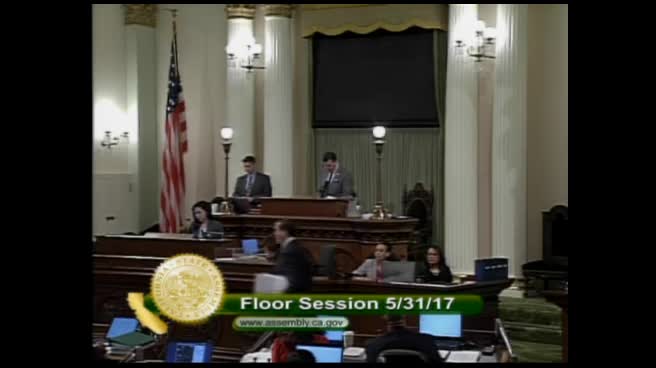



Bill Co-Author(s):