AB 578: Threatening a witness: threats to report immigration status.
- Session Year: 2017-2018
- House: Assembly
- Latest Version Date: 2017-02-14
Existing law makes it a misdemeanor to knowingly and maliciously prevent or dissuade, or attempt to prevent or dissuade, a witness or victim from attending or giving testimony at a trial, proceeding, or inquiry authorized by law or to attempt to prevent or dissuade a victim or witness of a crime to report that crime to law enforcement or seek the arrest of a person in connection with that victimization. Existing law makes the same actions a felony, punishable by 2, 3, or 4 years, if specified additional criteria exist, including accompanying the act by force or by an express or implied threat of force or violence, upon a witness, victim, or any 3rd person or the property of a victim, witness, or any 3rd person.
This bill would include in the list of circumstances that make threatening a witness or victim a felony a threat to report the immigration status or suspected immigration status of a crime victim or witness, or of a victims or witness family member or relative. By increasing the penalty for a crime, this bill would impose a state-mandated local program.
The California Constitution requires the state to reimburse local agencies and school districts for certain costs mandated by the state. Statutory provisions establish procedures for making that reimbursement.
This bill would provide that no reimbursement is required by this act for a specified reason.
(a)Except as provided in subdivision (c), any a person who does any of the following is guilty of a public offense and shall be punished by imprisonment in a county jail for not more than one year or in the state prison:
(1)Knowingly and maliciously prevents or dissuades any a witness or victim from attending or giving testimony at any a trial, proceeding, or inquiry authorized by law.
(2)Knowingly and maliciously attempts to prevent or dissuade any a witness or victim from attending or giving testimony at any a trial, proceeding, or inquiry authorized by law.
(3)For purposes of this section, evidence that the defendant was a family member who interceded in an effort to protect the witness or victim shall create a presumption that the act was without malice.
(b)Except as provided in subdivision (c), every a person who attempts to prevent or dissuade another person who has been the victim of a crime or who is witness to a crime from doing any of the following is guilty of a public offense and shall be punished by imprisonment in a county jail for not more than one year or in the state prison:
(1)Making any a report of that victimization to any a peace officer or officer, a state or local law enforcement officer or probation or parole officer, a probation, parole, or correctional officer or officer, a prosecuting agency or to any agency, or a judge.
(2)Causing a complaint, indictment, information, or probation or parole violation to be sought and prosecuted, and assisting in the prosecution thereof.
(3)Arresting or causing or seeking the arrest of any a person in connection with that victimization.
(c)Every A person doing any of the acts described in subdivision (a) or (b) knowingly and maliciously under any one or more of the following circumstances, is guilty of a felony punishable by imprisonment in the state prison for two, three, or four years under any of the following circumstances:
(1)Where If the act is accompanied by force or by an express or implied threat of force or violence, upon a witness or victim witness, victim, or any third person or the property of any a victim, witness, or any third person.
(2)Where If the act is in furtherance of a conspiracy.
(3)Where If the act is committed by any a person who has been convicted of any a violation of this section, any a predecessor law hereto or any law, a federal statute statute, or a statute of any other state which, that, if the act prosecuted was committed in this state, would be a violation of this section.
(4)Where If the act is committed by any a person for pecuniary gain or for any other consideration acting upon the request of any other person. All parties to such a the transaction are guilty of a felony.
(5)If the act is accomplished by threatening to report the immigration status or suspected immigration status of a witness or victim, or of a victims or witness family member or relative.
(d)Every A person attempting the commission of any an act described in subdivisions subdivision (a), (b), and or (c) is guilty of the offense attempted without regard to success or failure of the attempt. The fact that no person was injured physically, or in fact intimidated, shall be no is not a defense against any prosecution under this section.
(e)Nothing in this This section precludes does not preclude the imposition of an enhancement for great bodily injury where if the injury inflicted is significant or substantial.
(f)The use of force during the commission of any an offense described in subdivision (c) shall be considered a circumstance in aggravation of the crime in imposing a term of imprisonment under subdivision (b) of Section 1170.
SEC. 2.No reimbursement is required by this act pursuant to Section 6 of Article XIIIB of the California Constitution because the only costs that may be incurred by a local agency or school district will be incurred because this act creates a new crime or infraction, eliminates a crime or infraction, or changes the penalty for a crime or infraction, within the meaning of Section 17556 of the Government Code, or changes the definition of a crime within the meaning of Section 6 of Article XIIIB of the California Constitution.
REVISIONS: HeadingLine 2.|
Date
|
Status
|
|---|---|
| Sep 1, 2017 | In committee: Held under submission. |
| Jul 10, 2017 | In committee: Referred to APPR. suspense file. |
| Jun 20, 2017 | From committee: Do pass and re-refer to Com. on APPR. (Ayes 6. Noes 1.) (June 20). Re-referred to Com. on APPR. |
| Jun 8, 2017 | Referred to Com. on PUB. S. |
| May 30, 2017 | In Senate. Read first time. To Com. on RLS. for assignment. |
| May 30, 2017 | Read third time. Passed. Ordered to the Senate. (Ayes 76. Noes 0. Page 1821.) |
| May 26, 2017 | From committee: Do pass. (Ayes 17. Noes 0.) (May 26). |
| Apr 5, 2017 | In committee: Set, first hearing. Referred to APPR. suspense file. |
| Mar 21, 2017 | Coauthors revised. |
| Feb 27, 2017 | Referred to Com. on PUB. S. |
| Feb 15, 2017 | From printer. May be heard in committee March 17. |
| Feb 14, 2017 | Read first time. To print. |
|
Date
|
Description
|
Location
|
Votes
|
|
|---|---|---|---|---|
| Jul 10, 2017 | Placed on suspense file | Senate Standing Committee on Appropriations |
Passed |
|
| Jun 20, 2017 | Do pass, but first be re-referred to the Committee on [Appropriations] | Senate Standing Committee on Public Safety |
Passed |
|
| May 30, 2017 | AB 578 REYES Assembly Third Reading | Assembly Floor |
Passed |
|
| May 26, 2017 | Do pass. | Assembly Standing Committee on Appropriations |
Passed |
|
| Mar 21, 2017 | Do pass and be re-referred to the Committee on [Appropriations] with recommendation: To Consent Calendar | Assembly Standing Committee on Public Safety |
Passed |
This list shows positions taken on this bill by organizations on the date displayed, which is linked to the original source.
Positions by individuals are not included.
|
Organization
|
Position
|
Date
|
|---|---|---|
| Association For Los Angeles Deputy Sheriffs | ** Support | Mar 20, 2017 |
| California Association for Code Enforcement Officers | ** Support | Mar 20, 2017 |
| California College And University Police Chiefs Association | ** Support | Mar 20, 2017 |
| California Narcotic Officers Association | ** Support | Mar 20, 2017 |
| California State Sheriffs Association | ** Support | Mar 20, 2017 |
| California State Sheriffs' Association | ** Support | Mar 20, 2017 |
| CHIRLA-Coalition for Humane Immigrant Rights | * Support | Jun 20, 2017 |
| Los Angeles County Professional Peace Officer Association | ** Support | Mar 20, 2017 |
| Los Angeles Police Protective League | ** Support | Mar 20, 2017 |
| Riverside Sheriffs Association | ** Support | Mar 20, 2017 |
| Riverside Sheriffs' Association | ** Support | Mar 20, 2017 |
SENATE COMMITTEE ON APPROPRIATIONS
Senator Ricardo Lara, Chair
2017 - 2018 Regular Session
AB 578 (Reyes) - Threatening a witness: threats to report immigration status
Version: February 14, 2017 | Policy Vote: PUB. S. 6 - 1 |
Urgency: No | Mandate: Yes |
Hearing Date: July 10, 2017 | Consultant: Shaun Naidu |
This bill meets the criteria for referral to the Suspense File.
Bill Summary:
AB 578 would punish exclusively as a felony threatening to report the immigration status of a victim or witness to prevent or dissuade that person from providing testimony, attending court proceedings, or reporting a crime.
Fiscal Impact:
Unknown potential increase in state costs (General Fund) for new commitments to state prison for the conviction of conduct proscribed by this bill that otherwise would have resulted in a misdemeanor conviction. To the extent that the provisions of this measure lead to one additional commitment to state prison, it would result in additional General Fund costs of $75,560 annually to incarcerate that person in a state institution.
Background:
Existing law makes it an alternate felony-misdemeanor crime to knowingly and maliciously prevent or dissuade, or attempt to prevent or dissuade, a witness or victim from attending or giving testimony at a trial, proceeding, or inquiry authorized by law or to attempt to prevent or dissuade a victim or witness of a crime to report that crime to law enforcement or seek the arrest of a person in connection with that victimization. This offense is punishable by up to one year in county jail or 16 months, two years, or three years in state prison. Those same actions is a felony offense, punishable by 2, 3, or 4 years in state prison, if specified additional criteria exist, including if the victim or witness tampering was done by force or by an express or implied threat of force or violence, upon a witness, victim, or third person or the property of a victim, witness, or third person.
Proposed Law:
This bill would make it a felony offense to knowingly and maliciously prevent or dissuade, or attempt to, a witness or victim from attending or giving testimony at a court proceeding or reporting a crime by threatening to report the immigration status or suspected status of a witness or victim or of a witness or victim’s family member or relative, punishable by imprisonment in the state prison for 2, 3, or 4 years.
Prior Legislation:
AB 524 (Mullin, Ch. 572, Stats. 2013) provided that a threat to report the immigration status or suspected immigration status of an individual or the individual's family may induce fear sufficient to constitute extortion.
SB 940 (Leslie, Ch. 500, Stats. 1997) increased the punishment for witness intimidation.
Staff Comments:
This bill would make victim or witness tampering by threatening to report the person’s immigration status punishable exclusively as a felony, and with a sentence range of two, three, or four years in prison. According to the Department of Corrections and Rehabilitation, as of March 1, 2017, the following number of prison sentences was being served for victim and witness tampering:
Penal Code Section | Principal | Additional Charge |
PC136.1(a) | 56 | 290 |
PC136.1(a)/Attempt | 22 | 117 |
PC136.1(b) | 105 | 569 |
PC136.1(b)/Attempt | 13 | 49 |
PC136.1(c) | 195 | 1,040 |
PC136.1(c)/Attempt | 6 | 27 |
Staff notes, however, that only a subset of violations of Penal Code section 136.1, subdivisions (a) and (b) would qualify for the sentence increase proposed by this bill, as the increased punishment would apply only when the offense is committed by threats to report immigration status.
-- END --
SENATE COMMITTEE ON PUBLIC SAFETY
Senator Nancy Skinner, Chair
2017 - 2018 Regular
Bill No: AB 578 Hearing Date: June 20, 2017
Author: | Reyes | ||
Version: | February 14, 2017 | ||
Urgency: | No | Fiscal: | Yes |
Consultant: | SJ | ||
Subject: Threatening a Witness: Threats to Report Immigration Status
HISTORY
Source: Central American Resource Center
Coalition for Humane Immigrant Rights
Prior Legislation: AB 2792 (Bonta) Ch. 768, Stats. of 2016
AB 524 (Mullin) Ch. 572, Stats. of 2013
AB 4 (Ammiano) Ch. 570, Stats. of 2013
SB 940 (Leslie) Ch. 500, Stats. of 1997
Support: Association for Los Angeles Deputy Sheriffs; California Association for Code Enforcement Officers; California College and University Police Chiefs Association; California Narcotic Officers Association; California State Sheriffs’ Association; Los Angeles County Professional Peace Officers Association; Los Angeles Police Protective League; Riverside Sheriffs’ Association
Opposition: None known
Assembly Floor Vote: 76 - 0
PURPOSE
The purpose of this bill is expand the witness intimidation statute to include the act of knowingly and maliciously threatening to report the actual or suspected immigration status of a witness or victim, or that of a family member or relative of the witness or victim.
Existing law provides that when the punishment for a felony is not otherwise stated in the law, the punishment is 16 months, or two or three years in state prison, unless the offense is eligible for a county jail sentence under realignment. (Pen. Code, § 18.)
Existing law provides that any person who does any of the following is guilty of witness intimidation and shall be punished by imprisonment in a county jail for not more than one year, or in the state prison:
- Knowingly and maliciously prevents or dissuades any witness or victim from attending or giving testimony at any trial, proceeding, or inquiry authorized by law; or,
- Knowingly and maliciously attempts to prevent or dissuade any witness or victim from attending or giving testimony at any trial, proceeding, or inquiry authorized by law. (Pen. Code, § 136.1, subd. (a).)
Existing law provides that any person who attempts to prevent or dissuade another person who has been the victim of a crime or who is witness to a crime from doing any of the following is guilty of witness intimidation and shall be punished by imprisonment in a county jail for not more than one year, or in the state prison:
- Making any report of that victimization to any peace officer or state or local law enforcement officer or probation or parole or correctional officer or prosecuting agency or to any judge;
- Causing a complaint, indictment, information, probation or parole violation to be sought and prosecuted, and assisting in the prosecution thereof; or,
- Arresting or causing or seeking the arrest of any person in connection with that victimization. (Pen. Code, § 136.1, subd. (b).)
Existing law punishes the aforementioned acts of witness intimidation by two, three, or four years in the state prison when the perpetrator knowingly and maliciously commits the act under any of the following circumstances:
- Where the act is accompanied by force or by an express or implied threat of force or violence, upon a witness or victim or any third person or the property of any victim, witness, or any third person;
- Where the act is in furtherance of a conspiracy;
- Where the act is committed by any person who has been convicted of any violation of this section, any predecessor law hereto or any federal statute or statute of any other state which, if the act prosecuted was committed in this state, would be a violation of this section; or,
- Where the act is committed by any person for pecuniary gain or for any other consideration acting upon the request of any other person. All parties to such a transaction are guilty of a felony. (Pen. Code, § 136.1, subd. (c).)
Existing law provides that every person attempting the commission of any act described above is guilty of the offense attempted without regard to success or failure of the attempt. The fact that no person was injured physically, or in fact intimidated, is not a defense. (Pen. Code, § 136.1, subd. (d).)
Existing law defines extortion as “the obtaining of property from another, with his consent, or the obtaining of an official act of a public officer, induced by a wrongful use of force or fear, or under color of official right.” (Pen. Code, § 518.)
Existing law provides that fear, such as will constitute extortion, may be induced by a threat to report immigration status or suspected immigration status. (Pen. Code, § 519.)
This bill provides that if an act of witness intimidation is knowingly and maliciously accomplished by threatening to report the actual or suspected immigration status of a witness or victim, or that of family member or relative of the victim or witness, then it is punishable by two, three, or four years in state prison.
This bill makes other technical, non-substantive changes.
COMMENTS
- Need for This Bill
According to the author:
State and federal policies that impact the immigrant community have rapidly changed over the past couple of decades. This has led to miscommunication regarding the protections immigrants may have when interacting with certain government entities, including law enforcement. Some of these policies include Secure Communities (S-Comm), which allows local law enforcement to share the biometrics of an individual with Immigration Customs Enforcement (ICE) regardless of a conviction, and the 287(g) program, which allows local law enforcement to enforce immigration law. During implementation of such policies it was common for individuals to be detained for minor encounters with law enforcement such as a traffic violation.
As the state with the largest immigrant population in the country California has enacted significant legislation to strengthen the relationship between local law enforcement and the immigrant community, including the passage of the Trust Act (AB 4 – Ammiano) and the Truth Act (AB 2792 – Bonta), which limits the collaboration between local law enforcement and ICE as it concerns individuals who are in custody. Additional state legislation that assisted in this effort includes AB 2027 (Quirk) and SB 674 (De León) which requires law enforcement agencies to certify specific documentation when a non-citizen victim cooperated said agency. However, recent turn in events have once again shifted the relationship that law enforcement has with immigrants in the state and across the nation.
Since the election of President Trump misinformation centered around law enforcement and the immigrant community has resurfaced and was recently re-enforced on January 25 when he signed an Executive Order (EO) known as “Enhancing Public Safety in the Interior of the United States”. This EO considers all undocumented individuals a priority for removal, increase 287(g) agreements, revives S-Comm, and expedites the removal process, among other things. This premise of this EO is that all undocumented individuals are a threat to the welfare and national security of the nation. The implementation of this EO has increased the amount of arrest of undocumented individuals who have no criminal history.
As a direct result of the EO, interior ICE agents have been seen apprehending domestic violence victims and other victims of crimes in courthouses across the nation. In the city of Los Angeles, the reporting of sexual assaults has dropped by 25% in comparison to last year’s data.
Immigrant women who experience domestic violence face significant barriers in reporting their abusers, including the threat of deportation, hiding or destroying forms of documentation (visas, passports, green cards), and withdrawing papers for legalization. ICE’s new tactics in apprehending individuals has renewed fears within the immigrant community to the extent that multiple government entities have experienced an alarming rate of participation rates drop in programs as the CA Dream Act, Medi-Cal, and Cal Fresh, among others.
Deportation has a significant impact on an individual’s livelihood that may result in the separation of family, loss of economic stability and assets, and in many cases the placement into a country that is unfamiliar.
2. Concerns Regarding the Intimidation of Immigrants
On January 25, 2017, President Trump signed Executive Order 13768, titled “Enhancing Public Safety in the Interior of the United States.” 82 Fed.Reg. 8799 (Jan. 25, 2017) <https://www.federalregister.gov/documents/2017/01/30/2017-02102/enhancing-public-safety-in-the-interior-of-the-united-states> [as of Jun. 13, 2017]. The executive order vastly expands the proportion of the immigrant population who face potential risk of deportation, and prioritizes the removal of aliens who “have been convicted of any criminal offense; have been charged with any criminal offense, where such charge has not been resolved; have committed acts that constitute a chargeable criminal offense; have engaged in fraud or willful misrepresentation in connection with any official matter or application before a governmental agency; have abused any program related to receipt of public benefits; are subject to a final order of removal, but who have not complied with their legal obligation to depart the United States; or in the judgment of an immigration officer, otherwise pose a risk to public safety or national security.” (Italics added.)
Additionally, the executive order directs the hiring of 10,000 additional immigration officers, and withholds federal funding from “sanctuary jurisdictions” or states and cities that limit cooperation with federal immigration officers. Notably, Section 9(a) of the executive order was challenged by the County of Santa Clara and the City and County of San Francisco. In the consolidated cases, the U.S. District Court for the Northern District of California granted the counties’ motions for a nationwide preliminary injunction, but held that the injunction “does not impact the Government’s ability to use lawful means to enforce existing conditions of federal grants or 8 U.S.C. 1373, nor does it restrict the Secretary from developing regulations or preparing guidance on designating a jurisdiction as a ‘sanctuary jurisdiction.’ ” <http://www.politico.com/f/?id=0000015b-a6d5-de92-a17b-aed55e780001> [as of Jun. 13, 2017].
Since the enactment of Executive Order 13768, there have been media accounts of individuals with no criminal record being detained or deported. (See <http://www.sacbee.com/news/local/article151411322.html> [as of Jun. 13, 2017].) Given the current climate, there are concerns that the perpetrator of a crime may now be more likely to intimidate a victim or witness from testifying based on actual or suspected immigration status. This bill seeks to strengthen protections for crime victims and witnesses by expanding the witness intimidation statute to include the act of knowingly and maliciously threatening to report the actual or suspected immigration status of a witness or victim, or that of a family member or relative of the witness or victim.
3. Related Legislation
AB 291 (Chiu) makes it a cause for suspension, disbarment, or other discipline for a member of the State Bar to report suspected immigration status or threaten to report suspected immigration status of a witness or party to a civil or administrative action or his or her family member, to a federal, state, or local agency because the witness or party exercises or has exercised a right related to the hiring of residential real property. AB 291 is pending hearing in the Senate Judiciary Committee.
SB 785 (Wiener) prohibits the disclosure of a person’s immigration status in public court records without first having an in-camera hearing with the judge to determine whether the information is relevant. SB 785 is pending hearing in the Senate Judiciary Committee.
4. Argument in Support
The Association for Los Angeles Deputy Sheriffs supports this bill stating:
This bill would include in the list of circumstances that make threatening a witness or victim a felony a threat to report the immigration status or suspected immigration status of a crime victim or witness, or of a victim’s or witness’ family member or relative.
The use of coercion or threats to prevent a witness form coming forward strikes at the heart of the justice system.
-- END --
ASSEMBLY THIRD READING
ATR Bill Id:AB 578
Author:(Reyes)
As Introduced Ver:February 14, 2017
Majority vote
Committee | Votes | Ayes | Noes |
Public Safety | 7-0 | Jones-Sawyer, Lackey, Cunningham, Gonzalez Fletcher, Quirk, Rubio, Santiago | |
Appropriations | 17-0 | Gonzalez Fletcher, Bigelow, Bloom, Bocanegra, Bonta, Brough, Calderon, McCarty, Quirk, Fong, Friedman, Gallagher, Eduardo Garcia, Gray, Muratsuchi, Obernolte, Reyes |
|
SUMMARY: Increases the punishment for the crime of witness intimidation when it is committed by threats to report the immigration status of a victim, a witness, or a family member of a victim or witness. Specifically this bill:
- Provides that if an act of witness intimidation is knowingly and maliciously accomplished by threatening to report the actual or suspected immigration status of a witness or victim, or that of family member of the witness or victim, then it is punishable by two, three, or four years in state prison.
- Makes technical, non-substantive changes.
EXISTING LAW:
- Provides that when the punishment for a felony is not otherwise stated in the law, the punishment is 16 months, or two or three years in state prison, unless the offense is eligible for a county jail sentence under realignment.
- Provides that any person who does any of the following is guilty of witness intimidation and shall be punished by imprisonment in a county jail for not more than one year, or in the state prison:
- Knowingly and maliciously prevents or dissuades any witness or victim from attending or giving testimony at any trial, proceeding, or inquiry authorized by law; or,
- Knowingly and maliciously attempts to prevent or dissuade any witness or victim from attending or giving testimony at any trial, proceeding, or inquiry authorized by law.
- Provides that any person who attempts to prevent or dissuade another person who has been the victim of a crime or who is witness to a crime from doing any of the following is guilty of witness intimidation and shall be punished by imprisonment in a county jail for not more than one year, or in the state prison:
- Making any report of that victimization to any peace officer or state or local law enforcement officer or probation or parole or correctional officer or prosecuting agency or to any judge;
- Causing a complaint, indictment, information, probation or parole violation to be sought and prosecuted, and assisting in the prosecution thereof; or,
- Arresting or causing or seeking the arrest of any person in connection with that victimization.
- Punishes the aforementioned acts of witness intimidation by two, three, or four years in the state prison when the perpetrator knowingly and maliciously commits the act under any of the following circumstances:
- Where the act is accompanied by force or by an express or implied threat of force or violence, upon a witness or victim or any third person or the property of any victim, witness, or any third person;
- Where the act is in furtherance of a conspiracy;
- Where the act is committed by any person who has been convicted of any violation of this section, any predecessor law hereto or any federal statute or statute of any other state which, if the act prosecuted was committed in this state, would be a violation of this section; or,
- Where the act is committed by any person for pecuniary gain or for any other consideration acting upon the request of any other person. All parties to such a transaction are guilty of a felony.
- Defines extortion as the act of "obtaining of property from another, with his consent, or the obtaining of an official act of a public officer, induced by a wrongful use of force or fear, or under color of official right."
- Provides that fear, such as will constitute extortion, may be induced by a threat to report immigration status or suspected immigration status.
FISCAL EFFECT: According to the Assembly Appropriations Committee, unknown, but potentially moderate cost increases (General Fund) to the Department of Corrections and Rehabilitation (CDCR) in excess of $290,000 if 10 individuals serve an additional year for the provisions in this bill. According to the California Department of Corrections (CDCR), the contracted out-of-state bed rate is $29,000 and currently over 1,000 sentences are being served for witness intimidation; 10 cases would represent less than 1% increase.
COMMENTS:
According to the author, "Executive Orders such as Trump's 13768, titled 'Enhancing Public Safety in the Interior of the United States' have not only fostered fear in our immigrant communities, but they have created a distrust of law enforcement agencies.
"Those participating in criminal activity may use this growing distrust to their advantage, threatening a witness or their family based on their citizenship status in order to dissuade them from cooperating with law enforcement. For example, a perpetrator of a crime may intimidate a victim of domestic violence, threating them on their immigration status so that they are no longer willing to testify.
"AB 578 will send a clear message to criminals that California will not tolerate such fear mongering that creates an underground society. Given the current state of affairs nationally it is critical that we not only encourage cooperation with law enforcement for the sake of communities, but let immigrant populations know that any type of intimidation will not be tolerated. This bill will protect California's immigration population from exploitation and strengthen human rights."
Analysis Prepared by: Sandy Uribe / PUB. S. / (916) 319-3744 FN: 0000565
Date of Hearing: April 5, 2017
ASSEMBLY COMMITTEE ON APPROPRIATIONS
Lorena Gonzalez Fletcher, Chair
ABPCA Bill Id:AB 578
Author:(Reyes) – As Introduced Ver:February 14, 2017
Policy Committee: | Public Safety | Vote: | 7 - 0 |
|
|
Urgency: No State Mandated Local Program: Yes Reimbursable: No
SUMMARY:
This bill provides that if an act of witness intimidation is knowingly and maliciously accomplished by threatening to report the actual or suspected immigration status of a witness or victim of a crime, or that of family member of the witness or victim, then the felony sentence is increased from one year in county jail, or six months, two years, or three years in state prison, to two, three, or four years in state prison.
FISCAL EFFECT:
Unknown, but potentially moderate cost increases (GF) to the Department of Corrections and Rehabilitation (CDCR) in excess of $290,000 if 10 individuals serve an additional year for the provisions in this bill. According to the California Department of Corrections (CDCR), the contracted out-of-state bed rate is $29,000 and currently over 1,000 sentences are being served for witness intimidation; 10 cases would represent less than 1% increase.
COMMENTS:
- Background. Under current law, any person who knowingly and maliciously prevents or dissuades (or attempts to prevent or dissuade) any witness or victim from attending or giving testimony at any trial, proceeding, or inquiry authorized by law, or reporting a crime is guilty of witness intimidation. This crime is punishable by imprisonment in a county jail or in state prison.
Under current law, witness intimidation based on threats of reporting actual or suspected immigration status would be punishable as an alternate felony/misdemeanor, with felony punishment ranging from 16 months, to 2 or 3 years in state prison.
Current law punishes the specified acts of witness intimidation by two, three, or four years in the state prison when the perpetrator knowingly and maliciously commits the act under specified circumstances, such as furtherance of a conspiracy, the act is accompanied by force, or perpetrator is paid for the act.
- Purpose. According to the author, “Executive Orders such as Trump’s 13768, titled ‘Enhancing Public Safety in the Interior of the United States’ have not only fostered fear in our immigrant communities, but they have created a distrust of law enforcement agencies.”
“AB 578 will send a clear message to criminals that California will not tolerate such fear mongering that creates an underground society. Given the current state of affairs nationally it is critical that we not only encourage cooperation with law enforcement for the sake of communities, but let immigrant populations know that any type of intimidation will not be tolerated. This bill will protect California’s immigration population from exploitation and strengthen human rights.”
AB 578 will make that conduct punishable exclusively as a felony, and with a sentence range of two, three, or four years in prison. According to CDCDR, as of March 1, 2017, the following number of prison sentences were being served for witness tampering:
Penal Code Section | Principal | Additional Charge |
PC136.1(a) | 56 | 290 |
PC136.1(a)/Attempt | 22 | 117 |
PC136.1(b) | 105 | 569 |
PC136.1(b)/Attempt | 13 | 49 |
PC136.1(c) | 195 | 1,040 |
PC136.1(c)/Attempt | 6 | 27 |
However, staff notes that only a subset of violations of subdivisions PC136.1(a) and (b) will qualify for the sentence increase proposed by this bill because the increased punishment will only apply when the offense is committed by threats to report immigration status.
- Support. Support groups point out the need to ensure that individuals, regardless of their immigrations status, feel safe in reporting crimes in their communities.
- Related Legislation: AB 291 (Chiu) make it a cause for suspension, disbarment, or other discipline for a member of the State Bar to report suspected immigration status or threaten to report suspected immigration status of a witness or party to a civil or administrative action or his or her family member, to a federal, state, or local agency because the witness or party exercises or has exercised a right related to the hiring of residential real property. AB 291 is pending hearing in the Assembly Judiciary Committee.
- Prior Legislation:
AB 524 (Mullin), Chapter 572, Statutes of 2013, provides that a threat to report the immigration status or suspected immigration status of an individual or the individual's family may induce fear sufficient to constitute extortion.
SB 940 (Leslie), Chapter 500, Statutes of 1997, increased the punishment for witness intimidation.
Analysis Prepared by: Pedro Reyes / APPR. / (916) 319-2081
Date of Hearing: March 21, 2017
Counsel: Sandra Uribe
ASSEMBLY COMMITTEE ON
Reginald Byron Jones-Sawyer, Sr., Chair
ABPCA Bill Id:
Author:() – As Ver:
SUMMARY:
Increases the punishment for the crime of witness intimidation when it is committed by threats to report the immigration status of a victim, a witness, or a family member of a victim or witness. Specifically this bill:
- Provides that if an act of witness intimidation is knowingly and maliciously accomplished by threatening to report the actual or suspected immigration status of a witness or victim, or that of family member of the witness or victim, then it is punishable by two, three, or four years in state prison.
- Makes technical, non-substantive changes.
EXISTING LAW:
- Provides that when the punishment for a felony is not otherwise stated in the law, the punishment is 16 months, or two or three years in state prison, unless the offense is eligible for a county jail sentence under realignment. (Pen. Code, § 18.)
- Provides that any person who does any of the following is guilty of witness intimidation and shall be punished by imprisonment in a county jail for not more than one year, or in the state prison:
- Knowingly and maliciously prevents or dissuades any witness or victim from attending or giving testimony at any trial, proceeding, or inquiry authorized by law; or,
- Knowingly and maliciously attempts to prevent or dissuade any witness or victim from attending or giving testimony at any trial, proceeding, or inquiry authorized by law. (Pen. Code, § 136.1, subd. (a).)
- Knowingly and maliciously prevents or dissuades any witness or victim from attending or giving testimony at any trial, proceeding, or inquiry authorized by law; or,
- Provides that any person who attempts to prevent or dissuade another person who has been the victim of a crime or who is witness to a crime from doing any of the following is guilty of witness intimidation and shall be punished by imprisonment in a county jail for not more than one year, or in the state prison:
- Making any report of that victimization to any peace officer or state or local law enforcement officer or probation or parole or correctional officer or prosecuting agency or to any judge;
- Causing a complaint, indictment, information, probation or parole violation to be sought and prosecuted, and assisting in the prosecution thereof; or,
- Arresting or causing or seeking the arrest of any person in connection with that victimization. (Pen. Code, § 136.1, subd. (b).)
- Making any report of that victimization to any peace officer or state or local law enforcement officer or probation or parole or correctional officer or prosecuting agency or to any judge;
- Punishes the aforementioned acts of witness intimidation by two, three, or four years in the state prison when the perpetrator knowingly and maliciously commits the act under any of the following circumstances:
- Where the act is accompanied by force or by an express or implied threat of force or violence, upon a witness or victim or any third person or the property of any victim, witness, or any third person;
- Where the act is in furtherance of a conspiracy;
- Where the act is committed by any person who has been convicted of any violation of this section, any predecessor law hereto or any federal statute or statute of any other state which, if the act prosecuted was committed in this state, would be a violation of this section; or,
- Where the act is committed by any person for pecuniary gain or for any other consideration acting upon the request of any other person. All parties to such a transaction are guilty of a felony. (Pen. Code, § 136.1, subd. (c).)
- Where the act is accompanied by force or by an express or implied threat of force or violence, upon a witness or victim or any third person or the property of any victim, witness, or any third person;
- Defines extortion as the act of “obtaining of property from another, with his consent, or the obtaining of an official act of a public officer, induced by a wrongful use of force or fear, or under color of official right.” (Pen. Code, § 518.)
- Provides that fear, such as will constitute extortion, may be induced by a threat to report immigration status or suspected immigration status. (Pen. Code, § 519.)
FISCAL EFFECT:
Unknown
COMMENTS:
- Author's Statement: According to the author, “Executive Orders such as Trump’s 13768, titled ‘Enhancing Public Safety in the Interior of the United States’ have not only fostered fear in our immigrant communities, but they have created a distrust of law enforcement agencies.
“Those participating in criminal activity may use this growing distrust to their advantage, threatening a witness or their family based on their citizenship status in order to dissuade them from cooperating with law enforcement. For example, a perpetrator of a crime may intimidate a victim of domestic violence, threating them on their immigration status so that they are no longer willing to testify.
“AB 578 will send a clear message to criminals that California will not tolerate such fear mongering that creates an underground society. Given the current state of affairs nationally it is critical that we not only encourage cooperation with law enforcement for the sake of communities, but let immigrant populations know that any type of intimidation will not be tolerated. This bill will protect California’s immigration population from exploitation and strengthen human rights.” - Heightened Concerns of Intimidation of Immigrants: On January 25, 2017, President Trump signed Executive Order 13768, titled “Enhancing Public Safety in the Interior of the United States.” (https://www.whitehouse.gov/the-press-office/2017/01/25/presidential-executive-order-enhancing-public-safety-interior-united>.) The executive order vastly expanded the proportion of the immigrant population who face potential risk of deportation. The order prioritizes removal of aliens who: are convicted of any criminal offense; are charged with any criminal offense; and commit acts that constitute a chargeable offense.
Additionally, the executive order instructs officers to remove any illegal immigrant that poses “a risk to public safety or national security.” It increases resources for enforcement with 10,000 additional immigration officers. The executive order also withholds federal funding from “sanctuary jurisdictions” or states and cities that limit cooperation with federal immigration officers.
Since the enactment of Executive Order 13768, there have been media accounts of individuals with no criminal record being deported.
The concern of the proponents of this bill is that due to the executive order, the perpetrator of a crime may now be more likely to intimidate a victim or witness from testifying based on actual or suspected immigration status. - Prison Overcrowding: In January 2010, a three-judge panel issued a ruling ordering the State of California to reduce its prison population to 137.5% of design capacity because overcrowding was the primary reason that CDCR was unable to provide inmates with constitutionally adequate healthcare. (Coleman/Plata vs. Schwarzenegger (2010) No. Civ S-90-0520 LKK JFM P/NO. C01-1351 THE.) The United State Supreme Court upheld the decision, declaring that “without a reduction in overcrowding, there will be no efficacious remedy for the unconstitutional care of the sick and mentally ill” inmates in California’s prisons. (Brown v. Plata (2011) 131 S.Ct. 1910, 1939; 179 L.Ed.2d 969, 999.)
After continued litigation, on February 10, 2014, the federal court ordered California to reduce its in-state adult institution population to 137.5% of design capacity by February 28, 2016, as follows: 143% of design bed capacity by June 30, 2014; 141.5% of design bed capacity by February 28, 2015; and, 137.5% of design bed capacity by February 28, 2016.
CDCR’s February 2017 monthly report on the prison population notes that the in-state adult institution population is currently 114,124 inmates, which amounts to 134.1% of design capacity. This is an increase of 1.1% from February of last year. Additionally, there are still 4,400 prisoners being housed out of state. (http://www.cdcr.ca.gov/Reports_Research/Offender_Information_Services_Branch/Monthly/TPOP1A/TPOP1Ad1702.pdf )
The Governor’s January proposed budget for 2017-2018 anticipates that “[t]he adult inmate average daily population is projected to decrease from 129,015 in 2016-17 to 128,159 in 2017-18, a decrease of 856 inmates, or 0.7 percent. The average daily parolee population is projected to increase from 43,686 in 2016-17 to 44,761 in 2017-18, an increase of 1,075 parolees, or 2.5 percent. The decrease in the adult inmate population is due to a projected reduction related to the implementation of Proposition 57, the Public Safety and Rehabilitation Act of 2016, which offsets a projected increase in felon admissions.” (http://ebudget.ca.gov/budget/2017-18/#/Department/5225)
Thus, while CDCR is currently in compliance with the three-judge panel’s order on the prison population, the state needs to maintain a “durable solution” to prison overcrowding “consistently demanded” by the court. (Opinion Re: Order Granting in Part and Denying in Part Defendants’ Request For Extension of December 31, 2013 Deadline, NO. 2:90-cv-0520 LKK DAD (PC), 3-Judge Court, Coleman v. Brown, Plata v. Brown (2-10-14).)
Under current law, witness intimidation based on threats of reporting actual or suspected immigration status would be punishable as an alternate felony/misdemeanor, with felony punishment ranging from 16 months, to 2 or 3 years in state prison. This bill would make that conduct punishable exclusively as a felony, and with a sentence range of two, three, or four years in prison.
CDCR has informed this Committee that as of March 1, 2017, there were the following number of prison sentences for the offense targeted under this bill:
PC Section | Principal | Subordinate* |
PC136.1(a) | 56 | 290 |
PC136.1(a)/Attempt | 22 | 117 |
PC136.1(b) | 105 | 569 |
PC136.1(b)/Attempt | 13 | 49 |
PC136.1(c) | 195 | 1,040 |
PC136.1(c)/Attempt | 6 | 27 |
It should be noted, however, that it will only be a subset of violations of subdivisions (a) and (b) that will qualify for the sentence increase proposed by this bill because the increased punishment will only apply when the offense is committed by threats to report immigration status.
- Arguments in Support:
- The California State Sheriffs’ Association writes, “Reports and leads from community members, regardless of their immigration status, help law enforcement protect and serve their communities. Currently, many undocumented individuals are fearful that reporting crimes to the police will result in their deportation. This misconception could result in crimes going unreported and potentially creates a barrier between the undocumented community and law enforcement.
“It is the duty of law enforcement to serve every member of the community, regardless of his or her immigration status. Threats of reporting an individual’s immigration status only makes law enforcement’s job more difficult.” - According to the Coalition for Humane Immigrant Rights, a co-sponsor of this bill, “California has led the effort to enact significant legislation to strengthen the relationship between law enforcement and the immigrant community including the Trust Act (AB 4 – Ammiano). These measures ensured that there is a clear distinction between the duties of local law enforcement and Immigration Customs Enforcement (ICE). With such protections in place immigrant communities had begun to increase their trust when interacting with law enforcement.
“Since the election of President Trump concerns about high volumes of deportation had arose within the immigrant community due to the campaign rhetoric that was stated about immigrants. These concerns were validated on January 25, 2017 when the President signed an Executive Order (EO) titled “Enhancing Public Safety in the Interior of the United States”. This EO allows ICE to consider all undocumented individuals a priority for deportation and reinstates past programs such as Secure Communities and 287(g) programs. In recent incidents we have witnessed ICE shift its strategy in the manner that they apprehended individuals including sensitive locations such courthouses. Furthermore, these actions and others by the current administration has led to a greater distrust between immigrants and multiple government entities.
“AB 578 will provide an additional protect (sic) to immigrants who are victims or witnesses of a crime.”
- The California State Sheriffs’ Association writes, “Reports and leads from community members, regardless of their immigration status, help law enforcement protect and serve their communities. Currently, many undocumented individuals are fearful that reporting crimes to the police will result in their deportation. This misconception could result in crimes going unreported and potentially creates a barrier between the undocumented community and law enforcement.
- Related Legislation: AB 291 (Chiu) make it a cause for suspension, disbarment, or other discipline for a member of the State Bar to report suspected immigration status or threaten to report suspected immigration status of a witness or party to a civil or administrative action or his or her family member, to a federal, state, or local agency because the witness or party exercises or has exercised a right related to the hiring of residential real property. AB 291 is pending hearing in the Assembly Judiciary Committee.
- Prior Legislation:
- AB 524 (Mullin), Chapter 572, Statutes of 2013, provides that a threat to report the immigration status or suspected immigration status of an individual or the individual's family may induce fear sufficient to constitute extortion.
- SB 940 (Leslie), Chapter 500, Statutes of 1997, increased the punishment for witness intimidation.
- AB 524 (Mullin), Chapter 572, Statutes of 2013, provides that a threat to report the immigration status or suspected immigration status of an individual or the individual's family may induce fear sufficient to constitute extortion.
REGISTERED SUPPORT / OPPOSITION:
Support
Coalition for Humane Immigrant Rights (Co-Sponsor)
Association for Los Angeles Deputy Sheriffs
California Association for Code Enforcement Officers
California College and University Police Chiefs Association
California Narcotic Officers Association
California State Sheriffs’ Association
Los Angeles County Professional Peace Officer Association
Los Angeles Police Protective League
Riverside Sheriffs’ Association
Opposition
None
Analysis Prepared by:
Discussed in Hearing
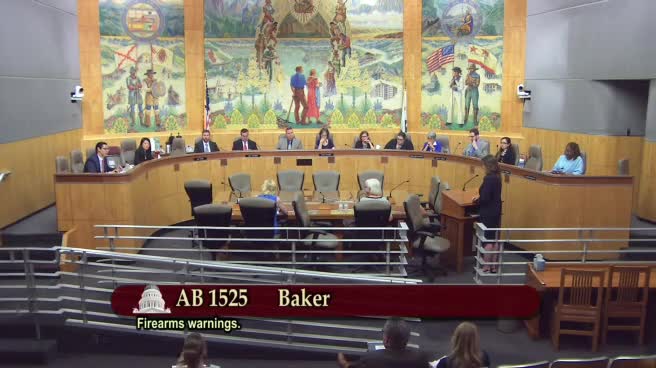 5MIN
Senate Standing Committee on Public Safety
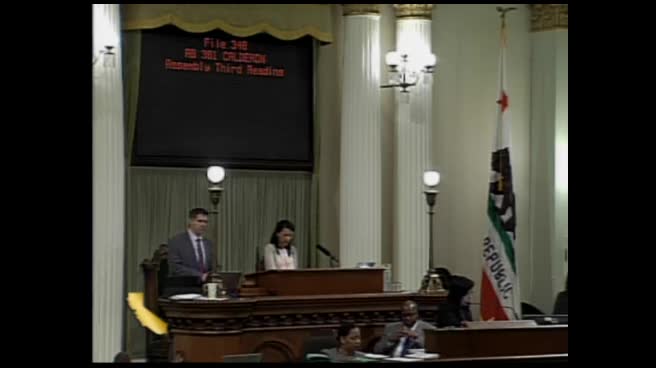 1MIN
Assembly Floor
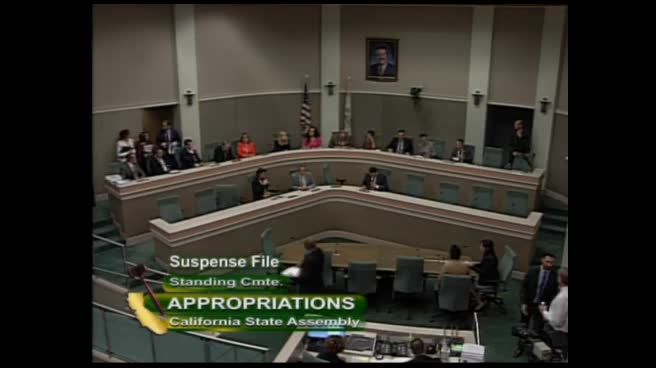 1H
Assembly Standing Committee on Appropriations
Bill Author

Bill Co-Author(s):
