AB 702: Driving under the influence: chemical tests.
- Session Year: 2017-2018
- House: Assembly
- Latest Version Date: 2017-07-05
(1)When a person is convicted of violating specified driving-under-the-influence (DUI) provisions, and at the time of the arrest leading to that conviction the person willfully refused a peace officers request to submit to, or willfully failed to complete, a specified chemical test, existing law requires a court to impose additional penalties, as specified.
This bill would make it a crime for a person to willfully refuse to submit to, or willfully fail to complete, a breath test after being lawfully arrested for a violation of specified offenses. The bill would specify that this crime does not apply to a person who has submitted to and completed a blood test, as specified. By creating a new crime, this bill would impose a state-mandated local program.
(2)When a person is convicted of violating specified DUI provisions, existing law requires a court to consider a concentration of alcohol in a persons blood of 0.15% or more, by weight, or the refusal of the person to take a chemical test as a special factor that may justify enhancing the penalties in sentencing, in determining whether to grant probation, and, if probation is granted, in determining additional or enhanced terms and conditions of probation.
This bill would change the provision described above to no longer require a court to consider a persons refusal to take a chemical test as a special factor.
(3)Existing law provides that a person who drives a motor vehicle is deemed to have given his or her consent to chemical testing of his or her blood or breath for the purpose of determining the alcoholic or drug content of his or her blood if lawfully arrested for driving under the influence of alcohol or drugs. Existing law requires a person to be told that his or her failure to submit to, or the failure to complete, the required chemical test will result in a fine, mandatory imprisonment if convicted of specified DUI offenses, and suspension or revocation of his or her driving privilege, as specified. Existing law exempts a person afflicted with hemophilia or a heart condition, as specified, from this blood test requirement and instead requires him or her to submit to, and complete, a urine test.
This bill would repeal the presumption that a person consents to submit to chemical testing of his or her blood or breath and would instead require a motor vehicle driver who is lawfully arrested for a specified DUI offense to submit to chemical testing of his or her blood or breath for the purpose of determining the alcoholic or drug content of his or her blood. The bill would require a peace officer to advise the person, as specified, that he or she has the choice of taking a chemical test, person that he or she is entitled to a number of constitutional protections as to the manner in which the testing will occur, but that failure to take a blood or urine test will may result in suspension or revocation of his or her driving privilege, and refusal to take a breath test will may result in the same penalty and a fine or mandatory imprisonment if the person is convicted of a specified DUI offense. The bill would require a person exempted from the blood test requirement because of hemophilia or a heart condition, as specified, to submit to, and complete, a breath test or a urine test, as specified.
Because this bill would impose new requirements on peace officers, it would impose a state-mandated local program.
(4)The bill would also make legislative findings and declarations about the privilege of driving on public streets and highways in California and reasonable conditions imposed on that privilege.
The California Constitution requires the state to reimburse local agencies and school districts for certain costs mandated by the state. Statutory provisions establish procedures for making that reimbursement.
This bill would provide that with regard to certain mandates no reimbursement is required by this act for a specified reason.
With regard to any other mandates, this bill would provide that, if the Commission on State Mandates determines that the bill contains costs so mandated by the state, reimbursement for those costs shall be made pursuant to the statutory provisions noted above.
(1)When a person is convicted of violating specified driving-under-the-influence (DUI) provisions, and at the time of the arrest leading to that conviction the person willfully refused a peace officers request to submit to, or willfully failed to complete, a specified chemical test, existing law requires a court to impose additional penalties, as specified.
This bill would increase, as specified, the additional penalties that a court is required to impose if the person convicted of violating specified DUI offenses who willfully refused to complete a breath test at the time of arrest has previously been convicted of specified DUI offenses. Because this bill would increase a persons term in a county jail, as specified, if the person has previously been convicted of a specified DUI offense, it would impose a state-mandated local program. make it a crime for a person to willfully refuse to submit to, or willfully fail to complete, a breath test after being lawfully arrested for a violation of specified offenses. The bill would specify that this crime does not apply to a person who has submitted to and completed a blood test, as specified. By creating a new crime, this bill would impose a state-mandated local program.
(2)When a person is convicted of violating specified DUI provisions, existing law requires a court to consider a concentration of alcohol in a persons blood of 0.15% or more, by weight, or the refusal of the person to take a chemical test as a special factor that may justify enhancing the penalties in sentencing, in determining whether to grant probation, and, if probation is granted, in determining additional or enhanced terms and conditions of probation.
This bill would change the provision described above to no longer require a court to consider a persons refusal to take a chemical test as a special factor.
(3)Existing law provides that a person who drives a motor vehicle is deemed to have given his or her consent to chemical testing of his or her blood or breath for the purpose of determining the alcoholic or drug content of his or her blood if lawfully arrested for driving under the influence of alcohol or drugs. Existing law requires a person to be told that his or her failure to submit to, or the failure to complete, the required chemical test will result in a fine, mandatory imprisonment if convicted of specified DUI offenses, and suspension or revocation of his or her driving privilege, as specified. Existing law exempts a person afflicted with hemophilia or a heart condition, as specified, from this blood test requirement and instead requires him or her to submit to, and complete, a urine test.
This bill would repeal the presumption that a person consents to submit to chemical testing of his or her blood or breath and would instead require a motor vehicle driver who is lawfully arrested for a specified DUI offense to submit to chemical testing of his or her blood or breath for the purpose of determining the alcoholic or drug content of his or her blood. The bill would require a peace officer to advise the person, as specified, that he or she has the choice of taking a chemical test, but that failure to take a blood or urine test will result in suspension or revocation of his or her driving privilege, and refusal to take a breath test will result in the same penalty or and a fine or mandatory imprisonment if the person is convicted of a specified DUI offense. The bill would require a person exempted from the blood test requirement because of hemophilia or a heart condition, as specified, to submit to, and complete, a breath test or a urine test, as specified.
Because this bill would impose new requirements on peace officers, it would impose a state-mandated local program.
(4)The bill would also make legislative findings and declarations about the privilege of driving on public streets and highways in California and reasonable conditions imposed on that privilege.
The California Constitution requires the state to reimburse local agencies and school districts for certain costs mandated by the state. Statutory provisions establish procedures for making that reimbursement.
This bill would provide that with regard to certain mandates no reimbursement is required by this act for a specified reason.
With regard to any other mandates, this bill would provide that, if the Commission on State Mandates determines that the bill contains costs so mandated by the state, reimbursement for those costs shall be made pursuant to the statutory provisions noted above.
(1)When a person is convicted of violating specified driving-under-the-influence (DUI) provisions, and at the time of the arrest leading to that conviction the person willfully refused a peace officers request to submit to, or willfully failed to complete, a specified chemical test, existing law requires a court to impose additional penalties, as specified.
This bill would increase, as specified, the additional penalties that a court is required to impose if the person convicted of violating specified DUI offenses who willfully refused to complete a breath test at the time of arrest has previously been convicted of specified DUI offenses. Because this bill would increase a persons term in a county jail, as specified, if the person has previously been convicted of a specified DUI offense, it would impose a state-mandated local program.
(2)When a person is convicted of violating specified DUI provisions, existing law requires a court to consider a concentration of alcohol in a persons blood of 0.15% or more, by weight, or the refusal of the person to take a chemical test as a special factor that may justify enhancing the penalties in sentencing, in determining whether to grant probation, and, if probation is granted, in determining additional or enhanced terms and conditions of probation.
This bill would change the provision described above to no longer require a court to consider a persons refusal to take a chemical test as a special factor.
(3)Existing law provides that a person who drives a motor vehicle is deemed to have given his or her consent to chemical testing of his or her blood or breath for the purpose of determining the alcoholic or drug content of his or her blood if lawfully arrested for driving under the influence of alcohol or drugs. Existing law requires a person to be told that his or her failure to submit to, or the failure to complete, the required chemical test will result in a fine, mandatory imprisonment if convicted of specified DUI offenses, and suspension or revocation of his or her driving privilege, as specified. Existing law exempts a person afflicted with hemophilia or a heart condition, as specified, from this blood test requirement and instead requires him or her to submit to, and complete, a urine test.
This bill would repeal the presumption that a person consents to submit to chemical testing of his or her blood or breath and would instead require a motor vehicle driver who is lawfully arrested for a specified DUI offense to submit to chemical testing of his or her blood or breath for the purpose of determining the alcoholic or drug content of his or her blood. The bill would require a peace officer to advise the person, as specified, that he or she has the choice of taking a chemical test, but that failure to take a blood test will result in suspension or revocation of his or her driving privilege, and refusal to take a breath test will result in the same penalty or a fine or mandatory imprisonment if the person is convicted of a specified DUI offense. The bill would require a person exempted from the blood test requirement because of hemophilia or a heart condition, as specified, to submit to, and complete, a breath test or a urine test, as specified.
Because this bill would impose new requirements on peace officers, it would impose a state-mandated local program.
(4)The bill would also make legislative findings and declarations about the privilege of driving on public streets and highways in California and reasonable conditions imposed on that privilege.
The California Constitution requires the state to reimburse local agencies and school districts for certain costs mandated by the state. Statutory provisions establish procedures for making that reimbursement.
This bill would provide that with regard to certain mandates no reimbursement is required by this act for a specified reason.
With regard to any other mandates, this bill would provide that, if the Commission on State Mandates determines that the bill contains costs so mandated by the state, reimbursement for those costs shall be made pursuant to the statutory provisions noted above.
The Legislature finds and declares all of the following:
(a)Driving on public streets and highways in California is a privilege subject to reasonable conditions.
(b)Requiring a person who is lawfully arrested for a violation of Section 23140, 23152, or 23153 of the Vehicle Code to submit to a chemical test to determine the alcoholic or drug content of his or her blood or face suspension or revocation of his or her license is a reasonable condition imposed on the privilege of driving.
(c)Requiring a person who is lawfully arrested for a violation of Section 23140, 23152, or 23153 of the Vehicle Code to submit to a breath test to determine the alcoholic or drug content of his or her blood or face penal consequences for refusing to submit to the breath test is a reasonable condition imposed on the privilege of driving.
(d)The imposition of the reasonable conditions described in subdivisions (b) and (c) may be viewed as an implied consent law.
(e)A person who obtains his or her drivers license in California, if informed of these reasonable conditions at the time of obtaining the license, may be viewed as having provided advance consent to the chemical tests.
SEC. 2.Section 23577 of the Vehicle Code is repealed.SEC. 3.Section 23577 is added to the Vehicle Code, to read:23577.(a)It is a crime for a person to willfully refuse to submit to, or willfully fail to complete, a breath test pursuant to Section 23612 after being lawfully arrested for a violation of Section 191.5 of the Penal Code or Section 23152 or 23153 of this code. A person shall be punished as follows:
(1)If the person has no prior convictions for Section 191.5 of the Penal Code or Section 23152 or 23153 of this code, the punishment shall be the same as imposed under Sections 23536 and 23538 for persons convicted of violating Section 191.5 of the Penal Code or Section 23152 or 23153 of this code.
(2)If the person has one or more prior convictions for Section 191.5 of the Penal Code or Section 23152 or 23153 of this code, the punishment shall be the same as imposed under Sections 23540 and 23542 for persons convicted of violating Section 191.5 of the Penal Code or Section 23152 or 23153 of this code.
(b)This Section does not apply to a person who has submitted to and completed a blood test pursuant to Section 23612 after being lawfully arrested for a violation of Section 191.5 of the Penal Code or Section 23152 or 23153 of this code.
SEC. 4.Section 23578 of the Vehicle Code is amended to read:23578.In addition to any other provision of this code, if a person is convicted of a violation of Section 23152 or 23153, the court shall consider a concentration of alcohol in the persons blood of 0.15 percent or more, by weight, as a special factor that may justify enhancing the penalties in sentencing, in determining whether to grant probation, and, if probation is granted, in determining additional or enhanced terms and conditions of probation.
SEC. 5.Section 23612 of the Vehicle Code is amended to read:23612.(a)(1)(A)A person who drives a motor vehicle in California shall submit to and complete chemical testing of his or her blood or breath for the purpose of determining the alcoholic or drug content of his or her blood, if lawfully arrested for an offense allegedly committed in violation of Section 23140, 23152, or 23153, or be subject to the consequences described in subparagraphs (C) and (D). If a blood or breath test, or both, are unavailable, paragraph (2) of subdivision (d) applies.
(B)The testing shall be conducted following a lawful arrest and administered at the direction of a peace officer having reasonable cause to believe the person was driving a motor vehicle in violation of Section 23140, 23152, or 23153.
(C)A peace officer shall give the person the following advisement before conducting a chemical test: You are now under arrest for driving under the influence of alcohol or drugs. Because you have been lawfully arrested for driving under the influence, you now have the choice of either submitting to and completing chemical testing to determine the alcoholic or drug content of your blood or be subject to the following consequences: (i) the suspension of your privilege to operate a motor vehicle for a period of one year, (ii) the revocation of your privilege to operate a motor vehicle for a period of two years if the refusal occurs within 10 years of a separate violation of Section 23103, as specified in Section 23103.5, or of Section 23140, 23152, or 23153 of the Vehicle Code, or of Section 191.5 or subdivision (a) of Section 192.5 of the Penal Code that resulted in a conviction, or if your privilege to operate a motor vehicle has been suspended or revoked pursuant to Section 13353, 13353.1, or 13353.2 of the Vehicle Code for an offense that occurred on a separate occasion, or (iii) the revocation of your privilege to operate a motor vehicle for a period of three years if the refusal occurs within 10 years of two or more separate violations of Section 23103, as specified in Section 23103.5, or of Section 23140, 23152, or 23153 of the Vehicle Code, or of Section 191.5 or subdivision (a) of Section 192.5 of the Penal Code, or any combination thereof, that resulted in convictions, or if your privilege to operate a motor vehicle has been suspended or revoked two or more times pursuant to Section 13353, 13353.1 or 13353.2 of the Vehicle Code for offenses that occurred on separate occasions, or if there is any combination of those convictions, administrative suspensions, or revocations. Your refusal may also be used as evidence of guilt in a criminal trial or administrative proceeding, regardless of number of previous convictions you have suffered.(C)A peace officer shall give the person the following advisement before conducting a chemical test: You have been arrested for unlawfully driving under the influence. You are entitled to a number of constitutional protections as to the manner in which you are tested to determine if you are unlawfully driving under the influence. You are required to take a breath test to determine your blood alcohol level. If you refuse to take this test, or intentionally fail to provide a proper breath sample, this will be used against you in future court hearings and you may be subject to criminal prosecution and licensing sanctions for the refusal. You can consent to having a blood test instead of a breath test. A breath sample is not retained. If you desire a sample that will be retained, you must request a blood test. If you refuse a breath test, no blood can be taken from you without a lawfully issued warrant or in the absence of specific, lawful circumstances. If the warrant is obtained, or specific lawful circumstances exist, you may be taken against your will to a local hospital or clinic and we will draw blood from you. No criminal action will be taken against you for refusing to submit to a blood test without a warrant, but you may face licensing sanctions. If blood cannot be drawn from the person because of a medical reason, a peace officer shall give the following advisement: If you cannot complete the blood test, you must submit to and complete urine testing to determine the drug or alcohol content of your blood or face the licensing sanctions.
(D)A person who willfully refuses a peace officers request to submit to, or willfully fails to complete, a breath test after a lawful arrest for an offense allegedly committed in violation of Section 191.5 of the Penal Code or Section 23140, 23152, or 23153 of this code is also subject to the penalties described in Section 23577.
(2)(A)If the person is lawfully arrested for driving under the influence of an alcoholic beverage, after the person has been advised pursuant to subparagraph (C) of paragraph (1), a peace officer shall tell the person the following: As previously indicated, you have been lawfully arrested for driving under the influence of an alcoholic beverage and you are now required to submit to and complete a blood or breath test to determine the alcoholic content of your blood. Will you now take a chemical test and, if so, do you wish to take a breath test or a blood test? If the person refuses to take either test, a peace officer shall tell the person the following: If you refuse to take a breath test, you are subject to a fine or mandatory imprisonment if you are convicted of a violation of Section 23152, 23153, or 23577 of the Vehicle Code and you will also be subject to the license suspension or revocation I previously told you about. If you refuse to take a blood test, you will not be subject to a fine or mandatory imprisonment, but you are subject to the license suspension or revocation I previously told you about. However, if you submit to and complete either a breath test or a blood test, you will not be subject to any consequence for refusing a chemical test. If the person chooses a breath test, but is incapable of completing the breath test, the peace officer shall tell the person the following: You must submit to a blood test or face the license suspension or revocation I previously told you about. If the person chooses a blood test, but is incapable of completing the blood test, the peace officer shall tell the person the following: You must submit to a breath test or face the license suspension or revocation I previously told you about, and a fine or mandatory imprisonment if you are convicted of a violation of Section 23152, 23153, or 23577 of the Vehicle Code. If a blood test or breath test, or both, are unavailable, then paragraph (2) of subdivision (d) applies.
(B)If the person is lawfully arrested for driving under the influence of any drug or the combined influence of an alcoholic beverage and any drug, and if the officer has a clear indication that a blood test will reveal evidence of the person being under the influence, then after the person has been advised pursuant to subparagraph (C) of paragraph (1), a peace officer shall tell the person the following: As previously indicated, you have been lawfully arrested for driving under the influence of drugs or the combined influence of alcohol and drugs and you are required to submit to and complete a blood test to determine the drug or alcohol content of your blood. Will you now take a blood test? If the person refuses to take a blood test, the person shall be told: If you refuse to take a blood test, you will not be subject to a fine or mandatory imprisonment, but you are subject to the license suspension or revocation I previously told you about. If the person arrested is incapable of completing the blood test, a peace officer shall tell the person the following: If you cannot complete the blood test, you must submit to and complete urine testing to determine the drug or alcohol content of your blood or face the license suspension or revocation I previously told you about. If the person refuses to take a required urine test, the person shall be told: If you refuse to take a urine test, you will not be subject to a fine or mandatory imprisonment, but you are subject to the license suspension or revocation I previously told you about. If the person refuses to take a blood or urine test, the person is subject to the consequences for refusing to take a blood test described in subparagraph (C) of paragraph (1). The peace officer shall state in his or her report the facts that provide the officer a clear indication that a blood test or urine test will reveal evidence of the person being under the influence of a drug or the combined influence of an alcoholic beverage and a drug.
(3)If the person is lawfully arrested for an offense allegedly committed in violation of Section 23140, 23152, or 23153, and, because of the need for medical treatment, the person is first transported to a medical facility where it is not feasible to administer a particular test of, or to obtain a particular sample of, the persons blood or breath, the person has the choice of those tests, including a urine test, that are available at the facility to which that person has been transported. In that case, the officer shall advise the person of those tests that are available at the medical facility and that the persons choice is limited to those tests that are available. However, if only a blood test or a urine test is available, the officer shall tell the person the following: You must submit to a blood test or a urine test or face the license suspension or revocation that I previously told you about.
(4)The officer shall also advise the person that he or she does not have the right to have an attorney present before stating whether he or she will submit to a test or tests, before deciding which test or tests to take, or during administration of the test or tests chosen, and that, in the event of refusal to submit to a test or tests, the refusal may be used against him or her in a court of law.
(5)A person who is unconscious or otherwise in a condition rendering him or her incapable of refusal is deemed not to have withdrawn his or her consent and a test or tests may be administered whether or not the person is told that his or her failure to submit to, or the noncompletion of, the test or tests will result in the suspension or revocation of his or her privilege to operate a motor vehicle. A person who is dead is deemed not to have withdrawn his or her consent and a test or tests may be administered at the direction of a peace officer.
(b)A person who is afflicted with hemophilia is exempt from the blood test required by this section, but shall submit to, and complete, a breath test if arrested for driving under the influence of an alcoholic beverage, a urine test if arrested for driving under the influence of a drug, or a breath test and a urine test if arrested for driving under the combined influence of an alcoholic beverage and a drug.
(c)A person who is afflicted with a heart condition and is using an anticoagulant under the direction of a licensed physician and surgeon is exempt from the blood test required by this section, but shall submit to, and complete, a breath test if arrested for driving under the influence of an alcoholic beverage, a urine test if arrested for driving under the influence of a drug, or a breath test and a urine test if arrested for driving under the combined influence of an alcoholic beverage and a drug.
(d)(1)A person lawfully arrested for an offense allegedly committed while the person was driving a motor vehicle in violation of Section 23140, 23152, or 23153 may request the arresting officer to have a chemical test made of the arrested persons blood or breath for the purpose of determining the alcoholic content of that persons blood, and, if so requested, the arresting officer shall have the test performed.
(2)If a blood or breath test is not available under subparagraph (A) of paragraph (1) of subdivision (a), or under subparagraph (A) of paragraph (2) of subdivision (a), or under paragraph (1) of this subdivision, the person shall submit to the remaining test in order to determine the percent, by weight, of alcohol in the persons blood. If both the blood and breath tests are unavailable, the person shall be deemed to have given his or her consent to chemical testing of his or her urine and shall submit to a urine test. If the only available test is the breath test and, after being advised pursuant to subparagraph (C) of paragraph (1) of subdivision (a), the person refuses to take the breath test, a peace officer shall tell the person the following: If you refuse to take a breath test, you are subject to a fine or mandatory imprisonment if you are convicted of a violation of Section 23152, 23153, or 23577 of the Vehicle Code. If the only available test is either a blood test or a urine test, a peace officer shall not tell the person that refusal will subject the person to a fine or mandatory imprisonment.
(e)If the person, who has been arrested for a violation of Section 23140, 23152, or 23153, refuses or fails to complete a chemical test or tests, or requests that a blood or urine test be taken, the peace officer, acting on behalf of the department, shall serve the notice of the order of suspension or revocation of the persons privilege to operate a motor vehicle personally on the arrested person. The notice shall be on a form provided by the department.
(f)If the peace officer serves the notice of the order of suspension or revocation of the persons privilege to operate a motor vehicle, the peace officer shall take possession of all drivers licenses issued by this state that are held by the person. The temporary drivers license shall be an endorsement on the notice of the order of suspension and shall be valid for 30 days from the date of arrest.
(g)(1)The peace officer shall immediately forward a copy of the completed notice of suspension or revocation form and any drivers license taken into possession under subdivision (f), with the report required by Section 13380, to the department. If the person submitted to a blood or urine test, the peace officer shall forward the results immediately to the appropriate forensic laboratory. The forensic laboratory shall forward the results of the chemical tests to the department within 15 calendar days of the date of the arrest.
(2)(A)Notwithstanding any other law, a document containing data prepared and maintained in the governmental forensic laboratory computerized database system that is electronically transmitted or retrieved through public or private computer networks to or by the department is the best available evidence of the chemical test results in all administrative proceedings conducted by the department. In addition, any other official record that is maintained in the governmental forensic laboratory, relates to a chemical test analysis prepared and maintained in the governmental forensic laboratory computerized database system, and is electronically transmitted and retrieved through a public or private computer network to or by the department is admissible as evidence in the departments administrative proceedings. In order to be admissible as evidence in administrative proceedings, a document described in this subparagraph shall bear a certification by the employee of the department who retrieved the document certifying that the information was received or retrieved directly from the computerized database system of a governmental forensic laboratory and that the document accurately reflects the data received or retrieved.
(B)Notwithstanding any other law, the failure of an employee of the department to certify under subparagraph (A) is not a public offense.
(h)A preliminary alcohol screening test that indicates the presence or concentration of alcohol based on a breath sample in order to establish reasonable cause to believe the person was driving a vehicle in violation of Section 23140, 23152, or 23153 is a field sobriety test and may be used by an officer as a further investigative tool.
(i)If the officer decides to use a preliminary alcohol screening test, the officer shall advise the person that he or she is requesting that person to take a preliminary alcohol screening test to assist the officer in determining if that person is under the influence of alcohol or drugs, or a combination of alcohol and drugs. The persons obligation to submit to a blood, breath, or urine test, as required by this section, for the purpose of determining the alcohol or drug content of that persons blood, is not satisfied by the person submitting to a preliminary alcohol screening test. The officer shall advise the person of that fact and of the persons right to refuse to take the preliminary alcohol screening test.
SEC. 6.No reimbursement is required by this act pursuant to Section 6 of Article XIIIB of the California Constitution for certain costs that may be incurred by a local agency or school district because, in that regard, this act creates a new crime or infraction, eliminates a crime or infraction, or changes the penalty for a crime or infraction, within the meaning of Section 17556 of the Government Code, or changes the definition of a crime within the meaning of Section 6 of Article XIIIB of the California Constitution.
However, if the Commission on State Mandates determines that this act contains other costs mandated by the state, reimbursement to local agencies and school districts for those costs shall be made pursuant to Part 7 (commencing with Section 17500) of Division 4 of Title 2 of the Government Code.
The Legislature finds and declares all of the following:
(a)Driving on public streets and highways in California is a privilege subject to reasonable conditions.
(b)Requiring a person who is lawfully arrested for a violation of Section 23140, 23152, or 23153 of the Vehicle Code to submit to a chemical test to determine the alcoholic or drug content of his or her blood or face suspension or revocation of his or her license is a reasonable condition imposed on the privilege of driving.
(c)Requiring a person who is lawfully arrested for a violation of Section 23140, 23152, or 23153 of the Vehicle Code to submit to a breath test to determine the alcoholic or drug content of his or her blood or face penal consequences for refusing to submit to the breath test is a reasonable condition imposed on the privilege of driving.
(d)The imposition of the reasonable conditions described in subdivisions (b) and (c) may be viewed as an implied consent law.
(e)A person who obtains his or her drivers license in California, if informed of these reasonable conditions at the time of obtaining the license, may be viewed as having provided advance consent to the chemical tests.
SEC. 2.Section 23577 of the Vehicle Code is repealed.SEC. 3.Section 23577 is added to the Vehicle Code, to read:23577.If a person is convicted of a violation of Section 23152 or 23153, and at the time of the arrest leading to that conviction that person willfully refused a peace officers request to submit to, or willfully failed to complete, a breath test pursuant to Section 23612, the court shall impose the following penalties:23577.(a)It is a crime for a person to willfully refuse to submit to, or willfully fail to complete, a breath test pursuant to Section 23612 after being lawfully arrested for a violation of Section 191.5 of the Penal Code or Section 23152 or 23153 of this code. A person shall be punished as follows:
(a)(1)If the person has no prior convictions for Section 191.5 of the Penal Code or Section 23152 or 23153 of this code, the person shall be punished in accordance with Sections 23536 and 23538. punishment shall be the same as imposed under Sections 23536 and 23538 for persons convicted of violating Section 191.5 of the Penal Code or Section 23152 or 23153 of this code.
(b)(2)If the person has one or more prior convictions for Section 191.5 of the Penal Code or Section 23152 or 23153 of this code, then the person shall be punished in accordance with Sections 23546 and 23548. the punishment shall be the same as imposed under Sections 23540 and 23542 for persons convicted of violating Section 191.5 of the Penal Code or Section 23152 or 23153 of this code.
(c)The willful refusal or failure to complete the breath test required pursuant to Section 23612 shall be pled and proven.(b)This Section does not apply to a person who has submitted to and completed a blood test pursuant to Section 23612 after being lawfully arrested for a violation of Section 191.5 of the Penal Code or Section 23152 or 23153 of this code.
SEC. 4.Section 23578 of the Vehicle Code is amended to read:23578.In addition to any other provision of this code, if a person is convicted of a violation of Section 23152 or 23153, the court shall consider a concentration of alcohol in the persons blood of 0.15 percent or more, by weight, as a special factor that may justify enhancing the penalties in sentencing, in determining whether to grant probation, and, if probation is granted, in determining additional or enhanced terms and conditions of probation.
SEC. 5.Section 23612 of the Vehicle Code is amended to read:23612.(a)(1)(A)A person who drives a motor vehicle in California shall submit to and complete chemical testing of his or her blood or breath for the purpose of determining the alcoholic or drug content of his or her blood, if lawfully arrested for an offense allegedly committed in violation of Section 23140, 23152, or 23153, or be subject to the consequences described in subparagraph (C). subparagraphs (C) and (D). If a blood or breath test, or both, are unavailable, paragraph (2) of subdivision (d) applies.
(B)The testing shall be conducted following a lawful arrest and administered at the direction of a peace officer having reasonable cause to believe the person was driving a motor vehicle in violation of Section 23140, 23152, or 23153.
(C)A peace officer shall tell give the person the following advisement before conducting a chemical test: You are now under arrest for driving under the influence of alcohol or drugs. Because you have been lawfully arrested for driving under the influence, you now have the choice of either taking a chemical test submitting to and completing chemical testing to determine the alcoholic or drug content of your blood or breath or be subject to the following consequences: (i) the suspension of your privilege to operate a motor vehicle for a period of one year, (ii) the revocation of your privilege to operate a motor vehicle for a period of two years if the refusal occurs within 10 years of a separate violation of Section 23103, as specified in Section 23103.5, or of Section 23140, 23152, or 23153 of the Vehicle Code, or of Section 191.5 or subdivision (a) of Section 192.5 of the Penal Code that resulted in a conviction, or if your privilege to operate a motor vehicle has been suspended or revoked pursuant to Section 13353, 13353.1, or 13353.2 of the Vehicle Code for an offense that occurred on a separate occasion, or (iii) the revocation of your privilege to operate a motor vehicle for a period of three years if the refusal occurs within 10 years of two or more separate violations of Section 23103, as specified in Section 23103.5, or of Section 23140, 23152, or 23153 of the Vehicle Code, or of Section 191.5 or subdivision (a) of Section 192.5 of the Penal Code, or any combination thereof, that resulted in convictions, or if your privilege to operate a motor vehicle has been suspended or revoked two or more times pursuant to Section 13353, 13353.1 or 13353.2 of the Vehicle Code for offenses that occurred on separate occasions, or if there is any combination of those convictions, administrative suspensions, or revocations. Your refusal may also be used as evidence of guilt in a criminal trial or administrative proceeding, regardless of number of previous convictions you have suffered.
(D)A person who willfully refuses a peace officers request to submit to, or willfully fails to complete, a breath test after a lawful arrest for an offense allegedly committed in violation of Section 191.5 of the Penal Code or Section 23140, 23152, or 23153 of this code is also subject to the penalties described in Section 23577.
(2)(A)If the person is lawfully arrested for driving under the influence of an alcoholic beverage or the combined influence of an alcoholic beverage and any drug, beverage, after the person has been advised pursuant to subparagraph (C) of paragraph (1), a peace officer shall ask the following: Will tell the person the following: As previously indicated, you have been lawfully arrested for driving under the influence of an alcoholic beverage and you are now required to submit to and complete a blood or breath test to determine the alcoholic content of your blood. Will you now take a chemical test and, if so, do you wish to take a breath test or a blood test? If the person refuses to take either test, a peace officer shall tell the person the following: If you refuse to take a breath test, you are subject to a fine or mandatory imprisonment if you are convicted of a violation of Section 23152, 23153, or 23577 of the Vehicle Code. Code and you will also be subject to the license suspension or revocation I previously told you about. If you refuse to take a blood test, you will not be subject to a fine or mandatory imprisonment, but you are subject to the license suspension or revocation I previously told you about. However, if you take submit to and complete either a breath test or a blood test, you will not be subject to any consequence for refusing a chemical test. If the person chooses a breath test, but is incapable of completing the breath test, the peace officer shall tell the person the following: You must submit to a blood test or face the license suspension or revocation I previously told you about. If about. If the person chooses a blood test, but is incapable of completing the blood test, the peace officer shall tell the person the following: You must submit to a breath test or face the license suspension or revocation I previously told you about, or and a fine or mandatory imprisonment if you are convicted of a violation of Section 23152, 23153, or 23577 of the Vehicle Code. If a blood test or breath test, or both, are unavailable, then paragraph (2) of subdivision (d) applies.
(B)If the person is lawfully arrested for driving under the influence of any drug or the combined influence of an alcoholic beverage and any drug, and if the officer has a clear indication that a blood test will reveal evidence of the person being under the influence, then after the person has been advised pursuant to subparagraph (C) of paragraph (1), a peace officer shall ask the following: Will tell the person the following: As previously indicated, you have been lawfully arrested for driving under the influence of drugs or the combined influence of alcohol and drugs and you are required to submit to and complete a blood test to determine the drug or alcohol content of your blood. Will you now take a blood test? If the person refuses to take a blood test, the person shall be subject to the consequences described in subparagraph (C) of paragraph (1). told: If you refuse to take a blood test, you will not be subject to a fine or mandatory imprisonment, but you are subject to the license suspension or revocation I previously told you about. If the person arrested is incapable of completing the blood test, a peace officer shall tell the person the following: If you cannot complete the blood test, you must submit to and complete a urine test urine testing to determine the drug or alcohol content of your blood or face the license suspension or revocation I previously told you about. If the person refuses to take a required urine test, the person shall be subject to the consequences described in subparagraph (C) of paragraph (1). told: If you refuse to take a urine test, you will not be subject to a fine or mandatory imprisonment, but you are subject to the license suspension or revocation I previously told you about. If the person refuses to take a blood or urine test, the person is subject to the consequences for refusing to take a blood test described in subparagraph (C) of paragraph (1). The peace officer shall state in his or her report the facts that provide the officer a clear indication that a blood test or urine test will reveal evidence of the person being under the influence of a drug or the combined influence of an alcoholic beverage and a drug.
(3)If the person is lawfully arrested for an offense allegedly committed in violation of Section 23140, 23152, or 23153, and, because of the need for medical treatment, the person is first transported to a medical facility where it is not feasible to administer a particular test of, or to obtain a particular sample of, the persons blood or breath, the person has the choice of those tests, including a urine test, that are available at the facility to which that person has been transported. In that case, the officer shall advise the person of those tests that are available at the medical facility and that the persons choice is limited to those tests that are available. However, if only a blood test or a urine test is available, the officer shall tell the person the following: You must submit to a blood test or a urine test or face the license suspension or revocation that I previously told you about.
(4)The officer shall also advise the person that he or she does not have the right to have an attorney present before stating whether he or she will submit to a test or tests, before deciding which test or tests to take, or during administration of the test or tests chosen, and that, in the event of refusal to submit to a test or tests, the refusal may be used against him or her in a court of law.
(5)A person who is unconscious or otherwise in a condition rendering him or her incapable of refusal is deemed not to have withdrawn his or her consent and a test or tests may be administered whether or not the person is told that his or her failure to submit to, or the noncompletion of, the test or tests will result in the suspension or revocation of his or her privilege to operate a motor vehicle. A person who is dead is deemed not to have withdrawn his or her consent and a test or tests may be administered at the direction of a peace officer.
(b)A person who is afflicted with hemophilia is exempt from the blood test required by this section, but shall submit to, and complete, a breath test if arrested for driving under the influence of an alcoholic beverage, a urine test if arrested for driving under the influence of a drug, or a breath test and a urine test if arrested for driving under the combined influence of an alcoholic beverage and a drug.
(c)A person who is afflicted with a heart condition and is using an anticoagulant under the direction of a licensed physician and surgeon is exempt from the blood test required by this section, but shall submit to, and complete, a breath test if arrested for driving under the influence of an alcoholic beverage, a urine test if arrested for driving under the influence of a drug, or a breath test and a urine test if arrested for driving under the combined influence of an alcoholic beverage and a drug.
(d)(1)A person lawfully arrested for an offense allegedly committed while the person was driving a motor vehicle in violation of Section 23140, 23152, or 23153 may request the arresting officer to have a chemical test made of the arrested persons blood or breath for the purpose of determining the alcoholic content of that persons blood, and, if so requested, the arresting officer shall have the test performed.
(2)If a blood or breath test is not available under subparagraph (A) of paragraph (1) of subdivision (a), or under subparagraph (A) of paragraph (2) of subdivision (a), or under paragraph (1) of this subdivision, the person shall submit to the remaining test in order to determine the percent, by weight, of alcohol in the persons blood. If both the blood and breath tests are unavailable, the person shall be deemed to have given his or her consent to chemical testing of his or her urine and shall submit to a urine test. If the only available test is the breath test and, after being advised pursuant to subparagraph (C) of paragraph (1) of subdivision (a), the person refuses to take the breath test, a peace officer shall tell the person the following: If you refuse to take a breath test, you are subject to a fine or mandatory imprisonment if you are convicted of a violation of Section 23152, 23153, or 23577 of the Vehicle Code. If the only available test is either a blood test or a urine test, a peace officer shall not tell the person that refusal will subject the person to a fine or mandatory imprisonment.
(e)If the person, who has been arrested for a violation of Section 23140, 23152, or 23153, refuses or fails to complete a chemical test or tests, or requests that a blood or urine test be taken, the peace officer, acting on behalf of the department, shall serve the notice of the order of suspension or revocation of the persons privilege to operate a motor vehicle personally on the arrested person. The notice shall be on a form provided by the department.
(f)If the peace officer serves the notice of the order of suspension or revocation of the persons privilege to operate a motor vehicle, the peace officer shall take possession of all drivers licenses issued by this state that are held by the person. The temporary drivers license shall be an endorsement on the notice of the order of suspension and shall be valid for 30 days from the date of arrest.
(g)(1)The peace officer shall immediately forward a copy of the completed notice of suspension or revocation form and any drivers license taken into possession under subdivision (f), with the report required by Section 13380, to the department. If the person submitted to a blood or urine test, the peace officer shall forward the results immediately to the appropriate forensic laboratory. The forensic laboratory shall forward the results of the chemical tests to the department within 15 calendar days of the date of the arrest.
(2)(A)Notwithstanding any other law, a document containing data prepared and maintained in the governmental forensic laboratory computerized database system that is electronically transmitted or retrieved through public or private computer networks to or by the department is the best available evidence of the chemical test results in all administrative proceedings conducted by the department. In addition, any other official record that is maintained in the governmental forensic laboratory, relates to a chemical test analysis prepared and maintained in the governmental forensic laboratory computerized database system, and is electronically transmitted and retrieved through a public or private computer network to or by the department is admissible as evidence in the departments administrative proceedings. In order to be admissible as evidence in administrative proceedings, a document described in this subparagraph shall bear a certification by the employee of the department who retrieved the document certifying that the information was received or retrieved directly from the computerized database system of a governmental forensic laboratory and that the document accurately reflects the data received or retrieved.
(B)Notwithstanding any other law, the failure of an employee of the department to certify under subparagraph (A) is not a public offense.
(h)A preliminary alcohol screening test that indicates the presence or concentration of alcohol based on a breath sample in order to establish reasonable cause to believe the person was driving a vehicle in violation of Section 23140, 23152, or 23153 is a field sobriety test and may be used by an officer as a further investigative tool.
(i)If the officer decides to use a preliminary alcohol screening test, the officer shall advise the person that he or she is requesting that person to take a preliminary alcohol screening test to assist the officer in determining if that person is under the influence of alcohol or drugs, or a combination of alcohol and drugs. The persons obligation to submit to a blood, breath, or urine test, as required by this section, for the purpose of determining the alcohol or drug content of that persons blood, is not satisfied by the person submitting to a preliminary alcohol screening test. The officer shall advise the person of that fact and of the persons right to refuse to take the preliminary alcohol screening test.
SEC. 6.No reimbursement is required by this act pursuant to Section 6 of Article XIIIB of the California Constitution for certain costs that may be incurred by a local agency or school district because, in that regard, this act creates a new crime or infraction, eliminates a crime or infraction, or changes the penalty for a crime or infraction, within the meaning of Section 17556 of the Government Code, or changes the definition of a crime within the meaning of Section 6 of Article XIIIB of the California Constitution.
However, if the Commission on State Mandates determines that this act contains other costs mandated by the state, reimbursement to local agencies and school districts for those costs shall be made pursuant to Part 7 (commencing with Section 17500) of Division 4 of Title 2 of the Government Code.
The Legislature finds and declares all of the following:
(a)Driving on public streets and highways in California is a privilege subject to reasonable conditions.
(b)Requiring a person who is lawfully arrested for a violation of Section 23140, 23152, or 23153 of the Vehicle Code to submit to a chemical test to determine the alcoholic or drug content of his or her blood or face suspension or revocation of his or her license is a reasonable condition imposed on the privilege of driving.
(c)Requiring a person who is lawfully arrested for a violation of Section 23140, 23152, or 23153 of the Vehicle Code to submit to a breath test to determine the alcoholic or drug content of his or her blood or face penal consequences for refusing to submit to the breath test is a reasonable condition imposed on the privilege of driving.
(d)The imposition of the reasonable conditions described in subdivisions (b) and (c) may be viewed as an implied consent law.
(e)A person who obtains his or her drivers license in California, if informed of these reasonable conditions at the time of obtaining the license, may be viewed as having provided advance consent to the chemical tests.
SEC. 2.Section 23577 of the Vehicle Code is repealed.23577.(a)If any person is convicted of a violation of Section 23152 or 23153, and at the time of the arrest leading to that conviction that person willfully refused a peace officers request to submit to, or willfully failed to complete, the chemical test or tests pursuant to Section 23612, the court shall impose the following penalties:(1)If the person is convicted of a first violation of Section 23152, notwithstanding any other provision of subdivision (a) of Section 23538, the terms and conditions of probation shall include the conditions in paragraph (1) of subdivision (a) of Section 23538.(2)If the person is convicted of a first violation of Section 23153, the punishment shall be enhanced by an imprisonment of 48 continuous hours in the county jail, whether or not probation is granted and no part of which may be stayed, unless the person is sentenced to, and incarcerated in, the state prison and the execution of that sentence is not stayed.(3)If the person is convicted of a second violation of Section 23152, punishable under Section 23540, or a second violation of Section 23153, punishable under Section 23560, the punishment shall be enhanced by an imprisonment of 96 hours in the county jail, whether or not probation is granted and no part of which may be stayed, unless the person is sentenced to, and incarcerated in, the state prison and execution of that sentence is not stayed.(4)If the person is convicted of a third violation of Section 23152, punishable under Section 23546, the punishment shall be enhanced by an imprisonment of 10 days in the county jail, whether or not probation is granted and no part of which may be stayed.(5)If the person is convicted of a fourth or subsequent violation of Section 23152, punishable under Section 23550 or 23550.5, the punishment shall be enhanced by imprisonment of 18 days in the county jail, whether or not probation is granted and no part of which may be stayed.(b)The willful refusal or failure to complete the chemical test required pursuant to Section 23612 shall be pled and proven.SEC. 3.Section 23577 is added to the Vehicle Code, to read:23577.If a person is convicted of a violation of Section 23152 or 23153, and at the time of the arrest leading to that conviction that person willfully refused a peace officers request to submit to, or willfully failed to complete, a breath test pursuant to Section 23612, the court shall impose the following penalties:
(a)If the person has no prior convictions for Section 191.5 of the Penal Code or Section 23152 or 23153 of this code, the person shall be punished in accordance with Sections 23536 and 23538.
(b)If the person has one or more prior convictions for Section 191.5 of the Penal Code or Section 23152 or 23153 of this code, then the person shall be punished in accordance with Sections 23546 and 23548.
(c)The willful refusal or failure to complete the breath test required pursuant to Section 23612 shall be pled and proven.
SEC. 4.Section 23578 of the Vehicle Code is amended to read:23578.In addition to any other provision of this code, if a person is convicted of a violation of Section 23152 or 23153, the court shall consider a concentration of alcohol in the persons blood of 0.15 percent or more, by weight, or the refusal of the person to take a chemical test, as a special factor that may justify enhancing the penalties in sentencing, in determining whether to grant probation, and, if probation is granted, in determining additional or enhanced terms and conditions of probation.
SEC. 5.Section 23612 of the Vehicle Code is amended to read:23612.(a)(1)(A)A person who drives a motor vehicle is deemed to have given his or her consent in California shall submit to chemical testing of his or her blood or breath for the purpose of determining the alcoholic or drug content of his or her blood, if lawfully arrested for an offense allegedly committed in violation of Section 23140, 23152, or 23153. 23153, or be subject to the consequences described in subparagraph (C). If a blood or breath test, or both, are unavailable, then paragraph (2) of subdivision (d) applies.
(B)A person who drives a motor vehicle is deemed to have given his or her consent to chemical testing of his or her blood for the purpose of determining the drug content of his or her blood, if lawfully arrested for an offense allegedly committed in violation of Section 23140, 23152, or 23153. If a blood test is unavailable, the person shall be deemed to have given his or her consent to chemical testing of his or her urine and shall submit to a urine test.(C)(B)The testing shall be incidental to conducted following a lawful arrest and administered at the direction of a peace officer having reasonable cause to believe the person was driving a motor vehicle in violation of Section 23140, 23152, or 23153.
(D)The person shall be told that his or her failure to submit to, or the failure to complete, the required chemical testing will result in a fine, mandatory imprisonment if the person is convicted of a violation of Section 23152 or 23153, and (i) the suspension of the persons privilege to operate a motor vehicle for a period of one year, (ii) the revocation of the persons privilege to operate a motor vehicle for a period of two years if the refusal occurs within 10 years of a separate violation of Section 23103 as specified in Section 23103.5, or of Section 23140, 23152, or 23153 of this code, or of Section 191.5 or subdivision (a) of Section 192.5 of the Penal Code that resulted in a conviction, or if the persons privilege to operate a motor vehicle has been suspended or revoked pursuant to Section 13353, 13353.1, or 13353.2 for an offense that occurred on a separate occasion, or (iii) the revocation of the persons privilege to operate a motor vehicle for a period of three years if the refusal occurs within 10 years of two or more separate violations of Section 23103 as specified in Section 23103.5, or of Section 23140, 23152, or 23153 of this code, or of Section 191.5 or subdivision (a) of Section 192.5 of the Penal Code, or any combination thereof, that resulted in convictions, or if the persons privilege to operate a motor vehicle has been suspended or revoked two or more times pursuant to Section 13353, 13353.1, or 13353.2 for offenses that occurred on separate occasions, or if there is any combination of those convictions, administrative suspensions, or revocations.(C)A peace officer shall tell the person the following advisement before conducting a chemical test: You are now under arrest for driving under the influence of alcohol or drugs. Because you have been lawfully arrested for driving under the influence, you now have the choice of either taking a chemical test to determine the alcoholic or drug content of your blood or breath or be subject to the following consequences: (i) the suspension of your privilege to operate a motor vehicle for a period of one year, (ii) the revocation of your privilege to operate a motor vehicle for a period of two years if the refusal occurs within 10 years of a separate violation of Section 23103, as specified in Section 23103.5, or of Section 23140, 23152, or 23153 of the Vehicle Code, or of Section 191.5 or subdivision (a) of Section 192.5 of the Penal Code that resulted in a conviction, or if your privilege to operate a motor vehicle has been suspended or revoked pursuant to Section 13353, 13353.1, or 13353.2 of the Vehicle Code for an offense that occurred on a separate occasion, or (iii) the revocation of your privilege to operate a motor vehicle for a period of three years if the refusal occurs within 10 years of two or more separate violations of Section 23103, as specified in Section 23103.5, or of Section 23140, 23152, or 23153 of the Vehicle Code, or of Section 191.5 or subdivision (a) of Section 192.5 of the Penal Code, or any combination thereof, that resulted in convictions, or if your privilege to operate a motor vehicle has been suspended or revoked two or more times pursuant to Section 13353, 13353.1 or 13353.2 of the Vehicle Code for offenses that occurred on separate occasions, or if there is any combination of those convictions, administrative suspensions, or revocations. Your refusal may also be used as evidence of guilt in a criminal trial or administrative proceeding, regardless of number of previous convictions you have suffered.
(2)(A)If the person is lawfully arrested for driving under the influence of an alcoholic beverage, the person has the choice of whether the test shall be of his or her blood or breath and the officer shall advise the person that he or she has that choice. If the person arrested either is incapable, or states that he or she is incapable, of completing the chosen test, the person shall submit to the remaining test. If a blood or breath test, or both, are unavailable, then paragraph (2) of subdivision (d) applies. beverage or the combined influence of an alcoholic beverage and any drug, after the person has been advised pursuant to subparagraph (C) of paragraph (1), a peace officer shall ask the following: Will you now take a chemical test and, if so, do you wish to take a breath test or a blood test? If the person refuses to take either test, a peace officer shall tell the person the following: If you refuse to take a breath test, you are subject to a fine or mandatory imprisonment if you are convicted of a violation of Section 23152, 23153, or 23577 of the Vehicle Code. If you refuse to take a blood test, you will not be subject to a fine or mandatory imprisonment, but you are subject to the license suspension or revocation I previously told you about. However, if you take a blood test, you will not be subject to any consequence for refusing a chemical test. If the person chooses a breath test, but is incapable of completing the breath test, the peace officer shall tell the person the following: You must submit to a blood test or face the license suspension or revocation I previously told you about. If the person chooses a blood test, but is incapable of completing the blood test, the peace officer shall tell the person the following: You must submit to a breath test or face the license suspension or revocation I previously told you about, or a fine or mandatory imprisonment if you are convicted of a violation of Section 23152, 23153, or 23577 of the Vehicle Code. If a blood test or breath test, or both, are unavailable, then paragraph (2) of subdivision (d) applies.
(B)If the person is lawfully arrested for driving under the influence of any drug or the combined influence of an alcoholic beverage and any drug, the person has the choice of whether the test shall be of his or her blood or breath, and the officer shall advise the person that he or she has that choice. drug, and if the officer has a clear indication that a blood test will reveal evidence of the person being under the influence, then after the person has been advised pursuant to subparagraph (C) of paragraph (1), a peace officer shall ask the following: Will you now take a blood test? If the person refuses to take a blood test, the person shall be subject to the consequences described in subparagraph (C) of paragraph (1). If the person arrested is incapable of completing the blood test, a peace officer shall tell the person the following: If you cannot complete the blood test, you must submit to and complete a urine test or face the license suspension or revocation I previously told you about. If the person refuses to take a urine test, the person shall be subject to the consequences described in subparagraph (C) of paragraph (1). The peace officer shall state in his or her report the facts that provide the officer a clear indication that a blood test or urine test will reveal evidence of the person being under the influence of a drug or the combined influence of an alcoholic beverage and a drug.
(C)A person who chooses to submit to a breath test may also be requested to submit to a blood test if the officer has reasonable cause to believe that the person was driving under the influence of a drug or the combined influence of an alcoholic beverage and a drug and if the officer has a clear indication that a blood test will reveal evidence of the person being under the influence. The officer shall state in his or her report the facts upon which that belief and that clear indication are based. The officer shall advise the person that he or she is required to submit to an additional test. The person shall submit to and complete a blood test. If the person arrested is incapable of completing the blood test, the person shall submit to and complete a urine test.(3)If the person is lawfully arrested for an offense allegedly committed in violation of Section 23140, 23152, or 23153, and, because of the need for medical treatment, the person is first transported to a medical facility where it is not feasible to administer a particular test of, or to obtain a particular sample of, the persons blood or breath, the person has the choice of those tests, including a urine test, that are available at the facility to which that person has been transported. In that case, the officer shall advise the person of those tests that are available at the medical facility and that the persons choice is limited to those tests that are available. However, if only a blood test or a urine test is available, the officer shall tell the person the following: You must submit to a blood test or a urine test or face the license suspension or revocation that I previously told you about.
(4)The officer shall also advise the person that he or she does not have the right to have an attorney present before stating whether he or she will submit to a test or tests, before deciding which test or tests to take, or during administration of the test or tests chosen, and that, in the event of refusal to submit to a test or tests, the refusal may be used against him or her in a court of law.
(5)A person who is unconscious or otherwise in a condition rendering him or her incapable of refusal is deemed not to have withdrawn his or her consent and a test or tests may be administered whether or not the person is told that his or her failure to submit to, or the noncompletion of, the test or tests will result in the suspension or revocation of his or her privilege to operate a motor vehicle. A person who is dead is deemed not to have withdrawn his or her consent and a test or tests may be administered at the direction of a peace officer.
(b)A person who is afflicted with hemophilia is exempt from the blood test required by this section, but shall submit to, and complete, a urine test. breath test if arrested for driving under the influence of an alcoholic beverage, a urine test if arrested for driving under the influence of a drug, or a breath test and a urine test if arrested for driving under the combined influence of an alcoholic beverage and a drug.
(c)A person who is afflicted with a heart condition and is using an anticoagulant under the direction of a licensed physician and surgeon is exempt from the blood test required by this section, but shall submit to, and complete, a urine test. breath test if arrested for driving under the influence of an alcoholic beverage, a urine test if arrested for driving under the influence of a drug, or a breath test and a urine test if arrested for driving under the combined influence of an alcoholic beverage and a drug.
(d)(1)A person lawfully arrested for an offense allegedly committed while the person was driving a motor vehicle in violation of Section 23140, 23152, or 23153 may request the arresting officer to have a chemical test made of the arrested persons blood or breath for the purpose of determining the alcoholic content of that persons blood, and, if so requested, the arresting officer shall have the test performed.
(2)If a blood or breath test is not available under subparagraph (A) of paragraph (1) of subdivision (a), or under subparagraph (A) of paragraph (2) of subdivision (a), or under paragraph (1) of this subdivision, the person shall submit to the remaining test in order to determine the percent, by weight, of alcohol in the persons blood. If both the blood and breath tests are unavailable, the person shall be deemed to have given his or her consent to chemical testing of his or her urine and shall submit to a urine test. If the only available test is the breath test and, after being advised pursuant to subparagraph (C) of paragraph (1) of subdivision (a), the person refuses to take the breath test, a peace officer shall tell the person the following: If you refuse to take a breath test, you are subject to a fine or mandatory imprisonment if you are convicted of a violation of Section 23152, 23153, or 23577 of the Vehicle Code. If the only available test is either a blood test or a urine test, a peace officer shall not tell the person that refusal will subject the person to a fine or mandatory imprisonment.
(e)If the person, who has been arrested for a violation of Section 23140, 23152, or 23153, refuses or fails to complete a chemical test or tests, or requests that a blood or urine test be taken, the peace officer, acting on behalf of the department, shall serve the notice of the order of suspension or revocation of the persons privilege to operate a motor vehicle personally on the arrested person. The notice shall be on a form provided by the department.
(f)If the peace officer serves the notice of the order of suspension or revocation of the persons privilege to operate a motor vehicle, the peace officer shall take possession of all drivers licenses issued by this state that are held by the person. The temporary drivers license shall be an endorsement on the notice of the order of suspension and shall be valid for 30 days from the date of arrest.
(g)(1)The peace officer shall immediately forward a copy of the completed notice of suspension or revocation form and any drivers license taken into possession under subdivision (f), with the report required by Section 13380, to the department. If the person submitted to a blood or urine test, the peace officer shall forward the results immediately to the appropriate forensic laboratory. The forensic laboratory shall forward the results of the chemical tests to the department within 15 calendar days of the date of the arrest.
(2)(A)Notwithstanding any other law, a document containing data prepared and maintained in the governmental forensic laboratory computerized database system that is electronically transmitted or retrieved through public or private computer networks to or by the department is the best available evidence of the chemical test results in all administrative proceedings conducted by the department. In addition, any other official record that is maintained in the governmental forensic laboratory, relates to a chemical test analysis prepared and maintained in the governmental forensic laboratory computerized database system, and is electronically transmitted and retrieved through a public or private computer network to or by the department is admissible as evidence in the departments administrative proceedings. In order to be admissible as evidence in administrative proceedings, a document described in this subparagraph shall bear a certification by the employee of the department who retrieved the document certifying that the information was received or retrieved directly from the computerized database system of a governmental forensic laboratory and that the document accurately reflects the data received or retrieved.
(B)Notwithstanding any other law, the failure of an employee of the department to certify under subparagraph (A) is not a public offense.
(h)A preliminary alcohol screening test that indicates the presence or concentration of alcohol based on a breath sample in order to establish reasonable cause to believe the person was driving a vehicle in violation of Section 23140, 23152, or 23153 is a field sobriety test and may be used by an officer as a further investigative tool.
(i)If the officer decides to use a preliminary alcohol screening test, the officer shall advise the person that he or she is requesting that person to take a preliminary alcohol screening test to assist the officer in determining if that person is under the influence of alcohol or drugs, or a combination of alcohol and drugs. The persons obligation to submit to a blood, breath, or urine test, as required by this section, for the purpose of determining the alcohol or drug content of that persons blood, is not satisfied by the person submitting to a preliminary alcohol screening test. The officer shall advise the person of that fact and of the persons right to refuse to take the preliminary alcohol screening test.
SEC. 6.No reimbursement is required by this act pursuant to Section 6 of Article XIIIB of the California Constitution for certain costs that may be incurred by a local agency or school district because, in that regard, this act creates a new crime or infraction, eliminates a crime or infraction, or changes the penalty for a crime or infraction, within the meaning of Section 17556 of the Government Code, or changes the definition of a crime within the meaning of Section 6 of Article XIIIB of the California Constitution.
However, if the Commission on State Mandates determines that this act contains other costs mandated by the state, reimbursement to local agencies and school districts for those costs shall be made pursuant to Part 7 (commencing with Section 17500) of Division 4 of Title 2 of the Government Code.
|
Date
|
Status
|
|---|---|
| Sep 1, 2017 | In committee: Held under submission. |
| Jul 17, 2017 | In committee: Referred to APPR. suspense file. |
| Jul 5, 2017 | Read second time and amended. Re-referred to Com. on APPR. |
| Jul 3, 2017 | From committee: Amend, and do pass as amended and re-refer to Com. on APPR. (Ayes 6. Noes 0.) (June 27). |
| Jun 8, 2017 | Referred to Com. on PUB. S. |
| May 30, 2017 | In Senate. Read first time. To Com. on RLS. for assignment. |
| May 30, 2017 | Read third time. Passed. Ordered to the Senate. (Ayes 77. Noes 0. Page 1825.) |
| May 26, 2017 | From committee: Do pass. (Ayes 17. Noes 0.) (May 26). |
| Apr 26, 2017 | In committee: Set, first hearing. Referred to APPR. suspense file. |
| Apr 4, 2017 | From committee: Do pass and re-refer to Com. on APPR. (Ayes 7. Noes 0.) (April 4). Re-referred to Com. on APPR. |
| Mar 28, 2017 | Re-referred to Com. on PUB. S. |
| Mar 27, 2017 | From committee chair, with author's amendments: Amend, and re-refer to Com. on PUB. S. Read second time and amended. |
| Mar 21, 2017 | In committee: Hearing postponed by committee. |
| Mar 2, 2017 | Referred to Com. on PUB. S. |
| Feb 16, 2017 | From printer. May be heard in committee March 18. |
| Feb 15, 2017 | Read first time. To print. |
|
Date
|
Description
|
Location
|
Votes
|
|
|---|---|---|---|---|
| Jul 17, 2017 | Placed on suspense file | Senate Standing Committee on Appropriations |
Passed |
|
| Jun 27, 2017 | Do pass as amended, but first amend, and re-refer to the Committee on [Appropriations] | Senate Standing Committee on Public Safety |
Passed |
|
| May 30, 2017 | AB 702 LACKEY Assembly Third Reading | Assembly Floor |
Passed |
|
| May 26, 2017 | Do pass. | Assembly Standing Committee on Appropriations |
Passed |
|
| Apr 4, 2017 | Do pass and be re-referred to the Committee on [Appropriations] | Assembly Standing Committee on Public Safety |
Passed |
This list shows positions taken on this bill by organizations on the date displayed, which is linked to the original source.
Positions by individuals are not included.
|
Organization
|
Position
|
Date
|
|---|---|---|
| Assembly Floor Vote: 77 - 0 | ** Against | Jun 26, 2017 |
| California Attorneys For Criminal Justice | ** Against | Apr 3, 2017 |
| California District Attorneys Association | ** Support | Apr 3, 2017 |
| California Police Chiefs Association | ** Support | Apr 3, 2017 |
| California Public Defenders Association | ** Against | Apr 3, 2017 |
| Property Casualty Insurers Association of America | ** Support | Apr 3, 2017 |
| PURPOSE | ** Against | Jun 26, 2017 |
| San Diego County District Attorney's Office | ** Support | Apr 3, 2017 |
SENATE COMMITTEE ON
Senator Ricardo Lara, Chair
2017 - 2018 Regular Session
AB 702 (Lackey) - Driving under the influence: chemical tests
Version: | Policy Vote: |
Urgency: | Mandate: |
Hearing Date: | Consultant: |
This bill meets the criteria for referral to the Suspense File.
Bill Summary:
AB 702 would reform provisions related to arrests for driving under the influence (DUI) and chemical testing.
Fiscal Impact:
- The Department of Motor Vehicle (DMV) anticipates approximately $500,000 (special fund*) in one-time costs to update and reprint all relevant forms and applications related to implied consent and about $100,000 (special fund*) for information technology (IT) programming.
- Unknown, likely-minor costs (local funds/General Fund) to local law enforcement agencies to provide the advisement required by this bill following specified DUI arrests. These costs would be subject to reimbursement by the state should the Commission on State Mandates determine that the provisions of this bill impose a new or higher level of service on local jurisdictions. Costs to any one local jurisdiction, however, is not likely to surpass the $1,000 threshold for a mandate claim.
*Motor Vehicle Account, State Transportation Fund
Background:
Existing law provides that a person who drives a motor vehicle is deemed to have given his or her consent to chemical testing of his or her blood or breath for the purpose of determining the alcoholic or drug content of his or her blood if lawfully arrested for DUI of alcohol or drugs. Existing law requires a person to be told that his or her failure to submit to, or the failure to complete, the required chemical test will result in a fine, mandatory imprisonment if convicted of specified DUI offenses, and suspension or revocation of his or her driving privilege, as specified. Persons afflicted with hemophilia or a heart condition, as specified, are exempt from this blood test requirement and instead are required to submit to, and complete, a urine test.
When a person is convicted of violating specified DUI provisions, and the person willfully refused a peace officer’s request to submit to, or willfully failed to complete, a specified chemical test at the time of the arrest, the court is required to impose additional criminal penalties, as specified. Additionally, when a person is convicted of violating specified DUI provisions, the court is required to consider a person’s refusal to take a chemical test as a special factor that may justify enhancing the penalties at sentencing, in determining whether to grant probation, and determining the terms and conditions of probation if it is granted.
In 2016, the U.S. Supreme Court found, because the impact on privacy of breath tests is slight and blood tests are significantly more intrusive, a warrantless breath test, but not a blood test, for drunk driving is not unconstitutional under the Fourth Amendment. (Birchfield v. North Dakota (2016) 579 US ___.) The Court also held that a person could not be criminally penalized for not consenting to a warrantless blood test. (Id.)
Proposed Law:
This bill would:
- Make it a crime for a person to willfully refuse to submit to, or willfully fail to complete, a breath test after being lawfully arrested for a violation of specified offenses. It would specify that this crime does not apply to a person who has submitted to and completed a blood test, as specified.
- No longer require the court to consider a person’s refusal to take a chemical test as a special factor that may justify enhancing penalties.
- Repeal the presumption that a person consents to submit to chemical testing of his or her blood or breath and would instead require a driver who is lawfully arrested for a specified DUI offense to submit to chemical testing of his or her blood or breath for the purpose of determining the alcoholic or drug content of his or her blood.
- Require a peace officer to advise the person that he or she is entitled to a number of constitutional protections as to the manner in which the testing will occur but that failure to take a blood or urine test may result in suspension or revocation of his or her driving privilege and that refusal to take a breath test may result in the same penalty and a fine or mandatory imprisonment if the person is convicted of a specified DUI offense.
- Require a person exempted from the blood test requirement because of hemophilia or a heart condition, as specified, to submit to, and complete, a breath test or a urine test, as specified.
- Making legislative findings and declarations.
Staff Comments:
Staff notes that due to DMV’s current IT programming workload, it is uncertain if the department would be able to make the required modifications by the operative date of this bill.
-- END --
SENATE COMMITTEE ON PUBLIC SAFETY
Senator Nancy Skinner, Chair
2017 - 2018 Regular
Bill No: AB 702 Hearing Date: June 27, 2017
Author: | Lackey | ||
Version: | March 27, 2017 | ||
Urgency: | No | Fiscal: | Yes |
Consultant: | MK | ||
Subject: Driving Under the Influence: Chemical Tests
HISTORY
Source: California District Attorneys Association
Prior Legislation: None
Support: ACIC; California Police Chiefs Association; San Diego County District Attorney
Opposition: California Attorneys for Criminal Justice; California Public Defenders Association
Assembly Floor Vote: 77 - 0
PURPOSE
The purpose of this bill is to modify California law as it relates to refusal to submit to a chemical test due to suspicion of driving under the influence (DUI) to comply with the Supreme Court's ruling in Birchfield v. North Dakota, (2016) 136 S. Ct. 2160.
Existing law states that if any person is convicted of a violation of driving under the influence (DUI), and at the time of the arrest leading to that conviction that person willfully refused a peace officer’s request to submit to, or willfully failed to complete, the chemical test or tests, the court shall impose the following penalties: (Vehicle Code, § 23577 (a).)
- If the person is convicted of a first violation of a DUI as specified, the punishment proscribed for a first-offense DUI shall be imposed;
- If the person is convicted of a second violation of a DUI, the punishment shall be enhanced by an imprisonment of 96 hours in the county jail, whether or not probation is granted and no part of which may be stayed, unless the person is sentenced to, and incarcerated in, the state prison and execution of that sentence is not stayed;
- If the person is convicted of a third violation of a DUI, the punishment shall be enhanced by an imprisonment of 10 days in the county jail, whether or not probation is granted and no part of which may be stayed; and
- If the person is convicted of a fourth or subsequent DUI violation, the punishment shall be enhanced by imprisonment of 18 days in the county jail, whether or not probation is granted and no part of which may be stayed.
Existing law provides that person who drives a motor vehicle is deemed to have given his or her consent to chemical testing of his or her blood or breath for the purpose of determining the alcoholic content of his or her blood, if lawfully arrested for an offense allegedly committed in violation of specified DUI offenses. If a blood or breath test, or both, are unavailable, then a urine test is required as specified. (Vehicle Code§ 23612 (a)(1)(A).)
Existing law states that a person who drives a motor vehicle is deemed to have given his or her consent to chemical testing of his or her blood for the purpose of determining the drug content of his or her blood, if lawfully arrested for an offense allegedly committed in violation of Section specified DUI offenses. If a blood test is unavailable, the person shall be deemed to have given his or her consent to chemical testing of his or her urine and shall submit to a urine test. (Vehicle Code, § 23612 (a)(1)(B).)
Existing law provides that the testing shall be incidental to a lawful arrest and administered at the direction of a peace officer having reasonable cause to believe the person was driving a motor vehicle in violation of specified DUI offenses. (Vehicle Code, § 23612 (a)(1)(C).)
Existing law specifies that the person shall be told that his or her failure to submit to, or the failure to complete, the required chemical testing will result in a fine, mandatory imprisonment if the person is convicted of a DUI, and:
- The suspension of the person's privilege to operate a motor vehicle for a period of one year,
- The revocation of the person's privilege to operate a motor vehicle for a period of two years if the refusal occurs within 10 years of a separate violation DUI offense; or
- The revocation of the person's privilege to operate a motor vehicle for a period of three years if the refusal occurs within 10 years of two or more separate DUI violations, as specified. (Vehicle Code § 23612 (a)(1)(D).)
Existing law provides that if the person is lawfully arrested for driving under the influence of an alcoholic beverage, the person has the choice of whether the test shall be of his or her blood or breath and the officer shall advise the person that he or she has that choice. If the person arrested either is incapable, or states that he or she is incapable, of completing the chosen test, the person shall submit to the remaining test. If a blood or breath test, or both, are unavailable, the person shall submit to the remaining test in order to determine the percent, by weight, of alcohol in the person's blood. If both the blood and breath tests are unavailable, the person shall be deemed to have given his or her consent to chemical testing of his or her urine and shall submit to a urine test. (Vehicle Code, § 23612 (a)(2)(A).)
Existing law states that if the person is lawfully arrested for driving under the influence of any drug or the combined influence of an alcoholic beverage and any drug, the person has the choice of whether the test shall be of his or her blood or breath, and the officer shall advise the person that he or she has that choice. (Vehicle Code § 23612 (a)(2)(B).)
Existing law states that a person who chooses to submit to a breath test may also be requested to submit to a blood test if the officer has reasonable cause to believe that the person was driving under the influence of a drug or the combined influence of an alcoholic beverage and a drug and
if the officer has a clear indication that a blood test will reveal evidence of the person being under the influence. The officer shall state in his or her report the facts upon which that belief and that clear indication are based. The officer shall advise the person that he or she is required to submit to an additional test. The person shall submit to and complete a blood test. If the person arrested is incapable of completing the blood test, the person shall submit to and complete a urine test. (Vehicle Code § 23612 (a)(2)(C).)
Existing law provides that if the person is lawfully arrested for an offense allegedly committed in violation of a specified DUI offense, and, because of the need for medical treatment, the person is first transported to a medical facility where it is not feasible to administer a particular test of, or to obtain a particular sample of, the person's blood or breath, the person has the choice of those tests, including a urine test, that are available at the facility to which that person has been transported. In that case, the officer shall advise the person of those tests that are available at the medical facility and that the person's choice is limited to those tests that are available. (Vehicle Code § 23612 (a)(3).)
Existing law provides that an officer shall also advise the person that he or she does not have the right to have an attorney present before stating whether he or she will submit to a test or tests, before deciding which test or tests to take, or during administration of the test or tests chosen, and that, in the event of refusal to submit to a test or tests, the refusal may be used against him or her in a court of law. (Vehicle Code § 23612 (a)(4).)
Existing law states that a person who is unconscious or otherwise in a condition rendering him or her incapable of refusal is deemed not to have withdrawn his or her consent and a test or tests may be administered whether or not the person is told that his or her failure to submit to, or the noncompletion of, the test or tests will result in the suspension or revocation of his or her privilege to operate a motor vehicle. A person who is dead is deemed not to have withdrawn his or her consent and a test or tests may be administered at the direction of a peace officer. (Vehicle Code, § 23612 (a)(5).)
Existing law specifies that a person who is afflicted with hemophilia is exempt from the blood test required by this section, but shall submit to, and complete, a urine test. (Vehicle Code, § 23612 (b).)
Existing law provides that a person who is afflicted with a heart condition and is using an anticoagulant under the direction of a licensed physician and surgeon is exempt from the blood test required by this section, but shall submit to, and complete, a urine test. (Vehicle Code, § 23612 (c).)
Existing law states that a person lawfully arrested for an offense allegedly committed while the person was driving a motor vehicle in violation of specified DUI offenses may request the arresting officer to have a chemical test made of the arrested person's blood or breath for the purpose of determining the alcoholic content of that person's blood, and, if so requested, the arresting officer shall have the test performed. (Vehicle Code, § 23612(d))
This bill repeals the implied consent to submit to chemical testing of his or her blood or breath and would instead require a driver who is lawfully arrested for a specified DUI offense to submit to chemical testing of his or her blood or breath for the purpose of determining the alcoholic or drug content of his or her blood:
- Requires a peace officer to advise the person, as specified, that he or she has the choice of taking a chemical test, but that failure to take a blood or urine test will result in suspension or revocation of his or her driving privilege, and refusal to take a breath test will result in the same penalty and a fine or mandatory imprisonment if the person is convicted of a specified DUI offense; and
- Requires a person exempted from the blood test requirement because of hemophilia or a heart condition, as specified, to submit to, and complete, a breath test or a urine test, as specified.
- Requires a peace officer to advise the person, as specified, that he or she has the choice of taking a chemical test, but that failure to take a blood or urine test will result in suspension or revocation of his or her driving privilege, and refusal to take a breath test will result in the same penalty and a fine or mandatory imprisonment if the person is convicted of a specified DUI offense; and
This bill clarifies that it is a crime for a person to willfully refuse to complete a breath test after being lawfully arrested for a violation of specified driving under the influence offenses.
This bill specifies that the crime for refusal to complete a breath test shall not apply to a person who has submitted to and completed a blood test.
This bill removes a provision of law that requires a court to consider a person's refusal to take a chemical test as a special factor in determining whether to enhance a sentence, grant probation, or set enhanced probation terms when a person's blood is 0.15% or higher.
COMMENTS
1. Need for This Bill
According to the author:
Recent rulings by the Supreme Court of the United States (SCOTUS) require California to update its Driving Under the Influence (DUI) laws.
Current law - Vehicle Code sections 23612, 23577, and 23578 - establishes an “implied consent,” which essentially means that a person who drives a motor vehicle is deemed to have given his consent to chemical testing of his blood or breath when lawfully arrested for driving under the influence of alcohol or drugs .
Current law also provides for criminal sanctions for failure to comply with a lawful request to have a biological sample (breath or blood) tested for substances that could impair a person’s ability to safely operate a vehicle.
However, these laws are not in compliance with the due process requirements set forth by the Supreme Court of the United States in Birchfield v. North Dakota (2016) 136 S.Ct. 2160 [195 L.Ed.2d 560].
In Birchfield, and the two companion cases, the SCOTUS ruled that breath testing was not a violation of the Fourth Amendment as it was incident to an arrest, but obtaining a blood sample would require a warrant. This means that “implied consent” does not exist in the case of the blood testing.
Furthermore, according to one of the holdings in Birchfield, supra., a state cannot burden the invocation of the Fourth Amendment protection by a lawfully arrested driver by imposing criminal sanctions on said driver. Such sanctions made the consent or waiver of that protection coerced. However, the justices did approve the use of administrative remedies as a reasonable invocation of the State interest in regulating safety on the roads.
2. Fourth Amendment as Applied to DUI Chemical Tests
The Fourth Amendment protects people from unreasonable searches by the government. A search occurs when the police intrude into a place where a person has a reasonable expectation of privacy, such as a person’s house or even a person’s body. For a search to be reasonable, police are usually required to meet the standard of “probable cause” (having a good reason to search). In most cases, an officer will get a search warrant by providing some information to a judicial official that a crime was committed at the place to be searched or that particular evidence of a crime exists at the location to be searched. This process can go quickly, especially when done over the phone or electronically. If the judicial official agrees that probable cause exists, he or she will issue the warrant.
However, the following examples are instances when police can search without a warrant:
- In a consent search. This is when the person gives permission for the search.
- In a search incident to lawful arrest. This is when a person is lawfully arrested and police can search the person and the area within that person’s immediate control for the officers’ safety.
- When evidence of a crime is in plain view because there is no expectation of privacy in this situation.
- In an exigent circumstances search. This is when there is an emergency or pressing need and not enough time for a police officer to secure a search warrant.
Taking a blood or breath test is referred to as a BAC test (blood alcohol content). A BAC test is considered a search. Having a driver take a breath or blood test is one of the most common ways to gather evidence in a DUI case (driving under the influence). In a breath test, which may occur on the road or at the police station, the driver breathes into a breathalyzer. The purpose is to detect the amount of alcohol in the driver’s body. A blood test that detects alcohol or drugs in the body is usually a more accurate method than the breath test. It is taken by a certified professional, usually at a hospital, who uses a syringe to take blood.
All 50 states have “implied consent laws.” These laws say that drivers automatically give permission to police officers to test for BAC if an officer has reason to believe that a driver is under the influence. If drivers refuse, they can lose their license. However, 12 states, including
North Dakota, go further and make it a separate crime (arrest and potential jail time), apart from how the DUI turns out, for drivers to refuse to let officers test their BAC.[1]
3. Birchfield v. North Dakota
The 2013 case of Danny Birchfield involved a driver in a DUI case who refused to consent to a blood test when requested by an officer. Mr. Birchfield had submitted to a breath test prior to the request, which showed that he was intoxicated. Mr. Birchfield was charged with breaking the implied consent law of North Dakota.
At trial, Mr. Birchfield argued that his Fourth Amendment rights were violated by criminalizing his refusal to be searched when he failed to consent to the blood test. The trial court, and subsequently the Supreme Court of North Dakota ruled that Mr. Birchfield's constitutional rights were not violated when the state of North Dakota criminalized the refusal to take a blood test. The basis of this determination was that the officers only administered the test when they established probable cause to believe that the driver was impaired. Thus, the state courts deemed the search reasonable.
The United States Supreme Court reviewed the decision of the South Dakota Supreme Court because it was based on an interpretation of federal constitutional law. The Supreme Court asked, whether a state can criminalize a refusal to take a blood test, absent a warrant, through an implied consent law. Birchfield v. North Dakota, (2016) 136 S. Ct. 2160, at 2173. The court ruled that the Fourth Amendment permits warrantless breath tests for drunk driving, but does not permit warrantless blood tests. The court determined that breath tests are barely a physical intrusion, as opposed to the blood test which can even leave DNA samples with the government.
4. Refusal
Under California’s implied consent laws, a person convicted of a DUI can have additional penalties for refusing a peace officer’s request to submit to, or willfully complete a specified chemical test. These additional sanctions raise constitutional questions following the Birchfield case.
This bill instead imposes the administrative sanction of a license suspension or revocation if a person refuses a blood or urine test. It changes the implied consent to chemical testing and provides that when lawfully arrested for a DUI the officer shall inform the person that he or she has a choice to refuse the test but the refusal will then result in the administrative sanction. It would require a peace officer to inform a person lawfully arrested for a DUI that he or she may refuse to submit to the blood or urine test but if he or she does not submit to the test he or she will be subject to license suspension or revocation and if he or she fails to submit to the breath test then he or she will also be subject to potential jail time and fines in addition to the administrative sanctions.
5. Argument in Support
According to the California District Attorneys Association:
This bill would conform California’s ‘implied consent’ DUI law to the due process requirements set forth by the Supreme Court of the United States in Birchfield v. North Dakota (2016) 136 S.Ct. 2160 [195 L.Ed.2d 560].
As you know, existing law provides for criminal sanctions for failure to comply with a lawful request to have a biological sample (breath or blood) tested for substances that could impair a person’s ability to safely operate a vehicle. In Birchfield, and the two companion cases, the SCOTUS ruled that breath testing was not a violation of the Fourth Amendment as it was incident to an arrest, but obtaining a blood sample would require a warrant. SCOTUS also held that the usual exceptions to the warrant requirement would also apply.
The reason we need to change California law is that one of the holdings in Birchfield, supra., was that a state could not burden the invocation of the Fourth Amendment protection by imposing criminal sanctions. Such sanctions made the consent or waiver of that protection coerced. However, the justices did approve the use of administrative remedies as a reasonable invocation of the State interest in regulating safety on the roads.
California’s statutory scheme for the so-called 'implied consent' law is contained in three sections – Vehicle Code sections 23612, 23577, and 23578. AB 702 will bring this statutory scheme into compliance with Birchfield, supra., by removing the criminal sanctions on a suspected DUI driver for refusing a blood test.
6. Argument in Opposition
California Attorneys for Criminal Justice opposes this bill stating:
CACJ believes that the Birchfield decision must be viewed in context of other relevant laws and court decisions. As you know, the Supreme Court of the United States issued a groundbreaking decision in McNeeley. Most relevant, the McNeeley court declared that in most circumstances a blood draw cannot be undertaken absent a lawfully issued warrant. In addition, many states, including North Dakota which is the home state of Birchfield, limits forcible blood draws. The Birchfield court made its decision with the understanding that forcible blood draws were illegal under North Dakota law unless the driving incident involved serious injury or death. It appears that the existence of this law was a factor in the court's rationale. Therefore, taking these legal authorities into consideration, CACJ asks for the following amendments:
1) Adopt a code section prohibiting a forcible blood draw unless the alleged offense involves a serious injury or death. Here is what the Birchfield court noted:
Thus, it is possible to extract a blood sample from a subject who forcibly resists, but many States reasonably prefer not to take this step. See, e.g., Neville, 459 U. S., at 559–560. North Dakota, for example, tells us that it generally opposes this practice because of the risk of dangerous altercations between police officers and arrestees in rural areas where the arresting officer may not have backup. (Brief for Respondent in No. 14–1468, p. 29.) Under current North Dakota law, only in cases involving an accident that results in death or serious injury may blood be taken from arrestees who resist. Compare N. D. Cent. Code Ann. §§39–20–04(1), 39–20–01, with §39–20–01.1.
The court in Birchfield arrived at its decision knowing that the North Dakota law, and many other states, have adopted limits on the use of force. Thus, their decision to permit blood draws upon arrest and without a warrant was made with the understanding that law enforcement officers would not effect a "forced" blood draw unless the arrest involves a DUI with serious injury or death. However, California does not currently have such a law. Would Birchfield court have made the decision if North Dakota lacked such a limit on forced blood draws? Without creating such a limit, AB 702 could inadvertently be interpreted to provide unfettered authority to law enforcement to use physical force to stick a needle into someone’s vein. CACJ asks that this bill be amended to include some limitation on the use of force, to avoid unnecessary confrontations with police officers.
Keep in mind, the McNeeley court endorsed a warrant requirement for blood draws. AB 702 circumvents this warrant requirement by reliance on California's existing "implied consent" law. However, the dangers of a forced blood draw are real. Even if someone "consented" by paying for a driver’s license, at the scene of an arrest, someone's fear of needles or blood draws by police could lead to physical confrontations, especially if the individual does not consent on site to the blood draw.
Unclear and Misleading Advisements
AB 702 delineates an advisement to be proffered upon the arrest of a California driver. However, the language is confusing, contradictory and will likely lead to inadvertent chemical test refusals, as well as, improper waiver of consent. At minimum, this advisement needs to be reworked. Duress, panic, and fear are common responses in this situation. As such an advisement must be clear, concise and in plain language consistent with current law. Below is one alternative:
“You are entitled to a number of constitutional protections. This includes the right to be free from a forced blood test without a warrant. However, since you are under arrest, you are required to take a breath test to determine your blood alcohol level. If you refuse to take this test, or intentionally fail to provide a proper breath sample, you can be taken against your will to a local hospital or clinic and we will draw blood from you. If you refuse to take either a breath or blood test, your driving privileges will be suspended.”
Should blood draws be allowed pursuant to an “implied consent” law?
As we previously indicated, it is generally accepted that a blood draw is a more invasive tactic than a DUI breath test. In California, we have seen a dramatic advancement in the technology of breath test devises. Although they are not without error, the proper use of these devices lead to countless DUI convictions. California has approved mobile EPAS devices that can be used at the scene of an arrest, and whose results are admissible in court.
In light of these developments, and the invasiveness of blood draws, is it time for California to reconsider the inclusion of blood draws in the implied consent law? What is the added value? CACJ is also concerned that local law enforcement could choose to decrease their reliance on breath tests, making blood draws the only option. Nothing in AB 702 prevents this shift. CACJ believes it is time to review whether blood tests should be reserved only for DUI cases involving death or injury.
-- END –
According to Street Law, Inc. 2016. ↑
ASSEMBLY THIRD READING
ATR Bill Id:
Author:(Lackey)
As Amended Ver:March 27, 2017
Majority vote
Committee | Votes | Ayes | Noes |
Public Safety | 7-0 | Jones-Sawyer, Lackey, Flora, Gonzalez Fletcher, Quirk, Rubio, Santiago | |
Appropriations | 17-0 | Gonzalez Fletcher, Bigelow, Bloom, Bocanegra, Bonta, Brough, Calderon, McCarty, Quirk, Fong, Friedman, Gallagher, Eduardo Garcia, Gray, Muratsuchi, Obernolte, Reyes |
|
SUMMARY: Modifies California law as it relates to refusal to submit to a chemical test due to suspicion of driving under the influence (DUI) to comply with the Supreme Court's ruling in Birchfield v. North Dakota, (2016) 136 S. Ct. 2160. Specifically, this bill:
- Repeals the implied consent to submit to chemical testing of his or her blood or breath and would instead require a driver who is lawfully arrested for a specified DUI offense to submit to chemical testing of his or her blood or breath for the purpose of determining the alcoholic or drug content of his or her blood:
- Requires a peace officer to advise the person, as specified, that he or she has the choice of taking a chemical test, but that failure to take a blood or urine test will result in suspension or revocation of his or her driving privilege, and refusal to take a breath test will result in the same penalty and a fine or mandatory imprisonment if the person is convicted of a specified DUI offense; and
- Requires a person exempted from the blood test requirement because of hemophilia or a heart condition, as specified, to submit to, and complete, a breath test or a urine test, as specified.
- Clarifies that it is a crime for a person to willfully refuse to complete a breath test after being lawfully arrested for a violation of specified driving under the influence offenses.
- Specifies that the crime for refusal to complete a breath test shall not apply to a person who has submitted to and completed a blood test.
- Removes a provision of law that requires a court to consider a person's refusal to take a chemical test as a special factor in determining whether to enhance a sentence, grant probation, or set enhanced probation terms when a person's blood is 0.15% or higher.
EXISTING LAW:
- States that if any person is convicted of a violation of driving under the influence (DUI), and at the time of the arrest leading to that conviction that person willfully refused a peace officer's request to submit to, or willfully failed to complete, the chemical test or tests, the court shall impose the following penalties:
- If the person is convicted of a first violation of a DUI as specified, the punishment proscribed for a first-offense DUI shall be imposed;
- If the person is convicted of a second violation of a DUI, the punishment shall be enhanced by an imprisonment of 96 hours in the county jail, whether or not probation is granted and no part of which may be stayed, unless the person is sentenced to, and incarcerated in, the state prison and execution of that sentence is not stayed;
- If the person is convicted of a third violation of a DUI, the punishment shall be enhanced by an imprisonment of 10 days in the county jail, whether or not probation is granted and no part of which may be stayed; and
- If the person is convicted of a fourth or subsequent DUI violation, the punishment shall be enhanced by imprisonment of 18 days in the county jail, whether or not probation is granted and no part of which may be stayed.
- Provides that person who drives a motor vehicle is deemed to have given his or her consent to chemical testing of his or her blood or breath for the purpose of determining the alcoholic content of his or her blood, if lawfully arrested for an offense allegedly committed in violation of specified DUI offenses. If a blood or breath test, or both, are unavailable, then a urine test is required as specified.
- States that a person who drives a motor vehicle is deemed to have given his or her consent to chemical testing of his or her blood for the purpose of determining the drug content of his or her blood, if lawfully arrested for an offense allegedly committed in violation of Section specified DUI offenses. If a blood test is unavailable, the person shall be deemed to have given his or her consent to chemical testing of his or her urine and shall submit to a urine test.
- Provides that the testing shall be incidental to a lawful arrest and administered at the direction of a peace officer having reasonable cause to believe the person was driving a motor vehicle in violation of specified DUI offenses.
- Specifies that the person shall be told that his or her failure to submit to, or the failure to complete, the required chemical testing will result in a fine, mandatory imprisonment if the person is convicted of a DUI, and:
- The suspension of the person's privilege to operate a motor vehicle for a period of one year,
- The revocation of the person's privilege to operate a motor vehicle for a period of two years if the refusal occurs within 10 years of a separate violation DUI offense; or
- The revocation of the person's privilege to operate a motor vehicle for a period of three years if the refusal occurs within 10 years of two or more separate DUI violations, as specified.
FISCAL EFFECT: According to the Assembly Appropriations Committee, one time costs to the Department of Motor Vehicles (DMV) of approximately $400,000 to update and reprint all relevant forms and applications related to implied consent, and approximately $100,000 for information technology modifications (special fund).
COMMENTS: "AB 702 will conform California's 'implied consent' DUI law to the due process requirements set forth by the SCOTUS by requiring peace officers to notify drivers lawfully arrested for a DUI of their choice to take a chemical test.
"This bill will also bring this statutory scheme into compliance with Birchfield, supra., by removing the criminal sanctions on a suspected DUI driver for refusing a blood test. Peace officers will instead be authorized to impose administrative remedies, such as a license's suspension, when a lawfully arrested driver refuses to participate in a chemical test.
"AB 702 is necessary to rectify current California DUI laws with recent SCOTUS rulings."
Analysis Prepared by: Gabriel Caswell / PUB. S. / (916) 319-3744 FN: 0000566
Date of Hearing: April 26, 2017
ASSEMBLY COMMITTEE ON APPROPRIATIONS
Lorena Gonzalez Fletcher, Chair
ABPCA Bill Id:AB 702
Author:(Lackey) – As Amended Ver:March 27, 2017
Policy Committee: | Public Safety | Vote: | 7 - 0 |
|
|
Urgency: No State Mandated Local Program: Yes Reimbursable: No
SUMMARY:
This bill repeals the implied consent to submit to chemical testing of blood or breath and would instead require a driver who is lawfully arrested for a specified driving under the influence (DUI) offense to submit to chemical testing of his or her blood or breath for the purpose of determining the alcoholic or drug content of his or her blood. Also, it clarifies that it is a crime for a person to willfully refuse to complete a breath test after being lawfully arrested for a violation of specified DUI offenses, unless the person has submitted to and completed a blood test.
FISCAL EFFECT:
One time costs to the Department of Motor Vehicles (DMV) of approximately $400,000 to update and reprint all relevant forms and applications related to implied consent, and approximately $100,000 for information technology modifications (special fund).
COMMENTS:
Background and Purpose. The 2013 case of Danny Birchfield involved a driver in a DUI case who refused to consent to a blood test when requested by an officer. Mr. Birchfield had submitted to a breath test prior to the request, which showed that he was intoxicated. Mr. Birchfield was charged with breaking the implied consent law of North Dakota.
At trial, Mr. Birchfield argued that his Fourth Amendment rights were violated by criminalizing his refusal to be searched when he failed to consent to the blood test. The trial court, and subsequently the Supreme Court of North Dakota, ruled that Mr. Birchfield's constitutional rights were not violated when the state of North Dakota criminalized the refusal to take a blood test.
The Supreme Court of the US (SCOTUS) ruled that the Fourth Amendment permits warrantless breath tests for drunk driving, but does not permit warrantless blood tests. SCOTUS determined that the breath test is barely a physical intrusion, as opposed to the blood test which can leave DNA samples with the government. This bill modifies California law as it relates to refusal to submit to a chemical test due to suspicion of DUI to comply with the Supreme Court's SCOTUS) ruling in Birchfield v. North Dakota, (2016) 136 S. Ct. 2160.
This bill removes the criminal sanctions on a suspected DUI driver for refusing a blood test. Peace officers will instead be authorized to impose administrative remedies, such as a license’s suspension, when a lawfully arrested driver refuses to participate in a chemical test.
Analysis Prepared by: Pedro Reyes / APPR. / (916) 319-2081
Date of Hearing:
Counsel: Gabriel Caswell
ASSEMBLY COMMITTEE ON PUBLIC SAFETY
Reginald Byron Jones-Sawyer, Sr., Chair
ABPCA Bill Id:AB 702
Author:(Lackey) – As Amended Ver:March 27, 2017
SUMMARY:
Modifies California law as it relates to refusal to submit to a chemical test due to suspicion of driving under the influence (DUI) to comply with the Supreme Court's ruling in Birchfield v. North Dakota, (2016) 136 S. Ct. 2160. Specifically, this bill:
- Repeals the implied consent to submit to chemical testing of his or her blood or breath and would instead require a driver who is lawfully arrested for a specified DUI offense to submit to chemical testing of his or her blood or breath for the purpose of determining the alcoholic or drug content of his or her blood:
- Requires a peace officer to advise the person, as specified, that he or she has the choice of taking a chemical test, but that failure to take a blood or urine test will result in suspension or revocation of his or her driving privilege, and refusal to take a breath test will result in the same penalty and a fine or mandatory imprisonment if the person is convicted of a specified DUI offense; and
- Requires a person exempted from the blood test requirement because of hemophilia or a heart condition, as specified, to submit to, and complete, a breath test or a urine test, as specified.
- Requires a peace officer to advise the person, as specified, that he or she has the choice of taking a chemical test, but that failure to take a blood or urine test will result in suspension or revocation of his or her driving privilege, and refusal to take a breath test will result in the same penalty and a fine or mandatory imprisonment if the person is convicted of a specified DUI offense; and
- Clarifies that it is a crime for a person to willfully refuse to complete a breath test after being lawfully arrested for a violation of specified driving under the influence offenses.
- Specifies that the crime for refusal to complete a breath test shall not apply to a person who has submitted to and completed a blood test.
- Removes a provision of law that requires a court to consider a person's refusal to take a chemical test as a special factor in determining whether to enhance a sentence, grant probation, or set enhanced probation terms when a person's blood is 0.15% or higher.
EXISTING LAW:
- States that if any person is convicted of a violation of driving under the influence (DUI), and at the time of the arrest leading to that conviction that person willfully refused a peace officer’s request to submit to, or willfully failed to complete, the chemical test or tests, the court shall impose the following penalties: (Veh. Code, § 23577, subd. (a).)
- If the person is convicted of a first violation of a DUI as specified, the punishment proscribed for a first-offense DUI shall be imposed;
- If the person is convicted of a second violation of a DUI, the punishment shall be enhanced by an imprisonment of 96 hours in the county jail, whether or not probation is granted and no part of which may be stayed, unless the person is sentenced to, and incarcerated in, the state prison and execution of that sentence is not stayed;
- If the person is convicted of a third violation of a DUI, the punishment shall be enhanced by an imprisonment of 10 days in the county jail, whether or not probation is granted and no part of which may be stayed; and
- If the person is convicted of a fourth or subsequent DUI violation, the punishment shall be enhanced by imprisonment of 18 days in the county jail, whether or not probation is granted and no part of which may be stayed.
- If the person is convicted of a first violation of a DUI as specified, the punishment proscribed for a first-offense DUI shall be imposed;
- Provides that person who drives a motor vehicle is deemed to have given his or her consent to chemical testing of his or her blood or breath for the purpose of determining the alcoholic content of his or her blood, if lawfully arrested for an offense allegedly committed in violation of specified DUI offenses. If a blood or breath test, or both, are unavailable, then a urine test is required as specified. (Veh. Code, § 23612, subd. (a)(1)(A).)
- States that a person who drives a motor vehicle is deemed to have given his or her consent to chemical testing of his or her blood for the purpose of determining the drug content of his or her blood, if lawfully arrested for an offense allegedly committed in violation of Section specified DUI offenses. If a blood test is unavailable, the person shall be deemed to have given his or her consent to chemical testing of his or her urine and shall submit to a urine test. (Veh. Code, § 23612, subd. (a)(1)(B).)
- Provides that the testing shall be incidental to a lawful arrest and administered at the direction of a peace officer having reasonable cause to believe the person was driving a motor vehicle in violation of specified DUI offenses. (Veh. Code, § 23612, subd. (a)(1)(C).)
- Specifies that the person shall be told that his or her failure to submit to, or the failure to complete, the required chemical testing will result in a fine, mandatory imprisonment if the person is convicted of a DUI, and: (Veh. Code, § 23612, subd. (a)(1)(D).)
- The suspension of the person's privilege to operate a motor vehicle for a period of one year,
- The revocation of the person's privilege to operate a motor vehicle for a period of two years if the refusal occurs within 10 years of a separate violation DUI offense; or
- The revocation of the person's privilege to operate a motor vehicle for a period of three years if the refusal occurs within 10 years of two or more separate DUI violations, as specified.
- The suspension of the person's privilege to operate a motor vehicle for a period of one year,
- Provides that if the person is lawfully arrested for driving under the influence of an alcoholic beverage, the person has the choice of whether the test shall be of his or her blood or breath and the officer shall advise the person that he or she has that choice. If the person arrested either is incapable, or states that he or she is incapable, of completing the chosen test, the person shall submit to the remaining test. If a blood or breath test, or both, are unavailable, the person shall submit to the remaining test in order to determine the percent, by weight, of alcohol in the person's blood. If both the blood and breath tests are unavailable, the person shall be deemed to have given his or her consent to chemical testing of his or her urine and shall submit to a urine test. (Veh. Code, § 23612, subd. (a)(2)(A).)
- States that if the person is lawfully arrested for driving under the influence of any drug or the combined influence of an alcoholic beverage and any drug, the person has the choice of whether the test shall be of his or her blood or breath, and the officer shall advise the person that he or she has that choice. (Veh. Code, § 23612, subd. (a)(2)(B).)
- States that a person who chooses to submit to a breath test may also be requested to submit to a blood test if the officer has reasonable cause to believe that the person was driving under the influence of a drug or the combined influence of an alcoholic beverage and a drug and if the officer has a clear indication that a blood test will reveal evidence of the person being under the influence. The officer shall state in his or her report the facts upon which that belief and that clear indication are based. The officer shall advise the person that he or she is required to submit to an additional test. The person shall submit to and complete a blood test. If the person arrested is incapable of completing the blood test, the person shall submit to and complete a urine test. (Veh. Code, § 23612, subd. (a)(2)(C).)
- Provides that if the person is lawfully arrested for an offense allegedly committed in violation of a specified DUI offense, and, because of the need for medical treatment, the person is first transported to a medical facility where it is not feasible to administer a particular test of, or to obtain a particular sample of, the person's blood or breath, the person has the choice of those tests, including a urine test, that are available at the facility to which that person has been transported. In that case, the officer shall advise the person of those tests that are available at the medical facility and that the person's choice is limited to those tests that are available. (Veh. Code, § 23612, subd. (a)(3).)
- Provides that an officer shall also advise the person that he or she does not have the right to have an attorney present before stating whether he or she will submit to a test or tests, before deciding which test or tests to take, or during administration of the test or tests chosen, and that, in the event of refusal to submit to a test or tests, the refusal may be used against him or her in a court of law. (Veh. Code, § 23612, subd. (a)(4).)
- States that a person who is unconscious or otherwise in a condition rendering him or her incapable of refusal is deemed not to have withdrawn his or her consent and a test or tests may be administered whether or not the person is told that his or her failure to submit to, or the noncompletion of, the test or tests will result in the suspension or revocation of his or her privilege to operate a motor vehicle. A person who is dead is deemed not to have withdrawn his or her consent and a test or tests may be administered at the direction of a peace officer. (Veh. Code, § 23612, subd. (a)(5).)
- Specifies that a person who is afflicted with hemophilia is exempt from the blood test required by this section, but shall submit to, and complete, a urine test. (Veh. Code, § 23612, subd. (b).)
- Provides that a person who is afflicted with a heart condition and is using an anticoagulant under the direction of a licensed physician and surgeon is exempt from the blood test required by this section, but shall submit to, and complete, a urine test. (Veh. Code, § 23612, subd. (c).)
- States that a person lawfully arrested for an offense allegedly committed while the person was driving a motor vehicle in violation of specified DUI offenses may request the arresting officer to have a chemical test made of the arrested person's blood or breath for the purpose of determining the alcoholic content of that person's blood, and, if so requested, the arresting officer shall have the test performed. (Veh. Code, § 23612, subd.
FISCAL EFFECT:
Unknown
COMMENTS:
- Author's Statement: According to the author, "AB 702 will conform California’s 'implied consent' DUI law to the due process requirements set forth by the SCOTUS by requiring peace officers to notify drivers lawfully arrested for a DUI of their choice to take a chemical test.
"This bill will also bring this statutory scheme into compliance with Birchfield, supra., by removing the criminal sanctions on a suspected DUI driver for refusing a blood test. Peace officers will instead be authorized to impose administrative remedies, such as a license’s suspension, when a lawfully arrested driver refuses to participate in a chemical test.
"AB 702 is necessary to rectify current California DUI laws with recent SCOTUS rulings."
- Fourth Amendment as Applied to DUI Chemical Tests: The Fourth Amendment protects people from unreasonable searches by the government. A search occurs when the police intrude into a place where a person has a reasonable expectation of privacy, such as a person’s house or even a person’s body. For a search to be reasonable, police are usually required to meet the standard of “probable cause” (having a good reason to search). In most cases, an officer will get a search warrant by providing some information to a judicial official that a crime was committed at the place to be searched or that particular evidence of a crime exists at the location to be searched. This process can go quickly, especially when done over the phone or electronically. If the judicial official agrees that probable cause exists, he or she will issue the warrant.
However, the following examples are instances when police can search without a warrant:
- In a consent search. This is when the person gives permission for the search.
- In a search incident to lawful arrest. This is when a person is lawfully arrested and police can search the person and the area within that person’s immediate control for the officers’ safety.
- When evidence of a crime is in plain view because there is no expectation of privacy in this situation.
- In an exigent circumstances search. This is when there is an emergency or pressing need and not enough time for a police officer to secure a search warrant.
- In a consent search. This is when the person gives permission for the search.
Taking a blood or breath test is referred to as a BAC test (blood alcohol content). A BAC test is considered a search. Having a driver take a breath or blood test is one of the most common ways to gather evidence in a DUI case (driving under the influence). In a breath test, which may occur on the road or at the police station, the driver breathes into a breathalyzer. The purpose is to detect the amount of alcohol in the driver’s body. A blood test that detects alcohol or drugs in the body is usually a more accurate method than the breath test. It is taken by a certified professional, usually at a hospital, who uses a syringe to take blood.
All 50 states have “implied consent laws.” These laws say that drivers automatically give permission to police officers to test for BAC if an officer has reason to believe that a driver is under the influence. If drivers refuse, they can lose their license. However, 12 states, including North Dakota, go further and make it a separate crime (arrest and potential jail time), apart from how the DUI turns out, for drivers to refuse to let officers test their BAC.[1]
- Birchfield v. North Dakota: The 2013 case of Danny Birchfield involved a driver in a DUI case who refused to consent to a blood test when requested by an officer. Mr. Birchfield had submitted to a breath test prior to the request, which showed that he was intoxicated. Mr. Birchfield was charged with breaking the implied consent law of North Dakota.
At trial, Mr. Birchfield argued that his Fourth Amendment rights were violated by criminalizing his refusal to be searched when he failed to consent to the blood test. The trial court, and subsequently the Supreme Court of North Dakota ruled that Mr. Birchfield's constitutional rights were not violated when the state of North Dakota criminalized the refusal to take a blood test. The basis of this determination was that the officers only administered the test when they established probable cause to believe that the driver was impaired. Thus, the state courts deemed the search reasonable.
The United States Supreme Court reviewed the decision of the South Dakota Supreme Court because it was based on an interpretation of federal constitutional law. The Supreme Court asked, whether a state can criminalize a refusal to take a blood test, absent a warrant, through an implied consent law. Birchfield v. North Dakota, (2016) 136 S. Ct. 2160, at 2173. The court ruled that the Fourth Amendment permits warrantless breath tests for drunk driving, but does not permit warrantless blood tests. The court determined that the breath tests is barely a physical intrusion, as opposed to the blood test which can even leave DNA samples with the government.
- Argument in Support: According to the California District Attorneys Association,"This bill would conform California’s ‘implied consent’ DUI law to the due process requirements set forth by the Supreme Court of the United States in Birchfield v. North Dakota (2016) 136 S.Ct. 2160 [195 L.Ed.2d 560].
"As you know, existing law provides for criminal sanctions for failure to comply with a lawful request to have a biological sample (breath or blood) tested for substances that could impair a person’s ability to safely operate a vehicle. In Birchfield, and the two companion cases, the SCOTUS ruled that breath testing was not a violation of the Fourth Amendment as it was incident to an arrest, but obtaining a blood sample would require a warrant. SCOTUS also held that the usual exceptions to the warrant requirement would also apply.
"The reason we need to change California law is that one of the holdings in Birchfield, supra., was that a state could not burden the invocation of the Fourth Amendment protection by imposing criminal sanctions. Such sanctions made the consent or waiver of that protection coerced. However, the justices did approve the use of administrative remedies as a reasonable invocation of the State interest in regulating safety on the roads.
"California’s statutory scheme for the so-called 'implied consent' law is contained in three sections – Vehicle Code sections 23612, 23577, and 23578. AB 702 will bring this statutory scheme into compliance with Birchfield, supra., by removing the criminal sanctions on a suspected DUI driver for refusing a blood test."
- Argument in Opposition: According to California Attorneys for Criminal Justice, "AB 702 also fails to take into consideration the totality of the issues addressed by the Birchfield decision.
"The Birchfield court accurately described blood draws as fundamentally distinct and more invasive than DUI breath tests:
"The impact on breath tests on privacy is slight, and the need for BAC testing is great.
We reach a different conclusion with respect to blood tests. Blood tests are significantly more intrusive, and their reasonableness must be judged in light of the availability of the less invasive alternative of a breath test. Respondents have offered no satisfactory justification for demanding the more intrusive alternative without a warrant. 579 U.S.___(2016).
"The Birchfield court recognized that a forced blood draw, attempted when someone is resisting, could lead to dangerous situations for both law enforcement and the suspect. North Dakota, whose implied consent law was at issue, places critical limits on law enforcement’s authority to use force to draw blood.
"Thus, it is possible to extract a blood sample from a subject who forcibly resists, but many States reasonably prefer not to take this step. See, e.g., Neville, 459 U. S., at 559–560. North Dakota, for example, tells us that it generally opposes this practice because of the risk of dangerous altercations between police officers and arrestees in rural areas where the arresting officer may not have backup. (Brief for Respondent in No. 14–1468, p. 29.) Under current North Dakota law, only in cases involving an accident that results in death or serious injury may blood be taken from arrestees who resist. Compare N. D. Cent. Code Ann. §§39–20–04(1), 39–20–01, with §39–20–01.1.
"The court in Birchfield arrived at its decision knowing that the South Dakota law, and many other states, have adopted limits on the use of force. Unfortunately, California is not one of those states. Consequently, AB 702 could inadvertently be interpreted to provide unfettered authority to law enforcement to use physical force to stick a needle into someone’s vein. CACJ asks that this bill be amended to include some limitation on the use of force, to avoid unnecessary confrontations with police officers. In Texas there was a highly publicized case and lawsuit where approximately 5 law enforcement officials teamed up to violently hold down a suspect who was afraid of needles. We do not want to see this type of dangerous situation repeated in California.
"AB 702 delineates advisements to be proffered upon the arrest of a California driver. However, the language is confusing, contradictory and will likely lead to inadvertent chemical test refusals, as well as, improper waiver of consent. At minimum, these advisements need to be reworked with input from stakeholders, and more appropriately designed for the situation covered by the bill, namely, a roadside interaction between police and a driver being placed under arrest. Duress, panic, and fear are common responses in this situation. As such the advisements must be clear, concise and in plain language consistent with current law. Below is one alternative:
“ 'You are entitled to a number of constitutional protections. This includes the right to be free from a forced blood test without a warrant. However, since you are under arrest, you are required to take a breath test to determine your blood alcohol level. If you refuse to take this test, or intentionally fail to provide a proper breath sample, you can be taken against your will to a local hospital or clinic and we will draw blood from you. If you refuse to take either a breath or blood test, your driving privileges will be suspended.'
"As we previously indicated, it is generally accepted that a blood draw is a more invasive tactic than a DUI breath test. In California, we have seen a dramatic advancement in the technology of breath test devises. Although they are not without error, the proper use of these devices lead to countless DUI convictions. California has approved mobile EPAS devices that can be used at the scene of an arrest, and whose results are admissible in court.
"In light of these developments, and the invasiveness of blood draws, is it time for California to reconsider the inclusion of blood draws in the implied consent law? What is the added value? CACJ is also concerned that local law enforcement could choose to decrease their reliance on breath tests making blood draws the only option. Nothing in AB 702 prevents this shift. CACJ believes it is time to review whether blood tests be reserved only for DUI cases involving death or injury."
REGISTERED SUPPORT / OPPOSITION:
Support
California District Attorneys Association (sponsor)
California Police Chiefs Association
Property Casualty Insurers Association of America
San Diego County District Attorney's Office
Opposition
California Attorneys for Criminal Justice
California Public Defenders Association
Analysis Prepared by:
Gabriel Caswell / PUB. S. /
According to Street Law, Inc. 2016. ↑
Discussed in Hearing
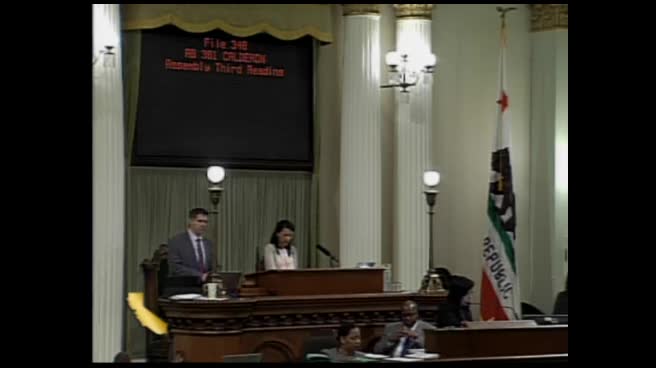 1MIN
Assembly Floor
 1H
Assembly Standing Committee on Appropriations
 14MIN
Assembly Standing Committee on Public Safety
 14MIN
Assembly Standing Committee on Public Safety
Bill Author



