ACR 186: School Breakfast Week.
- Session Year: 2017-2018
- House: Assembly
- Latest Version Date: 2018-04-13
This measure would proclaim March 5, 2018, to March 9, 2018, inclusive, as School Breakfast Week.
This measure would proclaim March 5, 2018, to March 9, 2018, inclusive, as School Breakfast Week.
This measure would proclaim March 5, 2018, to March 9, 2018, inclusive, as School Breakfast Week.
WHEREAS, More than 4.9 million California residents struggle to provide enough food for their families and nearly one in five children are food insecure, meaning they do not have consistent access to adequate food; and
WHEREAS, California ranks 27th in the nation in school breakfast participation, and the state provided only 55.6 percent of children eligible for free or reduced-price school meals with federally funded school breakfasts; and
WHEREAS, More than 58 percent of California public school pupils qualify for free or reduced-price school meals, yet many of those low-income pupils are not eating the nutritious school breakfast offered due to barriers such as social stigma, late buses or carpools, long cafeteria lines, and tight class schedules; and
WHEREAS, Eating breakfast as part of the schoolday is associated with positive pupil behavioral health and academic outcomes such as improved concentration in class, lower rates of chronic absenteeism, fewer classroom disruptions, and less frequent visits to the school nurse; and
WHEREAS, Breakfast After the Bell programs, such as breakfast in the classroom, grab and go breakfast, and second chance breakfast, are proven meal delivery methods that boost school breakfast participation and related positive outcomes; and
WHEREAS, School breakfast participation is associated with a lower body mass index, which is an indicator of excess body fat, lower probability of being overweight, and lower probability of obesity; and
WHEREAS, States across the nation have introduced legislation to require that schools with a high percentage of pupils who are eligible for free or reduced-price school meals implement a Breakfast After the Bell program; and
WHEREAS, If California schools increased school breakfast participation to 70 percent of their pupils, an additional 1.8 million pupils would receive breakfast every day and school districts would receive an additional $101 million in federal meal reimbursements for their school nutrition budgets; now, therefore, be it
Resolved by the Assembly of the State of California, the Senate thereof concurring, That the Legislature proclaims March 5, 2018, to March 9, 2018, inclusive, as School Breakfast Week; and be it further
Resolved, That the Chief Clerk of the Assembly transmit copies of this resolution to the author for appropriate distribution.
|
Date
|
Status
|
|---|---|
| Apr 13, 2018 | Chaptered by Secretary of State - Res. Chapter 36, Statutes of 2018. |
| Apr 13, 2018 | Enrolled and filed with the Secretary of State at 3:30 p.m. |
| Apr 9, 2018 | In Assembly. Ordered to Engrossing and Enrolling. |
| Apr 9, 2018 | Adopted and to Assembly. |
| Apr 5, 2018 | Ordered to special consent calendar. |
| Mar 21, 2018 | From committee: Ordered to third reading. |
| Mar 12, 2018 | In Senate. To Com. on RLS. |
| Mar 8, 2018 | Coauthors revised. |
| Mar 5, 2018 | From committee: Be adopted. Ordered to Third Reading. (Ayes 7. Noes 0.) (March 5). |
| Mar 1, 2018 | Referred to Com. on RLS. |
| Feb 28, 2018 | Introduced. To print. |
|
Date
|
Description
|
Location
|
Votes
|
|
|---|---|---|---|---|
| Apr 9, 2018 | Special Consent ACR186 | Senate Floor |
Passed |
|
| Mar 5, 2018 | Be adopted. To third reading. | Assembly Standing Committee on Rules |
Passed |
This list shows positions taken on this bill by organizations on the date displayed, which is linked to the original source.
Positions by individuals are not included.
|
Organization
|
Position
|
Date
|
|---|---|---|
| No Kid Hungry | ** Support | Mar 21, 2018 |
Office of Senate Floor Analyses (916) 651-1520 Fax: (916) 327-4478 | ACR 186 |
THIRD READING
Bill No: ACR 186
Introduced: 2/28/18
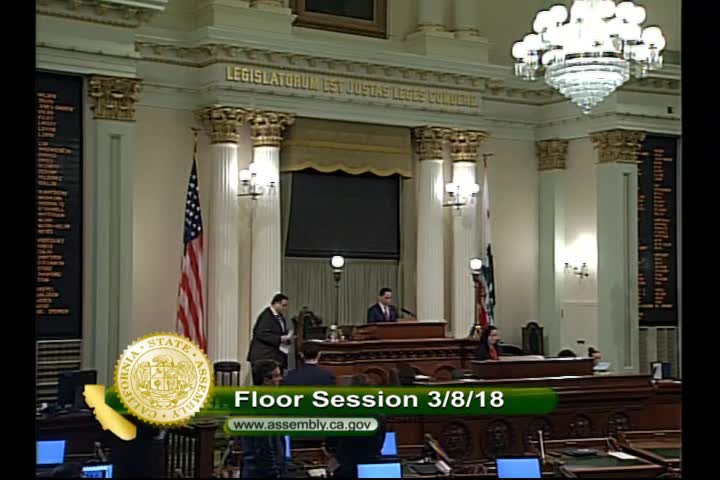
ASSEMBLY FLOOR: Read and adopted, 3/8/18
SUBJECT: School Breakfast Week
DIGEST:
This resolution proclaims March 5, 2018, to March 9, 2018, inclusive, as School Breakfast Week.
ANALYSIS: This resolution makes the following legislative findings:
- More than 4.9 million California residents struggle to provide enough food for their families and nearly one in five children are food insecure, meaning they do not have consistent access to adequate food.
- California ranks 27th in the nation in school breakfast participation, and the state provided only 55.6% of children eligible for free or reduced-price school meals with federally funded school breakfasts.
- More than 58% of California public school pupils qualify for free or reduced-price school meals, yet many of those low-income pupils are not eating the nutritious school breakfast offered due to barriers such as social stigma, late buses or carpools, long cafeteria lines, and tight class schedules.
- Eating breakfast as part of the schoolday is associated with positive pupil behavioral health and academic outcomes such as improved concentration in class, lower rates of chronic absenteeism, fewer classroom disruptions, and less frequent visits to the school nurse.
- Breakfast After the Bell programs, such as breakfast in the classroom, grab and go breakfast, and second chance breakfast, are proven meal delivery methods that boost school breakfast participation and related positive outcomes.
- If California schools increased school breakfast participation to 70% of their pupils, an additional 1.8 million pupils would receive breakfast every day and school districts would receive an additional $101 million in federal meal reimbursements for their school nutrition budgets.
This resolution proclaims March 5, 2018, to March 9, 2018, inclusive, as School Breakfast Week.
FISCAL EFFECT: Appropriation: No Fiscal Com.: No Local: No
No Kid Hungry (source)
OPPOSITION: (Verified 3/19/18)
None received
ARGUMENTS IN SUPPORT: The author states, “In my district, the El Monte School District has been working closely with the No Kid Hungry campaign to implement universal breakfast programs to ensure every student can start their day with a nutritious meal. As a result, about 91% of students in the district are eating breakfast at school in the mornings. I hope that with this resolution, we can raise awareness of school breakfast programs and take greater advantage of the opportunity they offer to help our kids thrive academically and grow up healthy.”
Prepared by: Melissa Ward / SFA / (916) 651-1520
3/21/18 15:31:46
ASSEMBLY THIRD READING
ATR Bill Id:ACR 186
Author:(Rubio)
As Introduced Ver:
Majority vote
Committee | Votes | Ayes | Noes |
Rules | 7-0 | Cunningham, Brough, Carrillo, Grayson, Nazarian, Salas, Waldron |
SUMMARY: Proclaims March 5, 2018, to March 9, 2018, inclusive, as School Breakfast Week. Specifically, this resolution makes the following legislative findings:
- More than 4.9 million California residents struggle to provide enough food for their families and nearly one in five children are food insecure, meaning they do not have consistent access to adequate food.
- California ranks 27th in the nation in school breakfast participation, and the state provided only 55.6% of children eligible for free or reduced-price school meals with federally funded school breakfast.
- More than 58% of California public school pupils qualify for free or reduced-price school meals, yet many of those low-income pupils are not eating the nutritious school breakfast offered due to barriers such as social stigma, late buses or carpools, long cafeteria lines, and tight class schedules.
- Eating breakfast as part of the school day is associated with positive pupil behavioral health and academic outcomes such as improved concentration in class, lower rates of chronic absenteeism, fewer classroom disruptions, and less frequent visits to the school nurse.
- Breakfast After the Bell programs, such as breakfast in the classroom, grab and go breakfast, and second chance breakfast, are proven meal delivery methods that boost school breakfast participation and related positive outcomes.
- If California schools increased school breakfast participation to 70% of their pupils, an additional 1.8 million pupils would receive breakfast every day and school districts would receive an additional $101 million in federal meal reimbursements for their school nutrition budgets.
FISCAL EFFECT: None
Analysis Prepared by: Nicole Willis / RLS. / (916) 319-2800 FN: 0002591
Date of Hearing: March 5, 2018
ASSEMBLY COMMITTEE ON
, Chair
ABPCA Bill Id:
Author:() – As Ver:
SUBJECT:
SUMMARY: Proclaims March 5, 2018, to March 9, 2018, inclusive, as School Breakfast Week. Specifically, this resolution makes the following legislative findings:
- More than 4.9 million California residents struggle to provide enough food for their families and nearly one in five children are food insecure, meaning they do not have consistent access to adequate food.
- California ranks 27th in the nation in school breakfast participation, and the state provided only 55.6 percent of children eligible for free or reduced-price school meals with federally funded school breakfast.
- More than 58 percent of California public school pupils qualify for free or reduced-price school meals, yet many of those low-income pupils are not eating the nutritious school breakfast offered due to barriers such as social stigma, late buses or carpools, long cafeteria lines, and tight class schedules.
- Eating breakfast as part of the school day is associated with positive pupil behavioral health and academic outcomes such as improved concentration in class, lower rates of chronic absenteeism, fewer classroom disruptions, and less frequent visits to the school nurse.
- Breakfast After the Bell programs, such as breakfast in the classroom, grab and go breakfast, and second chance breakfast, are proven meal delivery methods that boost school breakfast participation and related positive outcomes.
- If California schools increased school breakfast participation to 70 percent of their pupils, an additional 1.8 million pupils would receive breakfast every day and school districts would receive an additional $101 million in federal meal reimbursements for their school nutrition budgets.
FISCAL EFFECT: None
REGISTERED SUPPORT / OPPOSITION:
Support
None on file
Opposition
None on file
Analysis Prepared by:
Bill Author

Bill Co-Author(s):