SCR 131: Housing: unsheltered homelessness.
- Session Year: 2025-2026
- House: Senate
- Latest Version Date: 2026-06-29
Current Status:
In Progress
(2026-06-29: Read second time and amended. Ordered to third reading.)
Introduced
In Committee
Awaiting First Chamber Vote
Passed First Chamber
In Committee
Awaiting Second Chamber Vote
Passed Second Chamber
Enacted
This measure would urge the Governor, relevant state agencies, and all local governments to adopt an urgent and coordinated approach to end and prevent unsheltered homelessness statewide, as specified.
This measure would urge the Governor, relevant state agencies, and all local governments to adopt an urgent and coordinated approach to achieving functional zero end and prevent unsheltered homelessness statewide, as specified.
This measure would urge the Governor, relevant state agencies, and all local governments to adopt an urgent and coordinated approach to achieving functional zero unsheltered homelessness statewide, as specified.
WHEREAS, It is the duty of the State of California to protect the health and welfare of all its residents, including those experiencing homelessness; and
WHEREAS, More than 123,000 Californians sleep unsheltered each night on sidewalks, in public parks, under freeway overpasses, and in riverbeds with no access to privacy, safety, or sanitation; and
WHEREAS, The longer a person remains unsheltered, the more difficult it becomes for them to stabilize and enter permanent housing, and the more likely they are to suffer preventable illness, trauma, or death; and
WHEREAS, Over 50,000 people in the United States have died while living unsheltered on the streets in the past decade, a moral failing that must not be normalized or accepted; and
WHEREAS, Unsheltered homelessness is not only an individual tragedy but a public policy crisis that undermines community well-being, burdens local government, and erodes public trust in the effectiveness of state and local institutions; and
WHEREAS, It is the role of government not only to protect but to upliftto act urgently on behalf of the most vulnerable, especially when they struggle to care for themselves; and
WHEREAS, The Interagency Council on Homelessness set a statewide goal in their Action Plan for Preventing and Ending Homelessness to increase the annual percentage of people who move into emergency shelter, interim housing, or permanent housing after experiencing unsheltered homelessness from 42 percent to 70 percent by 2027, with the ultimate goal of ensuring everyone experiencing unsheltered homelessness enters emergency shelter, interim housing, or permanent housing with a pathway to permanent housing; and
WHEREAS, Achieving this goal will require scaling interventions that demonstrate measurable outcomes, including interim housing, rapid rehousing, permanent housing, and coordinated entry systems that prioritize individuals based on need; and
WHEREAS, The goal above cannot be reached without scaling up state investments for flexible funding, such as the Homeless Housing, Assistance, and Prevention program, to pair with other state, federal, and local funding that serves people experiencing unsheltered homelessness; and
WHEREAS, State, regional, and local governments must coordinate limited resources to fund long-term and interim solutions to ensure that our streets are no longer the landing place for people experiencing housing insecurity; and
WHEREAS, Public funding must be focused on data-driven solutions, ensuring resources are directed toward programs that demonstrably reduce unsheltered homelessness; and
WHEREAS, Ending and preventing unsheltered homelessness is an urgent necessity that requires alignment of state, regional, and local funding, legal authority, and accountability systems; now, therefore, be it
Resolved by the Senate of the State of California, the Assembly thereof concurring, That the Legislature urges the Governor, relevant state agencies, and all local governments to adopt an urgent and coordinated approach to both end and prevent unsheltered homelessness statewide through the full activation of interim and permanent housing strategies, as well as interventions to prevent individuals and families from falling into unsheltered homelessness, and to fund all interventions and reforms that prioritize housing unsheltered Californians now; and be it further
Resolved, That the Secretary of the Senate transmit copies of this resolution to the Governor of California, to the Secretary of the Business, Consumer Services, and Housing Agency, to the Director of the Department of Housing and Community Development, and to the executive officers of every county and incorporated city in the state.
WHEREAS, It is the duty of the State of California to protect the health and welfare of all its residents, including those experiencing homelessness; and
WHEREAS, More than 123,000 Californians sleep unsheltered each night on sidewalks, in public parks, under freeway overpasses, and in riverbeds with no access to privacy, safety, or sanitation; and
WHEREAS, The longer a person remains unsheltered, the more difficult it becomes for them to stabilize and enter permanent housing, and the more likely they are to suffer preventable illness, trauma, or death; and
WHEREAS, Over 50,000 people in the United States have died while living unsheltered on the streets in the past decade, a moral failing that must not be normalized or accepted; and
WHEREAS, Unsheltered homelessness is not only an individual tragedy but a public policy crisis that undermines community well-being, burdens local government, and erodes public trust in the effectiveness of state and local institutions; and
WHEREAS, It is the role of government not only to protect but to upliftto act urgently on behalf of the most vulnerable, especially when they struggle to care for themselves; and
WHEREAS, The government must expand its definition of acceptable homeless-serving housing to include safe, stable, and immediately available interim housing solutions, such as temporary sleeping cabins and modular units that offer privacy, security, and onsite services; and WHEREAS, These cost-effective, quick-build solutions can be constructed at a pace that meets the urgency of the crisis, often within months instead of years; and WHEREAS, The widespread adoption of those interim solutions would ensure that our streets are no longer the waiting room for permanent housing, but a point of transition to safety, dignity, and progress; andWHEREAS, Land is available and must be activated, including vacant lots, parking areas, and publicly owned parcels across every city and county in California to meet this moment with the seriousness it demands; andWHEREAS, The Interagency Council on Homelessness set a statewide goal in their Action Plan for Preventing and Ending Homelessness to increase the annual percentage of people who move into emergency shelter, interim housing, or permanent housing after experiencing unsheltered homelessness from 42 percent to 70 percent by 2027, with the ultimate goal of ensuring everyone experiencing unsheltered homelessness enters emergency shelter, interim housing, or permanent housing with a pathway to permanent housing; and
WHEREAS, The goal above cannot be reached without scaling up state investments for flexible funding, such as the Homeless Housing, Assistance, and Prevention program, to pair with other state, federal, and local funding that serves people experiencing unsheltered homelessness; and
WHEREAS, State, regional, and local governments must coordinate limited resources to fund long-term and interim solutions to ensure that our streets are no longer the landing place for people experiencing housing insecurity; and
WHEREAS, Achieving functional zero unsheltered homelessness Ending and preventing unsheltered homelessness is an urgent necessity that requires alignment of state state, regional, and local funding, legal authority, and accountability systems; now, therefore, be it
Resolved by the Senate of the State of California, the Assembly thereof concurring, That the Legislature urges the Governor, relevant state agencies, and all local governments to adopt an urgent and coordinated approach to achieving functional zero both end and prevent unsheltered homelessness statewide through the full activation of interim and permanent housing strategies strategies, as well as interventions to prevent individuals and families from falling into unsheltered homelessness, and funding to fund all interventions and reforms that prioritize housing unsheltered Californians now; and be it further
Resolved, That the Secretary of the Senate transmit copies of this resolution to the Governor of California, to the Secretary of the Business, Consumer Services, and Housing Agency, to the Director of the Department of Housing and Community Development, and to the executive officers of every county and incorporated city in the state.
WHEREAS, It is the duty of the State of California to protect the health and welfare of all its residents, including those experiencing homelessness; and
WHEREAS, More than 123,000 Californians sleep unsheltered each night on sidewalks, in public parks, under freeway overpasses, and in riverbeds with no access to privacy, safety, or sanitation; and
WHEREAS, The longer a person remains unsheltered, the more difficult it becomes for them to stabilize and enter permanent housing, and the more likely they are to suffer preventable illness, trauma, or death; and
WHEREAS, Over 50,000 people in the United States have died while living unsheltered on the streets in the past decade, a moral failing that must not be normalized or accepted; and
WHEREAS, Unsheltered homelessness is not only an individual tragedy but a public policy crisis that undermines community well-being, burdens local government, and erodes public trust in the effectiveness of state and local institutions; and
WHEREAS, It is the role of government not only to protect but to upliftto act urgently on behalf of the most vulnerable, especially when they struggle to care for themselves; and
WHEREAS, The government must expand its definition of acceptable homeless-serving housing to include safe, stable, and immediately available interim housing solutions, such as temporary sleeping cabins and modular units that offer privacy, security, and onsite services; and
WHEREAS, These cost-effective, quick-build solutions can be constructed at a pace that meets the urgency of the crisis, often within months instead of years; and
WHEREAS, The widespread adoption of those interim solutions would ensure that our streets are no longer the waiting room for permanent housing, but a point of transition to safety, dignity, and progress; and
WHEREAS, Land is available and must be activated, including vacant lots, parking areas, and publicly owned parcels across every city and county in California to meet this moment with the seriousness it demands; and
WHEREAS, Achieving functional zero unsheltered homelessness is an urgent necessity that requires alignment of state funding, legal authority, and accountability systems; now, therefore, be it
Resolved by the Senate of the State of California, the Assembly thereof concurring, That the Legislature urges the Governor, relevant state agencies, and all local governments to adopt an urgent and coordinated approach to achieving functional zero unsheltered homelessness statewide through the full activation of interim housing strategies and funding reforms that prioritize housing unsheltered Californians now; and be it further
Resolved, That the Secretary of the Senate transmit copies of this resolution to the Governor of California, to the Secretary of the Business, Consumer Services, and Housing Agency, to the Director of the Department of Housing and Community Development, and to the executive officers of every county and incorporated city in the state.
|
Date
|
Status
|
|---|---|
| Jun 29, 2026 | Read second time and amended. Ordered to third reading. |
| Jun 25, 2026 | From committee: Be adopted as amended. (Ayes 10. Noes 0.) (June 24). |
| May 4, 2026 | Referred to Com. on H. & C.D. |
| Apr 27, 2026 | In Assembly. Held at Desk. |
| Apr 27, 2026 | Read. Adopted. (Ayes 34. Noes 0. Page 4066.) Ordered to the Assembly. |
| Apr 27, 2026 | Read. Adopted. (Ayes 34. Noes 0.) Ordered to the Assembly. |
| Apr 16, 2026 | From committee: Be adopted. Ordered to third reading. (Ayes 8. Noes 0. Page 3903.) (April 15). |
| Apr 16, 2026 | From committee: Be adopted. Ordered to third reading. (Ayes 8. Noes 0.) (April 15). |
| Apr 13, 2026 | Set for hearing April 15. |
| Apr 6, 2026 | From committee with author's amendments. Read second time and amended. Re-referred to Com. on HOUSING. |
| Mar 4, 2026 | Re-referred to Com. on HOUSING. |
| Feb 19, 2026 | Introduced. Referred to Com. on RLS. |
|
Date
|
Description
|
Location
|
Votes
|
|
|---|---|---|---|---|
| Jun 24, 2026 | Be adopted as amended. | Assembly Standing Committee on Housing and Community Development |
Passed |
|
| Apr 27, 2026 | Senate 3rd Reading SCR131 Blakespear et al. | Senate Floor |
Passed |
|
| Apr 15, 2026 | Be adopted. Ordered to third reading | Senate Standing Committee on Housing |
Passed |
This list shows positions taken on this bill by organizations on the date displayed, which is linked to the original source.
Positions by individuals are not included.
|
Organization
|
Position
|
Date
|
|---|---|---|
| Bay Area Council | ** Support | |
| Leading Age | ** Support | |
| LeadingAge California | ** Support |
SENATE THIRD READING
STR Bill Id:SCR 131
Author:(Blakespear)
As Amended Ver:June 29, 2026
Majority vote
SUMMARY
This resolution urges the Governor, relevant state agencies, and all local governments to adopt an urgent and coordinated approach to both end and prevent unsheltered homelessness statewide through the full activation of interim and permanent strategies, as well as interventions to prevent individuals and families from falling into unsheltered homelessness, and fund all interventions and reforms that prioritize housing unsheltered Californians.
Major Provisions
This resolution urges the Governor, relevant state agencies, and all local governments to adopt an urgent and coordinated approach to both end and prevent unsheltered homelessness statewide through the full activation of interim and permanent strategies, as well as interventions to prevent individuals and families from falling into unsheltered homelessness, and fund all interventions and reforms that prioritize housing unsheltered Californians.
COMMENTS
The High Cost of Housing: The high cost of housing is the cause of homelessness in California. Other states with higher rates of overdose but lower costs of housing report much lower rates of homelessness. For example, West Virginia leads overdose deaths per capita but has one of the lowest homelessness rates in the country. A study by the National Low Income Housing Coalition found that West Virginia has 50 affordable and available rental homes for every 100 extremely-low-income households, more than double the number that California has. A family in West Virginia can afford a two-bedroom rental on less than $17 an hour – the second-lowest figure in the nation. In California, a family would need more than $40 per hour to be able to afford an average two-bedroom rental.
California needs an additional 2.5 million units of housing to meet the state's need, including 643,352 for very low-income households and 394,910 for lower income households. Since 2018, California has permitted 890,000 units of new housing, with 126,000 of those being low- and very low-income units. The Legislature has passed major legislation in recent years to allow affordable housing to be built on almost any site in the state. However, the lack of housing overall and in particular the continued lack of sufficient affordable housing is a problem that is decades in the making.
Millions of Californians, who are disproportionately lower income and people of color, must make hard decisions about paying for housing at the expense of food, health care, child care, and transportation—one in three households in the state doesn't earn enough money to meet their basic needs. Currently, according to HDIS data, for every five individuals who access homelessness services in California, only one is housed each year, leaving four unhoused.
California Statewide Study of People Experiencing Homelessness (CASPEH): The University of California, San Francisco Benioff Housing and Homelessness Institute conducted the CASPEH, the largest representative study of homelessness since the mid-1990s and the first large-scale representative study to use mixed methods (surveys and in-depth interviews). They administered questionnaires to nearly 3,200 participants and conducted in-depth interviews with 365 participants. Their report provides evidence to help shape the state's policy response to homelessness. The median age of participants was 47 (range 18-89). Participants who report a Black (26%) or Native American or Indigenous identity (12%) were overrepresented compared to the overall California population. Thirty-five percent of participants identified as Latino/x.
The report found that people experiencing homelessness in California are Californians. Nine out of ten participants lost their last housing in California; 75% of participants lived in the same county as their last housing.
The median monthly household income in the six months prior to homelessness across all CASPEH participants was $960. Almost all participants met criteria to be considered "extremely low-income" or making less than 30% of the Area Median Income. Participants' inability to afford housing was both the underlying cause of homelessness and the primary barrier to their returning to housing. Evidence and interviews with people who are experiencing homelessness show that a small amount of shallow subsidy could keep people from falling into homelessness. This finding was true throughout California, not only in the high-cost coastal regions.
Twenty percent of participants who reported current regular substance use indicated that they wanted treatment, but were unable to receive it. Evidence shows that substance use treatment is most effective among those who choose to engage with it. A higher proportion of individuals who used substances regularly live in unsheltered environments. There is a need for increased access for those who want it, particularly those in unsheltered settings. Promising models for low-barrier, outreach-focused services (including medication treatment) should be expanded.
Shelters: Shelters are a stopgap measure and cannot fully resolve homelessness. According to a recent investigative report by CalMatters, local governments have spent nearly $1 billion on shelters since 2018. The number of beds doubled since 2018 from 27,000 to 61,000. Between 2018 and 2024, annual shelter death rates tripled – a total of 2,007 people died in that time period, which is nearly twice as many deaths as in California jails during the same period. Shelters are often unsafe and unsanitary places to stay. Many shelters have barriers to entry and prevent people from bringing their possessions, partners, and pets. According to HDIS data collected on shelter exits, fewer than one in four people, about 22%, are able to find housing when they leave a shelter.
Shelters are a costly and ineffective permanent solution to homelessness. The City of New York, the City of Portland and Multnomah County, and the state of Massachusetts have adopted a right to shelter. A right to shelter is a legal mandate that requires local governments to provide emergency shelter to anyone experiencing homelessness. This approach to homelessness has had decidedly mixed results. In the City of New York, the unsheltered population is 4,294 out of 91,897 homeless people. Although many people are housed in New York, they are still homeless because they are living in temporary shelters or transitional housing. Some people have been living in shelters for years with no solution for permanent housing. This approach is also expensive and requires that resources for affordable housing go toward maintaining emergency shelters and not toward building supportive housing or for affordable housing. New York City spends $1.7 billion a year to maintain its shelter system, which is $30,000 per individual per year.
According to the Author
"It is the duty of the State of California to protect the health and welfare of all its residents, including those experiencing homelessness. More than 123,000 Californians sleep unsheltered each night on sidewalks, in public parks, under freeway overpasses, and in riverbeds with no access to privacy, safety, or sanitation. The longer a person remains unsheltered, the more difficult it becomes for them to stabilize and enter permanent housing, and the more likely they are to suffer preventable illness, trauma, or death.
The Interagency Council on Homelessness set a goal to increase the share of unsheltered individuals entering shelter or housing from 42% to 70% by 2027, with the aim of ensuring all unsheltered people access housing pathways. This goal cannot be reached without scaling up state investments for flexible funding, such as the Homeless Housing, Assistance, and Prevention program, to pair with other state, federal, and local funding that serves people experiencing unsheltered homelessness. State, regional, and local governments must coordinate limited resources to fund long-term and interim solutions to ensure that our streets are no longer the landing place for people experiencing housing insecurity."
Arguments in Support
According to Leading Age, "SCR 131 appropriately underscores the importance of coordinated efforts to address unsheltered homelessness and the need for expanded housing opportunities. By elevating housing as a core part of the response, the resolution supports approaches grounded in stability, dignity, and long-term well-being for vulnerable populations, including older adults. These goals closely align with the mission of nonprofit affordable senior housing providers working every day to help older Californians remain safely housed in their communities."
Arguments in Opposition
None on file.
FISCAL COMMENTS
None.
VOTES
SENATE FLOOR: 34-0-6
YES: Allen, Archuleta, Arreguín, Ashby, Becker, Blakespear, Cabaldon, Cervantes, Choi, Cortese, Dahle, Durazo, Grayson, Grove, Hurtado, Jones, Laird, Limón, McGuire, McNerney, Menjivar, Padilla, Pérez, Reyes, Richardson, Seyarto, Smallwood-Cuevas, Stern, Strickland, Umberg, Valladares, Wahab, Weber Pierson, Wiener
ABS, ABST OR NV: Alvarado-Gil, Caballero, Gonzalez, Niello, Ochoa Bogh, Rubio
ASM HOUSING AND COMMUNITY DEVELOPMENT: 10-0-2
YES: Haney, Ávila Farías, Caloza, Garcia, Kalra, Lee, Ward, Ta, Wicks, Wilson
ABS, ABST OR NV: Patterson, Tangipa
UPDATED
VERSION: June 29, 2026
CONSULTANT: Lisa Engel / H. & C.D. / (916) 319-2085 FN: 0003257
Date of Hearing: June 24, 2026
ASSEMBLY COMMITTEE ON HOUSING AND COMMUNITY DEVELOPMENT
Matt Haney, Chair
SBPCA Bill Id:SCR 131
Author:(Blakespear) – As Amended Ver:April 6, 2026
SENATE VOTE: 34-0
SUBJECT: Housing: unsheltered homelessness
SUMMARY: This resolution urges the Governor, relevant state agencies, and all local governments to adopt an urgent and coordinated approach to both end and prevent unsheltered homelessness statewide through the full activation of interim and permanent strategies, as well as interventions to prevent individuals and families from falling into unsheltered homelessness, and fund all interventions and reforms that prioritize housing unsheltered Californians.
EXISTING LAW:
- Establishes the California Interagency Council on Homelessness (Cal-ICH) with the purpose of coordinating the state’s response to homelessness by utilizing Housing First practices. (Welfare and Institutions Code (WIC) Section 8255)
- Requires agencies and departments administering state programs created on or after July 1, 2017 to incorporate the core components of Housing First. (WIC 8255)
- Defines “Housing First” to mean the evidence-based model that uses housing as a tool, rather than a reward, for recovery and that centers on providing or connecting homeless people to permanent housing as quickly as possible. Housing First providers offer services as needed and requested on a voluntary basis and that do not make housing contingent on participation in services. (WIC 8255)
- Defines, among other things, the “core components of Housing First” to mean:
- Acceptance of referrals directly from shelters, street outreach, drop-in centers, and other parts of crisis response systems frequented by vulnerable people experiencing homelessness;
- Supportive services that emphasize engagement and problem-solving over therapeutic goals and service plans that are highly tenant-driven without predetermined goals;
- Participation in services or program compliance is not a condition of permanent housing tenancy;
- Tenants have a lease and all the rights and responsibilities of tenancy, as outlined in California’s Civil, Health and Safety, and Government codes; and
- The use of alcohol or drugs in and of itself, without other lease violations, is not a reason for eviction. (WIC 8255)
FISCAL EFFECT: None.
COMMENTS:
Author’s Statement: According to the author, “It is the duty of the State of California to protect the health and welfare of all its residents, including those experiencing homelessness. More than 123,000 Californians sleep unsheltered each night on sidewalks, in public parks, under freeway overpasses, and in riverbeds with no access to privacy, safety, or sanitation. The longer a person remains unsheltered, the more difficult it becomes for them to stabilize and enter permanent housing, and the more likely they are to suffer preventable illness, trauma, or death.
The Interagency Council on Homelessness set a goal to increase the share of unsheltered individuals entering shelter or housing from 42% to 70% by 2027, with the aim of ensuring all unsheltered people access housing pathways. This goal cannot be reached without scaling up state investments for flexible funding, such as the Homeless Housing, Assistance, and Prevention program, to pair with other state, federal, and local funding that serves people experiencing unsheltered homelessness. State, regional, and local governments must coordinate limited resources to fund long-term and interim solutions to ensure that our streets are no longer the landing place for people experiencing housing insecurity.”
The High Cost of Housing: The high cost of housing is the cause of homelessness in California. Other states with higher rates of overdose but lower costs of housing report much lower rates of homelessness. For example, West Virginia leads overdose deaths per capita but has one of the lowest homelessness rates in the country. A study by the National Low Income Housing Coalition found that West Virginia has 50 affordable and available rental homes for every 100 extremely-low-income households, more than double the number that California has. A family in West Virginia can afford a two-bedroom rental on less than $17 an hour – the second-lowest figure in the nation. In California, a family would need more than $40 per hour to be able to afford an average two-bedroom rental.
California needs an additional 2.5 million units of housing to meet the state’s need, including 643,352 for very low-income households and 394,910 for lower income households. Since 2018, California has permitted 890,000 units of new housing, with 126,000 of those being low- and very low-income units. The Legislature has passed major legislation in recent years to allow affordable housing to be built on almost any site in the state. However, the lack of housing overall and in particular the continued lack of sufficient affordable housing is a problem that is decades in the making.
Millions of Californians, who are disproportionately lower income and people of color, must make hard decisions about paying for housing at the expense of food, health care, child care, and transportation—one in three households in the state doesn't earn enough money to meet their basic needs. Currently, according to HDIS data, for every five individuals who access homelessness services in California, only one is housed each year, leaving four unhoused.
California Statewide Study of People Experiencing Homelessness (CASPEH): The University of California, San Francisco Benioff Housing and Homelessness Institute conducted the CASPEH, the largest representative study of homelessness since the mid-1990s and the first large-scale representative study to use mixed methods (surveys and in-depth interviews). They administered questionnaires to nearly 3,200 participants and conducted in-depth interviews with 365 participants. Their report provides evidence to help shape the state’s policy response to homelessness. The median age of participants was 47 (range 18-89). Participants who report a Black (26%) or Native American or Indigenous identity (12%) were overrepresented compared to the overall California population. Thirty-five percent of participants identified as Latino/x.
The report found that people experiencing homelessness in California are Californians. Nine out of ten participants lost their last housing in California; 75% of participants lived in the same county as their last housing.
The median monthly household income in the six months prior to homelessness across all CASPEH participants was $960. Almost all participants met criteria to be considered “extremely low-income” or making less than 30% of the Area Median Income. Participants’ inability to afford housing was both the underlying cause of homelessness and the primary barrier to their returning to housing. Evidence and interviews with people who are experiencing homelessness show that a small amount of shallow subsidy could keep people from falling into homelessness. This finding was true throughout California, not only in the high-cost coastal regions.
Twenty percent of participants who reported current regular substance use indicated that they wanted treatment, but were unable to receive it. Evidence shows that substance use treatment is most effective among those who choose to engage with it. A higher proportion of individuals who used substances regularly live in unsheltered environments. There is a need for increased access for those who want it, particularly those in unsheltered settings. Promising models for low-barrier, outreach-focused services (including medication treatment) should be expanded.
Shelters: Shelters are a stopgap measure and cannot fully resolve homelessness. According to a recent investigative report by CalMatters, local governments have spent nearly $1 billion on shelters since 2018. The number of beds doubled since 2018 from 27,000 to 61,000. Between 2018 and 2024, annual shelter death rates tripled – a total of 2,007 people died in that time period, which is nearly twice as many deaths as in California jails during the same period. Shelters are often unsafe and unsanitary places to stay. Many shelters have barriers to entry and prevent people from bringing their possessions, partners, and pets. According to HDIS data collected on shelter exits, fewer than one in four people, about 22%, are able to find housing when they leave a shelter.
Shelters are a costly and ineffective permanent solution to homelessness. The City of New York, the City of Portland and Multnomah County, and the state of Massachusetts have adopted a right to shelter. A right to shelter is a legal mandate that requires local governments to provide emergency shelter to anyone experiencing homelessness. This approach to homelessness has had decidedly mixed results. In the City of New York, the unsheltered population is 4,294 out of 91,897 homeless people. Although many people are housed in New York, they are still homeless because they are living in temporary shelters or transitional housing. Some people have been living in shelters for years with no solution for permanent housing. This approach is also expensive and requires that resources for affordable housing go toward maintaining emergency shelters and not toward building supportive housing or for affordable housing. New York City spends $1.7 billion a year to maintain its shelter system, which is $30,000 per individual per year.
Arguments in Support: According to Leading Age, “SCR 131 appropriately underscores the importance of coordinated efforts to address unsheltered homelessness and the need for expanded housing opportunities. By elevating housing as a core part of the response, the resolution supports approaches grounded in stability, dignity, and long-term well-being for vulnerable populations, including older adults. These goals closely align with the mission of nonprofit affordable senior housing providers working every day to help older Californians remain safely housed in their communities.”
Arguments in Opposition: None on file.
Committee Amendments: The author requested the Committee take the amendments below:
Amendment 1:
On page 2, between lines 37 and 38, insert:
WHEREAS, Achieving this goal will require scaling interventions that demonstrate measurable outcomes, including interim housing, rapid rehousing, permanent housing, and coordinated entry systems that prioritize individuals based on need; and
Amendment 2:
On page 3, between lines 6 and 7, insert:
WHERAS, Public funding must be focused on data-driven solutions, ensuring resources are directed toward programs that demonstrably reduce unsheltered homelessness and
REGISTERED SUPPORT / OPPOSITION:
Support
Bay Area Council
LeadingAge California
Opposition
None on file.
Analysis Prepared by: Lisa Engel / H. & C.D. / (916) 319-2085
SENATE RULES COMMITTEE Office of Senate Floor Analyses (916) 651-4171 | SCR 131 |
THIRD READING
Bill No: SCR 131
Author: Blakespear (D), et al.
Amended: 4/6/26
Vote: 21
SENATE HOUSING COMMITTEE: 8-0, 4/15/26
AYES: Arreguín, Cabaldon, Caballero, Cortese, Durazo, Gonzalez, Grayson, Padilla
NO VOTE RECORDED: Seyarto, Ochoa Bogh
SUBJECT: Housing: unsheltered homelessness
SOURCE: Author
DIGEST:
This resolution urges the Governor, relevant state agencies, and all local governments to adopt an urgent and coordinated approach to both end and prevent unsheltered homelessness statewide through the full activation of interim and permanent strategies, as well as interventions to prevent individuals and families from falling into unsheltered homelessness, and fund all interventions and reforms that prioritize housing unsheltered Californians.
ANALYSIS:
Existing law:
- Creates the California Interagency Council on Homelessness (Cal-ICH) and requires it to set and measure progress toward goals to prevent and end homelessness in California.
- Establishes the Homeless Housing, Assistance, and Prevention Program (HHAPP) to provide jurisdictions with one-time grant funds to support regional coordination and expand or develop local capacity to address their immediate homelessness challenges informed by a best-practices framework focused on moving homeless individuals and families into permanent housing and supporting the efforts of those individuals and families to maintain their permanent housing. Directs the Department of Housing and Community Development (HCD) to administer HHAPP.
- Requires that a regionally coordinated homelessness action plan (Regional Plan) include:
- Identification and analysis of the specific roles and responsibilities of each participating jurisdiction in the region as specified.
- A list of the most recent system performance measures for the region, which shall include age, racial, and ethnic disparities, as specified.
- A system performance and improvement plan (Improvement Plan) with a description of key actions the region intends to take to improve system performance measures. May include key actions from small jurisdictions in the region that elect to engage in the regionally coordinated homelessness action plan.
- Requires HHAPP applicants to demonstrate how the region will use available resources to sustain all existing and proposed interim housing investments within the region, as specified.
- Requires HCD to approve a plan when it determines that the plan includes specified components, including certain performance measures (SPMs) for the region as well as age, racial, and ethnic disparities for specified information, and a system performance and improvement plan.
- Requires HHAPP to be used for evidence-based solutions that address and prevent homelessness among eligible populations, as specified.
This resolution urges the Governor, relevant state agencies, and all local governments to adopt an urgent and coordinated approach to both end and prevent unsheltered homelessness statewide through the full activation of interim and permanent strategies, as well as interventions to prevent individuals and families from falling into unsheltered homelessness, and fund all interventions and reforms that prioritize housing unsheltered Californians.
Background
Homelessness: stats and causes. According to the most recent point in time (PIT) count, 187,084 people were experiencing homelessness in California—representing 24% of the nation’s homeless population. Two-thirds of the homeless population in California is unsheltered. Over half (51%) of all unsheltered people in the United States were in California. A lack of affordable housing is the biggest contributor to homelessness. As housing costs continue to rise, rent becomes less affordable for lower-income households, who are forced to live beyond their means (paying more than 30% of income on housing costs) or are pushed out of their homes, leading to rapid increases in homelessness. Variation in rates of homelessness cannot be explained by variation in rates of individual factors such as poverty or mental illness; conversely, cities with higher rents and lower rental vacancy rates (i.e., tighter housing markets) are directly linked to higher per capita rates of homelessness.
The lack of affordable housing plays a significant role in causing individuals to become homeless and creates obstacles for individuals experiencing homeless to transition into stable housing. The need for and costs of housing have consistently outpaced the development of affordable housing for over 30 years. As of 2022, working at the minimum wage of $15/hour, a renter has to work 83 hours each week to afford a modest one-bedroom rental home at Fair Market Rent in California. The lack of supply is the primary factor underlying California’s housing crunch. To keep up with demand, HCD estimates that California must plan for the development of more than 2.5 million homes over the next eight years, and no less than one million of those homes must meet the needs of lower-income households (more than 640,000 very low-income and 385,000 low-income units are needed). For decades, not enough housing was constructed to meet need, resulting in a severe undersupply of housing. New construction of housing, both single family homes and apartments, continues to lag behind historical averages, and lags further behind the number of new units needed to meet housing demand.
Comments
Author’s statement. “It is the duty of the State of California to protect the health and welfare of all its residents, including those experiencing homelessness. More than 123,000 Californians sleep unsheltered each night on sidewalks, in public parks, under freeway overpasses, and in riverbeds with no access to privacy, safety, or sanitation. The longer a person remains unsheltered, the more difficult it becomes for them to stabilize and enter permanent housing, and the more likely they are to suffer preventable illness, trauma, or death. The Interagency Council on Homelessness set a goal to increase the share of unsheltered individuals entering shelter or housing from 42% to 70% by 2027, with the aim of ensuring all unsheltered people access housing pathways. This goal cannot be reached without scaling up state investments for flexible funding, such as the Homeless Housing, Assistance, and Prevention program, to pair with other state, federal, and local funding that serves people experiencing unsheltered homelessness. State, regional, and local governments must coordinate limited resources to fund long-term and interim solutions to ensure that our streets are no longer the landing place for people experiencing housing insecurity.”
How to Solve California’s Homelessness Crisis. The overwhelming evidence shows that the solution to homelessness is providing more habitable, stable, and permanent housing at all income levels, and in particular, more housing affordable to the lowest income earners. While increasing the supply of affordable housing is the priority solution to the homelessness crisis, there can be a spectrum of housing interventions that different levels of governments could offer, depending on the specific needs of the individual or family experiencing homelessness. These interventions range from short-term and interim interventions (such as emergency shelters, tiny home communities, and low barrier navigation centers), to long-term, permanent housing interventions (such as housing choice vouchers, rental subsidies and rapid rehousing, landlord incentives, and permanent housing), to homelessness prevention altogether (such as rapid rehousing and diversion programs). All of these interventions play a role in a homeless response system.
For example, many families merely require temporary rental assistance to maintain their housing or rapid rehousing to reconnect to permanent housing. Some populations require more intensive services in conjunction with permanent housing options. For those living on the streets or in encampments, emergency shelter can provide short-term, temporary respite. However, shelters can impose requirements that present barriers to entry (such as restrictive hours, only offering congregate settings, or disallowing pets), which mean working families and marginalized community members may not be able to or feel comfortable using them. Shelters also have very low success rates at connecting people to permanent housing (in California from 2018-2024, the rate was 22%[1]). Interim solutions, such as bridge housing communities, low barrier navigation centers, and tiny home communities typically offer non-congregate housing and healthcare services, particularly to marginalized communities, families, and those with pets. These interventions may play a stabilizing role before a more permanent solution (such as rental assistance or the construction of a new unit) can be attained. However, interim housing interventions similarly have high rates of returns to homelessness without access to permanent housing.
While each jurisdiction or region must evaluate existing resources and identify the appropriate means to address unique needs, research shows that creating more shelter beds and interim beds alone do not decrease the number of people experiencing homelessness. In fact, people residing in emergency shelters or interim housing (including low barrier navigation centers or tiny homes) are still considered homeless by the US Department of Housing and Urban Development (HUD). The goal of any effective homelessness response system should be to maximize every shelter or interim bed as a means to connect a homeless individual or family to permanent housing. To do so, communities must typically invest far more in permanent housing and homelessness prevention than in short-term and interim interventions.
Recent state investments. Traditionally, homelessness responses in California were considered the responsibility of the federal and local governments (cities, counties, and CoCs). This included financing, land use policies, tenant protections, physical and behavioral health services, social services, and more. Within the past decade, the State began playing a more active role in the homelessness response system by investing more heavily in prevention and response programs, streamlining the production of affordable housing, and facilitating greater coordination across state and local/regional sectors. Between Fiscal Years 2018-19 and 2020-21, California increased its investment in affordable housing and homelessness-focused programs by more than $1.5 billion; between Fiscal Years 2018-19 and 2020-21, the state directed $9.6 billion in affordable housing and homelessness programs. The state did so by funding, administering, and/or implementing 35 programs administered by nine state agencies and departments aimed at expanding access to housing, health, and social services for people experiencing or at risk of homelessness. More recently, however, California has reduced its one-time investments due to challenging budget years. In 2024-25, the state provided over $1 billion for homelessness, and in 2025-26, this was reduced to about $650 million.
HHAPP: Overview, Accountability, and Coordination. The HHAP Program was created to provide jurisdictions with one-time grant funds to expand or develop local capacity to address immediate homelessness challenges informed by a best-practices framework focused on moving homeless individuals and families into permanent housing and supporting the efforts of those individuals and families to maintain their permanent housing. Program funds can be used for services for those experiencing homelessness or at risk of homelessness, such as rapid rehousing, operating subsidies, street outreach, services coordination, delivery of permanent and innovative housing solutions, and homelessness prevention. Beginning with round four, HHAPP included robust accountability provisions, including the requirement that applicants develop a Regional Plan and performance goals. In addition, beginning with HHAPPP round five, regions must submit a joint application and Regional Plan, and set outcome goals that prevent and reduce homelessness over a three-year period, informed by the findings from a local landscape analysis and the jurisdiction's base system performance measure from 2020 calendar year data in the state Homeless Data Integration System (HDIS).
Seeing results. Despite the sobering data, California’s state investments and policy decisions are working. From 2023-2024, the nation as a whole experienced an increase in homelessness eight times larger than the increase in California. During the same period, California had the largest reduction in the number of veterans experiencing homelessness in the nation, with 1,279 fewer veterans experiencing homelessness on a single night in January in 2024 than in 2023 (8% reduction year over year). Furthermore, California had the largest reduction in the number of unaccompanied youths experiencing homelessness in the nation, with 1,121 fewer unaccompanied youth experiencing homelessness on a single night in January 2024 than in January 2023. Individual jurisdictions also reported decreases in homelessness numbers:
- Riverside County: 19% decrease in unsheltered homelessness
- Los Angeles County: 9.5% decrease in unsheltered homelessness, 4% decrease total
- San Bernadino County: 10.2% decrease in total homelessness
- San Diego County: 7% decrease in total homelessness
- City of Los Angeles: 7.9% decrease in unsheltered homelessness, 3.4% decrease total
- Bakersfield’s Continuum of Care: 2.3% decrease in total homelessness
According to the UCSF Benioff Homelessness and Housing Initiative (UCSF Benioff), the reason for the reduction in veteran homelessness in California is because California has adequately scaled the evidence-based responses which include Housing First and housing subsidies paired with appropriate services. The same conclusion can be reached for the reduction in homeless youth numbers, given consistent youth set asides in key programs (HHAPP and Homekey) for this population. UCSF Benioff notes that while the overall increase in homelessness numbers is lower than the national trend, the enormous number of people experiencing homelessness in California reflects the ongoing crisis caused by the lack of affordable housing in California.
That said, state funds have allowed California’s homeless response providers to serve more people than ever before. In 2024, providers served 356,660 Californians, over 20,000 more Californians than in 2023. In the first half of 2025, providers served 265,716 Californians, including: 176,101 individuals and 88,373 people in families with children, of which 38,496 were unaccompanied youth.
No ongoing funding. Homelessness is not static: as people exit homelessness, additional Californians become homeless. Between 2023 and 2024, over 185,000 Californians fell into homelessness for the first time. Similarly, people transition in and out of shelters frequently. For most communities, people exit shelter beds/interim housing most commonly through returns to the streets/unsheltered homelessness. For this reason, homelessness policy must include a spectrum of interventions that include not only housing for those currently experiencing homelessness, but also programs and policies to prevent homelessness from occurring. Advocates, providers, and local governments have long advocated for ongoing funding at a greater scale from the state. California generally provides one-time investments in housing and homelessness programs with a few exceptions.53 Unlike capital funding, which can be offered one-time to build housing, housing for people who are experiencing homelessness requires ongoing funding to pay for the operating costs of capital projects after they are built and to pay for the costs of the services people need if they live in supportive housing. Operating funding is necessary in these projects because, among other reasons, formerly homeless tenants cannot afford to pay sufficient rent for maintenance and utility costs.
Many tenants who are formerly homeless do not live in “single site projects” built with state, federal and local dollars, but rather live in “scattered site” market rate units of housing owned by private landlords. For these tenants, government subsidies in the form of rental assistance enable them to remain stably housed, either through time-limited subsidies from rapid rehousing (for people without disabilities who are not living on fixed incomes) or through supportive housing (for people with disabilities or other barriers to housing stability).
Operating costs, services, and rental assistance to private-market landlords require ongoing commitments of funds. One-time funding for homelessness programs either incentivizes local grantees to build shelters or outreach services only, or requires local governments receiving state funds to make risky ongoing funding commitments when the state often cuts funding in bad budget years, or cutting subsidies for formerly homeless tenants who have moved into housing. One-time funding also results in precarity for nonprofit service providers who struggle to create budgets from year to year, not knowing whether they will receive funding in the future and be able to fund longer-term programs.
Doubling down. This resolution urges the Governor, relevant state agencies, and all local governments to adopt an urgent and coordinated approach to both end and prevent unsheltered homelessness statewide through the full activation of interim and permanent strategies, as well as interventions to prevent individuals and families from falling into unsheltered homelessness, and fund all interventions and reforms that prioritize housing unsheltered Californians. California has demonstrated that its investments and policies are working to not only reverse the trends in increasing homelessness rates, but even reduce homelessness, including unsheltered homelessness. Continued and ongoing investments and greater coordination between regions and between the state and local governments to fill gaps in housing and homelessness service delivery will create greater certainty for locals and service providers to not only connect unsheltered populations to housing quickly, but prevent the inflow into homelessness in the first place.
FISCAL EFFECT: Appropriation: No Fiscal Com.: No Local: No
SUPPORT: (Verified 4/16/26)
Bay Area Council
Leadingage California
OPPOSITION: (Verified 4/16/26)
None received
Prepared by: Alison Hughes / HOUSING / (916) 651-4124
4/20/26 9:49:32
**** END ****
Lauren Helper. Calmatters: A Volunteer Jail: Inside the Scandals and Abuse Pushing Californians Homeless Out of Shelters. Accessible here: https://calmatters.org/housing/2025/02/california-homeless-shelters-purgatory/ ↑
SENATE COMMITTEE ON HOUSING
Senator Jesse Arreguín, Chair
2025 - 2026 Regular
Bill No: SCR 131 Hearing Date: 4/15/2026
Author: | Blakespear | ||
Version: | 4/6/2026 Amended | ||
Urgency: |
| Fiscal: | No |
Consultant: | Alison Hughes | ||
SUBJECT: Housing: functional zero unsheltered homelessness
DIGEST: This resolution urges the Governor, relevant state agencies, and all local governments to adopt an urgent and coordinated approach to both end and prevent unsheltered homelessness statewide through the full activation of interim and permanent strategies, as well as interventions to prevent individuals and families from falling into unsheltered homelessness, and fund all interventions and reforms that prioritize housing unsheltered Californians.
ANALYSIS:
Existing law:
- Creates the California Interagency Council on Homelessness (Cal-ICH) and requires it to set and measure progress toward goals to prevent and end homelessness in California.
- Establishes the Homeless Housing, Assistance, and Prevention Program (HHAPP) to provide jurisdictions with one-time grant funds to support regional coordination and expand or develop local capacity to address their immediate homelessness challenges informed by a best-practices framework focused on moving homeless individuals and families into permanent housing and supporting the efforts of those individuals and families to maintain their permanent housing. Directs the Department of Housing and Community Development (HCD) to administer HHAPP.
- Empowers the recently formed Housing and Homelessness Accountability, Results, and Partnership Unit at HCD to monitor HHAPP expenditures, track outcomes, provide technical assistance and work with underperforming grantees on corrective action plans.
- Requires that a regionally coordinated homelessness action plan (Regional Plan) include:
- Identification and analysis of the specific roles and responsibilities of each participating jurisdiction in the region as specified.
- A list of the most recent system performance measures for the region, which shall include age, racial, and ethnic disparities, as specified.
- A system performance and improvement plan (Improvement Plan) with a description of key actions the region intends to take to improve system performance measures. May include key actions from small jurisdictions in the region that elect to engage in the regionally coordinated homelessness action plan.
- Requires HHAPP applicants to demonstrate how the region will use available resources to sustain all existing and proposed interim housing investments within the region, as specified.
- Requires HCD to approve a plan when it determines that the plan includes specified components, including certain performance measures (SPMs) for the region as well as age, racial, and ethnic disparities for specified information, and a system performance and improvement plan.
- Requires HHAPP to be used for evidence-based solutions that address and prevent homelessness among eligible populations, including any of the following:
- Permanent housing solutions that can prevent or serve those experiencing unsheltered homelessness, including rental subsidies, landlord incentives, move-in expenses, operating subsidies, supportive services for those in permanent housing, capital for permanent housing, and services coordination, as specified.
- Homelessness prevention, including: rental assistance, rapid rehousing, and diversion support programs that prevent people from entering homelessness, as specified.
- Interim housing solutions that provide shelter for those experiencing unsheltered homelessness including: low barrier navigation centers, operating subsidies for existing congregate shelter sites, operating expenses in new or existing non-congregate shelter sites, hotel or motel vouchers, services, capital funding to build new non-congregate shelter sites, capital funding for enhanced congregate or non-congregate shelters, youth focused services in transitional housing, and improvements to shelters to lower barriers and increase privacy. New interim shelters must be low-barrier and comply with housing first principles.
- Non-housing solutions such as street outreach, evidence-based engagement services, intensive care management services, harm reduction services, and housing navigation centers.
- Requires applicants, beginning with the third round of HHAPP, to provide specified information for all rounds of program allocations through a data collection, reporting, performance monitoring, and accountability framework, including demonstrating progress on meeting their outcome goals and SPMs.
- Requires HCD to post a statewide report that aggregates each applicant’s outcome goals into a single statewide set of metrics.
This resolution urges the Governor, relevant state agencies, and all local governments to adopt an urgent and coordinated approach to both end and prevent unsheltered homelessness statewide through the full activation of interim and permanent strategies, as well as interventions to prevent individuals and families from falling into unsheltered homelessness, and fund all interventions and reforms that prioritize housing unsheltered Californians.
Background
Homelessness: stats and causes. According to the most recent point in time (PIT) count, 187,084 people were experiencing homelessness in California—representing 24% of the nation’s homeless population. Two-thirds of the homeless population in California is unsheltered. Over half (51%) of all unsheltered people in the United States were in California. A lack of affordable housing is the biggest contributor to homelessness. As housing costs continue to rise, rent becomes less affordable for lower-income households, who are forced to live beyond their means (paying more than 30% of income on housing costs) or are pushed out of their homes, leading to rapid increases in homelessness. Variation in rates of homelessness cannot be explained by variation in rates of individual factors such as poverty or mental illness; conversely, cities with higher rents and lower rental vacancy rates (i.e., tighter housing markets) are directly linked to higher per capita rates of homelessness.
The lack of affordable housing plays a significant role in causing individuals to become homeless and creates obstacles for individuals experiencing homeless to transition into stable housing. The need for and costs of housing have consistently outpaced the development of affordable housing for over 30 years. As of 2022, working at the minimum wage of $15/hour, a renter has to work 83 hours each week to afford a modest one-bedroom rental home at Fair Market Rent in California. The lack of supply is the primary factor underlying California’s housing crunch. To keep up with demand, HCD estimates that California must plan for the development of more than 2.5 million homes over the next eight years, and no less than one million of those homes must meet the needs of lower-income households (more than 640,000 very low-income and 385,000 low-income units are needed). For decades, not enough housing was constructed to meet need, resulting in a severe undersupply of housing. New construction of housing, both single family homes and apartments, continues to lag behind historical averages, and lags further behind the number of new units needed to meet housing demand.
Comments
- Author’s statement. “It is the duty of the State of California to protect the health and welfare of all its residents, including those experiencing homelessness. More than 123,000 Californians sleep unsheltered each night on sidewalks, in public parks, under freeway overpasses, and in riverbeds with no access to privacy, safety, or sanitation. The longer a person remains unsheltered, the more difficult it becomes for them to stabilize and enter permanent housing, and the more likely they are to suffer preventable illness, trauma, or death. The Interagency Council on Homelessness set a goal to increase the share of unsheltered individuals entering shelter or housing from 42% to 70% by 2027, with the aim of ensuring all unsheltered people access housing pathways. This goal cannot be reached without scaling up state investments for flexible funding, such as the Homeless Housing, Assistance, and Prevention program, to pair with other state, federal, and local funding that serves people experiencing unsheltered homelessness. State, regional, and local governments must coordinate limited resources to fund long-term and interim solutions to ensure that our streets are no longer the landing place for people experiencing housing insecurity.”
- How to Solve California’s Homelessness Crisis. The overwhelming evidence shows that the solution to homelessness is providing more habitable, stable, and permanent housing at all income levels, and in particular, more housing affordable to the lowest income earners. While increasing the supply of affordable housing is the priority solution to the homelessness crisis, there can be a spectrum of housing interventions that different levels of governments could offer, depending on the specific needs of the individual or family experiencing homelessness. These interventions range from short-term and interim interventions (such as emergency shelters, tiny home communities, and low barrier navigation centers), to long-term, permanent housing interventions (such as housing choice vouchers, rental subsidies and rapid rehousing, landlord incentives, and permanent housing), to homelessness prevention altogether (such as rapid rehousing and diversion programs). All of these interventions play a role in a homeless response system.
For example, many families merely require temporary rental assistance to maintain their housing or rapid rehousing to reconnect to permanent housing. Some populations require more intensive services in conjunction with permanent housing options. For those living on the streets or in encampments, emergency shelter can provide short-term, temporary respite. However, shelters can impose requirements that present barriers to entry (such as restrictive hours, only offering congregate settings, or disallowing pets), which mean working families and marginalized community members may not be able to or feel comfortable using them. Shelters also have very low success rates at connecting people to permanent housing (in California from 2018-2024, the rate was 22%[1]). Interim solutions, such as bridge housing communities, low barrier navigation centers, and tiny home communities typically offer non-congregate housing and healthcare services, particularly to marginalized communities, families, and those with pets. These interventions may play a stabilizing role before a more permanent solution (such as rental assistance or the construction of a new unit) can be attained. However, interim housing interventions similarly have high rates of returns to homelessness without access to permanent housing.
While each jurisdiction or region must evaluate existing resources and identify the appropriate means to address unique needs, research shows that creating more shelter beds and interim beds alone do not decrease the number of people experiencing homelessness. In fact, people residing in emergency shelters or interim housing (including low barrier navigation centers or tiny homes) are still considered homeless by the US Department of Housing and Urban Development (HUD).
The goal of any effective homelessness response system should be to maximize every shelter or interim bed as a means to connect a homeless individual or family to permanent housing. To do so, communities must typically invest far more in permanent housing and homelessness prevention than in short-term and interim interventions. Here’s why:
- If a homeless response system creates far more housing than shelter beds, people can exit emergency shelters and interim housing more quickly, freeing up that bed for another resident.
- The more housing the response system funds, the more people can cycle through the same interim bed, creating effective flow from interim intervention to permanent housing, thereby allowing a greater number of people to exit homelessness.
- As a homeless response system builds up housing inventory through sustained, ongoing funding at scale, it can begin to ramp down the number of interim beds it operates, saving funding from decreasing investment in more expensive interim beds to invest in permanent housing.
- Recent state investments. Traditionally, homelessness responses in California were considered the responsibility of the federal and local governments (cities, counties, and CoCs). This included financing, land use policies, tenant protections, physical and behavioral health services, social services, and more. Within the past decade, the State began playing a more active role in the homelessness response system by investing more heavily in prevention and response programs, streamlining the production of affordable housing, and facilitating greater coordination across state and local/regional sectors. California operates several programs that provide loans, grants, and tax credits to developers and local governments for the creation, rehabilitation, and preservation of affordable housing. The State also has several homeless assistance programs that have been updated, expanded, and streamlined over the past decade or longer—many of which receive funds or supplement funds from the federal government.
Between Fiscal Years 2018-19 and 2020-21, California increased its investment in affordable housing and homelessness-focused programs by more than $1.5 billion; between Fiscal Years 2018-19 and 2020-21, the state directed $9.6 billion in affordable housing and homelessness programs. The state did so by funding, administering, and/or implementing 35 programs administered by nine state agencies and departments aimed at expanding access to housing, health, and social services for people experiencing or at risk of homelessness. More recently, however, California has reduced its one-time investments due to challenging budget years. In 2024-25, the state provided over $1 billion for homelessness, and in 2025-26, this was reduced to about $650 million.
- HHAPP: Overview, Accountability, and Coordination. The HHAP Program was created to provide jurisdictions with one-time grant funds to expand or develop local capacity to address immediate homelessness challenges informed by a best-practices framework focused on moving homeless individuals and families into permanent housing and supporting the efforts of those individuals and families to maintain their permanent housing. Program funds can be used for services for those experiencing homelessness or at risk of homelessness, such as rapid rehousing, operating subsidies, street outreach, services coordination, delivery of permanent and innovative housing solutions, and homelessness prevention. HHAPP replaced a prior program, the Homeless Emergency Aid Program (HEAP), which also provided block grants to large cities and Continuums of Care (CoCs) for a variety of solutions addressing homelessness. Large cities (with a population of 300,000 or more), counties, CoCs, and tribes can apply for HHAPP funding. HCD recently made the applications for HHAPP round six available to eligible applicants.
Beginning with round four, HHAPP included robust accountability provisions, including the requirement that applicants develop a Regional Plan and performance goals. In addition, beginning with HHAPPP round five, regions must submit a joint application and Regional Plan, and set outcome goals that prevent and reduce homelessness over a three-year period, informed by the findings from a local landscape analysis and the jurisdiction's base system performance measure from 2020 calendar year data in the state Homeless Data Integration System (HDIS).
The Regional Plan includes all of the following:
- Identification and analysis of the specific roles and responsibilities of each participating jurisdiction in the region, as specified.
- A list of the most recent system performance measures for the region, which shall include age, racial, and ethnic disparities for specified information.
- A system performance and improvement plan with a description of key actions the region intends to take to improve system performance measures. May include key actions from small jurisdictions in the region that elect to engage in the regionally coordinated homelessness action plan.
- All applicants must demonstrate how the region will use available resources to sustain all existing and proposed interim housing investments within the region.
The outcome goals include metrics, based on the United States Department of Housing and Urban Development's System Performance Metrics (SPMs), to do the following:
- Reduce the number of persons experiencing homelessness;
- Reduce the number of persons who become homeless for the first time;
- Increase the number of people exiting homelessness into permanent housing;
- Reduce the length of time persons remain homeless;
- Reduce the number of persons who return to homelessness after exiting homelessness to permanent housing; and,
- Increase successful placements from street outreach.
Further, round six prioritizes homelessness prevention, permanent housing, and operational support for existing interim housing over uses of HHAPP funds that do not directly provide housing.
- Seeing results. Despite the sobering data, California’s state investments and policy decisions are working. From 2023-2024, the nation as a whole experienced an increase in homelessness eight times larger than the increase in California. During the same period, California had the largest reduction in the number of veterans experiencing homelessness in the nation, with 1,279 fewer veterans experiencing homelessness on a single night in January in 2024 than in 2023 (8% reduction year over year). Furthermore, California had the largest reduction in the number of unaccompanied youths experiencing homelessness in the nation, with 1,121 fewer unaccompanied youth experiencing homelessness on a single night in January 2024 than in January 2023. Individual jurisdictions also reported decreases in homelessness numbers:
- Riverside County: 19% decrease in unsheltered homelessness
- Los Angeles County: 9.5% decrease in unsheltered homelessness, 4% decrease total
- San Bernadino County: 10.2% decrease in total homelessness
- San Diego County: 7% decrease in total homelessness
- City of Los Angeles: 7.9% decrease in unsheltered homelessness, 3.4% decrease total
- Bakersfield’s Continuum of Care: 2.3% decrease in total homelessness
According to the UCSF Benioff Homelessness and Housing Initiative (UCSF Benioff), the reason for the reduction in veteran homelessness in California is because California has adequately scaled the evidence-based responses which include Housing First and housing subsidies paired with appropriate services. The same conclusion can be reached for the reduction in homeless youth numbers, given consistent youth set asides in key programs (HHAPP and Homekey) for this population. UCSF Benioff notes that while the overall increase in homelessness numbers is lower than the national trend, the enormous number of people experiencing homelessness in California reflects the ongoing crisis caused by the lack of affordable housing in California.
That said, state funds have allowed California’s homeless response providers to serve more people than ever before.
- In 2024, providers served 356,660 Californians, over 20,000 more Californians than in 2023.
- In the first half of 2025, providers served 265,716 Californians, including: 176,101 individuals and 88,373 people in families with children, of which 38,496 were unaccompanied youth.
- No ongoing funding. Homelessness is not static: as people exit homelessness, additional Californians become homeless. Between 2023 and 2024, over 185,000 Californians fell into homelessness for the first time. Similarly, people transition in and out of shelters frequently. For most communities, people exit shelter beds/interim housing most commonly through returns to the streets/unsheltered homelessness. For this reason, homelessness policy must include a spectrum of interventions that include not only housing for those currently experiencing homelessness, but also programs and policies to prevent homelessness from occurring. Advocates, providers, and local governments have long advocated for ongoing funding at a greater scale from the state. California generally provides one-time investments in housing and homelessness programs with a few exceptions.53 Unlike capital funding, which can be offered one-time to build housing, housing for people who are experiencing homelessness requires ongoing funding to pay for the operating costs of capital projects after they are built and to pay for the costs of the services people need if they live in supportive housing. Operating funding is necessary in these projects because, among other reasons, formerly homeless tenants cannot afford to pay sufficient rent for maintenance and utility costs.
Many tenants who are formerly homeless do not live in “single site projects” built with state, federal and local dollars, but rather live in “scattered site” market rate units of housing owned by private landlords. For these tenants, government subsidies in the form of rental assistance enable them to remain stably housed, either through time-limited subsidies from rapid rehousing (for people without disabilities who are not living on fixed incomes) or through supportive housing (for people with disabilities or other barriers to housing stability).
Operating costs, services, and rental assistance to private-market landlords require ongoing commitments of funds. One-time funding for homelessness programs either incentivizes local grantees to build shelters or outreach services only, or requires local governments receiving state funds to make risky ongoing funding commitments when the state often cuts funding in bad budget years, or cutting subsidies for formerly homeless tenants who have moved into housing. One-time funding also results in precarity for nonprofit service providers who struggle to create budgets from year to year, not knowing whether they will receive funding in the future and be able to fund longer-term programs.
- Doubling down. This resolution urges the Governor, relevant state agencies, and all local governments to adopt an urgent and coordinated approach to both end and prevent unsheltered homelessness statewide through the full activation of interim and permanent strategies, as well as interventions to prevent individuals and families from falling into unsheltered homelessness, and fund all interventions and reforms that prioritize housing unsheltered Californians. California has demonstrated that its investments and policies are working to not only reverse the trends in increasing homelessness rates, but even reduce homelessness, including unsheltered homelessness. Continued and ongoing investments and greater coordination between regions and between the state and local governments to fill gaps in housing and homelessness service delivery will create greater certainty for locals and service providers to not only connect unsheltered populations to housing quickly, but prevent the inflow into homelessness in the first place.
Related/Prior Legislation
SB 866 (Blakespear, 2026) --- would expand the data local governments provide in the housing element specific to homeless populations. This bill is pending before the Senate Housing Committee.
FISCAL EFFECT: Appropriation: Fiscal Com.: Local:
POSITIONS: (Communicated to the committee before noon on Wednesday,
April 8th, 2026.)
SUPPORT:
LeadingAge California
OPPOSITION:
None received.
-- END --
Lauren Helper. Calmatters: A Volunteer Jail: Inside the Scandals and Abuse Pushing Californians Homeless Out of Shelters. Accessible here: https://calmatters.org/housing/2025/02/california-homeless-shelters-purgatory/ ↑
Discussed in Hearing
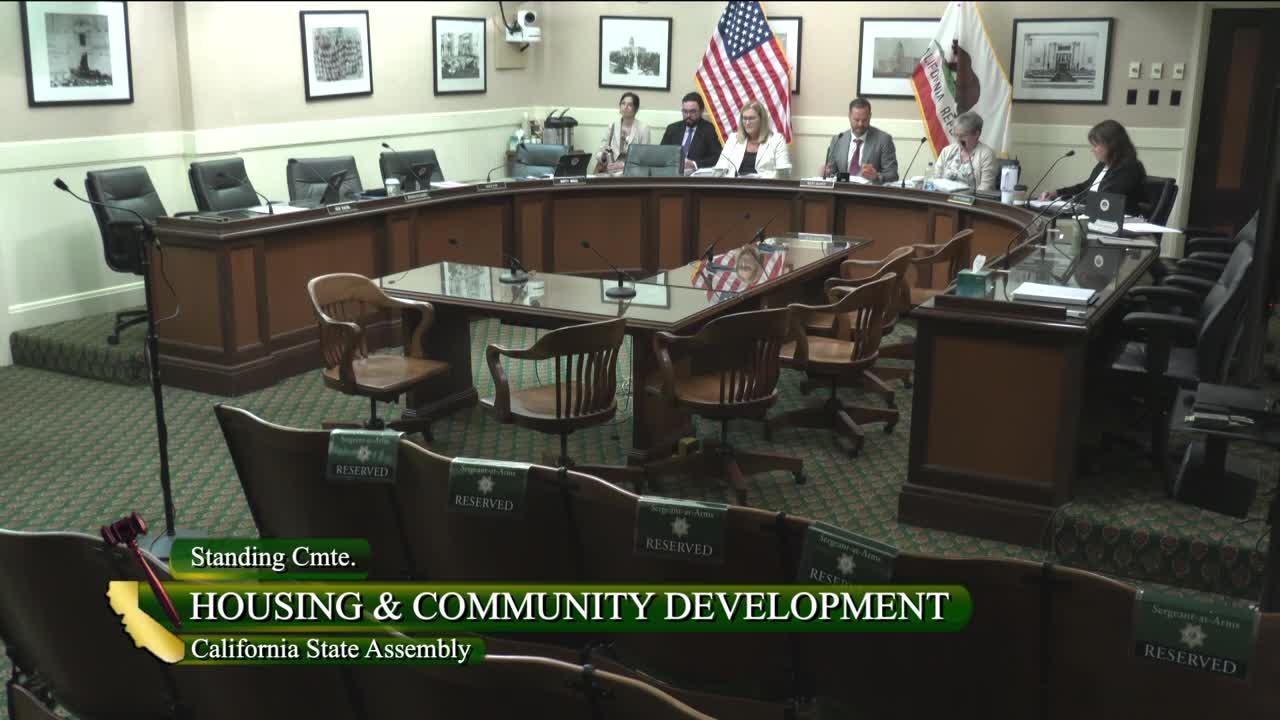 10MIN
Assembly Standing Committee on Housing and Community Development
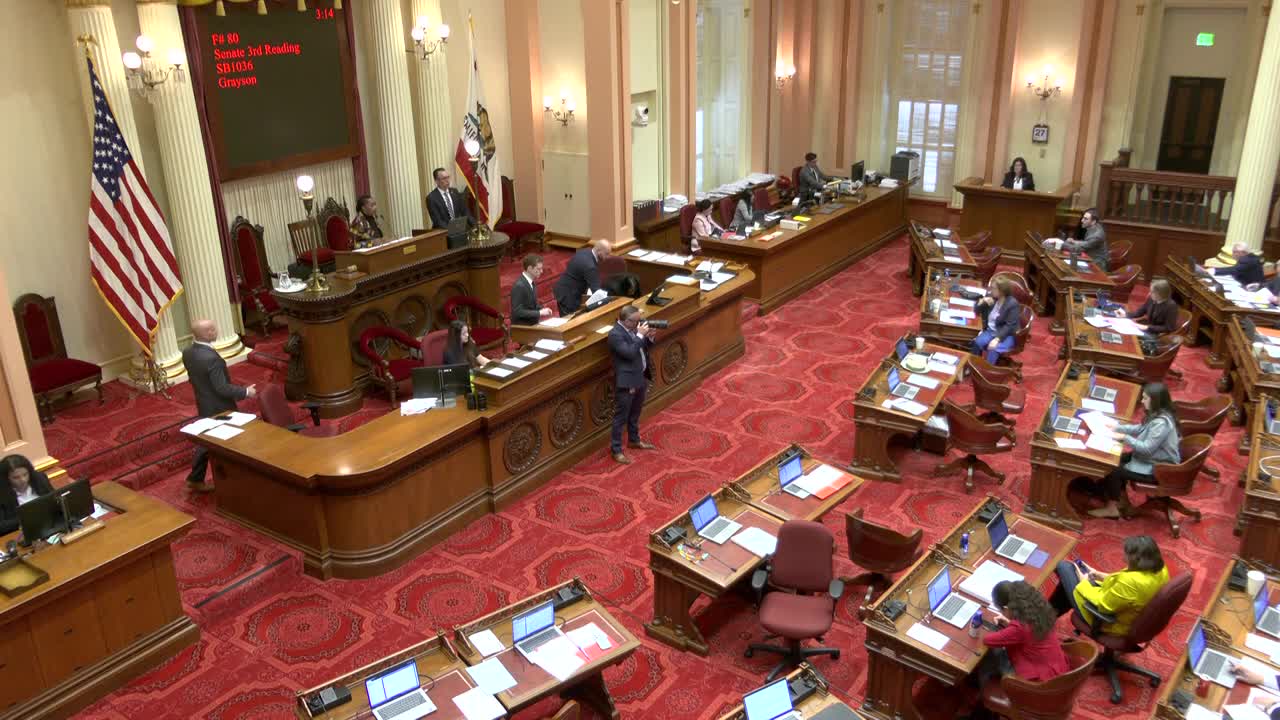 21MIN
Senate Floor
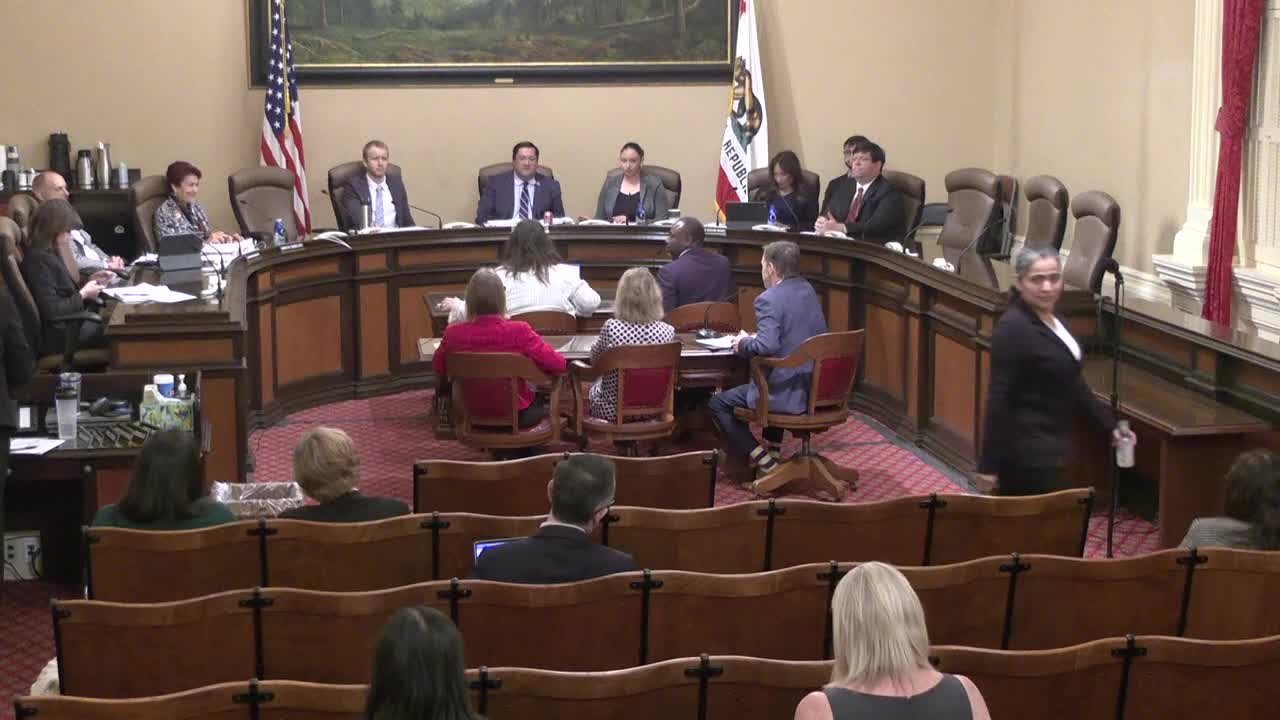 12MIN
Senate Standing Committee on Housing
Bill Author

Bill Co-Author(s):