AB 1004: Secretary of State: voter information Internet Web site.
- Session Year: 2017-2018
- House: Assembly
- Latest Version Date: 2017-09-19
Existing law provides that the Secretary of State is the chief elections officer of the state and requires the Secretary of State to see that elections are efficiently conducted and that state election laws are enforced. The Secretary of State is required to post on his or her Internet Web site specified information describing, among other things, services that are available to the proponents of a proposed initiative measure and to post a certified statement of the vote from compiled election results.
This bill would require the Secretary of State, by, January 1, 2020, to establish an Internet Web site that displays the names and contact information, including the phone number, email address, and office address, of each voters specified local, state, and federal elected officials, which would be displayed upon a voter submitting his or her address information on the Internet Web site. The bill would require the Secretary of State to include a hyperlink to the Internet Web site on its main Internet Web site homepage. The bill would require the Secretary of State to finance the new Internet Web site with state and local funds. The bill would provide that it shall not be construed to prohibit the Secretary of State from exercising his or her authority under existing law to implement the bills provisions.
Existing law provides that the Secretary of State is the chief elections officer of the state and requires the Secretary of State to see that elections are efficiently conducted and that state election laws are enforced. The Secretary of State is required to post on his or her Internet Web site specified information describing, among other things, services that are available to the proponents of a proposed initiative measure and to post a certified statement of the vote from compiled election results.
This bill would require the Secretary of State, by, January 1, 2020, to establish an Internet Web site that displays the names and contact information, including the phone number, email address, and office address, of each voters specified local, state, and federal elected officials, which would be displayed upon a voter submitting his or her address information on the Internet Web site. The bill would require the Secretary of State to include a hyperlink to the Internet Web site on its main Internet Web site homepage. The bill would require the Secretary of State to finance the new Internet Web site with state and local funds.
Existing law provides that the Secretary of State is the chief elections officer of the state and requires the Secretary of State to see that elections are efficiently conducted and that state election laws are enforced. The Secretary of State is required to post on his or her Internet Web site specified information describing, among other things, services that are available to the proponents of a proposed initiative measure and to post a certified statement of the vote from compiled election results.
This bill would require the Secretary of State, by an unspecified date, by, January 1, 2020, to establish an Internet Web site that displays the names and contact information, including the phone number, email address, and office address, of each voters specified local, state, and federal elected officials, which would be displayed upon a voter submitting his or her address information on the Internet Web site. The bill would require the Secretary of State to include a hyperlink to the Internet Web site on its main Internet Web site homepage. The bill would require the Secretary of State to finance the new Internet Web site with state and local funds.
Existing law provides that the Secretary of State is the chief elections officer of the state and requires the Secretary of State to see that elections are efficiently conducted and that state election laws are enforced. The Secretary of State is required to post on his or her Internet Web site specified information describing, among other things, services that are available to the proponents of a proposed initiative measure and to post a certified statement of the vote from compiled election results.
This bill would require the Secretary of State, by an unspecified date, to establish an Internet Web site that displays the names and contact information, including the phone number, email address, and office address, of each voters local, state, and federal elected officials, which would be displayed upon a voter submitting his or her address information on the Internet Web site. The bill would require the Secretary of State to include a hyperlink to the Internet Web site on its main Internet Web site homepage. The bill would require the Secretary of State to finance the new Internet Web site with state and local funds.
(a)(1)The Secretary of State shall establish an Internet Web site that displays the names and contact information, including the phone number, email address, and office address of, the following elected officials for each voter:
(A)United States Senator and Representative in Congress.
(B)State officers elected on a statewide basis.
(C)Member of the Senate and Member of the Assembly.
(D)Elective officers of a city, county, school district, and special district.
(E)Judge elected or reelected to a judicial office.
(2)The information described in paragraph (1) shall be displayed upon a voter submitting of his or her address information on the Internet Web site. The Secretary of State shall include a hyperlink to the Internet Web site described in this subdivision on the homepage of the Secretary of States main Internet Web site.
(b)The Secretary of State shall finance the Internet Web site with state and local funds. The Secretary of State shall consult with interested stakeholders, including state and local officials, to determine the most cost-effective method for financing the Internet Web site.
(c)The Secretary of State shall establish the Internet Web site by January 1, 2020.
SEC. 2.This act shall not be construed to prohibit the Secretary of State from exercising his or her authority under any other law to implement this acts provisions.
(a)(1)The Secretary of State shall establish an Internet Web site that displays the names and contact information, including the phone number, email address, and office address of, the following elected officials for each voter:
(A)United States Senator and Representative in Congress.
(B)State officers elected on a statewide basis.
(C)Member of the Senate and Member of the Assembly.
(D)Elective officers of a city, county, school district, and special district.
(E)Judge elected or reelected to a judicial office.
(2)The information described in paragraph (1) shall be displayed upon a voter submitting of his or her address information on the Internet Web site. The Secretary of State shall include a hyperlink to the Internet Web site described in this subdivision on the homepage of the Secretary of States main Internet Web site.
(b)(1)The Secretary of State shall finance the Internet Web site with state and local funds. The Secretary of State shall consult with interested stakeholders, including state and local officials, to determine the most cost-effective method for financing the Internet Web site.
(2)The Secretary of State may contract with an outside vendor in compliance with the Public Contract Code for purposes of establishing the Internet Web site.(c)The Secretary of State shall establish the Internet Web site by January 1, 2020.
(a)(1)The Secretary of State shall establish an Internet Web site that displays the names and contact information, including the phone number, email address, and office address of, the following elected officials for each voter:
(A)United States Senator or and Representative in Congress.
(B)State officers elected on a statewide basis.
(C)Member of the Senate or and Member of the Assembly.
(D)Elective officer officers of a city, county, school district, or and special district.
(E)Judge elected or reelected to a judicial office.
(2)The information described in paragraph (1) shall be displayed upon a voter submitting of his or her address information on the Internet Web site. The Secretary of State shall include a hyperlink to the Internet Web site described in this subdivision on the homepage of the Secretary of States main Internet Web site.
(b)(1)The Secretary of State shall finance the Internet Web site with state and local funds. The Secretary of State shall consult with interested stakeholders, including state and local officials, to determine the most cost-effective method for financing the Internet Web site.
(2)The Secretary of State may contract with an outside vendor in compliance with the Public Contract Code for purposes of establishing the Internet Web site.
(c)The Secretary of State shall establish the Internet Web site by January 1, 2020.
(a)(1)The Secretary of State shall establish an Internet Web site that displays the names and contact information, including the phone number, email address, and office address of each voters local, state, and federal elected officials. The of, the following elected officials for each voter:
(A)United States Senator or Representative in Congress.
(B)State officers elected on a statewide basis.
(C)Member of the Senate or Assembly.
(D)Elective officer of a city, county, school district, or special district.
(E)Judge elected or reelected to a judicial office.
(2)The information described in paragraph (1) shall be displayed upon a voter submitting of his or her address information on the Internet Web site. The Secretary of State shall include a hyperlink to the Internet Web site described in this subdivision on the homepage of the Secretary of States main Internet Web site.
(b)(1)The Secretary of State shall finance the Internet Web site with state and local funds. The Secretary of State shall consult with interested stakeholders, including state and local officials, to determine the most cost-effective method for financing the Internet Web site.
(2)The Secretary of State shall may contract with an outside vendor in compliance with the Public Contract Code for purposes of establishing the Internet Web site.
(c)The Secretary of State shall establish the Internet Web site by ________. January 1, 2020.
(a)The Secretary of State shall establish an Internet Web site that displays the names and contact information, including the phone number, email address, and office address of each voters local, state, and federal elected officials. The information shall be displayed upon a voter submitting of his or her address information on the Internet Web site. The Secretary of State shall include a hyperlink to the Internet Web site described in this subdivision on the homepage of the Secretary of States main Internet Web site.
(b)(1)The Secretary of State shall finance the Internet Web site with state and local funds. The Secretary of State shall consult with interested stakeholders, including state and local officials, to determine the most cost-effective method for financing the Internet Web site.
(2)The Secretary of State shall contract with an outside vendor in compliance with the Public Contract Code for purposes of establishing the Internet Web site.
(c)The Secretary of State shall establish the Internet Web site by ________.
|
Date
|
Status
|
|---|---|
| Jan 12, 2018 | Stricken from file. |
| Jan 3, 2018 | Consideration of Governor's veto pending. |
| Oct 14, 2017 | Vetoed by Governor. |
| Sep 27, 2017 | Enrolled and presented to the Governor at 4 p.m. |
| Sep 16, 2017 | In Assembly. Concurrence in Senate amendments pending. |
| Sep 15, 2017 | Read third time. Passed. Ordered to the Assembly. |
| Sep 5, 2017 | Read second time. Ordered to third reading. |
| Sep 1, 2017 | From committee: Amend, and do pass as amended. (Ayes 7. Noes 0.) (September 1). |
| Aug 21, 2017 | In committee: Referred to APPR. suspense file. |
| Jul 13, 2017 | From committee: Do pass and re-refer to Com. on APPR. (Ayes 5. Noes 0.) (July 12). Re-referred to Com. on APPR. |
| Jun 14, 2017 | Referred to Com. on E. & C.A. |
| Jun 1, 2017 | In Senate. Read first time. To Com. on RLS. for assignment. |
| May 31, 2017 | Read third time. Passed. Ordered to the Senate. (Ayes 76. Noes 0. Page 1935.) |
| May 30, 2017 | Read second time. Ordered to third reading. |
| May 26, 2017 | From committee: Amend, and do pass as amended. (Ayes 16. Noes 0.) (May 26). |
| Apr 26, 2017 | In committee: Set, first hearing. Referred to APPR. suspense file. |
| Apr 19, 2017 | Re-referred to Com. on APPR. |
| Apr 18, 2017 | Read second time and amended. |
| Apr 17, 2017 | From committee: Amend, and do pass as amended and re-refer to Com. on APPR. (Ayes 7. Noes 0.) (April 5). |
| Mar 23, 2017 | Re-referred to Com. on E. & R. |
| Mar 22, 2017 | From committee chair, with author's amendments: Amend, and re-refer to Com. on E. & R. Read second time and amended. |
| Mar 6, 2017 | Referred to Com. on E. & R. |
| Feb 17, 2017 | From printer. May be heard in committee March 19. |
| Feb 16, 2017 | Read first time. To print. |
|
Date
|
Description
|
Location
|
Votes
|
|
|---|---|---|---|---|
| Sep 16, 2017 | AB 1004 CALDERON Concurrence in Senate Amendments | Assembly Floor |
Passed |
|
| Sep 15, 2017 | Assembly 3rd Reading AB1004 Calderon By Stern | Senate Floor |
Passed |
|
| Sep 1, 2017 | Do pass as amended | Senate Standing Committee on Appropriations |
Passed |
|
| Aug 21, 2017 | Placed on suspense file | Senate Standing Committee on Appropriations |
Passed |
|
| Jul 12, 2017 | Do pass, but first be re-referred to the Committee on [Appropriations] | Senate Standing Committee on Elections and Constitutional Amendments |
Passed |
|
| May 31, 2017 | AB 1004 CALDERON Assembly Third Reading | Assembly Floor |
Passed |
|
| May 26, 2017 | Do pass as amended. | Assembly Standing Committee on Appropriations |
Passed |
|
| Apr 5, 2017 | Do pass as amended and be re-referred to the Committee on [Appropriations] | Assembly Standing Committee on Elections and Redistricting |
Passed |
This list shows positions taken on this bill by organizations on the date displayed, which is linked to the original source.
Positions by individuals are not included.
|
Organization
|
Position
|
Date
|
|---|---|---|
| American Federation of State, County and Municipal Employees | ** Support | Sep 5, 2017 |
| California Clean Money Campaign | ** Support | Sep 5, 2017 |
| California Teamsters Public Affairs Council | ** Support | Sep 5, 2017 |
| Inyo County Registrar of Voters | ** Support | Sep 5, 2017 |
| Secretary of State Alex Padilla | ** Against | Apr 3, 2017 |
GOVERNOR'S VETO
GV Bill Id:AB 1004
Author:(Calderon)
As Enrolled Ver:September 19, 2017
2/3 vote
ASSEMBLY: | 76-0 | (May 31, 2017) | SENATE: | 36-0 | (September 15, 2017) |
ASSEMBLY: | 77-0 | (September 16, 2017) |
Original Committee Reference: E. & R.
SUMMARY: Requires the Secretary of State (SOS) to establish an online database of elected federal, state, and local officials.
The Senate amendments specify that the bill shall not be construed to prohibit the SOS from exercising authority under any law to implement the bill’s provisions.
EXISTING LAW:
- Provides that the SOS is the chief elections officer of the state.
- Requires the SOS to publish and distribute a roster of the State and local public officials of California whenever an appropriation is made by the Legislature for that purpose.
FISCAL EFFECT: According to the Senate Appropriations Committee, the Secretary of State's Office indicates that it would incur a one-time cost of $1.1 million (General Fund) to develop the database and collect required data. Additionally, SOS would require $140,000 ongoing (General Fund) for one position to maintain and update the database.
COMMENTS: According to the author, "AB 1004 requires the Secretary of State to establish an online database of elected federal, state and local officials... [A] Registered Californian voter will be able to type in their address and instantly learn who represents them at the aforementioned levels of government. The database will include each elected official's phone number, email address and office address."
The SOS currently does not have a centralized system in place to track elected officials at all levels of government. For instance, while the SOS currently publishes an annual listing of California's public officials, known as The California Roster, that listing does not include information about officials elected to special districts. This bill requires the SOS to maintain a website that provides the contact information of federal, state, and local elected officials and is publicly searchable based on a voter’s address.
The Senate amendments clarify that this bill shall not be construed to prohibit the SOS from exercising his or her authority under existing law to implement the bill's provisions. This bill, as amended in the Senate, is generally consistent with Assembly actions.
This bill requires the Secretary of State to establish an online database of elected federal, state, and local officials.
The Secretary of State currently does not have a centralized system in place to track these elected officials. Although well-intentioned, I do not believe this is the time to take on such a task given the other technology projects underway by the Secretary of State's office.
Moreover, it is currently possible to learn the identity of office holders by making inquiries of federal, state and local officials.
Analysis Prepared by: Bish Paul / E. & R. / (916) 319-2094 FN: 0002495
(Without Reference to File)
CONCURRENCE IN SENATE AMENDMENTS
CSA1 Bill Id:AB 1004
Author:(Calderon)
As Amended Ver:September 1, 2017
Majority vote
ASSEMBLY: | 76-0 | (May 31, 2017) | SENATE: | 36-0 | (September 15, 2017) |
Original Committee Reference: E. & R.
SUMMARY: Requires the Secretary of State (SOS) to establish an online database of elected federal, state, and local officials.
The Senate amendments specify that the bill shall not be construed to prohibit the SOS from exercising authority under any law to implement the bill’s provisions.
EXISTING LAW:
- Provides that the SOS is the chief elections officer of the state.
- Requires the SOS to publish and distribute a roster of the State and local public officials of California whenever an appropriation is made by the Legislature for that purpose.
FISCAL EFFECT: According to the Senate Appropriations Committee analysis, the Secretary of State's Office indicates that it would incur a one-time cost of $1.1 million (General Fund) to develop the database and collect required data. Additionally, SOS would require $140,000 ongoing (General Fund) for one position to maintain and update the database.
COMMENTS: According to the author, "AB 1004 requires the Secretary of State to establish an online database of elected federal, state and local officials... [A] Registered Californian voter will be able to type in their address and instantly learn who represents them at the aforementioned levels of government. The database will include each elected official's phone number, email address and office address."
The SOS currently does not have a centralized system in place to track elected officials at all levels of government. For instance, while the SOS currently publishes an annual listing of California's public officials, known as The California Roster, that listing does not include information about officials elected to special districts. This bill requires the SOS to maintain a website that provides the contact information of federal, state, and local elected officials and is publicly searchable based on a voter’s address.
The Senate amendments clarify that AB 1004 shall not be construed to prohibit the SOS from exercising his or her authority under existing law to implement the bill's provisions. This bill, as amended in the Senate, is generally consistent with Assembly actions.
Analysis Prepared by: Bish Paul / E. & R. / (916) 319-2094 FN: 0001939
Office of Senate Floor Analyses (916) 651-1520 Fax: (916) 327-4478 | AB |
THIRD READING
Bill No: AB 1004
Amended: 9/1/17 in Senate
SENATE ELECTIONS & C.A. COMMITTEE: 5-0, 7/12/17
AYES: Stern, Anderson, Allen, Hertzberg, Leyva
SENATE APPROPRIATIONS COMMITTEE: 7-0, 9/1/17
AYES: Lara, Bates, Beall, Bradford, Hill, Nielsen, Wiener
ASSEMBLY FLOOR: 76-0, 5/31/17 - See last page for vote
DIGEST:
This bill requires the Secretary of State (SOS) to establish an online database of elected federal, state, and local officials.
Existing law:
- Provides that the SOS is the chief elections officer of the state.
- Requires the SOS to publish and distribute a roster of the State and local public officials of California whenever an appropriation is made by the Legislature for that purpose.
This bill:
- Requires the SOS to establish an online database of elected federal, state, and local officials.
- Requires the database to include each specified elected official's phone number, email address, and office address.
- Requires the database to be searchable based on the voter's home address, and requires a link to the database to be displayed on the SOS's homepage.
- Requires the SOS to fund the Web site with state and local funds. Requires the SOS to consult with interested stakeholders to determine the most cost-effective method for financing the Web site.
- Requires the SOS to establish the Web site by January 1, 2020.
- States that this act shall not be construed to prohibit the SOS from exercising his or her authority under any other law to implement this act’s provisions.
Background
Similar systems currently in-use. Inyo County has provided a representative lookup tool for its residents since 2014. According to the county registrar, their website is one of the highest trafficked websites related to elections. The tool is also ADA-compliant, mobile friendly, and does not require the download of a separate application. Similarly, the State of Indiana offers its voters a “Who Are Your Elected Officials” portal that is sponsored by the Indiana Secretary of State and maintained by a private company.
Comments
- According to the author, AB 1004 requires the SOS establish an online database of elected federal, state and local officials. Registered California voters will be able to type in their address and instantly learn who represents them at the aforementioned levels of government. The database will include each elected official’s phone number, email address and office address.
The government must strive to provide easily accessible, up-to-date contact information for our elected officials. Unfortunately, contacting elected officials at various government levels, especially local, can often be an arduous task. The path to finding local officials information either lead to scouring through previous election results and calling city office to confirm results or searching through countless city websites. In the hub of technology, California can and should do better.
Elected officials information is not transparently available at all levels of government. At the state level, Californians can search the Assembly or Senate database to learn who represents them. Additionally, the Secretary of State’s office provides an annually published California Roster including county level elected or appointed officials. A citizen desiring to learn who represents them in special districts or at the local level then can call their county officials or scour county officials websites to find election results. For example, Contra Costa County or San Joaquin Valley publishes a full list of elected officials for the county differentiated by district after each election. Then a concerned citizen will need to find out what district they live in and then search separate websites to contact their elected official.
The process a citizen undergoes to decipher who represent them is frustrating and not-user friendly. However, the prevalence of technology provides the government with up to date tools to increase civic education and participation. The state of Indiana, Tuolumne County, Inyo County, Sierra County and Del Norte County use geological information system technology to map elected officials by citizen’s address for increased accessibility. A transparent portal can aid in engaging all Californians with civic engagement.
- Significant undertaking. This bill requires the contact information of elected officials of special districts to be publicly searchable based on a voter’s address. Currently there are approximately 3300 special districts which are a part of California’s unique system of local government. Most are governed by boards comprised of five members who serve staggered, four-year terms. The SOS currently does not have a centralized system in place to track these elected officials. Furthermore, while the SOS currently publishes an annual listing of California's public officials, known as The California Roster, that listing does not include information about officials elected to special districts.
- Funding. According to the Assembly Appropriation Committee, this bill will incur a one-time General Fund cost of about $1 million to develop the required online database and collect required data for inclusion in the database, including $850,000 related to interfacing with SOS's VoteCal statewide voter database system. There will also be ongoing costs of $140,000 primarily for one staff position to maintain and update the required database. This bill requires the SOS to fund the Web site with state and local funds. By “local funds” it is assumed that this means funds from local government agencies. It is unclear how the SOS would go about obtaining these funds.
FISCAL EFFECT: Appropriation: Fiscal Com.: Local:
According to the Senate Appropriations Committee, the SOS indicates that it would incur a one-time cost of $1.1 million (General Fund) to develop the database and collect required data. Additionally, the SOS would require $140,000 ongoing (General Fund) for one position to maintain and update the database.
American Federation of State, County and Municipal Employees
California Clean Money Campaign
California Teamsters Public Affairs Council
Inyo County Registrar of Voters
OPPOSITION: (Verified 8/28/17)
None received
ASSEMBLY FLOOR: 76-0, 5/31/17
AYES: Acosta, Aguiar-Curry, Travis Allen, Arambula, Baker, Berman, Bigelow, Bloom, Bocanegra, Bonta, Brough, Burke, Caballero, Calderon, Cervantes, Chau, Chávez, Chen, Chiu, Chu, Cooley, Cooper, Cunningham, Dababneh, Dahle, Daly, Flora, Fong, Frazier, Friedman, Gallagher, Cristina Garcia, Eduardo Garcia, Gipson, Gloria, Gomez, Gonzalez Fletcher, Gray, Grayson, Harper, Holden, Irwin, Jones-Sawyer, Kalra, Kiley, Lackey, Levine, Limón, Low, Maienschein, Mathis, Mayes, McCarty, Medina, Mullin, Muratsuchi, Nazarian, Obernolte, O'Donnell, Quirk, Quirk-Silva, Reyes, Ridley-Thomas, Rodriguez, Rubio, Salas, Santiago, Steinorth, Mark Stone, Thurmond, Ting, Voepel, Waldron, Weber, Wood, Rendon
NO VOTE RECORDED: Choi, Eggman, Melendez, Patterson
9/5/17 9:41:32
**** END ****
SENATE COMMITTEE ON
Senator Ricardo Lara, Chair
2017 - 2018 Regular Session
AB 1004 (Calderon) - Secretary of State: voter information Web site
Version: | Policy Vote: |
Urgency: | Mandate: |
Hearing Date: | Consultant: |
*********** ANALYSIS ADDENDUM – SUSPENSE FILE ***********
The following information is revised to reflect amendments
adopted by the committee on September 1, 2017
Bill Summary:
AB 1004 would require the Secretary of State to establish an online database of elected federal, state, and local officials.
Fiscal Impact:
The Secretary of State’s Office (SOS) indicates that it would incur a one-time cost of $1.1 million (General Fund) to develop the database and collect required data. Additionally, SOS would require $140,000 ongoing (General Fund) for one position to maintain and update the database.
Author Amendments:
Specify that the Secretary of State shall not be hindered from exercising authority under any law to implement the bill’s provisions.
-- END --
SENATE COMMITTEE ON APPROPRIATIONS
Senator Ricardo Lara, Chair
2017 - 2018 Regular Session
AB 1004 (Calderon) - Secretary of State: voter information Web site
Version: May 26, 2017 | Policy Vote: E. & C.A. 5 - 0 |
Urgency: No | Mandate: No |
Hearing Date: August 21, 2017 | Consultant: Robert Ingenito |
This bill meets the criteria for referral to the Suspense File.
Bill Summary:
AB 1004 would require the Secretary of State to establish an online database of elected federal, state, and local officials.
Fiscal Impact:
The Secretary of State’s Office (SOS) indicates that it would incur a one-time cost of $1.1 million (General Fund) to develop the database and collect required data. Additionally, SOS would require $140,000 ongoing (General Fund) for one position to maintain and update the database.
Background:
Existing law requires SOS to publish and distribute a roster of state and local public officials of California whenever an appropriation is made by the Legislature for that purpose. However, providing this information continuously through an online database is not required under current law.
Proposed Law:
This bill would, among other things, (1) require SOS, by January 1, 2020, to establish an online database of elected federal, state, and local officials, (2) require the database to include each specified elected official's phone number, email address, and office address, (3) require the database to be searchable based on the voter's home address, and (4) require SOS to fund the internet site with state and local funds.
Staff Comments:
In addition to members of Congress, statewide officeholders, and the Legislature, this bill would require SOS to collect and maintain the contact information of elected officials of 58 counties, 482 cities, and roughly 3,300 special districts, to be publicly searchable based on a voter’s address. SOS currently does not have a centralized system in place to track these elected officials. Furthermore, while SOS currently publishes an annual listing of California's public officials, known as The California Roster, it does not include information about officials elected to special districts.
SOS indicates that this bill would result in a one-time General Fund cost of $1.1 million to develop the database and collect, including $850,000 related to interfacing with SOS's VoteCal statewide voter database system. There would also be ongoing costs of $140,000 for one staff position. The bill requires SOS to fund the internet site with state and local funds. SOS indicates that local funding is not likely to materialize.
-- END --
SENATE COMMITTEE ON
ELECTIONS AND CONSTITUTIONAL AMENDMENTS
Senator Henry Stern, Chair
2017 - 2018 Regular
Bill No: 1004 Hearing Date: 7/12/17
Author: | Calderon | ||
Version: |
| ||
Urgency: | Fiscal: | ||
Consultant: | |||
Subject:
DIGEST
This bill requires the Secretary of State (SOS) to establish an online database of elected federal, state, and local officials.
ANALYSIS
Existing law:
- Provides that the SOS is the chief elections officer of the state.
- Requires the SOS to publish and distribute a roster of the State and local public officials of California whenever an appropriation is made by the Legislature for that purpose.
This bill:
- Requires the SOS to establish an online database of elected federal, state, and local officials.
- Requires the database to include each specified elected official's phone number, email address, and office address.
- Requires the database to be searchable based on the voter's home address, and requires a link to the database to be displayed on the SOS's homepage.
- Requires the SOS to fund the Web site with state and local funds. Requires the SOS to consult with interested stakeholders to determine the most cost-effective method for financing the Web site.
- Requires the SOS to establish the Web site by January 1, 2020.
BACKGROUND
Similar Systems Currently In-Use. Inyo County has provided a representative lookup tool for its residents since 2014. According to the county registrar, their website is one of the highest trafficked websites related to elections. The tool is also ADA-compliant, mobile friendly, and does not require the download of a separate application. Similarly, the state of Indiana offers its voters a “Who Are Your Elected Officials” portal that is sponsored by the Indiana Secretary of State and maintained by a private company.
COMMENTS
- According to the author: AB 1004 requires the Secretary of State establish an online database of elected federal, state and local officials. Registered California voters will be able to type in their address and instantly learn who represents them at the aforementioned levels of government. The database will include each elected official’s phone number, email address and office address.
The government must strive to provide easily accessible, up-to-date contact information for our elected officials. Unfortunately, contacting elected officials at various government levels, especially local, can often be an arduous task. The path to finding local officials information either lead to scouring through previous election results and calling city office to confirm results or searching through countless city websites. In the hub of technology, California can and should do better.
Elected officials information is not transparently available at all levels of government. At the state level, Californians can search the Assembly or Senate database to learn who represents them. Additionally, the Secretary of State’s office provides an annually published California Roster including county level elected or appointed officials. A citizen desiring to learn who represents them in special districts or at the local level then can call their county officials or scour county officials websites to find election results. For example, Contra Costa County or San Joaquin Valley publishes a full list of elected officials for the county differentiated by district after each election. Then a concerned citizen will need to find out what district they live in and then search separate websites to contact their elected official.
The process a citizen undergoes to decipher who represent them is frustrating and not-user friendly. However, the prevalence of technology provides the government with up to date tools to increase civic education and participation. The state of Indiana, Tuolumne County, Inyo County, Sierra County and Del Norte County use geological information system (GIS) technology to map elected officials by citizen’s address for increased accessibility. A transparent portal can aid in engaging all Californians with civic engagement. - Significant Undertaking. This bill requires the contact information of elected officials of special districts to be publicly searchable based on a voter’s address. Currently there are approximately 3300 special districts which are a part of California’s unique system of local government. Most are governed by boards comprised of five members who serve staggered, four-year terms. The SOS currently does not have a centralized system in place to track these elected officials. Furthermore, while the SOS currently publishes an annual listing of California's public officials, known as The California Roster, that listing does not include information about officials elected to special districts.
- Funding. According to the Assembly Appropriation, this bill will incur a one-time General Fund cost of about $1 million to develop the required online database and collect required data for inclusion in the database, including $850,000 related to interfacing with SOS's VoteCal statewide voter database system. There will also be ongoing costs of $140,000 primarily for one staff position to maintain and update the required database. This bill requires the SOS to fund the Web site with state and local funds. By “local funds” it is assumed that this means funds from local government agencies. It is unclear how the SOS would go about obtaining these funds.
PRIOR ACTION
Assembly Floor: | 76 - 0 |
Assembly Appropriations Committee: | 16 - 0 |
Assembly Committee: | 7 - 0 |
POSITIONS
Sponsor: Author
Support: American Federation of State, County and Municipal Employees
California Clean Money Campaign
California Teamsters Public Affairs Council
Inyo County Registrar of Voters
Oppose: None received
-- END --
ASSEMBLY THIRD READING
ATR Bill Id:AB 1004
Author:(Calderon)
As Amended Ver: May 26, 2017
Majority vote
Committee | Votes | Ayes | Noes |
Elections | 7-0 | Low, Harper, Berman, Calderon, Cunningham, Medina, Weber | |
Appropriations | 16-0 | Gonzalez Fletcher, Bigelow, Bloom, Bocanegra, Bonta, Brough, Calderon, McCarty, Quirk, Fong, Friedman, Gallagher, Eduardo Garcia, Gray, Muratsuchi, Reyes |
|
SUMMARY: Requires the Secretary of State (SOS) to establish an online database of elected federal, state, and local officials. Specifically, this bill:
- Requires the database to include each specified elected official's phone number, email address, and office address.
- Requires the database to be searchable based on the voter's home address, and requires a link to the database to be displayed on the SOS's homepage.
- Requires the SOS to fund the website with state and local funds. Requires the SOS to consult with interested stakeholders to determine the most cost-effective method for financing the Web site.
- Requires the SOS to establish the website by January 1, 2020.
FISCAL EFFECT: According to the Assembly Appropriations Committee:
- One-time General Fund costs of about $1 million to develop the required online database and collect required data for inclusion in the database, including $850,000 related to interfacing with SOS's VoteCal system.
- Ongoing costs of $140,000 primarily for one staff position to maintain and update the required database.
COMMENTS: According to the author, "AB 1004 requires the Secretary of State to establish an online database of elected federal, state and local officials… [A] Registered Californian voter will be able to type in their address and instantly learn who represents them at the aforementioned levels of government. The database will include each elected official's phone number, email address and office address."
This bill proposes making a staggering amount of information available to voters that needs to be updated and tracked, but fails to outline implementation guidelines. For instance, this bill requires the contact information of elected officials of special districts to be publicly searchable based on a voter's address. Currently there are approximately 3300 special districts which are a part of California's unique system of local government. Most are governed by boards comprised of five members who serve staggered, four-year terms. The Secretary of State (SOS) currently does not have a centralized system in place to track these elected officials. Furthermore, while the SOS currently publishes an annual listing of California's public officials, known as The California Roster, that listing does not include information about officials elected to special districts.
Inyo County has provided a Representative lookup tool for its residents since 2014. According to the county registrar, their Web site is one of the highest trafficked websites related to elections. The tool is also ADA-compliant, mobile friendly, and does not require the download of a separate application. Similarly, the state of Indiana offers its voters a "Who Are Your Elected Officials" portal that is sponsored by the Indiana Secretary of State and maintained by a private company.
Please see the policy committee analysis for a full discussion of this bill.
Analysis Prepared by: Bish Paul / E. & R. / (916) 319-2094 FN: 0000848
Date of Hearing: April 26, 2017
ASSEMBLY COMMITTEE ON APPROPRIATIONS
Lorena Gonzalez Fletcher, Chair
ABPCA Bill Id:AB 1004
Author:(Calderon) – As Amended Ver:April 18, 2017
Policy Committee: | Elections and Redistricting | Vote: | 7 - 0 |
|
| ||
|
|
Urgency: No State Mandated Local Program: No Reimbursable: No
SUMMARY:
This bill requires the Secretary of State (SOS) to establish an online database of elected federal, state, and local officials by January 1, 2020. Specifically, this bill:
- Requires the database to include each specified elected official’s phone number, email address, and office address.
- Requires the database to be searchable based on the voter’s home address, and requires a link to the database to be displayed on the homepage of the SOS's website.
- Requires the SOS to fund the website with state and local funds. Requires the SOS to consult with interested stakeholders to determine the most cost-effective method for financing the website.
- Provides that the SOS may contract with an outside vendor to establish the website.
FISCAL EFFECT:
- One-time GF costs of about $1 million to develop the required online database and collect required data for inclusion in the database, including $850,000 related to interfacing with SOS’s VoteCal system.
- Ongoing costs of $140,000 primarily for one staff position to maintain and update the required database.
COMMENTS:
- Background. Existing law requires the SOS to publish and distribute a roster of state and local public officials of California whenever an appropriation is made by the Legislature for that purpose. However, providing this information continuously through an online database is not required.
- Purpose. According to the author, “the government must strive to provide easily accessible, up-to-date contact information for our elected officials. According to the Pew Research Center, only about 21 percent of adults nationwide recently contacted an elected official about an issue important to them. Unfortunately, contacting elected officials at various government levels, especially local, can often be an arduous task. Currently, the Secretary of State’s office annually publishes the California Roster, a pamphlet with county specific elected and appointed officials. Invested citizens must first fid the California Roster, sort through the pamphlet and call county officials to identify their local elected officials. AB 1004 requires the Secretary of State to establish an online database of elected federal, state, and local officials.”
Analysis Prepared by: Jessica Peters / APPR. / (916) 319-2081
Date of Hearing: April 5, 2017
ASSEMBLY COMMITTEE ON ELECTIONS AND REDISTRICTING
Evan Low, Chair
ABPCA Bill Id:AB 1004 (
Author:Calderon) – As Amended Ver:March 22, 2017
SUBJECT: Secretary of State: voter information Web site.
SUMMARY: Requires the Secretary of State (SOS) to establish an online database of elected federal, state, and local officials. Specifically, this bill:
- Requires the database to include each specified elected official’s phone number, email address, and office address.
- Requires the database to be searchable based on the voter’s home address, and requires a link to the database to be displayed on the SOS's homepage.
- Requires the SOS to fund the website with state and local funds. Requires the SOS to consult with interested stakeholders to determine the most cost-effective method for financing the website.
- Provides that the SOS may contract with an outside vendor to establish the website.
- Requires the SOS to establish the website by January 1, 2020.
EXISTING LAW:
- Provides that the SOS is the chief elections officer of the state.
- Requires the SOS to publish and distribute a roster of the State and local public officials of California whenever an appropriation is made by the Legislature for that purpose.
FISCAL EFFECT: Unknown.
COMMENTS:
- Author’s Amendments: In order to further clarify the intent of this bill, the author is proposing the following author's amendments to page 2, lines 3-13 of the bill:
(1) The Secretary of State shall establish an Internet Web site that displays the names and contact information, including the phone number, email address, and office address of, the following elected officials for each voter:
(A) United States Senator or and Representative in Congress.
(B) State officers elected on a statewide basis.
(C) Member of the Senate or Assembly Member of the Senate and Member of the Assembly.
(D) Elective officer of a city, county, school district, or special district Elective officers of a city, county, school district, and special district.
(E) Judge elected or reelected to a judicial office.
- Purpose of the Bill: According to the author:
AB 1004 requires the Secretary of State to establish an online database of elected federal, state and local officials. The database may be established through a contract with a third party vendor. [A] Registered Californian voter will be able to type in their address and instantly learn who represents them at the aforementioned levels of government. The database will include each elected official’s phone number, email address and office address.
There is no existing law requiring the Secretary of State to publish local elected official’s names and contact information at the state level by address…
A transparent portal can aid in engaging all Californians but especially those from our youngest generations… [T]he Pew Research Center found young adults under 24 were more likely to engage in political activity through the Internet and social media sites. The Millennial generation, accustomed to quickly having access to information at their fingertips, will benefit from the infusion of technology into democracy.
- Civic Engagement in the Digital Age: In their 2013 report “Civic Engagement in the Digital Age” the Pew Research Center reported that people who are well-educated and from a high socioeconomic status are more likely than others to engage in political activities using online resources. The report is based on the findings of a survey on Americans' use of the Internet and found:
Those who live in higher income households and those with higher levels of education (specifically, those who have attended or graduated from college) are consistently more likely than those with lower income or education levels to take part in many of the online and offline civic behaviors we measured in this study.
On the other hand, when it comes to the 60% of American adults who use social networking sites such as Facebook or Twitter, political participation is more balanced between lower and higher income Americans.
Furthermore, the study found that only 34% of American adults have recently engaged with or contacted a government official about an issue that is important to them via online methods.
- Voter Information Websites and Civic Engagement: In accordance with Section 245 of the Help America Vote Act, the US Elections Assistance Commission studied the possible impact new communications or Internet technology systems used in the electoral process could have on voter participation rates, voter education, and public accessibility. In a report titled “Voter Information Websites Study” they reviewed several hundred active voter information websites in the fall of 2005 through 2006, from which 71 sites were identified as voter information websites and selected for in-depth analysis. The report found that websites that provided voters with information on candidates and contests greatly increased usage of their website.
- Significant Undertaking: The EAC report cited above also provides guidelines to assist election administrators in developing Voter Information websites that best serve voters. Specifically it says: “Deciding what information to provide and how to provide it is the most important step in developing a voter information website because the information and method of delivery define the implementation process.” AB 1004 proposes making a staggering amount of information available to voters that needs to be updated and tracked, but fails to outline implementation guidelines. For instance, the bill requires the contact information of elected officials of special districts to be publicly searchable based on a voter’s address. Currently there are approximately 3300 special districts which are a part of California’s unique system of local government. Most are governed by boards comprised of five members who serve staggered, four-year terms. The Secretary of State currently does not have a centralized system in place to track these elected officials. Furthermore, while the SOS currently publishes an annual listing of California's public officials, known as The California Roster, that listing does not include information about officials elected to special districts.
- Similar Systems Currently In-Use: Inyo County has provided a Representative lookup tool for its residents since 2014. According to the county registrar, their website is one of the highest trafficked websites related to elections. The tool is also ADA-compliant, mobile friendly, and does not require the download of a separate application. Similarly, the state of Indiana offers its voters a “Who Are Your Elected Officials” portal that is sponsored by the Indiana Secretary of State and maintained by a private company.
- Third Party Vendor Stipulation: This bill includes language that explicitly provides that the SOS "may contract with an outside vendor" to establish the database that is required by this bill. The extent to which such language is necessary is unclear. Committee staff is not aware of other elections-related bills that have included a similar stipulation, nor is committee staff aware of any existing law that would prevent the SOS from contracting with external vendors if needed. The committee should consider whether this language is necessary to achieve the legislative intent of AB 1004.
- Arguments in Support: In support of this bill, the American Federation of State, County and Municipal Employees writes:
Several counties in California, including Del Norte, Inyo and Sierra, have successfully modeled such resources by making them ADA-compliant and mobile friendly with no mandatory application download. These programs have largely improved voters’ accessibility to their elected officials. The state should move forward by leading the nation in utilizing state-of-the-art technology to improve democratic participation.
It is in the best interest of the state to make the contact information of elected officials as accessible as possible to Californians. When the public has greater accessibility to their elected officials, they are better informed as a result. Creating a statewide online elected officials guide will not only increase transparency and encourage political participation, but will also contribute to fostering greater government accountability, especially in local government and special districts.
- Arguments in Opposition: Secretary of State Alex Padilla, who has an oppose unless amended position on this bill, writes:
I understand that the intent of AB 1004 is to continue to provide voters and citizens with centralized information to help them stay engaged in our democracy. I fully support that intent. Unfortunately, as drafted I cannot support the measure. Specifically, in section 12172.4(b)(2) the bill has language that strongly suggests that we seek an outside vendor to comply with the bill. I am requesting that this language be removed completely.
My office already has full discretion to procure outside services and products. Additionally, I have found success utilizing my staff to develop new online tools and applications. Given that online voter registration and our agency's first smart phone application were developed in-house, it would likely be more efficient to comply with the reuqirements of AB 1004 utilizing my staff's expertise.
REGISTERED SUPPORT / OPPOSITION:
Support
American Federation of State, County and Municipal Employees
California Clean Money Campaign
California Teamsters Public Affairs Council
Inyo County Registrar of Voters
Opposition
Secretary of State Alex Padilla (unless amended)
Analysis Prepared by: Bish Paul / E. & R. / (916) 319-2094
Discussed in Hearing
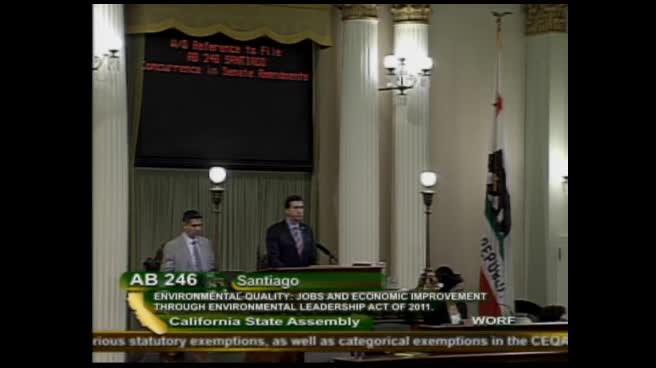 2MIN
Assembly Floor
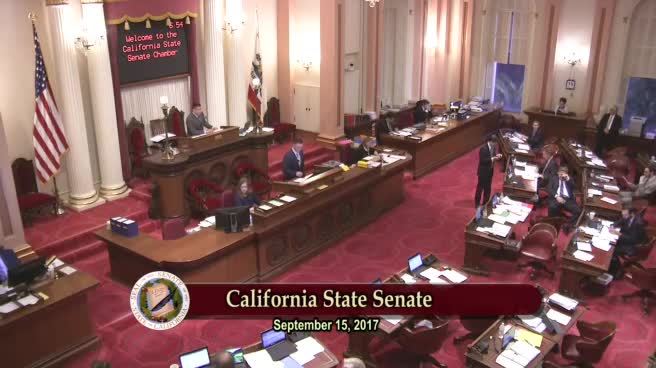 3MIN
Senate Floor
 1H
Senate Standing Committee on Appropriations
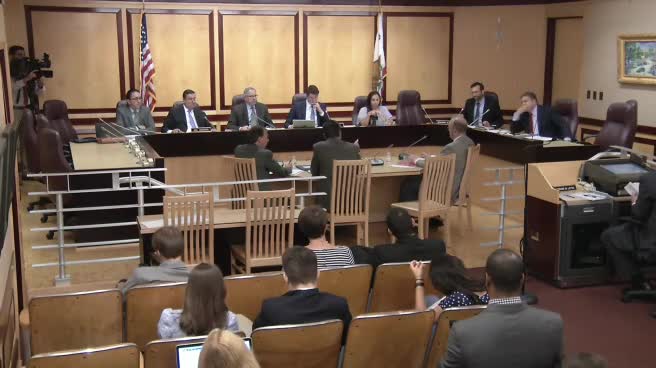 3MIN
Senate Standing Committee on Elections and Constitutional Amendments
 1MIN
Assembly Floor
 1H
Assembly Standing Committee on Appropriations
 6MIN
Assembly Standing Committee on Elections and Redistricting
Bill Author

Bill Co-Author(s):