AB 1029: Comprehensive school safety plans.
- Session Year: 2017-2018
- House: Assembly
- Latest Version Date: 2017-09-13
Existing law provides that each school district and county office of education is responsible for the development of all comprehensive school safety plans for its schools operating kindergarten or any of grades 1 to 12, inclusive. Existing law requires a schoolsite council or a school safety planning committee comprised of specified members to write and develop a comprehensive school safety plan relevant to the needs and resources of a particular school, and exempts a small school district from this requirement if certain conditions are met. Existing law authorizes a school district or county office of education to elect to have the portions of the plan that include tactical responses to criminal incidents to be developed by the administrators of the school district or county office of education in consultation with law enforcement officials.
This bill would require the comprehensive school safety plan to be aligned with the school climate state priority and the local control and accountability plan. The bill would add to the list of members on the school safety planning committee one or more individuals with expertise in the social-emotional health of children and youth, as specified.
Existing law states that the Legislature encourages all comprehensive school safety plans, to the extent that resources are available, to include specified guidelines relating to the roles and responsibilities of various professionals, and encourages the guidelines developed to include specified strategies and prioritize certain services and programs.
This bill would add community schools among the priorities. The bill would require the State Department of Education to post certain information relating to best practices for community school models, restorative justice programs, and certain other programs on its Internet Web site and to provide technical assistance and professional development to educators and administrators.
By imposing new duties on school districts and county offices of education, the bill would impose a state-mandated local program.
The California Constitution requires the state to reimburse local agencies and school districts for certain costs mandated by the state. Statutory provisions establish procedures for making that reimbursement.
This bill would provide that, if the Commission on State Mandates determines that the bill contains costs mandated by the state, reimbursement for those costs shall be made pursuant to the statutory provisions noted above.
Existing law provides that each school district and county office of education is responsible for the development of all comprehensive school safety plans for its schools operating kindergarten or any of grades 1 to 12, inclusive. Existing law requires a schoolsite council or a school safety planning committee comprised of specified members to write and develop a comprehensive school safety plan relevant to the needs and resources of a particular school, and exempts a small school district from this requirement if certain conditions are met. Existing law authorizes a school district or county office of education to elect to have the portions of the plan that include tactical responses to criminal incidents to be developed by the administrators of the school district or county office of education in consultation with law enforcement officials.
This bill would require the comprehensive school safety plan to be aligned with the school climate state priority and the local control and accountability plan. The bill would add to the list of members on the school safety planning committee one member who is a community schools coordinator or restorative justice program practitioner and one mental health professional. The bill would delete the exemption for small school districts and would require the portions of the plan that include tactical responses to criminal incidents to be developed by administrators in consultation with law enforcement officials. or more individuals with expertise in the social-emotional health of children and youth, as specified.
Existing law states that the Legislature encourages all comprehensive school safety plans, to the extent that resources are available, to include specified guidelines relating to the roles and responsibilities of various professionals, and encourages the guidelines developed to include specified strategies and prioritize certain services and programs.
This bill would instead require comprehensive school safety plans to include those guidelines and strategies and would add community schools among the priorities. The bill would require the State Department of Education to post certain information relating to best practices for community school models, restorative justice programs, and certain other programs on its Internet Web site and to provide technical assistance and professional development to educators and administrators.
By imposing new duties on school districts and county offices of education, the bill would impose a state-mandated local program.
The California Constitution requires the state to reimburse local agencies and school districts for certain costs mandated by the state. Statutory provisions establish procedures for making that reimbursement.
This bill would provide that, if the Commission on State Mandates determines that the bill contains costs mandated by the state, reimbursement for those costs shall be made pursuant to the statutory provisions noted above.
Existing law provides that each school district and county office of education is responsible for the development of all comprehensive school safety plans for its schools operating kindergarten or any of grades 1 to 12, inclusive. Existing law requires a schoolsite council or a school safety planning committee comprised of specified members to write and develop a comprehensive school safety plan relevant to the needs and resources of a particular school, and exempts a small school district from this requirement if certain conditions are met. Existing law authorizes a school district or county office of education to elect to have the portions of the plan that include tactical responses to criminal incidents to be developed by the administrators of the school district or county office of education in consultation with law enforcement officials.
This bill would require the comprehensive school safety plan to be aligned with the school climate state priority and the local control and accountability plan. The bill would add to the list of members on the school safety planning committee one member who is a community schools coordinator or restorative justice program practitioner and one mental health professional. The bill would delete the exemption for small school districts and would require the portions of the plan that include tactical responses to criminal incidents to be developed by administrators in consultation with law enforcement officials.
Existing law states that the Legislature encourages all comprehensive school safety plans, to the extent that resources are available, to include specified guidelines relating to the roles and responsibilities of various professionals, and encourages the guidelines developed to include specified strategies and prioritize certain services and programs.
This bill would instead require comprehensive school safety plans to include those guidelines and strategies and would add community schools among the priorities. The bill would require the State Department of Education to post certain information relating to best practices for community school models, restorative justice programs, and certain other programs on its Internet Web site and to provide technical assistance and professional development to educators and administrators.
By imposing new duties on school districts and county offices of education, the bill would impose a state-mandated local program.
The California Constitution requires the state to reimburse local agencies and school districts for certain costs mandated by the state. Statutory provisions establish procedures for making that reimbursement.
This bill would provide that, if the Commission on State Mandates determines that the bill contains costs mandated by the state, reimbursement for those costs shall be made pursuant to the statutory provisions noted above.
(a)Each school district and county office of education is responsible for the overall development of all comprehensive school safety plans for its schools operating kindergarten or any of grades 1 to 12, inclusive. The comprehensive school safety plan shall be aligned with the school climate state priority and the local control and accountability plan.
(b)(1)The schoolsite council established pursuant to former Section 52012, as it existed before July 1, 2005, or Section 52852 shall write and develop a comprehensive school safety plan relevant to the needs and resources of that particular school.
(2)The schoolsite council may delegate this responsibility to a school safety planning committee made up of the following members:
(A)The principal or the principals designee.
(B)One teacher who is a representative of the recognized certificated employee organization.
(C)One parent whose child attends the school.
(D)One classified employee who is a representative of the recognized classified employee organization.
(E)One or more individuals with expertise in the social-emotional health of children and youth, including, but not limited to, restorative justice practitioners, community school coordinators, or mental health professionals. For purposes of this article, community school means a public school that participates in a community-based effort to coordinate and integrate educational, developmental, family, health, and other comprehensive services through community-based organizations and public and private partnerships with one or more community partners for the delivery of community services that may be provided at the schoolsite to the pupils, families, and community members.
(F)Other members, if desired.
(3)The schoolsite council shall consult with a representative from a law enforcement agency in the writing and development of the comprehensive school safety plan.
(4)In the absence of a schoolsite council, the members specified in paragraph (2) shall serve as the school safety planning committee.
(c)Nothing in this article shall limit or take away the authority of school boards as guaranteed under this code.
(d)(1)Subdivision (b) shall not apply to a small school district if the small school district develops a districtwide comprehensive school safety plan that is applicable to each schoolsite.
(2)As used in this article, small school district means a school district that has fewer than 2,501 units of average daily attendance at the beginning of each fiscal year.
(e)(1)When a principal or his or her designee verifies through local law enforcement officials that a report has been filed of the occurrence of a violent crime on the schoolsite of an elementary or secondary school at which he or she is the principal, the principal or the principals designee may send to each pupils parent or legal guardian and each school employee a written notice of the occurrence and general nature of the crime. If the principal or his or her designee chooses to send the written notice, the Legislature encourages the notice be sent no later than the end of business on the second regular work day after the verification. If, at the time of verification, local law enforcement officials determine that notification of the violent crime would hinder an ongoing investigation, the notification authorized by this subdivision shall be made within a reasonable period of time, to be determined by the local law enforcement agency and the school district. For purposes of this section, an act that is considered a violent crime shall meet the definition of Section 67381 and be an act for which a pupil could or would be expelled pursuant to Section 48915.
(2)Nothing in this subdivision shall create any liability in a school district or its employees for complying with paragraph (1).
(f)(1)Notwithstanding subdivision (b), a school district or county office of education may, in consultation with law enforcement officials, elect to not have its schoolsite council develop and write those portions of its comprehensive school safety plan that include tactical responses to criminal incidents that may result in death or serious bodily injury at the schoolsite. The portions of a comprehensive school safety plan that include tactical responses to criminal incidents may be developed by administrators of the school district or county office of education in consultation with law enforcement officials and with a representative of an exclusive bargaining unit of employees of that school district or county office of education, if he or she chooses to participate. The school district or county office of education may elect not to disclose those portions of the comprehensive school safety plan that include tactical responses to criminal incidents.
(2)As used in this article, tactical responses to criminal incidents means steps taken to safeguard pupils and staff, to secure the affected school premises, and to apprehend the criminal perpetrator or perpetrators.
(3)Nothing in this subdivision precludes the governing board of a school district or county office of education from conferring in a closed session with law enforcement officials pursuant to Section 54957 of the Government Code to approve a tactical response plan developed in consultation with those officials pursuant to this subdivision. Any vote to approve the tactical response plan shall be announced in open session following the closed session.
(4)Nothing in this subdivision shall be construed to reduce or eliminate the requirements of Section 32282.
SEC. 2.Section 32282.1 of the Education Code is amended to read:32282.1.(a)As comprehensive school safety plans are reviewed and updated, the Legislature encourages all plans to include clear guidelines for the roles and responsibilities of mental health professionals, community intervention professionals, school counselors, school resource officers, and police officers on school campuses, if the school district uses these people.
(b)The guidelines developed pursuant to subdivision (a) are encouraged to include both of the following:
(1)Primary strategies to create and maintain a positive school climate, promote school safety, and increase pupil achievement, and prioritize mental health and intervention services, community schools, restorative and transformative justice programs, and positive behavior interventions and support.
(2)Consistent with paragraph (2) of subdivision (a) of Section 32282, protocols to address the mental health care of pupils who have witnessed a violent act at any time, including, but not limited to, any of the following:
(A)While on school grounds.
(B)While going to or coming from school.
(C)During a lunch period whether on or off campus.
(D)During, or while going to or coming from, a school-sponsored activity.
SEC. 3.Section 32288.5 is added to the Education Code, to read:32288.5.The department shall post on its Internet Web site, and shall annually update, a list of programs that are recognized as best practices for community school models, restorative justice programs, and other programs that advance social-emotional learning, positive behavior supports, culturally responsive practices, and trauma-informed strategies. The department shall provide technical assistance and professional development relating to these programs and practices to educators and administrators.
SEC. 4.If the Commission on State Mandates determines that this act contains costs mandated by the state, reimbursement to local agencies and school districts for those costs shall be made pursuant to Part 7 (commencing with Section 17500) of Division 4 of Title 2 of the Government Code.
(a)Each school district and county office of education is responsible for the overall development of all comprehensive school safety plans for its schools operating kindergarten or any of grades 1 to 12, inclusive. The comprehensive school safety plan shall be aligned with the school climate state priority and the local control and accountability plan.
(b)(1)The schoolsite council established pursuant to former Section 52012, as it existed before July 1, 2005, or Section 52852 shall write and develop a comprehensive school safety plan relevant to the needs and resources of that particular school.
(2)The schoolsite council may delegate this responsibility to a school safety planning committee made up of the following members:
(A)The principal or the principals designee.
(B)One teacher who is a representative of the recognized certificated employee organization.
(C)One parent whose child attends the school.
(D)One classified employee who is a representative of the recognized classified employee organization.
(E)One community schools coordinator or restorative justice program practitioner. or more individuals with expertise in the social-emotional health of children and youth, including, but not limited to, restorative justice practitioners, community school coordinators, or mental health professionals. For purposes of this article, community school means a public school that participates in a community-based effort to coordinate and integrate educational, developmental, family, health, and other comprehensive services through community-based organizations and public and private partnerships with one or more community partners for the delivery of community services that may be provided at the schoolsite to the pupils, families, and community members.
(F)One mental health professional. (G)(F)Other members, if desired.
(3)The schoolsite council shall consult with a representative from a law enforcement agency in the writing and development of the comprehensive school safety plan.
(4)In the absence of a schoolsite council, the members specified in paragraph (2) shall serve as the school safety planning committee.
(c)Nothing in this article shall limit or take away the authority of school boards as guaranteed under this code.
(d)(1)Subdivision (b) shall not apply to a small school district if the small school district develops a districtwide comprehensive school safety plan that is applicable to each schoolsite.
(2)As used in this article, small school district means a school district that has fewer than 2,501 units of average daily attendance at the beginning of each fiscal year.
(d)(e)(1)When a principal or his or her designee verifies through local law enforcement officials that a report has been filed of the occurrence of a violent crime on the schoolsite of an elementary or secondary school at which he or she is the principal, the principal or the principals designee may send to each pupils parent or legal guardian and each school employee a written notice of the occurrence and general nature of the crime. If the principal or his or her designee chooses to send the written notice, the Legislature encourages the notice be sent no later than the end of business on the second regular work day after the verification. If, at the time of verification, local law enforcement officials determine that notification of the violent crime would hinder an ongoing investigation, the notification authorized by this subdivision shall be made within a reasonable period of time, to be determined by the local law enforcement agency and the school district. For purposes of this section, an act that is considered a violent crime shall meet the definition of Section 67381 and be an act for which a pupil could or would be expelled pursuant to Section 48915.
(2)Nothing in this subdivision shall create any liability in a school district or its employees for complying with paragraph (1).
(e)(f)(1)Notwithstanding subdivision (b), the a school district or county office of education may, in consultation with law enforcement officials, elect to not have its schoolsite council develop and write those portions of its comprehensive school safety plan that include tactical responses to criminal incidents that may result in death or serious bodily injury at the schoolsite. The portions of a comprehensive school safety plan that include tactical responses to criminal incidents shall may be developed by administrators of the school district or county office of education in consultation with law enforcement officials and with a representative of an exclusive bargaining unit of employees of that school district or county office of education, if he or she chooses to participate. The school district or county office of education may elect not to disclose those portions of the comprehensive school safety plan that include tactical responses to criminal incidents.
(2)As used in this article, tactical responses to criminal incidents means steps taken to safeguard pupils and staff, to secure the affected school premises, and to apprehend the criminal perpetrator or perpetrators.
(3)Nothing in this subdivision precludes the governing board of a school district or county office of education from conferring in a closed session with law enforcement officials pursuant to Section 54957 of the Government Code to approve a tactical response plan developed in consultation with those officials pursuant to this subdivision. Any vote to approve the tactical response plan shall be announced in open session following the closed session.
(4)Nothing in this subdivision shall be construed to reduce or eliminate the requirements of Section 32282.
SEC. 2.Section 32282.1 of the Education Code is amended to read:32282.1.(a)The As comprehensive school safety plans shall are reviewed and updated, the Legislature encourages all plans to include clear guidelines for the roles and responsibilities of mental health professionals, community intervention professionals, school counselors, school resource officers, and police officers on school campuses, if the school district uses these people.
(b)The guidelines developed pursuant to subdivision (a) shall are encouraged to include both of the following:
(1)Primary strategies to create and maintain a positive school climate, promote school safety, and increase pupil achievement, and prioritize mental health and intervention services, community schools, restorative and transformative justice programs, and positive behavior interventions and support.
(2)Consistent with paragraph (2) of subdivision (a) of Section 32282, protocols to address the mental health care of pupils who have witnessed a violent act at any time, including, but not limited to, any of the following:
(A)While on school grounds.
(B)While going to or coming from school.
(C)During a lunch period whether on or off campus.
(D)During, or while going to or coming from, a school-sponsored activity.
SEC. 3.Section 32288.5 is added to the Education Code, to read:32288.5.The department shall post on its Internet Web site, and shall annually update, a list of programs that are recognized as best practices for community school models, restorative justice programs, and other programs that advance social-emotional learning, positive behavior supports, culturally responsive practices, and trauma-informed strategies. The department shall provide technical assistance and professional development relating to these programs and practices to educators and administrators.
SEC. 4.If the Commission on State Mandates determines that this act contains costs mandated by the state, reimbursement to local agencies and school districts for those costs shall be made pursuant to Part 7 (commencing with Section 17500) of Division 4 of Title 2 of the Government Code.
(a)Each school district and county office of education is responsible for the overall development of all comprehensive school safety plans for its schools operating kindergarten or any of grades 1 to 12, inclusive. The comprehensive school safety plan shall be aligned with the school climate state priority and the local control and accountability plan.
(b)(1)Except as provided in subdivision (d) with regard to a small school district, the The schoolsite council established pursuant to former Section 52012, as it existed before July 1, 2005, or Section 52852 shall write and develop a comprehensive school safety plan relevant to the needs and resources of that particular school.
(2)The schoolsite council may delegate this responsibility to a school safety planning committee made up of the following members:
(A)The principal or the principals designee.
(B)One teacher who is a representative of the recognized certificated employee organization.
(C)One parent whose child attends the school.
(D)One classified employee who is a representative of the recognized classified employee organization.
(E)One community schools coordinator or restorative justice program practitioner. For purposes of this article, community school means a public school that participates in a community-based effort to coordinate and integrate educational, developmental, family, health, and other comprehensive services through community-based organizations and public and private partnerships with one or more community partners for the delivery of community services that may be provided at the schoolsite to the pupils, families, and community members.
(F)One mental health professional.
(E)(G)Other members, if desired.
(3)The schoolsite council shall consult with a representative from a law enforcement agency in the writing and development of the comprehensive school safety plan.
(4)In the absence of a schoolsite council, the members specified in paragraph (2) shall serve as the school safety planning committee.
(c)Nothing in this article shall limit or take away the authority of school boards as guaranteed under this code.
(d)(1)Subdivision (b) shall not apply to a small school district, as defined in paragraph (2), if the small school district develops a districtwide comprehensive school safety plan that is applicable to each schoolsite.(2)As used in this article, small school district means a school district that has fewer than 2,501 units of average daily attendance at the beginning of each fiscal year.(e)(d)(1)When a principal or his or her designee verifies through local law enforcement officials that a report has been filed of the occurrence of a violent crime on the schoolsite of an elementary or secondary school at which he or she is the principal, the principal or the principals designee may send to each pupils parent or legal guardian and each school employee a written notice of the occurrence and general nature of the crime. If the principal or his or her designee chooses to send the written notice, the Legislature encourages the notice be sent no later than the end of business on the second regular work day after the verification. If, at the time of verification, local law enforcement officials determine that notification of the violent crime would hinder an ongoing investigation, the notification authorized by this subdivision shall be made within a reasonable period of time, to be determined by the local law enforcement agency and the school district. For purposes of this section, an act that is considered a violent crime shall meet the definition of Section 67381 and be an act for which a pupil could or would be expelled pursuant to Section 48915.
(2)Nothing in this subdivision shall create any liability in a school district or its employees for complying with paragraph (1).
(f)(e)(1)Notwithstanding subdivision (b), a school district or county office of education may, in consultation with law enforcement officials, elect to not have its schoolsite council develop and write those portions of its comprehensive school safety plan that include tactical responses to criminal incidents that may result in death or serious bodily injury at the schoolsite. The the portions of a comprehensive school safety plan that include tactical responses to criminal incidents may shall be developed by administrators of the school district or county office of education in consultation with law enforcement officials and with a representative of an exclusive bargaining unit of employees of that school district or county office of education, if he or she chooses to participate. The school district or county office of education may elect not to disclose those portions of the comprehensive school safety plan that include tactical responses to criminal incidents.
(2)As used in this article, tactical responses to criminal incidents means steps taken to safeguard pupils and staff, to secure the affected school premises, and to apprehend the criminal perpetrator or perpetrators.
(3)Nothing in this subdivision precludes the governing board of a school district or county office of education from conferring in a closed session with law enforcement officials pursuant to Section 54957 of the Government Code to approve a tactical response plan developed in consultation with those officials pursuant to this subdivision. Any vote to approve the tactical response plan shall be announced in open session following the closed session.
(4)Nothing in this subdivision shall be construed to reduce or eliminate the requirements of Section 32282.
SEC. 2.Section 32282.1 of the Education Code is amended to read:32282.1.(a)As The comprehensive school safety plans are reviewed and updated, the Legislature encourages all plans, to the extent that resources are available, to shall include clear guidelines for the roles and responsibilities of mental health professionals, community intervention professionals, school counselors, school resource officers, and police officers on school campuses, if the school district uses these people.
(b)The guidelines developed pursuant to subdivision (a) are encouraged to shall include both of the following:
(1)Primary strategies to create and maintain a positive school climate, promote school safety, and increase pupil achievement, and prioritize mental health and intervention services, community schools, restorative and transformative justice programs, and positive behavior interventions and support.
(2)Consistent with paragraph (2) of subdivision (a) of Section 32282, protocols to address the mental health care of pupils who have witnessed a violent act at any time, including, but not limited to, any of the following:
(A)While on school grounds.
(B)While going to or coming from school.
(C)During a lunch period whether on or off campus.
(D)During, or while going to or coming from, a school-sponsored activity.
SEC. 3.Section 32288.5 is added to the Education Code, to read:32288.5.The department shall post on its Internet Web site, and shall annually update, a list of programs that are recognized as best practices for community school models, restorative justice programs, and other programs that advance social-emotional learning, positive behavior supports, culturally responsive practices, and trauma-informed strategies. The department shall provide technical assistance and professional development relating to these programs and practices to educators and administrators.
SEC. 4.If the Commission on State Mandates determines that this act contains costs mandated by the state, reimbursement to local agencies and school districts for those costs shall be made pursuant to Part 7 (commencing with Section 17500) of Division 4 of Title 2 of the Government Code.
|
Date
|
Status
|
|---|---|
| Jan 12, 2018 | Stricken from file. |
| Jan 3, 2018 | Consideration of Governor's veto pending. |
| Oct 15, 2017 | Vetoed by Governor. |
| Sep 20, 2017 | Enrolled and presented to the Governor at 4:30 p.m. |
| Sep 11, 2017 | In Assembly. Ordered to Engrossing and Enrolling. |
| Sep 11, 2017 | Read third time. Passed. Ordered to the Assembly. |
| Sep 5, 2017 | Read second time. Ordered to third reading. |
| Sep 1, 2017 | From committee: Do pass. (Ayes 7. Noes 0.) (September 1). |
| Jul 10, 2017 | In committee: Referred to APPR. suspense file. |
| Jun 28, 2017 | From committee: Do pass and re-refer to Com. on APPR. (Ayes 7. Noes 0.) (June 28). Re-referred to Com. on APPR. |
| Jun 14, 2017 | Referred to Com. on ED. |
| Jun 1, 2017 | In Senate. Read first time. To Com. on RLS. for assignment. |
| May 31, 2017 | Read third time. Passed. Ordered to the Senate. (Ayes 75. Noes 1. Page 1879.) |
| May 26, 2017 | From committee: Do pass. (Ayes 17. Noes 0.) (May 26). |
| May 3, 2017 | In committee: Set, first hearing. Referred to APPR. suspense file. |
| Apr 19, 2017 | Re-referred to Com. on APPR. |
| Apr 18, 2017 | Read second time and amended. |
| Apr 17, 2017 | From committee: Amend, and do pass as amended and re-refer to Com. on APPR. (Ayes 6. Noes 0.) (April 5). |
| Mar 6, 2017 | Referred to Com. on ED. |
| Feb 17, 2017 | From printer. May be heard in committee March 19. |
| Feb 16, 2017 | Read first time. To print. |
|
Date
|
Description
|
Location
|
Votes
|
|
|---|---|---|---|---|
| Sep 11, 2017 | Assembly 3rd Reading AB1029 Weber By Leyva | Senate Floor |
Passed |
|
| Sep 1, 2017 | Do pass | Senate Standing Committee on Appropriations |
Passed |
|
| Jul 10, 2017 | Placed on suspense file | Senate Standing Committee on Appropriations |
Passed |
|
| Jun 28, 2017 | Do pass, but first be re-referred to the Committee on [Appropriations] | Senate Standing Committee on Education |
Passed |
|
| May 31, 2017 | AB 1029 WEBER Assembly Third Reading | Assembly Floor |
Passed |
|
| May 26, 2017 | Do pass. | Assembly Standing Committee on Appropriations |
Passed |
|
| Apr 5, 2017 | Do pass as amended and be re-referred to the Committee on [Appropriations] | Assembly Standing Committee on Education |
Passed |
This list shows positions taken on this bill by organizations on the date displayed, which is linked to the original source.
Positions by individuals are not included.
|
Organization
|
Position
|
Date
|
|---|---|---|
| American Civil Liberties Union of California | ** Support | Sep 4, 2017 |
| California Association Of Joint Powers Authorities | ** Support | Sep 4, 2017 |
| California Association of School Social Workers | ** Support | Sep 4, 2017 |
| California Catholic Conference, Inc. | ** Support | Sep 4, 2017 |
| California Federation Of Teachers | ** Support | Sep 4, 2017 |
| California Labor Federation | ** Support | Sep 4, 2017 |
| Coalition for Restorative Schools | ** Support | Sep 4, 2017 |
| Courage Campaign | ** Support | Sep 4, 2017 |
| Fight Crime: Invest in Kids | ** Support | Sep 4, 2017 |
| Friends Committee on Legislation in California | * Support | Apr 5, 2017 |
| Partnership for Children and Youth | ** Support | Sep 4, 2017 |
| Public Counsel | ** Support | Sep 4, 2017 |
| Small School Districts Association | * Support | Apr 5, 2017 |
GOVERNOR'S VETO
GV Bill Id:AB 1029
Author:(Weber)
As Enrolled Ver:September 13, 2017
2/3 vote
Committee | Votes | Ayes | Noes |
Education | 6-0 | O'Donnell, Chávez, Gloria, Kiley, McCarty, Weber | |
Appropriations | 17-0 | Gonzalez Fletcher, Bigelow, Bloom, Bocanegra, Bonta, Brough, Calderon, McCarty, Quirk, Fong, Friedman, Gallagher, Eduardo Garcia, Gray, Muratsuchi, Obernolte, Reyes |
|
ASSEMBLY: | 75-1 | (May 31, 2017) | SENATE: | 40-0 | (September 11, 2017) |
SUMMARY: Requires changes to the composition of the comprehensive school safety plan and the membership of the safety committee, and requires the California Department of Education (CDE) to share best practices for programs that advance social-emotional learning, and provide technical assistance to local education agencies (LEAs) on these programs and practices. Specifically, this bill:
- Requires the comprehensive school safety plan to be aligned with the school climate state priority in the Local Control and Accountability Plan.
- Requires school safety planning committees, responsible for completing the comprehensive school safety plan, to include one or more individuals with expertise in the social-emotional health of children and youth, including but not limited to, restorative justice practitioners, community school coordinators, or mental health professionals.
- Defines community school as a public school that participates in a community-based effort to coordinate and integrate educational developmental, family, health, and other comprehensive services through community-based organizations and public and private partnerships with one or more community partners for the delivery of community services that may be provided at the schoolsite to the pupils, families, and community members.
- Requires the CDE to post on its website, and update annually, a list of programs that are recognized as best practices for community school models, restorative justice programs, and other programs that advance social-emotional learning, positive behavior supports, culturally responsive practices, and trauma-informed strategies.
- Requires CDE to provide technical assistance and professional development relating to community school models, restorative justice programs, and other programs that advance social-emotional learning, positive behavior supports, culturally responsive practices, and trauma-informed strategies to educators and administrators.
FISCAL EFFECT: According to the Senate Appropriations Committee:
- Unknown state reimbursable mandated costs, potentially in the low to mid hundreds of thousands of dollars in Proposition 98 General Fund, for the bill’s requirement for LEAs to modify and expand their school safety plans, as specified.
- CDE indicates one-time General Fund costs of approximately $121,000 and ongoing General Fund costs of $73,000 to comply with the bill’s provisions. Workload activities include technical assistance, professional development, research, and the posting and maintenance of new website material.
COMMENTS:
Arguments in support. Supporters note that existing law requires the school safety plan to include various components including strategies for reacting to natural disasters, school violence or other events that would jeopardize the safety of pupils, parents and school employees. Adding individuals with expertise in the social-emotional health of children and youth to the school safety committee would assist schools in developing proactive strategies to curtail or eliminate acts of school violence before they occur by addressing the social-emotional needs of students and incorporating discipline policies that are consistent, fair and equitable.
Supporters also note that requiring CDE to post models of best practices, educators and administrators will have access to resources on practices that have been shown to reduce violence and criminal activities on campuses. The provision of technical assistance and professional development in these practices will assist educators with effective implementation of strategies that reduce school violence, truancy, dropout rates, and chronic absenteeism.
No opposition on file.
This bill requires a school safety planning committee to include at least one person who is an expert in the social and emotional health of children and youth.
While I agree that this is a good idea, there is nothing in current law that prevents local schools from including a wide range of expertise on their school safety planning committee.
Analysis Prepared by: Debbie Look / ED. / (916) 319-2087 FN: 0002490
Office of Senate Floor Analyses (916) 651-1520 Fax: (916) 327-4478 | AB |
THIRD READING
Bill No: AB 1029
:
SENATE EDUCATION COMMITTEE: 7-0, 6/28/17
AYES: Allen, Wilk, Galgiani, Leyva, Mendoza, Pan, Vidak
SENATE APPROPRIATIONS COMMITTEE: 7-0, 9/1/17
AYES: Lara, Bates, Beall, Bradford, Hill, Nielsen, Wiener
ASSEMBLY FLOOR: 75-1, 5/31/17 - See last page for vote
SOURCE: California Federation of Teachers
DIGEST:
This bill requires changes to the composition of the comprehensive school safety plan and the membership of the safety committee, and requires the California Department of Education (CDE) to share best practices for social-emotional learning programs and practices, and to provide technical assistance to local education agencies.
Existing law:
1) Expresses the intent of the Legislature that all California public schools operated by school districts develop a comprehensive school safety plan, in consultation with local law enforcement agencies, community leaders, parents, pupils, teachers, administrators, and others interested in the prevention of campus crime and violence. (Education Code § 32280)
2) Requires each school district and county office of education to be responsible for the overall development of all comprehensive school safety plans for its schools operating kindergarten or any grades 1 to 12.
(EC § 32281)
3) Assigns responsibility for the development of a comprehensive school safety plan to the school site council and authorizes the council to delegate this responsibility to a school safety planning committee made up of the following members: principal or designee, one teacher, one parent with a child at the school, one classified employee, and other members, if desired. (EC § 32281)
4) Authorizes small school districts, with fewer than 2,501 units of average daily attendance, to develop a districtwide comprehensive school safety plan that is applicable to each schoolsite. (EC § 32281)
5) Encourages all school safety plans to include clear guidelines for the roles and responsibilities of mental health professionals, community intervention professionals, school counselors, school resource officers, and police officers on school campuses, if the school district uses these people, and encourages those guidelines to include primary strategies to create and maintain a positive school climate, promote school safety, and increase pupil achievement, and prioritize mental health and intervention services, restorative and transformative justice programs, and positive behavior interventions and support, as well as to address the mental health care of pupils who have witnessed a violent act. (EC 32282.1)
6) Requires each school to report on the status of its school safety plan each July and to include key elements in the annual school accountability report card (SARC). (EC § 32286)
7) Authorizes the Superintendent of Public Instruction (SPI) to notify the school district or the county office of education regarding a willful failure of a school to comply with the annual report of the school safety plan and to make an assessment of not more than two thousand dollars against that school district or county office of education; and authorizing this to be deducted from future apportionments. (EC § 32287).
8) Requires each school to forward its comprehensive school safety plan to the school district or county office of education for approval, once it has been presented at a public meeting at the schoolsite by the schoolsite council or school safety planning committee. (EC 32288)
9) Requires local educational agencies (LEAs) to adopt and annually revise local control and accountability plans (LCAPs), establishing annual goals and identifying specific actions, in the following eight state priority areas, including school climate, as measured by:
a) Pupil suspension rates.
b) Pupil expulsion rates.
c) Other local measures, including surveys of pupils, parents, and teachers on the sense of safety and school connectedness.
(EC § 52060 et seq.)
This bill requires changes to the composition of the comprehensive school safety plan and the membership of the safety committee, and requires the CDE to share best practices for social-emotional learning programs and practices and to provide technical assistance to LEAs. Specifically, this bill:
1) Requires a comprehensive school safety plan to be aligned with the school climate state priority and the school’s local control and accountability plan.
2) Adds an expert in the social-emotional health of children and youth, which includes, but not limited to, restorative justice practitioners, community school coordinators, or mental health professionals. to membership of a school safety planning committee, which a schoolsite council may delegate the responsibility of completing the comprehensive school safety plan.
3) Requires CDE to post on its website, and update annually, a list of programs that are recognized as best practices for community school models, restorative justice programs, and other programs that advance social-emotional learning, positive behavior supports, culturally responsive practices, and trauma-informed strategies; and requires the CDE to provide technical assistance and professional development relating to these programs and practices to educators and administrators.
4) Adds community schools to the list of things that a comprehensive school safety plan is encouraged to prioritize in its guidelines on the roles and responsibilities of mental health professionals, community intervention professionals, school counselors, school resource officers, and police officers on school campuses, if a school district uses these people.
5) Defines community school as a public school that participates in a community-based effort to coordinate and integrate educational, developmental, family, health, and other comprehensive services through community-based organizations and public and private partnerships with one or more community partners for the delivery of community services that may be provided at the schoolsite to the pupils, families, and community members.
Comments
- Need for the bill. According to the author, “School safety plans should address both prevention of and reactions to criminal activity and violence on school campuses. By adding a restorative justice practitioner, community schools coordinator and/or mental health professional to the school safety planning committee, this increases the diversity of perspectives on the committee and helps to ensure that school safety plans not only address the outcomes of violence but also address strategies for preventing such behavior.
By requiring the CDE to post on their website models of best practices in restorative justice, community schools and other model programs that advance social-emotional learning, positive behavior supports, culturally responsive practices and trauma-informed strategies, this provides educators and administrators with resources for selecting model practices that have been shown to reduce violence and criminal activities on campuses. In addition, by requiring the CDE to provide technical assistance and professional development in these practices, it assists educators and administrators with tools for the effective implementation of strategies that reduce school violence, truancy, dropout rates and chronic absenteeism.”
2) Comprehensive school safety plans. Existing law expresses the intent of the Legislature that all California public schools operated by school districts develop a comprehensive school safety plan, in consultation with local law enforcement agencies, community leaders, parents, pupils, teachers, administrators, and others interested in the prevention of campus crime and violence. State law requires each school district and county office of education to be responsible for the overall development of all comprehensive school safety plans for K-12 schools and authorizes small school districts, with fewer than 2,501 units of average daily attendance, to develop a districtwide comprehensive school safety plan that is applicable to each schoolsite. School officials are also authorized to consult with law enforcement in the development of those portions of the plan that include tactical responses to criminal incidents that may result in death or serious bodily injury at the schoolsite and to elect not to disclose these portions of the plan. School districts must report on the status of its school safety plan each July and to include key elements in the annual SARC.
Each school must forward its comprehensive school safety plan to the school district or county office of education for approval, once it has been presented at a public meeting at the schoolsite by the schoolsite council or school safety planning committee. The SPI is authorized to notify the school district or the county office of education regarding a willful failure of a school to comply with the annual report of the school safety plan and to make an assessment of up to $2,000 against that school district or county office of education; and this amount may be deducted from future apportionments.
3) LCAPs. LCAPs are an integral part of the local control funding formula (LCFF) that was enacted for the 2013-14 school year. The LCFF establishes base, supplemental, and concentration grants in place of the myriad of previously existing K-12 funding streams, and an LCAP is a three-year plan that describes an LEA’s goals for all pupils and specific subgroups of pupils, and the specific actions it intends to take to achieve those goals, for each of eight state priorities plus any local priorities established by the LEA. The school climate state priority is measured by pupil suspension rates, pupil expulsion rates, and other local measures, including surveys of pupils, parents, and teachers on the sense of safety and school connectedness. Aligning a school safety plan to the LCAP, including the school climate state priority, provides synthesis across these important documents as they relate to encouraging the prevention of the need for, and positive outcomes from, student discipline.
4) Community schools. According to the Coalition for Community Schools, “a community school is both a place and a set of partnerships between the school and other community resources. Its integrated focus on academics, health and social services, youth and community development and community engagement leads to improved student learning, stronger families, and healthier communities. Community schools offer a personalized curriculum that emphasizes real-world learning and community problem-solving. Schools become centers of the community and are open to everyone – all day, every day, evenings and weekends.
“Using public schools as hubs, community schools bring together many partners to offer a range of supports and opportunities to children, youth, families and communities. Partners work to achieve these results: Children are ready to enter school; students attend school consistently; students are actively involved in learning and their community; families are increasingly involved with their children's education; schools are engaged with families and communities; students succeed academically; students are healthy - physically, socially, and emotionally; students live and learn in a safe, supportive, and stable environment and communities are desirable places to live.”
Related/Prior Legislation
AB 1014 (Thurmond, Chapter 397, Statutes of 2016) and SB 527 (Liu, Chapter 533, Statutes of 2016) of the 2015-16 Session established a grant program to implement the Proposition 47 (2016) requirement to direct 25 percent of the funds to K-12 schools to reduce truancy and support students who are at risk of dropping out of school or are victims of crime.
AB 58 (Rodriguez, 2015-16 Regular Session) would have made changes to school safety plans, including requiring a charter petition to include a school safety plan; specifying that “tactical responses to criminal incidents” include procedures related to individuals with guns on school campuses; and requiring principals and superintendent of school districts to keep copies, and make available, the most recent comprehensive school safety plan. AB 58 was held in Senate Appropriations Committee.
AB 2519 (Calderon, 2015-16 Regular Session) would have expanded required components of the comprehensive school safety plan to include any other strategies aimed at the prevention of, response to, and education about, potential incidents involving crime, violence, or medical emergency on the school campus; expanded the scope of the safety plan to apply to activities before and after school; and added a coach, if one exists at a school, to the list of required members of a school safety planning committee. AB 2519 was held in Senate Appropriations Committee.
AB 2698 (Weber, 2015-16 Regular Session) would have required high-need schools to complete a school climate assessment and to incorporate strategies to address issues raised through the LCAP process. AB 2698 was held in Assembly Appropriations Committee.
AB 2489 (McCarty, 2015-16 Regular Session) would have required the CDE to evaluate school districts' implementation of restorative justice practices, and either develop standard models or recommendations for effective implementation. AB 2489 was held in Assembly Appropriations Committee.
AB 1271 (Bonta, Chapter 794, Statutes of 2014) encouraged the guidelines in a school safety plan for the roles and responsibilities of mental health professionals, community intervention professional, school counselors, school resource officers, and police officers on school campuses to include protocols to address the mental health care of pupils who have witnessed a violent act at any time, including, but not limited to, any of the following: while on school grounds; while going to or coming from school; during a lunch period whether on or off campus; and, during, or while going to or coming from, a school-sponsored activity.
AB 549 (Jones-Sawyer, Chapter 422, Statutes of 2013) encouraged the school safety plan, as it is updated, to include guidelines on the roles and responsibilities of mental health and community intervention professionals, school counselors, school resource officers and police officers.
AB 680 (Block, Chapter 438, Statutes of 2011) authorized a school district or county office of education to develop portions of the comprehensive school safety plans that include tactical responses to criminal incidents, outside of the existing process involving the schoolsite council, and allowed districts to choose not to disclose those portions of the plan that includes tactical responses to criminal incidents.
FISCAL EFFECT: Appropriation: No Fiscal Com.: Yes Local: Yes
According to the Senate Appropriations Committee, unknown state reimbursable mandated costs, potentially in the low to mid hundreds of thousands of dollars in Proposition 98 General Fund, for the bill’s requirement for LEAs to modify and expand their school safety plans, as specified, and CDE indicates one-time General Fund costs of approximately $121,000 and ongoing General Fund costs of $73,000 to comply with the bill’s provisions. Workload activities include technical assistance, professional development, research, and the posting and maintenance of new website material.
California Federation of Teachers (source)
American Civil Liberties Union of California
California Association of Joint Powers Authorities
California Association of School Social Workers
California Catholic Conference, Inc.
California Labor Federation
Coalition for Restorative Schools
Courage Campaign
Fight Crime: Invest in Kids
Partnership for Children and Youth
Public Counsel
None received
ASSEMBLY FLOOR: 75-1, 5/31/17
AYES: Acosta, Aguiar-Curry, Arambula, Baker, Berman, Bigelow, Bloom, Bocanegra, Bonta, Brough, Burke, Caballero, Calderon, Cervantes, Chau, Chávez, Chen, Chiu, Chu, Cooley, Cooper, Cunningham, Dababneh, Dahle, Daly, Flora, Fong, Frazier, Friedman, Cristina Garcia, Eduardo Garcia, Gipson, Gloria, Gomez, Gonzalez Fletcher, Gray, Grayson, Harper, Holden, Irwin, Jones-Sawyer, Kalra, Kiley, Lackey, Levine, Limón, Low, Maienschein, Mathis, Mayes, McCarty, Medina, Mullin, Muratsuchi, Nazarian, Obernolte, O'Donnell, Patterson, Quirk, Quirk-Silva, Reyes, Ridley-Thomas, Rodriguez, Rubio, Salas, Santiago, Steinorth, Mark Stone, Thurmond, Ting, Voepel, Waldron, Weber, Wood, Rendon
NOES: Travis Allen
NO VOTE RECORDED: Choi, Eggman, Gallagher, Melendez
9/4/17 12:19:21
SENATE COMMITTEE ON
Senator Ricardo Lara, Chair
2017 - 2018 Regular Session
AB 1029 (Weber) - Comprehensive school safety plans
Version: | Policy Vote: |
Urgency: | Mandate: |
Hearing Date: | Consultant: |
This bill meets the criteria for referral to the Suspense File.
Bill Summary:
This bill requires changes to the composition of the comprehensive school safety plan and the membership of the safety committee, and also requires the California Department of Education (CDE) to share best practices for social-emotional learning programs and practices, and provide technical assistance to local education agencies (LEAs).
Fiscal Impact:
- Unknown state reimbursable mandated costs, potentially in the low to mid hundreds of thousands of dollars in Proposition 98 General Fund, for the bill’s requirement for LEAs to modify and expand their school safety plans, as specified.
- CDE indicates one-time General Fund costs of approximately $121,000 and ongoing General Fund costs of $73,000 to comply with the bill’s provisions. Workload activities include technical assistance, professional development, research, and the posting and maintenance of new website material.
Background:
Existing law expresses the intent of the Legislature that all California public schools operated by school districts develop a comprehensive school safety plan, in consultation with local law enforcement agencies, community leaders, parents, pupils, teachers, administrators, and others interested in the prevention of campus crime and violence.
Existing law requires each LEA to be responsible for the overall development of all comprehensive school safety plans for its schools operating kindergarten or any grades 1 to 12, and assigns responsibility for the development of a comprehensive school safety plan to the school site council. Further, it authorizes the council to delegate this responsibility to a school safety planning committee made up of the following members: principal or designee, one teacher, one parent with a child at the school, one classified employee, and other members, if desired.
Existing law encourages all school safety plans to include clear guidelines for the roles and responsibilities of mental health professionals, community intervention professionals, school counselors, school resource officers, and police officers on school campuses, if the school district uses these people, and encourages those guidelines to include primary strategies to create and maintain a positive school climate, promote school safety, and increase pupil achievement, and prioritize mental health and intervention services, restorative and transformative justice programs, and positive behavior interventions and support, as well as to address the mental health care of pupils who have witnessed a violent act.
Proposed Law:
This bill requires changes to the composition of the comprehensive school safety plan and the membership of the safety committee, and requires the California Department of Education (CDE) to share best practices for social-emotional learning programs and practices and to provide technical assistance to LEAs.
Specifically, t
This bill requires a comprehensive school safety plan to be aligned with the school climate state priority and the school’s local control and accountability plan. It also adds an expert in the social-emotional health of children and youth, which includes, but not limited to, restorative justice practitioners, community school coordinators, or mental health professionals.
Further, this bill requires the CDE to post on its website, and update annually, a list of programs that are recognized as best practices for community school models, restorative justice programs, and other programs that advance social-emotional learning, positive behavior supports, culturally responsive practices, and trauma-informed strategies; and requires CDE to provide technical assistance and professional development relating to these programs and practices to educators and administrators.
This bill also adds community schools to the list of things that a comprehensive school safety plan is encouraged to prioritize in its guidelines on the roles and responsibilities of mental health professionals, community intervention professionals, school counselors, school resource officers, and police officers on school campuses, if a school district uses these people. It defines community school as a public school that participates in a community-based effort to coordinate and integrate educational, developmental, family, health, and other comprehensive services through community-based organizations and public and private partnerships with one or more community partners for the delivery of community services that may be provided at the schoolsite to the pupils, families, and community members.
Related Legislation:
AB 1014 (Thurmond, Chapter 397, Statutes of 2016) and SB 527 (Liu, Chapter 533, Statutes of 2016) established a grant program to implement the Proposition 47 (2016) requirement to direct 25 percent of the funds to K-12 schools to reduce truancy and support students who are at risk of dropping out of school or are victims of crime.
AB 1271 (Bonta, Chapter 794, Statutes of 2014) encouraged the guidelines in a school safety plan for the roles and responsibilities of mental health professionals, community intervention professional, school counselors, school resource officers, and police officers on school campuses to include protocols to address the mental health care of pupils who have witnessed a violent act at any time.
-- END --
SENATE COMMITTEE ON EDUCATION
Senator Benjamin Allen, Chair
2017 - 2018 Regular
Bill No: Hearing Date: June 28, 2017
Author: | Weber | ||
Version: |
| ||
Urgency: | Fiscal: | ||
Consultant: | |||
Subject:
SUMMARY
This bill requires changes to the composition of the comprehensive school safety plan and the membership of the safety committee, and requires the California Department of Education to share best practices for social-emotional learning programs and practices, and to provide technical assistance to local education agencies.
BACKGROUND
Existing law:
1) Expresses the intent of the Legislature that all California public schools operated by school districts develop a comprehensive school safety plan, in consultation with local law enforcement agencies, community leaders, parents, pupils, teachers, administrators, and others interested in the prevention of campus crime and violence. (Education Code § 32280)
2) Requires each school district and county office of education to be responsible for the overall development of all comprehensive school safety plans for its schools operating kindergarten or any grades 1 to 12. (EC § 32281)
3) Assigns responsibility for the development of a comprehensive school safety plan to the school site council and authorizes the council to delegate this responsibility to a school safety planning committee made up of the following members: principal or designee, one teacher, one parent with a child at the school, one classified employee, and other members, if desired. (EC § 32281)
4) Authorizes small school districts, with fewer than 2,501 units of average daily attendance, to develop a districtwide comprehensive school safety plan that is applicable to each schoolsite. (EC § 32281)
5) Encourages all school safety plans to include clear guidelines for the roles and responsibilities of mental health professionals, community intervention professionals, school counselors, school resource officers, and police officers on school campuses, if the school district uses these people, and encourages those guidelines to include primary strategies to create and maintain a positive school climate, promote school safety, and increase pupil achievement, and prioritize mental health and intervention services, restorative and transformative justice programs, and positive behavior interventions and support, as well as to address the mental health care of pupils who have witnessed a violent act. (EC 32282.1)
6) Requires each school to report on the status of its school safety plan each July and to include key elements in the annual school accountability report card (SARC). (EC § 32286)
7) Authorizes the Superintendent of Public Instruction (SPI) to notify the school district or the county office of education regarding a willful failure of a school to comply with the annual report of the school safety plan and to make an assessment of not more than two thousand dollars against that school district or county office of education; and authorizing this to be deducted from future apportionments. (EC § 32287).
8) Requires each school to forward its comprehensive school safety plan to the school district or county office of education for approval, once it has been presented at a public meeting at the schoolsite by the schoolsite council or school safety planning committee. (EC 32288)
9) Existing law requires local educational agencies (LEAs) to adopt and annually revise local control and accountability plans (LCAPs), establishing annual goals and identifying specific actions, in the following eight state priority areas, including school climate, as measured by:
a) Pupil suspension rates.
b) Pupil expulsion rates.
c) Other local measures, including surveys of pupils, parents, and teachers on the sense of safety and school connectedness. (EC § 52060 et seq.)
ANALYSIS
This bill requires changes to the composition of the comprehensive school safety plan and the membership of the safety committee, and requires the California Department of Education (CDE) to share best practices for social-emotional learning programs and practices and to provide technical assistance to LEAs.
Specifically, this bill:
1) Requires a comprehensive school safety plan to be aligned with the school climate state priority and the school’s local control and accountability plan.
2) Adds an expert in the social-emotional health of children and youth, which includes, but not limited to, restorative justice practitioners, community school coordinators, or mental health professionals. to membership of a school safety planning committee, which a schoolsite council may delegate the responsibility of completing the comprehensive school safety plan.
3) Requires CDE to post on its website, and update annually, a list of programs that are recognized as best practices for community school models, restorative justice programs, and other programs that advance social-emotional learning, positive behavior supports, culturally responsive practices, and trauma-informed strategies; and requires California Department of Education (CDE) to provide technical assistance and professional development relating to these programs and practices to educators and administrators.
4) Adds community schools to the list of things that a comprehensive school safety plan is encouraged to prioritize in its guidelines on the roles and responsibilities of mental health professionals, community intervention professionals, school counselors, school resource officers, and police officers on school campuses, if a school district uses these people.
5) Defines community school as a public school that participates in a community-based effort to coordinate and integrate educational, developmental, family, health, and other comprehensive services through community-based organizations and public and private partnerships with one or more community partners for the delivery of community services that may be provided at the schoolsite to the pupils, families, and community members.
STAFF COMMENTS
- Need for the bill. According to the author, “School safety plans should address both prevention of and reactions to criminal activity and violence on school campuses. By adding a restorative justice practitioner, community schools coordinator and/or mental health professional to the school safety planning committee, this increases the diversity of perspectives on the committee and helps to ensure that school safety plans not only address the outcomes of violence but also address strategies for preventing such behavior.
By requiring the CDE to post on their website models of best practices in restorative justice, community schools and other model programs that advance social-emotional learning, positive behavior supports, culturally responsive practices and trauma-informed strategies, this provides educators and administrators with resources for selecting model practices that have been shown to reduce violence and criminal activities on campuses. In addition, by requiring the CDE to provide technical assistance and professional development in these practices, it assists educators and administrators with tools for the effective implementation of strategies that reduce school violence, truancy, dropout rates and chronic absenteeism.”
2) Comprehensive school safety plans. Existing law expresses the intent of the Legislature that all California public schools operated by school districts develop a comprehensive school safety plan, in consultation with local law enforcement agencies, community leaders, parents, pupils, teachers, administrators, and others interested in the prevention of campus crime and violence. State law requires each school district and county office of education to be responsible for the overall development of all comprehensive school safety plans for K-12 schools and authorizes small school districts, with fewer than 2,501 units of average daily attendance, to develop a districtwide comprehensive school safety plan that is applicable to each schoolsite. School officials are also authorized to consult with law enforcement in the development of those portions of the plan that include tactical responses to criminal incidents that may result in death or serious bodily injury at the schoolsite and to elect not to disclose these portions of the plan. School districts must report on the status of its school safety plan each July and to include key elements in the annual school accountability report card (SARC).
Each school must forward its comprehensive school safety plan to the school district or county office of education for approval, once it has been presented at a public meeting at the schoolsite by the schoolsite council or school safety planning committee. The Superintendent of Public Instruction (SPI) is authorized to notify the school district or the county office of education regarding a willful failure of a school to comply with the annual report of the school safety plan and to make an assessment of up to $2,000 against that school district or county office of education; and this amount may be deducted from future apportionments.
3) Local control and accountability plans (LCAPs). LCAPs are an integral part of the local control funding formula (LCFF) that was enacted for the 2013-14 school year. The LCFF establishes base, supplemental, and concentration grants in place of the myriad of previously existing K–12 funding streams, and an LCAP is a three-year plan that describes a local educational agencies (LEAs) goals for all pupils and specific subgroups of pupils, and the specific actions it intends to take to achieve those goals, for each of eight state priorities plus any local priorities established by the LEA. The school climate state priority is measured by pupil suspension rates, pupil expulsion rates, and other local measures, including surveys of pupils, parents, and teachers on the sense of safety and school connectedness. Aligning a school safety plan to the LCAP, including the school climate state priority, provides synthesis across these important documents as they relate to encouraging the prevention of the need for, and positive outcomes from, student discipline.
4) Community schools. According to the Coalition for Community Schools, “a community school is both a place and a set of partnerships between the school and other community resources. Its integrated focus on academics, health and social services, youth and community development and community engagement leads to improved student learning, stronger families, and healthier communities. Community schools offer a personalized curriculum that emphasizes real-world learning and community problem-solving. Schools become centers of the community and are open to everyone – all day, every day, evenings and weekends.
Using public schools as hubs, community schools bring together many partners to offer a range of supports and opportunities to children, youth, families and communities. Partners work to achieve these results: Children are ready to enter school; students attend school consistently; students are actively involved in learning and their community; families are increasingly involved with their children's education; schools are engaged with families and communities; students succeed academically; students are healthy - physically, socially, and emotionally; students live and learn in a safe, supportive, and stable environment and communities are desirable places to live.”
5) Fiscal Impact. According to the Assembly Education Committee:
a) “$120,000 one-time General Fund in administrative cost to California Department of Education (CDE) and on-going $73,000. Additional CDE workload includes, technical assistance, professional development, research, and posting and maintaining new website material.”
b) “Potential reimbursable costs in the hundreds of thousands. The Commission on State Mandates has established that workload associated with school safety plans is a reimbursable state-mandated activity. Reimbursable workload includes specifying particular parties or entities that must be included or notified, aligning the plans to new state policies and the activities of writing the report. To file a claim, districts must meet a minimum threshold of $1,000. Between 2001 and 2009, only 10 districts submitted a claim resulting in $23,170 in reimbursable cost. However, in 2010, reimbursable claims exceeded $3.2 million.”
6) Previous legislation. AB 1014 (Thurmond, Chapter 397, Statutes of 2016) and SB 527 (Liu, Chapter 533, Statutes of 2016) of the 2015-16 Session established a grant program to implement the Proposition 47 (2016) requirement to direct 25 percent of the funds to K-12 schools to reduce truancy and support students who are at risk of dropping out of school or are victims of crime. School districts, County Office of Education (COEs) and charter schools are eligible to apply for three years of grant funding for planning, implementation, and evaluation of activities in support of evidence-based, nonpunitive programs and practices to keep students in school, consistent with the local educational agencies (LEAs) goals established in the local control and accountability plan (LCAP).
AB 1271 (Bonta, Chapter 794, Statutes of 2014) Encouraged the guidelines in a school safety plan for the roles and responsibilities of mental health professionals, community intervention professional, school counselors, school resource officers, and police officers on school campuses to include protocols to address the mental health care of pupils who have witnessed a violent act at any time, including, but not limited to, any of the following: while on school grounds; while going to or coming from school; during a lunch period whether on or off campus; and, during, or while going to or coming from, a school-sponsored activity.
AB 549 (Jones-Sawyer, Chapter 422, Statutes of 2013) encouraged the school safety plan, as it is reviewed and updated, to include guidelines on the roles and responsibilities of mental health and community intervention professionals, school counselors, school resource officers and police officers on the school campus. The guidelines may include strategies to create positive school climates and culture and prioritize mental health and intervention services, restorative and transformative justice programs, and positive behavior interventions and support.
AB 680 (Block, Chapter 438, Statutes of 2011) authorized a school district or county office of education to develop portions of the comprehensive school safety plans, that include tactical responses to criminal incidents, outside of the existing process involving the schoolsite council, and allows districts to choose not to disclose those portions of the plan that includes tactical responses to criminal incidents.
AB 58 (Rodriguez) of the 2015-16 Session, would have made changes to school safety plans, including requiring a charter petition to include a school safety plan; specifying that “tactical responses to criminal incidents” include procedures related to individuals with guns on school campuses; and requiring principals and superintendent of school districts to keep copies, and make available, the most recent comprehensive school safety plan. AB 58 was held in Senate Appropriations.
AB 2519 (Calderon) of the 2015-16 Session would have expanded required components of the comprehensive school safety plan to include any other strategies aimed at the prevention of, response to, and education about, potential incidents involving crime, violence, or medical emergency on the school campus; expanded the scope of the safety plan to apply to activities before and after school; and added a coach, if one exists at a school, to the list of required members of a school safety planning committee. AB 2519 was held in Senate Appropriations.
AB 2698 (Weber) of the 2015-16 Session would have required high-need schools to complete a school climate assessment and to incorporate strategies to address issues raised through the local control and accountability plan (LCAP). process. AB 2698 was held in Assembly Appropriations.
AB 2489 (McCarty) of the 2015-16 Session would have required the California Department of Education to evaluate school districts' implementation of restorative justice practices, and either develop standard models or recommendations for effective implementation. Ab 2489 was held in Assembly Appropriations.
SUPPORT
American Civil Liberties Union of California
California Association of Joint Powers Authorities
California Association of School Social Workers
California Catholic Conference, Inc.
California Federation of Teachers
California Labor Federation
Coalition for Restorative Schools
Courage Campaign
Fight Crime: Invest in Kids
Partnership for Children and Youth
Public Counsel
OPPOSITION
None received
-- END --
ASSEMBLY THIRD READING
ATR Bill Id:AB 1029
Author:(Weber)
As Amended Ver:April 18, 2017
Majority vote
Committee | Votes | Ayes | Noes |
Education | 6-0 | O'Donnell, Chávez, Gloria, Kiley, McCarty, Weber | |
Appropriations | 17-0 | Gonzalez Fletcher, Bigelow, Bloom, Bocanegra, Bonta, Brough, Calderon, McCarty, Quirk, Fong, Friedman, Gallagher, Eduardo Garcia, Gray, Muratsuchi, Obernolte, Reyes |
|
SUMMARY: Requires changes to the composition of the comprehensive school safety plan and the membership of the safety committee, and requires the California Department of Education (CDE) to share best practices for programs that advance social-emotional learning, and provide technical assistance to local education agencies (LEAs) on these programs and practices. Specifically, this bill:
- Requires the comprehensive school safety plan to be aligned with the school climate state priority in the LCAP.
- Requires school safety planning committees, responsible for completing the comprehensive school safety plan, to include one or more individuals with expertise in the social-emotional health of children and youth, including but not limited to, restorative justice practitioners, community school coordinators, or mental health professionals.
- Defines community school as a public school that participates in a community-based effort to coordinate and integrate educational developmental, family, health, and other comprehensive services through community-based organizations and public and private partnerships with one or more community partners for the delivery of community services that may be provided at the schoolsite to the pupils, families, and community members.
- Requires the CDE to post on its website, and update annually, a list of programs that are recognized as best practices for community school models, restorative justice programs, and other programs that advance social-emotional learning, positive behavior supports, culturally responsive practices, and trauma-informed strategies.
- Requires CDE to provide technical assistance and professional development relating to community school models, restorative justice programs, and other programs that advance social-emotional learning, positive behavior supports, culturally responsive practices, and trauma-informed strategies to educators and administrators.
FISCAL EFFECT: According to the Assembly Appropriations Committee:
- $120,000 one-time General Fund in administrative cost to CDE and on-going $73,000. Additional CDE workload includes technical assistance, professional development, research, and posting and maintaining new website material.
- Potential reimbursable costs in the hundreds of thousands. The Commission on State Mandates has established that workload associated with school safety plans is a reimbursable state-mandated activity. Reimbursable workload includes, specifying particular parties or entities that must be included or notified, aligning the plans to new state policies and the activities of writing the report. To file a claim, districts must meet a minimum threshold of $1,000. Between 2001 and 2009, only 10 districts submitted a claim resulting in $23,170 in reimbursable cost. However, in 2010 reimbursable claims exceeded $3.2 million.
COMMENTS:
Arguments in support. Supporters note that existing law requires the school safety plan to include various components including strategies for reacting to natural disasters, school violence or other events that would jeopardize the safety of pupils, parents and school employees. Adding individuals with expertise in the social-emotional health of children and youth to the school safety committee would assist schools in developing proactive strategies to curtail or eliminate acts of school violence before they occur by addressing the social-emotional needs of students and incorporating discipline policies that are consistent, fair and equitable.
Supporters also note that requiring CDE to post models of best practices, educators and administrators will have access to resources on practices that have been shown to reduce violence and criminal activities on campuses. The provision of technical assistance and professional development in these practices will assist educators with effective implementation of strategies that reduce school violence, truancy, dropout rates, and chronic absenteeism.
No opposition on file.
Analysis Prepared by: Debbie Look / ED. / (916) 319-2087 FN: 0000616
Date of Hearing: May 3, 2017
ASSEMBLY COMMITTEE ON APPROPRIATIONS
Lorena Gonzalez Fletcher, Chair
ABPCA Bill Id:AB 1029
Author:(Weber) – As Amended Ver:April 18, 2017
Policy Committee: | Education | Vote: | 6 - 0 |
|
| ||
|
|
Urgency: No State Mandated Local Program: Yes Reimbursable: Yes
SUMMARY:
This bill requires changes to the composition of the comprehensive school safety plan and the membership of the safety committee, and requires the California Department of Education (CDE) to share best practices for social-emotional learning programs and practices, and to provide technical assistance to local education agencies (LEAs). Specifically, this bill:
- Requires the comprehensive school safety plan to be aligned with the school climate state priority in the LCAP.
- Requires school safety planning committees, responsible for completing the comprehensive school safety plan, include experts in the social-emotional health of children and youth.
- Requires CDE to post on its website, and update annually, a list of programs that are recognized as best practices for community school models, restorative justice programs, and other programs that advance social-emotional learning, positive behavior supports, culturally responsive practices, and trauma-informed strategies; and requires CDE to provide technical assistance and professional development relating to these programs and practices to educators and administrators.
FISCAL EFFECT:
- $120,000 one-time General Fund in administrative cost to CDE and on-going $73,000. Additional CDE workload includes, technical assistance, professional development, research, and posting and maintaining new website material.
- Potential reimbursable costs in the hundreds of thousands. The Commission on State Mandates has established that workload associated with school safety plans is a reimbursable state-mandated activity. Reimbursable workload includes, specifying particular parties or entities that must be included or notified, aligning the plans to new state policies and the activities of writing the report. To file a claim, districts must meet a minimum threshold of $1,000. Between 2001 and 2009, only 10 districts submitted a claim resulting in $23,170 in reimbursable cost. However, in 2010, reimbursable claims exceeded $3.2 million.
COMMENTS:
- Background. Existing law expresses the intent of the Legislature that all California public schools operated by school districts develop a comprehensive school safety plan, in consultation with local law enforcement agencies, community leaders, parents, pupils, teachers, administrators, and others interested in the prevention of campus crime and violence. State law requires each school district and county office of education to be responsible for the overall development of all comprehensive school safety plans for K-12 schools and authorizes small schools districts, with fewer than 2,501 units of average daily attendance, to develop a districtwide comprehensive school safety plan that is applicable to each schoolsite. School officials are also authorized to consult with law enforcement in the development of those portions of the plan that include tactical responses to criminal incidents that may result in death or serious bodily injury at the schoolsite, and to elect not to disclose these portions of the plan. School districts must report on the status of its school safety plan each July and to include key elements in the annual school accountability report card (SARC).
Each school must forward its comprehensive school safety plan to the school district or county office of education for approval, once it has been presented at a public meeting at the schoolsite by the schoolsite council or school safety planning committee. The Superintendent of Public Instruction (SPI) is authorized to notify the school district or the county office of education regarding a willful failure of a school to comply with the annual report of the school safety plan and to make an assessment of up to $2,000 against that school district or county office of education; and this amount may be deducted from future apportionments.
- Purpose. According to the author, “school violence has become intolerably commonplace in the United States. Several of the leading causes of violent behavior by students are bullying, lack of positive social and emotional supports within the home, and zero tolerance school policies. To address these causes, it is necessary that educators and administrators be given the tools needed to address school violence and the underlying causes of such violence. School-based restorative justice programs, which are based on indigenous means of community building in schools, are increasingly being recognized as promising methods to address underlying causes of school violence…by requiring a restorative justice practitioner, a community schools coordinator, or mental health professional as a part of school safety planning committees, the increased diversity of perspectives will provide greater opportunity for school communities to develop comprehensive strategies to address the outcomes of disruptive or violent behavior, as well as the causes for such behavior. By requiring CDE to post models of best practices, educators and administrators will have access to resources on practices that have been shown to reduce violence and criminal activities on campuses. The provision of technical assistance and professional development in these practices will assist educators with effective implementation of strategies that reduce school violence, truancy, dropout rates, and chronic absenteeism.”
Analysis Prepared by: Daisy Gonzales / APPR. / (916) 319-2081
Date of Hearing: April 5, 2017
ASSEMBLY COMMITTEE ON EDUCATION
Patrick O'Donnell, Chair
ABPCA Bill Id:AB 1029 (
Author:Weber) – As Introduced Ver:February 16, 2017
SUBJECT: Comprehensive school safety plans
SUMMARY: Requires changes to the composition of the comprehensive school safety plan and the membership of the safety committee, and requires CDE to share best practices for social-emotional learning programs and practices, and to provide technical assistance to local education agencies (LEAs). Specifically, this bill:
- Requires the comprehensive school safety plan to be aligned with the school climate state priority in the LCAP.
- Requires school safety planning committees, responsible for completing the comprehensive school safety plan, include a community school coordinator or restorative justice program practitioner and a mental health professional.
- Defines community school as a public school that participates in a community-based effort to coordinate and integrate educational developmental, family, health, and other comprehensive services through community-based organizations and public and private partnerships with one or more community partners for the delivery of community services that may be provided at the schoolsite to the pupils, families, and community members.
- Removes the exemption that authorized small school districts to complete a single comprehensive school safety plan applicable to each schoolsite in the district.
- Requires school administrators to consult with law enforcement in the development of those portions of the school safety plan that include tactical responses to criminal incidents.
- Requires the school safety plans to include clear guidelines for the roles and responsibilities of mental health professionals, community intervention professionals, school counselors, school resource officers, and police officers on school campuses, if the school district uses these people.
- Requires CDE to post on its website, and update annually, a list of programs that are recognized as best practices for community school models, restorative justice programs, and other programs that advance social-emotional learning, positive behavior supports, culturally responsive practices, and trauma-informed strategies.
- Requires CDE to provide technical assistance and professional development relating to these programs and practices to educators and administrators.
EXISTING LAW:
- Expresses the intent of the Legislature that all California public schools operated by school districts develop a comprehensive school safety plan, in consultation with local law enforcement agencies, community leaders, parents, pupils, teachers, administrators, and others interested in the prevention of campus crime and violence. (EC 32280)
- Requires each school district and county office of education to be responsible for the overall development of all comprehensive school safety plans for its schools operating kindergarten or any grades 1 to 12. (EC 32281)
- Assigns responsibility for the development of a comprehensive school safety plan to the school site council and authorizes the council to delegate this responsibility to a school safety planning committee made up of the following members: principal or designee, one teacher, one parent with a child at the school, one classified employee, and other members, if desired. (EC 32281)
- Authorizes small schools districts, with fewer than 2,501 units of average daily attendance, to develop a districtwide comprehensive school safety plan that is applicable to each schoolsite.
- Authorizes school officials to consult with law enforcement in the development of those portions of the plan that include tactical responses to criminal incidents that may result in death or serious bodily injury at the schoolsite, and to elect not to disclose these portions of the plan.
- Specifies that the comprehensive school safety plan shall include an assessment of the current status of school crime committed on school campuses and at school-related functions and identification of appropriate strategies and programs that will provide or maintain a high level of school safety and address the school’s procedures for complying with existing laws related to school safety, including child abuse reporting procedures; disaster procedures; an earthquake emergency procedure system; policies regarding pupils who commit specified acts that would lead to suspension or expulsion; procedures to notify teachers of dangerous pupils; a discrimination and harassment policy; the provisions of any schoolwide dress code; procedures for safe ingress and egress of pupils, parents, and school employees to and from school; a safe and orderly environment conducive to learning; and the rules and procedures on school discipline (EC 32282).
- Encourages all school safety plans to include clear guidelines for the roles and responsibilities of mental health professionals, community intervention professionals, school counselors, school resource officers, and police officers on school campuses, if the school district uses these people. The guidelines may include primary strategies to create and maintain a positive school climate, promote school safety, and increase pupil achievement, and prioritize mental health and intervention services, restorative and transformative justice programs, and positive behavior interventions and support, as well as to address the mental health care of pupils who have witnessed a violent act. (EC 32282.1)
- Requires each school to report on the status of its school safety plan each July and to include key elements in the annual school accountability report card (SARC). (EC 32286)
- Authorizes the Superintendent of Public Instruction (SPI) to notify the school district or the county office of education regarding a willful failure of a school to comply with the annual report of the school safety plan and to make an assessment of not more than two thousand dollars against that school district or county office of education; and authorizing this to be deducted from future apportionments. (EC 32287).
- Requires each school to forward its comprehensive school safety plan to the school district or county office of education for approval, once it has been presented at a public meeting at the schoolsite by the schoolsite council or school safety planning committee. (EC 32288)
- Establishes the Learning Communities for School Success Program to implement the K–12 education portion of the Safe Neighborhoods and Schools Act, as approved as Proposition 47 by the voters at the November 4, 2014, statewide general election. Requires CDE to administer grants and coordinate assistance to LEAs in identifying and implementing evidence-based, nonpunitive programs and practices designed to keep the most vulnerable pupils in school. (EC 33430 - 33436)
FISCAL EFFECT: Unknown. The Office of Legislative Counsel has keyed this bill as a state-mandated local program.
COMMENTS:
Need for the bill. According to the author:
“School violence has become intolerably commonplace in the United States. Several of the leading causes of violent behavior by students are bullying, lack of positive social and emotional supports within the home, and zero tolerance school policies. To address these causes, it is necessary that educators and administrators be given the tools needed to address school violence and the underlying causes of such violence.
School-based restorative justice programs, which are based on indigenous means of community building in schools, are increasingly being recognized as promising methods to address underlying causes of school violence. Restorative Justice Programs offer alternatives to suspensions that are effective in repairing harm or conflict, reducing student risk behaviors, violence and increase building community.
By requiring a restorative justice practitioner, a community schools coordinator, or mental health professional as a part of school safety planning committees, the increased diversity of perspectives will provide greater opportunity for school communities to develop comprehensive strategies to address the outcomes of disruptive or violent behavior as well as the causes for such behavior
By requiring CDE to post models of best practices, educators and administrators will have access to resources on practices that have been shown to reduce violence and criminal activities on campuses. The provision of technical assistance and professional development in these practices will assist educators with effective implementation of strategies that reduce school violence, truancy, dropout rates, and chronic absenteeism.”
Comprehensive school safety plans. Existing law requires each school to develop a school safety plan that includes processes, procedures, and policies to ensure student and staff safety at a school site. The components of the plan range from daily processes, such as procedures for safe ingress and egress of pupils, parents and school employees; to disaster and emergency procedures such as those during and after earthquakes; to behavioral policies such as discrimination and harassment policies. The school safety plan is developed by a school site council or a school safety planning committee. Current law requires the following members of the school safety committee: principal or designee, one teacher, one parent with a child at the school, one classified employee, and other members, if desired.
This bill would require the addition of a restorative justice practitioner or a community schools coordinator as well as a mental health professional to school safety committees. The committee may wish to consider whether these specific requirements are overly prescriptive and may be limiting for schools, such as those in small or rural communities. It may be difficult for such schools to identify individuals meeting these descriptions to serve on the school safety committee on an on-going basis.
Staff recommends an amendment to remove the three specific professions and replace with language such as: one or more individuals with expertise in social-emotional health issues of children and youth, including, but not limited to, restorative justice practitioners, community school coordinators, or mental health professionals.
Aligning the school safety plan with LCAP. This bill requires that each school’s comprehensive safety plan be aligned with the school climate state priority within the school district’s LCAP.
Each school district, county office of education, and charter school is required to prepare a LCAP, which describes how they intend to meet annual goals for all pupils, with specific activities to address state and local priorities. Priority 6: School Climate is to be measured by all of the following: pupil suspension rates, pupil expulsion rates, and other local measures, including surveys of pupils, parents, and teachers on the sense of safety and school connectedness.
Increasing burden on small school districts. Current law exempts schools within small school districts, namely those with fewer than 2,501 units of daily average attendance, from the requirement for a comprehensive school safety plan, if the district develops a districtwide comprehensive school safety plan that is applicable to each schoolsite.
This bill would remove this exemption, and thus require each of the schools in a small school district to prepare a comprehensive school safety plan. The committee may wish to consider whether this is necessary or whether the current practice of a districtwide plan is sufficient, given concerns regarding the capacity of small school districts.
Staff recommends amending the bill to revert to current law, which allows small school districts to develop a single, districtwide comprehensive school safety plan which applies to all schoolsites, rather than having each school develop a plan.
Mandating versus encouraging elements of the plan. This bill requires school administrators to consult with law enforcement in the development of those portions of the school safety plan that include tactical responses to criminal incidents. Current law authorizes school districts and county offices of education to consult with law enforcement officials and specifies that the portions of a school safety plan that include tactical responses to criminal incidents may be developed by administrators in consultation with law enforcement officials. The author and sponsor did not provide any evidence that schools are not consulting with law enforcement officials in the development of these portions of the safety plan.
Staff recommends amending the bill to revert to current law which authorizes school officials to consult with law enforcement officials in developing those portions of the comprehensive school safety plan that include tactical responses to criminal incidents.
Current law encourages all school safety plans to include clear guidelines for the roles and responsibilities of mental health professionals, community intervention professionals, school counselors, school resource officers, and police officers on school campuses, if the school district uses these people. This bill would make this a requirement. The author or sponsor did not provide any evidence that current plans do not include these clear guidelines.
Staff recommends amending the bill to revert to current language encouraging school safety plans to include clear guidelines for the roles and responsibilities of specified professionals on school campuses.
CDE to provide best practices and technical assistance. The bill requires CDE to post best practices for community school models, restorative justice programs and other programs that advance social-emotional learning, positive behavior supports, culturally responsive practices, and trauma-informed strategies. The bill also requires the CDE to provide technical assistance and professional development relating to these programs and practices.
Arguments in support: Supporters note that existing law requires the school safety plan to include various components including strategies for reacting to natural disasters, school violence or other events that would jeopardize the safety of pupils, parents and school employees. Adding a community schools coordinator, restorative justice practitioner, and/or a mental health professional to the school safety committee would assist schools in developing proactive strategies to curtail or eliminate acts of school violence before they occur by addressing the social-emotional needs of students and incorporating discipline policies that are consistent, fair and equitable.
Prior legislation:
AB 1014 (Thurmond) and SB 527 (Liu) of the 2015-16 Session establish a grant program to implement the Proposition 47 (2016) requirement to direct 25% of the funds to K-12 schools to reduce truancy and support students who are at risk of dropping out of school or are victims of crime. School districts, COEs and charter schools are eligible to apply for three years of grant funding for planning, implementation, and evaluation of activities in support of evidence-based, nonpunitive programs and practices to keep students in school, consistent with the LEA's goals established in the LCAP.
AB 1271 (Bonta), Chapter 794, Statutes of 2014 Encourages the guidelines in a school safety plan for the roles and responsibilities of mental health professionals, community intervention professional, school counselors, school resource officers, and police officers on school campuses to include protocols to address the mental health care of pupils who have witnessed a violent act at any time, including, but not limited to, any of the following: while on school grounds; while going to or coming from school; during a lunch period whether on or off campus; and, during, or while going to or coming from, a school-sponsored activity.
AB 549 (Jones-Sawyer), Chapter 422, Statutes of 201 encourages the school safety plan, as it is reviewed and updated, to include guidelines on the roles and responsibilities of mental health and community intervention professionals, school counselors, school resource officers and police officers on the school campus. The guidelines may include strategies to create positive school climates and culture and prioritize mental health and intervention services, restorative and transformative justice programs, and positive behavior interventions and support.
AB 680 (Block), Chapter 438, Statutes of 2011 authorizes a school district or county office of education to develop portions of the comprehensive school safety plans, that include tactical responses to criminal incidents, outside of the existing process involving the schoolsite council, and allows districts to choose not to disclose those portions of the plan that includes tactical responses to criminal incidents.
AB 58 (Rodriguez) of the 2015-16 Session, would have made changes to school safety plans, including requiring a charter petition to include a school safety plan; specifying that “tactical responses to criminal incidents” include procedures related to individuals with guns on school campuses; requiring each superintendent of a school district and county office to provide written notification to the CDE certifying that each of its schools has complied with the development of the plan or reporting on the status of the plan; requiring principals and superintendent of school districts to keep copies, and make available, the most recent comprehensive school safety plan; and modified the requirement that each school annually report on the status of its school safety plan in the school accountability report card. The bill was held in Senate Appropriations.
AB 2519 (Calderon) of the 2015-16 Session would have expanded required components of the comprehensive school safety plan to include any other strategies aimed at the prevention of, response to, and education about, potential incidents involving crime, violence, or medical emergency on the school campus; expanded the scope of the safety plan to apply to activities before and after school; and added a coach, if one exists at a school, to the list of required members of a school safety planning committee. The bill was held in Senate Appropriations.
AB 2698 (Weber) of the 2015-16 Session would have required high-need schools to complete a school climate assessment and to incorporate strategies to address issues raised through the LCAP process. The bill was held in Assembly Appropriations.
AB 2489 (McCarty) of the 2015-16 Session would have required the CDE to evaluate school districts' implementation of restorative justice practices, and either develop standard models or recommendations for effective implementation. This bill was held in Assembly Appropriations.
REGISTERED SUPPORT / OPPOSITION:
Support
California Federation of Teachers (Sponsor)
American Civil Liberties Union of California
California Catholic Conference Inc.
Coalition for Restorative Schools
Courage Campaign
Public Counsel
Opposition
None on file
Analysis Prepared by: Debbie Look / ED. / (916) 319-2087
Discussed in Hearing
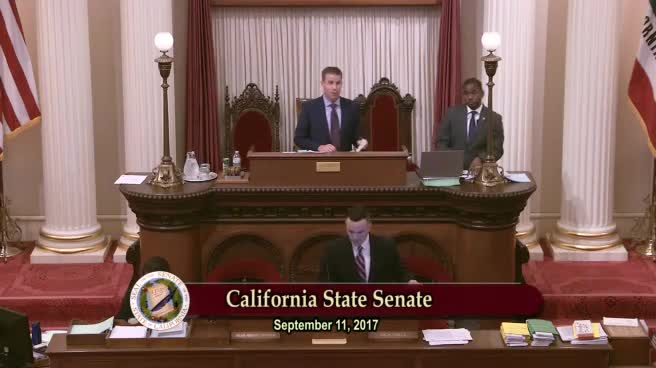 2MIN
Senate Floor
 1H
Senate Standing Committee on Appropriations
 6MIN
Senate Standing Committee on Education
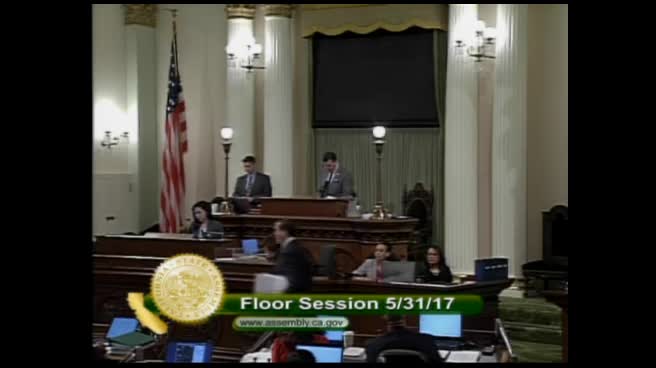 2MIN
Assembly Floor
 1H
Assembly Standing Committee on Appropriations
 9MIN
Assembly Standing Committee on Education
Bill Author

Bill Co-Author(s):