AB 1031: Personal income taxes: voluntary contributions: Rare and Endangered Species Preservation Program: Native California Wildlife Rehabilitation Voluntary Tax Contribution Fund.
- Session Year: 2017-2018
- House: Assembly
- Latest Version Date: 2017-10-05
Existing law allows an individual taxpayer to contribute amounts in excess of his or her personal income tax liability for the support of specified funds and accounts, including among others, to the Endangered and Rare Fish, Wildlife, and Plant Species Conservation and Enhancement Account. Existing law authorizes contributions to be made to this account pursuant to these provisions until January 1, 2018, or until an earlier date if specified minimum contributions are not received. Existing law requires all moneys contributed to this account pursuant to these provisions to be allocated, upon appropriation by the Legislature, to the Franchise Tax Board and the Controller for the costs of collection and administration of the funds, and to the Department of Fish and Wildlife for specified purposes.
This bill would authorize contributions to be made to this account pursuant to these provisions until January 1, 2025, or until an earlier date if the Franchise Tax Board determines that the amount of contributions estimated to be received during a calendar year will not at least equal the minimum contribution amount of $250,000. The bill would instead require moneys contributed to this account pursuant to these provisions to be continuously appropriated and allocated for the above-specified purposes.
This bill would also allow an individual to designate on his or her tax return that a specified amount in excess of his or her tax liability be transferred to the Native California Wildlife Rehabilitation Voluntary Tax Contribution Fund, which would be created by this bill. The bill would require the Franchise Tax Board to revise the tax return form to include a space for the designation of contributions to the fund when another voluntary designation is removed from the form or there is space, whichever occurs first.
The bill would require money contributed to the fund to be continuously appropriated and allocated to the Franchise Tax Board and the Controller for reimbursement of costs, as provided, and to the Department of Fish and Wildlife to establish a competitive grant program for the purposes of the recovery and rehabilitation of injured, sick, or orphaned wildlife, and conservation education, as specified. The bill would authorize a maximum of 5% of the funds allocated to the Department of Fish and Wildlife to be used by the department to defray administrative expenses.
The bill would provide that these provisions would remain in effect only until January 1 of the 7th taxable year following the first appearance of the Native California Wildlife Rehabilitation Voluntary Tax Contribution Fund on the tax return, but would further provide for an earlier repeal if the Franchise Tax Board determines that the amount of contributions estimated to be received during a calendar year will not at least equal the minimum contribution amount of $250,000, in which case these provisions would be repealed on December 1 of that year.
Existing law allows an individual taxpayer to contribute amounts in excess of his or her personal income tax liability for the support of specified funds and accounts, including among others, to the Endangered and Rare Fish, Wildlife, and Plant Species Conservation and Enhancement Account. Existing law authorizes contributions to be made to this account pursuant to these provisions until January 1, 2018, or until an earlier date if specified minimum contributions are not received. Existing law requires all moneys contributed to this account pursuant to these provisions to be allocated, upon appropriation by the Legislature, to the Franchise Tax Board and the Controller for the costs of collection and administration of the funds, and to the Department of Fish and Wildlife for specified purposes.
This bill would authorize contributions to be made to this account pursuant to these provisions until January 1, 2025, or until an earlier date if the Franchise Tax Board determines that the amount of contributions estimated to be received during a calendar year will not at least equal the minimum contribution amount of $250,000. The bill would instead require moneys contributed to this account pursuant to these provisions to be continuously appropriated and allocated for the above-specified purposes.
This bill would also allow an individual to designate on his or her tax return that a specified amount in excess of his or her tax liability be transferred to the Native California Wildlife Rehabilitation Voluntary Tax Contribution Fund, which would be created by this bill. The bill would require the Franchise Tax Board to revise the tax return form to include a space for the designation of contributions to the fund when another voluntary designation is removed from the form or there is space, whichever occurs first.
The bill would require money contributed to the fund to be continuously appropriated and allocated to the Franchise Tax Board and the Controller for reimbursement of costs, as provided, and to the Department of Fish and Wildlife to establish a competitive grant program for the purposes of the recovery and rehabilitation of injured, sick, or orphaned wildlife, and conservation education, as specified. The bill would authorize a maximum of 5% of the funds allocated to the Department of Fish and Wildlife to be used by the department to defray administrative expenses.
The bill would provide that these provisions would remain in effect only until January 1 of the 7th taxable year following the first appearance of the Native California Wildlife Rehabilitation Voluntary Tax Contribution Fund on the tax return, but would further provide for an earlier repeal if the Franchise Tax Board determines that the amount of contributions estimated to be received during a calendar year will not at least equal the minimum contribution amount of $250,000, in which case these provisions would be repealed on December 1 of that year.
Existing law allows an individual taxpayer to contribute amounts in excess of his or her personal income tax liability for the support of specified funds. funds and accounts, including among others, to the Endangered and Rare Fish, Wildlife, and Plant Species Conservation and Enhancement Account. Existing law authorizes contributions to be made to this account pursuant to these provisions until January 1, 2018, or until an earlier date if specified minimum contributions are not received. Existing law requires all moneys contributed to this account pursuant to these provisions to be allocated, upon appropriation by the Legislature, to the Franchise Tax Board and the Controller for the costs of collection and administration of the funds, and to the Department of Fish and Wildlife for specified purposes.
This bill would authorize contributions to be made to this account pursuant to these provisions until January 1, 2025, or until an earlier date if the Franchise Tax Board determines that the amount of contributions estimated to be received during a calendar year will not at least equal the minimum contribution amount of $250,000. The bill would instead require moneys contributed to this account pursuant to these provisions to be continuously appropriated and allocated for the above-specified purposes.
This bill would also allow an individual to designate on his or her tax return that a specified amount in excess of his or her tax liability be transferred to the Native California Wildlife Rehabilitation Voluntary Tax Contribution Fund, which would be created by this bill. The bill would require the Franchise Tax Board to revise the tax return form to include a space for the designation of contributions to the fund when another voluntary designation is removed from the form or there is space, whichever occurs first.
ThisThe bill would require money contributed to the fund to be continuously appropriated and allocated to the Franchise Tax Board and the Controller for reimbursement of costs, as provided, and to the Department of Fish and Wildlife to establish a competitive grant program to award grants to nonprofit organizations for the operation of a wildlife rehabilitation facility permitted by the department. for the purposes of the recovery and rehabilitation of injured, sick, or orphaned wildlife, and conservation education, as specified. The bill would authorize certain percentages a maximum of 5% of the funds allocated to the Department of Fish and Wildlife to be used by the department for to defray administrative expenses and to encourage taxpayers to make contributions by voluntary checkoff on a tax return to the fund. expenses.
The bill would provide that these provisions would remain in effect only until January 1 of the 7th taxable year following the first appearance of the Native California Wildlife Rehabilitation Voluntary Tax Contribution Fund on the tax return, but would further provide for an earlier repeal if the Franchise Tax Board determines that the amount of contributions estimated to be received during a calendar year will not at least equal the minimum contribution amount of $250,000, in which case these provisions would be repealed on December 1 of that year.
Existing law allows an individual taxpayer to contribute amounts in excess of his or her personal income tax liability for the support of specified funds.
This bill would allow an individual to designate on his or her tax return that a specified amount in excess of his or her tax liability be transferred to the Native California Wildlife Rehabilitation Voluntary Tax Contribution Fund, which would be created by this bill. The bill would require the Franchise Tax Board to revise the tax return form to include a space for the designation of contributions to the fund when another voluntary designation is removed from the form or there is space, whichever occurs first.
This bill would require money contributed to the fund, upon appropriation by the Legislature, fund to be continuously appropriated and allocated to the Franchise Tax Board and the Controller for reimbursement of costs, as provided, and to the Department of Fish and Wildlife to establish a competitive grant program to award grants to nonprofit organizations for the operation of a wildlife rehabilitation facility permitted by the department. The bill would authorize certain percentages of the funds allocated to the Department of Fish and Wildlife to be used by the department for administrative expenses and to encourage taxpayers to make contributions by voluntary checkoff on a tax return to the fund.
The bill would provide that these provisions would remain in effect only until January 1 of the 5th 7th taxable year following the first appearance of the Native California Wildlife Rehabilitation Voluntary Tax Contribution Fund on the tax return, or January 1, 2024, whichever occurs first, return, but would further provide for an earlier repeal if the Franchise Tax Board determines that the amount of contributions estimated to be received during a calendar year will not at least equal the minimum contribution amount, as defined, for that calendar year, amount of $250,000, in which case these provisions would be repealed on December 1 of that year.
Existing law allows an individual taxpayer to contribute amounts in excess of his or her personal income tax liability for the support of specified funds.
This bill would allow an individual to designate on his or her tax return that a specified amount in excess of his or her tax liability be transferred to the Native California Wildlife Rehabilitation Fund, which would be created by this bill. The bill would require the Franchise Tax Board to revise the tax return form to include a space for the designation of contributions to the fund when another voluntary designation is removed from the form or there is space, whichever occurs first.
This bill would require money contributed to the fund, upon appropriation by the Legislature, to be allocated to the Franchise Tax Board and the Controller for reimbursement of costs, as provided, and to the Department of Fish and Wildlife to establish a competitive grant program to award grants to nonprofit organizations for the recovery and rehabilitation of injured, sick, or orphaned wildlife and for conservation education. for the operation of a wildlife rehabilitation facility permitted by the department. The bill would authorize certain percentages of the funds allocated to the Department of Fish and Wildlife to be used by the department for administrative expenses and to encourage taxpayers to make contributions by voluntary checkoff on a tax return to the fund.
The bill would provide that these provisions would remain in effect only until January 1 of the 5th taxable year following the first appearance of the Native California Wildlife Rehabilitation Fund on the tax return, or January 1, 2024, whichever occurs first, but would further provide for an earlier repeal if the Franchise Tax Board determines that the amount of contributions estimated to be received during a calendar year will not at least equal the minimum contribution amount, as defined, for that calendar year, in which case these provisions would be repealed on December 1 of that year.
Existing law allows an individual taxpayer to contribute amounts in excess of his or her personal income tax liability for the support of specified funds.
This bill would allow an individual to designate on his or her tax return that a specified amount in excess of his or her tax liability be transferred to the Native California Wildlife Rehabilitation Fund, which would be created by this bill. The bill would require the Franchise Tax Board to revise the tax return form to include a space for the designation of contributions to the fund when another voluntary designation is removed from the form or there is space, whichever occurs first.
This bill would require money contributed to the fund, upon appropriation by the Legislature, to be allocated to the Franchise Tax Board and the Controller for reimbursement of costs, as provided, and to the Department of Fish and Wildlife to establish a competitive grant program to award grants to nonprofit organizations for the recovery and rehabilitation of injured, sick, or orphaned wildlife and for conservation education.
The bill would provide that these provisions would remain in effect only until January 1 of the 5th taxable year following the first appearance of the Native California Wildlife Rehabilitation Fund on the tax return, or January 1, 2024, whichever occurs first, but would further provide for an earlier repeal if the Franchise Tax Board determines that the amount of contributions estimated to be received during a calendar year will not at least equal the minimum contribution amount, as defined, for that calendar year, in which case these provisions would be repealed on December 1 of that year.
The department shall maintain the Native California Wildlife Rehabilitation Voluntary Tax Contribution Fund established pursuant to Section 18749.1 of the Revenue and Taxation Code.
1773.1.(a)The funds deposited in the Native California Wildlife Rehabilitation Voluntary Tax Contribution Fund pursuant to Article 5.2 (commencing with Section 18749) of Chapter 3 of Part 10.2 of Division 2 of the Revenue and Taxation Code are for the support of a competitive grant program to be established by the department for the purposes of the recovery and rehabilitation of injured, sick, or orphaned wildlife, and conservation education.
(b)A maximum of 5 percent of the funds allocated to the department may be used to defray the administrative expenses associated with administering the Native California Wildlife Rehabilitation Voluntary Tax Contribution Fund.
1773.2.To be eligible for grant funding from the competitive grant program established pursuant to Section 1773.1, an applicant shall meet all of the following criteria:
(a)The applicant shall provide proof that it is a nonprofit organization that operates a wildlife rehabilitation facility permitted pursuant to Section 679 of Title 14 of the California Code of Regulations.
(b)The applicant shall be in compliance with all conditions of its Wildlife Rehabilitation Memorandum of Understanding.
(c)The applicant shall maintain active participation in the wildlife rehabilitation medical database.
SEC. 2.Section 18741 of the Revenue and Taxation Code is amended to read:18741.(a)Any individual may designate on the tax return, under the space labeled Rare and Endangered Species Preservation Voluntary Tax Contribution Program, that a contribution in excess of the tax liability, if any, be made to the Endangered and Rare Fish, Wildlife, and Plant Species Conservation and Enhancement Account established in the Fish and Game Preservation Fund pursuant to Section 1770 of the Fish and Game Code.
(b)The contribution shall be in full dollar amounts and may be made individually by each signatory on a joint return.
(c)A designation under subdivision (a) shall be made for any taxable year on the original return for that taxable year, and once made shall be irrevocable.
(d)The Franchise Tax Board shall revise the form of the return to include a space labeled Rare and Endangered Species Preservation Voluntary Tax Contribution Program to allow for the designation permitted under subdivision (a).
(e)A deduction shall be allowed under Article 6 (commencing with Section 17201) of Chapter 3 of Part 10 for any contribution made pursuant to subdivision (a).
SEC. 3.Section 18742 of the Revenue and Taxation Code is amended to read:18742.(a)The Franchise Tax Board shall notify the Controller of both the amount of moneys paid by taxpayers in excess of their tax liability and the amount of refund moneys that taxpayers have designated pursuant to Section 18741 to be transferred to the Endangered and Rare Fish, Wildlife, and Plant Species Conservation and Enhancement Account. The Controller shall transfer from the Personal Income Tax Fund to that account, an amount not in excess of the sum of the amounts reported to the Controller by the Franchise Tax Board that have been designated by individuals pursuant to Section 18741 for payment into that account.
(b)Notwithstanding Section 13340 of the Government Code, all moneys transferred to the account shall be continuously appropriated and allocated as follows:
(1)To the Franchise Tax Board and the Controller for the reimbursement of all actual and direct costs incurred by the Franchise Tax Board and the Controller in connection with the collection and administration of funds under this article.
(2)To the Department of Fish and Wildlife for the purposes specified in Section 1771 of the Fish and Game Code.
(c)The Department of Fish and Wildlife shall comply with the Internet Web site reporting requirements described in Section 18873.
SEC. 4.Section 18744 of the Revenue and Taxation Code is amended to read:18744.(a)Except as otherwise provided in subdivision (b), this article shall remain operative only until January 1, 2025, and as of December 1 of that year is repealed.
(b)(1)By September 1, 2006, and by September 1 of each subsequent calendar year that the Rare and Endangered Species Preservation Voluntary Tax Contribution Program appears on a tax return, the Franchise Tax Board shall determine whether the amount of contributions estimated to be received during the calendar year will equal or exceed the minimum contribution amount for the calendar year. The Franchise Tax Board shall estimate the amount of contributions to be received by using the actual amounts received and an estimate of the contributions that will be received by the end of that calendar year.
(2)If the Franchise Tax Board determines that the amount of contributions estimated to be received during a calendar year will not at least equal the minimum contribution amount for the calendar year, this article is inoperative with respect to taxable years beginning on or after January 1 of that calendar year, and shall be repealed on December 1 of that calendar year.
(3)For purposes of this section, the minimum contribution amount for a calendar year means two hundred fifty thousand dollars ($250,000).
SEC. 5.Article 5.2 (commencing with Section 18749) is added to Chapter 3 of Part 10.2 of Division 2 of the Revenue and Taxation Code, to read:5.2.Native California Wildlife Rehabilitation Voluntary Tax Contribution Fund18749.(a)An individual may designate on the tax return that a contribution in excess of the tax liability, if any, be made to the Native California Wildlife Rehabilitation Voluntary Tax Contribution Fund, established by Section 18749.1. That designation is to be used as a voluntary checkoff on the tax return.
(b)The contributions shall be in full dollar amounts and may be made individually by each signatory on a joint return.
(c)A designation shall be made for any taxable year on the original return for that taxable year, and once made is irrevocable. If payments and credits reported on the return, together with any other credits associated with the taxpayers account, do not exceed the taxpayers liability, the return shall be treated as though no designation has been made. If no designee is specified, the contribution shall be transferred to the General Fund, after reimbursement of the direct actual costs of the Franchise Tax Board for the collection and administration of funds under this article.
(d)If an individual designates a contribution to more than one account or fund listed on the tax return, and the amount available for designation is insufficient to satisfy the total amount designated, the contribution shall be allocated among the designees on a pro rata basis.
(e)When another voluntary contribution designation is removed from the tax return, or as soon as space is available, whichever occurs first, the Franchise Tax Board shall revise the form of the tax return to include a space labeled the Native California Wildlife Rehabilitation Voluntary Tax Contribution Fund to allow for the designation provided. The form shall include in the instruction information that the contribution may be in the amount of one dollar ($1) or more and that the contribution shall be used to support the recovery and rehabilitation of injured, sick, or orphaned native wildlife, and conservation education.
(f)A deduction shall be allowed under Article 6 (commencing with Section 17201) of Chapter 3 of Part 10 for any contribution made pursuant to subdivision (a).
18749.1.There is in the State Treasury the Native California Wildlife Rehabilitation Voluntary Tax Contribution Fund to receive contributions made pursuant to Section 18749. The Franchise Tax Board shall notify the Controller of both the amount of money paid by taxpayers in excess of their tax liability and the amount of refund money that taxpayers have designated pursuant to Section 18749 to be transferred to the Native California Wildlife Rehabilitation Voluntary Tax Contribution Fund. The Controller shall transfer from the Personal Income Tax Fund to the Native California Wildlife Rehabilitation Voluntary Tax Contribution Fund an amount not in excess of the sum of the amounts designated by individuals pursuant to Section 18749 for payment into that fund.
18749.2.(a)Notwithstanding Section 13340 of the Government Code, all moneys transferred to the Native California Wildlife Rehabilitation Voluntary Tax Contribution Fund shall be continuously appropriated and allocated as follows:
(1)To the Franchise Tax Board and the Controller for reimbursement of all costs incurred by the Franchise Tax Board and the Controller in connection with their duties under this article.
(2)The revenues remaining, after allocation pursuant to paragraph (1), to the Department of Fish and Wildlife for the purposes specified in Article 5 (commencing with Section 1773) of Chapter 7.5 of Division 2 of the Fish and Game Code.
(b)The Department of Fish and Wildlife shall comply with the Internet Web site reporting requirements described in Section 18873.
18749.3.(a)Except as otherwise provided in subdivision (b), this article shall remain operative only until January 1 of the seventh taxable year following the first appearance of the Native California Wildlife Rehabilitation Voluntary Tax Contribution Fund on the tax return, and is repealed as of December 1 of that year.
(b)(1)By September 1 of the second calendar year and by September 1 of each subsequent calendar year that the Native California Wildlife Rehabilitation Voluntary Tax Contribution Fund appears on the tax return, the Franchise Tax Board shall determine whether the amount of contributions estimated to be received during the calendar year will equal or exceed the minimum contribution amount for the calendar year. The Franchise Tax Board shall estimate the amount of contributions to be received by using the actual amounts received and an estimate of the contributions that will be received by the end of that calendar year.
(2)If the Franchise Tax Board determines that the amount of the contributions estimated to be received during a calendar year will not at least equal the minimum contribution amount for the calendar year, this article shall be inoperative with respect to taxable years beginning on or after January 1 of that calendar year and shall be repealed on December 1 of that year.
(3)For purposes of this section, the minimum contribution amount for a calendar year means two hundred fifty thousand dollars ($250,000).
The department shall maintain the Native California Wildlife Rehabilitation Voluntary Tax Contribution Fund established pursuant to Section 18749.1 of the Revenue and Taxation Code.
1773.1.(a)The funds deposited in the Native California Wildlife Rehabilitation Voluntary Tax Contribution Fund pursuant to Article 5.2 (commencing with Section 18749) of Chapter 3 of Part 10.2 of Division 2 of the Revenue and Taxation Code are for the support of a competitive grant program to be established by the department for the purposes of the recovery and rehabilitation of injured, sick, or orphaned wildlife, and conservation education.
(b)A maximum of 5 percent of the funds allocated to the department may be used to defray the administrative expenses associated with administering the Native California Wildlife Rehabilitation Voluntary Tax Contribution Fund.
1773.2.To be eligible for grant funding from the competitive grant program established pursuant to Section 1773.1, an applicant shall meet all of the following criteria:
(a)The applicant shall provide proof that it is a nonprofit organization that operates a wildlife rehabilitation facility permitted pursuant to Section 679 of Title 14 of the California Code of Regulations.
(b)The applicant shall be in compliance with all conditions of its Wildlife Rehabilitation Memorandum of Understanding.
(c)The applicant shall maintain active participation in the wildlife rehabilitation medical database.
SEC. 2.Section 18741 of the Revenue and Taxation Code is amended to read:18741.(a)Any individual may designate on the tax return, under the space labeled Rare and Endangered Species Preservation Voluntary Tax Contribution Program, that a contribution in excess of the tax liability, if any, be made to the Endangered and Rare Fish, Wildlife, and Plant Species Conservation and Enhancement Account established in the Fish and Game Preservation Fund pursuant to Section 1770 of the Fish and Game Code.
(b)The contribution shall be in full dollar amounts and may be made individually by each signatory on a joint return.
(c)A designation under subdivision (a) shall be made for any taxable year on the original return for that taxable year, and once made shall be irrevocable.
(d)The Franchise Tax Board shall revise the form of the return to include a space labeled Rare and Endangered Species Preservation Voluntary Tax Contribution Program to allow for the designation permitted under subdivision (a).
(e)A deduction shall be allowed under Article 6 (commencing with Section 17201) of Chapter 3 of Part 10 for any contribution made pursuant to subdivision (a).
SEC. 3.Section 18742 of the Revenue and Taxation Code is amended to read:18742.(a)The Franchise Tax Board shall notify the Controller of both the amount of moneys paid by taxpayers in excess of their tax liability and the amount of refund moneys that taxpayers have designated pursuant to Section 18741 to be transferred to the Endangered and Rare Fish, Wildlife, and Plant Species Conservation and Enhancement Account. The Controller shall transfer from the Personal Income Tax Fund to that account, an amount not in excess of the sum of the amounts reported to the Controller by the Franchise Tax Board that have been designated by individuals pursuant to Section 18741 for payment into that account.
(b)Notwithstanding Section 13340 of the Government Code, all moneys transferred to the account shall be continuously appropriated and allocated as follows:
(1)To the Franchise Tax Board and the Controller for the reimbursement of all actual and direct costs incurred by the Franchise Tax Board and the Controller in connection with the collection and administration of funds under this article.
(2)To the Department of Fish and Wildlife for the purposes specified in Section 1771 of the Fish and Game Code.
(c)The Department of Fish and Wildlife shall comply with the Internet Web site reporting requirements described in Section 18873.
SEC. 4.Section 18744 of the Revenue and Taxation Code is amended to read:18744.(a)Except as otherwise provided in subdivision (b), this article shall remain operative only until January 1, 2025, and as of December 1 of that year is repealed.
(b)(1)By September 1, 2006, and by September 1 of each subsequent calendar year that the Rare and Endangered Species Preservation Voluntary Tax Contribution Program appears on a tax return, the Franchise Tax Board shall determine whether the amount of contributions estimated to be received during the calendar year will equal or exceed the minimum contribution amount for the calendar year. The Franchise Tax Board shall estimate the amount of contributions to be received by using the actual amounts received and an estimate of the contributions that will be received by the end of that calendar year.
(2)If the Franchise Tax Board determines that the amount of contributions estimated to be received during a calendar year will not at least equal the minimum contribution amount for the calendar year, this article is inoperative with respect to taxable years beginning on or after January 1 of that calendar year, and shall be repealed on December 1 of that calendar year.
(3)For purposes of this section, the minimum contribution amount for a calendar year means two hundred fifty thousand dollars ($250,000).
SEC. 5.Article 5.2 (commencing with Section 18749) is added to Chapter 3 of Part 10.2 of Division 2 of the Revenue and Taxation Code, to read:5.2.Native California Wildlife Rehabilitation Voluntary Tax Contribution Fund18749.(a)An individual may designate on the tax return that a contribution in excess of the tax liability, if any, be made to the Native California Wildlife Rehabilitation Voluntary Tax Contribution Fund, established by Section 18749.1. That designation is to be used as a voluntary checkoff on the tax return.
(b)The contributions shall be in full dollar amounts and may be made individually by each signatory on a joint return.
(c)A designation shall be made for any taxable year on the original return for that taxable year, and once made is irrevocable. If payments and credits reported on the return, together with any other credits associated with the taxpayers account, do not exceed the taxpayers liability, the return shall be treated as though no designation has been made. If no designee is specified, the contribution shall be transferred to the General Fund, after reimbursement of the direct actual costs of the Franchise Tax Board for the collection and administration of funds under this article.
(d)If an individual designates a contribution to more than one account or fund listed on the tax return, and the amount available for designation is insufficient to satisfy the total amount designated, the contribution shall be allocated among the designees on a pro rata basis.
(e)When another voluntary contribution designation is removed from the tax return, or as soon as space is available, whichever occurs first, the Franchise Tax Board shall revise the form of the tax return to include a space labeled the Native California Wildlife Rehabilitation Voluntary Tax Contribution Fund to allow for the designation provided. The form shall include in the instruction information that the contribution may be in the amount of one dollar ($1) or more and that the contribution shall be used to support the recovery and rehabilitation of injured, sick, or orphaned native wildlife, and conservation education.
(f)A deduction shall be allowed under Article 6 (commencing with Section 17201) of Chapter 3 of Part 10 for any contribution made pursuant to subdivision (a).
18749.1.There is in the State Treasury the Native California Wildlife Rehabilitation Voluntary Tax Contribution Fund to receive contributions made pursuant to Section 18749. The Franchise Tax Board shall notify the Controller of both the amount of money paid by taxpayers in excess of their tax liability and the amount of refund money that taxpayers have designated pursuant to Section 18749 to be transferred to the Native California Wildlife Rehabilitation Voluntary Tax Contribution Fund. The Controller shall transfer from the Personal Income Tax Fund to the Native California Wildlife Rehabilitation Voluntary Tax Contribution Fund an amount not in excess of the sum of the amounts designated by individuals pursuant to Section 18749 for payment into that fund.
18749.2.(a)Notwithstanding Section 13340 of the Government Code, all moneys transferred to the Native California Wildlife Rehabilitation Voluntary Tax Contribution Fund shall be continuously appropriated and allocated as follows:
(1)To the Franchise Tax Board and the Controller for reimbursement of all costs incurred by the Franchise Tax Board and the Controller in connection with their duties under this article.
(2)The revenues remaining, after allocation pursuant to paragraph (1), to the Department of Fish and Wildlife for the purposes specified in Article 5 (commencing with Section 1773) of Chapter 7.5 of Division 2 of the Fish and Game Code.
(b)The Department of Fish and Wildlife shall comply with the Internet Web site reporting requirements described in Section 18873.
18749.3.(a)Except as otherwise provided in subdivision (b), this article shall remain operative only until January 1 of the seventh taxable year following the first appearance of the Native California Wildlife Rehabilitation Voluntary Tax Contribution Fund on the tax return, and is repealed as of December 1 of that year.
(b)(1)By September 1 of the second calendar year and by September 1 of each subsequent calendar year that the Native California Wildlife Rehabilitation Voluntary Tax Contribution Fund appears on the tax return, the Franchise Tax Board shall determine whether the amount of contributions estimated to be received during the calendar year will equal or exceed the minimum contribution amount for the calendar year. The Franchise Tax Board shall estimate the amount of contributions to be received by using the actual amounts received and an estimate of the contributions that will be received by the end of that calendar year.
(2)If the Franchise Tax Board determines that the amount of the contributions estimated to be received during a calendar year will not at least equal the minimum contribution amount for the calendar year, this article shall be inoperative with respect to taxable years beginning on or after January 1 of that calendar year and shall be repealed on December 1 of that year.
(3)For purposes of this section, the minimum contribution amount for a calendar year means two hundred fifty thousand dollars ($250,000).
The department shall maintain the Native California Wildlife Rehabilitation Voluntary Tax Contribution Fund established pursuant to Section 18749.1 of the Revenue and Taxation Code.
1773.1.(a)The funds deposited in the Native California Wildlife Rehabilitation Voluntary Tax Contribution Fund pursuant to Article 5.2 (commencing with Section 18749) of Chapter 3 of Part 10.2 of Division 2 of the Revenue and Taxation Code are for the support of a competitive grant program to be established by the department for the purposes of the recovery and rehabilitation of injured, sick, or orphaned wildlife, and conservation education.
(b)A maximum of 5 percent of the funds allocated to the department may be used to defray the administrative expenses associated with administering the Native California Wildlife Rehabilitation Voluntary Tax Contribution Fund.
1773.2.To be eligible for grant funding from the competitive grant program established pursuant to Section 1773.1, an applicant shall meet all of the following criteria:
(a)The applicant shall provide proof that it is a nonprofit organization that operates a wildlife rehabilitation facility permitted pursuant to Section 679 of Title 14 of the California Code of Regulations.
(b)The applicant shall be in compliance with all conditions of its Wildlife Rehabilitation Memorandum of Understanding.
(c)The applicant shall maintain active participation in the wildlife rehabilitation medical database.
SEC. 2.Section 18741 of the Revenue and Taxation Code is amended to read:18741.(a)Any individual may designate on the tax return return, under the space labeled Rare and Endangered Species Preservation Voluntary Tax Contribution Program, that a contribution in excess of the tax liability, if any, be made to the Endangered and Rare Fish, Wildlife, and Plant Species Conservation and Enhancement Account established in the Fish and Game Preservation Fund pursuant to Section 1770 of the Fish and Game Code.
(b)The contribution shall be in full dollar amounts and may be made individually by each signatory on a joint return.
(c)A designation under subdivision (a) shall be made for any taxable year on the initial original return for that taxable year, and once made shall be irrevocable.
(d)If an individual designates a contribution to more than one account, and the amount available is insufficient to satisfy the total amount designated, the contribution shall be allocated among the designees on a pro rata basis.(e)(d)The Franchise Tax Board shall revise the form of the return to include a space labeled Rare and Endangered Species Preservation Voluntary Tax Contribution Program to allow for the designation permitted under subdivision (a).
(f)(e)A deduction shall be allowed under Article 6 (commencing with Section 17201) of Chapter 3 of Part 10 for any contribution made pursuant to subdivision (a).
SEC. 3.Section 18742 of the Revenue and Taxation Code is amended to read:18742.(a)The Franchise Tax Board shall notify the Controller of both the amount of moneys paid by taxpayers in excess of their tax liability and the amount of refund moneys that taxpayers have designated pursuant to Section 18741 to be transferred to the Endangered and Rare Fish, Wildlife, and Plant Species Conservation and Enhancement Account. The Controller shall transfer from the Personal Income Tax Fund to that account, an amount not in excess of the sum of the amounts reported to the Controller by the Franchise Tax Board that have been designated by individuals pursuant to Section 18741 for payment into that account.
(b)All Notwithstanding Section 13340 of the Government Code, all moneys transferred to the account, upon appropriation by the Legislature, shall be account shall be continuously appropriated and allocated as follows:
(1)To the Franchise Tax Board and the Controller for the reimbursement of all actual and direct costs incurred by the Franchise Tax Board and the Controller in connection with the collection and administration of funds under this article.
(2)To the Department of Fish and Game Wildlife for the purposes specified in Section 1771 of the Fish and Game Code.
(c)The Department of Fish and Wildlife shall comply with the Internet Web site reporting requirements described in Section 18873.
SEC. 4.Section 18744 of the Revenue and Taxation Code is amended to read:18744.(a)This Except as otherwise provided in subdivision (b), this article shall remain in effect operative only until January 1, 2018, 2025, and as of that date December 1 of that year is repealed.
(b)(1)By September 1, 2006, and by September 1 of each subsequent calendar year that the Rare and Endangered Species Preservation Voluntary Tax Contribution Program appears on a tax return, the Franchise Tax Board shall do all of the following:
(A)Determine the minimum contribution amount required to be received during the next calendar year for the fund to appear on the tax return for the taxable year that includes that next calendar year.(B)Provide written notification to the Department of Fish and Game of the amount determined in subparagraph (A).(C)Determine shall determine whether the amount of contributions estimated to be received during the calendar year will equal or exceed the minimum contribution amount determined by the Franchise Tax Board for the calendar year pursuant to subparagraph (A). year. The Franchise Tax Board shall estimate the amount of contributions to be received by using the actual amounts received and an estimate of the contributions that will be received by the end of that calendar year.
(2)If the Franchise Tax Board determines that the amount of contributions estimated to be received during a calendar year will not at least equal the minimum contribution amount for the calendar year, this article is repealed inoperative with respect to taxable years beginning on or after January 1 of that calendar year. year, and shall be repealed on December 1 of that calendar year.
(3)For purposes of this section, the minimum contribution amount for a calendar year means two hundred fifty thousand dollars ($250,000) for the 2002 calendar year or the minimum contribution amount adjusted pursuant to subdivision (c). ($250,000).
(c)For each calendar year, beginning with calendar year 2003, the Franchise Tax Board shall adjust, on or before September 1 of that calendar year, the minimum contribution amount specified in subdivision (b) as follows:(1)The minimum contribution amount for the calendar year shall be an amount equal to the product of the minimum contribution amount for the prior calendar year multiplied by the inflation factor adjustment as specified in paragraph (2) of subdivision (h) of Section 17041, rounded off to the nearest dollar.(2)The inflation factor adjustment used for the calendar year shall be based on the figures for the percentage change in the California Consumer Price Index received on or before August 1 of the calendar year pursuant to paragraph (1) of subdivision (h) of Section 17041.(d)Notwithstanding the repeal of this article, any contribution amounts designated pursuant to this article prior to its repeal shall continue to be transferred and disbursed in accordance with this article as in effect immediately prior to that repeal.SECTION 1.SEC. 5.Article 5.2 (commencing with Section 18749) is added to Chapter 3 of Part 10.2 of Division 2 of the Revenue and Taxation Code, to read:5.2.Native California Wildlife Rehabilitation Voluntary Tax Contribution Fund18749.(a)An individual may designate on the tax return that a contribution in excess of the tax liability, if any, be made to the Native California Wildlife Rehabilitation Voluntary Tax Contribution Fund, established by Section 18749.1. That designation is to be used as a voluntary checkoff on the tax return.
(b)The contributions shall be in full dollar amounts and may be made individually by each signatory on a joint return.
(c)A designation shall be made for any taxable year on the original return for that taxable year, and once made is irrevocable. If payments and credits reported on the return, together with any other credits associated with the taxpayers account, do not exceed the taxpayers liability, the return shall be treated as though no designation has been made. If no designee is specified, the contribution shall be transferred to the General Fund, after reimbursement of the direct actual costs of the Franchise Tax Board for the collection and administration of funds under this article.
(d)If an individual designates a contribution to more than one account or fund listed on the tax return, and the amount available for designation is insufficient to satisfy the total amount designated, the contribution shall be allocated among the designees on a pro rata basis.
(e)When another voluntary contribution designation is removed from the tax return, or as soon as space is available, whichever occurs first, the Franchise Tax Board shall revise the form of the tax return to include a space labeled the Native California Wildlife Rehabilitation Voluntary Tax Contribution Fund to allow for the designation provided. The form shall include in the instruction information that the contribution may be in the amount of one dollar ($1) or more and that the contribution shall be used to support the recovery and rehabilitation of injured, sick, or orphaned native wildlife. wildlife, and conservation education.
(f)A deduction shall be allowed under Article 6 (commencing with Section 17201) of Chapter 3 of Part 10 for any contribution made pursuant to subdivision (a).
18749.1.There is in the State Treasury the Native California Wildlife Rehabilitation Voluntary Tax Contribution Fund to receive contributions made pursuant to Section 18749. The Franchise Tax Board shall notify the Controller of both the amount of money paid by taxpayers in excess of their tax liability and the amount of refund money that taxpayers have designated pursuant to Section 18749 to be transferred to the Native California Wildlife Rehabilitation Voluntary Tax Contribution Fund. The Controller shall transfer from the Personal Income Tax Fund to the Native California Wildlife Rehabilitation Voluntary Tax Contribution Fund an amount not in excess of the sum of the amounts designated by individuals pursuant to Section 18749 for payment into that fund.
18749.2.(a)Notwithstanding Section 13340 of the Government Code, all moneys transferred to the Native California Wildlife Rehabilitation Voluntary Tax Contribution Fund shall be continuously appropriated and allocated as follows:
(1)
To the Franchise Tax Board and the Controller for reimbursement of all costs incurred by the Franchise Tax Board and the Controller in connection with their duties under this article.
(2)
The revenues remaining, after allocation pursuant to paragraph (1), to the Department of Fish and Wildlife for the establishment of a competitive grant program to award grants to nonprofit organizations for the operation of a wildlife rehabilitation facility permitted pursuant to Section 679 of Title 14 of the California Code of Regulations. Up to 5 percent of the funds allocated to the department may be used by the department for public outreach activities that encourage taxpayers to make contributions by voluntary checkoff on a tax return to the Native California Wildlife Rehabilitation Voluntary Tax Contribution Fund. In addition, a maximum of 5 percent of the funds allocated to the department may be used to defray the administrative expenses associated with administering the Native California Wildlife Rehabilitation Voluntary Tax Contribution Fund. purposes specified in Article 5 (commencing with Section 1773) of Chapter 7.5 of Division 2 of the Fish and Game Code.
(b)The Department of Fish and Wildlife shall comply with the Internet Web site reporting requirements described in Section 18873.
18749.3.(a)Except as otherwise provided in subdivision (b), this article shall remain operative only until January 1 of the seventh taxable year following the first appearance of the Native California Wildlife Rehabilitation Voluntary Tax Contribution Fund on the tax return, and is repealed as of December 1 of that year.
(b)(1)By September 1 of the second calendar year and by September 1 of each subsequent calendar year that the Native California Wildlife Rehabilitation Voluntary Tax Contribution Fund appears on the tax return, the Franchise Tax Board shall determine whether the amount of contributions estimated to be received during the calendar year will equal or exceed the minimum contribution amount for the calendar year. The Franchise Tax Board shall estimate the amount of contributions to be received by using the actual amounts received and an estimate of the contributions that will be received by the end of that calendar year.
(2)If the Franchise Tax Board determines that the amount of the contributions estimated to be received during a calendar year will not at least equal the minimum contribution amount for the calendar year, this article shall be inoperative with respect to taxable years beginning on or after January 1 of that calendar year and shall be repealed on December 1 of that year.
(3)For purposes of this section, the minimum contribution amount for a calendar year means two hundred fifty thousand dollars ($250,000).
(a)An individual may designate on the tax return that a contribution in excess of the tax liability, if any, be made to the Native California Wildlife Rehabilitation Voluntary Tax Contribution Fund, established by Section 18749.1. That designation is to be used as a voluntary checkoff on the tax return.
(b)The contributions shall be in full dollar amounts and may be made individually by each signatory on a joint return.
(c)A designation shall be made for any taxable year on the original return for that taxable year, and once made is irrevocable. If payments and credits reported on the return, together with any other credits associated with the taxpayers account, do not exceed the taxpayers liability, the return shall be treated as though no designation has been made. If no designee is specified, the contribution shall be transferred to the General Fund, after reimbursement of the direct actual costs of the Franchise Tax Board for the collection and administration of funds under this article.
(d)If an individual designates a contribution to more than one account or fund listed on the tax return, and the amount available for designation is insufficient to satisfy the total amount designated, the contribution shall be allocated among the designees on a pro rata basis.
(e)When another voluntary contribution designation is removed from the tax return, or as soon as space is available, whichever occurs first, the Franchise Tax Board shall revise the form of the tax return to include a space labeled the Native California Wildlife Rehabilitation Voluntary Tax Contribution Fund to allow for the designation provided. The form shall include in the instruction information that the contribution may be in the amount of one dollar ($1) or more and that the contribution shall be used to support the recovery and rehabilitation of injured, sick, or orphaned native wildlife.
(f)A deduction shall be allowed under Article 6 (commencing with Section 17201) of Chapter 3 of Part 10 for any contribution made pursuant to subdivision (a).
18749.1.There is in the State Treasury the Native California Wildlife Rehabilitation Voluntary Tax Contribution Fund to receive contributions made pursuant to Section 18749. The Franchise Tax Board shall notify the Controller of both the amount of money paid by taxpayers in excess of their tax liability and the amount of refund money that taxpayers have designated pursuant to Section 18749 to be transferred to the Native California Wildlife Rehabilitation Voluntary Tax Contribution Fund. The Controller shall transfer from the Personal Income Tax Fund to the Native California Wildlife Rehabilitation Voluntary Tax Contribution Fund an amount not in excess of the sum of the amounts designated by individuals pursuant to Section 18749 for payment into that fund.
18749.2.All money transferred to the Native California Wildlife Rehabilitation Fund, upon appropriation by the Legislature,18749.2.(a)Notwithstanding Section 13340 of the Government Code, all moneys transferred to the Native California Wildlife Rehabilitation Voluntary Tax Contribution Fund shall be continuously appropriated and allocated as follows:
(a)(1)To the Franchise Tax Board and the Controller for reimbursement of all costs incurred by the Franchise Tax Board and the Controller in connection with their duties under this article.
(b)(2)The revenues remaining, after allocation pursuant to subdivision (a), paragraph (1), to the Department of Fish and Wildlife for the establishment of a competitive grant program to award grants to nonprofit organizations for the operation of a wildlife rehabilitation facility permitted pursuant to Section 679 of Title 14 of the California Code of Regulations. Up to 5 percent of the funds allocated to the department may be used by the department for public outreach activities that encourage taxpayers to make contributions by voluntary checkoff on a tax return to the Native California Wildlife Rehabilitation Voluntary Tax Contribution Fund. In addition, a maximum of 5 percent of the funds allocated to the department may be used to defray the administrative expenses associated with administering the Native California Wildlife Rehabilitation Voluntary Tax Contribution Fund.
(b)The Department of Fish and Wildlife shall comply with the Internet Web site reporting requirements described in Section 18873.
18749.3.(a)Except as otherwise provided in subdivision (b), this article shall remain operative only until January 1 of the fifth seventh taxable year following the first appearance of the Native California Wildlife Rehabilitation Voluntary Tax Contribution Fund on the tax return, or January 1, 2024, whichever occurs first, and is repealed as of December 1 of that year.
(b)(1)By September 1 of the second calendar year and by September 1 of each subsequent calendar year that the Native California Wildlife Rehabilitation Voluntary Tax Contribution Fund appears on the tax return, the Franchise Tax Board shall do all of the following:
(A)Determine the minimum contribution amount required to be received during the next calendar year for the fund to appear on the tax return for the taxable year that includes that next calendar year.(B)Provide written notification to the Department of Fish and Wildlife of the amount determined in subparagraph (A).(C)Determine determine whether the amount of contributions estimated to be received during the calendar year will equal or exceed the minimum contribution amount determined by the Franchise Tax Board for the calendar year pursuant to subparagraph (A). year. The Franchise Tax Board shall estimate the amount of contributions to be received by using the actual amounts received and an estimate of the contributions that will be received by the end of that calendar year.
(2)If the Franchise Tax Board determines that the amount of the contributions estimated to be received during a calendar year will not at least equal the minimum contribution amount for the calendar year, this article shall be inoperative with respect to taxable years beginning on or after January 1 of that calendar year and shall be repealed on December 1 of that year.
(3)For purposes of this section, the minimum contribution amount for a calendar year means two hundred fifty thousand dollars ($250,000) for the second calendar year after the first appearance of the Native California Wildlife Rehabilitation Fund on the personal income tax return or the adjusted minimum contribution amount adjusted pursuant to subdivision (c). ($250,000).
(c)For each calendar year, beginning with the third calendar year after the first appearance of the Native California Wildlife Rehabilitation Fund on the tax return, the Franchise Tax Board shall adjust, on or before September 1 of that calendar year, the minimum estimated contribution amount specified in subdivision (b) as follows:(1)The minimum contribution amount for the calendar year shall be an amount equal to the product of the minimum contribution amount for the prior calendar year, multiplied by the inflation factor adjustment as specified in paragraph (2) of subdivision (h) of Section 17041, rounded off to the nearest dollar.(2)The inflation factor adjustment used for the calendar year shall be based on the figures for the percentage change in the California Consumer Price Index received on or before August 1 of the calendar year pursuant to paragraph (1) of subdivision (h) of Section 17041. REVISIONS: HeadingLine 2.(a)An individual may designate on the tax return that a contribution in excess of the tax liability, if any, be made to the Native California Wildlife Rehabilitation Fund, established by Section 18749.1. That designation is to be used as a voluntary checkoff on the tax return.
(b)The contributions shall be in full dollar amounts and may be made individually by each signatory on a joint return.
(c)A designation shall be made for any taxable year on the original return for that taxable year, and once made is irrevocable. If payments and credits reported on the return, together with any other credits associated with the taxpayers account, do not exceed the taxpayers liability, the return shall be treated as though no designation has been made. If no designee is specified, the contribution shall be transferred to the General Fund, after reimbursement of the direct actual costs of the Franchise Tax Board for the collection and administration of funds under this article.
(d)If an individual designates a contribution to more than one account or fund listed on the tax return, and the amount available for designation is insufficient to satisfy the total amount designated, the contribution shall be allocated among the designees on a pro rata basis.
(e)When another voluntary contribution designation is removed from the tax return, or as soon as space is available, whichever occurs first, the Franchise Tax Board shall revise the form of the tax return to include a space labeled the Native California Wildlife Rehabilitation Fund to allow for the designation provided. The form shall include in the instruction information that the contribution may be in the amount of one dollar ($1) or more and that the contribution shall be used to support any of the following activities: the recovery and rehabilitation of injured, sick, or orphaned native wildlife.
(1)Recovery and rehabilitation of injured, sick, or orphaned wildlife.(2)Conservation education.(f)A deduction shall be allowed under Article 6 (commencing with Section 17201) of Chapter 3 of Part 10 for any contribution made pursuant to subdivision (a).
18749.1.There is in the State Treasury the Native California Wildlife Rehabilitation Fund to receive contributions made pursuant to Section 18749. The Franchise Tax Board shall notify the Controller of both the amount of money paid by taxpayers in excess of their tax liability and the amount of refund money that taxpayers have designated pursuant to Section 18749 to be transferred to the Native California Wildlife Rehabilitation Fund. The Controller shall transfer from the Personal Income Tax Fund to the Native California Wildlife Rehabilitation Fund an amount not in excess of the sum of the amounts designated by individuals pursuant to Section 18749 for payment into that fund.
18749.2.All money transferred to the Native California Wildlife Rehabilitation Fund, upon appropriation by the Legislature, shall be allocated as follows:
(a)To the Franchise Tax Board and the Controller for reimbursement of all costs incurred by the Franchise Tax Board and the Controller in connection with their duties under this article.
(b)The revenues remaining, after allocation pursuant to subdivision (a), to the Department of Fish and Wildlife for the establishment of a competitive grant program to award grants to nonprofit organizations to conduct any of the following activities: for the operation of a wildlife rehabilitation facility permitted pursuant to Section 679 of Title 14 of the California Code of Regulations. Up to 5 percent of the funds allocated to the department may be used by the department for public outreach activities that encourage taxpayers to make contributions by voluntary checkoff on a tax return to the Native California Wildlife Rehabilitation Fund. In addition, a maximum of 5 percent of the funds allocated to the department may be used to defray the administrative expenses associated with administering the Native California Wildlife Rehabilitation Fund.
(1)Recovery and rehabilitation of injured, sick, or orphaned wildlife.(2)Conservation education.18749.3.(a)Except as otherwise provided in subdivision (b), this article shall remain operative only until January 1 of the fifth taxable year following the first appearance of the Native California Wildlife Rehabilitation Fund on the tax return, or January 1, 2024, whichever occurs first, and is repealed as of December 1 of that year.
(b)(1)By September 1 of the second calendar year and by September 1 of each subsequent calendar year that the Native California Wildlife Rehabilitation Fund appears on the tax return, the Franchise Tax Board shall do all of the following:
(A)Determine the minimum contribution amount required to be received during the next calendar year for the fund to appear on the tax return for the taxable year that includes that next calendar year.
(B)Provide written notification to the Department of Fish and Wildlife of the amount determined in subparagraph (A).
(C)Determine whether the amount of contributions estimated to be received during the calendar year will equal or exceed the minimum contribution amount determined by the Franchise Tax Board for the calendar year pursuant to subparagraph (A). The Franchise Tax Board shall estimate the amount of contributions to be received by using the actual amounts received and an estimate of the contributions that will be received by the end of that calendar year.
(2)If the Franchise Tax Board determines that the amount of the contributions estimated to be received during a calendar year will not at least equal the minimum contribution amount for the calendar year, this article shall be inoperative with respect to taxable years beginning on or after January 1 of that calendar year and shall be repealed on December 1 of that year.
(3)For purposes of this section, the minimum contribution amount for a calendar year means two hundred fifty thousand dollars ($250,000) for the second calendar year after the first appearance of the Native California Wildlife Rehabilitation Fund on the personal income tax return or the adjusted minimum contribution amount adjusted pursuant to subdivision (c).
(c)For each calendar year, beginning with the third calendar year after the first appearance of the Native California Wildlife Rehabilitation Fund on the tax return, the Franchise Tax Board shall adjust, on or before September 1 of that calendar year, the minimum estimated contribution amount specified in subdivision (b) as follows:
(1)The minimum contribution amount for the calendar year shall be an amount equal to the product of the minimum contribution amount for the prior calendar year, multiplied by the inflation factor adjustment as specified in paragraph (2) of subdivision (h) of Section 17041, rounded off to the nearest dollar.
(2)The inflation factor adjustment used for the calendar year shall be based on the figures for the percentage change in the California Consumer Price Index received on or before August 1 of the calendar year pursuant to paragraph (1) of subdivision (h) of Section 17041.
(a)An individual may designate on the tax return that a contribution in excess of the tax liability, if any, be made to the Native California Wildlife Rehabilitation Fund, established by Section 18749.1. That designation is to be used as a voluntary checkoff on the tax return.
(b)The contributions shall be in full dollar amounts and may be made individually by each signatory on a joint return.
(c)A designation shall be made for any taxable year on the original return for that taxable year, and once made is irrevocable. If payments and credits reported on the return, together with any other credits associated with the taxpayers account, do not exceed the taxpayers liability, the return shall be treated as though no designation has been made. If no designee is specified, the contribution shall be transferred to the General Fund, after reimbursement of the direct actual costs of the Franchise Tax Board for the collection and administration of funds under this article.
(d)If an individual designates a contribution to more than one account or fund listed on the tax return, and the amount available for designation is insufficient to satisfy the total amount designated, the contribution shall be allocated among the designees on a pro rata basis.
(e)When another voluntary contribution designation is removed from the tax return, or as soon as space is available, whichever occurs first, the Franchise Tax Board shall revise the form of the tax return to include a space labeled the Native California Wildlife Rehabilitation Fund to allow for the designation provided. The form shall include in the instruction information that the contribution may be in the amount of one dollar ($1) or more and that the contribution shall be used to support any of the following activities:
(1)Recovery and rehabilitation of injured, sick, or orphaned wildlife.
(2)Conservation education.
(f)A deduction shall be allowed under Article 6 (commencing with Section 17201) of Chapter 3 of Part 10 for any contribution made pursuant to subdivision (a).
18749.1.There is in the State Treasury the Native California Wildlife Rehabilitation Fund to receive contributions made pursuant to Section 18749. The Franchise Tax Board shall notify the Controller of both the amount of money paid by taxpayers in excess of their tax liability and the amount of refund money that taxpayers have designated pursuant to Section 18749 to be transferred to the Native California Wildlife Rehabilitation Fund. The Controller shall transfer from the Personal Income Tax Fund to the Native California Wildlife Rehabilitation Fund an amount not in excess of the sum of the amounts designated by individuals pursuant to Section 18749 for payment into that fund.
18749.2.All money transferred to the Native California Wildlife Rehabilitation Fund, upon appropriation by the Legislature, shall be allocated as follows:
(a)To the Franchise Tax Board and the Controller for reimbursement of all costs incurred by the Franchise Tax Board and the Controller in connection with their duties under this article.
(b)The revenues remaining, after allocation pursuant to subdivision (a), to the Department of Fish and Wildlife for the establishment of a competitive grant program to award grants to nonprofit organizations to conduct any of the following activities:
(1)Recovery and rehabilitation of injured, sick, or orphaned wildlife.
(2)Conservation education.
18749.3.(a)Except as otherwise provided in subdivision (b), this article shall remain operative only until January 1 of the fifth taxable year following the first appearance of the Native California Wildlife Rehabilitation Fund on the tax return, or January 1, 2024, whichever occurs first, and is repealed as of December 1 of that year.
(b)(1)By September 1 of the second calendar year and by September 1 of each subsequent calendar year that the Native California Wildlife Rehabilitation Fund appears on the tax return, the Franchise Tax Board shall do all of the following:
(A)Determine the minimum contribution amount required to be received during the next calendar year for the fund to appear on the tax return for the taxable year that includes that next calendar year.
(B)Provide written notification to the Department of Fish and Wildlife of the amount determined in subparagraph (A).
(C)Determine whether the amount of contributions estimated to be received during the calendar year will equal or exceed the minimum contribution amount determined by the Franchise Tax Board for the calendar year pursuant to subparagraph (A). The Franchise Tax Board shall estimate the amount of contributions to be received by using the actual amounts received and an estimate of the contributions that will be received by the end of that calendar year.
(2)If the Franchise Tax Board determines that the amount of the contributions estimated to be received during a calendar year will not at least equal the minimum contribution amount for the calendar year, this article shall be inoperative with respect to taxable years beginning on or after January 1 of that calendar year and shall be repealed on December 1 of that year.
(3)For purposes of this section, the minimum contribution amount for a calendar year means two hundred fifty thousand dollars ($250,000) for the second calendar year after the first appearance of the Native California Wildlife Rehabilitation Fund on the personal income tax return or the adjusted minimum contribution amount adjusted pursuant to subdivision (c).
(c)For each calendar year, beginning with the third calendar year after the first appearance of the Native California Wildlife Rehabilitation Fund on the tax return, the Franchise Tax Board shall adjust, on or before September 1 of that calendar year, the minimum estimated contribution amount specified in subdivision (b) as follows:
(1)The minimum contribution amount for the calendar year shall be an amount equal to the product of the minimum contribution amount for the prior calendar year, multiplied by the inflation factor adjustment as specified in paragraph (2) of subdivision (h) of Section 17041, rounded off to the nearest dollar.
(2)The inflation factor adjustment used for the calendar year shall be based on the figures for the percentage change in the California Consumer Price Index received on or before August 1 of the calendar year pursuant to paragraph (1) of subdivision (h) of Section 17041.
|
Date
|
Status
|
|---|---|
| Oct 5, 2017 | Chaptered by Secretary of State - Chapter 504, Statutes of 2017. |
| Oct 5, 2017 | Approved by the Governor. |
| Sep 19, 2017 | Enrolled and presented to the Governor at 3 p.m. |
| Sep 11, 2017 | Senate amendments concurred in. To Engrossing and Enrolling. |
| Sep 6, 2017 | In Assembly. Concurrence in Senate amendments pending. May be considered on or after September 8 pursuant to Assembly Rule 77. |
| Sep 6, 2017 | Read third time. Passed. Ordered to the Assembly. |
| Sep 1, 2017 | From committee: That the measure be returned to Senate Floor for consideration. (Ayes 5. Noes 0.) (August 31) |
| Aug 28, 2017 | Read second time. Ordered to third reading. |
| Aug 24, 2017 | Read third time and amended. Ordered to second reading. |
| Jul 11, 2017 | Read second time. Ordered to third reading. |
| Jul 10, 2017 | From committee: Do pass. (Ayes 7. Noes 0.) (July 10). |
| Jun 27, 2017 | From committee: Do pass and re-refer to Com. on APPR. with recommendation: To Consent Calendar. (Ayes 8. Noes 0.) (June 27). Re-referred to Com. on APPR. |
| Jun 14, 2017 | From committee: Do pass and re-refer to Com. on N.R. & W. with recommendation: To Consent Calendar. (Ayes 6. Noes 0.) (June 14). Re-referred to Com. on N.R. & W. |
| Jun 1, 2017 | Referred to Coms. on GOV. & F. and N.R. & W. |
| May 18, 2017 | In Senate. Read first time. To Com. on RLS. for assignment. |
| May 18, 2017 | Read third time. Passed. Ordered to the Senate. (Ayes 69. Noes 0. Page 1618.) |
| May 11, 2017 | Read second time. Ordered to Consent Calendar. |
| May 10, 2017 | Coauthors revised. |
| Apr 5, 2017 | Re-referred to Com. on APPR. |
| Apr 4, 2017 | Read second time and amended. |
| Apr 3, 2017 | From committee: Amend, and do pass as amended and re-refer to Com. on APPR. with recommendation: To Consent Calendar. (Ayes 10. Noes 0.) (March 27). |
| Mar 21, 2017 | Re-referred to Com. on REV. & TAX. |
| Mar 20, 2017 | From committee chair, with author's amendments: Amend, and re-refer to Com. on REV. & TAX. Read second time and amended. |
| Mar 6, 2017 | Referred to Com. on REV. & TAX. |
| Feb 17, 2017 | From printer. May be heard in committee March 19. |
| Feb 16, 2017 | Read first time. To print. |
|
Date
|
Description
|
Location
|
Votes
|
|
|---|---|---|---|---|
| Sep 11, 2017 | AB 1031 WALDRON Concurrence in Senate Amendments | Assembly Floor |
Passed |
|
| Sep 6, 2017 | Assembly 3rd Reading AB1031 Waldron et al. By Atkins | Senate Floor |
Passed |
|
| Aug 31, 2017 | That the measure be returned to Senate Floor for consideration. Ordered to third reading. | Senate Standing Committee on Governance and Finance |
Passed |
|
| Jul 10, 2017 | Do pass | Senate Standing Committee on Appropriations |
Passed |
|
| Jun 27, 2017 | Do pass, but first be re-referred to the Committee on [Appropriations] with the recommendation: To Consent Calendar | Senate Standing Committee on Natural Resources and Water |
Passed |
|
| Jun 14, 2017 | Do pass, but first be re-referred to the Committee on [Natural Resources and Water] with the recommendation: To Consent Calendar | Senate Standing Committee on Governance and Finance |
Passed |
|
| May 18, 2017 | AB 1031 WALDRON Consent Calendar Second Day Regular Session | Assembly Floor |
Passed |
|
| May 10, 2017 | Do pass. To Consent Calendar. | Assembly Standing Committee on Appropriations |
Passed |
|
| Mar 27, 2017 | Do pass as amended, and be re-referred to the Committee on [Appropriations] with recommendation: To Consent Calendar | Assembly Standing Committee on Revenue and Taxation |
Passed |
This list shows positions taken on this bill by organizations on the date displayed, which is linked to the original source.
Positions by individuals are not included.
|
Organization
|
Position
|
Date
|
|---|---|---|
| Animal Advocates | ** Support | Sep 1, 2017 |
| Animal Legal Defense Fund | ** Support | Sep 1, 2017 |
| association for the prevention of cruelty to animals | ** Support | Sep 1, 2017 |
| California Animal Control Directors Association | ** Support | Sep 1, 2017 |
| California Association Of Zoos And Aquariums | ** Support | Sep 1, 2017 |
| California Council for Wildlife Rehabilitators | ** Support | Sep 1, 2017 |
| California Travel Association | ** Support | Sep 1, 2017 |
| Defenders Of Wildlife | ** Support | Sep 1, 2017 |
| Eastern Sierra Wildlife Care | ** Support | Sep 1, 2017 |
| Fund for Animals Wildlife Center | ** Support | Sep 1, 2017 |
| Haven Wild Care | ** Support | Sep 1, 2017 |
| Human Society of the United States | ** Support | Jul 12, 2017 |
| Humane Society Of The United States | ** Support | Sep 1, 2017 |
| Humane Society Veterinary Medical Association | ** Support | Jun 22, 2017 |
| Injured & Orphaned Wildlife | ** Support | Sep 1, 2017 |
| International Bird Rescue | ** Support | Sep 1, 2017 |
| Napa Wildlife Rescue | ** Support | Sep 1, 2017 |
| Oakland Zoo | ** Support | Sep 1, 2017 |
| Project Coyote | ** Support | Sep 1, 2017 |
| Raptors Are The Solution | ** Support | Sep 1, 2017 |
| San Diego Humane Society | ** Support | Sep 1, 2017 |
| San Francisco Spca | ** Support | Sep 1, 2017 |
| SeaWorld San Diego | ** Support | Sep 1, 2017 |
| Sonoma County Wildlife Rescue | ** Support | Sep 1, 2017 |
| tehama wild care | ** Support | Sep 1, 2017 |
| tri county wildlife care | ** Support | Jun 22, 2017 |
| Unknown. | ** Against | Aug 30, 2017 |
| Wild Neighbors Database Project | ** Support | Sep 1, 2017 |
| Wildlife Rehabilitation and Release | ** Support | Sep 1, 2017 |
CONCURRENCE IN SENATE AMENDMENTS
CSA1 Bill Id:AB 1031
Author:(Waldron)
As Amended Ver:August 24, 2017
Majority vote
ASSEMBLY: | 69-0 | (May 18, 2017) | SENATE: | 40-0 | (September 6, 2017) |
Original Committee Reference: REV. & TAX.
SUMMARY: Establishes the Native California Wildlife Rehabilitation Voluntary Tax Contribution Fund (Fund) to which taxpayers may contribute through a designation on the state personal income tax (PIT) return, and extends the sunset date of the Rare and Endangered Species Preservation Voluntary Tax Contribution Program (Program).
The Senate amendments
- Recast provisions of the competitive grant program supported by the Fund and administered by the Department of Fish and Wildlife (DFW).
- Delete a provision allowing DFW to use up to 5% of allocated funds for public outreach activities that encourage taxpayers to make contributions to the Fund.
- Provide that contributions to the Fund will also be used to support conservation education.
- Extend the sunset date of the Program to January 1, 2025 (from January 1, 2018) and make technical and conforming changes to the Program.
FISCAL EFFECT: According to the Senate Appropriations Committee:
- The Franchise Tax Board (FTB) estimates that, beginning in 2018-19, this bill would result in an annual revenue loss of $8,000 (General Fund).
- The State Controller's Office (SCO), FTB and DFW would be reimbursed for related administrative costs.
EXISTING LAW:
- Allows taxpayers to designate on their PIT returns a contribution to any of the 19 voluntary contribution funds (VCFs) on the 2016 PIT return, including the Program.
- Provides the following requirements for new or extended VCFs that take effect on or after January 2, 2017:
- Requires the words "voluntary tax contribution" to be included as part of the name of the fund.
- Requires the administering agency's Internet Web site to report the process for awarding money, the amount of money spent on administration, and an itemization of how program funds were awarded by the agency, including information regarding recipients of funds.
- Provides, unless otherwise specified, for each VCF's automatic sunset on January 1 of the seventh calendar year following the VCF's first appearance on the PIT return.
- Requires each VCF to meet a minimum contribution threshold of $250,000 in the second calendar year and each subsequent year to remain on the PIT return.
- Requires contributions made to each VCF to be continuously appropriated to the administering agency to be spent, as specified.
- Provides a specific sunset date for each VCF, except for the California Seniors Special Fund and the State Parks Protection Fund.
- Provides that the minimum annual contribution amounts required to remain in effect do not apply to the California Seniors Special Fund, the California Firefighters' Memorial Fund, and the California Peace Officer Memorial Foundation Fund.
- Authorizes DFW to approve and issue permits in the form of a Memorandum of Understanding only to wildlife rehabilitation facilities that meet wildlife care standards set forth by a manual published jointly by the International Wildlife Rehabilitation Council and the National Wildlife Rehabilitators Association, as specified. (California Code of Regulations, Title 14, Division 1, Subdivision 3, Chapter 3, Section 679.)
AS PASSED BY THE ASSEMBLY, this bill:
- Established the Fund in the State Treasury, to which contributions will be used to support the recovery and rehabilitation of injured, sick, or orphaned wildlife.
- Allowed a deduction for any contribution made to the Fund.
- Required all money transferred to the Fund to be continuously appropriated and allocated as follows:
- To the FTB and the SCO for reimbursement of all costs incurred in administering the Fund; and,
- To the DFW for a competitive grant program that awards grants to nonprofit organizations for the operation of a wildlife rehabilitation facility permitted pursuant to California Code of Regulations, Title 14, Section 679. DFW may use up to 5% of allocated funds for public outreach activities that encourage taxpayers to make contributions, and up to 5% of allocated funds to defray administrative expenses associated with administering the Fund.
- Provided for the Fund provisions' automatic sunset on January 1 of the seventh taxable year following the Fund's first appearance on the PIT return, or January 1, 2024, whichever occurs first.
- Required the Fund to meet a minimum contribution threshold of $250,000 to remain on the PIT return.
COMMENTS:
- So Many Causes, So Little Space: There are countless worthy causes that would benefit from the inclusion of a VCF on the state's income tax returns. At the same time, space on the returns is limited. Thus, it could be argued that the current system for adding VCFs to the form is subjective and essentially rewards organizations that can convince the Legislature to include their fund on the form. Additionally, expanding the list of qualifying VCFs may have the unintended consequence of reducing the individual contributions that existing VCFs receive since they would have to compete against a broader group of worthy causes. This could make it more difficult for existing VCFs to meet the $250,000 minimum requirement and cause the VCF to fall off the tax return.
- New VCF Requirements: The Senate Governance and Finance Committee held an oversight hearing in 2015 that reviewed the status of California's VCFs and found a framework was needed to improve the current VCF system. The Committee found that donated funds could take years to reach the intended recipient, or, worse yet, the money would end up in state coffers. The Legislature created California's VCF system in 1982 with a noble intention – to make it easier for Californians to donate to charitable causes. To date, VCFs have raised over $100 million for various charitable causes, including social services, public health, and environmental protection.
SB 1476 (Governance and Finance Committee), Chapter 597, Statutes of 2016, established best practices and reforms needed to ensure that taxpayers' voluntary contributions are being put toward charitable purposes in a transparent and timely fashion. SB 1476 required the words "voluntary tax contribution" to be included in the name of the any new fund, required that specified information be made public on the administering agency's Internet Web site, lengthened the current five-year sunset to seven years, set a minimum contribution amount of $250,000 (not adjusted for inflation), and provided for the continuous appropriation of funds. This bill follows the best practices established by SB 1476 in establishing the new Fund and extending the existing Program.
- Wildlife Rehabilitation: This bill establishes a new VCF with contributions to the Fund used to support the recovery and rehabilitation of injured, sick, or orphaned wildlife, and conservation education, through grants to non-profit wildlife rehabilitation facilities administered by DFW. Wildlife rehabilitation facilities are sites where activities are undertaken to restore to a condition of good health, for the purpose of release to the wild, animals occurring naturally and not normally domesticated in this state.
- Rare and Endangered Species Preservation: This bill also extends the sunset date of an existing VCF for seven more years, contributions to which are used to help protect and conserve California's many threatened and endangered species and the wild land they need to survive. The Program initially appeared on the state PIT return in 1983 and its sunset date has been extended several times. The Program received total annual contributions of $453,071 in 2015 and total annual contributions of $480,283 in 2016. Contributions made to the Program are first allocated to the FTB and SCO for reimbursement of all costs incurred in connection with administering the VCF. Second, funds are allocated to DFW to support programs for endangered and rare animals and native plant species, or species likely to be determined endangered or rare, with DFW authorized to use a portion funds for administrative and outreach purposes.
Analysis Prepared by: Irene Ho / REV. & TAX. / (916) 319-2098 FN: 0001841
Office of Senate Floor Analyses (916) 651-1520 Fax: (916) 327-4478 | AB |
THIRD READING
Bill No: AB 1031
:
SENATE GOVERNANCE & FIN. COMMITTEE: 6-0, 6/14/17
AYES: McGuire, Nguyen, Beall, Hertzberg, Lara, Moorlach
NO VOTE RECORDED: Hernandez
SENATE NATURAL RES. & WATER COMMITTEE: 8-0, 6/27/17
AYES: Hertzberg, Stone, Allen, Atkins, Hueso, Jackson, Stern, Vidak
NO VOTE RECORDED: Monning
SENATE APPROPRIATIONS COMMITTEE: 7-0, 7/10/17
AYES: Lara, Bates, Beall, Bradford, Hill, Nielsen, Wiener
SENATE GOVERNANCE & FIN. COMMITTEE: 5-0, 8/31/17 (Pursuant to Senate Rule 29.10)
AYES: McGuire, Nguyen, Hertzberg, Lara, Moorlach
NO VOTE RECORDED: Beall, Hernandez
ASSEMBLY FLOOR: 69-0, 5/18/17 (Consent) - See last page for vote
SOURCE: San Diego Humane Society
DIGEST:
This bill establishes the Native California Wildlife Rehabilitation Voluntary Tax Contribution Fund (VCF) as an income tax checkoff on the personal income tax return to benefit nonprofit wildlife rehabilitation organizations, and extends the sunset data on an existing income tax checkoff that supports the Rare and Endangered Species Preservation Program administered by the Department of Fish and Wildlife.
ANALYSIS: Existing law authorizes an individual to contribute amounts in excess of his or her personal income tax liability for the support of specified VCFs. There are general administrative provisions applicable to these voluntary contributions, which, among other things, specify when a voluntary contribution is to be placed on the return, provide for the disbursement of contributions following repeal of the fund provisions, and require undesignated funds to be transferred to the General Fund.
This bill establishes the Native California Wildlife Rehabilitation Voluntary Tax Contribution Fund as an income tax checkoff on the personal income tax return to benefit nonprofit wildlife rehabilitation organizations, and extends the sunset data on an existing income tax checkoff that supports the Rare and Endangered Species Preservation Program administered by the Department of Fish and Wildlife.
FISCAL EFFECT: Appropriation: Fiscal Com.: Local:
According to the Senate Appropriations Committee, FTB estimates annual revenue loss of less than $8,000 per VCF (for a total annual loss of less than $16,000), beginning in 2018-19.
San Diego Humane Society (source)
American Society for the Prevention of Cruelty to Animals
Animal Advocates
Animal Legal Defense Fund
Association for the Prevention of Cruelty to Animals
California Animal Control Directors Association
California Association of Zoos and Aquariums
California Council for Wildlife Rehabilitators
California Travel Association
Defenders of Wildlife
Eastern Sierra Wildlife Care
Fund for Animals Wildlife Center
Haven Wild Care
Humane Society of the United States
Injured & Orphaned Wildlife
International Bird Rescue
Napa Wildlife Rescue
Oakland Zoo
Project Coyote
Raptors Are The Solution
San Francisco SPCA
SeaWorld San Diego
Sonoma County Wildlife Rescue
Tehama Wild Care
Wildlife Rehabilitation and Release
Wild Neighbors Database Project
None received
ASSEMBLY FLOOR: 69-0, 5/18/17
AYES: Acosta, Travis Allen, Arambula, Baker, Berman, Bigelow, Bloom, Bocanegra, Bonta, Brough, Burke, Caballero, Cervantes, Chávez, Chen, Chiu, Choi, Chu, Cooley, Cooper, Cunningham, Dababneh, Dahle, Daly, Eggman, Flora, Fong, Gallagher, Cristina Garcia, Eduardo Garcia, Gomez, Gonzalez Fletcher, Gray, Grayson, Harper, Irwin, Jones-Sawyer, Kalra, Kiley, Lackey, Levine, Limón, Low, Maienschein, Mathis, Mayes, McCarty, Medina, Melendez, Muratsuchi, Nazarian, Obernolte, O'Donnell, Patterson, Quirk, Quirk-Silva, Reyes, Ridley-Thomas, Rodriguez, Rubio, Salas, Steinorth, Mark Stone, Thurmond, Ting, Voepel, Waldron, Weber, Wood
NO VOTE RECORDED: Aguiar-Curry, Calderon, Chau, Frazier, Friedman, Gipson, Gloria, Holden, Mullin, Santiago, Rendon
9/1/17 14:14:02
**** END ****
SENATE COMMITTEE ON GOVERNANCE AND FINANCE
Senator Mike McGuire, Chair
2017 - 2018 Regular
PURSUANT TO SENATE RULE 29.10(B)
Bill No: | AB 1031 | Hearing Date: | 8/31/17 |
Author: | Waldron | Tax Levy: | No |
Version: | 8/24/17 | Fiscal: | Yes |
Consultant: | Shea | ||
Personal income taxes: voluntary contributions: Native California Wildlife Rehabilitation Voluntary Tax Contribution Fund
Establishes an income tax checkoff on the personal income tax return to benefit nonprofit wildlife rehabilitation organizations, and extends the sunset data on an existing income tax checkoff that supports the Rare and Endangered Species Preservation Program administered by the Department of Fish and Wildlife.
Background
Existing state law allows taxpayers to contribute money to voluntary contribution funds (VCFs), by checking a box on their state income tax returns. California law requires contributions made through VCFs, or tax check-offs, to be made from taxpayers’ own resources and not from their tax liability, as is possible on federal tax returns. Check-off amounts may be claimed as charitable contributions on taxpayers’ tax returns in the subsequent year. There are currently 20 check-offs listed on the tax return form, which raise between four and five million dollars annually.
The Legislature adds each VCF by statute. When a taxpayer contributes to VCFs, the Franchise Tax Board (FTB) deposits the total of all contributions, less an administrative fee, into the fund created as part of the VCF’s legislative authorization. For some VCFs, taxpayers’ contributions are allocated to a state agency for use in a state administered grant program. Other VCFs’ authorizing statutes direct administrative agencies to allocate donations to a private organization. For example, the Office of Emergency Services passes VCF funds to the American Red Cross. Other funds require the State Controller to send the funds directly to private organizations without passing through an administrative agency, such as the California Fire Foundation. The Controller and administrative agencies may deduct administrations fees from the amount of donations each VCF receives.
Last year, SB 1476 (Committee on Governance and Finance) established general provisions for all VCFs established or extended after January 2, 2017. Specifically, the bill:
- Set a minimum contribution amount of $250,000 beginning the second calendar year after the first appearance of the fund on the income tax return and eliminates the inflation adjustment in subsequent years.
- Lengthened the current standard five year sunset to seven years.
- Required the administering agency to post online the process for awarding money, the amount of money spent on administration, and an itemization of how program funds were awarded by the agency, including, but not limited to, information regarding recipients of funds.
- Provided that funds shall be continuously appropriated to the administering agency to be spent as prescribed in the bill that enacts the voluntary contribution.
- Required “voluntary tax contribution” in the name of the fund.
VCF minimum contribution amounts. With a few exceptions, VCFs remain on the return until they are repealed by a sunset date or fail to generate a minimum contribution amount. In general, the minimum contribution amount is $250,000, beginning in the fund’s second year, and is adjusted yearly for inflation thereafter. The following check-offs do not have a minimum contribution requirement:
- California Firefighters’ Memorial Foundation Fund,
- California Peace Officer Memorial Foundation Fund, and
- California Seniors Special Fund.
This bill is sponsored by the San Diego Humane Society which wants to establish a government-sourced funding mechanism to support wildlife rehabilitation organizations. Additionally, the Department of Fish and Wildlife (DFW) wants to extend to extend the sunset date on the existing VCF that funds the Rare and Endangered Species Preservation Program, which supports programs for endangered and rare animals and plants.
Proposed Law
First, Assembly Bill 1031 establishes Native California Wildlife Rehabilitation Voluntary Tax Contribution Fund in the State Treasury, allows a taxpayer to make a voluntary contribution to the Fund on the state personal income tax return, and allows a deduction for any contribution made to the Fund. Additionally, this bill provides that all money transferred to the Fund shall be continuously appropriated and allocated as follows:
- To the Franchise Tax Board (FTB) and the State Controller for reimbursement of administrative costs, and;
- The balance to the Department of Fish and Wildlife (DFW) for a competitive grant program that awards grants to nonprofit organizations for the operation of a wildlife rehabilitation facility permitted pursuant to California Code of Regulations, Title 14, Section 679. DFW may use up to 5% of allocated funds for public outreach activities that encourage taxpayers to make contributions, and up to 5% of allocated funds to defray administrative expenses associated with administering the Fund.
AB 1031 provides for the VCF’s automatic repeal after seven years on state income tax return or if the annual a contribution mount is less than $250,000 in the second calendar year or thereafter.
Second, AB 1031extends the sunset date on a separate, existing VCF, the Rare and Endangered Species Preservation Program administered by DFW by seven years, from January 1, 2018 to January 1, 2025.
State Revenue Impact
FTB estimates annual revenue loss of less than $8,000 per VCF (for a total annual loss of less than $16,000), beginning in 2018-19.
Comments
1. Purpose of the bill. According to the author, “California’s native wildlife needs the attention and care supplied by nonprofit rehabilitation organizations. Every day, these organizations rescue injured, sick or orphaned wildlife, provide them with needed medical treatment, care, protection and nourishment and if ready, release the rehabilitated animals back into the wild. Like all nonprofits, they need funding to continue to serve our state. AB 1031 will allow an individual to voluntarily contribute a specified amount of his or her tax return to the Native California Wildlife Rehabilitation Voluntary Tax Contribution Fund. Money contributed to the fund would be distributed through a competitive grant program for nonprofit organizations throughout our state whose mission it is to aid the recovery of injured, sick, and orphaned wildlife.”
2. Committee Referral Pursuant to Senate Rule 29.10(b). The Senate Governance and Finance Committee passed AB 1031 on June 14, 2017 by a 6-0 vote. At that time, AB 1031 included only the provision establishing the Native California Wildlife Rehabilitation Voluntary Tax Contribution Fund. On August 24, 2017, AB 1031 was amended on the Senate floor to include the sunset extension for the existing VCF supporting the Rare and Endangered Species Preservation Program, triggering the Senate Rule 29.10(b) referral back to this committee. The Rare and Endangered Species Preservation Program VCF supports DFW programs for endangered and rare animals and plants. In 2016, the most recent year for which data is available, this VCF generated $480,283 in taxpayer contributions, easily exceeding the minimum statutory contribution requirement of $250,000. At DFW’s request, the author agreed to amend AB 1031 to extend the VCF supporting the Rare and Endangered Species Preservation Program by seven years, until January 1, 2025,
3. FTB memo on tax form capacity for new VCFs. At the request of this committee, FTB issued a memo dated June 19, 2017 which states that the income tax forms have the following capacity for new VCFs:
- Form 540 – 5 more funds
- Form 540 2EZ – 5 more funds
- Form 540NR (Long Form) – 5 more funds
- Form 541NR (Short Form) – 6 more funds
- Form 541 – 6 more funds
Presently, there are 7 VCF bills active in the 2017-18 legislative session. Once the tax forms reach their capacity, FTB has the authority under existing law to implement a “queuing system” under which a new VCF cannot be added to the tax form until an existing VCF is dropped (AB 132, Chavez, 2003). Alternatively, FTB could simply add another page to the affected tax forms. FTB indicates that they have not yet determined what course of action they will take if the capacity of the tax forms is reached.
Assembly Actions
Assembly Revenue and Taxation 10-0
Assembly Appropriations 17-0
Assembly Floor 75-0
Support and Opposition
(verified 8/28/17)
Support: San Diego Humane Society (Sponsor); American Society for the Prevention of Cruelty to Animals; Animal Advocates; Animal Legal Defense Fund; Association for the Prevention of Cruelty to Animals; California Animal Control Directors Association; California Association of Zoos and Aquariums; California Council for Wildlife Rehabilitators; California Travel Association; Defenders of Wildlife; Eastern Sierra Wildlife Care; Fund for Animals Wildlife; Center; Eastern Sierra Wildlife Care; Haven Wild Care; Human Society of the United States
Injured & Orphaned Wildlife; International Bird Rescue; Napa Wildlife Rescue; Oakland Zoo; Project Coyote; Raptors Are The Solution; San Francisco SPCA; SeaWorld San Diego; Sonoma County Wildlife Rescue; Tehama Wild Care; The Fund for Animals Wildlife Center; Wildlife Rehabilitation and Release; Wild Neighbors Database Project
Opposition:
Unknown.
-- END --
Office of Senate Floor Analyses (916) 651-1520 Fax: (916) 327-4478 | AB |
THIRD READING
Bill No: AB 1031
:
SENATE GOVERNANCE & FIN. COMMITTEE: 6-0, 6/14/17
AYES: McGuire, Nguyen, Beall, Hertzberg, Lara, Moorlach
NO VOTE RECORDED: Hernandez
SENATE NATURAL RES. & WATER COMMITTEE: 8-0, 6/27/17
AYES: Hertzberg, Stone, Allen, Atkins, Hueso, Jackson, Stern, Vidak
NO VOTE RECORDED: Monning
SENATE APPROPRIATIONS COMMITTEE: 7-0, 7/10/17
AYES: Lara, Bates, Beall, Bradford, Hill, Nielsen, Wiener
ASSEMBLY FLOOR: 69-0, 5/18/17 (Consent) - See last page for vote
SOURCE: San Diego Humane Society
DIGEST:
This bill establishes the Native California Wildlife Rehabilitation Voluntary Tax Contribution Fund as a voluntary contribution fund on the state personal income tax return to benefit nonprofit wildlife rehabilitation organizations.
ANALYSIS: Existing law authorizes an individual to contribute amounts in excess of his or her personal income tax liability for the support of specified funds. There are general administrative provisions applicable to these voluntary contributions, which, among other things, specify when a voluntary contribution is to be placed on the return, provide for the disbursement of contributions following repeal of the fund provisions, and require undesignated funds to be transferred to the General Fund.
This bill establishes the Native California Wildlife Rehabilitation Voluntary Tax Contribution Fund as a voluntary contribution fund on the state personal income tax return to benefit nonprofit wildlife rehabilitation organizations and allows a deduction for any contribution made to the fund.
FISCAL EFFECT: Appropriation: Fiscal Com.: Local:
According to the Senate Appropriations Committee:
- The Franchise Tax Board (FTB) estimates that, beginning in 2018-19, this bill will result in an annual revenue loss of $8,000 (General Fund).
- The State Controller’s Office, FTB and the Department of Fish and Wildlife would be reimbursed for related administrative costs.
San Diego Humane Society (source)
American Society for the Prevention of Cruelty to Animals
Animal Advocates
Animal Legal Defense Fund
Association for the Prevention of Cruelty to Animals
California Animal Control Directors Association
California Association of Zoos and Aquariums
California Council for Wildlife Rehabilitators
California Travel Association
Defenders of Wildlife
Eastern Sierra Wildlife Care
Fund for Animals Wildlife Center
Haven Wild Care
Human Society of the United States
Injured & Orphaned Wildlife
International Bird Rescue
Napa Wildlife Rescue
Oakland Zoo
Project Coyote
Raptors Are the Solution
San Francisco SPCA
SeaWorld San Diego
Sonoma County Wildlife Rescue
Tehama Wild Care
Wildlife Rehabilitation and Release
Wild Neighbors Database Project
OPPOSITION: (Verified 7/12/17)
None received
ASSEMBLY FLOOR: 69-0, 5/18/17
AYES: Acosta, Travis Allen, Arambula, Baker, Berman, Bigelow, Bloom, Bocanegra, Bonta, Brough, Burke, Caballero, Cervantes, Chávez, Chen, Chiu, Choi, Chu, Cooley, Cooper, Cunningham, Dababneh, Dahle, Daly, Eggman, Flora, Fong, Gallagher, Cristina Garcia, Eduardo Garcia, Gomez, Gonzalez Fletcher, Gray, Grayson, Harper, Irwin, Jones-Sawyer, Kalra, Kiley, Lackey, Levine, Limón, Low, Maienschein, Mathis, Mayes, McCarty, Medina, Melendez, Muratsuchi, Nazarian, Obernolte, O'Donnell, Patterson, Quirk, Quirk-Silva, Reyes, Ridley-Thomas, Rodriguez, Rubio, Salas, Steinorth, Mark Stone, Thurmond, Ting, Voepel, Waldron, Weber, Wood
NO VOTE RECORDED: Aguiar-Curry, Calderon, Chau, Frazier, Friedman, Gipson, Gloria, Holden, Mullin, Santiago, Rendon
7/12/17 15:29:39
**** END ****
SENATE COMMITTEE ON APPROPRIATIONS
Senator Ricardo Lara, Chair
2017 - 2018 Regular Session
AB 1031 (Waldron) - Personal income taxes: voluntary contributions: Native California Wildlife Rehabilitation Voluntary Tax Contribution Fund
Version: April 4, 2017 | Policy Vote: GOV. & F. 6 - 0, N.R. & W. 8 - 0 |
Urgency: No | Mandate: No |
Hearing Date: July 10, 2017 | Consultant: Robert Ingenito |
This bill does not meet the criteria for referral to the Suspense File.
Bill Summary:
AB 1031 would establish an income tax checkoff on the personal income tax (PIT) return to benefit nonprofit wildlife rehabilitation organizations.
Fiscal Impact:
- The Franchise Tax Board (FTB) estimates that, beginning in 2018-19, this bill would result in an annual revenue loss of $8,000 (General Fund).
- The State Controller’s Office (SCO), FTB and the Department of Fish and Wildlife (DFW) would be reimbursed for related administrative costs.
Current law allows taxpayers to contribute money to one or more of 20 voluntary contribution funds (VCF) during the process of filing their state income tax return. These contributions are made from taxpayers' own resources, not from their tax liability, as is the case with federal tax returns. Check-off amounts are deductible as charitable contributions on taxpayers' returns during the subsequent tax year. With some exceptions, each VCF (1) has a sunset date, and (2) is required to meet a minimum contribution amount of $250,000, adjusted annually for inflation.
When a taxpayer contributes to a VCF, FTB deposits the total of all contributions, less an administrative fee, into the fund created as part of its legislative authorization. For some VCFs, taxpayers’ contributions are allocated to a state agency for use in a state-administered grant program. Other VCFs’ authorizing statutes direct administrative agencies to allocate donations to a private organization, such as the American Red Cross. Still other VCFs require SCO to send the funds directly to private organizations, such as the California Fire Foundation, without passing through an administrative agency. Like FTB, SCO, and administrative agencies may deduct administration fees from the amount of donations each VCF receives.
In 2016, SB 1476 (Committee on Governance and Finance) established general provisions for all VCFs established or extended after January 2, 2017. Specifically, the bill: (1) set a minimum contribution amount of $250,000 beginning the second calendar year after the fund’s first appearance on the income tax return, with no inflation adjustment in subsequent years, (2) increased the current standard five-year sunset to seven years, (3) required administering agencies to post online the process for awarding money, the amount of money spent on administration, and an itemization of how program funds were awarded, including, but not limited to, information regarding recipients of funds, (4) provided that funds shall be continuously appropriated to the administering agency to be spent as prescribed in the bill that enacts the voluntary contribution, and (5) required “voluntary tax contribution” in the name of the fund.
Taxpayer contributions to VCFs have fallen significantly thus far in 2017. Between January and April this year, taxpayers have contributed $1.7 million to VCFs compared to $3.4 million for the same period in 2016. Consequently, some or possibly all legislatively-authorized VCFs will likely not appear on the return for the 2017 tax year absent legislative action because contribution amounts won’t meet their statutory minimums. FTB attributes the decline to changes made to Intuit’s TurboTax product, which this year included the choice to donate to VCFs as part of a “landing table” that includes questions about more specific issues such as tax credits. In previous years, TurboTax had included the option for taxpayers to donate to VCFs as part of its general interview questions. Intuit indicates that they have already remedied the issue for 2016 returns, which will apply to future tax years. However, because most returns have already been filed, legislative action is necessary to ensure that no VCF will be removed as a result of this year’s decreases. SB 503 (currently pending in the Assembly) would reset the minimum contribution amount to $0 for the 2016 tax year, thereby ensuring that each VCF on the 2016 tax return will appear on the 2017 return.
Proposed Law:
This bill (1) would establish the Native California Wildlife Rehabilitation Voluntary Tax Contribution (Fund) in the State Treasury, allowing a taxpayer to make a voluntary contribution to the Fund on the state PIT return, and (2) allow a deduction for any contribution made to the Fund. Additionally, this bill provides that all money transferred to the Fund shall be continuously appropriated and allocated as follows:
- To FTB and SCO for reimbursement of administrative costs.
- The balance to DFW for a competitive grant program that awards grants to nonprofit organizations for the operation of a wildlife rehabilitation facility permitted pursuant to California Code of Regulations, Title 14, Section 679. DFW may use up to 5 percent of allocated funds for public outreach activities that encourage taxpayers to make contributions, and up to 5 percent of allocated funds for administration.
The bill provides for the VCF’s automatic repeal after seven years on state PIT returns or if the annual a contribution amount is less than $250,000 in the second calendar year or thereafter.
Related Legislation:
SB 1476 (Committee on Governance and Finance, Chapter 597, Statutes of 2016) added general requirements applicable to VCFs added or extended on or after January 2, 2017.
Staff Comments:
This bill would establish a government-sourced funding mechanism to support wildlife rehabilitation organizations. FTB notes that approximately 56 percent of taxpayers who contributed itemized their deductions. Assuming an average tax rate of six percent, FTB estimates the annual revenue loss would be $8,000.
Contributions related to the extension of the fund will be in made 2018 when the 2017 return is filed. The deduction for such contributions would be claimed on the 2018 return filed by April 15, 2019; consequently, revenue impact from the bill would not begin until 2018-19.
-- END --
SENATE COMMITTEE ON NATURAL RESOURCES AND WATER
Senator Robert Hertzberg, Chair
2017 - 2018 Regular
Bill No: AB 1031 Hearing Date: June 27, 2017
Author: | |||
Version: |
| ||
Urgency: | Fiscal: | ||
Consultant: | |||
Subject: Personal income taxes: voluntary contributions: Native California Wildlife Rehabilitation Voluntary Tax Contribution Fund
BACKGROUND AND EXISTING LAW
- Wildlife care facilities in California are licensed pursuant to provisions of the California Fish and Game Code and regulations of the California Fish and Game Commission.
- Wildlife care and rehabilitation is generally provided by nonprofits who often depend on volunteers. No public funding is provided. An exception is the Oiled Wildlife Care Network established at the University of California, Davis, veterinary medical school which is funded from a portion of the interest generated from the California Oil Spill Response Trust Fund and which responds to wildlife in need of rescue from coastal oil spills.
- SB 1476 (Senate Committee on Government and Finance), Chapter 597, Statutes of 2016, established various administrative guidelines to improve the consistency for all future or renewed voluntary tax contributions (called “voluntary contribution funds, or VCF) which allow taxpayers to check a box on their state tax returns to make a contribution. SB 1476 set a minimum annual contribution amount of $250,000 (not adjusted for inflation) for a fund to be viable, lengthened the current five-year sunset to seven years, provided for the continuous appropriation of funds, and required that certain information about VCFs and their expenditures be made public.
PROPOSED LAW
This bill:
- Establishes the Native California Wildlife Rehabilitation Voluntary Tax Contribution (Fund) in the State Treasury, allows a taxpayer to make a voluntary contribution to the Fund on the state personal income tax return, and allows a deduction for any contribution made to the Fund. Adds the Native California Wildlife Rehabilitation Fund, a new VCF, to the personal income tax (PIT) return.
- Requires that all money transferred to the VCF shall be continuously appropriated to the Franchise Tax Board (FTB) and the State Controller for reimbursement of administrative costs, and that remaining money be transferred to the Department of Fish and Wildlife (DFW) to distribute funds to eligible organizations.
- Provides for the VCF’s automatic repeal after seven years on state PIT returns or if the annual contribution amount is less than $250,000 in the second calendar year or thereafter.
- Provides that all money transferred to the Fund shall be continuously appropriated and allocated as follows:
- To the Franchise Tax Board (FTB) and the State Controller for reimbursement of administrative costs, and;
- The balance to the Department of Fish and Wildlife (DFW) for a competitive grant program that awards grants to nonprofit organizations for the operation of a wildlife rehabilitation facility permitted pursuant to California Code of Regulations, Title 14, Section 679. DFW may use up to 5% of allocated funds for public outreach activities that encourage taxpayers to make contributions, and up to 5% of allocated funds to defray administrative expenses associated with administering the Fund.
ARGUMENTS IN SUPPORT
According to the author, “California’s native wildlife needs the attention and care supplied by nonprofit rehabilitation organizations. Every day, these organizations rescue injured, sick or orphaned wildlife, provide them with needed medical treatment, care, protection and nourishment and if ready, release the rehabilitated animals back into the wild. Like all nonprofits, they need funding to continue to serve our state. AB 1031 will allow an individual to voluntarily contribute a specified amount of his or her tax return to the Native California Wildlife Rehabilitation Voluntary Tax Contribution Fund. Money contributed to the fund would be distributed through a competitive grant program for nonprofit organizations throughout our state whose mission it is to aid the recovery of injured, sick, and orphaned wildlife.”
The bill is sponsored by the San Diego Humane Society and supported by several animal rescue and animal welfare nonprofits.
ARGUMENTS IN OPPOSITION
None received.
SUPPORT
San Diego Humane Society (Sponsor)
American Society for the Prevention of Cruelty to Animals
Animal Advocates
Animal Legal Defense Fund
Association for the Prevention of Cruelty to Animals
California Animal Control Directors Association
California Association of Zoos and Aquariums
California Council for Wildlife Rehabilitators
California Travel Association
Defenders of Wildlife
Eastern Sierra Wildlife Care
Fund for Animals Wildlife Center
Eastern Sierra Wildlife Care
Haven Wild Care
Humane Society of the United States
Humane Society Veterinary Medical Association
Injured & Orphaned Wildlife
International Bird Rescue
Napa Wildlife Rescue
Oakland Zoo
Project Coyote
Raptors Are the Solution
San Francisco SPCA
SeaWorld San Diego
Sonoma County Wildlife Rescue
Tehama Wild Care
The Fund for Animals Wildlife Center
Wildlife Rehabilitation and Release
Wild Neighbors Database Project
Tri County Wildlife Care
OPPOSITION
None Received
-- END --
SENATE COMMITTEE ON GOVERNANCE AND FINANCE
Senator Mike McGuire, Chair
2017 - 2018 Regular
Bill No: | AB 1031 | Hearing Date: | 6/14/17 |
Author: | Waldron | Tax Levy: | No |
Version: | 4/4/17 | Fiscal: | Yes |
Consultant: | Shea | ||
Personal income taxes: voluntary contributions: Native California Wildlife Rehabilitation Voluntary Tax Contribution Fund
Establishes an income tax checkoff on the personal income tax (PIT) return to benefit nonprofit wildlife rehabilitation organizations.
Background
Existing state law allows taxpayers to contribute money to voluntary contribution funds (VCFs), by checking a box on their state income tax returns. California law requires contributions made through VCFs, or tax check-offs, to be made from taxpayers’ own resources and not from their tax liability, as is possible on federal tax returns. Check-off amounts may be claimed as charitable contributions on taxpayers’ tax returns in the subsequent year. There are currently 20 check-offs listed on the tax return form, which raise between four and five million dollars annually.
The Legislature adds each VCF by statute. When a taxpayer contributes to VCFs, the Franchise Tax Board (FTB) deposits the total of all contributions, less an administrative fee, into the fund created as part of the VCF’s legislative authorization. For some VCFs, taxpayers’ contributions are allocated to a state agency for use in a state administered grant program. Other VCFs’ authorizing statutes direct administrative agencies to allocate donations to a private organization. For example, the Office of Emergency Services passes VCF funds to the American Red Cross. Other funds require the State Controller to send the funds directly to private organizations without passing through an administrative agency, such as the California Fire Foundation. The Controller and administrative agencies may deduct administrations fees from the amount of donations each VCF receives.
Last year, SB 1476 (Committee on Governance and Finance) established general provisions for all VCFs established or extended after January 2, 2017. Specifically, the bill:
- Set a minimum contribution amount of $250,000 beginning the second calendar year after the first appearance of the fund on the income tax return and eliminates the inflation adjustment in subsequent years.
- Lengthened the current standard five year sunset to seven years.
- Required the administering agency to post online the process for awarding money, the amount of money spent on administration, and an itemization of how program funds were awarded by the agency, including, but not limited to, information regarding recipients of funds.
- Provided that funds shall be continuously appropriated to the administering agency to be spent as prescribed in the bill that enacts the voluntary contribution.
- Required “voluntary tax contribution” in the name of the fund.
VCF minimum contribution amounts. With a few exceptions, VCFs remain on the return until they are repealed by a sunset date or fail to generate a minimum contribution amount. In general, the minimum contribution amount is $250,000, beginning in the fund’s second year, and is adjusted yearly for inflation thereafter. The following check-offs do not have a minimum contribution requirement:
- California Firefighters’ Memorial Foundation Fund,
- California Peace Officer Memorial Foundation Fund, and
- California Seniors Special Fund.
Taxpayer contributions to VCFs have fallen significantly thus far in 2017; declines of this scale do not have a precedent. Between January and April this year, taxpayers have contributed only $1.74 million to VCFs compared to $3.37 million for the same period in 2016. As a result, some or possibly all legislatively-authorized VCF will likely not appear on the return for the 2017 tax year absent legislative action because contribution amounts won’t meet their statutory minimums. FTB attributes the decline to changes made to Intuit’s TurboTax product, which this year included the choice to donate to VCFs as part of a “landing table” that includes questions about more specific issues such as tax credits, whereas in previous years TurboTax had included the option for taxpayers to donate to VCFs as part of its general interview questions. Intuit indicates that they have already remedied the issue for 2016 returns, which will apply to future tax years. However, because most returns have already been filed, legislative action is necessary to ensure that no VCF will be removed as a result of this year’s decreased. SB 503 (passed by this committee on 5/17/17 and pending in the Assembly) would reset the minimum contribution amount to $0 for the 2016 tax year, thereby ensuring that each VCF on the 2016 tax return will appear on the 2017 return.
The San Diego Humane Society wants to establish a government-sourced funding mechanism to support wildlife rehabilitation organizations.
Proposed Law
Assembly Bill 1031 establishes Native California Wildlife Rehabilitation Voluntary Tax Contribution (Fund) in the State Treasury, allows a taxpayer to make a voluntary contribution to the Fund on the state personal income tax return, and allows a deduction for any contribution made to the Fund. Additionally, this bill provides that all money transferred to the Fund shall be continuously appropriated and allocated as follows:
- To the Franchise Tax Board (FTB) and the State Controller for reimbursement of administrative costs, and;
- The balance to the Department of Fish and Wildlife (DFW) for a competitive grant program that awards grants to nonprofit organizations for the operation of a wildlife rehabilitation facility permitted pursuant to California Code of Regulations, Title 14, Section 679. DFW may use up to 5% of allocated funds for public outreach activities that encourage taxpayers to make contributions, and up to 5% of allocated funds to defray administrative expenses associated with administering the Fund.
AB 1031 provides for the VCF’s automatic repeal after seven years on state PIT returns or if the annual a contribution mount is less than $250,000 in the second calendar year or thereafter.
State Revenue Impact
FTB estimates annual revenue loss of less than $8,000, beginning in 2018-19.
Comments
1. Purpose of the bill. According to the author, “California’s native wildlife needs the attention and care supplied by nonprofit rehabilitation organizations. Every day, these organizations rescue injured, sick or orphaned wildlife, provide them with needed medical treatment, care, protection and nourishment and if ready, release the rehabilitated animals back into the wild. Like all nonprofits, they need funding to continue to serve our state. AB 1031 will allow an individual to voluntarily contribute a specified amount of his or her tax return to the Native California Wildlife Rehabilitation Voluntary Tax Contribution Fund. Money contributed to the fund would be distributed through a competitive grant program for nonprofit organizations throughout our state whose mission it is to aid the recovery of injured, sick, and orphaned wildlife.”
2. Bills, bills, bills. Currently, tax check-offs must be added by the Legislature. In 2008, 11 VCFs appeared on the personal income tax return. Today, the return contains 20. With legislation introduced every year to add new VCFs, there is little reason to expect this number to stop growing. It is estimated that FTB can only handle 7 or 8 more check-offs before FTB has to create a separate tax schedule.
Assembly Actions
Assembly Revenue and Taxation 10-0
Assembly Appropriations 17-0
Assembly Floor 75-0
Support and Opposition
(6/8/17)
Support: San Diego Humane Society (Sponsor); American Society for the Prevention of Cruelty to Animals; Animal Advocates; Animal Legal Defense Fund; Association for the Prevention of Cruelty to Animals; California Animal Control Directors Association; California Association of Zoos and Aquariums; California Council for Wildlife Rehabilitators; California Travel Association; Defenders of Wildlife; Eastern Sierra Wildlife Care; Fund for Animals Wildlife; Center; Eastern Sierra Wildlife Care; Haven Wild Care; Human Society of the United States
Injured & Orphaned Wildlife; International Bird Rescue; Napa Wildlife Rescue; Oakland Zoo; Project Coyote; Raptors Are The Solution; San Francisco SPCA; SeaWorld San Diego; Sonoma County Wildlife Rescue; Tehama Wild Care; The Fund for Animals Wildlife Center; Wildlife Rehabilitation and Release; Wild Neighbors Database Project
Oppostion: Unknown.
-- END --
Date of Hearing: May 10, 2017
ASSEMBLY COMMITTEE ON APPROPRIATIONS
Lorena Gonzalez Fletcher, Chair
ABPCA Bill Id:AB 1031
Author:(Waldron) – As Amended Ver:April 4, 2017
Policy Committee: | Revenue and Taxation | Vote: | 10 - 0 |
|
| ||
|
|
Urgency: No State Mandated Local Program: No Reimbursable: No
SUMMARY:
This bill adds the Native California Wildlife Rehabilitation Fund, a voluntary contribution fund (VCF), to the personal income tax (PIT) return. Specifically, this bill:
- Requires that all money transferred to the VCF shall be continuously appropriated to the Franchise Tax Board (FTB) and the State Controller for reimbursement of administrative costs, and that remaining money be transferred to the Department of Fish and Wildlife (DFW) to distribute funds to eligible organizations.
- Provides for the VCF’s automatic repeal after seven years on state PIT returns or if the annual a contribution mount is less than $250,000 in the second calendar year or thereafter.
FISCAL EFFECT:
- Minor ongoing GF revenue losses of up to $8,000 per year resulting from itemized taxpayer deductions.
- Modest administrative costs for the FTB, State Controller, and DFW for administering the VCF.
COMMENTS:
- Background and Purpose. According to the author, AB 1031 will help support nonprofit organizations throughout California that aid in the recovery of injured, sick, and orphaned wildlife. Supporters note that while local governments are required to fund animal care and control activities for domestic animals, there is no similar requirement regarding wild specifies.
- Recent changes to VCF policy. The proliferation of VCFs and the lack of consistency around their design and implementation resulted in SB 1476 (Senate Committee on Government and Finance), Chapter 597, Statutes of 2016, which established various administrative guidelines for all future or renewed VCFs. SB 1476 set a minimum contribution amount of $250,000 (not adjusted for inflation), lengthened the current five-year sunset to seven years, provided for the continuous appropriation of funds, and required that specified information be made public. AB 1031 complies with SB 1476’s new VCF guidelines.
- Related legislation. AB 280 (Low), which establishes the Rape Kit Back Log Voluntary Tax Contribution Fund, AB 846 (Cooley), which establishes the California YMCA Youth and Government Voluntary Tax Contribution Fund, and AB 519 (Levine), which establishes the California Senior Citizen Advocacy Fund, will be heard today in this committee.
Analysis Prepared by: Luke Reidenbach / APPR. / (916) 319-2081
Date of Hearing: March 27, 2017
ASSEMBLY COMMITTEE ON REVENUE AND TAXATION
Sebastian Ridley-Thomas, Chair
ABPCA Bill Id:AB 1031 (
Author:Waldron) – As Amended Ver:March 20, 2017
Majority vote. Fiscal committee.
SUBJECT: Personal income taxes: voluntary contributions: Native California Wildlife Rehabilitation Fund
SUMMARY: Establishes the Native California Wildlife Rehabilitation Fund (Fund) and allows taxpayers to contribute their own funds to the Fund through a designation on the state personal income tax (PIT) return. Specifically, this bill:
- Establishes the Fund in the State Treasury, to which contributions will be used to support the recovery and rehabilitation of injured, sick, or orphaned wildlife.
- Allows a deduction for any contribution made to the Fund.
- Requires all money transferred to the Fund, upon appropriation, to be allocated as follows:
- To the Franchise Tax Board (FTB) and the Controller for reimbursement of all costs incurred in administering the Fund; and,
- To the Department of Fish and Wildlife (DFW) for a competitive grant program that awards grants to nonprofit organizations for the operation of a wildlife rehabilitation facility permitted pursuant to California Code of Regulations, Title 14, Section 679. DFW may use up to 5% of allocated funds for public outreach activities that encourage taxpayers to make contributions, and up to 5% of allocated funds to defray administrative expenses associated with administering the Fund.
- Provides for the Fund provisions' automatic sunset on January 1 of the fifth taxable year following the Fund's first appearance on the PIT return, or January 1, 2024, whichever occurs first.
- Requires the Fund to meet a minimum contribution threshold of $250,000 indexed for inflation to remain on the PIT return.
EXISTING LAW:
- Allows taxpayers to designate on their PIT returns a contribution to any of the 19 voluntary contribution funds (VCFs) on the 2016 PIT return.
- Provides the following requirements for new or extended VCFs that take effect on or after January 2, 2017:
- Requires the words "voluntary tax contribution" to be included as part of the name of the fund.
- Requires the administering agency's Internet Web site to report the process for awarding money, the amount of money spent on administration, and an itemization of how program funds were awarded by the agency, including information regarding recipients of funds.
- Provides, unless otherwise specified, for each VCF's automatic sunset on January 1 of the seventh calendar year following the VCF's first appearance on the PIT return.
- Requires each VCF to meet a minimum contribution threshold of $250,000 in the second calendar year and each subsequent year to remain on the PIT return.
- Requires contributions made to each VCF to be continuously appropriated to the administering agency to be spent, as specified.
- Provides a specific sunset date for each VCF, except for the California Seniors Special Fund and the State Parks Protection Fund.
- Provides that the minimum annual contribution amounts required to remain in effect do not apply to the California Seniors Special Fund, the California Firefighters' Memorial Fund, and the California Peace Officer Memorial Foundation Fund.
- Authorizes DFW to approve and issue permits in the form of a Memorandum of Understanding only to wildlife rehabilitation facilities that meet wildlife care standards set forth by a manual published jointly by the International Wildlife Rehabilitation Council and the National Wildlife Rehabilitators Association, as specified. (California Code of Regulations, Title 14, Division 1, Subdivision 3, Chapter 3, Section 679.)
FISCAL EFFECT: The FTB estimates General Fund revenue losses of $8,000 in fiscal year (FY) 2018-19 and $8,000 in FY 2019-20.
COMMENTS:
- The author has provided the following statement in support of this bill:
California's native wildlife needs the attention and care supplied by nonprofit rehabilitation organizations. Every day, these organizations rescue injured, sick or orphaned wildlife, provide them with needed medical treatment, care, protection and nourishment and if ready, release the rehabilitated animals back into the wild. Like all nonprofits, they need funding to continue to serve our state. AB 1031 will allow an individual to voluntarily contribute a specified amount of his or her tax return to the Native California Wildlife Rehabilitation Fund. Money contributed to the fund would be distributed through a competitive grant program for nonprofit organizations throughout our state whose mission it is to aid the recovery of injured, sick, and orphaned wildlife.
- The sponsor of this bill, the San Diego Humane Society, states:
While local governments have long been required by the state to fund animal care and control activities related to dogs, cats and other domestic species, there is no similar mandate with a provision for the care of wild species. As such, fully 100 percent of the efforts of wildlife rehabilitation are funded by private donors and much of the work is done by committed volunteers.
The proposed new voluntary contribution fund that AB 1031 would create would not only generate hundreds of thousands of dollars per year to support this life-saving conservation work that benefits native California wildlife, but would raise awareness of those efforts and likely lead to increased philanthropic support from Californians.
- Committee Staff Comments:
- New VCF Requirements: On December 9, 2015, the Senate Governance and Finance Committee held an oversight hearing, "California's Tax Check-off Program: Room for Improvement?" The hearing reviewed the status of California's tax check-off funds and found a framework was needed to improve the current tax check-off system. The Committee found that donated funds could take years to reach the intended recipient, or, worse yet, the money would end up in state coffers. The Legislature created California's tax check-off system in 1982 with a noble intention – to make it easier for Californians to donate to charitable causes. To date, tax check-offs have raised over $102 million for various charitable causes, including social services, public health, and environmental protection.
SB 1476 (Senate Committee on Governance and Finance), Chapter 597, Statutes of 2016, established best practices and reforms needed to ensure that taxpayers' voluntary contributions are being put toward charitable purposes in a transparent and timely fashion. SB 1476 required the words "voluntary tax contribution" to be included in the name of the any new fund, required that specified information be made public on the administering agency's Internet Web site, lengthened the current five-year sunset to seven years, set a minimum contribution amount of $250,000 (not adjusted for inflation), and provided for the continuous appropriation of funds.
This bill does not include many of the best practices established by SB 1476. The words "voluntary tax contribution" are not in the name of the Fund and there is no provision that DFW make specified information available online. Additionally, this bill contains an effective sunset date of five years, requires the minimum contribution amount to be adjusted for inflation, and does not provide for the continuous appropriation of funds. The Committee may wish to consider whether this bill should be updated according to the reforms set forth by SB 1476.
- So Many Causes, So Little Space: There are countless worthy causes that would benefit from the inclusion of a VCF on the state's income tax returns. At the same time, space on the returns is limited. Thus, it could be argued that the current system for adding VCFs to the form is subjective and essentially rewards organizations that can convince the Legislature to include their fund on the form. Additionally, expanding the list of qualifying VCFs may have the unintended consequence of reducing the individual contributions that existing VCFs receive since they would have to compete against a broader group of worthy causes. This could make it more difficult for existing VCFs to meet the $250,000 minimum requirement and cause the VCF to fall off the tax return.
- Wildlife Rehabilitation: This bill specifies that contributions to the Fund will be used to support the recovery and rehabilitation of injured, sick, or orphaned wildlife through grants to non-profit wildlife rehabilitation facilities administered by DFW. Wildlife rehabilitation facilities are sites where activities are undertaken to restore to a condition of good health, for the purpose of release to the wild, animals occurring naturally and not normally domesticated in this state. This bill caps the percentage of funds that DFW may use for administration and outreach, but does not further specify how voluntary contributions should be utilized by grant recipients. Most of the other VCFs in operation today limit or prohibit grant recipients from spending funds on administrative functions. The Committee may wish to consider whether grants from the Fund should be restricted for direct programming to ensure the taxpayer's contribution is utilized as it is likely intended.
- Related Legislation:
- AB 280 (Low) establishes the Rape Kit Back Log Voluntary Tax Contribution Fund. AB 280 is pending hearing by the Committee on Appropriations.
- AB 846 (Cooley) establishes the California YMCA Youth and Government Voluntary Tax Contribution Fund. AB 846 is scheduled to be heard by this Committee today.
- AB 519 (Levine) establishes the California Senior Citizen Advocacy Fund. AB 519 is scheduled to be heard by this Committee today.
- SB 61 (Hertzberg) extends the sunset date of the Emergency Food Assistance Program Fund and renames it the Emergency Food for Families Voluntary Tax Contribution Fund. SB 61 is pending hearing by the Senate Committee on Governance and Finance.
- SB 440 (Hertzberg) extends the sunset dates of the California Breast Cancer Research Fund and the California Cancer Research Fund, and adds the words "voluntary tax contribution" to the name of each respective fund. SB 440 is pending hearing by the Senate Committee on Governance and Finance.
- SB 503 (Newman) extends the sunset date of the Keep Arts in Schools Fund and adds the words "voluntary tax contribution" to the name of the fund. SB 503 is awaiting referral by the Senate Rules Committee.
REGISTERED SUPPORT / OPPOSITION:
Support
San Diego Humane Society (Sponsor)
American Society for the Prevention of Cruelty to Animals
Animal Advocates
Animal Legal Defense Fund
California Animal Control Directors Association
California Council for Wildlife Rehabilitators
Defenders of Wildlife
Eastern Sierra Wildlife Care
Fund for Animals Wildlife Center
Haven Wild Care
Human Society of the United States
Injured & Orphaned Wildlife
International Bird Rescue
Napa Wildlife Rescue
Raptors Are The Solution
San Francisco SPCA
Sonoma County Wildlife Rescue
The Fund for Animals Wildlife Center
Wildlife Rehabilitation and Release
Wild Neighbors Database Project
Opposition
None on file
Analysis Prepared by: Irene Ho / REV. & TAX. / (916) 319-2098
Discussed in Hearing
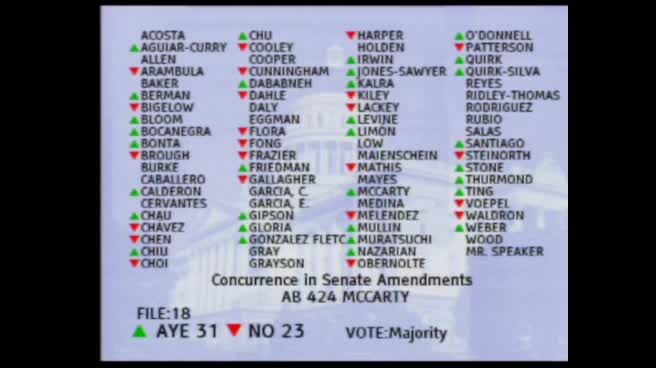 55SEC
Assembly Floor
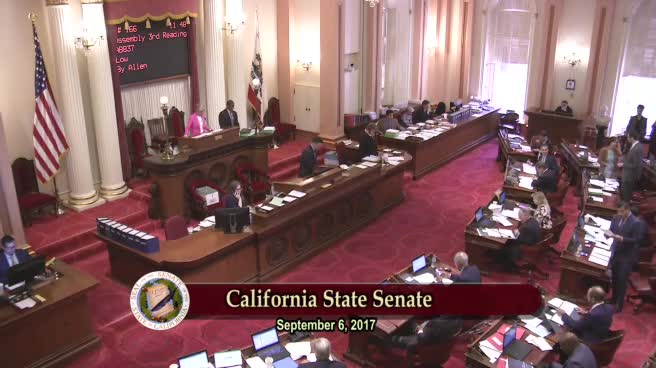 1MIN
Senate Floor
 6MIN
Senate Standing Committee on Governance and Finance
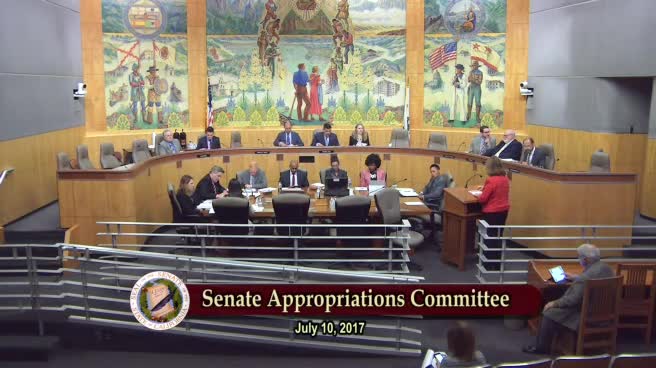 3MIN
Senate Standing Committee on Appropriations
 3MIN
Senate Standing Committee on Governance and Finance
Bill Author

Bill Co-Author(s):