AB 1068: Prison Industry Authority: private employer: pilot program.
- Session Year: 2017-2018
- House: Assembly
- Latest Version Date: 2017-09-15
Existing law creates the Prison Industry Authority within the Department of Corrections and Rehabilitation with the purpose of operating a work program for prisoners that will give prisoners the opportunity to work productively, to earn funds, and to acquire or improve effective work habits and occupational skills. Existing law establishes the Prison Industry Board within the Department of Corrections and Rehabilitation to oversee the Prison Industry Authority, as specified. Under existing law, a state agency seeking to enter into a contract with a private business may grant a bid preference if certain conditions are met. Existing law, known as the 2011 Realignment Legislation, made certain felonies punishable by imprisonment in a county jail, as specified.
This bill would require the Prison Industry Authority to establish a pilot program by selecting one private employer that employs ex-felons, as defined, to provide goods to the Department of Corrections and Rehabilitation or other state agencies pursuant to a procurement contract with the Department of General Services. The bill would entitle the selected private employer to a bid preference of 20% if 1/2 or more of the employers nonexempt employees performing work on the contract are full-time employees who are ex-felons, 10% if 1/4 or more, but less than1/2, of the employers nonexempt employees performing work on the contract are full-time employees who are ex-felons, 10% if the employer provides employer-funded health care coverage and a retirement plan, and 10% if the employer has executed a labor peace agreement. The bill would specify that the procurement contract is for a period of 5 years commencing from the date the contract is awarded and would require the authority to post this date on its Internet Web site. The bill would require the authority to prepare and submit a report on the success of the pilot program to the Prison Industry Board and the Legislature, as specified, by the end of the 3rd year after the date the contract is awarded. The provisions of the bill would be repealed 6 years after the date the contract is awarded.
Existing law creates the Prison Industry Authority within the Department of Corrections and Rehabilitation with the purpose of operating a work program for prisoners that will give prisoners the opportunity to work productively, to earn funds, and to acquire or improve effective work habits and occupational skills. Existing law establishes the Prison Industry Board within the Department of Corrections and Rehabilitation to oversee the Prison Industry Authority, as specified. Under existing law, a state agency seeking to enter into a contract with a private business may grant a bid preference if certain conditions are met. Existing law, known as the 2011 Realignment Legislation, made certain felonies punishable by imprisonment in a county jail, as specified.
This bill would require the Prison Industry Authority to establish a pilot program by selecting one private employer that employs ex-felons, as defined, to provide goods to the Department of Corrections and Rehabilitation or other state agencies pursuant to a procurement contract with the Department of General Services. The bill would entitle the selected private employer to a bid preference of 20% if 1/2 or more of the employers nonexempt employees performing work on the contract are full-time employees who are ex-felons, 10% if 1/4 or more, but less than 1/2 ,1/2, of the employers nonexempt employees performing work on the contract are full-time employees who are ex-felons, 10% if the employer provides employer-funded health care coverage and a retirement plan, and 10% if the employer has executed a labor peace agreement. The bill would specify that the procurement contract is for a period of 5 years commencing from the date the contract is awarded and would require the authority to post this date on its Internet Web site. The bill would require the authority to prepare and submit a report on the success of the pilot program to the Prison Industry Board and the Legislature, as specified, by the end of the 3rd year after the date the contract is awarded. The provisions of the bill would be repealed 6 years after the date the contract is awarded.
Existing law creates the Prison Industry Authority within the Department of Corrections and Rehabilitation with the purpose of operating a work program for prisoners that will give prisoners the opportunity to work productively, to earn funds, and to acquire or improve effective work habits and occupational skills. Existing law establishes the Prison Industry Board within the Department of Corrections and Rehabilitation to oversee the Prison Industry Authority, as specified. Under existing law, a state agency seeking to enter into a contract with a private business may grant a bid preference if certain conditions are met. Existing law, known as the 2011 Realignment Legislation, made certain felonies punishable by imprisonment in a county jail, as specified.
This bill would require the Prison Industry Authority to establish a pilot program to contract with by selecting one private employer that employs ex-felons, as defined, to provide goods to the Department of Corrections and Rehabilitation or other state agencies pursuant to a procurement contract with the Department of General Services. The bill would require the authority to award, in addition to other bid preferences, entitle the selected private employer to a bid preference of 20% to an employer seeking the procurement contract if one-half 1/2 or more of the employers nonexempt employees performing work on the contract are full-time employees who are ex-felons. ex-felons, 10% if 1/4 or more, but less than 1/2 , of the employers nonexempt employees performing work on the contract are full-time employees who are ex-felons, 10% if the employer provides employer-funded health care coverage and a retirement plan, and 10% if the employer has executed a labor peace agreement. The bill would specify that the procurement contract is for a period of 5 years commencing from the date the contract is awarded and would require the authority to post this date on its Internet Web site. The bill would require the authority to prepare and submit a report on the success of the pilot program to the Prison Industry Board and the Legislature, as specified, by the end of the 3rd year after the date the contract is awarded. The provisions of the bill would be repealed 6 years after the date the contract is awarded.
Existing law creates the Prison Industry Authority within the Department of Corrections and Rehabilitation with the purpose of operating a work program for prisoners that will give prisoners the opportunity to work productively, to earn funds, and to acquire or improve effective work habits and occupational skills. Existing law establishes the Prison Industry Board within the Department of Corrections and Rehabilitation to oversee the Prison Industry Authority, as specified. Under existing law, a state agency seeking to enter into a contract with a private business may grant a bid preference if certain conditions are met. Existing law, known as the 2011 Realignment Legislation, made certain felonies punishable by imprisonment in a county jail, as specified.
This bill would require the Prison Industry Authority to establish a pilot program to contract with one private employer that employs ex-felons, as defined, to provide goods to the Department of Corrections and Rehabilitation or other state agencies pursuant to a procurement contract with the Department of General Services. The bill would require the authority to award, in addition to other bid preferences, a bid preference of 20% to an employer seeking the procurement contract if one-half or more of the employers nonexempt employees performing work on the contract are full-time employees who are ex-felons. The bill would specify that the procurement contract is for a period of 5 years commencing from the date the contract is awarded and would require the authority to post this date on its Internet Web site. The bill would require the authority to prepare and submit a report on the success of the pilot program to the Prison Industry Board and the Legislature, as specified, by the end of the 3rd year after the date the contract is awarded. The provisions of the bill would be repealed 6 years after the date the contract is awarded.
Under existing law, a battery is any willful and unlawful use of force or violence upon the person of another. Under existing law, battery is punishable by a fine not exceeding $2,000, or by imprisonment in a county jail not exceeding 6 months, or by both that fine and imprisonment.This bill would make a technical, nonsubstantive change to those provisions.Under existing law, a battery is any willful and unlawful use of force or violence upon the person of another. Under existing law, battery is punishable by a fine not exceeding $2,000, or by imprisonment in a county jail not exceeding 6 months, or by both that fine and imprisonment.
This bill would make a technical, nonsubstantive change to those provisions.
(a)The Legislature finds and declares all of the following:
(1)With the enactment of Chapter 15 of the Statutes of 2011, a large number of nonviolent felons in the state prison system were transferred to county jails to serve out their sentences. In order to prevent recidivism and to benefit the community at large, these felons need the opportunity to obtain employment in jobs that are stable and secure and afford them career ladders that will enable them to provide for themselves and their families after they are released on parole.
(2)The Prison Industry Authority is an agency intended to provide job training for felons preparing to be released from the state prison. However, after the enactment of Chapter 15 of the Statutes of 2011, felons remaining in the state prison are serving much longer sentences and will not be released or paroled as often. In order to prepare offenders for reentry into society, some of the Prison Industry Authoritys efforts should now be directed to felons serving out their sentences in county jails pursuant to Chapter 15 of the Statutes of 2011.
(3)The Department of Corrections and Rehabilitation, through the Prison Industry Authority, can use the procurement process to help provide jobs in the private sector that will assist ex-felons to reenter society successfully.
(b)It is the intent of the Legislature in enacting this legislation to maximize the hiring of ex-felons to permanent, full-time jobs by the selected private employer. To achieve this goal, the selected private employer should hire and make every effort to retain the largest number of parolees possible.
SEC. 2.Section 2819 is added to the Penal Code, to read:2819.(a)For the purposes of this section, the following terms have the following meanings:
(1)Ex-felon means a person released or paroled from a state correctional facility or from a county jail where he or she was housed pursuant to Chapter 15 of the Statutes of 2011 during the five-year period before the date the procurement contract described in subdivision (b) was awarded.
(2)Health care coverage means a policy of health care coverage where all of the following conditions are met:
(A)Health care services under the policy meet the requirements of subdivision (b) of Section 1345 and Section 1367.005 of the Health and Safety Code.
(B)Prescription drug coverage under the policy meets the requirements of Section 1342.7 of the Health and Safety Code.
(C)The actuarial value of the policy is no less than 85 percent of the average cost of care for the population.
(D)The employer share of the policys premium for employee-only coverage is no less than 75 percent of the premium cost.
(3)Labor peace agreement means an agreement between a contracting employer and a bona fide labor organization that, at a minimum, protects the states proprietary interests by prohibiting labor organizations and members from engaging in picketing, work stoppages, boycotts, and any other economic interference with the contracting employers business. This agreement means that the contracting employer has agreed not to disrupt efforts by the bona fide labor organization to communicate with, and attempt to organize and represent, the employers employees. The agreement shall provide a bona fide labor organization access at reasonable times to areas where employees work, for the purpose of meeting with employees to discuss their right to representation, employment rights under state or federal law, and terms and conditions of employment. This type of agreement shall not mandate a particular method of election or certification of the bona fide labor organization.
(4)Nonexempt employee means an employee who is required to be paid overtime compensation under state or federal law.
(5)Retirement plan means a defined benefit or defined contribution plan in which the employer contributes a fixed amount to the plan.
(b)The Prison Industry Authority shall establish a pilot program by selecting one private employer that employs ex-felons to provide goods, including finished manufactured goods or finished food service products, for the benefit of the Department of Corrections and Rehabilitation or other state agencies pursuant to a procurement contract with the Department of General Services.
(c)The procurement contract described in subdivision (b) shall be for a period of five years commencing from the date the contract is awarded. The Prison Industry Authority shall post this date on its Internet Web site.
(d)Notwithstanding any other law, and in addition to any other bid preferences under existing law, the private employer selected by the authority pursuant to subdivision (b) shall be entitled to the following bid preferences, if applicable, in the procurement contract with a state agency or department:
(1)Twenty percent if one-half or more of the nonexempt employees performing work on the contract are full-time employees who are ex-felons.
(2)Ten percent if one-quarter or more, but less than one-half, of the nonexempt employees performing work on the contract are full-time employees who are ex-felons.
(3)Ten percent if the employer provides employer-funded health care coverage and a retirement plan to its employees.
(4)Ten percent if the employer has executed a labor peace agreement with a bona fide labor organization.
(e)The Prison Industry Authority shall prepare and submit a report on the success of the pilot program to the Prison Industry Board and the Legislature, in compliance with Section 9795 of the Government Code, by the end of the third year after the date the contract is awarded. The report shall include, but not be limited to, all of the following:
(1)The turnover rate and retention rate of ex-felon employees hired by the employer selected pursuant to subdivision (b).
(2)The career advancement of ex-felon employees in the pilot program.
(3)The number of ex-felon employees who reoffend while being employed pursuant to the pilot program.
(4)The authoritys recommendations for improving the program.
(f)This section shall remain in effect only until six years after the date the contract specified in subdivision (b) is awarded, and as of that date is repealed.
(a)The Legislature finds and declares all of the following:
(a)(1)With the enactment of Chapter 15 of the Statutes of 2011, a large number of nonviolent felons in the state prison system were transferred to county jails to serve out their sentences. In order to prevent recidivism and to benefit the community at large, these felons need the opportunity to obtain employment in jobs that are stable and secure and afford them career ladders that will enable them to provide for themselves and their families after they are released on parole.
(b)(2)The Prison Industry Authority is an agency intended to provide job training for felons preparing to be released from the state prison. However, after the enactment of Chapter 15 of the Statutes of 2011, felons remaining in the state prison are serving much longer sentences and will not be released or paroled as often. In order to prepare offenders for reentry into society, some of the Prison Industry Authoritys efforts should now be directed to felons serving out their sentences in county jails pursuant to Chapter 15 of the Statutes of 2011.
(c)(3)The Department of Corrections and Rehabilitation, through the Prison Industry Authority, can use the procurement process to help provide jobs in the private sector that will assist ex-felons to reenter society successfully.
(b)It is the intent of the Legislature in enacting this legislation to maximize the hiring of ex-felons to permanent, full-time jobs by the selected private employer. To achieve this goal, the selected private employer should hire and make every effort to retain the largest number of parolees possible.
SEC. 2.Section 2819 is added to the Penal Code, to read:2819.(a)For the purposes of this section, the following terms have the following meanings:
(1)Ex-felon means a person released or paroled from a state correctional facility or from a county jail where he or she was housed pursuant to Chapter 15 of the Statutes of 2011 during the five-year period before the date the procurement contract described in subdivision (b) was awarded.
(2)Health care coverage means a policy of health care coverage where all of the following conditions are met:
(A)Health care services under the policy meet the requirements of subdivision (b) of Section 1345 and Section 1367.005 of the Health and Safety Code.
(B)Prescription drug coverage under the policy meets the requirements of Section 1342.7 of the Health and Safety Code.
(C)The actuarial value of the policy is no less than 85 percent of the average cost of care for the population.
(D)The employer share of the policys premium for employee-only coverage is no less than 75 percent of the premium cost.
(3)Labor peace agreement means an agreement between a contracting employer and a bona fide labor organization that, at a minimum, protects the states proprietary interests by prohibiting labor organizations and members from engaging in picketing, work stoppages, boycotts, and any other economic interference with the contracting employers business. This agreement means that the contracting employer has agreed not to disrupt efforts by the bona fide labor organization to communicate with, and attempt to organize and represent, the employers employees. The agreement shall provide a bona fide labor organization access at reasonable times to areas where employees work, for the purpose of meeting with employees to discuss their right to representation, employment rights under state or federal law, and terms and conditions of employment. This type of agreement shall not mandate a particular method of election or certification of the bona fide labor organization.
(4)Nonexempt employee means an employee who is required to be paid overtime compensation under state or federal law.
(5)Retirement plan means a defined benefit or defined contribution plan in which the employer contributes a fixed amount to the plan.
(b)The Prison Industry Authority shall establish a pilot program by selecting one private employer that employs ex-felons to provide goods, including finished manufactured goods or finished food service products, for the benefit of the Department of Corrections and Rehabilitation or other state agencies pursuant to a procurement contract with the Department of General Services.
(c)The procurement contract described in subdivision (b) shall be for a period of five years commencing from the date the contract is awarded. The Prison Industry Authority shall post this date on its Internet Web site.
(d)Notwithstanding any other law, and in addition to any other bid preferences under existing law, the private employer selected by the authority pursuant to subdivision (b) shall be entitled to the following bid preferences, if applicable, in the procurement contract with a state agency or department:
(1)Twenty percent if one-half or more of the nonexempt employees performing work on the contract are full-time employees who are ex-felons.
(2)Ten percent if one-quarter or more, but less than one-half, of the nonexempt employees performing work on the contract are full-time employees who are ex-felons.
(3)Ten percent if the employer provides employer-funded health care coverage and a retirement plan to its employees.
(4)Ten percent if the employer has executed a labor peace agreement with a bona fide labor organization.
(e)The Prison Industry Authority shall prepare and submit a report on the success of the pilot program to the Prison Industry Board and the Legislature, in compliance with Section 9795 of the Government Code, by the end of the third year after the date the contract is awarded. The report shall include, but not be limited to, all of the following:
(1)The turnover rate and retention rate of ex-felon employees hired by the employer selected pursuant to subdivision (b).
(2)The career advancement of ex-felon employees in the pilot program.
(3)The number of ex-felon employees who reoffend while being employed pursuant to the pilot program.
(4)The authoritys recommendations for improving the program.
(f)This section shall remain in effect only until six years after the date the contract specified in subdivision (b) is awarded, and as of that date is repealed.
The Legislature finds and declares all of the following:
(a)With the enactment of Chapter 15 of the Statutes of 2011, a large number of nonviolent felons in the state prison system were transferred to county jails to serve out their sentences. In order to prevent recidivism and to benefit the community at large, these felons need the opportunity to obtain employment in jobs that are stable and secure and afford them career ladders that will enable them to provide for themselves and their families after they are released on parole.
(b)The Prison Industry Authority is an agency intended to provide job training for felons preparing to be released from the state prison. However, after the enactment of Chapter 15 of the Statutes of 2011, felons remaining in the state prison are serving much longer sentences and will not be released or paroled as often. In order to prepare offenders for reentry into society, some of the Prison Industry Authoritys efforts should now be directed to felons serving out their sentences in county jails pursuant to Chapter 15 of the Statutes of 2011.
(c)The Department of Corrections and Rehabilitation, through the Prison Industry Authority, can use the procurement process to help provide jobs in the private sector that will assist ex-felons to reenter society successfully.
SEC. 2.Section 2819 is added to the Penal Code, to read:2819.(a)For the purposes of this section, the following terms have the following meanings:
(1)Ex-felon means a person released or paroled from a state correctional facility or from a county jail where he or she was housed pursuant to Chapter 15 of the Statutes of 2011 during the five-year period before the date the procurement contract described in subdivision (b) was awarded.
(2)Health care coverage means a policy of health care coverage where all of the following conditions are met:
(A)Health care services under the policy meet the requirements of subdivision (b) of Section 1345 and Section 1367.005 of the Health and Safety Code.
(B)Prescription drug coverage under the policy meets the requirements of Section 1342.7 of the Health and Safety Code.
(C)The actuarial value of the policy is no less than 85 percent of the average cost of care for the population.
(D)The employer share of the policys premium for employee-only coverage is no less than 75 percent of the premium cost.
(3)Labor peace agreement means an agreement between a contracting employer and a bona fide labor organization that, at a minimum, protects the states proprietary interests by prohibiting labor organizations and members from engaging in picketing, work stoppages, boycotts, and any other economic interference with the contracting employers business. This agreement means that the contracting employer has agreed not to disrupt efforts by the bona fide labor organization to communicate with, and attempt to organize and represent, the employers employees. The agreement shall provide a bona fide labor organization access at reasonable times to areas where employees work, for the purpose of meeting with employees to discuss their right to representation, employment rights under state or federal law, and terms and conditions of employment. This type of agreement shall not mandate a particular method of election or certification of the bona fide labor organization.
(4)Nonexempt employee means an employee who is required to be paid overtime compensation under state or federal law.
(5)Retirement plan means a defined benefit or defined contribution plan in which the employer contributes a fixed amount to the plan.
(b)The Prison Industry Authority shall establish a pilot program to contract with by selecting one private employer that employs ex-felons to provide goods, including finished manufactured goods or finished food service products, for the benefit of the Department of Corrections and Rehabilitation or other state agencies pursuant to a procurement contract with the Department of General Services.
(c)The procurement contract described in subdivision (b) shall be for a period of five years commencing from the date the contract is awarded. The Prison Industry Authority shall post this date on its Internet Web site.
(d)Notwithstanding any other law, and in addition to any other bid preferences under existing law, the authority shall cumulatively award the following bid preferences, if applicable, to employers seeking the procurement contract described in subdivision (b): law, the private employer selected by the authority pursuant to subdivision (b) shall be entitled to the following bid preferences, if applicable, in the procurement contract with a state agency or department:
(1)Twenty percent if one-half or more of the nonexempt employees performing work on the contract are full-time employees who are ex-felons.
(2)Ten percent if one-quarter or more, but less than one-half, of the nonexempt employees performing work on the contract are full-time employees who are ex-felons.
(3)Ten percent if the employer provides employer-funded health care coverage and a retirement plan to its employees.
(4)Ten percent if the employer has executed a labor peace agreement with a bona fide labor organization.
(e)The Prison Industry Authority shall prepare and submit a report on the success of the pilot program to the Prison Industry Board and the Legislature, in compliance with Section 9795 of the Government Code, by the end of the third year after the date the contract is awarded. The report shall include, but not be limited to, all of the following:
(1)The turnover rate and retention rate of ex-felon employees hired by the employer selected pursuant to subdivision (b).
(2)The career advancement of ex-felon employees in the pilot program.
(3)The number of ex-felon employees who reoffend while being employed pursuant to the pilot program.
(4)The authoritys recommendations for improving the program.
(f)This section shall remain in effect only until six years after the date the contract specified in subdivision (b) is awarded, and as of that date is repealed.
The Legislature finds and declares all of the following:
(a)With the enactment of Chapter 15 of the Statutes of 2011, a large number of nonviolent felons in the state prison system were transferred to county jails to serve out their sentences. In order to prevent recidivism and to benefit the community at large, these felons need the opportunity to obtain employment in jobs that are stable and secure and afford them career ladders that will enable them to provide for themselves and their families after they are released on parole.
(b)The Prison Industry Authority is an agency intended to provide job training for felons preparing to be released from the state prison. However, after the enactment of Chapter 15 of the Statutes of 2011, felons remaining in the state prison are serving much longer sentences and will not be released or paroled as often. In order to prepare offenders for reentry into society, some of the Prison Industry Authoritys efforts should now be directed to felons serving out their sentences in county jails pursuant to Chapter 15 of the Statutes of 2011.
(c)The Department of Corrections and Rehabilitation, through the Prison Industry Authority, can use the procurement process to help provide jobs in the private sector that will assist ex-felons to reenter society successfully.
SEC. 2.Section 2819 is added to the Penal Code, to read:2819.(a)For the purposes of this section, the following terms have the following meanings:
(1)Ex-felon means a person released or paroled from a state correctional facility or from a county jail where he or she was housed pursuant to Chapter 15 of the Statutes of 2011 during the five-year period before the date the procurement contract described in subdivision (b) was awarded.
(2)Health care coverage means a policy of health care coverage where all of the following conditions are met:
(A)Health care services under the policy meet the requirements of subdivision (b) of Section 1345 and Section 1367.005 of the Health and Safety Code.
(B)Prescription drug coverage under the policy meets the requirements of Section 1342.7 of the Health and Safety Code.
(C)The actuarial value of the policy is no less than 85 percent of the average cost of care for the population.
(D)The employer share of the policys premium for employee-only coverage is no less than 75 percent of the premium cost.
(3)Labor peace agreement means an agreement between a contracting employer and a bona fide labor organization that, at a minimum, protects the states proprietary interests by prohibiting labor organizations and members from engaging in picketing, work stoppages, boycotts, and any other economic interference with the contracting employers business. This agreement means that the contracting employer has agreed not to disrupt efforts by the bona fide labor organization to communicate with, and attempt to organize and represent, the employers employees. The agreement shall provide a bona fide labor organization access at reasonable times to areas where employees work, for the purpose of meeting with employees to discuss their right to representation, employment rights under state or federal law, and terms and conditions of employment. This type of agreement shall not mandate a particular method of election or certification of the bona fide labor organization.
(4)Nonexempt employee means an employee who is required to be paid overtime compensation under state or federal law.
(5)Retirement plan means a defined benefit or defined contribution plan in which the employer contributes a fixed amount to the plan.
(b)The Prison Industry Authority shall establish a pilot program to contract with one private employer that employs ex-felons to provide goods, including finished manufactured goods or finished food service products, for the benefit of the Department of Corrections and Rehabilitation or other state agencies pursuant to a procurement contract with the Department of General Services.
(c)The procurement contract described in subdivision (b) shall be for a period of five years commencing from the date the contract is awarded. The Prison Industry Authority shall post this date on its Internet Web site.
(d)Notwithstanding any other law, and in addition to any other bid preferences under existing law, the authority shall cumulatively award the following bid preferences, if applicable, to employers seeking the procurement contract described in subdivision (b):
(1)Twenty percent if one-half or more of the nonexempt employees performing work on the contract are full-time employees who are ex-felons.
(2)Ten percent if one-quarter or more, but less than one-half, of the nonexempt employees performing work on the contract are full-time employees who are ex-felons.
(3)Ten percent if the employer provides employer-funded health care coverage and a retirement plan to its employees.
(4)Ten percent if the employer has executed a labor peace agreement with a bona fide labor organization.
(e)The Prison Industry Authority shall prepare and submit a report on the success of the pilot program to the Prison Industry Board and the Legislature, in compliance with Section 9795 of the Government Code, by the end of the third year after the date the contract is awarded.
(f)This section shall remain in effect only until six years after the date the contract is awarded, and as of that date is repealed.
SECTION 1.Section 242 of the Penal Code is amended to read:242.A battery is a willful and unlawful use of force or violence upon the person of another.A battery is any a willful and unlawful use of force or violence upon the person of another.
|
Date
|
Status
|
|---|---|
| Jan 12, 2018 | Stricken from file. |
| Jan 3, 2018 | Consideration of Governor's veto pending. |
| Oct 14, 2017 | Vetoed by Governor. |
| Sep 21, 2017 | Enrolled and presented to the Governor at 3:30 p.m. |
| Sep 13, 2017 | Assembly Rule 77(a) suspended. |
| Sep 12, 2017 | In Assembly. Concurrence in Senate amendments pending. May be considered on or after September 14 pursuant to Assembly Rule 77. |
| Sep 11, 2017 | Read third time. Passed. Ordered to the Assembly. |
| Sep 5, 2017 | Read second time. Ordered to third reading. |
| Sep 1, 2017 | From committee: Amend, and do pass as amended. (Ayes 7. Noes 0.) (September 1). |
| Jul 10, 2017 | In committee: Referred to APPR. suspense file. |
| Jun 27, 2017 | From committee: Do pass and re-refer to Com. on APPR. (Ayes 7. Noes 0.) (June 27). Re-referred to Com. on APPR. |
| Jun 14, 2017 | Referred to Com. on PUB. S. |
| Jun 1, 2017 | In Senate. Read first time. To Com. on RLS. for assignment. |
| May 31, 2017 | Read third time. Passed. Ordered to the Senate. (Ayes 74. Noes 1. Page 1937.) |
| May 30, 2017 | Read second time. Ordered to third reading. |
| May 26, 2017 | From committee: Amend, and do pass as amended. (Ayes 16. Noes 0.) (May 26). |
| May 10, 2017 | In committee: Set, first hearing. Referred to APPR. suspense file. |
| Apr 19, 2017 | From committee: Do pass and re-refer to Com. on APPR. (Ayes 7. Noes 0.) (April 18). Re-referred to Com. on APPR. |
| Mar 29, 2017 | Re-referred to Com. on PUB. S. |
| Mar 28, 2017 | From committee chair, with author's amendments: Amend, and re-refer to Com. on PUB. S. Read second time and amended. |
| Mar 27, 2017 | Referred to Com. on PUB. S. |
| Feb 17, 2017 | From printer. May be heard in committee March 19. |
| Feb 16, 2017 | Read first time. To print. |
|
Date
|
Description
|
Location
|
Votes
|
|
|---|---|---|---|---|
| Sep 13, 2017 | AB 1068 GONZALEZ FLETCHER Concurrence in Senate Amendments | Assembly Floor |
Passed |
|
| Sep 11, 2017 | Assembly 3rd Reading AB1068 Gonzalez Fletcher By Bradford | Senate Floor |
Passed |
|
| Sep 1, 2017 | Do pass as amended | Senate Standing Committee on Appropriations |
Passed |
|
| Jul 10, 2017 | Placed on suspense file | Senate Standing Committee on Appropriations |
Passed |
|
| Jun 27, 2017 | Do pass, but first be re-referred to the Committee on [Appropriations] | Senate Standing Committee on Public Safety |
Passed |
|
| May 31, 2017 | AB 1068 GONZALEZ FLETCHER Assembly Third Reading | Assembly Floor |
Passed |
|
| May 26, 2017 | Do pass as amended. | Assembly Standing Committee on Appropriations |
Passed |
|
| Apr 18, 2017 | Do pass and be re-referred to the Committee on [Appropriations] | Assembly Standing Committee on Public Safety |
Passed |
This list shows positions taken on this bill by organizations on the date displayed, which is linked to the original source.
Positions by individuals are not included.
|
Organization
|
Position
|
Date
|
|---|---|---|
| California Teamsters | ** Support | Sep 5, 2017 |
| California Workforce Association | ** Support | Sep 5, 2017 |
| Coalition of Small and Disabled Veteran Business | ** Support | Sep 5, 2017 |
| SDI Industries | * Support | Apr 18, 2017 |
GOVERNOR'S VETO
GV Bill Id:AB 1068
Author:(Gonzalez Fletcher)
As Enrolled Ver:September 15, 2017
2/3 vote
ASSEMBLY: | 74-1 | (May 31, 2017) | SENATE: | 39-0 | (September 11, 2017) |
ASSEMBLY: | 77-1 | (September 13, 2017) |
Original Committee Reference: PUB. S.
SUMMARY: Requires the California Prison Industry Authority (CALPIA) to establish a pilot program to provide goods to the California Department of Corrections and Rehabilitation (CDCR) or other state agencies.
The Senate amendments:
- State that it is the intent of the Legislature in enacting this legislation to maximize the hiring of ex-felons to permanent, full-time jobs by the selected private employer.
- Provide that to achieve this goal, the selected private employer should hire and make every effort to retain the largest number of parolees possible.
EXISTING LAW:
- Establishes the Department of General Services for the purpose of providing centralized services including, but not limited to, planning, acquisition, construction, and maintenance of state buildings and property; purchasing; printing; architectural services; administrative hearings; government claims; and accounting services.
- Provides that notwithstanding provisions of existing law, the director of the Department of General Services or his or her designee may procure goods from the private sector even though the goods may be available from the CALPIA, when in his or her discretion, it is cost beneficial to do so, and if the director or his or her designee continues to include CALPIA in soliciting quotations for goods.
- Establishes the CALPIA within the CDCR, with the following purposes:
- To develop and operate industrial, agricultural, and service enterprises employing prisoners in institutions, as specified;
- To create and maintain working conditions within the enterprises as much like those which prevail in private industry as possible, to assure prisoners employed therein the opportunity to work productively, to earn funds, and to acquire or improve effective work habits and occupational skills; and
- To operate a work program for prisoners which will ultimately be self-supporting by generating sufficient funds from the sale of products and services to pay all the expenses of the program, and one which will provide goods and services which are or will be used by the Department of Corrections, thereby reducing the cost of its operation.
- Grants authority to the CALPIA to sell products and services to states and local agencies.
- Gives the CALPIA board the same authority as the board of directors of private corporations, including but not limited to the ability to enter into contracts.
- Prohibits any person from selling products manufactured in whole or in part by inmate labor.
- Requires state agencies to accept an offer from the lowest responsible bidder if that offer meets appropriate specifications.
AS PASSED BY THE ASSEMBLY, this bill:
- Required the CALPIA to establish a pilot program to select one private employer that employs ex-felons to provide goods, as specified, for the CDCR or other state agencies pursuant to a procurement contract with the Department of General Services.
- Provided that the procurement contract shall be for a period of five years from the date the contract is awarded and the CALPIA shall post this date on its Internet Web site.
- Stated that, notwithstanding any other law and in addition to any other bid preferences under existing law, the private employer selected shall be entitled to the following bid preferences, if applicable, in the procurement contract with a state agency or department:
- Twenty percent if one-half or more of the nonexempt employees performing work on the contract are full-time employees who are ex-felons;
- Ten percent if one-quarter or more, but less than one-half, of the nonexempt employees performing work on the contract are full-time employees who are ex-felons;
- Ten percent if the employer provides employer-funded health care coverage and a retirement plan to its employees; and
- Ten percent if the employer has executed a labor peace agreement with a bona fide labor organization.
- Required the CALPIA to prepare and submit a report on the success of the pilot program to the Prison Industry Board and the Legislature, as specified, by the end of the third year after the date the contract is awarded. The report shall include, but not be limited to, all of the following:
- The turnover rate and retention rate of ex-felon employees hired by the employer selected;
- The career advancement of ex-felon employees in the pilot program;
- The number of ex-felon employees who reoffend while being employed pursuant to the pilot program; and,
- The authority's recommendations for improving the program.
- Provided that the pilot program shall remain in effect only until six years after the date the contract is awarded, and is repealed as of that date.
- Made legislative findings regarding the following:
- The need for felons to obtain opportunities for employment in order to reduce recidivism;
- The need to refocus the CALPIA's activities regarding job training to felons serving sentences in county jails due to realignment; and
- The ability for the CDCR, through the CALPIA, to use the procurement process to help provide jobs in the private sector that will assist ex-felons to reenter society successfully.
- Defined "ex-felon" as "a person released or paroled from a state correctional facility or from a county jail where he or she was housed pursuant to Chapter 15 of the Statutes of 2011 during the five-year period before the date the procurement contract described in subdivision (b) was awarded."
- Defined "health care coverage" as "a policy of health care coverage where all of the following conditions are met:
- Health care services under the policy meets the specified requirements;
- Prescription drug coverage under the policy meets the specified requirements;
- The actuarial value of the policy is no less than 85% of the average cost of care for the population; and
- The employer share of the policy's premium for employee-only coverage is no less than 75% of the premium cost."
- Defined "labor peace agreement" as "an agreement between a contracting employer and a bona fide labor organization that, at a minimum, protects the state's proprietary interests by prohibiting labor organizations and members from engaging in picketing, work stoppages, boycotts, and any other economic interference with the contracting employer's business. This agreement means that the contracting employer has agreed not to disrupt efforts by the bona fide labor organization to communicate with, and attempt to organize and represent, the employer's employees. The agreement shall provide a bona fide labor organization access at reasonable times to areas where employees work, for the purpose of meeting with employees to discuss their right to representation, employment rights under state or federal law, and terms and conditions of employment. This type of agreement shall not mandate a particular method of election or certification of the bona fide labor organization."
- Defined "nonexempt employee" as "an employee who is required to be paid overtime compensation under state or federal law."
- Defined "retirement plan" as "a defined benefit or defined contribution plan in which the employer contributes a fixed amount to the plan."
FISCAL EFFECT: According to the Senate Appropriations Committee:
- Increased costs (General Fund (GF)) to the CDCR for the additional costs associated with providing bid preferences to an organization if a specified percentage of employees are ex-felons.
According to CALPIA, it will be difficult to project a cost, but it would be appropriate to assume at least a 5% increase when providing a bid preference. If the contract is for $1.5 million, the annual additional cost (GF) will be at least $75,000.
- Minor cost (General Fund) to CALPIA to prepare a report on the program.
COMMENTS: According to the author, "Assembly Bill 1068 will create a pilot program under the California Prison Industry Authority (CALPIA) to contract with one private employer for five years and provide bid preferences for employing ex-felons during the procurement process with the Department of Corrections. This pilot program is important since we need to work on reducing recidivism and redirect efforts to training the reentry population. It's a way of making sure we have restorative justice policies in our state that focus on our reentry population.
"Unemployed ex-felons face challenges as a result of their criminal background and are more likely to end up incarcerated. Incentivizing employers to pursue a state contract with the Department of Corrections and hire ex-felons is a first step towards ensuring that ex-felons are given a second chance to prove themselves after serving time in prison or jail.
"It'll ultimately create tax-paying citizens and positively contribute to our society. The jobs created under AB 1068 will provide career ladders for ex-felons while ensuring that they are given an opportunity to avoid recommitting offenses."
This bill requires the California Prison Industry Authority to establish a pilot program to contract with a company that employs ex-offenders to provide goods to state agencies. The selected company would receive a 10% to 40% bid preference depending on whether it met certain criteria.
A bid preference pilot program is an idea that has merit, but it should more closely mirror existing preferences in state law. I urge the proponents to work with the Administration to explore additional ways to incentivize the hiring of formerly incarcerated individuals, a goal that I strongly support.
Analysis Prepared by: Cheryl Anderson / PUB. S. / (916) 319-3744 FN: 0002457
CONCURRENCE IN SENATE AMENDMENTS
CSA1 Bill Id:AB 1068
Author:(Gonzalez Fletcher)
As Amended Ver:September 1, 2017
Majority vote
ASSEMBLY: | 74-1 | (May 31, 2017) | SENATE: | 39-0 | (September 11, 2017) |
Original Committee Reference: PUB. S.
SUMMARY: Requires the California Prison Industry Authority (CALPIA) to establish a pilot program to provide goods to the California Department of Corrections and Rehabilitation (CDCR) or other state agencies.
The Senate amendments:
- State that it is the intent of the Legislature in enacting this legislation to maximize the hiring of ex-felons to permanent, full-time jobs by the selected private employer.
- Provide that to achieve this goal, the selected private employer should hire and make every effort to retain the largest number of parolees possible.
EXISTING LAW:
- Establishes the Department of General Services for the purpose of providing centralized services including, but not limited to, planning, acquisition, construction, and maintenance of state buildings and property; purchasing; printing; architectural services; administrative hearings; government claims; and accounting services.
- Provides that notwithstanding provisions of existing law, the director of the Department of General Services or his or her designee may procure goods from the private sector even though the goods may be available from the CALPIA, when in his or her discretion, it is cost beneficial to do so, and if the director or his or her designee continues to include CALPIA in soliciting quotations for goods.
- Establishes the CALPIA within the CDCR, with the following purposes:
- To develop and operate industrial, agricultural, and service enterprises employing prisoners in institutions, as specified;
- To create and maintain working conditions within the enterprises as much like those which prevail in private industry as possible, to assure prisoners employed therein the opportunity to work productively, to earn funds, and to acquire or improve effective work habits and occupational skills; and
- To operate a work program for prisoners which will ultimately be self-supporting by generating sufficient funds from the sale of products and services to pay all the expenses of the program, and one which will provide goods and services which are or will be used by the Department of Corrections, thereby reducing the cost of its operation.
- Grants authority to the CALPIA to sell products and services to states and local agencies.
- Gives the CALPIA board the same authority as the board of directors of private corporations, including but not limited to the ability to enter into contracts.
- Prohibits any person from selling products manufactured in whole or in part by inmate labor.
- Requires state agencies to accept an offer from the lowest responsible bidder if that offer meets appropriate specifications.
AS PASSED BY THE ASSEMBLY, this bill:
- Required the CALPIA to establish a pilot program to select one private employer that employs ex-felons to provide goods, as specified, for the CDCR or other state agencies pursuant to a procurement contract with the Department of General Services.
- Provided that the procurement contract shall be for a period of five years from the date the contract is awarded and the CALPIA shall post this date on its Internet Web site.
- Stated that, notwithstanding any other law and in addition to any other bid preferences under existing law, the private employer selected shall be entitled to the following bid preferences, if applicable, in the procurement contract with a state agency or department:
- Twenty percent if one-half or more of the nonexempt employees performing work on the contract are full-time employees who are ex-felons;
- Ten percent if one-quarter or more, but less than one-half, of the nonexempt employees performing work on the contract are full-time employees who are ex-felons;
- Ten percent if the employer provides employer-funded health care coverage and a retirement plan to its employees; and
- Ten percent if the employer has executed a labor peace agreement with a bona fide labor organization.
- Required the CALPIA to prepare and submit a report on the success of the pilot program to the Prison Industry Board and the Legislature, as specified, by the end of the third year after the date the contract is awarded. The report shall include, but not be limited to, all of the following:
- The turnover rate and retention rate of ex-felon employees hired by the employer selected;
- The career advancement of ex-felon employees in the pilot program;
- The number of ex-felon employees who reoffend while being employed pursuant to the pilot program; and,
- The authority's recommendations for improving the program.
- Provided that the pilot program shall remain in effect only until six years after the date the contract is awarded, and is repealed as of that date.
- Made legislative findings regarding the following:
- The need for felons to obtain opportunities for employment in order to reduce recidivism;
- The need to refocus the CALPIA's activities regarding job training to felons serving sentences in county jails due to realignment; and
- The ability for the CDCR, through the CALPIA, to use the procurement process to help provide jobs in the private sector that will assist ex-felons to reenter society successfully.
- Defined "ex-felon" as "a person released or paroled from a state correctional facility or from a county jail where he or she was housed pursuant to Chapter 15 of the Statutes of 2011 during the five-year period before the date the procurement contract described in subdivision (b) was awarded."
- Defined "health care coverage" as "a policy of health care coverage where all of the following conditions are met:
- Health care services under the policy meets the specified requirements;
- Prescription drug coverage under the policy meets the specified requirements;
- The actuarial value of the policy is no less than 85% of the average cost of care for the population; and
- The employer share of the policy's premium for employee-only coverage is no less than 75% of the premium cost."
- Defined "labor peace agreement" as "an agreement between a contracting employer and a bona fide labor organization that, at a minimum, protects the state's proprietary interests by prohibiting labor organizations and members from engaging in picketing, work stoppages, boycotts, and any other economic interference with the contracting employer's business. This agreement means that the contracting employer has agreed not to disrupt efforts by the bona fide labor organization to communicate with, and attempt to organize and represent, the employer's employees. The agreement shall provide a bona fide labor organization access at reasonable times to areas where employees work, for the purpose of meeting with employees to discuss their right to representation, employment rights under state or federal law, and terms and conditions of employment. This type of agreement shall not mandate a particular method of election or certification of the bona fide labor organization."
- Defined "nonexempt employee" as "an employee who is required to be paid overtime compensation under state or federal law."
- Defined "retirement plan" as "a defined benefit or defined contribution plan in which the employer contributes a fixed amount to the plan."
FISCAL EFFECT:
- Increased costs (General Fund (GF)) to the CDCR for the additional costs associated with providing bid preferences to an organization if a specified percentage of employees are ex-felons.
According to CALPIA, it will be difficult to project a cost, but it would be appropriate to assume at least a 5% increase when providing a bid preference. If the contract is for $1.5 million, the annual additional cost (GF) will be at least $75,000.
- Minor cost (General Fund) to CALPIA to prepare a report on the program.
COMMENTS: According to the author, "Assembly Bill 1068 will create a pilot program under the California Prison Industry Authority (CALPIA) to contract with one private employer for five years and provide bid preferences for employing ex-felons during the procurement process with the Department of Corrections. This pilot program is important since we need to work on reducing recidivism and redirect efforts to training the reentry population. It's a way of making sure we have restorative justice policies in our state that focus on our reentry population.
"Unemployed ex-felons face challenges as a result of their criminal background and are more likely to end up incarcerated. Incentivizing employers to pursue a state contract with the Department of Corrections and hire ex-felons is a first step towards ensuring that ex-felons are given a second chance to prove themselves after serving time in prison or jail.
"It'll ultimately create tax-paying citizens and positively contribute to our society. The jobs created under AB 1068 will provide career ladders for ex-felons while ensuring that they are given an opportunity to avoid recommitting offenses."
Analysis Prepared by: Cheryl Anderson / PUB. S. / (916) 319-3744 FN: 0001838
Office of Senate Floor Analyses (916) 651-1520 Fax: (916) 327-4478 | AB |
THIRD READING
Bill No: AB 1068
Amended: 9/1/17 in Senate
SENATE PUBLIC SAFETY COMMITTEE: 7-0, 6/27/17
AYES: Skinner, Anderson, Bradford, Jackson, Mitchell, Stone, Wiener
SENATE APPROPRIATIONS COMMITTEE: 7-0, 9/1/17
AYES: Lara, Bates, Beall, Bradford, Hill, Nielsen, Wiener
ASSEMBLY FLOOR: 74-1, 5/31/17 - See last page for vote
SUBJECT: Prison Industry Authority: private employer: pilot program
DIGEST:
This bill requires the California Prison Industry Authority (CALPIA) to establish a pilot program to provide goods to the California Department of Corrections and Rehabilitation (CDCR) or other state agencies.
Existing law:
- Establishes the Department of General Services (DGS) for the purpose of providing centralized services including, but not limited to, planning, acquisition, construction, and maintenance of state buildings and property; purchasing; printing; architectural services; administrative hearings; government claims; and accounting services. (Gov. Code, § 14600.)
- Provides that notwithstanding provisions of existing law, the director of DGS or his or her designee may procure goods from the private sector even though the goods may be available from the CALPIA, when in his or her discretion, it is cost beneficial to do so, and if the director or his or her designee continues to include CALPIA in soliciting quotations for goods. (Gov. Code, § 14612, subd. (e).)
- Establishes the CALPIA within the CDCR, with the following purposes.
- To develop and operate industrial, agricultural, and service enterprises employing prisoners in institutions, as specified;
- To create and maintain working conditions within the enterprises as much like those which prevail in private industry as possible, to assure prisoners employed therein the opportunity to work productively, to earn funds, and to acquire or improve effective work habits and occupational skills; and
- To operate a work program for prisoners which will ultimately be self-supporting by generating sufficient funds from the sale of products and services to pay all the expenses of the program, and one which will provide goods and services which are or will be used by CDCR, thereby reducing the cost of its operation. (Pen. Code, § 2801.)
- Grants authority to the CALPIA to sell products and services to states and local agencies. (Pen. Code, § 2807.)
- Gives the CALPIA board the same authority as the board of directors of private corporations, including but not limited to the ability to enter into contracts. (Pen. Code, § 2808.)
- Prohibits any person from selling products manufactured in whole or in part by inmate labor. (Pen. Code, § 2812.)
- Requires state agencies to accept an offer from the lowest responsible bidder if that offer meets appropriate specifications. (Pub. Contract Code, §10301)
This bill:
- Requires the CALPIA to establish a pilot program to select one private employer that employs ex-felons to provide goods, as specified, for the CDCR or other state agencies pursuant to a procurement contract with DGS.
- Provides that the procurement contract shall be for a period of five years from the date the contract is awarded and the CALPIA shall post this date on its Internet Web site.
- States that, notwithstanding any other law and in addition to any other bid preferences under existing law, the private employer selected shall be entitled to the following bid preferences, if applicable, in the procurement contract with a state agency or department:
- Twenty percent if one-half or more of the nonexempt employees performing work on the contract are full-time employees who are ex-felons;
- Ten percent if one-quarter or more, but less than one-half, of the nonexempt employees performing work on the contract are full-time employees who are ex-felons;
- Ten percent if the employer provides employer-funded health care coverage and a retirement plan to its employees; and
- Ten percent if the employer has executed a labor peace agreement with a bona fide labor organization.
- Requires the CALPIA to prepare and submit a report on the success of the pilot program to the Prison Industry Board and the Legislature, as specified, by the end of the third year after the date the contract is awarded. The report shall include, but not be limited to, all of the following:
- The turnover rate and retention rate of ex-felon employees hired by the employer selected;
- The career advancement of ex-felon employees in the pilot program;
- The number of ex-felon employees who reoffend while being employed pursuant to the pilot program; and.
- The authority's recommendations for improving the program.
- Provides that the pilot program shall remain in effect only until six years after the date the contract is awarded, and is repealed as of that date.
- Makes legislative findings regarding the following:
- The need for felons to obtain opportunities for employment in order to reduce recidivism;
- The need to refocus the CALPIA's activities regarding job training to felons serving sentences in county jails due to realignment; and
- The ability for the CDCR, through the CALPIA, to use the procurement process to help provide jobs in the private sector that will assist ex-felons to reenter society successfully.
- States that it is the intent of the Legislature in enacting this bill to maximize the hiring of ex-felons to permanent, full-time jobs by the selected private employer. To achieve this goal, the selected private employer should hire and make every effort to retain the largest number of parolees as possible.
- Defines "ex-felon" as "a person released or paroled from a state correctional facility or from a county jail where he or she was housed pursuant to Chapter 15 of the Statutes of 2011 during the five-year period before the date the procurement contract described in subdivision (b) was awarded."
- Defines "health care coverage" as "a policy of health care coverage where all of the following conditions are met:
- Health care services under the policy meets the specified requirements;
- Prescription drug coverage under the policy meets the specified requirements;
- The actuarial value of the policy is no less than 85% of the average cost of care for the population; and
- The employer share of the policy's premium for employee-only coverage is no less than 75% of the premium cost."
- Defines "labor peace agreement" as "an agreement between a contracting employer and a bona fide labor organization that, at a minimum, protects the state's proprietary interests by prohibiting labor organizations and members from engaging in picketing, work stoppages, boycotts, and any other economic interference with the contracting employer's business. This agreement means that the contracting employer has agreed not to disrupt efforts by the bona fide labor organization to communicate with, and attempt to organize and represent, the employer's employees. The agreement shall provide a bona fide labor organization access at reasonable times to areas where employees work, for the purpose of meeting with employees to discuss their right to representation, employment rights under state or federal law, and terms and conditions of employment. This type of agreement shall not mandate a particular method of election or certification of the bona fide labor organization."
- Defines "nonexempt employee" as "an employee who is required to be paid overtime compensation under state or federal law."
- Defines "retirement plan" as "a defined benefit or defined contribution plan in which the employer contributes a fixed amount to the plan."
Background
On November 4, 2014, voters approved the Safe Neighborhoods and Schools Act, which was a citizen’s initiative placed on the ballot as Proposition 47. Proposition 47 made significant changes to the state’s criminal justice system by reducing penalties for certain non-violent, nonserious drug and property crimes, and requiring that the resulting savings be spent, among other things, on programs to aid realignment and keep offenders out of prison and jail. In addition, Californians recently approved Proposition 57, which allows for parole consideration of certain non-violent felons. Due to resentencing and increased parole consideration under these propositions and other realignment efforts, California is expected to see a significant increase in the state prison parole and ex-offender populations, which makes the implementation and expansion of re-entry programs a priority if recidivism is to be avoided among the newly released population. Furthermore, the realigned inmate population that was moved from state prison to county jails does not have access to the same job training resources that may have been available in the state prison program and therefore may be released with limited skills and opportunities for a career. Since workforce training programs are a key element of reducing recidivism during re-entry, it is essential that these populations receive training services during incarceration or shortly thereafter.[1]
AB 1068 works to expand the availability of workforce training and employment programs by creating a pilot program to employ ex-felons in the private sector. By doing so, AB 1068 will likely lesson the burden on state programs and provide ex-felons with opportunities that may lead to long term job placement. In addition, this program will provide valuable information regarding recidivism and job training in the context of the private sector by requiring the CALPIA to make a report on the pilot program.
FISCAL EFFECT: Appropriation: Fiscal Com.: Local:
According to the Senate Appropriations Committee:
- Unknown, potentially-significant costs (General Fund) to CDCR, possibly in the tens of thousands to hundreds of thousands of dollars depending on the size of the contract to provide goods to CDCR and the specific characteristics of the private employer relevant to the bid preferences.
- Approximately $21,000 in workload costs to CALPIA for an Associate Governmental Program Analyst to compile and evaluate data and to prepare the report on the success of the pilot program.
California Teamsters
California Workforce Association
Coalition of Small and Disabled Veteran Business
ASSEMBLY FLOOR: 74-1, 5/31/17
AYES: Acosta, Aguiar-Curry, Arambula, Baker, Berman, Bigelow, Bloom, Bocanegra, Bonta, Brough, Burke, Caballero, Calderon, Cervantes, Chau, Chávez, Chen, Chiu, Chu, Cooley, Cooper, Cunningham, Dababneh, Dahle, Daly, Flora, Fong, Frazier, Friedman, Cristina Garcia, Eduardo Garcia, Gipson, Gloria, Gomez, Gonzalez Fletcher, Gray, Grayson, Harper, Holden, Irwin, Jones-Sawyer, Kalra, Kiley, Lackey, Levine, Limón, Low, Maienschein, Mathis, Mayes, McCarty, Medina, Mullin, Muratsuchi, Nazarian, Obernolte, O'Donnell, Quirk, Quirk-Silva, Reyes, Ridley-Thomas, Rodriguez, Rubio, Salas, Santiago, Steinorth, Mark Stone, Thurmond, Ting, Voepel, Waldron, Weber, Wood, Rendon
NOES: Travis Allen
NO VOTE RECORDED: Choi, Eggman, Gallagher, Melendez, Patterson
9/5/17 10:26:27
**** END ****
https://www.doleta.gov/Performance/Results/AnnualReports/PY2013/CA-PY13_WIA_AnnualReport.pdf ↑
SENATE COMMITTEE ON
Senator Ricardo Lara, Chair
2017 - 2018 Regular Session
AB 1068 (Gonzalez Fletcher) - Prison Industry Authority: private employer: pilot program
Version: | Policy Vote: |
Urgency: | Mandate: |
Hearing Date: | Consultant: |
Bill Summary:
AB 1068 would establish a pilot program requiring the Prison Industry Authority (CalPIA) to contract with a private employer that employs ex-felons to provide goods to the Department of Corrections and Rehabilitation (CDCR) or other state agencies. The private employer would be provided bid preferences, as specified, when bidding for a procurement contract with a state agency or department.
*********** ANALYSIS ADDENDUM – SUSPENSE FILE ***********
The following information is revised to reflect amendments
adopted by the committee on September 1, 2017
Fiscal Impact:
- Unknown, potentially-significant costs (General Fund) to CDCR, possibly in the tens of thousands to hundreds of thousands of dollars depending on the size of the contract to provide goods to CDCR and the specific characteristics of the private employer relevant to the bid preferences.
- Approximately $21,000 in workload costs (special fund*) to CalPIA for 1.0 Associate Governmental Program Analyst to compile and evaluate data and to prepare the report on the success of the pilot program.
*Prison Industries Revolving Fund
Author Amendments:
Add legislative intent language.
-- END --
SENATE COMMITTEE ON
Senator Ricardo Lara, Chair
2017 - 2018 Regular Session
AB 1068 (Gonzalez Fletcher) - Prison Industry Authority: private employer: pilot program
Version: | Policy Vote: |
Urgency: | Mandate: |
Hearing Date: | Consultant: |
This bill meets the criteria for referral to the Suspense File.
Bill Summary:
AB 1068 would establish a pilot program requiring the Prison Industry Authority (CalPIA) to contract with a private employer that employs ex-felons to provide goods to the Department of Corrections and Rehabilitation (CDCR) or other state agencies. The private employer would be provided bid preferences, as specified, when bidding for a procurement contract with a state agency or department.
Fiscal Impact:
- Unknown, potentially-significant costs (General Fund) to CDCR, possibly in the tens of thousands to hundreds of thousands of dollars depending on the size of the contract to provide goods to CDCR and the specific characteristics of the private employer relevant to the bid preferences.
- Approximately $21,000 in workload costs (special fund*) to CalPIA for an Associate Governmental Program Analyst to compile and evaluate data and to prepare the report on the success of the pilot program.
*Prison Industries Revolving Fund
Background:
Existing law allows the director of the Department of General Services (DGS), or his or her designee, to procure goods from the private sector even though the goods may be available from the CalPIA, when in his or her discretion, it is cost beneficial to do so, and if the director or his or her designee continues to include CalPIA in soliciting quotations for goods. Generally, state agencies are required to accept an offer from the lowest responsible bidder if that offer meets appropriate specifications. CalPIA was established to develop and operate industrial, agricultural, and service enterprises employing prisoners in institutions, and operate work programs for prisoners.
In the November 2014 election, voters approved the Safe Neighborhoods and Schools Act (Proposition 47). Proposition 47 made significant changes to the state’s criminal justice system by reducing penalties for certain non-violent, nonserious drug and property crimes, and requiring that the resulting savings be spent on, among other things, keep offenders out of prison and jail. In addition, voters approved the Public Safety and Rehabilitation Act of 2016 (Proposition 57) in the November 2016 election. Proposition 57 allowed for parole consideration of certain non-violent felons. Due to resentencing and increased parole consideration under these propositions and other realignment efforts, California is expected to see a significant increase in the state prison parole and ex-offender populations, which makes the implementation and expansion of re-entry programs a priority if recidivism is to be avoided among the newly-released population.
Proposed Law:
This bill would establish a five-year pilot program requiring CalPIA to contract with a private employer that employs ex-felons to provide goods to CDCR or other state agencies. In return, the private employer would be receive the following bid preferences when bidding for procurement contracts with a state agency or department:
- Twenty percent if one-half or more of the nonexempt employees performing work on the contract are full-time employees who are ex-felons.
- Ten percent if one-quarter or more, but less than one-half, of the nonexempt employees performing work on the contract are full-time employees who are ex-felons.
- Ten percent if the employer provides employer-funded health care coverage and a retirement plan to its employees.
- Ten percent if the employer has executed a labor peace agreement with a bona fide labor organization.
Additionally, this bill would require CalPIA to report to its board and the Legislature on the success of the pilot program by the end of the third year of the after the contract is award. The report is required to include all of the following:
- The turnover rate and retention rate of ex-felon employees hired by the employer selected pursuant to this bill.
- The career advancement of ex-felon employees in the pilot program.
- The number of ex-felon employees who reoffend while being employed pursuant to the pilot program.
- The authority’s recommendations for improving the program.
Related Legislation:
AB 1114 (E. Garcia, 2017) would have expanded the Supervised Population Workforce Training Program to serve individuals on parole. AB 1114 was held on the Suspense File of the Assembly Committee on Appropriations.
Staff Comments:
Aside from the requirement that CalPIA enter into the pilot program contract for goods for the benefit of CDCR or other state agencies pursuant to a procurement contract with DGS, this bill does not set an additional parameters related to the contract. As the size of the contract is unknown, the fiscal impact of this bill could vary. If, for example, CalPIA enters into an annual contract of $500,000 with a private employer for goods to CDCR, the department would incur costs of $2.5 million for the five-year duration of the contract. Using the hypothetical annual $500,000 contract, depending on the private employers specific characteristics (that is, how many ex-felons it employs, whether it provides its employees with the requisite level of health care coverage, and if it enters into a labor peace agreement), the added costs to the department because of bid preferences would be anywhere from $50,000 (with 10-percent bid preference) to $200,000 (with a 40-percent bid preferences). Staff notes, however, that the fiscal impact of this measure cannot be estimated given that the value of the contract and the specific characteristics of the private employer (that is, what percentage of the cumulative bid preferences would apply) are unknown.
Recommended Amendments:
In Section 1, subdivision (a) of this bill, the legislative findings and declarations state that people convicted of felony offenses with sentences that are realigned to county jail pursuant to the 2011 Realignment Legislation need the opportunity to obtain employment in jobs that are stable and secure and will enable them to provide for themselves and their families after they are released on parole. Parole, however, is a form of supervision that is applicable only to specified offenders upon release from state prison. The author may wish to change “parole” to “supervision” in subdivision (a) to more accurately reflect individuals convicted of felony offenses being released on mandatory supervision from county jail.
-- END --
SENATE COMMITTEE ON PUBLIC SAFETY
Senator Nancy Skinner, Chair
2017 - 2018 Regular
Bill No: AB 1068 Hearing Date: June 27, 2017
Author: | Gonzalez Fletcher | ||
Version: | May 26, 2017 | ||
Urgency: | No | Fiscal: | Yes |
Consultant: | GC | ||
Subject: Prison Industry Authority: Private Employer: Pilot Program
HISTORY
Source: Author
Prior Legislation: AB 1507 (Mendoza), 2015, failed in Assembly Jobs Committee
SB 608 (DeSaulnier), Ch. 307, Stats of 2011
AB 2421 (Firebaugh), 2001, failed in Assembly Appropriations Comm.
Support: California Teamsters; California Workforce Association; Coalition of Small and Disabled Veteran Business
Opposition: None known
Assembly Floor Vote: 74 - 1
PURPOSE
The purpose of this bill is to require the California Prison Industry Authority (CALPIA) to establish a pilot program to provide goods to the California Department of Corrections and Rehabilitation (CDCR) or other state agencies.
Existing law establishes the Department of General Services for the purpose of providing centralized services including, but not limited to, planning, acquisition, construction, and maintenance of state buildings and property; purchasing; printing; architectural services; administrative hearings; government claims; and accounting services. (Gov. Code, § 14600.)
Existing law provides that notwithstanding provisions of existing law, the director of the Department of General Services or his or her designee may procure goods from the private sector even though the goods may be available from the CALPIA, when in his or her discretion, it is cost beneficial to do so, and if the director or his or her designee continues to include CALPIA in soliciting quotations for goods. (Gov. Code, § 14612, subd. (e).)
Existing law establishes the CALPIA within the CDCR, with the following purposes:
- To develop and operate industrial, agricultural, and service enterprises employing prisoners in institutions, as specified;
- To create and maintain working conditions within the enterprises as much like those which prevail in private industry as possible, to assure prisoners employed therein the opportunity to work productively, to earn funds, and to acquire or improve effective work habits and occupational skills; and
- To operate a work program for prisoners which will ultimately be self-supporting by generating sufficient funds from the sale of products and services to pay all the expenses of the program, and one which will provide goods and services which are or will be used by the Department of Corrections, thereby reducing the cost of its operation. (Pen. Code, § 2801.)
Existing law grants authority to the CALPIA to sell products and services to states and local agencies. (Pen. Code, § 2807.)
Existing law gives the CALPIA board the same authority as the board of directors of private corporations, including but not limited to the ability to enter into contracts. (Pen. Code, § 2808.)
Existing law prohibits any person from selling products manufactured in whole or in part by inmate labor. (Pen. Code, § 2812.)
Existing law requires state agencies to accept an offer from the lowest responsible bidder if that offer meets appropriate specifications. (Pub. Contract Code, §10301)
This bill requires the CALPIA to establish a pilot program to select one private employer that employs ex-felons to provide goods, as specified, for the CDCR or other state agencies pursuant to a procurement contract with the Department of General Services.
This bill provides that the procurement contract shall be for a period of five years from the date the contract is awarded and the CALPIA shall post this date on its Internet Web site.
This bill states that, notwithstanding any other law and in addition to any other bid preferences under existing law, the private employer selected shall be entitled to the following bid preferences, if applicable, in the procurement contract with a state agency or department:
- Twenty percent if one-half or more of the nonexempt employees performing work on the contract are full-time employees who are ex-felons;
- Ten percent if one-quarter or more, but less than one-half, of the nonexempt employees performing work on the contract are full-time employees who are ex-felons;
- Ten percent if the employer provides employer-funded health care coverage and a retirement plan to its employees; and
- Ten percent if the employer has executed a labor peace agreement with a bona fide labor organization.
This bill requires the CALPIA to prepare and submit a report on the success of the pilot program to the Prison Industry Board and the Legislature, as specified, by the end of the third year after the date the contract is awarded. The report shall include, but not be limited to, all of the following:
- The turnover rate and retention rate of ex-felon employees hired by the employer selected;
- The career advancement of ex-felon employees in the pilot program;
- The number of ex-felon employees who reoffend while being employed pursuant to the pilot program; and,
- The authority's recommendations for improving the program.
This bill provides that the pilot program shall remain in effect only until six years after the date the contract is awarded, and is repealed as of that date.
This bill makes legislative findings regarding the following:
- The need for felons to obtain opportunities for employment in order to reduce recidivism;
- The need to refocus the CALPIA's activities regarding job training to felons serving sentences in county jails due to realignment; and
- The ability for the CDCR, through the CALPIA, to use the procurement process to help provide jobs in the private sector that will assist ex-felons to reenter society successfully.
This bill defines "ex-felon" as "a person released or paroled from a state correctional facility or from a county jail where he or she was housed pursuant to Chapter 15 of the Statutes of 2011 during the five-year period before the date the procurement contract described in subdivision (b) was awarded."
This bill defines "health care coverage" as "a policy of health care coverage where all of the following conditions are met:
- Health care services under the policy meets the specified requirements;
- Prescription drug coverage under the policy meets the specified requirements;
- The actuarial value of the policy is no less than 85% of the average cost of care for the population; and
- The employer share of the policy's premium for employee-only coverage is no less than 75% of the premium cost."
This bill defines "labor peace agreement" as "an agreement between a contracting employer and a bona fide labor organization that, at a minimum, protects the state's proprietary interests by prohibiting labor organizations and members from engaging in picketing, work stoppages, boycotts, and any other economic interference with the contracting employer's business. This agreement means that the contracting employer has agreed not to disrupt efforts by the bona fide labor organization to communicate with, and attempt to organize and represent, the employer's employees. The agreement shall provide a bona fide labor organization access at reasonable times to areas where employees work, for the purpose of meeting with employees to discuss their right to representation, employment rights under state or federal law, and terms and conditions of employment. This type of agreement shall not mandate a particular method of election or certification of the bona fide labor organization."
This bill defines "nonexempt employee" as "an employee who is required to be paid overtime compensation under state or federal law."
This bill defines "retirement plan" as "a defined benefit or defined contribution plan in which the employer contributes a fixed amount to the plan."
COMMENTS
1. Need for This Bill
According to the author:
Assembly Bill 1068 will create a pilot program under the California Prison Industry Authority (CALPIA) to contract with one private employer for five years and provide bid preferences for employing ex-felons during the procurement process with the Department of Corrections. This pilot program is important since we need to work on reducing recidivism and redirect efforts to training the reentry population. It’s a way of making sure we have restorative justice policies in our state that focus on our reentry population.
Unemployed ex-felons face challenges as a result of their criminal background and are more likely to end up incarcerated. Incentivizing employers to pursue a state contract with the Department of Corrections and hire ex-felons is a first step towards ensuring that ex-felons are given a second chance to prove themselves after serving time in prison or jail.
It’ll ultimately create tax-paying citizens and positively contribute to our society. The jobs created under AB 1068 will provide career ladders for ex-felons while ensuring that they are given an opportunity to avoid recommitting offenses.
2. Realignment and Workforce Training
On November 4, 2014, voters approved the Safe Neighborhoods and Schools Act, which was a citizen’s initiative placed on the ballot as Proposition 47. Proposition 47 made significant changes to the state’s criminal justice system by reducing penalties for certain non-violent, nonserious drug and property crimes, and requiring that the resulting savings be spent, among other things, on programs to aid realignment and keep offenders out of prison and jail. In addition, Californians recently approved Proposition 57, which allows for parole consideration of certain non-violent felons. Due to resentencing and increased parole consideration under these propositions and other realignment efforts, California is expected to see a significant increase in the state prison parole and ex-offender populations, which makes the implementation and expansion of re-entry programs a priority if recidivism is to be avoided among the newly released population. Furthermore, the realigned inmate population that was moved from state prison to county jails does not have access to the same job training resources that may have been available in the state prison program and therefore may be released with limited skills and opportunities for a career. Since workforce training programs are a key element of reducing recidivism during re-entry, it is essential that these populations receive training services during incarceration or shortly thereafter.[1]
AB 1068 would work to expand the availability of workforce training and employment programs by creating a pilot program to employ ex-felons in the private sector. By doing so, AB 1068 will likely lesson the burden on state programs and provide ex-felons with opportunities that may lead to long term job placement. In addition, this program will provide valuable information regarding recidivism and job training in the context of the private sector by requiring the PIA to make a report on the pilot program.
3. Argument in Support
According to the Teamsters:
Under Prison realignment, many non-violent felons now serve out their sentences in county jails. When they are released, these prisoners will need to reenter society. If we really want to give them a fighting chance to become productive citizens, they need to find good jobs that will allow them to take care of themselves and their families. The Prison Industry Authority’s role is to put prisoners serving out their sentences in state prison to work in jobs fulfilling contracts for state agencies in areas such as food production and uniform manufacturing that will give them job skills when they are released. However, prison realignment has moved many of the prisoners eligible for the program out of state prisons, leaving CALPIA with a shortage of workers.
AB 1068 will take a new approach. Under the pilot program, contractors bidding on designated procurement projects for the Department of Corrections will get bid preferences for hiring a minimum percentage of ex-felons and additional bid preferences if those workers receive healthcare and retirement benefits, and if the employer signs a labor-peace agreement. These jobs will give ex-felons the skills they need to become fully productive, taxpaying citizens. More importantly, they will be jobs with career ladders that give them opportunity for advancement. Moreover, the CALPIA will be able to continue its historic mission to prepare prisoners for successful reentry into society under the new reality of prison realignment.
-- END –
https://www.doleta.gov/Performance/Results/AnnualReports/PY2013/CA-PY13_WIA_AnnualReport.pdf ↑
ASSEMBLY THIRD READING
ATR Bill Id:AB 1068
Author:(Gonzalez Fletcher)
As Amended in Assembly Ver:May 26, 2017
Majority vote
Committee | Votes | Ayes | Noes |
Public Safety | 7-0 | Jones-Sawyer, Lackey, Flora, Gonzalez Fletcher, Quirk, Rubio, Santiago | |
Appropriations | 16-0 | Gonzalez Fletcher, Bigelow, Bloom, Bocanegra, Bonta, Brough, Calderon, McCarty, Quirk, Fong, Friedman, Gallagher, Eduardo Garcia, Gray, Muratsuchi, Reyes |
|
SUMMARY: Requires the California Prison Industry Authority (CALPIA) to establish a pilot program to provide goods to the California Department of Corrections and Rehabilitation (CDCR) or other state agencies. Specifically, this bill:
- Requires the CALPIA to establish a pilot program to select one private employer that employs ex-felons to provide goods, as specified, for the CDCR or other state agencies pursuant to a procurement contract with the Department of General Services.
- Provides that the procurement contract shall be for a period of five years from the date the contract is awarded and the CALPIA shall post this date on its Internet Web site.
- States that, notwithstanding any other law and in addition to any other bid preferences under existing law, the private employer selected shall be entitled to the following bid preferences, if applicable, in the procurement contract with a state agency or department:
- Twenty percent if one-half or more of the nonexempt employees performing work on the contract are full-time employees who are ex-felons;
- Ten percent if one-quarter or more, but less than one-half, of the nonexempt employees performing work on the contract are full-time employees who are ex-felons;
- Ten percent if the employer provides employer-funded health care coverage and a retirement plan to its employees; and
- Ten percent if the employer has executed a labor peace agreement with a bona fide labor organization.
- Requires the CALPIA to prepare and submit a report on the success of the pilot program to the Prison Industry Board and the Legislature, as specified, by the end of the third year after the date the contract is awarded. The report shall include, but not be limited to, all of the following:
- The turnover rate and retention rate of ex-felon employees hired by the employer selected;
- The career advancement of ex-felon employees in the pilot program;
- The number of ex-felon employees who reoffend while being employed pursuant to the pilot program; and,
- The authority's recommendations for improving the program.
- Provides that the pilot program shall remain in effect only until six years after the date the contract is awarded, and is repealed as of that date.
- Makes legislative findings regarding the following:
- The need for felons to obtain opportunities for employment in order to reduce recidivism;
- The need to refocus the CALPIA's activities regarding job training to felons serving sentences in county jails due to realignment; and
- The ability for the CDCR, through the CALPIA, to use the procurement process to help provide jobs in the private sector that will assist ex-felons to reenter society successfully.
- Defines "ex-felon" as "a person released or paroled from a state correctional facility or from a county jail where he or she was housed pursuant to Chapter 15 of the Statutes of 2011 during the five-year period before the date the procurement contract described in subdivision (b) was awarded."
- Defines "health care coverage" as "a policy of health care coverage where all of the following conditions are met:
- Health care services under the policy meets the specified requirements;
- Prescription drug coverage under the policy meets the specified requirements;
- The actuarial value of the policy is no less than 85% of the average cost of care for the population; and
- The employer share of the policy's premium for employee-only coverage is no less than 75% of the premium cost."
- Defines "labor peace agreement" as "an agreement between a contracting employer and a bona fide labor organization that, at a minimum, protects the state's proprietary interests by prohibiting labor organizations and members from engaging in picketing, work stoppages, boycotts, and any other economic interference with the contracting employer's business. This agreement means that the contracting employer has agreed not to disrupt efforts by the bona fide labor organization to communicate with, and attempt to organize and represent, the employer's employees. The agreement shall provide a bona fide labor organization access at reasonable times to areas where employees work, for the purpose of meeting with employees to discuss their right to representation, employment rights under state or federal law, and terms and conditions of employment. This type of agreement shall not mandate a particular method of election or certification of the bona fide labor organization."
- Defines "nonexempt employee" as "an employee who is required to be paid overtime compensation under state or federal law."
- Defines "retirement plan" as "a defined benefit or defined contribution plan in which the employer contributes a fixed amount to the plan."
EXISTING LAW:
- Establishes the Department of General Services for the purpose of providing centralized services including, but not limited to, planning, acquisition, construction, and maintenance of state buildings and property; purchasing; printing; architectural services; administrative hearings; government claims; and accounting services.
- Provides that notwithstanding provisions of existing law, the director of the Department of General Services or his or her designee may procure goods from the private sector even though the goods may be available from the CALPIA, when in his or her discretion, it is cost beneficial to do so, and if the director or his or her designee continues to include CALPIA in soliciting quotations for goods.
- Establishes the CALPIA within the CDCR, with the following purposes:
- To develop and operate industrial, agricultural, and service enterprises employing prisoners in institutions, as specified;
- To create and maintain working conditions within the enterprises as much like those which prevail in private industry as possible, to assure prisoners employed therein the opportunity to work productively, to earn funds, and to acquire or improve effective work habits and occupational skills; and
- To operate a work program for prisoners which will ultimately be self-supporting by generating sufficient funds from the sale of products and services to pay all the expenses of the program, and one which will provide goods and services which are or will be used by the Department of Corrections, thereby reducing the cost of its operation.
- Grants authority to the CALPIA to sell products and services to states and local agencies.
- Gives the CALPIA board the same authority as the board of directors of private corporations, including but not limited to the ability to enter into contracts.
- Prohibits any person from selling products manufactured in whole or in part by inmate labor.
- Requires state agencies to accept an offer from the lowest responsible bidder if that offer meets appropriate specifications.
FISCAL EFFECT: According to the Assembly Appropriations Committee:
- Increased costs (General Fund (GF)) to the CDCR for the additional costs associated with providing bid preferences to an organization if a specified percentage of employees are ex-felons.
According to CALPIA, it will be difficult to project a cost, but it would be appropriate to assume at least a 5% increase when providing a bid preference. If the contract is for $1.5 million, the annual additional cost (GF) will be at least $75,000.
- Minor cost (GF) to CALPIA to prepare a report on the program.
COMMENTS: According to the author, "Assembly Bill 1068 will create a pilot program under the California Prison Industry Authority (CALPIA) to contract with one private employer for five years and provide bid preferences for employing ex-felons during the procurement process with the Department of Corrections. This pilot program is important since we need to work on reducing recidivism and redirect efforts to training the reentry population. It's a way of making sure we have restorative justice policies in our state that focus on our reentry population.
"Unemployed ex-felons face challenges as a result of their criminal background and are more likely to end up incarcerated. Incentivizing employers to pursue a state contract with the Department of Corrections and hire ex-felons is a first step towards ensuring that ex-felons are given a second chance to prove themselves after serving time in prison or jail.
"It'll ultimately create tax-paying citizens and positively contribute to our society. The jobs created under AB 1068 will provide career ladders for ex-felons while ensuring that they are given an opportunity to avoid recommitting offenses."
Analysis Prepared by: Cheryl Anderson / PUB. S. / (916) 319-3744 FN: 0000595
Date of Hearing: May 10, 2017
ASSEMBLY COMMITTEE ON APPROPRIATIONS
Lorena Gonzalez Fletcher, Chair
ABPCA Bill Id:AB 1068
Author:(Gonzalez Fletcher) – As Amended Ver:March 28, 2017
Policy Committee: | Public Safety | Vote: | 7 - 0 |
|
| ||
|
|
Urgency: No State Mandated Local Program: No Reimbursable: No
SUMMARY:
This bill requires the California Prison Industry Authority (CALPIA) to establish a pilot program, for up to five years, to contract with one private employer that employs ex-felons to provide goods, as specified, for the California Department of Corrections (CDCR) or other state agencies pursuant to a procurement contract with the Department of General Services (DGS). CALPIA is required to prepare a report, on the success of program, by the end of the third year after the date the contract is awarded.
FISCAL EFFECT:
- Increased costs (GF) to the CDCR for the additional costs associated with providing bid preferences to an organization if a specified percentage of employees are ex-felons.
According to CALPIA, it will be difficult to project a cost, but it would be appropriate to assume at least a 5% increase when providing a bid preference. If the contract is for $1.5 million, the annual additional cost (GF) will be at least $75,000.
- Minor cost (GF) to CALPIA to prepare a report on the program.
COMMENTS:
- Background. Under current law, the director of DGS or his or her designee may procure goods from the private sector even though the goods may be available from the CALPIA, when in his or her discretion, it is cost beneficial to do so, and if the director or his or her designee continues to include CALPIA in soliciting quotations for goods. Current law also requires state agencies to accept an offer from the lowest responsible bidder if that offer meets appropriate specifications. CALPIA was established to develop and operate industrial, agricultural, and service enterprises employing prisoners in institutions, and operate work programs for prisoners.
On November 4, 2014, voters approved the Safe Neighborhoods and Schools Act, which was a citizen’s initiative placed on the ballot as Proposition 47. Proposition 47 made significant changes to the state’s criminal justice system by reducing penalties for certain non-violent, nonserious drug and property crimes, and requiring that the resulting savings be spent, among other things, on programs to aid realignment and keep offenders out of prison and jail. In addition, Californians recently approved Proposition 57, which allows for parole consideration of certain non-violent felons. Due to resentencing and increased parole consideration under these propositions and other realignment efforts, California is expected to see a significant increase in the state prison parole and ex-offender populations, which makes the implementation and expansion of re-entry programs a priority if recidivism is to be avoided among the newly released population.
- Purpose. AB 1068 will work to expand the availability of workforce training and employment programs by creating a pilot program to employ ex-felons in the private sector. By doing so, this bill will likely lessen the burden on state programs and provide ex-felons with opportunities that may lead to long term job placement. In addition, this program will provide valuable information regarding recidivism and job training in the context of the private sector by requiring the PIA to make a report on the pilot program. Under the pilot program, contractors bidding on designated procurement projects for the Department of Corrections will get bid preferences for hiring a minimum percentage of ex-felons and additional bid preferences if those workers receive healthcare and retirement benefits, and if the employer signs a labor-peace agreement.
- Support. In support, the Teamsters argue that jobs will give ex-felons the skills they need to become fully productive, taxpaying citizens. More importantly, they will be jobs with career ladders that give them opportunity for advancement. Furthermore, CALPIA will be able to continue to prepare prisoners for reentry into society under the new reality of prison realignment.
- Related Legislation: AB 1114 (E. Garcia) expands the Supervised Population Workforce Training Program to serve individuals on parole. AB 1114 is currently in this Committee on Suspense.
Analysis Prepared by: Pedro Reyes / APPR. / (916) 319-2081
Date of Hearing: April 18, 2017
Consultant: Adam Smith
ASSEMBLY COMMITTEE ON
Reginald Byron Jones-Sawyer, Sr., Chair
ABPCA Bill Id:
Author:() – As Ver:March 28, 2017
SUMMARY:
Requires the California Prison Industry Authority (CALPIA) to establish a pilot program to provide goods to the California Department of Corrections and Rehabilitation (CDCR) or other state agencies. Specifically, this bill:
- Requires the CALPIA to establish a pilot program to contract with one private employer that employs ex-felons to provide goods, as specified, for the CDCR or other state agencies pursuant to a procurement contract with the Department of General Services.
- Provides that the procurement contract shall be for a period of five years from the date the contract is awarded and the CALPIA shall post this date on its Internet Web site.
- States that, notwithstanding any other law and in addition to any other bid preferences under existing law, the CALPIA shall award the following bid preferences to employers seeking the procurement contract:
- Twenty percent if one-half or more of the nonexempt employees performing work on the contract are full-time employees who are ex-felons;
- Ten percent if one-quarter or more, but less than one-half, of the nonexempt employees performing work on the contract are full-time employees who are ex-felons;
- Ten percent if the employer provides employer-funded health care coverage and a retirement plan to its employees; and
- Ten percent if the employer has executed a labor peace agreement with a bona fide labor organization.
- Twenty percent if one-half or more of the nonexempt employees performing work on the contract are full-time employees who are ex-felons;
- Requires the CALPIA to prepare and submit a report on the success of the pilot program to the Prison Industry Board and the Legislature, as specified, by the end of the third year after the date the contract is awarded.
- Provides that the pilot program shall remain in effect only until six years after the date the contract is awarded, and is repealed as of that date.
- Makes legislative findings regarding the following:
- The need for felons to obtain opportunities for employment in order to reduce recidivism;
- The need to refocus the CALPIA’s activities regarding job training to felons serving sentences in county jails due to realignment; and
- The ability for the CDCR, through the CALPIA, to use the procurement process to help provide jobs in the private sector that will assist ex-felons to reenter society successfully.
- The need for felons to obtain opportunities for employment in order to reduce recidivism;
- Defines “ex-felon” as “a person released or paroled from a state correctional facility or from a county jail where he or she was housed pursuant to Chapter 15 of the Statutes of 2011 during the five-year period before the date the procurement contract described in subdivision (b) was awarded.”
- Defines “health care coverage” as “a policy of health care coverage where all of the following conditions are met:
- Health care services under the policy meets the specified requirements;
- Prescription drug coverage under the policy meets the specified requirements;
- The actuarial value of the policy is no less than 85 percent of the average cost of care for the population; and
- The employer share of the policy’s premium for employee-only coverage is no less than 75 percent of the premium cost.”
- Health care services under the policy meets the specified requirements;
- Defines “labor peace agreement” as “an agreement between a contracting employer and a bona fide labor organization that, at a minimum, protects the state’s proprietary interests by prohibiting labor organizations and members from engaging in picketing, work stoppages, boycotts, and any other economic interference with the contracting employer’s business. This agreement means that the contracting employer has agreed not to disrupt efforts by the bona fide labor organization to communicate with, and attempt to organize and represent, the employer’s employees. The agreement shall provide a bona fide labor organization access at reasonable times to areas where employees work, for the purpose of meeting with employees to discuss their right to representation, employment rights under state or federal law, and terms and conditions of employment. This type of agreement shall not mandate a particular method of election or certification of the bona fide labor organization.”
- Defines “nonexempt employee” as “an employee who is required to be paid overtime compensation under state or federal law.”
- Defines “retirement plan” as “a defined benefit or defined contribution plan in which the employer contributes a fixed amount to the plan.”
EXISTING LAW:
- Establishes the Department of General Services for the purpose of providing centralized services including, but not limited to, planning, acquisition, construction, and maintenance of state buildings and property; purchasing; printing; architectural services; administrative hearings; government claims; and accounting services. (Gov. Code, § 14600.)
- Provides that notwithstanding provisions of existing law, the director of the Department of General Services or his or her designee may procure goods from the private sector even though the goods may be available from the CALPIA, when in his or her discretion, it is cost beneficial to do so, and if the director or his or her designee continues to include CALPIA in soliciting quotations for goods. (Gov. Code, § 14612, subd. (e).)
- Establishes the CALPIA within the CDCR, with the following purposes:
- To develop and operate industrial, agricultural, and service enterprises employing prisoners in institutions, as specified;
- To create and maintain working conditions within the enterprises as much like those which prevail in private industry as possible, to assure prisoners employed therein the opportunity to work productively, to earn funds, and to acquire or improve effective work habits and occupational skills; and
- To operate a work program for prisoners which will ultimately be self-supporting by generating sufficient funds from the sale of products and services to pay all the expenses of the program, and one which will provide goods and services which are or will be used by the Department of Corrections, thereby reducing the cost of its operation. (Pen. Code, § 2801.)
- To develop and operate industrial, agricultural, and service enterprises employing prisoners in institutions, as specified;
- Grants authority to the CALPIA to sell products and services to states and local agencies. (Pen. Code, § 2807.)
- Gives the CALPIA board the same authority as the board of directors of private corporations, including but not limited to the ability to enter into contracts. (Pen. Code, § 2808.)
- Prohibits any person from selling products manufactured in whole or in part by inmate labor. (Pen. Code, § 2812.)
- Requires state agencies to accept an offer from the lowest responsible bidder if that offer meets appropriate specifications. (Pub. Contract Code, §10301)
FISCAL EFFECT:
Unknown
COMMENTS:
- Author's Statement: According to the author, "Assembly Bill 1068 will create a pilot program under the California Prison Industry Authority (CALPIA) to contract with one private employer for five years and provide bid preferences for employing ex-felons during the procurement process with the Department of Corrections. This pilot program is important since we need to work on reducing recidivism and redirect efforts to training the reentry population. It’s a way of making sure we have restorative justice policies in our state that focus on our reentry population.
“Unemployed ex-felons face challenges as a result of their criminal background and are more likely to end up incarcerated. Incentivizing employers to pursue a state contract with the Department of Corrections and hire ex-felons is a first step towards ensuring that ex-felons are given a second chance to prove themselves after serving time in prison or jail.
“It’ll ultimately create tax-paying citizens and positively contribute to our society. The jobs created under AB 1068 will provide career ladders for ex-felons while ensuring that they are given an opportunity to avoid recommitting offenses.”
- Realignment and Workforce Training: On November 4, 2014, voters approved the Safe Neighborhoods and Schools Act, which was a citizen’s initiative placed on the ballot as Proposition 47. Proposition 47 made significant changes to the state’s criminal justice system by reducing penalties for certain non-violent, nonserious drug and property crimes, and requiring that the resulting savings be spent, among other things, on programs to aid realignment and keep offenders out of prison and jail. In addition, Californians recently approved Proposition 57, which allows for parole consideration of certain non-violent felons. Due to resentencing and increased parole consideration under these propositions and other realignment efforts, California is expected to see a significant increase in the state prison parole and ex-offender populations, which makes the implementation and expansion of re-entry programs a priority if recidivism is to be avoided among the newly released population. Furthermore, the realigned inmate population that was moved from state prison to county jails does not have access to the same job training resources that may have been available in the state prison program and therefore may be released with limited skills and opportunities for a career. Since workforce training programs are a key element of reducing recidivism during re-entry, it is essential that these populations receive training services during incarceration or shortly thereafter. (https://www.doleta.gov/Performance/Results/AnnualReports/PY2013/CA-PY13_WIA_AnnualReport.pdf)
AB 1068 would work to expand the availability of workforce training and employment programs by creating a pilot program to employ ex-felons in the private sector. By doing so, AB 1068 will likely lesson the burden on state programs and provide ex-felons with opportunities that may lead to long term job placement. In addition, this program will provide valuable information regarding recidivism and job training in the context of the private sector by requiring the PIA to make a report on the pilot program.
- Argument in Support: According to the Teamsters, “Under Prison realignment, many non-violent felons now serve out their sentences in county jails. When they are released, these prisoners will need to reenter society. If we really want to give them a fighting chance to become productive citizens, they need to find good jobs that will allow them to take care of themselves and their families. The Prison Industry Authority’s role is to put prisoners serving out their sentences in state prison to work in jobs fulfilling contracts for state agencies in areas such as food production and uniform manufacturing that will give them job skills when they are released. However, prison realignment has moved many of the prisoners eligible for the program out of state prisons, leaving CALPIA with a shortage of workers.
“AB 1068 will take a new approach. Under the pilot program, contractors bidding on designated procurement projects for the Department of Corrections will get bid preferences for hiring a minimum percentage of ex-felons and additional bid preferences if those workers receive healthcare and retirement benefits, and if the employer signs a labor-peace agreement. These jobs will give ex-felons the skills they need to become fully productive, taxpaying citizens. More importantly, they will be jobs with career ladders that give them opportunity for advancement. Moreover, the CALPIA will be able to continue its historic mission to prepare prisoners for successful reentry into society under the new reality of prison realignment.”
- Related Legislation: AB 1114 (E. Garcia), would expand the Supervised Population Workforce Training Program to serve individuals on parole. AB 1114 has been referred to the Appropriations Committee.
- Prior Legislation:
- AB 1507 (Mendoza), of the 2011-2012 Legislative Session, would have provided that certain requirements shall not restrict state agencies from entering into contracts or purchase orders of $25,000 or less with California certified small businesses, microbusinesses, or disabled veteran business enterprises for products provided at a lower price than the price available from the Prison Industry Authority. AB 1507 died in the Jobs, Economic Development, and the Economy Committee.
- SB 608 (DeSaulnier), Chapter 307, Statutes of 2011, provided that all products and services provided by the authority may be offered for sale to a tax-exempt nonprofit organization, provided that the products and services are provided to public school students at no cost and the nonprofit organization has entered into a memorandum of understanding with a local education agency.
- AB 2421 (Firebaugh), of the 2001-2002 Legislative Session, would have eliminated the requirement that the State and its agencies purchase products produced by the CALPIA and allows the State or any of its agencies after receiving a product quote from the CALPIA, to receive outside bids for the product. AB 2421 was held in appropriations.
- AB 1507 (Mendoza), of the 2011-2012 Legislative Session, would have provided that certain requirements shall not restrict state agencies from entering into contracts or purchase orders of $25,000 or less with California certified small businesses, microbusinesses, or disabled veteran business enterprises for products provided at a lower price than the price available from the Prison Industry Authority. AB 1507 died in the Jobs, Economic Development, and the Economy Committee.
REGISTERED SUPPORT / OPPOSITION:
Support
California Teamsters
Opposition
None
Analysis Prepared by:
Discussed in Hearing
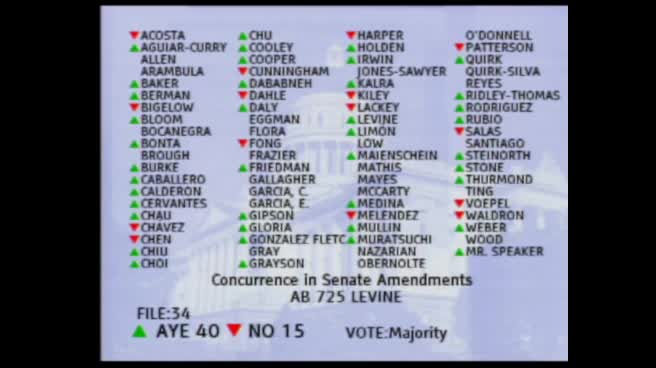 46SEC
Assembly Floor
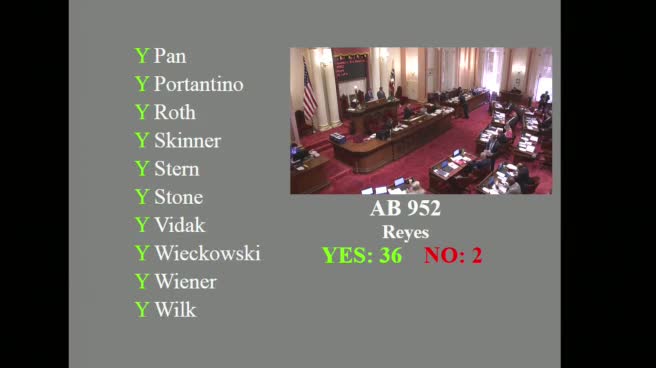 4MIN
Senate Floor
 1H
Senate Standing Committee on Appropriations
 2MIN
Assembly Floor
 1H
Assembly Standing Committee on Appropriations
 4MIN
Assembly Standing Committee on Public Safety
Bill Author

Bill Co-Author(s):