AB 1073: California Clean Truck, Bus, and Off-Road Vehicle and Equipment Technology Program.
- Session Year: 2017-2018
- House: Assembly
- Latest Version Date: 2017-10-10
The California Global Warming Solutions Act of 2006 designates the State Air Resources Board as the state agency charged with monitoring and regulating sources of emissions of greenhouse gases. The act authorizes the state board to include the use of market-based compliance mechanisms. Existing law requires all moneys, except for fines and penalties, collected by the state board as part of a market-based compliance mechanism to be deposited in the Greenhouse Gas Reduction Fund and to be available upon appropriation by the Legislature.
The California Clean Truck, Bus, and Off-Road Vehicle and Equipment Technology Program, upon appropriation from the Greenhouse Gas Reduction Fund, funds zero- and near-zero-emission truck, bus, and off-road vehicle and equipment technologies and related projects, as specified. Existing law requires the state board, when funding a specified class of projects, to allocate, until January 1, 2018, no less than 20% of that available funding to support the early commercial deployment of existing zero- and near-zero-emission heavy-duty truck technology.
This bill instead would require the state board, when funding a specified class of projects, to allocate, until December 31, 2020, no less than 20% of that available funding to support the early commercial deployment of existing zero- and near-zero-emission heavy-duty truck technology.
The California Global Warming Solutions Act of 2006 designates the State Air Resources Board as the state agency charged with monitoring and regulating sources of emissions of greenhouse gases. The act authorizes the state board to include the use of market-based compliance mechanisms. Existing law requires all moneys, except for fines and penalties, collected by the state board as part of a market-based compliance mechanism to be deposited in the Greenhouse Gas Reduction Fund and to be available upon appropriation by the Legislature.
The California Clean Truck, Bus, and Off-Road Vehicle and Equipment Technology Program, upon appropriation from the Greenhouse Gas Reduction Fund, funds zero- and near-zero-emission truck, bus, and off-road vehicle and equipment technologies and related projects, as specified. Existing law requires the state board, when funding a specified class of projects, to allocate, until January 1, 2018, no less than 20% of that available funding to support the early commercial deployment of existing zero- and near-zero-emission heavy-duty truck technology.
This bill instead would require the state board, when funding a specified class of projects, to allocate, until January 1, 2023, December 31, 2020, no less than 20% of that available funding to support the early commercial deployment or of existing zero- and near-zero-emission heavy-duty truck technology.
The California Global Warming Solutions Act of 2006 designates the State Air Resources Board as the state agency charged with monitoring and regulating sources of emissions of greenhouse gases. The act authorizes the state board to include the use of market-based compliance mechanisms. Existing law requires all moneys, except for fines and penalties, collected by the state board as part of a market-based compliance mechanism to be deposited in the Greenhouse Gas Reduction Fund and to be available upon appropriation by the Legislature.
The California Clean Truck, Bus, and Off-Road Vehicle and Equipment Technology Program, upon appropriation from the Greenhouse Gas Reduction Fund, funds zero- and near-zero-emission truck, bus, and off-road vehicle and equipment technologies and related projects, as specified. Existing law requires the state board, when funding a specified class of projects, to allocate, until January 1, 2018, no less than 20% of that available funding to support the early commercial deployment of existing zero- and near-zero-emission heavy-duty truck technology.
This bill instead would require the state board, when funding a specified class of projects, to allocate, until January 1, 2023, no less than 20% of that available funding to support the early commercial deployment or existing zero- and near-zero-emission heavy-duty truck technology .
(a)The California Clean Truck, Bus, and Off-Road Vehicle and Equipment Technology Program is hereby created, to be administered by the state board in conjunction with the State Energy Resources Conservation and Development Commission. The program, from moneys appropriated from the fund for the purposes of the program, shall fund development, demonstration, precommercial pilot, and early commercial deployment of zero- and near-zero-emission truck, bus, and off-road vehicle and equipment technologies. Priority shall be given to projects benefiting disadvantaged communities pursuant to the requirements of Sections 39711 and 39713.
(b)Projects eligible for funding pursuant to this section include, but are not limited to, the following:
(1)Technology development, demonstration, precommercial pilots, and early commercial deployments of zero- and near-zero-emission medium- and heavy-duty truck technology, including projects that help to facilitate clean goods-movement corridors. Until December 31, 2020, no less than 20 percent of funding made available for purposes of this paragraph shall support early commercial deployment of existing zero- and near-zero-emission heavy-duty truck technology.
(2)Zero- and near-zero-emission bus technology development, demonstration, precommercial pilots, and early commercial deployments, including pilots of multiple vehicles at one site or region.
(3)Zero- and near-zero-emission off-road vehicle and equipment technology development, demonstration, precommercial pilots, and early commercial deployments, including vehicles and equipment in the port, agricultural, marine, construction, and rail sectors.
(4)Purchase incentives, which may include point-of-sale, for commercially available zero- and near-zero-emission truck, bus, and off-road vehicle and equipment technologies and fueling infrastructure to support early market deployments of alternative technologies and to increase manufacturer volumes and accelerate market acceptance.
(5)Projects that support greater commercial motor vehicle and equipment freight efficiency and greenhouse gas emissions reductions, including, but not limited to, advanced intelligent transportation systems, autonomous vehicles, and other freight information and operations technologies.
(c)The state board, in consultation with the State Energy Resources Conservation and Development Commission, shall develop guidance through the existing Air Quality Improvement Program funding plan process for the implementation of this section that is consistent with the California Global Warming Solutions Act of 2006 (Division 25.5 (commencing with Section 38500)) and this chapter.
(d)The guidance developed pursuant to subdivision (c) shall do all of the following:
(1)Outline performance criteria and metrics for deployment incentives. The goal shall be to design a simple and predictable structure that provides incentives for truck, bus, and off-road vehicle and equipment technologies that provide significant greenhouse gas reduction and air quality benefits.
(2)Ensure that program investments are coordinated with funding programs developed pursuant to the California Alternative and Renewable Fuel, Vehicle Technology, Clean Air, and Carbon Reduction Act of 2007 (Chapter 8.9 (commencing with Section 44270) of Part 5).
(3)Promote projects that assist the state in reaching its climate goals beyond 2020, consistent with Sections 38550 and 38551.
(4)Promote investments in medium- and heavy-duty trucking, including, but not limited to, vocational trucks, short-haul and long-haul trucks, buses, and off-road vehicles and equipment, including, but not limited to, port equipment, agricultural equipment, marine equipment, and rail equipment.
(5)Implement purchase incentives for eligible technologies to increase the use of the cleanest vehicles in disadvantaged communities.
(6)Allow for remanufactured and retrofitted vehicles to qualify for purchase incentives if those vehicles meet warranty and emissions requirements, as determined by the state board.
(7)Establish a competitive process for the allocation of moneys for projects funded pursuant to this section.
(8)Leverage, to the maximum extent feasible, federal or private funding.
(9)Ensure that the results of emissions reductions or benefits can be measured or quantified.
(10)Ensure that activities undertaken pursuant to this section complement, and do not interfere with, efforts to achieve and maintain federal and state ambient air quality standards and to reduce toxic air contaminants.
(e)In evaluating potential projects to be funded pursuant to this section, the state board shall give priority to projects that demonstrate one or more of the following characteristics:
(1)Benefit disadvantaged communities pursuant to Sections 39711 and 39713.
(2)The ability to leverage additional public and private funding.
(3)The potential for cobenefits or multiple-benefit attributes.
(4)The potential for the project to be replicated.
(5)Regional benefit, with focus on collaboration between multiple entities.
(6)Support for technologies with broad market and emissions reduction potential.
(7)Support for projects addressing technology and market barriers not addressed by other programs.
(8)Support for enabling technologies that benefit multiple technology pathways.
(f)In the implementation of this section, the state board, in consultation with the State Energy Resources Conservation and Development Commission, shall create an annual framework and plan. The framework and plan shall be developed with public input and may utilize existing investment plan processes and workshops as well as existing state and third-party research and technology roadmaps. The framework and plan shall do all of the following:
(1)Articulate an overarching vision for technology development, demonstration, precommercial pilot, and early commercial deployments, with a focus on moving technologies through the commercialization process.
(2)Outline technology categories and performance criteria for technologies and applications that may be considered for funding pursuant to this section. This shall include technologies for medium- and heavy-duty trucking, including, but not limited to, vocational trucks, short-haul and long-haul trucks, buses, and off-road vehicles and equipment, including, but not limited to, port equipment, agricultural equipment, construction equipment, marine equipment, and rail equipment.
(3)Describe the roles of the relevant agencies and the process for coordination.
(g)For purposes of this section, zero- and near-zero-emission means vehicles, fuels, and related technologies that reduce greenhouse gas emissions and improve air quality when compared with conventional or fully commercialized alternatives, as defined by the state board in consultation with the State Energy Resources Conservation and Development Commission. Zero- and near-zero-emission may include, but is not limited to, zero-emission technology, enabling technologies that provide a pathway to emissions reductions, advanced or alternative fuel engines for long-haul trucks, and hybrid or alternative fuel technologies for trucks and off-road equipment.
(a)The California Clean Truck, Bus, and Off-Road Vehicle and Equipment Technology Program is hereby created, to be administered by the state board in conjunction with the State Energy Resources Conservation and Development Commission. The program, from moneys appropriated from the fund for the purposes of the program, shall fund development, demonstration, precommercial pilot, and early commercial deployment of zero- and near-zero-emission truck, bus, and off-road vehicle and equipment technologies. Priority shall be given to projects benefiting disadvantaged communities pursuant to the requirements of Sections 39711 and 39713.
(b)Projects eligible for funding pursuant to this section include, but are not limited to, the following:
(1)Technology development, demonstration, precommercial pilots, and early commercial deployments of zero- and near-zero-emission medium- and heavy-duty truck technology, including projects that help to facilitate clean goods-movement corridors. Until January 1, 2023, December 31, 2020, no less than 20 percent of funding made available for purposes of this paragraph shall support early commercial deployment of existing zero- and near-zero-emission heavy-duty truck technology.
(2)Zero- and near-zero-emission bus technology development, demonstration, precommercial pilots, and early commercial deployments, including pilots of multiple vehicles at one site or region.
(3)Zero- and near-zero-emission off-road vehicle and equipment technology development, demonstration, precommercial pilots, and early commercial deployments, including vehicles and equipment in the port, agricultural, marine, construction, and rail sectors.
(4)Purchase incentives, which may include point-of-sale, for commercially available zero- and near-zero-emission truck, bus, and off-road vehicle and equipment technologies and fueling infrastructure to support early market deployments of alternative technologies and to increase manufacturer volumes and accelerate market acceptance.
(5)Projects that support greater commercial motor vehicle and equipment freight efficiency and greenhouse gas emissions reductions, including, but not limited to, advanced intelligent transportation systems, autonomous vehicles, and other freight information and operations technologies.
(c)The state board, in consultation with the State Energy Resources Conservation and Development Commission, shall develop guidance through the existing Air Quality Improvement Program funding plan process for the implementation of this section that is consistent with the California Global Warming Solutions Act of 2006 (Division 25.5 (commencing with Section 38500)) and this chapter.
(d)The guidance developed pursuant to subdivision (c) shall do all of the following:
(1)Outline performance criteria and metrics for deployment incentives. The goal shall be to design a simple and predictable structure that provides incentives for truck, bus, and off-road vehicle and equipment technologies that provide significant greenhouse gas reduction and air quality benefits.
(2)Ensure that program investments are coordinated with funding programs developed pursuant to the California Alternative and Renewable Fuel, Vehicle Technology, Clean Air, and Carbon Reduction Act of 2007 (Chapter 8.9 (commencing with Section 44270) of Part 5).
(3)Promote projects that assist the state in reaching its climate goals beyond 2020, consistent with Sections 38550 and 38551.
(4)Promote investments in medium- and heavy-duty trucking, including, but not limited to, vocational trucks, short-haul and long-haul trucks, buses, and off-road vehicles and equipment, including, but not limited to, port equipment, agricultural equipment, marine equipment, and rail equipment.
(5)Implement purchase incentives for eligible technologies to increase the use of the cleanest vehicles in disadvantaged communities.
(6)Allow for remanufactured and retrofitted vehicles to qualify for purchase incentives if those vehicles meet warranty and emissions requirements, as determined by the state board.
(7)Establish a competitive process for the allocation of moneys for projects funded pursuant to this section.
(8)Leverage, to the maximum extent feasible, federal or private funding.
(9)Ensure that the results of emissions reductions or benefits can be measured or quantified.
(10)Ensure that activities undertaken pursuant to this section complement, and do not interfere with, efforts to achieve and maintain federal and state ambient air quality standards and to reduce toxic air contaminants.
(e)In evaluating potential projects to be funded pursuant to this section, the state board shall give priority to projects that demonstrate one or more of the following characteristics:
(1)Benefit disadvantaged communities pursuant to Sections 39711 and 39713.
(2)The ability to leverage additional public and private funding.
(3)The potential for cobenefits or multiple-benefit attributes.
(4)The potential for the project to be replicated.
(5)Regional benefit, with focus on collaboration between multiple entities.
(6)Support for technologies with broad market and emissions reduction potential.
(7)Support for projects addressing technology and market barriers not addressed by other programs.
(8)Support for enabling technologies that benefit multiple technology pathways.
(f)In the implementation of this section, the state board, in consultation with the State Energy Resources Conservation and Development Commission, shall create an annual framework and plan. The framework and plan shall be developed with public input and may utilize existing investment plan processes and workshops as well as existing state and third-party research and technology roadmaps. The framework and plan shall do all of the following:
(1)Articulate an overarching vision for technology development, demonstration, precommercial pilot, and early commercial deployments, with a focus on moving technologies through the commercialization process.
(2)Outline technology categories and performance criteria for technologies and applications that may be considered for funding pursuant to this section. This shall include technologies for medium- and heavy-duty trucking, including, but not limited to, vocational trucks, short-haul and long-haul trucks, buses, and off-road vehicles and equipment, including, but not limited to, port equipment, agricultural equipment, construction equipment, marine equipment, and rail equipment.
(3)Describe the roles of the relevant agencies and the process for coordination.
(g)For purposes of this section, zero- and near-zero-emission means vehicles, fuels, and related technologies that reduce greenhouse gas emissions and improve air quality when compared with conventional or fully commercialized alternatives, as defined by the state board in consultation with the State Energy Resources Conservation and Development Commission. Zero- and near-zero-emission may include, but is not limited to, zero-emission technology, enabling technologies that provide a pathway to emissions reductions, advanced or alternative fuel engines for long-haul trucks, and hybrid or alternative fuel technologies for trucks and off-road equipment.
(a)The California Clean Truck, Bus, and Off-Road Vehicle and Equipment Technology Program is hereby created, to be administered by the state board in conjunction with the State Energy Resources Conservation and Development Commission. The program, from moneys appropriated from the fund for the purposes of the program, shall fund development, demonstration, precommercial pilot, and early commercial deployment of zero- and near-zero emission near-zero-emission truck, bus, and off-road vehicle and equipment technologies. Priority shall be given to projects benefiting disadvantaged communities pursuant to the requirements of Sections 39711 and 39713.
(b)Projects eligible for funding pursuant to this section include, but are not limited to, the following:
(1)Technology development, demonstration, precommercial pilots, and early commercial deployments of zero- and near-zero emission near-zero-emission medium- and heavy-duty truck technology, including projects that help to facilitate clean goods-movement corridors. Until January 1, 2018, 2023, no less than 20 percent of funding made available for purposes of this paragraph shall support early commercial deployment of existing zero- and near-zero emission near-zero-emission heavy-duty truck technology.
(2)Zero- and near-zero emission near-zero-emission bus technology development, demonstration, precommercial pilots, and early commercial deployments, including pilots of multiple vehicles at one site or region.
(3)Zero- and near-zero emission near-zero-emission off-road vehicle and equipment technology development, demonstration, precommercial pilots, and early commercial deployments, including vehicles and equipment in the port, agriculture, agricultural, marine, construction, and rail sectors.
(4)Purchase incentives, which may include point-of-sale, for commercially available zero- and near-zero emission near-zero-emission truck, bus, and off-road vehicle and equipment technologies and fueling infrastructure to support early market deployments of alternative technologies and to increase manufacturer volumes and accelerate market acceptance.
(5)Projects that support greater commercial motor vehicle and equipment freight efficiency and greenhouse gas emissions reductions, including, but not limited to, advanced intelligent transportation systems, autonomous vehicles, and other freight information and operations technologies.
(c)The state board, in consultation with the State Energy Resources Conservation and Development Commission, shall develop guidance through the existing Air Quality Improvement Program funding plan process for the implementation of this section that is consistent with the California Global Warming Solutions Act of 2006 (Division 25.5 (commencing with Section 38500)) and this chapter.
(d)The guidance developed pursuant to subdivision (c) shall do all of the following:
(1)Outline performance criteria and metrics for deployment incentives. The goal shall be to design a simple and predictable structure that provides incentives for truck, bus, and off-road vehicle and equipment technologies that provide significant greenhouse gas reduction and air quality benefits.
(2)Ensure that program investments are coordinated with funding programs developed pursuant to the California Alternative and Renewable Fuel, Vehicle Technology, Clean Air, and Carbon Reduction Act of 2007 (Chapter 8.9 (commencing with Section 44270) of Part 5).
(3)Promote projects that assist the state in reaching its climate goals beyond 2020, consistent with Sections 38550 and 38551.
(4)Promote investments in medium- and heavy-duty trucking, including, but not limited to, vocational trucks, short-haul and long-haul trucks, buses, and off-road vehicles and equipment, including, but not limited to, port equipment, agricultural equipment, marine equipment, and rail equipment.
(5)Implement purchase incentives for eligible technologies to increase the use of the cleanest vehicles in disadvantaged communities.
(6)Allow for remanufactured and retrofitted vehicles to qualify for purchase incentives if those vehicles meet warranty and emissions requirements, as determined by the state board.
(7)Establish a competitive process for the allocation of moneys for projects funded pursuant to this section.
(8)Leverage, to the maximum extent feasible, federal or private funding.
(9)Ensure that the results of emissions reductions or benefits can be measured or quantified.
(10)Ensure that activities undertaken pursuant to this section complement, and do not interfere with, efforts to achieve and maintain federal and state ambient air quality standards and to reduce toxic air contaminants.
(e)In evaluating potential projects to be funded pursuant to this section, the state board shall give priority to projects that demonstrate one or more of the following characteristics:
(1)Benefit to disadvantaged communities pursuant to Sections 39711 and 39713.
(2)The ability to leverage additional public and private funding.
(3)The potential for cobenefits or multiple-benefit attributes.
(4)The potential for the project to be replicated.
(5)Regional benefit, with focus on collaboration between multiple entities.
(6)Support for technologies with broad market and emissions reduction potential.
(7)Support for projects addressing technology and market barriers not addressed by other programs.
(8)Support for enabling technologies that benefit multiple technology pathways.
(f)To assist in In the implementation of this section, the state board, in consultation with the State Energy Resources Conservation and Development Commission, shall create an annual framework and plan. The framework and plan shall be developed with public input and may utilize existing investment plan processes and workshops as well as existing state and third-party research and technology roadmaps. The framework and plan shall do all of the following:
(1)Articulate an overarching vision for technology development, demonstration, precommercial pilot, and early commercial deployments, with a focus on moving technologies through the commercialization process.
(2)Outline technology categories and performance criteria for technologies and applications that may be considered for funding pursuant to this section. This shall include technologies for medium- and heavy-duty trucking, including, but not limited to, vocational trucks, short-haul and long-haul trucks, buses, and off-road vehicles and equipment, including, but not limited to, port equipment, agricultural equipment, construction equipment, marine equipment, and rail equipment.
(3)Describe the roles of the relevant agencies and the process for coordination.
(g)For purposes of this section, zero- and near-zero emission near-zero-emission means vehicles, fuels, and related technologies that reduce greenhouse gas emissions and improve air quality when compared with conventional or fully commercialized alternatives, as defined by the state board in consultation with the State Energy Resources Conservation and Development Commission. Zero- and near-zero emission near-zero-emission may include, but is not limited to, zero-emission technology, enabling technologies that provide a pathway to emissions reductions, advanced or alternative fuel engines for long-haul trucks, and hybrid or alternative fuel technologies for trucks and off-road equipment.
|
Date
|
Status
|
|---|---|
| Oct 10, 2017 | Chaptered by Secretary of State - Chapter 632, Statutes of 2017. |
| Oct 10, 2017 | Approved by the Governor. |
| Sep 19, 2017 | Enrolled and presented to the Governor at 3 p.m. |
| Sep 11, 2017 | Senate amendments concurred in. To Engrossing and Enrolling. |
| Sep 7, 2017 | In Assembly. Concurrence in Senate amendments pending. May be considered on or after September 9 pursuant to Assembly Rule 77. |
| Sep 7, 2017 | Read third time. Passed. Ordered to the Assembly. |
| Sep 5, 2017 | Read second time. Ordered to third reading. |
| Sep 1, 2017 | From committee: Do pass. (Ayes 7. Noes 0.) (September 1). |
| Jul 17, 2017 | In committee: Referred to APPR. suspense file. |
| Jul 10, 2017 | In committee: Hearing postponed by committee. |
| Jun 22, 2017 | Read second time and amended. Re-referred to Com. on APPR. |
| Jun 21, 2017 | From committee: Amend, and do pass as amended and re-refer to Com. on APPR. with recommendation: To Consent Calendar. (Ayes 6. Noes 0.) (June 21). |
| Jun 13, 2017 | From committee: Do pass and re-refer to Com. on EQ. (Ayes 12. Noes 0.) (June 13). Re-referred to Com. on EQ. |
| May 24, 2017 | Referred to Coms. on T. & H. and EQ. |
| May 11, 2017 | In Senate. Read first time. To Com. on RLS. for assignment. |
| May 11, 2017 | Read third time. Passed. Ordered to the Senate. (Ayes 77. Noes 0. Page 1490.) |
| May 4, 2017 | Read second time. Ordered to Consent Calendar. |
| May 3, 2017 | From committee: Do pass. To Consent Calendar. (Ayes 16. Noes 0.) (May 3). |
| Apr 25, 2017 | From committee: Do pass and re-refer to Com. on APPR. with recommendation: To Consent Calendar. (Ayes 10. Noes 0.) (April 24). Re-referred to Com. on APPR. |
| Apr 4, 2017 | From committee: Do pass and re-refer to Com. on NAT. RES. (Ayes 13. Noes 0.) (April 3). Re-referred to Com. on NAT. RES. |
| Mar 6, 2017 | Referred to Coms. on TRANS. and NAT. RES. |
| Feb 17, 2017 | From printer. May be heard in committee March 19. |
| Feb 16, 2017 | Read first time. To print. |
|
Date
|
Description
|
Location
|
Votes
|
|
|---|---|---|---|---|
| Sep 11, 2017 | AB 1073 GARCIA, E. Concurrence in Senate Amendments | Assembly Floor |
Passed |
|
| Sep 7, 2017 | Assembly 3rd Reading AB1073 Eduardo Garcia By Lara | Senate Floor |
Passed |
|
| Sep 1, 2017 | Do pass | Senate Standing Committee on Appropriations |
Passed |
|
| Jul 17, 2017 | Placed on suspense file | Senate Standing Committee on Appropriations |
Passed |
|
| Jun 21, 2017 | Do pass as amended, but first amend, and re-refer to the Committee on [Appropriations] with the recommendation: To Consent Calendar | Senate Standing Committee on Environmental Quality |
Passed |
|
| Jun 13, 2017 | Do pass, but first be re-referred to the Committee on [Environmental Quality] | Senate Standing Committee on Transportation and Housing |
Passed |
|
| May 11, 2017 | AB 1073 GARCIA, E. Consent Calendar Second Day Regular Session | Assembly Floor |
Passed |
|
| May 3, 2017 | Do pass. To Consent Calendar. | Assembly Standing Committee on Appropriations |
Passed |
|
| Apr 24, 2017 | Do pass and be re-referred to the Committee on [Appropriations] with recommendation: To Consent Calendar | Assembly Standing Committee on Natural Resources |
Passed |
|
| Apr 3, 2017 | Do pass and be re-referred to the Committee on [Natural Resources] | Assembly Standing Committee on Transportation |
Passed |
This list shows positions taken on this bill by organizations on the date displayed, which is linked to the original source.
Positions by individuals are not included.
|
Organization
|
Position
|
Date
|
|---|---|---|
| Clean Energy | ** Support | Sep 4, 2017 |
| Coalition For Renewable Natural Gas | ** Support | Sep 4, 2017 |
CONCURRENCE IN SENATE AMENDMENTS
CSA1 Bill Id:AB 1073
Author:(Eduardo Garcia)
As Amended Ver:June 22, 2017
Majority vote
ASSEMBLY: | 77-0 | (May 11, 2017) | SENATE: | 40-0 | (September 7, 2017) |
Original Committee Reference: TRANS.
SUMMARY: Extends by two years, until January 1, 2020, the requirement that the California Air Resources Board (ARB) dedicate 20% of California Clean Truck, Bus, and Off-Road Vehicle and Equipment Technology Program (Technology Program) to support early commercial deployment of existing zero- and near-zero-emission heavy-duty trucks.
The Senate amendments limit the dedication of 20% of Technology Program funds to support early commercial deployment of existing zero- and near-zero-emission heavy-duty trucks to two years rather than five years.
FISCAL EFFECT: According to the Senate Appropriations Committee, Continued funding equal to approximately $115 million annually (Greenhouse Gas Reduction Fund).
COMMENTS: It is widely known that nearly 40% of California's emissions are generated by the transportation sector, which includes both the light-duty (passenger fleet) and medium- and heavy-duty fleets. While cleaning up the entire transportation sector is important, efforts to improve the heavy-duty vehicle fleet is a high priority because this sector contributes greatly to GHG emissions as well as produces a variety of smog-forming pollutants such as oxides of nitrogen (NOx), particulate matter (PM), reactive organic gasses (ROG), and other toxic air contaminants that contribute to poor air quality and associated health impacts. Because these heavy-duty vehicles operate predominantly along major corridors and at freight hubs (such as ports and warehousing districts), the brunt of the impacts are borne disproportionately by disadvantaged communities that tend to border these facilities. This is evidenced particularly in California's south coast region that borders the ports of Los Angeles and Long Beach and in the Central Valley along Interstate 5 and State Route 99.
To help accelerate the deployment of zero- and near-zero-emission heavy-duty trucks, the Legislature passed and Governor Brown signed SB 1204 (Lara), Chapter 524, in 2013, that created the Technology Program. The Technology Program was designed to utilize GGRF funds to develop, demonstrate, pilot, and deploy zero- and near-zero-emission truck, bus, and off-road vehicle and equipment technologies. The purpose of the program was to place a specific focus on the medium- and heavy-duty truck and bus sector to spur innovation and deployment of these vehicles, particularly to benefit disadvantaged communities.
ARB was tasked with carrying out the Technology Program in concert with existing programs focusing on the medium- and heavy-duty vehicle sectors. These programs include ARB's Hybrid and Zero-Emission Truck and Bus Voucher Incentive Project that helps California fleet owners purchase hybrid and zero-emission trucks and busses and the California Energy Commission's Alternative and Renewable Fuel and Vehicle Technology Program that provides funding for the development and deployment of alternative and renewable fuels and advanced transportation technologies.
To help the Technology Program better meet the goal of benefiting disadvantaged communities, SB 1204, among other things, required ARB, until January 1, 2018, to dedicate no less than 20% of the program's funding to support early commercial deployment of zero- and near-zero emission heavy duty truck technology. By creating this set aside, SB 1204 sought to ensure that cleaner trucks were be deployed sooner to provide immediate emissions reduction and air quality improvement benefits.
ARB reports that in the 2016-17 fiscal year a total of $76 million was spent on the Technology Program overall and, of this amount, $15 million (or 20%) was dedicated to support early commercial deployment of zero- and near-zero-emission heavy-duty truck technology. ARB notes, however, that monies spent on the broader range of early commercial pathways provides eventual benefits to early commercial deployment by creating investments that advance the overall technology.
While the author notes that the Technology Program has made meaningful progress since its inception, he argues that there remains an ongoing need to prioritize a portion of the program's funds to support early commercial deployment since many disadvantaged communities still experience some of the poorest air quality in the state. For this reason, the author has introduced this bill which would extend, by five years, until January 1, 2023, the requirement that the Technology Program dedicate 20% of program funding to support early commercial deployment of existing zero- and near-zero-emission heavy-duty vehicles.
Writing in support of the bill, Clean Energy stresses that this bill will help purchasers buy down the initial costs of zero- and near-zero emission technology vehicles which will help accelerate the retirement of older, high-polluting trucks. Clean Energy asserts that this bill will help grow the clean alternative fuel truck market and stimulate additional investments in the next generation of zero-and near-zero-emission truck technologies.
Committee comments: Reducing emissions and improving air quality along California's freight corridors to benefit disadvantaged communities is as pressing a need today as it was when the Technology Program was first initiated in 2013. Therefore, it stands to reason that continuing to dedicate 20% program funds to support early commercial deployment of existing zero- and near-zero-emission heavy duty truck technology to benefit these communities is warranted.
Analysis Prepared by: Victoria Alvarez / TRANS. / (916) 319-2093 FN: 0001732
Office of Senate Floor Analyses (916) 651-1520 Fax: (916) 327-4478 | AB |
THIRD READING
Bill No: AB 1073
:
SENATE TRANS. & HOUSING COMMITTEE: 12-0, 6/13/17
AYES: Beall, Cannella, Allen, Atkins, Bates, Gaines, McGuire, Mendoza, Morrell, Roth, Skinner, Wiener
NO VOTE RECORDED: Wieckowski
SENATE ENVIRONMENTAL QUALITY COMMITTEE: 6-0, 6/21/17
AYES: Wieckowski, Stone, Hill, Lara, Skinner, Stern
NO VOTE RECORDED: Gaines
SENATE APPROPRIATIONS COMMITTEE: 7-0, 9/1/17
AYES: Lara, Bates, Beall, Bradford, Hill, Nielsen, Wiener
ASSEMBLY FLOOR: 77-0, 5/11/17 (Consent) - See last page for vote
DIGEST:
This bill extends the sunset on a set-aside within the California Clean Truck, Bus, and Off-Road Vehicle and Equipment Technology Program (SB 1204 Program) under the state Air Resources Board (ARB).
Existing law:
- Requires, pursuant to AB 32 (Nunez and Pavley, Chapter 488, Statutes of 2006), ARB to adopt a statewide greenhouse gas (GHG) emissions limit that is equivalent to 1990 levels, to be achieved by 2020, and to adopt GHG emissions reduction measures by regulation. As part of the implementation of AB 32, ARB adopted a cap-and-trade program that caps allowable statewide emissions and provides for the auctioning of emission credits, the proceeds of which as deposited quarterly into the Greenhouse Gas Reduction Fund (GGRF) for appropriation by the Legislature.
- Provides that Executive Order B-30-2015, issued by the Governor in 2015, sets a target of reducing statewide GHG emissions to 80% below 1990 levels by 2050, and an interim statewide GHG emissions reduction target of 40% below 1990 levels by 2030. SB 32, Pavley, Chapter 249, Statutes of 2016 codifies the 2030 GHG emissions reduction target in Executive Order B-30-2015.
- Establishes, under SB 1204 (Lara, Chapter 524, Statutes of 2014), a program to fund development, demonstration, pre-commercial pilot, and early commercial deployment of zero- and near-zero-emission truck, bus, and off-road vehicle and equipment technologies. The SB 1204 Program is funded with GGRF monies as part of the umbrella of Low Carbon Transportation programs under ARB. ARB’s 2016-17 funding plan proposed $500 million from the GGRF for all of the Low Carbon Transportation programs. At least 20% of the funding for the SB 1204 Program must go to early commercial development of existing zero- and near-zero-emission heavy-duty truck technology until January 1, 2018. ARB must prioritize projects that demonstrate benefit to disadvantaged communities, address technology and market barriers not addressed by other programs, and enabling technologies that benefit multiple technology pathways.
This bill extends the sunset from January 1, 2018, to December 31, 2020, for the 20% set-aside for early commercial development of existing zero and near-zero emission heavy-duty trucks within the SB 1204 Program.
Background
The SB 1204 Program funds development of zero- and near-zero-emission technologies for trucks, buses, off-road vehicles, and equipment at ports, well as in the agricultural, marine, and rail sectors. The intent was to establish a single, overarching program to develop and deploy heavy-duty vehicles because the author felt that these vehicles were not being adequately addressed through existing incentive programs. The SB 1204 Program complements other heavy-duty vehicle programs; for example, while the SB 1204 Program focuses on development and deployment of clean truck technology, the Hybrid and Zero Emission Truck and Bus Voucher Incentive Project (HVIP), also funded by the GGRF, provides vouchers to reduce the cost of purchasing a hybrid or zero-emission truck.
Comments
- Purpose. The author states that this bill provides funding needed to deliver the emission reductions from heavy-duty trucks called for in the state’s Mobile Source Strategy. Reducing emissions from heavy-duty trucks, the largest source of emissions in the transportation sector is critical to protecting public health in some of our most vulnerable communities. Additionally, prioritizing lower emissions from heavy-duty trucks and buses will achieve significant greenhouse gas reductions needed to achieve the state’s long-term climate change goals.
- Cleaning up the air by cleaning up trucks. The federal Clean Air Act requires all air districts in the nation to meet certain air quality standards; those that fail to meet the standards are deemed “non-attainment” areas. According to ARB’s Mobile Source Strategy (May 2016), both the South Coast and San Joaquin air basins are classified as non-attainment. ARB and both air districts are working to implement numerous measures to bring these areas to attainment by reducing particulate matter, ozone, and other pollutants. The author notes that although trucking is vital to the state’s economy, it is the single largest source of pollution in these two areas, particularly near freeways, ports, and rail depots. The Mobile Source Strategy calls for internal combustion engine technology in the heavy-duty sector that is effectively 90% cleaner than today’s current standards, with clean, renewable fuels comprising half the fuels burned. The SB 1204 Program helps to fund the development and deployment of this technology.
- Where is the money going? The SB 1204 Program officially commenced on July 1, 2015. In October 2015, ARB released a competitive solicitation for the Zero-Emission Truck Pilot Commercial Deployment Project that include $24 million carried forward from fiscal year 2014-15, with an option to add future funds upon appropriation by the Legislature. An additional $60 million from fiscal year 20-16-17 was allocated in October 2016, for a total of $84 million. The solicitation was significantly oversubscribed, with funding requests totaling $290 million. ARB selected nine projects, to be supplemented with an additional $59 million in match funding from federal, state, local, and private sources. These projects included, among others, $9.5 million to the City of Porterville to help fund the purchase and operation of 10 zero-emission transit buses; $8.0 million to the Sacramento Metropolitan Air Quality Management District to help deploy 29 zero-emission school buses with 29 charging ports; and $2.7 million to the Bay Area Air Quality Management District to help deploy 11 zero-emission battery electric trucks for Goodwill Industries.
Related/Prior Legislation
AB 2415 (E. Garcia, 2016) would have increased the set-aside in the SB 1204 Program to 50% or $100 million per year, whichever was greater. The bill was held on suspense in the Assembly Appropriations Committee.
AB 857 (Perea, 2015) would have increased the set-aside in the SB 1204 Program to 50% or $100 million per year, whichever was greater. The bill was held on suspense in the Senate Appropriations Committee and subsequently amended to address a different subject.
FISCAL EFFECT: Appropriation: Fiscal Com.: Local:
According to the Senate Appropriations Committee, continued funding equal to approximately $115 million annually (GGRF).
Clean Energy
Coalition for Renewable Natural Gas
None received
ARGUMENTS IN SUPPORT: Clean Energy states that this bill will help purchases of natural gas technology to buy down the initial cost of the vehicle, help accelerate the retirement of older, high-polluting trucks, help grow the clean alternative fuel truck market, and stimulate additional investments in the next generation of zero and near-zero emission truck technologies.
ASSEMBLY FLOOR: 77-0, 5/11/17
AYES: Acosta, Aguiar-Curry, Travis Allen, Arambula, Baker, Berman, Bigelow, Bloom, Bocanegra, Bonta, Brough, Burke, Caballero, Calderon, Cervantes, Chau, Chávez, Chen, Chiu, Choi, Chu, Cooley, Cooper, Cunningham, Dababneh, Daly, Eggman, Flora, Fong, Frazier, Friedman, Gallagher, Cristina Garcia, Eduardo Garcia, Gipson, Gloria, Gomez, Gonzalez Fletcher, Gray, Grayson, Harper, Holden, Irwin, Jones-Sawyer, Kalra, Kiley, Lackey, Levine, Limón, Low, Maienschein, Mathis, Mayes, McCarty, Medina, Melendez, Mullin, Muratsuchi, Nazarian, Obernolte, Quirk, Quirk-Silva, Reyes, Ridley-Thomas, Rodriguez, Rubio, Salas, Santiago, Steinorth, Mark Stone, Thurmond, Ting, Voepel, Waldron, Weber, Wood, Rendon
NO VOTE RECORDED: Dahle, O'Donnell, Patterson
9/4/17 12:53:30
**** END ****
SENATE COMMITTEE ON
Senator Ricardo Lara, Chair
2017 - 2018 Regular Session
AB 1073 (Eduardo Garcia) - California Clean Truck, Bus, and Off-Road Vehicle and Equipment Technology Program
Version: | Policy Vote: |
Urgency: | Mandate: |
Hearing Date: | Consultant: |
This bill meets the criteria for referral to the Suspense File.
Bill Summary:
AB 1073 extends, from January 1, 2018 to January 1, 2020, the sunset the 20% carve-out for zero- and near-zero-emission heavy-duty truck technology in the Clean Truck, Bus, and Off-Road Vehicle and Equipment Technology Program (Technology Program). The bill also makes technical and clarifying changes.
Fiscal Impact:
- Continued funding equal to approximately $115 million annually (Greenhouse Gas Reduction Fund).
Background:
- The California Global Warming Solutions Act of 2006 (AB 32) requires ARB to adopt a statewide Greenhouse Gas (GHG) emissions limit equivalent to 1990 levels by 2020 and adopt regulations, including market-based compliance mechanisms, to achieve maximum technologically feasible and cost-effective GHG emission reductions.
As part of the implementation of AB 32 market-based compliance measures, ARB adopted a cap-and-trade program that caps the allowable statewide emissions and provides for the auctioning of emission credits, the proceeds of which are quarterly deposited into the Greenhouse Gas Reduction Fund (GGRF) available for appropriation by the Legislature.
The Program, until January 1, 2018, provides GGRF for projects that develop technology, demonstrate and pilot commercial and early-commercial deployment of zero and near-zero emission medium- and heavy-duty truck technology, and facilitate clean goods movement. The Clean Truck Program works to develop zero-and near-zero emission technologies for specified vehicles and equipment not only for trucks, but also for buses, off-road vehicles, and equipment at the ports, as well as in agricultural, marine, and rail sectors. Within the Clean Truck Program, funding priority is generally given to projects that demonstrate benefits to disadvantaged communities, the ability to leverage additional public and private funding, and provide the potential for co-benefits.
Proposed Law:
This bill extends, from January 1, 2018 to January 1, 2020, the sunset the 20% carve-out for zero- and near-zero-emission heavy-duty truck technology in the Clean Truck, Bus, and Off-Road Vehicle and Equipment Technology Program (Technology Program). The bill also makes technical and clarifying changes.
Related Legislation:
SB 1204 (Lara, Chapter 524, Statutes of 2014) established the Clean Truck Program to create a single, overarching program to develop and deploy heavy-duty vehicles.
Staff Comments:
Fiscal impact. ARB reports no additional costs to the bill; however, this bill will result in the continued expenditure of $115 million annually for two more years.
-- END --
SENATE COMMITTEE ON ENVIRONMENTAL QUALITY
Senator Wieckowski, Chair
2017 - 2018 Regular
Bill No: AB 1073
Author: | Eduardo Garcia | ||
Version: | 2/16/2017 | Hearing Date: | 6/21/2017 |
Urgency: | No | Fiscal: | Yes |
Consultant: | David Ernest García | ||
SUBJECT: California Clean Truck, Bus, and Off-Road Vehicle and Equipment Technology Program.
ANALYSIS:
Existing federal law:
- The Federal Clean Air Act (FCAA) and its implementing regulations set National Ambient Air Quality Standards (NAAQS) for six criteria pollutants, designate air basins that do not achieve NAAQS as nonattainment, allow only California to set vehicular emissions standards stricter than the federal government, and allow other states to adopt either the federal or California vehicular emissions standards. (42 U.S.C. §7401 et seq.)
Existing state law:
- Establishes the Air Resources Board (ARB) as the air pollution control agency in California and requires the ARB, among other things, to control emissions from a wide array of mobile sources and implement the FCAA. (Health and Safety Code (HSC) §39500 et seq.)
- Establishes Sections 1962.1, 1962.2, and 1962.3 of Title 13 of the California Code of Regulations (Zero-Emission Vehicle (ZEV) Mandate) that requires large volume and intermediate volume vehicle manufacturers that sell cars in California to produce ZEVs, as specified.
- Requires, under the California Global Warming Solutions Act of 2006 (also known as AB 32), the Air Resources Board (ARB) to determine the 1990 statewide greenhouse gas (GHG) emissions level and approve a statewide GHG emissions limit that is equivalent to that level to be achieved by 2020. (HSC §38500 et seq.)
- Allows the ARB until December 31, 2020, under certain circumstances, to adopt regulations that utilize market-based compliance mechanisms. (HSC §38562)
- Requires ARB to ensure that statewide GHG emissions are reduced to at least 40% below the 1990 level by December 31, 2030. (HSC §38566)
- Establishes the Greenhouse Gas Reduction Fund (GGRF) in the State Treasury, requires all moneys, except for fines and penalties, collected pursuant to a market-based mechanism be deposited in the fund. (Government Code (GOV) §16428.8)
- Establishes the Air Quality Improvement Program (AQIP), administered by ARB in consultation with local air districts, to fund programs that reduce criteria air pollutants, improve air quality, and provide research for alternative fuels and vehicles, vessels, and equipment technologies. (HSC §44274 et seq.)
- Establishes, as a part of the AQIP and administered by ARB, the California Clean Truck, Bus, and Off-Road Vehicle and Equipment Technology Program, to be financed with GGRF moneys, to fund zero- and near-zero emission truck, bus, and off-road vehicle and equipment technologies and related projects, as specified, with priority to be given to certain projects, including projects that benefit disadvantaged communities. (HSC §39719.2)
- Requires, until January 1, 2018, that 20% of the moneys allocated to the Clean Truck, Bus, and Off-Road Vehicle and Equipment Technology Program that are spent on certain project types be used exclusively for zero- and near-zero-emission heavy-duty truck technology. (HSC §39719.2)
This bill:
- Extends the January 1, 2018 sunset of the 20% carve-out for zero- and near-zero-emission heavy-duty truck technology to January 1, 2023.
- Makes technical and clarifying changes to statute.
Background
- Health Impacts of Air Pollution. When not adequately controlled, air pollution has dire consequences on the health and safety of both people and the environment. Poor air quality causes the lungs to constrict, resulting in wheezing, shortness of breath and chest tightness, especially during exercise or physical activity.
It is well known that air pollution causes asthma. According to the Centers for Disease Control and Prevention, nationwide 7.4% of adults and 8.6% of children have been diagnosed with asthma. In California, the numbers are significantly higher: 13.1% of adults and 12.5% of children have been diagnosed with asthma. Lower income and minority groups are disproportionately affected by asthma due to their increased exposure to air pollution.
Depending on exposure, air pollution alone can cause an increased risk of cardiovascular and respiratory illness, lung disease, cancerous tumors, birth defects, premature births, developmental disorders, central nervous system damage, intellectual disability, persistent memory impairments, epilepsy, dementia, and premature death. - Air Quality Standards. The Federal Clean Air Act (FCAA) passed in 1963 and has been revised many times thereafter. The FCAA and its implementing regulations are intended to protect public health and environmental quality by limiting and reducing pollution from various sources. Under the FCAA, the United States Environmental Protection Agency (US EPA) establishes National Ambient Air Quality Standards (NAAQS) that apply to outdoor air throughout the country.
In 1969 and 1971, ARB set the first air quality standards for ozone, Particulate Matter (PM), oxides of nitrogen (NOx), oxides of sulfur (SOx), and carbon monoxide due to their negative impacts on public health above specified concentrations.
The federal government followed suit and set NAAQS for six “criteria pollutants.” These included ground-level ozone, PM, NOx, SOx, and carbon monoxide, and added lead. Now, the US EPA reviews each NAAQS at five-year intervals to ensure that the standards are based on the most recent scientific information.
Regions that do not meet the national standards for any one of the standards are designated “nonattainment areas.” The FCAA sets deadlines for attainment based on the severity of nonattainment and requires states to develop comprehensive plans, known as the state implementation plan (SIP), to attain and maintain air-quality standards for each area designated nonattainment for an NAAQS. - Vehicles and Air Pollution. Vehicles are one of the primary sources of air pollution nationally. As such, the FCAA authorizes US EPA to establish and regulate emissions standards for mobile sources.
California, due to its preexisting vehicle-emission standards and severe motor vehicle air pollution problems, is authorized under the FCAA to implement separate mobile emission standards from the federal government. Other states may choose to follow either the national standard or the stricter California standards.
State law assigns the ARB with primary responsibility for control of mobile-source air pollution, including adoption of rules for reducing vehicle emissions, the specification of vehicular fuel composition, emissions control devices, and engine standards. - Low Carbon Transportation. SB 1204 (Lara, Pavley, Chapter 524, Statutes of 2014) created a new program to fund development, demonstration, pre-commercial pilot, and early commercial deployment of zero- and near-zero-emission truck, bus, and off-road vehicle and equipment technologies. SB 1204 authorizes GGRF funding for this program and requires it to prioritize projects located in disadvantaged communities. The bill specified that, until January 1, 2018, 20% for early commercial deployment of existing zero-and near-zero emission heavy-duty truck technology.
Pursuant to SB 1204, ARB has created several new program categories to fund the development and deployment of zero and near-zero emission trucks, buses and off-road vehicles.- Advanced technology demonstration projects. Administered by ARB, provide grants to local air districts and other public agencies to fund advanced-technology vehicle, equipment, or emission-control projects that are not yet commercialized.
- Zero emission truck and bus pilots. This program seeks to leverage resources, promote efficiencies, and help drive down per vehicle costs via large, location-specific deployments of zero-emission trucks and buses. Eligible project types include zero-emission transit buses, zero-emission school buses, and zero-emission freight/delivery trucks.
- Zero emission off-road freight equipment pilot commercial deployment project. This program provides incentives for zero emission off-road freight equipment to accelerate deployment and drive consumer acceptance in the early stages of commercialization. Eligible off-road zero-emission projects would include forklifts, transport refrigeration units, yard trucks, airport ground support, and cargo handling equipment.
- Low NOx truck incentives. Also under AQIP, this program provides funding for heavy-duty trucks 14,000 pounds gross vehicle weight rating (GVWR) or greater with engines certified to the lower NOx standards.
- Advanced technology demonstration projects. Administered by ARB, provide grants to local air districts and other public agencies to fund advanced-technology vehicle, equipment, or emission-control projects that are not yet commercialized.
- Other ARB Incentive Programs.
- Clean Vehicle Rebate Project (CVRP). The CVRP is funded by ARB and administered by the Center for Sustainable Energy, in order to promote the production and use of zero-emission vehicles, including electric, plug-in hybrid electric and fuel cell vehicles. CVRP enables the purchaser or lessee of an eligible vehicle to receive a rebate. A consumer can apply for a rebate within 18 months of purchasing or leasing an eligible vehicle. The consumer must retain ownership of the vehicle in California for at least 30 consecutive months after the purchase or lease date or reimburse ARB for part of or the entire rebate amount. Rebates are distributed on a first-come, first-served basis and issued within 90 days of application approval.
CVRP provides a rebate of up to $5,000 for purchasing or leasing a new zero-emission vehicle or plug-in hybrid electric vehicle. Specifically, a consumer may obtain a $5,000 rebate for a hydrogen fuel-cell vehicle; a $2,500 rebate for a zero-emission, battery electric vehicle; a $1,500 voucher for a plug-in hybrid electric vehicle; or, a $900 rebate for a neighborhood electric vehicle or a zero-emission motorcycle. There is no cap on the number of rebates that may be issued, but rebates are subject to funding availability and the program has more than once been forced to stop issuing rebates and create a waiting list due to funds running out.
CVRP was initially designed to achieve 1.5 million ZEVs on the road by 2025 as directed under Governor Brown’s Executive Order B-16-2012. - Enhanced Fleet Modernization Program (EFMP). The EFMP enables a vehicle owner to retire a high-polluting passenger vehicle or light- or medium-duty truck. A vehicle need not have failed a smog test to qualify for EFMP, but it must meet ARB’s definition of high polluting. Under the statewide component of EFMP, ARB administers a program, in consultation with the California Bureau of Automotive Repair, to scrap high-polluting vehicles. Under this program, EFMP offers a $1,500 voucher to low-income vehicle owners (household income at or below 225% of federal poverty level), or a $1,000 voucher to all other vehicle owners, to retire a high-polluting vehicle. EFMP does not place technology restrictions on the kind of vehicle that a consumer may purchase, only that the vehicle meets certain emission standards.
- EFMP Plus-Up. EFMP also has a vehicle replacement component, known as EFMP Plus-Up. Under EFMP Plus-Up, a low-income owner can get a $2,500 “replacement” voucher in addition to the $1,500 base EFMP “retirement” voucher. The owner may use the funds to either purchase a car that is less than eight years old or to obtain a public transit voucher. If a low-income owner lives in a disadvantaged community in one of these air districts, and wants to purchase a hybrid, plug-in hybrid, or battery electric vehicle, he or she can “stack” additional incentives on top of these two vouchers. Depending on the owner’s income and the type of replacement vehicle, the owner can receive up to $12,000 toward the purchase of a new car. The ARB is currently working with local air districts to expand EFMP Plus-Up to disadvantaged communities in Sacramento, San Diego, and the bay area.
- Hybrid and Zero-Emission Truck and Bus Voucher Incentive Project (HVIP). HVIP is administered by ARB and its contractor, CALSTART. HVIP provides vouchers to California fleet owners to help purchase hybrid and zero-emission trucks and buses.
- Truck Loan Assistance Program. Creates financing opportunities for small-business truck owners affected by the Truck and Bus Regulation to upgrade with new trucks or retrofit with diesel exhaust control devices. As of December 31, 2015, about $71 million in program funding has been expended to provide about $575 million in financing for the purchase of nearly 9,500 cleaner trucks, exhaust retrofits, and trailers.
- Clean Vehicle Rebate Project (CVRP). The CVRP is funded by ARB and administered by the Center for Sustainable Energy, in order to promote the production and use of zero-emission vehicles, including electric, plug-in hybrid electric and fuel cell vehicles. CVRP enables the purchaser or lessee of an eligible vehicle to receive a rebate. A consumer can apply for a rebate within 18 months of purchasing or leasing an eligible vehicle. The consumer must retain ownership of the vehicle in California for at least 30 consecutive months after the purchase or lease date or reimburse ARB for part of or the entire rebate amount. Rebates are distributed on a first-come, first-served basis and issued within 90 days of application approval.
- Use of Cap-and-Trade Auction Revenue. Since November 2012, ARB has conducted eight California-only and 11 joint California-Québec cap-and-trade auctions. To date, $3.4 billion has been appropriated by the Legislature to 12 state agencies that have distributed $1.2 billion to projects that have been completed or are under way.
State law specifies that the auction revenues must be used to facilitate the achievement of measurable GHG emissions reductions and outlines various categories of allowable expenditures. Statute further requires the Department of Finance, in consultation with ARB and any other relevant state agency, to develop a three-year investment plan for the auction proceeds, which are deposited in the GGRF. ARB is required to develop guidance for administering agencies on reporting and quantifying methodologies for programs and projects funded through the GGRF to ensure the investments further the regulatory purposes of AB 32.
Proceeds from cap-and-trade auctions provide an opportunity for the state to invest in projects that help California achieve its climate goals and provide benefits to disadvantaged communities. Several bills in 2012, one in 2014, and one in 2016 provide legislative direction for the expenditure of auction proceeds including SB 535 (de León, Chapter 830, Statutes of 2012), AB 1532 (J. Pérez, Chapter 807, Statutes of 2012), SB 1018 (Committee on Budget and Fiscal Review, Chapter 39, Statutes of 2012), SB 862 (Committee on Budget and Fiscal Review, Chapter 36, Statutes of 2014), and AB 1550 (Gomez, Chapter 369, Statutes of 2016).
SB 535 (de León, Chapter 830, Statutes of 2012) requires that 25% of auction revenue be used to benefit disadvantaged communities and requires that 10% of auction revenue be invested in disadvantaged communities.
AB 1532 (J. Pérez, Chapter 807, Statutes of 2012) directs the Department of Finance to develop and periodically update a three-year investment plan that identifies feasible and cost-effective GHG emission reduction investments to be funded with cap-and-trade auction revenues and specifies that reduction of GHG emissions through strategic planning and development of sustainable infrastructure projects, are eligible investments of GGRF.
SB 1018 (Committee on Budget and Fiscal Review, Chapter 39, Statutes of 2012) created the GGRF, into which all auction revenue is to be deposited. The legislation requires that before departments can spend moneys from the GGRF, they must prepare a record specifying: (1) how the expenditures will be used, (2) how the expenditures will further the purposes of AB 32 (Núñez and Pavley, Chapter 488, Statutes of 2006), (3) how the expenditures will achieve GHG emission reductions, (4) how the department considered other non-GHG-related objectives, and (5) how the department will document the results of the expenditures.
SB 862 (Committee on Budget and Fiscal Review, Chapter 36, Statutes of 2014) established a long-term cap-and-trade expenditure plan by continuously appropriating portions of the funds for designated programs or purposes. The legislation appropriates 25% for the state’s high-speed rail project, 20% for affordable housing and sustainable communities grants, 10% to the Transit and Intercity Rail Capital Program, and 5% for low-carbon transit operations. The remaining 40% is available for annual appropriation by the Legislature.
AB 1550 (Gomez, Chapter 369, Statutes of 2016) requires a minimum of 25% of GGRF moneys be spent on projects located within and benefiting disadvantaged communities and an additional minimum of 10% of GGRF moneys be spent on projects that benefit low-income households or are within, and benefit low-income communities.
These statutes also require a state agency, prior to expending any money appropriated to it by the Legislature from the fund, to prepare a description of 1) proposed expenditures, 2) how they will further the regulatory purposes of AB 32, 3) how they will achieve specified greenhouse gas emission reductions, 4) how the agency considered other objectives of that act, and 5) how the agency will document expenditure results. - Fees versus Taxes: Legal Consideration of Cap-and-Trade Auction Revenues. Regulatory fees established prior to 2010 (due to Proposition 26) are subject to the Sinclair Paint test, which helps determine whether a levy is a fee or a tax.
Sinclair Paint Co. v. State Board of Equalization, 15 Cal. 4th 866 (1997) considered the legitimacy of a fee levied to support the implementation of the Childhood Lead Poisoning Prevention Act, which provided evaluation, screening, and medical follow-up services to children at risk of lead poisoning. The program was entirely supported by fees imposed on former and current manufacturers of lead or products containing lead, based on the manufacturers “market share” responsibility for the contamination. The California Supreme Court in Sinclair Paint found that a levy is a legitimate fee as long as the revenue of the levy does not exceed the costs of the regulatory activity and the levy is not imposed for an unrelated revenue purpose, and the levy allocated to the payer bears a fair or reasonable relationship to the payer’s burdens on or benefits from the regulatory activity. The Sinclair Paint test is a two-part test: 1) nexus and 2) proportionality.
Nexus. The Sinclair Paint nexus test, which is derived from the case above, requires that a clear nexus must exist between an activity for which a fee is used and the adverse effects related to the activity on which that fee is levied. In order to use the locally imposed motor vehicle fees to pay for remediation of air pollution harm created by motor vehicles, it appears that the funds should be used only to decrease the emissions or the harms directly caused by motor vehicles.
Proportionality. The Sinclair Paint test also has a proportionality component, which requires those burdened with the fee proportionally benefit from the fee – if assessing a fee to reduce emissions from motor vehicles and motor vehicles are the only item assessed the fee, then 100% of those funds are from motor vehicles. However, not all of the revenue from the fee is used to fund motor vehicle projects. Some of those funds are used to pay for reducing emissions from non-motor vehicle sources, such as locomotives and stationary agriculture equipment, which are not assessed a motor vehicle fee.
The 2012-13 Budget analysis of cap-and-trade auction revenue by the Legislative Analyst’s Office (LAO) noted that, based on an opinion from the Office of Legislative Counsel, the auction revenues should be considered “mitigation” fee revenues, subject to the Sinclair Paint test. The LAO concluded, based on the opinion, that in order for their use to be valid as mitigation fees, revenues from the cap-and-trade auction must be used to mitigate GHG emissions or the harms caused by GHG emissions.
In 2012, the California Chamber of Commerce filed a lawsuit against the ARB claiming that cap-and-trade auction revenues constitute illegal tax revenue. In November 2013, the superior court ruling declined to hold the auction a tax, concluding that it is more akin to a regulatory fee. In February of 2014, the plaintiffs filed an appeal with the 3rd District Court of Appeal in Sacramento. Arguments were heard before the Appellate Court in January of 2017.
On April 6, 2017, the appellate court issued a ruling that again declined to hold that the cap-and-trade auctions are a tax.
- Third Appellate Court District Ruling. The appellate court ruled that ARB did not exceed its authority in creating the cap-and-trade program, stating that “the Legislature gave broad discretion to the Board to design a distribution system, and a system including the auction of some allowances did not exceed the scope of legislative delegation. Further, the Legislature later ratified the auction system by specifying how to use the proceeds derived therefrom.”
The appellate court also stated clearly “that the auction sales do not equate to a tax” explaining that “the hallmarks of a tax are: 1) that it is compulsory; and 2) that the payor receives nothing of particular value for payment of the tax, that is, the payor receives nothing of specific value for the tax itself. Contrary to plaintiffs’ view, the purchase of allowances is a voluntary decision driven by business judgments as to whether it is more beneficial to the company to make the purchase than to reduce emissions …these twin aspects of the auction system, voluntary participation and purchase of a specific thing of value, preclude a finding that the auction system has the hallmarks of a tax.”
Going further than the superior court, the appellate court also found that “the purchase of emissions allowances, whether directly from the Board at auction or on the secondary market, is a business driven decision, not a governmentally compelled decision [and] unlike any other tax … the purchase of an emissions allowance conveys a valuable property interest—the privilege to pollute California’s air—that may be freely sold or traded on the secondary market.”
As a result, the appellate court found that “the Sinclair Paint test is not applicable [to the cap-and-trade program], because the auction system is unlike other governmental charges that may raise the “tax or fee” question resolved thereby. The system is the voluntary purchase of a valuable commodity and not a tax under any test.” - Budget Allocations. SB 862 (Committee on Budget and Fiscal Review, Chapter 36, Statutes of 2014) established a long-term cap-and-trade expenditure plan by continuously appropriating portions of the funds for designated programs or purposes. The legislation appropriates 25% for the state’s high-speed rail project, 20% for affordable housing and sustainable communities grants, 10% to the Transit and Intercity Rail Capital Program, and 5% for low-carbon transit operations. The remaining 40% is available for annual appropriation by the Legislature.
The Governor’s 2017-18 proposed budget proposes the following $2.2 billion expenditure plan: (1) $900 million continuously appropriated for state transit assistance ($75 million), transit and intercity rail ($150 million), the Sustainable Communities Strategy ($300 million), and the state’s high-speed rail project ($375 million), and; (2) $1.3 billion in discretionary funding for a variety of projects. This includes $500 million for public transit and active transportation projects and $363 million for clean transportation and petroleum use reduction, as well as $392 million for a variety of other greenhouse gas reducing programs.
The Governor’s 2017-18 proposed budget makes the aforementioned funding contingent on the Legislature reauthorizing ARB to utilize a market-based compliance mechanism (specifically, referencing a cap-and-trade program) beyond 2020 with a two-thirds vote. The Governor’s May revise retains that requirement.
Comments
- Purpose of Bill. According to the author, “AB 1073 provides some of the incentive funding needed to deliver the emission reductions from heavy-duty trucks called for in the state’s Mobile Source Strategy. Reducing emissions from heavy-duty trucks, the largest source of emissions in the transportation sector, is critical to protecting public health in some of our most vulnerable communities. Additionally, prioritizing lower emissions from heavy-duty trucks and busses will achieve significant greenhouse gas reductions needed to achieve the state’s long-term climate change goals.”
- A plethora of programs. As noted in the background, ARB has many programs that address clean vehicles in California. Most relevant to this bill are the HVIP and Truck Loan Assistance Program. These programs largely address the same issue as the California Clean Truck, Bus, and Off-Road Vehicle and Equipment Technology Program.
As noted in the Senate Environmental Quality Committee’s analysis of the bill that created the California Clean Truck, Bus, and Off-Road Vehicle and Equipment Technology Program, “the program created by SB 1204 is focused on the clean medium and heavy-duty vehicle sector. It is not entirely clear what projects are eligible for the new program that are not currently eligible for funding under the existing [ARB] programs.”
Aside from the redundancy of the program itself, the carve-out within the program doesn’t seem to be necessary. ARB spends more than 20% of GGRF moneys allocated to the program on the vehicles targeted by this carve-out. About 50% of the total heavy-duty truck investment moneys were directed to Early Commercial Truck funding, which applies to the deployment of technology for trucks that are beyond the demonstration phase. This does not include buses.
Continuing the carve-out for existing technologies limits ARB’s ability to respond to the market and support the continued development and commercialization of ever cleaner technologies, through development and demonstration projects. While the 20% requirement focuses on existing early commercial technologies, additional investment in sectors with limited commercialized technologies, such as off-road and freight will be needed to meet California’s air quality and climate goals.
It must be mentioned that under the Governor’s proposed budget no GGRF moneys will be allocated to this or any other program because the Legislature has not reauthorized a market-based compliance mechanism for GHG emissions reductions post 2020. Given that we don’t have a cap-and-trade program post 2020, and therefore will have no GGRF moneys post 2020, an amendment is needed to change the sunset date to coincide with the end of cap-and-trade.
Related/Prior Legislation
SB 1204 (Lara, Pavley, Chapter 524, Statutes of 2014), created the Technology Program to fund development, demonstration, pre-commercial pilot, and early commercial deployment of zero- and near-zero-emission truck, bus, and off-road vehicle and equipment technologies.
AB 2415 (E. Garcia, 2016) would have increased the set-aside in the SB 1204 Program to 50% or $100 million per year, whichever was greater. This bill was held on suspense in the Assembly Appropriations Committee.
AB 857 (Perea, 2015) would have increased the set-aside in the SB 1204 Program to 50% or $100 million per year, whichever was greater. This bill was held on suspense in the Senate Appropriations Committee and subsequently amended to address a different subject.
DOUBLE REFERRAL:
This measure was heard in Senate Transportation and Housing Committee on June 13, 2017, and passed out of committee with a vote of 12-0.
SOURCE:
Author
SUPPORT:
Coalition for Renewable Natural Gas
OPPOSITION:
None received
-- END --
SENATE COMMITTEE ON TRANSPORTATION AND HOUSING
Senator Jim Beall, Chair
2017 - 2018 Regular
Bill No: Hearing Date: 6/13/17
Author: | Eduardo Garcia | ||
Version: | 2/16/2017 | ||
Urgency: | No | Fiscal: | Yes |
Consultant: | Erin Riches | ||
SUBJECT:
DIGEST: This bill extends the sunset on a set-aside within the California Clean Truck, Bus, and Off-Road Vehicle and Equipment Technology Program (SB 1204 Program) under the state Air Resources Board (ARB).
ANALYSIS:
Existing law:
- AB 32, Nunez and Pavley, Chapter 488, Statutes of 2006 requires ARB to adopt a statewide greenhouse gas (GHG) emissions limit that is equivalent to 1990 levels, to be achieved by 2020, and to adopt GHG emissions reduction measures by regulation. As part of the implementation of AB 32, ARB adopted a cap-and-trade program that caps allowable statewide emissions and provides for the auctioning of emission credits, the proceeds of which as deposited quarterly into the Greenhouse Gas Reduction Fund (GGRF) for appropriation by the Legislature.
- Executive Order B-30-2015, issued by the Governor in 2015, sets a target of reducing statewide GHG emissions to 80% below 1990 levels by 2050, and an interim statewide GHG emissions reduction target of 40% below 1990 levels by 2030. SB 32, Pavley, Chapter 249, Statutes of 2016 codifies the 2030 GHG emissions reduction target in Executive Order B-30-2015.
- SB 1204, Lara, Chapter 524 of 2014 establishes a program to fund development, demonstration, pre-commercial pilot, and early commercial deployment of zero- and near-zero-emission truck, bus, and off-road vehicle and equipment technologies. The SB 1204 Program is funded with GGRF monies as part of the umbrella of Low Carbon Transportation programs under ARB. ARB’s 2016-17 funding plan proposed $500 million from the GGRF for all of the Low Carbon Transportation programs. At least 20% of the funding for the SB 1204 Program must go to early commercial development of existing zero- and near-zero-emission heavy-duty truck technology until January 1, 2018. ARB must prioritize projects that demonstrate benefit to disadvantaged communities, address technology and market barriers not addressed by other programs, and enabling technologies that benefit multiple technology pathways.
This bill extends the sunset from January 1, 2018 to January 1, 2023, for the 20% set-aside for early commercial development of existing zero and near-zero emission heavy-duty trucks within the SB 1204 Program.
COMMENTS:
- Purpose. The author states that this bill provides funding needed to deliver the emission reductions from heavy-duty trucks called for in the state’s Mobile Source Strategy. Reducing emissions from heavy-duty trucks, the largest source of emissions in the transportation sector is critical to protecting public health in some of our most vulnerable communities. Additionally, prioritizing lower emissions from heavy-duty trucks and buses will achieve significant greenhouse gas reductions needed to achieve the state’s long-term climate change goals.
- Background. The SB 1204 Program funds development of zero- and near-zero-emission technologies for trucks, buses, off-road vehicles, and equipment at ports, well as in the agricultural, marine, and rail sectors. The intent was to establish a single, overarching program to develop and deploy heavy-duty vehicles because the author felt that these vehicles were not being adequately addressed through existing incentive programs. The SB 1204 Program complements other heavy-duty vehicle programs; for example, while the SB 1204 Program focuses on development and deployment of clean truck technology, the Hybrid and Zero Emission Truck and Bus Voucher Incentive Project (HVIP), also funded by the GGRF, provides vouchers to reduce the cost of purchasing a hybrid or zero-emission truck.
- Cleaning up the air by cleaning up trucks. The federal Clean Air Act requires all air districts in the nation to meet certain air quality standards; those that fail to meet the standards are deemed “non-attainment” areas. According to ARB’s Mobile Source Strategy (May 2016), both the South Coast and San Joaquin air basins are classified as non-attainment. ARB and both air districts are working to implement numerous measures to bring these areas to attainment by reducing particulate matter, ozone, and other pollutants. The author notes that although trucking is vital to the state’s economy, it is the single largest source of pollution in these two areas, particularly near freeways, ports, and rail depots. The Mobile Source Strategy calls for internal combustion engine technology in the heavy-duty sector that is effectively 90% cleaner than today’s current standards, with clean, renewable fuels comprising half the fuels burned. The SB 1204 Program helps to fund the development and deployment of this technology.
- Where is the money going? The SB 1204 Program officially commenced on July 1, 2015. In October 2015, ARB released a competitive solicitation for the Zero-Emission Truck Pilot Commercial Deployment Project that include $24 million carried forward from fiscal year 2014-15, with an option to add future funds upon appropriation by the Legislature. An additional $60 million from fiscal year 20-16-17 was allocated in October 2016, for a total of $84 million. The solicitation was significantly oversubscribed, with funding requests totaling $290 million. ARB selected nine projects, to be supplemented with an additional $59 million in match funding from federal, state, local, and private sources. These projects included, among others, $9.5 million to the City of Porterville to help fund the purchase and operation of 10 zero-emission transit buses; $8.0 million to the Sacramento Metropolitan Air Quality Management District to help deploy 29 zero-emission school buses with 29 charging ports; and $2.7 million to the Bay Area Air Quality Management District to help deploy 11 zero-emission battery electric trucks for Goodwill Industries.
- Double-referred. This bill has also been referred to the Environmental Quality Committee.
Related Legislation:
AB 2415 (E. Garcia, 2016) — would have increased the set-aside in the SB 1204 Program to 50% or $100 million per year, whichever was greater. This bill was held on suspense in the Assembly Appropriations Committee.
AB 857 (Perea, 2015) — would have increased the set-aside in the SB 1204 Program to 50% or $100 million per year, whichever was greater. This bill was held on suspense in the Senate Appropriations Committee and subsequently amended to address a different subject.
FISCAL EFFECT: Appropriation: No Fiscal Com.: Yes Local: No
POSITIONS: (Communicated to the committee before noon on Wednesday,
June 7, 2017.)
SUPPORT:
Clean Energy
Coalition for Renewable Natural Gas
OPPOSITION:
None received.
-- END --
Date of Hearing: May 3, 2017
ASSEMBLY COMMITTEE ON APPROPRIATIONS
Lorena Gonzalez Fletcher, Chair
ABPCA Bill Id:AB 1073
Author:(Eduardo Garcia) – As Introduced Ver:February 16, 2017
Policy Committee: | Transportation | Vote: | 13 - 0 |
Natural Resources | 10 - 0 | ||
|
|
Urgency: No State Mandated Local Program: No Reimbursable: No
SUMMARY:
This bill extends by five years, until January 1, 2023, the requirement that the California Air Resources Board (ARB) dedicate 20% of California Clean Truck, Bus, and Off-Road Vehicle and Equipment Technology Program (Clean Truck Program) to support early commercial deployment of existing zero- and near-zero-emission heavy-duty trucks.
FISCAL EFFECT:
According to ARB, there are no additional costs associated with extending the program for five years.
COMMENTS:
- Background. The California Global Warming Solutions Act of 2006 (AB 32) requires ARB to adopt a statewide Greenhouse Gas (GHG) emissions limit equivalent to 1990 levels by 2020 and adopt regulations, including market-based compliance mechanisms, to achieve maximum technologically feasible and cost-effective GHG emission reductions.
As part of the implementation of AB 32 market-based compliance measures, ARB adopted a cap-and-trade program that caps the allowable statewide emissions and provides for the auctioning of emission credits, the proceeds of which are quarterly deposited into the Greenhouse Gas Reduction Fund (GGRF) available for appropriation by the Legislature.
SB 1204 (Lara), Chapter 524, Statutes of 2014, established the Clean Truck Program, which is administered by ARB. The intent of SB 1204 was to create a single, overarching program to develop and deploy heavy-duty vehicles primarily because the author felt that heavy-duty vehicles were not being adequately addressed in existing incentive programs.
Specifically, the Program, until January 1, 2018, provides GGRF for projects that develop technology, demonstrate and pilot commercial and early-commercial deployment of zero and near-zero emission medium- and heavy-duty truck technology, and facilitate clean goods movement. The Clean Truck Program works to develop zero-and near-zero emission technologies for specified vehicles and equipment not only for trucks, but also for buses, off-road vehicles, and equipment at the ports, as well as in agricultural, marine, and rail sectors. Within the Clean Truck Program, funding priority is generally given to projects that demonstrate benefits to disadvantaged communities, the ability to leverage additional public and private funding, and provide the potential for co-benefits.
- Purpose. According to the author, trucking is vital to California’s economy but is also the single largest source of pollution for the San Joaquin and South Coast Air Basins. This bill allows the trucking and bus industry to continue work uninterrupted yet become cleaner, offering the greatest opportunity to improve air quality.
Analysis Prepared by: Jennifer Galehouse / APPR. / (916) 319-2081
Date of Hearing: April 24, 2017
ASSEMBLY COMMITTEE ON NATURAL RESOURCES
Cristina Garcia, Chair
ABPCA Bill Id:AB 1073 (
Author:Eduardo Garcia) – As Introduced Ver:February 16, 2017
SUBJECT: California Clean Truck, Bus, and Off-Road Vehicle and Equipment Technology Program
SUMMARY: Extends by five years, until January 1, 2023, the requirement that the California Air Resources Board (ARB) dedicate 20% of California Clean Truck, Bus, and Off-Road Vehicle and Equipment Technology Program (Clean Truck Program) to support early commercial deployment of existing zero- and near-zero-emission heavy-duty trucks.
EXISTING LAW:
- Establishes the Greenhouse Gas Reduction Fund (GGRF) and requires all moneys, except for fines and penalties, collected by ARB from the auction or sale of allowances pursuant to a market-based compliance mechanism (i.e., the cap-and-trade program adopted by ARB under AB 32) to be deposited in the GGRF and available for appropriation by the Legislature.
- Establishes the Clean Truck Program pursuant to SB 1204 (Lara), Chapter 524, Statutes of 2014, to use GGRF funds for development, demonstration, pre-commercial pilot, and early commercial deployment of zero- and near-zero-emission truck, bus, and off-road vehicle and equipment technologies including, but not necessarily limited to, medium- and heavy-duty trucks, vocational trucks, short-haul and long-haul trucks, buses, and off-road vehicles and equipment, port equipment, agricultural equipment, marine equipment, and rail equipment.
- Requires, until January 1, 2018, that no less than 20% of funding for the Clean Truck Program support commercial deployment of existing zero- and near-zero-emission heavy-duty trucks.
FISCAL EFFECT: Unknown
COMMENTS:
- Background. In 2014, SB 1204 established the Clean Truck Program, which is administered by ARB. The intent of SB 1204 was to create a single, overarching program to develop and deploy heavy-duty vehicles primarily because the author felt that heavy-duty vehicles were not being adequately addressed in existing incentive programs. Specifically, the Program, until January 1, 2018, provides GGRF funds for projects that develop technology, demonstrate and pilot commercial and early-commercial deployment of zero and near-zero emission medium- and heavy-duty truck technology, and facilitate clean goods movement. The Program works to develop zero-and near-zero emission technologies for specified vehicles and equipment not only for trucks, but also for buses, off-road vehicles, and equipment at the ports, as well as in agricultural, marine, and rail sectors. Within the Program, funding priority is generally given to projects that demonstrate benefits to disadvantaged communities, the ability to leverage additional public and private funding, and provide the potential for co-benefits.
When the Governor signed SB 1204, he included a signing message stating:
To maximize reductions of these harmful emissions, the focus of this funding must be on transformative, advanced technology trucks and buses that can meet the objectives of AB 32 by reducing emissions of both harmful criteria pollutants and greenhouse gases. Only vehicles that are certified to the cleanest standards and run on renewable fuels merit funding through this program.
- Author's statement:
Over 80% of our polluting emissions come from mobile sources with trucks and buses being among the largest contributors. Trucking is vital to California’s economy but is also the single largest source of pollution for the San Joaquin and South Coast Air Basins. Poor air quality creates a cost to everyone, and all too frequently, it is the most vulnerable who are at risk, cutting along economic, ethnic and racial divides. This disparity adversely affects those living in communities situated near pollution-affected corridors including freeways, ports, and rail depots. This bill allows the trucking and bus industry to continue work uninterrupted yet become cleaner, offering the greatest opportunity to improve air quality.
In 2018, the 20% appropriation for deployment of early commercial near-zero emission heavy duty trucks will expire in the California Clean Truck, Bus, and Off-Road Vehicle and Equipment Technology Program will expire and needs extension. AB 1073 hopes to extend the allocation until 2023 to support deployment.
The Federal Clean Air Act requires extreme non-attainment areas to meet health-based air quality standards by 2023. The South Coast Air Basin (includes all of Orange County and the non-desert regions of Los Angeles County, Riverside County, and San Bernardino County) and the San Joaquin Valley are both extreme non-attainment areas. Not achieving these standards on time threatens federal transportation dollars for California. The Air Resources Board’s Mobile Source Strategy shows that these standards can be met by 2023. This can only be done if significant emission reductions from heavy-duty trucks are achieved. The state strategy states that significant financial incentives are needed to accelerate emission reductions from the trucking sector and an extension of this program would help achieve the necessary incentives.
REGISTERED SUPPORT / OPPOSITION:
Support
None on file
Opposition
None on file
Analysis Prepared by: Lawrence Lingbloom / NAT. RES. /
Date of Hearing: April 3, 2017
ASSEMBLY COMMITTEE ON TRANSPORTATION
Jim Frazier, Chair
ABPCA Bill Id:AB 1073 (
Author:Eduardo Garcia) – As Introduced Ver:February 16, 2017
SUBJECT: California Clean Truck, Bus, and Off-Road Vehicle and Equipment Technology Program
SUMMARY: Extends by five years, until January 1, 2023, the requirement that the California Air Resources Board (ARB) dedicate 20% of California Clean Truck, Bus, and Off-Road Vehicle and Equipment Technology Program (Technology Program) to support early commercial deployment of existing zero- and near-zero-emission heavy-duty trucks.
EXISTING LAW:
- Requires ARB, pursuant to AB 32 (Núñez), Chapter 488, Statutes of 2006, to develop and implement a plan to reduce statewide greenhouse gas (GHG) emissions to 1990 levels by 2020 and authorizes ARB, when implementing AB 32, to use market-based mechanisms such as cap-and-trade to comply with these regulations.
- Requires ARB, pursuant to SB 32 (Pavley), Chapter 249, Statues of 2016, to ensure that statewide GHG emissions are reduced to at least 40% below 1990 levels by 2030.
- Establishes the Greenhouse Gas Reduction Fund (GGRF) in the State Treasury and requires all money collected pursuant to cap-and-trade, with limited exceptions, be deposited into the fund.
- Creates the Technology Program, pursuant to SB 1204 (Lara), Chapter 524, Statutes of 2013, to fund, using GGRF monies, the development, demonstration, pre-commercial pilot, and early commercial deployment of zero- and near-zero-emission truck, bus, and off-road vehicle and equipment technologies. and further requires that projects in disadvantaged communities be prioritized.
- Requires, until January 1, 2018, that no less than 20% of funding for the Technology Program be used to support commercial deployment of existing zero- and near-zero-emission heavy duty trucks.
FISCAL EFFECT: Unknown
COMMENTS: It is widely known that nearly 40% of California's emissions are generated by the transportation sector, which includes both the light-duty (passenger fleet) and medium- and heavy-duty fleets. While cleaning up the entire transportation sector is important, efforts to improve the heavy-duty vehicle fleet is a high priority because this sector contributes greatly to GHG emissions as well as produces a variety of smog-forming pollutants such as oxides of nitrogen (NOx), particulate matter (PM), reactive organic gasses (ROG), and other toxic air contaminants that contribute to poor air quality and associated health impacts. Because these heavy-duty vehicles operate predominantly along major corridors and at freight hubs (such as ports and warehousing districts), the brunt of the impacts are borne disproportionately by disadvantaged communities that tend to border these facilities. This is evidenced particularly in California's south coast region that borders the ports of Los Angeles and Long Beach and in the Central Valley along Interstate 5 and State Route 99.
To help accelerate the deployment of zero- and near-zero-emission heavy-duty trucks, the Legislature passed and Governor Brown signed SB 1204 (Lara) in 2013, that created the Technology Program. The Technology Program was designed to utilize GGRF funds to develop, demonstrate, pilot, and deploy zero- and near-zero-emission truck, bus, and off-road vehicle and equipment technologies. The purpose of the program was to place a specific focus on the medium- and heavy-duty truck and bus sector to spur innovation and deployment of these vehicles, particularly to benefit disadvantaged communities.
ARB was tasked with carrying out the Technology Program in concert with existing programs focusing on the medium- and heavy-duty vehicle sectors. These programs include ARB's Hybrid and Zero-Emission Truck and Bus Voucher Incentive Project that helps California fleet owners purchase hybrid and zero-emission trucks and busses and the California Energy Commission's Alternative and Renewable Fuel and Vehicle Technology Program that provides funding for the development and deployment of alternative and renewable fuels and advanced transportation technologies.
To help the Technology Program better meet the goal of benefiting disadvantaged communities, SB 1204, among other things, required ARB, until January 1, 2018, to dedicate no less than 20% of the program's funding to support early commercial deployment of zero- and near-zero emission heavy duty truck technology. By creating this set aside, SB 1204 sought to ensure that cleaner trucks were be deployed sooner to provide immediate emissions reduction and air quality improvement benefits.
ARB reports that in the 2016-17 fiscal year a total of $76 million was spent on the Technology Program overall and, of this amount, $15 million (or 20%) was dedicated to support early commercial deployment of zero- and near-zero-emission heavy-duty truck technology. ARB notes, however, that monies spent on the broader range of early commercial pathways provides eventual benefits to early commercial deployment by creating investments that advance the overall technology.
While the author notes that the Technology Program has made meaningful progress since its inception, he argues that there remains an ongoing need to prioritize a portion of the program's funds to support early commercial deployment since many disadvantaged communities still experience some of the poorest air quality in the state. For this reason, the author has introduced this bill which would extend, by five years, until January 1, 2023, the requirement that the Technology Program dedicate 20% of program funding to support early commercial deployment of existing zero- and near-zero-emission heavy-duty vehicles.
Writing in support of the bill, Clean Energy stresses that this bill will help purchasers buy down the initial costs of zero- and near-zero emission technology vehicles which will help accelerate the retirement of older, high-polluting trucks. Clean Energy asserts that this bill will help grow the clean alternative fuel truck market and stimulate additional investments in the next generation of zero-and near-zero-emission truck technologies.
Committee comments: Reducing emissions and improving air quality along California's freight corridors to benefit disadvantaged communities is as pressing a need today as it was when the Technology Program was first initiated in 2013. Therefore, it stands to reason that continuing to dedicate 20% program funds to support early commercial deployment of existing zero- and near-zero-emission heavy duty truck technology to benefit these communities is warranted.
Double referral: This bill will be referred to the Assembly Natural Resources Committee should it pass out of this committee.
Previous legislation: AB 32 (Núñez), Chapter 488, Statutes of 2006, required ARB to develop a plan of how to reduce emissions to 1990 levels by the year 2020 and also required ARB to ensure that, to the extent feasible, GHGs reduction requirement and programs direct public and private investment toward the most disadvantaged communities.
AB 857 (Perea) of 2015 would have reserved 50% or $100 million annually, whichever is greater, of GGRF monies that are allocated to the Technology Program to support the commercial deployment of existing zero- and near-zero emission heavy-duty truck technology that meets or exceeds the ARB’s optional low NOx standard between 2018 and 2023. AB 857 was held on the Senate Appropriations Committee Suspense File.
AB 2415 (Garcia) of 2016 would have reserved 50% or $100 million annually, whichever is greater, of GGRF monies allocated to the Technology Program to support the commercial deployment of existing zero- and near-zero emission heavy duty truck technology between 2018 and 2023. AB 2415 was held on the Assembly Appropriations Committee Suspense File.
SB 32 (Pavley), Chapter 249, Statutes of 2016, required ARB to ensure that statewide GHG emissions are reduced at least 40% below 1990 levels by 2030.
SB 1204 (Lara), Chapter 524, Statutes of 2014, created the Technology Program to fund development, demonstration, pre-commercial pilot, and early commercial deployment of zero- and near-zero-emission truck, bus, and off-road vehicle and equipment technologies.
REGISTERED SUPPORT / OPPOSITION:
Support
Clean Energy
Opposition
None on file
Analysis Prepared by: Victoria Alvarez / TRANS. /
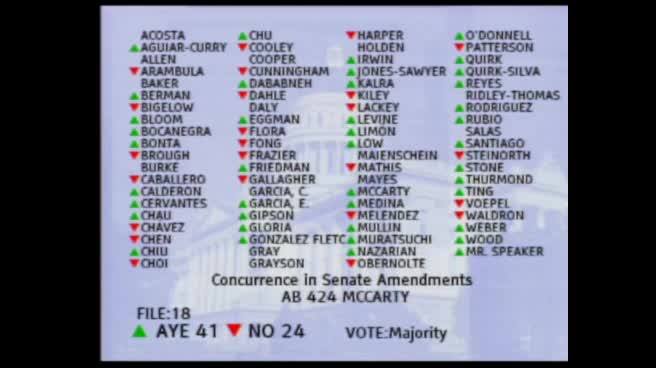

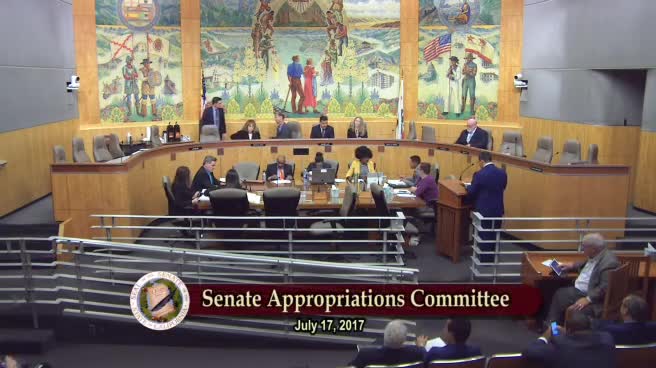
Bill Author

Bill Co-Author(s):