AB 1080: Public contracts: bid preferences: employee health care coverage.
- Session Year: 2017-2018
- House: Assembly
- Latest Version Date: 2018-09-04
Existing law imposes various requirements with respect to contracting by public entities.
This bill would require a state agency awarding specified contracts to provide a 5% bid preference to that portion of the total bid performed by a bidder or subcontractor if its employees, during the time that they were employed, were covered by credible health care coverage, as defined, during the 12-month period immediately preceding submission of the bid. The bill would establish a procedure for a bidder to claim a bid preference by submitting separate statements from the bidder and each of its qualified listed subcontractors, on a form developed by the Department of General Services with the Department of Industrial Relations, each certifying that it qualifies for the bid preference. The bill would require the bidder and contractors to continue to cover its employees with credible health care coverage, as specified. The bill would impose civil penalties for bidder and contractor violations of those requirements.
Existing law imposes various requirements with respect to contracting by public entities.
This bill would require a state agency awarding specified contracts to provide a 5% bid preference to that portion of the total bid performed by a bidder or subcontractor that provided if its employees, during the time that they were employed, were covered by credible health care coverage, as defined, to employees during the 12-month period immediately preceding submission of the bid. The bill would establish a procedure for a bidder to claim a bid preference by submitting separate statements from the bidder and each of its qualified listed subcontractors, on a form developed by the Department of General Services with the Department of Industrial Relations, each certifying that it qualifies for the bid preference. The bill would require the bidder and contractors to continue to provide cover its employees with credible health care coverage to employees, coverage, as specified. The bill would impose civil penalties for bidder and contractor violations of those requirements.
Existing law imposes various requirements with respect to contracting by public entities.
This bill would require a state agency awarding specified contracts to provide a 5% bid preference to that portion of the total bid performed by a bidder or subcontractor that provided credible health care coverage, as defined, to employees during the 12-month period immediately preceding submission of the bid. The bill would require a bidder and its subcontractors to submit claim statements, establish a procedure for a bidder to claim a bid preference by submitting separate statements from the bidder and each of its qualified listed subcontractors, on a form developed by the Department of General Services with the Department of Industrial Relations, each certifying that the bidder and all of the listed subcontractors qualify it qualifies for the bid preference. The bill would require the bidder and contractors to continue to provide credible health care coverage to employees, as specified. The bill would impose civil penalties for bidder and contractor violations of those requirements.
Existing law imposes various requirements with respect to contracting by public entities.
This bill would require a state agency awarding specified contracts to provide a 10% 5% bid preference to a bidder or subcontractor that provided credible health care coverage, as defined, to employees during the 12-month period immediately preceding submission of the bid. The bill would require a bidder and its subcontractors to submit claim statements, on a form developed by the Department of General Services with the Department of Industrial Relations, certifying that the bidder and all of the listed subcontractors qualify for the bid preference. The bill would require the bidder and contractors to continue to provide credible health care coverage to employees, as specified. The bill would impose civil penalties for bidder and contractor violations of those requirements.
Existing law imposes various requirements with respect to contracting by public entities.
This bill would require a state agency awarding a public works contract specified contracts to provide a 2% 10% bid preference to a bidder or subcontractor that provided credible health care coverage, as defined, to employees during the 12-month period immediately preceding submission of the bid. The bill would require a bidder and its subcontractors to submit claim statements, on a form developed by the Department of General Services with the Department of Industrial Relations, certifying that the bidder and all of the listed subcontractors qualify for the bid preference. The bill would require the bidder and contractors to continue to make employee health care expenditures, provide credible health care coverage to employees, as specified. The bill would impose civil penalties for bidder and contractor violations of those requirements.
Existing law imposes various requirements with respect to contracting by public entities.
This bill would require a state agency awarding a public works contract to provide a 2% bid preference to a bidder whose employee health care expenditures, and those of its subcontractors, are at least 6.5% of the aggregate Social Security wages paid to its employees in California. or subcontractor that provided credible health care coverage, as defined, during the 12-month period immediately preceding submission of the bid. The bill would require a bidder and its subcontractors to submit claim statements, on a form developed by the Department of General Services with the Department of Industrial Relations, certifying that the bidder and all of the listed subcontractors qualify for the bid preference. The bill would require the bidder and contractors to continue to make employee health care expenditures, as specified. The bill would impose civil penalties for bidder and contractor violations of those requirements.
Existing law imposes various requirements with respect to contracting by public entities.
This bill would require a state agency awarding a public works contract to provide a 2% bid preference to a bidder whose employee health care expenditures, and those of its subcontractors, are at least 6.5% of the aggregate Social Security wages paid to its employees in California. The bill would require a bidder and its subcontractors to submit claim statements, on a form developed by the Department of General Services with the Department of Industrial Relations, certifying that the bidder and all of the listed subcontractors qualify for the bid preference. The bill would require the bidder and contractors to continue to make employee health care expenditures, as specified. The bill would impose civil penalties for bidder and contractor violations of those requirements.
Existing law prohibits an employer or agent from collecting, taking, or receiving any gratuity or part thereof that is paid, given to, or left for an employee by a patron. Existing law defines the terms employer, employee, and gratuity, among others, for purposes of these provisions.This bill would make nonsubstantive changes to the definitions in these provisions.Existing law prohibits an employer or agent from collecting, taking, or receiving any gratuity or part thereof that is paid, given to, or left for an employee by a patron. Existing law defines the terms employer, employee, and gratuity, among others, for purposes of these provisions.
This bill would make nonsubstantive changes to the definitions in these provisions.
The Legislature finds and declares that the state and the states political subdivisions incur substantial direct and indirect expenses when employers do not pay for employee health care expenses. Accordingly, it makes economic sense for state agencies to offer a bid preference to contractors that pay for employee health care expenses for employees in California.
2031.As used in this chapter:
(a)Contract means either of the following:
(1)A public works contract.
(2)A contract for either of the following services:
(A)Package delivery.
(B)Custodial or janitorial services.
(b)Credible health care coverage means any group policy, contract, or program that is written or administered by a disability insurer, health care service plan, fraternal benefits society, self-insured employer plan, or any other entity, in this state or elsewhere, that arranges or provides medical, hospital, and surgical coverage not designated to supplement other private or governmental plans.
(c)Employee means those individuals assigned by an employer or directly employed by the employer to perform and execute the terms of the contract.
(d)State agency means a department, division, board, bureau, commission, or agency of the executive branch of government.
2032.If a statute requires a state agency to award a contract to the lowest bidder or lowest responsible bidder, the state agency shall provide a 5-percent bid preference to that portion of the total bid performed by a bidder, or the bidders subcontractor, who qualifies for the employee health care coverage bid preference. This preference to a bidder that qualifies for the employee health care coverage bid preference shall be calculated by reducing the bid, or portion of the bid performed by the qualified bidder and the bidders subcontractors, by 5 percent of the amount of the lowest responsible bid for purposes of comparing the bid with competing bids.
2033.(a)A bidder may claim the employee health care coverage bid preference only for the portion of the bid performed by the bidder and the bidders listed subcontractors who qualify for the employee health care coverage bid preference.
(b)If a bidder claims the employee health care coverage bid preference, no other bid preference for which the bidder would otherwise be eligible shall apply to that portion of the bid.
2034.(a)A bidder or a subcontractor qualifies for the employee health care coverage bid preference if, during the 12-month period immediately preceding submission of the bid, the bidders or subcontractors employees were covered by credible health care coverage during the time that they were employed.
(b)The employees of the bidder or subcontractor shall be covered by credible health care coverage for the duration of their employment under the public contract and for any period of continuous employment up to one year after completion of the contract.
(c)If a bidder or subcontractor fails to comply with subdivision (b), that bidder or subcontractor shall pay the state agency an amount equal to twice the cost that the bidder or subcontractor would have incurred for health care if it had complied with subdivision (b).
2035.(a)A bidder may claim an employee health care coverage bid preference by submitting separate statements from the bidder and each of the bidders qualified listed subcontractors, each certifying that it qualifies for the bid preference. The Department of General Services, working with the Department of Industrial Relations, shall develop a form for this purpose, and a bidder that seeks the bid preference under this chapter, and all the bidders listed subcontractors, shall use that form. The Department of General Services shall post the form on its Internet Web site.
(b)A person or entity that knowingly provides false information in the certification required by this section shall be subject to a civil penalty for each violation in the minimum amount of two thousand five hundred dollars ($2,500) and the maximum amount of twenty-five thousand dollars ($25,000). An action for a civil penalty under this section may be brought by any public prosecutor in the name of the people of the State of California.
2036.If the winning bidder has claimed an employee health care coverage bid preference, at the request of the state agency, the bidder and the bidders listed subcontractors shall supply to the state agency records sufficient to show that the bidder is entitled to the preference. The failure to supply the records within a reasonable time shall result in denial of the bid preference.
The Legislature finds and declares that the state and the states political subdivisions incur substantial direct and indirect expenses when employers do not pay for employee health care expenses. Accordingly, it makes economic sense for state agencies to offer a bid preference to contractors that pay for employee health care expenses for employees in California.
2031.As used in this chapter:
(a)Contract means either of the following:
(1)A public works contract.
(2)A contract for either of the following services:
(A)Package delivery.
(B)Custodial or janitorial services.
(b)Credible health care coverage means any group policy, contract, or program that is written or administered by a disability insurer, health care service plan, fraternal benefits society, self-insured employer plan, or any other entity, in this state or elsewhere, that arranges or provides medical, hospital, and surgical coverage not designated to supplement other private or governmental plans.
(c)Employee means those individuals assigned by an employer or directly employed by the employer to perform and execute the terms of the contract.
(c)(d)State agency means a department, division, board, bureau, commission, or agency of the executive branch of government.
2032.If a statute requires a state agency to award a contract to the lowest bidder or lowest responsible bidder, the state agency shall provide a 5-percent bid preference to that portion of the total bid performed by a bidder, or the bidders subcontractor, who qualifies for the employee health care coverage bid preference. This preference to a bidder that qualifies for the employee health care coverage bid preference shall be calculated by reducing the bid, or portion of the bid performed by the qualified bidder and the bidders subcontractors, by 5 percent of the amount of the lowest responsible bid for purposes of comparing the bid with competing bids.
2033.(a)A bidder may claim the employee health care coverage bid preference only for the portion of the bid performed by the bidder and the bidders listed subcontractors who qualify for the employee health care coverage bid preference.
(b)If a bidder claims the employee health care coverage bid preference, no other bid preference for which the bidder would otherwise be eligible shall apply to that portion of the bid.
2034.(a)A bidder or a subcontractor qualifies for the employee health care coverage bid preference if, during the 12-month period immediately preceding submission of the bid, the bidder or subcontractor provided credible health care coverage to employees. A bidder or a subcontractor that employed employees in California for more than three months but fewer than 12 months immediately preceding submission of the bid qualifies for the employee health care coverage bid preference if, during that period of time, the bidder or subcontractor provided credible health care coverage to employees. bidders or subcontractors employees were covered by credible health care coverage during the time that they were employed.
(b)The employees of the bidder or subcontractor shall provide be covered by credible health care coverage to employees for not less than one year following acceptance of the bid. for the duration of their employment under the public contract and for any period of continuous employment up to one year after completion of the contract.
(c)If a bidder or subcontractor fails to comply with subdivision (b), that bidder or subcontractor shall pay the state agency an amount equal to twice the cost that the bidder or subcontractor would have incurred for health care if it had complied with subdivision (b).
2035.(a)A bidder may claim an employee health care coverage bid preference by submitting separate statements from the bidder and each of the bidders qualified listed subcontractors, each certifying that it qualifies for the bid preference. The Department of General Services, working with the Department of Industrial Relations, shall develop a form for this purpose, and a bidder that seeks the bid preference under this chapter, and all the bidders listed subcontractors, shall use that form. The Department of General Services shall post the form on its Internet Web site.
(b)A person or entity that knowingly provides false information in the certification required by this section shall be subject to a civil penalty for each violation in the minimum amount of two thousand five hundred dollars ($2,500) and the maximum amount of twenty-five thousand dollars ($25,000). An action for a civil penalty under this section may be brought by any public prosecutor in the name of the people of the State of California.
2036.If the winning bidder has claimed an employee health care coverage bid preference, at the request of the state agency, the bidder and the bidders listed subcontractors shall supply to the state agency records sufficient to show that the bidder is entitled to the preference. The failure to supply the records within a reasonable time shall result in denial of the bid preference.
The Legislature finds and declares that the state and the states political subdivisions incur substantial direct and indirect expenses when employers do not pay for employee health care expenses. Accordingly, it makes economic sense for state agencies to offer a bid preference to contractors that pay for employee health care expenses for employees in California.
2031.As used in this chapter:
(a)Contract means either of the following:
(1)A public works contract.
(2)A contract for either of the following services:
(A)Package delivery.
(B)Custodial or janitorial services.
(b)Credible health care coverage means any group policy, contract, or program that is written or administered by a disability insurer, health care service plan, fraternal benefits society, self-insured employer plan, or any other entity, in this state or elsewhere, that arranges or provides medical, hospital, and surgical coverage not designated to supplement other private or governmental plans.
(c)State agency means a department, division, board, bureau, commission, or agency of the executive branch of government.
2032.If a statute requires a state agency to award a contract to the lowest bidder or lowest responsible bidder, the state agency shall provide a 5-percent bid preference to a bidder that that portion of the total bid performed by a bidder, or the bidders subcontractor, who qualifies for the employee health care coverage bid preference. This preference to a bidder that qualifies for the employee health care coverage bid preference shall be calculated by reducing the bid bid, or portion of the bid performed by the qualified bidder and the bidders subcontractors, by 5 percent of the amount of the lowest responsible bid for purposes of comparing the bid with competing bids.
2033.(a)A bidder may claim the employee health care coverage bid preference only if the bidder and all of the bidders listed subcontractors each qualify for the bid preference. for the portion of the bid performed by the bidder and the bidders listed subcontractors who qualify for the employee health care coverage bid preference.
(b)If a bidder claims the employee health care coverage bid preference, no other bid preference for which the bidder would otherwise be eligible shall apply to that portion of the bid.
2034.(a)A bidder or a subcontractor qualifies for the employee health care coverage bid preference if, during the 12-month period immediately preceding submission of the bid, the bidder or subcontractor provided credible health care coverage to employees. A bidder or a subcontractor that employed employees in California for more than three months but fewer than 12 months immediately preceding submission of the bid qualifies for the employee health care coverage bid preference if, during that period of time, the bidder or subcontractor provided credible health care coverage to employees.
(b)The bidder or subcontractor shall provide credible health care coverage to employees for not less than one year following acceptance of the bid.
(c)If a bidder or subcontractor fails to comply with subdivision (b), that bidder or subcontractor shall pay the state agency an amount equal to twice the cost that the bidder or subcontractor would have incurred for health care if it had complied with subdivision (b).
2035.(a)A bidder may claim an employee health care coverage bid preference by submitting separate statements from the bidder and all each of the bidders qualified listed subcontractors, each certifying that it qualifies for the bid preference. The Department of General Services, working with the Department of Industrial Relations, shall develop a form for this purpose, and a bidder that seeks the bid preference under this chapter, and all the bidders listed subcontractors, shall use that form. The Department of General Services shall post the form on its Internet Web site.
(b)A person or entity that knowingly provides false information in the certification required by this section shall be subject to a civil penalty for each violation in the minimum amount of two thousand five hundred dollars ($2,500) and the maximum amount of twenty-five thousand dollars ($25,000). An action for a civil penalty under this section may be brought by any public prosecutor in the name of the people of the State of California.
2036.If the winning bidder has claimed an employee health care coverage bid preference, at the request of the state agency, the bidder and the bidders listed subcontractors shall supply to the state agency records sufficient to show that the bidder is entitled to the preference. The failure to supply the records within a reasonable time shall result in denial of the bid preference.
The Legislature finds and declares that the state and the states political subdivisions incur substantial direct and indirect expenses when employers do not pay for employee health care expenses. Accordingly, it makes economic sense for state agencies to offer a bid preference to contractors that pay for employee health care expenses for employees in California.
2031.As used in this chapter:
(a)Contract means either of the following:
(1)A public works contract.
(2)A contract for any either of the following services:
(A)Package delivery.
(B)Custodial or janitorial services.
(C)Maintenance, construction, or repair, including, but not limited to, the services of plumbers and electricians.(D)Landscaping.(E)Parking attendants.(F)Drivers.(b)Credible health care coverage means any group policy, contract, or program that is written or administered by a disability insurer, health care service plan, fraternal benefits society, self-insured employer plan, or any other entity, in this state or elsewhere, that arranges or provides medical, hospital, and surgical coverage not designated to supplement other private or governmental plans.
(c)State agency means a department, division, board, bureau, commission, or agency of the executive branch of government.
2032.If a statute requires a state agency to award a contract to the lowest bidder or lowest responsible bidder, the state agency shall provide a 10 percent 5-percent bid preference to a bidder that qualifies for the employee health care coverage bid preference. This preference to a bidder that qualifies for the employee health care coverage bid preference shall be calculated by reducing the bid by 10 5 percent of the amount of the lowest responsible bid for purposes of comparing the bid with competing bids.
2033.A bidder may claim the employee health care coverage bid preference only if the bidder and all of the bidders listed subcontractors each qualify for the bid preference.
2034.(a)A bidder or a subcontractor qualifies for the employee health care coverage bid preference if, during the 12-month period immediately preceding submission of the bid, the bidder or subcontractor provided credible health care coverage to employees. A bidder or a subcontractor that employed employees in California for more than three months but fewer than 12 months immediately preceding submission of the bid qualifies for the employee health care coverage bid preference if, during that period of time, the bidder or subcontractor provided credible health care coverage to employees.
(b)The bidder or subcontractor shall provide credible health care coverage to employees for not less than one year following acceptance of the bid.
(c)If a bidder or subcontractor fails to comply with subdivision (b), that bidder or subcontractor shall pay the state agency an amount equal to twice the cost that the bidder or subcontractor would have incurred for health care if it had complied with subdivision (b).
2035.(a)A bidder may claim an employee health care coverage bid preference by submitting separate statements from the bidder and all of the bidders listed subcontractors, each certifying that it qualifies for the bid preference. The Department of General Services, working with the Department of Industrial Relations, shall develop a form for this purpose, and a bidder that seeks the bid preference under this chapter, and all the bidders listed subcontractors, shall use that form. The Department of General Services shall post the form on its Internet Web site.
(b)A person or entity that knowingly provides false information in the certification required by this section shall be subject to a civil penalty for each violation in the minimum amount of two thousand five hundred dollars ($2,500) and the maximum amount of twenty-five thousand dollars ($25,000). An action for a civil penalty under this section may be brought by any public prosecutor in the name of the people of the State of California.
2036.If the winning bidder has claimed an employee health care coverage bid preference, at the request of the state agency, the bidder and the bidders listed subcontractors shall supply to the state agency records sufficient to show that the bidder is entitled to the preference. The failure to supply the records within a reasonable time shall result in denial of the bid preference.
The Legislature finds and declares that the state and the states political subdivisions incur substantial direct and indirect expenses when employers do not pay for employee health care expenses. Accordingly, it makes economic sense for state agencies to offer a bid preference to contractors that pay for employee health care expenses for employees in California.
2031.As used in this chapter:
(a)Contract means either of the following:
(1)A public works contract.
(2)A contract for any of the following services:
(A)Package delivery.
(B)Custodial or janitorial services.
(C)Maintenance, construction, or repair, including, but not limited to, the services of plumbers and electricians.
(D)Landscaping.
(E)Parking attendants.
(F)Drivers.
(a)(b)Credible health care coverage means any group policy, contract, or program that is written or administered by a disability insurer, health care service plan, fraternal benefits society, self-insured employer plan, or any other entity, in this state or elsewhere, that arranges or provides medical, hospital, and surgical coverage not designated to supplement other private or governmental plans.
(b)(c)State agency means a department, division, board, bureau, commission, or agency of the executive branch of government.
2032.If a statute requires a state agency to award a public works contract to the lowest bidder or lowest responsible bidder, the state agency shall provide a 2 10 percent bid preference to a bidder that qualifies for the employee health care expenditure coverage bid preference. This preference to a bidder that qualifies for the employee health care expenditure coverage bid preference shall be calculated by reducing the bid by 2 10 percent of the amount of the lowest responsible bid for purposes of comparing the bid with competing bids.
2033.A bidder may claim the employee health care coverage bid preference only if the bidder and all of the bidders listed subcontractors each qualify for the bid preference.
2034.(a)A bidder or a subcontractor qualifies for the employee health care expenditure coverage bid preference if, during the 12-month period immediately preceding submission of the bid, the bidder or subcontractor provided credible health care coverage. coverage to employees. A bidder or a subcontractor that employed employees in California for more than three months but fewer than 12 months immediately preceding submission of the bid qualifies for the employee health care expenditure coverage bid preference if, during that period of time, the bidder or subcontractor provided credible health care coverage. coverage to employees.
(b)The bidder or subcontractor shall provide credible health care coverage to employees for not less than one year following acceptance of the bid.
(c)If a bidder or subcontractor fails to comply with subdivision (b), that bidder or subcontractor shall pay the state agency an amount equal to twice the cost that the bidder or subcontractor would have incurred for health care if it had complied with subdivision (b).
2035.(a)A bidder may claim an employee health care expenditure coverage bid preference by submitting separate statements from the bidder and all of the bidders listed subcontractors, each certifying that it qualifies for the bid preference. The Department of General Services, working with the Department of Industrial Relations, shall develop a form for this purpose, and a bidder that seeks the bid preference under this chapter, and all the bidders listed subcontractors, shall use that form.
(b)A person or entity that knowingly provides false information in the certification required by this section shall be subject to a civil penalty for each violation in the minimum amount of two thousand five hundred dollars ($2,500) and the maximum amount of twenty-five thousand dollars ($25,000). An action for a civil penalty under this section may be brought by any public prosecutor in the name of the people of the State of California.
2036.If the winning bidder has claimed an employee health care expenditure coverage bid preference, at the request of the state agency, the bidder and the bidders listed subcontractors shall supply to the state agency records sufficient to show that the bidder is entitled to the preference. The failure to supply the records within a reasonable time shall result in denial of the bid preference.
The Legislature finds and declares that the state and the states political subdivisions incur substantial direct and indirect expenses when employers do not pay for employee health care expenses. Accordingly, it makes economic sense for state agencies to offer a bid preference to contractors that pay for employee health care expenses for employees in California.
2031.As used in this chapter:
(a)Aggregate California employee health care expenditures means all amounts paid by the bidder, or a subcontractor, to the bidders, or subcontractors, employees in California or to a third party on behalf of the bidders, or subcontractors, employees in California, for the purpose of providing health care services to the employees or reimbursing the cost of those services for the employees, including, but not limited to, all of the following:(1)Contributions on behalf of employees to a health savings account, as defined under Section 223 of the Internal Revenue Code, or to any other account having substantially the same purpose or effect without regard to whether the contributions qualify for a tax deduction or are excludable from employee income.(2)Reimbursement to employees for expenses incurred in the purchase of health care services.(3)Payments to a third party for the purpose of providing health care services for employees.(4)Payments pursuant to a collective bargaining agreement for the purpose of providing health care services for employees.(5)Costs incurred in the direct delivery of health care services to employees.(b)Aggregate California social security wages means the aggregate amount of wages paid to all of the bidders, or subcontractors, employees in California, not including any wages that are above the federal Social Security contribution and benefit base, sometimes referred to as the social security wage base, for the year in which they are paid.(c)Health care services means medical care, services, or goods that may qualify as tax deductible medical care expenses under Section 213 of the Internal Revenue Code, or medical care, services, or goods having substantially the same purpose or effect as those deductible expenses.(a)Credible health care coverage means any group policy, contract, or program that is written or administered by a disability insurer, health care service plan, fraternal benefits society, self-insured employer plan, or any other entity, in this state or elsewhere, that arranges or provides medical, hospital, and surgical coverage not designated to supplement other private or governmental plans.
(d)(b)State agency means a department, division, board, bureau, commission, or agency of the executive branch of government.
2032.If a statute requires a state agency to award a public works contract to the lowest bidder or lowest responsible bidder, the state agency shall provide a 2 percent bid preference to a bidder that qualifies for the employee health care expenditure bid preference. This preference to a bidder that qualifies for the employee health care expenditure shall be calculated by reducing the bid by 2 percent of the amount of the lowest responsible bid for purposes of comparing the bid with competing bids.
2033.A bidder may claim the employee health care expenditure coverage bid preference only if the bidder and all of the bidders listed subcontractors each qualify for the bid preference.
2034.(a)A bidder or a subcontractor qualifies for the employee health care expenditure bid preference if, during the 12-month period immediately preceding submission of the bid, the bidders or subcontractors aggregate California employee health care expenditures were at least equal to 6.5 percent of the bidders or subcontractors aggregate California social security wages. bidder or subcontractor provided credible health care coverage. A bidder or a subcontractor that employed employees in California for more than three months but fewer than 12 months immediately preceding submission of the bid qualifies for the employee health care expenditure bid preference if, during that period of time, the bidders or subcontractors aggregate California employee health care expenditures were at least equal to 6.5 percent of the bidders or subcontractors aggregate California Social Security wages. bidder or subcontractor provided credible health care coverage.
(b)The bidder or subcontractor shall spend at least 6.5 percent of the bidders or subcontractors aggregate California social security wages on health care for its employees for not less than one year following acceptance of the bid. provide credible health care coverage for not less than one year following acceptance of the bid.
(c)If a bidder or subcontractor fails to comply with subdivision (b), that bidder or subcontractor shall pay the state agency an amount equal to twice the cost that the bidder or subcontractor would have incurred for health care if it had complied with subdivision (b).
2035.(a)A bidder may claim an employee health care expenditure bid preference by submitting separate statements from the bidder and all of the bidders listed subcontractors, each certifying that it qualifies for the bid preference. The Department of General Services, working with the Department of Industrial Relations, shall develop a form for this purpose, and a bidder that seeks the bid preference under this chapter, and all the bidders listed subcontractors, shall use that form.
(b)A person or entity that knowingly provides false information in the certification required by this section shall be subject to a civil penalty for each violation in the minimum amount of two thousand five hundred dollars ($2,500) and the maximum amount of twenty-five thousand dollars ($25,000). An action for a civil penalty under this section may be brought by any public prosecutor in the name of the people of the State of California.
2036.If the winning bidder has claimed an employee health care expenditure bid preference, at the request of the state agency, the bidder and the bidders listed subcontractors shall supply to the state agency records sufficient to show that the bidder is entitled to the preference. The failure to supply the records within a reasonable time shall result in denial of the bid preference.
The Legislature finds and declares that the state and the states political subdivisions incur substantial direct and indirect expenses when employers do not pay for employee health care expenses. Accordingly, it makes economic sense for state agencies to offer a bid preference to contractors that pay for employee health care expenses for employees in California.
2031.As used in this chapter:
(a)Aggregate California employee health care expenditures means all amounts paid by the bidder, or a subcontractor, to the bidders, or subcontractors, employees in California or to a third party on behalf of the bidders, or subcontractors, employees in California, for the purpose of providing health care services to the employees or reimbursing the cost of those services for the employees, including, but not limited to, all of the following:
(1)Contributions on behalf of employees to a health savings account, as defined under Section 223 of the Internal Revenue Code, or to any other account having substantially the same purpose or effect without regard to whether the contributions qualify for a tax deduction or are excludable from employee income.
(2)Reimbursement to employees for expenses incurred in the purchase of health care services.
(3)Payments to a third party for the purpose of providing health care services for employees.
(4)Payments pursuant to a collective bargaining agreement for the purpose of providing health care services for employees.
(5)Costs incurred in the direct delivery of health care services to employees.
(b)Aggregate California social security wages means the aggregate amount of wages paid to all of the bidders, or subcontractors, employees in California, not including any wages that are above the federal Social Security contribution and benefit base, sometimes referred to as the social security wage base, for the year in which they are paid.
(c)Health care services means medical care, services, or goods that may qualify as tax deductible medical care expenses under Section 213 of the Internal Revenue Code, or medical care, services, or goods having substantially the same purpose or effect as those deductible expenses.
(d)State agency means a department, division, board, bureau, commission, or agency of the executive branch of government.
2032.If a statute requires a state agency to award a public works contract to the lowest bidder or lowest responsible bidder, the state agency shall provide a 2 percent bid preference to a bidder that qualifies for the employee health care expenditure bid preference. This preference shall be calculated by reducing the bid by 2 percent of the amount of the bid for purposes of comparing the bid with competing bids.
2033.A bidder may claim the employee health care expenditure bid preference only if the bidder and all of the bidders listed subcontractors each qualify for the bid preference.
2034.(a)A bidder or a subcontractor qualifies for the employee health care expenditure bid preference if, during the 12-month period immediately preceding submission of the bid, the bidders or subcontractors aggregate California employee health care expenditures were at least equal to 6.5 percent of the bidders or subcontractors aggregate California social security wages. A bidder or a subcontractor that employed employees in California for more than three months but fewer than 12 months immediately preceding submission of the bid qualifies for the employee health care expenditure bid preference if, during that period of time, the bidders or subcontractors aggregate California employee health care expenditures were at least equal to 6.5 percent of the bidders or subcontractors aggregate California Social Security wages.
(b)The bidder or subcontractor shall spend at least 6.5 percent of the bidders or subcontractors aggregate California social security wages on health care for its employees for not less than one year following acceptance of the bid.
(c)If a bidder or subcontractor fails to comply with subdivision (b), that bidder or subcontractor shall pay the state agency an amount equal to twice the cost that the bidder or subcontractor would have incurred for health care if it had complied with subdivision (b).
2035.(a)A bidder may claim an employee health care expenditure bid preference by submitting separate statements from the bidder and all of the bidders listed subcontractors, each certifying that it qualifies for the bid preference. The Department of General Services, working with the Department of Industrial Relations, shall develop a form for this purpose, and a bidder that seeks the bid preference under this chapter, and all the bidders listed subcontractors, shall use that form.
(b)A person or entity that knowingly provides false information in the certification required by this section shall be subject to a civil penalty for each violation in the minimum amount of two thousand five hundred dollars ($2,500) and the maximum amount of twenty-five thousand dollars ($25,000). An action for a civil penalty under this section may be brought by any public prosecutor in the name of the people of the State of California.
2036.If the winning bidder has claimed an employee health care expenditure bid preference, at the request of the state agency, the bidder and the bidders listed subcontractors shall supply to the state agency records sufficient to show that the bidder is entitled to the preference. The failure to supply the records within a reasonable time shall result in denial of the bid preference.
SECTION 1.Section 350 of the Labor Code is amended to read:350.As used in this article, unless the context indicates otherwise:(a)Employer means every person engaged in a business or enterprise in this state that has one or more persons in service under any appointment, contract of hire, or apprenticeship, express or implied, oral or written, irrespective of whether the person is the owner of the business or is operating on a concessionaire or other basis.(b)Employee means every person, including aliens and minors, rendering actual service in a business for an employer, whether gratuitously or for wages or pay, whether the wages or pay are measured by the standard of time, piece, task, commission, or other method of calculation, and whether the service is rendered on a commission, concessionaire, or other basis.(c)Employing includes hiring, or in any way contracting for, the services of an employee.(d)Agent means every person other than the employer having the authority to hire or discharge any employee or supervise, direct, or control the acts of employees.(e)Gratuity includes any tip, gratuity, money, or part thereof that has been paid or given to or left for an employee by a patron of a business over and above the actual amount due the business for services rendered or for goods, food, drink, or articles sold or served to the patron. Any amounts paid directly by a patron to a dancer employed by an employer subject to Industrial Welfare Commission Order No. 5 or 10 shall be deemed a gratuity.(f)Business means any business establishment or enterprise, regardless of where conducted.As used in this article, unless the context indicates otherwise:
(a)Employer means every person engaged in any a business or enterprise in this state that has one or more persons in service under any appointment, contract of hire, or apprenticeship, express or implied, oral or written, irrespective of whether the person is the owner of the business or is operating on a concessionaire or other basis.
(b)Employee means every person, including aliens and minors, rendering actual service in any a business for an employer, whether gratuitously or for wages or pay, whether the wages or pay are measured by the standard of time, piece, task, commission, or other method of calculation, and whether the service is rendered on a commission, concessionaire, or other basis.
(c)Employing includes hiring, or in any way contracting for, the services of an employee.
(d)Agent means every person other than the employer having the authority to hire or discharge any employee or supervise, direct, or control the acts of employees.
(e)Gratuity includes any tip, gratuity, money, or part thereof that has been paid or given to or left for an employee by a patron of a business over and above the actual amount due the business for services rendered or for goods, food, drink, or articles sold or served to the patron. Any amounts paid directly by a patron to a dancer employed by an employer subject to Industrial Welfare Commission Order No. 5 or 10 shall be deemed a gratuity.
(f)Business means any business establishment or enterprise, regardless of where conducted.
|
Date
|
Status
|
|---|---|
| Sep 30, 2018 | Vetoed by Governor. |
| Sep 10, 2018 | Enrolled and presented to the Governor at 3:30 p.m. |
| Aug 30, 2018 | Senate amendments concurred in. To Engrossing and Enrolling. |
| Aug 29, 2018 | In Assembly. Concurrence in Senate amendments pending. |
| Aug 29, 2018 | Read third time. Passed. Ordered to the Assembly. |
| Aug 27, 2018 | Read second time. Ordered to third reading. |
| Aug 24, 2018 | Read third time and amended. Ordered to second reading. |
| Aug 21, 2018 | Read second time. Ordered to third reading. |
| Aug 20, 2018 | Read third time and amended. Ordered to second reading. |
| Aug 14, 2018 | Read second time. Ordered to third reading. |
| Aug 13, 2018 | From inactive file. |
| Sep 15, 2017 | Ordered to inactive file at the request of Senator Monning. |
| Sep 5, 2017 | Read second time. Ordered to third reading. |
| Sep 1, 2017 | From committee: Do pass. (Ayes 5. Noes 2.) (September 1). |
| Aug 21, 2017 | In committee: Referred to APPR. suspense file. |
| Jul 12, 2017 | From committee: Do pass and re-refer to Com. on APPR. (Ayes 4. Noes 1.) (July 12). Re-referred to Com. on APPR. |
| Jul 3, 2017 | Read second time and amended. Re-referred to Com. on L. & I.R. |
| Jun 29, 2017 | From committee: Amend, and do pass as amended and re-refer to Com. on L. & I.R. (Ayes 10. Noes 2.) (June 27). |
| Jun 14, 2017 | Referred to Coms. on G.O. and L. & I.R. |
| Jun 1, 2017 | In Senate. Read first time. To Com. on RLS. for assignment. |
| May 31, 2017 | Read third time. Passed. Ordered to the Senate. (Ayes 59. Noes 17. Page 1915.) |
| May 30, 2017 | Read second time. Ordered to third reading. |
| May 26, 2017 | From committee: Do pass. (Ayes 12. Noes 5.) (May 26). |
| May 17, 2017 | In committee: Set, first hearing. Referred to APPR. suspense file. |
| May 11, 2017 | Re-referred to Com. on APPR. |
| May 10, 2017 | In committee: Hearing postponed by committee. |
| Apr 26, 2017 | From committee: Do pass and re-refer to Com. on APPR. (Ayes 7. Noes 0.) (April 26). Re-referred to Com. on APPR. |
| Apr 20, 2017 | Re-referred to Com. on A. & A.R. |
| Apr 19, 2017 | From committee chair, with author's amendments: Amend, and re-refer to Com. on A. & A.R. Read second time and amended. |
| Apr 3, 2017 | Re-referred to Com. on A. & A.R. |
| Mar 30, 2017 | From committee chair, with author's amendments: Amend, and re-refer to Com. on A. & A.R. Read second time and amended. |
| Mar 30, 2017 | Referred to Com. on A. & A.R. |
| Feb 17, 2017 | From printer. May be heard in committee March 19. |
| Feb 16, 2017 | Read first time. To print. |
|
Date
|
Description
|
Location
|
Votes
|
|
|---|---|---|---|---|
| Aug 30, 2018 | AB 1080 GONZALEZ FLETCHER Concurrence in Senate Amendments | Assembly Floor |
Passed |
|
| Aug 29, 2018 | Assembly 3rd Reading AB1080 Gonzalez Fletcher By Cannella | Senate Floor |
Passed |
|
| Sep 1, 2017 | Do pass | Senate Standing Committee on Appropriations |
Passed |
|
| Aug 21, 2017 | Placed on suspense file | Senate Standing Committee on Appropriations |
Passed |
|
| Jul 12, 2017 | Do pass, but first be re-referred to the Committee on [Appropriations] | Senate Standing Committee on Labor and Industrial Relations |
Passed |
|
| Jun 27, 2017 | CS/CS/CS/HB 865 | Senate Standing Committee on Governmental Organization |
Passed |
|
| May 31, 2017 | AB 1080 GONZALEZ FLETCHER Assembly Third Reading | Assembly Floor |
Passed |
|
| May 26, 2017 | Do pass. | Assembly Standing Committee on Appropriations |
Passed |
|
| Apr 26, 2017 | Do pass and be re-referred to the Committee on [Appropriations] | Assembly Standing Committee on Accountability and Administrative Review |
Passed |
This list shows positions taken on this bill by organizations on the date displayed, which is linked to the original source.
Positions by individuals are not included.
|
Organization
|
Position
|
Date
|
|---|---|---|
| American Fire Sprinkler Association | ** Against | Aug 27, 2018 |
| associated builders and contractors, central california chapter | ** Against | Aug 27, 2018 |
| Associated Builders and Contractors, San Diego Chapter | ** Against | Aug 27, 2018 |
| associated builders and contractors, southern california chapter | ** Against | Aug 27, 2018 |
| California Labor Federation | ** Support | Jul 10, 2017 |
| California State Association Of Electrical Workers | ** Support | Aug 27, 2018 |
| California State Council Of Laborers | * Support | Jun 27, 2017 |
| California State Pipe Trades Council | ** Support | Aug 27, 2018 |
| California Teamsters Public Affairs Council | ** Support | Jul 10, 2017 |
| Construction Employers' Association | ** Against | Aug 27, 2018 |
| Independent Roofing Contractors Association Of California | ** Against | Jul 10, 2017 |
| Independent Roofing Contractors of California, Inc. | ** Against | Aug 27, 2018 |
| International Union of Elevator Constructors | ** Support | Aug 27, 2018 |
| Plumbing-Heating-Cooling Contractors Association of California | ** Against | Aug 27, 2018 |
| Service Employees International Union | ** Support | Aug 27, 2018 |
| State Building and Construction Trades Council, AFL-CIO | ** Support | Aug 27, 2018 |
| United Food and Commercial Workers Union | ** Support | Jul 10, 2017 |
| Western Electrical Contractors Association | ** Against | Aug 27, 2018 |
| Western States Council Of Sheet Metal Workers | ** Support | Aug 27, 2018 |
GOVERNOR'S VETO
GV Bill Id:AB 1080
Author:(Gonzalez Fletcher)
As Enrolled Ver:September 10, 2018
2/3 vote
ASSEMBLY: | 59-17 | (May 31, 2017) | SENATE: | 28-10 | (August 29, 2018) |
ASSEMBLY: | 61-19 | (August 30, 2018) |
|
|
Original Committee Reference: A. & A.R.
SUMMARY: Provides a 5% bid preference on state public works projects and specified service contracts for bidders who provide employees credible health care coverage.
The Senate amendments
- Reduce the preference from 10% to 5%.
- Remove the preference for some types of service contracts.
- Specify that the preference can be claimed only for the portion of the bid performed by the bidder or its subcontractors that qualify for the bid preference.
- Specify that if a bidder claims the preference, the bidder is not eligible for other bid preferences.
- Set qualifications for the preference based on employees' health coverage during employment prior to the bid.
- Specify, to qualify for the preference, that an employee must be covered by health coverage during employment under the public contract and, if continuously employed, for one year after completion of the contract.
- Defines "employee" as related to the preference.
EXISTING LAW:
- Generally requires public works projects to be awarded to the lowest responsible bidders.
- Provides specified bid preferences in state contracting.
FISCAL EFFECT: The current version of this bill has not been analyzed by a fiscal committee.
COMMENTS: This bill provides a 5% bid preference on state public works projects and package delivery or custodial/ janitorial services to bidders that provide their employees with credible health care coverage. It defines credible health care coverage as "any group policy, contract, or program that is written or administered by a disability insurer, health care service plan, fraternal benefits society, self-insured employer plan, or any other entity, in this state or elsewhere, that arranges or provides medical, hospital, and surgical coverage not designated to supplement other private or governmental plans."
According to the author, the preference will encourage more businesses to provide their employees with health coverage.
Amendments taken in the Senate specify that only the portion of the bid performed by a bidder or subcontractor that is eligible for the preference could be claimed. This means that the preference could be calculated at less than 5% if, for example, one or more subcontractor does not provide credible health care coverage to its workers.
Additional amendments specify that a bidder claiming the preference is not eligible for other preferences. The state has other contracting preferences, which in certain cases can be combined when bidding.
Amendments also specify how a contractor or subcontractor qualifies for the preference, based on it providing prior health coverage, and agreeing to provide coverage during the public contract work and after.
This bill would provide a bid preference to a bidder providing health care coverage to employees.
While I appreciate the author's intent to promote access to health care, I am concerned about the impact on small businesses competing for state contracts. Furthermore, a new bid preference for public works and other services may ultimately result in the state paying more for contracts.
Analysis Prepared by: Scott Herbstman / A. & A.R. / (916) 319-3600 FN: 0005341
CONCURRENCE IN SENATE AMENDMENTS
CSA1 Bill Id:AB 1080
Author:(Gonzalez Fletcher)
As Amended Ver:August 24, 2018
Majority vote
ASSEMBLY: | 59-17 | (May 31, 2017) | SENATE: | 28-10 | (August 29, 2018) |
Original Committee Reference: A. & A.R.
SUMMARY: Provides a 5% bid preference on state public works projects and specified service contracts for bidders who provide employees credible health care coverage.
The Senate amendments
- Reduce the preference from 10% to 5%.
- Remove the preference for some types of service contracts.
- Specify that the preference can be claimed only for the portion of the bid performed by the bidder or its subcontractors that qualify for the bid preference.
- Specify that if a bidder claims the preference, the bidder is not eligible for other bid preferences.
- Set qualifications for the preference based on employees' health coverage during employment prior to the bid.
- Specify, to qualify for the preference, that an employee must be covered by health coverage during employment under the public contract and, if continuously employed, for one year after completion of the contract.
- Defines "employee" as related to the preference.
EXISTING LAW:
- Generally requires public works projects to be awarded to the lowest responsible bidders.
- Provides specified bid preferences in state contracting.
FISCAL EFFECT: The current version of this bill has not been analyzed by a fiscal committee.
COMMENTS: This bill provides a 5% bid preference on state public works projects and package delivery or custodial/ janitorial services to bidders that provide their employees with credible health care coverage. It defines credible health care coverage as "any group policy, contract, or program that is written or administered by a disability insurer, health care service plan, fraternal benefits society, self-insured employer plan, or any other entity, in this state or elsewhere, that arranges or provides medical, hospital, and surgical coverage not designated to supplement other private or governmental plans."
According to the author, the preference will encourage more businesses to provide their employees with health coverage.
Amendments taken in the Senate specify that only the portion of the bid performed by a bidder or subcontractor that is eligible for the preference could be claimed. This means that the preference could be calculated at less than 5% if, for example, one or more subcontractor does not provide credible health care coverage to its workers.
Additional amendments specify that a bidder claiming the preference is not eligible for other preferences. The state has other contracting preferences, which in certain cases can be combined when bidding.
Amendments also specify how a contractor or subcontractor qualifies for the preference, based on it providing prior health coverage, and agreeing to provide coverage during the public contract work and after.
Analysis Prepared by: Scott Herbstman / A. & A.R. / (916) 319-3600 FN: 0004910
Office of Senate Floor Analyses (916) 651-1520 Fax: (916) 327-4478 | AB |
THIRD READING
Bill No: AB 1080
:
SENATE GOVERNMENTAL ORG. COMMITTEE: 10-2, 6/27/17
AYES: Dodd, Bradford, Cannella, Galgiani, Glazer, Hill, Hueso, Lara, Mendoza, Portantino
NOES: Gaines, Vidak
NO VOTE RECORDED: Berryhill
SENATE LABOR & IND. REL. COMMITTEE: 4-1, 7/12/17
AYES: Bradford, Atkins, Jackson, Mitchell
NOES: Stone
SENATE APPROPRIATIONS COMMITTEE: 5-2, 9/1/17
AYES: Lara, Beall, Bradford, Hill, Wiener
NOES: Bates, Nielsen
ASSEMBLY FLOOR: 59-17, 5/31/17 - See last page for vote
SUBJECT: Public contracts: bid preferences: employee health care coverage
DIGEST: This bill requires a state agency awarding specified contracts to provide a 5% bid preference to that portion of the total bid performed by a bidder or subcontractor if its employees, during the time that they were employed, were covered by credible, health care coverage, as defined, during the 12-month period immediately preceding submission of the bid.
Senate Floor Amendments of 8/24/18 (1) define “employee” to mean those individuals assigned by an employer or directly employed by the employer to perform and execute the terms of the contract, (2) clarify that a bidder or subcontractor qualifies for the employee health care coverage bid preference if the bidder’s or subcontractor’s employees were covered by credible health care coverage during the time that they were employed, and (3) clarify that employees of the bidder or subcontractor shall be covered by credible health care coverage for the duration of their employment under the public contract and for any period of continuous employment up to one year after completion of the contract.
Senate Floor Amendments of 8/20/18 specify that the health coverage bid preference only applies to the portion of the bid which subcontractors offer health coverage. Additionally, specify that if the bidder claims the health care bid preference, the bidder would not be eligible for other bid preferences they otherwise would be eligible for.
ANALYSIS:
Existing law:
- Grants, through the Small Business Procurement and Contract Act (Act), preference for small businesses and microbusinesses in the award of a contract for goods, services, or information technology to the state and in the construction of state facilities.
- Provides that in solicitations where an award is to be made to the lowest responsible bidder, the preference to small businesses and microbusinesses shall be 5% of the lowest responsible bidder meeting specifications.
- Permits a state agency and the California State University to award specified types of contracts with a value of between $5,000 and $250,000 to a certified small business, including a microbusiness and a disabled veteran business enterprise (DVBE), without complying with certain competitive bidding requirements, provided the agency obtains price quotations from at least two small businesses, including microbusinesses, or two DVBEs, as defined.
- Establishes the Office of Small Business and Disabled Veteran Business Enterprise Services and prescribes duties for the office, which include maintaining a bidders list of small businesses and disabled veteran businesses and identifying which small businesses also qualify as microbusinesses.
- Defines a “small business” to mean an independently owned and operated business that is not dominant in its field of operation, the principal office of which is located in California, the officers of which are domiciled in California, and which, together with affiliates, has 100 or fewer employees, and average annual gross receipts of $10 million or less over the previous three years, or is a manufacturer, as defined, and has 100 or fewer employees. It should be noted that the Director of the Department of General Services (DGS) is currently allowed to adjust the average gross receipts to reflect changes in the Consumer Price Index (CPI). As such, the average annual gross receipts average is currently at $15 million or less over the previous three years.
- Defines “microbusiness” as a small business which, together with affiliates, has average annual gross receipts of $2.5 million or less over the previous three years, or is a manufacturer, as defined, with 25 or fewer employees.
- Defines a “disabled veteran business enterprise ” to mean an enterprise that is at least 51% owned by one or more disabled veterans and the daily business operations are managed and controlled by one or more disabled veterans. For certification purposes, a “disabled veteran” is a veteran of the U.S. military, naval, or air service who resides in California and has a service-connected disability of at least 10% or more.
- Requires a contractor requesting a small business or microbusiness preference to do so under penalty of perjury.
This bill:
- Requires a state agency awarding specified contracts to provide a 5% bid preference to that portion of the total bid performed by a bidder or subcontractor if its employees, during the time that there were employed were covered by credible health care coverage, as specified.
- Defines “credible health care coverage” to mean any group policy, contract, or program that is written or administered by a disability insurer, health care service plan, fraternal benefits society, or self-insured employer plan that arranges or provides medical hospital, and surgical coverage not designated to supplement other private or government plans.
- Defines an “employee” to mean those individuals assigned by an employer or directly employed by the employer to perform and execute the terms of the contract.
- Defines a “contract” to mean a public works contract or a contract for any of the following services:
- Package delivery.
- Custodial or janitorial services.
- Specifies that the bidder may claim the employee health care coverage bid preference only if the bidder and all of the bidder’s listed subcontractors each qualify for the bid preference.
- Provides that if a bidder or subcontractor qualifies for the employee health care coverage bid preference if, during the 12-month period immediately preceding submission of the bid, the bidder’s or subcontractor’s employees were covered by credible health care coverage during the time that they were employed.
- Requires the employees of the bidder or subcontractor to be covered by credible health care coverage for the duration of their employment under the public contract and for any period of continuous employment up to one year after completion of the contract.
- Provides that a bidder may claim an employee health care coverage bid preference by submitting separate statements from the bidder and all of the bidder’s listed subcontractors, each certifying that it qualifies for the bid preference. This bill requires DGS, working with the Department of Industrial Relations, to develop a form for this purpose and to post the form on its Internet Web site.
- Provides that a person or entity that knowingly provides false information shall be a subject to a civil penalty for each violation in the minimum amount of $2,500 and the maximum amount of $25,000.
- Provides that if the winning bidder has claimed an employee health care coverage bid preference, at the request of the state agency, the bidder and the bidder’s listed subcontractors shall supply to the state agency records sufficient to show that the bidder is entitled to the preference. The failure to supply the records within a reasonable time shall result in denial of the bid preference.
- States that if a bidder claims the employee health care coverage bid preference, no other bid preference for which the bidder would otherwise be eligible shall apply to that portion of the bid.
Background
Purpose of the bill. According to the author’s office, “the potential repeal of the Affordable Care Act (ACA) would significantly increase the number of uninsured individuals in California. It would ultimately result in having our State increase spending for public health care since there will be a spike in uninsured workers seeking care through a public assistance program or the emergency room. This bill is a proactive approach to the issue that we may face if the ACA is repealed under the current Presidential administration. It is important to ensure the well-being of our residents if they are hired to perform jobs under a state contract.”
Small Business Procurement and Contract Act. The Small Business Procurement and Contract Act (Act) was enacted in 1973 to establish a small business preference within the state’s procurement process. The definition of a small business in California includes any business that has 100 or fewer employees and average annual gross receipts of $15 million or less over the previous three years. The goal is to increase the number of contracts between the state and small businesses. The Act states that it is the policy of the State of California to aid the interests of small businesses in order to preserve free competitive enterprise and to ensure that a fair portion of the total purchases and contracts of the state are awarded to these types of businesses.
Upon meeting eligibility requirements, certified small businesses and micro- businesses are entitled to a 5% bid preference on applicable state solicitations. Certified small businesses and microbusinesses are eligible for the state’s Small Business Participation Program. The program sets a goal for the use of small businesses in at least 25% of the state’s overall annual contract dollars.
Current bid preferences. Current law provides for various bid preferences for businesses that contract with the state. The most widely used are the small business bid preference which provides a 5% bid preference to small businesses. There is also the DVBE preference which ranges from 1% to 5% at the state agency’s option, as well as the Target Area Contract Preference and the Recycled tire preference, which again ranges from 1% to 5%. According to DGS, the small business bid preference is the most widely used incentive.
Small businesses and health coverage. Due to the fact that the definition of small business varies, especially when it pertains to the number of employees, it is difficult to determine how many small businesses, as currently defined under the Act, provide health care coverage. As such it is unclear how many small businesses that are currently eligible for the small business 5% bid preference, would be eligible for the 5% bid preference in this bill. In addition, under the ACA businesses with fewer than 50 employees are exempt from penalties faced by larger employers that do not offer coverage. Under the ACA, businesses with more than 50 full time employees, are considered “large business” and therefore required to offer employee health care coverage, or pay a penalty.
Based on an employer health survey conducted by the Kaiser Foundation, in 2014, only 54% of businesses that had 3-199 employees offered any sort of health benefit in the United States. However, for businesses with less than 10 employees, the number dropped to 44%. Even at 44%, it is unclear how many of those businesses would be able to satisfy the requirement in this bill that they provide “credible health care coverage.”
Related/Prior Legislation
SB 605 (Galgiani, Chapter 673, Statutes of 2017) revised the definition of “small business” and “microbusiness” for purposes of the Act by increasing the dollar amount threshold for a small business to $15 million and for a microbusiness to $5 million and requires those dollar amounts to be adjusted to reflect changes in the CPI biennially.
AB 1068 (Gonzalez-Fletcher, 2017) would have established a pilot program requiring Prison Industry Authority to contract with a private employer that employs ex-felons to provide goods to the Department of Corrections and Rehabilitation or other state agencies. The private employer would be provided bid preferences, as specified when bidding for a procurement contract with a state agency or department. (Vetoed by Governor Brown)
SB 1176 (Galgiani, 2016) would have revised the definition of “small business” and “microbusiness” for purposes of the Act by increasing the dollar amount threshold for a small business to $15 million and for a microbusiness to $5 million and requires those dollar amounts to be adjusted to reflect changes in the CPI. In addition, the bill would have revised the definition of small business by specifying that, for the purposes of public works contracts, a small business means a business with 200 or fewer employees and average annual gross receipts of $25 million or less over the previous three years. (Vetoed by Governor Brown)
SB 1219 (Hancock, 2016) would have included “employment social enterprise,” which are businesses that provide jobs for individuals who have experienced significant barriers to employment, within the Act for the purpose of allowing them to participate in state contracting bid preferences provided to certified small business enterprises. (Vetoed by Governor Brown)
FISCAL EFFECT: Appropriation: Fiscal Com.: Local:
According to the Senate Appropriations Committee, this bill results in one-time costs of up to $150,000 to DGS for rulemaking and policy development.
In addition, this bill results in ongoing costs of approximately $138,000 to DGS for increased workload for administration of the bid preference on public works contracts.
Also, unknown, potentially significant costs to other state departments for increased workload to administer public works contracts.
Finally, this bill results in potential, a significant increase in public works projects and state contracting costs, to the extent contractors are deemed ineligible for the bid preference. Contracting costs could also be impacted by a reduction in the pool of eligible contractors. Reduced competition for state contracts could potentially lead to higher prices for contracts.
California State Association of Electrical Workers
California State Pipe Trades Council
International Union of Elevator Constructors
Service Employees International Union
State Building and Construction Trades Council, AFL-CIO
Western States Council of Sheet Metal Workers
OPPOSITION: (Verified 8/24/18)
American Fire Sprinkler Association
Associated Builders and Contractors, Central California Chapter
Associated Builders and Contractors, San Diego Chapter
Associated Builders and Contractors, Southern California Chapter
Construction Employers’ Association
Independent Roofing Contractors of California, Inc.
Plumbing-Heating-Cooling Contractors Association of California
Western Electrical Contractors Association
ARGUMENTS IN SUPPORT: According to the State Building and Construction Trades Council, AFL-CIO, “the State and its local governments incur substantial direct and indirect expenses when employers do not contribute to employee health care expenses. As the Legislature continues tackling the onerous task of maintaining a balanced budget, which at times has included significant reductions to health care programs for the most vulnerable, it makes economic sense for public entities to offer a bid preference to construction contractors that have established a practice of paying for employee health care expenses for California’s construction workforce.”
ARGUMENTS IN OPPOSITION: According to the Construction Employers’ Association, “pursuant to your measure, the bid preference would only apply if every single listed entity on a job met the health care requirements and maintained those health care expenditures for 12 months following a submission of a bid. Even if one succeeded, the requirement that the contractor submits certification from each subcontractor attesting to the fact that they will meet the requirements, and guarantee that each entity will maintain those requirements for 12 months, would be very problematic.”
ASSEMBLY FLOOR: 59-17, 5/31/17
AYES: Aguiar-Curry, Arambula, Berman, Bloom, Bocanegra, Bonta, Burke, Caballero, Calderon, Cervantes, Chau, Chiu, Chu, Cooley, Cooper, Cunningham, Dababneh, Daly, Flora, Frazier, Friedman, Cristina Garcia, Eduardo Garcia, Gipson, Gloria, Gomez, Gonzalez Fletcher, Gray, Holden, Irwin, Jones-Sawyer, Kalra, Lackey, Levine, Limón, Low, Maienschein, McCarty, Medina, Mullin, Muratsuchi, Nazarian, O'Donnell, Quirk, Quirk-Silva, Reyes, Ridley-Thomas, Rodriguez, Rubio, Salas, Santiago, Steinorth, Mark Stone, Thurmond, Ting, Waldron, Weber, Wood, Rendon
NOES: Acosta, Travis Allen, Baker, Bigelow, Brough, Chávez, Chen, Dahle, Fong, Gallagher, Harper, Kiley, Mathis, Mayes, Obernolte, Patterson, Voepel
NO VOTE RECORDED: Choi, Eggman, Grayson, Melendez
8/27/18 19:30:25
**** END ****
Office of Senate Floor Analyses (916) 651-1520 Fax: (916) 327-4478 | AB |
THIRD READING
Bill No: AB 1080
:
SENATE GOVERNMENTAL ORG. COMMITTEE: 10-2, 6/27/17
AYES: Dodd, Bradford, Cannella, Galgiani, Glazer, Hill, Hueso, Lara, Mendoza, Portantino
NOES: Gaines, Vidak
NO VOTE RECORDED: Berryhill
SENATE LABOR & IND. REL. COMMITTEE: 4-1, 7/12/17
AYES: Bradford, Atkins, Jackson, Mitchell
NOES: Stone
SENATE APPROPRIATIONS COMMITTEE: 5-2, 9/1/17
AYES: Lara, Beall, Bradford, Hill, Wiener
NOES: Bates, Nielsen
ASSEMBLY FLOOR: 59-17, 5/31/17 - See last page for vote
SUBJECT: Public contracts: bid preferences: employee health care coverage
DIGEST: This bill requires a state agency awarding specified contracts to provide a 5% bid preference to that portion of the total bid performed by a bidder or subcontractor that provides credible health care coverage, as defined, to employees during the 12-month period immediately preceding submission of this bill.
Senate Floor Amendments of 8/20/18 specify that the health coverage bid preference only applies to the portion of the bid which subcontractors offer health coverage. Additionally, specify that if the bidder claims the health care bid preference, the bidder would not be eligible for other bid preferences they otherwise would be eligible for.
ANALYSIS:
Existing law:
- Grants, through the Small Business Procurement and Contract Act (Act), preference for small businesses and microbusinesses in the award of a contract for goods, services, or information technology to the state and in the construction of state facilities.
- Provides that in solicitations where an award is to be made to the lowest responsible bidder, the preference to small businesses and microbusinesses shall be 5% of the lowest responsible bidder meeting specifications.
- Permits a state agency and the California State University to award specified types of contracts with a value of between $5,000 and $250,000 to a certified small business, including a microbusiness and a disabled veteran business enterprise (DVBE), without complying with certain competitive bidding requirements, provided the agency obtains price quotations from at least two small businesses, including microbusinesses, or two DVBEs, as defined.
- Establishes the Office of Small Business and Disabled Veteran Business Enterprise Services and prescribes duties for the office, which include maintaining a bidders list of small businesses and disabled veteran businesses and identifying which small businesses also qualify as microbusinesses.
- Defines a “small business” to mean an independently owned and operated business that is not dominant in its field of operation, the principal office of which is located in California, the officers of which are domiciled in California, and which, together with affiliates, has 100 or fewer employees, and average annual gross receipts of $10 million or less over the previous three years, or is a manufacturer, as defined, and has 100 or fewer employees. It should be noted that the Director of the Department of General Services (DGS) is currently allowed to adjust the average gross receipts to reflect changes in the Consumer Price Index (CPI). As such, the average annual gross receipts average is currently at $15 million or less over the previous three years.
- Defines “microbusiness” as a small business which, together with affiliates, has average annual gross receipts of $2.5 million or less over the previous three years, or is a manufacturer, as defined, with 25 or fewer employees.
- Defines a “disabled veteran business enterprise ” to mean an enterprise that is at least 51% owned by one or more disabled veterans and the daily business operations are managed and controlled by one or more disabled veterans. For certification purposes, a “disabled veteran” is a veteran of the U.S. military, naval, or air service who resides in California and has a service-connected disability of at least 10% or more.
- Requires a contractor requesting a small business or microbusiness preference to do so under penalty of perjury.
This bill:
- Requires a state agency awarding specified contracts to provide a 5% bid preference to that portion of the total bid performed by a bidder or subcontractor that provides credible health care coverage, as defined.
- Defines “credible health care coverage” to mean any group policy, contract, or program that is written or administered by a disability insurer, health care service plan, fraternal benefits society, or self-insured employer plan that arranges or provides medical hospital, and surgical coverage not designated to supplement other private or government plans.
- Defines a “contract” to mean a public works contract or a contract for any of the following services:
- Package delivery.
- Custodial or janitorial services.
- Specifies that the bidder may claim the employee health care coverage bid preference only if the bidder and all of the bidder’s listed subcontractors each qualify for the bid preference.
- Provides that if a bidder or subcontractor qualifies for the employee health care coverage bid preference if, during the 12-month period immediately preceding submission of the bid, the bidder or subcontractor provided credible health care coverage to employees. A bidder or a subcontractor that employed employees in California for more than three months but fewer than 12 months immediately before submission of the bid qualifies for this preference if, during that period of time, the bidder or subcontractor provided health care coverage to employees.
- Requires the bidder or subcontractor to provide coverage to employees for no less than one year following acceptance of the bid. If a bidder fails to provide coverage, that bidder is required to pay the state agency twice the cost that the bidder would have incurred for health care.
- Provides that a bidder may claim an employee health care coverage bid preference by submitting separate statements from the bidder and all of the bidder’s listed subcontractors, each certifying that it qualifies for the bid preference. This bill requires DGS, working with the Department of Industrial Relations, to develop a form for this purpose and to post the form on its Internet Web site.
- Provides that a person or entity that knowingly provides false information shall be a subject to a civil penalty for each violation in the minimum amount of $2,500 and the maximum amount of $25,000.
- Provides that if the winning bidder has claimed an employee health care coverage bid preference, at the request of the state agency, the bidder and the bidder’s listed subcontractors shall supply to the state agency records sufficient to show that the bidder is entitled to the preference. The failure to supply the records within a reasonable time shall result in denial of the bid preference.
- States that if a bidder claims the employee health care coverage bid preference, no other bid preference for which the bidder would otherwise be eligible shall apply to that portion of the bid.
Background
Purpose of the bill. According to the author’s office, “the potential repeal of the Affordable Care Act (ACA) would significantly increase the number of uninsured individuals in California. It would ultimately result in having our State increase spending for public health care since there will be a spike in uninsured workers seeking care through a public assistance program or the emergency room. This bill is a proactive approach to the issue that we may face if the ACA is repealed under the current Presidential administration. It is important to ensure the well-being of our residents if they are hired to perform jobs under a state contract.”
Small Business Procurement and Contract Act. The Small Business Procurement and Contract Act (Act) was enacted in 1973 to establish a small business preference within the state’s procurement process. The definition of a small business in California includes any business that has 100 or fewer employees and average annual gross receipts of $15 million or less over the previous three years. The goal is to increase the number of contracts between the state and small businesses. The Act states that it is the policy of the State of California to aid the interests of small businesses in order to preserve free competitive enterprise and to ensure that a fair portion of the total purchases and contracts of the state are awarded to these types of businesses.
Upon meeting eligibility requirements, certified small businesses and micro- businesses are entitled to a 5% bid preference on applicable state solicitations. Certified small businesses and microbusinesses are eligible for the state’s Small Business Participation Program. The program sets a goal for the use of small businesses in at least 25% of the state’s overall annual contract dollars.
Current bid preferences. Current law provides for various bid preferences for businesses that contract with the state. The most widely used are the small business bid preference which provides a 5% bid preference to small businesses. There is also the DVBE preference which ranges from 1% to 5% at the state agency’s option, as well as the Target Area Contract Preference and the Recycled tire preference, which again ranges from 1% to 5%. According to DGS, the small business bid preference is the most widely used incentive.
Small businesses and health coverage. Due to the fact that the definition of small business varies, especially when it pertains to the number of employees, it is difficult to determine how many small businesses, as currently defined under the Act, provide health care coverage. As such it is unclear how many small businesses that are currently eligible for the small business 5% bid preference, would be eligible for the 5% bid preference in this bill. In addition, under the ACA businesses with fewer than 50 employees are exempt from penalties faced by larger employers that do not offer coverage. Under the ACA, businesses with more than 50 full time employees, are considered “large business” and therefore required to offer employee health care coverage, or pay a penalty.
Based on an employer health survey conducted by the Kaiser Foundation, in 2014, only 54% of businesses that had 3-199 employees offered any sort of health benefit in the United States. However, for businesses with less than 10 employees, the number dropped to 44%. Even at 44%, it is unclear how many of those businesses would be able to satisfy the requirement in this bill that they provide “credible health care coverage.”
Related/Prior Legislation
SB 605 (Galgiani, Chapter 673, Statutes of 2017) revised the definition of “small business” and “microbusiness” for purposes of the Act by increasing the dollar amount threshold for a small business to $15 million and for a microbusiness to $5 million and requires those dollar amounts to be adjusted to reflect changes in the CPI biennially.
AB 1068 (Gonzalez-Fletcher, 2017) would have established a pilot program requiring Prison Industry Authority to contract with a private employer that employs ex-felons to provide goods to the Department of Corrections and Rehabilitation or other state agencies. The private employer would be provided bid preferences, as specified when bidding for a procurement contract with a state agency or department. (Vetoed by Governor Brown)
SB 1176 (Galgiani, 2016) would have revised the definition of “small business” and “microbusiness” for purposes of the Act by increasing the dollar amount threshold for a small business to $15 million and for a microbusiness to $5 million and requires those dollar amounts to be adjusted to reflect changes in the CPI. In addition, the bill would have revised the definition of small business by specifying that, for the purposes of public works contracts, a small business means a business with 200 or fewer employees and average annual gross receipts of $25 million or less over the previous three years. (Vetoed by Governor Brown)
SB 1219 (Hancock, 2016) would have included “employment social enterprise,” which are businesses that provide jobs for individuals who have experienced significant barriers to employment, within the Act for the purpose of allowing them to participate in state contracting bid preferences provided to certified small business enterprises. (Vetoed by Governor Brown)
SB 599 (Mendoza, 2015) would have applied an existing 10% bid preference to transit contracts for the State of California when a contractor voluntarily decides to retain the employees of the previous contractor. (Vetoed by Governor Brown)
SB 297 (Roth, 2014) would have increased the annual statewide participation goal for DVBE state contracts from 3% to 5%. (Held in the Assembly Jobs, Economic Development, and the Economy Committee)
AB 963 (Levine, 2013) would have provided a 3% bid preference on certain state contracts for bidders having a record of “environmentally preferable purchasing” as currently defined in state law. (Held in the Assembly Appropriations Suspense File)
AB 1853 (Huffman, 2010) would have required state agencies to provide a 2% bid preference on public works contracts if the bidder and subcontractors provide health care coverage to employees. (Amended to deal with an unrelated health issue)
FISCAL EFFECT: Appropriation: Fiscal Com.: Local:
According to the Senate Appropriations Committee, this bill results in one-time costs of up to $150,000 to DGS for rulemaking and policy development.
In addition, this bill results in ongoing costs of approximately $138,000 to DGS for increased workload for administration of the bid preference on public works contracts.
Also, unknown, potentially significant costs to other state departments for increased workload to administer public works contracts.
Finally, this bill results in potential, a significant increase in public works projects and state contracting costs, to the extent contractors are deemed ineligible for the bid preference. Contracting costs could also be impacted by a reduction in the pool of eligible contractors. Reduced competition for state contracts could potentially lead to higher prices for contracts.
California State Association of Electrical Workers
California State Pipe Trades Council
International Union of Elevator Constructors
Service Employees International Union
State Building and Construction Trades Council, AFL-CIO
Western States Council of Sheet Metal Workers
OPPOSITION: (Verified 8/21/18)
American Fire Sprinkler Association
Associated Builders and Contractors, Central California Chapter
Associated Builders and Contractors, San Diego Chapter
Associated Builders and Contractors, Southern California Chapter
Construction Employers’ Association
Independent Roofing Contractors of California, Inc.
Plumbing-Heating-Cooling Contractors Association of California
Western Electrical Contractors Association
ARGUMENTS IN SUPPORT: According to the State Building and Construction Trades Council, AFL-CIO, “the State and its local governments incur substantial direct and indirect expenses when employers do not contribute to employee health care expenses. As the Legislature continues tackling the onerous task of maintaining a balanced budget, which at times has included significant reductions to health care programs for the most vulnerable, it makes economic sense for public entities to offer a bid preference to construction contractors that have established a practice of paying for employee health care expenses for California’s construction workforce.”
ARGUMENTS IN OPPOSITION: According to the Construction Employers’ Association, “pursuant to your measure, the bid preference would only apply if every single listed entity on a job met the health care requirements and maintained those health care expenditures for 12 months following a submission of a bid. Even if one succeeded, the requirement that the contractor submits certification from each subcontractor attesting to the fact that they will meet the requirements, and guarantee that each entity will maintain those requirements for 12 months, would be very problematic.”
ASSEMBLY FLOOR: 59-17, 5/31/17
AYES: Aguiar-Curry, Arambula, Berman, Bloom, Bocanegra, Bonta, Burke, Caballero, Calderon, Cervantes, Chau, Chiu, Chu, Cooley, Cooper, Cunningham, Dababneh, Daly, Flora, Frazier, Friedman, Cristina Garcia, Eduardo Garcia, Gipson, Gloria, Gomez, Gonzalez Fletcher, Gray, Holden, Irwin, Jones-Sawyer, Kalra, Lackey, Levine, Limón, Low, Maienschein, McCarty, Medina, Mullin, Muratsuchi, Nazarian, O'Donnell, Quirk, Quirk-Silva, Reyes, Ridley-Thomas, Rodriguez, Rubio, Salas, Santiago, Steinorth, Mark Stone, Thurmond, Ting, Waldron, Weber, Wood, Rendon
NOES: Acosta, Travis Allen, Baker, Bigelow, Brough, Chávez, Chen, Dahle, Fong, Gallagher, Harper, Kiley, Mathis, Mayes, Obernolte, Patterson, Voepel
NO VOTE RECORDED: Choi, Eggman, Grayson, Melendez
8/21/18 18:49:49
**** END ****
Office of Senate Floor Analyses (916) 651-1520 Fax: (916) 327-4478 | AB |
THIRD READING
Bill No: AB 1080
:
SENATE GOVERNMENTAL ORG. COMMITTEE: 10-2, 6/27/17
AYES: Dodd, Bradford, Cannella, Galgiani, Glazer, Hill, Hueso, Lara, Mendoza, Portantino
NOES: Gaines, Vidak
NO VOTE RECORDED: Berryhill
SENATE LABOR & IND. REL. COMMITTEE: 4-1, 7/12/17
AYES: Bradford, Atkins, Jackson, Mitchell
NOES: Stone
SENATE APPROPRIATIONS COMMITTEE: 5-2, 9/1/17
AYES: Lara, Beall, Bradford, Hill, Wiener
NOES: Bates, Nielsen
ASSEMBLY FLOOR: 59-17, 5/31/17 - See last page for vote
DIGEST: This bill requires a state agency awarding specified contracts to provide a 5% bid preference to a bidder or subcontractor that provides credible health care coverage, as defined, to employees during the 12-month period immediately preceding submission of this bill.
ANALYSIS:
Existing law:
- Grants, through the Small Business Procurement and Contract Act (Act), preference for small businesses and microbusinesses in the award of a contract for goods, services, or information technology to the state and in the construction of state facilities.
- Provides that in solicitations where an award is to be made to the lowest responsible bidder, the preference to small businesses and microbusinesses shall be 5% of the lowest responsible bidder meeting specifications.
- Permits a state agency and the California State University to award specified types of contracts with a value of between $5,000 and $250,000 to a certified small business, including a microbusiness and a disabled veteran business enterprise (DVBE), without complying with certain competitive bidding requirements, provided the agency obtains price quotations from at least two small businesses, including microbusinesses, or two DVBEs, as defined.
- Establishes the Office of Small Business and Disabled Veteran Business Enterprise Services and prescribes duties for the office, which include maintaining a bidders list of small businesses and disabled veteran businesses and identifying which small businesses also qualify as microbusinesses.
- Defines a “small business” to mean an independently owned and operated business that is not dominant in its field of operation, the principal office of which is located in California, the officers of which are domiciled in California, and which, together with affiliates, has 100 or fewer employees, and average annual gross receipts of $10 million or less over the previous three years, or is a manufacturer, as defined, and has 100 or fewer employees. It should be noted that the Director of the Department of General Services (DGS) is currently allowed to adjust the average gross receipts to reflect changes in the Consumer Price Index (CPI). As such, the average annual gross receipts average is currently at $15 million or less over the previous three years.
- Defines “microbusiness” as a small business which, together with affiliates, has average annual gross receipts of $2.5 million or less over the previous three years, or is a manufacturer, as defined, with 25 or fewer employees.
- Defines a “disabled veteran business enterprise ” to mean an enterprise that is at least 51% owned by one or more disabled veterans and the daily business operations are managed and controlled by one or more disabled veterans. For certification purposes, a “disabled veteran” is a veteran of the U.S. military, naval, or air service who resides in California and has a service-connected disability of at least 10% or more.
- Requires a contractor requesting a small business or microbusiness preference to do so under penalty of perjury.
This bill:
- Requires a state agency awarding specified contracts to provide a 5% bid preference to a bidder or subcontractor that provides credible health care coverage, as defined.
- Defines “credible health care coverage” to mean any group policy, contract, or program that is written or administered by a disability insurer, health care service plan, fraternal benefits society, or self-insured employer plan that arranges or provides medical hospital, and surgical coverage not designated to supplement other private or government plans.
- Defines a “contract” to mean a public works contract or a contract for any of the following services:
- Package delivery.
- Custodial or janitorial services.
- Specifies that the bidder may claim the employee health care coverage bid preference only if the bidder and all of the bidder’s listed subcontractors each qualify for the bid preference.
- Provides that if a bidder or subcontractor qualifies for the employee health care coverage bid preference if, during the 12-month period immediately preceding submission of the bid, the bidder or subcontractor provided credible health care coverage to employees. A bidder or a subcontractor that employed employees in California for more than three months but fewer than 12 months immediately before submission of the bid qualifies for this preference if, during that period of time, the bidder or subcontractor provided health care coverage to employees.
- Requires the bidder or subcontractor to provide coverage to employees for no less than one year following acceptance of the bid. If a bidder fails to provide coverage, that bidder is required to pay the state agency twice the cost that the bidder would have incurred for health care.
- Provides that a bidder may claim an employee health care coverage bid preference by submitting separate statements from the bidder and all of the bidder’s listed subcontractors, each certifying that it qualifies for the bid preference. This bill requires DGS, working with the Department of Industrial Relations, to develop a form for this purpose and to post the form on its Internet Web site.
- Provides that a person or entity that knowingly provides false information shall be a subject to a civil penalty for each violation in the minimum amount of $2,500 and the maximum amount of $25,000.
- Provides that if the winning bidder has claimed an employee health care coverage bid preference, at the request of the state agency, the bidder and the bidder’s listed subcontractors shall supply to the state agency records sufficient to show that the bidder is entitled to the preference. The failure to supply the records within a reasonable time shall result in denial of the bid preference.
Background
Purpose of the bill. According to the author’s office, “the potential repeal of the Affordable Care Act (ACA) would significantly increase the number of uninsured individuals in California. It would ultimately result in having our State increase spending for public health care since there will be a spike in uninsured workers seeking care through a public assistance program or the emergency room. This bill is a proactive approach to the issue that we may face if the ACA is repealed under the current Presidential administration. It is important to ensure the well-being of our residents if they are hired to perform jobs under a state contract.”
Small Business Procurement and Contract Act. The Small Business Procurement and Contract Act (Act) was enacted in 1973 to establish a small business preference within the state’s procurement process. The definition of a small business in California includes any business that has 100 or fewer employees and average annual gross receipts of $15 million or less over the previous three years. The goal is to increase the number of contracts between the state and small businesses. The Act states that it is the policy of the State of California to aid the interests of small businesses in order to preserve free competitive enterprise and to ensure that a fair portion of the total purchases and contracts of the state are awarded to these types of businesses.
Upon meeting eligibility requirements, certified small businesses and micro- businesses are entitled to a 5% bid preference on applicable state solicitations. Certified small businesses and microbusinesses are eligible for the State’s Small Business Participation Program. The program sets a goal for the use of small businesses in at least 25% of the State’s overall annual contract dollars.
Current bid preferences. Current law provides for various bid preferences for businesses that contract with the state. The most widely used are the small business bid preference which provides a 5% bid preference to small businesses. There is also the DVBE preference which ranges from 1% to 5% at the state agency’s option, as well as the Target Area Contract Preference and the Recycled tire preference, which again ranges from 1% to 5%. According to DGS, the small business bid preference is the most widely used incentive.
Small businesses and health coverage. Due to the fact that the definition of small business varies, especially when it pertains to the number of employees, it is difficult to determine how many small businesses, as currently defined under the Act, provide health care coverage. As such it is unclear how many small businesses that are currently eligible for the small business 5% bid preference, would be eligible for the 5% bid preference in this bill. In addition, under the ACA businesses with fewer than 50 employees are exempt from penalties faced by larger employers that do not offer coverage. Under the ACA, businesses with more than 50 full time employees, are considered “large business” and therefore required to offer employee health care coverage, or pay a penalty.
Based on an employer health survey conducted by the Kaiser Foundation, in 2014, only 54% of businesses that had 3-199 employees offered any sort of health benefit in the United States. However, for businesses with less than 10 employees, the number dropped to 44%. Even at 44%, it is unclear how many of those businesses would be able to satisfy the requirement in this bill that they provide “credible health care coverage.”
Related/Prior Legislation
SB 605 (Galgiani, Chapter 673, Statutes of 2017) revised the definition of “small business” and “microbusiness” for purposes of the Act by increasing the dollar amount threshold for a small business to $15 million and for a microbusiness to $5 million and requires those dollar amounts to be adjusted to reflect changes in the CPI biennially.
AB 1068 (Gonzalez-Fletcher, 2017) would have established a pilot program requiring Prison Industry Authority to contract with a private employer that employs ex-felons to provide goods to the Department of Corrections and Rehabilitation or other state agencies. The private employer would be provided bid preferences, as specified when bidding for a procurement contract with a state agency or department. (Vetoed by Governor Brown)
SB 1176 (Galgiani, 2016) would have revised the definition of “small business” and “microbusiness” for purposes of the Act by increasing the dollar amount threshold for a small business to $15 million and for a microbusiness to $5 million and requires those dollar amounts to be adjusted to reflect changes in the CPI. In addition, the bill would have revised the definition of small business by specifying that, for the purposes of public works contracts, a small business means a business with 200 or fewer employees and average annual gross receipts of $25 million or less over the previous three years. (Vetoed by Governor Brown)
SB 1219 (Hancock, 2016) would have included “employment social enterprise,” which are businesses that provide jobs for individuals who have experienced significant barriers to employment, within the Act for the purpose of allowing them to participate in state contracting bid preferences provided to certified small business enterprises. (Vetoed by Governor Brown)
SB 599 (Mendoza, 2015) would have applied an existing 10% bid preference to transit contracts for the State of California when a contractor voluntarily decides to retain the employees of the previous contractor. (Vetoed by Governor Brown)
SB 297 (Roth, 2014) would have increased the annual statewide participation goal for DVBE state contracts from 3% to 5%. (Held in the Assembly Jobs, Economic Development, and the Economy Committee)
AB 963 (Levine, 2013) would have provided a 3% bid preference on certain state contracts for bidders having a record of “environmentally preferable purchasing” as currently defined in state law. (Held in the Assembly Appropriations Suspense File)
AB 1853 (Huffman, 2010) would have required state agencies to provide a 2% bid preference on public works contracts if the bidder and subcontractors provide health care coverage to employees. (Amended to deal with an unrelated health issue)
FISCAL EFFECT: Appropriation: Fiscal Com.: Local:
According to the Senate Appropriations Committee, this bill results in one-time costs of up to $150,000 to DGS for rulemaking and policy development.
In addition, this bill results in ongoing costs of approximately $138,000 to DGS for increased workload for administration of the bid preference on public works contracts.
Also, unknown, potentially significant costs to other state departments for increased workload to administer public works contracts.
Finally, this bill results in potential, a significant increase in public works projects and state contracting costs, to the extent contractors are deemed ineligible for the bid preference. Contracting costs could also be impacted by a reduction in the pool of eligible contractors. Reduced competition for state contracts could potentially lead to higher prices for contracts.
California State Association of Electrical Workers
California State Pipe Trades Council
International Union of Elevator Constructors
Service Employees International Union
State Building and Construction Trades Council, AFL-CIO
Western States Council of Sheet Metal Workers
OPPOSITION: (Verified 8/15/18)
American Fire Sprinkler Association
Associated Builders and Contractors, Central California Chapter
Associated Builders and Contractors, San Diego Chapter
Associated Builders and Contractors, Southern California Chapter
Construction Employers’ Association
Independent Roofing Contractors of California, Inc.
Plumbing-Heating-Cooling Contractors Association of California
Western Electrical Contractors Association
ARGUMENTS IN SUPPORT: According to the State Building and Construction Trades Council, AFL-CIO, “the State and its local governments incur substantial direct and indirect expenses when employers do not contribute to employee health care expenses. As the Legislature continues tackling the onerous task of maintaining a balanced budget, which at times has included significant reductions to health care programs for the most vulnerable, it makes economic sense for public entities to offer a bid preference to construction contractors that have established a practice of paying for employee health care expenses for California’s construction workforce.”
ARGUMENTS IN OPPOSITION: According to the Construction Employers’ Association, “pursuant to your measure, the bid preference would only apply if every single listed entity on a job met the health care requirements and maintained those health care expenditures for 12 months following a submission of a bid. Even if one succeeded, the requirement that the contractor submits certification from each subcontractor attesting to the fact that they will meet the requirements, and guarantee that each entity will maintain those requirements for 12 months, would be very problematic.”
ASSEMBLY FLOOR: 59-17, 5/31/17
AYES: Aguiar-Curry, Arambula, Berman, Bloom, Bocanegra, Bonta, Burke, Caballero, Calderon, Cervantes, Chau, Chiu, Chu, Cooley, Cooper, Cunningham, Dababneh, Daly, Flora, Frazier, Friedman, Cristina Garcia, Eduardo Garcia, Gipson, Gloria, Gomez, Gonzalez Fletcher, Gray, Holden, Irwin, Jones-Sawyer, Kalra, Lackey, Levine, Limón, Low, Maienschein, McCarty, Medina, Mullin, Muratsuchi, Nazarian, O'Donnell, Quirk, Quirk-Silva, Reyes, Ridley-Thomas, Rodriguez, Rubio, Salas, Santiago, Steinorth, Mark Stone, Thurmond, Ting, Waldron, Weber, Wood, Rendon
NOES: Acosta, Travis Allen, Baker, Bigelow, Brough, Chávez, Chen, Dahle, Fong, Gallagher, Harper, Kiley, Mathis, Mayes, Obernolte, Patterson, Voepel
NO VOTE RECORDED: Choi, Eggman, Grayson, Melendez
8/15/18 11:11:02
**** END ****
SENATE COMMITTEE ON
Senator Ricardo Lara, Chair
2017 - 2018 Regular Session
AB 1080 (Gonzalez Fletcher) - Public contracts: bid preferences: employee health care coverage
Version: | Policy Vote: |
Urgency: | Mandate: |
Hearing Date: | Consultant: |
This bill meets the criteria for referral to the Suspense File.
Bill Summary:
AB 1080 would require a state agency awarding specified contracts to provide a 5% bid preference to a bidder or subcontractor that provides credible health care coverage, as defined, to employees during the 12-month period immediately preceding submission of the bid.
Fiscal Impact:
- One-time costs of up to $150,000 to the Department of General Services (DGS) for rulemaking and policy development. (GF)
- Ongoing costs of approximately $138,000 to DGS for increased workload for administration of the bid preference on public works contracts. (GF)
- Unknown, potentially significant costs to other state departments for increased workload to administer public works contracts. (GF and special funds)
- Potential, significant increase in public works projects and state contracting costs, to the extent contractors are deemed ineligible for the bid preference. Contracting costs could also be impacted by a reduction in the pool of eligible contractors. Reduced competition for state contracts could potentially lead to higher prices for contracts. (GF and special funds)
Background:
The Small Business Procurement and Contract Act (Act) was enacted in 1973 to establish a small business preference within the state’s procurement process. The definition of a small business in California includes any business that has 100 or fewer employees and average annual gross receipts of $15 million or less over the previous three years. Upon meeting eligibility requirements, certified small businesses and microbusinesses are entitled to a 5% bid preference on applicable state solicitations.
Current law provides for various bid preferences for businesses that contract with the state. The most widely used is the small business bid preference. The DVBE preference which ranges from 1% to 5% at the state agency’s option, as well as the Target Area Contract Preference and the Recycled Tire preference, which again ranges from 1% to 5% are also widely used.
Proposed Law:
This bill would:
- Require a state agency awarding a public works contract or contracts for package delivery or custodial/janitorial services to provide a 5% bid preference to a bidder or subcontractor that provides credible health care coverage, as defined;
- Specify that the bidder may claim the employee health care coverage bid preference only if the bidder and all of the bidder’s listed subcontractors each qualify for the bid preference;
- Specify that a bidder or subcontractor qualifies for the employee health care coverage bid preference if, during the 12-month period immediately preceding submission of the bid, the bidder or subcontractor provided credible health care coverage to employees, or if a bidder or a subcontractor that employed employees in California for more than three months but fewer than 12 months immediately preceding submission of the bid and provided credible health care coverage to employees during that time period;
- Requires that the bidder or subcontractor provide credible health care coverage to employees for not less than one year following acceptance of the bid;
- Require a bidder or subcontractor to pay a state agency an amount equal to twice the cost that the bidder or subcontractor would have incurred for health care if that bidder or subcontractor fails to provide coverage;
- Provide that a bidder may claim an employee health care coverage bid preference by submitting separate statements from the bidder and all of the bidder’s listed subcontractors, each certifying that it qualifies for the bid preference;
- Require DGS, working with the Department of Industrial Relations, to develop and post on its Internet Web site, a form for a bidder to claim an employee health care coverage bid preference, and require a bidder and all the bidder’s listed subcontractors to use that form;
- Provide that a person or entity that knowingly provides false information in the certification required by this section shall be subject to a civil penalty for each violation of at least $2,500 and up to $25,000;
- Provide that if the winning bidder has claimed an employee health care coverage bid preference, at the request of the state agency, the bidder and the bidder’s listed subcontractors shall supply to the state agency records sufficient to show that the bidder is entitled to the preference. The failure to supply the records within a reasonable time shall result in denial of the bid preference.
Related Legislation:
SB 605 (Galgiani, 2017) would revise the definition of “small business” and “microbusiness” for purposes of the Act by increasing the dollar amount threshold for a small business to $15 million and for a microbusiness to $5 million and requires those dollar amounts to be adjusted to reflect changes in the CPI biennially. This bill is pending in the Assembly Appropriations Committee.
AB 1068 (Gonzalez-Fletcher, 2017) would require the Prison Industry Authority, to establish a pilot program by selecting one private employer that employs ex-felons, as defined, to provide goods to the Department of Corrections and Rehabilitation or other state agencies pursuant to a procurement contract with DGS. The bill would, amongst other things, entitle the selected private employer to a bid preference of 10% if the employer provides employer-funded health care coverage and a retirement plan. This bill is pending in the Senate Appropriations Committee Suspense File.
SB 1176 (Galgiani, 2016) would have revised the definition of “small business” and “microbusiness” for purposes of the Act by increasing the dollar amount threshold for a small business to $15 million and for a microbusiness to $5 million and requires those dollar amounts to be adjusted to reflect changes in the CPI. In addition, this bill would have revised the definition of small business by specifying that, for the purposes of public works contracts, a small business means a business with 200 or fewer employees and average annual gross receipts of $25 million or less over the previous three years. This bill was vetoed by Governor Brown.
SB 1219 (Hancock, 2016) would have included “employment social enterprise,” which are businesses that provide jobs for individuals who have experienced significant barriers to employment, within the Act for the purpose of allowing them to participate in state contracting bid preferences provided to certified small business enterprises. This bill was vetoed by Governor Brown.
SB 599 (Mendoza, 2015) would have applied an existing 10% bid preference to transit contracts for the State of California when a contractor voluntarily decides to retain the employees of the previous contractor. This bill was vetoed by Governor Brown.
SB 297 (Roth, 2014) would have increased the annual statewide participation goal for DVBE state contracts from 3% to 5%. This bill was held in the Assembly Jobs, Economic Development and the Economy Committee.
AB 963 (Levine, 2013) would have provided a 3% bid preference on certain state contracts for bidders having a record of “environmentally preferable purchasing” as currently defined in state law. This bill was held in the Assembly Appropriations Suspense File.
AB 1853 (Huffman, 2010) would have required state agencies to provide a 2% bid preference on public works contracts if the bidder and subcontractors provide health care coverage to employees. This bill was gut-and-amended to deal with an unrelated health issue.
-- END --
SENATE COMMITTEE ON LABOR AND INDUSTRIAL RELATIONS
Senator Steven Bradford, Chair
2017 - 2018 Regular
Bill No: AB 1080 Hearing Date: July 12, 2017
Author: | Gonzalez Fletcher | ||
Version: | July 3, 2017 | ||
Urgency: | No | Fiscal: | Yes |
Consultant: | Alma Perez-Schwab | ||
Subject: Public contracts: bid preferences: employee health care coverage
KEY ISSUE
Should the Legislature require a state agency awarding a contract for specified services to provide a 5% bid preference to a bidder that provides its employees with health care coverage?
ANALYSIS
Existing law:
- Under Government Code provisions, grants, through the Small Business Procurement and Contract Act (Act), preference for small businesses and microbusinesses in the award of a contract for goods, services, or information technology to the state and in the construction of state facilities. (Government Code §14835-14843)
- Provides that in solicitations where an award is to be made to the lowest responsible bidder, the preference to small businesses and microbusinesses shall be 5% of the lowest responsible bidder meeting specifications. (Government Code §14838)
- Permits a state agency and the California State University to award specified types of contracts with a value of between $5,000 and $250,000 to a certified small business, including a microbusiness and a disabled veteran business enterprise (DVBE), without complying with certain competitive bidding requirements, provided the agency obtains price quotations from at least two small businesses, including microbusinesses, or two disabled veteran business enterprises, as defined. (Government Code §14838.64)
- Requires a contractor requesting a small business or microbusiness preference to do so under penalty of perjury. (Government Code §14839)
- Under Labor Code provisions, requires awarding authorities who put out a bid for public transit service or the collection and transportation of solid waste to provide a 10% bid preference to contractors and subcontractors who agree to retain the employees of the prior contractor/subcontractor for a period of at least 90 days. (Labor Code §1070-1074)
- Requires existing contractors to provide awarding authorities with specified employee information, including the number of employees performing services under the service contract and their wages, benefits and job classifications to assist bidding contractors and subcontractors in costing their bids. (Labor Code §1072)
- Authorizes employees who have not been offered employment or who have been discharged in violation of these provisions to bring suit against the contractor/subcontractor in superior court and provides for remedy in the form of reinstatement, back pay, benefits and attorney's fees and costs. (Labor Code §1073)
- Obliges an awarding authority, after public hearing, to terminate a contract substantially breached by a contractor or subcontractor and impose a penalty of ineligibility to bid or be awarded a contract with the terminating awarding authority for between one and three years, to be determined by the awarding authority. (Labor Code §1074)
- Provides similar employment retention provisions for employees of janitorial and building maintenance contractors, as specified. (Labor Code §1060-1065)
- Defines "public work" to include, among other things, construction, alteration, demolition, installation or repair work done under contract and paid for in whole or in part out of public funds. [Labor Code §1720(a)]
This Bill:
- Requires a state agency awarding specified contracts to provide a 5% bid preference to a bidder that provides employees with credible health care coverage, as specified.
- Defines “credible health care coverage” to mean any group policy, contract, or program that is written or administered by a disability insurer, health care service plan, fraternal benefits society, or self-insured employer plan that arranges or provides medical hospital, and surgical coverage not designated to supplement other private or government plans.
- Defines “state agency” as a department, division, board, bureau, commission, or agency of the executive branch of government.
- Defines “contract” to mean a public works contract or a contract for package delivery or custodial or janitorial services.
- Provides that a bidder or subcontractor qualifies for the employee health care coverage bid preference if, during the 12-month period immediately preceding submission of the bid, the bidder or subcontractor provided credible health care coverage to employees. A bidder or a subcontractor that employed employees in California for more than three months but fewer than 12 months immediately before submission of the bid qualifies for this preference if, during that period of time, the bidder or subcontractor provided health care coverage to employees.
- Provides that a bidder may claim the employee health care coverage bid preference if the bidder and all of the bidder’s listed subcontractors each qualify for the preference.
- Requires the bidder or subcontractor to provide coverage to employees for no less than one year following acceptance of the bid. If a bidder fails to provide coverage, that bidder is required to pay the state agency twice the cost that would have been incurred for the provision of health care.
- Provides that a bidder may claim an employee health care coverage bid preference by submitting separate statements from the bidder and all of the bidder’s listed subcontractors, each certifying that it qualifies for the bid preference. The bill requires the Department of General Services (DGS), working with the Department of Industrial Relations, to develop a form for this purpose.
- Provides that a person or entity that knowingly provides false information shall be subject to a civil penalty for each violation in the minimum amount of $2,500 and the maximum amount of $25,000.
- Provides that if the winning bidder has claimed an employee health care coverage bid preference, at the request of the state agency, the bidder and the bidder’s listed subcontractors shall supply to the state agency records sufficient to show that the bidder is entitled to the preference. The failure to supply the records within a reasonable time shall result in denial of the bid preference.
- Finds and declares that the state and the state’s political subdivisions incur substantial direct and indirect expenses when employers do not pay for employee health care expenses. Accordingly, it makes economic sense for state agencies to offer a bid preference to contractors that pay for employee health care expenses.
COMMENTS
1. Background on Existing Bid Preferences:
As noted above, current law provides for various bid preferences for businesses that contract with the state. According to the Senate Governmental Organization Committee analysis on this bill, “The most widely used is the small business bid preference which provides a 5% bid preference to small businesses. There is also the DVBE preference which ranges from 1% to 5% at the state agency’s option, as well as the Target Area Contract Preference and the Recycled tire preference, which again ranges from 1% to 5%. According to DGS the small business bid preference is the most widely used incentive.” Additionally, under the Labor Code, existing law also grants a 10% bid preference to bidders on local public transit contracts, contracts for the collection and transportation of solid waste, and janitorial and maintenance contracts that agree to retain the former contractor’s employees for 90 days.
2. Need for this bill?
According to a 2016 UCLA Center for Health Policy Research report, in California, personal health care expenditures were estimated to total more than $367 billion in 2016. Approximately 71 percent of these expenditures were paid for with public funds (i.e., taxpayer dollars). (“Public Funds Account for Over 70 Percent of Health Care Spending in California, 2016) Additionally, the author notes that only 29 percent of healthcare is privately funded whether it is employer funded or individually purchased under Covered California or an outside exchange.
According to the author, “the potential repeal of the Affordable Care Act (ACA) would significantly increase the number of uninsured individuals in California. It would ultimately result in having our State increase spending for public health care since there will be a spike in uninsured workers seeking care through a public assistance program or the emergency room. This bill is a proactive approach to the issue that we may face if the ACA is repealed under the current Presidential administration. It is important to ensure the well-being of our residents if they are hired to perform jobs under a state contract.”
This bill would encourage employers seeking to pursue a public works or service contract in California to provide employment-based health care coverage by providing them with a 5% bid preference.
3. Proponent Arguments:
According to the State Building and Construction Trades Council, recent studies demonstrate that workers in the private sector are experiencing an increased likelihood of being dropped from employer healthcare coverage. According to a 2017 report titled “The Value of Linking Good Construction Jobs to California’s Housing Reforms,” thirty-eight percent of full time, blue collar construction workers have no health care coverage. They argue that the State and its local governments incur substantial direct and indirect expenses when employers do not contribute for employee health care expenses. As the Legislature continues tackling the onerous task of maintaining a balanced budget, which at times has included significant reductions to health care programs for the most vulnerable, they argue, it makes economic sense for public entities to offer a bid preference to contractors that have established a practice of paying for employee health care expenses for California’s construction workforce.
Proponents further argue that there are approximately 3 million people that remain uninsured since the implementation of the Affordable Care Act. They argue that losing the Affordable Care Act will significantly increase the number of uninsured individuals in CA resulting in having our State increase spending for Medi-Cal since there will be a spike in enrollees. Proponents argue that this bill is proactive approach to encourage employment-based health care at a time when affordable access to care is in jeopardy with the possibility of repealing the Affordable Care Act. This bill will also address the issue associated with purchasing individual insurance coverage while reducing the number of families that receive state-subsidized public health care.
4. Opponent Arguments:
According to the Construction Employers’ Association, the bid preference in the measure would only apply if every single listed entity on a job met the health care requirements and maintained those health care expenditures for 12 months following a submission of a bid. Even if one succeeded, they argue that the requirement that the contractor submit certification from each subcontractor attesting to the fact that they will meet the requirements, and guaranteeing that each entity will maintain those requirements for 12 months, would be very problematic. To the extent that a subcontractor failed to meet the requirement, either during the job or up to 12 months preceding submission of a bid, the general contractor would likely be subject to a False Claims Act action because they certified that they would meet a standard in order to obtain the bid preference. They argue that this hammer would likely discourage contractors from even applying for the preference.
Additional opposition argues that this measure is a confusing duplication of existing State and Federal mandates for benefit payments and affordable coverage. They argue that it potentially will result in payroll reduction for some employees, for example, a construction worker with full coverage provided by a working spouse (or parent if under 26 years of age). Since they do not benefit from employer coverage, they may opt for the medical benefit component to be paid on the wage, or contributed to the pension. Finally, they argue that the bid credit violates the usual lowest responsible bidder premise of public works construction and will ultimately be a costly program to implement and administer.
5. Double Referral:
This bill was double referred and was previously heard and passed – as amended – by the Senate Governmental Organization Committee. Amendments taken reduce the bid preference from 10% to the currently provided 5%, as well as limit the types of contracts applicable.
6. Prior and Related Legislation:
AB 1068 (Gonzalez-Fletcher) of 2017: would require the Prison Industry authority to establish a pilot program, as specified, that employs ex-felons to provide goods to the Department of Corrections and Rehabilitation or other state agencies pursuant to a procurement contract with DGS. The bill would entitle the selected private employer to a bid preference of 20% if ½ or more of the employer’s employees performing work on the contract are ex-felons, 10% if ¼ or more, but less than ½, of the employer’s employees performing work on the contract are ex-felons, 10% if the employer provides employer-funded health care coverage and a retirement plan, and 10% if the employer has executed a labor peace agreement. (Pending in Senate Appropriations Committee)
AB 1669 (Hernandez), Chapter 874, Statutes of 2016: extended the 10 percent bid preference for public transit contractors who agree to retain employees from a prior contractor to also include contracts for the collection and transportation of solid waste.
SB 599 (Mendoza) of 2015: would have applied the existing 10% bid preference to transit contracts for the State of California when a contractor voluntarily decides to retain the employees of the previous contractor. (Vetoed by Governor Brown)
AB 963 (Levine) of 2013: would have provided a 3% bid preference on certain state contracts for bidders having a record of “environmentally preferable purchasing” as currently defined in state law. (Held in the Assembly Appropriations Suspense File)
AB 1853 (Huffman) of 2010: would have required state agencies to provide a 2% bid preference on public works contracts if the bidder and subcontractors provide health care coverage to employees. (Amended to deal with an unrelated health issue)
SUPPORT
California Labor Federation
California State Association of Electrical Workers
California State Pipe Trades Council
California Teamsters Public Affairs Council
International Union of Elevator Constructors
Service Employees International Union
State Building and Construction Trades Council of California
United Food and Commercial Workers Union
Western States Council of Sheet Metal Workers
OPPOSITION
American Fire Sprinkler Association
Associated Builders and Contractors, San Diego, Southern and Central California Chapters
Construction Employers’ Association
Independent Roofing Contractors Association of California
Plumbing-Heating-Cooling Contractors Association of California
Western Electrical Contractors Association
-- END --
SENATE COMMITTEE ON GOVERNMENTAL ORGANIZATION
Senator Bill Dodd
Chair
2017 - 2018 Regular
Bill No: AB Hearing Date: 6/27/2017
Author: | Gonzalez Fletcher | ||
Version: | Amended | ||
Urgency: | Fiscal: | ||
Consultant: | |||
SUBJECT:
DIGEST: This bill requires a state agency awarding specified contracts to provide a 10% bid preference to a bidder or subcontractor that provides credible health care coverage, as defined, to employees during the 12-month period immediately preceding submission of the bill.
ANALYSIS:
Existing law:
- Grants, through the Small Business Procurement and Contract Act (Act), preference for small businesses and microbusinesses in the award of a contract for goods, services, or information technology to the state and in the construction of state facilities.
- Provides that in solicitations where an award is to be made to the lowest responsible bidder, the preference to small businesses and microbusinesses shall be 5% of the lowest responsible bidder meeting specifications.
- Permits a state agency and the California State University to award specified types of contracts with a value of between $5,000 and $250,000 to a certified small business, including a microbusiness and a disabled veteran business enterprise (DVBE), without complying with certain competitive bidding requirements, provided the agency obtains price quotations from at least two small businesses, including microbusinesses, or two disabled veteran business enterprises, as defined.
- Establishes the Office of Small Business and Disabled Veteran Business Enterprise Services and prescribes duties for the office, which include maintaining a bidders list of small businesses and disabled veteran businesses and identifying which small businesses also qualify as microbusinesses.
- Defines a “small business” to mean an independently owned and operated business that is not dominant in its field of operation, the principal office of which is located in California, the officers of which are domiciled in California, and which, together with affiliates, has 100 or fewer employees, and average annual gross receipts of $10 million or less over the previous three years, or is a manufacturer, as defined, and has 100 or fewer employees. It should be noted that the Director of the Department of General Services (DGS) is currently allowed to adjust the average gross receipts to reflect changes in the Consumer Price Index (CPI). As such, the average annual gross receipts average is currently at $15 million or less over the previous three years.
- Defines “microbusiness” as a small business which, together with affiliates, has average annual gross receipts of $2.5 million or less over the previous three years, or is a manufacturer, as defined, with 25 or fewer employees.
- Defines a “disabled veteran business enterprise ” (DVBE) to mean an enterprise that is at least 51% owned by one or more disabled veterans and the daily business operations are managed and controlled by one or more disabled veterans. For certification purposes a “disabled veteran” is a veteran of the U.S. military, naval, or air service who resides in California and has a service-connected disability of at least 10% or more.
- Requires a contractor requesting a small business or microbusiness preference to do so under penalty of perjury.
This bill:
- Requires a state agency awarding specified contracts to provide a 10% bid preference to a bidder or subcontractor that provides credible health care coverage, as defined.
- Defines “credible health care coverage” to mean any group policy, contract, or program that is written or administered by a disability insurer, health care service plan, fraternal benefits society, or self-insured employer plan that arranges or provides medical hospital, and surgical coverage not designated to supplement other private or government plans.
- Defines a “contract” to mean a public works contract or a contract for any of the following services:
- Package delivery.
- Custodial or janitorial services.
- Maintenance, construction, or repair, including, but not limited to, the services of plumbers and electricians.
- Landscaping.
- Parking attendants.
- Drivers.
- Specifies that the bidder may claim the employee health care coverage bid preference only if the bidder and all of the bidder’s listed subcontractors each qualify for the bid preference.
- Provides that if a bidder or subcontractor qualifies for the employee health care coverage bid preference if, during the 12-month period immediately preceding submission of the bid, the bidder or subcontractor provided credible health care coverage to employees. A bidder or a subcontractor that employed employees in California for more than three months but fewer than 12 months immediately before submission of the bid qualifies for the this preference if, during that period of time, the bidder or subcontractor provided health care coverage to employees.
- Requires the bidder or subcontractor to provide coverage to employees for no less than one year following acceptance of the bid. If a bidder fails to provide coverage, that bidder is required to pay the state agency twice the cost that the bidder would have incurred for health care.
- Provides that a bidder may claim an employee health care coverage bid preference by submitting separate statements from the bidder and all of the bidder’s listed subcontractors, each certifying that it qualifies for the bid preference. The bill requires DGS, working with the Department of Industrial Relations, to develop a form for this purpose.
- Provides that a person or entity that knowingly provides false information shall be a subject to a civil penalty for each violation in the minimum amount of $2,500 and the maximum amount of $25,000.
- Provides that if the winning bidder has claimed an employee health care coverage bid preference, at the request of the state agency, the bidder and the bidder’s listed subcontractors shall supply to the state agency records sufficient to show that the bidder is entitled to the preference. The failure to supply the records within a reasonable time shall result in denial of the bid preference.
Background
Purpose of the bill. According to the author’s office, “the potential repeal of the Affordable Care Act (ACA) would significantly increase the number of uninsured individuals in California. It would ultimately result in having our State increase spending for public health care since there will be a spike in uninsured workers seeking care through a public assistance program or the emergency room. This bill is a proactive approach to the issue that we may face if the ACA is repealed under the current Presidential administration. It is important to ensure the well-being of our residents if they are hired to perform jobs under a state contract.”
Small Business Procurement and Contract Act. The Small Business Procurement and Contract Act (Act) was enacted in 1973 to establish a small business preference within the state’s procurement process. The definition of a small business in California includes any business that has 100 or fewer employees and average annual gross receipts of $15 million or less over the previous three years. The goal is to increase the number of contracts between the state and small businesses. The Act states that it is the policy of the State of California to aid the interests of small businesses in order to preserve free competitive enterprise and to ensure that a fair portion of the total purchases and contracts of the state are awarded to these types of businesses.
Upon meeting eligibility requirements, certified small businesses and micro- businesses are entitled to a 5% bid preference on applicable state solicitations. Certified small businesses and microbusinesses are eligible for the State’s Small Business Participation Program. The program sets a goal for the use of small businesses in at least 25% of the State’s overall annual contract dollars.
Current bid preferences. Current law provides for various bid preferences for businesses that contract with the state; however none of those bid preferences are larger than 5%. The most widely used is the small business bid preference which provides a 5% bid preference to small businesses. There is also the DVBE preference which ranges from 1% to 5% at the state agency’s option, as well as the Target Area Contract Preference and the Recycled tire preference, which again ranges from 1% to 5%. According to DGS the small business bid preference is the most widely used incentive.
While current law does grant a 10% bid preference to bidders on local agency public transit or solid waste disposal contracts that agree to retain the former contractor’s employees for 90 days, the 10% proposed bid preference in this bill would be the largest in state contracting, as the aforementioned 10% bid preference in current law only applies to local transit and waste collection and not to state activities. Not only is the 10% bid preference in this bill the highest bid preference for businesses that contract with the state, it is twice as much as any other bid preference.
Small businesses and health coverage. Due to the fact that the definition of small business varies, especially when it pertains to the number of employees, it is difficult to determine how many small businesses, as currently defined under the Act, provide health care coverage. As such it is unclear how many small businesses that are currently eligible for the small business 5% bid preference, would be eligible for the 10% bid preference in this bill. In addition, under the ACA businesses with fewer than 50 employees are exempt from penalties faced by larger employers that do not offer coverage. Under the ACA, businesses with more than 50 full time employees, are considered “large business” and therefore required to offer employee health care coverage, or pay a penalty.
Based on an employer health survey conducted by the Kaiser Foundation, in 2014, only 54% of businesses that had 3-199 employees offered any sort of health benefit in the United States. However, for businesses with less than 10 employees, the number dropped to 44%. Even at 44% it is unclear how many of those businesses would be able to satisfy the requirement in this bill that they provide “credible health care coverage.”
Suggested amendments. As previously stated the goal of the Act is to increase the number of contracts between the state and small businesses. This bill might have the opposite effect. If this bill were to become law, small businesses that do not provide health care coverage could find themselves at a competitive disadvantage for state contracts when compared to large businesses that are more likely to provide such coverage.
As such, the committee may wish to amend the bill to provide a 2% bid preference, rather than the 10% bid preference currently in the bill. It should be noted that the introduced version of this bill and the bill that was voted out of Assembly Accountability Committee included a 2% bid preference rather than the 10% bid preference that is now in the bill. The 2% would still incentivize businesses to provide health care coverage while still allowing small businesses that are currently unable to offer health care coverage to still be competitive for state contracts.
In the addition, the bill currently requires DGS to develop a form to allow employers to claim the health care coverage preference under this bill. The committee may wish to amend the bill to require DGS to post this form on its Internet Web site to facilitate the form’s availability.
Prior/Related Legislation
SB 605 (Galgiani, 2017) would revise the definition of “small business” and “microbusiness” for purposes of the Act by increasing the dollar amount threshold for a small business to $15 million and for a microbusiness to $5 million and requires those dollar amounts to be adjusted to reflect changes in the CPI biennially. (Pending in Assembly Jobs, Economic Development, and the Economy)
AB 1068 (Gonzalez-Fletcher) would require the Prison Industry authority, to establish a pilot program by selecting one private employer that employs ex-felons, as defined, to provide goods to the Department of Corrections and Rehabilitation or other state agencies pursuant to a procurement contract with DGS. The bill would entitle the selected private employer to a bid preference of 20% if ½ or more of the employer’s nonexempt employees performing work on the contract are full-time employees who are ex-felons, 10% if ¼ or more, but less than ½, of the employer’s nonexempt employees performing work on the contract are full-time employees who are ex-felons, 10% if the employer provides employer-funded health care coverage and a retirement plan, and 10% if the employer has executed a labor peace agreement. (Pending in Senate Public Safety Committee)
SB 1176 (Galgiani, 2016) would have revised the definition of “small business” and “microbusiness” for purposes of the Act by increasing the dollar amount threshold for a small business to $15 million and for a microbusiness to $5 million and requires those dollar amounts to be adjusted to reflect changes in the CPI. In addition, this bill would have revised the definition of small business by specifying that, for the purposes of public works contracts, a small business means a business with 200 or fewer employees and average annual gross receipts of $25 million or less over the previous three years. (Vetoed by Governor Brown)
SB 1219 (Hancock, 2016) would have included “employment social enterprise,” which are businesses that provide jobs for individuals who have experienced significant barriers to employment, within the Act for the purpose of allowing them to participate in state contracting bid preferences provided to certified small business enterprises. (Vetoed by Governor Brown)
SB 599 (Mendoza, 2015) would have applied an existing 10% bid preference to transit contracts for the State of California when a contractor voluntarily decides to retain the employees of the previous contractor. (Vetoed by Governor Brown)
SB 297 (Roth, 2014) would have increased the annual statewide participation goal for DVBE state contracts from 3% to 5%. (Held in Assembly Jobs, Economic Development and the Economy Committee)
AB 963 (Levine, 2013) would have provided a 3% bid preference on certain state contracts for bidders having a record of “environmentally preferable purchasing” as currently defined in state law. (Held in the Assembly Appropriations Suspense File)
AB 1853 (Huffman, 2010) would have required state agencies to provide a 2% bid preference on public works contracts if the bidder and subcontractors provide health care coverage to employees. (Amended to deal with an unrelated health issue)
FISCAL EFFECT: Appropriation: No Fiscal Com.: Yes Local: No
SUPPORT:
California State Association of Electrical Workers
California State Pipe Trades Council
International Union of Elevator Constructors
Service Employees International Union
State Building and Construction Trades Council
Western States Council of Sheet Metal Workers
OPPOSITION:
American Fire Sprinkler Association
Associated Builders and Contractors, Central California Chapter
Associated Builders and Contractors, San Diego Chapter
Associated Builders and Contractors, Southern California Chapter
Construction Employers’ Association
Independent Roofing Contractors of California, Inc.
Plumbing-Heating-Cooling Contractors Association of California
Western Electrical Contractors Association
ARGUMENTS IN SUPPORT: According to the State Building and Construction Trades Council, AFL-CIO, “the State and its local governments incur substantial direct and indirect expenses when employers do not contribute for employee health care expenses. As the Legislature continues tackling the onerous task of maintaining a balanced budget, which at times has included significant reductions to health care programs for the most vulnerable, it makes economic sense for public entities to offer a bid preference to construction contractors that have established a practice of paying for employee health care expenses for California’s construction workforce.”
ARGUMENTS IN OPPOSITION: According to the Construction Employers’ Association, “pursuant to your measure, the bid preference would only apply if every single listed entity on a job met the health care requirements and maintained those health care expenditures for 12 months following a submission of a bid. Even if one succeeded, the requirement that the contractor submit certification from each subcontractor attesting to the fact that they will meet the requirements, and guaranteeing that each entity will maintain those requirements for 12 months, would be very problematic.”
DUAL REFERRAL: Senate Labor and Industrial Relations Committee.
SENATE COMMITTEE ON GOVERNMENTAL ORGANIZATION
Senator Bill Dodd
Chair
2017 - 2018 Regular
Bill No: 1080 Hearing Date: 6/27/2017
Author: | |||
Version: | 5/10/2017 Amended | ||
Urgency: | No | Fiscal: | Yes |
Consultant: | Felipe Lopez | ||
SUBJECT: Public contracts: bid preferences: employee health care coverage
DIGEST: This bill requires a state agency awarding specified contracts to provide a 10% bid preference to a bidder or subcontractor that provides credible health care coverage, as defined, to employees during the 12-month period immediately preceding submission of the bill.
ANALYSIS:
Existing law:
- Grants, through the Small Business Procurement and Contract Act (Act), preference for small businesses and microbusinesses in the award of a contract for goods, services, or information technology to the state and in the construction of state facilities.
- Provides that in solicitations where an award is to be made to the lowest responsible bidder, the preference to small businesses and microbusinesses shall be 5% of the lowest responsible bidder meeting specifications.
- Permits a state agency and the California State University to award specified types of contracts with a value of between $5,000 and $250,000 to a certified small business, including a microbusiness and a disabled veteran business enterprise (DVBE), without complying with certain competitive bidding requirements, provided the agency obtains price quotations from at least two small businesses, including microbusinesses, or two disabled veteran business enterprises, as defined.
- Establishes the Office of Small Business and Disabled Veteran Business Enterprise Services and prescribes duties for the office, which include maintaining a bidders list of small businesses and disabled veteran businesses and identifying which small businesses also qualify as microbusinesses.
- Defines a “small business” to mean an independently owned and operated business that is not dominant in its field of operation, the principal office of which is located in California, the officers of which are domiciled in California, and which, together with affiliates, has 100 or fewer employees, and average annual gross receipts of $10 million or less over the previous three years, or is a manufacturer, as defined, and has 100 or fewer employees. It should be noted that the Director of the Department of General Services (DGS) is currently allowed to adjust the average gross receipts to reflect changes in the Consumer Price Index (CPI). As such, the average annual gross receipts average is currently at $15 million or less over the previous three years.
- Defines “microbusiness” as a small business which, together with affiliates, has average annual gross receipts of $2.5 million or less over the previous three years, or is a manufacturer, as defined, with 25 or fewer employees.
- Defines a “disabled veteran business enterprise ” (DVBE) to mean an enterprise that is at least 51% owned by one or more disabled veterans and the daily business operations are managed and controlled by one or more disabled veterans. For certification purposes a “disabled veteran” is a veteran of the U.S. military, naval, or air service who resides in California and has a service-connected disability of at least 10% or more.
- Requires a contractor requesting a small business or microbusiness preference to do so under penalty of perjury.
This bill:
- Requires a state agency awarding specified contracts to provide a 10% bid preference to a bidder or subcontractor that provides credible health care coverage, as defined.
- Defines “credible health care coverage” to mean any group policy, contract, or program that is written or administered by a disability insurer, health care service plan, fraternal benefits society, or self-insured employer plan that arranges or provides medical hospital, and surgical coverage not designated to supplement other private or government plans.
- Defines a “contract” to mean a public works contract or a contract for any of the following services:
- Package delivery.
- Custodial or janitorial services.
- Maintenance, construction, or repair, including, but not limited to, the services of plumbers and electricians.
- Landscaping.
- Parking attendants.
- Drivers.
- Specifies that the bidder may claim the employee health care coverage bid preference only if the bidder and all of the bidder’s listed subcontractors each qualify for the bid preference.
- Provides that if a bidder or subcontractor qualifies for the employee health care coverage bid preference if, during the 12-month period immediately preceding submission of the bid, the bidder or subcontractor provided credible health care coverage to employees. A bidder or a subcontractor that employed employees in California for more than three months but fewer than 12 months immediately before submission of the bid qualifies for the this preference if, during that period of time, the bidder or subcontractor provided health care coverage to employees.
- Requires the bidder or subcontractor to provide coverage to employees for no less than one year following acceptance of the bid. If a bidder fails to provide coverage, that bidder is required to pay the state agency twice the cost that the bidder would have incurred for health care.
- Provides that a bidder may claim an employee health care coverage bid preference by submitting separate statements from the bidder and all of the bidder’s listed subcontractors, each certifying that it qualifies for the bid preference. The bill requires DGS, working with the Department of Industrial Relations, to develop a form for this purpose.
- Provides that a person or entity that knowingly provides false information shall be a subject to a civil penalty for each violation in the minimum amount of $2,500 and the maximum amount of $25,000.
- Provides that if the winning bidder has claimed an employee health care coverage bid preference, at the request of the state agency, the bidder and the bidder’s listed subcontractors shall supply to the state agency records sufficient to show that the bidder is entitled to the preference. The failure to supply the records within a reasonable time shall result in denial of the bid preference.
Background
Purpose of the bill. According to the author’s office, “the potential repeal of the Affordable Care Act (ACA) would significantly increase the number of uninsured individuals in California. It would ultimately result in having our State increase spending for public health care since there will be a spike in uninsured workers seeking care through a public assistance program or the emergency room. This bill is a proactive approach to the issue that we may face if the ACA is repealed under the current Presidential administration. It is important to ensure the well-being of our residents if they are hired to perform jobs under a state contract.”
Small Business Procurement and Contract Act. The Small Business Procurement and Contract Act (Act) was enacted in 1973 to establish a small business preference within the state’s procurement process. The definition of a small business in California includes any business that has 100 or fewer employees and average annual gross receipts of $15 million or less over the previous three years. The goal is to increase the number of contracts between the state and small businesses. The Act states that it is the policy of the State of California to aid the interests of small businesses in order to preserve free competitive enterprise and to ensure that a fair portion of the total purchases and contracts of the state are awarded to these types of businesses.
Upon meeting eligibility requirements, certified small businesses and micro- businesses are entitled to a 5% bid preference on applicable state solicitations. Certified small businesses and microbusinesses are eligible for the State’s Small Business Participation Program. The program sets a goal for the use of small businesses in at least 25% of the State’s overall annual contract dollars.
Current bid preferences. Current law provides for various bid preferences for businesses that contract with the state; however none of those bid preferences are larger than 5%. The most widely used is the small business bid preference which provides a 5% bid preference to small businesses. There is also the DVBE preference which ranges from 1% to 5% at the state agency’s option, as well as the Target Area Contract Preference and the Recycled tire preference, which again ranges from 1% to 5%. According to DGS the small business bid preference is the most widely used incentive.
While current law does grant a 10% bid preference to bidders on local agency public transit or solid waste disposal contracts that agree to retain the former contractor’s employees for 90 days, the 10% proposed bid preference in this bill would be the largest in state contracting, as the aforementioned 10% bid preference in current law only applies to local transit and waste collection and not to state activities. Not only is the 10% bid preference in this bill the highest bid preference for businesses that contract with the state, it is twice as much as any other bid preference.
Small businesses and health coverage. Due to the fact that the definition of small business varies, especially when it pertains to the number of employees, it is difficult to determine how many small businesses, as currently defined under the Act, provide health care coverage. As such it is unclear how many small businesses that are currently eligible for the small business 5% bid preference, would be eligible for the 10% bid preference in this bill. In addition, under the ACA businesses with fewer than 50 employees are exempt from penalties faced by larger employers that do not offer coverage. Under the ACA, businesses with more than 50 full time employees, are considered “large business” and therefore required to offer employee health care coverage, or pay a penalty.
Based on an employer health survey conducted by the Kaiser Foundation, in 2014, only 54% of businesses that had 3-199 employees offered any sort of health benefit in the United States. However, for businesses with less than 25 employees that number fell to 64%. For businesses with less than 10 employees, the number dropped even more to 44%. Even at 44% it is unclear how many of those businesses would be able to satisfy the requirement in this bill that they provide “credible health care coverage.”
Suggested amendments. As previously stated the goal of the Act is to increase the number of contracts between the state and small businesses. This bill might have the opposite effect. If this bill were to become law, small businesses that do not provide health care coverage could find themselves at a competitive disadvantage for state contracts when compared to large businesses that are more likely to provide such coverage.
As such, the committee may wish to amend the bill to provide a 2% bid preference, rather than the 10% bid preference currently in the bill. It should be noted that the introduced version of this bill and the bill that was voted out of Assembly Accountability Committee included a 2% bid preference rather than the 10% bid preference that is now in the bill. The 2% would still incentivize businesses to provide health care coverage while still allowing small businesses that are currently unable to offer health care coverage to still be competitive for state contracts.
In the addition, the bill currently requires DGS to develop a form to allow employers to claim the health care coverage preference under this bill. The committee may wish to amend the bill to require DGS to post this form on its Internet Web site to facilitate the form’s availability.
Prior/Related Legislation
SB 605 (Galgiani, 2017) would revise the definition of “small business” and “microbusiness” for purposes of the Act by increasing the dollar amount threshold for a small business to $15 million and for a microbusiness to $5 million and requires those dollar amounts to be adjusted to reflect changes in the CPI biennially. (Pending in Assembly Jobs, Economic Development, and the Economy)
AB 1068 (Gonzalez-Fletcher) would require the Prison Industry authority, to establish a pilot program by selecting one private employer that employs ex-felons, as defined, to provide goods to the Department of Corrections and Rehabilitation or other state agencies pursuant to a procurement contract with DGS. The bill would entitle the selected private employer to a bid preference of 20% if ½ or more of the employer’s nonexempt employees performing work on the contract are full-time employees who are ex-felons, 10% if ¼ or more, but less than ½, of the employer’s nonexempt employees performing work on the contract are full-time employees who are ex-felons, 10% if the employer provides employer-funded health care coverage and a retirement plan, and 10% if the employer has executed a labor peace agreement. (Pending in Senate Public Safety Committee)
SB 1176 (Galgiani, 2016) would have revised the definition of “small business” and “microbusiness” for purposes of the Act by increasing the dollar amount threshold for a small business to $15 million and for a microbusiness to $5 million and requires those dollar amounts to be adjusted to reflect changes in the CPI. In addition, this bill would have revised the definition of small business by specifying that, for the purposes of public works contracts, a small business means a business with 200 or fewer employees and average annual gross receipts of $25 million or less over the previous three years. (Vetoed by Governor Brown)
SB 1219 (Hancock, 2016) would have included “employment social enterprise,” which are businesses that provide jobs for individuals who have experienced significant barriers to employment, within the Act for the purpose of allowing them to participate in state contracting bid preferences provided to certified small business enterprises. (Vetoed by Governor Brown)
SB 599 (Mendoza, 2015) would have applied an existing 10% bid preference to transit contracts for the State of California when a contractor voluntarily decides to retain the employees of the previous contractor. (Vetoed by Governor Brown)
SB 297 (Roth, 2014) would have increased the annual statewide participation goal for DVBE state contracts from 3% to 5%. (Held in Assembly Jobs, Economic Development and the Economy Committee)
AB 963 (Levine, 2013) would have provided a 3% bid preference on certain state contracts for bidders having a record of “environmentally preferable purchasing” as currently defined in state law. (Held in the Assembly Appropriations Suspense File)
AB 1853 (Huffman, 2010) would have required state agencies to provide a 2% bid preference on public works contracts if the bidder and subcontractors provide health care coverage to employees. (Amended to deal with an unrelated health issue)
FISCAL EFFECT: Appropriation: Fiscal Com.: Local:
SUPPORT:
California State Association of Electrical Workers
California State Pipe Trades Council
International Union of Elevator Constructors
Service Employees International Union
State Building and Construction Trades Council
Western States Council of Sheet Metal Workers
OPPOSITION:
American Fire Sprinkler Association
Associated Builders and Contractors, Central California Chapter
Associated Builders and Contractors, San Diego Chapter
Associated Builders and Contractors, Southern California Chapter
Construction Employers’ Association
Independent Roofing Contractors of California, Inc.
Plumbing-Heating-Cooling Contractors Association of California
Western Electrical Contractors Association
ARGUMENTS IN SUPPORT: According to the State Building and Construction Trades Council, AFL-CIO, “the State and its local governments incur substantial direct and indirect expenses when employers do not contribute for employee health care expenses. As the Legislature continues tackling the onerous task of maintaining a balanced budget, which at times has included significant reductions to health care programs for the most vulnerable, it makes economic sense for public entities to offer a bid preference to construction contractors that have established a practice of paying for employee health care expenses for California’s construction workforce.”
ARGUMENTS IN OPPOSITION: According to the Construction Employers’ Association, “pursuant to your measure, the bid preference would only apply if every single listed entity on a job met the health care requirements and maintained those health care expenditures for 12 months following a submission of a bid. Even if one succeeded, the requirement that the contractor submit certification from each subcontractor attesting to the fact that they will meet the requirements, and guaranteeing that each entity will maintain those requirements for 12 months, would be very problematic.”
DUAL REFERRAL: Senate Labor and Industrial Relations Committee.
ASSEMBLY THIRD READING
ATR Bill Id:AB 1080
Author:(Gonzalez Fletcher)
As Amended Ver:May 10, 2017
Majority vote
Committee | Votes | Ayes | Noes |
Accountability | 7-0 | Eggman, Lackey, Burke, Flora, Frazier, Medina, Quirk-Silva | |
Appropriations | 12-5 | Gonzalez Fletcher, Bloom, Bocanegra, Bonta, Calderon, McCarty, Quirk, Friedman, Eduardo Garcia, Gray, Muratsuchi, Reyes | Bigelow, Brough, Fong, Gallagher, Obernolte |
SUMMARY: Provides a 10% bid preference on a state contract, as specified, for bidders who provide employees credible health care coverage. Specifically, this bill:
- Defines "contract" to include a public works contract and a contract for the following services: a) package delivery, b) custodial or janitorial services, c) maintenance, construction, or repair, including, but not limited to plumbers and electricians, d) landscaping, e) parking attendants, and f) drivers.
- Defines "credible health care coverage."
- Applies to state agencies as defined as a department, division, board, bureau, commission, or agency of the executive branch.
- Specifies that to qualify for the preference, the bidder and subcontractors must have provided health coverage to employees for the 12-month prior to the submission of the bid.
- Requires the bidder and subcontractor to continue providing health coverage for at least one year after the bid acceptance, and specifies a penalty for failing to do so.
- Requires the Department of General Services (DGS), working with the Department of Industrial Relations (DIR), to develop a form to certify bidders and subcontractors qualify for the bid preference.
- Subjects a person or entity that knowingly provides false information in the certification to civil penalties.
- Requires the winning bidder and its subcontractors that have claimed the preference to supply the state agency with records sufficient to show that the bidder is entitled to the preference.
EXISTING LAW:
- Generally requires contracts to be awarded to the lowest responsible bidders.
- Provides specified bid preferences in state contracting.
FISCAL EFFECT: According to the Assembly Appropriations Committee:
- Onetime cost to DGS of up to $150,000 (General Fund (GF)) for rulemaking and policy development.
- Ongoing costs to DGS of $200,000 (GF) for 1.5 Personnel Years for administration of the bid preference on public works and services contracts.
- Unknown, but likely significant annual state costs, potentially tens of millions of dollars to the extent state contracts are awarded to other than the low bidder due to the preference. Also, to the extent the health care coverage preference dissuades contactors from bidding on state contracts, costs may increase due to reduced competition.
COMMENTS: This bill provides a 10% bid preference on state public works and specified services contracts to bidders that provide their employees with credible health care coverage. It defines credible health care coverage as "any group policy, contract, or program that is written or administered by a disability insurer, health care service plan, fraternal benefits society, self-insured employer plan, or any other entity, in this state or elsewhere, that arranges or provides medical, hospital, and surgical coverage not designated to supplement other private or governmental plans."
According to the author, the state should encourage businesses to provide health coverage, especially in light of recent efforts to repeal the Affordable Care Act.
To be eligible for the preference, the bidder and all subcontractors will have had to provide the coverage for at least 12 months before the bid submission and agree to continue to provide coverage for at least one year after the acceptance of the bid. If the bidder or subcontractor fail to provide the coverage for the year after the bid, they would have to pay the state agency twice the costs that they would have incurred for health care coverage if they had complied.
Additionally, this bill requires DGS to work with DIR to create a form to certify bidders and subcontractors, and requires all bidders and subcontractors use this form. It subjects a person or entity that knowingly provides false information in the certification to civil penalties of between $2,500 and $25,000 per violation.
For winning bids, this bill requires the bidder and subcontractors who have claimed the preference to provide documentation showing they are eligible for the preference. Failure to provide the records within a reasonable time will result in a denial of the preference.
While existing law generally requires the state to award bids to the lowest responsible bidder, there are some exceptions. For example, the state has a 5% contracting preference for Certified Small Businesses.
The preference percentage and scope of this bill was changed after it passed the Accountability and Administrative Review Committee. The prior version contained a 2% bid preference and only applied to public works contracts.
Analysis Prepared by: Scott Herbstman / A. & A.R. / (916) 319-3600 FN: 0000618
Date of Hearing: May 17, 2017
ASSEMBLY COMMITTEE ON APPROPRIATIONS
Lorena Gonzalez Fletcher, Chair
ABPCA Bill Id:AB 1080
Author:(Gonzalez Fletcher) – As Amended Ver:May 10, 2017
Policy Committee: | Accountability and Administrative Review | Vote: | 7 - 0 |
|
| ||
|
|
Urgency: No State Mandated Local Program: No Reimbursable: No
SUMMARY:
This bill provides a 10% bid preference on state contracts, as specified, for bidders who provide employees credible health care coverage. Specifically, this bill:
- Requires the bidder and subcontractors to have provided health coverage to employees for the 12-month prior to the submission of the bid qualify for the preference.
- Requires the bidder and subcontractor to continue providing health coverage for at least one year after the bid acceptance, and specifies a penalty for failing to do so.
- Requires the Department of General Services (DGS), working with the Department of Industrial Relations (DIR), to develop a form to certify bidders and subcontractors qualify for the bid preference.
- Defines "contract" to include a public works contract and a contract for the following services: a) package delivery, b) custodial or janitorial services, c) maintenance, construction, or repair, including, but not limited to plumbers and electricians, d) landscaping, e) parking attendants, and f) drivers.
FISCAL EFFECT:
- Onetime cost to DGS of up to $150,000 (GF) for rulemaking and policy development.
- Ongoing costs to DGS of $200,000 (GF) for 1.5 PY for administration of the bid preference on public works and services contracts.
- Unknown, but likely significant annual state costs, potentially tens of millions of dollars to the extent state contracts are awarded to other than the low bidder due to the preference. Also, to the extent the health care coverage preference dissuades contactors from bidding on state contracts, costs may increase due to reduced competition.
COMMENTS:
- Purpose. According to the author, the state should encourage businesses to provide health coverage, especially in light of recent efforts to repeal the Affordable Care Act. The author states that the "bid preference will serve as a contractor incentive to provide health care to their employees, serving as a prudent objective in an industry with relatively high health risks and low rates of healthcare coverage."
- Background. Preferences can currently be given for small business in general, disabled veteran owned business enterprises, for small businesses in economically targeted areas, and for businesses, regardless of size, located in economically distressed areas. These preferences are generally up to 5%. In combination with this bill, a bidder could be awarded a contract 15% more expensive than the low bidder.
DGS estimates additional administrative costs per contract as DGS will be required to determine if a bidder is eligible for this preference, enforce compliance with the preference once awarded, and provide technical assistance. DGS and DIR will be required to develop a form for use by bidders and subcontractors certifying each qualify for the bid preference. Because the bidder and subcontractor(s) must provide health care coverage for not less than one year following acceptance of the bid, the state agency will incur costs to monitor contracts and plans to ensure compliance.
For purposes of illustration, if DGS contracted for $400 million, and if half of these contracts qualified for the maximum preference, contract costs could increase by $20 million ($200 million times 10%). Additionally, a smaller pool of bidders may result in increased costs and contracting requirements may exclude some bidders altogether.
- Prior Legislation. AB 1853 (Huffman), of the 2009-10 Legislative Session, was substantially similar to this bill until it was amended to a different subject area.
Analysis Prepared by: Jennifer Swenson / APPR. / (916) 319-2081
Date of Hearing: April 26, 2017
ASSEMBLY COMMITTEE ON ACCOUNTABILITY AND ADMINISTRATIVE REVIEW
Susan Talamantes Eggman, Chair
ABPCA Bill Id:AB 1080 (
Author:Gonzalez Fletcher) – As Amended Ver:April 19, 2017
SUBJECT: Public contracts: bid preferences: employee health care expenditures
SUMMARY: Provides a 2% bid preference on state public works projects for bidders who provide employees credible health care coverage. Specifically, this bill:
- Defines "credible health care coverage."
- Applies to state agencies as defined as a department, division, board, bureau, commission, or agency of the executive branch.
- Specifies that to qualify for the preference, the bidder and subcontractors must have provided health coverage to employees for the 12-month prior to the submission of the bid.
- Requires the bidder and subcontractor to continue providing health coverage for at least one year after the bid acceptance, and specifies a penalty for failing to do so.
- Requires the Department of General Services (DGS), working with the Department of Industrial Relations (DIR), to develop a form to certify bidders and subcontractors qualify for the bid preference.
- Subjects a person or entity that knowingly provides false information in the certification to civil penalties.
- Requires the winning bidder and its subcontractors that have claimed the preference to supply the state agency with records sufficient to show that the bidder is entitled to the preference.
EXISTING LAW:
- Generally requires public works projects to be awarded to the lowest responsible bidders.
- Provides specified bid preferences in state contracting.
FISCAL EFFECT: Unknown
COMMENTS: This bill provides a 2% bid preference on state public works projects to bidders that provide their employees with credible health care coverage. It defines credible health care coverage as "any group policy, contract, or program that is written or administered by a disability insurer, health care service plan, fraternal benefits society, self-insured employer plan, or any other entity, in this state or elsewhere, that arranges or provides medical, hospital, and surgical coverage not designated to supplement other private or governmental plans."
According to the author, the state should encourage businesses to provide health coverage, especially in light of recent efforts to repeal the Affordable Care Act. The author states that the "bid preference will serve as a contractor incentive to provide health care to their employees, serving as a prudent objective in an industry with relatively high health risks and low rates of healthcare coverage."
To be eligible for the preference, the bidder and all subcontractors will have had to provide the coverage for at least 12 months before the bid submission and agree to continue to provide coverage for at least one year after the acceptance of the bid. If the bidder or subcontractor fail to provide the coverage for the year after the bid, they would have to pay the state agency twice the costs that they would have incurred for health care coverage if they had complied.
Additionally, this bill requires DGS to work with DIR to create a form to certify bidders and subcontractors, and requires all bidders and subcontractors use this form. It subjects a person or entity that knowingly provides false information in the certification to civil penalties of between $2,500 and $25,000 per violation.
For winning bids, this bill requires the bidder and subcontractors who have claimed the preference to provide documentation showing they are eligible for the preference. Failure to provide the records within a reasonable time will result in a denial of the preference.
While existing law generally requires the state to award bids to the lowest responsible bidder, there are some exceptions. For example, the state has a 5% contracting preference for Certified Small Businesses. DGS specifies in the State Contracting Manual how to implement this evaluation. Specifically, it states "the bid of a certified small business is reduced for evaluation purposes by 5% of the lowest cost offered by a noncertified small business." A similar method could be used to calculate the preference specified in this bill.
PRIOR LEGISLATION: AB 1853 (Huffman) of 2010 was substantially similar to this bill until it was amended to a different subject area.
REGISTERED SUPPORT / OPPOSITION:
Support
State Building & Construction Trades Council of California
Opposition
American Fire Sprinkler Association
Associated Builders and Contractors Central California Chapter
Associated Builders and Contractors of San Diego Chapter
Associated Builders and Contractors Southern California Chapter
Independent Roofing Contractors of California, Inc.
Plumbing-Heating-Cooling Contractors Association of California
Western Electrical Contractors Association
Analysis Prepared by: Scott Herbstman / A. & A.R. / (916) 319-3600
Discussed in Hearing
 44SEC
Assembly Floor
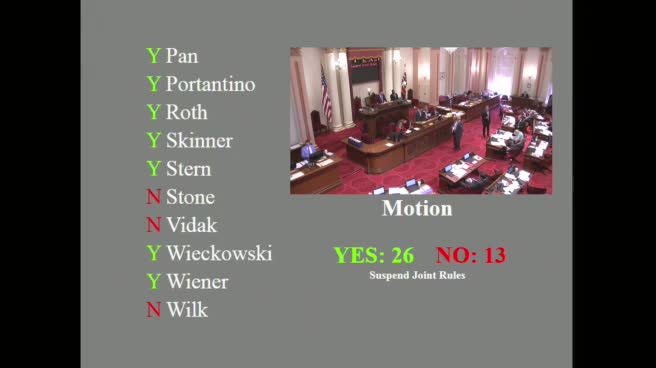 3MIN
Senate Floor
 1H
Senate Standing Committee on Appropriations
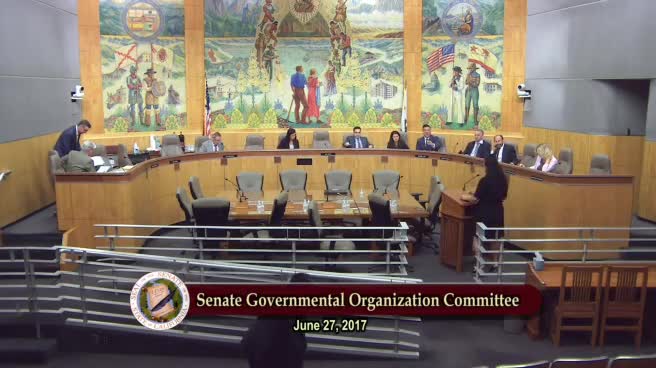 14MIN
Senate Standing Committee on Governmental Organization
 1MIN
Assembly Floor
 1H
Assembly Standing Committee on Appropriations
 2MIN
Assembly Standing Committee on Accountability and Administrative Review
Bill Author

Bill Co-Author(s):