AB 1094: Vehicles: automated traffic enforcement systems.
- Session Year: 2017-2018
- House: Assembly
- Latest Version Date: 2017-10-07
Existing law requires a driver facing a steady circular red signal alone to stop at a marked limit line, but if none, before entering the crosswalk on the near side of the intersection or, if none, then before entering the intersection, and to remain stopped until an indication to proceed is shown, except as specified. Existing law makes it unlawful for a driver to enter or travel in any lane over which a red signal is shown. A violation of those provisions is an infraction punishable by a fine of $100.
Existing law defines an official traffic control signal as any device, whether manually, electrically, or mechanically operated, by which traffic is alternately directed to stop and proceed and which is erected by authority of a public body or official having jurisdiction.
Existing law states that any required stop be made at a sign, crosswalk, or limit line indicating where the stop is to be made, but, in the absence of that sign or marking, existing law requires that the stop be made at the official traffic control signal.
This bill would also require a stop to be made at an official traffic control signal erected and maintained at a freeway or highway onramp. The bill would also make technical, nonsubstantive changes to that provision.
Existing law requires a driver facing a steady circular red signal alone to stop at a marked limit line, but if none, before entering the crosswalk on the near side of the intersection or, if none, then before entering the intersection, and to remain stopped until an indication to proceed is shown, except as specified. Existing law makes it unlawful for a driver to enter or travel in any lane over which a red signal is shown. A violation of those provisions is an infraction punishable by a fine of $100.
Existing law defines an official traffic control signal as any device, whether manually, electrically, or mechanically operated, by which traffic is alternately directed to stop and proceed and which is erected by authority of a public body or official having jurisdiction.
Existing law states that any required stop be made at a sign, crosswalk, or limit line indicating where the stop is to be made, but, in the absence of that sign or marking, existing law requires that the stop be made at the official traffic control signal.
This bill would also require a stop to be made at an official traffic control signal erected and maintained at a freeway or highway on ramp. The bill would also make technical, nonsubstantive changes to that provision.
If an official traffic control signal is erected and maintained at a place other than an intersection, including a freeway or highway on ramp, this article applies, except those provisions that by their nature can have no application. A stop required shall be made at a sign, crosswalk, or limit line indicating where the stop shall be made, but, in the absence of that sign or marking, the stop shall be made at the signal.
If an official traffic control signal is erected and maintained at a place other than an intersection, including a freeway or highway on ramp, this article applies, except those provisions that by their nature can have no application. A stop required shall be made at a sign, crosswalk, or limit line indicating where the stop shall be made, but, in the absence of that sign or marking, the stop shall be made at the signal.
When If an official traffic control signal is erected and maintained at a place other than an intersection, the provisions of including a freeway or highway on ramp, this article shall be applicable applies, except those provisions which that by their nature can have no application. Any A stop required shall be made at a sign or crosswalk sign, crosswalk, or limit line indicating where the stop shall be made, but but, in the absence of any such that sign or marking marking, the stop shall be made at the signal.
|
Date
|
Status
|
|---|---|
| Oct 7, 2017 | Chaptered by Secretary of State - Chapter 555, Statutes of 2017. |
| Oct 7, 2017 | Approved by the Governor. |
| Sep 13, 2017 | Enrolled and presented to the Governor at 4 p.m. |
| Sep 6, 2017 | In Assembly. Ordered to Engrossing and Enrolling. |
| Sep 6, 2017 | Read third time. Passed. Ordered to the Assembly. |
| Sep 5, 2017 | Read second time. Ordered to third reading. |
| Sep 1, 2017 | From committee: Do pass. (Ayes 7. Noes 0.) (September 1). |
| Jul 10, 2017 | In committee: Referred to APPR. suspense file. |
| Jun 28, 2017 | From committee: Do pass and re-refer to Com. on APPR. with recommendation: To Consent Calendar. (Ayes 12. Noes 0.) (June 27). Re-referred to Com. on APPR. |
| May 24, 2017 | Referred to Com. on T. & H. |
| May 11, 2017 | In Senate. Read first time. To Com. on RLS. for assignment. |
| May 11, 2017 | Read third time. Passed. Ordered to the Senate. (Ayes 77. Noes 0. Page 1490.) |
| May 4, 2017 | Read second time. Ordered to Consent Calendar. |
| May 3, 2017 | From committee: Do pass. To Consent Calendar. (Ayes 16. Noes 0.) (May 3). |
| Apr 25, 2017 | From committee: Do pass and re-refer to Com. on APPR. with recommendation: To Consent Calendar. (Ayes 14. Noes 0.) (April 24). Re-referred to Com. on APPR. |
| Apr 3, 2017 | In committee: Hearing postponed by committee. |
| Mar 6, 2017 | Referred to Com. on TRANS. |
| Feb 19, 2017 | From printer. May be heard in committee March 21. |
| Feb 17, 2017 | Read first time. To print. |
|
Date
|
Description
|
Location
|
Votes
|
|
|---|---|---|---|---|
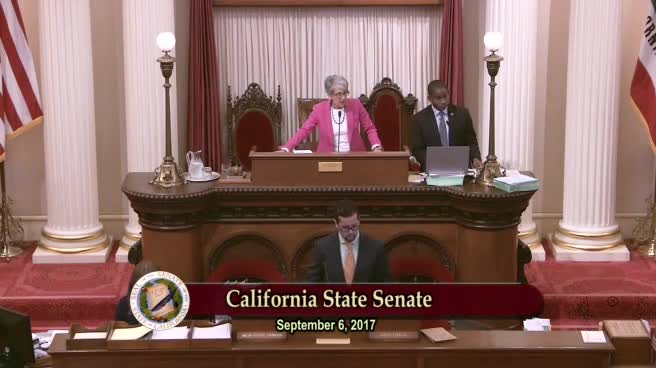
| Sep 6, 2017 | Assembly 3rd Reading AB1094 Choi By Stone | Senate Floor |
Passed |
|
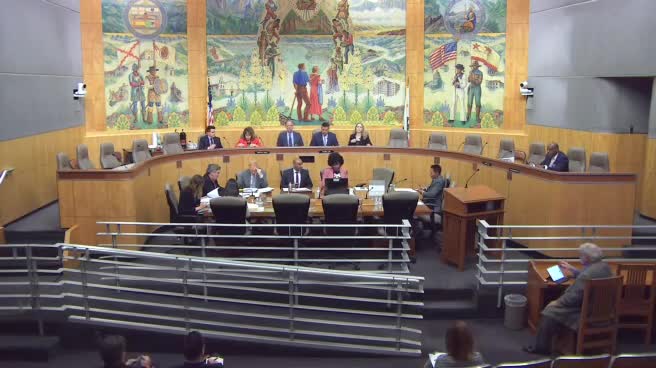
| Sep 1, 2017 | Do pass | Senate Standing Committee on Appropriations |
Passed |
|
| Jul 10, 2017 | Placed on suspense file | Senate Standing Committee on Appropriations |
Passed |
|
| Jun 27, 2017 | Do pass, but first be re-referred to the Committee on [Appropriations] with the recommendation: To Consent Calendar | Senate Standing Committee on Transportation and Housing |
Passed |
|
| May 11, 2017 | AB 1094 CHOI Consent Calendar Second Day Regular Session | Assembly Floor |
Passed |
|
| May 3, 2017 | Do pass. To Consent Calendar. | Assembly Standing Committee on Appropriations |
Passed |
|
| Apr 24, 2017 | Do pass and be re-referred to the Committee on [Appropriations] with recommendation: To Consent Calendar | Assembly Standing Committee on Transportation |
Passed |
This list shows positions taken on this bill by organizations on the date displayed, which is linked to the original source.
Positions by individuals are not included.
|
Organization
|
Position
|
Date
|
|---|---|---|
| AAA Northern California, Nevada & Utah | ** Support | Sep 3, 2017 |
| Automobile Club of Southern California | ** Support | Sep 3, 2017 |
| Conference of California Bar Associations | ** Support | Sep 3, 2017 |
| Safer Streets L.A. | ** Support | Sep 3, 2017 |
| Western States Trucking Association | ** Support | Sep 3, 2017 |
Office of Senate Floor Analyses (916) 651-1520 Fax: (916) 327-4478 | AB |
THIRD READING
Bill No: AB 1094
:
SENATE TRANS. & HOUSING COMMITTEE: 12-0, 6/27/17
AYES: Beall, Cannella, Allen, Atkins, Bates, Gaines, McGuire, Mendoza, Morrell, Roth, Wieckowski, Wiener
NO VOTE RECORDED: Skinner
SENATE APPROPRIATIONS COMMITTEE: 7-0, 9/1/17
AYES: Lara, Bates, Beall, Bradford, Hill, Nielsen, Wiener
ASSEMBLY FLOOR: 77-0, 5/11/17 (Consent) - See last page for vote
SOURCE: Conference of California Bar Associations
DIGEST:
This bill reduces the base violation fines for running a red light at a highway on-ramp.
- Prohibits entering or traveling in any intersection or lane over which a steady red signal is shown, punishing violations as an infraction with a fine of $100.
- Requires drivers to stop at any sign, crosswalk, or limit line when the traffic control signal is placed somewhere other than at an intersection, or at the signal itself in the absence of a sign or marking.
This bill specifies that violations for disobeying red lights at highway on-ramps are considered to be places other than an intersection and therefore subject to the base fine of $35 for general infractions rather than the $100 base fine for an intersection violation.
Comments
- Purpose. According to the author, “AB 1094 would make clear in the law that failing to stop at a red light on a freeway onramp is punished appropriately as a failure to stop at a place other than an intersection (Vehicle Code §21455), rather than the far more dangerous and serious offense of failing to stop at a red light at an intersection (Vehicle Code §21453). Freeway onramp signals serve the function of improving freeway traffic flow by regulating the timing of vehicles entering a freeway where traffic all flows in the same direction and a signal violation is unlikely to lead to an accident. By comparison, a traffic signal at an intersection is there to prevent serious injury or death by controlling cross-traffic. The California Highway Patrol recognizes this distinction and charges its officers to issue citations accordingly, as do most localities. But there have been numerous enough occasions of freeway onramp violations being mischarged as failure to stop at an intersection that clarification of the statute is essential.”
- From base fine to bigger fine. Because of the numerous penalties, surcharges, and fees associated with a conviction, many of which depend on the amount of the base fine, the actual cost of a ticket is far larger than the base fine. By reducing the base fine from $100 to $35, a $65 difference, the total cost of the ticket is reduced from about $490 to around $238, a reduction of around $252.
- Role of ramp metering. Traffic control signals installed at highway on-ramps are intended to control the flow of traffic onto the highway. According to the Federal Highway Administration (FHWA), they’ve been shown to reduce traffic density, increase overall traffic speed, reduce total travel time, decrease collisions, and reduce emissions. FHWA considers ramp metering one of the most cost-effective measures for managing highway traffic with a high benefit to cost ratio.
- Make the punishment fit the crime. Earlier this year, the Senate Transportation and Housing Committee approved SB 493 (Hill, 2017), which lowered the penalty for running a red light when making a right turn, explicitly stating that the fine should be $35. SB 493 passed out of the Senate floor on consent and is currently in the Assembly Transportation Committee.
Related/Prior Legislation
SB 493 (Hill, 2017) reduces the right turn on red violation to a $35 base fine. The bill is currently pending in the Assembly Transportation Committee.
AB 1725 (Wagner, 2016) was very similar to this bill. The bill was held on Suspense in the Senate Appropriations Committee.
FISCAL EFFECT: Appropriation: Fiscal Com.: Local:
According to the Senate Appropriations Committee, unknown, potentially significant loss of state and local penalty assessment revenues, to the extent signal violations at freeway on ramp meters are currently enforced as red light violations at an intersection. As noted in the background section below, many of the penalty assessments, fines, and fees added onto the base fine for convictions of traffic infractions are dependent upon the amount of the base fine. To the extent a violation was previously enforced at the higher base fine of $100, the bill would result in the following reductions in fine and fee revenues for each conviction by explicitly requiring a lower base fine of $35:
- State Penalty Assessment: reduction of $60 per conviction. (State Penalty Fund, distributed to nine other Special Funds, and county General Fund)
- County Penalty Assessment: reduction of $42 per conviction. (various Special Funds)
- Court Construction Penalty Assessment: reduction of $30 per conviction. (various Special Funds supporting court facilities)
- Proposition 69 DNA Penalty Assessment: reduction of $6 per conviction. (primarily state or local DNA Identification Fund)
- DNA Identification Fund Penalty Assessment: reduction of $24 per conviction. (primarily state DNA Identification Fund)
- Emergency Medical Services Penalty Assessment: reduction of $12 per conviction. (primarily Maddy EMS Fund)
- State Surcharge: reduction of $13 per conviction (state General Fund)
Senate Appropriations staff notes that there is no reliable data on the number of red light violations at freeway on ramps that are currently enforced as a red light violation at an intersection. If 0.5% of red light convictions would be charged a lower base fine as a result of this bill, there would be a total reduction of approximately $300,000 in state and local penalty assessment revenues. (General Fund, various Special Funds, and local funds)
Conference of California Bar Associations (source)
AAA Northern California, Nevada & Utah
Automobile Club of Southern California
Safer Streets L.A.
Western States Trucking Association
OPPOSITION: (Verified 8/24/17)
None received
ARGUMENTS IN SUPPORT: Supporting groups argue that this bill primarily clarifies current law, as necessary, to specify that red lights at highway on-ramps should not be treated as red lights at intersections when it comes to infraction enforcement. They argue that red lights at highway on-ramps and red lights at intersections serve different purposes and should be treated as such.
ASSEMBLY FLOOR: 77-0, 5/11/17
AYES: Acosta, Aguiar-Curry, Travis Allen, Arambula, Baker, Berman, Bigelow, Bloom, Bocanegra, Bonta, Brough, Burke, Caballero, Calderon, Cervantes, Chau, Chávez, Chen, Chiu, Choi, Chu, Cooley, Cooper, Cunningham, Dababneh, Daly, Eggman, Flora, Fong, Frazier, Friedman, Gallagher, Cristina Garcia, Eduardo Garcia, Gipson, Gloria, Gomez, Gonzalez Fletcher, Gray, Grayson, Harper, Holden, Irwin, Jones-Sawyer, Kalra, Kiley, Lackey, Levine, Limón, Low, Maienschein, Mathis, Mayes, McCarty, Medina, Melendez, Mullin, Muratsuchi, Nazarian, Obernolte, Quirk, Quirk-Silva, Reyes, Ridley-Thomas, Rodriguez, Rubio, Salas, Santiago, Steinorth, Mark Stone, Thurmond, Ting, Voepel, Waldron, Weber, Wood, Rendon
NO VOTE RECORDED: Dahle, O'Donnell, Patterson
9/3/17 17:53:51
**** END ****
SENATE COMMITTEE ON APPROPRIATIONS
Senator Ricardo Lara, Chair
2017 - 2018 Regular Session
AB 1094 (Choi) - Vehicles: automated traffic enforcement systems
Version: February 17, 2017 | Policy Vote: T. & H. 12 - 0 |
Urgency: No | Mandate: No |
Hearing Date: July 10, 2017 | Consultant: Mark McKenzie |
This bill meets the criteria for referral to the Suspense File.
Bill Summary:
AB 1094 would explicitly provide that a red light violation at freeway or highway on ramps is included as a general violation of traffic signals at a place other than an intersection, as specified. The practical impact would be that freeway on ramp metering light violations would be explicitly subject to a $35 base fine, rather than a $100 base fine that applies to red light violations that occur at an intersection.
Fiscal Impact:
Unknown, potentially significant loss of state and local penalty assessment revenues, to the extent signal violations at freeway on ramp meters are currently enforced as red light violations at an intersection. As noted in the background section below, many of the penalty assessments, fines, and fees added onto the base fine for convictions of traffic infractions are dependent upon the amount of the base fine. To the extent a violation was previously enforced at the higher base fine of $100, the bill would result in the following reductions in fine and fee revenues for each conviction by explicitly requiring a lower base fine of $35:
- State Penalty Assessment: reduction of $60 per conviction. (State Penalty Fund, distributed to nine other Special Funds, and county General Fund)
- County Penalty Assessment: reduction of $42 per conviction. (various Special Funds)
- Court Construction Penalty Assessment: reduction of $30 per conviction. (various Special Funds supporting court facilities)
- Proposition 69 DNA Penalty Assessment: reduction of $6 per conviction. (primarily state or local DNA Identification Fund)
- DNA Identification Fund Penalty Assessment: reduction of $24 per conviction. (primarily state DNA Identification Fund)
- Emergency Medical Services Penalty Assessment: reduction of $12 per conviction. (primarily Maddy EMS Fund)
- State Surcharge: reduction of $13 per conviction (state General Fund)
Staff notes that there is no reliable data on the number of red light violations at freeway on ramps that are currently enforced as a red light violation at an intersection. If 0.5% of red light convictions would be charged a lower base fine as a result of this bill, there would be a total reduction of approximately $300,000 in state and local penalty assessment revenues. (General Fund, various Special Funds, and local funds)
Background:
Existing law requires a driver to stop at an intersection when faced with a steady red light or red arrow, and to remain stopped until an indication to proceed is shown. Failure to stop at a red light at an intersection is an infraction punishable by a base fine of $100. When an official traffic control device is erected and maintained at a place other than an intersection, existing law requires a driver to stop at the signal, crosswalk, sign, or limit line indicating where the stop shall be made. A violation of this provision is an infraction punishable by a base fine of “up to $100” (as a general violation of the Vehicle Code), which Judicial Council has set at $35.
In addition to base fines for traffic violations, existing law imposes numerous additional penalty assessments, fees, and surcharges for convictions of these infractions, all of which significantly increase the total bail owed as a result of violations. For example, the total bail on a violation with a base fine of $35 is $238, and the total bail on a violation with a base fine of $100 is $490 (not including fees associated with traffic violator schools). Existing law specifies a complex process for the distribution of fine and fee revenues to numerous state and local funds. Some of these add-on fines and fees were enacted to fund specific activities, such as emergency medical services or DNA-related activities, while others support general court operations, court facilities construction, or state and local general funds.
The following assessments and fees are a flat charge per conviction: a $4 Emergency Medical Air Transportation Penalty Assessment; a $40 Court Operations Assessment; A $30 Conviction Assessment Fee; and a $1 Night Court Fee. The following charges, however, are dependent upon amount of the base fine:
- State Penalty Assessment: $10 for every $10 of a base fine*
- County Penalty Assessment: $7 for every $10 of a base fine*
- Court Construction Penalty Assessment: $5 for every $10 of a base fine*
- Proposition 69 DNA Penalty Assessment: $1 for every $10 of a base fine*
- DNA Identification Fund Penalty Assessment: $4 for every $10 of a base fine*
- Emergency Medical Services Penalty Assessment: $2 for every $10 of a base fine*
- State Surcharge: 20% of a base fine
(* the base fines are rounded up to the next $10 increment for purposes of calculating the assessment)
Proposed Law:
AB 1094 would explicitly provide that a red light violation at freeway or highway on ramps is included as a general violation of traffic control signals at a place other than an intersection. A violation of this provision would be treated as a general Vehicle Code violation, punishable as an infraction subject to a base fine of $35.
Related Legislation:
SB 493 (Hill), which is currently pending in the Assembly Appropriations Committee, would reduce the base fine from $100 to $35 for turning right on a red light at an intersection, or turning left from a one-way street onto another one-way street, without coming to a complete stop.
AB 1725 (Wagner), which is nearly identical to this bill, was held on this Committee’s Suspense File last year.
AB 1191 (Shelley), Chap. 852/1997, increased the base fine for red light signal violations from $35 to $100.
Staff Comments:
The author contends that some violations at freeway on ramp metering lights are currently being enforced as if they were red light violations at an intersection, which has a base fine of $100. This bill would ensure that a lower base fine of $35 is charged for what could be considered a less dangerous form of red light violation than running a red light at an intersection.
In addition to payment of fines and fees, a person convicted of a red light violation is also subject to the assignment of a violation point against his or her driver’s license. The DMV reports the following conviction data on the number of red light violations that were reported to them for assessment of a violation point: 356,376 total convictions in 2014, 304,970 total convictions in 2015, and approximately 270,000 in 2016. Staff notes that there is no reliable data on the number of these violations that are a result of a driver running a red light at a freeway on ramp. By explicitly reducing the base fine for on ramp metering light violations, this bill would result in an unknown reduction in state and local penalty assessment revenues.
-- END --
SENATE COMMITTEE ON TRANSPORTATION AND HOUSING
Senator Jim Beall, Chair
2017 - 2018 Regular
Bill No: AB 1094 Hearing Date: 6/27/2017
Author: | Choi | ||
Version: | 2/17/2017 | ||
Urgency: | No | Fiscal: | Yes |
Consultant: | Mikel Shybut | ||
SUBJECT: Vehicles: automated traffic enforcement systems.
DIGEST: This bill reduces the base violation fines for running a red light at a highway on-ramp.
ANALYSIS:
Existing law:
- Prohibits entering or traveling in any intersection or lane over which a steady red signal is shown, punishing violations as an infraction with a fine of $100.
- Requires drivers to stop at any sign, crosswalk, or limit line when the traffic control signal is placed somewhere other than at an intersection, or at the signal itself in the absence of a sign or marking.
This bill specifies that violations for disobeying red lights at highway on-ramps are considered to be places other than an intersection and therefore subject to the base fine of $35 for general infractions rather than the $100 base fine for an intersection violation.
COMMENTS:
- Purpose. According to the author, “AB 1094 would make clear in the law that failing to stop at a red light on a freeway onramp is punished appropriately as a failure to stop at a place other than an intersection (Vehicle Code §21455), rather than the far more dangerous and serious offense of failing to stop at a red light at an intersection (Vehicle Code §21453). Freeway onramp signals serve the function of improving freeway traffic flow by regulating the timing of vehicles entering a freeway where traffic all flows in the same direction and a signal violation is unlikely to lead to an accident. By comparison, a traffic signal at an intersection is there to prevent serious injury or death by controlling cross-traffic. The California Highway Patrol recognizes this distinction and charges its officers to issue citations accordingly, as do most localities. But there have been numerous enough occasions of freeway onramp violations being mischarged as failure to stop at an intersection that clarification of the statute is essential.”
- From base fine to bigger fine. Because of the numerous penalties, surcharges, and fees associated with a conviction, many of which depend on the amount of the base fine, the actual cost of a ticket is far larger than the base fine. By reducing the base fine from $100 to $35, a $65 difference, the total cost of the ticket is reduced from about $490 to around $238, a reduction of around $252.
- Role of ramp metering. Traffic control signals installed at highway on-ramps are intended to control the flow of traffic onto the highway. According to the Federal Highway Administration (FHWA), they’ve been shown to reduce traffic density, increase overall traffic speed, reduce total travel time, decrease collisions, and reduce emissions. FHWA considers ramp metering one of the most cost-effective measures for managing highway traffic with a high benefit to cost ratio.
- Make the punishment fit the crime. Earlier this year, this committee approved SB 493 (Hill), which lowered the penalty for running a red light when making a right turn, explicitly stating that the fine should be $35. SB 493 passed out of the Senate floor on consent and is currently in the Assembly Transportation Committee.
Related Legislation:
SB 493 (Hill, 2017) — would reduce the right turn on red violation to a $35 base fine. This bill is currently pending in the Assembly Transportation Committee.
AB 1725 (Wagner, 2016) — this measure is very similar to this bill. This bill was held on Suspense in the Senate Appropriations Committee.
Assembly Votes:
Floor: 77-0
Appr.: 16-0
Trans.: 14-0
FISCAL EFFECT: Appropriation: Fiscal Com.: Local:
POSITIONS: (Communicated to the committee before noon on Wednesday,
June 21, 2017.)
SUPPORT:
Conference of California Bar Associations (Sponsor)
AAA Northern California, Nevada & Utah
Automobile Club of Southern California
Safer Streets L.A.
Western States Trucking Association (WSTA)
OPPOSITION:
None received.
-- END --
Date of Hearing: May 3, 2017
ASSEMBLY COMMITTEE ON APPROPRIATIONS
Lorena Gonzalez Fletcher, Chair
ABPCA Bill Id:AB 1094
Author:(Choi) – As Introduced Ver:February 17, 2017
Policy Committee: | Transportation | Vote: | 14 - 0 |
|
| ||
|
|
Urgency: No State Mandated Local Program: No Reimbursable: No
SUMMARY:
This bill explicitly provides that traffic control signals at freeway or highway on ramps must be obeyed and clarifies that a violation is treated the same as when a motorist fails to obey a traffic signal at a location other than an intersection.
FISCAL EFFECT:
Negligible fiscal effect.
COMMENTS:
Purpose and Background. According to the author, there are two vehicle code sections governing traffic signal violations—one related to traffic signals at intersections and one related to other traffic signals. The author notes. “The distinguishing characteristic between the two is the danger involved in the violation; driving through a red light at an intersection risks serious injury or death for the violator, other motorists, and pedestrians in crosswalks. Failure to stop at a freeway on-ramp signal carries no equivalent risks.” However, the author states that some cases have been reported of drivers who fail to stop at a highway on ramp being charged with a violation of failing to stop at an intersection signal. This bill clarifies that a highway on ramp signal is to be treated the same as other signals that are not at intersections.
Analysis Prepared by: Jessica Peters / APPR. / (916) 319-2081
Date of Hearing: April 24, 2017
ASSEMBLY COMMITTEE ON TRANSPORTATION
Jim Frazier, Chair
ABPCA Bill Id:AB 1094 (
Author:Choi) – As Introduced Ver:February 17, 2017
SUBJECT: Vehicles: automated traffic enforcement systems
SUMMARY: Explicitly provides that traffic control signals at places other than an intersection, including freeway or highway on ramps, must be obeyed.
EXISTING LAW:
- Authorizes the California Department of Transportation to erect any traffic control signal or other official traffic control device on any state highway.
- Makes it generally unlawful for any driver to fail to obey any sign, signal, or other traffic control device. Violations carry a base fine of $35.
- Makes it unlawful to fail to stop a red light at an intersection. Because of the potential severity of crashes resulting from failing to stop at an intersection, the base fine for violations of this provision is $100.
FISCAL EFFECT: Unknown
COMMENTS: According to the author, this bill is intended to ensure that failing to stop at a ramp meter does not carry the same penalty as the justifiably higher fine for the far more dangerous act of running a red light through an intersection.
The base fine for most traffic violations is $35 and the total penalty, with court fees and surcharges, can range from about $250 to nearly $300, depending on the county in which the violation occurred. Fines for more egregious violations, such as running a red light, carry a $100 base fine, with total costs amounting to nearly $500.
It is unclear how pervasive the problem is that this bill attempts to remedy - that is, how often a driver is cited with a violation for running a red light at an intersection when the red light was actually at a freeway on ramp. The author's office could offer only minimal anecdotal evidence that the problem exists. (According to the California Highway Patrol, its officers are trained to cite the lesser violation of ignoring traffic control devices at places other than an intersection when citing a driver for failing to stop at a freeway ramp meter.) To the extent that there is ambiguity in the field as to which code provision should be cited for failing to stop at a ramp meter, this bill will provide clarification.
REGISTERED SUPPORT / OPPOSITION:
Support
Conference of California Bar Associations (Sponsor)
AAA Northern California, Nevada & Utah
Automobile Club of Southern California
Safer Streets L.A.
Western States Trucking Association
Opposition
None on file
Analysis Prepared by: Victoria Alvarez / TRANS. /
Discussed in Hearing
 2MIN
Senate Floor
 1H
Senate Standing Committee on Appropriations
 6MIN
Senate Standing Committee on Appropriations
Bill Author

Bill Co-Author(s):