AB 1104: The California Political Cyberfraud Abatement Act.
- Session Year: 2017-2018
- House: Assembly
- Latest Version Date: 2017-10-12
Existing law makes it unlawful for a person, with intent to mislead, deceive, or defraud, to commit an act of political cyberfraud, as defined. Existing law defines the term political cyberfraud to include a knowing and willful act concerning a political Web site that is committed with the intent to deny a person access to a political Web site, deny a person the opportunity to register a domain name for a political Web site, or to cause a person reasonably to believe that a political Web site has been posted by a person other than the person who posted the Web site, and would cause a reasonable person, after reading the Web site, to believe the site actually represents the view of the proponent or opponent of a ballot measure. Existing law also defines the term political Web site to mean an Internet Web site that urges or appears to urge the support or opposition of a ballot measure.
This bill would modify the definition of the terms political cyberfraud and political Web site to include Internet Web sites that urge or appear to urge the support or opposition of candidates for public office.
Existing law makes it unlawful for a person, with intent to mislead, deceive, or defraud, to commit an act of political cyberfraud, as defined. Existing law defines the term political cyberfraud to include a knowing and willful act concerning a political Web site that is committed with the intent to deny a person access to a political Web site, deny a person the opportunity to register a domain name for a political Web site, or to cause a person reasonably to believe that a political Web site has been posted by a person other than the person who posted the Web site, and would cause a reasonable person, after reading the Web site, to believe the site actually represents the view of the proponent or opponent of a ballot measure. Existing law also defines the term political Web site to mean an Internet Web site that urges or appears to urge the support or opposition of a ballot measure.
This bill would modify the definition of the terms political cyberfraud and political Web site to include Internet Web sites that urge or appear to urge the support or opposition of candidates for public office. The bill would also make it unlawful for a person to knowingly and willingly make, publish or circulate on a Web site, or cause to be made, published, or circulated in any writing posted on a Web site, a false or deceptive statement designed to influence the vote on any issue submitted to voters at an election or on any candidate for election to public office.
(a)This act shall be known and may be cited as the California Political Cyberfraud Abatement Act.
(b)It is unlawful for a person, with intent to mislead, deceive, or defraud, to commit an act of political cyberfraud.
(c)As used in this section:
(1)Political cyberfraud means a knowing and willful act concerning a political Web site that is committed with the intent to deny a person access to a political Web site, deny a person the opportunity to register a domain name for a political Web site, or cause a person reasonably to believe that a political Web site has been posted by a person other than the person who posted the Internet Web site, and would cause a reasonable person, after reading the Internet Web site, to believe the site actually represents the views of the proponent or opponent of a ballot measure or of a candidate for public office. Political cyberfraud includes, but is not limited to, any of the following acts:
(A)Intentionally diverting or redirecting access to a political Web site to another persons Internet Web site by the use of a similar domain name, meta-tags, or other electronic measures.
(B)Intentionally preventing or denying exit from a political Web site by the use of frames, hyperlinks, mousetrapping, popup screens, or other electronic measures.
(C)Registering a domain name that is similar to another domain name for a political Web site.
(D)Intentionally preventing the use of a domain name for a political Web site by registering and holding the domain name or by reselling it to another with the intent of preventing its use, or both.
(2)Domain name means any alphanumeric designation that is registered with or assigned by any domain name registrar, domain name registry, or other domain registration authority as part of an electronic address on the Internet.
(3)Political Web site means an Internet Web site that urges or appears to urge the support or opposition of a ballot measure or a candidate for public office.
SEC. 2.Section 18320.5 is added to the Elections Code, to read:18320.5.It is unlawful for a person to knowingly and willingly make, publish or circulate on an Internet Web site, or cause to be made, published, or circulated in any writing posted on an Internet Web site, a false or deceptive statement designed to influence the vote on either of the following:(a)Any issue submitted to voters at an election.(b)Any candidate for election to public office.(a)This act shall be known and may be cited as the California Political Cyberfraud Abatement Act.
(b)It is unlawful for a person, with intent to mislead, deceive, or defraud, to commit an act of political cyberfraud.
(c)As used in this section:
(1)Political cyberfraud means a knowing and willful act concerning a political Web site that is committed with the intent to deny a person access to a political Web site, deny a person the opportunity to register a domain name for a political Web site, or cause a person reasonably to believe that a political Web site has been posted by a person other than the person who posted the Internet Web site, and would cause a reasonable person, after reading the Internet Web site, to believe the site actually represents the views of the proponent or opponent of a ballot measure. measure or of a candidate for public office. Political cyberfraud includes, but is not limited to, any of the following acts:
(A)Intentionally diverting or redirecting access to a political Web site to another persons Internet Web site by the use of a similar domain name, meta-tags, or other electronic measures.
(B)Intentionally preventing or denying exit from a political Web site by the use of frames, hyperlinks, mousetrapping, popup screens, or other electronic measures.
(C)Registering a domain name that is similar to another domain name for a political Web site.
(D)Intentionally preventing the use of a domain name for a political Web site by registering and holding the domain name or by reselling it to another with the intent of preventing its use, or both.
(2)Domain name means any alphanumeric designation that is registered with or assigned by any domain name registrar, domain name registry, or other domain registration authority as part of an electronic address on the Internet.
(3)Political Web site means a an Internet Web site that urges or appears to urge the support or opposition of a ballot measure. measure or a candidate for public office.
SEC. 2.Section 18320.5 is added to the Elections Code, to read:18320.5.It is unlawful for a person to knowingly and willingly make, publish or circulate on an Internet Web site, or cause to be made, published, or circulated in any writing posted on an Internet Web site, a false or deceptive statement designed to influence the vote on either of the following:
(a)Any issue submitted to voters at an election.
(b)Any candidate for election to public office.
|
Date
|
Status
|
|---|---|
| Oct 12, 2017 | Chaptered by Secretary of State - Chapter 715, Statutes of 2017. |
| Oct 12, 2017 | Approved by the Governor. |
| Sep 20, 2017 | Enrolled and presented to the Governor at 4:30 p.m. |
| Sep 11, 2017 | In Assembly. Ordered to Engrossing and Enrolling. |
| Sep 11, 2017 | Read third time. Passed. Ordered to the Assembly. |
| Sep 5, 2017 | Read second time. Ordered to third reading. |
| Sep 1, 2017 | From committee: Do pass. (Ayes 7. Noes 0.) (September 1). |
| Aug 21, 2017 | In committee: Referred to APPR. suspense file. |
| Jul 13, 2017 | From committee: Do pass and re-refer to Com. on APPR. (Ayes 5. Noes 0.) (July 12). Re-referred to Com. on APPR. |
| Jun 28, 2017 | From committee: Do pass and re-refer to Com. on E. & C.A. (Ayes 6. Noes 0.) (June 27). Re-referred to Com. on E. & C.A. |
| Jun 14, 2017 | Referred to Coms. on JUD., E. & C.A. and APPR. |
| Jun 1, 2017 | In Senate. Read first time. To Com. on RLS. for assignment. |
| May 31, 2017 | Read third time. Passed. Ordered to the Senate. (Ayes 73. Noes 2. Page 1887.) |
| May 11, 2017 | Read second time. Ordered to third reading. |
| May 10, 2017 | From committee: Do pass. (Ayes 6. Noes 1.) (May 10). |
| Apr 26, 2017 | From committee: Do pass and re-refer to Com. on E. & R. (Ayes 9. Noes 0.) (April 25). Re-referred to Com. on E. & R. |
| Apr 20, 2017 | Re-referred to Com. on P. & C.P. |
| Apr 19, 2017 | From committee chair, with author's amendments: Amend, and re-refer to Com. on P. & C.P. Read second time and amended. |
| Apr 17, 2017 | In committee: Hearing postponed by committee. |
| Mar 28, 2017 | In committee: Set, first hearing. Hearing canceled at the request of author. |
| Mar 9, 2017 | Referred to Coms. on P. & C.P. and E. & R. |
| Feb 19, 2017 | From printer. May be heard in committee March 21. |
| Feb 17, 2017 | Read first time. To print. |
|
Date
|
Description
|
Location
|
Votes
|
|
|---|---|---|---|---|
| Sep 11, 2017 | Assembly 3rd Reading AB1104 Chau By Allen | Senate Floor |
Passed |
|
| Sep 1, 2017 | Do pass | Senate Standing Committee on Appropriations |
Passed |
|
| Aug 21, 2017 | Placed on suspense file | Senate Standing Committee on Appropriations |
Passed |
|
| Jul 12, 2017 | Do pass, but first be re-referred to the Committee on [Appropriations] | Senate Standing Committee on Elections and Constitutional Amendments |
Passed |
|
| Jun 27, 2017 | Do pass, but first be re-referred to the Committee on [Elections and Constitutional Amendments] | Senate Standing Committee on Judiciary |
Passed |
|
| May 31, 2017 | AB 1104 CHAU Assembly Third Reading | Assembly Floor |
Passed |
|
| May 10, 2017 | Do pass. | Assembly Standing Committee on Elections and Redistricting |
Passed |
|
| Apr 25, 2017 | Do pass and be re-referred to the Committee on [Elections and Redistricting] | Assembly Standing Committee on Privacy and Consumer Protection |
Passed |
This list shows positions taken on this bill by organizations on the date displayed, which is linked to the original source.
Positions by individuals are not included.
|
Organization
|
Position
|
Date
|
|---|---|---|
| American Civil Liberties Union of California | ** Against | Mar 24, 2017 |
| American Civil Liberties Union of California | ** Against | Mar 24, 2017 |
| California Newspaper Publishers Association | ** Against | May 8, 2017 |
Office of Senate Floor Analyses (916) 651-1520 Fax: (916) 327-4478 | AB |
THIRD READING
Bill No: AB 1104
:
SENATE JUDICIARY COMMITTEE: 6-0, 6/27/17
AYES: Jackson, Moorlach, Anderson, Hertzberg, Stern, Wieckowski
NO VOTE RECORDED: Monning
SENATE ELECTIONS & C.A. COMMITTEE: 5-0, 7/12/17
AYES: Stern, Anderson, Allen, Hertzberg, Leyva
SENATE APPROPRIATIONS COMMITTEE: 7-0, 9/1/17
AYES: Lara, Bates, Beall, Bradford, Hill, Nielsen, Wiener
ASSEMBLY FLOOR: 73-2, 5/31/17 - See last page for vote
DIGEST:
This bill expands the California Political Cyberfraud Abatement Act to cover Web sites purporting to support or oppose candidates for public office.
Existing law:
- Provides that “Congress shall make no law… abridging the freedom of speech...” (U.S. Const., Amend. 1.)
- Applies the First Amendment to the states through operation of the Fourteenth Amendment. (Gitlow v. New York (1925) 268 U.S. 652; NAACP v. Alabama (1925) 357 U.S. 449.)
- Provides that every person may freely speak, write and publish his or her sentiments on all subjects, being responsible for the abuse of this right. (Cal. Const., art. I, Sec. 2.)
- Holds, as a general matter, that the liberty of speech clause in the California Constitution is more protective of speech than its federal counterpart, including by recognizing a right to free speech in private spaces held open to the public. (Pruneyard Shopping Center v. Robins (1980) 447 U.S. 74.)
- Makes it unlawful, pursuant to the “California Political Cyberfraud Abatement Act,” for a person, with intent to mislead, deceive, or defraud, to commit an act of political cyberfraud, and defines “political cyberfraud” as an act concerning a political Web site of a statewide ballot measure that is committed with intent to do any one of the following:
- deny a person access to a political Web site;
- deny a person the opportunity to register a domain name for a political Web site; or
- cause a visitor to a political Web site reasonably to believe that the political Web site was posted by someone other than the person who in fact posted the Web site, and would cause a reasonable person, after reading the Internet Web site, to believe the site actually represents the views of the proponent or opponent of a ballot measure. (Elec. Code Sec. 18320, et seq.)
- Allows for a civil action to enforce the Act and provides for injunctive relief, including a court order to transfer a domain name. (Elec. Code Secs. 18322-18323.)
- Makes it unlawful for a person, with bad faith intent, to register, traffic in, or use a domain name that is identical or confusingly similar to the personal name of another living person or deceased personality, without regard to the goods and services of the parties. (Bus. & Prof. Code Sec. 17525.)
This bill expands the definition of a “political Web site” to include Internet Web sites that urge or appear to urge the support or opposition a candidate for public office.
Background
Proposition 36, an initiative relating to drug treatment, appeared on the November 2000 California statewide ballot. In the run up to the election, opponents of Proposition 36 acquired several domain names that featured prominently among the results when people searched for the terms “Yes on Proposition 36” on the internet. People who clicked on the links to these domains were routed to the “No on Proposition 36” Web site.
In response to this incident, the state enacted the California Political Cyberfraud Abatement Act in 2001. (SB 412 Vasconcellos, Chapter 927, Statutes of 2001.) That law narrowly defined a “political Web site” as one that urges support or opposition for a ballot measure. It defined “political cyberfraud” as denying access to political Web sites, denying anyone the opportunity to use a domain name for a political Web site, or, in essence, impersonating the political Web site of another. The Act made it unlawful for anyone to commit such “political cyberfraud” with intent to mislead, deceive, or defraud.
This bill extends these provisions to Web sites urging support of, or opposition to, candidates for public office.
Comments
What’s in a (domain) name?
When someone wants to set up a Web site using a particular domain name, the person has to ascertain whether the particular domain name is available by going to a domain name registry. Domain name registries track and record who owns what domain name on the internet, much like what recorders’ offices do for real property transactions. If no one has registered the particular domain name you want, then you may register it in your name. Generally, there is an annual fee associated with registering a new domain name. The fee varies depending on the registrar used as well as the suffix used (e.g., .com, .org, .edu, etc.). Typically, the cost of registering a domain name that is not in use is relatively low: about $10-20.
If someone else has already registered a particular domain name, that person has the right to establish a Web site using that domain name. If you want to use the domain name, you have to convince the person who owns that domain name to sell or give it to you. The cost of obtaining a domain name that someone else has already registered depends on the value of the name. The domain beer.com, for example, reportedly sold for $7 million in 2004, while insurance.com went for over $30 million in 2010.[1]
Domain names have commercial value because they are a key component of any online brand. The domain walmart.com, for example, is valuable to Walmart corporation as the point of entry for anyone wishing to shop online, or look up information about purchasing things, from that company. Related domain names also have value to the company, even if these other domains are not the host of the company’s Web site. For example, people could easily type wallmart.com into their browser when they wish to shop online at Walmart. Not surprisingly, Walmart has registered the domain name wallmart.com and redirects traffic headed there over to the correct domain, walmart.com.
While Web sites devoted to political causes or candidates differ from commercial Web sites in many respects, the domain name dynamics are quite similar. Just as it makes sense for Walmart to own variations on its domain name, politicians can capture wider audiences by ensuring they control domain names that relate to their name and the office they are seeking. By the same token, politicians can make it more difficult for people to spread criticism of them on the internet by buying up the domain names that indicate such criticism. For example, President Donald Trump is reported to own over 3,000 different domain names, from things like trumpforamerica.com to trumpfraud.org.[2] In controlling these domain names, Trump is able to exercise some control over the online narrative about him. Many other politicians take similar steps, since the cost of registering a domain is low compared to the reputational damage that can be done online.
Both the reputational and commercial value of domain names leads to cyber-squatting (also known as domain squatting), in which people buy up and register domain names that they suspect a public figure or a company may want to control, but has not yet purchased. The squatter then offers to sell the domain to the person or entity in question, but at an inflated price. U.S. law prohibits cybersquatting under the Anticybersquatting Consumer Protection Act and allows aggrieved parties to seek injunctive relief taking a domain away from a cybersquatter. (15 U.S.C. Sec. 1125(d).) Alternatively, the international body that oversees domain registration, the Internet Corporation for Assigned Names and Numbers (ICANN), has an arbitration system set up that handles, among other things, claims of cybersquatting. Of course, both legal methods may be more expensive and take longer than simply buying the squatter out.
Related/Prior Legislation
SB 1411 (Simitian, Chapter 335, Statutes of 2010) provided that any person who knowingly and without consent credibly impersonates another actual person through or on an Internet Web site or by other electronic means, for purposes of harming, intimidating, threatening, or defrauding another person is guilty of a misdemeanor and may be sued civilly by the aggrieved party.
AB 277 (Dutra, Chapter 277, Statutes of 2003) removed the sunset provision from the California Political Cyberfraud Abatement Act, leaving it in force indefinitely.
SB 412 (Vasconcellos, Chapter 927, Statutes of 2001) created the California Political Cyberfraud Abatement Act, prohibiting political cyberfraud as to ballot measure campaigns, subject to a sunset provision.
SB 1319 (Burton, Chapter 218, Statutes of 2000), which made unlawful the bad faith registration of a domain name that is identical or confusingly similar to the personal name of another living person or deceased personality.
FISCAL EFFECT: Appropriation: Fiscal Com.: Local:
According to the Senate Appropriations Committee:
Unknown, potentially-significant cost pressures (General Fund*) to the court to adjudicate lawsuits filed for not providing the disclosure, as specified, that otherwise would not have been filed absent the ability to seek damages provided by this bill. While the superior courts are not funded on a workload basis, an increase in workload could result in delayed court services and would put pressure on the General Fund to fund additional staff and resources.
*Trial Court Trust Fund
None received
None received
ASSEMBLY FLOOR: 73-2, 5/31/17
AYES: Acosta, Aguiar-Curry, Arambula, Baker, Berman, Bigelow, Bloom, Bocanegra, Bonta, Brough, Burke, Caballero, Calderon, Cervantes, Chau, Chávez, Chen, Chiu, Chu, Cooley, Cooper, Cunningham, Dababneh, Dahle, Daly, Flora, Frazier, Friedman, Gallagher, Cristina Garcia, Eduardo Garcia, Gipson, Gloria, Gomez, Gonzalez Fletcher, Gray, Grayson, Holden, Irwin, Jones-Sawyer, Kalra, Kiley, Lackey, Levine, Limón, Low, Maienschein, Mathis, Mayes, McCarty, Medina, Mullin, Muratsuchi, Nazarian, Obernolte, O'Donnell, Quirk, Quirk-Silva, Reyes, Ridley-Thomas, Rodriguez, Rubio, Salas, Santiago, Steinorth, Mark Stone, Thurmond, Ting, Voepel, Waldron, Weber, Wood, Rendon
NOES: Travis Allen, Harper
NO VOTE RECORDED: Choi, Eggman, Fong, Melendez, Patterson
9/3/17 18:11:07
**** END ****
Irvine, The Top 10 Most Expensive Domain Names (Mar. 10, 2010) The Telepgraph <http://www.telegraph.co.uk/technology/news/7412544/Top-10-most-expensive-domain-names.html> (as of June 20, 2017). ↑
Pagliery and Yellin, Trump Has 3,643 Web sites That Range from TrumpEmpire.com to TrumpFraud.org (Feb. 21, 2017) CNN <http://money.cnn.com/2017/02/20/technology/trump-Web sites/index.html> (as of June 17, 2017). ↑
SENATE COMMITTEE ON
Senator Ricardo Lara, Chair
2017 - 2018 Regular Session
AB 1104 (Chau) - The California Political Cyberfraud Abatement Act
Version: | Policy Vote: |
Urgency: | Mandate: |
Hearing Date: | Consultant: |
This bill meets the criteria for referral to the Suspense File.
Bill Summary:
AB 1104 would expand the unlawful act of political cyberfraud to include specified conduct related to candidates for public office.
Fiscal Impact:
Unknown, potentially-significant cost pressures (General Fund*) to the court to adjudicate lawsuits filed for not providing the disclosure, as specified, that otherwise would not have been filed absent the ability to seek damages provided by this bill. While the superior courts are not funded on a workload basis, an increase in workload could result in delayed court services and would put pressure on the General Fund to fund additional staff and resources.
*Trial Court Trust Fund
Background:
The California Political Cyberfraud Abatement Act makes it unlawful for a person, with intent to mislead, deceive, or defraud, to commit an act of political cyberfraud, which is defined to include a knowing and willful act concerning a political website that is committed with the intent to deny a person access to a political website, deny a person the opportunity to register a domain name for a political website, or to cause a person reasonably to believe that a political website has been posted by a person other than the person who posted the website, and would cause a reasonable person, after reading the website, to believe the site actually represents the view of the proponent or opponent of a ballot measure. The act defines the term political website as a website that urges or appears to urge the support or opposition of a ballot measure.
Existing law allows for a civil action to enforce the act and provides for injunctive relief, including a court order to transfer a domain name.
Proposed Law:
This bill would modify the definition of the terms “political cyberfraud” and “political Web site” to include websites that urge or appear to urge the support or opposition of candidates for public office.
Related Legislation:
SB 1411 (Simitian, Chapter 335, Statutes of 2010) provided that any person who knowingly and without consent credibly impersonates another actual person through or on a website or by other electronic means, for purposes of harming, intimidating, threatening, or defrauding another person is guilty of a misdemeanor and may be sued civilly by the aggrieved party.
AB 277 (Dutra, Chapter 277, Statutes of 2003) removed the sunset provision from the California Political Cyberfraud Abatement Act, leaving it in force indefinitely.
SB 412 (Vasconcellos, Chapter 927, Statutes of 2001) created the California Political Cyberfraud Abatement Act, prohibiting political cyberfraud as to ballot measure campaigns, subject to a sunset provision.
SB 1319 (Burton, Chapter 218, Statutes of 2000), which made unlawful the bad faith registration of a domain name that is identical or confusingly similar to the personal name of another living person or deceased personality.
Staff Comments:
The California Political Cyberfraud Abatement Act allows for a person to pursue a civil action for a violation of the act, seeking all remedies available under law, including the transfer of a domain name as part of the relief awarded. As described in the analysis of AB 1104 by the Senate Committee on Judiciary:
[A]ccording to a Los Angeles Times article, in advance of the 2014 Congressional election, the National Republican Congressional Committee (NRCC) bought up hundreds of domain names. It proceeded to use at least 18 of them to post “Web sites appearing to support Democratic candidates in all but the small print.” Visitors to the Web site www.nancypelosi2014.com, for instance, saw a banner headline reading “Nancy Pelosi for Congress” at the top, a photo of Ms. Pelosi smiling on the side, and a shaded box urging people to “Donate” in large, capital letters at the bottom. A list of criticisms of Representative Pelosi, in significantly smaller text, appeared in the middle of the page, together with a larger, more evident statement: “Nancy Pelosi must never be Speaker again. Republicans in the House are the last line of defense for what President Obama wants: total Democrat control of Congress. Don’t let this happen: DONATE.” The donation link led visitors to contribute not to Ms. Pelosi’s campaign, but to the NRCC.
The NRCC apparently posted a similar Web site at www.annkirkpatrick.com with the banner “Kirkpatrick for Congress” and pictures of Representative Kirkpatrick. Smaller text on the site described her as “a huge embarrassment to Arizona.” The other 16 NRCC-created Web sites were similar and induced at least one person to donate to the NRCC under the false impression that he was contributing to the Democratic candidate who was the subject of the Web site. (Citations omitted.)
The fiscal impact of this bill cannot be known with certainty, as the actual impact will be dependent on numerous factors, including, but not limited to, the frequency with which a person is accused of violating the act, the complexity of alleged violations, if parties settle matters prior to litigation, and the factors unique to each case. It costs the court a little over $2,600, on average, in personnel and resources to adjudicate a limited civil case, which likely would be the type of case an action filed pursuant to the act would be. It costs about $7,010 to operate a courtroom for one day. So if the expansion of the California Political Cyberfraud Abatement Act to candidates for public office led to more than nineteen new cases, or a few complex case that took longer than seven days that otherwise would not have been brought, the cost pressures of this bill to the court would surpass the Suspense File threshold. As indicated in the excerpt above, it appears that this type of conduct this bill seeks to outlaw is not uncommon.
-- END --
SENATE COMMITTEE ON
ELECTIONS AND CONSTITUTIONAL AMENDMENTS
Senator Henry Stern, Chair
2017 - 2018 Regular
Bill No: AB Hearing Date: 7/12/17
Author: | |||
Version: | 4/19/17 | ||
Urgency: | No | Fiscal: | No |
Consultant: | Darren Chesin | ||
Subject: The California Political Cyberfraud Abatement Act
DIGEST
This bill expands California's political cyberfraud law, which currently only covers ballot measure campaigns, to include candidate campaigns.
ANALYSIS
Existing law:
- Provides that it is unlawful, pursuant to the California Political Cyberfraud Abatement Act (CPCAA), for a person, with intent to mislead, deceive, or defraud, to commit an act of political cyberfraud.
- Defines “political cyberfraud” as a knowing and willful act concerning a political Web site that is committed with the intent to deny a person access to a political Web site, deny a person the opportunity to register a domain name for a political Web site, or cause a person reasonably to believe that a political Web site has been posted by a person other than the person who posted the Web site, and would cause a reasonable person, after reading the Web site, to believe the site actually represents the views of the proponent or opponent of a ballot measure.
- Defines “domain name” means any alphanumeric designation that is registered with or assigned by any domain name registrar, domain name registry, or other domain registration authority as part of an electronic address on the Internet.
- Defines “political Web site” means a Web site that urges or appears to urge the support or opposition of a ballot measure.
- Provides that political cyberfraud includes, but is not limited to, any of the following acts:
- Intentionally diverting or redirecting access to a political Web site to another person’s Web site by the use of a similar domain name, meta-tags, or other electronic measures.
- Intentionally preventing or denying exit from a political Web site by the use of frames, hyperlinks, mousetrapping, popup screens, or other electronic measures.
- Registering a domain name that is similar to another domain name for a political Web site.
- Intentionally preventing the use of a domain name for a political Web site by registering and holding the domain name or by reselling it to another with the intent of preventing its use, or both.
This bill:
- Expands the CPCAA, which currently only covers ballot measure campaigns, to include campaigns for a candidate for public office.
- Makes other technical, nonsubstantive changes.
BACKGROUND
Impetus of the CPCAA. Proposition 36, an initiative relating to drug treatment, appeared on the November 2000 California statewide ballot. In the run up to the election, opponents of Proposition 36 acquired several domain names that featured prominently among the results when people searched for the terms “Yes on Proposition 36” on the internet. People who clicked on the links to these domains were routed to the “No on Proposition 36” Web site.
In response to this incident, the state enacted SB 412 (Vasconcellos, Ch. 927, Statutes of 2001), the California Political Cyberfraud Abatement Act in 2001. That law narrowly defined a “political Web site” as one that urges support or opposition for a ballot measure. It defined “political cyberfraud” as denying access to political Web sites, denying anyone the opportunity to use a domain name for a political Web site, or, in essence, impersonating the political Web site of another. The CPCAA made it unlawful for anyone to commit such “political cyberfraud” with intent to mislead, deceive, or defraud.
The CPCAA first went into effect in 2002 but had a sunset provision and was later re-enacted as a permanent law in 2003 via AB 277 (Dutra, Ch. 277, Statutes of 2003).
COMMENTS
- According to the author: Both major parties as well as minor parties have raised serious concerns about the public’s lack of ability to distinguish between factual and fake news and information posted on the Internet. Since the November 2016 election Facebook, Google and other Web sites have since changed their advertising policies in an effort to screen out fake news sources. AB 1104 attacks the problem of “fake news” expanding California’s political cyberfraud law to provide protections to candidate campaigns in addition to the current law protections for ballot measures.
RELATED/PRIOR LEGISLATION
SB 1411 (Simitian, Ch. 335, Statutes of 2010), provides that any person who knowingly and without consent credibly impersonates another actual person through or on an Internet Web site or by other electronic means, for purposes of harming, intimidating, threatening, or defrauding another person is guilty of a misdemeanor and may be sued civilly by the aggrieved party.
AB 277 (Dutra, Ch. 277, Statutes of 2003), removed the sunset provision from the California Political Cyberfraud Abatement Act, leaving it in force indefinitely.
SB 412 (Vasconcellos, Ch. 927, Statutes of 2001), created the California Political Cyberfraud Abatement Act, prohibiting political cyberfraud as to ballot measure campaigns, subject to a sunset provision.
SB 1319 (Burton, Ch. 218, Statutes of 2000), which made unlawful the bad faith registration of a domain name that is identical or confusingly similar to the personal name of another living person or deceased personality.
PRIOR ACTION
Senate Judiciary Committee: Assembly Floor: | 6 - 0 |
Assembly Elections and Redistricting Committee: Assembly Privacy and Consumer Protection: | 6 - 1
|
POSITIONS
Sponsor: Author
Support: None received
Oppose: None received
-- END --
Senator Hannah-Beth Jackson, Chair
2017-2018 Regular Session
Bill No: AB 1104 (Author:Chau)
Version: April 19, 2017
Hearing Date: June 27, 2017
Fiscal: No
Urgency: No
Consultant: TSG
SUBJECT
The California Political Cyberfraud Abatement Act
DESCRIPTION
Existing California law prohibits people from committing “political cyberfraud” in relation to a Web site supporting or opposing a statewide ballot measure. Political cyberfraud is defined, in essence, as a knowing and willful act intended to: (1) deny people access to a Web site supporting or opposing a statewide ballot measure; (2) deny people the opportunity to register a domain name for such a Web site; or (3) cause people reasonably to believe that such a Web site was posted by someone other than the person who actually posted it, when, after reading the Web site, a reasonable person could still be fooled. This bill would extend the prohibition on political cyberfraud, as so defined, to Web sites supporting or opposing candidates for public office as well.
BACKGROUND
Proposition 36, an initiative relating to drug treatment, appeared on the November 2000 California statewide ballot. In the run up to the election, opponents of Proposition 36 acquired several domain names that featured prominently among the results when people searched for the terms “Yes on Proposition 36” on the internet. People who clicked on the links to these domains were routed to the “No on Proposition 36” Web site.
In response to this incident, the state enacted the California Political Cyberfraud Abatement Act in 2001. (SB 412 Vasconcellos, Ch. 927, Stats. 2001.) That law narrowly defined a “political Web site” as one that urges support or opposition for a ballot measure. It defined “political cyberfraud” as denying access to political Web sites, denying anyone the opportunity to use a domain name for a political Web site, or, in essence, impersonating the political Web site of another. The Act made it unlawful for anyone to commit such “political cyberfraud” with intent to mislead, deceive, or defraud.
This bill would extend these provisions to Web sites urging support of, or opposition to, candidates for public office.
CHANGES TO EXISTING LAW
Existing law provides that “Congress shall make no law… abridging the freedom of speech...” (U.S. Const., Amend. 1.)
Existing law applies the First Amendment to the states through operation of the Fourteenth Amendment. (Gitlow v. New York (1925) 268 U.S. 652; NAACP v. Alabama (1925) 357 U.S. 449.)
Existing law establishes that the First Amendment applies in full force on public college and university campuses. (Healy v. James (1972) 408 U.S. 169, 180.)
Existing law provides that every person may freely speak, write and publish his or her sentiments on all subjects, being responsible for the abuse of this right. (Cal. Const., art. I, Sec. 2.)
Existing law holds, as a general matter, that the liberty of speech clause in the California Constitution is more protective of speech than its federal counterpart, including by recognizing a right to free speech in private spaces held open to the public. (Pruneyard Shopping Center v. Robins (1980) 447 U.S. 74.)
Existing law, pursuant to the “California Political Cyberfraud Abatement Act” makes it unlawful for a person, with intent to mislead, deceive, or defraud, to commit an act of political cyberfraud, and defines “political cyberfraud” as an act concerning a political Web site of a statewide ballot measure that is committed with intent to do any one of the following:
- deny a person access to a political Web site;
- deny a person the opportunity to register a domain name for a political Web site; or
- cause a visitor to a political Web site reasonably to believe that the political Web site was posted by someone other than the person who in fact posted the Web site, and would cause a reasonable person, after reading the Internet Web site, to believe the site actually represents the views of the proponent or opponent of a ballot measure. (Elec. Code Sec. 18320, et seq.)
Existing law allows for a civil action to enforce the Act and provides for injunctive relief, including a court order to transfer a domain name. (Elec. Code Secs. 18322-18323.)
Existing law makes it unlawful for a person, with bad faith intent, to register, traffic in, or use a domain name that is identical or confusingly similar to the personal name of another living person or deceased personality, without regard to the goods and services of the parties. (Bus. & Prof. Code Sec. 17525.)
COMMENT
1. Stated need for the bill
According to the author:
Both major parties as well as minor parties have raised serious concerns about the public’s lack of ability to distinguish between factual and fake news and information posted on the Internet. Since the November 2016 election Facebook, Google and other Web sites have since changed their advertising policies in an effort to screen out fake news sources. AB 1104 attacks the problem of “fake news” expanding California’s political cyberfraud law to provide protections to candidate campaigns in addition to the current law protections for ballot measures.
2. Incidents relating to online impersonation of political candidates and the use of internet domain names as political expression
Committee staff is unaware of any instances in which someone has done something that this bill would clearly and definitively prohibit. There are, however, reports of a number of intriguing recent incidents that may be useful for thinking about how this bill might play out in practice.
- The 2014 National Republican Congressional Committee Web sites
For example, according to a Los Angeles Times article, in advance of the 2014 Congressional election, the National Republican Congressional Committee (NRCC) bought up hundreds of domain names. It proceeded to use at least 18 of them to post “Web sites appearing to support Democratic candidates in all but the small print.”[1] Visitors to the Web site www.nancypelosi2014.com, for instance, saw a banner headline reading “Nancy Pelosi for Congress” at the top, a photo of Ms. Pelosi smiling on the side, and a shaded box urging people to “Donate” in large, capital letters at the bottom. A list of criticisms of Representative Pelosi, in significantly smaller text, appeared in the middle of the page, together with a larger, more evident statement: “Nancy Pelosi must never be Speaker again. Republicans in the House are the last line of defense for what President Obama wants: total Democrat control of Congress. Don’t let this happen: DONATE.” The donation link led visitors to contribute not to Ms. Pelosi’s campaign, but to the NRCC.
The NRCC apparently posted a similar Web site at www.annkirkpatrick.com with the banner “Kirkpatrick for Congress” and pictures of Representative Kirkpatrick. Smaller text on the site described her as “a huge embarrassment to Arizona.” The other 16 NRCC-created Web sites were similar and induced at least one person to donate to the NRCC under the false impression that he was contributing to the Democratic candidate who was the subject of the Web site.
Would the NRCC be subject to liability under this bill for the Web sites like nancypelosi2014.com and annekirkpatrick.com? The sites are certainly political Web sites within the meaning of the bill, since they urge the support or opposition of a candidate for public office. The next question is whether the NRCC committed political cyberfraud through one of the following: (1) denying people access to a Web site supporting or opposing Anne Kirkpatrick; (2) denying Anne Kirkpatrick the opportunity to register a domain name for a political Web site; or (3) causing people reasonably to believe, even after reading the Web site, that Anne Kirkpatrick was really the one who posted it. The first one can be dispensed with relatively easily: the NRCC did not deny anyone access to a political Web site. The other two seem trickier.
The NRCC’s actions could be construed as denying the relevant candidates the opportunity to register a domain name for a political Web site, since by occupying obvious potential domain names for the candidates, NRCC prevented the Democratic candidate from using those domain names. The NRCC could defend itself by responding that other domain names were still open to the Democratic candidates: pelosiforcongress.com, for example, or az4kirkpatrick.com (assuming, for the sake of argument, that the NRCC had not already registered those domains as well). Yet the bill (and the Act) is silent as to whether or not the availability of other domain names would suffice as a defense. Even if it did, where would the line be drawn? If the NRCC registered every possible combination of Anne Kirkpatrick, Congress, 2014, and Arizona, but kp4az.com is still available to the candidate, did the NRCC deny Anne Kirkpatrick the opportunity to register a domain name for a political Web site?
It is more of a stretch, but the Web sites created by the NRCC might conceivably also be found to cause a person reasonably to believe, even after reading annekirkpatrick.com, that Anne Kirkpatrick herself posted it. It depends on whether the deciding court thought “reading” a Web site means carefully examining all text on the page, or if it took the arguably more realistic view of how people “read” many Web sites: at a glance.
Imagining for the moment that a court found that the NRCC’s actions did constitute political cyberfraud under the bill, the NRCC will still not be liable unless it acted “with intent to mislead, deceive, or defraud.” In this regard, the back and forth between Democratic and Republican spokespeople with regard to Web sites like nancypelosi2014.com may be telling. The Democratic spokesperson accused the NRCC of trying to “trick people into supporting them.” The Republican spokesperson denied that the sites were misleading and countered that the Democratic candidates’ official Web sites were “deceptive.” The respective merits of their two positions aside, the point here is that whether someone is being misleading, deceptive, or fraudulent may be more a matter of perception than of fact, especially in the political realm.
- Former Senator Rick Santorum’s “google problem”
Another example may also assist in thinking about how this bill would operate. In 2003, the sex advice columnist Dan Savage took issue with what he believes to be homophobic remarks by Senator Rick Santorum, who was then running for President of the United States. To express his ire, Savage invited readers of his column to come up with an alternative definition for the word “santorum,” one that would be sexual and unpleasant in nature, with the explicit goal of widely and permanently associating the candidate with this alternative definition. The idea was such a success that for years, a google search on the word “santorum” gave priority to several sites devoted to the alternative, unpleasant definition of santorum before listing anything related to Santorum, the candidate. This became known as Senator Santorum’s “google problem.” Among those sites devoted to the alternative definition of santorum was santorum.com, which to this day redirects visitors to spreadingsantorum.com, a Web site that provides the alternative definition of santorum and features a blog containing criticism and ridicule of the former Senator.
Would this bill subject the creators of santorum.com to liability? The Web site does not deny anyone access to a political Web site and unlike nancypelosi2014.com, it is not an attempt to impersonate a political Web site. By using the domain name santorum.com, however, the creators arguably denied Senator Santorum the opportunity to register that domain name. Instead, in 2016, Senator Santorum used www.ricksantorum.com. Certainly, the situation could be viewed as closely akin to the one of the examples of political cyberfraud that the bill describes: registering a domain name that is similar to another domain name for a political Web site. Still, as in the case of the NRCC, the creators of santorum.com would have to be found to have acted with the necessary mens rea – intent to mislead, deceive, or defraud – in order to be found liable under this bill. That seems like a stretch, but it also seems as though the question might be a matter of interpretation: the creators of santorum.com clearly did not intend to mislead anyone into thinking that their site belonged to Senator Santorum. On the other hand, they clearly intended to direct people searching for information about Senator Santorum to santorum.com instead, just as the opponents of Proposition 36, wanted people searching for “Yes on Proposition 36” to end up on the opponent’s Web site instead. Could that qualify as the necessary “intent to mislead?”
- Jon Daniel and the Mayor of Peoria
Finally, there is the case of Jon Daniel and Mayor Jim Ardis. Creating Twitter accounts that impersonate famous people in order to parody, criticize, or “troll” them is such a common pastime that the actual people have to distinguish their true accounts; hence the Twitter handle @realDonaldTrump, for instance. Twitter also verifies the authenticity of accounts reflecting the real person and denotes them as such with ablue check.[2] Jon Daniel thought he would amuse himself and some local friends by creating a Twitter account, @peoriamayor, for the mayor of his hometown of Peoria, Illinois.[3] Daniel uploaded the official portrait of Mayor Ardis, and then began to issue tweets as though he, Jon Daniel, were the mayor himself. Daniel’s version of Mayor Ardis tweeted crude things about drug use, prostitutes, and booze. One tweet read: "Im bout to climb the civic center and do some lines on the roof who’s in.”
Daniel asserts this was all in jest; something to amuse himself and his friends. Mayor Ardis took a decidedly different view. Angered by what he felt was an attack on his reputation and believing that the public could not distinguish Daniel’s @peoriamayor account from the real deal, Ardis ordered city police to track down Daniel. With court ordered help from Twitter, the police eventually did, breaking in to Daniel’s home, seizing his electronic equipment and arranging to have the @peoriamayor Twitter account shut down. Ultimately, Daniel bit back, suing the City of Peoria with the assistance of the American Civil Liberties Union. The matter ended in a settlement that included instructions to Peoria police that satire is not a punishable offense.
Assuming for the sake of argument that Mayor Ardis was up for reelection at the time (and imagining that Peoria were in California), could Ardis have sued Jon Daniel successfully under this bill? One question that arises is whether a Twitter account fits within the definition of “political Web site” under the bill. The California Political Cyberfraud Act was enacted before social media was such a prominent feature of political campaigns. Regardless of whether or not a Twitter account would qualify as a political Web site under the bill, Daniel’s account could not easily be construed as denying access to another political Web site. Daniel might be accused of denying Mayor Ardis the opportunity to use the Twitter handle @peoriamayor, though presumably the mayor could have solved that problem the way so many others have: by using @realpeoriamayor or the like. The most likely version of political cyberfraud that Daniels could be accused of is impersonating the political Web site of another so that a viewer, even after reading the tweets, could reasonably believe that they were the tweets of Mayor Ardis himself. That might seem laughable given the content that Daniel posted, but it is exactly what Ardis argued in court.
Finally, the mens rea requirement – that Daniel had to have acted with the intent to mislead, deceive, or defraud – seems like it would probably protect him from liability under this bill. After all, from Daniel’s point of view, this was all a lark. Yet, by including elements like the official mayoral portrait, the account Daniel created was certainly intended to deceive up to a point; indeed, the prank is not nearly as effective unless the reader is fooled, at least for a moment, into thinking this is in fact the mayor’s account. Moreover, Mayor Ardis clearly believes that Daniel was up to something more sinister than satire.
If nothing else, these examples demonstrate that, as it is doing in so many other areas of life, the evolution of the internet presents new challenges and disrupts traditional thinking. In regard to this bill, the internet poses difficult questions about the proper boundary between free political expression and false or deliberately misleading online content.
3. Explaining the terms used and methods prohibited by this bill
The bill contains a number of terms of art that refer to things that can be done with Web sites. Those terms, and an explanation of what they mean in the context of this bill, are:
- Domain name
The phrase “domain name” is defined for purposes of the bill in subparagraph (c)(2). However, the definition does not explain what the function of a domain name is. A domain name is simply the name of a Web site, such as senate.ca.gov, nytimes.com, or ucdavis.edu, for instance. Typically, the domain name is also the uniform resource locator (URL) or Web address for the home page of a Web site. Other wage pages within the domain usually begin with the domain name and then branch out from there. Thus, espn.com is ESPN’s home page (and domain name); espn.com/nfl is a Web page on ESPN’s domain that relates to news about the National Football League specifically.
- Meta-tag
Tags are words or short phrases that categorize content and enable easy cross referencing to related content. A typical example is on a blog, where the author or authors, may be writing content about a number of different subjects. By tagging each blog entry with a few words or short phrases that describe the content of the entry, the tagger associates the entry with other entries covering the same subject matter. Search engines, such as google, may incorporate such tags into their search algorithms to help guide users to the online content they are seeking. A meta-tag is a tag that is embedded in the coding behind a Web site, but does not actually appear on the screen when a viewer looks at the site.
Just as tags can be used helpfully to guide internet users to related content, tags can also be used to direct users in more subtle and even nefarious ways. Search engine optimization (SEO) describes the process of constructing a Web site and influencing use of that Web site, so as to increase the odds that the Web site will appear as a search result. Meta tags are one (although apparently now rather old-fashioned) method for improving SEO, and thus one of the ways that someone could divert or redirect internet traffic from one Web site to another.
- Frames
Though no longer in widespread use, frames refers to Web page configurations in which multiple, independently controllable boxes of content pulled from other sources appeared on a single page.
- Hyperlinks
Hyperlinks, or just “links,” are locations on a Web page that are connected to other content, so that clicking on that location will redirect the user to that content. Hyperlinks often appear in the form of blue text, but need not take that form in order to function. A hyperlink can also be a graphic, for example.
- Mousetrapping
Mousetrapping refers to what happens when a Web site contains programming that prevents visitors from leaving it. Mousetrapping can be achieved in a number of ways, such as disabling the browser’s back and forward buttons, or even the button for closing the browser. Alternatively, the mousetrap can cause a new pop-up window to launch every time the user clicks on a link. While legitimate Web sites do not typically use mousetrapping, mousetrappers have used domain names similar to legitimate sites (such as bettycroker.com, for example) to ensnare unsuspecting users.
- Pop-up screens
A pop-up screen, also known as a pop-up window, is a new browser window that automatically opens after a set amount of time or upon certain actions, such as moving the mouse, by the Web site visitor.
4. What’s in a (domain) name?
When someone wants to set up a Web site using a particular domain name, the person has to ascertain whether the particular domain name is available by going to a domain name registry. Domain name registries track and record who owns what domain name on the internet, much like what recorders’ offices do for real property transactions. If no one has registered the particular domain name you want, then you may register it in your name. Generally, there is an annual fee associated with registering a new domain name. The fee varies depending on the registrar used as well as the suffix used (e.g., .com, .org, .edu, etc.). Typically, the cost of registering a domain name that is not in use is relatively low: about $10-20.
If someone else has already registered a particular domain name, that person has the right to establish a Web site using that domain name. If you want to use the domain name, you have to convince the person who owns that domain name to sell or give it to you. The cost of obtaining a domain name that someone else has already registered depends on the value of the name. The domain beer.com, for example, reportedly sold for $7 million in 2004, while insurance.com went for over $30 million in 2010.[4]
Domain names have commercial value because they are a key component of any online brand. The domain walmart.com, for example, is valuable to Walmart corporation as the point of entry for anyone wishing to shop online, or look up information about purchasing things, from that company. Related domain names also have value to the company, even if these other domains are not the host of the company’s Web site. For example, people could easily type wallmart.com into their browser when they wish to shop online at Walmart. Not surprisingly, Walmart has registered the domain name wallmart.com and redirects traffic headed there over to the correct domain, walmart.com.
While Web sites devoted to political causes or candidates differ from commercial Web sites in many respects, the domain name dynamics are quite similar. Just as it makes sense for Walmart to own variations on its domain name, politicians can capture wider audiences by ensuring they control domain names that relate to their name and the office they are seeking. By the same token, politicians can make it more difficult for people to spread criticism of them on the internet by buying up the domain names that indicate such criticism. For example, President Donald Trump is reported to own over 3,000 different domain names, from things like trumpforamerica.com to trumpfraud.org.[5] In controlling these domain names, Trump is able to exercise some control over the online narrative about him. Many other politicians take similar steps, since the cost of registering a domain is low compared to the reputational damage that can be done online.
Both the reputational and commercial value of domain names leads to cyber-squatting (also known as domain squatting), in which people buy up and register domain names that they suspect a public figure or a company may want to control, but has not yet purchased. The squatter then offers to sell the domain to the person or entity in question, but at an inflated price. U.S. law prohibits cybersquatting under the Anticybersquatting Consumer Protection Act and allows aggrieved parties to seek injunctive relief taking a domain away from a cybersquatter. (15 U.S.C. Sec. 1125(d).) Alternatively, the international body that oversees domain registration, the Internet Corporation for Assigned Names and Numbers (ICANN), has an arbitration system set up that handles, among other things, claims of cybersquatting. Of course, both legal methods may be more expensive than simply buying the squatter out.
5. First Amendment considerations
The California Political Cyberfraud Abatement Act has been on the books since 2001 without constitutional challenge. Since the Act originally came with a sunset clause, the Legislature has reviewed its content not just once, but twice, and voted to remove the sunset clause the second time around. (AB 277 (Dutra, Ch. 277, Stats. 2003). This quiet history perhaps suggests that the Act is constitutionally sound throughout. Certainly, if the Act is constitutional as applied to ballot measures, it is almost certainly constitutional in the context of candidates for public office, where the candidate’s personal privacy and reputational interests are in play and so create a possible counterweight against unfettered political expression.
On the other hand, there are no recorded cases under the Act, so it may also be that the Act has not been challenged only because it has not been used much, if at all. Arguably the bill treads pretty closely to the line between protecting the integrity of the democratic process and suffocating that “breathing space that [the freedoms of expression] need to survive.” (New York Times v. Sullivan (1964) 376 U.S. 254, 271-272.)
With regard to laws that burden core political speech, the U.S. Supreme Court has ruled that such restrictions must meet strict scrutiny, that is, they must be narrowly tailored to serve an overriding state interest. (McIntyre v. Ohio Elections Commission (1995) 514 U.S. 334.) More specifically for the context of this bill, the Court has determined that as to defamation, false light, and intentional infliction of emotional distress torts, where the plaintiff is a public official or a candidate running for public office, a heightened standard applies. Such a plaintiff must prove by clear and convincing evidence the falsity of the statements made and that the defendant knew the statements were false or acted with reckless regard for the truth. (New York Times v. Sullivan (1964) 376 U.S. 254. 279-280.)
In Hustler Magazine v. Falwell (1988) 485 U.S. 46, the U.S. Supreme Court addressed how this standard applies to satire or parody. The case involved a fake advertisement published in Hustler Magazine that featured a photograph of a smiling Reverend Falwell and the text of an interview with him ostensibly discussing his “first time.” Emphasizing the importance of First Amendment protection for parody and satire, the Court ruled that the magazine’s motive to smear the reputation of the plaintiff was irrelevant.
[W]hile such a bad motive may be deemed controlling for purposes of tort liability in other areas of the law, we think that the First Amendment prohibits such a result in the area of public debate about public figures. Were we to hold otherwise, there can be little doubt that political cartoonists and satirists would be subjected to damage awards without any showing that their work falsely defamed its subject. Hustler Magazine v. Falwell, supra, 485 U.S. 46, 53.)
It is not the intent of the California Political Cyberfraud Abatement Act, nor this bill by extension, to stifle political debate or to suppress satirical parodies of political Web sites. The only question is whether the Act and this bill give adequate “breathing room” to political freedom of expression online.
6. Food for future thought
This bill is about extending the applicability of the Political Cyberfraud Abatement Act to Web sites urging support of, or opposition to, candidates for public office. The bill is not a referendum on the Act itself. At some point, however, it may be appropriate for the Legislature to revisit the Act and consider making changes to it.
As previously noted in this analysis, the Legislature originally passed the Act in 2001. Over the intervening years, the online world has evolved tremendously. The flow of political information and propaganda online has evolved right along with it. Consequently, aspects of the Act may be less relevant today than they were in 2001. For example, the Act pertains to Web sites, but much of modern online political campaigning is conducted on social media platforms such as Facebook, Twitter, and Instagram. It may also be possible to retool the Act somewhat to better ensure that it is neither vague nor overbroad.
With these thoughts in mind, future legislative initiatives regarding the Act might include:
- Removing political cyberfraud examples (A) and (C)?
Paragraph (1) of subdivision (c) of the Act gives a definition of “political cyberfraud.” It then goes on to provide four examples, (A) through (D), of what political cyberfraud includes. Of these, the actions described in (A) and (C) arguably do not meet the Act’s definition of political cyberfraud in that they do not involve denying access to a political Web site, denying someone the ability to register a domain name, or impersonating a political Web site. Also, examples (A) and (C) both use a variation on the phrase “similar domain name.” That phrase is arguably both vague and overbroad in this context. Finally, example (C), unlike the other examples, omits any element of intent, thus implying strict liability, regardless of the actor’s state of mind.
Thus, it may make sense at some point for the Legislature to consider removing examples (A) and (C) under subdivision (c)(1) of the Act.
- Adding social media accounts?
The California Political Cyberfraud Abatement Act was enacted at a time when Web sites were still the main online platform for political campaigns. Today, candidates and ballot measures often include a social media presence, in addition to a Web site. Social media accounts raise many of the same concerns as Web sites do. The Legislature may therefore one day wish to broaden the Act’s coverage to include social media accounts.
- Raising the applicable evidentiary standard?
Unlike cases involving defamation of candidates for public office, in which the plaintiff is subject to a heightened, clear-and-convincing standard of proof as required by Times v. Sullivan, supra, 376 U.S. 254, any disputes under the Act would be ordinary civil actions governed by the usual preponderance of the evidence standard. The heightened Times v. Sullivan standard is meant to allow candidates for public office to sue people in clear cut circumstances, while leaving ample deference to free political expression in gray areas. In the future, the Legislature may wish to consider whether the Act would rest on stronger constitutional footing if its standard of proof were raised to match the Times v. Sullivan standard.
- Inserting a safe harbor provision for parodies?
To mitigate against the potential that the Act could chill parody and satire, the Legislature may at some point want to consider inserting a safe harbor provision into the Act. Such a provision might, for example, grant immunity from liability under the Act to anyone who includes prominent notice on their political Web site that the content is not approved by any person or cause it impersonates.
Support: None known
Opposition: None known
HISTORY
Source: Author
Related Pending Legislation: None known
Prior Legislation:
SB 1411 (Simitian, Chapter 335, Statutes of 2010) provides that any person who knowingly and without consent credibly impersonates another actual person through or on an Internet Web site or by other electronic means, for purposes of harming, intimidating, threatening, or defrauding another person is guilty of a misdemeanor and may be sued civilly by the aggrieved party.
AB 277 (Dutra, Chapter 277, Statutes of 2003) removed the sunset provision from the California Political Cyberfraud Abatement Act, leaving it in force indefinitely.
SB 412 (Vasconcellos, Chapter 927, Statutes of 2001) created the California Political Cyberfraud Abatement Act, prohibiting political cyberfraud as to ballot measure campaigns, subject to a sunset provision.
SB 1319 (Burton, Chapter 218, Statutes of 2000), which made unlawful the bad faith registration of a domain name that is identical or confusingly similar to the personal name of another living person or deceased personality.
Prior Vote:
Assembly Floor (Ayes 73, Noes 2)
Assembly Elections and Redistricting Committee (Ayes 6, Noes 1)
Assembly Privacy and Consumer Protection Committee (Ayes 9, Noes 0)
**************
Rothberg, Republican Party Wing Creates 18 Fake Web sites for Democrats (Feb. 7, 2014) The Los Angeles Times <http://www.latimes.com/nation/politics/politicsnow/la-pn-republican-fake-Web sites-democrats-20140207-story.html> (as of June 20, 2017). ↑
See About Verified Accounts, Twitter <https://support.twitter.com/articles/119135> (as of June 22, 2017.) ↑
Rhodes, Police Raid Over Fake Twitter Account Costs Peoria $125,000 (Sept. 3, 2015) The Chicago Tribune <http://www.chicagotribune.com/news/local/breaking/ct-twitter-peoria-mayor-lawsuit-20150902-story.html> (as of June 20, 2017). ↑
Irvine, The Top 10 Most Expensive Domain Names (Mar. 10, 2010) The Telepgraph <http://www.telegraph.co.uk/technology/news/7412544/Top-10-most-expensive-domain-names.html> (as of June 20, 2017). ↑
Pagliery and Yellin, Trump Has 3,643 Web sites That Range from TrumpEmpire.com to TrumpFraud.org (Feb. 21, 2017) CNN <http://money.cnn.com/2017/02/20/technology/trump-Web sites/index.html> (as of June 17, 2017). ↑
ASSEMBLY THIRD READING
ATR Bill Id:AB 1104
Author:(Chau)
As Amended Ver:April 19, 2017
Majority vote
Committee | Votes | Ayes | Noes |
Privacy | 9-0 | Chau, Baker, Berman, Gloria, Dababneh, Irwin, Kalra, Obernolte, Reyes | |
Elections | 6-1 | Berman, Calderon, Cunningham, Low, Mullin, Weber | Harper |
SUMMARY: Expands California's political cyberfraud law, which currently only covers ballot measure campaigns, to include candidate campaigns. Specifically, this bill:
- Prohibits a person, with intent to mislead, deceive, or defraud, from committing an act of political cyberfraud against a candidate for public office, based on the existing definition of political cyberfraud, which includes:
- Intentionally diverting or redirecting access to a political Web site to another person's internet Web site by the use of a similar domain name, meta-tags, or other electronic measures;
- Intentionally preventing or denying exit from a political Web site by the use of frames, hyperlinks, mousetrapping, popup screens, or other electronic measures;
- Registering a domain name that is similar to another domain name for a political Web site;
- Intentionally preventing the use of a domain name for a political Web site by registering and holding it or by reselling it to another with the intent of preventing its use, or both.
EXISTING LAW:
- Pursuant to the "California Political Cyberfraud Abatement Act" (Act), makes it unlawful for a person, with intent to mislead, deceive, or defraud, to commit an act of political cyberfraud, and defines "political cyberfraud" as an act concerning a political Web site of a statewide ballot measure that is committed with intent to do one of the following:
- Deny a person access to a political Web site;
- Deny a person the opportunity to register a domain name for a political Web site; or
- Cause a person reasonably to believe that a political Web site has been posted by a person other than the person who posted the Web site. (Elections Code Section (EC) 18320)
- Allows for a civil action to enforce the Act and provides for injunctive relief, including a court order to transfer a domain name. (EC 18322-18323)
- Makes it unlawful for a person, with bad faith intent, to register, traffic in, or use a domain name that is identical or confusingly similar to the personal name of another. (Business and Professions Code Section 17525)
FISCAL EFFECT: None. This bill is keyed non-fiscal by the Legislative Counsel.
COMMENTS:
- Purpose of this bill: This bill is intended help eliminate political cyberfraud in candidate campaigns and elections by applying California's existing anti-cyberfraud protections that exist only for ballot measures to candidates as well. This measure is author-sponsored.
- California's political cyberfraud laws: The California Political Cyberfraud Abatement Act (Act), prohibits cyberfraud in ballot measure campaigns and first went into effect in 2002 [SB 412 (Vasconcellos), Chapter 927, Statutes of 2001]. The law had a sunset provision but was later re-enacted as a permanent law in 2003 [AB 277 (Dutra), Chapter 277, Statutes of 2003]. The Act applies specifically to ballot measures – not candidates – and makes it unlawful for a person with intent to mislead, deceive, or defraud to commit an act of political cyberfraud.
"Political cyberfraud" is defined as an act concerning a political Web site of a statewide ballot measure that is committed with intent to do one of the following:
- Deny a person access to the Web site of a ballot measure proponent or opponent;
- Deny a person the opportunity to register a Web site domain name for or against a ballot measure; or
- Cause a person reasonably to believe that a Web site has been posted by a ballot measure proponent or opponent and that the views on the Web site represent the proponent's or opponent's views.
The Act prohibits specific activities, such as:
- Intentionally diverting or redirecting access from a ballot measure proponent or opponent Web site to another Web site;
- Intentionally preventing access to a ballot measure proponent or opponent Web site through electronic measures;
- Registering a domain name similar to the domain name used by the official proponent or opponent of a ballot measure;
- Registering and holding a domain name for a political Web site and/or reselling the domain name with the intent to prevent a ballot measure proponent or opponent from using the domain name.
The Act currently only applies to ballot measures, and this bill expands the Act to cover cyberfraud committed against candidate campaigns.
Analysis Prepared by: Jennie Bretschneider / P. & C.P. / (916) 319-2200 FN: 0000365
Date of Hearing: May 10, 2017
ASSEMBLY COMMITTEE ON ELECTIONS AND REDISTRICTING
Marc Berman, Chair
ABPCA Bill Id:AB 1104 (
Author:Chau) – As Amended Ver:April 19, 2017
SUBJECT: The California Political Cyberfraud Abatement Act.
SUMMARY: Expands California’s Political Cyberfraud Abatement Act (Act) to include cyberfraud committed against candidate campaigns, instead of only applying to ballot measure campaigns.
EXISTING LAW:
- Provides, pursuant to the Act, that it is unlawful for a person, with intent to mislead, deceive, or defraud, to commit act of political cyberfraud. Defines "political cyberfraud," for the purposes of the Act, to mean a knowing and willful act concerning a political Web site that is committed with the intent to deny a person access to a political Web site, deny a person the opportunity to register a domain name for a political Web site, or cause a person reasonably to believe that a political Web site has been posted by a person other than the person who posted the Web site, and would cause a reasonable person, after reading the Web site, to believe the site actually represents the views of the proponent or opponent of a ballot measure.
- Provides that political cyberfraud includes, but is not limited to, any of the following acts:
- Intentionally diverting or redirecting access to a political Web site to another person’s Web site by the use of a similar domain name, meta-tags, or other electronic measures;
- Intentionally preventing or denying exit from a political Web site by the use of frames, hyperlinks, mousetrapping, popup screens, or other electronic measures;
- Registering a domain name that is similar to another domain name for a political Web site; or,
- Intentionally preventing the use of a domain name for a political Web site by registering and holding the domain name or by reselling it to another with the intent of preventing its use, or both.
- Defines "Political Web site," for the purposes of the Act, to mean a Web site that urges or appears to urge the support or opposition of a ballot measure.
- Allows for a civil action to enforce the Act and provides for injunctive relief, including a court order to transfer a domain name.
- Makes it unlawful for a person, with bad faith intent, to register, traffic in, or use a domain name that is identical or confusingly similar to the personal name of another living person or deceased personality, without regard to the goods and services of the parties.
FISCAL EFFECT: None. This bill is keyed non-fiscal by Legislative Counsel.
COMMENTS:
- Purpose of the Bill: According to the author:
California law provides strong cyberfraud protection for ballot measure campaigns, but not for candidates for public office. AB 1104 attacks the problem of political cyberfraud by expanding California’s political cyberfraud laws to provide protections to candidate campaigns in addition to the current law protections for ballot measures.
- California’s Political Cyberfraud Laws: In 2001, the Legislature passed and the Governor signed SB 412 (Vasconcellos), Chapter 927, Statutes of 2001, also known as the Act, which prohibited cyberfraud in ballot measure campaigns. Specifically, SB 412 prohibits a person, with the intent to mislead, deceive, or defraud, from committing an act of political cyberfraud, as defined. According to previous analyses, the intent of SB 412 was to address the lack of policy in California regarding the use of misleading domain names in relation to elections. In particular, analyses points out that during the 2000 statewide general election, the opponents of a statewide ballot measure registered domain names in support of the statewide ballot measure and redirected individuals visiting any of these websites to the opponent's website.
SB 412 contained a January 1, 2003 sunset provision, however, the Act was later re-enacted as a permanent law in 2003 by AB 277 (Dutra), Chapter 277, Statutes of 2003. Additionally, AB 277 extended the Act's application to a Web site that a reasonable person would believe represents the views of a proponent or opponent of a ballot measure.
The Act applies specifically to ballot measures – not candidates – and makes it unlawful for a person with intent to mislead, deceive, or defraud to commit an act of political cyberfraud. This bill expands the Act to apply to cyberfraud committed against candidate campaigns.
According to background material provided by the author's office, misinformation campaigns, also known as “fake news,” posed a real danger to the U.S. presidential race last year. Moreover, both major political parties as well as minor parties raised serious concerns about the public’s lack of ability to distinguish between factual and fake news reports posted on the Internet. While California law provides strong cyberfraud protection for ballot measure campaigns, it does not provide the similar protections for candidates for public office. - Prior Legislation: AB 277 (Dutra), Chapter 277, Statutes of 2003, among other provisions, reinstituted the California Political Cyberfraud Abatement Act and made it permanent.
SB 412 (Vasconcellos), Chapter 927, Statutes of 2001, created the California Political Cyberfraud Abatement Act and prohibited cyberfraud as to ballot measure campaigns subject to a sunset provision. - Double-referral: This bill passed out of the Assembly Privacy and Consumer Protection Committee on April 25, 2017, by a 9-0 vote.
REGISTERED SUPPORT / OPPOSITION:
Support
None on file.
Opposition
California Newspaper Publishers Association (prior version)
Analysis Prepared by: Nichole Becker / E. & R. / (916) 319-2094
Date of Hearing: April 25, 2017
ASSEMBLY COMMITTEE ON PRIVACY AND CONSUMER PROTECTION
Ed Chau, Chair
ABPCA Bill Id:AB 1104 (
Author:Chau) – As Amended Ver:April 19, 2017
SUBJECT: The California Political Cyberfraud Abatement Act
SUMMARY: Expands California’s political cyberfraud law, which currently only covers ballot measure campaigns, to include cyberfraud committed against candidate campaigns. Specifically, this bill:
- Prohibits a person, with intent to mislead, deceive, or defraud, from committing an act of political cyberfraud against a candidate for public office, based on the existing definition of political cyberfraud, which includes:
- Intentionally diverting or redirecting access to a political website to another person’s Internet website by the use of a similar domain name, meta-tags, or other electronic measures;
- Intentionally preventing or denying exit from a political website by the use of frames, hyperlinks, mousetrapping, popup screens, or other electronic measures;
- Registering a domain name that is similar to another domain name for a political website; and
- Intentionally preventing the use of a domain name for a political website by registering and holding the domain name or by reselling it to another with the intent of preventing its use, or both.
EXISTING LAW:
- Pursuant to the "California Political Cyberfraud Abatement Act" (Act) makes it unlawful for a person, with intent to mislead, deceive, or defraud, to commit an act of political cyberfraud, and defines “political cyberfraud" as an act concerning a political website of a statewide ballot measure that is committed with intent to do one of the following:
- Deny a person access to a political website;
- Deny a person the opportunity to register a domain name for a political website; or
- Cause a person reasonably to believe that a political website has been posted by a person other than the person who posted the website. (Elections Code Section (EC) 18320, et seq.)
- Allows for a civil action to enforce the Act and provides for injunctive relief, including a court order to transfer a domain name. (EC 18322-18323)
- Makes it unlawful for a person, with bad faith intent, to register, traffic in, or use a domain name that is identical or confusingly similar to the personal name of another living person or deceased personality, without regard to the goods and services of the parties. (Business & Professions Code Section 17525)
FISCAL EFFECT: None. This bill is keyed nonfiscal by the Legislative Counsel.
COMMENTS:
- Purpose of this bill: This bill is intended help eliminate political cyberfraud in candidate campaigns and elections by applying California’s existing anti-cyberfraud protections that exist only for ballot measures to candidates as well. This measure is author-sponsored.
- Author’s statement: According to the author's office, this bill “attacks the problem of 'fake news' and cyberfraud by expanding California’s political cyberfraud law to provide protections to candidate campaigns in addition to the current law protections for ballot measures.”
- California’s political cyberfraud laws: The California Political Cyberfraud Abatement Act (Act), prohibits cyberfraud in ballot measure campaigns and first went into effect in 2002 [SB 412 (Vasconcellos), Chapter 927, Statutes of 2001]. The law had a sunset provision but was later re-enacted as a permanent law in 2003 [AB 277 (Dutra), Chapter 277, Statutes of 2003]. The Act applies specifically to ballot measures – not candidates – and makes it unlawful for a person with intent to mislead, deceive, or defraud to commit an act of political cyberfraud.
"Political cyberfraud" is defined as an act concerning a political website of a statewide ballot measure that is committed with intent to do one of the following:
- Deny a person access to the website of a ballot measure proponent or opponent;
- Deny a person the opportunity to register a website domain name for or against a ballot measure; or
- Cause a person reasonably to believe that a website has been posted by a ballot measure proponent or opponent and that the views on the website represent the proponent’s or opponent’s views.
The Act prohibits specific activities, such as:
- Intentionally diverting or redirecting access from a ballot measure proponent or opponent website to another website;
- Intentionally preventing access to a ballot measure proponent or opponent website through electronic measures;
- Registering a domain name similar to the domain name used by the official proponent or opponent of a ballot measure;
- Registering and holding a domain name for a political website and/or reselling the domain name with the intent to prevent a ballot measure proponent or opponent from using the domain name.
The Act currently only applies to ballot measures, and this bill expands the Act to cover cyberfraud committed against candidate campaigns.
- Prior Legislation: AB 277 (Dutra), Chapter 277, Statutes of 2003, removed a sunset provision to make permanent the California Political Cyberfraud Abatement Act (Act).
SB 412 (Vasconcellos), Chapter 927, Statutes of 2001, created the Act, and prohibited cyberfraud as to ballot measure campaigns subject to a sunset provision.
- Double-referral: This bill is double-referred to the Assembly Elections and Redistricting Committee, where it will be heard if passed by this Committee.
REGISTERED SUPPORT / OPPOSITION:
Support
None on file
Opposition
None on file
Analysis Prepared by: Jennie Bretschneider / P. & C.P. / (916) 319-2200
Date of Hearing: March 28, 2017
ASSEMBLY COMMITTEE ON PRIVACY AND CONSUMER PROTECTION
Ed Chau, Chair
ABPCA Bill Id:AB 1104 (
Author:Chau) – As Introduced Ver:February 17, 2017
SUBJECT: The California Political Cyberfraud Abatement Act
SUMMARY: Prohibits an individual from making false or deceptive statements on the Internet about a political candidate or measure on the ballot, and expands California’s political cyberfraud law to protect candidate campaigns in addition to the existing protections for ballot measures. Specifically, this bill:
- Prohibits a person, with intent to mislead, deceive, or defraud, from committing an act of political cyberfraud against a candidate for public office, based on the existing definition of political cyberfraud.
- Prohibits a person from knowingly and willingly making public or circulating on the Internet, or causing to be made published or circulated in any writing posted on the Internet, a false or deceptive statement designed to influence the vote on an issue submitted to voters or a candidate for public office.
EXISTING LAW:
- Pursuant to the "California Political Cyberfraud Abatement Act" makes it unlawful for a person, with intent to mislead, deceive, or defraud, to commit an act of political cyberfraud, and defines “political cyberfraud" as an act concerning a political website of a statewide ballot measure that is committed with intent to do one of the following:
- Deny a person access to a political website;
- Deny a person the opportunity to register a domain name for a political website; or
- Cause a person reasonably to believe that a political website has been posted by a person other than the person who posted the website. (Elections Code Section 18320 et seq.)
- Makes it unlawful for a person, with bad faith intent, to register, traffic in, or use a domain name that is identical or confusingly similar to the personal name of another living person or deceased personality, without regard to the goods and services of the parties. (Business & Professions Code Section 17525)
- Makes it an alternate felony-misdemeanor to falsely impersonate another person by intentionally assuming the identity of another person where it is likely that the person whose identity was assumed could become liable to criminal prosecution or a lawsuit, or be subject to a debt or penalty. The crime is also committed where the defendant intentionally assumed the identity of another person under circumstances where a benefit "might accrue" to the defendant or any other person. (Penal Code Section 529)
- Makes libel and slander unlawful, defining “libel” as false, unprivileged written publication that causes injury, and defining “slander” as a false, unprivileged oral communication that causes injury. (Civil Code Section 45-46)
- Requires a person who is found liable in a civil action for making libelous or slanderous statements against an opposing candidate during the course of an election campaign forfeit the office to which he or she was elected, if the libel or slander was a major contributing cause in the defeat of the opposing candidate, and the statement was made with the knowledge that it was false or with reckless disregard of whether it was false or true. (California Constitution, Article VII, Section 10)
- Provides that "Congress shall make no law ... abridging the freedom of speech, or of the press" and under the California Constitution, provides that "every person may freely speak, write and publish his or her sentiments on all subjects, being responsible for the abuse of this right. A law may not restrain or abridge liberty or speech or press." (U.S. Constitution, Amendment I; California Constitution; Article I, Section 2)
FISCAL EFFECT: None. This bill is keyed nonfiscal by the Legislative Counsel.
COMMENTS:
- Purpose of this bill: This bill is intended help eliminate fake news and political cyberfraud in campaigns and elections by applying existing anti-fraud protections for ballot measures to candidates as well. This measure is author-sponsored.
- Author’s statement: According to the author's office, this bill “attacks the problem of 'fake news' by creating a new state law designed to make it illegal for someone to make false or deceptive statements about a candidate or measure on the ballot. The bill also expands California’s political cyberfraud law to provide protections to candidate campaigns in addition to the current law protections for ballot measures. This bill is an important step forward in the fight against 'fake news' and deceptive campaign tactics.”
- Fake news: Misinformation campaigns, also known as “fake news” pose a real danger to our democracy. In a January 2017 report, the federal Office of the Director of National Intelligence issued a report entitled "Assessing Russian Activities and Intentions in Recent US Elections" stating that "Russian efforts to influence the 2016 US presidential election represent the most recent expression of Moscow’s longstanding desire to undermine the US-led liberal democratic order, but these activities demonstrated a significant escalation in directness, level of activity, and scope of effort compared to previous operations."
"We assess Russian President Vladimir Putin ordered an influence campaign in 2016 aimed at the US presidential election. Russia’s goals were to undermine public faith in the US democratic process… Moscow’s influence campaign followed a Russian messaging strategy that blends covert intelligence operations—such as cyber activity—with overt efforts by Russian Government agencies, state-funded media, third-party intermediaries, and paid social media users or 'trolls.'…Russia’s state-run propaganda machine contributed to the influence campaign by serving as a platform for Kremlin messaging to Russian and international audiences."
In response to this threat, both major political parties as well as minor political parties have raised serious concerns about the public’s lack of ability to distinguish between factual and fake news reports posted on the Internet. Since the November 2016 election, Facebook, Google and other websites have changed their advertising policies in an effort to screen out fake news sources. There is also some question as to whether elections statutes must change as well.
A 2008 report by Common Cause, The Century Foundation and The Lawyers Committee for Civil Rights Under Law, titled “Deceptive Practices 2.0: Legal And Policy Responses” describes various tactics used to disseminate false or misleading information over the Internet. The report highlights several state laws on the books in other states that prohibit false and deceptive statements about a candidate or measure and that have withstood constitutional challenges in the courts.
In particular, the Common Cause report discusses a Colorado law (Colorado Revised Statutes Section 1-13-1090 that makes it unlawful to knowingly and willingly publish false or deceptive statements on the Internet that are designed to influence the vote on a ballot measure or candidate. This bill is modeled on the Colorado law and makes it unlawful in California for a person to knowingly and willingly make, publish or circulate on the Internet a false or deceptive statement that is designed to influence the vote on a ballot measure or candidate for public office.
- California’s political cyberfraud laws: The "California Political Cyberfraud Abatement Act" (Act), prohibits cyberfraud in ballot measure campaigns and first went into effect in 2002 [SB 412 (Vasconcellos), Chapter 927, Statutes of 2001]. The law had a sunset provision but was later re-enacted as a permanent law in 2003 [AB 277 (Dutra), Chapter 277, Statutes of 2003].
The Act applies specifically to ballot measures – not candidates – and makes it unlawful for a person with intent to mislead, deceive, or defraud to commit an act of political cyberfraud.
"Political cyberfraud" is defined as an act concerning a political website of a statewide ballot measure that is committed with intent to do one of the following:
- Deny a person access to the website of a ballot measure proponent or opponent;
- Deny a person the opportunity to register a website domain name for or against a ballot measure; or
- Cause a person reasonably to believe that a website has been posted by a ballot measure proponent or opponent and that the views on the website represent the proponent’s or opponent’s views. (Elec. Code § 18320 et seq.)
The Act prohibits specific activities, such as:
- Intentionally diverting or redirecting access from a ballot measure proponent or opponent website to another website;
- Intentionally preventing access to a ballot measure proponent or opponent website through electronic measures;
- Registering a domain name similar to the domain name used by the official proponent or opponent of a ballot measure;
- Registering and holding a domain name for a political website and/or reselling the domain name with the intent to prevent a ballot measure proponent or opponent from using the domain name.
- A two-pronged approach: This bill has two parts. Part one prohibits false statements designed to mislead voters and change the outcome of an election, and closely mirrors a Colorado law that makes it unlawful for a person to knowingly and willingly make, publish or circulate on an Internet website a false or deceptive statement designed to influence the vote on a ballot measure or candidate.
Part two expands California’s existing political cyberfraud laws to include protection for candidates for public office against interference with voter access to official candidate websites and prohibiting misleading domain names that could lead voters away from official candidate websites. Current law only provides political cyberfraud protection to proponents and opponents of ballot measure campaigns.
- First Amendment considerations: By limiting the use of domain names by individuals and limiting the types of political speech permitted in a campaign, some might argue that this measure could be interpreted as a violation of the United States and California Constitution’s rights to free speech. While the right to freedom of speech is not absolute, when a law burdens core political speech, the restrictions on speech generally must be "narrowly tailored to serve an overriding state interest," McIntyre v. Ohio Elections Commission (1995), 514 US 334.
In 2016, the United States Court of Appeal for the Sixth Circuit struck down an Ohio political false statements law Susan B. Anthony List v. Ohio Elections Commission (Susan B. Anthony List v. Driehaus, 814 F.3d 466 (6th Cir.2016)). The Ohio law made it illegal to “[p]ost, publish, circulate, distribute, or otherwise disseminate a false statement concerning a candidate, either knowing the same to be false or with reckless disregard of whether it was false or not, if the statement is designed to promote the election, nomination, or defeat of the candidate" (emphasis added). Unlike the Colorado law on which this bill is mirrored, the Ohio law did contain a narrow “knowing” standard.
The Colorado law on which the false statements provision of this bill has been modeled, was first passed by the Colorado legislature in the 1980s and was most recently amended in 2005 to remove the word “written” from the statute, so that the Colorado law would apply to all written and electronic communication. The fact that the Colorado law has been on the books for so long without a legal challenge may indicate that it is narrow enough to withstand a First Amendment challenge, but that remains to be seen.
Because the second half of this bill simply expands to candidates a 15-year-old California law applying to ballot measure committees, it is unclear on what grounds a court could overturn that existing precedent.
- Prior Legislation: AB 277 (Dutra), Chapter 277, Statutes of 2003, removed a sunset provision to make permanent the California Political Cyberfraud Abatement Act.
SB 412 (Vasconcellos), Chapter 927, Statutes of 2001, created the California Political Cyberfraud Abatement Act, and prohibited cyberfraud as to ballot measure campaigns subject to a sunset provision.
- Double-referral: This bill is double-referred to the Assembly Elections and Redistricting Committee, where it will be heard if passed by this Committee.
REGISTERED SUPPORT / OPPOSITION:
Support
None on file.
Opposition
American Civil Liberties Union of California
Analysis Prepared by: Jennie Bretschneider / P. & C.P. /
Discussed in Hearing
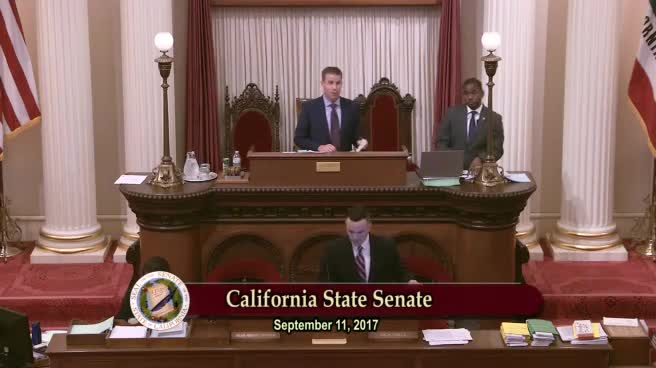 2MIN
Senate Floor
 1H
Senate Standing Committee on Appropriations
 2MIN
Senate Standing Committee on Elections and Constitutional Amendments
 5MIN
Senate Standing Committee on Judiciary
 1MIN
Assembly Floor
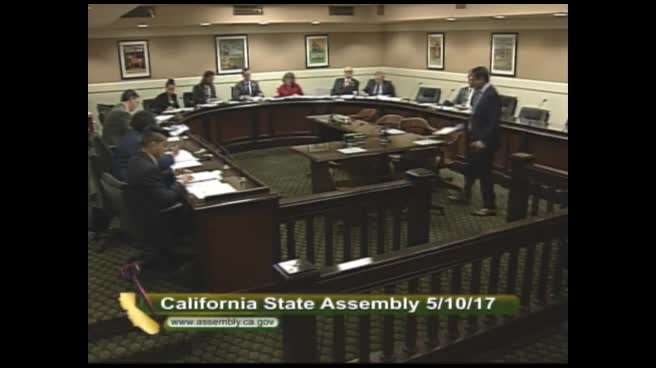 3MIN
Assembly Standing Committee on Elections and Redistricting
 2MIN
Assembly Standing Committee on Privacy and Consumer Protection
Bill Author

Bill Co-Author(s):