AB 1127: Baby diaper changing stations.
- Session Year: 2017-2018
- House: Assembly
- Latest Version Date: 2017-10-13
(1)Existing law establishes and imposes on state and local agencies various requirements relating to the acquisition, construction, and renovation of public buildings.
This bill would require new construction or renovation of a public building, as specified, that is owned by a state or a local agency, or a portion of a building that is owned by a state or local agency and includes at least one restroom that is open to the public, to provide at least one safe, sanitary, convenient, and publicly accessible baby diaper changing station, as specified. The bill would require each station to be maintained, repaired, and replaced as necessary to ensure safety and ease of use, and to be cleaned with the same frequency as the restroom in which it is located. By imposing a higher level of service on local agencies, the bill would impose a state-mandated local program.
(2)Existing law also requires publicly and privately owned facilities where the public congregates to be equipped with sufficient restrooms to meet the needs of the public at peak hours.
This bill would require various facilities, including a theater, sports arena, or library, to install and maintain at least one baby diaper changing station if the facility is open to the public, as specified.
(3)The bill would set forth findings and declarations stating that ensuring that safe, sanitary, convenient, and publicly accessible baby diaper changing stations are widely available throughout the state is a matter of statewide concern.
(4)The California Constitution requires the state to reimburse local agencies and school districts for certain costs mandated by the state. Statutory provisions establish procedures for making that reimbursement.
This bill would provide that, if the Commission on State Mandates determines that the bill contains costs mandated by the state, reimbursement for those costs shall be made pursuant to the statutory provisions noted above.
(1)Existing law establishes and imposes on state and local agencies various requirements relating to the acquisition, construction, and renovation of public buildings.
This bill would require new construction or renovation of a public building, as specified, that is owned by a state or a local agency, or a portion of a building that is owned by a state or local agency and includes at least one restroom that is open to the public, to provide on each floor level containing one or more restrooms that are accessible to the public at least one safe, sanitary, and convenient convenient, and publicly accessible baby diaper changing station, as specified. The bill would require each station to be maintained, repaired, and replaced as necessary to ensure safety and ease of use, and to be cleaned with the same frequency as the restroom in which it is located. By imposing a higher level of service on local agencies, the bill would impose a state-mandated local program.
(2)Existing law, the California Retail Food Code, establishes uniform health and sanitation standards for retail food facilities and provides for the enforcement of those standards by local health agencies and by the State Department of Public Health, as specified. Among other sanitation standards, the code requires a permanent food facility to provide clean toilet facilities in good repair for consumers, guests, or invitees if the food facility was constructed after July 1, 1984, and has more than 20,000 square feet of floor space. A violation of these provisions is a crime.This bill would require a permanent food facility, as specified, to provide a clean baby diaper changing station in good repair for consumers, guests, or invitees. By creating a new crime and by imposing a higher level of service on local health agencies, the bill would impose a state-mandated local program.(3)(2)Existing law also requires publicly and privately owned facilities where the public congregates to be equipped with sufficient restrooms to meet the needs of the public at peak hours.
This bill would require various facilities, including a theater, sports arena, or library, to install and maintain at least one baby diaper changing station if the facility is open to the public, as specified.
(4)(3)The bill would set forth findings and declarations stating that ensuring that safe, sanitary, and convenient convenient, and publicly accessible baby diaper changing stations are widely available throughout the state is a matter of statewide concern.
(5) The California Constitution requires the state to reimburse local agencies and school districts for certain costs mandated by the state. Statutory provisions establish procedures for making that reimbursement.This bill would provide that with regard to certain mandates no reimbursement is required by this act for a specified reason.With regard to any other mandates, this bill would provide that, if the Commission on State Mandates determines that the bill contains costs so mandated by the state, reimbursement for those costs shall be made pursuant to the statutory provisions noted above.(4)The California Constitution requires the state to reimburse local agencies and school districts for certain costs mandated by the state. Statutory provisions establish procedures for making that reimbursement.
This bill would provide that, if the Commission on State Mandates determines that the bill contains costs mandated by the state, reimbursement for those costs shall be made pursuant to the statutory provisions noted above.
(1)Existing law establishes and imposes on state and local agencies various requirements relating to the acquisition, construction, and renovation of public buildings.
This bill would require new construction or renovation, as specified, renovation of a public building, as specified, that is owned by a state or a local agency, or a portion of a building that is owned by a state or local agency and includes at least one restroom that is open to the public, to provide on each floor level containing one or more restrooms that are accessible to the public at least one safe, sanitary, and convenient baby diaper changing station, as specified. The bill would require each station to be maintained, repaired, and replaced as necessary to ensure safety and ease of use, and to be cleaned with the same frequency as the restroom in which it is located. By imposing a higher level of service on local agencies, the bill would impose a state-mandated local program.
(2)Existing law, the California Retail Food Code, establishes uniform health and sanitation standards for retail food facilities and provides for the enforcement of those standards by local health agencies and by the State Department of Public Health, as specified. Among other sanitation standards, the code requires a permanent food facility to provide clean toilet facilities in good repair for consumers, guests, or invitees if the food facility was constructed after July 1, 1984, and has more than 20,000 square feet of floor space. A violation of these provisions is a crime.
This bill would require a permanent food facility, as specified, to provide a clean baby diaper changing station in good repair for consumers, guests, or invitees. By creating a new crime and by imposing a higher level of service on local health agencies, the bill would impose a state-mandated local program.
(3)Existing law also requires publicly and privately owned facilities where the public congregates to be equipped with sufficient restrooms to meet the needs of the public at peak hours.
This bill would require various facilities, including a theater, sports arena, or library, to install and maintain at least one baby diaper changing station if the facility is open to the public, as specified.
(4)The bill would set forth findings and declarations stating that ensuring that safe, sanitary, and convenient baby diaper changing stations are widely available throughout the state is a matter of statewide concern.
(5) The California Constitution requires the state to reimburse local agencies and school districts for certain costs mandated by the state. Statutory provisions establish procedures for making that reimbursement.
This bill would provide that with regard to certain mandates no reimbursement is required by this act for a specified reason.
With regard to any other mandates, this bill would provide that, if the Commission on State Mandates determines that the bill contains costs so mandated by the state, reimbursement for those costs shall be made pursuant to the statutory provisions noted above.
(1)Existing law establishes and imposes on state and local agencies various requirements relating to the acquisition, construction, and renovation of public buildings.
This bill would require new construction or renovation, as specified, of a public building, as specified, that is owned by a state or a local agency, or a portion of a building that is owned by a state or local agency and includes at least one restroom that is open to the public, to provide on each floor level containing one or more restrooms that are accessible to the public at least one safe, sanitary, and convenient baby diaper changing station, as specified. The bill would require each station to be maintained, repaired, and replaced as necessary to ensure safety and ease of use, and to be cleaned with the same frequency as the restroom in which it is located. By imposing a higher level of service on local agencies, the bill would impose a state-mandated local program.
(2)Existing law, the California Retail Food Code, establishes uniform health and sanitation standards for retail food facilities and provides for the enforcement of those standards by local health agencies and by the State Department of Public Health, as specified. Among other sanitation standards, the code requires a permanent food facility to provide clean toilet facilities in good repair for consumers, guests, or invitees if the food facility was constructed after July 1, 1984, and has more than 20,000 square feet of floor space. A violation of these provisions is a crime.
This bill would require a permanent food facility, as specified, to provide a clean baby diaper changing station in good repair for consumers, guests, or invitees. By creating a new crime and by imposing a higher level of service on local health agencies, the bill would impose a state-mandated local program.
(3)Existing law also requires publicly and privately owned facilities where the public congregates to be equipped with sufficient restrooms to meet the needs of the public at peak hours.
This bill would require various facilities, including a theater, sports arena, or library, to install and maintain at least one baby diaper changing station if the facility is open to the public, as specified.
(4)The bill would set forth findings and declarations stating that ensuring that safe, sanitary, and convenient baby diaper changing stations are widely available throughout the state is a matter of statewide concern.
(5) The California Constitution requires the state to reimburse local agencies and school districts for certain costs mandated by the state. Statutory provisions establish procedures for making that reimbursement.
This bill would provide that with regard to certain mandates no reimbursement is required by this act for a specified reason.
With regard to any other mandates, this bill would provide that, if the Commission on State Mandates determines that the bill contains costs so mandated by the state, reimbursement for those costs shall be made pursuant to the statutory provisions noted above.
(a)A public building that is owned by a state agency, or a portion of a building that is owned by the state and includes at least one restroom that is open to the public, shall provide at least one safe, sanitary, convenient, and publicly accessible baby diaper changing station that is accessible to women entering a restroom provided for use by women and at least one safe, sanitary, convenient, and publicly accessible baby diaper changing station that is accessible to men entering a restroom provided for use by men, or at least one safe, sanitary, convenient, and publicly accessible baby diaper changing station that is accessible to both men and women. Each station shall include signage at or near the entrance to the station indicating the location of the baby diaper changing station. If there is a central directory identifying, for the benefit of the public, the location of offices, restrooms, and other facilities in the building, that central directory shall indicate the location of the baby diaper changing stations. Each baby diaper changing station shall be maintained, repaired, and replaced as necessary to ensure safety and ease of use, and shall be cleaned with the same frequency as the restroom in which it is located.
(b)(1)Subdivision (a) applies to all new construction, and, except as otherwise provided in paragraph (2), to all renovations of bathrooms for which a permit has been obtained, in which the estimated cost of the new construction or renovation is ten thousand dollars ($10,000) or more.
(2)Subdivision (a) does not apply to a renovation if a local building permitting entity or building inspector determines that the installation of a baby diaper changing station is not feasible or would result in a failure to comply with applicable building standards governing the right of access for persons with disabilities. The permitting entity or building inspector may grant an exemption from the requirements of this section under those circumstances.
SEC. 2.Section 50535 is added to the Government Code, to read:50535.(a)(1)A public building that is owned by a local agency, or a portion of a building that is owned by a local agency and includes at least one restroom that is open to the public, shall provide at least one safe, sanitary, convenient, and publicly accessible baby diaper changing station that is accessible to women entering a restroom provided for use by women and at least one safe, sanitary, convenient, and publicly accessible baby diaper changing station that is accessible to men entering a restroom provided for use by men, or at least one safe, sanitary, convenient, and publicly accessible baby diaper changing station that is accessible to both men and women.
(2)Each station shall include signage at or near the entrance to the station indicating the location of the baby diaper changing station. If there is a central directory identifying, for the benefit of the public, the location of offices, restrooms, and other facilities in the building, that central directory shall indicate the location of the baby diaper changing stations. Each baby diaper changing station shall be maintained, repaired, and replaced as necessary to ensure safety and ease of use, and shall be cleaned with the same frequency as the restroom in which it is located.
(b)(1)Subdivision (a) applies to all new construction and, except as otherwise provided in paragraph (2), to all renovations of bathrooms, for which a permit has been obtained, in which the estimated cost of the new construction or renovation is ten thousand dollars ($10,000) or more.
(2)Subdivision (a) does not apply to a renovation if a local building permitting entity or building inspector determines that the installation of a baby diaper changing station is not feasible or would result in a failure to comply with applicable building standards governing the right of access for persons with disabilities. The permitting entity or building inspector may grant an exemption from the requirements of this section under those circumstances.
SEC. 3.Section 118506 is added to the Health and Safety Code, to read:118506.(a)(1)A theater or movie house, grocery store, health facility, convention center, sports arena, auditorium, cultural complex, exhibition hall, library, passenger terminal, permanent amusement park structure, restaurant with an occupancy of at least 60 persons, as determined by the State Fire Marshal, shopping center of more than 25,000 square feet, tourist attraction, or retail store of more than 5,000 square feet shall install and maintain at least one baby diaper changing station if the facility is open to the public. There shall be at least one safe, sanitary, convenient, and publicly accessible baby diaper changing station that is accessible to women entering a restroom provided for use by women and one that is accessible to men entering a restroom provided for use by men, or at least one safe, sanitary, convenient, and publicly accessible baby diaper changing station that is accessible to both men and women.
(2)This section does not apply to an industrial building or to a nightclub or bar that does not permit anyone who is under 18 years of age to enter the premises. This section also does not apply to a restroom located in a health facility if the restroom is intended for the use of one patient or resident at a time.
(b)This section shall not be enforceable by a private right of action.
(c)(1)Subdivision (a) applies to all new construction, and, except as otherwise provided in paragraph (2), to all renovations of bathrooms for which a permit has been obtained, in which the estimated cost of the new construction or renovation is ten thousand dollars ($10,000) or more. If an entity subject to subdivision (a) is already in compliance with that subdivision at the time of new construction or renovation, additional restrooms equipped with baby diaper changing stations are not required.
(2)Subdivision (a) does not apply to a renovation if a local building permitting entity or building inspector determines that the installation of a baby diaper changing station is not feasible or would result in a failure to comply with applicable building standards governing the right of access for persons with disabilities. The permitting entity or building inspector may grant an exemption from the requirements of subdivision (a) under those circumstances.
(d)For purposes of this section, the following definitions shall apply:
(1)Health facility has the meaning set forth in Section 1250.
(2)Restaurant with an occupancy of at least 60 persons does not apply to a restaurant if there is a centrally located facility with a baby diaper changing station that is open to the public and located within 300 feet of the entrance to the restaurant.
SEC. 4.The Legislature finds and declares that ensuring safe, sanitary, convenient, and publicly accessible baby diaper changing stations are widely available throughout the state is a matter of statewide concern, and not a municipal affair. Therefore, Section 2 of this act is applicable to charter cities, charter counties, and charter cities and counties. The Legislature encourages the University of California to comply with Section 1 of this act.
SEC. 5.If the Commission on State Mandates determines that this act contains costs mandated by the state, reimbursement to local agencies and school districts for those costs shall be made pursuant to Part 7 (commencing with Section 17500) of Division 4 of Title 2 of the Government Code.
(a)A public building that is owned by a state agency, or a portion of a building that is owned by the state and includes at least one restroom that is open to the public, shall provide at least one safe, sanitary, convenient, and publicly accessible baby diaper changing station that is accessible to women entering a restroom provided for use by women and at least one safe, sanitary, convenient, and publicly accessible baby diaper changing station that is accessible to men entering a restroom provided for use by men, or at least one safe, sanitary, convenient, and publicly accessible baby diaper changing station that is accessible to both men and women. Each station shall include signage at or near the entrance to the station indicating the location of the baby diaper changing station. If there is a central directory identifying, for the benefit of the public, the location of offices, restrooms, and other facilities in the building, that central directory shall indicate the location of the baby diaper changing stations. Each baby diaper changing station shall be maintained, repaired, and replaced as necessary to ensure safety and ease of use, and shall be cleaned with the same frequency as the restroom in which it is located.
(b)(1)Subdivision (a) applies to all new construction, and, except as otherwise provided in paragraph (2), to all renovations of bathrooms for which a permit has been obtained, in which the estimated cost of the new construction or renovation is ten thousand dollars ($10,000) or more.
(2)Subdivision (a) does not apply to a renovation if a local building permitting entity or building inspector determines that the installation of a baby diaper changing station is not feasible or would result in a failure to comply with applicable building standards governing the right of access for persons with disabilities. The permitting entity or building inspector may grant an exemption from the requirements of this section under those circumstances.
SEC. 2.Section 50535 is added to the Government Code, to read:50535.(a)(1)A public building that is owned by a local agency, or a portion of a building that is owned by a local agency and includes at least one restroom that is open to the public, shall provide at least one safe, sanitary, convenient, and publicly accessible baby diaper changing station that is accessible to women entering a restroom provided for use by women and at least one safe, sanitary, convenient, and publicly accessible baby diaper changing station that is accessible to men entering a restroom provided for use by men, or at least one safe, sanitary, convenient, and publicly accessible baby diaper changing station that is accessible to both men and women.
(2)Each station shall include signage at or near the entrance to the station indicating the location of the baby diaper changing station. If there is a central directory identifying, for the benefit of the public, the location of offices, restrooms, and other facilities in the building, that central directory shall indicate the location of the baby diaper changing stations. Each baby diaper changing station shall be maintained, repaired, and replaced as necessary to ensure safety and ease of use, and shall be cleaned with the same frequency as the restroom in which it is located.
(b)(1)Subdivision (a) applies to all new construction and, except as otherwise provided in paragraph (2), to all renovations of bathrooms, for which a permit has been obtained, in which the estimated cost of the new construction or renovation is ten thousand dollars ($10,000) or more.
(2)Subdivision (a) does not apply to a renovation if a local building permitting entity or building inspector determines that the installation of a baby diaper changing station is not feasible or would result in a failure to comply with applicable building standards governing the right of access for persons with disabilities. The permitting entity or building inspector may grant an exemption from the requirements of this section under those circumstances.
SEC. 3.Section 118506 is added to the Health and Safety Code, to read:118506.(a)(1)A theater or movie house, grocery store, health facility, convention center, sports arena, auditorium, cultural complex, exhibition hall, library, passenger terminal, permanent amusement park structure, restaurant with a seating capacity an occupancy of at least 50 seats, 60 persons, as determined by the State Fire Marshal, shopping center of more than 25,000 square feet, tourist attraction, or retail store of more than 5,000 square feet shall install and maintain at least one baby diaper changing station if the facility is open to the public. There shall be at least one safe, sanitary, convenient, and publicly accessible baby diaper changing station that is accessible to women entering a restroom provided for use by women and one that is accessible to men entering a restroom provided for use by men, or at least one safe, sanitary, convenient, and publicly accessible baby diaper changing station that is accessible to both men and women.
(2)This section does not apply to an industrial building or to a nightclub or bar that does not permit anyone who is under 18 years of age to enter the premises. This section also does not apply to a restroom located in a health facility if the restroom is intended for the use of one patient or resident at a time.
(b)This section shall not be enforceable by a private right of action.
(c)(1)Subdivision (a) applies to all new construction, and, except as otherwise provided in paragraph (2), to all renovations of bathrooms for which a permit has been obtained, in which the estimated cost of the new construction or renovation is ten thousand dollars ($10,000) or more. If an entity subject to subdivision (a) is already in compliance with that subdivision at the time of new construction or renovation, additional restrooms equipped with baby diaper changing stations are not required.
(2)Subdivision (a) does not apply to a renovation if a local building permitting entity or building inspector determines that the installation of a baby diaper changing station is not feasible or would result in a failure to comply with applicable building standards governing the right of access for persons with disabilities. The permitting entity or building inspector may grant an exemption from the requirements of subdivision (a) under those circumstances.
(d)For purposes of this section, the following definitions shall apply:
(1)Health facility has the meaning set forth in Section 1250.
(2)Restaurant with a seating capacity of at least 50 seats an occupancy of at least 60 persons does not apply to a restaurant if there is a centrally located facility with a baby diaper changing station that is open to the public and located within 300 feet of the entrance to the restaurant.
SEC. 4.The Legislature finds and declares that ensuring safe, sanitary, convenient, and publicly accessible baby diaper changing stations are widely available throughout the state is a matter of statewide concern, and not a municipal affair. Therefore, Section 2 of this act is applicable to charter cities, charter counties, and charter cities and counties. The Legislature encourages the University of California to comply with Section 1 of this act.
SEC. 5.If the Commission on State Mandates determines that this act contains costs mandated by the state, reimbursement to local agencies and school districts for those costs shall be made pursuant to Part 7 (commencing with Section 17500) of Division 4 of Title 2 of the Government Code.
(a)A public building that is owned by a state agency, or a portion of a building that is owned by the state and includes at least one restroom that is open to the public, shall provide on each floor level containing one or more restrooms that are accessible to the public at least one safe, sanitary, and convenient convenient, and publicly accessible baby diaper changing station that is accessible to women entering a restroom provided for use by women and at least one safe, sanitary, and convenient convenient, and publicly accessible baby diaper changing station that is accessible to men entering a restroom provided for use by men, or at least one safe, sanitary, and convenient convenient, and publicly accessible baby diaper changing station that is accessible to both men and women. Each station shall include signage at or near the entrance to the station indicating the location of the baby diaper changing station. If there is a central directory identifying, for the benefit of the public, the location of offices, restrooms, and other facilities in the building, that central directory shall indicate the location of the baby diaper changing stations. Each baby diaper changing station shall be maintained, repaired, and replaced as necessary to ensure safety and ease of use, and shall be cleaned with the same frequency as the restroom in which it is located.
(b)(1)Subdivision (a) applies to all new construction, and, except as otherwise provided in paragraph (2), to all renovations of bathrooms for which a permit has been obtained, in which the estimated cost of the new construction or renovation is ten thousand dollars ($10,000) or more.
(2)Subdivision (a) does not apply to a renovation if a local building permitting entity or building inspector determines that the installation of a baby diaper changing station is not feasible or would result in a failure to comply with applicable building standards governing the right of access for persons with disabilities. The permitting entity or building inspector may grant an exemption from the requirements of this section under those circumstances.
SEC. 2.Section 50535 is added to the Government Code, to read:50535.(a)(1)A public building that is owned by a local agency, or a portion of a building that is owned by a local agency and includes at least one restroom that is open to the public, shall provide on each floor level containing one or more restrooms that are accessible to the public at least one safe, sanitary, and convenient convenient, and publicly accessible baby diaper changing station that is accessible to women entering a restroom provided for use by women and at least one safe, sanitary, and convenient convenient, and publicly accessible baby diaper changing station that is accessible to men entering a restroom provided for use by men, or at least one safe, sanitary, and convenient convenient, and publicly accessible baby diaper changing station that is accessible to both men and women.
(2)Each station shall include signage at or near the entrance to the station indicating the location of the baby diaper changing station. If there is a central directory identifying, for the benefit of the public, the location of offices, restrooms, and other facilities in the building, that central directory shall indicate the location of the baby diaper changing stations. Each baby diaper changing station shall be maintained, repaired, and replaced as necessary to ensure safety and ease of use, and shall be cleaned with the same frequency as the restroom in which it is located.
(b)(1)Subdivision (a) applies to all new construction and, except as otherwise provided in paragraph (2), to all renovations of bathrooms, for which a permit has been obtained, in which the estimated cost of the new construction or renovation is ten thousand dollars ($10,000) or more.
(2)Subdivision (a) does not apply to a renovation if a local building permitting entity or building inspector determines that the installation of a baby diaper changing station is not feasible or would result in a failure to comply with applicable building standards governing the right of access for persons with disabilities. The permitting entity or building inspector may grant an exemption from the requirements of this section under those circumstances.
SEC. 3.Section 114276 of the Health and Safety Code is amended to read:114276.(a)A permanent food facility shall provide clean toilet facilities in good repair for use by employees.(b)(1)(A)A permanent food facility shall provide clean toilet facilities in good repair for consumers, guests, or invitees when there is onsite consumption of foods or when the food facility was constructed after July 1, 1984, and has more than 20,000 square feet of floor space.(B)(i)A permanent food facility that is required to install and maintain at least one baby diaper changing station pursuant to Section 118506 shall provide one or more clean baby diaper changing stations in good repair for consumers, guests, or invitees.(ii)Notwithstanding Section 114395, the first violation of clause (i) shall result in a warning. Each subsequent violation shall constitute an infraction punishable by a fine of not more than two hundred fifty dollars ($250).(2)Notwithstanding Section 113984.1, toilet facilities that are provided for use by consumers, guests, or invitees shall be in a location where consumers, guests, and invitees do not pass through food preparation, food storage, or utensil washing areas to reach the toilet facilities.(3)For purposes of this section, a building subject to paragraph (1) that has a food facility with more than 20,000 square feet of floor space shall provide at least one separate toilet facility for men and one separate toilet facility for women.(4)For purposes of this section, the gas pump area of a service station that is maintained in conjunction with a food facility shall not be considered as property used in connection with the food facility or be considered in determining the square footage of floor space of the food facility.(c)(1)Toilet rooms shall be separated by well-fitted, self-closing doors that prevent the passage of flies, dust, or odors.(2)Toilet room doors shall be kept closed except during cleaning and maintenance operations.(d)Handwashing facilities, in good repair, shall be provided as specified in Sections 113953 and 113953.3.(e)A city, county, or city and county may enact ordinances that are more restrictive than this section.(f)(1)Except as provided in paragraph (1) of subdivision (b), a food facility that was constructed before January 1, 2004, that has been in continuous operation since January 1, 2004, and that provides space for the consumption of food on the premises shall either provide clean toilet facilities in good repair for consumers, guests, or invitees on property used in connection with, or in, the food facility or prominently post a sign within the food facility in a public area stating that toilet facilities are not provided.(2)The first violation of paragraph (1) shall result in a warning. Subsequent violations shall constitute an infraction punishable by a fine of not more than two hundred fifty dollars ($250).(3)The requirements of this section for toilet facilities that are accessible to consumers, guests, or invitees on the property may be satisfied by permitting access by those persons to the toilet and handwashing facilities that are required by this part.SEC. 4.SEC. 3.Section 118506 is added to the Health and Safety Code, to read:118506.(a)(1)A theater or movie house, grocery store, health facility, convention center, sports arena, auditorium, cultural complex, exhibition hall, library, passenger terminal, permanent amusement park structure, restaurant with a seating capacity of at least 50 seats, shopping center of more than 25,000 square feet, tourist attraction, or retail store of more than 5,000 square feet shall install and maintain at least one baby diaper changing station if the facility is open to the public. There shall be at least one safe, sanitary, and convenient convenient, and publicly accessible baby diaper changing station that is accessible to women entering a restroom provided for use by women and one that is accessible to men entering a restroom provided for use by men, or at least one safe, sanitary, and convenient convenient, and publicly accessible baby diaper changing station that is accessible to both men and women.
(2)This section does not apply to an industrial building or to a nightclub or bar that does not permit anyone who is under 18 years of age to enter the premises. This section also does not apply to a restroom located in a health facility if the restroom is intended for the use of one patient or resident at a time.
(b)This section shall not be enforceable by a private right of action.
(c)(1)Subdivision (a) applies to all new construction, and, except as otherwise provided in paragraph (2), to all renovations of bathrooms for which a permit has been obtained, in which the estimated cost of the new construction or renovation is ten thousand dollars ($10,000) or more. If an entity subject to subdivision (a) is already in compliance with that subdivision at the time of new construction or renovation, additional restrooms equipped with baby diaper changing stations are not required.
(2)Subdivision (a) does not apply to a renovation if a local building permitting entity or building inspector determines that the installation of a baby diaper changing station is not feasible or would result in a failure to comply with applicable building standards governing the right of access for persons with disabilities. The permitting entity or building inspector may grant an exemption from the requirements of subdivision (a) under those circumstances.
(d)For purposes of this section, the following definitions shall apply:
(1)Health facility has the meaning set forth in Section 1250.
(2)Restaurant with a seating capacity of at least 50 seats does not apply to a restaurant if there is a centrally located facility with a baby diaper changing station located within 300 feet of the entrance to the restaurant.
SEC. 5.SEC. 4.The Legislature finds and declares that ensuring safe, sanitary, and convenient convenient, and publicly accessible baby diaper changing stations are widely available throughout the state is a matter of statewide concern, and not a municipal affair. Therefore, Section 2 of this act is applicable to charter cities, charter counties, and charter cities and counties. The Legislature encourages the University of California to comply with Section 1 of this act.
SEC. 6.No reimbursement is required by this act pursuant to Section 6 of Article XIIIB of the California Constitution for certain costs that may be incurred by a local agency or school district because, in that regard, this act creates a new crime or infraction, eliminates a crime or infraction, or changes the penalty for a crime or infraction, within the meaning of Section 17556 of the Government Code, or changes the definition of a crime within the meaning of Section 6 of Article XIIIB of the California Constitution.However, if the Commission on State Mandates determines that this act contains other costs mandated by the state, reimbursement to local agencies and school districts for those costs shall be made pursuant to Part 7 (commencing with Section 17500) of Division 4 of Title 2 of the Government Code.SEC. 5.If the Commission on State Mandates determines that this act contains costs mandated by the state, reimbursement to local agencies and school districts for those costs shall be made pursuant to Part 7 (commencing with Section 17500) of Division 4 of Title 2 of the Government Code.
(a)A public building that is owned by a state agency, or a portion of a building that is owned by the state and includes at least one restroom that is open to the public, shall provide on each floor level containing one or more restrooms that are accessible to the public at least one safe, sanitary, and convenient baby diaper changing station that is accessible to women entering a restroom provided for use by women and at least one safe, sanitary, and convenient baby diaper changing station that is accessible to men entering a restroom provided for use by men, or at least one safe, sanitary, and convenient baby diaper changing station that is accessible to both men and women. Each station shall include signage at or near the entrance to the station indicating the location of the baby diaper changing station. If there is a central directory identifying, for the benefit of the public, the location of offices, restrooms, and other facilities in the building, that central directory shall indicate the location of the baby diaper changing stations. Each baby diaper changing station shall be maintained, repaired, and replaced as necessary to ensure safety and ease of use, and shall be cleaned with the same frequency as the restroom in which it is located.
(b)(1)Subdivision (a) applies to all new construction, and, except as otherwise provided in paragraph (2), to all renovations of bathrooms for which a permit has been obtained, in which the estimated cost of the new construction or renovation is ten thousand dollars ($10,000) or more.
(2)Subdivision (a) does not apply to a renovation if a local building permitting entity or building inspector determines that the installation of a baby diaper changing station is not feasible or would result in a failure to comply with applicable building standards governing the right of access for persons with disabilities. The permitting entity or building inspector may grant an exemption from the requirements of this section under those circumstances.
SEC. 2.Section 50535 is added to the Government Code, to read:50535.(a)(1)A public building that is owned by a local agency, or a portion of a building that is owned by a local agency and includes at least one restroom that is open to the public, shall provide on each floor level containing one or more restrooms that are accessible to the public at least one safe, sanitary, and convenient baby diaper changing station that is accessible to women entering a restroom provided for use by women and at least one safe, sanitary, and convenient baby diaper changing station that is accessible to men entering a restroom provided for use by men, or at least one safe, sanitary, and convenient baby diaper changing station that is accessible to both men and women. Each
(2)Each station shall include signage at or near the entrance to the station indicating the location of the baby diaper changing station. If there is a central directory identifying, for the benefit of the public, the location of offices, restrooms, and other facilities in the building, that central directory shall indicate the location of the baby diaper changing stations. Each baby diaper changing station shall be maintained, repaired, and replaced as necessary to ensure safety and ease of use, and shall be cleaned with the same frequency as the restroom in which it is located.
(b)(1)Subdivision (a) applies to all new construction and, except as otherwise provided in paragraph (2), to all renovations of bathrooms, for which a permit has been obtained, in which the estimated cost of the new construction or renovation is ten thousand dollars ($10,000) or more.
(2)Subdivision (a) does not apply to a renovation if a local building permitting entity or building inspector determines that the installation of a baby diaper changing station is not feasible or would result in a failure to comply with applicable building standards governing the right of access for persons with disabilities. The permitting entity or building inspector may grant an exemption from the requirements of this section under those circumstances.
SEC. 3.Section 114276 of the Health and Safety Code is amended to read:114276.(a)A permanent food facility shall provide clean toilet facilities in good repair for use by employees.
(b)(1)(A)A permanent food facility shall provide clean toilet facilities in good repair for consumers, guests, or invitees when there is onsite consumption of foods or when the food facility was constructed after July 1, 1984, and has more than 20,000 square feet of floor space.
(B)(i)A permanent food facility that is required to install and maintain at least one baby diaper changing station pursuant to Section 118506 shall provide one or more clean baby diaper changing stations in good repair for consumers, guests, or invitees.
(ii)Notwithstanding Section 114395, the first violation of clause (i) shall result in a warning. Each subsequent violation shall constitute an infraction punishable by a fine of not more than two hundred fifty dollars ($250).
(2)Notwithstanding Section 113984.1, toilet facilities that are provided for use by consumers, guests, or invitees shall be in a location where consumers, guests, and invitees do not pass through food preparation, food storage, or utensil washing areas to reach the toilet facilities.
(3)For purposes of this section, a building subject to paragraph (1) that has a food facility with more than 20,000 square feet of floor space shall provide at least one separate toilet facility for men and one separate toilet facility for women.
(4)For purposes of this section, the gas pump area of a service station that is maintained in conjunction with a food facility shall not be considered as property used in connection with the food facility or be considered in determining the square footage of floor space of the food facility.
(c)(1)Toilet rooms shall be separated by well-fitted, self-closing doors that prevent the passage of flies, dust, or odors.
(2)Toilet room doors shall be kept closed except during cleaning and maintenance operations.
(d)Handwashing facilities, in good repair, shall be provided as specified in Sections 113953 and 113953.3.
(e)A city, county, or city and county may enact ordinances that are more restrictive than this section.
(f)(1)Except as provided in paragraph (1) of subdivision (b), a food facility that was constructed before January 1, 2004, that has been in continuous operation since January 1, 2004, and that provides space for the consumption of food on the premises shall either provide clean toilet facilities in good repair for consumers, guests, or invitees on property used in connection with, or in, the food facility or prominently post a sign within the food facility in a public area stating that toilet facilities are not provided.
(2)The first violation of paragraph (1) shall result in a warning. Subsequent violations shall constitute an infraction punishable by a fine of not more than two hundred fifty dollars ($250).
(3)The requirements of this section for toilet facilities that are accessible to consumers, guests, or invitees on the property may be satisfied by permitting access by those persons to the toilet and handwashing facilities that are required by this part.
SEC. 4.Section 118506 is added to the Health and Safety Code, to read:118506.(a)(1)A theater or movie house, grocery store, health facility, convention center, sports arena, auditorium, cultural complex, exhibition hall, library, passenger terminal, permanent amusement park structure, restaurant with a seating capacity of at least 50 seats, shopping center of more than 25,000 square feet, tourist attraction, or retail store of more than 5,000 square feet shall install and maintain at least one baby diaper changing station if the facility is open to the public. There shall be at least one safe, sanitary, and convenient baby diaper changing station that is accessible to women entering a restroom provided for use by women and one that is accessible to men entering a restroom provided for use by men, or at least one safe, sanitary, and convenient baby diaper changing station that is accessible to both men and women.
(2)This section does not apply to an industrial building or to a nightclub or bar that does not permit anyone who is under 18 years of age to enter the premises. This section also does not apply to a restroom located in a health facility if the restroom is intended for the use of one patient or resident at a time.
(b)This section shall not be enforceable by a private right of action.
(c)(1)Subdivision (a) applies to all new construction, and, except as otherwise provided in paragraph (2), to all renovations of bathrooms for which a permit has been obtained, in which the estimated cost of the new construction or renovation is ten thousand dollars ($10,000) or more. If an entity subject to subdivision (a) is already in compliance with that subdivision at the time of new construction or renovation, additional restrooms equipped with baby diaper changing stations are not required.
(2)Subdivision (a) does not apply to a renovation if a local building permitting entity or building inspector determines that the installation of a baby diaper changing station is not feasible or would result in a failure to comply with applicable building standards governing the right of access for persons with disabilities. The permitting entity or building inspector may grant an exemption from the requirements of subdivision (a) under those circumstances.
(d)For purposes of this section, the following definitions shall apply:
(1)Health facility has the meaning set forth in Section 1250.
(2)Restaurant with a seating capacity of at least 50 seats does not apply to a restaurant if there is a centrally located facility with a baby diaper changing station located within 300 feet of the entrance to the restaurant.
SEC. 5.The Legislature finds and declares that ensuring safe, sanitary, and convenient baby diaper changing stations are widely available throughout the state is a matter of statewide concern, and not a municipal affair. Therefore, Section 2 of this act is applicable to charter cities, charter counties, and charter cities and counties. The Legislature encourages the University of California to comply with Section 1 of this act.
SEC. 6.No reimbursement is required by this act pursuant to Section 6 of Article XIIIB of the California Constitution for certain costs that may be incurred by a local agency or school district because, in that regard, this act creates a new crime or infraction, eliminates a crime or infraction, or changes the penalty for a crime or infraction, within the meaning of Section 17556 of the Government Code, or changes the definition of a crime within the meaning of Section 6 of Article XIIIB of the California Constitution.
However, if the Commission on State Mandates determines that this act contains other costs mandated by the state, reimbursement to local agencies and school districts for those costs shall be made pursuant to Part 7 (commencing with Section 17500) of Division 4 of Title 2 of the Government Code.
(a)A public building that is owned by a state agency, or a portion of a building that is owned by the state and includes at least one restroom that is open to the public, shall provide on each floor level containing one or more restrooms that are accessible to the public at least one safe, sanitary, and convenient baby diaper changing station that is accessible to women entering a restroom provided for use by women and at least one safe, sanitary, and convenient baby diaper changing station that is accessible to men entering a restroom provided for use by men, or at least one safe, sanitary, and convenient baby diaper changing station that is accessible to both men and women. Each station shall include signage at or near the entrance to the station indicating the location of the baby diaper changing station. If there is a central directory identifying, for the benefit of the public, the location of offices, restrooms, and other facilities in the building, that central directory shall indicate the location of the baby diaper changing stations. Each baby diaper changing station shall be maintained, repaired, and replaced as necessary to ensure safety and ease of use, and shall be cleaned with the same frequency as the restroom in which it is located.
(b)(1)Subdivision (a) applies to all new construction, and, except as otherwise provided in paragraph (2), to all renovations of bathrooms for which a permit has been obtained, in which the estimated cost of the new construction or renovation is ten thousand dollars ($10,000) or more.
(2)Subdivision (a) does not apply to a renovation if a local building permitting entity or building inspector determines that the installation of a baby diaper changing station is not feasible or would result in a failure to comply with applicable building standards governing the right of access for persons with disabilities. The permitting entity or building inspector may grant an exemption from the requirements of this section under those circumstances.
SEC. 2.Section 50535 is added to the Government Code, to read:50535.(a)A public building that is owned by a local agency, or a portion of a building that is owned by a local agency and includes at least one restroom that is open to the public, shall provide on each floor level containing one or more restrooms that are accessible to the public at least one safe, sanitary, and convenient baby diaper changing station that is accessible to women entering a restroom provided for use by women and at least one safe, sanitary, and convenient baby diaper changing station that is accessible to men entering a restroom provided for use by men, or at least one safe, sanitary, and convenient baby diaper changing station that is accessible to both men and women. Each station shall include signage at or near the entrance to the station indicating the location of the baby diaper changing station. If there is a central directory identifying, for the benefit of the public, the location of offices, restrooms, and other facilities in the building, that central directory shall indicate the location of the baby diaper changing stations. Each baby diaper changing station shall be maintained, repaired, and replaced as necessary to ensure safety and ease of use, and shall be cleaned with the same frequency as the restroom in which it is located.
(b)(1)Subdivision (a) applies to all new construction and, except as otherwise provided in paragraph (2), to all renovations of bathrooms, for which a permit has been obtained, in which the estimated cost of the new construction or renovation is ten thousand dollars ($10,000) or more.
(2)Subdivision (a) does not apply to a renovation if a local building permitting entity or building inspector determines that the installation of a baby diaper changing station is not feasible or would result in a failure to comply with applicable building standards governing the right of access for persons with disabilities. The permitting entity or building inspector may grant an exemption from the requirements of this section under those circumstances.
SEC. 3.Section 114276 of the Health and Safety Code is amended to read:114276.(a)A permanent food facility shall provide clean toilet facilities in good repair for use by employees.
(b)(1)(A)A permanent food facility shall provide clean toilet facilities in good repair for consumers, guests, or invitees when there is onsite consumption of foods or when the food facility was constructed after July 1, 1984, and has more than 20,000 square feet of floor space.
(B)(i)A permanent food facility that is required to install and maintain at least one baby diaper changing station pursuant to Section 118506 shall provide one or more clean baby diaper changing stations in good repair for consumers, guests, or invitees.
(ii)Notwithstanding Section 114395, the first violation of clause (i) shall result in a warning. Each subsequent violation shall constitute an infraction punishable by a fine of not more than two hundred fifty dollars ($250).
(2)Notwithstanding Section 113984.1, toilet facilities that are provided for use by consumers, guests, or invitees shall be in a location where consumers, guests, and invitees do not pass through food preparation, food storage, or utensil washing areas to reach the toilet facilities.
(3)For purposes of this section, a building subject to paragraph (1) that has a food facility with more than 20,000 square feet of floor space shall provide at least one separate toilet facility for men and one separate toilet facility for women.
(4)For purposes of this section, the gas pump area of a service station that is maintained in conjunction with a food facility shall not be considered as property used in connection with the food facility or be considered in determining the square footage of floor space of the food facility.
(c)(1)Toilet rooms shall be separated by well-fitted, self-closing doors that prevent the passage of flies, dust, or odors.
(2)Toilet room doors shall be kept closed except during cleaning and maintenance operations.
(d)Handwashing facilities, in good repair, shall be provided as specified in Sections 113953 and 113953.3.
(e)A city, county, or city and county may enact ordinances that are more restrictive than this section.
(f)(1)Except as provided in paragraph (1) of subdivision (b), a food facility that was constructed before January 1, 2004, that has been in continuous operation since January 1, 2004, and that provides space for the consumption of food on the premises shall either provide clean toilet facilities in good repair for consumers, guests, or invitees on property used in connection with, or in, the food facility or prominently post a sign within the food facility in a public area stating that toilet facilities are not provided.
(2)The first violation of paragraph (1) shall result in a warning. Subsequent violations shall constitute an infraction punishable by a fine of not more than two hundred fifty dollars ($250).
(3)The requirements of this section for toilet facilities that are accessible to consumers, guests, or invitees on the property may be satisfied by permitting access by those persons to the toilet and handwashing facilities that are required by this part.
SEC. 4.Section 118506 is added to the Health and Safety Code, to read:118506.(a)(1)A theater or movie house, grocery store, health facility, convention center, sports arena, auditorium, cultural complex, exhibition hall, library, passenger terminal, permanent amusement park structure, restaurant with a seating capacity of at least 50 seats, shopping center of more than 25,000 square feet, tourist attraction, or retail store of more than 5,000 square feet shall install and maintain at least one baby diaper changing station if the facility is open to the public. There shall be at least one safe, sanitary, and convenient baby diaper changing station that is accessible to women entering a restroom provided for use by women and one that is accessible to men entering a restroom provided for use by men, or at least one safe, sanitary, and convenient baby diaper changing station that is accessible to both men and women.
(2)This section does not apply to an industrial building or to a nightclub or bar that does not permit anyone who is under 18 years of age to enter the premises. This section also does not apply to a restroom located in a health facility if the restroom is intended for the use of one patient or resident at a time.
(b)This section shall not be enforceable by a private right of action.
(c)(1)Subdivision (a) applies to all new construction, and, except as otherwise provided in paragraph (2), to all renovations of bathrooms for which a permit has been obtained, in which the estimated cost of the new construction or renovation is ten thousand dollars ($10,000) or more.
(2)Subdivision (a) does not apply to a renovation if a local building permitting entity or building inspector determines that the installation of a baby diaper changing station is not feasible or would result in a failure to comply with applicable building standards governing the right of access for persons with disabilities. The permitting entity or building inspector may grant an exemption from the requirements of subdivision (a) under those circumstances.
(d)For purposes of this section, the following definitions shall apply:
(1)Health facility has the meaning set forth in Section 1250.
(2)Restaurant with a seating capacity of at least 50 seats does not apply to a restaurant if there is a centrally located facility with a baby diaper changing station located within 300 feet of the entrance to the restaurant.
SEC. 5.The Legislature finds and declares that ensuring safe, sanitary, and convenient baby diaper changing stations are widely available throughout the state is a matter of statewide concern, and not a municipal affair. Therefore, Section 2 of this act is applicable to charter cities, charter counties, and charter cities and counties. The Legislature encourages the University of California to comply with Section 1 of this act.
SEC. 6.No reimbursement is required by this act pursuant to Section 6 of Article XIIIB of the California Constitution for certain costs that may be incurred by a local agency or school district because, in that regard, this act creates a new crime or infraction, eliminates a crime or infraction, or changes the penalty for a crime or infraction, within the meaning of Section 17556 of the Government Code, or changes the definition of a crime within the meaning of Section 6 of Article XIIIB of the California Constitution.
However, if the Commission on State Mandates determines that this act contains other costs mandated by the state, reimbursement to local agencies and school districts for those costs shall be made pursuant to Part 7 (commencing with Section 17500) of Division 4 of Title 2 of the Government Code.
|
Date
|
Status
|
|---|---|
| Oct 13, 2017 | Chaptered by Secretary of State - Chapter 755, Statutes of 2017. |
| Oct 13, 2017 | Approved by the Governor. |
| Sep 26, 2017 | Enrolled and presented to the Governor at 3 p.m. |
| Sep 15, 2017 | In Assembly. Concurrence in Senate amendments pending. |
| Sep 14, 2017 | Read third time. Passed. Ordered to the Assembly. |
| Sep 11, 2017 | Read second time. Ordered to third reading. |
| Sep 8, 2017 | Read third time and amended. Ordered to second reading. |
| Sep 5, 2017 | Read second time. Ordered to third reading. |
| Sep 1, 2017 | From committee: Do pass. (Ayes 6. Noes 1.) (September 1). |
| Aug 21, 2017 | In committee: Referred to APPR. suspense file. |
| Jul 17, 2017 | In committee: Hearing postponed by committee. |
| Jul 5, 2017 | Read second time and amended. Re-referred to Com. on APPR. |
| Jul 3, 2017 | From committee: Amend, and do pass as amended and re-refer to Com. on APPR. (Ayes 12. Noes 0.) (June 27). |
| Jun 14, 2017 | Referred to Com. on T. & H. |
| Jun 1, 2017 | In Senate. Read first time. To Com. on RLS. for assignment. |
| May 31, 2017 | Read third time. Passed. Ordered to the Senate. (Ayes 70. Noes 6. Page 1916.) |
| May 30, 2017 | Read second time. Ordered to third reading. |
| May 26, 2017 | From committee: Do pass. (Ayes 14. Noes 3.) (May 26). |
| May 17, 2017 | In committee: Set, first hearing. Referred to APPR. suspense file. |
| Apr 27, 2017 | Re-referred to Com. on APPR. |
| Apr 26, 2017 | From committee chair, with author's amendments: Amend, and re-refer to Com. on APPR. Read second time and amended. |
| Apr 19, 2017 | From committee: Do pass and re-refer to Com. on APPR. (Ayes 15. Noes 0.) (April 18). Re-referred to Com. on APPR. |
| Mar 9, 2017 | Referred to Com. on B. & P. |
| Feb 19, 2017 | From printer. May be heard in committee March 21. |
| Feb 17, 2017 | Read first time. To print. |
|
Date
|
Description
|
Location
|
Votes
|
|
|---|---|---|---|---|
| Sep 15, 2017 | AB 1127 Calderon Concurrence in Senate Amendments | Assembly Floor |
Passed |
|
| Sep 14, 2017 | Assembly 3rd Reading AB1127 Calderon et al. By Lara | Senate Floor |
Passed |
|
| Sep 1, 2017 | Do pass | Senate Standing Committee on Appropriations |
Passed |
|
| Aug 21, 2017 | Placed on suspense file | Senate Standing Committee on Appropriations |
Passed |
|
| Jun 27, 2017 | Do pass as amended, but first amend, and re-refer to the Committee on [Appropriations] | Senate Standing Committee on Transportation and Housing |
Passed |
|
| May 31, 2017 | AB 1127 CALDERON Assembly Third Reading | Assembly Floor |
Passed |
|
| May 26, 2017 | Do pass. | Assembly Standing Committee on Appropriations |
Passed |
|
| Apr 18, 2017 | Do pass and be re-referred to the Committee on [Appropriations] | Assembly Standing Committee on Business and Professions |
Passed |
This list shows positions taken on this bill by organizations on the date displayed, which is linked to the original source.
Positions by individuals are not included.
|
Organization
|
Position
|
Date
|
|---|---|---|
| Consumer Federation Of California | ** Support | Sep 11, 2017 |
| League Of California Cities | ** Against | Sep 11, 2017 |
CONCURRENCE IN SENATE AMENDMENTS
CSA1 Bill Id:AB 1127
Author:(Calderon and Eduardo Garcia)
As Amended Ver:September 8, 2017
Majority vote
ASSEMBLY: | 70-6 | (May 31, 2017) | SENATE: | 37-2 | (September 14, 2017) |
Original Committee Reference: B. & P.
SUMMARY: Requires state and local agencies and specified public facilities, including a theater, sports arena, or library, to install and maintain at least one baby diaper changing station if the building or facility is open to the public. Specifically, this bill:
- Requires specified state agencies, local agencies, and facilities open to the public to provide one of the following:
- At least one safe, sanitary, convenient, and publicly accessible baby diaper changing station that is accessible to women entering a restroom provided for use by women and at least one safe, sanitary, and convenient baby diaper changing station that is accessible to men entering a restroom provided for use by men; or
- At least one safe, sanitary, convenient, and publicly accessible baby diaper changing station that is accessible to both men and women.
- Applies this requirement to all new construction and, except as otherwise provided, to all renovations of bathrooms for which a permit has been obtained in which the estimated cost of the new construction or renovation is $10,000 or more.
- Exempts from this requirement any renovation that a local building permitting entity or building inspector determines that the installation of a baby diaper changing station is not feasible or would result in a failure to comply with applicable building standards governing the right of access for persons with disabilities.
- Authorizes the permitting entity or building inspector to grant the exemption from the requirements based on the specified feasibility and right of access determination.
- Specifies the following requirements specific to state and local agencies:
- Applies the requirement to a public building that is owned by a state or local agency, or the portion of a non-public building that is owned by a state or local agency that includes at least one public restroom.
- Requires the specified buildings to provide the required changing stations on each floor level containing one or more restrooms that are accessible to the public.
- Requires each station to include signage at or near the entrance to the station indicating the location of the baby diaper changing station and in a central directory, if there is one.
- Requires each baby diaper changing station to be maintained, repaired, and replaced as necessary to ensure safety and ease of use and cleaned with the same frequency as the restroom in which it is located.
- Provides the following requirements and exemptions specific to facilities open to the public:
- Requires specified facilities open to the public, such as movie theaters, grocery stores, restaurants, and sports arenas, but any new construction or renovation already in compliance does not need to install additional restrooms with changing stations.
- Exempts the following:
- An industrial building or to a nightclub or bar that does not permit anyone who is under 18 years of age to enter the premises.
- A restroom located in a health facility if the restroom is intended for the use of one patient or resident at a time.
- A restaurant if there is a centrally located facility with a baby diaper changing station located within 300 feet of the entrance to the restaurant.
- Provides that the requirement specific to facilities open to the public are not enforceable by a private right of action.
- States that the Legislature finds and declares that ensuring safe, sanitary, and convenient baby diaper changing stations are widely available throughout the state is a matter of statewide concern, and not a municipal affair. Therefore, Section 2 of this act is applicable to charter cities, charter counties, and charter cities and counties. The Legislature encourages the University of California to comply with Section 1 of this act.
The Senate amendments:
- Delete the separate enforcement provision for permanent food facilities.
- Clarify that the baby diaper changing stations must be publicly accessible.
- Replace the 50 person seating requirement for restaurants with an existing 60 person occupancy standard, as determined by the State Fire Marshal
- Make other technical changes.
FISCAL EFFECT: According to the Senate Appropriations Committee:
- The Department of General Services estimates a total cost of approximately $180,000 to install baby diaper changing stations in existing state office buildings and two proposed state buildings. This includes costs of approximately $150,000 for design, project management, and installation of changing stations in 20-30 existing restrooms, and up to $31,000 in additional costs for installation of four changing stations in two proposed buildings. (General Fund and special funds)
- Unknown, potentially significant state-reimbursable mandate costs for local agencies to comply with the requirements of this bill. Costs would depend upon the number of local buildings constructed and qualifying renovations to bathrooms in existing buildings statewide where installations are feasible, as well as the ongoing costs to maintain, repair, and replace publicly accessible baby changing stations. (General Fund)
COMMENTS:
Purpose. This bill is sponsored by the author. According to the author, "[this bill] will require buildings owned by a state or local agencies, as well as public venues such as restaurants, movie theaters and grocery stores, to provide at least one diaper-changing table available to both women and men. This requirement will apply to all new construction and any restroom renovations that exceed $10,000. The effects of [this bill] will be two-fold. First, more buildings will have diaper-change tables available to the public. Second, these new diaper-change tables will be available for use by both women and men, ensuring that California's public health polices adapt to support the evolving needs of all Californians and their families. [This bill] seeks to ensure that both moms and dads have a safe, sanitary place to change their baby."
Background. While existing law establishes various requirements relating to restrooms, there are no state requirements for the provision of baby diaper changing accommodations. However, there are some technical standards in place for those facilities which choose to install them. This bill would impose a statewide standard for government buildings and specified facilities open to the public. It also imposes differing signage, access, and cleanliness requirements between the types of buildings covered under the bill.
Building Standards. California Building Standards Commission (CBSC) is charged by the California Building Standards Law to administer the processes related to the adoption, approval, publication and implementation of California's building codes. The building codes serve as the basis for the design and construction of buildings in California.
Under this process, relevant state agencies propose amendments to model building codes, which the CBSC must then adopt, modify, or reject. For example, the Department of Housing and Community Development proposes amendments for residential building codes, the Office of Statewide Health Planning and Development is responsible for hospitals and clinics, and the Division of the State Architect is responsible for schools and emergency service buildings.
Not all buildings fall under the jurisdiction of a relevant state agency. Most commercial, industrial, and manufacturing structures are considered "local buildings," for which local governments may determine applicable building standards. With respect to green building standards, however, current law gives BSC the authority to adopt building standards for these local buildings. This bill would preempt conflicting local ordinances.
Other Jurisdictions. Under federal law, the Bathrooms Accessible in Every Situation Act requires restrooms in a public building controlled by the federal General Services Administration (GSA) to be equipped with baby changing facilities that are physically safe, sanitary, and appropriate. That law specifies that the GSA determines the standards for physically safe, sanitary, and appropriate.
Analysis Prepared by: Vincent Chee / B. & P. / (916) 319-3301 FN: 0002174
Office of Senate Floor Analyses (916) 651-1520 Fax: (916) 327-4478 | AB |
THIRD READING
Bill No: AB 1127
:
SENATE TRANS. & HOUSING COMMITTEE: 12-0, 6/27/17
AYES: Beall, Cannella, Allen, Atkins, Bates, Gaines, McGuire, Mendoza, Roth, Skinner, Wieckowski, Wiener
NO VOTE RECORDED: Morrell
SENATE APPROPRIATIONS COMMITTEE: 6-1, 9/1/17
AYES: Lara, Bates, Beall, Bradford, Hill, Wiener
NOES: Nielsen
ASSEMBLY FLOOR: 70-6, 5/31/17 - See last page for vote
DIGEST:
This bill requires state and local agencies and specified public facilities, including theaters, restaurants and sports arenas, to install and maintain at least one baby diaper changing station if the building or facility is open to the public, as specified.
Senate Floor Amendments of 9/8/17 clarify which restaurants are covered by the bill by using the clearer criteria of occupancy of 60 or more as determined by the State Fire Marshal, rather than a seating capacity of 50.
Existing law:
- Requires every public agency that conducts an establishment serving the public or open to the public, and maintains restroom facilities for the public, to make every toilet within the restrooms available without cost or charge to the patrons, guests, or invitees of the establishment. “Public agency” as used in this requirement means the state and any agency of the state and a city, a county, and a city and county.
- Requires publicly and privately owned facilities where the public congregates to be equipped with sufficient restrooms to meet the needs of the public at peak hours.
- Requires baby diaper changing stations in both women’s and men’s bathrooms in federal buildings.
This bill:
- Requires specified state and local agencies to provide at least one safe, sanitary, and convenient baby diaper changing station on each floor that is publicly accessible that:
- Is accessible to women entering a restroom provided for use by women.
- Is accessible to men entering a restroom provided for use by men.
- At least one baby diaper changing station that is accessible to both men and women.
- Requires movie theaters, grocery stores, health facilities, convention centers, sports arenas, auditoriums, cultural complexes, exhibition halls, libraries, passenger terminals, permanent amusement park structures, tourist attractions, retail stores larger than 5,000 square feet, restaurants with a seating capacity of at least 60, and shopping centers of more than 25,000 square feet to have at least one baby diaper changing station accessible to both men and women.
- Specifies that this requirement applies to all new construction and, except as otherwise provided, to all renovations of bathrooms where the estimated cost of the new construction or renovation is $10,000 or more.
- Specifies that this requirement does not apply to a renovation if a local building permitting entity or building inspector determines that the installation of a baby diaper changing station is not feasible or would result in a failure to comply with applicable building standards governing the right of access for persons with disabilities.
- Exempts industrial facilities, nightclubs, and bars from its requirements.
Comments
- Purpose. The author introduced this bill to ensure that both moms and dads have a safe, sanitary place to change their baby.
- Congress did it. In 2016 Congress passed and President Obama signed the BABIES Act, which requires changing stations in both women’s and men’s bathrooms in federal buildings. The Senate Transportation and Housing Committee has been unable to find any similar requirements in any other states.
- Benefits and costs. There’s no data to quantify the benefits of installing baby changing stations in bathrooms accessible to moms and dads, though most parents can imagine a time when a publicly available changing station would have been a valuable convenience. However, the costs of this requirement are more knowable. According to the Senate Appropriations Committee analysis, this bill increases state building costs by $180,000. Some cost increases can be expected for non-governmental buildings, which are also covered under this bill.
- Squeezed out. Recent changes in the building standards prohibit a changing station in a bathroom stall. Consequently, this bill will require changing stations to be located in a common area of the bathroom. In some smaller bathrooms there may not be sufficient space to install a changing station without significant reconstruction costs, which may trigger an infeasibility exemption from the baby changing station installation requirement in renovated bathrooms.
- This time it’s different? In 2014 similar legislation was vetoed. That legislation, which required that if a baby changing station was installed in a place of public accommodation it must be available without regard to gender, was less prescriptive and more expensive than this bill. It’s not clear if the Governor’s views have, um, changed.
- Not standard. Typically changes to buildings are included in the building code, rather than in statute, to allow for some flexibility and standardization. However, the Building Standards Commission regards baby changing tables as a building accessory, for which a standard is not necessary.
FISCAL EFFECT: Appropriation: Fiscal Com.: Local:
According to the Senate Appropriations Committee:
- The Department of General Services estimates a total cost of approximately $180,000 to install baby diaper changing stations in existing state office buildings and two proposed state buildings. This includes costs of approximately $150,000 for design, project management, and installation of changing stations in 20-30 existing restrooms, and up to $31,000 in additional costs for installation of four changing stations in two proposed buildings. (General Fund and special funds)
- Unknown, potentially significant state-reimbursable mandate costs for local agencies to comply with the requirements of this bill. Costs would depend upon the number of local buildings constructed and qualifying renovations to bathrooms in existing buildings statewide where installations are feasible, as well as the ongoing costs to maintain, repair, and replace publicly accessible baby changing stations. (General Fund)
Consumer Federation of California
League of California Cities
ASSEMBLY FLOOR: 70-6, 5/31/17
AYES: Acosta, Aguiar-Curry, Arambula, Baker, Berman, Bigelow, Bloom, Bocanegra, Bonta, Burke, Caballero, Calderon, Cervantes, Chau, Chávez, Chiu, Chu, Cooley, Cooper, Cunningham, Dababneh, Dahle, Daly, Flora, Fong, Frazier, Friedman, Cristina Garcia, Eduardo Garcia, Gipson, Gloria, Gomez, Gonzalez Fletcher, Gray, Grayson, Holden, Irwin, Jones-Sawyer, Kalra, Kiley, Lackey, Levine, Limón, Low, Maienschein, Mathis, Mayes, McCarty, Medina, Mullin, Muratsuchi, Nazarian, O'Donnell, Quirk, Quirk-Silva, Reyes, Ridley-Thomas, Rodriguez, Rubio, Salas, Santiago, Steinorth, Mark Stone, Thurmond, Ting, Voepel, Waldron, Weber, Wood, Rendon
NOES: Travis Allen, Brough, Gallagher, Harper, Obernolte, Patterson
NO VOTE RECORDED: Chen, Choi, Eggman, Melendez
9/11/17 9:09:25
**** END ****
Office of Senate Floor Analyses (916) 651-1520 Fax: (916) 327-4478 | AB |
THIRD READING
Bill No: AB 1127
:
SENATE TRANS. & HOUSING COMMITTEE: 12-0, 6/27/17
AYES: Beall, Cannella, Allen, Atkins, Bates, Gaines, McGuire, Mendoza, Roth, Skinner, Wieckowski, Wiener
NO VOTE RECORDED: Morrell
SENATE APPROPRIATIONS COMMITTEE: 6-1, 9/1/17
AYES: Lara, Bates, Beall, Bradford, Hill, Wiener
NOES: Nielsen
ASSEMBLY FLOOR: 70-6, 5/31/17 - See last page for vote
DIGEST:
This bill requires state and local agencies and specified public facilities, including theaters, restaurants and sports arenas, to install and maintain at least one baby diaper changing station if the building or facility is open to the public, as specified.
Existing law:
- Requires every public agency that conducts an establishment serving the public or open to the public, and maintains restroom facilities for the public, to make every toilet within the restrooms available without cost or charge to the patrons, guests, or invitees of the establishment. “Public agency” as used in this requirement means the state and any agency of the state and a city, a county, and a city and county.
- Requires publicly and privately owned facilities where the public congregates to be equipped with sufficient restrooms to meet the needs of the public at peak hours.
- Requires baby diaper changing stations in both women’s and men’s bathrooms in federal buildings.
This bill:
- Requires specified state and local agencies to provide at least one safe, sanitary, and convenient baby diaper changing station on each floor that is publicly accessible that:
- Is accessible to women entering a restroom provided for use by women.
- Is accessible to men entering a restroom provided for use by men.
- At least one baby diaper changing station that is accessible to both men and women.
- Requires movie theaters, grocery stores, health facilities, convention centers, sports arenas, auditoriums, cultural complexes, exhibition halls, libraries, passenger terminals, permanent amusement park structures, tourist attractions, retail stores larger than 5000 square feet, restaurants with at least 50 seats, and shopping centers of more than 25,000 square feet to have at least one baby diaper changing station accessible to both men and women.
- Specifies that this requirement applies to all new construction and, except as otherwise provided, to all renovations of bathrooms where the estimated cost of the new construction or renovation is $10,000 or more.
- Specifies that this requirement does not apply to a renovation if a local building permitting entity or building inspector determines that the installation of a baby diaper changing station is not feasible or would result in a failure to comply with applicable building standards governing the right of access for persons with disabilities.
- Exempts industrial facilities, nightclubs, and bars from its requirements.
Comments
- Purpose. The author introduced this bill to ensure that both moms and dads have a safe, sanitary place to change their baby.
- Congress did it. In 2016 Congress passed and President Obama signed the BABIES Act, which requires changing stations in both women’s and men’s bathrooms in federal buildings. The Senate Transportation and Housing Committee has been unable to find any similar requirements in any other states.
- Benefits and costs. There’s no data to quantify the benefits of installing baby changing stations in bathrooms accessible to moms and dads, though most parents can imagine a time when a publicly available changing station would have been a valuable convenience. However, the costs of this requirement are more knowable. According to the Senate Appropriations Committee analysis, this bill increases state building costs by $180,000. Some cost increases can be expected for non-governmental buildings, which are also covered under this bill.
- Squeezed out. Recent changes in the building standards prohibit a changing station in a bathroom stall. Consequently, this bill will require changing stations to be located in a common area of the bathroom. In some smaller bathrooms there may not be sufficient space to install a changing station without significant reconstruction costs, which may trigger an infeasibility exemption from the baby changing station installation requirement in renovated bathrooms.
- This time it’s different? In 2014 similar legislation was vetoed. That legislation, which required that if a baby changing station was installed in a place of public accommodation it must be available without regard to gender, was less prescriptive and more expensive than this bill. It’s not clear if the Governor’s views have, um, changed.
- Not standard. Typically changes to buildings are included in the building code, rather than in statute, to allow for some flexibility and standardization. However, the Building Standards Commission regards baby changing tables as a building accessory, for which a standard is not necessary.
FISCAL EFFECT: Appropriation: Fiscal Com.: Local:
According to the Senate Appropriations Committee:
- The Department of General Services estimates a total cost of approximately $180,000 to install baby diaper changing stations in existing state office buildings and two proposed state buildings. This includes costs of approximately $150,000 for design, project management, and installation of changing stations in 20-30 existing restrooms, and up to $31,000 in additional costs for installation of four changing stations in two proposed buildings. (General Fund and special funds)
- Unknown, potentially significant state-reimbursable mandate costs for local agencies to comply with the requirements of this bill. Costs would depend upon the number of local buildings constructed and qualifying renovations to bathrooms in existing buildings statewide where installations are feasible, as well as the ongoing costs to maintain, repair, and replace publicly accessible baby changing stations. (General Fund)
Consumer Federation of California
League of California Cities
ASSEMBLY FLOOR: 70-6, 5/31/17
AYES: Acosta, Aguiar-Curry, Arambula, Baker, Berman, Bigelow, Bloom, Bocanegra, Bonta, Burke, Caballero, Calderon, Cervantes, Chau, Chávez, Chiu, Chu, Cooley, Cooper, Cunningham, Dababneh, Dahle, Daly, Flora, Fong, Frazier, Friedman, Cristina Garcia, Eduardo Garcia, Gipson, Gloria, Gomez, Gonzalez Fletcher, Gray, Grayson, Holden, Irwin, Jones-Sawyer, Kalra, Kiley, Lackey, Levine, Limón, Low, Maienschein, Mathis, Mayes, McCarty, Medina, Mullin, Muratsuchi, Nazarian, O'Donnell, Quirk, Quirk-Silva, Reyes, Ridley-Thomas, Rodriguez, Rubio, Salas, Santiago, Steinorth, Mark Stone, Thurmond, Ting, Voepel, Waldron, Weber, Wood, Rendon
NOES: Travis Allen, Brough, Gallagher, Harper, Obernolte, Patterson
NO VOTE RECORDED: Chen, Choi, Eggman, Melendez
9/4/17 12:53:32
**** END ****
SENATE COMMITTEE ON
Senator Ricardo Lara, Chair
2017 - 2018 Regular Session
AB 1127 (Calderon) - Baby diaper changing stations
Version: | Policy Vote: |
Urgency: | Mandate: |
Hearing Date: | Consultant: |
This bill meets the criteria for referral to the Suspense File.
Bill Summary:
AB 1127 would require public buildings owned by state and local agencies, and other specified facilities open to the public, that have at least one restroom open to the public to provide and maintain at least one baby diaper changing station. This requirement generally applies to new construction and bathroom renovations that cost at least $10,000, as specified.
Fiscal Impact:
- The Department of General Services (DGS) estimates a total cost of approximately $180,000 to install baby diaper changing stations in existing state office buildings and two proposed state buildings. This includes costs of approximately $150,000 for design, project management, and installation of changing stations in 20-30 existing restrooms, and up to $31,000 in additional costs for installation of four changing stations in two proposed buildings. (General Fund and special funds)
- Unknown, potentially significant state-reimbursable mandate costs for local agencies to comply with the requirements of the bill. Costs would depend upon the number of local buildings constructed and qualifying renovations to bathrooms in existing buildings statewide where installations are feasible, as well as the ongoing costs to maintain, repair, and replace publicly accessible baby changing stations. (General Fund)
Background:
Existing law requires state agencies, cities, and counties that conduct an establishment serving the public or open to the public, and that maintain restroom facilities for the public, to make every toilet within the restrooms available without cost or charge to the patrons, guests, or invitees of the establishment. Existing law requires specified publicly and privately owned facilities where the public congregates, such as sports and entertainment arenas, stadiums, community and convention halls, amusement facilities, ski resorts, and other event centers, to be equipped with sufficient restrooms to meet the needs of the public at peak hours.
Existing regulations and building standards prohibit the installation of baby changing stations or tables within the accessible toilet compartment in multi-user toilet accommodations.
Existing federal law, the Bathrooms Accessible in Every Situation (BABIES) Act, requires restrooms in a public building controlled by the federal General Services Administration to be equipped with baby changing facilities that are physically safe, sanitary, and appropriate.
Proposed Law:
AB 1127 would require the installation and maintenance of at least one baby diaper changing station in state and local buildings, and other specified facilities, that are open to the public. Specifically, this bill would:
- Require public buildings owned by a state or local agency that include at least one restroom that is open to the public to have at least one safe, sanitary, convenient, and publicly accessible baby diaper changing station.
- Require the installation and maintenance of at least one safe, sanitary, convenient and publicly accessible baby diaper changing station in the following facilities that are open to the public: a theater or movie house, grocery store, health facility, convention center, sports arena, auditorium, cultural center, exhibition hall, library, passenger terminal, permanent amusement park structure, restaurant with at least 50 seats, shopping center with more than 25,000 square feet, tourist attraction, or retail store of more than 5,000 square feet. This provision would not apply to industrial buildings, a bar or nightclub that does not permit entry for persons under the age of 18, or restrooms in health facilities that are only intended for use by one patient or resident at a time. This provision would not be enforceable by a private right of action.
- Require the baby diaper changing station to be accessible to women entering a women’s restroom and men entering a men’s restroom, or accessible to both men and women, as specified.
- Require specified signage and identification of baby diaper changing stations in state and local public buildings, and require each station in those buildings to be maintained, repaired, and replaced, as necessary to ensure safety and ease of use, and cleaned with the same frequency as the restroom in which it is located.
- Specify that the requirement to install and maintain a baby diaper changing station applies to all new construction and renovations of bathrooms for which a permit has been obtained and in which the estimated cost of construction or renovation is at least $10,000.
- Provide an exemption from the requirement to install and maintain a baby diaper changing station if a local permitting entity or building inspector determines that such an installation is not feasible or would result in failure to comply with applicable building standards governing the right of access for persons with disabilities.
Related Legislation:
SB 1350 (Lara), which was vetoed by Governor Brown in 2014, would have required the Building Standards Commission, as part of the next update of the Building Standards Code, to require baby stations installed in specified public restrooms to be equally available, regardless of gender.
SB 1358 (Wolk/Lara), which was vetoed by Governor Brown in 2014, was substantially similar to this bill in its final form. The Governor issued the following combined veto message for SB 1350 and SB 1358:
I am returning Senate Bills 1350 and 1358 without my signature. At a time when so many have raised concerns about the number of regulations in California, I believe it would be more prudent to leave the matter of diaper changing stations to the private sector. Already, many businesses have taken steps to accommodate their customers in this regard. This may be a good business practice, but not one that I am inclined to legislate.
-- END --
SENATE COMMITTEE ON TRANSPORTATION AND HOUSING
Senator Jim Beall, Chair
2017 - 2018 Regular
Bill No: Hearing Date: 6/27/2017
Author: | Calderon | ||
Version: | 4/26/2017 | ||
Urgency: | No | Fiscal: | Yes |
Consultant: | Randy Chinn | ||
SUBJECT: .
DIGEST: This bill requires state and local agencies, permanent food facilities, and specified public facilities, including theaters, restaurants and sports arenas, to install and maintain at least one baby diaper changing station if the building or facility is open to the public, as specified.
ANALYSIS:
Existing law:
- Requires every public agency that conducts an establishment serving the public or open to the public, and maintains restroom facilities for the public, to make every toilet within the restrooms available without cost or charge to the patrons, guests, or invitees of the establishment. “Public agency” as used in this requirement means the state and any agency of the state and a city, a county, and a city and county.
- Requires publicly and privately owned facilities where the public congregates to be equipped with sufficient restrooms to meet the needs of the public at peak hours.
- Requires baby diaper changing stations in both women’s and men’s bathrooms in federal buildings.
This bill:
- Requires specified state and local agencies to provide at least one safe, sanitary, and convenient baby diaper changing station on each floor that is publicly accessible that:
a) is accessible to women entering a restroom provided for use by women
b) is accessible to men entering a restroom provided for use by men
c) At least one baby diaper changing station that is accessible to both men and women.
- Requires movie theaters, grocery stores, health facilities, convention centers, sports arenas, auditoriums, cultural complexes, exhibition halls, libraries, passenger terminals, permanent amusement park structures, tourist attractions, retail stores larger than 5000 square feet, restaurants with at least 50 seats, and shopping centers of more than 25,000 square feet to have at least one baby diaper changing station accessible to both men and women.
- Specifies that this requirement applies to all new construction and, except as otherwise provided, to all renovations of bathrooms where the estimated cost of the new construction or renovation is $10,000 or more.
- Specifies that this requirement does not apply to a renovation if a local building permitting entity or building inspector determines that the installation of a baby diaper changing station is not feasible or would result in a failure to comply with applicable building standards governing the right of access for persons with disabilities.
- Exempts industrial facilities, nightclubs, and bars from its requirements.
- Specifies the following for permanent food facilities:
- If a permanent food facility that is required to install and maintain at least one baby diaper changing station under this bill, the facility must provide one or more clean baby diaper changing stations in good repair for consumers, guests, or invitees.
- Requires the penalty for a food facility’s first violation of the clean and good repair requirement is a warning. The penalty for each subsequent violation constitutes an infraction punishable by a fine of not more than $250.
COMMENTS:
- Purpose. The author introduced this bill to ensure that both moms and dads have a safe, sanitary place to change their baby.
- Congress Did It. In 2016 Congress passed and President Obama signed the BABIES Act, which requires changing stations in both women’s and men’s bathrooms in federal buildings. The Committee has been unable to find any similar requirements in any other states.
- Benefits and Costs. There’s no data to quantify the benefits of installing baby changing stations in bathrooms accessible to moms and dads, though most parents can imagine a time when a publicly available changing station would have been a valuable convenience. However, the costs of this requirement are more knowable. According to the Assembly Appropriations Committee analysis, for two new planned state buildings in Sacramento, this bill would increase building costs by $345,600 to $460,400. For new state office buildings, the Department of General Services estimates the bill will increase costs by approximately $5,800 to $7,680 per restroom for the additional 12 to 16 sq. ft. needed. Similar cost increases can be expected for non-governmental buildings, which are also covered under this bill. As written the bill could be read to require a diaper changing station on every floor to which the public has access. The author will accept amendments clarifying the requirement in public buildings is for the changing stations to be available on one publicly accessible floor.
- Squeezed Out. Recent changes in the building standards prohibit a changing station in a bathroom stall. Consequently, this bill will require changing stations to be located in a common area of the bathroom. In some smaller bathrooms there may not be sufficient space to install a changing station without significant reconstruction costs, which may trigger an infeasibility exemption from the baby changing station installation requirement in renovated bathrooms.
- This Time it’s Different? In 2014 similar legislation was vetoed. That legislation, which required that if a baby changing station was installed in a place of public accommodation it must be available without regard to gender, was less prescriptive and more expensive than this bill. It’s not clear if the Governor’s views have, um, changed.
- Not Standard. Typically changes to buildings are included in the building code, rather than in statute, to allow for some flexibility and standardization. However, the Building Standards Commission regards baby changing tables as a building accessory, for which a standard is not necessary.
- Clarifying Amendment. Section 3 of the bill requires permanent food facilities to provide changing stations. This requirement seems duplicative of the requirement for restaurants contained in Section 4 of the bill. The author has agreed to delete Section 3 of the bill to removing the duplication.
Related Legislation:
AB 622 (Bonilla, Chapter 742, Statutes of 2015) — required the installation by specified facilities of changing stations for use by adults with a disability.
SB 1350 (Lara, 2014) — would have directed the CBSC, as part of the next triennial update of the California Building Standards Code adopted after January 1, 2015, to require that, if a baby changing station is installed in a new or newly renovated restroom in a place of public accommodation, the station be equally available regardless of gender. This bill was vetoed. In the veto message, the Governor indicated that the bill was unnecessary and could be adequately handled by the private sector.
SB 1358 (Wolk and Lara, 2014) —is nearly identical to AB 1127. This bill was vetoed. In the veto message, the Governor indicated that the bill was unnecessary and could be adequately handled by the private sector.
Assembly Votes:
Floor: 70-6
Appropriations: 14-3
Business and Professions: 15-0
FISCAL EFFECT: Appropriation: No Fiscal Com.: Yes Local: Yes
POSITIONS: (Communicated to the committee before noon on Wednesday,
June 21, 2017.)
SUPPORT:
Consumer Federation of California
OPPOSITION:
League of California Cities
-- END --
ASSEMBLY THIRD READING
ATR Bill Id:AB 1127
Author:(Calderon and Eduardo Garcia)
As Amended Ver:April 26, 2017
Majority vote
Committee | Votes | Ayes | Noes |
Business & Professions | 15-0 | Low, Arambula, Baker, Bloom, Chiu, Cunningham, Dahle, Gloria, Gipson, Grayson, Holden, Irwin, Caballero, Steinorth, Ting | |
Appropriations | 14-3 | Gonzalez Fletcher, Bigelow, Bloom, Bocanegra, Bonta, Calderon, McCarty, Quirk, Fong, Friedman, Eduardo Garcia, Gray, Muratsuchi, Reyes | Brough, Gallagher, Obernolte |
SUMMARY: Requires state and local agencies, permanent food facilities, and specified public facilities, including a theater, sports arena, or library, to install and maintain at least one baby diaper changing station if the building or facility is open to the public. Specifically, this bill:
- Requires specified state agencies, local agencies, and facilities open to the public to provide one of the following:
- At least one safe, sanitary, and convenient baby diaper changing station that is accessible to women entering a restroom provided for use by women and at least one safe, sanitary, and convenient baby diaper changing station that is accessible to men entering a restroom provided for use by men; or
- At least one safe, sanitary, and convenient baby diaper changing station that is accessible to both men and women.
- Applies this requirement to all new construction and, except as otherwise provided, to all renovations of bathrooms for which a permit has been obtained in which the estimated cost of the new construction or renovation is $10,000 or more.
- Exempts from this requirement any renovation that a local building permitting entity or building inspector determines that the installation of a baby diaper changing station is not feasible or would result in a failure to comply with applicable building standards governing the right of access for persons with disabilities.
- Authorizes the permitting entity or building inspector to grant the exemption from the requirements based on the specified feasibility and right of access determination.
- Specifies the following for state and local agencies:
- The requirement applies to a public building that is owned by a state or local agency, or the portion of a non-public building that is owned by a state or local agency that includes at least one public restroom.
- The specified buildings subject to the requirement must provide the required changing stations on each floor level containing one or more restrooms that are accessible to the public.
- Requires each station to include signage at or near the entrance to the station indicating the location of the baby diaper changing station. If there is a central directory identifying, for the benefit of the public, the location of offices, restrooms, and other facilities in the building, that central directory shall indicate the location of the baby diaper changing stations.
- Requires each baby diaper changing station to be maintained, repaired, and replaced as necessary to ensure safety and ease of use and cleaned with the same frequency as the restroom in which it is located.
- Specifies the following for facilities open to the public:
- The requirement applies to various facilities open to the public, such as movie theaters, grocery stores, and sports arenas, but any new construction or renovation already in compliance does not need to install additional restrooms with changing stations.
- The requirement does not apply to the following:
- An industrial building or to a nightclub or bar that does not permit anyone who is under 18 years of age to enter the premises.
- A restroom located in a health facility if the restroom is intended for the use of one patient or resident at a time.
- A restaurant with a seating capacity of at least 50 seats if there is a centrally located facility with a baby diaper changing station located within 300 feet of the entrance to the restaurant.
- Provides that the requirement specific to facilities open to the public are not enforceable by a private right of action.
- Specifies the following for permanent food facilities:
- If a permanent food facility that is required to install and maintain at least one baby diaper changing station under this bill under the requirements for facilities open to the public, the facility shall provide one or more clean baby diaper changing stations in good repair for consumers, guests, or invitees.
- Notwithstanding existing law relating to general violations of the California Retail Food Code, the penalty for a food facility's first violation of the clean and good repair requirement is a warning. The penalty for each subsequent violation constitutes an infraction punishable by a fine of not more than $250.
- States the following legislative intent:
- The Legislature finds and declares that ensuring safe, sanitary, and convenient baby diaper changing stations are widely available throughout the state is a matter of statewide concern, and not a municipal affair. Therefore, Section 2 of this act is applicable to charter cities, charter counties, and charter cities and counties. The Legislature encourages the University of California to comply with Section 1 of this act.
FISCAL EFFECT: According to the Assembly Appropriations Committee:
- Costs of approximately $600,000 (various project funds) for renovations to existing Department of General Services (DGS)-controlled office buildings and two new planned buildings. DGS estimates that this bill would impact less than 5% of their existing restrooms, approximately 20 to 20 restrooms.
- Additional estimated costs of $150,000 (General Fund) for design, project management and installation, assuming all are undergoing renovation.
- For new state office buildings, DGS estimates increases of $5,800 to $7,680 per restroom for an additional 12 to 16 sq. ft. due to access regulations prohibiting the installation of baby changing stations within the accessible toilet compartment in multi-user toilet accommodations
- This bill also creates an ongoing state reimbursable mandate for costs to install stations in city and county buildings under construction or when restrooms in these buildings meet the specified renovation criteria. Depending on construction/renovation activity, these General Fund costs could be significant statewide in any one year. However, given the likely minor costs to any single jurisdiction, it is unclear the extent to which many jurisdiction would submit a mandate claim for their costs. Anecdotal evidence suggests that costs to purchase and install a diaper changing station as a part of new construction may be in the range of $1,000 to $2,000 per station.
COMMENTS:
Purpose. This bill is sponsored by the author. According to the author, "[this bill] will require buildings owned by a state or local agencies, as well as public venues such as restaurants, movie theaters and grocery stores, to provide at least one diaper-changing table available to both women and men. This requirement will apply to all new construction and any restroom renovations that exceed $10,000. The effects of [this bill] will be two-fold. First, more buildings will have diaper-change tables available to the public. Second, these new diaper-change tables will be available for use by both women and men, ensuring that California's public health polices adapt to support the evolving needs of all Californians and their families. [This bill] seeks to ensure that both moms and dads have a safe, sanitary place to change their baby."
Background. While existing law establishes various requirements relating to restrooms, there are no state requirements for the provision of baby diaper changing accommodations. However, there are some technical standards in place for those facilities which choose to install them. This bill would impose a statewide standard for government buildings and specified facilities open to the public. It also imposes differing signage, access, and cleanliness requirements between the types of buildings covered under the bill.
Building Standards. California Building Standards Commission (CBSC) is charged by the California Building Standards Law to administer the processes related to the adoption, approval, publication and implementation of California's building codes. The building codes serve as the basis for the design and construction of buildings in California.
Under this process, relevant state agencies propose amendments to model building codes, which the CBSC must then adopt, modify, or reject. For example, the Department of Housing and Community Development (HCD) is the relevant state agency for residential building codes. The Office of Statewide Health Planning and Development is responsible for hospitals and clinics, and the Division of the State Architect is the relevant agency for schools and emergency service buildings.
Not all buildings fall under the jurisdiction of a relevant state agency. Most commercial, industrial, and manufacturing structures are considered "local buildings," for which local governments may determine applicable building standards. With respect to green building standards, however, current law gives BSC the authority to adopt building standards for these local buildings. This bill would preempt conflicting local ordinances.
Other Jurisdictions. Under federal law, the Bathrooms Accessible in Every Situation Act requires restrooms in a public building controlled by the federal General Services Administration (GSA) to be equipped with baby changing facilities that are physically safe, sanitary, and appropriate. That law specifies that the GSA determines the standards for physically safe, sanitary, and appropriate.
On March 3, 2017, the San Francisco County Board of Supervisors passed an ordinance requiring: 1) installation of baby changing accommodation in all city-owned buildings available to the public; 2) expansion of existing diaper accommodations in women's restrooms to men's/unisex restrooms in all facilities open to the public (including private); 3) installation of diaper accommodations in all new public-serving establishments and public-serving establishments with substantially renovated toilet rooms; and 4) various signage requirements.
Analysis Prepared by: Vincent Chee / B. & P. / (916) 319-3301 FN: 0000654
Date of Hearing: May 17, 2017
ASSEMBLY COMMITTEE ON APPROPRIATIONS
Lorena Gonzalez Fletcher, Chair
ABPCA Bill Id:AB 1127
Author:(Calderon) – As Amended Ver:April 26, 2017
Policy Committee: | Business and Professions | Vote: | 15 - 0 |
|
| ||
|
|
Urgency: No State Mandated Local Program: Yes Reimbursable: Yes
SUMMARY: This bill requires state and local agencies, permanent food facilities, and specified public facilities, including a theater, sports arena, or library, to install and maintain at least one baby diaper changing station if the building or facility is open to the public, as specified. Specifically, this bill:
- Requires specified state agencies, local agencies, and facilities open to the public to provide at least one safe, sanitary, and convenient baby diaper changing station that: a) is accessible to women entering a restroom provided for use by women; b) is accessible to men entering a restroom provided for use by men; or c) at least one baby diaper changing station that is accessible to both men and women.
- Specifies that this requirement applies to all new construction and, except as otherwise provided, to all renovations of bathrooms where the estimated cost of the new construction or renovation is $10,000 or more.
- Specifies that this requirement does not apply to a renovation if a local building permitting entity or building inspector determines that the installation of a baby diaper changing station is not feasible or would result in a failure to comply with applicable building standards governing the right of access for persons with disabilities.
- Specifies the following for permanent food facilities:
- If a permanent food facility that is required to install and maintain at least one baby diaper changing station under this bill, the facility must provide one or more clean baby diaper changing stations in good repair for consumers, guests, or invitees.
- Requires the penalty for a food facility’s first violation of the clean and good repair requirement is a warning. The penalty for each subsequent violation constitutes an infraction punishable by a fine of not more than $250.
FISCAL EFFECT:
- Costs of approximately $600,000 (various project funds) for renovations to existing Department of General Services (DGS)-controlled office buildings and two new planned buildings (P Street and O Street). DGS estimates that this bill would impact less than five percent of existing restrooms in DGS-controlled state office buildings, approximately twenty to thirty restrooms.
For the two new state buildings, to the extent that this requirement can be met by adding space to the overall projects, this bill would increase building costs by $345,600 to $460,400. For the new P Street Office Building, with potentially twenty stories, General Services estimates $230,400 to $307,200 in additional costs. For the new O Street Office Building, proposed to be ten stories, this equates to an additional $115,200 to $153,600.
Additional estimated costs of $150,000 (GF) for design, project management and installation, assuming all are undergoing renovation.
- For new state office buildings, DGS estimates the bill will increase costs by approximately $5,800 to $7,680 per restroom for the additional 12 to 16 sq. ft. needed. Additional space is required because recently effective access regulations prohibit the installation of baby changing stations or tables within the accessible toilet compartment in multi-user toilet accommodations. This could either increase construction costs or reduce available space for office functions.
- This bill also creates an ongoing state reimbursable mandate for costs to install stations in city and county buildings under construction or when restrooms in these buildings meet the specified renovation criteria. Depending on construction/renovation activity, these General Fund costs could be significant statewide in any one year. However, given the likely minor costs to any single jurisdiction, it is unclear the extent to which many jurisdiction would submit a mandate claim for their costs. Anecdotal evidence suggests that costs to purchase and install a diaper changing station as a part of new construction may be in the range of $1,000 to $2,000 per station.
DGS staff notes, as technical assistance, that because the meaning of “restrooms that are accessible to the public” isn’t precisely defined, it could be interpreted to include restrooms on each floor of a state office building where there are lobby areas that the public can access. Potentially, two changing stations per floor would be needed (men’s and women’s restrooms).
COMMENTS:
- Purpose. According to the author, “[this bill] will require buildings owned by a state or local agencies, as well as public venues such as restaurants, movie theaters and grocery stores, to provide at least one diaper-changing table available to both women and men. This requirement will apply to all new construction and any restroom renovations that exceed $10,000. The effects of [this bill] will be two-fold. First, more buildings will have diaper-change tables available to the public. Second, these new diaper-change tables will be available for use by both women and men, ensuring that California’s public health polices adapt to support the evolving needs of all Californians and their families. [This bill] seeks to ensure that both moms and dads have a safe, sanitary place to change their baby.”
- Background. The California Building Standards Law establishes the Building Standards Commission (BSC) and the process for adopting state building codes. Under this process, relevant state agencies propose amendments to model building codes, which the BSC must then adopt, modify, or reject. Not all buildings fall under the jurisdiction of a relevant state agency. Most commercial, industrial, and manufacturing structures are considered “local buildings,” for which local governments may determine applicable building standards. With respect to green building standards, however, existing law gives the BSC the authority to adopt building standards for these local buildings.
Under federal law, the BABIES Act requires restrooms in a public building controlled by the federal General Services Administration (GSA) to be equipped with baby changing facilities that are physically safe, sanitary, and appropriate. That law specifies that the GSA determines the standards for physically safe, sanitary, and appropriate.
On March 3, 2017, the San Francisco County Board of Supervisors passed an ordinance which requires: a) installation of baby changing accommodation in all city-owned buildings available to the public; b) expansion of existing diaper accommodations in women’s restrooms to men’s/unisex restrooms in all facilities open to the public (including private); c) installation of diaper accommodations in all new public-serving establishments and public-serving establishments with substantially renovated toilet rooms; and d) various signage requirements.
While existing law establishes various requirements relating to restrooms, there are no state requirements for the provision of baby diaper changing accommodations, other than the technical standards in place for those facilities which choose to install them. This bill would impose a statewide standard for government buildings and specified facilities open to the public.
- Prior Legislation. AB 662 (Bonilla), Chapter 742, Statutes of 2015, required the installation by specified facilities of changing stations for use by adults with a disability.
SB 1350 (Lara), of the 2013-14 Legislative Session, would have directed the CBSC, as part of the next triennial update of the California Building Standards Code adopted after January 1, 2015, to require that, if a baby changing station is installed in a new or newly renovated restroom in a place of public accommodation, the station be equally available regardless of gender. That bill was vetoed by Governor Brown. In the veto message, Governor Brown indicated that the bill was unnecessary and could be adequately handled by the private sector.
SB 1358 (Wolk and Lara), of the 2013-14 Legislative Session, was substantially similar to this bill. That bill was vetoed by Governor Brown. In the veto message, Governor Brown indicated that the bill was unnecessary and could be adequately handled by the private sector.
Analysis Prepared by: Jennifer Swenson / APPR. / (916) 319-2081
Date of Hearing:
ASSEMBLY COMMITTEE ON BUSINESS AND PROFESSIONS
Rudy Salas, Chair
ABPCA Bill Id:AB 1127
Author:(Calderon) – As Introduced Ver:February 17, 2017
SUBJECT: Baby diaper changing stations.
SUMMARY: Requires state and local agencies, permanent food facilities, and specified public facilities, including a theater, sports arena, or library, to install and maintain at least one baby diaper changing station if the building or facility is open to the public, as specified.
EXISTING LAW:
- Establishes, under the State Building Construction Act of 1955, requirements for state agencies relating to the acquisition, construction, and renovation of public buildings. (Government Code (GOV) §§ 15800-15849.7)
- Defines, for purposes of the State Building Construction Act of 1955, the following: (GOV § 15802)
- “Construction” includes the extension, enlargement, repair, renovation, restoration, improvement, furnishing, and equipping of any public building.
- “Public building” includes any structure, building, facility, or work that a state agency has jurisdiction of, or is authorized to design or construct, including, but not limited to, infrastructure, parking lots, landscaping, and other ancillary facilities, including furnishings and equipment, incidental to the use of any building, and also includes the site thereof, and any easements or rights of way appurtenant thereto or necessary for its full use.
- “State agency” includes any state office, officer, department, division, bureau, board, commission, organization, or agency including, without limitation, the University of California, the California State University, the California Community Colleges, and the Judicial Council.
- Establishes the powers and duties of local agencies, including those relating to public buildings, and defines for those purposes the following: (GOV § 50001-51298.5)
- “Local agency” means county, city, or city and county, unless the context otherwise requires. (GOV § 50001)
- “Legislative body” means board of supervisors in the case of a county or city and county, and city council or board of trustees in the case of a city, unless the context otherwise requires. (GOV § 50002)
- Establishes, in the California Health and Human Services Agency, the State Department of Public Health (CDPH) and authorizes the CDPH to commence and maintain all proper and necessary actions and proceedings for purposes of protecting the public health, as specified, including administration and enforcement of the laws relating to public health. (Health and Safety Code Section (HSC) §§ 131000-131225)
- Establishes, under the California Retail Food Code, uniform health and sanitation standards for retail food facilities and provides for the enforcement of those standards by local health agencies and by the CDPH, as specified. (HSC §§ 113700-114437)
- Defines, for purposes of the California Retail Food Code, the following:
- “Food facility” means an operation that stores, prepares, packages, serves, vends, or otherwise provides food for human consumption at the retail level, including, but not limited to, the following: (HSC § 113789(a))
- An operation where food is consumed on or off the premises, regardless of whether there is a charge for the food.
- A place used in conjunction with the operations of a food facility, including, but not limited to, storage facilities for food-related utensils, equipment, and materials.
- “Food facility” includes permanent and nonpermanent food facilities, as specified.
- “Food facility” does not include any of the following:
- A cooperative arrangement wherein no permanent facilities are used for storing or handling food.
- A private home, including a cottage food operation that is registered or has a permit pursuant to HSC § 114365.
- A church, private club, or other nonprofit association that gives or sells food to its members and guests, and not to the general public, at an event that occurs not more than three days in any 90-day period.
- A for-profit entity that gives or sells food at an event that occurs not more than three days in a 90-day period for the benefit of a nonprofit association, if the for-profit entity receives no monetary benefit, other than that resulting from recognition from participating in an event.
- Premises set aside for wine tasting or premises set aside by a beer manufacturer, as specified.
- An outlet or location, including, but not limited to, premises, operated by a producer, selling or offering for sale only whole produce grown by the producer or shell eggs, or both, provided the sales are conducted at an outlet or location controlled by the producer.
- A commercial food processing establishment.
- A child day care facility.
- A community care facility.
- A residential care facility for the elderly.
- A residential care facility for the chronically ill, which has the same meaning as a residential care facility.
- An intermediate care facility for the developmentally disabled, with a capacity of six beds or fewer, as specified.
- A community food producer.
- “Food facility” means an operation that stores, prepares, packages, serves, vends, or otherwise provides food for human consumption at the retail level, including, but not limited to, the following: (HSC § 113789(a))
- “Permanent food facility” means a food facility operating in a permanently constructed structure, including any room, building, place, or portion thereof, maintained, used, or operated for the purpose of storing, preparing, serving, manufacturing, packaging, or otherwise handling food at the retail level. (HSC § 113849)
- Requires food facilities to provide clean toilet rooms in good repair and conveniently located and accessible for use by employees during all hours of operation. The number of toilet facilities required shall be in accordance with applicable local building and plumbing ordinances. Toilet tissue shall be provided in a permanently installed dispenser at each toilet. (HSC § 114250)
- Provides that food facilities located within amusement parks, stadiums, arenas, food courts, fairgrounds, and similar premises are not required to provide toilet facilities for employee use within each food facility if approved toilet facilities are located within 200 feet in travel distance of each food facility and are readily available for use by employees, as specified. (HSC § 114250.1)
- Requires a permanent food facility to provide clean toilet facilities in good repair for use by employees, as specified. (HSC § 114276)
- Establishes, under the California Building Standards Law, the California Building Standards Commission (CBSC) within the Department of General Services (DGS), to administer the processes related to the development, adoption, approval, publication, and implementation of the California Building Standards Code. (HSC §§ 18901-18949.31)
- Defines, for purposes of the California Building Standards Law, "building standard" as any rule, regulation, order, or other requirement, including any amendment or repeal of that requirement, that specifically regulates, requires, or forbids the method of use, properties, performance, or types of materials used in the construction, alteration, improvement, repair, or rehabilitation of a building, structure, factory-built housing, or other improvement to real property, including fixtures therein, and as determined by the CBSC. (HSC § 18909)
- Requires that any building standard adopted or proposed by state agencies must be submitted to, and approved or adopted by, the CBSC prior to codification. Prior to submission to the CBSC, building standards must be adopted in compliance with public participation requirements (GOV §§ C 11346). Building standards adopted by state agencies and submitted to the commission for approval must be accompanied by an analysis written by the adopting agency or state agency that proposes the building standards, and the analysis must justify the approval of the standards under specified criteria, including consistency with state and national standards, ambiguity and vagueness, and reasonableness. (HSC § 18930)
- Establishes, within the DGS, the Office of the State Architect and grants the office the general charge over the erection of all state buildings, except as specified. (GOV §§ 14950-14964)
- Requires every public agency that conducts an establishment serving the public or open to the public, and maintains restroom facilities for the public, to make every toilet within the restrooms available without cost or charge to the patrons, guests, or invitees of the establishment. “Public agency” as used in this requirement means the state and any agency of the state and a city, a county, and a city and county. (HSC § 118500)
- Requires publicly and privately owned facilities where the public congregates to be equipped with sufficient restrooms to meet the needs of the public at peak hours and specifies, for purposes of this requirement, the following: (HSC § 118505)
- “Facilities where the public congregates” means sports and entertainment arenas, stadiums, community and convention halls, specialty event centers, specialty event centers in public parks, amusement facilities, and ski resorts.
- In conformity with the State Plumbing Code, except as otherwise, standards shall be adopted in order to enforce this requirement, as follows:
- The CBSC shall adopt standards with respect to all state-owned or state-occupied facilities where the public congregates and over which it has jurisdiction.
- The Office of the State Architect shall adopt standards with respect to all facilities where the public congregates and that are not covered by the CBSC, unless exempt from coverage.
- The standards adopted by either agency shall be published in the California Building Standards Code contained in Title 24 of the California Code of Regulations.
- This requirement only applies to facilities where the public congregates that commence construction, or that undertake structural alterations, repairs, or improvements exceeding 50 percent of the entire facility, on or after January 1, 1989.
- This requirement does not apply to the following:
- Any hotel, meaning an establishment in which there exists the relationship of guests and innkeeper between the occupants and the owner or operator of the establishment, as specified.
- Any restaurant or food facility, as defined in HSC § 113785.
- Any public or private elementary or secondary school facility.
- Any qualified historic building, defined as qualifying under provisions in the State Historical Building Code contained in Part 8 (commencing with Section 8-100) of Title 24 of the California Code of Regulations.
THIS BILL:
- Requires specified state agencies, local agencies, and facilities open to the public to provide one of the following:
- At least one safe, sanitary, and convenient baby diaper changing station that is accessible to women entering a restroom provided for use by women and at least one safe, sanitary, and convenient baby diaper changing station that is accessible to men entering a restroom provided for use by men; or
- At least one safe, sanitary, and convenient baby diaper changing station that is accessible to both men and women.
- Specifies that this requirement applies to all new construction and, except as otherwise provided, to all renovations of bathrooms for which a permit has been obtained in which the estimated cost of the new construction or renovation is $10,000 or more.
- Specifies that this requirement does not apply to a renovation if a local building permitting entity or building inspector determines that the installation of a baby diaper changing station is not feasible or would result in a failure to comply with applicable building standards governing the right of access for persons with disabilities.
- Authorizes the permitting entity or building inspector to grant the exemption from the requirements based on the specified feasibility and right of access determination.
- Specifies the following for state and local agencies:
- The requirement applies to a public building that is owned by a state or local agency, or the portion of a non-public building that is owned by a state or local agency that includes at least one public restroom.
- The specified buildings subject to the requirement must provide the required changing stations on each floor level containing one or more restrooms that are accessible to the public.
- Requires each station to include signage at or near the entrance to the station indicating the location of the baby diaper changing station. If there is a central directory identifying, for the benefit of the public, the location of offices, restrooms, and other facilities in the building, that central directory shall indicate the location of the baby diaper changing stations.
- Requires each baby diaper changing station to be maintained, repaired, and replaced as necessary to ensure safety and ease of use and cleaned with the same frequency as the restroom in which it is located.
- Specifies the following for facilities open to the public:
- The requirement applies to the following facilities if open to the public:
- A theater or movie house.
- Grocery store.
- Health facility.
- Convention center.
- Sports arena.
- Auditorium.
- Cultural complex.
- Exhibition hall.
- Library.
- Passenger terminal.
- Permanent amusement park structure.
- Restaurant with a seating capacity of at least 50 seats.
- Shopping center of more than 25,000 square feet.
- Tourist attraction.
- Retail store of more than 5,000 square feet.
- The requirement does not apply to the following:
- An industrial building or to a nightclub or bar that does not permit anyone who is under 18 years of age to enter the premises.
- A restroom located in a health facility (HSC § 1250) if the restroom is intended for the use of one patient or resident at a time.
- A restaurant with a seating capacity of at least 50 seats if there is a centrally located facility with a baby diaper changing station located within 300 feet of the entrance to the restaurant.
- Provides that the requirement specific to facilities open to the public are not enforceable by a private right of action.
- The requirement applies to the following facilities if open to the public:
- Specifies the following for permanent food facilities:
- If a permanent food facility that is required to install and maintain at least one baby diaper changing station under this bill under the requirements for facilities open to the public, the facility shall provide one or more clean baby diaper changing stations in good repair for consumers, guests, or invitees.
- Notwithstanding existing law relating to general violations of the California Retail Food Code (HSC § 114395), the penalty for a food facility’s first violation of the clean and good repair requirement is a warning. The penalty for each subsequent violation constitutes an infraction punishable by a fine of not more than $250.
- States the following legislative intent:
- The Legislature finds and declares that ensuring safe, sanitary, and convenient baby diaper changing stations are widely available throughout the state is a matter of statewide concern, and not a municipal affair. Therefore, Section 2 of this act is applicable to charter cities, charter counties, and charter cities and counties. The Legislature encourages the University of California to comply with Section 1 of this act.
FISCAL EFFECT: Unknown. This bill is keyed fiscal by the Legislative Counsel.
COMMENTS:
Purpose. This bill is sponsored by the author. According to the author, “[this bill] will require buildings owned by a state or local agencies, as well as public venues such as restaurants, movie theaters and grocery stores, to provide at least one diaper-changing table available to both women and men. This requirement will apply to all new construction and any restroom renovations that exceed $10,000. The effects of [this bill] will be two-fold. First, more buildings will have diaper-change tables available to the public. Second, these new diaper-change tables will be available for use by both women and men, ensuring that California’s public health polices adapt to support the evolving needs of all Californians and their families. [This bill] seeks to ensure that both moms and dads have a safe, sanitary place to change their baby.”
Background. While existing law establishes various requirements relating to restrooms, there are no state requirements for the provision of baby diaper changing accommodations. However, there are some technical standards in place for those facilities which choose to install them. This bill would impose a statewide standard for government buildings and specified facilities open to the public. It also imposes differing signage, access, and cleanliness requirements between the types of buildings covered under the bill.
Building Standards. CBSC is charged by the California Building Standards Law (HSC §§ 18901-18949.31) to administer the processes related to the adoption, approval, publication and implementation of California's building codes. The building codes serve as the basis for the design and construction of buildings in California.
Under this process, relevant state agencies propose amendments to model building codes, which the CBSC must then adopt, modify, or reject. For example, the Department of Housing and Community Development (HCD) is the relevant state agency for residential building codes. The Office of Statewide Health Planning and Development is responsible for hospitals and clinics, and the Division of the State Architect is the relevant agency for schools and emergency service buildings.
Not all buildings fall under the jurisdiction of a relevant state agency. Most commercial, industrial, and manufacturing structures are considered “local buildings,” for which local governments may determine applicable building standards. With respect to green building standards, however, current law gives BSC the authority to adopt building standards for these local buildings. This bill would preempt conflicting local ordinances.
Other Jurisdictions. Under federal law, the BABIES Act (H.R.5147, Public Law No. 114-235 (10/07/2016)), requires restrooms in a public building controlled by the federal General Services Administration (GSA) to be equipped with baby changing facilities that are physically safe, sanitary, and appropriate. That law specifies that the GSA determines the standards for physically safe, sanitary, and appropriate.
On March 3, 2017, the San Francisco County Board of Supervisors passed ordinance no. 53-17, which requires: 1) installation of baby changing accommodation in all city-owned buildings available to the public; 2) expansion of existing diaper accommodations in women’s restrooms to men’s/unisex restrooms in all facilities open to the public (including private); 3) installation of diaper accommodations in all new public-serving establishments and public-serving establishments with substantially renovated toilet rooms; and 4) various signage requirements.
Prior Related Legislation. SB 1350 (Lara) of 2014, would have directed the CBSC, as part of the next triennial update of the California Building Standards Code adopted after January 1, 2015, to require that, if a baby changing station is installed in a new or newly renovated restroom in a place of public accommodation, the station be equally available regardless of gender. NOTE: This bill was vetoed by Governor Brown. In the veto message, Governor Brown indicated that the bill was unnecessary and could be adequately handled by the private sector.
SB 1358 (Wolk and Lara) of 2014, was substantially similar to this bill. NOTE: This bill was vetoed by Governor Brown. In the veto message, Governor Brown indicated that the bill was unnecessary and could be adequately handled by the private sector.
AB 622 (Bonilla), Chapter 742, Statutes of 2015, required the installation by specified facilities of changing stations for use by adults with a disability.
ARGUMENTS IN SUPPORT:
The Consumer Federation of California writes in support, “Unfortunately, changing tables are not always present or available for families—even more so for fathers…. This bill [will ensure] that all parents have a safe, sanitary place to change their child.”
ARGUMENTS IN OPPOSITION:
None on file.
IMPLEMENTATION ISSUES:
- The author may wish to clarify the following:
- “Safe, sanitary, convenient” and other similar terms used under this bill are not currently defined or cross-referenced. For example, the federal BABIES Act directed the responsible state agency to determine the standards.
- “Changing station” is not currently defined. For example, AB 622 (Bonilla), Chapter 742, Statutes of 2015, defined “adult changing station” as an adult changing table placed within an enclosed restroom facility or other similar private facility that is for use by persons with physical disabilities who need help with diapering.
REGISTERED SUPPORT:
Consumer Federation of California
REGISTERED OPPOSITION:
None on file.
Analysis Prepared by: Vincent Chee / B. & P. / 916-319-3301
Discussed in Hearing
 1MIN
Assembly Floor
 3MIN
Senate Floor
 1H
Senate Standing Committee on Appropriations
 6MIN
Senate Standing Committee on Transportation and Housing
 1MIN
Assembly Floor
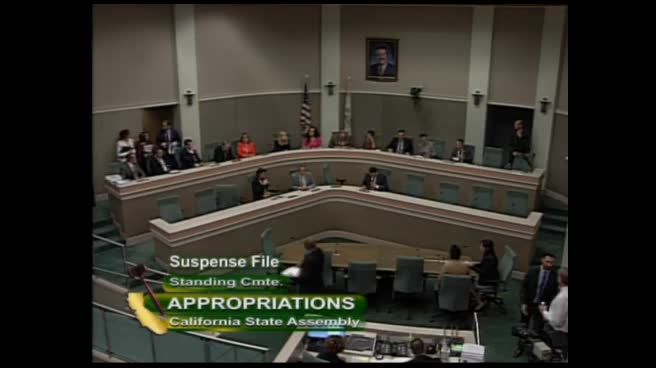 1H
Assembly Standing Committee on Appropriations
 3MIN
Assembly Standing Committee on Business and Professions


Bill Co-Author(s):