AB 1131: District agricultural associations: joint powers agreements: audits.
- Session Year: 2017-2018
- House: Assembly
- Latest Version Date: 2017-10-07
This bill would incorporate additional changes to Section 4051 of the Food and Agricultural Code proposed by AB 1351 to be operative only if this bill and AB 1351 are enacted and this bill is enacted last.
This bill would incorporate additional changes to Section 4051 of the Food and Agricultural Code proposed by AB 1351 to be operative only if this bill and AB 1351 are enacted and this bill is enacted last.
This bill would incorporate additional changes to Section 4051 of the Food and Agricultural Code proposed by AB 1351 to be operative only if this bill and AB 1351 are enacted and this bill is enacted last.
Existing law divides the state into agricultural districts and provides for the management of these agricultural districts by district agricultural associations. Existing law requires a district agricultural association with an annual budget of less than $5,000,000 to have its books and accounts examined and reviewed annually and audited every 3 years.
This bill would require, solely for the 50th District Agricultural Association, which has entered into a joint powers agreement to manage the responsibilities of the association, that the joint powers agency is the entity responsible for ensuring that the annual examinations and reviews and the audits are conducted. conducted, as specified.
This bill would incorporate additional changes to Section 4051 of the Food and Agricultural Code proposed by AB 1351 to be operative only if this bill and AB 1351 are enacted and this bill is enacted last.Existing law divides the state into agricultural districts and provides for the management of these agricultural districts by district agricultural associations. Existing law requires a district agricultural association with an annual budget of less than $5,000,000 to have its books and accounts examined and reviewed annually and audited every 3 years.
This bill would provide that, if the district agricultural association require, solely for the 50th District Agricultural Association, which has entered into a joint powers agreement to manage the responsibilities of the association, that the joint powers agency is the entity responsible for ensuring that the annual examinations and reviews and the audits are conducted.
This bill would incorporate additional changes to Section 4051 of the Food and Agricultural Code proposed by AB 1351 to be operative only if this bill and AB 1351 are enacted and this bill is enacted last.
Existing law divides the state into agricultural districts and provides for the management of these agricultural districts by district agricultural associations. Existing law requires a district agricultural association with an annual budget of less than $5,000,000 to have its books and accounts examined and reviewed annually and audited every 3 years.
This bill would provide that, if the district agricultural association has entered into a joint powers agreement, agreement to manage the responsibilities of the association, the joint powers agency is the entity responsible for ensuring that the annual examinations and reviews and the audits are conducted.
Existing law divides the state into agricultural districts and provides for the management of these agricultural districts by district agricultural associations. Existing law requires a district agricultural association with an annual budget of less than $5,000,000 to have its books and accounts examined and reviewed annually and audited every 3 years.
This bill would provide that, if the district agricultural association has entered into a joint powers agreement, the joint powers agency is the entity responsible for ensuring the annual examinations and reviews and the audits are conducted.
Existing law sets forth various fiscal powers and duties of the Secretary of Food and Agriculture, and authorizes the secretary to remove from the Department of Agricultures records an amount due pursuant to the provisions of the Food and Agricultural Code if the amount is $5 or less and the secretary either finds that the amount is too small to justify the cost of its collection, or believes that collection is improbable.This bill would increase the maximum amount from $5 to $10, and would also make nonsubstantive changes to those provisions.Existing law sets forth various fiscal powers and duties of the Secretary of Food and Agriculture, and authorizes the secretary to remove from the Department of Agricultures records an amount due pursuant to the provisions of the Food and Agricultural Code if the amount is $5 or less and the secretary either finds that the amount is too small to justify the cost of its collection, or believes that collection is improbable.
This bill would increase the maximum amount from $5 to $10, and would also make nonsubstantive changes to those provisions.
(a)An association may do any of the following:
(1)Contract, in accordance with all of the following:
(A)The written policies and procedures for contracting that are developed and maintained by the board of directors of the association in accordance with this section.
(B)All applicable state laws governing contracts, except as follows:
(i)Any grant or contract entered into by an association for goods is not subject to Chapter 2 (commencing with Section 10290) of Part 2 of Division 2 of the Public Contract Code.
(ii)Any grant or contract entered into by an association is not subject to Chapter 3 (commencing with Section 12100) of Part 2 of Division 2 of the Public Contract Code.
(C)If the estimated total cost of any construction project or similar work carried out under this section exceeds twenty-five thousand dollars ($25,000), the association shall solicit bids in writing and shall award the work to the lowest responsible bidder or reject all bids. The association is subject to all applicable provisions of the Public Contract Code.
(D)An association may elect to become subject to the provisions of the Uniform Public Construction Cost Accounting Act (Chapter 2 (commencing with Section 22000) of Part 3 of Division 2 of the Public Contract Code) and the Small Business Procurement and Contract Act (Chapter 6.5 (commencing with Section 14835) of Part 5.5 of Division 3 of Title 2 of the Government Code), but exempt from the reporting requirements noted in subdivision (f) of Section 14838.1 of the Government Code.
(2)Accept funds or gifts of value from the United States or any person to aid in carrying out the purposes of this part.
(3)Conduct or contract for programs, and contract for the purchase or lease of goods that are necessary to effectuate the purposes of this chapter, either independently or in cooperation with any individual, public or private organization, or federal, state, or local governmental agency.
(4)Establish and maintain a bank checking account or other financial institution account, approved by the Director of Finance in accordance with Sections 16506 and 16605 of the Government Code, for depositing funds received by the association. All funds maintained in an account authorized by this paragraph shall be used in accordance with Section 4001.
(5)Approve the annual budget of the association and establish a program for paying vendors who contract with the association.
(6)Contract with any county or county fair association for holding a fair jointly with the county or county fair association. The joint fair is a district fair of the association.
(7)Make or adopt all necessary orders, rules, or regulations for governing the activities of the association. Notwithstanding paragraph (14), any orders, rules, or regulations adopted by the board are exempt from Chapter 3.5 (commencing with Section 11340) of Part 1 of Division 3 of Title 2 of the Government Code. For informational purposes only, however, any order, rule, or regulation adopted by the board may be transmitted to the Office of Administrative Law for filing with the Secretary of State pursuant to Section 11343 of the Government Code.
(8)Operate a payroll system for paying employees, and a system for accounting for vacation and sick leave credits of employees.
(9)Delegate to the officers and employees of the association the exercise of powers vested in the board, as the board may deem desirable, for the orderly management and operation of the association.
(10)With the approval of the Department of General Services, purchase, acquire, hold, sell, or exchange, or convey any interest in real property. Any acquisition of land or other real property shall be subject to the Property Acquisition Law (Part 11 (commencing with Section 15850) of Division 3 of Title 2 of the Government Code).
(11)With the approval of the Department of General Services, make permanent improvements upon publicly owned real property adjacent to, or near the vicinity of, the real property of the association when the improvements materially benefit the property of the association pursuant to Section 11011 of the Government Code.
(12)With the approval of the Department of General Services, lease for the use of its real property, or any portion of that property, to any person or public body for whatever purpose as may be approved by the board. This purpose may include, but not be limited to, the construction and maintenance of housing affordable to persons and families of low or moderate income, as defined by Section 50093 of the Health and Safety Code, pursuant to a lease of not more than 55 years.
(13)Use, manage, or operate any of its property jointly or in connection with any lessee or sublessee, for any purpose approved by the board.
(14)With the approval of the Department of General Services, pledge any revenues, moneys, accounts, accounts receivable, contract rights, and other rights to payment of whatever kind, pursuant to terms and conditions approved by the board. The revenues, moneys, accounts, accounts receivable, contract rights, and other rights to payment of whatever kind pledged by the association or its assignees constitute a lien or security interest that immediately attaches to the property pledged, and is effective, binding, and enforceable against the association, its successors, purchasers of the property pledged, creditors, and all others asserting rights therein, to the extent set forth, and in accordance with, the terms and conditions of the pledge, irrespective of whether those persons have notice of the pledge and without the need for physical delivery, recordation, filing, or further action.
(15)With the approval of the secretary, enter into a joint powers agreement pursuant to the Joint Exercise of Powers Act (Chapter 5 (commencing with Section 6500) of Division 7 of Title 1 of the Government Code).
(b)In developing the written policies and procedures for contracting, the board shall incorporate the following to apply to contracts or procurement by the association:
(1)To ensure the fullest competition, the board shall adopt and publish competitive bidding procedures for the award of a procurement or contract involving an expenditure of more than one hundred thousand dollars ($100,000). The competitive bidding procedures shall include, but not be limited to, requirements for submission of bids and accompanying documentation, guidelines for the use of requests for proposals, invitations to bid, or other methods of bidding, and a bid protest procedure. The general manager shall determine whether the goods or services subject to this paragraph are available through existing contracts or price schedules of the Department of General Services. The Legislature finds and declares that fairs are a valuable community resource and recognizes that local businesses and local communities make valuable contributions to fairs that include direct and indirect support of fair programs. The Legislature further finds and declares that local businesses often provide opportunity purchases to local fairs that, for similar things available through the state purchasing program, may be purchased locally at a price equivalent to or less than that available through the state purchasing program. As used in this subdivision, opportunity purchases means purchases made locally, either individually or cooperatively, at a price equal to or less than the price available through the state purchasing program on or off state contract.
(2)The contracting standards, procedures, and rules contained in this subdivision shall also apply with respect to any subcontract involving an expenditure of more than one hundred thousand dollars ($100,000). The board shall establish, as part of the bidding procedures for general contracts, subcontracting guidelines that implement this requirement.
(3)With the approval of the Department of General Services, pledge any and all revenues, moneys, accounts, accounts receivable, contract rights, and other rights to payment of whatever kind, pursuant to terms and conditions approved by the board. Any issuance of bonds, contracts entered into, debts incurred, settlements, judgments, or liens under this section or pursuant to Chapter 5 (commencing with Section 6500) of Division 7 of Title 1 of the Government Code, shall not directly, indirectly, or contingently obligate the state or any political subdivision of the state to levy or to pledge any form of taxation therefor or to make any appropriation for their payment. The bond shall contain on its face a statement to the following effect: Neither the full faith and credit nor the taxing power of the State of California is pledged to the payment of the principal of, or interest on, this bond.
(4)This section shall not apply to Article 1 (commencing with Section 4101) of Chapter 6 of Part 3.
(c)Notwithstanding any other law, an association shall adopt a fiscal review policy as follows:
(1)An association with an annual budget exceeding five million dollars ($5,000,000) shall conduct an annual audit by an independent certified public accountant or certified public accountancy firm selected by the board.
(2)(A)An association with an annual budget of less than five million dollars ($5,000,000) shall have its books and accounts examined and reviewed annually and audited once every three years by an independent certified public accountant or certified public accountancy firm selected by the board.
(B)Solely for the 50th District Agricultural Association, which has entered into a joint powers agreement pursuant to the Joint Exercise of Powers Act (Chapter 5 (commencing with Section 6500) of Division 7 of Title 1 of the Government Code), to manage the responsibilities of the association, the joint powers agency shall be the entity responsible for ensuring that the annual examinations and reviews and the audits required by this paragraph are conducted. If the joint powers agency performs separate audits of the association and the joint powers agency, the joint powers agency shall submit both audits to the department in the manner prescribed in this chapter.
(d)Notwithstanding subdivision (c), the department may require an audit to be conducted before the times specified in paragraphs (1) and (2) of subdivision (c) if the department or the state deems the audit is necessary.
SEC. 2.Section 1.5 of this bill incorporates amendments to Section 4051 of the Food and Agricultural Code proposed by both this bill and Assembly Bill 1351. That section shall only become operative if (1) both bills are enacted and become effective on or before January 1, 2018, (2) each bill amends Section 4051 of the Food and Agricultural Code, and (3) this bill is enacted after Assembly Bill 1351, in which case Section 1 of this bill shall not become operative.
(a)An association may do any of the following:
(1)Contract, in accordance with all of the following:
(A)The written policies and procedures for contracting that are developed and maintained by the board of directors of the association in accordance with this section.
(B)All applicable state laws governing contracts, except as follows:
(i)Any grant or contract entered into by an association for goods is not subject to Chapter 2 (commencing with Section 10290) of Part 2 of Division 2 of the Public Contract Code.
(ii)Any grant or contract entered into by an association is not subject to Chapter 3 (commencing with Section 12100) of Part 2 of Division 2 of the Public Contract Code.
(C)If the estimated total cost of any construction project or similar work carried out under this section exceeds twenty-five thousand dollars ($25,000), the association shall solicit bids in writing and shall award the work to the lowest responsible bidder or reject all bids. The association is subject to all applicable provisions of the Public Contract Code.
(D)An association may elect to become subject to the provisions of the Uniform Public Construction Cost Accounting Act (Chapter 2 (commencing with Section 22000) of Part 3 of Division 2 of the Public Contract Code) and the Small Business Procurement and Contract Act (Chapter 6.5 (commencing with Section 14835) of Part 5.5 of Division 3 of Title 2 of the Government Code), but exempt from the reporting requirements noted in subdivision (f) of Section 14838.1 of the Government Code.
(2)Accept funds or gifts of value from the United States or any person to aid in carrying out the purposes of this part.
(3)Conduct or contract for programs, and contract for the purchase or lease of goods that are necessary to effectuate the purposes of this chapter, either independently or in cooperation with any individual, public or private organization, or federal, state, or local governmental agency.
(4)Establish and maintain a bank checking account or other financial institution account, approved by the Director of Finance in accordance with Sections 16506 and 16605 of the Government Code, for depositing funds received by the district agricultural association. All funds maintained in an account authorized by this paragraph shall be used in accordance with Section 4001.
(5)Approve the annual budget of the association and establish a program for paying vendors who contract with the district agricultural association.
(6)Contract with any county or county fair association for holding a fair jointly with the county or county fair association. The joint fair is a district fair of the association.
(7)Make or adopt all necessary orders, rules, or regulations for governing the activities of the association. Notwithstanding paragraph (14), any orders, rules, or regulations adopted by the board are exempt from Chapter 3.5 (commencing with Section 11340) of Part 1 of Division 3 of Title 2 of the Government Code. For informational purposes only, however, any order, rule, or regulation adopted by the board may be transmitted to the Office of Administrative Law for filing with the Secretary of State pursuant to Section 11343 of the Government Code.
(8)Operate a payroll system for paying employees, and a system for accounting for vacation and sick leave credits of employees.
(9)Delegate to the officers and employees of the association the exercise of powers vested in the board, as the board may deem desirable, for the orderly management and operation of the association.
(10)With the approval of the Department of General Services, purchase, acquire, hold, sell, or exchange, or convey any interest in real property. Any acquisition of land or other real property shall be subject to the Property Acquisition Law (Part 11 (commencing with Section 15850) of Division 3 of Title 2 of the Government Code).
(11)With the approval of the Department of General Services, make permanent improvements upon publicly owned real property adjacent to, or near the vicinity of, the real property of the district agricultural association when the improvements materially benefit the property of the association pursuant to Section 11011 of the Government Code.
(12)With the approval of the Department of General Services, lease for the use of its real property, or any portion of that property, to any person or public body for whatever purpose as may be approved by the board. This purpose may include, but not be limited to, the construction and maintenance of housing affordable to persons and families of low or moderate income, as defined by Section 50093 of the Health and Safety Code, pursuant to a lease of not more than 55 years.
(13)Use Use, manage, or manage operate any of its property jointly or in connection with any lessee or sublessee, for any purpose approved by the board.
(14)With the approval of the Department of General Services, pledge any revenues, moneys, accounts, accounts receivable, contract rights, and other rights to payment of whatever kind, pursuant to terms and conditions approved by the board. The revenues, moneys, accounts, accounts receivable, contract rights, and other rights to payment of whatever kind pledged by the association or its assignees constitute a lien or security interest that immediately attaches to the property pledged, and is effective, binding, and enforceable against the association, its successors, purchasers of the property pledged, creditors, and all others asserting rights therein, to the extent set forth, and in accordance with, the terms and conditions of the pledge, irrespective of whether those persons have notice of the pledge and without the need for physical delivery, recordation, filing, or further action.
(15)With the approval of the Secretary of Food and Agriculture, secretary, enter into a joint powers agreement pursuant to the Joint Exercise of Powers Act (Chapter 5 (commencing with Section 6500) of Division 7 of Title 1 of the Government Code).
(b)In developing the written policies and procedures for contracting, the board shall incorporate the following to apply to contracts or procurement by the association:
(1)To ensure the fullest competition, the board shall adopt and publish competitive bidding procedures for the award of a procurement or contract involving an expenditure of more than one hundred thousand dollars ($100,000). The competitive bidding procedures shall include, but not be limited to, requirements for submission of bids and accompanying documentation, guidelines for the use of requests for proposals, invitations to bid, or other methods of bidding, and a bid protest procedure. The general manager shall determine whether the goods or services subject to this paragraph are available through existing contracts or price schedules of the Department of General Services. The Legislature finds and declares that fairs are a valuable community resource and recognizes that local businesses and local communities make valuable contributions to fairs that include direct and indirect support of fair programs. The Legislature further finds and declares that local businesses often provide opportunity purchases to local fairs that, for similar things available through the state purchasing program, may be purchased locally at a price equivalent to or less than that available through the state purchasing program. As used in this subdivision, opportunity purchases means purchases made locally, either individually or cooperatively, at a price equal to or less than the price available through the state purchasing program on or off state contract.
(2)The contracting standards, procedures, and rules contained in this subdivision shall also apply with respect to any subcontract involving an expenditure of more than one hundred thousand dollars ($100,000). The board shall establish, as part of the bidding procedures for general contracts, subcontracting guidelines that implement this requirement.
(3)With the approval of the Department of General Services, pledge any and all revenues, moneys, accounts, accounts receivable, contract rights, and other rights to payment of whatever kind, pursuant to terms and conditions approved by the board. Any issuance of bonds, contracts entered into, debts incurred, settlements, judgments, or liens under this section or pursuant to Chapter 5 (commencing with Section 6500) of Division 7 of Title 1 of the Government Code, shall not directly, indirectly, or contingently obligate the state or any political subdivision of the state to levy or to pledge any form of taxation therefor or to make any appropriation for their payment. The bond shall contain on its face a statement to the following effect: Neither the full faith and credit nor the taxing power of the State of California is pledged to the payment of the principal of, or interest on, this bond.
(4)This section shall not apply to Article 1 (commencing with Section 4101) of Chapter 6 of Part 3.
(c)(1)Notwithstanding any other law, an association shall adopt a fiscal review policy as follows:
(A)(1)An association with an annual budget exceeding five million dollars ($5,000,000) shall conduct an annual audit by an independent certified public accountant or certified public accountancy firm selected by the board.
(B)(2)(A)An association with an annual budget of less than five million dollars ($5,000,000) shall have its books and accounts examined and reviewed annually and audited once every three years by an independent certified public accountant or certified public accountancy firm selected by the board.
(B)Solely for the 50th District Agricultural Association, which has entered into a joint powers agreement pursuant to the Joint Exercise of Powers Act (Chapter 5 (commencing with Section 6500) of Division 7 of Title 1 of the Government Code), to manage the responsibilities of the association, the joint powers agency shall be the entity responsible for ensuring that the annual examinations and reviews and the audits required by this paragraph are conducted. If the joint powers agency performs separate audits of the association and the joint powers agency, the joint powers agency shall submit both audits to the department in the manner prescribed in this chapter.
(2)(d)Notwithstanding paragraph (1), subdivision (c), the department may require an audit to be conducted before the times specified in subparagraphs (A) paragraphs (1) and (B) (2) of paragraph (1) subdivision (c) if the department or the state deems the audit is necessary.
SEC. 2.Section 1.5 of this bill incorporates amendments to Section 4051 of the Food and Agricultural Code proposed by both this bill and Assembly Bill 1351. That section shall only become operative if (1) both bills are enacted and become effective on or before January 1, 2018, (2) each bill amends Section 4051 of the Food and Agricultural Code, and (3) this bill is enacted after Assembly Bill 1351, in which case Section 1 of this bill shall not become operative.
(a)An association may do any of the following:
(1)Contract, in accordance with all of the following:
(A)The written policies and procedures for contracting that are developed and maintained by the board of directors of the association in accordance with this section.
(B)All applicable state laws governing contracts, except as follows:
(i)Any grant or contract entered into by an association for goods is not subject to Chapter 2 (commencing with Section 10290) of Part 2 of Division 2 of the Public Contract Code.
(ii)Any grant or contract entered into by an association is not subject to Chapter 3 (commencing with Section 12100) of Part 2 of Division 2 of the Public Contract Code.
(C)If the estimated total cost of any construction project or similar work carried out under this section exceeds twenty-five thousand dollars ($25,000), the association shall solicit bids in writing and shall award the work to the lowest responsible bidder or reject all bids. The association is subject to all applicable provisions of the Public Contract Code.
(D)An association may elect to become subject to the provisions of the Uniform Public Construction Cost Accounting Act (Chapter 2 (commencing with Section 22000) of Part 3 of Division 2 of the Public Contract Code) and the Small Business Procurement and Contract Act (Chapter 6.5 (commencing with Section 14835) of Part 5.5 of Division 3 of Title 2 of the Government Code), but exempt from the reporting requirements noted in subdivision (f) of Section 14838.1 of the Government Code.
(2)Accept funds or gifts of value from the United States or any person to aid in carrying out the purposes of this part.
(3)Conduct or contract for programs, and contract for the purchase or lease of goods that are necessary to effectuate the purposes of this chapter, either independently or in cooperation with any individual, public or private organization, or federal, state, or local governmental agency.
(4)Establish and maintain a bank checking account or other financial institution account, approved by the Director of Finance in accordance with Sections 16506 and 16605 of the Government Code, for depositing funds received by the association. All funds maintained in an account authorized by this paragraph shall be used in accordance with Section 4001.
(5)Approve the annual budget of the association and establish a program for paying vendors who contract with the association.
(6)Contract with any county or county fair association for holding a fair jointly with the county or county fair association. The joint fair is a district fair of the association.
(7)Make or adopt all necessary orders, rules, or regulations for governing the activities of the association. Notwithstanding paragraph (14), any orders, rules, or regulations adopted by the board are exempt from Chapter 3.5 (commencing with Section 11340) of Part 1 of Division 3 of Title 2 of the Government Code. For informational purposes only, however, any order, rule, or regulation adopted by the board may be transmitted to the Office of Administrative Law for filing with the Secretary of State pursuant to Section 11343 of the Government Code.
(8)Operate a payroll system for paying employees, and a system for accounting for vacation and sick leave credits of employees.
(9)Delegate to the officers and employees of the association the exercise of powers vested in the board, as the board may deem desirable, for the orderly management and operation of the association.
(10)With the approval of the Department of General Services, purchase, acquire, hold, sell, or exchange, or convey any interest in real property. Any acquisition of land or other real property shall be subject to the Property Acquisition Law (Part 11 (commencing with Section 15850) of Division 3 of Title 2 of the Government Code).
(11)With the approval of the Department of General Services, make permanent improvements upon publicly owned real property adjacent to, or near the vicinity of, the real property of the association when the improvements materially benefit the property of the association pursuant to Section 11011 of the Government Code.
(12)With the approval of the Department of General Services, lease for the use of its real property, or any portion of that property, to any person or public body for whatever purpose as may be approved by the board.
(13)Use or manage any of its property jointly or in connection with any lessee or sublessee, for any purpose approved by the board.
(14)With the approval of the Department of General Services, pledge any revenues, moneys, accounts, accounts receivable, contract rights, and other rights to payment of whatever kind, pursuant to terms and conditions approved by the board. The revenues, moneys, accounts, accounts receivable, contract rights, and other rights to payment of whatever kind pledged by the association or its assignees constitute a lien or security interest that immediately attaches to the property pledged, and is effective, binding, and enforceable against the association, its successors, purchasers of the property pledged, creditors, and all others asserting rights therein, to the extent set forth, and in accordance with, the terms and conditions of the pledge, irrespective of whether those persons have notice of the pledge and without the need for physical delivery, recordation, filing, or further action.
(15)With the approval of the Secretary of Food and Agriculture, enter into a joint powers agreement pursuant to the Joint Exercise of Powers Act (Chapter 5 (commencing with Section 6500) of Division 7 of Title 1 of the Government Code).
(b)In developing the written policies and procedures for contracting, the board shall incorporate the following to apply to contracts or procurement by the association:
(1)To ensure the fullest competition, the board shall adopt and publish competitive bidding procedures for the award of a procurement or contract involving an expenditure of more than one hundred thousand dollars ($100,000). The competitive bidding procedures shall include, but not be limited to, requirements for submission of bids and accompanying documentation, guidelines for the use of requests for proposals, invitations to bid, or other methods of bidding, and a bid protest procedure. The general manager shall determine whether the goods or services subject to this paragraph are available through existing contracts or price schedules of the Department of General Services. The Legislature finds and declares that fairs are a valuable community resource and recognizes that local businesses and local communities make valuable contributions to fairs that include direct and indirect support of fair programs. The Legislature further finds and declares that local businesses often provide opportunity purchases to local fairs that, for similar things available through the state purchasing program, may be purchased locally at a price equivalent to or less than that available through the state purchasing program. As used in this subdivision, opportunity purchases means purchases made locally, either individually or cooperatively, at a price equal to or less than the price available through the state purchasing program on or off state contract.
(2)The contracting standards, procedures, and rules contained in this subdivision shall also apply with respect to any subcontract involving an expenditure of more than one hundred thousand dollars ($100,000). The board shall establish, as part of the bidding procedures for general contracts, subcontracting guidelines that implement this requirement.
(3)With the approval of the Department of General Services, pledge any and all revenues, moneys, accounts, accounts receivable, contract rights, and other rights to payment of whatever kind, pursuant to terms and conditions approved by the board. Any issuance of bonds, contracts entered into, debts incurred, settlements, judgments, or liens under this section or pursuant to Chapter 5 (commencing with Section 6500) of Division 7 of Title 1 of the Government Code, shall not directly, indirectly, or contingently obligate the state or any political subdivision of the state to levy or to pledge any form of taxation therefor or to make any appropriation for their payment. The bond shall contain on its face a statement to the following effect: Neither the full faith and credit nor the taxing power of the State of California is pledged to the payment of the principal of, or interest on, this bond.
(4)This section shall not apply to Article 1 (commencing with Section 4101) of Chapter 6 of Part 3.
(c)Notwithstanding any other law, an association shall adopt a fiscal review policy as follows:
(1)An association with an annual budget exceeding five million dollars ($5,000,000) shall conduct an annual audit by an independent certified public accountant or certified public accountancy firm selected by the board.
(2)(A)An association with an annual budget of less than five million dollars ($5,000,000) shall have its books and accounts examined and reviewed annually and audited once every three years by an independent certified public accountant or certified public accountancy firm selected by the board.
(B)Solely for the 50th District Agricultural Association, which has entered into a joint powers agreement pursuant to the Joint Exercise of Powers Act (Chapter 5 (commencing with Section 6500) of Division 7 of Title 1 of the Government Code), to manage the responsibilities of the association, the joint powers agency shall be the entity responsible for ensuring that the annual examinations and reviews and the audits required by this paragraph are conducted. If the joint powers agency performs separate audits of the association and the joint powers agency, the joint powers agency shall submit both audits to the department in the manner prescribed in this chapter.
(d)Notwithstanding subdivision (c), the department may require an audit to be conducted before the times specified in paragraphs (1) and (2) of subdivision (c) if the department or the state deems the audit is necessary.
SEC. 1.5.Section 4051 of the Food and Agricultural Code is amended to read:4051.(a)An association may do any of the following:(1)Contract, in accordance with all of the following:(A)The written policies and procedures for contracting that are developed and maintained by the board of directors of the association in accordance with this section.(B)All applicable state laws governing contracts, except as follows:(i)Any grant or contract entered into by an association for goods is not subject to Chapter 2 (commencing with Section 10290) of Part 2 of Division 2 of the Public Contract Code.(ii)Any grant or contract entered into by an association is not subject to Chapter 3 (commencing with Section 12100) of Part 2 of Division 2 of the Public Contract Code.(C)If the estimated total cost of any construction project or similar work carried out under this section exceeds twenty-five thousand dollars ($25,000), the association shall solicit bids in writing and shall award the work to the lowest responsible bidder or reject all bids. The association is subject to all applicable provisions of the Public Contract Code.(D)An association may elect to become subject to the provisions of the Uniform Public Construction Cost Accounting Act (Chapter 2 (commencing with Section 22000) of Part 3 of Division 2 of the Public Contract Code) and the Small Business Procurement and Contract Act (Chapter 6.5 (commencing with Section 14835) of Part 5.5 of Division 3 of Title 2 of the Government Code), but exempt from the reporting requirements noted in subdivision (f) of Section 14838.1 of the Government Code.(2)Accept funds or gifts of value from the United States or any person to aid in carrying out the purposes of this part.(3)Conduct or contract for programs, and contract for the purchase or lease of goods that are necessary to effectuate the purposes of this chapter, either independently or in cooperation with any individual, public or private organization, or federal, state, or local governmental agency.(4)Establish and maintain a bank checking account or other financial institution account, approved by the Director of Finance in accordance with Sections 16506 and 16605 of the Government Code, for depositing funds received by the association. All funds maintained in an account authorized by this paragraph shall be used in accordance with Section 4001.(5)Approve the annual budget of the association and establish a program for paying vendors who contract with the association.(6)Contract with any county or county fair association for holding a fair jointly with the county or county fair association. The joint fair is a district fair of the association.(7)Make or adopt all necessary orders, rules, or regulations for governing the activities of the association. Notwithstanding paragraph (14), any orders, rules, or regulations adopted by the board are exempt from Chapter 3.5 (commencing with Section 11340) of Part 1 of Division 3 of Title 2 of the Government Code. For informational purposes only, however, any order, rule, or regulation adopted by the board may be transmitted to the Office of Administrative Law for filing with the Secretary of State pursuant to Section 11343 of the Government Code.(8)Operate a payroll system for paying employees, and a system for accounting for vacation and sick leave credits of employees.(9)Delegate to the officers and employees of the association the exercise of powers vested in the board, as the board may deem desirable, for the orderly management and operation of the association.(10)With the approval of the Department of General Services, purchase, acquire, hold, sell, or exchange, or convey any interest in real property. Any acquisition of land or other real property shall be subject to the Property Acquisition Law (Part 11 (commencing with Section 15850) of Division 3 of Title 2 of the Government Code).(11)With the approval of the Department of General Services, make permanent improvements upon publicly owned real property adjacent to, or near the vicinity of, the real property of the association when the improvements materially benefit the property of the association pursuant to Section 11011 of the Government Code.(12)With the approval of the Department of General Services, lease for the use of its real property, or any portion of that property, to any person or public body for whatever purpose as may be approved by the board. This purpose may include, but not be limited to, the construction and maintenance of housing affordable to persons and families of low or moderate income, as defined by Section 50093 of the Health and Safety Code, pursuant to a lease of not more than 55 years.(13)Use, manage, or operate any of its property jointly or in connection with any lessee or sublessee, for any purpose approved by the board.(14)With the approval of the Department of General Services, pledge any revenues, moneys, accounts, accounts receivable, contract rights, and other rights to payment of whatever kind, pursuant to terms and conditions approved by the board. The revenues, moneys, accounts, accounts receivable, contract rights, and other rights to payment of whatever kind pledged by the association or its assignees constitute a lien or security interest that immediately attaches to the property pledged, and is effective, binding, and enforceable against the association, its successors, purchasers of the property pledged, creditors, and all others asserting rights therein, to the extent set forth, and in accordance with, the terms and conditions of the pledge, irrespective of whether those persons have notice of the pledge and without the need for physical delivery, recordation, filing, or further action.(15)With the approval of the secretary, enter into a joint powers agreement pursuant to the Joint Exercise of Powers Act (Chapter 5 (commencing with Section 6500) of Division 7 of Title 1 of the Government Code).(b)In developing the written policies and procedures for contracting, the board shall incorporate the following to apply to contracts or procurement by the association:(1)To ensure the fullest competition, the board shall adopt and publish competitive bidding procedures for the award of a procurement or contract involving an expenditure of more than one hundred thousand dollars ($100,000). The competitive bidding procedures shall include, but not be limited to, requirements for submission of bids and accompanying documentation, guidelines for the use of requests for proposals, invitations to bid, or other methods of bidding, and a bid protest procedure. The general manager shall determine whether the goods or services subject to this paragraph are available through existing contracts or price schedules of the Department of General Services. The Legislature finds and declares that fairs are a valuable community resource and recognizes that local businesses and local communities make valuable contributions to fairs that include direct and indirect support of fair programs. The Legislature further finds and declares that local businesses often provide opportunity purchases to local fairs that, for similar things available through the state purchasing program, may be purchased locally at a price equivalent to or less than that available through the state purchasing program. As used in this subdivision, opportunity purchases means purchases made locally, either individually or cooperatively, at a price equal to or less than the price available through the state purchasing program on or off state contract.(2)The contracting standards, procedures, and rules contained in this subdivision shall also apply with respect to any subcontract involving an expenditure of more than one hundred thousand dollars ($100,000). The board shall establish, as part of the bidding procedures for general contracts, subcontracting guidelines that implement this requirement.(3)With the approval of the Department of General Services, pledge any and all revenues, moneys, accounts, accounts receivable, contract rights, and other rights to payment of whatever kind, pursuant to terms and conditions approved by the board. Any issuance of bonds, contracts entered into, debts incurred, settlements, judgments, or liens under this section or pursuant to Chapter 5 (commencing with Section 6500) of Division 7 of Title 1 of the Government Code, shall not directly, indirectly, or contingently obligate the state or any political subdivision of the state to levy or to pledge any form of taxation therefor or to make any appropriation for their payment. The bond shall contain on its face a statement to the following effect: Neither the full faith and credit nor the taxing power of the State of California is pledged to the payment of the principal of, or interest on, this bond.(4)This section shall not apply to Article 1 (commencing with Section 4101) of Chapter 6 of Part 3.(c)Notwithstanding any other law, an association shall adopt a fiscal review policy as follows:(1)An association with an annual budget exceeding five million dollars ($5,000,000) shall conduct an annual audit by an independent certified public accountant or certified public accountancy firm selected by the board.(2)(A)An association with an annual budget of less than five million dollars ($5,000,000) shall have its books and accounts examined and reviewed annually and audited once every three years by an independent certified public accountant or certified public accountancy firm selected by the board.(B)Solely for the 50th District Agricultural Association, which has entered into a joint powers agreement pursuant to the Joint Exercise of Powers Act (Chapter 5 (commencing with Section 6500) of Division 7 of Title 1 of the Government Code), to manage the responsibilities of the association, the joint powers agency shall be the entity responsible for ensuring that the annual examinations and reviews and the audits required by this paragraph are conducted.(d)Notwithstanding subdivision (c), the department may require an audit to be conducted before the times specified in paragraphs (1) and (2) of subdivision (c) if the department or the state deems the audit is necessary.SEC. 2.Section 1.5 of this bill incorporates amendments to Section 4051 of the Food and Agricultural Code proposed by both this bill and Assembly Bill 1351. That section shall only become operative if (1) both bills are enacted and become effective on or before January 1, 2018, (2) each bill amends Section 4051 of the Food and Agricultural Code, and (3) this bill is enacted after Assembly Bill 1351, in which case Section 1 of this bill shall not become operative.(a)An association may do any of the following:
(1)Contract, in accordance with all of the following:
(A)The written policies and procedures for contracting that are developed and maintained by the board of directors of the association in accordance with this section.
(B)All applicable state laws governing contracts, except as follows:
(i)Any grant or contract entered into by an association for goods is not subject to Chapter 2 (commencing with Section 10290) of Part 2 of Division 2 of the Public Contract Code.
(ii)Any grant or contract entered into by an association is not subject to Chapter 3 (commencing with Section 12100) of Part 2 of Division 2 of the Public Contract Code.
(C)If the estimated total cost of any construction project or similar work carried out under this section exceeds twenty-five thousand dollars ($25,000), the association shall solicit bids in writing and shall award the work to the lowest responsible bidder or reject all bids. The association is subject to all applicable provisions of the Public Contract Code.
(D)An association may elect to become subject to the provisions of the Uniform Public Construction Cost Accounting Act (Chapter 2 (commencing with Section 22000) of Part 3 of Division 2 of the Public Contract Code) and the Small Business Procurement and Contract Act (Chapter 6.5 (commencing with Section 14835) of Part 5.5 of Division 3 of Title 2 of the Government Code), but exempt from the reporting requirements noted in subdivision (f) of Section 14838.1 of the Government Code.
(2)Accept funds or gifts of value from the United States or any person to aid in carrying out the purposes of this part.
(3)Conduct or contract for programs, and contract for the purchase or lease of goods that are necessary to effectuate the purposes of this chapter, either independently or in cooperation with any individual, public or private organization, or federal, state, or local governmental agency.
(4)Establish and maintain a bank checking account or other financial institution account, approved by the Director of Finance in accordance with Sections 16506 and 16605 of the Government Code, for depositing funds received by the association. All funds maintained in an account authorized by this paragraph shall be used in accordance with Section 4001.
(5)Approve the annual budget of the association and establish a program for paying vendors who contract with the association.
(6)Contract with any county or county fair association for holding a fair jointly with the county or county fair association. The joint fair is a district fair of the association.
(7)Make or adopt all necessary orders, rules, or regulations for governing the activities of the association. Notwithstanding paragraph (14), any orders, rules, or regulations adopted by the board are exempt from Chapter 3.5 (commencing with Section 11340) of Part 1 of Division 3 of Title 2 of the Government Code. For informational purposes only, however, any order, rule, or regulation adopted by the board may be transmitted to the Office of Administrative Law for filing with the Secretary of State pursuant to Section 11343 of the Government Code.
(8)Operate a payroll system for paying employees, and a system for accounting for vacation and sick leave credits of employees.
(9)Delegate to the officers and employees of the association the exercise of powers vested in the board, as the board may deem desirable, for the orderly management and operation of the association.
(10)With the approval of the Department of General Services, purchase, acquire, hold, sell, or exchange, or convey any interest in real property. Any acquisition of land or other real property shall be subject to the Property Acquisition Law (Part 11 (commencing with Section 15850) of Division 3 of Title 2 of the Government Code).
(11)With the approval of the Department of General Services, make permanent improvements upon publicly owned real property adjacent to, or near the vicinity of, the real property of the association when the improvements materially benefit the property of the association pursuant to Section 11011 of the Government Code.
(12)With the approval of the Department of General Services, lease for the use of its real property, or any portion of that property, to any person or public body for whatever purpose as may be approved by the board.
(13)Use or manage any of its property jointly or in connection with any lessee or sublessee, for any purpose approved by the board.
(14)With the approval of the Department of General Services, pledge any revenues, moneys, accounts, accounts receivable, contract rights, and other rights to payment of whatever kind, pursuant to terms and conditions approved by the board. The revenues, moneys, accounts, accounts receivable, contract rights, and other rights to payment of whatever kind pledged by the association or its assignees constitute a lien or security interest that immediately attaches to the property pledged, and is effective, binding, and enforceable against the association, its successors, purchasers of the property pledged, creditors, and all others asserting rights therein, to the extent set forth, and in accordance with, the terms and conditions of the pledge, irrespective of whether those persons have notice of the pledge and without the need for physical delivery, recordation, filing, or further action.
(15)With the approval of the Secretary of Food and Agriculture, enter into a joint powers agreement pursuant to the Joint Exercise of Powers Act (Chapter 5 (commencing with Section 6500) of Division 7 of Title 1 of the Government Code).
(b)In developing the written policies and procedures for contracting, the board shall incorporate the following to apply to contracts or procurement by the association:
(1)To ensure the fullest competition, the board shall adopt and publish competitive bidding procedures for the award of a procurement or contract involving an expenditure of more than one hundred thousand dollars ($100,000). The competitive bidding procedures shall include, but not be limited to, requirements for submission of bids and accompanying documentation, guidelines for the use of requests for proposals, invitations to bid, or other methods of bidding, and a bid protest procedure. The general manager shall determine whether the goods or services subject to this paragraph are available through existing contracts or price schedules of the Department of General Services. The Legislature finds and declares that fairs are a valuable community resource and recognizes that local businesses and local communities make valuable contributions to fairs that include direct and indirect support of fair programs. The Legislature further finds and declares that local businesses often provide opportunity purchases to local fairs that, for similar things available through the state purchasing program, may be purchased locally at a price equivalent to or less than that available through the state purchasing program. As used in this subdivision, opportunity purchases means purchases made locally, either individually or cooperatively, at a price equal to or less than the price available through the state purchasing program on or off state contract.
(2)The contracting standards, procedures, and rules contained in this subdivision shall also apply with respect to any subcontract involving an expenditure of more than one hundred thousand dollars ($100,000). The board shall establish, as part of the bidding procedures for general contracts, subcontracting guidelines that implement this requirement.
(3)With the approval of the Department of General Services, pledge any and all revenues, moneys, accounts, accounts receivable, contract rights, and other rights to payment of whatever kind, pursuant to terms and conditions approved by the board. Any issuance of bonds, contracts entered into, debts incurred, settlements, judgments, or liens under this section or pursuant to Chapter 5 (commencing with Section 6500) of Division 7 of Title 1 of the Government Code, shall not directly, indirectly, or contingently obligate the state or any political subdivision of the state to levy or to pledge any form of taxation therefor or to make any appropriation for their payment. The bond shall contain on its face a statement to the following effect: Neither the full faith and credit nor the taxing power of the State of California is pledged to the payment of the principal of, or interest on, this bond.
(4)This section shall not apply to Article 1 (commencing with Section 4101) of Chapter 6 of Part 3.
(c)Notwithstanding any other law, an association shall adopt a fiscal review policy as follows:
(1)An association with an annual budget exceeding five million dollars ($5,000,000) shall conduct an annual audit by an independent certified public accountant or certified public accountancy firm selected by the board.
(2)(A)An association with an annual budget of less than five million dollars ($5,000,000) shall have its books and accounts examined and reviewed annually and audited once every three years by an independent certified public accountant or certified public accountancy firm selected by the board.
(B)For an association that Solely for the 50th District Agricultural Association, which has entered into a joint powers agreement pursuant to the Joint Exercise of Powers Act (Chapter 5 (commencing with Section 6500) of Division 7 of Title 1 of the Government Code), to manage the responsibilities of the association, the joint powers agency shall be the entity responsible for ensuring that the annual examinations and reviews and the audits required by this paragraph are conducted.
(d)Notwithstanding subdivision (c), the department may require an audit to be conducted before the times specified in paragraphs (1) and (2) of subdivision (c) if the department or the state deems the audit is necessary.
SEC. 1.5.Section 4051 of the Food and Agricultural Code is amended to read:4051.(a)An association may do any of the following:
(1)Contract, in accordance with all of the following:
(A)The written policies and procedures for contracting that are developed and maintained by the board of directors of the association in accordance with this section.
(B)All applicable state laws governing contracts, except as follows:
(i)Any grant or contract entered into by an association for goods is not subject to Chapter 2 (commencing with Section 10290) of Part 2 of Division 2 of the Public Contract Code.
(ii)Any grant or contract entered into by an association is not subject to Chapter 3 (commencing with Section 12100) of Part 2 of Division 2 of the Public Contract Code.
(C)If the estimated total cost of any construction project or similar work carried out under this section exceeds twenty-five thousand dollars ($25,000), the association shall solicit bids in writing and shall award the work to the lowest responsible bidder or reject all bids. The association is subject to all applicable provisions of the Public Contract Code.
(D)An association may elect to become subject to the provisions of the Uniform Public Construction Cost Accounting Act (Chapter 2 (commencing with Section 22000) of Part 3 of Division 2 of the Public Contract Code) and the Small Business Procurement and Contract Act (Chapter 6.5 (commencing with Section 14835) of Part 5.5 of Division 3 of Title 2 of the Government Code), but exempt from the reporting requirements noted in subdivision (f) of Section 14838.1 of the Government Code.
(2)Accept funds or gifts of value from the United States or any person to aid in carrying out the purposes of this part.
(3)Conduct or contract for programs, and contract for the purchase or lease of goods that are necessary to effectuate the purposes of this chapter, either independently or in cooperation with any individual, public or private organization, or federal, state, or local governmental agency.
(4)Establish and maintain a bank checking account or other financial institution account, approved by the Director of Finance in accordance with Sections 16506 and 16605 of the Government Code, for depositing funds received by the district agricultural association. All funds maintained in an account authorized by this paragraph shall be used in accordance with Section 4001.
(5)Approve the annual budget of the association and establish a program for paying vendors who contract with the district agricultural association.
(6)Contract with any county or county fair association for holding a fair jointly with the county or county fair association. The joint fair is a district fair of the association.
(7)Make or adopt all necessary orders, rules, or regulations for governing the activities of the association. Notwithstanding paragraph (14), any orders, rules, or regulations adopted by the board are exempt from Chapter 3.5 (commencing with Section 11340) of Part 1 of Division 3 of Title 2 of the Government Code. For informational purposes only, however, any order, rule, or regulation adopted by the board may be transmitted to the Office of Administrative Law for filing with the Secretary of State pursuant to Section 11343 of the Government Code.
(8)Operate a payroll system for paying employees, and a system for accounting for vacation and sick leave credits of employees.
(9)Delegate to the officers and employees of the association the exercise of powers vested in the board, as the board may deem desirable, for the orderly management and operation of the association.
(10)With the approval of the Department of General Services, purchase, acquire, hold, sell, or exchange, or convey any interest in real property. Any acquisition of land or other real property shall be subject to the Property Acquisition Law (Part 11 (commencing with Section 15850) of Division 3 of Title 2 of the Government Code).
(11)With the approval of the Department of General Services, make permanent improvements upon publicly owned real property adjacent to, or near the vicinity of, the real property of the district agricultural association when the improvements materially benefit the property of the association pursuant to Section 11011 of the Government Code.
(12)With the approval of the Department of General Services, lease for the use of its real property, or any portion of that property, to any person or public body for whatever purpose as may be approved by the board. This purpose may include, but not be limited to, the construction and maintenance of housing affordable to persons and families of low or moderate income, as defined by Section 50093 of the Health and Safety Code, pursuant to a lease of not more than 55 years.
(13)Use Use, manage, or manage operate any of its property jointly or in connection with any lessee or sublessee, for any purpose approved by the board.
(14)With the approval of the Department of General Services, pledge any revenues, moneys, accounts, accounts receivable, contract rights, and other rights to payment of whatever kind, pursuant to terms and conditions approved by the board. The revenues, moneys, accounts, accounts receivable, contract rights, and other rights to payment of whatever kind pledged by the association or its assignees constitute a lien or security interest that immediately attaches to the property pledged, and is effective, binding, and enforceable against the association, its successors, purchasers of the property pledged, creditors, and all others asserting rights therein, to the extent set forth, and in accordance with, the terms and conditions of the pledge, irrespective of whether those persons have notice of the pledge and without the need for physical delivery, recordation, filing, or further action.
(15)With the approval of the Secretary of Food and Agriculture, secretary, enter into a joint powers agreement pursuant to the Joint Exercise of Powers Act (Chapter 5 (commencing with Section 6500) of Division 7 of Title 1 of the Government Code).
(b)In developing the written policies and procedures for contracting, the board shall incorporate the following to apply to contracts or procurement by the association:
(1)To ensure the fullest competition, the board shall adopt and publish competitive bidding procedures for the award of a procurement or contract involving an expenditure of more than one hundred thousand dollars ($100,000). The competitive bidding procedures shall include, but not be limited to, requirements for submission of bids and accompanying documentation, guidelines for the use of requests for proposals, invitations to bid, or other methods of bidding, and a bid protest procedure. The general manager shall determine whether the goods or services subject to this paragraph are available through existing contracts or price schedules of the Department of General Services. The Legislature finds and declares that fairs are a valuable community resource and recognizes that local businesses and local communities make valuable contributions to fairs that include direct and indirect support of fair programs. The Legislature further finds and declares that local businesses often provide opportunity purchases to local fairs that, for similar things available through the state purchasing program, may be purchased locally at a price equivalent to or less than that available through the state purchasing program. As used in this subdivision, opportunity purchases means purchases made locally, either individually or cooperatively, at a price equal to or less than the price available through the state purchasing program on or off state contract.
(2)The contracting standards, procedures, and rules contained in this subdivision shall also apply with respect to any subcontract involving an expenditure of more than one hundred thousand dollars ($100,000). The board shall establish, as part of the bidding procedures for general contracts, subcontracting guidelines that implement this requirement.
(3)With the approval of the Department of General Services, pledge any and all revenues, moneys, accounts, accounts receivable, contract rights, and other rights to payment of whatever kind, pursuant to terms and conditions approved by the board. Any issuance of bonds, contracts entered into, debts incurred, settlements, judgments, or liens under this section or pursuant to Chapter 5 (commencing with Section 6500) of Division 7 of Title 1 of the Government Code, shall not directly, indirectly, or contingently obligate the state or any political subdivision of the state to levy or to pledge any form of taxation therefor or to make any appropriation for their payment. The bond shall contain on its face a statement to the following effect: Neither the full faith and credit nor the taxing power of the State of California is pledged to the payment of the principal of, or interest on, this bond.
(4)This section shall not apply to Article 1 (commencing with Section 4101) of Chapter 6 of Part 3.
(c)(1)Notwithstanding any other law, an association shall adopt a fiscal review policy as follows:
(A)(1)An association with an annual budget exceeding five million dollars ($5,000,000) shall conduct an annual audit by an independent certified public accountant or certified public accountancy firm selected by the board.
(B)(2)(A)An association with an annual budget of less than five million dollars ($5,000,000) shall have its books and accounts examined and reviewed annually and audited once every three years by an independent certified public accountant or certified public accountancy firm selected by the board.
(B)Solely for the 50th District Agricultural Association, which has entered into a joint powers agreement pursuant to the Joint Exercise of Powers Act (Chapter 5 (commencing with Section 6500) of Division 7 of Title 1 of the Government Code), to manage the responsibilities of the association, the joint powers agency shall be the entity responsible for ensuring that the annual examinations and reviews and the audits required by this paragraph are conducted.
(2)(d)Notwithstanding paragraph (1), subdivision (c), the department may require an audit to be conducted before the times specified in subparagraphs (A) paragraphs (1) and (B) (2) of paragraph (1) subdivision (c) if the department or the state deems the audit is necessary.
SEC. 2.Section 1.5 of this bill incorporates amendments to Section 4051 of the Food and Agricultural Code proposed by both this bill and Assembly Bill 1351. That section shall only become operative if (1) both bills are enacted and become effective on or before January 1, 2018, (2) each bill amends Section 4051 of the Food and Agricultural Code, and (3) this bill is enacted after Assembly Bill 1351, in which case Section 1 of this bill shall not become operative.
(a)An association may do any of the following:
(1)Contract, in accordance with all of the following:
(A)The written policies and procedures for contracting that are developed and maintained by the board of directors of the association in accordance with this section.
(B)All applicable state laws governing contracts, except as follows:
(i)Any grant or contract entered into by an association for goods is not subject to Chapter 2 (commencing with Section 10290) of Part 2 of Division 2 of the Public Contract Code.
(ii)Any grant or contract entered into by an association is not subject to Chapter 3 (commencing with Section 12100) of Part 2 of Division 2 of the Public Contract Code.
(C)If the estimated total cost of any construction project or similar work carried out under this section exceeds twenty-five thousand dollars ($25,000), the association shall solicit bids in writing and shall award the work to the lowest responsible bidder or reject all bids. The association is subject to all applicable provisions of the Public Contract Code.
(D)An association may elect to become subject to the provisions of the Uniform Public Construction Cost Accounting Act (Chapter 2 (commencing with Section 22000) of Part 3 of Division 2 of the Public Contract Code) and the Small Business Procurement and Contract Act (Chapter 6.5 (commencing with Section 14835) of Part 5.5 of Division 3 of Title 2 of the Government Code), but exempt from the reporting requirements noted in subdivision (f) of Section 14838.1 of the Government Code.
(2)Accept funds or gifts of value from the United States or any person to aid in carrying out the purposes of this part.
(3)Conduct or contract for programs, and contract for the purchase or lease of goods that are necessary to effectuate the purposes of this chapter, either independently or in cooperation with any individual, public or private organization, or federal, state, or local governmental agency.
(4)Establish and maintain a bank checking account or other financial institution account, approved by the Director of Finance in accordance with Sections 16506 and 16605 of the Government Code, for depositing funds received by the association. All funds maintained in an account authorized by this paragraph shall be used in accordance with Section 4001.
(5)Approve the annual budget of the association and establish a program for paying vendors who contract with the association.
(6)Contract with any county or county fair association for holding a fair jointly with the county or county fair association. The joint fair is a district fair of the association.
(7)Make or adopt all necessary orders, rules, or regulations for governing the activities of the association. Notwithstanding paragraph (14), any orders, rules, or regulations adopted by the board are exempt from Chapter 3.5 (commencing with Section 11340) of Part 1 of Division 3 of Title 2 of the Government Code. For informational purposes only, however, any order, rule, or regulation adopted by the board may be transmitted to the Office of Administrative Law for filing with the Secretary of State pursuant to Section 11343 of the Government Code.
(8)Operate a payroll system for paying employees, and a system for accounting for vacation and sick leave credits of employees.
(9)Delegate to the officers and employees of the association the exercise of powers vested in the board, as the board may deem desirable, for the orderly management and operation of the association.
(10)With the approval of the Department of General Services, purchase, acquire, hold, sell, or exchange, or convey any interest in real property. Any acquisition of land or other real property shall be subject to the Property Acquisition Law (Part 11 (commencing with Section 15850) of Division 3 of Title 2 of the Government Code).
(11)With the approval of the Department of General Services, make permanent improvements upon publicly owned real property adjacent to, or near the vicinity of, the real property of the association when the improvements materially benefit the property of the association pursuant to Section 11011 of the Government Code.
(12)With the approval of the Department of General Services, lease for the use of its real property, or any portion of that property, to any person or public body for whatever purpose as may be approved by the board.
(13)Use or manage any of its property jointly or in connection with any lessee or sublessee, for any purpose approved by the board.
(14)With the approval of the Department of General Services, pledge any revenues, moneys, accounts, accounts receivable, contract rights, and other rights to payment of whatever kind, pursuant to terms and conditions approved by the board. The revenues, moneys, accounts, accounts receivable, contract rights, and other rights to payment of whatever kind pledged by the association or its assignees constitute a lien or security interest that immediately attaches to the property pledged, and is effective, binding, and enforceable against the association, its successors, purchasers of the property pledged, creditors, and all others asserting rights therein, to the extent set forth, and in accordance with, the terms and conditions of the pledge, irrespective of whether those persons have notice of the pledge and without the need for physical delivery, recordation, filing, or further action.
(15)With the approval of the Secretary of Food and Agriculture, enter into a joint powers agreement pursuant to the Joint Exercise of Powers Act (Chapter 5 (commencing with Section 6500) of Division 7 of Title 1 of the Government Code).
(b)In developing the written policies and procedures for contracting, the board shall incorporate the following to apply to contracts or procurement by the association:
(1)To ensure the fullest competition, the board shall adopt and publish competitive bidding procedures for the award of a procurement or contract involving an expenditure of more than one hundred thousand dollars ($100,000). The competitive bidding procedures shall include, but not be limited to, requirements for submission of bids and accompanying documentation, guidelines for the use of requests for proposals, invitations to bid, or other methods of bidding, and a bid protest procedure. The general manager shall determine whether the goods or services subject to this paragraph are available through existing contracts or price schedules of the Department of General Services. The Legislature finds and declares that fairs are a valuable community resource and recognizes that local businesses and local communities make valuable contributions to fairs that include direct and indirect support of fair programs. The Legislature further finds and declares that local businesses often provide opportunity purchases to local fairs that, for similar things available through the state purchasing program, may be purchased locally at a price equivalent to or less than that available through the state purchasing program. As used in this subdivision, opportunity purchases means purchases made locally, either individually or cooperatively, at a price equal to or less than the price available through the state purchasing program on or off state contract.
(2)The contracting standards, procedures, and rules contained in this subdivision shall also apply with respect to any subcontract involving an expenditure of more than one hundred thousand dollars ($100,000). The board shall establish, as part of the bidding procedures for general contracts, subcontracting guidelines that implement this requirement.
(3)With the approval of the Department of General Services, pledge any and all revenues, moneys, accounts, accounts receivable, contract rights, and other rights to payment of whatever kind, pursuant to terms and conditions approved by the board. Any issuance of bonds, contracts entered into, debts incurred, settlements, judgments, or liens under this section or pursuant to Chapter 5 (commencing with Section 6500) of Division 7 of Title 1 of the Government Code, shall not directly, indirectly, or contingently obligate the state or any political subdivision of the state to levy or to pledge any form of taxation therefor or to make any appropriation for their payment. The bond shall contain on its face a statement to the following effect: Neither the full faith and credit nor the taxing power of the State of California is pledged to the payment of the principal of, or interest on, this bond.
(4)This section shall not apply to Article 1 (commencing with Section 4101) of Chapter 6 of Part 3.
(c)Notwithstanding any other law, an association shall adopt a fiscal review policy as follows:
(1)An association with an annual budget exceeding five million dollars ($5,000,000) shall conduct an annual audit by an independent certified public accountant or certified public accountancy firm selected by the board.
(2)(A)An association with an annual budget of less than five million dollars ($5,000,000) shall have its books and accounts examined and reviewed annually and audited once every three years by an independent certified public accountant or certified public accountancy firm selected by the board.
(B)For an association that has entered into a joint powers agreement pursuant to the Joint Exercise of Powers Act (Chapter 5 (commencing with Section 6500) of Division 7 of Title 1 of the Government Code), to manage the responsibilities of the association, the joint powers agency shall be the entity responsible for ensuring the annual examinations and reviews and the audits required by this paragraph are conducted.
(d)Notwithstanding subdivision (c), the department may require an audit to be conducted before the times specified in paragraphs (1) and (2) of subdivision (c) if the department or the state deems the audit is necessary.
(a)An association may do any of the following:
(1)Contract, in accordance with all of the following:
(A)The written policies and procedures for contracting that are developed and maintained by the board of directors of the association in accordance with this section.
(B)All applicable state laws governing contracts, except as follows:
(i)Any grant or contract entered into by an association for goods is not subject to Chapter 2 (commencing with Section 10290) of Part 2 of Division 2 of the Public Contract Code.
(ii)Any grant or contract entered into by an association is not subject to Chapter 3 (commencing with Section 12100) of Part 2 of Division 2 of the Public Contract Code.
(C)If the estimated total cost of any construction project or similar work carried out under this section exceeds twenty-five thousand dollars ($25,000), the association shall solicit bids in writing and shall award the work to the lowest responsible bidder or reject all bids. The association is subject to all applicable provisions of the Public Contract Code.
(D)An association may elect to become subject to the provisions of the Uniform Public Construction Cost Accounting Act (Chapter 2 (commencing with Section 22000) of Part 3 of Division 2 of the Public Contract Code) and the Small Business Procurement and Contract Act (Chapter 6.5 (commencing with Section 14835) of Part 5.5 of Division 3 of Title 2 of the Government Code), but exempt from the reporting requirements noted in subdivision (f) of Section 14838.1 of the Government Code.
(2)Accept funds or gifts of value from the United States or any person to aid in carrying out the purposes of this part.
(3)Conduct or contract for programs, and contract for the purchase or lease of goods that are necessary to effectuate the purposes of this chapter, either independently or in cooperation with any individual, public or private organization, or federal, state, or local governmental agency.
(4)Establish and maintain a bank checking account or other financial institution account, approved by the Director of Finance in accordance with Sections 16506 and 16605 of the Government Code, for depositing funds received by the district agricultural association. All funds maintained in an account authorized by this paragraph shall be used in accordance with Section 4001.
(5)Approve the annual budget of the association and establish a program for paying vendors who contract with the district agricultural association.
(6)Contract with any county or county fair association for holding a fair jointly with the county or county fair association. The joint fair is a district fair of the association.
(7)Make or adopt all necessary orders, rules, or regulations for governing the activities of the association. Notwithstanding paragraph (14), any orders, rules, or regulations adopted by the board are exempt from Chapter 3.5 (commencing with Section 11340) of Part 1 of Division 3 of Title 2 of the Government Code. For informational purposes only, however, any order, rule, or regulation adopted by the board may be transmitted to the Office of Administrative Law for filing with the Secretary of State pursuant to Section 11343 of the Government Code.
(8)Operate a payroll system for paying employees, and a system for accounting for vacation and sick leave credits of employees.
(9)Delegate to the officers and employees of the association the exercise of powers vested in the board, as the board may deem desirable, for the orderly management and operation of the association.
(10)With the approval of the Department of General Services, purchase, acquire, hold, sell, or exchange, or convey any interest in real property. Any acquisition of land or other real property shall be subject to the Property Acquisition Law (Part 11 (commencing with Section 15850) of Division 3 of Title 2 of the Government Code).
(11)With the approval of the Department of General Services, make permanent improvements upon publicly owned real property adjacent to, or near the vicinity of, the real property of the district agricultural association when the improvements materially benefit the property of the association pursuant to Section 11011 of the Government Code.
(12)With the approval of the Department of General Services, lease for the use of its real property, or any portion of that property, to any person or public body for whatever purpose as may be approved by the board.
(13)Use or manage any of its property jointly or in connection with any lessee or sublessee, for any purpose approved by the board.
(14)With the approval of the Department of General Services, pledge any revenues, moneys, accounts, accounts receivable, contract rights, and other rights to payment of whatever kind, pursuant to terms and conditions approved by the board. The revenues, moneys, accounts, accounts receivable, contract rights, and other rights to payment of whatever kind pledged by the association or its assignees constitute a lien or security interest that immediately attaches to the property pledged, and is effective, binding, and enforceable against the association, its successors, purchasers of the property pledged, creditors, and all others asserting rights therein, to the extent set forth, and in accordance with, the terms and conditions of the pledge, irrespective of whether those persons have notice of the pledge and without the need for physical delivery, recordation, filing, or further action.
(15)With the approval of the Secretary of Food and Agriculture, enter into a joint powers agreement pursuant to the Joint Exercise of Powers Act (Chapter 5 (commencing with Section 6500) of Division 7 of Title 1 of the Government Code).
(b)In developing the written policies and procedures for contracting, the board shall incorporate the following to apply to contracts or procurement by the association:
(1)To ensure the fullest competition, the board shall adopt and publish competitive bidding procedures for the award of a procurement or contract involving an expenditure of more than one hundred thousand dollars ($100,000). The competitive bidding procedures shall include, but not be limited to, requirements for submission of bids and accompanying documentation, guidelines for the use of requests for proposals, invitations to bid, or other methods of bidding, and a bid protest procedure. The general manager shall determine whether the goods or services subject to this paragraph are available through existing contracts or price schedules of the Department of General Services. The Legislature finds and declares that fairs are a valuable community resource and recognizes that local businesses and local communities make valuable contributions to fairs that include direct and indirect support of fair programs. The Legislature further finds and declares that local businesses often provide opportunity purchases to local fairs that, for similar things available through the state purchasing program, may be purchased locally at a price equivalent to or less than that available through the state purchasing program. As used in this subdivision, opportunity purchases means purchases made locally, either individually or cooperatively, at a price equal to or less than the price available through the state purchasing program on or off state contract.
(2)The contracting standards, procedures, and rules contained in this subdivision shall also apply with respect to any subcontract involving an expenditure of more than one hundred thousand dollars ($100,000). The board shall establish, as part of the bidding procedures for general contracts, subcontracting guidelines that implement this requirement.
(3)With the approval of the Department of General Services, pledge any and all revenues, moneys, accounts, accounts receivable, contract rights, and other rights to payment of whatever kind, pursuant to terms and conditions approved by the board. Any issuance of bonds, contracts entered into, debts incurred, settlements, judgments, or liens under this section or pursuant to Chapter 5 (commencing with Section 6500) of Division 7 of Title 1 of the Government Code, shall not directly, indirectly, or contingently obligate the state or any political subdivision of the state to levy or to pledge any form of taxation therefor or to make any appropriation for their payment. The bond shall contain on its face a statement to the following effect: Neither the full faith and credit nor the taxing power of the State of California is pledged to the payment of the principal of, or interest on, this bond.
(4)This section shall not apply to Article 1 (commencing with Section 4101) of Chapter 6 of Part 3.
(c)(1)Notwithstanding any other law, an association shall adopt a fiscal review policy as follows:
(A)(1)An association with an annual budget exceeding five million dollars ($5,000,000) shall conduct an annual audit by an independent certified public accountant or certified public accountancy firm selected by the board.
(B)(2)(A)An association with an annual budget of less than five million dollars ($5,000,000) shall have its books and accounts examined and reviewed annually and audited once every three years by an independent certified public accountant or certified public accountancy firm selected by the board.
(B)For an association that has entered into a joint powers agreement pursuant to the Joint Exercise of Powers Act (Chapter 5 (commencing with Section 6500) of Division 7 of Title 1 of the Government Code), the joint powers agency shall be the entity responsible for ensuring the annual examinations and reviews and the audits required by this paragraph are conducted.
(2)(d)Notwithstanding paragraph (1), subdivision (c), the department may require an audit to be conducted before the times specified in subparagraphs (A) and (B) of paragraph (1) paragraphs (1) and (2) of subdivision (c) if the department or the state deems the audit is necessary.
SECTION 1.Section 284 of the Food and Agricultural Code is amended to read:284.If the secretary finds that an amount not in excess of ten dollars ($10) that is due pursuant to this code is too small to justify the cost of its collection or believes that its collection is improbable, the secretary may remove the amount that is due from the records of the department, and shall not be held accountable for its collection.If the director secretary finds that any an amount not in excess of five ten dollars ($5) which ($10) that is due pursuant to this code is so too small as not to justify the cost of its collection or believes that its collection is improbable, he the secretary may remove the amount which that is due from the records of the department. He department, and shall not, thereafter, not be held accountable for its collection.
|
Date
|
Status
|
|---|---|
| Oct 7, 2017 | Chaptered by Secretary of State - Chapter 556, Statutes of 2017. |
| Oct 7, 2017 | Approved by the Governor. |
| Sep 19, 2017 | Enrolled and presented to the Governor at 3 p.m. |
| Sep 11, 2017 | Senate amendments concurred in. To Engrossing and Enrolling. |
| Sep 7, 2017 | In Assembly. Concurrence in Senate amendments pending. May be considered on or after September 9 pursuant to Assembly Rule 77. |
| Sep 7, 2017 | Read third time. Passed. Ordered to the Assembly. |
| Sep 5, 2017 | Read second time. Ordered to third reading. |
| Sep 1, 2017 | Read third time and amended. Ordered to second reading. |
| Jul 20, 2017 | Read second time. Ordered to third reading. |
| Jul 19, 2017 | Read third time and amended. Ordered to second reading. |
| Jul 5, 2017 | Read second time. Ordered to third reading. |
| Jul 3, 2017 | Read third time and amended. Ordered to second reading. |
| Jun 27, 2017 | Read second time. Ordered to third reading. |
| Jun 26, 2017 | From committee: Be ordered to second reading pursuant to Senate Rule 28.8. |
| Jun 6, 2017 | From committee: Do pass and re-refer to Com. on APPR. (Ayes 4. Noes 0.) (June 6). Re-referred to Com. on APPR. |
| May 22, 2017 | From committee chair, with author's amendments: Amend, and re-refer to committee. Read second time, amended, and re-referred to Com. on AGRI. |
| May 10, 2017 | Referred to Com. on AGRI. |
| Apr 20, 2017 | In Senate. Read first time. To Com. on RLS. for assignment. |
| Apr 20, 2017 | Read third time. Passed. Ordered to the Senate. (Ayes 74. Noes 0. Page 1145.) |
| Apr 6, 2017 | Read second time. Ordered to Consent Calendar. |
| Apr 5, 2017 | From committee: Do pass. To Consent Calendar. (Ayes 17. Noes 0.) (April 5). |
| Mar 23, 2017 | From committee: Do pass and re-refer to Com. on APPR. with recommendation: To Consent Calendar. (Ayes 10. Noes 0.) (March 22). Re-referred to Com. on APPR. |
| Mar 15, 2017 | Re-referred to Com. on AGRI. |
| Mar 14, 2017 | From committee chair, with author's amendments: Amend, and re-refer to Com. on AGRI. Read second time and amended. |
| Mar 6, 2017 | Referred to Com. on AGRI. |
| Feb 19, 2017 | From printer. May be heard in committee March 21. |
| Feb 17, 2017 | Read first time. To print. |
|
Date
|
Description
|
Location
|
Votes
|
|
|---|---|---|---|---|
| Sep 11, 2017 | AB 1131 LACKEY Concurrence in Senate Amendments | Assembly Floor |
Passed |
|
| Sep 7, 2017 | Assembly 3rd Reading AB1131 Lackey et al. By Wilk | Senate Floor |
Passed |
|
| Jun 6, 2017 | Do pass, but first be re-referred to the Committee on [Appropriations] | Senate Standing Committee on Agriculture |
Passed |
|
| Apr 20, 2017 | Third Reading | Assembly Floor |
Passed |
|
| Apr 5, 2017 | Do pass. To Consent Calendar. | Assembly Standing Committee on Appropriations |
Passed |
|
| Mar 22, 2017 | Do pass and be re-referred to the Committee on [Appropriations] with recommendation: To Consent Calendar | Assembly Standing Committee on Agriculture |
Passed |
This list shows positions taken on this bill by organizations on the date displayed, which is linked to the original source.
Positions by individuals are not included.
|
Organization
|
Position
|
Date
|
|---|---|---|
| antelope valley fair authority | ** Support | Sep 6, 2017 |
| Antelope Valley Fairgrounds | ** Support | Mar 21, 2017 |
| Western Fairs Association | ** Support | Sep 6, 2017 |
CONCURRENCE IN SENATE AMENDMENTS
CSA1 Bill Id:AB 1131
Author:(Lackey)
As Amended Ver:September 1, 2017
Majority vote
ASSEMBLY: | 74-0 | (April 20, 2017) | SENATE: | 40-0 | (September 7, 2017) |
Original Committee Reference: AGRI.
SUMMARY: This bill states that if the 50th District Agricultural Association (DAA) is part of a joint powers agreement (JPA), the JPA agency is responsible for conducting annual examinations and reviews of its books, and a triennial audit.
The Senate amendments:
- Clarify that when the 50th DAA enters in to a JPA in which the JPA manages the responsibilities of the DAA, the JPA has responsibility for audits as specified.
- Incorporate additional changes proposed by AB 1351 (Caballero) of the current legislative session that would authorize a DAA, with the approval of the Department of General Services (DGS), to lease, for not more than 55 years, fairground property for the construction and maintenance of affordable housing.
- State that these provisions only become operative if this bill and AB 1351 are enacted and this bill is enacted last.
EXISTING LAW:
- Creates 54 DAAs in the state, under the California Department of Food and Agriculture (CDFA), with the powers and duties to run county fairs.
- Allows for the formation of JPA for the purpose of two or more public agencies, by agreement, to jointly exercise any power common to the contracting parties.
- Allows the 50th DAA to enter into a JPA.
- Requires a DAA with an annual budget of less than $5 million to have its books examined and reviewed annually and be audited every three years.
- Authorizes a DAA, with approval of DGS, to lease all or a portion of the fairgrounds property for the construction and maintenance of affordable housing, as defined. The lease is limited to a maximum 55 years.
- Authorizes a DAA to operate, in addition to manage and use, any of its property jointly or in connection with any lessee or sublessee for any purpose approved by the board.
FISCAL EFFECT: According to the Assembly Appropriations Committee, this bill has minor cost savings to CDFA as a result of eliminating the specified audit requirement.
COMMENTS: In 1938, local farmers and businesses purchased 80 acres of land in Lancaster to create a local fair. In 1941, the Fair Association donated the grounds to the state and this became the 50th DAA, also known as the Antelope Valley (AV) Fair. In 2003, the 50th DAA relocated to new fairgrounds, becoming the first fair to build new facilities in the last 45 years. This feat was accomplished because of the AV Fair's close relationship with the City of Lancaster. SB 1085 (Runner), Chapter 320, Statutes of 2010, transferred the management of all of the 50th DAA assets to a JPA, which is run by the AV Fair Association.
AB 2490 (Eggman), Chapter 342, Statutes of 2014, required that a DAA with an annual budget of less than $5 million shall have its books and accounts examined and reviewed annually and audited once every three years by an independent certified public accountant or certified public accountancy firm selected by the DAA's board.
According to the author, CDFA has required the property, buildings, and associated improvements to be audited separately and through the 50th DAA even though the management of those assets has been transferred to the JPA. Furthermore, the JPA is now required to conduct an additional audit on the assets that have been transferred. Supporters state the AV Fair Association is subjected to two separate annual audits that could be combined into one. Supporters state that allowing for only one audit can annually save between $9,000 and $15,000.
This bill will address this issue by allowing the 50th DAA to have their audit responsibility assumed by the JPA, while still accounting for the state's assets through a comprehensive audit of the AV Fair Association.
This bill would allow a DAA, as specified, for not more than 55 years, to lease fairground property for the construction and maintenance of affordable housing, if AB 1351 becomes law first.
This bill is substantially similar to the version passed by the Assembly.
RELATED LEGISLATION: AB 1351 (Caballero) would allow a DAA, with the approval of DGS, to lease, for not more than 55 years, fairground property for the construction and maintenance of affordable housing.
Analysis Prepared by: Victor Francovich / AGRI. / (916) 319-2084 FN: 0001753
Office of Senate Floor Analyses (916) 651-1520 Fax: (916) 327-4478 | AB |
THIRD READING
Bill No: AB 1131
: 9/1/17
SENATE AGRICULTURE COMMITTEE: 4-0, 6/6/17
AYES: Galgiani, Wilk, Berryhill, Pan
NO VOTE RECORDED: Dodd
SENATE APPROPRIATIONS COMMITTEE: Senate Rule 28.8
ASSEMBLY FLOOR: 74-0, 4/20/17 (Consent) - See last page for vote
DIGEST:
This bill requires, solely for the 50th District Agricultural Association (DAA), which has entered into a joint powers agreement to create a joint powers agency to manage the responsibilities of the association, that the joint powers agency will also be responsible for ensuring the association’s annual audit. The bill also would require that if the joint powers agency performs a separate audit of the association and the joint powers agency, the joint powers agency shall submit both audits to the California Department of Food and Agriculture.
Senate Floor Amendments of 9/1/17 add chaptering out/double jointing language, to be consistent with AB 1351 (Caballero).
Senate Floor Amendments of 7/19/17 require that if the joint powers agency performs a separate audit of the association and the joint powers agency, the joint powers agency shall submit both audits to the California Department of Food and Agriculture (CDFA).
Senate Floor Amendments of 7/3/17 add chaptering out language to avoid conflict with AB 1351 (Caballero). These amendments also clarify that AB 1131 pertains only to the 50th DAA, not all DAAs that enter into a joint powers agreement.
Existing law:
- Requires a DAA with an annual budget exceeding $5 million to conduct an annual audit by an independent certified public accountant or certified public accountancy firm selected by the board.
- Requires a DAA with an annual budget of less than $5 million to have its books and accounts examined and reviewed annually and audited once every three years by an independent certified public accountant.
- Authorizes the California Department of Food and Agriculture (CDFA) to require additional audits if deemed necessary.
- Authorizes DAAs to enter into a joint powers agreement, upon approval of the secretary of CDFA, pursuant to the Joint Exercise of Powers Act (Government Code Section 6500 et seq.).
- Authorizes the 50th DAA (Antelope Valley Fair Association) to enter into a joint powers agreement to create a joint powers authority (JPA) to operate, maintain, and improve the facilities and functions of the 50th DAA.
This bill:
- Requires, solely for the 50th DAA, which has entered into a joint powers agreement to create a joint powers agency to manage the responsibilities of the association, that the joint powers agency will also be responsible for ensuring the association’s annual audit.
- Requires that if the joint powers agency performs a separate audit of the association and the joint powers agency, the joint powers agency shall submit both audits to CDFA.
- Includes double jointing provisions to prevent chaptering out issues with AB 1351.
Background
California fairs have been in existence since 1854, and the network has since grown to encompass 77 fairs statewide. This network of California fairs is composed of 52 district agricultural associations (DAA), 22 county fairs, 2 citrus fruit fairs, and The California Exposition and State Fair (Cal Expo). DAAs are state government entities governed by nine-member gubernatorially-appointed boards of directors (fair boards). In contrast, county fairs are county government or not-for-profit organizations; citrus fruit fairs are not-for-profit organizations; and Cal Expo is a state agency.
In 2009, California fairs generated a $2.85 billion economic impact from consumer sales, $855 million in income for California employees, $127 million in annual state and local tax revenues, and provided 25,000 jobs. Fairs serve the local community by providing a venue for a variety of agricultural and local community events such as livestock shows and competitions, county fairs, trade shows, exhibits, and food, nutrition, and agricultural education. Fairgrounds also serve the state by assisting in emergency preparedness and response. In the event of natural disasters, fairgrounds may be transformed into command centers for CalFire, CalEMA, Homeland Security, law enforcement, and FEMA. They also provide shelter for displaced persons and their pets and livestock.
The Division of Fairs and Expositions within the California Department of Food and Agriculture (CDFA) provides fiscal and policy oversight for the network of California fairs, and the Department of General Services (DGS) provides oversight for use of state property, procurement, and services contracts (Business and Professions Code §19400 et seq.; Food and Agricultural Code §3001 et seq.).
Comments
Antelope Valley Fair. In 2010, Senator George Runner authored SB 1085 (Chapter 320, Statutes of 2010), which allowed the 50th DAA to enter into a joint powers agreement to create a JPA to operate, manage, and improve the facilities and functions of the 50th DAA. The 50th DAA joined with the City of Lancaster to create the Antelope Valley Fairgrounds Authority (the JPA), which is managed by the Antelope Valley Fair Association (a nonprofit organization). The JPA is allowed to acquire and sell real property, hire employees, and enter into contracts; however, the state is not liable for any debts, liabilities, liens, contracts, torts, mistakes, or other obligations incurred by or imposed upon the JPA.
No other DAA has entered into a JPA to manage the fairgrounds; however, that could change as AB 2490 (Eggman, Chapter 342, Statutes of 2014) authorized every DAA, with the approval of the secretary, to enter into a JPA.
Audits. When a DAA enters into a joint powers agreement, the real property (fairgrounds, buildings) are still owned and controlled by the DAA. The JPA only manages these assets. Current law requires the DAA to conduct an audit on state-owned assets, which are separate from the assets that would be audited through the JPA (such as their own ledgers, accounts, debts, liabilities, etc.).
The Antelope Valley Fair is a Class V fair, meaning that it has an operating budget between $5 and $6 million dollars. Therefore, this fair is required to have an annual audit conducted by an independent certified public accountant or certified public accountancy firm selected by the board. According to the author, an audit costs between $9,000 and $12,000. This bill makes an exception for the 50th DAA to allow the audit to be the responsibility of the JPA, thus combining all assets into one audit.
FISCAL EFFECT: Appropriation: Fiscal Com.: Local:
Antelope Valley Fair Authority
Western Fairs Association
None Received
ARGUMENTS IN SUPPORT: According to the author, “With the recent changes in legislation, the CA Department of Food and Agriculture has required the property, buildings, and associated improvements to be audited separately and through the 50th DAA even though the management of those assets has been transferred to the JPA. Furthermore, the JPA is now required to conduct an additional audit on the assets that have been transferred. The AV [Antelope Valley] Fair Association is subjected to two separate annual audits that could be combined into one. Allowing for only one audit can save between $9,000 and $15,000. AB 1131 will address this issue by allowing the 50th DAA to have their audit responsibility assumed by the JPA, while still accounting for the state’s assets through a comprehensive audit of the AV Fair Association.”
According to those in support, “The 50th DAA would like to abandon their bank accounts due to the fact that the only expenses incurred are regarding insurance, $2,500, accounting, and audits, which cost up to $15,000. The Antelope Valley Fair Association would like to attach the 50th DAA’s property ledgers to their books and assume their insurance costs, and conduct one comprehensive, annual audit.”
ASSEMBLY FLOOR: 74-0, 4/20/17
AYES: Acosta, Aguiar-Curry, Travis Allen, Arambula, Baker, Berman, Bigelow, Bloom, Bocanegra, Bonta, Burke, Caballero, Calderon, Cervantes, Chau, Chávez, Chen, Chiu, Chu, Cooley, Cooper, Cunningham, Dababneh, Dahle, Daly, Eggman, Flora, Fong, Frazier, Friedman, Cristina Garcia, Eduardo Garcia, Gipson, Gloria, Gomez, Gonzalez Fletcher, Gray, Grayson, Harper, Holden, Irwin, Jones-Sawyer, Kalra, Kiley, Lackey, Levine, Limón, Low, Maienschein, Mayes, McCarty, Medina, Melendez, Mullin, Muratsuchi, Nazarian, Obernolte, O'Donnell, Quirk, Quirk-Silva, Reyes, Rodriguez, Rubio, Salas, Santiago, Steinorth, Mark Stone, Thurmond, Ting, Voepel, Waldron, Weber, Wood, Rendon
NO VOTE RECORDED: Brough, Choi, Gallagher, Mathis, Patterson, Ridley-Thomas
9/6/17 17:56:01
**** END ****
Office of Senate Floor Analyses (916) 651-1520 Fax: (916) 327-4478 | AB |
THIRD READING
Bill No: AB 1131
:
SENATE AGRICULTURE COMMITTEE: 4-0, 6/6/17
AYES: Galgiani, Wilk, Berryhill, Pan
NO VOTE RECORDED: Dodd
SENATE APPROPRIATIONS COMMITTEE: Senate Rule 28.8
ASSEMBLY FLOOR: 74-0, 4/20/17 (Consent) - See last page for vote
DIGEST:
This bill requires, solely for the 50th District Agricultural Association (DAA), which has entered into a joint powers agreement to create a joint powers agency to manage the responsibilities of the association, that the joint powers agency will also be responsible for ensuring the association’s annual audit.
Senate Floor Amendments of 7/19/17 require that if the joint powers agency performs a separate audit of the association and the joint powers agency, the joint powers agency shall submit both audits to the California Department of Food and Agriculture (CDFA).
Senate Floor Amendments of 7/3/17 add chaptering out language to avoid conflict with AB 1351 (Caballero). These amendments also clarify that AB 1131 pertains only to the 50th DAA, not all DAAs that enter into a joint powers agreement.
Existing law:
- Requires a DAA with an annual budget exceeding $5 million to conduct an annual audit by an independent certified public accountant or certified public accountancy firm selected by the board.
- Requires a DAA with an annual budget of less than $5 million to have its books and accounts examined and reviewed annually and audited once every three years by an independent certified public accountant.
- Authorizes CDFA to require additional audits if deemed necessary.
- Authorizes DAAs to enter into a joint powers agreement, upon approval of the secretary of CDFA, pursuant to the Joint Exercise of Powers Act (Government Code Section 6500 et seq.).
- Authorizes the 50th DAA (Antelope Valley Fair Association) to enter into a joint powers agreement to create a joint powers authority (JPA) to operate, maintain, and improve the facilities and functions of the 50th DAA.
This bill:
- Requires, solely for the 50th DAA, which has entered into a joint powers agreement to create a joint powers agency to manage the responsibilities of the association, that the joint powers agency will also be responsible for ensuring the association’s annual audit.
- Requires that if the joint powers agency performs a separate audit of the association and the joint powers agency, the joint powers agency shall submit both audits to CDFA.
- Includes double jointing provisions to prevent chaptering out issues with AB 1351.
Background
California fairs have been in existence since 1854, and the network has since grown to encompass 77 fairs statewide. This network of California fairs is composed of 52 district agricultural associations (DAA), 22 county fairs, 2 citrus fruit fairs, and The California Exposition and State Fair (Cal Expo). DAAs are state government entities governed by nine-member gubernatorially appointed boards of directors (fair boards). In contrast, county fairs are county government or not-for-profit organizations; citrus fruit fairs are not-for-profit organizations; and Cal Expo is a state agency.
In 2009, California fairs generated a $2.85 billion economic impact from consumer sales, $855 million in income for California employees, $127 million in annual state and local tax revenues, and provided 25,000 jobs. Fairs serve the local community by providing a venue for a variety of agricultural and local community events such as livestock shows and competitions, county fairs, trade shows, exhibits, and food, nutrition, and agricultural education. Fairgrounds also serve the state by assisting in emergency preparedness and response. In the event of natural disasters, fairgrounds may be transformed into command centers for CalFire, CalEMA, Homeland Security, law enforcement, and FEMA. They also provide shelter for displaced persons and their pets and livestock.
The Division of Fairs and Expositions within the California Department of Food and Agriculture (CDFA) provides fiscal and policy oversight for the network of California fairs, and the Department of General Services (DGS) provides oversight for use of state property, procurement, and services contracts (Business and Professions Code §19400 et seq.; Food and Agricultural Code §3001 et seq.).
Comments
Antelope Valley Fair. In 2010, Senator George Runner authored SB 1085 (Chapter 320, Statutes of 2010), which allowed the 50th DAA to enter into a joint powers agreement to create a JPA to operate, manage, and improve the facilities and functions of the 50th DAA. The 50th DAA joined with the City of Lancaster to create the Antelope Valley Fairgrounds Authority (the JPA), which is managed by the Antelope Valley Fair Association (a nonprofit organization). The JPA is allowed to acquire and sell real property, hire employees, and enter into contracts; however, the state is not liable for any debts, liabilities, liens, contracts, torts, mistakes, or other obligations incurred by or imposed upon the JPA.
No other DAA has entered into a JPA to manage the fairgrounds; however, that could change as AB 2490 (Eggman, Chapter 342, Statutes of 2014) authorized every DAA, with the approval of the secretary, to enter into a JPA.
Audits. When a DAA enters into a joint powers agreement, the real property (fairgrounds, buildings) are still owned and controlled by the DAA. The JPA only manages these assets. Current law requires the DAA to conduct an audit on state-owned assets, which are separate from the assets that would be audited through the JPA (such as their own ledgers, accounts, debts, liabilities, etc.).
The Antelope Valley Fair is a Class V fair, meaning that it has an operating budget between $5 and $6 million dollars. Therefore, this fair is required to have an annual audit conducted by an independent certified public accountant or certified public accountancy firm selected by the board. According to the author, an audit costs between $9,000 and $12,000. This bill makes an exception for the 50th DAA to allow the audit to be the responsibility of the JPA, thus combining all assets into one audit.
FISCAL EFFECT: Appropriation: Fiscal Com.: Local:
Antelope Valley Fair Authority
Western Fairs Association
OPPOSITION: (Verified 7/19/17)
None received
ARGUMENTS IN SUPPORT: According to the author, “With the recent changes in legislation, the CA Department of Food and Agriculture has required the property, buildings, and associated improvements to be audited separately and through the 50th DAA even though the management of those assets has been transferred to the JPA. Furthermore, the JPA is now required to conduct an additional audit on the assets that have been transferred. The AV [Antelope Valley] Fair Association is subjected to two separate annual audits that could be combined into one. Allowing for only one audit can save between $9,000 and $15,000. AB 1131 will address this issue by allowing the 50th DAA to have their audit responsibility assumed by the JPA, while still accounting for the state’s assets through a comprehensive audit of the AV Fair Association.”
According to those in support, “The 50th DAA would like to abandon their bank accounts due to the fact that the only expenses incurred are regarding insurance, $2,500, accounting, and audits, which cost up to $15,000. The Antelope Valley Fair Association would like to attach the 50th DAA’s property ledgers to their books and assume their insurance costs, and conduct one comprehensive, annual audit.”
ASSEMBLY FLOOR: 74-0, 4/20/17
AYES: Acosta, Aguiar-Curry, Travis Allen, Arambula, Baker, Berman, Bigelow, Bloom, Bocanegra, Bonta, Burke, Caballero, Calderon, Cervantes, Chau, Chávez, Chen, Chiu, Chu, Cooley, Cooper, Cunningham, Dababneh, Dahle, Daly, Eggman, Flora, Fong, Frazier, Friedman, Cristina Garcia, Eduardo Garcia, Gipson, Gloria, Gomez, Gonzalez Fletcher, Gray, Grayson, Harper, Holden, Irwin, Jones-Sawyer, Kalra, Kiley, Lackey, Levine, Limón, Low, Maienschein, Mayes, McCarty, Medina, Melendez, Mullin, Muratsuchi, Nazarian, Obernolte, O'Donnell, Quirk, Quirk-Silva, Reyes, Rodriguez, Rubio, Salas, Santiago, Steinorth, Mark Stone, Thurmond, Ting, Voepel, Waldron, Weber, Wood, Rendon
NO VOTE RECORDED: Brough, Choi, Gallagher, Mathis, Patterson, Ridley-Thomas
8/17/17 11:33:46
**** END ****
Office of Senate Floor Analyses (916) 651-1520 Fax: (916) 327-4478 | AB |
THIRD READING
Bill No: AB 1131
:
SENATE AGRICULTURE COMMITTEE: 4-0, 6/6/17
AYES: Galgiani, Wilk, Berryhill, Pan
NO VOTE RECORDED: Dodd
SENATE APPROPRIATIONS COMMITTEE: Senate Rule 28.8
ASSEMBLY FLOOR: 74-0, 4/20/17 (Consent) - See last page for vote
DIGEST:
This bill requires, solely for the 50th District Agricultural Association (DAA), which has entered into a joint powers agreement to create a joint powers agency to manage the responsibilities of the association, that the joint powers agency will also be responsible for ensuring the association’s annual audit.
Senate Floor Amendments of 7/3/17 add chaptering out language to avoid conflict with AB 1351 (Caballero). These amendments also clarify that AB 1131 pertains only to the 50th DAA, not all DAAs that enter into a joint powers agreement.
Existing law:
- Requires a DAA with an annual budget exceeding $5 million to conduct an annual audit by an independent certified public accountant or certified public accountancy firm selected by the board.
- Requires a DAA with an annual budget of less than $5 million to have its books and accounts examined and reviewed annually and audited once every three years by an independent certified public accountant.
- Authorizes the California Department of Food and Agriculture (CDFA) to require additional audits if deemed necessary.
- Authorizes DAAs to enter into a joint powers agreement, upon approval of the secretary of CDFA, pursuant to the Joint Exercise of Powers Act (Government Code Section 6500 et seq.).
- Authorizes the 50th DAA (Antelope Valley Fair Association) to enter into a joint powers agreement to create a joint powers authority (JPA) to operate, maintain, and improve the facilities and functions of the 50th DAA.
This bill requires, solely for the 50th DAA, which has entered into a joint powers agreement to create a joint powers agency to manage the responsibilities of the association, that the joint powers agency will also be responsible for ensuring the association’s annual audit.
Background
California fairs have been in existence since 1854, and the network has since grown to encompass 77 fairs statewide. This network of California fairs is composed of 52 DAAs, 22 county fairs, 2 citrus fruit fairs, and The California Exposition and State Fair (Cal Expo). DAAs are state government entities governed by nine-member gubernatorially appointed boards of directors (fair boards). In contrast, county fairs are county government or not-for-profit organizations; citrus fruit fairs are not-for-profit organizations; and Cal Expo is a state agency.
In 2009, California fairs generated a $2.85 billion economic impact from consumer sales, $855 million in income for California employees, $127 million in annual state and local tax revenues, and provided 25,000 jobs. Fairs serve the local community by providing a venue for a variety of agricultural and local community events such as livestock shows and competitions, county fairs, trade shows, exhibits, and food, nutrition, and agricultural education. Fairgrounds also serve the state by assisting in emergency preparedness and response. In the event of natural disasters, fairgrounds may be transformed into command centers for CalFire, CalEMA, Homeland Security, law enforcement, and FEMA. They also provide shelter for displaced persons and their pets and livestock.
The Division of Fairs and Expositions within the CDFA provides fiscal and policy oversight for the network of California fairs, and the Department of General Services (DGS) provides oversight for use of state property, procurement, and services contracts (Business and Professions Code §19400 et seq.; Food and Agricultural Code §3001 et seq.).
Comments
Antelope Valley Fair. In 2010, Senator George Runner authored SB 1085 (Chapter 320, Statutes of 2010), which allowed the 50th DAA to enter into a joint powers agreement to create a JPA to operate, manage, and improve the facilities and functions of the 50th DAA. The 50th DAA joined with the City of Lancaster to create the Antelope Valley Fairgrounds Authority (the JPA), which is managed by the Antelope Valley Fair Association (a nonprofit organization). The JPA is allowed to acquire and sell real property, hire employees, and enter into contracts; however, the state is not liable for any debts, liabilities, liens, contracts, torts, mistakes, or other obligations incurred by or imposed upon the JPA.
No other DAA has entered into a JPA to manage the fairgrounds; however, that could change as AB 2490 (Eggman, Chapter 342, Statutes of 2014) authorized every DAA, with the approval of the secretary, to enter into a JPA.
Audits. When a DAA enters into a joint powers agreement, the real property (fairgrounds, buildings) are still owned and controlled by the DAA. The JPA only manages these assets. Current law requires the DAA to conduct an audit on state-owned assets, which are separate from the assets that would be audited through the JPA (such as their own ledgers, accounts, debts, liabilities, etc.).
The Antelope Valley Fair is a Class V fair, meaning that it has an operating budget between $5 and $6 million dollars. Therefore, this fair is required to have an annual audit conducted by an independent certified public accountant or certified public accountancy firm selected by the board. According to the author, an audit costs between $9,000 and $12,000. This bill makes an exception for the 50th DAA to allow the audit to be the responsibility of the JPA, thus combining all assets into one audit.
The legislature may wish to consider if transferring the audit responsibility from the DAA to the JPA would diminish CDFA’s enforcement authority over DAA activities and the use of state property. The Antelope Valley Fairgrounds, buildings, equipment, and other assets are state property, even though they are managed by a separate, non-government entity. Should the DAA no longer be required to hold an audit and instead allow a JPA to assume this responsibility, it is unclear whether CDFA has the legal authority to perform an audit of the JPA itself, or have legal access to the JPA’s privately acquired audit.
FISCAL EFFECT: Appropriation: Fiscal Com.: Local:
Antelope Valley Fair Authority
Western Fairs Association
None received
ARGUMENTS IN SUPPORT: According to the author, “With the recent changes in legislation, the CA Department of Food and Agriculture has required the property, buildings, and associated improvements to be audited separately and through the 50th DAA even though the management of those assets has been transferred to the JPA. Furthermore, the JPA is now required to conduct an additional audit on the assets that have been transferred. The AV [Antelope Valley] Fair Association is subjected to two separate annual audits that could be combined into one. Allowing for only one audit can save between $9,000 and $15,000. AB 1131 will address this issue by allowing the 50th DAA to have their audit responsibility assumed by the JPA, while still accounting for the state’s assets through a comprehensive audit of the AV Fair Association.”
According to those in support, “The 50th DAA would like to abandon their bank accounts due to the fact that the only expenses incurred are regarding insurance, $2,500, accounting, and audits, which cost up to $15,000. The Antelope Valley Fair Association would like to attach the 50th DAA’s property ledgers to their books and assume their insurance costs, and conduct one comprehensive, annual audit.”
ASSEMBLY FLOOR: 74-0, 4/20/17
AYES: Acosta, Aguiar-Curry, Travis Allen, Arambula, Baker, Berman, Bigelow, Bloom, Bocanegra, Bonta, Burke, Caballero, Calderon, Cervantes, Chau, Chávez, Chen, Chiu, Chu, Cooley, Cooper, Cunningham, Dababneh, Dahle, Daly, Eggman, Flora, Fong, Frazier, Friedman, Cristina Garcia, Eduardo Garcia, Gipson, Gloria, Gomez, Gonzalez Fletcher, Gray, Grayson, Harper, Holden, Irwin, Jones-Sawyer, Kalra, Kiley, Lackey, Levine, Limón, Low, Maienschein, Mayes, McCarty, Medina, Melendez, Mullin, Muratsuchi, Nazarian, Obernolte, O'Donnell, Quirk, Quirk-Silva, Reyes, Rodriguez, Rubio, Salas, Santiago, Steinorth, Mark Stone, Thurmond, Ting, Voepel, Waldron, Weber, Wood, Rendon
NO VOTE RECORDED: Brough, Choi, Gallagher, Mathis, Patterson, Ridley-Thomas
7/5/17 16:26:45
**** END ****
Office of Senate Floor Analyses (916) 651-1520 Fax: (916) 327-4478 | AB |
THIRD READING
Bill No: AB 1131
:
SENATE AGRICULTURE COMMITTEE: 4-0, 6/6/17
AYES: Galgiani, Wilk, Berryhill, Pan
NO VOTE RECORDED: Dodd
SENATE APPROPRIATIONS COMMITTEE: Senate Rule 28.8
ASSEMBLY FLOOR: 74-0, 4/20/17 (Consent) - See last page for vote
DIGEST:
This bill requires that, if a district agricultural association has entered into a joint powers agreement to create a joint powers agency to manage the responsibilities of the association, the joint powers agency will also be responsible for ensuring the association’s annual audit.
Existing law:
- Requires a district agricultural association (DAA) with an annual budget exceeding $5 million to conduct an annual audit by an independent certified public accountant or certified public accountancy firm selected by the board.
- Requires a DAA with an annual budget of less than $5 million to have its books and accounts examined and reviewed annually and audited once every three years by an independent certified public accountant.
- Authorizes the California Department of Food and Agriculture (CDFA) to require additional audits if deemed necessary.
- Authorizes DAAs to enter into a joint powers agreement, upon approval of the secretary of CDFA, pursuant to the Joint Exercise of Powers Act (Government Code Section 6500 et seq.).
- Authorizes the 50th DAA (Antelope Valley Fair Association) to enter into a joint powers agreement to create a joint powers authority (JPA) to operate, maintain, and improve the facilities and functions of the 50th DAA.
This bill requires that, if a DAA has entered into a joint powers agreement to create a joint powers agency to manage the responsibilities of the association, the joint powers agency also be responsible for ensuring the association’s annual audit.
Background
California fairs have been in existence since 1854, and the network has since grown to encompass 77 fairs statewide. This network of California fairs is composed of 52 DAAs, 22 county fairs, 2 citrus fruit fairs, and The California Exposition and State Fair (Cal Expo). DAAs are state government entities governed by nine-member gubernatorially appointed boards of directors (fair boards). In contrast, county fairs are county government or not-for-profit organizations; citrus fruit fairs are not-for-profit organizations; and Cal Expo is a state agency.
In 2009, California fairs generated a $2.85 billion economic impact from consumer sales, $855 million in income for California employees, $127 million in annual state and local tax revenues, and provided 25,000 jobs. Fairs serve the local community by providing a venue for a variety of agricultural and local community events such as livestock shows and competitions, county fairs, trade shows, exhibits, and food, nutrition, and agricultural education. Fairgrounds also serve the state by assisting in emergency preparedness and response. In the event of natural disasters, fairgrounds may be transformed into command centers for CalFire, CalEMA, Homeland Security, law enforcement, and FEMA. They also provide shelter for displaced persons and their pets and livestock.
The Division of Fairs and Expositions within the CDFA provides fiscal and policy oversight for the network of California fairs, and the Department of General Services (DGS) provides oversight for use of state property, procurement, and services contracts (Business and Professions Code §19400 et seq.; Food and Agricultural Code §3001 et seq.).
Comments
Antelope Valley Fair. In 2010, Senator George Runner authored SB 1085 (Chapter 320, Statutes of 2010), which allowed the 50th DAA to enter into a joint powers agreement to create a JPA to operate, manage, and improve the facilities and functions of the 50th DAA. The 50th DAA joined with the City of Lancaster to create the Antelope Valley Fairgrounds Authority (the JPA), which is managed by the Antelope Valley Fair Association (a nonprofit organization). The JPA is allowed to acquire and sell real property, hire employees, and enter into contracts; however, the state is not liable for any debts, liabilities, liens, contracts, torts, mistakes, or other obligations incurred by or imposed upon the JPA.
No other DAA has entered into a JPA to manage the fairgrounds; however, that could change as AB 2490 (Eggman, Chapter 342) of 2014 authorized every DAA, with the approval of the secretary, to enter into a JPA.
Audits. When a DAA enters into a joint powers agreement, the real property (fairgrounds, buildings) are still owned and controlled by the DAA. The JPA only manages these assets. Current law requires the DAA to conduct an audit on state-owned assets, which are separate from the assets that would be audited through the JPA (such as their own ledgers, accounts, debts, liabilities, etc.).
The Antelope Valley Fair is a Class V fair, meaning that it has an operating budget between $5 and $6 million dollars. Therefore, this fair is required to have an annual audit conducted by an independent certified public accountant or certified public accountancy firm selected by the board. According to the author, an audit costs between $9,000 and $12,000. This bill makes an exception for the 50th DAA (and any future JPA that may be formed) to allow the audit to be the responsibility of the JPA, thus combining all assets into one audit.
The legislature may wish to consider if transferring the audit responsibility from the DAA to the JPA would diminish CDFA’s enforcement authority over DAA activities and the use of state property. The Antelope Valley Fairgrounds, buildings, equipment, and other assets are state property, even though they are managed by a separate, non-government entity. Should the DAA no longer be required to hold an audit and instead allow a JPA to assume this responsibility, it is unclear whether CDFA has the legal authority to perform an audit of the JPA itself, or have legal access to the JPA’s privately acquired audit.
FISCAL EFFECT: Appropriation: Fiscal Com.: Local:
Antelope Valley Fair Authority
Western Fairs Association
OPPOSITION: (Verified 6/27/17)
None received
ARGUMENTS IN SUPPORT: According to the author, “With the recent changes in legislation, the CA Department of Food and Agriculture has required the property, buildings, and associated improvements to be audited separately and through the 50th DAA even though the management of those assets has been transferred to the JPA. Furthermore, the JPA is now required to conduct an additional audit on the assets that have been transferred. The AV [Antelope Valley] Fair Association is subjected to two separate annual audits that could be combined into one. Allowing for only one audit can save between $9,000 and $15,000. AB 1131 will address this issue by allowing the 50th DAA to have their audit responsibility assumed by the JPA, while still accounting for the state’s assets through a comprehensive audit of the AV Fair Association.”
According to those in support, “The 50th DAA would like to abandon their bank accounts due to the fact that the only expenses incurred are regarding insurance, $2,500, accounting, and audits, which cost up to $15,000. The Antelope Valley Fair Association would like to attach the 50th DAA’s property ledgers to their books and assume their insurance costs, and conduct one comprehensive, annual audit.”
ASSEMBLY FLOOR: 74-0, 4/20/17
AYES: Acosta, Aguiar-Curry, Travis Allen, Arambula, Baker, Berman, Bigelow, Bloom, Bocanegra, Bonta, Burke, Caballero, Calderon, Cervantes, Chau, Chávez, Chen, Chiu, Chu, Cooley, Cooper, Cunningham, Dababneh, Dahle, Daly, Eggman, Flora, Fong, Frazier, Friedman, Cristina Garcia, Eduardo Garcia, Gipson, Gloria, Gomez, Gonzalez Fletcher, Gray, Grayson, Harper, Holden, Irwin, Jones-Sawyer, Kalra, Kiley, Lackey, Levine, Limón, Low, Maienschein, Mayes, McCarty, Medina, Melendez, Mullin, Muratsuchi, Nazarian, Obernolte, O'Donnell, Quirk, Quirk-Silva, Reyes, Rodriguez, Rubio, Salas, Santiago, Steinorth, Mark Stone, Thurmond, Ting, Voepel, Waldron, Weber, Wood, Rendon
NO VOTE RECORDED: Brough, Choi, Gallagher, Mathis, Patterson, Ridley-Thomas
6/28/17 14:51:01
**** END ****
SENATE COMMITTEE ON AGRICULTURE
Senator Cathleen Galgiani, Chair
2017 - 2018 Regular
Bill No: AB 1131 Hearing Date: 6/6/17
Author: | Lackey | ||
Version: | 5/22/17 Amended | ||
Urgency: | No | Fiscal: | Yes |
Consultant: | Anne Megaro | ||
Subject: District agricultural associations: joint powers agreements: audits
SUMMARY
:
This bill would require that, if a district agricultural association has entered into a joint powers agreement to create a joint powers agency to manage the responsibilities of the association, the joint powers agency also be responsible for ensuring the association’s annual audit.
BACKGROUND AND EXISTING LAW
:
California fairs have been in existence since 1854, and the network has since grown to encompass 77 fairs statewide. This network of California fairs is composed of 52 district agricultural associations (DAA), 22 county fairs, 2 citrus fruit fairs, and The California Exposition and State Fair (Cal Expo). DAAs are state government entities governed by nine-member gubernatorially appointed boards of directors (fair boards). In contrast, county fairs are county government or not-for-profit organizations; citrus fruit fairs are not-for-profit organizations; and Cal Expo is a state agency.
In 2009, California fairs generated a $2.85 billion economic impact from consumer sales, $855 million in income for California employees, $127 million in annual state and local tax revenues, and provided 25,000 jobs. Fairs serve the local community by providing a venue for a variety of agricultural and local community events such as livestock shows and competitions, county fairs, trade shows, exhibits, and food, nutrition, and agricultural education. Fairgrounds also serve the state by assisting in emergency preparedness and response. In the event of natural disasters, fairgrounds may be transformed into command centers for CalFire, CalEMA, Homeland Security, law enforcement, and FEMA. They also provide shelter for displaced persons and their pets and livestock.
The Division of Fairs and Expositions within the California Department of Food and Agriculture (CDFA) provides fiscal and policy oversight for the network of California fairs, and the Department of General Services (DGS) provides oversight for use of state property, procurement, and services contracts (Business and Professions Code §19400 et seq.; Food and Agricultural Code §3001 et seq.).
Current law:
- Requires a DAA with an annual budget exceeding $5 million to conduct an annual audit by an independent certified public accountant or certified public accountancy firm selected by the board.
- Requires a DAA with an annual budget of less than $5 million to have its books and accounts examined and reviewed annually and audited once every three years by an independent certified public accountant.
- Authorizes CDFA to require additional audits if deemed necessary.
- Authorizes DAAs to enter into a joint powers agreement, upon approval of the secretary of CDFA, pursuant to the Joint Exercise of Powers Act (Government Code Section 6500 et seq.).
- Authorizes the 50th DAA (Antelope Valley Fair Association) to enter into a joint powers agreement to create a joint powers authority (JPA) to operate, maintain, and improve the facilities and functions of the 50th DAA.
PROPOSED LAW
:
This bill:
- Requires that, if a district agricultural association has entered into a joint powers agreement to create a joint powers agency to manage the responsibilities of the association, the joint powers agency also be responsible for ensuring the association’s annual audit.
ARGUMENTS IN SUPPORT:
According to the author, “With the recent changes in legislation, the CA Department of Food and Agriculture has required the property, buildings, and associated improvements to be audited separately and through the 50th DAA even though the management of those assets has been transferred to the JPA. Furthermore, the JPA is now required to conduct an additional audit on the assets that have been transferred. The AV [Antelope Valley] Fair Association is subjected to two separate annual audits that could be combined into one. Allowing for only one audit can save between $9,000 and $15,000. AB 1131 will address this issue by allowing the 50th DAA to have their audit responsibility assumed by the JPA, while still accounting for the state’s assets through a comprehensive audit of the AV Fair Association.”
According to those in support, “The 50th DAA would like to abandon their bank accounts due to the fact that the only expenses incurred are regarding insurance, $2,500, accounting, and audits, which cost up to $15,000. The Antelope Valley Fair Association would like to attach the 50th DAA’s property ledgers to their books and assume their insurance costs, and conduct one comprehensive, annual audit.”
COMMENTS
:
Antelope Valley Fair. In 2010, Senator George Runner authored SB 1085, which allowed the 50th DAA to enter into a joint powers agreement to create a JPA to operate, manage, and improve the facilities and functions of the 50th DAA. The 50th DAA joined with the City of Lancaster to create the Antelope Valley Fairgrounds Authority (the JPA), which is managed by the Antelope Valley Fair Association (a nonprofit organization). The JPA is allowed to acquire and sell real property, hire employees, and enter into contracts; however, the state is not liable for any debts, liabilities, liens, contracts, torts, mistakes, or other obligations incurred by or imposed upon the JPA.
No other DAA has entered into a JPA to manage the fairgrounds; however, that could change as AB 2490 (Eggman) of 2014 authorizes every DAA, with the approval of the secretary, to enter into a JPA.
Audits. When a DAA enters into a joint powers agreement, the real property (fairgrounds, buildings) are still owned and controlled by the DAA. The JPA only manages these assets. Current law requires the DAA to conduct an audit on state-owned assets, which are separate from the assets that would be audited through the JPA (such as their own ledgers, accounts, debts, liabilities, etc.).
The Antelope Valley Fair is a Class V fair, meaning that it has an operating budget between $5 and $6 million dollars. Therefore, this fair is required to have an annual audit conducted by an independent certified public accountant or certified public accountancy firm selected by the board. According to the author, an audit costs between $9,000 and $12,000. This bill would make an exception for the 50th DAA (and any future JPA that may be formed) to allow the audit to be the responsibility of the JPA, thus combining all assets into one audit.
The committee may wish to consider if transferring the audit responsibility from the DAA to the JPA would diminish CDFA’s enforcement authority over DAA activities and the use of state property. The Antelope Valley Fairgrounds, buildings, equipment, and other assets are state property, even though they are managed by a separate, non-government entity. Should the DAA no longer be required to hold an audit and instead allow a JPA to assume this responsibility, it is unclear whether CDFA has the legal authority to perform an audit of the JPA itself, or have legal access to the JPA’s privately acquired audit.
RELATED LEGISLATION
:
AB 2490 (Eggman), Chapter 342, Statutes of 2014. Revises several provisions relating to the state oversight of district agricultural associations. Authorizes these fairs to take specified actions without the prior approval of state agencies, authorizes the governor to remove fair board members with cause, and reduces the frequency of audits for smaller fairs, among other provisions and technical changes.
SB 1085 (Runner), Chapter 320, Statutes of 2010. Allows the 50th DAA (Antelope Valley Fair), with consent of the secretary of CDFA, to enter into a joint powers agreement with a nonprofit organization to operate, maintain, and improve the 50th DAA.
PRIOR ACTIONS
:
Assembly Floor: | 74 - 0 |
Assembly Appropriations Committee: | 17 - 0 |
Assembly Agriculture Committee: | 10 - 0 |
SUPPORT
:
Antelope Valley Fair Authority
Western Fairs Association
OPPOSITION
:
None received
-- END --
Date of Hearing: April 5, 2017
ASSEMBLY COMMITTEE ON APPROPRIATIONS
Lorena Gonzalez Fletcher, Chair
ABPCA Bill Id:AB 1131
Author:(Lackey) – As Amended Ver:March 14, 2017
Policy Committee: | Agriculture | Vote: | 10 - 0 |
|
|
Urgency: No State Mandated Local Program: No Reimbursable: No
SUMMARY:
This bill states that if a District Agricultural Association (DAA) is part of a joint powers agreement (JPA), then the JPA agency is responsible for conducting annual examinations and reviews of its books in its mandated audit.
FISCAL EFFECT
Minor costs savings to the California Department of Food and Agriculture (CDFA) as a result of eliminating the specified audit requirement.
COMMENTS:
Background and Purpose. There are currently 54 DAAs with the powers and duties to hold fairs, expositions, and exhibitions to highlight various industries, enterprises, resources, and products of California. As a result of AB 2490 (Eggman), Chapter 342, Statues of 2014, any DAA with an annual budget of less than $5 million must have its books and accounts examined and reviewed annually and audited once every three years by an independent certified public accountant or certified public accountancy firm.
According to the author, the current auditing requirement has led to duplicative audits of the 50th DAA, also known as the Antelope Valley Fair. In 2010, the management of all the 50th DAA’s assets was transferred to a JPA, and the fair is now run by the AV Fair Association. This unique arrangement has led to a situation where state regulators have required the 50th DAA, and, separately, the JPA, to complete a comprehensive audit of the same assets. This bill addresses this issue by allowing the 50th DAA to have their audit responsibility assumed by the JPA.
Analysis Prepared by: Luke Reidenbach / APPR. / (916) 319-2081
Date of Hearing: March 22, 2017
ASSEMBLY COMMITTEE ON AGRICULTURE
Anna Caballero, Chair
ABPCA Bill Id:AB 1131
Author:(Lackey) – As Amended Ver:March 14, 2017
REVISED
SUBJECT: District agricultural associations: joint powers agreements: audits.
SUMMARY: This bill states that if a District Agricultural Association (DAA) is part of a joint powers agreement (JPA), the JPA agency is responsible for conducting annual examinations and reviews of its books, and a triennial audit.
EXISTING LAW:
- Creates 54 DAAs in the state, under the California Department of Food and Agriculture (CDFA), with the powers and duties to run county fairs.
- Allows for the formation of JPA for the purpose of two or more public agencies, by agreement, to jointly exercise any power common to the contracting parties.
- Allows the 50th DAA to enter into a JPA.
- Requires a DAA with an annual budget of less than $5 million to have its books examined and reviewed annually and be audited every three years.
FISCAL EFFECT: Unknown
COMMENTS: In 1938, local farmers and businesses purchased 80 acres of land in Lancaster to create a local fair. In 1941, the Fair Association donated the grounds to the state and this became the 50th DAA, also known as the Antelope Valley (AV) Fair. In 2003, the 50th DAA relocated to new fairgrounds, becoming the first fair to build new facilities in the last 45 years. This feat was accomplished because of the AV Fair’s close relationship with the City of Lancaster. SB 1085 (Runner), Chapter 320, Statutes of 2010, transferred the management of all of the 50th DAA assets to a JPA, which is run by the AV Fair Association.
AB 2490 (Eggman), Chapter 342, Statutes of 2014, required that a DAA with an annual budget of less than $5 million shall have its books and accounts examined and reviewed annually and audited once every three years by an independent certified public accountant or certified public accountancy firm selected by the DAA's board.
According to the author, CDFA has required the property, buildings, and associated improvements to be audited separately and through the 50th DAA even though the management of those assets has been transferred to the JPA. Furthermore, the JPA is now required to conduct an additional audit on the assets that have been transferred. Supporters state the AV Fair Association is subjected to two separate annual audits that could be combined into one. Supporters state that allowing for only one audit can save between $9,000 and $15,000.
AB 1131 will address this issue by allowing the 50th DAA to have their audit responsibility assumed by the JPA, while still accounting for the state’s assets through a comprehensive audit of the AV Fair Association.
REGISTERED SUPPORT / OPPOSITION:
Support
Antelope Valley Fairgrounds
Opposition
None on file
Analysis Prepared by: Victor Francovich / AGRI. /
Discussed in Hearing
View Older Hearings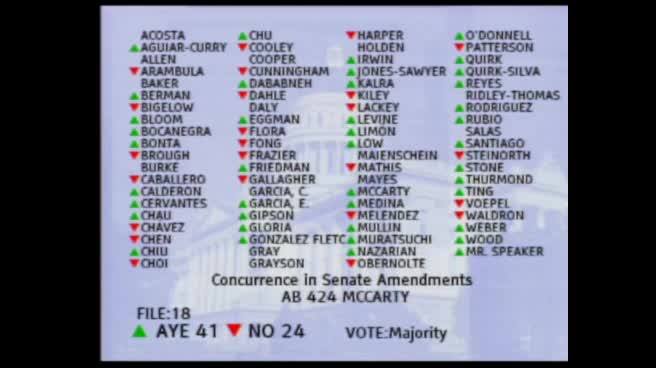
Bill Author

Bill Co-Author(s):
