AB 1133: California Endangered Species Act: experimental populations.
- Session Year: 2017-2018
- House: Assembly
- Latest Version Date: 2017-09-25
The federal Endangered Species Act of 1973 (FESA) directs federal agencies, in consultation with the Secretary of the Interior or the Secretary of Commerce, as appropriate, to carry out conservation programs for endangered or threatened species listed under FESA. FESA generally prohibits activities affecting these threatened and endangered species unless authorized by a permit from the United States Fish and Wildlife Service or the National Marine Fisheries Service, as appropriate. FESA provides for enhancement of survival permits to allow actions necessary for the establishment and maintenance of experimental populations designated pursuant to that act.
The California Endangered Species Act (CESA) prohibits the taking of an endangered or threatened species, except as specified. The Department of Fish and Wildlife may authorize the take of listed species if the take is incidental to an otherwise lawful activity and the impacts are minimized and fully mitigated. Existing law provides that if any person obtains from the Secretary of the Interior or the Secretary of Commerce an incidental take statement or incidental take permit pursuant to FESA that authorizes the taking of an endangered species or threatened species listed pursuant to FESA, and that is an endangered species, threatened species, or candidate species pursuant to CESA, no further authorization or approval is necessary under CESA for that person to take the endangered species, threatened species, or candidate species identified in, and in accordance with, the incidental take statement or incidental take permit, if that person notifies the Director of Fish and Wildlife, as specified, and the director determines that the statement or permit is consistent with CESA.
This bill would provide that a person who obtains a federal enhancement of survival permit that authorizes the take of endangered or threatened species that is also listed as endangered, threatened, or candidate under CESA, in order to establish or maintain an experimental population of the species pursuant to FESA, requires no further authorization or approval under CESA for that person to take that species as identified in, and in accordance with, the enhancement of survival permit, if specified requirements are met. These provisions would remain in effect only until the effective date of an amendment to FESA that alters the requirements for issuing an enhancement of survival permit.
The bill would authorize the incidental take of an endangered, threatened, or candidate species that is designated as an experimental population under FESA, without the need for further authorization or approval under CESA, if specified requirements are met.
The bill would provide that it is the intent of the Legislature that the Department of Fish and Wildlife should undertake appropriate public outreach, as specified, before introducing an endangered, threatened, or candidate species that is designated as an experimental population under FESA onto land or into waters of the state.
The federal Endangered Species Act of 1973 (FESA) directs federal agencies, in consultation with the Secretary of the Interior or the Secretary of Commerce, as appropriate, to carry out conservation programs for endangered or threatened species listed under FESA. FESA generally prohibits activities affecting these threatened and endangered species unless authorized by a permit from the United States Fish and Wildlife Service or the National Marine Fisheries Service, as appropriate. FESA provides for enhancement of survival permits to allow actions necessary for the establishment and maintenance of experimental populations designated pursuant to that act.
The California Endangered Species Act (CESA) prohibits the taking of an endangered or threatened species, except as specified. The Department of Fish and Wildlife may authorize the take of listed species if the take is incidental to an otherwise lawful activity and the impacts are minimized and fully mitigated. Existing law provides that if any person obtains from the Secretary of the Interior or the Secretary of Commerce an incidental take statement or incidental take permit pursuant to FESA that authorizes the taking of an endangered species or threatened species listed pursuant to FESA, and that is an endangered species, threatened species, or candidate species pursuant to CESA, no further authorization or approval is necessary under CESA for that person to take the endangered species, threatened species, or candidate species identified in, and in accordance with, the incidental take statement or incidental take permit, if that person notifies the Director of Fish and Wildlife, as specified, and the director determines that the statement or permit is consistent with CESA.
This bill would provide that a person who obtains a federal enhancement of survival permit that authorizes the take of endangered or threatened species that is also listed as endangered, threatened, or candidate under CESA, in order to establish or maintain an experimental population of the species pursuant to FESA, requires no further authorization or approval under CESA for that person to take that species as identified in, and in accordance with, the enhancement of survival permit, if specified requirements are met. These provisions would remain in effect only until the effective date of an amendment to FESA that alters the requirements for issuing an enhancement of survival permit.
The bill would authorize the incidental take of an endangered, threatened, or candidate species that is designated as an experimental population under FESA, without the need for further authorization or approval under CESA, if specified requirements are met.
The bill would provide that it is the intent of the Legislature that the department should undertake appropriate public outreach, as specified, before introducing an endangered, threatened, or candidate species that is designated as an experimental population under FESA onto land or into waters of the state.
The federal Endangered Species Act of 1973 (FESA) directs federal agencies, in consultation with the Secretary of the Interior or the Secretary of Commerce, as appropriate, to carry out conservation programs for endangered or threatened species listed under FESA. FESA generally prohibits activities affecting these threatened and endangered species unless authorized by a permit from the United States Fish and Wildlife Service or the National Marine Fisheries Service, as appropriate. FESA provides for enhancement of survival permits to allow actions necessary for the establishment and maintenance of experimental populations designated pursuant to that act.
The California Endangered Species Act (CESA) prohibits the taking of an endangered or threatened species, except as specified. The Department of Fish and Wildlife may authorize the take of listed species if the take is incidental to an otherwise lawful activity and the impacts are minimized and fully mitigated. Existing law provides that if any person obtains from the Secretary of the Interior or the Secretary of Commerce an incidental take statement or incidental take permit pursuant to FESA that authorizes the taking of an endangered species or threatened species listed pursuant to FESA, and that is an endangered species, threatened species, or candidate species pursuant to CESA, no further authorization or approval is necessary under CESA for that person to take the endangered species, threatened species, or candidate species identified in, and in accordance with, the incidental take statement or incidental take permit, if that person notifies the Director of Fish and Wildlife, as specified, and the director determines that the statement or permit is consistent with CESA.
This bill would provide that a person who obtains a federal enhancement of survival permit that authorizes the take of endangered or threatened species that is also listed as endangered, threatened, or candidate under CESA, in order to establish or maintain an experimental population of the species pursuant to FESA, requires no further authorization or approval under CESA for that person to take that species as identified in, and in accordance with, the enhancement of survival permit, if specified requirements are met. These provisions would remain in effect only until the effective date of an amendment to FESA that alters the requirements for issuing an enhancement of survival permit.
The bill would authorize the incidental take of an endangered, threatened, or candidate species that is designated as an experimental population under FESA, without the need for further authorization or approval under CESA, if specified requirements are met.
(a)Notwithstanding any other provision of this chapter, if any person obtains from the Secretary of Commerce or the Secretary of the Interior an enhancement of survival permit pursuant to Section 1539(a)(1)(A) of Title 16 of the United States Code that authorizes the taking of an endangered species or a threatened species that is listed pursuant to Section 1533 of Title 16 of the United States Code and that is an endangered species, threatened species, or candidate species pursuant to this chapter in order to establish or maintain an experimental population, no further authorization or approval is necessary under this chapter for that person to take that endangered species, threatened species, or candidate species identified in, and in accordance with, the enhancement of survival permit, if all of the following requirements are met:
(1)That person shall notify the director in writing that the person has received an enhancement of survival permit and include in the notification a copy of the permit.
(2)Upon receipt of the notice specified in paragraph (1), the director shall immediately have the notice published in the General Public Interest section of the California Regulatory Notice Register.
(3)Within 30 days after the director has received the notice specified in paragraph (1), the director determines the enhancement of survival permit will further the conservation of the species. As used in this paragraph, conservation has the same meaning as defined in Section 2061.
(4)The director shall immediately have the determination pursuant to paragraph (3) published in the General Public Interest section of the California Regulatory Notice Register.
(b)The timing and extent of a take authorization under this section shall be limited to the terms in the federal enhancement of survival permit and shall expire upon the expiration of the federal permit.
(c)(1)This section shall remain in effect only until the effective date of an amendment to Section 1539 of Title 16 of the United States Code that alters the requirements for issuing an enhancement of survival permit, as applicable, and as of that date is repealed.
(2)If the director becomes aware that this section has been repealed pursuant to this subdivision, the director shall notify the Legislature of that fact pursuant to Section 9795 of the Government Code.
SEC. 2.Section 2080.6 is added to the Fish and Game Code, to read:2080.6.(a)For purposes of this chapter, experimental population means any population nonessential to the continued existence of an endangered, threatened, or candidate species, including any eggs, propagules, individuals, or offspring arising solely therefrom, that the Secretary of the Interior or the Secretary of Commerce designates as an experimental population pursuant to Section 1539(j) of Title 16 of the United States Code.
(b)If a population of a species is an experimental population, no further authorization or approval is necessary under this chapter for any person to incidentally take members of that experimental population, if all of the following requirements are met:
(1)The Secretary of the Interior or the Secretary of Commerce has published regulations in the Federal Register for the designated experimental population as required by Section 1539(j) of Title 16 of the United States Code.
(2)The director has determined, in writing, that the regulations specified in paragraph (1) meet the requirements in subdivision (c).
(3)The action or activity that results in incidental take of the designated experimental population is authorized by the regulations published in the Federal Register.
(c)The director shall issue the determination described in paragraph (2) of subdivision (b), if the director finds that the federal regulations described in paragraph (1) of subdivision (b) meet all of the following criteria:
(1)The federal regulations will further the conservation of the species. As used in this paragraph, conservation has the same meaning as defined in Section 2061.
(2)The federal regulations contain measures to avoid and minimize the impacts of any taking allowed by the regulation.
(3)The federal regulations will not jeopardize the continued existence or recovery of the species.
(d)If the director determines that the federal regulations described in paragraph (1) of subdivision (b) are not consistent with this chapter, or if the action or activity that results in incidental take is not authorized in those federal regulations, the incidental take of members of the designated experimental population may only be authorized pursuant to the other provisions of this chapter.
(e)The director shall publish the determination, pursuant to paragraph (2) of subdivision (b), and subdivision (d), in the General Public Interest section of the California Regulatory Notice Register.
SEC. 3.Section 2080.7 is added to the Fish and Game Code, to read:2080.7.It is the intent of the Legislature that, before the introduction of an experimental population, as defined in Section 2080.6, onto land or into waters of this state, the department should undertake appropriate public outreach, including public meetings, in an effort to inform the public about the proposed introduction of the experimental population and its potential effects, if any, on ongoing human activities. To the extent practicable, this public outreach should include inviting other public boards, departments, or agencies that may have a regulatory or other role regarding the experimental population to collaborate with the department. Nothing in this section shall be construed to modify any other law or legal obligation.
(a)Notwithstanding any other provision of this chapter, if any person obtains from the Secretary of Commerce or the Secretary of the Interior an enhancement of survival permit pursuant to Section 1539(a)(1)(A) of Title 16 of the United States Code that authorizes the taking of an endangered species or a threatened species that is listed pursuant to Section 1533 of Title 16 of the United States Code and that is an endangered species, threatened species, or candidate species pursuant to this chapter in order to establish or maintain an experimental population, no further authorization or approval is necessary under this chapter for that person to take that endangered species, threatened species, or candidate species identified in, and in accordance with, the enhancement of survival permit, if all of the following requirements are met:
(1)That person shall notify the director in writing that the person has received an enhancement of survival permit and include in the notification a copy of the permit.
(2)Upon receipt of the notice specified in paragraph (1), the director shall immediately have the notice published in the General Public Interest section of the California Regulatory Notice Register.
(3)Within 30 days after the director has received the notice specified in paragraph (1), the director determines the enhancement of survival permit will further the conservation of the species. As used in this paragraph, conservation has the same meaning as defined in Section 2061.
(4)The director shall immediately have the determination pursuant to paragraph (3) published in the General Public Interest section of the California Regulatory Notice Register.
(b)The timing and extent of a take authorization under this section shall be limited to the terms in the federal enhancement of survival permit and shall expire upon the expiration of the federal permit.
(c)(1)This section shall remain in effect only until the effective date of an amendment to Section 1539 of Title 16 of the United States Code that alters the requirements for issuing an enhancement of survival permit, as applicable, and as of that date is repealed.
(2)If the director becomes aware that this section has been repealed pursuant to this subdivision, the director shall notify the Legislature of that fact pursuant to Section 9795 of the Government Code.
SEC. 2.Section 2080.6 is added to the Fish and Game Code, to read:2080.6.(a)For purposes of this chapter, experimental population means any population nonessential to the continued existence of an endangered, threatened, or candidate species, including any eggs, propagules, individuals, or offspring arising solely therefrom, that the Secretary of the Interior or the Secretary of Commerce designates as an experimental population pursuant to Section 1539(j) of Title 16 of the United States Code.
(b)If a population of a species is an experimental population, no further authorization or approval is necessary under this chapter for any person to incidentally take members of that experimental population, if all of the following requirements are met:
(1)The Secretary of the Interior or the Secretary of Commerce has published regulations in the Federal Register for the designated experimental population as required by Section 1539(j) of Title 16 of the United States Code.
(2)The director has determined, in writing, that the regulations specified in paragraph (1) meet the requirements in subdivision (c).
(3)The action or activity that results in incidental take of the designated experimental population is authorized by the regulations published in the Federal Register.
(c)The director shall issue the determination described in paragraph (2) of subdivision (b), if the director finds that the federal regulations described in paragraph (1) of subdivision (b) meet all of the following criteria:
(1)The federal regulations will further the conservation of the species. As used in this paragraph, conservation has the same meaning as defined in Section 2061.
(2)The federal regulations contain measures to avoid and minimize the impacts of any taking allowed by the regulation.
(3)The federal regulations will not jeopardize the continued existence or recovery of the species.
(d)If the director determines that the federal regulations described in paragraph (1) of subdivision (b) are not consistent with this chapter, or if the action or activity that results in incidental take is not authorized in those federal regulations, the incidental take of members of the designated experimental population may only be authorized pursuant to the other provisions of this chapter.
(e)The director shall publish the determination, pursuant to paragraph (2) of subdivision (b), and subdivision (d), in the General Public Interest section of the California Regulatory Notice Register.
(a)Notwithstanding any other provision of this chapter, if any person obtains from the Secretary of Commerce or the Secretary of the Interior an enhancement of survival permit pursuant to Section 1539(a)(1)(A) of Title 16 of the United States Code that authorizes the taking of an endangered species or a threatened species that is listed pursuant to Section 1533 of Title 16 of the United States Code and that is an endangered species, threatened species, or candidate species pursuant to this chapter in order to establish or maintain an experimental population, no further authorization or approval is necessary under this chapter for that person to take that endangered species, threatened species, or candidate species identified in, and in accordance with, the enhancement of survival permit, if all of the following requirements are met:
(1)That person shall notify the director in writing that the person has received an enhancement of survival permit and include in the notification a copy of the permit.
(2)Upon receipt of the notice specified in paragraph (1), the director shall immediately have the notice published in the General Public Interest section of the California Regulatory Notice Register.
(3)Within 30 days after the director has received the notice specified in paragraph (1), the director determines the enhancement of survival permit will further the conservation of the species. As used in this paragraph, conservation has the same meaning as defined in Section 2061.
(4)The director shall immediately have the determination pursuant to paragraph (3) published in the General Public Interest section of the California Regulatory Notice Register.
(b)The timing and extent of a take authorization under this section shall be limited to the terms in the federal enhancement of survival permit and shall expire upon the expiration of the federal permit.
(c)(1)This section shall remain in effect only until the effective date of an amendment to Section 1539 of Title 16 of the United States Code that alters the requirements for issuing an enhancement of survival permit, as applicable, and as of that date is repealed.
(2)If the director becomes aware that this section has been repealed pursuant to this subdivision, the director shall notify the Legislature of that fact pursuant to Section 9795 of the Government Code.
SEC. 2.Section 2080.6 is added to the Fish and Game Code, to read:2080.6.(a)For purposes of this chapter, experimental population means any population of an endangered, threatened, or candidate species, including any eggs, propagules, individuals, or offspring arising solely therefrom, that the Secretary of the Interior or the Secretary of Commerce designates as an experimental population pursuant to Section 1539(j) of Title 16 of the United States Code.
(b)If a population of a species is an experimental population, no further authorization or approval is necessary under this chapter for any person to incidentally take members of that experimental population, if all of the following requirements are met:
(1)The Secretary of the Interior or the Secretary of Commerce has published regulations in the Federal Register for the designated experimental population as required by Section 1539(j) of Title 16 of the United States Code.
(2)The director has determined, in writing, that the regulations specified in paragraph (1) meet the requirements in subdivision (c).
(3)The action or activity that results in incidental take of the designated experimental population is authorized by the regulations published in the Federal Register.
(c)The director shall issue the determination described in paragraph (2) of subdivision (b), if the director finds that the federal regulations described in paragraph (1) of subdivision (b) meet all of the following criteria:
(1)The federal regulations will further the conservation of the species. As used in this paragraph, conservation has the same meaning as defined in Section 2061.
(2)The federal regulations contain measures to avoid and minimize the impacts of any taking allowed by the regulation.
(3)The federal regulations will not jeopardize the continued existence or recovery of the species.
(d)If the director determines that the federal regulations described in paragraph (1) of subdivision (b) are not consistent with this chapter, or if the action or activity that results in incidental take is not authorized in those federal regulations, the incidental take of members of the designated experimental population may only be authorized pursuant to the other provisions of this chapter.
(e)The director shall publish the determination, pursuant to paragraph (2) of subdivision (c), (b), and subdivision (d), in the General Public Interest section of the California Regulatory Notice Register.
(a)Notwithstanding any other provision of this chapter, if any person obtains from the Secretary of Commerce or the Secretary of the Interior an enhancement of survival permit pursuant to Section 1539(a)(1)(A) of Title 16 of the United States Code that authorizes the taking of an endangered species or a threatened species that is listed pursuant to Section 1533 of Title 16 of the United States Code and that is an endangered species, threatened species, or candidate species pursuant to this chapter in order to establish or maintain an experimental population, no further authorization or approval is necessary under this chapter for that person to take that endangered species, threatened species, or candidate species identified in, and in accordance with, the enhancement of survival permit, if all of the following requirements are met:
(1)That person shall notify the director in writing that the person has received an enhancement of survival permit and include in the notification a copy of the permit.
(2)Upon receipt of the notice specified in paragraph (1), the director shall immediately have the notice published in the General Public Interest section of the California Regulatory Notice Register.
(3)Within 30 days after the director has received the notice specified in paragraph (1), the director determines the enhancement of survival permit will further the conservation of the species. As used in this paragraph, conservation has the same meaning as defined in Section 2061.
(4)The director shall immediately have the determination pursuant to paragraph (3) published in the General Public Interest section of the California Regulatory Notice Register.
(b)The timing and extent of a take authorization under this section shall be limited to the terms in the federal enhancement of survival permit and shall expire upon the expiration of the federal permit.
(c)(1)This section shall remain in effect only until the effective date of an amendment to Section 1539 of Title 16 of the United States Code that alters the requirements for issuing an enhancement of survival permit, as applicable, and as of that date is repealed.
(2)If the director becomes aware that this section has been repealed pursuant to this subdivision, the director shall notify the Legislature of that fact pursuant to Section 9795 of the Government Code.
SEC. 2.Section 2080.6 is added to the Fish and Game Code, to read:2080.6.(a)For purposes of this chapter, experimental population means any population of an endangered, threatened, or candidate species, including any eggs, propagules, individuals, or offspring arising solely therefrom, that the Secretary of the Interior or the Secretary of Commerce designates as an experimental population pursuant to Section 1539(j) of Title 16 of the United States Code.
(b)If a population of a species is an experimental population, no further authorization or approval is necessary under this chapter for any person to incidentally take members of that experimental population, if all of the following requirements are met:
(1)The Secretary of the Interior or the Secretary of Commerce has published regulations in the Federal Register for the designated experimental population as required by Section 1539(j) of Title 16 of the United States Code.
(2)The director has determined, in writing, that the regulations specified in paragraph (1) meet the requirements in subdivision (c).
(3)The action or activity that results in incidental take of the designated experimental population is authorized by the regulations published in the Federal Register.
(c)The director shall issue the determination described in paragraph (2) of subdivision (b), if the director finds that the federal regulations described in paragraph (1) of subdivision (b) meet all of the following criteria:
(1)The federal regulations will further the conservation of the species. As used in this paragraph, conservation has the same meaning as defined in Section 2061.
(2)The federal regulations contain measures to avoid and minimize the impacts of any taking allowed by the regulation.
(3)The federal regulations will not jeopardize the continued existence or recovery of the species.
(d)If the director determines that the federal regulations described in paragraph (1) of subdivision (b) are not consistent with this chapter, or if the action or activity that results in incidental take is not authorized in those federal regulations, the incidental take of members of the designated experimental population may only be authorized pursuant to the other provisions of this chapter.
(e)The director shall publish the determination, pursuant to paragraph (2) of subdivision (c), and subdivision (d), in the General Public Interest section of the California Regulatory Notice Register.
|
Date
|
Status
|
|---|---|
| Sep 25, 2017 | Chaptered by Secretary of State - Chapter 276, Statutes of 2017. |
| Sep 25, 2017 | Approved by the Governor. |
| Sep 12, 2017 | Enrolled and presented to the Governor at 2:30 p.m. |
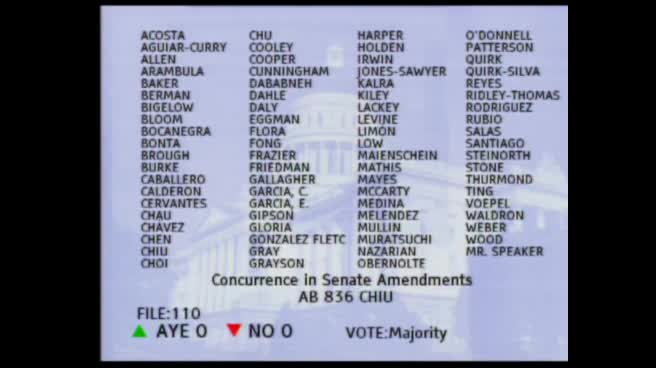
| Sep 5, 2017 | Senate amendments concurred in. To Engrossing and Enrolling. (Ayes 77. Noes 0.). |
| Aug 31, 2017 | In Assembly. Concurrence in Senate amendments pending. May be considered on or after September 2 pursuant to Assembly Rule 77. |
| Aug 31, 2017 | Read third time. Passed. Ordered to the Assembly. |
| Aug 29, 2017 | Read second time. Ordered to Consent Calendar. |
| Aug 28, 2017 | From committee: Be placed on second reading file pursuant to Senate Rule 28.8 and ordered to consent calendar. |
| Aug 21, 2017 | In committee: Hearing postponed by committee. |
| Aug 21, 2017 | From committee chair, with author's amendments: Amend, and re-refer to committee. Read second time, amended, and re-referred to Com. on APPR. |
| Jul 13, 2017 | Read second time and amended. Re-referred to Com. on APPR. |
| Jul 12, 2017 | From committee: Amend, and do pass as amended and re-refer to Com. on APPR. with recommendation: To Consent Calendar. (Ayes 9. Noes 0.) (July 11). |
| Jun 8, 2017 | Referred to Com. on N.R. & W. |
| May 30, 2017 | In Senate. Read first time. To Com. on RLS. for assignment. |
| May 30, 2017 | Read third time. Passed. Ordered to the Senate. (Ayes 77. Noes 0. Page 1858.) |
| May 25, 2017 | Read second time. Ordered to Consent Calendar. |
| May 24, 2017 | From committee: Do pass. To Consent Calendar. (Ayes 17. Noes 0.) (May 24). |
| Apr 26, 2017 | From committee: Do pass and re-refer to Com. on APPR. (Ayes 15. Noes 0.) (April 25). Re-referred to Com. on APPR. |
| Apr 18, 2017 | Re-referred to Com. on W.,P., & W. |
| Apr 17, 2017 | From committee chair, with author's amendments: Amend, and re-refer to Com. on W.,P., & W. Read second time and amended. |
| Mar 23, 2017 | In committee: Set, first hearing. Hearing canceled at the request of author. |
| Mar 6, 2017 | Referred to Com. on W.,P., & W. |
| Feb 19, 2017 | From printer. May be heard in committee March 21. |
| Feb 17, 2017 | Read first time. To print. |
|
Date
|
Description
|
Location
|
Votes
|
|
|---|---|---|---|---|
| Sep 5, 2017 | AB 1133 DAHLE Concurrence in Senate Amendments | Assembly Floor |
Passed |
|
| Aug 31, 2017 | Consent Calendar 2nd AB1133 Dahle | Senate Floor |
Passed |
|
| Jul 11, 2017 | Do pass as amended, but first amend, and re-refer to the Committee on [Appropriations] with the recommendation: To Consent Calendar | Senate Standing Committee on Natural Resources and Water |
Passed |
|
| May 30, 2017 | AB 1133 DAHLE Consent Calendar Second Day Regular Session | Assembly Floor |
Passed |
|
| May 24, 2017 | Do pass. To Consent Calendar. | Assembly Standing Committee on Appropriations |
Passed |
|
| Apr 25, 2017 | Do pass and be re-referred to the Committee on [Appropriations] | Assembly Standing Committee on Water, Parks, and Wildlife |
Passed |
This list shows positions taken on this bill by organizations on the date displayed, which is linked to the original source.
Positions by individuals are not included.
|
Organization
|
Position
|
Date
|
|---|---|---|
| Association Of California Water Agencies | ** Support | Aug 29, 2017 |
| California Council For Environmental And Economic Balance | ** Support | Aug 29, 2017 |
| california department of fish and wildlife | ** Support | Aug 29, 2017 |
| Northern California Water Association | ** Support | Aug 29, 2017 |
| Rural County Representatives of California | ** Support | Aug 29, 2017 |
| Siskiyou County Board of Supervisors | ** Support | Aug 29, 2017 |
| Yuba County Water Agency | ** Support | Aug 29, 2017 |
CONCURRENCE IN SENATE AMENDMENTS
CSA1 Bill Id:AB 1133
Author:(Dahle)
As Amended Ver:August 21, 2017
Majority vote
ASSEMBLY: | 77-0 | (May 30, 2017) | SENATE: | 37-0 | (August 31, 2017) |
Original Committee Reference: W., P., & W.
Amends the California Endangered Species Act (CESA) to authorize take of an experimental population of endangered, threatened, or candidate species under specified conditions. Specifically, this bill:
Allows the Director of the Department of Fish and Wildlife (DFW) to authorize the taking of an experimental population of endangered, threatened, or candidate species in two ways:
- If the Director of the DFW makes a determination that an "enhancement of survival permit" issued under the Federal Endangered Species Act (FESA) for the experimental population will further the conservation of the species; or,
- If the Director of the DFW makes a determination that FESA required published regulations in the Federal Register for a designated experimental population will further the conservation of the species, contain measures to avoid and minimize impacts of any taking of the species which is allowed by the regulation, and will not jeopardize the continued existence or recovery of the species.
The Senate amendments:
- Clarify that "experimental population" means a population nonessential to the continued existence of the species.
- State that it is the intent of the Legislature that, before the introduction of an experimental population, onto land or into waters of this state, the DFW should undertake appropriate public outreach, including public meetings, in an effort to inform the public about the proposed introduction of the experimental population and its potential effects, if any, on ongoing human activities.
EXISTING LAW:
- Prohibits the taking (i.e., hunting, pursuing, capturing or killing) of a species listed in accordance with CESA as an endangered, threatened, or candidate species.
- Provides that if any person obtains an incidental take statement or incidental take permit pursuant to FESA, that action authorizes the taking of an endangered species or threatened species listed pursuant to both FESA and CESA, and no further authorization or approval is necessary under CESA for that person to take state-listed species, if specified procedures are followed.
- Defines conservation, under CESA, as using all methods and procedures which are necessary to bring a listed species to the point at which CESA protections are no longer necessary.
- Establishes that the Secretary of Commerce has FESA jurisdiction over marine organisms. The Secretary of Interior has FESA jurisdiction over all other species.
- Allows a federal agency, under FESA, to authorize the release of any population (including eggs, propagules, or individuals) of an endangered species or a threatened species outside the current range of such species, if the Secretaries of Interior or Commerce, as appropriate, determine that such release will further conservation of the species. Such a release, including any offspring arising solely from that release, constitutes an "experimental population" of that species.
- Requires the Secretaries of Interior or Commerce, as appropriate, to treat each member of the experimental population as a threatened species. This allows the secretaries to authorize take of members of an experimental population by regulation instead of by individual permit.
FISCAL EFFECT: According to the Assembly Appropriations Committee, minor DFW costs.
COMMENTS: Experimental populations are a tool that have been used to reintroduce endangered, threatened, and candidate species to native habitat. The use of experimental populations has been permitted under FESA since 1983. Experimental population members and their offspring are isolated geographically and distinctly separated from non-experimental members of the same species. An experimental population may be subject to relaxed restrictions compared to the rest of the species to which it belongs. The experimental population designation relaxed FESA regulations by allowing reintroduced species to be managed or controlled. For example, ranchers were allowed to kill reintroduced wolves that threatened livestock.
There is precedent for the use of experimental populations in California. SB 1349 (Cogdill), Chapter 291, Statutes of 2010, allowed for the reintroduction of an experimental population of spring run Chinook salmon in the San Joaquin River. In 2014, that experimental population of spring run Chinook salmon became the first to be present in the San Joaquin River in over 60 years. In the case of the spring run Chinook salmon in the San Joaquin River the designation limits liability on the part of irrigators and other land users if their activities end up hurting the salmon.
This bill allows the Director of the DFW to authorize take of experimental populations in two different ways. The first type of authorization is activity-specific but may be for a single activity, a series of activities, or a number of activities over a specific period of time. The purpose of the authorization is to allow action, usually scientific or resource management activities, in furtherance of establishing the experimental population. Examples could include scientific collecting of the species for introduction or monitoring. This bill determines that, a person who obtains a federal enhancement of survival permit (that authorizes take of members of an experimental population of an endangered, threatened, or candidate species) is not required to obtain any further take authorization pursuant to CESA. The take authorization is limited to terms of the federal enhancement of survival permit, and expires upon the expiration of the federal permit or upon the effective date of an amendment to FESA that alters the requirements of an enhancement of survival permit.
The second type of authorization is less activity-specific. For each reintroduction of a species, a regulation is issued pursuant to FESA Section 10(j) (known as a "10(j) rule") by either the Secretary of the Interior or the Secretary of Commerce, as appropriate. The rule determines whether the population is essential to the survival of the species. The rule specifically describes how the experimental population will be treated by agency staff and what private citizens can or cannot do in regard to the species. This bill allows the Director of the DFW to authorize take for the activities covered by the 10(j) rule, if it determines the 10(j) rule for an experimental population of an endangered, threatened, or candidate species, including any eggs, propagules, individual or offspring of that population, as long as that take furthers the conservation of the species, contains measures to avoid and minimize the impacts of any taking of the species which is allowed by the regulation, and will not jeopardize the continued existence or recovery of the species.
Analysis Prepared by: Ryan Ojakian / W., P., & W. / (916) 319-2096 FN: 0001498
Office of Senate Floor Analyses (916) 651-1520 Fax: (916) 327-4478 | AB |
CONSENT
Bill No: AB 1133
:
SENATE NATURAL RES. & WATER COMMITTEE: 9-0, 7/11/17
AYES: Hertzberg, Stone, Allen, Atkins, Hueso, Jackson, Monning, Stern, Vidak
SENATE APPROPRIATIONS COMMITTEE: Senate Rule 28.8
ASSEMBLY FLOOR: 77-0, 5/30/17 (Consent) - See last page for vote
DIGEST:
This bill authorizes the take, if certain requirements are met, of a nonessential experimental population of an endangered, threatened, or candidate species under the Federal Endangered Species Act, without the need for further authorization under the California Endangered Species Act (CESA).
Existing law:
- Provides a framework, pursuant to the Endangered Species Act of 1973 (federal ESA), to conserve endangered and threatened species. Section 10 of the federal ESA provides an avenue to authorize activities that would otherwise be prohibited. One of those avenues is to reintroduce a population of a threatened or endangered species as an “experimental population.” Pursuant to ESA Section 10(j), populations of an endangered or threatened species can be reintroduced in an area outside the species’ current range, but within its historical range. Under these scenarios the reintroduced species can be designated as “experimental.”
- Provides, pursuant to the federal ESA, for enhancement of survival permits to allow actions necessary for the establishment and maintenance of those populations designated as experimental populations.
- Authorizes the designation of experimental populations as “essential” or “nonessential” to the continued existence of the species, pursuant to Section 10(j) of the federal ESA. This determination is made by the Secretary of Commerce or Secretary of the Interior, on the basis of the best available information. Essential populations are essential to the long-term survival of the species, while nonessential populations are not. Further, essential populations are considered to be threatened under the ESA, and thus can have special regulations written for them under section 4(d) of the ESA. If the experimental population is determined to be nonessential to the survival of the species, the experimental population is treated like a species that is proposed for listing as threatened or endangered. Therefore, members of a nonessential experimental population are not given the full protections of the federal ESA.
- Defines, pursuant to California Fish and Game Code § 2061, the term “conservation” as meaning: the use of all methods and procedures which are necessary to bring any endangered species or threatened species to the point at which the measures provided pursuant to this chapter are no longer necessary. These methods and procedures include, but are not limited to, all activities associated with scientific resources management, such as research, census, law enforcement, habitat acquisition, restoration and maintenance, propagation, live trapping, and transplantation, and, in the extraordinary case where population pressures within a given ecosystem cannot be otherwise relieved, may include regulated taking.
- Prohibits, pursuant to Fish and Game Code § 2080 of the CESA, the “take” of an endangered or threatened species, except under certain, specific scenarios. The Department of Fish and Wildlife (Department) may authorize the take of a listed species if the take is incidental to an otherwise lawful activity and the impacts are minimized and fully mitigated.
- Adds, pursuant to SB 1349 (Cogdill, Chapter 291, Statutes of 2010), Fish and Game Code §§ 2080.2-2080.4 to address a specific situation involving an endangered species in the San Joaquin River. An experimental population of spring-run Chinook salmon was designated in the San Joaquin River under the federal ESA. SB 1349 authorized the Department to allow the incidental take of that specific experimental population under the state ESA.
This bill:
- Provides that a person who obtains a federal enhancement of survival permit that authorizes the take of endangered or threatened species that is also listed as endangered, threatened, or candidate under CESA, in order to establish or maintain a nonessential experimental population of the species pursuant to the federal ESA, requires no further authorization or approval under CESA for that person to take that species, under the restrictions and requirements of the enhancement of survival permit.
- Authorizes the incidental take of an endangered, threatened, or candidate species that is designated as a nonessential experimental population under the federal ESA, without the need for further authorization or approval under CESA if specified requirements are met.
- Includes intent language to encourage public participation in the process.
Background
In 2016, the National Marine Fisheries Service (NMFS) issued regulations to guide the development of future experimental populations. NMFS is currently developing designations of listed anadromous salmonids to be released upstream of Englebright Dam on the Yuba River and Shasta Dam on the Sacramento River.
Comments
- What if the federal regulations were not protective of the experimental population to the degree that necessary to avoid jeopardizing the continued existence or recovery of the species? Once federal regulations are published in the Federal Register for the designated experimental population, this bill requires the Director of the Department to determine, in writing that (a) federal regulations will further the conservation of the species, as defined in Fish and Game Code § 2061, (b) the federal regulations contain measures to avoid and minimize the impacts of any taking allowed by the regulation, and that (c) federal regulations will not jeopardize the continued existence or recovery of the species.
- Previous salmonid experimental populations. In 2010, the California State Legislature passed SB 1349 (Cogdill), which authorized the Department to allow the incidental take of spring-run Chinook salmon in the San Joaquin River that were designate as an experimental population under the federal ESA, without the need for further authorization or approval under CESA, if specified requirements were met. This example is a good model because many other salmonids share similar challenges to the spring-run Chinook.
- What California species are likely to be designated by NMFS? Several aquatic species, such as salmonids, have been separated from their historical habitat by dams that prevent migration to upstream tributaries. The United States Bureau of Reclamation is developing a pilot plan with federal and state agencies to reintroduce spring-run and winter-run Chinook salmon to their historical habitat in the tributaries above Shasta Lake. Upstream of Shasta Lake, there are several large tributaries that would likely be good habitat for salmon. The reintroduction of experimental populations in these streams would re-assert some of the ecosystem functions that have been lost since the dams were built. In this example, NMFS would likely designate the two populations as non-essential, experimental, pursuant to the federal ESA. If AB 1133 were to become law, the Department would now be authorized to designate these populations as non-essential, experimental under CESA. In addition to migrating salmonids, some threatened and endangered species are vulnerable to the effects of climate change and may be candidates in the future for experimental populations. For example, some small alpine mammals, such as the American Pika, may be unable to move to more suitable habitat if temperatures become too high in the mountain habitats where they live.
FISCAL EFFECT: Appropriation: Fiscal Com.: Local:
Association of California Water Agencies
California Council for Environmental and Economic Balance
California Department of Fish and Wildlife
Northern California Water Association
Rural County Representatives of California
Siskiyou County Board of Supervisors
Yuba County Water Agency
OPPOSITION: (Verified 8/28/17)
None received
ARGUMENTS IN SUPPORT: Supporters argue that the endangered species act prohibits activities that “take” threatened and endangered species unless authorized by a permit from the [NMFS] or the United States Fish and Wildlife Service. This bill will establish authority for the Department to designate an experimental population under the CESA, which would align CESA with the federal ESA. This designation would be necessary in order to initiate a species reintroduction into their historical habitat.
ASSEMBLY FLOOR: 77-0, 5/30/17
AYES: Acosta, Aguiar-Curry, Travis Allen, Arambula, Baker, Berman, Bigelow, Bloom, Bocanegra, Bonta, Brough, Burke, Caballero, Calderon, Cervantes, Chávez, Chen, Chiu, Chu, Cooley, Cooper, Cunningham, Dababneh, Dahle, Daly, Flora, Fong, Frazier, Friedman, Gallagher, Cristina Garcia, Eduardo Garcia, Gipson, Gloria, Gomez, Gonzalez Fletcher, Gray, Grayson, Harper, Holden, Irwin, Jones-Sawyer, Kalra, Kiley, Lackey, Levine, Limón, Low, Maienschein, Mathis, Mayes, McCarty, Medina, Melendez, Mullin, Muratsuchi, Nazarian, Obernolte, O'Donnell, Patterson, Quirk, Quirk-Silva, Reyes, Ridley-Thomas, Rodriguez, Rubio, Salas, Santiago, Steinorth, Mark Stone, Thurmond, Ting, Voepel, Waldron, Weber, Wood, Rendon
NO VOTE RECORDED: Chau, Choi, Eggman
8/29/17 15:17:14
**** END ****
SENATE COMMITTEE ON NATURAL RESOURCES AND WATER
Senator Robert Hertzberg, Chair
2017 - 2018 Regular
Bill No: AB Hearing Date: July 11, 2017
Author: | Dahle | ||
Version: | April 17, 2017 | ||
Urgency: | No | Fiscal: | Yes |
Consultant: | Mike Peterson | ||
Subject: California Endangered Species Act: experimental populations
BACKGROUND AND EXISTING LAW
- Pursuant to the Endangered Species Act of 1973 (ESA), the ESA provides a framework to conserve endangered and threatened species. Section 10 of the ESA provides an avenue to authorize activities that would otherwise be prohibited. One of those avenues is to reintroduce a population of a threatened or endangered species as an “experimental population.” Pursuant to ESA Section 10(j), populations of an endangered or threatened species can be reintroduced in an area outside the species’ current range, but within its historical range. Under these scenarios the reintroduced species can be designated as “experimental.”
- In addition, the federal ESA provides for enhancement of survival permits to allow actions necessary for the establishment and maintenance of those populations designated as experimental populations.
- Pursuant to Section 10(j) of the federal ESA, experimental populations are further designated as “essential” or “nonessential” to the continued existence of the species. This determination is made by the Secretary of Commerce or Secretary of the Interior, on the basis of the best available information. Essential populations are essential to the long-term survival of the species, while nonessential populations are not. Further, essential populations are considered to be threatened under the ESA, and thus can have special regulations written for them under section 4(d) of the ESA. If the experimental population is determined to be nonessential to the survival of the species, the experimental population is treated like a species that is proposed for listing as threatened or endangered. Therefore, members of a nonessential experimental population are not given the full protections of the federal ESA.
- Pursuant to Fish and Game Code § 2061, the term “conservation” means to use, and the use of, all methods and procedures which are necessary to bring any endangered species or threatened species to the point at which the measures provided pursuant to this chapter are no longer necessary. These methods and procedures include, but are not limited to, all activities associated with scientific resources management, such as research, census, law enforcement, habitat acquisition, restoration and maintenance, propagation, live trapping, and transplantation, and, in the extraordinary case where population pressures within a given ecosystem cannot be otherwise relieved, may include regulated taking.
- In 2016, the National Marine Fisheries Service (NMFS) issued regulations to guide the development of future experimental populations. NMFS is currently developing designations of listed anadromous salmonids to be released upstream of Englebright Dam on the Yuba River and Shasta Dam on the Sacramento River.
- The California Endangered Species Act, pursuant to § 2080 of the Fish and Game Code. Prohibits the “take” of an endangered or threatened species, except under certain, specific scenarios. The California Department of Fish and Wildlife, may authorize the take of a listed species if the take is incidental to an otherwise lawful activity and the impacts are minimized and fully mitigated.
- SB 1349 (2010) added §§ 2080.2-2080.4 to the Fish and Game Code to address a specific situation involving an endangered species in the San Joaquin River. An experimental population of spring-run Chinook salmon was designated in the San Joaquin River under the federal ESA. SB 1349 authorized the Department to allow the incidental take of that specific experimental population under the state ESA.
- Pursuant to Fish and Game Code § 2061, conservation is defined means to use, and the use of, all methods and procedures which are necessary to bring any endangered species or threatened species to the point at which the measures provided pursuant to this chapter are no longer necessary. These methods and procedures include, but are not limited to, all activities associated with scientific resources management, such as research, census, law enforcement, habitat acquisition, restoration and maintenance, propagation, live trapping, and transplantation, and, in the extraordinary case where population pressures within a given ecosystem cannot be otherwise relieved, may include regulated taking.
.
PROPOSED LAW
This bill would:
- Provide that a person who obtains a federal enhancement of survival permit that authorizes the take of endangered or threatened species that is also listed as endangered, threatened, or candidate under CESA, in order to establish or maintain an experimental population of the species pursuant to the Federal ESA, requires no further authorization or approval under CESA for that person to take that species, under the restrictions and requirements of the enhancement of survival permit.
- Authorize the incidental take of an endangered, threatened, or candidate species that is designated as an experimental population under the Federal ESA, without the need for further authorization or approval under CESA if specified requirements are met.
ARGUMENTS IN SUPPORT
Supporters argue that the endangered species act prohibits activities that “take” threatened and endangered species unless authorized by a permit from the National Marine Fisheries Service or the United States Fish and Wildlife Service. This bill will establish authority for the Department of Fish and Wildlife to designate an experimental population under the California Endangered Species act, which would align CESA with the federal ESA. This designation would be necessary in order to initiate a species reintroduction into their historical habitat.
ARGUMENTS IN OPPOSITION
None received
COMMENTS
- What if the federal regulations were not protective of the experimental population to the degree that necessary to avoid jeopardizing the continued existence or recovery of the species? Once federal regulations are published in the Federal Register for the designated experimental population, this bill requires the Director of the Department to determine, in writing that 1) federal regulations will further the conservation of the species, as defined in Fish and Game Code § 2061, 2) the federal regulations contain measures to avoid and minimize the impacts of any taking allowed by the regulation, and that 3) federal regulations will not jeopardize the continued existence or recovery of the species.
- Previous salmonid experimental populations. In 2010, the California State Legislature passed SB 1349 (Cogdill), which authorized the Department to allow the incidental take of spring-run Chinook salmon in the San Joaquin River that were designate as an experimental population under the federal ESA, without the need for further authorization or approval under CESA, if specified requirements were met. This example is a good model because many other salmonids share similar challenges to the spring-run Chinook.
- What California species are likely to be designated by National Marine Fisheries Service? Several aquatic species, such as salmonids, have been separated from their historical habitat by dams that prevent migration to upstream tributaries. The United States Bureau of Reclamation id developing a pilot plan with federal and state agencies to reintroduce spring-run and winter-run Chinook salmon to their historical habitat in the tributaries above Shasta Lake. Upstream of Shasta Lake, there are several large tributaries that would likely be good habitat for salmon. The reintroduction of experimental populations in these streams would re-assert some of the ecosystem functions that have been lost since the dams were built. In this example, NMFS would likely designate the two populations as non-essential, experimental, pursuant to the federal ESA. If AB 1133 were to become law, the Department would now be authorized to designate these populations as non-essential, experimental under CESA. In addition to migrating salmonids, some threatened and endangered species are vulnerable to the effects of climate change and may be candidates in the future for experimental populations. For example, some small alpine mammals, such as the American Pika, may be unable to move to more suitable habitat if temperatures become too high in the mountain habitats where they live.
- The intent of this bill is to address nonessential experimental populations. To clarify that this policy applies to nonessential experimental populations and not essential experimental populations, the committee may wish to consider amending the definition of “experimental population” in the bill to be “nonessential experimental populations.” [Amendment 1].
SUGGESTED AMENDMENTS
AMENDMENT 1
Amend Section 2080.6 (a) to say “ for the purposes of this chapter, “experimental population means any nonessential population of an endangered, threatened of candidate species […]
SUPPORT
Northern California Water Association
Rural County Representatives of California
California Department of Fish and Wildlife
California Council for Environmental and Economic Balance
Yuba County Water Agency
Siskiyou County Board of Supervisors
OPPOSITION
None Received
-- END --
Date of Hearing: May 24, 2017
ASSEMBLY COMMITTEE ON APPROPRIATIONS
Lorena Gonzalez Fletcher, Chair
ABPCA Bill Id:AB 1133
Author:(Dahle) – As Amended Ver:April 17, 2017
Policy Committee: | Water, Parks and Wildlife | Vote: | 15 - 0 |
|
| ||
|
|
Urgency: No State Mandated Local Program: No Reimbursable: No
SUMMARY:
This bill allows the Director of the Department of Fish and Wildlife (DFW) to authorize the taking of an experimental population of species listed as endangered, threatened or candidate species under the California Endangered Species Act (CESA) if the experimental population will further the conservation of the species.
FISCAL EFFECT:
Minor DFW costs.
COMMENTS:
Background and Purpose. Experimental populations are a tool that have been used to reintroduce endangered, threatened, and candidate species to native habitat. The use of experimental populations has been permitted under the Federal Endangered Species Act (FESA) since 1983. Experimental population members and their offspring are isolated geographically and distinctly separated from non-experimental members of the same species. The experimental population designation relaxes FESA regulations by allowing reintroduced species to be managed or controlled. For example, ranchers were allowed to kill reintroduced wolves that threatened livestock.
There is precedent for the use of experimental populations in California. SB 1349 (Cogdill), Chapter 291, Statutes of 2010, allowed for the reintroduction of an experimental population of spring run Chinook salmon in the San Joaquin River. In 2014, that experimental population of spring run Chinook salmon became the first to be present in the San Joaquin River in over 60 years. In the case of the spring run Chinook salmon in the San Joaquin River, the designation limits liability on the part of irrigators and other land users if their activities end up hurting the salmon.
According to the author, "The endangered species act prohibits activities that 'take' or affect threatened and endangered species unless authorized by a permit from National Marine Fisheries Service or the US Fish and Wildlife Service. This bill will establish authority for the Department of Fish and Wildlife Director to designate an 'experimental population' under California’s Endangered Species Act and aligns the California Endangered Species Act with the National Marine Fisheries Service (NMFS) and United States Fish and Wildlife Service (USFWS)"
Analysis Prepared by: Jennifer Galehouse / APPR. / (916) 319-2081
Date of Hearing: April 25, 2017
ASSEMBLY COMMITTEE ON WATER, PARKS, AND WILDLIFE
Eduardo Garcia, Chair
ABPCA Bill Id:AB 1133 (
Author:Dahle) – As Amended Ver:April 17, 2017
SUBJECT: California Endangered Species Act: experimental populations
SUMMARY: Amends the California Endangered Species Act (CESA) to authorize take of an experimental population of endangered, threatened, or candidate species under specified conditions. Specifically, this bill:
Allows the Director of the Department of Fish and Wildlife (DFW) to authorize the taking of an experimental population of endangered, threatened, or candidate species in two ways:
- If the Director of the DFW makes a determination that an “enhancement of survival permit” issued under the Federal Endangered Species Act (FESA) for the experimental population will further the conservation of the species; or,
- If the Director of the DFW makes a determination that FESA required published regulations in the Federal Register for a designated experimental population will further the conservation of the species, contain measures to avoid and minimize impacts of any taking of the species which is allowed by the regulation, and will not jeopardize the continued existence or recovery of the species.
EXISTING LAW:
- Prohibits the taking (i.e., hunting, pursuing, capturing or killing) of a species listed in accordance with CESA as an endangered, threatened, or candidate species.
- Provides that if any person obtains an incidental take statement or incidental take permit pursuant to FESA that action authorizes the taking of an endangered species or threatened species listed pursuant to both FESA and CESA, and no further authorization or approval is necessary under CESA for that person to take state-listed species, if specified procedures are followed.
- Defines conservation, under CESA, as using all methods and procedures which are necessary to bring a listed species to the point at which CESA protections are no longer necessary.
- Establishes that the Secretary of Commerce has FESA jurisdiction over marine organisms. The Secretary of Interior has FESA jurisdiction over all other species.
- Allows a federal agency, under FESA, to authorize the release of any population (including eggs, propagules, or individuals) of an endangered species or a threatened species outside the current range of such species, if the Secretaries of Interior or Commerce, as appropriate, determine that such release will further conservation of the species. Such a release, including any offspring arising solely from that release, constitutes an "experimental population" of that species.
- Requires the Secretaries of Interior or Commerce, as appropriate, to treat each member of the experimental population as a threatened species. This allows the secretaries to authorize take of members of an experimental population by regulation instead of by individual permit.
FISCAL EFFECT: Unknown.
COMMENTS: This bill amends CESA to allow the Director of the DFW to authorize the take of an experimental population of endangered, threatened or candidate species, if the experimental population will further the conservation of the species.
Author’s Statement.
The endangered species act prohibits activities that “take” or affect threatened and endangered species unless authorized by a permit from National Marine Fisheries Service or the US Fish and Wildlife Service. This bill will establish authority for the Department of Fish and Wildlife Director to designate an “experimental population” under California’s Endangered Species Act and aligns the California Endangered Species Act with the National Marine Fisheries Service (NMFS) and United States Fish and Wildlife Service (USFWS). This designation is necessary to initiate a species reintroduction. By doing this we can facilitate the recovery of threatened and endangered species by enabling reintroductions into historical habitat while providing much needed protections to landowners in the event of an incidental take after reintroduction.
Background. Experimental populations are a tool that have been used to reintroduce endangered, threatened, and candidate species to native habitat. The use of experimental populations has been permitted under FESA since 1983. Experimental population members and their offspring are isolated geographically and distinctly separated from non-experimental members of the same species. An experimental population may be subject to relaxed restrictions compared to the rest of the species to which it belongs. The experimental population designation relaxed FESA regulations by allowing reintroduced species to be managed or controlled. For example, ranchers were allowed to kill reintroduced wolves that threatened livestock.
There is precedent for the use of experimental populations in California. SB 1349 (Cogdill), Chapter 291, Statutes of 2010, allowed for the reintroduction of an experimental population of spring run Chinook salmon in the San Joaquin River. In 2014, that experimental population of spring run Chinook salmon became the first to be present in the San Joaquin River in over 60 years. In the case of the spring run Chinook salmon in the San Joaquin River the designation limits liability on the part of irrigators and other land users if their activities end up hurting the salmon.
This bill allows the Director of the DFW to authorize take of experimental populations in two different ways. The first type of authorization is activity-specific but may be for a single activity, a series of activities, or a number of activities over a specific period of time. The purpose of the authorization is to allow action, usually scientific or resource management activities, in furtherance of establishing the experimental population. Examples could include scientific collecting of the species for introduction or monitoring. This bill determines that, a person who obtains a federal enhancement of survival permit (that authorizes take of members of an experimental population of an endangered, threatened, or candidate species) is not required to obtain any further take authorization pursuant to CESA. The take authorization is limited to terms of the federal enhancement of survival permit, and expires upon the expiration of the federal permit or upon the effective date of an amendment to FESA that alters the requirements of an enhancement of survival permit.
The second type of authorization is less activity-specific. For each reintroduction of a species, a regulation is issued pursuant to FESA Section 10(j) (known as a "10(j) rule") by either the Secretary of the Interior or the Secretary of Commerce, as appropriate. The rule determines whether the population is essential to the survival of the species. The rule specifically describes how the experimental population will be treated by agency staff and what private citizens can or cannot do in regard to the species. This bill allows the Director of the DFW to authorize take for the activities covered by the 10(j) rule, if it determines the 10(j) rule for an experimental population of an endangered, threatened, or candidate species, including any eggs, propagules, individual or offspring of that population, as long as that take furthers the conservation of the species, contains measures to avoid and minimize the impacts of any taking of the species which is allowed by the regulation, and will not jeopardize the continued existence or recovery of the species.
Prior and Related Legislation.
- SB 1349 (Cogdill), Chapter 291, Statutes of 2010, allows for the take of an experimental population of spring run Chinook salmon in the San Joaquin River.
Supporting Arguments.
In order to reintroduce a species into their historical habitat, designation as an experimental population would be necessary. This bill would allow the DFW flexibility by providing incidental take protection under CESA for species designated as an experimental population under FESA. As protected species habitat becomes more fragmented, the DFW is likely to be involved in more efforts to re-introduce population into their historic range. If that habitat does not currently contain the species, the DFW will likely face stiff resistance from private landowner or others that do not want additional restrictions put on their respective activities, or the use of their land.
REGISTERED SUPPORT / OPPOSITION:
Support
Rural County Representatives of California
Yuba County Water Agency
Opposition
None on file
Analysis Prepared by: Ryan Ojakian / W., P., & W. /
Bill Author

Bill Co-Author(s):