AB 1178: Postsecondary education: student loans.
- Session Year: 2017-2018
- House: Assembly
- Latest Version Date: 2017-10-03
Under existing law, the segments of postsecondary education in this state are the University of California, the California State University, the California Community Colleges, independent institutions of higher education, and private postsecondary educational institutions.
This bill would require, commencing with the 201819 award year, each higher education institution, except for the California Community Colleges, to the extent that the institution receives a student borrowers federal, state, and private education loan information, to send an individualized letter, by regular mail or electronic mail, to that student that includes specified information.
Under existing law, the segments of postsecondary education in this state are the University of California, the California State University, the California Community Colleges, independent institutions of higher education, and private postsecondary educational institutions.
This bill would require, commencing in 2018, between June 1 and August 1 of each year, with the 201819 award year, each higher education institution, except for the California Community Colleges, to, to the extent that the institution receives a student borrowers federal, state, and private education loan information, to send an individualized letter, by regular mail or electronic mail, to that student that includes specified information.
Under existing law, the segments of postsecondary education in this state are the University of California, the California State University, the California Community Colleges, independent institutions of higher education, and private postsecondary educational institutions.
This bill would require, commencing in 2018, between June 1 and August 1 of each year, each higher education institution, except for the California Community Colleges, to, to the extent that the institution receives a student borrowers federal, state, and private education loan information, send an individualized letter, by regular mail or electronic mail, to that student that includes specified information. The bill would require, commencing in 2020, on or before January 1 of each year, the institution to submit an annual report to the Legislative Analysts Office on the effectiveness of the letters at reducing the education loan debt of its students for the academic year preceding the report.
Under existing law, the segments of postsecondary education in this state are the University of California, the California State University, the California Community Colleges, independent institutions of higher education, and private postsecondary educational institutions.
This bill would require, commencing in 2018, between August 31 and October June 1 and August 1 of each year, each higher education institution that enrolls students who receive student financial aid administered by the Student Aid Commission institution, except for the California Community Colleges, to, to the extent that the institution receives a student borrowers federal, state, and private education loan information, send a letter to the an individualized letter, by regular mail or electronic mail, to that student that includes specified information. The bill would require, commencing in 2020, on or before January 1 of each year, the institution to submit an annual report to the Legislative Analysts Office on the effectiveness of the letters at reducing the education loan debt of its students for the academic year preceding the report.
Under existing law, the segments of postsecondary education in this state are the University of California, the California State University, the California Community Colleges, independent institutions of higher education, and private postsecondary educational institutions.
This bill would require, commencing in 2018, between August 31 and October 1 of each year, each higher education institution that enrolls students who receive student financial aid administered by the Student Aid Commission to, to the extent that the institution receives a student borrowers federal, state, and private education loan information, send a letter to the student that includes specified information. The bill would require, commencing in 2020, on or before January 1 of each year, the institution to submit an annual report to the Legislative Analysts Office on the effectiveness of the letters at reducing the education loan debt of its students for the academic year preceding the report.
(a)Commencing with the 201819 award year, each higher education institution, except for the California Community Colleges, shall, to the extent that the institution receives a student borrowers federal, state, and private education loan information, send an individualized letter, by regular mail or electronic mail, to that student that includes all of the following information:
(1)An estimate of all of the following:
(A)The total cumulative principal amount of his or her federal, state, and private education loans.
(B)The potential total payoff amount of his or her federal, state, and private education loans incurred or a range of the total payoff amount.
(C)Monthly repayment amounts that a similarly situated borrower may incur, including principal and interest, for the amount of loans the student has taken out at the time the information is provided, assuming a 10-year repayment plan under current federal loan interest rates.
(2)A statement that the estimates provided pursuant to paragraph (1) are general in nature and not meant as a guarantee or promise of the actual projected amounts, and that they are based on the loan amounts that the institution is aware of and may not include all student debt incurred; that borrowers with private loans may have substantially higher payments; and that federal student loan borrowers may be eligible for repayment plans that extend beyond ten years.
(3)Contact information for the institutions financial aid office or a financial aid or academic adviser of the institution.
(b)An institution described in subdivision (a) shall not incur liability for any representations made in the estimates provided pursuant to paragraph (1) of subdivision (a).
(c)If an institution is not able to provide a student with estimates pursuant to paragraph (1) of subdivision (a), the institution shall inform the student in the letter described in subdivision (a) that he or she may view his or her financial aid history by establishing a federal student aid account, or accessing his or her federal student aid account if established, through the National Student Loan Data System. The institution shall provide the student with the Internet Web site link to the system.
(a)Commencing with the 201819 award year, each higher education institution, except for the California Community Colleges, shall, to the extent that the institution receives a student borrowers federal, state, and private education loan information, send an individualized letter, by regular mail or electronic mail, to that student that includes all of the following information:
(1)An estimate of all of the following:
(A)The total cumulative principal amount of his or her federal, state, and private education loans.
(B)The potential total payoff amount of his or her federal, state, and private education loans incurred or a range of the total payoff amount.
(C)Monthly repayment amounts that a similarly situated borrower may incur, including principal and interest, for the amount of loans the student has taken out at the time the information is provided. provided, assuming a 10-year repayment plan under current federal loan interest rates.
(2)A statement that the estimates provided pursuant to paragraph (1) are general in nature and not meant as a guarantee or promise of the actual projected amounts. amounts, and that they are based on the loan amounts that the institution is aware of and may not include all student debt incurred; that borrowers with private loans may have substantially higher payments; and that federal student loan borrowers may be eligible for repayment plans that extend beyond ten years.
(3)Contact information for the institutions financial aid office or a financial aid or academic adviser of the institution.
(b)An institution described in subdivision (a) shall not incur liability for any representations made in the estimates provided pursuant to paragraph (1) of subdivision (a).
(c)If an institution is not able to provide a student with estimates pursuant to paragraph (1) of subdivision (a), the institution shall inform the student in the letter described in subdivision (a) that he or she may view his or her financial aid history by establishing a federal student aid account, or accessing his or her federal student aid account if established, through the National Student Loan Data System. The institution shall provide the student with the Internet Web site link to the system.
(a)Commencing in 2018, between June 1 and August 1 of each year, with the 201819 award year, each higher education institution, except for the California Community Colleges, shall, to the extent that the institution receives a student borrowers federal, state, and private education loan information, send an individualized letter, by regular mail or electronic mail, to that student that includes all of the following information:
(1)An estimate of all of the following:
(A)The total cumulative amount of his or her federal, state, and private education loans.
(B)The potential total payoff amount of his or her federal, state, and private education loans incurred or a range of the total payoff amount.
(C)Monthly repayment amounts that a similarly situated borrower may incur, including principal and interest, for the amount of loans the student has taken out at the time the information is provided.
(2)A statement that the estimates provided pursuant to paragraph (1) are general in nature and not meant as a guarantee or promise of the actual projected amounts.
(3)Contact information for the institutions financial aid office or a financial aid or academic adviser of the institution.
(b)An institution described in subdivision (a) shall not incur liability for any representations made in the estimates provided pursuant to paragraph (1) of subdivision (a).
(c)If an institution is not able to provide a student with estimates pursuant to paragraph (1) of subdivision (a), the institution shall inform the student in the letter described in subdivision (a) that he or she may view his or her financial aid history by establishing a federal student aid account, or accessing his or her federal student aid account if established, through the National Student Loan Data System. The institution shall provide the student with the Internet Web site link to the system.
(a)Commencing in 2018, between June 1 and August 1 of each year, each higher education institution, except for the California Community Colleges, shall, to the extent that the institution receives a student borrowers federal, state, and private education loan information, send an individualized letter, by regular mail or electronic mail, to that student that includes all of the following information:
(1)An estimate of all of the following:
(A)The total cumulative amount of his or her federal, state, and private education loans.
(B)The potential total payoff amount of his or her federal, state, and private education loans incurred or a range of the total payoff amount.
(C)Monthly repayment amounts that a similarly situated borrower may incur, including principal and interest, for the amount of loans the student has taken out at the time the information is provided.
(2)A statement that the estimates provided pursuant to paragraph (1) are general in nature and not meant as a guarantee or promise of the actual projected amounts.
(3)Contact information for the institutions financial aid office or a financial aid or academic adviser of the institution.
(b)Commencing in 2020, on or before January 1 of each year, each institution described in subdivision (a) shall annually report to the Legislative Analysts Office on the effectiveness of the letters provided pursuant to subdivision (a) at reducing the education loan debt of its students for the academic year preceding the report.(c)(b)An institution described in subdivision (a) shall not incur liability for any representations made in the estimates provided pursuant to paragraph (1) of subdivision (a).
(a)Commencing in 2018, between August 31 and October 1 June 1 and August 1 of each year, each higher education institution that enrolls students who receive student financial aid administered by the Student Aid Commission institution, except for the California Community Colleges, shall, to the extent that the institution receives a student borrowers federal, state, and private education loan information, send a letter to the an individualized letter, by regular mail or electronic mail, to that student that includes all of the following information:
(1)An estimate of all of the following:
(A)The total cumulative amount of his or her federal, state, and private education loans.
(B)The potential total payoff amount of his or her federal, state, and private education loans incurred or a range of the total payoff amount.
(C)Monthly repayment amounts that a similarly situated borrower may incur, including principal and interest, for the amount of loans the student has taken out at the time the information is provided.
(D)The percentage of the cumulative federal borrowing limit that he or she has reached at the time the information is provided.(2)A statement that the estimates provided pursuant to paragraph (1) are general in nature and not meant as a guarantee or promise of the actual projected amounts.
(3)Contact information for the institutions financial aid office or a financial aid or academic adviser of the institution.
(b)Commencing in 2020, on or before January 1 of each year, each institution described in subdivision (a) shall annually report to the Legislative Analysts Office on the effectiveness of the letters provided pursuant to subdivision (a) at reducing the education loan debt of its students for the academic year preceding the report.
(c)An institution described in subdivision (a) shall not incur liability for any representations made in the estimates provided pursuant to paragraph (1) of subdivision (a).
(a)Commencing in 2018, between August 31 and October 1 of each year, each higher education institution that enrolls students who receive student financial aid administered by the Student Aid Commission shall, to the extent that the institution receives a student borrowers federal, state, and private education loan information, send a letter to the student that includes all of the following information:
(1)An estimate of all of the following:
(A)The total cumulative amount of his or her federal, state, and private education loans.
(B)The potential total payoff amount of his or her federal, state, and private education loans incurred or a range of the total payoff amount.
(C)Monthly repayment amounts that a similarly situated borrower may incur, including principal and interest, for the amount of loans the student has taken out at the time the information is provided.
(D)The percentage of the cumulative federal borrowing limit that he or she has reached at the time the information is provided.
(2)A statement that the estimates provided pursuant to paragraph (1) are general in nature and not meant as a guarantee or promise of the actual projected amounts.
(3)Contact information for the institutions financial aid office or a financial aid or academic adviser of the institution.
(b)Commencing in 2020, on or before January 1 of each year, each institution described in subdivision (a) shall annually report to the Legislative Analysts Office on the effectiveness of the letters provided pursuant to subdivision (a) at reducing the education loan debt of its students for the academic year preceding the report.
(c)An institution described in subdivision (a) shall not incur liability for any representations made in the estimates provided pursuant to paragraph (1) of subdivision (a).
|
Date
|
Status
|
|---|---|
| Oct 3, 2017 | Chaptered by Secretary of State - Chapter 448, Statutes of 2017. |
| Oct 3, 2017 | Approved by the Governor. |
| Sep 19, 2017 | Enrolled and presented to the Governor at 3 p.m. |
| Sep 11, 2017 | Senate amendments concurred in. To Engrossing and Enrolling. |
| Sep 6, 2017 | In Assembly. Concurrence in Senate amendments pending. May be considered on or after September 8 pursuant to Assembly Rule 77. |
| Sep 6, 2017 | Read third time. Passed. Ordered to the Assembly. |
| Sep 5, 2017 | Read second time. Ordered to third reading. |
| Sep 1, 2017 | From committee: Do pass. (Ayes 5. Noes 2.) (September 1). |
| Aug 21, 2017 | In committee: Referred to APPR. suspense file. |
| Jul 12, 2017 | Read second time and amended. Re-referred to Com. on APPR. |
| Jul 11, 2017 | From committee: Amend, and do pass as amended and re-refer to Com. on APPR. (Ayes 4. Noes 2.) (July 5). |
| Jun 14, 2017 | Referred to Com. on ED. |
| Jun 1, 2017 | In Senate. Read first time. To Com. on RLS. for assignment. |
| May 31, 2017 | Read third time. Passed. Ordered to the Senate. (Ayes 64. Noes 12. Page 1967.) |
| May 30, 2017 | Read second time and amended. Ordered returned to second reading. |
| May 26, 2017 | From committee: Amend, and do pass as amended. (Ayes 12. Noes 5.) (May 26). |
| May 10, 2017 | In committee: Set, first hearing. Referred to APPR. suspense file. |
| Apr 24, 2017 | Re-referred to Com. on APPR. |
| Apr 20, 2017 | Read second time and amended. |
| Apr 19, 2017 | From committee: Amend, and do pass as amended and re-refer to Com. on APPR. (Ayes 11. Noes 2.) (April 18). |
| Apr 3, 2017 | Re-referred to Com. on HIGHER ED. |
| Mar 30, 2017 | From committee chair, with author's amendments: Amend, and re-refer to Com. on HIGHER ED. Read second time and amended. |
| Mar 9, 2017 | Referred to Com. on HIGHER ED. |
| Feb 19, 2017 | From printer. May be heard in committee March 21. |
| Feb 17, 2017 | Read first time. To print. |
|
Date
|
Description
|
Location
|
Votes
|
|
|---|---|---|---|---|
| Sep 11, 2017 | AB 1178 CALDERON Concurrence in Senate Amendments | Assembly Floor |
Passed |
|
| Sep 6, 2017 | Assembly 3rd Reading AB1178 Calderon et al. By Leyva | Senate Floor |
Passed |
|
| Sep 1, 2017 | Do pass | Senate Standing Committee on Appropriations |
Passed |
|
| Aug 21, 2017 | Placed on suspense file | Senate Standing Committee on Appropriations |
Passed |
|
| Jul 5, 2017 | Do pass as amended, but first amend, and re-refer to the Committee on [Appropriations] | Senate Standing Committee on Education |
Passed |
|
| May 31, 2017 | AB 1178 CALDERON Assembly Third Reading | Assembly Floor |
Passed |
|
| May 26, 2017 | Do pass as amended. | Assembly Standing Committee on Appropriations |
Passed |
|
| Apr 18, 2017 | Do pass as amended and be re-referred to the Committee on [Appropriations] | Assembly Standing Committee on Higher Education |
Passed |
This list shows positions taken on this bill by organizations on the date displayed, which is linked to the original source.
Positions by individuals are not included.
|
Organization
|
Position
|
Date
|
|---|---|---|
| American Career College | ** Against | Sep 4, 2017 |
| American Student Assistance | ** Support | Sep 4, 2017 |
| California Association Of Private Postsecondary Schools | * Against | Apr 18, 2017 |
| California State Student Association | ** Support | Sep 4, 2017 |
| college access and success | ** Support | Jul 3, 2017 |
| The Institute for College Access and Success | ** Support | Sep 4, 2017 |
| uAspire | ** Support | Sep 4, 2017 |
| UC Student Association | * Support | Jul 5, 2017 |
| University of Phoenix | ** Against | Apr 17, 2017 |
CONCURRENCE IN SENATE AMENDMENTS
CSA1 Bill Id:AB 1178
Author:(Calderon)
As Amended Ver:July 12, 2017
Majority vote
ASSEMBLY: | 64-12 | (May 31, 2017) | SENATE: | 31-8 | (September 6, 2017) |
Original Committee Reference: HIGHER ED.
SUMMARY: Requires, commencing with the 2018-19 award year, that each higher education institution (except the California Community Colleges (CCC)), to the extent feasible, send an individualized letter to their students regarding information on their student loans; and, specifies that if an institution is not able to provide a student with estimates, the institution shall inform the student in the letter that he/she may view his/her financial aid history via the National Student Loan Data System (NSLDS) and must provide the Internet Web site link to the system.
The Senate amendments:
- Specify that the information provided to the student shall be the total cumulative principal amount of his/her loans.
- Specify that the information provided to the student assumes a 10-year repayment plan under current federal loan interest rates.
- Stipulate that the disclosure statement about the estimates provided to the student specifies that the estimates are based on the loan amounts that the institutions is aware of and may not include all student debt incurred; that borrowers with private loans may have substantially higher payments; and that federal student loan borrowers may be eligible for repayment plans that extend beyond 10 years.
EXISTING LAW: Establishes the Donahoe Higher Education Act, setting forth the mission of the University of California (UC), The California State University (CSU), and CCC; and, defines "independent institutions of higher education" as nonpublic higher education institutions that grant undergraduate degrees, graduate degrees, or both, and that are formed as nonprofit corporations in California and are accredited by an agency recognized by the United States Department of Education (Education Code (EC) Section 66010, et seq.).
FISCAL EFFECT: According to the Senate Appropriations Committee, the UC estimates approximately $525,000 in General Fund costs to comply with the bill. This estimate includes a half-time position at each of the 10 campuses to organize the data, send letters to students, and respond to inquiries. This estimate also includes up front programming costs. The CSU indicates that any costs would be minor and absorbable.
COMMENTS: Background. According to The Institute for College Access and Success (TICAS) October 2016 report, "Student Debt and the Class of 2015, 68% of seniors who graduated from public and nonprofit colleges in 2015 had student loan debt, with an average nationally of $30,100 per borrower. TICAS found that the share of graduates with debt rose modestly over the last decade (from 65% to 69%). Additionally, TICAS found that average debt in California is $22,191 at public and private nonprofit colleges and that about 54% of students graduate with debt, ranking California 48th and 42nd nationally, respectively.
To note, TICAS found that better data on student loan debt is urgently needed. The total debt at graduation – including both federal and private loans – remains unavailable for every college. Additionally, the debt for each type of credential offered by a given school also remains unavailable.
Purpose of this measure. According to the author, college students need to have up to date information about their cumulative student loan debt while they are making borrowing decisions. The author contends that when students have this information it may lead to decreased impulsive borrowing and student loan regret. The author states, "A study by Citizens Bank found 60% of recent college graduates surveyed underestimated their own monthly loan repayment amount. In a Consumer Report study of student loan behavior, 47% of recent college graduates reported they would have accepted less financial aid during college if they had to make the decision again."
The author contends that under federal law, "students are required to undergo entrance counseling before receiving loans and exit counseling at fruition. The interim time spans the entire length of a student's enrollment at a post-secondary institution. In the years between these two counseling sessions, qualifying students receive financial aid packages and accept debt burden for each academic year." The author argues that, "at no time during these interim academic years are universities required to disclose how much debt a student has cumulatively accrued or provide information on approximate monthly loan payments."
This measure will require each higher education institution, except for the CCC, to the extent possible, to provide students a detailed letter itemizing their total cumulative loan amount, the percentage of the federal loans borrowing limit they have reached, and an estimated monthly payment based on a formula created by each institution.
Existing efforts to inform students about their loans. The NSLDS is the United States Department of Education's (USDE) central database for student aid. NSLDS receives data from schools, guaranty agencies, the Direct Loan program, and other USDE programs. NSLDS Student Access provides a centralized, integrated view of Title IV loans and grants so that recipients of Title IV Aid can access and inquire about their Title IV loans and/or grant data. The link to the NSLDS Internet Web site can be found here: https://www.nslds.ed.gov/nslds/nslds_SA/.
Additionally, students can now view their financial aid history at https://studentaid.ed.gov/sa/. Students have to log in to access their information from NSLDS. Once they log in to their "My Federal Student Aid account", they will be able to access their financial aid summary, as well as details about each federal student loan or grant they have received. Students can also view the contact information of their federal student loan servicer.
Lastly, when students are logged into their account, they have access to the "Repayment Estimator" whereby they can receive estimates on what their loan payments will entail and learn more about repayment plans.
To note, the "My Federal Student Aid" account shows information about financial aid students' already received. If students are wondering what aid they will receive in the future, how much they have been awarded, when it will be paid out, etc., they will need to check with the financial aid office at their school.
Committee staff understands that students are informed of the aforementioned websites when they have their financial aid entrance and exit interviews. However, it is presently unclear how many students utilize these resources.
Efforts in other states. According to information provided by the author, the states of Indiana and Nebraska have enacted proposals similar in nature to this measure. Additionally, students attending Montana State University receive letters similar in nature to what is called for in this measure.
Analysis Prepared by: Jeanice Warden / HIGHER ED. / (916) 319-3960 FN: 0001938
Office of Senate Floor Analyses (916) 651-1520 Fax: (916) 327-4478 | AB |
THIRD READING
Bill No: AB 1178
:
SENATE EDUCATION COMMITTEE: 4-2, 7/5/17
AYES: Allen, Galgiani, Leyva, Pan
NOES: Wilk, Vidak
NO VOTE RECORDED: Mendoza
SENATE APPROPRIATIONS COMMITTEE: 5-2, 9/1/17
AYES: Lara, Beall, Bradford, Hill, Wiener
NOES: Bates, Nielsen
ASSEMBLY FLOOR: 64-12, 5/31/17 - See last page for vote
DIGEST: This bill requires, commencing with the 2018-19 award year, that each higher education institution, except for the California Community Colleges (CCC), to the extent possible, send an individualized letter to their students regarding information on their student loans.
Existing law:
- Requires a public, private or independent postsecondary educational institution, except the CCC, to make specified disclosures related to private student loans in financial material and applications provided or made available by the institution for the purposes of distinguishing private loans from federal loans in individual financial aid awards. (Education Code § 69800)
- Requires public, private, or independent institution, except the CCCs, to make available to the public upon request and in a prominent location on its Internet Web site within 12 months of a completed academic year, specified student loan debt statistics on graduates.
- Requires all public, private, and independent postsecondary institutions to provide students information concerning unused state and federal financial assistance including unused federal student loan moneys available to them before certifying their eligibility for private student loans and, if the institution does not participate in federal student loan programs, to inform students that they may be eligible for federal student loans at participating institutions and provide them information regarding Cal Grants and federal student aid. (EC § 69800.2)
This bill:
- Requires, commencing with the 2018-19 award year, that each higher education institution, except for the CCCs, to the extent possible, send an individualized letter to their students regarding information on their student loans that includes all of the following information:
- An estimate of all of the following:
- The total cumulative principal amount of his or her federal, state, and private education loans.
- The potential total payoff amount of his or her federal, state, and private education loans incurred or a range of the total payoff amount.
- Monthly repayment amounts that a similarly situated borrower may incur including principal and interest, for the amount of loans the student has taken out at the time the information is provided, assuming a 10-year repayment plan under current federal loan interest rates.
- A statement that estimates provided are general in nature and not meant as a guarantee or promise of the actual projected amounts, and that they are based on the loan amounts that the institution is aware of and may not include all student debt incurred; that borrows with private loans may have substantially higher payments; and that federal student loan borrowers may be eligible for repayment plans that extend beyond 10 years.
- Contact information for the institution’s financial aid office or a financial aid or academic adviser of the institution.
- An estimate of all of the following:
- Specifies that institutions are not to incur liability for any representation made in the specified estimates.
- Requires, in the event that an institution is not able to provide a student with specified estimates, an institution to inform a student in the letter that he or she may view his or financial aid history via the National Student Loan Data System and must provide the Internet Web site line to the system.
Comments
- Need for the bill. According to the author, “College students are not actively informed about their cumulative student loan debt while they are making borrowing decisions. Each year, qualifying students receive financial aid packages for the upcoming academic year. At no time during this process are lenders or universities required to disclose how much debt a student has accrued. A study by Citizens Bank found that 60% of recent college graduates surveyed underestimated their own monthly loan repayment amount. Student borrowers may decide to accept more loans than necessary without understanding the full consequences of repayment upon graduation.”
This bill aims to inform students of their cumulative loan debt by requiring postsecondary institutions to send individualized loan letters to students including, a student’s total loan amount and estimated monthly payment.
- Student loan debt. According to The Institute for College Access and Success (TICAS) and its Project on Student Debt, 68 percent of seniors who graduated from public and nonprofit colleges in 2015 had student loan debt, with an average nationally of $30,100 per borrower. TICAS reports that the share of graduates with debt rose modestly over the last decade (from 65 percent to 69 percent). TICAS also reports that average debt in California is $22,191 at public and private non-profit colleges and that about 54 percent of students graduate with debt, ranking California 48th and 42nd nationally, respectively. California falls below the national average in student loan debt.
- Impact on students. Various federal and state efforts are underway to help students make informed decisions about their borrowing options and monitor existing loan debt. The U.S. Department of Education (USDE) maintains a database tracking students loans known as the National Student Loan Data System (NSLDS). NSLDS receives data from schools, guaranty agencies, the Direct Loan program, and other USDE programs. Students may view the status of federal loans and grants through the website. However, private loans are notincluded in NSLDS. Additionally, all federal student loan borrowers are required to receive entrance and exit counseling. Lastly, current state law requires all public, private, and independent postsecondary institutions to provide students information concerning unused state and federal financial assistance including unused federal student loan moneys available to them before certifying their eligibility for private student loans.
This bill aims to ensure that colleges take a proactive approach toward delivery of student loan debt data. Arguably, a student can independently access loan information through the NSDLS or other entities. However, the proposed methodology could encourage a greater number of students to make well-informed borrowing decisions and repay their loans.
FISCAL EFFECT: Appropriation: Fiscal Com.: Local:
According to the Senate Appropriations Committee, the University of California estimates approximately $525,000 in General Fund costs to comply with the bill. This estimate includes a half-time position at each of the 10 campuses to organize the data, send letters to students, and respond to inquiries. This estimate also includes up front programming costs. The California State University indicates that any costs would be minor and absorbable.
American Student Assistance
California State Student Association
The Institute for College Access and Success
uAspire
American Career College
California Association of Private Postsecondary Schools
University of Phoenix
ASSEMBLY FLOOR: 64-12, 5/31/17
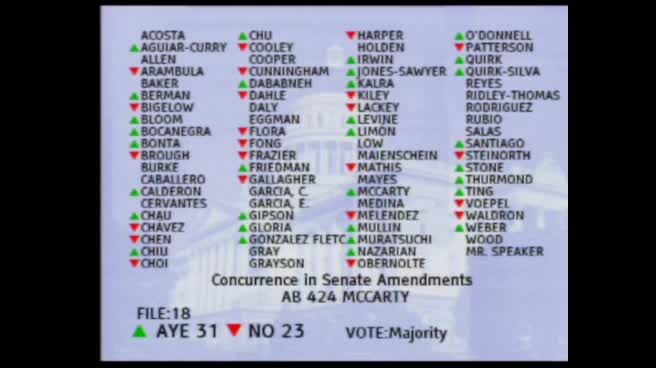
AYES: Acosta, Aguiar-Curry, Arambula, Baker, Berman, Bloom, Bocanegra, Bonta, Burke, Caballero, Calderon, Cervantes, Chau, Chiu, Chu, Cooley, Cooper, Cunningham, Dababneh, Daly, Flora, Frazier, Friedman, Cristina Garcia, Eduardo Garcia, Gipson, Gloria, Gomez, Gonzalez Fletcher, Gray, Grayson, Harper, Holden, Irwin, Jones-Sawyer, Kalra, Kiley, Lackey, Levine, Limón, Low, Maienschein, McCarty, Medina, Mullin, Muratsuchi, Nazarian, O'Donnell, Quirk, Quirk-Silva, Reyes, Ridley-Thomas, Rodriguez, Rubio, Salas, Santiago, Steinorth, Mark Stone, Thurmond, Ting, Waldron, Weber, Wood, Rendon
NOES: Travis Allen, Bigelow, Brough, Chávez, Dahle, Fong, Gallagher, Mathis, Mayes, Obernolte, Patterson, Voepel
NO VOTE RECORDED: Chen, Choi, Eggman, Melendez
9/4/17 12:19:23
**** END ****
SENATE COMMITTEE ON
Senator Ricardo Lara, Chair
2017 - 2018 Regular Session
AB 1178 (Calderon) - Postsecondary education: student loans
Version: | Policy Vote: |
Urgency: | Mandate: |
Hearing Date: | Consultant: |
This bill meets the criteria for referral to the Suspense File.
Bill Summary:
This bill requires, commencing with the 2018-19 award year, that each higher education institution, except for the California Community Colleges (CCC), to send an individualized letter to their students regarding information on their student loans.
Fiscal Impact:
The University of California estimates approximately $525,000 in General Fund costs to comply with the bill. This estimate includes a half-time position at each of the 10 campuses to organize the data, send letters to students, and respond to inquiries. This estimate also includes up front programming costs. The California State University indicates that any costs would be minor and absorbable.
Background:
Existing law requires a public, private or independent postsecondary educational institution, except for the California Community Colleges, to make specified disclosures related to private student loans in financial material and applications provided or made available by the institution for the purposes of distinguishing private loans from federal loans in individual financial aid awards. Further, existing law requires public, private, or independent institution, except for the California Community Colleges, to make available to the public upon request and in a prominent location on its Internet Web site within 12 months of a completed academic year, specified student loan debt statistics on graduates.
Existing law also requires all public, private, and independent postsecondary institutions to provide students information concerning unused state and federal financial assistance including unused federal student loan moneys available to them before certifying their eligibility for private student loans and, if the institution does not participate in federal student loan programs, to inform students that they may be eligible for federal student loans at participating institutions and provide them information regarding Cal Grants and federal student aid.
Proposed Law:
This bill requires, commencing with the 2018-19 award year, that each higher education institution, except for the CCCs, to the extent that the institution receives a student borrower’s federal, state, and private education loan information, to send an individualized letter to their students regarding information on their student loans that includes all of the following information:
- An estimate of the total cumulative principal amount of his or her federal, state, and private education loans.
- The potential total payoff amount of his or her federal, state, and private education loans incurred or a range of the total payoff amount.
- Monthly repayment amounts that a similarly situated borrower may incur including principal and interest, for the amount of loans the student has taken out at the time the information is provided, assuming a 10-year repayment plan under current federal loan interest rates.
- A statement that the estimates provided are general in nature and not meant as a guarantee or promise of the actual projected amounts, and that they are based on the loan amounts that the institution is aware of and may not include all student debit incurred; that borrowers with private loans may have substantially higher payments; and that federal student loan borrowers may be eligible for repayment plans that extend beyond ten years.
- Contact information for the institution’s financial aid office or a financial aid or academic adviser of the institution.
This bill specifies that institutions are not to incur liability for any representation made in the specified estimates.
This bill provides that in the event that an institution is not able to provide a student with specified estimates, an institution shall inform a student in the letter that he or she may view his or financial aid history via the National Student Loan Data System and must provide the internet Web site line to the system.
-- END --
SENATE COMMITTEE ON EDUCATION
Senator Benjamin Allen, Chair
2017 - 2018 Regular
Bill No: AB 1178 Hearing Date: July 5, 2017
Author: | |||
Version: | May 30, 2017 | ||
Urgency: | No | Fiscal: | Yes |
Consultant: | Olgalilia Ramirez | ||
Subject: Postsecondary education: student loans
SUMMARY
This bill requires, commencing with the 2018-19 award year, that each higher education institution, except for the California Community Colleges (CCC), to the extent possible, send an individualized letter to their students regarding information on their student loans.
BACKGROUND
Existing law:
- Requires a public, private or independent postsecondary educational institution, except the CCC, to make specified disclosures related to private student loans in financial material and applications provided or made available by the institution for the purposes of distinguishing private loans from federal loans in individual financial aid awards. (Education Code § 69800)
- Requires public, private, or independent institution, except the CCCs, to make available to the public upon request and in a prominent location on its Internet Web site within 12 months of a completed academic year, specified student loan debt statistics on graduates.
- Requires all public, private, and independent postsecondary institutions to provide students information concerning unused state and federal financial assistance including unused federal student loan moneys available to them before certifying their eligibility for private student loans and, if the institution does not participate in federal student loan programs, to inform students that they may be eligible for federal student loans at participating institutions and provide them information regarding Cal Grants and federal student aid. (EC § 69800.2)
ANALYSIS
This bill:
- Requires, commencing with the 2018-19 award year, that each higher education institution, except for the CCCs, to the extent possible, send an individualized letter to their students regarding information on their student loans that includes all of the following information:
- An estimate of all of the following:
- The total cumulative amount of his or her federal, state, and private
- An estimate of all of the following:
education loans.
- The potential total payoff amount of his or her federal, state, and
private education loans incurred or a range of the total payoff amount.
- Monthly repayment amounts that a similarly situated borrower may
incur including principal and interest, for the amount of loans the student has taken out at the time the information is provided.
- A statement that estimates provided are general in nature and not meant
as a guarantee or promise of the actual projected amounts.
- Contact information for the institution’s financial aid office or a financial aid
or academic adviser of the institution.
- Specifies that institutions are not to incur liability for any representation made in the specified estimates.
- In the event that an institution is not able to provide a student with specified estimates, requires an institution to inform a student in the letter that he or she may view his or financial aid history via the National Student Loan Data System and must provide the internet Web site line to the system.
STAFF COMMENTS
- Need for the bill. According to the author, “College students are not actively informed about their cumulative student loan debt while they are making borrowing decisions. Each year, qualifying students receive financial aid packages for the upcoming academic year. At no time during this process are lenders or universities required to disclose how much debt a student has accrued. A study by Citizens Bank found that 60% of recent college graduates surveyed underestimated their own monthly loan repayment amount. Student borrowers may decide to accept more loans than necessary without understanding the full consequences of repayment upon graduation.”
This bill aims to inform students of their cumulative loan debt by requiring postsecondary institutions to send individualized loan letters to students including, a student’s total loan amount and estimated monthly payment.
- Student loan debt. According to The Institute for College Access and Success (TICAS) and its Project on Student Debt, 68 percent of seniors who graduated from public and nonprofit colleges in 2015 had student loan debt, with an average nationally of $30,100 per borrower. TICAS reports that the share of graduates with debt rose modestly over the last decade (from 65 percent to 69 percent). TICAS also reports that average debt in California is $22,191 at public and private non-profit colleges and that about 54 percent of students graduate with debt, ranking California 48th and 42nd nationally, respectively. California falls below the national average in student loan debt.
- Impact on students. Various federal and state efforts are underway to help students make informed decisions about their borrowing options and monitor existing loan debt. The U.S. Department of Education (USDE) maintains a database tracking students loans known as the National Student Loan Data System (NSLDS). NSLDS receives data from schools, guaranty agencies, the Direct Loan program, and other USDE programs. Students may view the status of federal loans and grants through the website. However, private loans are not
included in NSLDS. Additionally, all federal student loan borrowers are required to receive entrance and exit counseling. Lastly, current state law requires all public, private, and independent postsecondary institutions to provide students information concerning unused state and federal financial assistance including unused federal student loan moneys available to them before certifying their eligibility for private student loans.
This measure aims to ensure that colleges take a proactive approach toward delivery of student loan debt data. Arguably, a student can independently access loan information through the NSDLS or other entities. However, the proposed methodology could encourage a greater number of students to make well-informed borrowing decisions and repay their loans.
- Technical and clarifying amendments. Staff recommends and the author agrees to make the following clarifying amendments:
- 69509.6 (a)(1)(A The total cumulative principal amount of his or her federal, state, and private education loans.
- 69509.6 (a)(1) (C) Monthly repayment amounts that a similarly situated borrower may incur, including principal and interest, for the amount of loans the student has taken out at the time the information is provided, assuming a 10-year repayment plan under current federal loan interest rates.
- 69509.6 (a)(2) A statement that the estimates provided pursuant to paragraph (1) are general in nature and not meant as a guarantee or promise of the actual projected amounts, and that they are based on the loan amounts that the institution is aware of and may not include all student debt incurred; that borrowers with private loans may have substantially higher payments; and that federal student loan borrowers may be eligible for repayment plans that extend beyond ten years.
SUPPORT
American Student Assistance
California State Student Association
College Access and Success
uAspire
OPPOSITION
American Career College
California Association of Private Postsecondary Schools
University of Phoenix
-- END --
ASSEMBLY THIRD READING
ATR Bill Id:AB 1178
Author:(Calderon)
As Amended Ver:
Majority vote
Committee | Votes | Ayes | Noes |
Higher Education | 11-2 | Medina, Baker, Arambula, Bloom, Irwin, Kiley, Levine, Low, Quirk-Silva, Santiago, Weber | Chávez, Choi |
Appropriations | 12-5 | Gonzalez Fletcher, Bloom, Bocanegra, Bonta, Calderon, McCarty, Quirk, Friedman, Eduardo Garcia, Gray, Muratsuchi, Reyes | Bigelow, Brough, Fong, Gallagher, Obernolte |
SUMMARY: Requires, commencing in 2018, that each higher education institution, to the extent feasible, send an individualized letter to their students regarding information on their student loans. Specifically, this bill:
- Requires, beginning with the 2018 – 19 award year, that each higher education institution, to the extent that the institution receives a student borrower's federal, state and private education loan information, send an individualized letter, by regular mail or electronic mail, to the student that includes all of the following information:
- An estimate of all the following:
- The total cumulative amount of his or her federal, state, and private education loans;
- The potential total payoff amount of his or her federal, state, and private education loans incurred or a range of the total payoff amount; and,
- Monthly repayment amounts that a similarly situated borrower may incur, including principal and interest, for the amount of loans the student has taken out at the time the information is provided.
- A statement that the estimates provided are general in nature and not meant as a guarantee or promise of the actual projected amounts; and,
- Contact information for the institution's financial aid office or financial aid or academic adviser of the institution.
- An estimate of all the following:
- Exempts the California Community Colleges (CCC) from participating in all of numbers 1) and 2) above.
- Specifies that if an institution is not able to provide a student with estimates, the institution shall inform the student in the letter that he/she may view his/her financial aid history via the National Student Loan Data System (NSLDS) and must provide the Internet Web site link to the system.
EXISTING LAW: Establishes the Donahoe Higher Education Act, setting forth the mission of the University of California (UC), The California State University (CSU), and CCC; and, defines "independent institutions of higher education" as nonpublic higher education institutions that grant undergraduate degrees, graduate degrees, or both, and that are formed as nonprofit corporations in California and are accredited by an agency recognized by the United States Department of Education (Education Code (EC) Section 66010, et seq.).
FISCAL EFFECT: According to the Assembly Appropriations Committee:
- Approximately $70,000 General Fund in one-time cost and on-going cost of $50,000 in maintenance cost to the CSU. Costs include the customization of their student information system, in order to draw down data from multiple sources.
- Approximately $525,000 General Fund in on-going cost should the UC implement this bill. Half a personnel year would be required at each of the 10 campuses, to organize the data, send letters, and respond to inquiries.
- Unknown costs to California's independent colleges and universities.
COMMENTS: Background. According to The Institute for College Access and Success (TICAS) October 2016 report, "Student Debt and the Class of 2015, 68 percent of seniors who graduated from public and nonprofit colleges in 2015 had student loan debt, with an average nationally of $30,100 per borrower. TICAS found that the share of graduates with debt rose modestly over the last decade (from 65 percent to 69 percent). Additionally, TICAS found that average debt in California is $22,191 at public and private nonprofit colleges and that about 54 percent of students graduate with debt, ranking California 48th and 42nd nationally, respectively.
To note, TICAS found that better data on student loan debt is urgently needed. The total debt at graduation – including both federal and private loans – remains unavailable for every college. Additionally, the debt for each type of credential offered by a given school also remains unavailable.
Purpose of this measure. According to the author, college students need to have up to date information about their cumulative student loan debt while they are making borrowing decisions. The author contends that when students have this information it may lead to decreased impulsive borrowing and student loan regret. The author states, "A study by Citizens Bank found 60 percent of recent college graduates surveyed underestimated their own monthly loan repayment amount. In a Consumer Report study of student loan behavior, 47 percent of recent college graduates reported they would have accepted less financial aid during college if they had to make the decision again."
The author contends that under federal law, "students are required to undergo entrance counseling before receiving loans and exit counseling at fruition. The interim time spans the entire length of a student’s enrollment at a post-secondary institution. In the years between these two counseling sessions, qualifying students receive financial aid packages and accept debt burden for each academic year." The author argues that, "at no time during these interim academic years are universities required to disclose how much debt a student has cumulatively accrued or provide information on approximate monthly loan payments."
This measure will require each higher education institution, except for the CCC, to the extent possible, to provide students a detailed letter itemizing their total cumulative loan amount, the percentage of the federal loans borrowing limit they have reached, and an estimated monthly payment based on a formula created by each institution.
Existing efforts to inform students about their loans. The NSLDS is the U.S. Department of Education's (USDE) central database for student aid. NSLDS receives data from schools, guaranty agencies, the Direct Loan program, and other USDE programs. NSLDS Student Access provides a centralized, integrated view of Title IV loans and grants so that recipients of Title IV Aid can access and inquire about their Title IV loans and/or grant data. The link to the NSLDS Web site can be found here: https://www.nslds.ed.gov/nslds/nslds_SA/.
Additionally, students can now view their financial aid history at https://studentaid.ed.gov/sa/. Students have to log in to access their information from NSLDS. Once they log in to their "My Federal Student Aid account", they will be able to access their financial aid summary, as well as details about each federal student loan or grant they have received. Students can also view the contact information of their federal student loan servicer.
Lastly, when students are logged into their account, they have access to the "Repayment Estimator" whereby they can receive estimates on what their loan payments will entail and learn more about repayment plans.
To note, the "My Federal Student Aid" account shows information about financial aid students' already received. If students are wondering what aid they will receive in the future, how much they have been awarded, when it will be paid out, etc., they will need to check with the financial aid office at their school.
Committee staff understands that students are informed of the aforementioned websites when they have their financial aid entrance and exit interviews. However, it is presently unclear how many students utilize these resources.
Efforts in other states. According to information provided by the author, the states of Indiana and Nebraska have enacted proposals similar in nature to this measure. Additionally, students attending Montana State University receive letters similar in nature to what is called for in this measure.
Analysis Prepared by: Jeanice Warden / HIGHER ED. / (916) 319-3960 FN: 0000818
Date of Hearing: May 10, 2017
ASSEMBLY COMMITTEE ON APPROPRIATIONS
Lorena Gonzalez Fletcher, Chair
ABPCA Bill Id:AB 1178
Author:(Calderon) – As Amended Ver:April 20, 2017
Policy Committee: | Higher Education | Vote: | 11 - 2 |
|
| ||
|
|
Urgency: No State Mandated Local Program: No Reimbursable: No
SUMMARY:
This bill requires, commencing in 2018, each higher education institution, to the extent feasible, to send an individualized letter to their students regarding information on their student loans. The bill exempts the California Community Colleges (CCC) from participating.
FISCAL EFFECT:
- Approximately $70,000 General Fund in one-time cost and on-going cost of $50,000 in maintenance cost to the California State University (CSU). Costs include the customization of their student information system, in order to draw down data from multiple sources.
- Approximately $525,000 General Fund in on-going cost. Should the University of California (UC) implement this bill, half a personnel year would be required at each of the 10 campuses, to organize the data, send letters and respond to inquiries.
- Unknown costs to independent colleges and universities.
COMMENTS:
Background and Purpose. Existing law establishes the Donahoe Higher Education Act, setting forth the mission of the UC, CSU, and CCC; and, defines "independent institutions of higher education" as nonpublic higher education institutions that grant undergraduate degrees, graduate degrees, or both, and that are formed as nonprofit corporations in California and are accredited by an agency recognized by the United States Department of Education.
According to The Institute for College Access and Success (TICAS) October 2016 report, "Student Debt and the Class of 2015, 68% of seniors who graduated from public and nonprofit colleges in 2015 had student loan debt, with an average nationally of $30,100 per borrower. According to the author, college students need to have up to date information about their cumulative student loan debt while they are making borrowing decisions. The author contends that when students have this information it may lead to decreased impulsive borrowing and student loan regret.
Analysis Prepared by: Daisy Gonzales / APPR. / (916) 319-2081
Date of Hearing: April 18, 2017
ASSEMBLY COMMITTEE ON HIGHER EDUCATION
Jose Medina, Chair
ABPCA Bill Id:AB 1178 (
Author:Calderon) – As Amended Ver:March 30, 2017
SUBJECT: Postsecondary education: student loans.
SUMMARY: Requires, commencing in 2018, that each higher education institution, to the extent feasible, send an individualized letter to their students regarding information on their student loans. Specifically, this bill:
- Requires, beginning in 2018, between June 1 and August 1 of each year, that each higher education institution, to the extent that the institution receives a student borrower's federal, state and private education loan information, send an individualized letter, by regular mail or electronic mail, to the student that includes all of the following information:
- An estimate of all the following:
- The total cumulative amount of his or her federal, state, and private education loans;
- The potential total payoff amount of his or her federal, state, and private education loans incurred or a range of the total payoff amount; and,
- Monthly repayment amounts that a similarly situated borrower may incur, including principal and interest, for the amount of loans the student has taken out at the time the information is provided.
- A statement that the estimates provided are general in nature and not meant as a guarantee or promise of the actual projected amounts; and,
- Contact information for the institution's financial aid office or financial aid or academic adviser of the institution.
- An estimate of all the following:
- Requires, commencing in 2020, on or before January 1 of each year, each institution, as specified, to annually report to the Legislative Analyst's Office (LAO) on the effectiveness of the letters provided in reducing the education loan debt of its students for the academic year preceding the report.
- Exempts the California Community Colleges from participating in all of numbers 1 and 2 above.
EXISTING LAW: Establishes the Donahoe Higher Education Act, setting forth the mission of the UC, CSU, and CCC; and, defines "independent institutions of higher education" as nonpublic higher education institutions that grant undergraduate degrees, graduate degrees, or both, and that are formed as nonprofit corporations in California and are accredited by an agency recognized by the United States Department of Education (Education Code (EC) Section 66010, et seq.).
FISCAL EFFECT: Unknown.
COMMENTS: Background. According to The Institute for College Access and Success (TICAS) October 2016 report, "Student Debt and the Class of 2015, 68 percent of seniors who graduated from public and nonprofit colleges in 2015 had student loan debt, with an average nationally of $30,100 per borrower. TICAS found that the share of graduates with debt rose modestly over the last decade (from 65 percent to 69 percent). Additionally, TICAS found that average debt in California is $22,191 at public and private nonprofit colleges and that about 54 percent of students graduate with debt, ranking California 48th and 42nd nationally, respectively.
To note, TICAS found that better data on student loan debt is urgently needed. The total debt at graduation – including both federal and private loans – remains unavailable for every college. Additionally, the debt for each type of credential offered by a given school also remains unavailable.
Purpose of this measure. According to the author, college students need to have up to date information about their cumulative student loan debt while they are making borrowing decisions. The author contends that when students have this information it may lead to decreased impulsive borrowing and student loan regret. The author states, "A study by Citizens Bank found 60 percent of recent college graduates surveyed underestimated their own monthly loan repayment amount. In a Consumer Report study of student loan behavior, 47 percent of recent college graduates reported they would have accepted less financial aid during college if they had to make the decision again."
The author contends that under federal law, "students are required to undergo entrance counseling before receiving loans and exit counseling at fruition. The interim time spans the entire length of a student’s enrollment at a post-secondary institution. In the years between these two counseling sessions, qualifying students receive financial aid packages and accept debt burden for each academic year." The author argues that, "at no time during these interim academic years are universities required to disclose how much debt a student has cumulatively accrued or provide information on approximate monthly loan payments."
This measure will require each higher education institution, except for the CCC, to the extent possible, to provide students a detailed letter itemizing their total cumulative loan amount, the percentage of the federal loans borrowing limit they have reached, and an estimated monthly payment based on a formula created by each institution.
Existing efforts to inform students about their loans. The National Student Loan Data System (NSLDS) is the U.S. Department of Education's (USDE) central database for student aid. NSLDS receives data from schools, guaranty agencies, the Direct Loan program, and other USDE programs. NSLDS Student Access provides a centralized, integrated view of Title IV loans and grants so that recipients of Title IV Aid can access and inquire about their Title IV loans and/or grant data. The link to the NSLDS website can be found here: https://www.nslds.ed.gov/nslds/nslds_SA/.
Additionally, students can now view their financial aid history at https://studentaid.ed.gov/sa/. Students have to log in to access their information from NSLDS. Once they log in to their "My Federal Student Aid account", they will be able to access their financial aid summary, as well as details about each federal student loan or grant they have received. Students can also view the contact information of their federal student loan servicer.
Lastly, when students are logged into their account, they have access to the "Repayment Estimator" whereby they can receive estimates on what their loan payments will entail and learn more about repayment plans.
To note, the "My Federal Student Aid" account shows information about financial aid students' already received. If students are wondering what aid they will receive in the future, how much they have been awarded, when it will be paid out, etc., they will need to check with the financial aid office at their school.
Committee staff understands that students are informed of the aforementioned websites when they have their financial aid entrance and exit interviews. However, it is presently unclear how many students utilize these resources.
Efforts in other states. According to information provided by the author, the states of Indiana and Nebraska have enacted proposals similar in nature to this measure. Additionally, students attending Montana State University receive letters similar in nature to what is called for in this measure.
Policy considerations. This measure requires, commencing in 2020, on or before January 1 of each year, that each institution, as specified, annually report to the LAO on the effectiveness of the letters provided to their students. The measure is silent as to what, if anything, the LAO would need to do with all the reports received from the institutions. Additionally, this bill does not include metrics for assessing the effectiveness of the letters students will receive.
Committee staff recommends, and the author has agreed to take the following amendment:
Strike 69509.6 (b) of the measure – which would delete the requirement of the institutions having to send reports to the LAO.
Moving forward, the author may wish to direct each segment to work with the California Student Aid Commission in creating an appropriate and feasible letter that can be sent out to students by each institution.
Additionally, Committee staff understands that campuses do not necessarily have direct access to the federal loan history of their students; including federal loan information in the letter may not be feasible.
Furthermore, Committee staff understands that many institutions have adopted the national shopping sheet, which can be found here: https://ifap.ed.gov/eannouncements/attachments/ShoppingSheetTemplate20172018.pdf when assisting their students with their financial aid. Said sheet provides what may be helpful loan information for students and their financial aid officers.
Moving forward, the author may wish to require all institutions use the federal financial aid shopping sheet.
Lastly, as mentioned in the "Existing Efforts to Inform Students About Their Loans" section of this analysis, current websites are in place that allow for students to check the status of their loan balances and learn about loan repayment program options. Committee staff understands that many students may not be utilizing these tools.
Moving forward, the author may wish to examine the feasibility of requiring each institution to notify their students about existing resources available to them in order to view and obtain their loan history.
REGISTERED SUPPORT / OPPOSITION:
Support
American Student Assistance
The Institute for College Access & Success
Opposition
California Association of Private Postsecondary Schools
University of Phoenix
Analysis Prepared by: Jeanice Warden / HIGHER ED. / (916) 319-3960
Discussed in Hearing
 55SEC
Assembly Floor
 2MIN
Senate Floor
 1H
Senate Standing Committee on Appropriations
 25MIN
Senate Standing Committee on Education
 1MIN
Assembly Floor
 1H
Assembly Standing Committee on Appropriations
 19MIN
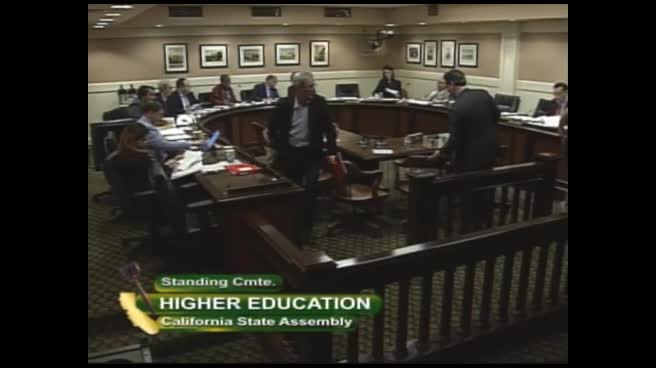
Assembly Standing Committee on Higher Education
Bill Author

Bill Co-Author(s):
