AB 1222: Vehicles: electronic wireless communications devices.
- Session Year: 2017-2018
- House: Assembly
- Latest Version Date: 2017-09-26
Existing law makes it a crime to drive a motor vehicle while holding and operating a handheld wireless telephone or electronic wireless communications device, as specified. Existing law defines an electronic wireless communications device as including, but not limited to, a broadband personal communication device, a specialized mobile radio device, a handheld device or laptop computer with mobile data access, a pager, or a two-way messaging device.
This bill would remove a specialized mobile radio device and a two-way messaging device from the list of devices specifically included as an electronic wireless communications device.
Existing law requires the Department of Motor Vehicles to include within the California Drivers Handbook language regarding rail transit safety, abandonment or dumping of an animal on a highway, and the importance of respecting the right-of-way of others.This bill would require the department to also include within the handbook language regarding distracted driving safety, and would require that language to be initially included at the earliest opportunity when the handbook is otherwise revised or reprinted.Existing law requires the Department of Motor Vehicles to include within the California Drivers Handbook language regarding rail transit safety, abandonment or dumping of an animal on a highway, and the importance of respecting the right-of-way of others.
This bill would require the department to also include within the handbook language regarding distracted driving safety, and would require that language to be initially included at the earliest opportunity when the handbook is otherwise revised or reprinted.
(a)A person shall not drive a motor vehicle while holding and operating a handheld wireless telephone or an electronic wireless communications device unless the wireless telephone or electronic wireless communications device is specifically designed and configured to allow voice-operated and hands-free operation, and it is used in that manner while driving.
(b)This section shall not apply to manufacturer-installed systems that are embedded in the vehicle.
(c)A handheld wireless telephone or electronic wireless communications device may be operated in a manner requiring the use of the drivers hand while the driver is operating the vehicle only if both of the following conditions are satisfied:
(1)The handheld wireless telephone or electronic wireless communications device is mounted on a vehicles windshield in the same manner a portable Global Positioning System (GPS) is mounted pursuant to paragraph (12) of subdivision (b) of Section 26708 or is mounted on or affixed to a vehicles dashboard or center console in a manner that does not hinder the drivers view of the road.
(2)The drivers hand is used to activate or deactivate a feature or function of the handheld wireless telephone or wireless communications device with the motion of a single swipe or tap of the drivers finger.
(d)A violation of this section is an infraction punishable by a base fine of twenty dollars ($20) for a first offense and fifty dollars ($50) for each subsequent offense.
(e)This section does not apply to an emergency services professional using an electronic wireless communications device while operating an authorized emergency vehicle, as defined in Section 165, in the course and scope of his or her duties.
(f)For the purposes of this section, electronic wireless communications device includes, but is not limited to, a broadband personal communication device, a handheld device or laptop computer with mobile data access, or a pager.
(a)A person shall not drive a motor vehicle while holding and operating a handheld wireless telephone or an electronic wireless communications device unless the wireless telephone or electronic wireless communications device is specifically designed and configured to allow voice-operated and hands-free operation, and it is used in that manner while driving.
(b)This section shall not apply to manufacturer-installed systems that are embedded in the vehicle.
(c)A handheld wireless telephone or electronic wireless communications device may be operated in a manner requiring the use of the drivers hand while the driver is operating the vehicle only if both of the following conditions are satisfied:
(1)The handheld wireless telephone or electronic wireless communications device is mounted on a vehicles windshield in the same manner a portable Global Positioning System (GPS) is mounted pursuant to paragraph (12) of subdivision (b) of Section 26708 or is mounted on or affixed to a vehicles dashboard or center console in a manner that does not hinder the drivers view of the road.
(2)The drivers hand is used to activate or deactivate a feature or function of the handheld wireless telephone or wireless communications device with the motion of a single swipe or tap of the drivers finger.
(d)A violation of this section is an infraction punishable by a base fine of twenty dollars ($20) for a first offense and fifty dollars ($50) for each subsequent offense.
(e)This section does not apply to an emergency services professional using an electronic wireless communications device while operating an authorized emergency vehicle, as defined in Section 165, in the course and scope of his or her duties.
(f)For the purposes of this section, electronic wireless communications device includes, but is not limited to, a broadband personal communication device, a specialized mobile radio device, a handheld device or laptop computer with mobile data access, a pager, or a two-way messaging device. or a pager.
SECTION 1.Section 1656.3 of the Vehicle Code is amended to read:1656.3.(a)The department shall include within the California Drivers Handbook, as specified in subdivision (b) of Section 1656, language regarding each of the following:(1)Rail transit safety.(2)Abandonment or dumping of an animal on a highway.(3)The importance of respecting the right-of-way of others, particularly pedestrians, bicycle riders, and motorcycle riders.(4)Distracted driving safety.(b)In order to minimize costs, the language referred to in paragraph (4) of subdivision (a) shall be initially included at the earliest opportunity when the handbook is otherwise revised or reprinted.(a)The department shall include within the California Drivers Handbook, as specified in subdivision (b) of Section 1656, language regarding each of the following:
(1)Rail transit safety.
(2)Abandonment or dumping of any an animal on a highway.
(3)The importance of respecting the right-of-way of others, particularly pedestrians, bicycle riders, and motorcycle riders.
(4)Distracted driving safety.
(b)In order to minimize costs, the language referred to in paragraphs (2) and (3) paragraph (4) of subdivision (a) shall be initially included at the earliest opportunity when the handbook is otherwise revised or reprinted.
|
Date
|
Status
|
|---|---|
| Sep 26, 2017 | Chaptered by Secretary of State - Chapter 297, Statutes of 2017. |
| Sep 26, 2017 | Approved by the Governor. |
| Sep 7, 2017 | Enrolled and presented to the Governor at 3 p.m. |
| Aug 31, 2017 | In Assembly. Ordered to Engrossing and Enrolling. |
| Aug 31, 2017 | Read third time. Passed. Ordered to the Assembly. |
| Aug 22, 2017 | Read second time. Ordered to third reading. |
| Aug 21, 2017 | From committee: Be ordered to second reading pursuant to Senate Rule 28.8. |
| Jul 12, 2017 | From committee: Do pass and re-refer to Com. on APPR. (Ayes 12. Noes 0.) (July 11). Re-referred to Com. on APPR. |
| May 24, 2017 | Referred to Com. on T. & H. |
| May 11, 2017 | In Senate. Read first time. To Com. on RLS. for assignment. |
| May 11, 2017 | Read third time. Passed. Ordered to the Senate. (Ayes 77. Noes 0. Page 1484.) |
| May 4, 2017 | Read second time. Ordered to Consent Calendar. |
| May 3, 2017 | From committee: Do pass. To Consent Calendar. (Ayes 16. Noes 0.) (May 3). |
| Apr 25, 2017 | From committee: Do pass and re-refer to Com. on APPR. with recommendation: To Consent Calendar. (Ayes 14. Noes 0.) (April 24). Re-referred to Com. on APPR. |
| Apr 18, 2017 | Re-referred to Com. on TRANS. |
| Apr 17, 2017 | From committee chair, with author's amendments: Amend, and re-refer to Com. on TRANS. Read second time and amended. |
| Mar 9, 2017 | Referred to Com. on TRANS. |
| Feb 19, 2017 | From printer. May be heard in committee March 21. |
| Feb 17, 2017 | Read first time. To print. |
|
Date
|
Description
|
Location
|
Votes
|
|
|---|---|---|---|---|
| Aug 31, 2017 | Assembly 3rd Reading AB1222 Quirk By Cannella | Senate Floor |
Passed |
|
| Jul 11, 2017 | Do pass, but first be re-referred to the Committee on [Appropriations] | Senate Standing Committee on Transportation and Housing |
Passed |
|
| May 11, 2017 | AB 1222 QUIRK Consent Calendar Second Day Regular Session | Assembly Floor |
Passed |
|
| May 3, 2017 | Do pass. To Consent Calendar. | Assembly Standing Committee on Appropriations |
Passed |
|
| Apr 24, 2017 | Do pass and be re-referred to the Committee on [Appropriations] with recommendation: To Consent Calendar | Assembly Standing Committee on Transportation |
Passed |
This list shows positions taken on this bill by organizations on the date displayed, which is linked to the original source.
Positions by individuals are not included.
|
Organization
|
Position
|
Date
|
|---|---|---|
| bara | ** Against | Aug 22, 2017 |
| california amateur radio operators | ** Against | Aug 22, 2017 |
| California Bus Association | ** Support | Aug 22, 2017 |
| California Chamber Of Commerce | ** Support | Aug 22, 2017 |
| California Delivery Association | ** Support | Aug 22, 2017 |
| California Municipal Utilities Association | ** Support | Aug 22, 2017 |
| California Special Districts Association | ** Support | Aug 22, 2017 |
| California Trucking Association | ** Support | Aug 22, 2017 |
| City Of Sacramento | ** Support | Aug 22, 2017 |
| Coalition of California Utility Employees | ** Support | Aug 22, 2017 |
| MOTOROLA SOLUTIONS | ** Support | Aug 22, 2017 |
| Northern California Power Agency | ** Support | Aug 22, 2017 |
| Pacific Power | ** Support | Aug 22, 2017 |
| pg&e | ** Support | Aug 22, 2017 |
| SMUD | ** Support | Aug 22, 2017 |
| Southern California Edison | ** Support | Aug 22, 2017 |
| Unidentified | * Indeterminate | Jul 11, 2017 |
Office of Senate Floor Analyses (916) 651-1520 Fax: (916) 327-4478 | AB |
THIRD READING
Bill No: AB 1222
:
SENATE TRANS. & HOUSING COMMITTEE: 12-0, 7/11/17
AYES: Beall, Cannella, Allen, Atkins, McGuire, Mendoza, Morrell, Roth, Skinner, Vidak, Wieckowski, Wiener
NO VOTE RECORDED: Gaines
SENATE APPROPRIATIONS COMMITTEE: Senate Rule 28.8
ASSEMBLY FLOOR: 77-0, 5/11/17 (Consent) - See last page for vote
DIGEST:
This bill removes “specialized mobile radio device” and “two way messaging device” as examples of an “electronic wireless communications device” that is prohibited from being used while driving.
- Prohibits driving a vehicle while holding and operating a handheld wireless telephone or an electronic wireless communications device unless the device is designed to allow voice-operated, hands-free operation and is used in that manner.
- Defines an “electronic wireless communications device” to include, but not be limited to, a broadband personal communication device, a specialized mobile radio device, a handheld device or laptop computer with mobile data access, a pager, or a two-way messaging device.
- Allows a driver to activate or deactivate a feature on the device with a single swipe or tap of the driver’s finger if the device is mounted, as described.
- Exempts manufacturer-installed systems that are embedded in the vehicle and also exempts emergency services professionals operating an emergency vehicle.
- Treats violations as an infraction punishable by a base fine of $20 for a first offense and $50 for subsequent offenses.
This bill removes “specialized mobile radio device” and “two way messaging device” as examples of an “electronic wireless communications device.”
Background
- Smarter phones. Ten years ago in 2007, SB 28 (Simitian, Chapter 270, Statutes of 2007) made it illegal to read, write, or receive a text message while driving, expanding on existing prohibitions on wireless telephone use passed the year before. That same year, the iPhone was introduced and released to the public. Since then, simple cellular phones have become GPS-equipped and broadband-enabled computers with large touch screens that fit in a pocket. The “phone” part of smartphone has become almost an afterthought, second to the slew of interactive apps and more advanced messaging available. According to the National Highway Traffic Safety Administration’s National Occupant Protection Use Survey, while the percentage of drivers holding phones to their ears has declined overall since 2006, the percentage of drivers seen visibly manipulating handheld devices, including texting, mapping, emailing, etc., has been trending up. This is especially notable for drivers aged 16-24, increasing from 0.4% in 2006 to 4.9% in 2015. According to the Centers for Disease Control, drivers under 20 have the highest proportion of distraction-related fatal crashes.
- Legal history. In 2014, the California Court of Appeals for the 5th District reviewed a case in which a driver was pulled over and cited for using a cell phone behind the wheel. In court, the driver argued that he was only using his phone to check a map application. The court concluded that the intent of the Legislature in enacting existing prohibitions at the time was only to prohibit the use of a wireless telephone for carrying on a conversation, not for any other purpose. This decision made it difficult for law-enforcement agencies to enforce the prohibition.
- Updating the code. Last year, AB 1785 (Quirk, Chapter 660, Statutes of 2016) was passed with the intent of addressing the use of the ever more intelligent and distracting features of smartphones while driving, updating the telephone and texting-centric statute. To incorporate the new technology, the statute was broadened to not only include a “handheld wireless telephone” but also an “electronic wireless communication device” including mobile, broadband devices. The statute requires drivers to mount their devices to the center console, dashboard, or windshield and only permitted minimal interaction, including a single tap or swipe to initiate or deactivate a feature, such as mapping.
- Installing a patch. AB 1785 defined an “electronic wireless communication device” to include, but not be limited to, a broadband personal communication device, a specialized mobile radio device, a handheld device or laptop computer with mobile data access, a pager, or a two-way messaging device. While the intent was to prohibit the use of smartphones while driving beyond phone calls and texting, it inadvertently created uncertainties for other radio-related devices, including specialized mobile radio devices and two-way messaging devices, often used by drivers for utilities companies. This bill clarifies the intention of the language by removing “specialized mobile radio device” and “two-way messaging device” from the listed examples of an “electronic wireless communication device.” While this bill no longer explicitly lists the two devices, it does retain the phrase “including, but not limited to,” which provides some flexibility.
- Wired radios not considered wireless. The California Highway Patrol (CHP) released an enforcement letter, to be added to their Traffic Enforcement Policy Manual, clarifying their stance regarding certain radios. CHP stated that they do not consider radios with wired hand microphones, such as business band or citizen band (CB) radios, to be a wireless communication device or a specialized mobile radio device. Therefore, current statute does not apply to wired radios from an enforcement standpoint.
Comments
- Purpose. According to the author, “Last year I authored a bill to update our distracted driving laws so that statute is reflective of the various activities smartphones can do. Until last year, California law was silent on whether or not a driver could hold a smartphone to scroll through a music playlist, take a selfie or play video games – even though these activities are equally, if not more, distracting than texting (which, along with holding a phone to make a call, was the only activity explicitly prohibited). AB 1222 seeks to correct a potential unintended consequence regarding two-way communication devices commonly used by trained professionals for brief, verbal communications with their dispatch offices or with other trained professionals. These devices do not possess the myriad distractions of cellular phones. These devices are essential tools operated by trained professionals in accordance with company safety policies. For example, dispatch and coordination is essential during emergencies or in hazardous or remote locations. The types of conversations facilitated by these two-way communication devices are brief and utilitarian in nature.”
Related/Prior Legislation
AB 1785 (Quirk, Chapter 660, Statutes of 2016) replaced prohibitions on texting while driving with broader provisions limiting the use of mobile phones and electronic wireless communications devices while driving.
AB 1646 (Frazier, 2014) would have imposed a violation point for convictions related to the use of a cellular phone while driving, and required the driver’s license examination to assess knowledge of the dangers of using handheld devices while driving. AB 1646 was vetoed by the Governor.
AB 1536 (Miller, Chapter 92, Statutes of 2012) allowed drivers to dictate, send, or listen to text-based communications as long as they do so using technology specifically designed and configured to allow voice-operated and hands-free operation.
SB 28 (Simitian, Chapter 270, Statutes of 2007) prohibited a person from writing, sending, or reading text-based communications while operating a motor vehicle, even if the device is equipped with a hands-free device.
SB 1613 (Simitian, Chapter 290, Statutes of 2006) made it an infraction for any person to drive a motor vehicle while using a wireless phone, unless it is designed and configured to allow hands-free listening and talking and is used in that manner while driving.
FISCAL EFFECT: Appropriation: Fiscal Com.: Local:
California Bus Association
California Chamber of Commerce
California Delivery Association
California Municipal Utilities Association
California Special Districts Association
California Trucking Association
City of Sacramento
Coalition of California Utility Employees
Motorola Solutions
Northern California Power Agency
Pacific Power
PG&E
SMUD
Southern California Edison
OPPOSITION: (Verified 8/21/17)
BARA/California Amateur Radio Operators
ARGUMENTS IN SUPPORT: Writing in support, many utilities groups state that radio devices are essential to their employees’ jobs and emphasized that their use typically involves brief, verbal communications. They write that the radios are often used in emergency situations, communicating on dispatch to coordinate and to relay the status of the situation.
ARGUMENTS IN OPPOSITION: Writing in opposition, three California amateur radio operators state their concerns with several provisions implemented as part of AB 1785, including the exemption for emergency services professionals and device definitions used. They recommend broadening the exemption to emergency services “personnel” instead of professionals and suggest using the term “personal wireless communications device” in the exemption, which is the term used in the federal Moving Ahead for Progress in the 21st Century Act (MAP-21). The author notes these concerns but states that it is not the intent of this bill to modify the existing exemption for emergency services professionals and that the language in this bill was tailored to be specific, with trained professionals in mind.
ASSEMBLY FLOOR: 77-0, 5/11/17
AYES: Acosta, Aguiar-Curry, Travis Allen, Arambula, Baker, Berman, Bigelow, Bloom, Bocanegra, Bonta, Brough, Burke, Caballero, Calderon, Cervantes, Chau, Chávez, Chen, Chiu, Choi, Chu, Cooley, Cooper, Cunningham, Dababneh, Daly, Eggman, Flora, Fong, Frazier, Friedman, Gallagher, Cristina Garcia, Eduardo Garcia, Gipson, Gloria, Gomez, Gonzalez Fletcher, Gray, Grayson, Harper, Holden, Irwin, Jones-Sawyer, Kalra, Kiley, Lackey, Levine, Limón, Low, Maienschein, Mathis, Mayes, McCarty, Medina, Melendez, Mullin, Muratsuchi, Nazarian, Obernolte, Quirk, Quirk-Silva, Reyes, Ridley-Thomas, Rodriguez, Rubio, Salas, Santiago, Steinorth, Mark Stone, Thurmond, Ting, Voepel, Waldron, Weber, Wood, Rendon
NO VOTE RECORDED: Dahle, O'Donnell, Patterson
8/22/17 16:14:22
**** END ****
SENATE COMMITTEE ON TRANSPORTATION AND HOUSING
Senator Jim Beall, Chair
2017 - 2018 Regular
Bill No: Hearing Date: 7/11/2017
Author: | Quirk | ||
Version: | 4/17/2017 Amended | ||
Urgency: | No | Fiscal: | Yes |
Consultant: | Mikel Shybut | ||
SUBJECT:
DIGEST: This bill removes “specialized mobile radio device” and “two way messaging device” as examples of an “electronic wireless communications device” that is prohibited from being used while driving.
ANALYSIS:
Existing law:
- Prohibits driving a vehicle while holding and operating a handheld wireless telephone or an electronic wireless communications device unless the device is designed to allow voice-operated, hands-free operation and is used in that manner.
- Defines an “electronic wireless communications device” to include, but not be limited to, a broadband personal communication device, a specialized mobile radio device, a handheld device or laptop computer with mobile data access, a pager, or a two-way messaging device.
- Allows a driver to activate or deactivate a feature on the device with a single swipe or tap of the driver’s finger if the device is mounted, as described.
- Exempts manufacturer-installed systems that are embedded in the vehicle and also exempts emergency services professionals operating an emergency vehicle.
- Treats violations as an infraction punishable by a base fine of $20 for a first offense and $50 for subsequent offenses.
This bill removes “specialized mobile radio device” and “two way messaging device” as examples of an “electronic wireless communications device.”
COMMENTS:
- Purpose. According to the author, “Last year I authored a bill to update our distracted driving laws so that statute is reflective of the various activities smartphones can do. Until last year, California law was silent on whether or not a driver could hold a smartphone to scroll through a music playlist, take a selfie or play video games – even though these activities are equally, if not more, distracting than texting (which, along with holding a phone to make a call, was the only activity explicitly prohibited). AB 1222 seeks to correct a potential unintended consequence regarding two-way communication devices commonly used by trained professionals for brief, verbal communications with their dispatch offices or with other trained professionals. These devices do not possess the myriad distractions of cellular phones. These devices are essential tools operated by trained professionals in accordance with company safety policies. For example, dispatch and coordination is essential during emergencies or in hazardous or remote locations. The types of conversations facilitated by these two-way communication devices are brief and utilitarian in nature.”
- Smarter phones. Ten years ago in 2007, SB 28 (Simitian, Chapter 270 of 2007) made it illegal to read, write, or receive a text message while driving, expanding on existing prohibitions on wireless telephone use passed the year before. That same year, the iPhone was introduced and released to the public. Since then, simple cellular phones have become GPS-equipped and broadband-enabled computers with large touch screens that fit in a pocket. The “phone” part of smartphone has become almost an afterthought, second to the slew of interactive apps and more advanced messaging available. According to the National Highway Traffic Safety Administration’s (NHTSA’s) National Occupant Protection Use Survey (NOPUS), while the percentage of drivers holding phones to their ears has declined overall since 2006, the percentage of drivers seen visibly manipulating handheld devices, including texting, mapping, emailing, etc., has been trending up. This is especially notable for drivers aged 16-24, increasing from 0.4% in 2006 to 4.9% in 2015. According to the Centers for Disease Control (CDC), drivers under 20 have the highest proportion of distraction-related fatal crashes.
- Legal history. In 2014, the California Court of Appeals for the 5th District reviewed a case in which a driver was pulled over and cited for using a cell phone behind the wheel. In court, the driver argued that he was only using his phone to check a map application. The court concluded that the intent of the Legislature in enacting existing prohibitions at the time was only to prohibit the use of a wireless telephone for carrying on a conversation, not for any other purpose. This decision made it difficult for law-enforcement agencies to enforce the prohibition.
- Updating the code. Last year, AB 1785 (Quirk, Chapter 660 of 2016) was passed with the intent of addressing the use of the ever more intelligent and distracting features of smartphones while driving, updating the telephone and texting-centric statute. To incorporate the new technology, the statute was broadened to not only include a “handheld wireless telephone” but also an “electronic wireless communication device” including mobile, broadband devices. The statute requires drivers to mount their devices to the center console, dashboard, or windshield and only permitted minimal interaction, including a single tap or swipe to initiate or deactivate a feature, such as mapping.
- Installing a patch. AB 1785 defined an “electronic wireless communication device” to include, but not be limited to, a broadband personal communication device, a specialized mobile radio device, a handheld device or laptop computer with mobile data access, a pager, or a two-way messaging device. While the intent was to prohibit the use of smartphones while driving beyond phone calls and texting, it inadvertently created uncertainties for other radio-related devices, including specialized mobile radio devices and two-way messaging devices, often used by drivers for utilities companies. Writing in support, many utilities groups state that radio devices are essential to their employees’ jobs and emphasized that their use typically involves brief, verbal communications. They write that the radios are often used in emergency situations, communicating on dispatch to coordinate and to relay the status of the situation. This bill clarifies the intention of the language by removing “specialized mobile radio device” and “two-way messaging device” from the listed examples of an “electronic wireless communication device.” While this bill no longer explicitly lists the two devices, it does retain the phrase “including, but not limited to,” which provides some flexibility.
- Wired radios not considered wireless. The California Highway Patrol (CHP) released an enforcement letter, to be added to their Traffic Enforcement Policy Manual, clarifying their stance regarding certain radios. CHP stated that they do not consider radios with wired hand microphones, such as business band or citizen band (CB) radios, to be a wireless communication device or a specialized mobile radio device. Therefore, current statute does not apply to wired radios from an enforcement standpoint. Writing in opposition, three California amateur radio operators state their concerns with several provisions implemented as part of AB 1785, including the exemption for emergency services professionals and device definitions used. They recommend broadening the exemption to emergency services “personnel” instead of professionals and suggest using the term “personal wireless communications device” in the exemption, which is the term used in the federal Moving Ahead for Progress in the 21st Century Act (MAP-21). The author notes these concerns but states that it is not the intent of this bill to modify the existing exemption for emergency services professionals and that the language in this bill was tailored to be specific, with trained professionals in mind.
Related Legislation:
AB 1785 (Quirk, Chapter 660, Statutes of 2016) — replaced prohibitions on texting while driving with broader provisions limiting the use of mobile phones and electronic wireless communications devices while driving.
AB 1646 (Frazier, 2014) — would have imposed a violation point for convictions related to the use of a cellular phone while driving, and required the driver’s license examination to assess knowledge of the dangers of using handheld devices while driving. AB 1646 was vetoed by the Governor.
AB 1536 (Miller, Chapter 92, Statutes of 2012) — allowed drivers to dictate, send, or listen to text-based communications as long as they do so using technology specifically designed and configured to allow voice-operated and hands-free operation.
SB 28 (Simitian, Chapter 270, Statutes of 2007) — prohibited a person from writing, sending, or reading text-based communications while operating a motor vehicle, even if the device is equipped with a hands-free device.
SB 1613 (Simitian, Chapter 290, Statutes of 2006) — made it an infraction for any person to drive a motor vehicle while using a wireless phone, unless it is designed and configured to allow hands-free listening and talking and is used in that manner while driving
Assembly Votes:
Floor: 77-0
Appr: 16-0
Trans: 14-0
FISCAL EFFECT: Appropriation: No Fiscal Com.: Yes Local: No
POSITIONS: (Communicated to the committee before noon on Wednesday,
July 5, 2017.)
SUPPORT:
California Bus Association
California Delivery Association
California Municipal Utilities Association
California Special Districts Association
California Trucking Association
City of Sacramento
Coalition of California Utility Employees
Motorola Solutions
Northern California Power Agency
Pacific Power
PG&E
SMUD
Southern California Edison
OPPOSITION:
BARA/California Amateur Radio Operators
-- END --
Date of Hearing: May 3, 2017
ASSEMBLY COMMITTEE ON APPROPRIATIONS
Lorena Gonzalez Fletcher, Chair
ABPCA Bill Id:AB 1222
Author:(Quirk) – As Amended Ver:April 17, 2017
Policy Committee: | Transportation | Vote: | 14 - 0 |
|
| ||
|
|
Urgency: No State Mandated Local Program: No Reimbursable: No
SUMMARY:
This bill removes “specialized mobile radio device” and “two-way messaging device” from the definition of “electronic wireless communications device” for purposes of defining the types of handheld communications devices that are prohibited while driving.
FISCAL EFFECT:
Negligible fiscal effect.
COMMENTS:
- Background. AB 1785 (Quirk), Chapter 660, Statutes of 2016, clarified in state law that a person is prohibited from using a wireless telephone or an electronic wireless communications device for any purpose while driving, in order to encompass the scope of activities included in “using” a wireless telephone or electronic wireless communications device to address narrow judicial interpretations of the original ban on using a handheld wireless communication device that was enacted in 2006. Thus, existing law prohibits a person from driving a motor vehicle while holding and operating a wireless telephone or an electronic wireless communications device unless the wireless telephone or electronic wireless communications device is specifically designed for and used in a voice-operated and hands-free manner. Existing law also specifies that that an “electronic wireless communications device” includes, but is not limited to, a broadband personal communication device, a specialized mobile radio device, a handheld device or laptop computer with mobile data access, a pager, or a two-way message device.
- Purpose. The author believes AB 1785 inadvertently included devices that were not intended to be included in the wider cellphone ban. Devices such as two-way radios functioning on business band or civilian band (CB) radios which have a more limited scope of functions, and thus, a more limited potential for distracting a driver. With this bill, the author intends to provide technical cleanup to AB 1785, so that it is not construed to limit the use of two-way wireless communication devices utilized by either trained professionals or individuals that have been properly licensed for brief, verbal communications essential to the functioning of their job duties.
Analysis Prepared by: Jessica Peters / APPR. / (916) 319-2081
Date of Hearing: April 24, 2017
ASSEMBLY COMMITTEE ON TRANSPORTATION
Jim Frazier, Chair
ABPCA Bill Id:AB 1222 (
Author:Quirk) – As Amended Ver:April 17, 2017
SUBJECT: Vehicles: electronic wireless communications devices
SUMMARY: Strikes “specialized mobile radio device” and “two-way messaging device” from the definition of “electronic wireless communications device”.
EXISTING LAW:
- Prohibits a person from driving a motor vehicle while holding and operating a wireless telephone or an electronic wireless communications device unless the wireless telephone or electronic wireless communications device is specifically designed for and used in a voice-operated and hands-free manner.
- Provides that this prohibition does not apply to factory-installed electronic wireless communications devices located in a vehicle's dashboard, as specified or to a wireless telephone or device mounted on a vehicle's windshield, as specified.
- Prohibits a person under the age of 18 from driving while using a wireless telephone or an electronic wireless communications device, even if it is equipped with a hands-free device.
- Establishes a base fine of $20 for a first violation and $50 for each subsequent violation of each above prohibition.
- Provides that an “electronic wireless communications device” includes, but is not limited to, a broadband personal communication device, a specialized mobile radio device, a handheld device or laptop computer with mobile data access, a pager, or a two-way message device.
FISCAL EFFECT: Unknown
COMMENTS: Since 2006, California has prohibited driving a motor vehicle while using a wireless telephone unless the device is configured to allow for hands-free listening and talking. In 2008, this ban expanded to prohibit a person from writing, sending or reading text-based communications while driving [SB 28 (Simitian), Chapter 270, Statutes of 2008]. In 2013, the Legislature again expanded this ban to prohibit anyone younger than 18 years of age from operating a wireless communications device while driving, regardless of the device's hands-free capability [SB 194 (Galgiani), Chapter 754, Statutes of 2013].
Last year, Governor Brown signed AB 1785 (Quirk), Chapter 660, Statutes of 2016, which clarified that a person is prohibited from using a wireless telephone or an electronic wireless communications device for any purpose while driving, in order to encompass the scope of activities included in “using” a wireless telephone or electronic wireless communications device and address narrow judicial interpretations of the original ban. This wider ban was intended to address the problem of distracted driving on California roads, which resulted in 12 fatal collisions, over 500 injury collisions, and nearly 700 property damage collisions as a result of cellphone-related distraction in 2015.
The author believes AB 1785 inadvertently included devices that were not intended to be included in the wider cellphone ban. Devices such as two-way radios functioning on business band or civilian band (CB) radios which have a more limited scope of functions, and thus, a more limited potential for distracting a driver.
With this bill, the author intends to provide technical cleanup to AB 1785, so that it is not construed to limit the use of two-way wireless communication devices utilized by either trained professionals or individuals that have been properly licensed for brief, verbal communications essential to the functioning of their job duties.
According to guidance issued by the California Highway Patrol, a radio installed and mounted in a vehicle with a wired hand microphone, for example, business band or CB radio, is not considered to be wireless communication device, nor is it considered a specialized mobile radio device, and therefore not subject to enforcement under AB 1785. This bill is consistent with that guidance, and codifies that distinction.
REGISTERED SUPPORT / OPPOSITION:
Support
California Delivery Association (previous version of bill)
Southern California Edison
Opposition
None on file
Analysis Prepared by: Justin Behrens / TRANS. /
Discussed in Hearing
 2MIN
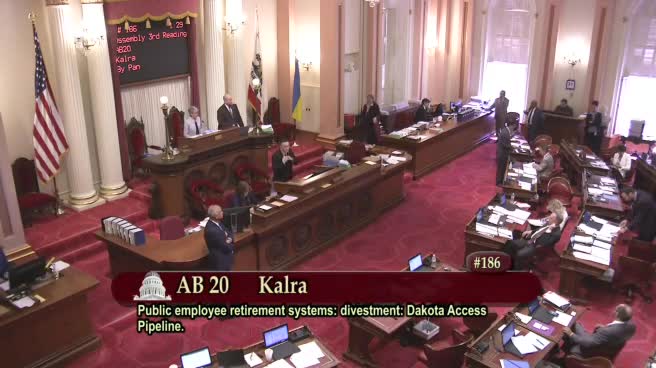
Senate Floor
 8MIN
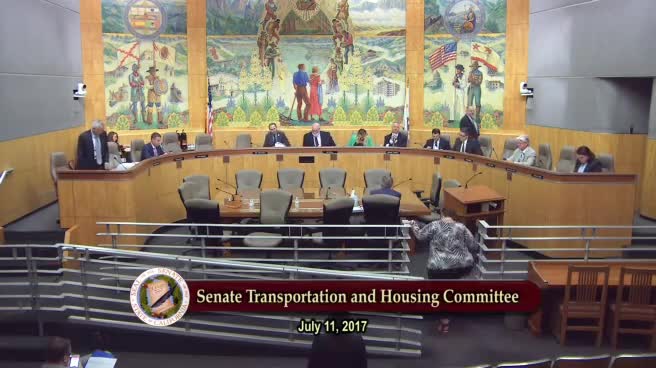
Senate Standing Committee on Transportation and Housing
Bill Author

Bill Co-Author(s):