AB 1229: Healing arts: Board of Vocational Nursing and Psychiatric Technicians of the State of California.
- Session Year: 2017-2018
- House: Assembly
- Latest Version Date: 2017-10-08
Existing law establishes the Department of Consumer Affairs and places the department under the control of the Director of Consumer Affairs. Existing law requires the Board of Vocational Nursing and Psychiatric Technicians of the State of California, which is within the department, to license and regulate vocational nurses and psychiatric technicians and requires the board to appoint an executive officer to perform duties as delegated by the board. Existing law repeals the provisions establishing the board and the boards authority to appoint an executive officer on January 1, 2018.
This bill would extend the operation of the board and its authority to license and regulate vocational nurses and psychiatric technicians until January 1, 2021. The bill would temporarily abolish the existing executive officer provision and would establish a new executive officer who would be appointed by the Governor and who would serve at the pleasure of the Governor. The bill would require the newly established executive officer to perform duties as delegated by the board, would prohibit the executive officer from being a member of the board, and would provide that the executive officer is entitled to necessary expenses in the performance of his or her duties. The bill would repeal the provisions regarding the new executive officer on January 1, 2020. The bill would, if the board becomes inoperative or is repealed, authorize the director, until December 31, 2024, to assume the duties, powers, purposes, responsibilities, and jurisdiction of the board and its executive officer that are not otherwise repealed or made inoperative. The bill would also make nonsubstantive changes.
Existing law requires the director to appoint an administrative and enforcement program monitor to monitor and evaluate the administrative process and disciplinary system and procedures of the board and requires the monitor to submit a report of his or her findings and conclusions to the Legislature, the department, and the board, as specified.
This bill would require the board to submit written reports to the director and the Legislature no later than April 1, 2018, July 1, 2018, October 1, 2018, January 1, 2019, July 1, 2019, and January 1, 2020, demonstrating its progress in implementing the administrative and enforcement program monitors recommendations.
This bill would require staff of the board to meet with staff from the departments Division of Investigation no later than March 1, 2018, June 1, 2018, September 1, 2018, and December 1, 2018, and each March 1, June 1, September 1, and December 1 thereafter, for the purpose of ensuring the appropriate function and operation of the boards enforcement program. The bill would require the board to submit a report to the department in advance of each meeting that includes, at a minimum, certain information. The bill would require the board and its staff to cooperate with the director and the department. The bill would repeal these provisions on January 1, 2020.
The bill would authorize the director to direct department staff to review and evaluate the boards licensing systems and procedures for the purpose of identifying deficiencies and improving quality and efficiency of the boards licensing process, and would require the board and the boards staff to cooperate with the director and the department, as specified. The bill would repeal these provisions on January 1, 2020.
Existing law establishes the Vocational Nursing and Psychiatric Technicians Fund in the State Treasury, and requires that all money in the fund be used to carry out the Vocational Nursing Practice Act and the Psychiatric Technicians Law, and for the refund of license fees and other moneys paid into the fund under certain provisions of law. Existing law requires that claims against the fund be audited by the Controller, and paid by the Treasurer upon warrants drawn by the Controller.
This bill would specify that moneys in the fund shall be available upon appropriation by the Legislature.
Existing law establishes the Department of Consumer Affairs and places the department under the control of the Director of Consumer Affairs. Existing law requires the Board of Vocational Nursing and Psychiatric Technicians of the State of California, which is within the department, to license and regulate vocational nurses and psychiatric technicians and requires the board to appoint an executive officer to perform duties as delegated by the board. Existing law repeals the provisions establishing the board and the boards authority to appoint an executive officer on January 1, 2018.
This bill would extend the operation of the board and its authority to license and regulate vocational nurses and psychiatric technicians until January 1, 2020. 2021. The bill would temporarily abolish the existing executive officer provision and would establish a new executive officer who would be appointed by the Governor and who would serve at the pleasure of the Governor. The bill would require the newly established executive officer to perform duties as delegated by the board, would prohibit the executive officer from being a member of the board, and would provide that the executive officer is entitled to necessary expenses in the performance of his or her duties. The bill would repeal the provisions regarding the new executive officer on January 1, 2020. The bill would provide that the repeal of the provisions regarding the operation of the board and the Governors authority to appoint an executive officer render the successor entity to the board subject to review by the appropriate policy committees of the Legislature. The bill would, if the board becomes inoperative or is repealed, authorize the director, until December 31, 2023, 2024, to assume the duties, powers, purposes, responsibilities, and jurisdiction of the board and its executive officer that are not otherwise repealed or made inoperative. The bill would also make nonsubstantive changes.
Existing law requires the director to appoint an administrative and enforcement program monitor to monitor and evaluate the administrative process and disciplinary system and procedures of the board and requires the monitor to submit a report of his or her findings and conclusions to the Legislature, the department, and the board, as specified.
This bill would require the board to submit written reports to the director and the Legislature no later than April 1, 2018, July 1, 2018, October 1, 2018, January 1, 2019, July 1, 2019, and January 1, 2020, demonstrating its progress in implementing the administrative and enforcement program monitors recommendations.
This bill would require staff of the board to meet with staff from the departments Division of Investigation no later than March 1, 2018, June 1, 2018, September 1, 2018, and December 1, 2018, and each March 1, June 1, September 1, and December 1 thereafter, for the purpose of ensuring the appropriate function and operation of the boards enforcement program. The bill would require the board to submit a report to the department in advance of each meeting that includes, at a minimum, certain information. The bill would require the board and its staff to cooperate with the director and the department. The bill would repeal these provisions on January 1, 2020.
The bill would authorize the director to direct department staff to review and evaluate the boards licensing systems and procedures for the purpose of identifying deficiencies and improving quality and efficiency of the boards licensing process, would authorize the department to enter into a personal service contract to assist in the review and evaluation, and would require the board and the boards staff to cooperate with the director and the department, as specified. The bill would repeal these provisions on January 1, 2020.
Existing law requires the board to discipline the holder of any license whose default has been entered or who has been heard by the board and found guilty by certain methods including revoking his or her license.This bill would require the board to delegate to its executive officer the authority to adopt a decision entered by default and a stipulation for surrender of a license.Existing law establishes the Vocational Nursing and Psychiatric Technicians Fund in the State Treasury, and requires that all money in the fund be used to carry out the Vocational Nursing Practice Act and the Psychiatric Technicians Law, and for the refund of license fees and other moneys paid into the fund under certain provisions of law. Existing law requires that claims against the fund be audited by the Controller, and paid by the Treasurer upon warrants drawn by the Controller.
This bill would specify that moneys in the fund shall be available upon appropriation of the Legislature.
Existing law establishes the Department of Consumer Affairs and places the department under the control of the Director of Consumer Affairs. Existing law requires the Board of Vocational Nursing and Psychiatric Technicians of the State of California, which is within the Department of Consumer Affairs, department, to license and regulate vocational nurses and psychiatric technicians and requires the board to appoint an executive officer to perform duties as delegated by the board. Existing law repeals the provisions establishing the board and the boards authority to appoint an executive officer on January 1, 2018.
This bill would extend the operation of the board and its authority to license and regulate vocational nurses and psychiatric technicians until January 1, 2020. The bill would abolish the existing executive officer provision and would establish a new executive officer who would be appointed by the Governor and who would serve at the pleasure of the Governor. The bill would require the newly established executive officer to perform duties as delegated by the board, would prohibit the executive officer from being a member of the board, and would provide that the executive officer is entitled to necessary expenses in the performance of his or her duties. The bill would repeal the provisions regarding the executive officer on January 1, 2020. The bill would provide that the repeal of the provisions regarding the operation of the board and the boards Governors authority to appoint an executive officer render the successor entity to the board subject to review by the appropriate policy committees of the Legislature. The bill would, if the board becomes inoperative or is repealed, authorize the director, until December 31, 2023, to assume the duties, powers, purposes, responsibilities, and jurisdiction of the board and its executive officer that are not otherwise repealed or made inoperative. The bill would also make nonsubstantive changes.
Existing law requires the director to appoint an administrative and enforcement program monitor to monitor and evaluate the administrative process and disciplinary system and procedures of the board and requires the monitor to submit a report of his or her findings and conclusions to the Legislature, the department, and the board, as specified.
This bill would require the board to submit written reports to the director and the Legislature no later than April 1, 2018, July 1, 2018, October 1, 2018, January 1, 2019, July 1, 2019, and January 1, 2020, demonstrating its progress in implementing the administrative and enforcement program monitors recommendations.
This bill would require staff of the board to meet with staff from the departments Division of Investigation no later than March 1, 2018, June 1, 2018, September 1, 2018, and December 1, 2018, and each March 1, June 1, September 1, and December 1 thereafter, for the purpose of ensuring the appropriate function and operation of the boards enforcement program. The bill would require the board to submit a report to the department in advance of each meeting that includes, at a minimum, certain information. The bill would require the board and its staff to cooperate with the director and the department. The bill would repeal these provisions on January 1, 2020.
The bill would authorize the director to direct department staff to review and evaluate the boards licensing systems and procedures for the purpose of identifying deficiencies and improving quality and efficiency of the boards licensing process, would authorize the department to enter into a personal service contract to assist in the review and evaluation, and would require the board and the boards staff to cooperate with the director and the department, as specified. The bill would repeal these provisions on January 1, 2020.
Existing law requires the board to discipline the holder of any license whose default has been entered or who has been heard by the board and found guilty by certain methods including revoking his or her license.
This bill would require the board to delegate to its executive officer the authority to adopt a decision entered by default and a stipulation for surrender of a license.
Existing law establishes the Vocational Nursing and Psychiatric Technicians Fund in the State Treasury, and requires that all money in the fund be used to carry out the Vocational Nursing Practice Act and the Psychiatric Technicians Law, and for the refund of license fees and other moneys paid into the fund under certain provisions of law. Existing law requires that claims against the fund be audited by the Controller, and paid by the Treasurer upon warrants drawn by the Controller.
This bill would specify that moneys in the fund shall be available upon appropriation of the Legislature.
Existing law requires the Board of Vocational Nursing and Psychiatric Technicians of the State of California, which is within the Department of Consumer Affairs, to license and regulate vocational nurses and psychiatric technicians and requires the board to appoint an executive officer to perform duties as delegated by the board. Existing law repeals the provisions establishing the board and the boards authority to appoint an executive officer on January 1, 2018.
This bill would provide that the repeal of the provisions regarding the operation of the board and the boards authority to appoint an executive officer render the successor entity to the board subject to review by the appropriate policy committees of the Legislature. The bill would also make nonsubstantive changes.
(a)There is in the Department of Consumer Affairs a Board of Vocational Nursing and Psychiatric Technicians of the State of California, which consists of 11 members.
(b)Within the meaning of this chapter, board, or the board, refers to the Board of Vocational Nursing and Psychiatric Technicians of the State of California.
(c)This section shall remain in effect only until January 1, 2021, and as of that date is repealed.
SEC. 2.Section 2841.2 is added to the Business and Professions Code, to read:2841.2.Notwithstanding any other law, the repeal of Section 2841 renders the successor entity to the board in Section 2841 subject to review by the appropriate policy committees of the Legislature.
SEC. 3.Section 2841.3 is added to the Business and Professions Code, to read:2841.3.If the board becomes inoperative or is repealed, the director may, until December 31, 2024, assume the duties, powers, purposes, responsibilities, and jurisdiction of the board and its executive officer that are not otherwise repealed or made inoperative.
SEC. 4.Section 2847.1 of the Business and Professions Code is amended to read:2847.1.(a)The board shall select an executive officer who shall perform duties as are delegated by the board and who shall be responsible to it for the accomplishment of those duties. The executive officer shall not be a member of the board.
(b)With the approval of the Director of Finance, the board shall fix the salary of the executive officer.
(c)The executive officer shall be entitled to traveling and other necessary expenses in the performance of his or her duties. He or she shall make a statement, certified before a duly authorized person, that the expenses have been actually incurred.
(d)Commencing January 1, 2018, the executive officer appointed by the board pursuant to subdivision (a) is abolished. Thereafter, until January 1, 2020, the executive officer shall be appointed as set forth in Section 2847.3. Commencing January 1, 2020, the executive officer shall, again, be appointed by the board as set forth in subdivision (a).
(e)This section shall remain in effect only until January 1, 2021, and as of that date is repealed.
SEC. 5.Section 2847.3 is added to the Business and Professions Code, to read:2847.3.(a)Commencing January 1, 2018, the executive officer position established pursuant to subdivision (d) of Section 2847.1 is temporarily abolished. Commencing January 1, 2018, the Governor shall appoint an executive officer who shall perform duties as are delegated by the board and who shall be responsible for the accomplishment of those duties. The executive officer shall exercise all powers, discharge all responsibilities, and administer and enforce all laws pursuant to this chapter and Chapter 10 (commencing with Section 4500) of Division 2 that are necessary to perform the duties delegated by the board.
(b)The executive officer shall serve at the pleasure of the Governor and the Governor shall fix the salary of the executive officer. The executive officer shall not be a member of the board.
(c)The executive officer shall be entitled to traveling and other necessary expenses in the performance of his or her duties.
(d)This section shall become operative on January 1, 2018, and shall remain in effect only until January 1, 2020, and as of that date is repealed.
SEC. 6.Section 2847.6 is added to the Business and Professions Code, to read:2847.6.The board shall submit written reports to the director and the Legislature no later than April 1, 2018, July 1, 2018, October 1, 2018, January 1, 2019, July 1, 2019, and January 1, 2020, demonstrating its progress in implementing the administrative and enforcement program monitors recommendations pursuant to Section 2847.5.
SEC. 7.Section 2847.7 is added to the Business and Professions Code, to read:2847.7.(a)The director may direct department staff, including staff of the Strategic Organization, Leadership, and Individual Development (SOLID) Training and Planning Office, to review and evaluate the boards licensing systems and procedures, as determined appropriate by the director, for the purpose of identifying deficiencies and improving the quality and efficiency of the boards licensing processes.
(b)The board and its staff shall cooperate with the director and the department and shall comply with the departments request to provide access to board staff, data, information, and files, as requested, to perform the review and evaluation specified in subdivision (a).
(c)This section shall remain in effect only until January 1, 2020, and as of that date is repealed.
SEC. 8.Section 2847.8 is added to the Business and Professions Code, to read:2847.8.(a)Staff of the board shall meet with staff from the departments Division of Investigation no later than March 1, 2018, June 1, 2018, September 1, 2018, and December 1, 2018, and each March 1, June 1, September 1, and December 1 thereafter, for the purpose of ensuring the appropriate function and operation of the boards enforcement program.
(b)The board shall submit a report to the department in advance of each meeting specified in subdivision (a) that includes, at a minimum, the following information for each complaint:
(1)The type of allegation.
(2)A summary of the complaint.
(3)The current status of the complaint.
(4)Information identifying whether the complaint was assigned to the Division of Investigation or retained by the board for investigation.
(c)The board and its staff shall cooperate with the director and the department and shall comply with the departments request to provide access to board staff, data, information, and files as requested.
(d)The director, through the Division of Investigation, shall have the authority to determine the need for and to implement changes necessary for the appropriate administration of the boards enforcement functions.
(e)This section shall remain in effect only until January 1, 2020, and as of that date is repealed.
SEC. 9.Section 2867.5 of the Business and Professions Code is amended to read:2867.5.Every person to whom a license is issued shall, as a condition precedent to its issuance and in addition to any other fee that may be payable, pay the initial license fee prescribed by this chapter.
SEC. 10.Section 2894 of the Business and Professions Code is amended to read:2894.(a)All money in the Vocational Nursing and Psychiatric Technicians Fund shall be available, upon appropriation of the Legislature, to carry out this chapter, including the promotion of nursing education in this state, and Chapter 10 (commencing with Section 4500), and for the refund, in accordance with law, of license fees or other moneys paid into the Vocational Nursing and Psychiatric Technicians Fund under the provisions of this chapter and Chapter 10 (commencing with Section 4500).
(b)Claims against the Vocational Nursing and Psychiatric Technicians Fund shall be audited by the Controller, and shall be paid by the Treasurer upon warrants drawn by the Controller.
SEC. 11.Section 4501 of the Business and Professions Code is amended to read:4501.(a)Board, as used in this chapter, means the Board of Vocational Nursing and Psychiatric Technicians of the State of California.
(b)This section shall remain in effect only until January 1, 2021, and as of that date is repealed.
SEC. 12.Section 4501.2 is added to the Business and Professions Code, to read:4501.2.Notwithstanding any other law, the repeal of Section 4501 renders the successor entity to the board in Section 4501 subject to review by the appropriate policy committees of the Legislature.
SEC. 13.Section 4503 of the Business and Professions Code is amended to read:4503.(a)The board shall administer and enforce this chapter.
(b)This section shall remain in effect only until January 1, 2021, and as of that date is repealed.
SEC. 14.Section 4503.1 is added to the Business and Professions Code, to read:4503.1.Notwithstanding any other law, the repeal of Section 4503 renders the successor entity to the board in Section 4503 subject to review by the appropriate policy committees of the Legislature.
(a)There is in the Department of Consumer Affairs a Board of Vocational Nursing and Psychiatric Technicians of the State of California, which consists of 11 members.
(b)Within the meaning of this chapter, board, or the board, refers to the Board of Vocational Nursing and Psychiatric Technicians of the State of California.
(c)This section shall remain in effect only until January 1, 2020, 2021, and as of that date is repealed.
SEC. 2.Section 2841.2 is added to the Business and Professions Code, to read:2841.2.Notwithstanding any other law, the repeal of Section 2841 renders the successor entity to the board in Section 2841 subject to review by the appropriate policy committees of the Legislature.
SEC. 3.Section 2841.3 is added to the Business and Professions Code, to read:2841.3.If the board becomes inoperative or is repealed, the director may, until December 31, 2023, 2024, assume the duties, powers, purposes, responsibilities, and jurisdiction of the board and its executive officer that are not otherwise repealed or made inoperative.
SEC. 4.Section 2847.1 of the Business and Professions Code is amended to read:2847.1.(a)The board shall select an executive officer who shall perform duties as are delegated by the board and who shall be responsible to it for the accomplishment of those duties. The executive officer shall not be a member of the board.
(b)With the approval of the Director of Finance, the board shall fix the salary of the executive officer.
(c)The executive officer shall be entitled to traveling and other necessary expenses in the performance of his or her duties. He or she shall make a statement, certified before a duly authorized person, that the expenses have been actually incurred.
(d)Commencing January 1, 2018, the executive officer appointed by the board pursuant to subdivision (a) is abolished. Thereafter, until January 1, 2020, the executive officer shall be appointed as set forth in Section 2847.3. Commencing January 1, 2020, the executive officer shall, again, be appointed by the board as set forth in subdivision (a).
(d)(e)This section shall remain in effect only until January 1, 2018, 2021, and as of that date is repealed.
SEC. 4.Section 2847.2 is added to the Business and Professions Code, to read:2847.2.Notwithstanding any other law, the repeal of Section 2847.1 or Section 2847.3 renders the successor entity to the board in Section 2847.1 or Section 2847.3 subject to review by the appropriate policy committees of the Legislature.SEC. 5.Section 2847.3 is added to the Business and Professions Code, to read:2847.3.(a)The Commencing January 1, 2018, the executive officer position established pursuant to subdivision (d) of Section 2847.1 is abolished and a new executive officer position is established pursuant to this section.
(b)Notwithstanding any other law, the Governor shall appoint temporarily abolished. Commencing January 1, 2018, the Governor shall appoint an executive officer who shall perform duties as are delegated by the board and who shall be responsible for the accomplishment of those duties. The executive officer shall exercise all powers, discharge all responsibilities, and administer and enforce all laws pursuant to this chapter and Chapter 10 (commencing with Section 4500) of Division 2 that are necessary to perform the duties delegated by the board.
(c)(b)The executive officer shall serve at the pleasure of the Governor and the Governor shall fix the salary of the executive officer. The executive officer shall not be a member of the board.
(d)(c)The executive officer shall be entitled to traveling and other necessary expenses in the performance of his or her duties.
(e)(d)This section shall become operative on January 1, 2018, and shall remain in effect only until January 1, 2020, and as of that date is repealed.
SEC. 6.Section 2847.6 is added to the Business and Professions Code, to read:2847.6.The board shall submit written reports to the director and the Legislature no later than April 1, 2018, July 1, 2018, October 1, 2018, January 1, 2019, July 1, 2019, and January 1, 2020, demonstrating its progress in implementing the administrative and enforcement program monitors recommendations pursuant to Section 2847.5.
SEC. 7.Section 2847.7 is added to the Business and Professions Code, to read:2847.7.(a)The director may direct department staff, including staff of the Strategic Organization, Leadership, and Individual Development (SOLID) Training and Planning Office, to review and evaluate the boards licensing systems and procedures, as determined appropriate by the director, for the purpose of identifying deficiencies and improving the quality and efficiency of the boards licensing processes.
(b)The board and its staff shall cooperate with the director and the department and shall comply with the departments request to provide access to board staff, data, information, and files, as requested, to perform the review and evaluation specified in subdivision (a).
(c)The department may enter into a personal services contract with an appropriate independent contractor to assist in the review and evaluation required by subdivision (a).(d)(c)This section shall remain in effect only until January 1, 2020, and as of that date is repealed.
SEC. 8.Section 2847.8 is added to the Business and Professions Code, to read:2847.8.(a)Staff of the board shall meet with staff from the departments Division of Investigation no later than March 1, 2018, June 1, 2018, September 1, 2018, and December 1, 2018, and each March 1, June 1, September 1, and December 1 thereafter, for the purpose of ensuring the appropriate function and operation of the boards enforcement program.
(b)The board shall submit a report to the department in advance of each meeting specified in subdivision (a) that includes, at a minimum, the following information for each complaint:
(1)The type of allegation.
(2)A summary of the complaint.
(3)The current status of the complaint.
(4)Information identifying whether the complaint was assigned to the Division of Investigation or retained by the board for investigation.
(c)The board and its staff shall cooperate with the director and the department and shall comply with the departments request to provide access to board staff, data, information, and files as requested.
(d)The director director, through the Division of Investigation, shall have the authority to determine the need for and to implement changes necessary for the appropriate administration of the boards enforcement functions.
(e)This section shall remain in effect only until January 1, 2020, and as of that date is repealed.
SEC. 9.Section 2867.5 of the Business and Professions Code is amended to read:2867.5.Every person to whom a license is issued shall, as a condition precedent to its issuance and in addition to any other fee that may be payable, pay the initial license fee prescribed by this chapter.
SEC. 10.Section 2876 of the Business and Professions Code is amended to read:2876.(a)The board shall discipline the holder of any license, whose default has been entered or who has been heard by the board and found guilty, by any of the following methods:(1)Suspending judgment.(2)Placing him upon probation.(3)Suspending his right to practice vocational nursing for a period not exceeding one year.(4)Revoking his or her license.(5)Taking other action in relation to disciplining him or her as the board in its discretion may deem proper.(b)The board shall delegate to its executive officer the authority to adopt a decision entered by default and a stipulation for surrender of a license.SEC. 11.SEC. 10.Section 2894 of the Business and Professions Code is amended to read:2894.(a)All money in the Vocational Nursing and Psychiatric Technicians Fund shall be available, upon appropriation of the Legislature, to carry out this chapter, including the promotion of nursing education in this state, and Chapter 10 (commencing with Section 4500), and for the refund, in accordance with law, of license fees or other moneys paid into the Vocational Nursing and Psychiatric Technicians Fund under the provisions of this chapter and Chapter 10 (commencing with Section 4500).
(b)Claims against the Vocational Nursing and Psychiatric Technicians Fund shall be audited by the Controller, and shall be paid by the Treasurer upon warrants drawn by the Controller.
(c)This section shall become operative on July 1, 2016.SEC. 12.SEC. 11.Section 4501 of the Business and Professions Code is amended to read:4501.(a)Board, as used in this chapter, means the Board of Vocational Nursing and Psychiatric Technicians of the State of California.
(b)This section shall remain in effect only until January 1, 2020, 2021, and as of that date is repealed.
SEC. 13.SEC. 12.Section 4501.2 is added to the Business and Professions Code, to read:4501.2.Notwithstanding any other law, the repeal of Section 4501 renders the successor entity to the board in Section 4501 subject to review by the appropriate policy committees of the Legislature.
SEC. 14.SEC. 13.Section 4503 of the Business and Professions Code is amended to read:4503.(a)The board shall administer and enforce this chapter.
(b)This section shall remain in effect only until January 1, 2020, 2021, and as of that date is repealed.
SEC. 15.SEC. 14.Section 4503.1 is added to the Business and Professions Code, to read:4503.1.Notwithstanding any other law, the repeal of Section 4503 renders the successor entity to the board in Section 4503 subject to review by the appropriate policy committees of the Legislature.
(a)There is in the Department of Consumer Affairs a Board of Vocational Nursing and Psychiatric Technicians of the State of California, which consists of 11 members.
(b)Within the meaning of this chapter, board, or the board, refers to the Board of Vocational Nursing and Psychiatric Technicians of the State of California.
(c)This section shall remain in effect only until January 1, 2018, 2020, and as of that date is repealed.
SEC. 2.Section 2841.2 is added to the Business and Professions Code, to read:2841.2.Notwithstanding any other law, the repeal of Section 2841 renders the successor entity to the board in Section 2841 subject to review by the appropriate policy committees of the Legislature.
SEC. 3.Section 2841.3 is added to the Business and Professions Code, to read:2841.3.If the board becomes inoperative or is repealed, the director may, until December 31, 2023, assume the duties, powers, purposes, responsibilities, and jurisdiction of the board and its executive officer that are not otherwise repealed or made inoperative.
SEC. 3.SEC. 4.Section 2847.2 is added to the Business and Professions Code, to read:2847.2.Notwithstanding any other law, the repeal of Section 2847.1 or Section 2847.3 renders the successor entity to the board in Section 2847.1 or Section 2847.3 subject to review by the appropriate policy committees of the Legislature.
SEC. 5.Section 2847.3 is added to the Business and Professions Code, to read:2847.3.(a)The executive officer position established pursuant to Section 2847.1 is abolished and a new executive officer position is established pursuant to this section.
(b)Notwithstanding any other law, the Governor shall appoint an executive officer who shall perform duties as are delegated by the board and who shall be responsible for the accomplishment of those duties. The executive officer shall exercise all powers, discharge all responsibilities, and administer and enforce all laws pursuant to this chapter and Chapter 10 (commencing with Section 4500) of Division 2 that are necessary to perform the duties delegated by the board.
(c)The executive officer shall serve at the pleasure of the Governor and the Governor shall fix the salary of the executive officer. The executive officer shall not be a member of the board.
(d)The executive officer shall be entitled to traveling and other necessary expenses in the performance of his or her duties.
(e)This section shall remain in effect only until January 1, 2020, and as of that date is repealed.
SEC. 6.Section 2847.6 is added to the Business and Professions Code, to read:2847.6.The board shall submit written reports to the director and the Legislature no later than April 1, 2018, July 1, 2018, October 1, 2018, January 1, 2019, July 1, 2019, and January 1, 2020, demonstrating its progress in implementing the administrative and enforcement program monitors recommendations pursuant to Section 2847.5.
SEC. 7.Section 2847.7 is added to the Business and Professions Code, to read:2847.7.(a)The director may direct department staff, including staff of the Strategic Organization, Leadership, and Individual Development (SOLID) Training and Planning Office, to review and evaluate the boards licensing systems and procedures, as determined appropriate by the director, for the purpose of identifying deficiencies and improving the quality and efficiency of the boards licensing processes.
(b)The board and its staff shall cooperate with the director and the department and shall comply with the departments request to provide access to board staff, data, information, and files, as requested, to perform the review and evaluation specified in subdivision (a).
(c)The department may enter into a personal services contract with an appropriate independent contractor to assist in the review and evaluation required by subdivision (a).
(d)This section shall remain in effect only until January 1, 2020, and as of that date is repealed.
SEC. 8.Section 2847.8 is added to the Business and Professions Code, to read:2847.8.(a)Staff of the board shall meet with staff from the departments Division of Investigation no later than March 1, 2018, June 1, 2018, September 1, 2018, and December 1, 2018, and each March 1, June 1, September 1, and December 1 thereafter, for the purpose of ensuring the appropriate function and operation of the boards enforcement program.
(b)The board shall submit a report to the department in advance of each meeting specified in subdivision (a) that includes, at a minimum, the following information for each complaint:
(1)The type of allegation.
(2)A summary of the complaint.
(3)The current status of the complaint.
(4)Information identifying whether the complaint was assigned to the Division of Investigation or retained by the board for investigation.
(c)The board and its staff shall cooperate with the director and the department and shall comply with the departments request to provide access to board staff, data, information, and files as requested.
(d)The director shall have the authority to determine the need for and to implement changes necessary for the appropriate administration of the boards enforcement functions.
(e)This section shall remain in effect only until January 1, 2020, and as of that date is repealed.
SEC. 4.SEC. 9.Section 2867.5 of the Business and Professions Code is amended to read:2867.5.Every person to whom a license is issued shall, as a condition precedent to its issuance and in addition to any other fee that may be payable, pay the initial license fee prescribed by this chapter.
SEC. 10.Section 2876 of the Business and Professions Code is amended to read:2876.(a)The board shall discipline the holder of any license, whose default has been entered or who has been heard by the board and found guilty, by any of the following methods:
(a)(1)Suspending judgment.
(b)(2)Placing him upon probation.
(c)(3)Suspending his right to practice vocational nursing for a period not exceeding one year.
(d)(4)Revoking his or her license.
(e)(5)Taking such other action in relation to disciplining him or her as the board in its discretion may deem proper.
(b)The board shall delegate to its executive officer the authority to adopt a decision entered by default and a stipulation for surrender of a license.
SEC. 11.Section 2894 of the Business and Professions Code is amended to read:2894.(a)All money in the Vocational Nursing and Psychiatric Technicians Fund shall be used available, upon appropriation of the Legislature, to carry out this chapter, including the promotion of nursing education in this state, and Chapter 10 (commencing with Section 4500), and for the refund, in accordance with law, of license fees or other moneys paid into the Vocational Nursing and Psychiatric Technicians Fund under the provisions of this chapter and Chapter 10 (commencing with Section 4500).
(b)Claims against the Vocational Nursing and Psychiatric Technicians Fund shall be audited by the Controller, and shall be paid by the Treasurer upon warrants drawn by the Controller.
(c)This section shall become operative on July 1, 2016.
SEC. 12.Section 4501 of the Business and Professions Code is amended to read:4501.(a)Board, as used in this chapter, means the Board of Vocational Nursing and Psychiatric Technicians of the State of California.
(b)This section shall remain in effect only until January 1, 2018, 2020, and as of that date is repealed.
SEC. 5.SEC. 13.Section 4501.2 is added to the Business and Professions Code, to read:4501.2.Notwithstanding any other law, the repeal of Section 4501 renders the successor entity to the board in Section 4501 subject to review by the appropriate policy committees of the Legislature.
SEC. 14.Section 4503 of the Business and Professions Code is amended to read:4503.(a)The board shall administer and enforce this chapter.
(b)This section shall remain in effect only until January 1, 2018, 2020, and as of that date is repealed.
SEC. 6.SEC. 15.Section 4503.1 is added to the Business and Professions Code, to read:4503.1.Notwithstanding any other law, the repeal of Section 4503 renders the successor entity to the board in Section 4503 subject to review by the appropriate policy committees of the Legislature.
(a)There is in the Department of Consumer Affairs a Board of Vocational Nursing and Psychiatric Technicians of the State of California, consisting which consists of 11 members.
(b)Within the meaning of this chapter, board, or the board, refers to the Board of Vocational Nursing and Psychiatric Technicians of the State of California.
(c)This section shall remain in effect only until January 1, 2018, and as of that date is repealed.
SEC. 2.Section 2841.2 is added to the Business and Professions Code, to read:2841.2.Notwithstanding any other law, the repeal of Section 2841 renders the successor entity to the board in Section 2841 subject to review by the appropriate policy committees of the Legislature.
SEC. 3.Section 2847.2 is added to the Business and Professions Code, to read:2847.2.Notwithstanding any other law, the repeal of Section 2847.1 renders the successor entity to the board in Section 2847.1 subject to review by the appropriate policy committees of the Legislature.
SEC. 4.Section 2867.5 of the Business and Professions Code is amended to read:2867.5.Every person to whom a license is issued shall, as a condition precedent to its issuance and in addition to any other fee that may be payable, pay the initial license fee prescribed by this chapter.
SEC. 5.Section 4501.2 is added to the Business and Professions Code, to read:4501.2.Notwithstanding any other law, the repeal of Section 4501 renders the successor entity to the board in Section 4501 subject to review by the appropriate policy committees of the Legislature.
SEC. 6.Section 4503.1 is added to the Business and Professions Code, to read:4503.1.Notwithstanding any other law, the repeal of Section 4503 renders the successor entity to the board in Section 4503 subject to review by the appropriate policy committees of the Legislature.
(a)There is in the Department of Consumer Affairs a Board of Vocational Nursing and Psychiatric Technicians of the State of California, consisting of 11 members.
(b)Within the meaning of this chapter, board, or the board, refers to the Board of Vocational Nursing and Psychiatric Technicians of the State of California.
(c)This section shall remain in effect only until January 1, 2018, and as of that date is repealed. Notwithstanding any other law, the repeal of this section renders the board subject to review by the appropriate policy committees of the Legislature.
SEC. 2.Section 2841.2 is added to the Business and Professions Code, to read:2841.2.Notwithstanding any other law, the repeal of Section 2841 renders the successor entity to the board in Section 2841 subject to review by the appropriate policy committees of the Legislature.
SEC. 3.Section 2847.2 is added to the Business and Professions Code, to read:2847.2.Notwithstanding any other law, the repeal of Section 2847.1 renders the successor entity to the board in Section 2847.1 subject to review by the appropriate policy committees of the Legislature.
SEC. 4.Section 2867.5 of the Business and Professions Code is amended to read:2867.5.Every person to whom a license is issued after August 30, 1962, issued shall, as a condition precedent to its issuance, issuance and in addition to any other fee which that may be payable, pay the initial license fee prescribed by this chapter.
SEC. 5.Section 4501.2 is added to the Business and Professions Code, to read:4501.2.Notwithstanding any other law, the repeal of Section 4501 renders the successor entity to the board in Section 4501 subject to review by the appropriate policy committees of the Legislature.
SEC. 6.Section 4503.1 is added to the Business and Professions Code, to read:4503.1.Notwithstanding any other law, the repeal of Section 4503 renders the successor entity to the board in Section 4503 subject to review by the appropriate policy committees of the Legislature.
|
Date
|
Status
|
|---|---|
| Oct 8, 2017 | Chaptered by Secretary of State - Chapter 586, Statutes of 2017. |
| Oct 8, 2017 | Approved by the Governor. |
| Sep 27, 2017 | Enrolled and presented to the Governor at 4 p.m. |
| Sep 16, 2017 | Assembly Rule 63 suspended. |
| Sep 15, 2017 | Action rescinded whereby the bill was re-referred to Com. on B. & P. pursuant to Assembly Rule 77.2. |
| Sep 14, 2017 | In Assembly. Concurrence in Senate amendments pending. |
| Sep 14, 2017 | Read third time. Passed. Ordered to the Assembly. |
| Sep 12, 2017 | Ordered to special consent calendar. |
| Sep 11, 2017 | Read second time. Ordered to third reading. |
| Sep 8, 2017 | Read third time and amended. Ordered to second reading. |
| Sep 5, 2017 | Read second time. Ordered to third reading. |
| Sep 1, 2017 | From committee: Amend, and do pass as amended. (Ayes 7. Noes 0.) (September 1). |
| Aug 21, 2017 | In committee: Referred to APPR. suspense file. |
| Jul 11, 2017 | From committee: Do pass and re-refer to Com. on APPR. (Ayes 9. Noes 0.) (July 10). Re-referred to Com. on APPR. |
| Jun 8, 2017 | Referred to Com. on B., P. & E.D. |
| May 30, 2017 | In Senate. Read first time. To Com. on RLS. for assignment. |
| May 30, 2017 | Read third time. Passed. Ordered to the Senate. (Ayes 77. Noes 0. Page 1858.) |
| May 25, 2017 | Read second time. Ordered to Consent Calendar. |
| May 24, 2017 | From committee: Do pass. To Consent Calendar. (Ayes 17. Noes 0.) (May 24). |
| May 3, 2017 | Re-referred to Com. on APPR. |
| May 2, 2017 | Read second time and amended. |
| May 1, 2017 | From committee: Amend, and do pass as amended and re-refer to Com. on APPR. (Ayes 16. Noes 0.) (April 25). |
| Mar 9, 2017 | Referred to Com. on B. & P. |
| Feb 19, 2017 | From printer. May be heard in committee March 21. |
| Feb 17, 2017 | Read first time. To print. |
|
Date
|
Description
|
Location
|
Votes
|
|
|---|---|---|---|---|
| Sep 16, 2017 | AB 1229 LOW Concurrence in Senate Amendments | Assembly Floor |
Passed |
|
| Sep 14, 2017 | Special Consent Calendar # AB1229 | Senate Floor |
Passed |
|
| Sep 1, 2017 | Do pass as amended | Senate Standing Committee on Appropriations |
Passed |
|
| Aug 21, 2017 | Placed on suspense file | Senate Standing Committee on Appropriations |
Passed |
|
| Jul 10, 2017 | Do pass, but first be re-referred to the Committee on [Appropriations] | Senate Standing Committee on Business, Professions and Economic Development |
Passed |
|
| May 30, 2017 | AB 1229 LOW Consent Calendar Second Day Regular Session | Assembly Floor |
Passed |
|
| May 24, 2017 | Do pass. To Consent Calendar. | Assembly Standing Committee on Appropriations |
Passed |
|
| Apr 25, 2017 | Do pass as amended and be re-referred to the Committee on [Appropriations] | Assembly Standing Committee on Business and Professions |
Passed |
This list shows positions taken on this bill by organizations on the date displayed, which is linked to the original source.
Positions by individuals are not included.
|
Organization
|
Position
|
Date
|
|---|---|---|
| And Opposition: | ** Support | Jul 7, 2017 |
| California Association Of Psychiatric Technicians | ** Against | Sep 5, 2017 |
| Service Employees International Union, Local 1000 | ** Against | Sep 5, 2017 |
| Support: | ** Against | Jul 7, 2017 |
| Support: | ** Support | Jul 7, 2017 |
| Unless Amended: | ** Against | Jul 7, 2017 |
(Without Reference to File)
CONCURRENCE IN SENATE AMENDMENTS
CSA1 Bill Id:AB 1229
Author:(Low)
As Amended Ver:September 8, 2017
Majority vote
ASSEMBLY: | 77-0 | (May 30, 2017) | SENATE: | 40-0 | (September 14, 2017) |
Original Committee Reference: B. & P.
SUMMARY: Extends the operation of the Board of Vocational Nursing and Psychiatric Technicians (BVNPT) until January 1, 2021; authorizes the Governor to appoint an executive officer until January 1, 2020; specifies that, if the BVNPT becomes inoperative or is repealed, the director of the Department of Consumer Affairs (DCA) is authorized to assume the duties of the BVNPT; requires the BVNPT to submit specified reports to the Legislature until 2020; authorizes the DCA director to evaluate the BVNPT's licensing program; requires BVNPT staff to meet periodically with the DCA's Division of Investigation; and authorizes the DCA director to determine the need for and to implement necessary changes to the BVNPT's enforcement program. Specifically, this bill:
- Extends the operation of the BVNPT and its authority to license and regulate vocational nurses and psychiatric technicians until January 1, 2021.
- Clarifies that the repeal of the BVNPT renders the successor entity subject to review by the appropriate policy committees of the Legislature.
- Specifies that, if the BVNPT becomes inoperative or is repealed, the DCA director may, until December 31, 2024, assume the duties, powers, purposes, responsibilities, and jurisdiction of the BVNPT and its executive officer that are not otherwise repealed or made inoperative.
- Extends the authority of the BVNPT to select an executive officer to January 1, 2021, but temporarily abolishes the position until January 1, 2020, and authorizes the Governor to appoint the executive officer, who must continue to perform duties as are delegated by the BVNPT and shall be responsible for the accomplishment of those duties.
- Requires the BVNPT to submit written reports to the DCA director and Legislature on April 1, July 1 and October 1 of 2018, on January 1 and July 1 of 2019, and on January 1, 2020, demonstrating its progress in implementing the administrative and enforcement monitor's recommendations.
- Authorizes the director to direct DCA staff, including staff of its Strategic Organization, Leadership, and Individual Development (SOLID) Training and Planning Office, to review the BVNPT's licensing systems and procedures to identify deficiencies and recommend improvements until January 1, 2020.
- Requires the staff of the BVNPT to meet, until January 1, 2020, with staff from the DCA's Division of Investigation no later than March 1, June 1, September 1 and December 1 of 2018, and each March 1, June 1, September 1, and December 1 thereafter, for the purpose of ensuring the appropriate function and operation of the BVNPT's enforcement program.
- Requires the BVNPT to submit a report to the DCA in advance of each of the meetings with the Division of Investigation with specified information regarding complaints.
- Requires the BVNPT and its staff to cooperate, until January 1, 2020, with the DCA and comply with the DCA's request to provide access to staff, information, and files, as specified.
- Authorizes the DCA director to determine, until January 1, 2020, the need for and to implement changes necessary for the appropriate administration of the BVNPT's enforcement functions.
- Makes other nonsubstantive, technical and clarifying changes.
The Senate amendments added everything that is currently in this bill except the technical clarification regarding the review of the successor entity to the BVNPT in the event the BVNPT is repealed.
FISCAL EFFECT: According to the Senate Appropriations Committee, ongoing costs of $16 million per year for the ongoing operation of the Board of Vocational Nursing and Psychiatric Technicians (Vocational Nursing and Psychiatric Technicians Fund).
COMMENTS:
Purpose. Unless the BVNPT's sunset date is extended, it will cease to exist on January 1, 2018, and abolish the licensing programs for the professions. This bill extends that date by three years. This bill also ensures the BVNPT will have sufficient resources and oversight to rebuild. Based on current reports from the DCA and the administrative and enforcement program monitor, the BVNPT has an approximate staff vacancy rate of 25% and for the most part, no supervisors in the enforcement division. This lack of institutional knowledge may risk patient harm. Currently, BVNPT staff lacks the direction it needs to properly triage, investigate, or refer high priority complaints. As a result, immediate and ongoing intervention by the DCA's Division of Investigation is necessary. While the DCA has initiated short term interventions to handle immediate cases, this bill is necessary to provide the DCA with the authority needed to ensure that BVNPT staff is properly trained and rebuild the BVNPT's administrative infrastructure.
Background. The BVNPT is responsible for administering the laws related to the education, practice and discipline of Licensed Vocational Nurses (LVNs) and Psychiatric Technicians (PTs). The BVNPT regulates over 120,000 LVNs and 11,000 PTs, the largest groups of LVNs and PTs in the nation. The BVNPT has 11 members, with a public member majority (six public members and five professional members). Nine members are appointed by the Governor, one by the Speaker of the Assembly and one by the Senate Committee on Rules. The majority of the current board members are newly appointed. The BVNPT's executive officer position is currently vacant.
Sunset Review 2015-2017. Each year, the Assembly Business and Professions Committee and Senate Business Professions and Economic Development Committee (Committees) conduct joint oversight hearings of various licensing entities under the DCA. In March of this year, the BVNPT was one of the entities reviewed. The BVNPT was last reviewed in 2015. Due to the issues revealed during the 2015 review, the Committees recommended that the BVNPT be extended for two years. Board's without outstanding issues are typically extended by four years, while a two-year extension allows the Committees to observe improvements and the implementation of recommended changes.
In addition, the Committees recommended, among other things, that the DCA 1) review, through its internal audit unit, the BVNPT's financial needs, fee structure, budget, and expenditures and 2) until January 1, 2018, appoint an administrative and enforcement program monitor to monitor and evaluate the BVNPT's administrative process and disciplinary system and procedures.
In March of this year, the Committees conducted the BVNPT's supplemental review. The hearing focused on the outstanding issues noted by the DCA's internal audit, the program monitor, and the updates from the BVNPT.
Administrative and Enforcement Program Monitor. During the sunset review oversight process, the Committees may review information that suggests that there are significant issues with the operations of a licensing entity. Where additional scrutiny is necessary, the Committees may respond by recommending a performance audit by the California State Auditor or ongoing program monitoring. Program monitoring usually includes one or more independent consultants who have expertise the assessment of state agencies and provide a longer-term view of potential issues and make recommendations for improvements.
The BVNPT's current administrative and enforcement program monitor assisted the Committees in this year's review, providing information and producing extensive reports. The program monitor was tasked with observing and evaluating the BVNPT's administrative processes and the BVNPT's disciplinary system and procedures and to make recommendations to the BVNPT, the DCA, and the Legislature on ways the programs could be improved.
During this year's review, the BVNPT appeared to make many improvements beginning in April of 2015. While there were many necessary changes outstanding, the BVNPT began to reject recommendations from the monitor and staff of the Committees. While recommendations are open to debate, the BVNPT's specific reasons often questionable. Further, many new problems were raised, including:
- High staff vacancy rates and loss of key personnel, including management and division chiefs. While the reason is not clear, it appears to be related to morale.
- Inadequate utilization of the BVNPT's committee structure.
- Delays in adopting important performance measurements for its Enforcement Program.
- Lack of updating desk procedures, policies and procedures.
- Delays in providing the public BVNPT meeting minutes.
- Delays in approving educational programs, including a moratorium on approving school applications for almost two years because of a backlog in approving applications.
- Initiation of an extensive continuing education compliance audit of over 56,000 of its licensees (almost 50 percent of its licensee population) that significantly increased staff workload without any consideration of feasibility.
- Insufficient justification for attempting to change education requirements that could negatively impact those seeking licensure.
- Lack of further changes or progress in complaint handling, investigation of cases, or completion of disciplinary action. Further, the monitor raised concerns about cases being improperly handled and not sufficiently investigated as a means of giving the appearance that the BVNPT was moving through cases rapidly and that there is no backlog of pending cases.
At the time, several board members questioned the existence of these issues. During the sunset hearing, several board members were even surprised to hear about the staff morale issues. However, after the hearing, there seemed to be some acknowledgement of potential issues and at least one individual board member proactively sought to implement some of the Committees' recommendations. However, the BVNPT is a deliberative body, and it was unclear if the remaining board members were taking the necessary actions.
Further, in mid-July, the monitor and the DCA discovered several new and serious issues, including:
- Automatic closing of all anonymous complaints and nearly all inmate complaints during intake, without investigation, beginning late-2016. It is unclear if this was an attempt to reduce backlogs.
- Loss of tracking, monitoring, and control of criminal arrest cases which were awaiting criminal adjudication.
- Shelving of more than 100 completed investigation cases, most of which involved serious criminal misconduct or significant patient harm that had been investigated by sworn peace officers, without further action.
- Cessation of all citation issuances along with other citation program functions, beginning with the separation of BVNPT's citation desk analyst in May 2017.
Given the seriousness of the cases that were shelved or were closed without investigation, the DCA's Division of Investigation has intervened to reduce the impact of these issues. Further, the BVNPT's enforcement division as a whole has lost necessary supervisors and institutional knowledge.
This along, with the outstanding issues identified in the Committees' background papers, suggests that the BVNPT continues to experience significant problems that impact its overall functioning, the oversight of licensees, and protection of the public. Therefore, long-term training, evaluation, and oversight are necessary.
The initial recommendations from Committees included removing the current board members and replacing them with new appointees or converting the BVNPT into a bureau for a short period of time. However, the current board membership is already relatively new, and it may be difficult to judge the BVNPT's decisions and willingness to ask for help without the opportunity to make decisions on its own.
As a result, this bill extends the BVNPT for three years. The first two years provide the authority and oversight to provide a period to rebuild. In the third year, DCA's duties return to normal and the executive officer authority is transferred back to the BVNPT. The third year will coincide with sunset review and provide the opportunity to observe the BVNPT under existing law.
Executive Officer Appointment. This bill also grants authority to the Governor to appoint a new executive officer. The BVNPT has had four executive officers since 2014, two of whom were interim executive officers. The current interim executive officer has been in place since late January of this year when the prior executive officer was placed on administrative leave. The BVNPT is currently seeking a new permanent executive officer, but has so far been unsuccessful and has needed to extend its application period.
Analysis Prepared by: Vincent Chee / B. & P. / (916) 319-3301 FN: 0002414
Date of Hearing:
ASSEMBLY COMMITTEE ON BUSINESS AND PROFESSIONS
Evan Low, Chair
ABPCA Bill Id:AB 1229
Author:(Low) – As Amended Ver:September 8, 2017
SUBJECT: Healing arts: Board of Vocational Nursing and Psychiatric Technicians of the State of California.
SUMMARY: Extends the operation of the Board of Vocational Nursing and Psychiatric Technicians (BVNPT) until January 1, 2021; authorizes the Governor to appoint an executive officer until January 1, 2020; specifies that, if the BVNPT becomes inoperative or is repealed, the director of the Department of Consumer Affairs (DCA) is authorized to assume the duties of the BVNPT; requires the BVNPT to submit specified reports to the Legislature until 2020; authorizes the DCA director to evaluate the BVNPT's licensing program; requires BVNPT staff to meet periodically with the DCA’s Division of Investigation; and authorizes the DCA director to determine the need for and to implement necessary changes to the BVNPT's enforcement program.
EXISTING LAW:
- Establishes the BVNPT within the DCA until January 1, 2018, to license and regulate licensed vocational nurses (LVNs) and psychiatic technicians (PTs) and administer the Vocational Nursing Practice Act and the Psychiatric Technicians Law. (Business and Professions Code (BPC) §§ 2840-2895.5 and §§ 4500-4548)
- Requires the BVNPT to select an executive officer to peform duties as delegated by the BVNPT and who is responsible for the accomplishment of those duties until January 1, 2018. (BPC § 2847.1)
- Declares that protection of the public shall be the highest priority for the BVNPT in exercising its licensing, regulatory, and disciplinary functions. Whenever the protection of the public is inconsistent with other interests sought to be promoted, the protection of the public shall be paramount. (BPC §§ 2841.1, 4501.1)
- Requires the DCA director to appoint an administrative and enforcement program monitor to the BVNPT no later than March 1, 2016, and until March 1, 2018; requires the director to supervise the monitor; and authorizes the director to terminate or dismiss the monitor. (BPC § 2847.5(a), 2847.5(e))
- Requires the program monitor to observe, review and evaluate the following:
- BVNPT’s administrative processes, with specific concentration on the management of staff, assistance of BVNPT members, and working relationship with the Legislature, as specified. (BPC § 2847.5(b)(1)(A))
- The BVNPT’s disciplinary system and procedures, with specific concentration on improving the overall efficiency and consistency of the enforcement program, as specified. (BPC § 2847.5(b)(1)(B))
- Requires the program monitor to submit to the DCA, the BVNPT, and the Legislature a written report of his or her findings and conclusions no later than July 1, 2016, and subsequent written reports no later than November 1, 2016, and February 1, 2017, and be available to make oral reports to each entity if requested to do so, and to issue a final report before January 1, 2018, including the final findings and conclusions on the topics addressed in the initial report. (BPC § 2847.5(c))
- Requires the DCA's internal audit unit to review the BVNPT's financial needs, fee structure, budget, and expenditures, including the estimated costs of meeting staffing and other requirements and requires the DCA director to provide a copy of the review to the Legislature no later than October 1, 2016. (BPC § 2858.5)
THIS BILL:
- Extends the operation of the BVNPT and its authority to license and regulate vocational nurses and psychiatric technicians until January 1, 2021.
- Clarifies that the repeal of the BVNPT renders the successor entity subject to review by the appropriate policy committees of the Legislature.
- Specifies that, if the BVNPT becomes inoperative or is repealed, the DCA director may, until December 31, 2024, assume the duties, powers, purposes, responsibilities, and jurisdiction of the BVNPT and its executive officer that are not otherwise repealed or made inoperative.
- Extends the authority of the BVNPT to select an executive officer to January 1, 2021, but temporarily abolishes the position until January 1, 2020, and authorizes the Governor to appoint the executive officer, who must continue to perform duties as are delegated by the BVNPT and shall be responsible for the accomplishment of those duties.
- Requires the BVNPT to submit written reports to the DCA director and Legislature on April 1, July 1 and October 1 of 2018, on January 1 and July 1 of 2019, and on January 1, 2020, demonstrating its progress in implementing the administrative and enforcement monitor’s recommendations.
- Authorizes the director to direct DCA staff, including staff of its Strategic Organization, Leadership, and Individual Development (SOLID) Training and Planning Office, to review the BVNPT’s licensing systems and procedures to identify deficiencies and recommend improvements until January 1, 2020.
- Requires the staff of the BVNPT to meet, until January 1, 2020, with staff from the DCA’s Division of Investigation no later than March 1, June 1, September 1 and December 1 of 2018, and each March 1, June 1, September 1, and December 1 thereafter, for the purpose of ensuring the appropriate function and operation of the BVNPT’s enforcement program.
- Requires the BVNPT to submit a report to the DCA in advance of each of the meetings with the Division of Investigation with specified information regarding complaints.
- Requires the BVNPT and its staff to cooperate, until January 1, 2020, with the DCA and comply with the DCA’s request to provide access to staff, information, and files, as specified.
- Authorizes the DCA director to determine, until January 1, 2020, the need for and to implement changes necessary for the appropriate administration of the BVNPT’s enforcement functions.
- Makes other nonsubstantive, technical and clarifying changes.
FISCAL EFFECT: According to the Senate Appropriations Committee, ongoing costs of $16 million per year for the ongoing operation of the Board of Vocational Nursing and Psychiatric Technicians (Vocational Nursing and Psychiatric Technicians Fund).
COMMENTS:
Purpose. Unless the BVNPT's sunset date is extended, it will cease to exist on January 1, 2018, and abolish the licensing programs for the professions. This bill extends that date by three years. This bill also ensures the BVNPT will have sufficient resources and oversight to rebuild. Based on current reports from the DCA and the administrative and enforcement program monitor, the BVNPT has an approximate staff vacancy rate of 25% and for the most part, no supervisors in the enforcement division. This lack of institutional knowledge may risk patient harm. Currently, BVNPT staff lacks the direction it needs to properly triage, investigate, or refer high priority complaints. As a result, immediate and ongoing intervention by the DCA's Division of Investigation is necessary. While the DCA has initiated short term interventions to handle immediate cases, this bill is necessary to provide the DCA with the authority needed to ensure that BVNPT staff is properly trained and rebuild the BVNPT's administrative infrastructure.
Background. The BVNPT is responsible for administering the laws related to the education, practice and discipline of Licensed Vocational Nurses (LVNs) and Psychiatric Technicians (PTs). The BVNPT regulates over 120,000 LVNs and 11,000 PTs, the largest groups of LVNs and PTs in the nation. The BVNPT has 11 members, with a public member majority (six public members and five professional members). Nine members are appointed by the Governor, one by the Speaker of the Assembly and one by the Senate Committee on Rules. The majority of the current board members are newly appointed. The BVNPT's executive officer position is currently vacant.
Sunset Review 2015-2017. Each year, the Assembly Business and Professions Committee and Senate Business Professions and Economic Development Committee (Committees) conduct joint oversight hearings of various licensing entities under the DCA. In March of this year, the BVNPT was one of the entities reviewed. The BVNPT was last reviewed in 2015. Due to the issues revealed during the 2015 review, the Committees recommended that the BVNPT be extended for two years. Board's without outstanding issues are typically extended by four years, while a two-year extension allows the Committees to observe improvements and the implementation of recommended changes.
In addition, the Committees recommended, among other things, that the DCA 1) review, through its internal audit unit, the BVNPT's financial needs, fee structure, budget, and expenditures and 2) until January 1, 2018, appoint an administrative and enforcement program monitor to monitor and evaluate the BVNPT's administrative process and disciplinary system and procedures.
In March of this year, the Committees conducted the BVNPT's supplemental review. The hearing focused on the outstanding issues noted by the DCA's internal audit, the program monitor, and the updates from the BVNPT.
Administrative and Enforcement Program Monitor. During the sunset review oversight process, the Committees may review information that suggests that there are significant issues with the operations of a licensing entity. Where additional scrutiny is necessary, the Committees may respond by recommending a performance audit by the California State Auditor or ongoing program monitoring. Program monitoring usually includes one or more independent consultants who have expertise the assessment of state agencies and provide a longer-term view of potential issues and make recommendations for improvements.
The BVNPT's current administrative and enforcement program monitor assisted the Committees in this year's review, providing information and producing extensive reports. The program monitor was tasked with observing and evaluating the BVNPT’s administrative processes and the BVNPT’s disciplinary system and procedures and to make recommendations to the BVNPT, the DCA, and the Legislature on ways the programs could be improved.
During this year's review, the BVNPT appeared to make many improvements beginning in April of 2015. While there were many necessary changes outstanding, the BVNPT began to reject recommendations from the monitor and staff of the Committees. While recommendations are open to debate, the BVNPT's specific reasons often questionable. Further, many new problems were raised, including:
- High staff vacancy rates and loss of key personnel, including management and division chiefs. While the reason is not clear, it appears to be related to morale.
- Inadequate utilization of the BVNPT’s committee structure.
- Delays in adopting important performance measurements for its Enforcement Program.
- Lack of updating desk procedures, policies and procedures.
- Delays in providing the public BVNPT meeting minutes.
- Delays in approving educational programs, including a moratorium on approving school applications for almost two years because of a backlog in approving applications.
- Initiation of an extensive continuing education compliance audit of over 56,000 of its licensees (almost 50 percent of its licensee population) that significantly increased staff workload without any consideration of feasibility.
- Insufficient justification for attempting to change education requirements that could negatively impact those seeking licensure.
- Lack of further changes or progress in complaint handling, investigation of cases, or completion of disciplinary action. Further, the monitor raised concerns about cases being improperly handled and not sufficiently investigated as a means of giving the appearance that the BVNPT was moving through cases rapidly and that there is no backlog of pending cases.
At the time, several board members questioned the existence of these issues. During the sunset hearing, several board members were even surprised to hear about the staff morale issues. However, after the hearing, there seemed to be some acknowledgement of potential issues and at least one individual board member proactively sought to implement some of the Committees' recommendations. However, the BVNPT is a deliberative body, and it was unclear if the remaining board members were taking the necessary actions.
Further, in mid-July, the monitor and the DCA discovered several new and serious issues, including:
- Automatic closing of all anonymous complaints and nearly all inmate complaints during intake, without investigation, beginning late-2016. It is unclear if this was an attempt to reduce backlogs.
- Loss of tracking, monitoring, and control of criminal arrest cases which were awaiting criminal adjudication.
- Shelving of more than 100 completed investigation cases, most of which involved serious criminal misconduct or significant patient harm that had been investigated by sworn peace officers, without further action.
- Cessation of all citation issuances along with other citation program functions, beginning with the separation of BVNPT’s citation desk analyst in May 2017.
Given the seriousness of the cases that were shelved or were closed without investigation, the DCA's Division of Investigation has intervened to reduce the impact of these issues. Further, the BVNPT's enforcement division as a whole has lost necessary supervisors and institutional knowledge.
This along, with the outstanding issues identified in the Committees’ background papers, suggests that the BVNPT continues to experience significant problems that impact its overall functioning, the oversight of licensees, and protection of the public. Therefore, long-term training, evaluation, and oversight are necessary.
The initial recommendations from Committees included removing the current board members and replacing them with new appointees or converting the BVNPT into a bureau for a short period of time. However, the current board membership is already relatively new, and it may be difficult to judge the BVNPT's decisions and willingness to ask for help without the opportunity to make decisions on its own.
As a result, this bill extends the BVNPT for three years. The first two years provide the authority and oversight to provide a period to rebuild. In the third year, DCA's duties return to normal and the executive officer authority is transferred back to the BVNPT. The third year will coincide with sunset review and provide the opportunity to observe the BVNPT under existing law.
Executive Officer Appointment. This bill also grants authority to the Governor to appoint a new executive officer. The BVNPT has had four executive officers since 2014, two of whom were interim executive officers. The current interim executive officer has been in place since late January of this year when the prior executive officer was placed on administrative leave. The BVNPT is currently seeking a new permanent executive officer, but has so far been unsuccessful and has needed to extend its application period.
Current Related Legislation. AB 1705 (Low) of the current Legislative Session establishes title protection for guide dog instructors upon the sunset of the State Board of Guide Dogs for the Blind on January 1, 2018. STATUS: Pursuant to Assembly Rule 77.2, AB 1705 is also set to be heard in this Committee today.
AB 1706 (Low) of the current Legislative Session requires legislative review of the Board of Chiropractic Examiners (BCE) before January 1, 2022; extends the operation of the Speech-Language Pathology Audiology and Hearing Aid Dispensers Board (SLPAHADB), Physical Therapy Board of California (PTBC) and California Board of Occupational Therapy (CBOT) until 2022; and makes technical changes to the entities’ practice acts requested by the entities to improve their efficiency and effectiveness. STATUS: Pursuant to Assembly Rule 77.2, AB 1706 is also set to be heard in this Committee today.
AB 1708 (Low) of the current Legislative Session extends the operation of the California Board of Optometry (CBO) and the authority to appoint an executive officer to January 1, 2022; clarifies the Board’s inspection authority; permits the CBO to query the National Practitioner Data Bank (NPDB) and collect a fee for that purpose; revises the CBO's review for out-of-state applicants; subjects the Optometry Fund to appropriation by the Legislature; and deletes the CBO's requirement to issue a Letter of Sponsorship. STATUS: Pursuant to Assembly Rule 77.2, AB 1708 is also set to be heard in this Committee today.
SB 547 (Hill) of the current Legislative Session, among other technical changes requested by various DCA entities, extends the operation of the California Council for Interior design until January 1, 2022, and raises the fees for several DCA entities projecting budget deficits, including the BCE. STATUS: As of September 14, 2017, SB 547 is pending on the Assembly Floor.
SB 796 (Hill) of the current Legislative Session requires the DCA to review and update its uniform standards for substance-abusing healing arts licensees; extends the Respiratory Care Board until January 1, 2022; extends the Naturopathic Medicine Committee (NMC) until January 1, 2022; updates continuing education (CE) requirements for Naturopathic Doctors (NDs) and CE providers; requires naturopathic medical programs to evaluate an ND applicant's military training for credit; and codifies the NMC's fees established in regulation. STATUS: As of September 14, 2017, SB 796 is pending engrossment and enrollment.
SB 797 (Hill) of the current Legislative Session would have allowed the BVNPT to sunset as of January 1, 2018. STATUS: SB 797 was substantially amended and no longer deals with the BVNPT.
SB 798 (Hill) of the current Legislative Session extends the operation of the Medical Board of California (MBC) and Medical Practice Act until 2022 and subjects the Osteopathic Medical Board of California (OMBC) and Osteopathic Act (OMBC Act) to review by the appropriate policy committees of the Legislature, to be performed as if the OMBC Act were scheduled to be repealed as of 2022, and makes various changes to the MBC Act and OMBC Act intended to improve oversight of physicians and surgeons and osteopathic physicians and surgeons. STATUS: As of September 14, 2017, SB 798 is pending engrossment and enrollment.
SB 799 (Hill) of the current Legislative Session extends the operation of the Board of Registered Nursing (BRN) until January 1, 2022; increases the threshold for insurers that provide liability insurance to Registered Nurses (RNs) to report specified settlement or arbitration awards to the BRN; defines "insurer" to include a licensee or the licensee's counsel; requires the California Research Bureau to prepare and deliver a report to the Legislature by January 1, 2019, that evaluates RN complaint reporting mechanisms; requires the BRN to report to the Legislature its plan for the approval of continuing education opportunities and its progress implementing the plan; and makes other technical and clarifying changes. STATUS: As of September 14, 2017, SB 799 is pending engrossment and enrollment.
Prior Related Legislation. AB 1707 (Low), Chapter 174, Statutes of 2017 delayed the date by which the Dental Board of California (DBC) must determine an alternative way, other than the current exam, to measure registered dental assistant (RDA) competency and included an urgency clause. NOTE: AB 1707 was substantially amended to delete the SLPAHADB extension contained in this bill and inserted the current language.
AB 178 (Bonilla), Chapter 429, Statutes of 2015 initially contained the BVNPT's sunset date extension but, due to the included urgency measure, was amended to only include language that removed the requirement that the BVNPT's executive officer be a licensed vocational nurse, registered nurse, or psychiatric technician.
AB 179 (Bonilla), Chapter 510, Statutes of 2015 extended the sunset date for the BVNPT and the Dental Board of California, contained various sunset recommendations related to the Dental Board, and required the DCA director to appoint an enforcement and program monitor, as specified.
REGISTERED SUPPORT:
None on file.
REGISTERED OPPOSITION:
None on file.
Analysis Prepared by: Vincent Chee / B. & P. / (916) 319-3301
Office of Senate Floor Analyses (916) 651-1520 Fax: (916) 327-4478 | AB |
THIRD READING
Bill No: AB 1229
: 9/8/17
SENATE BUS., PROF. & ECON. DEV. COMMITTEE: 9-0, 7/10/17
AYES: Hill, Fuller, Dodd, Galgiani, Glazer, Hernandez, Newman, Pan, Wilk
SENATE APPROPRIATIONS COMMITTEE: 7-0, 9/1/17
AYES: Lara, Bates, Beall, Bradford, Hill, Nielsen, Wiener
ASSEMBLY FLOOR: 77-0, 5/30/17 (Consent) - See last page for vote
DIGEST:
This bill extends the operation of the Board of Vocational Nursing and Psychiatric Technicians (BVNPT or Board) until January 1, 2021. This bill establishes a new executive officer (EO) who would be appointed by the Governor and repeals this authority on January 1, 2021. This bill provides that if the BVNPT becomes inoperative or is repealed, the Director of the Department of Consumer Affairs (DCA) to assume the jurisdiction of the Board. This bill also requires the BVNPT to submit specified reports and authorizes the review and evaluation of the Board’s systems and procedures to determine the need for changes.
Senate Floor Amendments of 9/8/17 extend the operation of the BVNPT to January 1, 2021, grant authority to DCA to determine the need for and to implement changes necessary to the Board’s enforcement program, remove the authority for the EO to adopt a decision entered by default or by stipulation for surrender of a license, and make other technical and conforming changes.
Existing law:
- Provides for both the Vocational Nursing Practice Act (VNP Act) and the Psychiatric Technicians Law (PT Law) and for the licensure and regulation of vocational nurses and psychiatric technicians by the BVNPT. (Business and Professions Code (BPC) §§ 2840-2895.5 and §§ 4500-4548)
- Establishes the BVNPT within DCA consisting of 11 members and provides that the BVNPT shall remain in effect only until January 1, 2018, and as of that date is repealed and that repeal of the BVNPT renders the Board subject to review by the appropriate policy committee of the Legislature.
(BPC § 2841) - Requires the BVNPT to select an EO to peform duties as delegated by the BVNPT and who is responsible for the accomplishment of those duties and repeals this provision as of January 1, 2018. (BPC § 2847.1)
- Provides that the BVNPT shall administer and enforce the PT Law and that this authority shall remain in effect only until January 1, 2018, and as of that date is repealed. (BPC § 4503)
- Requires the protection of the public be the highest priority for the BVNPT in exercising its licensing, regulatory, and disciplinary functions. Whenever the protection of the public is inconsistent with other interests sought to be promoted, the protection of the public shall be paramount. (BPC § 2841.1 and § 4501.1)
- Requires the Director of the DCA to appoint an Administrative and Enforcement Program Monitor (Monitor) for BVNPT no later than March 1, 2016, and authorizes the Director to retain a person for this position by a personal services contract. Requires the Director to supervise the Monitor and authorizes him or her to terminate or dismiss the Monitor from this position. If the Director terminates the Monitor, he or she must appoint a replacement Monitor within two months. Requires the Monitor to observe, review and evaluate the following: (BPC § 2847.5)
- BVNPT’s administrative processes, with specific concentration on the management of staff, assistance of BVNPT members, and working relationship with the Legislature, as specified.
- The BVNPT’s disciplinary system and procedures, with specific concentration on improving the overall efficiency and consistency of the enforcement program, as specified.
- Requires the Monitor to submit to the DCA, the BVNPT, and the Legislature a written report of his or her findings and conclusions no later than July 1, 2016, and subsequent written reports no later than November 1, 2016, and February 1, 2017, and be available to make oral reports to each entity if requested to do so, and to issue a final report before January 1, 2018, including the final findings and conclusions on the topics addressed in the initial report. (BPC § 2847.5)
- Extends the operation of the BVNPT and its authority to license and regulate vocational nurses and psychiatric technicians until January 1, 2021.
- Specifies that the repeal of the BVNPT [as of January 1, 2021], renders the successor entity to the BVNPT subject to review by the appropriate policy committees of the Legislature.
- Provides that if the BVNPT becomes inoperative or is repealed [as of January 1, 2021], the Director may, until December 31, 2024, assume the duties, powers, purposes, responsibilities, and jurisdiction of the BVNPT and its EO that are not otherwise repealed or made inoperative.
- Abolishes, temporarily, the authority of the BVNPT to select an EO and instead authorizes the Governor to appoint an EO to serve at the pleasure of the Governor until January 1, 2020. Thereafter, commencing on January 1, 2020, the Board shall have the authority to appoint an EO.
- Requires the BVNPT to submit written reports to the Director and Legislature on April 1, July 1 and October 1 of 2018, on January 1 and July 1 of 2019, and on January 1, 2020, demonstrating its progress in implementing the Monitor’s recommendations.
- Authorizes the Director to direct DCA staff, including staff of its newly created Strategic Organization, Leadership, and Individual Development (SOLID) Training and Planning Office, to review and evaluate the BVNPT’s licensing systems and procedures, as determined appropriate by the Director, for the purpose of identifying deficiencies and improving the quality and efficiency of the BVNPT’s licensing processes until January 1, 2020.
- Provides that the BVNPT and its staff shall cooperate with the Director and the DCA and provide information as specified to perform the review and evaluation.
- Requires the staff of the BVNPT to meet with staff from the DCA’s Division of Investigation (DOI) no later than March 1, June 1, September 1 and December 1 of 2018, and each March 1, June 1, September 1, and December 1 thereafter, for the purpose of ensuring the appropriate function and operation of the BVNPT’s enforcement program.
- Requires the BVNPT to submit a report to the DCA in advance of each of the meetings a specified in 8) above, with specified information for each complaint.
- Requires that the BVNPT and its staff cooperate with the Director and the DCA and comply with the DCA’s request to provide access to board staff, data, information, and files as requested.
- Specifies that the Director, through the Division of Investigation, shall have the authority to determine the need for and to implement changes necessary for the appropriate administration of the BVNPT’s enforcement functions.
- Provides that the requirements pursuant to 6), 7), 8), 9), 10), and 11) above, shall remain in effect only until January 1, 2020.
- Makes other technical and conforming changes.
Background
BVNPT. The BVNPT is responsible for administering the laws related to the education, practice and discipline of Licensed Vocational Nurses (LVNs) and Psychiatric Technicians (PTs). The Board oversees two distinct licensure programs, each with separate statutes, regulations, curriculum requirements and examinations. Today, the Board regulates the practice of approximately 120,041 LVNs and 11,840 PTs, the largest groups of LVNs and PTs in the nation. As of August 1, 2016, a total of 172 programs are approved by the Board to offer educational programs leading to a LVN and PT license in California. The Board has 11 members, with a public member majority (six public members and five professional members). Nine members are appointed by the Governor, one by the Speaker of the Assembly and one by the Senate Committee on Rules. The Board’s EO is appointed by the Board. The current EO was selected in March 2016.
Sunset Review of BVNPT in 2017. In March of 2017, the Senate Business Professions and Economic Development Committee and the Assembly Business and Professions Committee (Committees) conducted a joint oversight hearing of the BVNPT. This bill is intended to implement legislative changes as recommended by staff of the Committees and which are reflected in the Background Papers prepared by Committee staff. To assist the Committees in the review of the BVNPT, information and reports were provided by the Monitor. The Monitor was tasked with observing and evaluating the BVNPT’s administrative processes and the BVNPT’s disciplinary system and procedures and to make recommendations to the BVNPT, the DCA and the Legislature on ways in which these programs could be improved.
According to the review by the Committees, it appeared as if a majority of the BVNPT members were turning a blind eye to the issues that had been raised by the Monitor and others, and continued to ignore ongoing mismanagement of this Board. As pointed out in the Committees’ Background Papers, there are numerous problems with the ongoing operation and function of this Board. The following are illustrative of the concerns raised by the Committees:
- High vacancy rate and loss of key personnel – especially as it concerns its executive staff. It appears as if it may be related to the treatment of staff and poor Board management. The BVNPT appears to be inattentive to, and not acting on or dealing with these staffing issues.
- Strained relationship with the Monitor and a resistance to implementing recommendations of the Monitor, namely diverting attention away from critical issues involving its Enforcement Program.
- Inadequate utilization of the BVNPT’s committee structure.
- Delays in adopting important performance measurements for its Enforcement Program.
- Lack of updating desk procedures, policies and procedures.
- Delays in providing the public BVNPT meeting minutes.
- Delays in approving Vocational Nurses and PT programs, including a moratorium on approving school applications for almost two years because of a backlog in approving applications.
- Extensive continuing education compliance audit that significantly increases the workload of the BVNPT’s staff without any consideration of when an audit of 58,000 of its licensees (almost 50 percent of its licensee population) can be completed.
- Insufficient justification for attempting to change education requirements that could negatively impact those seeking licensure.
- As indicated by the Monitor, the turnaround of the BVNPT’s Enforcement Program has been stalled. Only four of the Monitor’s recommendations for improvement to the BVNPT’s Enforcement Program have been implemented and only eight others have been partially implemented.
- As of December 2016, the Board has not begun implementing the remaining 17 recommendations for improvements.
- From the information provided from the BVNPT on its Enforcement Program, it does not appear as if any major changes or progress is being made with its complaint handling, investigation of cases or completion of disciplinary action. There has been even more concern expressed by the Monitor about cases being improperly handled and not sufficiently investigated as a means of giving the appearance that the Board is moving through cases rapidly and that there is no backlog of pending cases.
It was found by the Committees that the BVNPT was not focusing on the tasks at hand and in addressing issues and problems that needed immediate attention. It appeared as if the BVNPT was moving in the right direction beginning in April of 2015 and was on track to make some important improvements, but somehow got derailed in its efforts to make strides toward meaningful change. As the Monitor indicated in his Third Report, “at this point the turnaround for this Board appears to have stalled.”
The BVNPT continues to show deficiencies and discrepancies in the management of its programs and especially that of its staff. The outstanding issues identified in the Committee’s Background Paper revealed that the BVNPT continued to experience significant problems that are impacting its overall functioning, the oversight of licensees and the protection of the public. Due to the immediate need to at least address staffing concerns and their well-being, as well as potential issues concerning the management and operations of the Board, in particular its enforcement program, it was evident that this Board required immediate oversight and direction from the Legislature and the Governor.
Initial recommendations of the Committees were to eliminate the current Board members and replace them with new appointees, or in the alternative convert the Board to a bureau for a short period of time. The current changes reflected in this bill allows the BVNPT to continue, but with certain restrictions and requirements and with more involvement and oversight by the DCA and its DOI. It also grants authority to the Governor to appoint a new EO. The BVNPT has had four EOs since 2014, two of which were interim EOs. The current interim EO has been in place since late January of this year when the prior EO was placed on administrative leave. The BVNPT is currently seeking a new permanent EO, but has so far been unsuccessful and has needed to extend its application period.
FISCAL EFFECT: Appropriation: Fiscal Com.: Local:
According to the Senate Appropriations Committee, this bill will result in ongoing costs of $16 million per year for the ongoing operation of BVNPT.
None received
None received
ASSEMBLY FLOOR: 77-0, 5/30/17
AYES: Acosta, Aguiar-Curry, Travis Allen, Arambula, Baker, Berman, Bigelow, Bloom, Bocanegra, Bonta, Brough, Burke, Caballero, Calderon, Cervantes, Chávez, Chen, Chiu, Chu, Cooley, Cooper, Cunningham, Dababneh, Dahle, Daly, Flora, Fong, Frazier, Friedman, Gallagher, Cristina Garcia, Eduardo Garcia, Gipson, Gloria, Gomez, Gonzalez Fletcher, Gray, Grayson, Harper, Holden, Irwin, Jones-Sawyer, Kalra, Kiley, Lackey, Levine, Limón, Low, Maienschein, Mathis, Mayes, McCarty, Medina, Melendez, Mullin, Muratsuchi, Nazarian, Obernolte, O'Donnell, Patterson, Quirk, Quirk-Silva, Reyes, Ridley-Thomas, Rodriguez, Rubio, Salas, Santiago, Steinorth, Mark Stone, Thurmond, Ting, Voepel, Waldron, Weber, Wood, Rendon
NO VOTE RECORDED: Chau, Choi, Eggman
9/11/17 12:35:08
**** END ****
Office of Senate Floor Analyses (916) 651-1520 Fax: (916) 327-4478 | AB |
THIRD READING
Bill No: AB 1229
: in Senate
SENATE BUS., PROF. & ECON. DEV. COMMITTEE: 9-0, 7/10/17
AYES: Hill, Fuller, Dodd, Galgiani, Glazer, Hernandez, Newman, Pan, Wilk
SENATE APPROPRIATIONS COMMITTEE: 7-0, 9/1/17
AYES: Lara, Bates, Beall, Bradford, Hill, Nielsen, Wiener
ASSEMBLY FLOOR: 77-0, 5/30/17 (Consent) - See last page for vote
DIGEST:
This bill extends the operation of the Board of Vocational Nursing and Psychiatric Technicians (BVNPT or Board) until January 1, 2020, and abolishes the existing executive officer provision and establishes a new executive officer who would be appointed by the Governor and repeals this authority as of January 1, 2020. This bill provides that if the BVNPT becomes inoperative or is repealed, would authorize the Director of the Department of Consumer Affairs (DCA) to assume the jurisdiction of the Board. This bill requires the BVNPT to submit reports as specified on specific dates in 2018, 2019 and 2020 and for the staff of the Board to meet with staff of the DCA’s Division of Investigation on specific dates beginning in 2018. This bill authorizes the Director to direct DCA staff to review and evaluate the Board’s licensing systems and procedures and to determine the need for and to implement changes necessary to the Board’s enforcement program. This bill permits the BVNPT to delegate the authority to the executive officer to adopt default decisions and stipulations.
Existing law:
- Provides for both the Vocational Nursing Practice Act (VNP Act) and the Psychiatric Technicians Law (PT Law) and for the licensure and regulation of vocational nurses and psychiatric technicians by the BVNPT. (Business and Professions Code (BPC) §§ 2840-2895.5 and §§ 4500-4548)
- Specifies that within the DCA a BVNPT consisting of 11 members and provides that the BVNPT shall remain in effect only until January 1, 2018, and as of that date is repealed and that repeal of the BVNPT renders the Board subject to review by the appropriate policy committee of the Legislature. (BPC § 2841)
- Requires the BVNPT to select an executive officer who shall peform the duties as are delegated by the BVNPT and who shall be responsible to it for the accomplishment of those duties and repeals this provision as of January 1, 2018. (BPC § 2847.1)
- Specifies that “Board” within the PT Law means the BVNPT and that the BVNPT shall remain in effect only until January 1, 2018, and as of that date is repealed. (BPC § 4501)
- Provides that the BVNPT shall administer and enforce the PT Law and that this authority shall remain in effect only until January 1, 2018, and as of that date is repealed. (BPC § 4503)
- Requires the protection of the public be the highest priority for the BVNPT in exercising its licensing, regulatory, and disciplinary functions. Whenever the protection of the public is inconsistent with other interests sought to be promoted, the protection of the public shall be paramount. (BPC § 2841.1 and § 4501.1)
- Requires the Director of the DCA to appoint an Administrative and Enforcement Program Monitor (Monitor) for BVNPT no later than March 1, 2016, and authorizes the Director to retain a person for this position by a personal services contract. Requires the Director to supervise the Monitor and authorizes him or her to terminate or dismiss the Monitor from this position. If the Director terminates the Monitor, he or she must appoint a replacement Monitor within two months. Requires the Monitor to observe, review and evaluate the following: (BPC § 2847.5)
- BVNPT’s administrative processes, with specific concentration on the management of staff, assistance of BVNPT members, and working relationship with the Legislature, as specified.
- The BVNPT’s disciplinary system and procedures, with specific concentration on improving the overall efficiency and consistency of the enforcement program, as specified.
- Requires the Monitor to submit to the DCA, the BVNPT, and the Legislature written report of his or her findings and conclusions no later than July 1, 2016, and subsequent written reports no later than November 1, 2016, and February 1, 2017, and be available to make oral reports to each entity if requested to do so, and to issue a final report before January 1, 2018, including the final findings and conclusions on the topics addressed in the initial report. (BPC § 2847.5)
- Extends the operation of the BVNPT and its authority to license and regulate vocational nurses and psychiatric technicians until January 1, 2020.
- Specifies that the repeal of the BVNPT [as of January 1, 2020], renders the successor entity to the BVNPT subject to review by the appropriate policy committees of the Legislature.
- Provides that if the BVNPT becomes inoperative or is repealed [as of January 1, 2020], the Director may, until December 31, 2023, assume the duties, powers, purposes, responsibilities, and jurisdiction of the BVNPT and its executive officer that are not otherwise repealed or made inoperative.
- Specifies that the repeal of the executive officer position and the authority for the BVNPT to select an executive officer renders the successor entity to the BVNPT subject to review by the appropriate policy committees of the Legislature.
- Abolishes the authority of the BVNPT to select an executive officer and instead authorizes the Governor to appoint an executive officer who shall serve at the pleasure of the Governor until January 1, 2020.
- Provides that the executive officer shall perform duties as are delegated by the BVNPT and shall be responsible for the accomplishment of those duties, and shall exercise all powers, discharge all responsibilities, and administer and enforce all laws pursuant to the VNP Act and the PT Law that are necessary to perform the duties delegated by the BVNPT.
- Requires the BVNPT to submit written reports to the Director and Legislature on April 1, July 1 and October 1 of 2018, on January 1 and July 1 of 2019, and on January 1, 2020, demonstrating its progress in implementing the Monitor’s recommendations.
- Authorizes the Director to direct DCA staff, including staff of its newly created Strategic Organization, Leadership, and Individual Development (SOLID) Training and Planning Office, to review and evaluate the BVNPT’s licensing systems and procedures, as determined appropriate by the Director, for the purpose of identifying deficiencies and improving the quality and efficiency of the BVNPT’s licensing processes until January 1, 2020.
- Provides that the BVNPT and its staff shall cooperate with the Director and the DCA and provide information as specified to perform the review and evaluation, and to enter into a personal services contract to assist in this review and evaluation, as indicated in 8), above.
- Requires the staff of the BVNPT to meet with staff from the DCA’s Division of Investigation no later than March 1, June 1, September 1 and December 1 of 2018, and each March 1, June 1, September 1, and December 1 thereafter, for the purpose of ensuring the appropriate function and operation of the BVNPT’s enforcement program.
- Requires the BVNPT to submit a report to the DCA in advance of each of the meetings a specified in 10) above, with specified information for each complaint.
- Specifies that the BVNPT and its staff shall cooperate with the Director and the DCA and comply with the DCA’s request to provide access to Board staff, date, information, and files as requested.
- Specifies the Director shall have the authority to determine the need for and to implement changes necessary for the appropriate administration of the BVNPT’s enforcement functions.
- Provides that the requirements pursuant to Items 10), 11), 12) and 13) above, shall remain in effect only until January 1, 2020.
- Requires the BVNPT to delegate to its executive officer the authority to adopt a decision entered by default and a stipulation for surrender of a license.
- Makes other nonsubstantive, technical and clarifying changes regarding the VNP Act.
Background
Board of Vocation Nursing and Psychiatric Technicians. The BVNPT is responsible for administering the laws related to the education, practice and discipline of Licensed Vocational Nurses (LVNs) and Psychiatric Technicians (PTs). The LVN program was established in 1951 and the PT program was established in 1959. The PT Certification Program was placed under the BVNPT’s jurisdiction due to the unique mental health and nursing care functions performed by PTs. The Board oversees two distinct licensure programs, each with separate statutes, regulations, curriculum requirements and examinations. Today, the Board regulates the practice of approximately 120,041 LVNs and 11,840 PTs, the largest groups of LVNs and PTs in the nation. As of August 1, 2016, a total of 172 programs are approved by the Board to offer educational programs leading to a LVN and PT license in California. The Board has eleven members, with a public member majority (six public members and five professional members). Nine members are appointed by the Governor, one by the Speaker of the Assembly and one by the Senate Committee on Rules. The Board’s executive officer is appointed by the Board. The current executive officer was selected in March 2016. The Board has a staff of 67.9 authorized positions, with 34.4 staff dedicated to enforcement and 21.5 to licensing.
Sunset review of BVNPT in 2017. In March of 2017, Senate Business Professions and Economic Development Committee and the Assembly Business and Professions Committee conducted a joint oversight hearing of the BVNPT. This bill is intended to implement legislative changes as recommended by staff of the Committees and which are reflected in the Background Papers prepared by Committee staff. To assist the Committees in the review of the BVNPT, information and reports were provided by the Monitor. The Monitor was tasked with observing and evaluating the BVNPT’s administrative processes and the BVNPT’s disciplinary system and procedures and to make recommendations to the BVNPT, the DCA and the Legislature on ways in which these programs could be improved.
According to the review by the Committees, it appeared as if a majority of the BVNPT members were turning a blind eye to the issues that had been raised by the Monitor and others, and continued to ignore ongoing mismanagement of this Board. As pointed out in the Committees’ Background Papers, there are numerous problems with the ongoing operation and function of this Board. The following are illustrative of the concerns raised by the Committees:
- The BVNPT is suffering from a high vacancy rate and loss of key personnel – especially as it concerns its executive staff. It appears as if it may be related to the treatment of staff and poor Board management. The BVNPT appears to be inattentive to, and not acting on or dealing with these staffing issues.
- There has been a strained relationship with the Monitor and a resistance to implementing recommendations of the Monitor, namely diverting attention away from critical issues involving its Enforcement Program.
- Inadequate utilization of the BVNPT’s committee structure.
- Delays in adopting important performance measurements for its Enforcement Program.
- Lack of updating desk procedures, policies and procedures.
- Delays in providing the public BVNPT meeting minutes.
- Delays in approving Vocational Nurses and Psychiatric Technicians programs, including a moratorium on approving school applications for almost two years because of a backlog in approving applications.
- Extensive audit of compliance with continuing education requirements that significantly increases the workload of the BVNPT’s staff without any consideration of when an audit of 58,000 of its licensees (almost 50 percent of its licensee population) can be completed.
- Insufficient justification for attempting to change education requirements that could negatively impact those seeking licensure.
- As indicated by the Monitor, the turnaround of the BVNPT’s Enforcement Program has been stalled. Only four of the Monitor’s recommendations for improvement to the BVNPT’s Enforcement Program have been implemented and only eight others have been partially implemented.
- As of December 2016, the Board has not begun implementing the remaining 17 recommendations for improvements.
- From the information provided from the BVNPT on its Enforcement Program, it does not appear as if any major changes or progress is being made with its complaint handling, investigation of cases or completion of disciplinary action. There has been even more concern recently about cases being improperly handled and not sufficiently investigated as a means of giving the appearance that the Board is moving through cases rapidly and that there is no backlog of pending cases.
It was found by the Committees that the BVNPT was not focusing on the tasks at hand and in addressing issues and problems that needed immediate attention. It appeared as if the BVNPT was moving in the right direction beginning in April of 2015 and was on track to make some important improvements, but somehow got derailed in its efforts to make strides toward meaningful change. As the Monitor indicated in his Third Report, “at this point, the turnaround for this Board appears to have stalled.” The BVNPT continues to show deficiencies and discrepancies in the management of its programs and especially that of its staff. The outstanding issues identified in the Committee’s Background Paper revealed that the BVNPT continued to experience significant problems that are impacting its overall functioning, the oversight of licensees and the protection of the public. Due to the immediate need to at least address staffing concerns and their well-being, as well as potential issues concerning the management and operations of the Board, it appeared as if this Board required immediate oversight and direction from the Legislature and the Governor.
Initial recommendations of the Committees were to eliminate the current Board members and replace them with new appointees, or in the alternative convert the Board to a Bureau for a short period of time. The current changes which are reflected in this bill would allow the BVNPT to continue, but with certain restrictions and requirements and with more involvement and oversight by the DCA and its Division of Investigation. It also grants authority to the Governor to appoint a new executive officer, since the prior executive officer resigned after being on administrative leave required by the BVNPT. The BVNPT has had four executive officers since 2014, two of which were interim executive officers. The current interim executive officer has been in place since late January of this year when the prior executive officer was placed on administrative leave. The BVNPT is currently seeking a new permanent executive officer, but has so far been unsuccessful and has needed to extend its application period.
Comments
Opposition. The California Association of Psychiatric Technicians and Service Employees International Union, Local 1000 are opposed to this bill unless it is amended to allow for a period of time in which the director has no control over the BVNPT before its next sunset review (but which reporting and other resources are still available). They argue that, without the period of full autonomy, it will be difficult to observe improvement in the board's decision-making abilities and willingness to ask for help.
FISCAL EFFECT: Appropriation: Fiscal Com.: Local:
According to the Senate Appropriations Committee, ongoing costs of $16 million per year for the ongoing operation of the Board (Vocational Nursing and Psychiatric Technicians Fund).
None received
California Association of Psychiatric Technicians
Service Employees International Union, Local 1000
ASSEMBLY FLOOR: 77-0, 5/30/17
AYES: Acosta, Aguiar-Curry, Travis Allen, Arambula, Baker, Berman, Bigelow, Bloom, Bocanegra, Bonta, Brough, Burke, Caballero, Calderon, Cervantes, Chávez, Chen, Chiu, Chu, Cooley, Cooper, Cunningham, Dababneh, Dahle, Daly, Flora, Fong, Frazier, Friedman, Gallagher, Cristina Garcia, Eduardo Garcia, Gipson, Gloria, Gomez, Gonzalez Fletcher, Gray, Grayson, Harper, Holden, Irwin, Jones-Sawyer, Kalra, Kiley, Lackey, Levine, Limón, Low, Maienschein, Mathis, Mayes, McCarty, Medina, Melendez, Mullin, Muratsuchi, Nazarian, Obernolte, O'Donnell, Patterson, Quirk, Quirk-Silva, Reyes, Ridley-Thomas, Rodriguez, Rubio, Salas, Santiago, Steinorth, Mark Stone, Thurmond, Ting, Voepel, Waldron, Weber, Wood, Rendon
NO VOTE RECORDED: Chau, Choi, Eggman
9/5/17 9:48:31
**** END ****
SENATE COMMITTEE ON
Senator Ricardo Lara, Chair
2017 - 2018 Regular Session
AB 1229 (Low) - Healing arts: Board of Vocational Nursing and Psychiatric Technicians of the State of California
Version: | Policy Vote: |
Urgency: | Mandate: |
Hearing Date: | Consultant: |
Bill Summary:
AB 1229 would render the successor entity to the Board of Vocational Nursing and Psychiatric Technicians subject to review by legislative policy committees.
*********** ANALYSIS ADDENDUM – SUSPENSE FILE ***********
The following information is revised to reflect amendments
adopted by the committee on September 1, 2017
Fiscal Impact:
Ongoing costs of $16 million per year for the ongoing operation of the Board of Vocational Nursing and Psychiatric Technicians (Vocational Nursing and Psychiatric Technicians Fund).
Author Amendments:
extend the operation of the Board until January 1, 2020, abolish the executive officer position, establish a new executive officer position who would be appointed by the Governor, authorize the Director of Consumer Affairs to assume the responsibilities of the Board if it is abolished before 2023, make a number of changes to the operation of the Board, and make clarifying changes.
Committee Amendments:
Make the Vocational Nursing and Psychiatric Technicians Fund subject to legislative appropriation.
-- END --
SENATE COMMITTEE ON
Senator Ricardo Lara, Chair
2017 - 2018 Regular Session
AB 1229 (Low) - Healing arts: Board of Vocational Nursing and Psychiatric Technicians of the State of California
Version: | Policy Vote: |
Urgency: | Mandate: |
Hearing Date: | Consultant: |
This bill meets the criteria for referral to the Suspense File.
Bill Summary:
AB 1229 would render the successor entity to the Board of Vocational Nursing and Psychiatric Technicians subject to review by legislative policy committees.
Fiscal Impact:
- Ongoing costs of $16 million per year for the ongoing operation of the Board of Vocational Nursing and Psychiatric Technicians (Vocational Nursing and Psychiatric Technicians Fund). See staff comments below.
Background:
Under current law the Board of Vocational Nursing and Psychiatric Technicians licenses and regulates those professions in the state. The Board currently licenses 120,000 licensed vocational nurses and 12,000 psychiatric technicians.
Under current law, the statutory authority for the operation of the Board itself and the Board’s authority to appoint an executive officer sunset on January 1, 2018.
Under the “sunset review” process conducted by the Senate and Assembly Business and Professions Committees, serious issues have been raised about the operation of the Board. The Committees have found serious deficiencies in the Board’s willingness to make changes to improve the operations of the Board recommended by an appointed enforcement monitor. (The requirement for the appointment of an enforcement monitor was included in the last sunset extension bill for this Board, in 2015.)
Because there are concerns about the management by the Board, the author of this bill has not included an extension of the Board’s statutory sunset at this time.
Proposed Law:
AB 1229 would render the successor entity to the Board of Vocational Nursing and Psychiatric Technicians subject to review by legislative policy committees.
Related Legislation:
SB 797 (Hill) would have permitted the Board of Vocational Nursing and Psychiatric Technicians to delegate the authority to adopt certain decisions and stipulations. The ultimate purpose of this bill was to extend the statutory sunset for the Board. That bill was amended for another purpose.
Staff Comments:
As noted above, this bill does not extend the operation of the Board. However, because this bill may be the legislative vehicle for extending the operation of the Board, this analysis assumes that the operation of the Board will continue.
-- END --
SENATE COMMITTEE ON
BUSINESS, PROFESSIONS AND ECONOMIC DEVELOPMENT
Senator Jerry Hill, Chair
2017 - 2018 Regular
Bill No: Hearing Date: July 10, 2017
Author: | |||
Version: | May 2, 2017 | ||
Urgency: | No | Fiscal: | Yes |
Consultant: | Bill Gage | ||
Subject:
SUMMARY:
Clarifies the repeal of the provisions establishing the Board of Vocational Nursing and Psychiatric Technicians (BVNPT or Board) and the BVNPT's authority to appoint an executive officer and renders the BVNPT's successor entity subject to review by the appropriate policy committees of the Legislature.
Existing law:
- Provides for both the Vocational Nursing Practice Act (VNP Act) and the Psychiatric Technicians Law (PT Law) and for the licensure and regulation of vocational nurses and psychiatric technicians by the BVNPT. (Business and Professions Code (BPC) §§ 2840-2895.5 and §§ 4500-4548)
- Specifies that within the Department of Consumer Affairs (DCA) a BVNPT consisting of 11 members and provides that the BVNPT shall remain in effect only until January 1, 2018, and as of that date is repealed and that repeal of the BVNPT renders the Board subject to review by the appropriate policy committee of the Legislature. (BPC § 2841)
- Requires the BVNPT to select an executive officer who shall peform the duties as are delegated by the BVNPT and who shall be responsible to it for the accomplishment of those duties and repeals this provision as of January 1, 2018. (BPC § 2847.1)
- Specifies that “Board” within the PT Law means the BVNPT and that the BVNPT shall remain in effect only until January 1, 2018, and as of that date is repealed.
(BPC § 4501) - Provides that the BVNPT shall administer and enforce the PT Law and that this authority shall remain in effect only until January 1, 2018, and as of that date is repealed. (BPC § 4503)
- Requires the protection of the public be the highest priority for the BVNPT in exercising its licensing, regulatory, and disciplinary functions. Whenever the protection of the public is inconsistent with other interests sought to be promoted, the protection of the public shall be paramount. (BPC § 2841.1 and § 4501.1)
- Requires the director of the DCA to appoint an AEPM for BVNPT no later than March 1, 2016, and authorizes the director to retain a person for this position by a personal services contract. Requires the director to supervise the AEPM and authorizes him or her terminate or dismiss the AEPM from this position. If the director terminates the AEPM, he or she must appoint a replacement AEPM within two months. Requires the AEPM to monitor and evaluate the following:
- BVNPT’s administrative processes, with specific concentration on the management of staff, assistance of BVNPT members, and working relationship with the Legislature, as specified.
- The BVNPT’s disciplinary system and procedures, with specific concentration on improving the overall efficiency and consistency of the enforcement program, as specified.
- Requires the AEPM to submit to the DCA, the BVNPT, and the Legislature written report of his or her findings and conclusions no later than July 1, 2016, and subsequent written reports no later than November 1, 2016, and February 1, 2017, and be available to make oral reports to each entity if requested to do so, and to issue a final report before January 1, 2018 including the final findings and conclusions on the topics addressed in the initial report. (BPC § 2847.5)
This bill:
- Provides that notwithstanding any other law, the repeal of the BVNPT renders the successor entity to the Board subject to review by the appropriate policy committees of the Legislature.
- Provides that notwithstanding any other law, the repeal of the provision allowing the BVNPT to select an executive officer renders the successor entity to the Board subject to review by the appropriate policy committees of the Legislature.
- Provides that notwithstanding any other law, the repeal of the provision granting authority to the BVNPT to administer and enforce the PT Law renders the successor entity to the Board subject to review by the appropriate policy committees of the Legislature.
- Makes other nonsubstantive, technical and clarifying changes regarding the VNP Act.
FISCAL EFFECT: This measure has been keyed fiscal by Legislative Counsel. According to the Appropriations Committee analysis, dated May 24, 2017, there would be negligible state fiscal effect.
COMMENTS:
- Purpose. This measure is sponsored by the Author. According to the Author, unless legislation is carried this year to extend the sunset date for the BVNPT, it will be repealed on January 1, 2018. The legislative changes that will be reflected in this bill are the Assembly Committee's solutions to issues raised in the Assembly Committee's staff Background Paper and during its sunset review hearing on March 20, 2017.
Under existing law, DCA entities have repeal dates (sunset dates). These provisions typically also provide that repeal of those sections render the relevant entity to review by the appropriate committees of the Legislature. However, repeal of the provision also repeals the review requirement. This bill moves that provision, preserving the review of the entity. - Oversight Hearings and Sunset Review of Licensing Boards and Programs. Beginning in 2017, the Senate Business Professions and Economic Development Committee and the Assembly Business and Professions Committee (Committees) conducted joint oversight hearings to review 14 regulatory entities: Department of Consumer Affairs (DCA), Chiropractic Board, Physical Therapy Board, Optometry and Registered Dispensing Optician’s Board, Medical Board of California, Osteopathic Medical Board of California, Board of Guide Dogs for the Blind, Naturopathic Committee, Respiratory Care Board, Board of Registered Nurses, Speech Language, Audiology & Hearing Aid Dispensers Board, Occupational Therapy Board, Board of Vocational Nurses and Psychiatric Technicians, and the California Council for Interior Design Certification.
The Committees conducted three hearings in February and March. This bill and the accompanying sunset bills are intended to implement legislative changes as recommended by staff of the Committees and which are reflected in the background papers prepared by Committee staff for each agency and program reviewed this year. - BVNPT. The BVNPT is responsible for administering the laws related to the education, practice and discipline of Licensed Vocational Nurses (LVNs) and Psychiatric Technicians (PTs). The LVN program was established in 1951 and the PT program was established in 1959. The PT Certification Program was placed under the BVNPT’s jurisdiction due to the unique mental health and nursing care functions performed by PTs.
The Board oversees two distinct licensure programs, each with separate statutes, regulations, curriculum requirements and examinations. Today, the Board regulates the practice of approximately 120,041 LVNs and 11,840 PTs, the largest groups of LVNs and PTs in the nation. As of August 1, 2016, a total of 172 programs are approved by the Board to offer educational programs leading to a LVN and PT license in California.
The Board has eleven members, with a public member majority (six public members and five professional members). Nine members are appointed by the Governor, one by the Speaker of the Assembly and one by the Senate Committee on Rules.
The Board’s Executive Officer is appointed by the Board. The current Executive Officer was selected in March 2016. The Board has a staff of 67.9 authorized positions, with 34.4 staff dedicated to enforcement and 21.5 to licensing. - Prior Sunset Review of BVNPT in 2015. In March of 2015, and the Committees conducted joint oversight hearings to review 10 regulatory boards and other entities within the DCA. Since the inception of the Sunset Review Oversight process, there have been occasions when the operations of a licensing entity are called into question and require additional scrutiny. This is typically in response to information that is presented to the Legislature that warrants further investigation. The Committee staff believed at that time that this was the case with the BVNPT.
The Committees had received evidence that enforcement cases were being mishandled by the Board and in March 2015, immediately requested that the DCA’s Department of Investigation initiate an investigation into any improper or inappropriate activities by Board staff.
AB 179 (Bonilla, Chapter 510, Statutes of 2015) was also introduced that requested the DCA’s Internal Audit Office review the Board’s financial needs, fee structure, budget, and expenditures, including the estimated costs of meeting staffing needs, and other requirements necessary to implement the Vocational Nursing Practice Act and the Psychiatric Technicians Law. The bill required the DCA to provide a copy of the review no later than October 1, 2016.
That measure also required the Director of DCA to appoint an administrative and enforcement program monitor (Monitor) no later than March 1, 2016, and specified that the Monitor should observe and evaluate the Board’s administrative processes, with specific concentration on the management of staff, assistance of board members, and the working relationship with the Legislature, as well as a number of specific areas to be evaluated. The Monitor was also directed to review and evaluate the Board’s disciplinary system and procedures, with specific concentration on improving the overall efficiency and consistency of the enforcement program.
The Monitor was required to provide an initial report of his or her findings and conclusions to the DCA, the Board and the Legislature no later than July 1, 2016, and subsequent written reports no later than November 1, 2016, and February 1, 2017. The Monitor was also required to be available to make oral reports to each entity if requested to do so and to provide additional information to either the DCA or the Legislature at his or her discretion, or upon request of the DCA or Legislature. The Board was to be provided with the opportunity to reply to any facts, findings, issues, conclusions or recommendations included in the reports with which the Board may disagree. - Sunset Review of the BVNPT in 2017: Continued Regulation of VNs and PTs by the BVNPT?
- Background: The BVNPT is tasked with regulating individuals who provide services and care to some of the most vulnerable patient populations, in a wide range of settings. LVNs work in skilled nursing facilities, in community care facilities for the elderly, in schools and in hospitals. PT clients have mental and developmental health needs and interact with PTs in state hospitals and residential care facilities. These are key allied healthcare providers interacting with California patients on a daily basis. When the BVNPT struggles in its oversight responsibilities and is challenged in effectively managing its programs, patients, health care consumers and the public are harmed. Licensees striving to positively impact the lives of the individuals they work with are harmed. Millions of people in the state, including the hundreds of thousands of Board licensees are directly impacted by the many shortcomings of this Board.
According to the review by the Committees, it appeared as if a majority of the BVNPT members were turning a blind eye to the issues that had been raised by the Monitor and others, and continued to ignore ongoing mismanagement of this Board. As pointed out in the Committees’ Background Papers, there are numerous problems with the ongoing operation and function of this Board. The following are illustrative of the concerns raised by the Committees:
- The BVNPT is suffering from a high vacancy rate and loss of key personnel – especially as it concerns its executive staff. It appears as if it may be related to the treatment of staff and poor Board management. The BVNPT appears to be inattentive to, and not acting on or dealing with these staffing issues.
- There has been a strained relationship with the Monitor and a resistance to implementing recommendations of the Monitor, namely diverting attention away from critical issues involving its Enforcement Program.
- Inadequate utilization of the BVNPT’s committee structure.
- Delays in adopting important performance measurements for its Enforcement Program.
- Lack of updating desk procedures, policies and procedures.
- Delays in providing the public BVNPT meeting minutes.
- Delays in approving Vocational Nurses and Psychiatric Technicians programs, including a moratorium on approving school applications for almost two years because of a backlog in approving applications.
- Extensive audit of compliance with continuing education requirements that significantly increases the workload of the BVNPT’s staff without any consideration of when an audit of 58,000 of its licensees (almost 50 percent of its licensee population) can be completed.
- Insufficient justification for attempting to change education requirements that could negatively impact those seeking licensure.
- As indicated by the Monitor, the turnaround of the BVNPT’s Enforcement Program has been stalled. Only four of the Monitor’s recommendations for improvement to the BVNPT’s Enforcement Program have been implemented and only eight others have been partially implemented.
- As of December 2016, the Board has not begun implementing the remaining 17 recommendations for improvements.
- From the information provided from the Board on its Enforcement Program, it does not appear as if any major changes or progress is being made with its complaint handling, investigation of cases or completion of disciplinary action. There has been even more concern recently about cases being improperly handled and not sufficiently investigated as a means of giving the appearance that the Board is moving through cases rapidly and that there is no backlog of pending cases.
- The BVNPT is suffering from a high vacancy rate and loss of key personnel – especially as it concerns its executive staff. It appears as if it may be related to the treatment of staff and poor Board management. The BVNPT appears to be inattentive to, and not acting on or dealing with these staffing issues.
The Board did not appear to be focusing on the tasks at hand and in addressing issues and problems that needed immediate attention. It appeared as if the Board was moving in the right direction beginning in April of 2015 and was on track to make some important improvements but somehow got derailed in its efforts to make strides toward meaningful change. As the Monitor indicated in his Third Report, “at this point, the turnaround for this Board appears to have stalled.” The Board continues to show deficiencies and discrepancies in the management of its programs and especially that of its staff. The outstanding issues identified in the Committee’s Background Paper revealed that the Board continued to experience significant problems that are impacting its overall functioning, the oversight of licensees and the protection of the public. Due to the immediate need to at least address staffing concerns and their well-being, as well as potential issues concerning the management and operations of the Board, it appeared as if this Board required immediate oversight and direction from the Legislature and the Governor.
- Staff Recommendations: The staff recommendation from the Assembly Committee on Business and Professions stated that, “given the number of outstanding issues and competing perspectives, it would be helpful to hear the testimony of the DCA, the Monitor, the BVNPT, and stakeholders at the hearing before the Assembly Committee on Business and Professions makes a recommendation on the sunset extension date of the BVNPT.” The Assembly’s staff recommendation was updated to note that, “while the BVNPT has taken steps to adopt some of the Committees’ recommendations, it is still too early to make a final recommendation.”
The staff recommendation from the Senate Business, Professions and Economic Development Committee stated that, “unless this Committee has confidence that this Board will be able to deal with both the staffing issues and other issues as identified in the Background Paper, as identified by the Monitor and as identified by the DCA, this Committee may wish to consider recommending to the Governor and Legislative leaders that the current Board members be removed and replaced with new appointees, and that the newly reconstituted Board immediately move to have both the Executive Officer and Assistant Executive Officer positions filled. In addition, the responsibilities of the current Administrative and Enforcement Monitors should be expanded to review and evaluate both the licensing and educational responsibilities of the Board. If the Board is not immediately reconstituted, and the Committees do not believe that the Board is adequately addressing the issues and problems that have been identified, then the Committees should consider removing the extension of the sunset date for the Board and allowing it to become a bureau for a period of one year so that the DCA can deal with the problems and issues as identified by the Committees, and to allow sufficient time for appointments to be made to a newly reconstituted Board which would become operational on January 1, 2019.”
- Related Legislation This Session. SB 796 (Hill) extends the sunset date for the Naturopathic Medicine Committee and Respiratory Care Board of California to January 1, 2022 and makes statutory changes to improve the effectiveness of these regulatory entities. (Status: This bill is currently set to be heard in the Assembly Business and Professions Committee on July 11, 2017.)
SB 797 (Hill, 2016) does not extend the operation of the BVNPT and would allow the BVNPT, the Executive Officer, the VN Act and PT Law to be repealed as of January 1, 2018. (Status: This bill was amended in the Assembly with different subject matter and no longer deals with the BVNPT.)
SB 798 (Hill, 2016) extends the operation of the Medical Board of California (MBC) and Medical Practice Act (MBC Act) until 2022 and subjects the Osteopathic Medical Board of California (OMBC) and Osteopathic Act (OMBC Act) to review by the appropriate policy committees of the Legislature to be performed as if the OMBC Act were scheduled to be repealed as of 2022 and makes various changes to the MBC Act and OMBC Act intended to improve oversight of physicians and surgeons and osteopathic physicians and surgeons. (Status: This bill is currently set to be heard in front of this policy committee on July 11, 2017.)
SB 799 (Hill, 2016) extends the sunset date on the Board of Registered Nursing (BRN) and makes statutory changes to improve the effectiveness of these regulatory entities. (Status: This bill is currently set to be heard in the Assembly Business and Professions Committee on July 11, 2017.)
AB 1705 (Assembly Business and Professions Committee, 2016) extends the sunset date for the State Board of Guide Dogs for the Blind (Board) by one-year until January 1, 2019, and establishes a task force under the jurisdiction of the Board to determine if there is a continued need for the regulation of guide dog trainers, guide dog schools and fundraising programs, as specified. (Status: This bill is currently set to be heard in front of this policy committee on July 10, 2017.)
AB 1706 (Assembly Business and Professions Committee, 2016) changes the date for review of the Board of Chiropractic Examiners (BCE) to January 1, 2022, extends the Speech-Language Pathology and Audiology and Hearing Aid Dispensers Board (SLPAHAD) and its authority to appoint and Executive Officer (EO) by four years, until January 1, 2022, and extends the sunset dates for the California Board of Occupational Therapy (CBOT) and the Physical Therapy Board of California (PTBC), and the CBOT’s and PTBC's authority to appoint an executive officer until January 1, 2022. (Status: This bill is currently set to be heard in front of this policy committee on July 10, 2017.)
AB 1708 (Low of the current legislative session) extends the operation of the State Board of Optometry (Board) and the authority to appoint an executive officer (EO), to January 1, 2022; clarifies the Board’s inspection authority; permits the Board to query the National Practitioner Data Bank (NPDB) and collect a fee for that purpose; revises the Board’s review for out-of-state applicants; and, deletes the Board’s requirement to issue a Letter of Sponsorship, as specified. (Status: This bill is set to be heard in front of this policy committee on July 10, 2017.)
- Prior Related Legislation. AB 179 (Bonilla, Chapter 510, Statutes of 2015) extends the operation of the BVNPT until January 1, 2018, requires the appointment of an enforcement monitor to oversee the BVNPT's disciplinary system, and requires the internal audit unit of the Department of Consumer Affairs to review the BVNPT, as specified.
- Arguments in Support if Amended. The California Association of Psychiatric Technicians (CAPT) has a support if amended position on this measure and believes that since the Monitor’s 2016 report, the BVNPT has slowly begun to implement the recommended changes proposed by the Monitor. Additionally, the merger of the LVN fund and the PT fund has allowed the BVNPT to develop a system of charging only actual costs for PT and LVN license renewals. “While the board has not moved expeditiously on some of the monitor’s recommendations, they have moved in a positive direction and deserve an extension of their sunset. CAPT is in support of this bill if it is amended to include:
- A two to four-year term extension for the board before the next sunset hearing.
- An active effort to fill existing vacancies while keeping those currently serving on the board.
- One of the PT professional positions on the board be CAPT endorsed.
- A two to four-year term extension for the board before the next sunset hearing.
CAPT states that they understand the sunset hearing uncovered concerns with board operations; however, they do not believe and would strongly oppose any move to merge or eliminate the BVNPT. They believe that allowing vacancies on the board go unfilled for such an extended period of time has contributed to the board’s dysfunction. CAPT argues that by filling vacancies it will allow the board to provide proper management and oversight of operations.
The Service Employees International Union (SEIU), Local 1000 also have a support if amended position on this measure and indicate that they would support the bill if it was amended to provide for a 4-year term extension for the Board and an active effort to fill existing vacancies, while keeping those currently serving on the Board. They believe that the Board is sufficiently addressing the concerns and recommendations of the Monitor’s reports and that they have made other important changes to the monitoring and enforcement process.
- Arguments in Opposition Unless Amended. The California State Council of the Service Employees International Union (SEIU California) have an “oppose unless amended” position on this bill and believe that the efforts of the current Board justify extending the BVNPT for another four-year term to allow for continued improvement. They indicate that the BVNPT’s willingness and efforts to incorporate the recommendations of the Monitor should be taken into account when determining how to proceed with the Board, and although the Monitor’s report highlights new concerns, they do not believe these new issues warrant eliminating the BVNPT altogether. “The continued efforts of the Board to work with the vendor demonstrate a willingness to address the concerns raised in the AB 179 reports.”
SUPPORT AND OPPOSITION:
Support:
None on file as of July 5, 2017.
Support if Amended:
California Association of Psychiatric Technicians
Service Employees International Union, Local 1000
Oppose Unless Amended:
California State Council of the Service Employees International Union
-- END --
Date of Hearing: May 24, 2017
ASSEMBLY COMMITTEE ON APPROPRIATIONS
Lorena Gonzalez Fletcher, Chair
ABPCA Bill Id:AB 1229
Author:(Low) – As Amended Ver:May 2, 2017
Policy Committee: | Business and Professions | Vote: | 16 - 0 |
Urgency: No State Mandated Local Program: No Reimbursable: No
SUMMARY:
This bill provides that the repeal of provisions regarding the operation of the Board of Vocational Nursing and Psychiatric Technicians (BVNPT), and the BVNPT’s authority to appoint an executive officer, render the successor entity to the BVNPT subject to review by the appropriate policy committees of the Legislature.
FISCAL EFFECT:
Negligible state fiscal effect.
COMMENTS:
- Purpose. Unless legislation is carried this year to extend the sunset date for the BVNPT, it will be repealed on January 1, 2018. This bill reflects the Assembly Business, Professions, and Consumer Protection Committee's solutions to issues raised in the committee's background paper and during its sunset review hearing on March 20, 2017.
- Background. The BVNPT is responsible for administering the laws related to the education, practice and discipline of Licensed Vocational Nurses (LVNs) and Psychiatric Technicians (PTs). Licensed Vocational Nurses provide basic nursing care to clients under the direction of a licensed physician or registered nurse. Psychiatric Technicians provide care for clients diagnosed with mental disorders or developmental disabilities under the direction of a physician and surgeon, psychiatrist, psychologist, rehabilitation therapist, social worker, registered nurse or other professional personnel. According to the Assembly Business, Professions, and Consumer Protection Committee's sunset review background paper, significant issues have been identified in recent years with the BVNPT’s handling of enforcement cases, including complaints and investigations; fees and fund reserves; and overall management and operations.
- Related Legislation. SB 797 (Hill) is one of four "sunset bills" authored in the Senate, and authorizes the BVNPT to delegate to the executive officer the authority to adopt a decision entered by default and a stipulation for surrender of a license.
- Prior Legislation. AB 179 (Bonilla), Chapter 510, Statutes of 2015, required the appointment of an administrative and enforcement monitor to oversee the BVNPT’s administrative and enforcement programs, and required the internal audit unit of the Department of Consumer Affairs to review the BVNPT.
Analysis Prepared by: Lisa Murawski / APPR. / (916) 319-2081
Date of Hearing:
ASSEMBLY COMMITTEE ON BUSINESS AND PROFESSIONS
Evan Low, Chair
ABPCA Bill Id:AB 1229
Author:(Salas) – As Introduced Ver:February 17, 2017
SUBJECT: Healing arts: Board of Vocational Nursing and Psychiatric Technicians of the State of California.
SUMMARY: Clarifies that repeal of the provisions establishing the Board of Vocational Nursing and Psychiatric Technicians (BVNPT) and the BVNPT's authority to appoint an executive officer render the BVNPT's successor entity subject to review by the appropriate policy committees of the Legislature.
EXISTING LAW:
- Establishes requirements for the licensing and regulation of vocational nurses and psychiatric technicians by the BVNPT under the Department of Consumer Affairs (DCA) until January 1, 1018. (Business and Professions Code (BPC) §§ 2840-2895.5, 4500-4584)
- Provides that, notwithstanding any other law, the repeal of the section establishing the BVNPT renders the BVNPT subject to review by the appropriate policy committees of the Legislature. (BPC § 2841(c))
THIS BILL:
- Clarifies that repeal of the section establishing the BVNPT renders the BVNPT's successor entity subject to review by the appropriate policy committees of the Legislature.
- Specifies that repeal of the other sections containing sunset dates also renders the BVNPT's successor entity to review.
- Makes nonsubstantive changes.
FISCAL EFFECT: Unknown. This bill is keyed fiscal by the Legislative Counsel.
COMMENTS:
Purpose. Unless legislation is carried this year to extend the sunset date for the BVNPT, it will be repealed on January 1, 2018. The legislative changes that will be reflected in this bill are the Assembly Committee's solutions to issues raised in the Assembly Committee's staff Background Paper and during its sunset review hearing on March 20, 2017.
Background. Under existing law, DCA entities have repeal dates (sunset dates). These provisions typically also provide that repeal of those sections render the relevant entity to review by the appropriate committees of the Legislature. However, repeal of the provision also repeals the review requirement. This bill moves that provision, preserving the review of the entity.
Joint Oversight Hearings and Sunset Review of DCA Licensing Entities. In February and March of 2017, the Assembly Business and Professions Committee and the Senate Business, Professions and Economic Development Committee (Committees) conducted multiple joint oversight hearings to review 12 regulatory boards within the DCA and one regulatory entity outside of the DCA. The sunset bills are intended to implement legislative changes recommended in the respective background reports drafted by the Committees for the agencies reviewed this year. During the sunset review hearings, the Committees take public testimony and evaluate the eligible agency prior to the date the agency is scheduled to be repealed. An eligible agency is allowed to sunset unless the Legislature enacts a law to extend, consolidate, or reorganize the eligible agency.
The Sunset Review Process. The sunset review process provides a formal mechanism for the DCA, the Legislature, the regulatory boards, bureaus and committees, interested parties, and stakeholders to make recommendations for improvements to the authority of consumer protection boards and bureaus. This is performed on a standard four-year cycle and was mandated by SB 2036 (McCorquodale), Chapter 908, Statutes of 1994. Each eligible agency is required to submit to the Committees a report covering the entire period since last reviewed that includes, among other things, the purpose and necessity of the agency and any recommendations of the agency for changes or reorganization in order to better fulfill its purpose. During the sunset review hearings, the Committees take public testimony and evaluate the eligible agency prior to the date the agency is scheduled to be repealed. An eligible agency is allowed to sunset unless the Legislature enacts a law to extend, consolidate, or reorganize the eligible agency.
Current Related Legislation. SB 797 (Hill) of the current legislative session is one of four "sunset bills" authored in the Senate and authorizes the BVNPT to delegate to the executive officer the authority to adopt a decision entered by default and a stipulation for surrender of a license.
Prior Related Legislation. AB 179 (Bonilla), Chapter 510, Statutes of 2015, among other things, extended the operation of the Dental Board of California (DBC) until January 1, 2020; extended the operation of the BVNPT until January 1, 2018, required the appointment of an administrative and enforcement monitor to oversee the BVNPT’s administrative and enforcement programs, and required the internal audit unit of the DCA to review the BVNPT, as specified.
AMENDMENTS:
Strike the current author and replace with Assembly Member Low.
REGISTERED SUPPORT:
None on file.
REGISTERED OPPOSITION:
None on file.
Analysis Prepared by: Vincent Chee / B. & P. / 916-319-3301
Discussed in Hearing
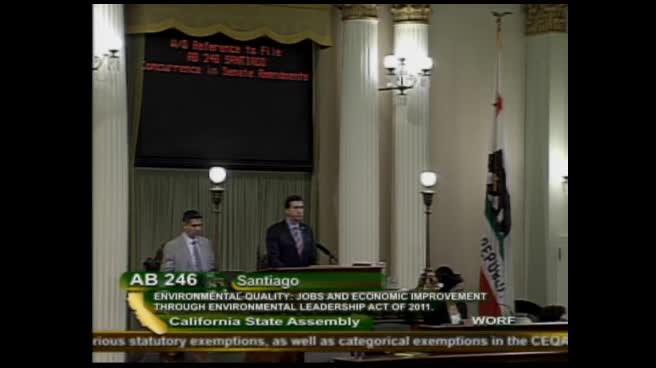 1MIN
Assembly Floor
 1H
Senate Standing Committee on Appropriations
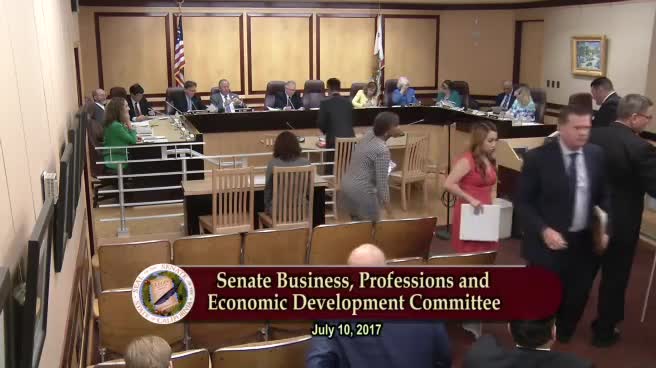 5MIN
Senate Standing Committee on Business, Professions and Economic Development
 4MIN
Assembly Standing Committee on Business and Professions


Bill Co-Author(s):