AB 1277: Dentistry: Dental Board of California: regulations.
- Session Year: 2017-2018
- House: Assembly
- Latest Version Date: 2017-10-02
The Dental Practice Act provides for the licensure and regulation of persons engaged in the practice of dentistry by the Dental Board of California, which is within the Department of Consumer Affairs. Existing law requires a licensee to register his or her place of practice with the board, as specified, and authorizes the board to inspect the books, records, and premises of any dentist licensed under the act in response to a complaint that a licensee has violated any law or regulation that constitutes grounds for disciplinary action by the board. Existing law, the Administrative Procedure Act, governs the procedure for the adoption, amendment, or repeal of regulations by state agencies and for the review of those regulatory actions by the Office of Administrative Law. That act authorizes state agencies to adopt emergency regulations if certain procedures are followed, including making a finding of emergency and the need for immediate action.
This bill would require the board to amend regulations on the minimum standards for infection control to require water or other methods used for irrigation to be sterile or contain recognized disinfecting or antibacterial properties when performing dental procedures that expose dental pulp. The bill, until December 31, 2018, would deem the adoption and readoption of the regulation an emergency and would exempt the board from describing facts showing the need for immediate action and from review by the Office of Administrative Law. The bill would require the board to adopt final regulations on or before December 31, 2018. The bill would also state the intent of the Legislature.
The Dental Practice Act provides for the licensure and regulation of persons engaged in the practice of dentistry by the Dental Board of California, which is within the Department of Consumer Affairs. Existing law requires a licensee to register his or her place of practice with the board, as specified, and authorizes the board to inspect the books, records, and premises of any dentist licensed under the act in response to a complaint that a licensee has violated any law or regulation that constitutes grounds for disciplinary action by the board. Existing law, the Administrative Procedure Act, governs the procedure for the adoption, amendment, or repeal of regulations by state agencies and for the review of those regulatory actions by the Office of Administrative Law. That act authorizes state agencies to adopt emergency regulations if certain procedures are followed, including making a finding of emergency and the need for immediate action.
This bill would require the board to amend regulations on the minimum standards for infection control to require procedure water or other methods used for irrigation to be sterile or contain recognized disinfecting or antibacterial properties when performing dental procedures that expose dental pulp. The bill, until December 31, 2018, would deem the adoption and readoption of the regulation an emergency and would exempt the board from describing facts showing the need for immediate action and from review by the Office of Administrative Law. The bill would require the board to adopt final regulations on or before December 31, 2018. The bill would also state the intent of the Legislature.
The Dental Practice Act provides for the licensure and regulation of persons engaged in the practice of dentistry by the Dental Board of California, which is within the Department of Consumer Affairs. Existing law requires a licensee to register his or her place of practice with the board, as specified, and authorizes the board to inspect the books, records, and premises of any dentist licensed under the act in response to a complaint that a licensee has violated any law or regulation that constitutes grounds for disciplinary action by the board. Existing law, the Administrative Procedure Act, governs the procedure for the adoption, amendment, or repeal of regulations by state agencies and for the review of those regulatory actions by the Office of Administrative Law. That act authorizes state agencies to adopt emergency regulations if certain procedures are followed, including making a finding of emergency and the need for immediate action.
This bill would require the board to amend regulations on the minimum standards for infection control to require procedure water or other methods used for irrigation to be sterile or contain recognized disinfecting or antibacterial properties when performing dental procedures that expose dental pulp. The bill, until December 31, 2018, would deem the adoption and readoption of the regulation an emergency and would exempt the board from describing facts showing the need for immediate action and from review by the Office of Administrative Law. The bill would require the board to adopt final regulations on or before December 31, 2018.
The Dental Practice Act provides for the licensure and regulation of persons engaged in the practice of dentistry by the Dental Board of California, which is within the Department of Consumer Affairs. Existing law requires a licensee to register his or her place of practice with the board, as specified, and authorizes the board to inspect the books, records, and premises of any dentist licensed under the act in response to a complaint that a licensee has violated any law or regulation that constitutes grounds for disciplinary action by the board. Under the act, a licensees failure to allow an inspection, or any part of an inspection, is grounds for suspension or revocation of the licensees license. Existing law, the Administrative Procedure Act, governs the procedure for the adoption, amendment, or repeal of regulations by state agencies and for the review of those regulatory actions by the Office of Administrative Law. That act authorizes state agencies to adopt emergency regulations if certain procedures are followed, including making a finding of emergency and the need for immediate action.
This bill would require the board, by July 1, 2018, to adopt regulations requiring all dental clinics to inspect lines, faucets, and any other object or system that delivers water into the dental clinic or for use on patients. The bill would additionally authorize the board to proactively inspect the books, records, and premises of any dentist licensed under the act. board to amend regulations on the minimum standards for infection control to require water or other methods used for irrigation to be sterile or contain recognized disinfecting or antibacterial properties when performing dental procedures that expose dental pulp. The bill, until December 31, 2018, would deem the adoption and readoption of the regulation an emergency and would exempt the board from describing facts showing the need for immediate action and from review by the Office of Administrative Law. The bill would require the board to adopt final regulations on or before December 31, 2018.
The Dental Practice Act provides for the licensure and regulation of persons engaged in the practice of dentistry by the Dental Board of California, which is within the Department of Consumer Affairs. Existing law requires a licensee to register his or her place of practice with the board, as specified, and authorizes the board to inspect the books, records, and premises of any dentist licensed under the act in response to a complaint that a licensee has violated any law or regulation that constitutes grounds for disciplinary action by the board. Under the act, a licensees failure to allow an inspection, or any part of an inspection, is grounds for suspension or revocation of the licensees license.
This bill would require the board, by July 1, 2018, to adopt regulations requiring all dental clinics to inspect lines, faucets, and any other object or system that delivers water into the dental clinic or for use on patients. The bill would additionally authorize the board to proactively inspect the books, records, and premises of any dentist licensed under the act.
(a)Consistent with and in addition to the federal Centers for Disease Control and Prevention recommendations for water quality, the board shall amend the regulations on the minimum standards for infection control (Section 1005 of Title 16 of the California Code of Regulations) to require water or other methods used for irrigation to be sterile or contain recognized disinfecting or antibacterial properties when performing dental procedures that expose dental pulp.
(b)Until December 31, 2018, the adoption and readoption of a regulation by the board consistent with this section shall be deemed to be an emergency necessary for the immediate preservation of the public peace, health and safety, or general welfare for purposes of Sections 11346.1 and 11346.9 of the Government Code and the board is hereby exempted from the requirement that it describe facts showing the need for immediate action and from review of the emergency regulations by the Office of Administrative Law.
(c)The board shall adopt final regulations consistent with this section on or before December 31, 2018.
(d)It is the intent of the Legislature that the requirements established by this section and any regulations adopted pursuant to this section apply to individuals licensed to practice dentistry. This section shall not be construed to impose any new duty or obligation on a water district.
(a)Consistent with and in addition to the federal Centers for Disease Control and Prevention recommendations for procedure water quality, the board shall amend the regulations on the minimum standards for infection control (Section 1005 of Title 16 of the California Code of Regulations) to require procedure water or other methods used for irrigation to be sterile or contain recognized disinfecting or antibacterial properties when performing dental procedures that expose dental pulp.
(b)Until December 31, 2018, the adoption and readoption of a regulation by the board consistent with this section shall be deemed to be an emergency necessary for the immediate preservation of the public peace, health and safety, or general welfare for purposes of Sections 11346.1 and 11346.9 of the Government Code and the board is hereby exempted from the requirement that it describe facts showing the need for immediate action and from review of the emergency regulations by the Office of Administrative Law.
(c)The board shall adopt final regulations consistent with this section on or before December 31, 2018.
(d)It is the intent of the Legislature that the requirements established by this section and any regulations adopted pursuant to this section apply to individuals licensed to practice dentistry. This section shall not be construed to impose any new duty or obligation on a water district.
(a)Consistent with and in addition to the federal Centers for Disease Control and Prevention recommendations for procedural procedure water quality, the board shall amend the regulations on the minimum standards for infection control (Section 1005 of Title 16 of the California Code of Regulations) to require procedure water or other methods used for irrigation to be sterile or contain recognized disinfecting or antibacterial properties when performing dental procedures that expose dental pulp.
(b)Until December 31, 2018, the adoption and readoption of a regulation by the board consistent with this section shall be deemed to be an emergency necessary for the immediate preservation of the public peace, health and safety, or general welfare for purposes of Sections 11346.1 and 11346.9 of the Government Code and the board is hereby exempted from the requirement that it describe facts showing the need for immediate action and from review of the emergency regulations by the Office of Administrative Law.
(c)The board shall adopt final regulations consistent with this section on or before December 31, 2018.
CORRECTIONS: HeadingLast amended date.(a)Consistent with and in addition to the federal Centers for Disease Control and Prevention recommendations for procedural water quality, the board shall amend the regulations on the minimum standards for infection control (Section 1005 of Title 16 of the California Code of Regulations) to require water or other methods used for irrigation to be sterile or contain recognized disinfecting or antibacterial properties when performing dental procedures that expose dental pulp.
(b)Until December 31, 2018, the adoption and readoption of a regulation by the board consistent with this section shall be deemed to be an emergency necessary for the immediate preservation of the public peace, health and safety, or general welfare for purposes of Sections 11346.1 and 11346.9 of the Government Code and the board is hereby exempted from the requirement that it describe facts showing the need for immediate action and from review of the emergency regulations by the Office of Administrative Law.
(c)The board shall adopt final regulations consistent with this section on or before December 31, 2018.
SEC. 2.Section 1611.5 of the Business and Professions Code is amended to read:1611.5.The board may inspect the books, records, and premises of any dentist licensed under this chapter either proactively or in response to a complaint that a licensee has violated any law or regulation that constitutes grounds for disciplinary action by the board, and may employ inspectors for this purpose.A licensees failure to allow an inspection or any part thereof shall be grounds for suspension or revocation of the license in accordance with Section 1670.By July 1, 2018, the board shall adopt regulations that require all dental clinics to inspect lines, faucets, and any other object or system that delivers water into the dental clinic or for use on patients.
SEC. 2.Section 1611.5 of the Business and Professions Code is amended to read:1611.5.The board may inspect the books, records, and premises of any dentist licensed under this chapter either proactively or in response to a complaint that a licensee has violated any law or regulation that constitutes grounds for disciplinary action by the board, and may employ inspectors for this purpose.
A licensees failure to allow an inspection or any part thereof shall be grounds for suspension or revocation of the license in accordance with Section 1670.
|
Date
|
Status
|
|---|---|
| Oct 2, 2017 | Chaptered by Secretary of State - Chapter 413, Statutes of 2017. |
| Oct 2, 2017 | Approved by the Governor. |
| Sep 19, 2017 | Enrolled and presented to the Governor at 3 p.m. |
| Sep 11, 2017 | Senate amendments concurred in. To Engrossing and Enrolling. |
| Sep 7, 2017 | In Assembly. Concurrence in Senate amendments pending. May be considered on or after September 9 pursuant to Assembly Rule 77. |
| Sep 7, 2017 | Read third time. Passed. Ordered to the Assembly. |
| Sep 1, 2017 | Read second time. Ordered to third reading. |
| Aug 31, 2017 | Read third time and amended. Ordered to second reading. |
| Jul 20, 2017 | From Consent Calendar. |
| Jul 18, 2017 | Read second time. Ordered to Consent Calendar. |
| Jul 17, 2017 | From committee: Be placed on second reading file pursuant to Senate Rule 28.8 and ordered to consent calendar. |
| Jul 6, 2017 | In committee: Set, first hearing. Hearing canceled at the request of author. |
| Jun 19, 2017 | From committee: Do pass and re-refer to Com. on APPR. with recommendation: To Consent Calendar. (Ayes 9. Noes 0.) (June 19). Re-referred to Com. on APPR. |
| Jun 14, 2017 | Measure version as amended on June 12 corrected. |
| Jun 12, 2017 | From committee chair, with author's amendments: Amend, and re-refer to committee. Read second time, amended, and re-referred to Com. on B., P. & E.D. |
| May 24, 2017 | Referred to Com. on B., P. & E.D. |
| May 11, 2017 | In Senate. Read first time. To Com. on RLS. for assignment. |
| May 11, 2017 | Read third time. Passed. Ordered to the Senate. (Ayes 77. Noes 0. Page 1484.) |
| May 4, 2017 | Read second time. Ordered to Consent Calendar. |
| May 3, 2017 | From committee: Do pass. To Consent Calendar. (Ayes 16. Noes 0.) (May 3). |
| Apr 19, 2017 | From committee: Do pass and re-refer to Com. on APPR. (Ayes 15. Noes 0.) (April 18). Re-referred to Com. on APPR. |
| Mar 29, 2017 | Re-referred to Com. on B. & P. |
| Mar 28, 2017 | From committee chair, with author's amendments: Amend, and re-refer to Com. on B. & P. Read second time and amended. |
| Mar 13, 2017 | Referred to Com. on B. & P. |
| Feb 19, 2017 | From printer. May be heard in committee March 21. |
| Feb 17, 2017 | Read first time. To print. |
|
Date
|
Description
|
Location
|
Votes
|
|
|---|---|---|---|---|
| Sep 11, 2017 | AB 1277 DALY Concurrence in Senate Amendments | Assembly Floor |
Passed |
|
| Sep 7, 2017 | Assembly 3rd Reading AB1277 Daly By Newman | Senate Floor |
Passed |
|
| Jun 19, 2017 | Do pass, but first be re-referred to the Committee on [Appropriations] with the recommendation: To Consent Calendar | Senate Standing Committee on Business, Professions and Economic Development |
Passed |
|
| May 11, 2017 | AB 1277 DALY Consent Calendar Second Day Regular Session | Assembly Floor |
Passed |
|
| May 3, 2017 | Do pass. To Consent Calendar. | Assembly Standing Committee on Appropriations |
Passed |
|
| Apr 18, 2017 | Do pass and be re-referred to the Committee on [Appropriations] | Assembly Standing Committee on Business and Professions |
Passed |
This list shows positions taken on this bill by organizations on the date displayed, which is linked to the original source.
Positions by individuals are not included.
|
Organization
|
Position
|
Date
|
|---|---|---|
| California Dental Association | ** Support | Sep 1, 2017 |
| Health Officers Association Of California | ** Support | Sep 1, 2017 |
| Orange County Water District | ** Support | Sep 1, 2017 |
CONCURRENCE IN SENATE AMENDMENTS
CSA1 Bill Id:AB 1277
Author:(Daly)
As Amended Ver:August 31, 2017
Majority vote
ASSEMBLY: | 77-0 | (May 11, 2017) | SENATE: | 39-0 | (September 7, 2017) |
Original Committee Reference: B. & P.
SUMMARY: Requires the Dental Board of California (DBC) to amend through emergency regulations, the minimum standards for infection control, consistent with the federal Centers for Disease Control and Prevention's recommendations for procedure water quality and adopt final regulations on or before December 31, 2018.
The Senate amendments declare that it is the intent of the Legislature that the bill's requirements apply to individuals licensed to practice dentistry and that the bill is not intended to impose any new duty or obligation on a water district.
EXISTING LAW:
- Establishes the Dental Practice Act (Act) to license and regulate dentists, registered dental assistants (RDAs), and registered dental assistants in extended functions (RDAEFs). (Business and Professions (BPC) Section 1600 et seq.)
- States that protection of the public is highest priority for the DBC in exercising its licensing, regulatory, and disciplinary functions. (BPC Section 1601.2)
- States that all committees of the DBC have the authority to evaluate all suggestions or requests for regulatory changes related to their committee; committees have the authority to hold informational hearings in order to report and make appropriate recommendations to the DBC after consultation with the Department of Consumer Affairs' legal counsel and the DBC's executive officer; and, the committees are required to include in any report regarding a proposed regulatory change, at a minimum, the specific language or the proposed change or changes and the reasons and facts supporting the change. (BPC Section 1601.3)
- Establishes the Office of Administrative Law (OAL) in the Government Operations Agency, as specified. (Government Code (GC) Section 11340.2)
- Specifies that a state agency is prohibited from issuing, utilizing, enforcing or attempting to enforce any guideline, criterion, bulletin, manual, instruction, order, standard of general application, or other rule which is a regulation, as specified, unless the guideline, criterion, bulletin, manual, instruction, order, standard of general application, or other rule has been adopted as a regulation and filed with the Secretary of State. (GC Section 11340.5)
- Defines regulation to mean "every rule, regulation, order, or standard of general application or the amendment, supplement, or revision of any rule, regulation, order, or standard adopted by any state agency to implement, interpret, or make specific law enforced or administered by it, or to govern its procedure." (GC Section 11342.600)
- Requires the adopting agency, at least five working days before submitting an emergency regulation to the OAL, to send a notice of the proposed emergency action to every person who has filed a request for notice of regulatory action with the agency which must include the following: (GC Section 11346.1(a)(2))
- The specific language proposed to be adopted and
- The finding of an emergency, as specified.
- Exempts an agency from providing the notice as set forth in 7) above, if the emergency situation clearly poses such an immediate, serious harm that delaying action to allow public comment would be inconsistent with the public interest. (GC Section 11346.1(a)(3))
- Requires every agency to prepare and submit to the OAL with the adopted regulation a final statement of reasons which includes all of the following: (GC Section 11346.9(a))
- An update of the information contained in the initial statement of reasons;
- A determination as to whether adoption, amendment, or repeal of the regulation imposes a mandate on local agencies or school districts;
- A summary of each objection or recommendation made regarding the specific adoption, amendment, or repeal proposed together with an explanation of how the proposed action has been changed to accommodate each objection or recommendation, or the reasons for making no change;
- A determination with supporting information that no alternative considered by the agency would be more effective in carrying out the purposes for the which the regulation is proposed, would be as effective and less burdensome to affected private persons than the adopted regulation is proposed, or would be more cost effective to affected private persons and equally effective in implementing the statutory policy or other provision of law; and
- An explanation setting forth the reasons for rejecting any proposed alternatives that would lessen the adverse economic impact on small businesses.
California Code of Regulations:
Establishes, through regulation by the DBC, the "Minimum Standards for Infection Control," as specified. (California Code of Regulations (CCR) Title 16 Section 1005)
THIS BILL:
- Requires the DBC, consistent with and in addition to the federal Centers for Disease Control and Prevention recommendations for procedure water quality, to amend the regulations on the minimum standards for infection control to require water or other methods used for irrigation to be sterile or contain recognized disinfecting or antibacterial properties when performing dental procedures that expose dental pulp.
- Specifies that until December 31, 2018, the adoption and readoption of a regulation as set forth in 1) above are deemed to be an emergency necessary for the immediate preservation of public peace, health and safety, or general welfare purposes and the DBC is exempt from the requirement that it describe facts showing the need for immediate action and from review of the emergency regulations by the OAL.
- Requires the DBC to adopt final regulations on or before December 31, 2018.
FISCAL EFFECT: According to the Senate Appropriations Committee, pursuant to Senate Rule 28.8, negligible state costs.
COMMENTS:
Purpose. This bill is sponsored by the author. According to the author, "[This bill] seeks to minimize the odds of another outbreak like the one that has occurred in Orange County. While such outbreaks have been rare, [this bill] proposes significant changes to existing law to strengthen protections for vulnerable populations such as the young children who have been treated by the [Children's Dental Group] CDG. The pain and trauma suffered by these young children are inexcusable and unforgiveable, and we need to act now to prevent something like this from ever happening again."
The intent of the bill is to reduce the incidence of infection associated with dental pulp treatment. The bill requires any irrigant used during the treatment of exposed dental pulp to be either sterile or contain disinfecting properties, ensuring the tissue is properly washed and disinfected during treatment.
Background. Dental Board of California. The DBC is responsible for the licensure and regulation of dentists, RDA, and RDAEFs, along with the regulation of orthodontic assistant and dental sedation assistant permits. The DBC's current licensee population is approximately 97,000 individuals. The DBC is responsible for enforcing the provisions of the Act, and often establishes regulations to effectuate the Act. This bill requires the DBC of California to amend its current regulations on the minimum standards for infection control to include the federal Centers for Disease Control and Prevention's recommendations for procedural water quality. This bill authorizes the DBC to adopt the regulations through the emergency regulation process until December 31, 2018, at which time; the DBC will be required to adopt final regulations on this issue. The DBC currently has nine subcommittees to review and address issues relevant to the DBC, including health and safety protocols. The DBC reports that currently, the TBD Subcommittee met informally in March of 2017 to discuss revising the CDB's regulations pertaining to the minimum standards for infection control and plans for this topic to be on the agenda at the next full board meeting in order to consider revising or changing regulations pertaining to the minimum standards of infection control as found in 16 CCR Section 1005.
Incident in Orange County. The genesis of this bill is the result of an incident in Orange County where it was reported that dozens of children became sick after receiving a certain dental procedure at an Anaheim pediatric dental clinic. According to a frequently asked questions document released by the Orange County Health Care Agency updated on March 28, 2017, "apparent Mycobacterium abscessus (M. abscessus) infections have been seen in children who had pulpotomy procedures at [a pediatric dental facility] in 2016….A pulpotomy is a dental procedure during which the infected pulp tissue of a tooth is treated/removed to prevent the loss of the tooth. It is commonly called a 'baby root canal." As a result of the infection, the County of Orange's Health Officer issued an order to close the dental office due to the positive laboratory results for Mycobacterium in the dental office's internal water system. According to the recent case count update provided by the Orange County Health Care Agency on April 4, 2017, the total case count remains at 68 cases; 22 confirmed, 46 probable; all have been hospitalized at some point.
The Mycobacterium abscessus infections and the subsequent closure of the dental clinic to address the water line concerns resulted in numerous headlines in local papers such as the Orange County Register and the Los Angeles Times. According to a December 17, 2016, article in the Los Angeles Times,
Orange County health officials have ordered the closure of a children's dental office in Anaheim after lab tests found bacteria in its new internal water system, which had replaced a system blamed for an earlier outbreak of bacterial infections.
OAL Process. The OAL ensures that agency regulations are clear, necessary, legally valid, and available to the public. The OAL is responsible for reviewing administrative regulations proposed by state agencies, including the DBC, for compliance with the standards in California's Administrative Procedure Act. When the DBC approves a regulation change, it is then submitted to the director of the DCA for approval and then forwarded to the OAL for final approval or rejection. This bill, until December 31, 2018, allows the adoption and re-adoption of the regulation change regarding the minimum standards for infection control under the DBC, to be adopted by emergency regulations and then requires the DBC to adopt final regulations related to the minimum standards on or before December 31, 2018.
Analysis Prepared by: Robert Sumner / B. & P. / (916) 319-3301 FN: 0001627
Office of Senate Floor Analyses (916) 651-1520 Fax: (916) 327-4478 | AB |
THIRD READING
Bill No: AB 1277
:
SENATE BUS., PROF. & ECON. DEV. COMMITTEE: 9-0, 6/19/17
AYES: Hill, Fuller, Dodd, Galgiani, Glazer, Hernandez, Newman, Pan, Wilk
SENATE APPROPRIATIONS COMMITTEE: Senate Rule 28.8
ASSEMBLY FLOOR: 77-0, 5/11/17 (Consent) - See last page for vote
DIGEST:
This bill requires the Dental Board of California to update its regulations governing minimum standards for infection control.
Senate Floor Amendments of 8/31/17 are technical and clarifying, and state legislative intent that this bill shall not be construed to impose any new duty or obligation on a water district.
Existing law:
- Establishes the Dental Board of California (DBC) to administer the provisions of the Dental Practice Act (Act). (Business and Professions Code (BPC) § 1601.1)
- States that protection of the public to be the highest priority for the DBC in exercising its licensing, regulatory, and disciplinary functions. Whenever the protection of the public is inconsistent with other interests sought to be promoted, the protection of the public shall be paramount. (BPC § 1601.2)
- Authorizes the DBC to adopt reasonably necessary rules not inconsistent with the Act concerning the administration and enforcement of this chapter.
(BPC § 1614) - Establishes minimum standards for infection control and requires all dental healthcare personnel to comply with infection control precautions and enforce minimum precautions to protect patients and personnel and to minimize the transmission of pathogens in health care settings as mandated by the California Division of Occupational Safety and Health. (Title 16, California Code of Regulations § 1005)
This bill:
- Requires the DBC to amend the regulations on the minimum standards for infection control to require water or other methods used for irrigation to be sterile, or contain recognized disinfecting or antibacterial properties when performing dental procedures that expose dental pulp, consistent with and in addition to the federal Centers for Disease Control and Prevention (CDC) recommendations for water quality.
- Declares the adoption and readoption of a regulation by DBC until December 31, 2018, to be an emergency necessary for the immediate preservation of the public peace, health and safety, or general welfare, thereby enabling DBC to promulgate emergency regulations.
- Requires DBC to adopt final regulations consistent with this bill by December 31, 2018.
- States legislative intent that the requirements established by this bill and any regulations adopted pursuant to it apply only to individuals licensed to practice dentistry. This bill shall not be construed to impose any new duty or obligation on a water district.
The DBC is responsible for regulating the Act, which requires ensuring public safety. To that end, DBC promulgated regulations, last updated in 2011, to minimize the transmission of pathogens in health care settings.
This bill was inspired by a mycobacterium outbreak at the Children’s Dental Group of Anaheim in 2016, which resulted in 71 infections, nearly all of which required hospitalization. The victims range in age from two to 11 years, and all received a “pulpotomy,” a dental procedure during which the infected pulp tissue of a tooth is treated or removed. These children face loss of permanent teeth, bone loss, and disfigurement, and serious and invasive treatment lasting for months.
According to a letter from the director of the Orange County Health Care Agency, Mark A. Refowitz, “Water samples taken from inside the dental office indicated that mycobacterium type was present inside the facility’s on-site water system. In consultation with CDC, County Health Officer Dr. Eric Handler issued an order to legally prohibit the clinic from using its on-site water system for dental procedures until specific criteria are met to ensure the water supply inside the clinic is free of mycobacterium. It should be made clear that the municipal water supply in Anaheim meets all bacterial standards (and all other water quality standards) for use by the public.”
In its publication, Centers for Disease Control and Prevention. Summary of Infection Prevention Practices in Dental Settings: Basic Expectations for Safe Care (2016), the CDC notes that “dental unit waterlines (i.e., plastic tubing that carries water to [various instruments]) promote bacterial growth and development of biofilm due to the presence of long narrow-bore tubing, inconsistent flow rates, and the potential for retraction of oral fluids.” The guidance then recommends that dentists treat water to meet drinking water standards and use chemical germicides to completely eliminate biofilms.
In 1993, CDC recommended that dental waterlines be flushed at the beginning of the day to reduce the microbial load, but further studies indicated that this alone was insufficient. DBC’s present regulations relating to procedure water only require flushing. This bill requires the DBC to update its minimum infection control standards to be consistent with those recommended by the CDC: water or other methods used for rinsing must either be sterile or contain recognized disinfecting or antibacterial properties.
FISCAL EFFECT: Appropriation: Fiscal Com.: Local:
California Dental Association
Health Officers Association of California
Orange County Water District
OPPOSITION: (Verified 8/31/17)
None received
ARGUMENTS IN SUPPORT: The California Dental Association (CDA) writes:
AB 1277 addresses a weakness identified when 67 children were hospitalized with serious infections after receiving dental treatment at a dental clinic in Anaheim. Investigation into what occurred suggests that the bacterium that infected the children was likely introduced by water used during the performance of a dental procedure that exposed the dental pulp.
CDA has worked closely with Assemblymember Daly’s office to ensure that the solution set forth appropriately addresses the vulnerability that affected these children and establish it as a standard of care within dentistry. To accomplish this, AB 1227 sets a clear standard for infection control during dental pulp procedures and directs the Dental Board to codify these requirements in its infection control regulations.
ASSEMBLY FLOOR: 77-0, 5/11/17
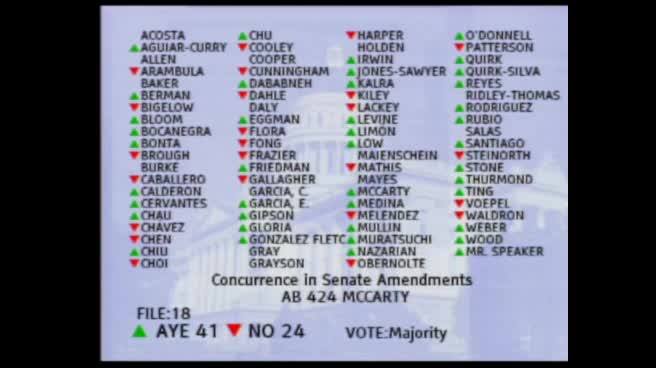
AYES: Acosta, Aguiar-Curry, Travis Allen, Arambula, Baker, Berman, Bigelow, Bloom, Bocanegra, Bonta, Brough, Burke, Caballero, Calderon, Cervantes, Chau, Chávez, Chen, Chiu, Choi, Chu, Cooley, Cooper, Cunningham, Dababneh, Daly, Eggman, Flora, Fong, Frazier, Friedman, Gallagher, Cristina Garcia, Eduardo Garcia, Gipson, Gloria, Gomez, Gonzalez Fletcher, Gray, Grayson, Harper, Holden, Irwin, Jones-Sawyer, Kalra, Kiley, Lackey, Levine, Limón, Low, Maienschein, Mathis, Mayes, McCarty, Medina, Melendez, Mullin, Muratsuchi, Nazarian, Obernolte, Quirk, Quirk-Silva, Reyes, Ridley-Thomas, Rodriguez, Rubio, Salas, Santiago, Steinorth, Mark Stone, Thurmond, Ting, Voepel, Waldron, Weber, Wood, Rendon
NO VOTE RECORDED: Dahle, O'Donnell, Patterson
9/1/17 15:28:49
**** END ****
Office of Senate Floor Analyses (916) 651-1520 Fax: (916) 327-4478 | AB |
THIRD READING
Bill No: AB 1277
:
SENATE BUS., PROF. & ECON. DEV. COMMITTEE: 9-0, 6/19/17
AYES: Hill, Fuller, Dodd, Galgiani, Glazer, Hernandez, Newman, Pan, Wilk
SENATE APPROPRIATIONS COMMITTEE: Senate Rule 28.8
ASSEMBLY FLOOR: 77-0, 5/11/17 (Consent) - See last page for vote
DIGEST:
This bill requires the Dental Board of California to update its regulations governing minimum standards for infection control.
Existing law:
- Establishes the Dental Board of California (DBC) to administer the provisions of the Dental Practice Act (Act). (Business and Professions Code (BPC) § 1601.1)
- States that protection of the public to be the highest priority for the DBC in exercising its licensing, regulatory, and disciplinary functions. Whenever the protection of the public is inconsistent with other interests sought to be promoted, the protection of the public shall be paramount. (BPC § 1601.2)
- Authorizes the DBC to adopt reasonably necessary rules not inconsistent with the Act concerning the administration and enforcement of this chapter. (BPC § 1614)
- Establishes minimum standards for infection control and requires all dental healthcare personnel to comply with infection control precautions and enforce minimum precautions to protect patients and personnel and to minimize the transmission of pathogens in health care settings as mandated by the California Division of Occupational Safety and Health. (Title 16, California Code of Regulations § 1005)
This bill:
- Requires the DBC to amend the regulations on the minimum standards for infection control to require procedure water or other methods used for irrigation to be sterile, or contain recognized disinfecting or antibacterial properties when performing dental procedures that expose dental pulp, consistent with and in addition to the federal Centers for Disease Control and Prevention (CDC) recommendations for procedure water quality.
- Declares the adoption and readoption of a regulation by DBC until December 31, 2018, to be an emergency necessary for the immediate preservation of the public peace, health and safety, or general welfare, thereby enabling DBC to promulgate emergency regulations.
- Requires DBC to adopt final regulations consistent with this bill by December 31, 2018.
Background
The DBC is responsible for regulating the Act, which requires ensuring public safety. To that end, DBC promulgated regulations, last updated in 2011, to minimize the transmission of pathogens in health care settings.
This bill was inspired by a mycobacterium outbreak at the Children’s Dental Group of Anaheim in 2016, which resulted in 71 infections, nearly all of which required hospitalization. The victims range in age from two to 11 years, and all received a “pulpotomy,” a dental procedure during which the infected pulp tissue of a tooth is treated or removed. These children face loss of permanent teeth, bone loss, and disfigurement, and serious and invasive treatment lasting for months.
According to a letter from the director of the Orange County Health Care Agency, Mark A. Refowitz, “Water samples taken from inside the dental office indicated that mycobacterium type was present inside the facility’s on-site water system. In consultation with CDC, County Health Officer Dr. Eric Handler issued an order to legally prohibit the clinic from using its on-site water system for dental procedures until specific criteria are met to ensure the water supply inside the clinic is free of mycobacterium. It should be made clear that the municipal water supply in Anaheim meets all bacterial standards (and all other water quality standards) for use by the public.”
In its publication, Centers for Disease Control and Prevention. Summary of Infection Prevention Practices in Dental Settings: Basic Expectations for Safe Care (2016), the CDC notes that “dental unit waterlines (i.e., plastic tubing that carries water to [various instruments]) promote bacterial growth and development of biofilm due to the presence of long narrow-bore tubing, inconsistent flow rates, and the potential for retraction of oral fluids.” The guidance then recommends that dentists treat water to meet drinking water standards and use chemical germicides to completely eliminate biofilms.
In 1993, CDC recommended that dental waterlines be flushed at the beginning of the day to reduce the microbial load, but further studies indicated that this alone was insufficient. DBC’s present regulations relating to procedure water only require flushing. This bill requires the DBC to update its minimum infection control standards to be consistent with those recommended by the CDC: water or other methods used for rinsing must either be sterile or contain recognized disinfecting or antibacterial properties.
FISCAL EFFECT: Appropriation: Fiscal Com.: Local:
California Dental Association
Health Officers Association of California
Orange County Water District
OPPOSITION: (Verified 7/19/17)
None received
ARGUMENTS IN SUPPORT: The California Dental Association (CDA) writes, “AB 1277 addresses a weakness identified when 67 children were hospitalized with serious infections after receiving dental treatment at a dental clinic in Anaheim. Investigation into what occurred suggests that the bacterium that infected the children was likely introduced by water used during the performance of a dental procedure that exposed the dental pulp.
“CDA has worked closely with Assemblymember Daly’s office to ensure that the solution set forth appropriately addresses the vulnerability that affected these children and establish it as a standard of care within dentistry. To accomplish this, AB 1227 sets a clear standard for infection control during dental pulp procedures and directs the Dental Board to codify these requirements in its infection control regulations.”
ASSEMBLY FLOOR: 77-0, 5/11/17
AYES: Acosta, Aguiar-Curry, Travis Allen, Arambula, Baker, Berman, Bigelow, Bloom, Bocanegra, Bonta, Brough, Burke, Caballero, Calderon, Cervantes, Chau, Chávez, Chen, Chiu, Choi, Chu, Cooley, Cooper, Cunningham, Dababneh, Daly, Eggman, Flora, Fong, Frazier, Friedman, Gallagher, Cristina Garcia, Eduardo Garcia, Gipson, Gloria, Gomez, Gonzalez Fletcher, Gray, Grayson, Harper, Holden, Irwin, Jones-Sawyer, Kalra, Kiley, Lackey, Levine, Limón, Low, Maienschein, Mathis, Mayes, McCarty, Medina, Melendez, Mullin, Muratsuchi, Nazarian, Obernolte, Quirk, Quirk-Silva, Reyes, Ridley-Thomas, Rodriguez, Rubio, Salas, Santiago, Steinorth, Mark Stone, Thurmond, Ting, Voepel, Waldron, Weber, Wood, Rendon
NO VOTE RECORDED: Dahle, O'Donnell, Patterson
7/20/17 11:39:15
**** END ****
SENATE COMMITTEE ON
BUSINESS, PROFESSIONS AND ECONOMIC DEVELOPMENT
Senator Jerry Hill, Chair
2017 - 2018 Regular
Bill No: Hearing Date: June 19, 2017
Author: | |||
Version: | June 12, 2017 Amended | ||
Urgency: | No | Fiscal: | Yes |
Consultant: | Sarah Huchel | ||
Subject:
SUMMARY:
Requires the Dental Board of California to update its regulations governing minimum standards for infection control.
Existing law:
- Establishes the Dental Board of California (DBC) to administer the provisions of the Dental Practice Act (Act). (Business and Professions Code (BPC) § 1601.1)
- Requires protection of the public to be the highest priority for the DBC in exercising its licensing, regulatory, and disciplinary functions. Whenever the protection of the public is inconsistent with other interests sought to be promoted, the protection of the public shall be paramount. (BPC § 1601.2)
- Authorizes the DBC to adopt reasonably necessary rules not inconsistent with the Act concerning the administration and enforcement of this chapter. (BPC § 1614)
- Establishes minimum standards for infection control and requires all dental healthcare personnel to comply with infection control precautions and enforce minimum precautions to protect patients and personnel and to minimize the transmission of pathogens in health care settings as mandated by the California Division of Occupational Safety and Health. (Title 16, California Code of Regulations § 1005)
This bill:
- Requires the DBC to amend the regulations on the minimum standards for infection control to require procedure water or other methods used for irrigation to be sterile, or contain recognized disinfecting or antibacterial properties when performing dental procedures that expose dental pulp, consistent with and in addition to the federal Centers for Disease Control and Prevention (CDC) recommendations for procedure water quality.
- Declares the adoption and readoption of a regulation by DBC until December 31, 2018, to be an emergency necessary for the immediate preservation of the public peace, health and safety, or general welfare, thereby enabling DBC to promulgate emergency regulations.
- Requires DBC to adopt final regulations consistent with this bill by December 31, 2018.
FISCAL EFFECT:
According to the Assembly Appropriations analysis dated May 3, 2017, the cost for DBC to amend regulations is minor and absorbable, and consistent with current discussions underway in a relevant DBC subcommittee. The analysis also notes that a minor cost in the range of $1,000 will be incurred to add enforcement codes (State Dentistry Fund).
COMMENTS:
- Purpose. This bill is sponsored by the Author. According to the Author’s office, “AB 1277 was introduced in response to a serious outbreak of bacterial infections at the Children’s Dental Group of Anaheim. Luckily, outbreaks of this nature are rare. Unfortunately, dozens of young children treated at the Children’s Dental Group had to be hospitalized, be subjected to treatment with powerful antibiotics, and – in the most serious cases – undergo surgery to have teeth or sections of their jaws removed. The new standard proposed by this bill will add a new layer of protection for dental patients and reduce the odds that an outbreak of this nature will occur again in California.”
- Background. The DBC is responsible for regulating the Act, which requires ensuring public safety. To that end, DBC promulgated regulations, last updated in 2011, to minimize the transmission of pathogens in health care settings.
This bill was inspired by a mycobacterium outbreak at the Children’s Dental Group of Anaheim in 2016, which resulted in 71 infections, nearly all of which required hospitalization. The victims range in age from 2 to 11 years, and all received a “pulpotomy,” a dental procedure during which the infected pulp tissue of a tooth is treated or removed. These children face loss of permanent teeth, bone loss, and disfigurement, and serious and invasive treatment lasting for months.
According to a letter from the director of the Orange County Health Care Agency, Mark A. Refowitz, “Water samples taken from inside the dental office indicated that mycobacterium type was present inside the facility’s on-site water system. In consultation with CDC, County Health Officer Dr. Eric Handler issued an order to legally prohibit the clinic from using its on-site water system for dental procedures until specific criteria are met to ensure the water supply inside the clinic is free of mycobacterium. It should be made clear that the municipal water supply in Anaheim meets all bacterial standards (and all other water quality standards) for use by the public.”
In its publication, Centers for Disease Control and Prevention. Summary of Infection Prevention Practices in Dental Settings: Basic Expectations for Safe Care (2016), the CDC notes that “dental unit waterlines (i.e., plastic tubing that carries water to [various instruments]) promote bacterial growth and development of biofilm due to the presence of long narrow-bore tubing, inconsistent flow rates, and the potential for retraction of oral fluids.” The guidance then recommends that dentists treat water to meet drinking water standards and use chemical germicides to completely eliminate biofilms.
In 1993, CDC recommended that dental waterlines be flushed at the beginning of the day to reduce the microbial load, but further studies indicated that this alone was insufficient. DBC’s present regulations relating to procedure water only require flushing. This bill requires the DBC to update its minimum infection control standards to be consistent with those recommended by the CDC.
- Related Legislation This Year. AB 224 (Thurmond) modifies requirements for pediatric dental anesthesia and sedation. (Status: This bill is pending in the Senate Committee on Business, Professions and Economic Development.)
SB 501 (Glazer) modifies requirements for pediatric dental anesthesia and sedation. (Status: This bill is pending in the Assembly Committee on Business and Professions.)
- Arguments in Support. The California Dental Association writes, “AB 1277 addresses a weakness identified when 67 children were hospitalized with serious infections after receiving dental treatment at a dental clinic in Anaheim. Investigation into what occurred suggests that the bacterium that infected the children was likely introduced by water used during the performance of a dental procedure that exposed the dental pulp.
“CDA has worked closely with Assemblymember Daly’s office to ensure that the solution set forth appropriately addresses the vulnerability that affected these children and establish it as a standard of care within dentistry. To accomplish this, AB 1227 sets a clear standard for infection control during dental pulp procedures and directs the Dental Board to codify these requirements in its infection control regulations.”
SUPPORT AND OPPOSITION:
Support:
California Dental Association
Health Officers Association of California
Orange County Water District
Opposition:
None on file as of June 13, 2017.
-- END --
Date of Hearing: May 3, 2017
ASSEMBLY COMMITTEE ON APPROPRIATIONS
Lorena Gonzalez Fletcher, Chair
ABPCA Bill Id:AB 1277
Author:(Daly) – As Amended Ver:March 28, 2017
Policy Committee: | Business and Professions | Vote: | 15 - 0 |
|
|
Urgency: No State Mandated Local Program: No Reimbursable: No
SUMMARY:
This bill requires the Dental Board of California (Board) to amend regulations, by December 31, 2018 on infection control standards to ensure safety of water used in dental procedures and provides emergency regulation authority for the purpose.
FISCAL EFFECT:
The cost to amend regulations is minor and absorbable, and consistent with current discussions underway in a relevant Board subcommittee. A minor cost in the range of $1,000 will be incurred to add enforcement codes (State Dentistry Fund).
COMMENTS:
- Purpose. This bill is author-sponsored. It emerged in response to an incident in Orange County where dozens of children became ill after receiving a certain dental procedure at an Anaheim pediatric dental clinic. Their illness was caused a bacterium found in the water system.
- Background. The Board is responsible for the licensure and regulation of dentists and related dental personnel and procedures. This bill requires the Board to amend its current regulations on the minimum standards for infection control to include the federal Centers for Disease Control and Prevention's recommendations for procedural water quality. The Board reports that a subcommittee met informally in March of 2017 to discuss the issue of revising these regulations, and plans for this topic to be on the agenda at the next full board meeting.
Analysis Prepared by: Lisa Murawski / APPR. / (916) 319-2081
Date of Hearing:
ASSEMBLY COMMITTEE ON BUSINESS AND PROFESSIONS
Rudy Salas, Chair
ABPCA Bill Id:AB 1277
Author:(Daly) – As Amended Ver:March 28, 2017
SUBJECT: Dentistry: Dental Board of California: regulations.
SUMMARY: Requires the Dental Board of California (DBC) to amend through emergency regulations, the minimum standards for infection control, consistent with the federal Centers for Disease Control and Prevention's recommendations for procedural water quality and adopt final regulations on or before December 31, 2018.
EXISTING LAW:
- Establishes the Dental Practice Act (Act) to license and regulate dentists, registered dental assistants (RDAs), and registered dental assistants in extended functions (RDAEFs). (Business and Professions (BPC) Section 1600 et seq.)
- States that protection of the public is highest priority for the DBC in exercising its licensing, regulatory, and disciplinary functions. (BPC Section 1601.2)
- States that all committees of the DBC have the authority to evaluate all suggestions or requests for regulatory changes related to their committee; committees have the authority to hold informational hearings in order to report and make appropriate recommendations to the DBC after consultation with the Department of Consumer Affairs' legal counsel and the DBC's executive officer; and, the committees are required to include in any report regarding a proposed regulatory change, at a minimum, the specific language or the proposed change or changes and the reasons and facts supporting the change. (BPC Section 1601.3)
- Establishes the Office of Administrative Law (OAL) in the Government Operations Agency, as specified. (Government Code (GC) Section 11340.2)
- Specifies that a state agency is prohibited from issuing, utilizing, enforcing or attempting to enforce any guideline, criterion, bulletin, manual, instruction, order, standard of general application, or other rule which is a regulation, as specified, unless the guideline, criterion, bulletin, manual, instruction, order, standard of general application, or other rule has been adopted as a regulation and filed with the Secretary of State. (GC Section 11340.5)
- Defines regulation to mean "every rule, regulation, order, or standard of general application or the amendment, supplement, or revision of any rule, regulation, order, or standard adopted by any state agency to implement, interpret, or make specific law enforced or administered by it, or to govern its procedure. (GC Section 11342.600)
- Requires the adopting agency, at least five working days before submitting an emergency regulation to the OAL, to send a notice of the proposed emergency action to every person who has filed a request for notice of regulatory action with the agency which must include the following: (GC Section 11346.1(a)(2))
- The specific language proposed to be adopted; and,
- The finding of an emergency, as specified.
- Exempts an agency from providing the notice as set forth in 7) above, if the emergency situation clearly poses such an immediate, serious harm that delaying action to allow public comment would be inconsistent with the public interest. (GC Section 11346.1(a)(3))
- Requires every agency to prepare and submit to the OAL with the adopted regulation a final statement of reasons which includes all of the following: (GC Section 11346.9(a))
- An update of the information contained in the initial statement of reasons;
- A determination as to whether adoption, amendment, or repeal of the regulation imposes a mandate on local agencies or school districts;
- A summary of each objection or recommendation made regarding the specific adoption, amendment, or repeal proposed together with an explanation of how the proposed action has been changed to accommodate each objection or recommendation, or the reasons for making no change;
- A determination with supporting information that no alternative considered by the agency would be more effective in carrying out the purposes for the which the regulation is proposed, would be as effective and less burdensome to affected private persons than the adopted regulation is proposed, or would be more cost effective to affected private persons and equally effective in implementing the statutory policy or other provision of law; and,
- An explanation setting forth the reasons for rejecting any proposed alternatives that would lessen the adverse economic impact on small businesses.
California Code of Regulations:
- Establishes, through regulation by the DBC, the “Minimum Standards for Infection Control,” as specified. (California Code of Regulations (CCR) Title 16 Section 1005)
THIS BILL:
- Requires the DBC, consistent with and in addition to the federal Centers for Disease Control and Prevention recommendations for procedural water quality, to amend the regulations on the minimum standards for infection control to require water or other methods used for irrigation to be sterile or contain recognized disinfecting or antibacterial properties when performing dental procedures that expose dental pulp.
- Specifies that until December 31, 2018, the adoption and readoption of a regulation as set forth in 1) above are deemed to be an emergency necessary for the immediate preservation of public peace, health and safety, or general welfare purposes and the DBC is exempt from the requirement that it describe facts showing the need for immediate action and from review of the emergency regulations by the OAL.
- Requires the DBC to adopt final regulations on or before December 31, 2018.
FISCAL EFFECT: Unknown. This bill is keyed fiscal by the Legislative Counsel.
COMMENTS:
Purpose. This bill is sponsored by the author. According to the author, "[This bill] seeks to minimize the odds of another outbreak like the one that has occurred in Orange County. While such outbreaks have been rare, [this bill] proposes significant changes to existing law to strengthen protections for vulnerable populations such as the young children who have been treated by the [Children’s Dental Group] CDG. The pain and trauma suffered by these young children are inexcusable and unforgiveable, and we need to act now to prevent something like this from ever happening again."
Background. Dental Board of California. The DBC is responsible for the licensure and regulation of dentists, RDA, and RDAEFs, along with the regulation of orthodontic assistant and dental sedation assistant permits. The DBC's current licensee population is approximately 97,000 individuals. The DBC is responsible for enforcing the provisions of the Act, and often establishes regulations to effectuate the Act. This bill requires the DBC of California to amend its current regulations on the minimum standards for infection control to include the federal Centers for Disease Control and Prevention's recommendations for procedural water quality. This bill authorizes the DBC to adopt the regulations through the emergency regulation process until December 31, 2018, at which time; the DBC will be required to adopt final regulations on this issue. The DBC currently has nine subcommittees to review and address issues relevant to the DBC, including health and safety protocols. The DBC reports that currently, the TBD Subcommittee met informally in March of 2017 to discuss the issue of revising the CDB's regulations pertaining to the minimum standards for infection control and plans for this topic to be on the agenda at the next full board meeting in order to consider revising or changing regulations pertaining to the minimum standards of infection control as found in 16 CCR Section 1005.
Incident in Orange County. The genesis of this bill is the result of an incident in Orange County where it was reported that dozens of children became sick after receiving a certain dental procedure at an Anaheim pediatric dental clinic. According to a frequently asked questions document released by the Orange County Health Care Agency updated on March 28, 2017, "apparent Mycobacterium abscessus (M. abscessus) infections have been seen in children who had pulpotomy procedures at [a pediatric dental facility] in 2016….A pulpotomy is a dental procedure during which the infected pulp tissue of a tooth is treated/removed to prevent the loss of the tooth. It is commonly called a ‘baby root canal." As a result of the infection, the County of Orange's Health Officer issued an order to close the dental office due to the positive laboratory results for Mycobacterium in the dental office's internal water system. According to the recent case count update provided by the Orange County Health Care Agency on April 4, 2017, the total case count remains at 68 cases; 22 confirmed, 46 probable; all have been hospitalized at some point.
The Mycobacterium abscessus infections and the subsequent closure of the dental clinic to address the water line concerns resulted in numerous headlines in local papers such as the Orange County Register and the Los Angeles Times. According to a December 17, 2016, article in the Los Angeles Times,
"Orange County health officials have ordered the closure of a children’s dental office in Anaheim after lab tests found bacteria in its new internal water system, which had replaced a system blamed for an earlier outbreak of bacterial infections."
OAL Process. The OAL ensures that agency regulations are clear, necessary, legally valid, and available to the public. The OAL is responsible for reviewing administrative regulations proposed by state agencies, including the DBC, for compliance with the standards in California’s Administrative Procedure Act. When the DBC approves a regulation change, it is then submitted to the director of the DCA for approval and then forwarded to the OAL for final approval or rejection. This bill, until December 31, 2018, allows the adoption and re-adoption of the regulation change regarding the minimum standards for infection control under the DBC, to be adopted by emergency regulations and then requires the DBC to adopt final regulations related to the minimum standards on or before December 31, 2018.
ARGUMENTS IN SUPPORT:
The California Dental Association writes in support, "[This bill] addresses a weakness identified when 67 children were hospitalized with serious infections after receiving dental treatment at a dental clinic in Anaheim. Investigation into what occurred suggests that the bacterium that infected the children was likely introduced by water used during the performance of a dental procedure that exposed the dental pulp."
ARGUMENTS IN OPPOSITION:
None on file.
REGISTERED SUPPORT:
California Dental Association
REGISTERED OPPOSITION:
None on file.
Analysis Prepared by: Elissa Silva / B. & P. / 916-319-3301
Discussed in Hearing
 45SEC
Assembly Floor
 2MIN
Senate Floor
 3MIN
Assembly Standing Committee on Business and Professions
Bill Author

Bill Co-Author(s):