AB 1292: Electrical corporations: computation of average residential consumption of electricity and the baseline quantity for electricity usage.
- Session Year: 2017-2018
- House: Assembly
- Latest Version Date: 2018-04-27
Under existing law, the Public Utilities Commission has regulatory authority over public utilities, including electrical corporations. Existing law authorizes the commission to fix the rates and charges for every public utility and requires that those rates and charges be just and reasonable. Existing law requires the commission to designate a baseline quantity of electricity and gas necessary for a significant portion of the reasonable energy needs of the average residential customer and to establish a higher energy allowance above the baseline for residential customers dependent on life-support equipment.
This bill would require the commission, when computing the average residential consumption of electricity and the baseline quantity for electricity usage, to appropriately account for any consumption that is met by residential customer generation located on the customers side of the meter.
This bill would incorporate additional changes to Section 739 of the Public Utilities Code proposed by SB 711 to be operative only if this bill and SB 711 are enacted and this bill is enacted last.Under existing law, the Public Utilities Commission has regulatory authority over public utilities, including electrical corporations. Existing law authorizes the commission to fix the rates and charges for every public utility and requires that those rates and charges be just and reasonable. Existing law requires the commission to designate a baseline quantity of electricity and gas necessary for a significant portion of the reasonable energy needs of the average residential customer and to establish a higher energy allowance above the baseline for residential customers dependent on life-support equipment.
This bill would require the commission, when computing the average residential consumption of electricity and the baseline quantity for electricity usage, to appropriately account for any consumption that is met by residential customer generation located on the customers side of the meter.
This bill would incorporate additional changes to Section 739 of the Public Utilities Code proposed by SB 711 to be operative only if this bill and SB 711 are enacted and this bill is enacted last.
Under existing law, the Public Utilities Commission has regulatory authority over public utilities, including electrical corporations. Existing law authorizes the commission to fix the rates and charges for every public utility and requires that those rates and charges be just and reasonable. Existing law requires the commission to designate a baseline quantity of electricity and gas necessary for a significant portion of the reasonable energy needs of the average residential customer and to establish a higher energy allowance above the baseline for residential customers dependent on life-support equipment.
This bill would require the commission, when computing the average residential consumption of electricity and the baseline quantity for electricity usage, to exclude from consideration those residential customers that meet all or a portion of their demand for electricity using distributed generation resources. appropriately account for any consumption that is met by residential customer generation located on the customers side of the meter.
Under existing law, the Public Utilities Commission has regulatory authority over public utilities, including electrical corporations. Existing law authorizes the commission to fix the rates and charges for every public utility and requires that those rates and charges be just and reasonable. Existing law requires the commission to designate a baseline quantity of electricity and gas necessary for a significant portion of the reasonable energy needs of the average residential customer and to establish a higher energy allowance above the baseline for residential customers dependent on life-support equipment.
This bill would require the commission, when computing the average residential consumption of electricity and the baseline quantity for electricity usage, to exclude from consideration those residential customers that meet all or a portion of their demand for electricity using distributed generation resources.
Under existing law, the Public Utilities Commission has regulatory authority over public utilities, including electrical corporations and gas corporations. Existing law authorizes the commission to fix the rates and charges for every public utility and requires that those rates and charges be just and reasonable. Existing law requires each electrical corporation and each gas corporation, in a timeframe consistent with each electrical and gas corporations next general rate case, to disclose specified information on the billing statement of a residential customer. Existing law requires the commission to designate a baseline quantity of electricity and gas necessary for a significant portion of the reasonable energy needs of the average residential customer and to establish a higher energy allowance above the baseline for residential customers dependent on life-support equipment.
This bill would make a nonsubstantive change in the language requiring each electrical corporation and each gas corporation to disclose specified information on the billing statement of a residential customer. require the commission, when computing the average residential consumption of electricity and the baseline quantity for electricity usage, to exclude from consideration those residential customers that meet all or a portion of their demand for electricity using distributed generation resources.
Under existing law, the Public Utilities Commission has regulatory authority over public utilities, including electrical corporations and gas corporations. Existing law authorizes the commission to fix the rates and charges for every public utility and requires that those rates and charges be just and reasonable. Existing law requires each electrical corporation and each gas corporation, in a timeframe consistent with each electrical and gas corporations next general rate case, to disclose specified information on the billing statement of a residential customer.
This bill would make a nonsubstantive change in the language requiring each electrical corporation and each gas corporation to disclose specified information on the billing statement of a residential customer.
It is the intent of the Legislature that the computation of baseline quantity required by this act be implemented coincident with the regularly scheduled rate proceedings of the commission for electrical corporations.
SEC. 2.Section 739 of the Public Utilities Code is amended to read:739.(a)As used in this section:
(1)Baseline quantity means a quantity of electricity or gas allocated by the commission for residential customers based on from 50 to 60 percent of average residential consumption of these commodities, except that, for residential gas customers and for all-electric residential customers, the baseline quantity shall be established at from 60 to 70 percent of average residential consumption during the winter heating season. In establishing the baseline quantities, the commission shall take into account climatic and seasonal variations in consumption and the availability of gas service. The commission shall review and revise baseline quantities as average consumption patterns change in order to maintain these ratios and may do so during the rate case or other ratesetting proceeding of a gas corporation or electrical corporation. The commission shall make efforts to minimize bill volatility for residential customers, including all-electric residential customers. Those efforts may include modifying the length of the baseline seasons or defining additional baseline seasons. When computing the average residential consumption of electricity and the baseline quantity for usage of electricity, the commission shall appropriately account for any consumption that is met by residential customer generation located on the customers side of the meter.
(2)Residential customer means those customers receiving electrical or gas service pursuant to a domestic rate schedule and excludes industrial, commercial, and every other category of customer.
(b)The commission shall designate a baseline quantity of gas and electricity which is necessary to supply a significant portion of the reasonable energy needs of the average residential customer. In estimating those quantities, the commission shall take into account differentials in energy needs between customers whose residential energy needs are currently supplied by electricity alone or by both electricity and gas. The commission shall develop a separate baseline quantity for all-electric residential customers. For these purposes, all-electric residential customers are residential customers having electrical service only or whose space heating is provided by electricity, or both. The commission shall also take into account differentials in energy use by climatic zone and season.
(c)(1)The commission shall establish a standard limited allowance which shall be in addition to the baseline quantity of gas and electricity for residential customers dependent on life-support equipment, including, but not limited to, emphysema and pulmonary patients. A residential customer dependent on life-support equipment shall be allocated a higher energy allocation than the average residential customer.
(2)Life-support equipment means that equipment which utilizes mechanical or artificial means to sustain, restore, or supplant a vital function, or mechanical equipment which is relied upon for mobility both within and outside of buildings. Life-support equipment, as used in this subdivision, includes all of the following: all types of respirators, iron lungs, hemodialysis machines, suction machines, electric nerve stimulators, pressure pads and pumps, aerosol tents, electrostatic and ultrasonic nebulizers, compressors, IPPB machines, and motorized wheelchairs.
(3)The limited allowance specified in this subdivision shall also be made available to paraplegic and quadriplegic persons in consideration of the increased heating and cooling needs of those persons.
(4)The limited allowance specified in this subdivision shall also be made available to multiple sclerosis patients in consideration of the increased heating and cooling needs of those persons.
(5)The limited allowance specified in this subdivision shall also be made available to scleroderma patients in consideration of the increased heating needs of those persons.
(6)The limited allowance specified in this subdivision shall also be made available to persons who are being treated for a life-threatening illness or have a compromised immune system, if a licensed physician and surgeon or a person licensed pursuant to the Osteopathic Initiative Act certifies in writing to the utility that the additional heating or cooling allowance, or both, is medically necessary to sustain the life of the person or prevent deterioration of the persons medical condition.
(d)(1)The commission shall require that every electrical and gas corporation file a schedule of rates and charges providing baseline rates. The baseline rates shall apply to the first or lowest block of an increasing block rate structure which shall be the baseline quantity. In establishing these rates, the commission shall avoid excessive rate increases for residential customers, and shall establish an appropriate gradual differential between the rates for the respective blocks of usage.
(2)In establishing residential electric and gas rates, including baseline rates, the commission shall ensure that the rates are sufficient to enable the electrical corporation or gas corporation to recover a just and reasonable amount of revenue from residential customers as a class, while observing the principle that electricity and gas services are necessities, for which a low affordable rate is desirable and while observing the principle that conservation is desirable in order to maintain an affordable bill.
(3)At least until December 31, 2003, the commission shall require that all charges for residential electric customers are volumetric, and shall prohibit any electrical corporation from imposing any charges on residential consumption that are independent of consumption, unless those charges are in place prior to April 12, 2001.
(e)(1)Each electrical corporation and each gas corporation shall, in a timeframe consistent with its next general rate case, disclose on the billing statement of a residential customer all of the following:
(A)Cost per kilowatthour or gas therm per tier.
(B)Allocation of kilowatthour or gas therm per tier.
(C)Visual representation of usage and cost per tier.
(D)Usage comparison with prior periods.
(E)Itemized cost components in the bill to identify state and local taxes.
(F)Identification of delivery, generation, public purpose, and other charges.
(G)Contact information for the commissions Consumer Affairs Branch.
(2)An electrical corporation and a gas corporation shall make available online to residential customers both of the following:
(A)Examples of how conservation measures, including changing thermostat settings and turning off unused lights, could reduce energy usage and costs.
(B)Examples of how energy-saving devices and weatherization measures could reduce energy usage and costs.
(3)The commission may modify, adjust, or add to the requirements of this subdivision as the individual circumstances of each electrical corporation or gas corporation merits, or for master-meter customers, as individual circumstances merit.
(4)The commission shall, as part of the general rate case of an electrical corporation or gas corporation, assess opportunities to improve the quality of information contained in the utilitys periodic billings.
(f)Wholesale electrical or gas purchases, and the rates charged therefor, are exempt from this section.
(g)Nothing contained in this section shall be construed to prohibit experimentation with alternative gas or electrical rate schedules for the purpose of achieving energy conservation.
It is the intent of the Legislature that the computation of baseline quantity required by this act be implemented coincident with the regularly scheduled rate proceedings of the commission for electrical corporations.
SEC. 2.Section 739 of the Public Utilities Code is amended to read:739.(a)As used in this section:(1)Baseline quantity means a quantity of electricity or gas allocated by the commission for residential customers based on from 50 to 60 percent of average residential consumption of these commodities, except that, for residential gas customers and for all-electric residential customers, the baseline quantity shall be established at from 60 to 70 percent of average residential consumption during the winter heating season. In establishing the baseline quantities, the commission shall take into account climatic and seasonal variations in consumption and the availability of gas service. The commission shall review and revise baseline quantities as average consumption patterns change in order to maintain these ratios. When computing the average residential consumption of electricity and the baseline quantity for usage of electricity, the commission shall appropriately account for any consumption that is met by residential customer generation located on the customers side of the meter.(2)Residential customer means those customers receiving electrical or gas service pursuant to a domestic rate schedule and excludes industrial, commercial, and every other category of customer.(b)The commission shall designate a baseline quantity of gas and electricity which is necessary to supply a significant portion of the reasonable energy needs of the average residential customer. In estimating those quantities, the commission shall take into account differentials in energy needs between customers whose residential energy needs are currently supplied by electricity alone or by both electricity and gas. The commission shall develop a separate baseline quantity for all-electric residential customers. For these purposes, all-electric residential customers are residential customers having electrical service only or whose space heating is provided by electricity, or both. The commission shall also take into account differentials in energy use by climatic zone and season.(c)(1)The commission shall establish a standard limited allowance which shall be in addition to the baseline quantity of gas and electricity for residential customers dependent on life-support equipment, including, but not limited to, emphysema and pulmonary patients. A residential customer dependent on life-support equipment shall be allocated a higher energy allocation than the average residential customer.(2)Life-support equipment means that equipment which utilizes mechanical or artificial means to sustain, restore, or supplant a vital function, or mechanical equipment which is relied upon for mobility both within and outside of buildings. Life-support equipment, as used in this subdivision, includes all of the following: all types of respirators, iron lungs, hemodialysis machines, suction machines, electric nerve stimulators, pressure pads and pumps, aerosol tents, electrostatic and ultrasonic nebulizers, compressors, IPPB machines, and motorized wheelchairs.(3)The limited allowance specified in this subdivision shall also be made available to paraplegic and quadriplegic persons in consideration of the increased heating and cooling needs of those persons.(4)The limited allowance specified in this subdivision shall also be made available to multiple sclerosis patients in consideration of the increased heating and cooling needs of those persons.(5)The limited allowance specified in this subdivision shall also be made available to scleroderma patients in consideration of the increased heating needs of those persons.(6)The limited allowance specified in this subdivision shall also be made available to persons who are being treated for a life-threatening illness or have a compromised immune system, if a licensed physician and surgeon or a person licensed pursuant to the Osteopathic Initiative Act certifies in writing to the utility that the additional heating or cooling allowance, or both, is medically necessary to sustain the life of the person or prevent deterioration of the persons medical condition.(d)(1)The commission shall require that every electrical and gas corporation file a schedule of rates and charges providing baseline rates. The baseline rates shall apply to the first or lowest block of an increasing block rate structure which shall be the baseline quantity. In establishing these rates, the commission shall avoid excessive rate increases for residential customers, and shall establish an appropriate gradual differential between the rates for the respective blocks of usage.(2)In establishing residential electric and gas rates, including baseline rates, the commission shall ensure that the rates are sufficient to enable the electrical corporation or gas corporation to recover a just and reasonable amount of revenue from residential customers as a class, while observing the principle that electricity and gas services are necessities, for which a low affordable rate is desirable and while observing the principle that conservation is desirable in order to maintain an affordable bill.(3)At least until December 31, 2003, the commission shall require that all charges for residential electric customers are volumetric, and shall prohibit any electrical corporation from imposing any charges on residential consumption that are independent of consumption, unless those charges are in place prior to April 12, 2001.(e)(1)Each electrical corporation and each gas corporation shall, in a timeframe consistent with its next general rate case, disclose on the billing statement of a residential customer all of the following:(A)Cost per kilowatthour or gas therm per tier.(B)Allocation of kilowatthour or gas therm per tier.(C)Visual representation of usage and cost per tier.(D)Usage comparison with prior periods.(E)Itemized cost components in the bill to identify state and local taxes.(F)Identification of delivery, generation, public purpose, and other charges.(G)Contact information for the commissions Consumer Affairs Branch.(2)An electrical corporation and a gas corporation shall make available online to residential customers both of the following:(A)Examples of how conservation measures, including changing thermostat settings and turning off unused lights, could reduce energy usage and costs.(B)Examples of how energy-saving devices and weatherization measures could reduce energy usage and costs.(3)The commission may modify, adjust, or add to the requirements of this subdivision as the individual circumstances of each electrical corporation or gas corporation merits, or for master-meter customers, as individual circumstances merit.(4)The commission shall, as part of the general rate case of an electrical corporation or gas corporation, assess opportunities to improve the quality of information contained in the utilitys periodic billings.(f)Wholesale electrical or gas purchases, and the rates charged therefor, are exempt from this section.(g)Nothing contained in this section shall be construed to prohibit experimentation with alternative gas or electrical rate schedules for the purpose of achieving energy conservation.SEC. 2.5.Section 739 of the Public Utilities Code is amended to read:739.(a)As used in this section:(1)Baseline quantity means a quantity of electricity or gas allocated by the commission for residential customers based on from 50 to 60 percent of average residential consumption of these commodities, except that, for residential gas customers and for all-electric residential customers, the baseline quantity shall be established at from 60 to 70 percent of average residential consumption during the winter heating season. In establishing the baseline quantities, the commission shall take into account climatic and seasonal variations in consumption and the availability of gas service. The commission shall review and revise baseline quantities as average consumption patterns change in order to maintain these ratios and may do so during the rate case or other ratesetting proceeding of a gas corporation or electrical corporation. The commission shall make efforts to minimize bill volatility for residential customers, including all-electric residential customers. Those efforts may include modifying the length of the baseline seasons or defining additional baseline seasons. When computing the average residential consumption of electricity and the baseline quantity for usage of electricity, the commission shall appropriately account for any consumption that is met by residential customer generation located on the customers side of the meter.(2)Residential customer means those customers receiving electrical or gas service pursuant to a domestic rate schedule and excludes industrial, commercial, and every other category of customer.(b)The commission shall designate a baseline quantity of gas and electricity which is necessary to supply a significant portion of the reasonable energy needs of the average residential customer. In estimating those quantities, the commission shall take into account differentials in energy needs between customers whose residential energy needs are currently supplied by electricity alone or by both electricity and gas. The commission shall develop a separate baseline quantity for all-electric residential customers. For these purposes, all-electric residential customers are residential customers having electrical service only or whose space heating is provided by electricity, or both. The commission shall also take into account differentials in energy use by climatic zone and season.(c)(1)The commission shall establish a standard limited allowance which shall be in addition to the baseline quantity of gas and electricity for residential customers dependent on life-support equipment, including, but not limited to, emphysema and pulmonary patients. A residential customer dependent on life-support equipment shall be allocated a higher energy allocation than the average residential customer.(2)Life-support equipment means that equipment which utilizes mechanical or artificial means to sustain, restore, or supplant a vital function, or mechanical equipment which is relied upon for mobility both within and outside of buildings. Life-support equipment, as used in this subdivision, includes all of the following: all types of respirators, iron lungs, hemodialysis machines, suction machines, electric nerve stimulators, pressure pads and pumps, aerosol tents, electrostatic and ultrasonic nebulizers, compressors, IPPB machines, and motorized wheelchairs.(3)The limited allowance specified in this subdivision shall also be made available to paraplegic and quadriplegic persons in consideration of the increased heating and cooling needs of those persons.(4)The limited allowance specified in this subdivision shall also be made available to multiple sclerosis patients in consideration of the increased heating and cooling needs of those persons.(5)The limited allowance specified in this subdivision shall also be made available to scleroderma patients in consideration of the increased heating needs of those persons.(6)The limited allowance specified in this subdivision shall also be made available to persons who are being treated for a life-threatening illness or have a compromised immune system, if a licensed physician and surgeon or a person licensed pursuant to the Osteopathic Initiative Act certifies in writing to the utility that the additional heating or cooling allowance, or both, is medically necessary to sustain the life of the person or prevent deterioration of the persons medical condition.(d)(1)The commission shall require that every electrical and gas corporation file a schedule of rates and charges providing baseline rates. The baseline rates shall apply to the first or lowest block of an increasing block rate structure which shall be the baseline quantity. In establishing these rates, the commission shall avoid excessive rate increases for residential customers, and shall establish an appropriate gradual differential between the rates for the respective blocks of usage.(2)In establishing residential electric and gas rates, including baseline rates, the commission shall ensure that the rates are sufficient to enable the electrical corporation or gas corporation to recover a just and reasonable amount of revenue from residential customers as a class, while observing the principle that electricity and gas services are necessities, for which a low affordable rate is desirable and while observing the principle that conservation is desirable in order to maintain an affordable bill.(3)At least until December 31, 2003, the commission shall require that all charges for residential electric customers are volumetric, and shall prohibit any electrical corporation from imposing any charges on residential consumption that are independent of consumption, unless those charges are in place prior to April 12, 2001.(e)(1)Each electrical corporation and each gas corporation shall, in a timeframe consistent with its next general rate case, disclose on the billing statement of a residential customer all of the following:(A)Cost per kilowatthour or gas therm per tier.(B)Allocation of kilowatthour or gas therm per tier.(C)Visual representation of usage and cost per tier.(D)Usage comparison with prior periods.(E)Itemized cost components in the bill to identify state and local taxes.(F)Identification of delivery, generation, public purpose, and other charges.(G)Contact information for the commissions Consumer Affairs Branch.(2)An electrical corporation and a gas corporation shall make available online to residential customers both of the following:(A)Examples of how conservation measures, including changing thermostat settings and turning off unused lights, could reduce energy usage and costs.(B)Examples of how energy-saving devices and weatherization measures could reduce energy usage and costs.(3)The commission may modify, adjust, or add to the requirements of this subdivision as the individual circumstances of each electrical corporation or gas corporation merits, or for master-meter customers, as individual circumstances merit.(4)The commission shall, as part of the general rate case of an electrical corporation or gas corporation, assess opportunities to improve the quality of information contained in the utilitys periodic billings.(f)Wholesale electrical or gas purchases, and the rates charged therefor, are exempt from this section.(g)Nothing contained in this section shall be construed to prohibit experimentation with alternative gas or electrical rate schedules for the purpose of achieving energy conservation.SEC. 3.Section 2.5 of this bill incorporates amendments to Section 739 of the Public Utilities Code proposed by both this bill and Senate Bill 711. That section shall only become operative if (1) both bills are enacted and become effective on or before January 1, 2018, (2) each bill amends Section 739 of the Public Utilities Code, and (3) this bill is enacted after Senate Bill 711, in which case Section 2 of this bill shall not become operative.SEC. 2.Section 739 of the Public Utilities Code is amended to read:739.(a)As used in this section:
(1)Baseline quantity means a quantity of electricity or gas allocated by the commission for residential customers based on from 50 to 60 percent of average residential consumption of these commodities, except that, for residential gas customers and for all-electric residential customers, the baseline quantity shall be established at from 60 to 70 percent of average residential consumption during the winter heating season. In establishing the baseline quantities, the commission shall take into account climatic and seasonal variations in consumption and the availability of gas service. The commission shall review and revise baseline quantities as average consumption patterns change in order to maintain these ratios and may do so during the rate case or other ratesetting proceeding of a gas corporation or electrical corporation. The commission shall make efforts to minimize bill volatility for residential customers, including all-electric residential customers. Those efforts may include modifying the length of the baseline seasons or defining additional baseline seasons. When computing the average residential consumption of electricity and the baseline quantity for usage of electricity, the commission shall appropriately account for any consumption that is met by residential customer generation located on the customers side of the meter.
(2)Residential customer means those customers receiving electrical or gas service pursuant to a domestic rate schedule and excludes industrial, commercial, and every other category of customer.
(b)The commission shall designate a baseline quantity of gas and electricity which is necessary to supply a significant portion of the reasonable energy needs of the average residential customer. In estimating those quantities, the commission shall take into account differentials in energy needs between customers whose residential energy needs are currently supplied by electricity alone or by both electricity and gas. The commission shall develop a separate baseline quantity for all-electric residential customers. For these purposes, all-electric residential customers are residential customers having electrical service only or whose space heating is provided by electricity, or both. The commission shall also take into account differentials in energy use by climatic zone and season.
(c)(1)The commission shall establish a standard limited allowance which shall be in addition to the baseline quantity of gas and electricity for residential customers dependent on life-support equipment, including, but not limited to, emphysema and pulmonary patients. A residential customer dependent on life-support equipment shall be allocated a higher energy allocation than the average residential customer.
(2)Life-support equipment means that equipment which utilizes mechanical or artificial means to sustain, restore, or supplant a vital function, or mechanical equipment which is relied upon for mobility both within and outside of buildings. Life-support equipment, as used in this subdivision, includes all of the following: all types of respirators, iron lungs, hemodialysis machines, suction machines, electric nerve stimulators, pressure pads and pumps, aerosol tents, electrostatic and ultrasonic nebulizers, compressors, IPPB machines, and motorized wheelchairs.
(3)The limited allowance specified in this subdivision shall also be made available to paraplegic and quadriplegic persons in consideration of the increased heating and cooling needs of those persons.
(4)The limited allowance specified in this subdivision shall also be made available to multiple sclerosis patients in consideration of the increased heating and cooling needs of those persons.
(5)The limited allowance specified in this subdivision shall also be made available to scleroderma patients in consideration of the increased heating needs of those persons.
(6)The limited allowance specified in this subdivision shall also be made available to persons who are being treated for a life-threatening illness or have a compromised immune system, if a licensed physician and surgeon or a person licensed pursuant to the Osteopathic Initiative Act certifies in writing to the utility that the additional heating or cooling allowance, or both, is medically necessary to sustain the life of the person or prevent deterioration of the persons medical condition.
(d)(1)The commission shall require that every electrical and gas corporation file a schedule of rates and charges providing baseline rates. The baseline rates shall apply to the first or lowest block of an increasing block rate structure which shall be the baseline quantity. In establishing these rates, the commission shall avoid excessive rate increases for residential customers, and shall establish an appropriate gradual differential between the rates for the respective blocks of usage.
(2)In establishing residential electric and gas rates, including baseline rates, the commission shall ensure that the rates are sufficient to enable the electrical corporation or gas corporation to recover a just and reasonable amount of revenue from residential customers as a class, while observing the principle that electricity and gas services are necessities, for which a low affordable rate is desirable and while observing the principle that conservation is desirable in order to maintain an affordable bill.
(3)At least until December 31, 2003, the commission shall require that all charges for residential electric customers are volumetric, and shall prohibit any electrical corporation from imposing any charges on residential consumption that are independent of consumption, unless those charges are in place prior to April 12, 2001.
(e)(1)Each electrical corporation and each gas corporation shall, in a timeframe consistent with each electrical and gas corporations its next general rate case, disclose on the billing statement of a residential customer all of the following:
(A)Cost per kilowatthour or gas therm per tier.
(B)Allocation of kilowatthour or gas therm per tier.
(C)Visual representation of usage and cost per tier.
(D)Usage comparison with prior periods.
(E)Itemized cost components in the bill to identify state and local taxes.
(F)Identification of delivery, generation, public purpose, and other charges.
(G)Contact information for the commissions Consumer Affairs Branch.
(2)An electrical corporation and a gas corporation shall make available online to residential customers both of the following:
(A)Examples of how conservation measures, including changing thermostat settings and turning off unused lights, could reduce energy usage and costs.
(B)Examples of how energy-saving devices and weatherization measures could reduce energy usage and costs.
(3)The commission may modify, adjust, or add to the requirements of this subdivision as the individual circumstances of each electrical corporation or gas corporation merits, or for master-meter customers, as individual circumstances merit.
(4)The commission shall, as part of the general rate case of an electrical corporation or gas corporation, assess opportunities to improve the quality of information contained in the utilitys periodic billings.
(f)Wholesale electrical or gas purchases, and the rates charged therefor, are exempt from this section.
(g)Nothing contained in this section shall be construed to prohibit experimentation with alternative gas or electrical rate schedules for the purpose of achieving energy conservation.
It is the intent of the Legislature that the computation of baseline quantity required by this act be implemented coincident with the regularly scheduled rate proceedings of the commission for electrical corporations.
SEC. 2.Section 739 of the Public Utilities Code is amended to read:739.(a)As used in this section:
(1)Baseline quantity means a quantity of electricity or gas allocated by the commission for residential customers based on from 50 to 60 percent of average residential consumption of these commodities, except that, for residential gas customers and for all-electric residential customers, the baseline quantity shall be established at from 60 to 70 percent of average residential consumption during the winter heating season. In establishing the baseline quantities, the commission shall take into account climatic and seasonal variations in consumption and the availability of gas service. The commission shall review and revise baseline quantities as average consumption patterns change in order to maintain these ratios. When computing the average residential consumption of electricity and the baseline quantity for usage of electricity, the commission shall appropriately account for any consumption that is met by residential customer generation located on the customers side of the meter.
(2)Residential customer means those customers receiving electrical or gas service pursuant to a domestic rate schedule and excludes industrial, commercial, and every other category of customer.
(b)The commission shall designate a baseline quantity of gas and electricity which is necessary to supply a significant portion of the reasonable energy needs of the average residential customer. In estimating those quantities, the commission shall take into account differentials in energy needs between customers whose residential energy needs are currently supplied by electricity alone or by both electricity and gas. The commission shall develop a separate baseline quantity for all-electric residential customers. For these purposes, all-electric residential customers are residential customers having electrical service only or whose space heating is provided by electricity, or both. The commission shall also take into account differentials in energy use by climatic zone and season.
(c)(1)The commission shall establish a standard limited allowance which shall be in addition to the baseline quantity of gas and electricity for residential customers dependent on life-support equipment, including, but not limited to, emphysema and pulmonary patients. A residential customer dependent on life-support equipment shall be allocated a higher energy allocation than the average residential customer.
(2)Life-support equipment means that equipment which utilizes mechanical or artificial means to sustain, restore, or supplant a vital function, or mechanical equipment which is relied upon for mobility both within and outside of buildings. Life-support equipment, as used in this subdivision, includes all of the following: all types of respirators, iron lungs, hemodialysis machines, suction machines, electric nerve stimulators, pressure pads and pumps, aerosol tents, electrostatic and ultrasonic nebulizers, compressors, IPPB machines, and motorized wheelchairs.
(3)The limited allowance specified in this subdivision shall also be made available to paraplegic and quadriplegic persons in consideration of the increased heating and cooling needs of those persons.
(4)The limited allowance specified in this subdivision shall also be made available to multiple sclerosis patients in consideration of the increased heating and cooling needs of those persons.
(5)The limited allowance specified in this subdivision shall also be made available to scleroderma patients in consideration of the increased heating needs of those persons.
(6)The limited allowance specified in this subdivision shall also be made available to persons who are being treated for a life-threatening illness or have a compromised immune system, if a licensed physician and surgeon or a person licensed pursuant to the Osteopathic Initiative Act certifies in writing to the utility that the additional heating or cooling allowance, or both, is medically necessary to sustain the life of the person or prevent deterioration of the persons medical condition.
(d)(1)The commission shall require that every electrical and gas corporation file a schedule of rates and charges providing baseline rates. The baseline rates shall apply to the first or lowest block of an increasing block rate structure which shall be the baseline quantity. In establishing these rates, the commission shall avoid excessive rate increases for residential customers, and shall establish an appropriate gradual differential between the rates for the respective blocks of usage.
(2)In establishing residential electric and gas rates, including baseline rates, the commission shall ensure that the rates are sufficient to enable the electrical corporation or gas corporation to recover a just and reasonable amount of revenue from residential customers as a class, while observing the principle that electricity and gas services are necessities, for which a low affordable rate is desirable and while observing the principle that conservation is desirable in order to maintain an affordable bill.
(3)At least until December 31, 2003, the commission shall require that all charges for residential electric customers are volumetric, and shall prohibit any electrical corporation from imposing any charges on residential consumption that are independent of consumption, unless those charges are in place prior to April 12, 2001.
(e)(1)Each electrical corporation and each gas corporation shall, in a timeframe consistent with its next general rate case, disclose on the billing statement of a residential customer all of the following:
(A)Cost per kilowatthour or gas therm per tier.
(B)Allocation of kilowatthour or gas therm per tier.
(C)Visual representation of usage and cost per tier.
(D)Usage comparison with prior periods.
(E)Itemized cost components in the bill to identify state and local taxes.
(F)Identification of delivery, generation, public purpose, and other charges.
(G)Contact information for the commissions Consumer Affairs Branch.
(2)An electrical corporation and a gas corporation shall make available online to residential customers both of the following:
(A)Examples of how conservation measures, including changing thermostat settings and turning off unused lights, could reduce energy usage and costs.
(B)Examples of how energy-saving devices and weatherization measures could reduce energy usage and costs.
(3)The commission may modify, adjust, or add to the requirements of this subdivision as the individual circumstances of each electrical corporation or gas corporation merits, or for master-meter customers, as individual circumstances merit.
(4)The commission shall, as part of the general rate case of an electrical corporation or gas corporation, assess opportunities to improve the quality of information contained in the utilitys periodic billings.
(f)Wholesale electrical or gas purchases, and the rates charged therefor, are exempt from this section.
(g)Nothing contained in this section shall be construed to prohibit experimentation with alternative gas or electrical rate schedules for the purpose of achieving energy conservation.
SEC. 2.5.Section 739 of the Public Utilities Code is amended to read:739.(a)As used in this section:
(1)Baseline quantity means a quantity of electricity or gas allocated by the commission for residential customers based on from 50 to 60 percent of average residential consumption of these commodities, except that, for residential gas customers and for all-electric residential customers, the baseline quantity shall be established at from 60 to 70 percent of average residential consumption during the winter heating season. In establishing the baseline quantities, the commission shall take into account climatic and seasonal variations in consumption and the availability of gas service. The commission shall review and revise baseline quantities as average consumption patterns change in order to maintain these ratios. ratios and may do so during the rate case or other ratesetting proceeding of a gas corporation or electrical corporation. The commission shall make efforts to minimize bill volatility for residential customers, including all-electric residential customers. Those efforts may include modifying the length of the baseline seasons or defining additional baseline seasons. When computing the average residential consumption of electricity and the baseline quantity for usage of electricity, the commission shall appropriately account for any consumption that is met by residential customer generation located on the customers side of the meter.
(2)Residential customer means those customers receiving electrical or gas service pursuant to a domestic rate schedule and excludes industrial, commercial, and every other category of customer.
(b)The commission shall designate a baseline quantity of gas and electricity which is necessary to supply a significant portion of the reasonable energy needs of the average residential customer. In estimating those quantities, the commission shall take into account differentials in energy needs between customers whose residential energy needs are currently supplied by electricity alone or by both electricity and gas. The commission shall develop a separate baseline quantity for all-electric residential customers. For these purposes, all-electric residential customers are residential customers having electrical service only or whose space heating is provided by electricity, or both. The commission shall also take into account differentials in energy use by climatic zone and season.
(c)(1)The commission shall establish a standard limited allowance which shall be in addition to the baseline quantity of gas and electricity for residential customers dependent on life-support equipment, including, but not limited to, emphysema and pulmonary patients. A residential customer dependent on life-support equipment shall be allocated a higher energy allocation than the average residential customer.
(2)Life-support equipment means that equipment which utilizes mechanical or artificial means to sustain, restore, or supplant a vital function, or mechanical equipment which is relied upon for mobility both within and outside of buildings. Life-support equipment, as used in this subdivision, includes all of the following: all types of respirators, iron lungs, hemodialysis machines, suction machines, electric nerve stimulators, pressure pads and pumps, aerosol tents, electrostatic and ultrasonic nebulizers, compressors, IPPB machines, and motorized wheelchairs.
(3)The limited allowance specified in this subdivision shall also be made available to paraplegic and quadriplegic persons in consideration of the increased heating and cooling needs of those persons.
(4)The limited allowance specified in this subdivision shall also be made available to multiple sclerosis patients in consideration of the increased heating and cooling needs of those persons.
(5)The limited allowance specified in this subdivision shall also be made available to scleroderma patients in consideration of the increased heating needs of those persons.
(6)The limited allowance specified in this subdivision shall also be made available to persons who are being treated for a life-threatening illness or have a compromised immune system, if a licensed physician and surgeon or a person licensed pursuant to the Osteopathic Initiative Act certifies in writing to the utility that the additional heating or cooling allowance, or both, is medically necessary to sustain the life of the person or prevent deterioration of the persons medical condition.
(d)(1)The commission shall require that every electrical and gas corporation file a schedule of rates and charges providing baseline rates. The baseline rates shall apply to the first or lowest block of an increasing block rate structure which shall be the baseline quantity. In establishing these rates, the commission shall avoid excessive rate increases for residential customers, and shall establish an appropriate gradual differential between the rates for the respective blocks of usage.
(2)In establishing residential electric and gas rates, including baseline rates, the commission shall ensure that the rates are sufficient to enable the electrical corporation or gas corporation to recover a just and reasonable amount of revenue from residential customers as a class, while observing the principle that electricity and gas services are necessities, for which a low affordable rate is desirable and while observing the principle that conservation is desirable in order to maintain an affordable bill.
(3)At least until December 31, 2003, the commission shall require that all charges for residential electric customers are volumetric, and shall prohibit any electrical corporation from imposing any charges on residential consumption that are independent of consumption, unless those charges are in place prior to April 12, 2001.
(e)(1)Each electrical corporation and each gas corporation shall, in a timeframe consistent with each electrical and gas corporations its next general rate case, disclose on the billing statement of a residential customer all of the following:
(A)Cost per kilowatthour or gas therm per tier.
(B)Allocation of kilowatthour or gas therm per tier.
(C)Visual representation of usage and cost per tier.
(D)Usage comparison with prior periods.
(E)Itemized cost components in the bill to identify state and local taxes.
(F)Identification of delivery, generation, public purpose, and other charges.
(G)Contact information for the commissions Consumer Affairs Branch.
(2)An electrical corporation and a gas corporation shall make available online to residential customers both of the following:
(A)Examples of how conservation measures, including changing thermostat settings and turning off unused lights, could reduce energy usage and costs.
(B)Examples of how energy-saving devices and weatherization measures could reduce energy usage and costs.
(3)The commission may modify, adjust, or add to the requirements of this subdivision as the individual circumstances of each electrical corporation or gas corporation merits, or for master-meter customers, as individual circumstances merit.
(4)The commission shall, as part of the general rate case of an electrical corporation or gas corporation, assess opportunities to improve the quality of information contained in the utilitys periodic billings.
(f)Wholesale electrical or gas purchases, and the rates charged therefor, are exempt from this section.
(g)Nothing contained in this section shall be construed to prohibit experimentation with alternative gas or electrical rate schedules for the purpose of achieving energy conservation.
SEC. 3.Section 2.5 of this bill incorporates amendments to Section 739 of the Public Utilities Code proposed by both this bill and Senate Bill 711. That section shall only become operative if (1) both bills are enacted and become effective on or before January 1, 2018, (2) each bill amends Section 739 of the Public Utilities Code, and (3) this bill is enacted after Senate Bill 711, in which case Section 2 of this bill shall not become operative.
It is the intent of the Legislature that the computation of baseline quantity required by this act be implemented coincident with the regularly scheduled rate proceedings of the commission for electrical corporations.
SEC. 2.Section 739 of the Public Utilities Code is amended to read:739.(a)As used in this section:
(1)Baseline quantity means a quantity of electricity or gas allocated by the commission for residential customers based on from 50 to 60 percent of average residential consumption of these commodities, except that, for residential gas customers and for all-electric residential customers, the baseline quantity shall be established at from 60 to 70 percent of average residential consumption during the winter heating season. In establishing the baseline quantities, the commission shall take into account climatic and seasonal variations in consumption and the availability of gas service. The commission shall review and revise baseline quantities as average consumption patterns change in order to maintain these ratios. When computing the average residential consumption of electricity and the baseline quantity for usage of electricity, the commission shall exclude from consideration those residential customers that meet all or a portion of their demand for electricity using distributed generation resources. appropriately account for any consumption that is met by residential customer generation located on the customers side of the meter.
(2)Residential customer means those customers receiving electrical or gas service pursuant to a domestic rate schedule and excludes industrial, commercial, and every other category of customer.
(b)The commission shall designate a baseline quantity of gas and electricity which is necessary to supply a significant portion of the reasonable energy needs of the average residential customer. In estimating those quantities, the commission shall take into account differentials in energy needs between customers whose residential energy needs are currently supplied by electricity alone or by both electricity and gas. The commission shall develop a separate baseline quantity for all-electric residential customers. For these purposes, all-electric residential customers are residential customers having electrical service only or whose space heating is provided by electricity, or both. The commission shall also take into account differentials in energy use by climatic zone and season.
(c)(1)The commission shall establish a standard limited allowance which shall be in addition to the baseline quantity of gas and electricity for residential customers dependent on life-support equipment, including, but not limited to, emphysema and pulmonary patients. A residential customer dependent on life-support equipment shall be allocated a higher energy allocation than the average residential customer.
(2)Life-support equipment means that equipment which utilizes mechanical or artificial means to sustain, restore, or supplant a vital function, or mechanical equipment which is relied upon for mobility both within and outside of buildings. Life-support equipment, as used in this subdivision, includes all of the following: all types of respirators, iron lungs, hemodialysis machines, suction machines, electric nerve stimulators, pressure pads and pumps, aerosol tents, electrostatic and ultrasonic nebulizers, compressors, IPPB machines, and motorized wheelchairs.
(3)The limited allowance specified in this subdivision shall also be made available to paraplegic and quadriplegic persons in consideration of the increased heating and cooling needs of those persons.
(4)The limited allowance specified in this subdivision shall also be made available to multiple sclerosis patients in consideration of the increased heating and cooling needs of those persons.
(5)The limited allowance specified in this subdivision shall also be made available to scleroderma patients in consideration of the increased heating needs of those persons.
(6)The limited allowance specified in this subdivision shall also be made available to persons who are being treated for a life-threatening illness or have a compromised immune system, if a licensed physician and surgeon or a person licensed pursuant to the Osteopathic Initiative Act certifies in writing to the utility that the additional heating or cooling allowance, or both, is medically necessary to sustain the life of the person or prevent deterioration of the persons medical condition.
(d)(1)The commission shall require that every electrical and gas corporation file a schedule of rates and charges providing baseline rates. The baseline rates shall apply to the first or lowest block of an increasing block rate structure which shall be the baseline quantity. In establishing these rates, the commission shall avoid excessive rate increases for residential customers, and shall establish an appropriate gradual differential between the rates for the respective blocks of usage.
(2)In establishing residential electric and gas rates, including baseline rates, the commission shall ensure that the rates are sufficient to enable the electrical corporation or gas corporation to recover a just and reasonable amount of revenue from residential customers as a class, while observing the principle that electricity and gas services are necessities, for which a low affordable rate is desirable and while observing the principle that conservation is desirable in order to maintain an affordable bill.
(3)At least until December 31, 2003, the commission shall require that all charges for residential electric customers are volumetric, and shall prohibit any electrical corporation from imposing any charges on residential consumption that are independent of consumption, unless those charges are in place prior to April 12, 2001.
(e)(1)Each electrical corporation and each gas corporation shall, in a timeframe consistent with its next general rate case, disclose on the billing statement of a residential customer all of the following:
(A)Cost per kilowatthour or gas therm per tier.
(B)Allocation of kilowatthour or gas therm per tier.
(C)Visual representation of usage and cost per tier.
(D)Usage comparison with prior periods.
(E)Itemized cost components in the bill to identify state and local taxes.
(F)Identification of delivery, generation, public purpose, and other charges.
(G)Contact information for the commissions Consumer Affairs Branch.
(2)An electrical corporation and a gas corporation shall make available online to residential customers both of the following:
(A)Examples of how conservation measures, including changing thermostat settings and turning off unused lights, could reduce energy usage and costs.
(B)Examples of how energy-saving devices and weatherization measures could reduce energy usage and costs.
(3)The commission may modify, adjust, or add to the requirements of this subdivision as the individual circumstances of each electrical corporation or gas corporation merits, or for master-meter customers, as individual circumstances merit.
(4)The commission shall, as part of the general rate case of an electrical corporation or gas corporation, assess opportunities to improve the quality of information contained in the utilitys periodic billings.
(f)Wholesale electrical or gas purchases, and the rates charged therefor, are exempt from this section.
(g)Nothing contained in this section shall be construed to prohibit experimentation with alternative gas or electrical rate schedules for the purpose of achieving energy conservation.
It is the intent of the Legislature that the computation of baseline quantity required by this act be implemented coincident with the regularly scheduled rate proceedings of the commission for electrical corporations.
SECTION 1.SEC. 2.Section 739 of the Public Utilities Code is amended to read:739.(a)As used in this section:
(1)Baseline quantity means a quantity of electricity or gas allocated by the commission for residential customers based on from 50 to 60 percent of average residential consumption of these commodities, except that, for residential gas customers and for all-electric residential customers, the baseline quantity shall be established at from 60 to 70 percent of average residential consumption during the winter heating season. In establishing the baseline quantities, the commission shall take into account climatic and seasonal variations in consumption and the availability of gas service. The commission shall review and revise baseline quantities as average consumption patterns change in order to maintain these ratios. When computing the average residential consumption of electricity and the baseline quantity for usage of electricity, the commission shall exclude from consideration those residential customers that meet all or a portion of their demand for electricity using distributed generation resources.
(2)Residential customer means those customers receiving electrical or gas service pursuant to a domestic rate schedule and excludes industrial, commercial, and every other category of customer.
(b)The commission shall designate a baseline quantity of gas and electricity which is necessary to supply a significant portion of the reasonable energy needs of the average residential customer. In estimating those quantities, the commission shall take into account differentials in energy needs between customers whose residential energy needs are currently supplied by electricity alone or by both electricity and gas. The commission shall develop a separate baseline quantity for all-electric residential customers. For these purposes, all-electric residential customers are residential customers having electrical service only or whose space heating is provided by electricity, or both. The commission shall also take into account differentials in energy use by climatic zone and season.
(c)(1)The commission shall establish a standard limited allowance which shall be in addition to the baseline quantity of gas and electricity for residential customers dependent on life-support equipment, including, but not limited to, emphysema and pulmonary patients. A residential customer dependent on life-support equipment shall be allocated a higher energy allocation than the average residential customer.
(2)Life-support equipment means that equipment which utilizes mechanical or artificial means to sustain, restore, or supplant a vital function, or mechanical equipment which is relied upon for mobility both within and outside of buildings. Life-support equipment, as used in this subdivision, includes all of the following: all types of respirators, iron lungs, hemodialysis machines, suction machines, electric nerve stimulators, pressure pads and pumps, aerosol tents, electrostatic and ultrasonic nebulizers, compressors, IPPB machines, and motorized wheelchairs.
(3)The limited allowance specified in this subdivision shall also be made available to paraplegic and quadriplegic persons in consideration of the increased heating and cooling needs of those persons.
(4)The limited allowance specified in this subdivision shall also be made available to multiple sclerosis patients in consideration of the increased heating and cooling needs of those persons.
(5)The limited allowance specified in this subdivision shall also be made available to scleroderma patients in consideration of the increased heating needs of those persons.
(6)The limited allowance specified in this subdivision shall also be made available to persons who are being treated for a life-threatening illness or have a compromised immune system, if a licensed physician and surgeon or a person licensed pursuant to the Osteopathic Initiative Act certifies in writing to the utility that the additional heating or cooling allowance, or both, is medically necessary to sustain the life of the person or prevent deterioration of the persons medical condition.
(d)(1)The commission shall require that every electrical and gas corporation file a schedule of rates and charges providing baseline rates. The baseline rates shall apply to the first or lowest block of an increasing block rate structure which shall be the baseline quantity. In establishing these rates, the commission shall avoid excessive rate increases for residential customers, and shall establish an appropriate gradual differential between the rates for the respective blocks of usage.
(2)In establishing residential electric and gas rates, including baseline rates, the commission shall ensure that the rates are sufficient to enable the electrical corporation or gas corporation to recover a just and reasonable amount of revenue from residential customers as a class, while observing the principle that electricity and gas services are necessities, for which a low affordable rate is desirable and while observing the principle that conservation is desirable in order to maintain an affordable bill.
(3)At least until December 31, 2003, the commission shall require that all charges for residential electric customers are volumetric, and shall prohibit any electrical corporation from imposing any charges on residential consumption that are independent of consumption, unless those charges are in place prior to April 12, 2001.
(e)(1)Each electrical corporation and each gas corporation shall, in a timeframe consistent with its next general rate case, disclose on the billing statement of a residential customer all of the following:
(A)Cost per kilowatthour or gas therm per tier.
(B)Allocation of kilowatthour or gas therm per tier.
(C)Visual representation of usage and cost per tier.
(D)Usage comparison with prior periods.
(E)Itemized cost components in the bill to identify state and local taxes.
(F)Identification of delivery, generation, public purpose, and other charges.
(G)Contact information for the commissions Consumer Affairs Branch.
(2)An electrical corporation and a gas corporation shall make available online to residential customers both of the following:
(A)Examples of how conservation measures, including changing thermostat settings and turning off unused lights, could reduce energy usage and costs.
(B)Examples of how energy-saving devices and weatherization measures could reduce energy usage and costs.
(3)The commission may modify, adjust, or add to the requirements of this subdivision as the individual circumstances of each electrical corporation or gas corporation merits, or for master-meter customers, as individual circumstances merit.
(4)The commission shall, as part of the general rate case of an electrical corporation or gas corporation, assess opportunities to improve the quality of information contained in the utilitys periodic billings.
(f)Wholesale electrical or gas purchases, and the rates charged therefor, are exempt from this section.
(g)Nothing contained in this section shall be construed to prohibit experimentation with alternative gas or electrical rate schedules for the purpose of achieving energy conservation.
(a)As used in this section:
(1)Baseline quantity means a quantity of electricity or gas allocated by the commission for residential customers based on from 50 to 60 percent of average residential consumption of these commodities, except that, for residential gas customers and for all-electric residential customers, the baseline quantity shall be established at from 60 to 70 percent of average residential consumption during the winter heating season. In establishing the baseline quantities, the commission shall take into account climatic and seasonal variations in consumption and the availability of gas service. The commission shall review and revise baseline quantities as average consumption patterns change in order to maintain these ratios.
(2)Residential customer means those customers receiving electrical or gas service pursuant to a domestic rate schedule and excludes industrial, commercial, and every other category of customer.
(b)The commission shall designate a baseline quantity of gas and electricity which is necessary to supply a significant portion of the reasonable energy needs of the average residential customer. In estimating those quantities, the commission shall take into account differentials in energy needs between customers whose residential energy needs are currently supplied by electricity alone or by both electricity and gas. The commission shall develop a separate baseline quantity for all-electric residential customers. For these purposes, all-electric residential customers are residential customers having electrical service only or whose space heating is provided by electricity, or both. The commission shall also take into account differentials in energy use by climatic zone and season.
(c)(1)The commission shall establish a standard limited allowance which shall be in addition to the baseline quantity of gas and electricity for residential customers dependent on life-support equipment, including, but not limited to, emphysema and pulmonary patients. A residential customer dependent on life-support equipment shall be allocated a higher energy allocation than the average residential customer.
(2)Life-support equipment means that equipment which utilizes mechanical or artificial means to sustain, restore, or supplant a vital function, or mechanical equipment which is relied upon for mobility both within and outside of buildings. Life-support equipment, as used in this subdivision, includes all of the following: all types of respirators, iron lungs, hemodialysis machines, suction machines, electric nerve stimulators, pressure pads and pumps, aerosol tents, electrostatic and ultrasonic nebulizers, compressors, IPPB machines, and motorized wheelchairs.
(3)The limited allowance specified in this subdivision shall also be made available to paraplegic and quadriplegic persons in consideration of the increased heating and cooling needs of those persons.
(4)The limited allowance specified in this subdivision shall also be made available to multiple sclerosis patients in consideration of the increased heating and cooling needs of those persons.
(5)The limited allowance specified in this subdivision shall also be made available to scleroderma patients in consideration of the increased heating needs of those persons.
(6)The limited allowance specified in this subdivision shall also be made available to persons who are being treated for a life-threatening illness or have a compromised immune system, if a licensed physician and surgeon or a person licensed pursuant to the Osteopathic Initiative Act certifies in writing to the utility that the additional heating or cooling allowance, or both, is medically necessary to sustain the life of the person or prevent deterioration of the persons medical condition.
(d)(1)The commission shall require that every electrical and gas corporation file a schedule of rates and charges providing baseline rates. The baseline rates shall apply to the first or lowest block of an increasing block rate structure which shall be the baseline quantity. In establishing these rates, the commission shall avoid excessive rate increases for residential customers, and shall establish an appropriate gradual differential between the rates for the respective blocks of usage.
(2)In establishing residential electric and gas rates, including baseline rates, the commission shall ensure that the rates are sufficient to enable the electrical corporation or gas corporation to recover a just and reasonable amount of revenue from residential customers as a class, while observing the principle that electricity and gas services are necessities, for which a low affordable rate is desirable and while observing the principle that conservation is desirable in order to maintain an affordable bill.
(3)At least until December 31, 2003, the commission shall require that all charges for residential electric customers are volumetric, and shall prohibit any electrical corporation from imposing any charges on residential consumption that are independent of consumption, unless those charges are in place prior to April 12, 2001.
(e)(1)Each electrical corporation and each gas corporation shall, in a timeframe consistent with each electrical and gas corporations its next general rate case, disclose on the billing statement of a residential customer all of the following:
(A)Cost per kilowatthour or gas therm per tier.
(B)Allocation of kilowatthour or gas therm per tier.
(C)Visual representation of usage and cost per tier.
(D)Usage comparison with prior periods.
(E)Itemized cost components in the bill to identify state and local taxes.
(F)Identification of delivery, generation, public purpose, and other charges.
(G)Contact information for the commissions Consumer Affairs Branch.
(2)An electrical corporation and a gas corporation shall make available online to residential customers both of the following:
(A)Examples of how conservation measures, including changing thermostat settings and turning off unused lights, could reduce energy usage and costs.
(B)Examples of how energy-saving devices and weatherization measures could reduce energy usage and costs.
(3)The commission may modify, adjust, or add to the requirements of this subdivision as the individual circumstances of each electrical corporation or gas corporation merits, or for master-meter customers, as individual circumstances merit.
(4)The commission shall, as part of the general rate case of an electrical corporation or gas corporation, assess opportunities to improve the quality of information contained in the utilitys periodic billings.
(f)Wholesale electrical or gas purchases, and the rates charged therefor, are exempt from this section.
(g)Nothing contained in this section shall be construed to prohibit experimentation with alternative gas or electrical rate schedules for the purpose of achieving energy conservation.
|
Date
|
Status
|
|---|---|
| Aug 15, 2018 | Last day to consider Governor's veto pursuant to Joint Rule 58.5. |
| May 15, 2018 | Consideration of Governor's veto pending. |
| May 14, 2018 | Vetoed by Governor. |
| Apr 30, 2018 | Enrolled and presented to the Governor at 3:30 p.m. |
| Apr 26, 2018 | Senate amendments concurred in. To Engrossing and Enrolling. |
| Apr 23, 2018 | In Assembly. Concurrence in Senate amendments pending. May be considered on or after April 25 pursuant to Assembly Rule 77. |
| Apr 23, 2018 | Read third time. Passed. Ordered to the Assembly. |
| Apr 10, 2018 | Read second time. Ordered to third reading. |
| Apr 9, 2018 | Read third time and amended. Ordered to second reading. |
| Apr 9, 2018 | Read second time. Ordered to third reading. |
| Apr 5, 2018 | From inactive file. |
| Sep 16, 2017 | Ordered to inactive file at the request of Senator McGuire. |
| Aug 30, 2017 | Read second time. Ordered to third reading. |
| Aug 29, 2017 | Read third time and amended. Ordered to second reading. |
| Jul 11, 2017 | Read second time. Ordered to third reading. |
| Jul 10, 2017 | From committee: Be ordered to second reading pursuant to Senate Rule 28.8. |
| Jun 28, 2017 | Read second time and amended. Re-referred to Com. on APPR. |
| Jun 27, 2017 | From committee: Amend, and do pass as amended and re-refer to Com. on APPR. (Ayes 10. Noes 0.) (June 20). |
| Jun 8, 2017 | Referred to Com. on E., U. & C. |
| May 30, 2017 | In Senate. Read first time. To Com. on RLS. for assignment. |
| May 30, 2017 | Read third time. Passed. Ordered to the Senate. (Ayes 77. Noes 0. Page 1858.) |
| May 25, 2017 | Read second time. Ordered to Consent Calendar. |
| May 24, 2017 | From committee: Do pass. To Consent Calendar. (Ayes 17. Noes 0.) (May 24). |
| Apr 27, 2017 | Re-referred to Com. on APPR. |
| Apr 26, 2017 | Read second time and amended. |
| Apr 25, 2017 | From committee: Amend, and do pass as amended and re-refer to Com. on APPR. (Ayes 14. Noes 0.) (April 19). |
| Apr 4, 2017 | Re-referred to Com. on U. & E. |
| Apr 3, 2017 | From committee chair, with author's amendments: Amend, and re-refer to Com. on U. & E. Read second time and amended. |
| Mar 30, 2017 | Referred to Com. on U. & E. |
| Feb 19, 2017 | From printer. May be heard in committee March 21. |
| Feb 17, 2017 | Read first time. To print. |
|
Date
|
Description
|
Location
|
Votes
|
|
|---|---|---|---|---|
| Apr 26, 2018 | AB 1292 PATTERSON Concurrence in Senate Amendments | Assembly Floor |
Passed |
|
| Apr 23, 2018 | Assembly 3rd Reading AB1292 Patterson By Hill | Senate Floor |
Passed |
|
| Jun 20, 2017 | Do pass as amended, but first amend, and re-refer to the Committee on [Appropriations] | Senate Standing Committee on Energy, Utilities and Communications |
Passed |
|
| May 30, 2017 | AB 1292 PATTERSON Consent Calendar Second Day Regular Session | Assembly Floor |
Passed |
|
| May 24, 2017 | Do pass. To Consent Calendar. | Assembly Standing Committee on Appropriations |
Passed |
|
| Apr 19, 2017 | Do pass as amended and be re-referred to the Committee on [Appropriations] | Assembly Standing Committee on Utilities and Energy |
Passed |
This list shows positions taken on this bill by organizations on the date displayed, which is linked to the original source.
Positions by individuals are not included.
|
Organization
|
Position
|
Date
|
|---|---|---|
| The Utility Reform Network | ** Support | Apr 11, 2018 |
GOVERNOR'S VETO
GV Bill Id:AB 1292
Author:(Patterson)
As Enrolled Ver:April 27, 2018
2/3 vote
ASSEMBLY: | 77-0 | (May 30, 2017) | SENATE: | 38-0 | (April 23, 2018) |
ASSEMBLY: | 74-0 | (April 26, 2017) |
|
|
Original Committee Reference: U. & E.
SUMMARY: Requires the California Public Utilities Commission (CPUC) to appropriately account for any consumption that is met by residential customer generation located on the customer's side of the meter when computing the average residential consumption of electricity to establish baseline quantities in rate cases.
The Senate amendments provide the CPUC with the discretion to implement the proposed change and account for unintended consequences, rather than mandate the change in the calculation.
EXISTING LAW:
- All charges demanded or received by investor owned electric or gas utilities (IOUs), for any product or commodity furnished or to be furnished or any service rendered or to be rendered, shall be just and reasonable. (Public Utilities Code (PUC) Section 451)
- Requires the CPUC to ensure that the rates are sufficient to enable IOUs to recover a just and reasonable amount of revenue from residential customers as a class, while observing the principle that electricity and gas services are necessities, for which a low affordable rate is desirable and while observing the principle that conservation is desirable in order to maintain an affordable bill. (PUC Section 739)
- Requires the CPUC to designate a baseline quantity of gas and electricity which is necessary to supply a significant portion of the reasonable energy needs of the average residential customer. (PUC Section 739)
- Defines "baseline quantity," for the purpose of establishing electric or gas rates, as a quantity of electricity or gas allocated by the CPUC for residential customers based on from 50% to 60% of average residential consumption. For residential gas customers and for all-electric residential customers, the baseline quantity shall be established at from 60% to 70% of average residential consumption during the winter heating season. (PUC Section 739)
FISCAL EFFECT: According to the Senate Appropriations Committee, pursuant to Senate Rule 28.8, this bill would result in negligible state cost.
COMMENTS: Before the customer growth of generating resources on their premises (behind the meter), baseline calculations for residential customers were easily calculated across the state largely based on climate and season. However, the growth of distributed energy resources, particularly roof-top solar, is thought to have impacted the baseline calculation. Simply stated the consumption of customers (numerator) is divided by the number of those customers (denominator) to achieve an average residential consumption of electricity. But the numerator or consumption is going down over the last several years as consumption from the utilities has been significantly reduced, if not zeroed out, for those customers who have rooftop solar.
The impact is thought to be an artificially low baseline for customers in hot climates because the consumption of solar customers, which also tend to be historically high users of electricity in hot climates, has reduced the numerator. A modification of the calculation is anticipated to result in a more accurate calculation of baseline and could facilitate a baseline calculation of energy use in hotter climates that could reduce the overall cost of electric rates for those customers.
While the issue this bill seeks to address is important, the bill is premature. The California Public Utilities Commission has existing authority to exclude customers with onsite generation when it computes the average residential consumption of electricity. The Commission will determine whether or not to exclude customers with onsite generation through the General Rate Case process, weighing the impact among all rate payers. I believe the Commission will act to ensure that energy costs to ratepayers are fair and equitable.
Analysis Prepared by: Kellie Smith / U. & E. / (916) 319-2083 FN: 0002942
CONCURRENCE IN SENATE AMENDMENTS
CSA1 Bill Id:AB 1292
Author:(Patterson)
As Amended Ver:April 9, 2018
Majority vote
ASSEMBLY: | 77-0 | (May 30, 2017) | SENATE: | 38-0 | (April 23, 2018) |
Original Committee Reference: U. & E.
SUMMARY: Requires the California Public Utilities Commission (CPUC) to appropriately account for any consumption that is met by residential customer generation located on the customer's side of the meter when computing the average residential consumption of electricity to establish baseline quantities in rate cases.
The Senate amendments provide the CPUC with the discretion to implement the proposed change and account for unintended consequences, rather than mandate the change in the calculation and add double-jointing language to address chaptering issues associated with SB 711 (Hill) Chapter 467, Statutes of 2017.
EXISTING LAW:
- All charges demanded or received by investor owned electric or gas utilities (IOUs), for any product or commodity furnished or to be furnished or any service rendered or to be rendered, shall be just and reasonable. (Public Utilities Code Section (PUC) 451)
- Requires the CPUC to ensure that the rates are sufficient to enable IOUs to recover a just and reasonable amount of revenue from residential customers as a class, while observing the principle that electricity and gas services are necessities, for which a low affordable rate is desirable and while observing the principle that conservation is desirable in order to maintain an affordable bill. (PUC 739)
- Requires the CPUC to designate a baseline quantity of gas and electricity which is necessary to supply a significant portion of the reasonable energy needs of the average residential customer. (PUC 739)
- Defines "baseline quantity," for the purpose of establishing electric or gas rates, as a quantity of electricity or gas allocated by the CPUC for residential customers based on from 50 to 60% of average residential consumption. For residential gas customers and for all-electric residential customers, the baseline quantity shall be established at from 60 to 70% of average residential consumption during the winter heating season. (PUC 739)
FISCAL EFFECT: According to the Senate Appropriations Committee, pursuant to Senate Rule 28.8, this bill would result in negligible state cost.
COMMENTS: Before the customer growth of generating resources on their premises (behind the meter), baseline calculations for residential customers were easily calculated across the state largely based on climate and season. However, the growth of distributed energy resources, particularly roof-top solar, is thought to have impacted the baseline calculation. Simply stated the consumption of customers (numerator) is divided by the number of those customers (denominator) to achieve an average residential consumption of electricity. But the numerator or consumption is going down over the last several years as consumption from the utilities has been significantly reduced, if not zeroed out, for those customers who have rooftop solar.
The impact is thought to be an artificially low baseline for customers in hot climates because the consumption of solar customers, which also tend to be historically high users of electricity in hot climates, has reduced the numerator. A modification of the calculation is anticipated to result in a more accurate calculation of baseline and could facilitate a baseline calculation of energy use in hotter climates that could reduce the overall cost of electric rates for those customers.
Analysis Prepared by: Kellie Smith / U. & E. / (916) 319-2083 FN: 0002693
Office of Senate Floor Analyses (916) 651-1520 Fax: (916) 327-4478 | AB |
THIRD READING
Bill No: AB 1292
: 48
SENATE ENERGY, U. & C. COMMITTEE: 10-0, 6/20/17
AYES: Hueso, Morrell, Bradford, Cannella, Hill, McGuire, Skinner, Stern, Vidak, Wiener
NO VOTE RECORDED: Hertzberg
SENATE APPROPRIATIONS COMMITTEE: Senate Rule 28.8
ASSEMBLY FLOOR: 77-0, 5/30/17 (Consent) - See last page for vote
DIGEST:
This bill requires the California Public Utilities Commission (CPUC) when computing the average residential consumption of electricity, known as the baseline quantity, to account for any consumption that is met by residential customers that meet all or a portion of their demand for electricity using distributed generation resources.
Senate Floor Amendments of 4/9/18 remove chaptering language that is no longer needed related to SB 711 (Hill, Chapter 467, Statutes of 2017) requiring the CPUC to minimize bill volatility for residential customers, including modifying the length or number of baseline seasons.
Existing law:
- Requires all charges demanded or received by any utility for any product or commodity furnished or to be furnished or any service rendered or to be rendered shall be just and reasonable. (Public Utilities Code §451)
- Defines “baseline quantity” of electricity or gas for residential customers to be based on from 50 to 60 percent of average residential consumption of these commodities, except that for residential gas customers and for all-electric residential customers, the baseline quantity is established at from 60 to 70 percent of average residential consumption during the winter heating season. Requires the CPUC, in establishing baseline quantities, to take into account climatic and seasonal variations in consumption and the availability of gas service. Authorizes the CPUC to review and revise baseline quantities as average consumption patterns change in order to maintain these ratios.
- Requires the CPUC to designate a baseline quantity of gas and electricity which is necessary to supply a significant portion of the reasonable energy needs of the average residential customer. Requires the CPUC, in estimating baseline quantities, to take into account differentials in energy needs between customers whose residential energy needs are supplied by electricity alone or by both electricity and gas. Requires the CPUC to develop a separate baseline quantity for all-electric residential customers. Requires the CPUC to take into account differentials in energy use by climatic zone and season.
- Requires the CPUC to require every electrical and gas corporation file a schedule of rates and charges providing baseline rates which must apply to the first or lowest block of an increasing block rate structure.
- States that nothing contained in this section shall be construed to prohibit experimentation with alternative gas or electric rate schedules for the purpose of achieving energy conservation. (Public Utilities Code §739)
- Requires the CPUC to establish rates using cost allocation principles that fairly and reasonably assign to different customer classes the costs of providing service to those customer classes, consistent with the policies of affordability and conservation. (Public Utilities Code §739.6)
This bill:
- States the intent of the Legislature that the computation of baseline quantity required by this bill be implemented coincident with the regularly scheduled rate proceedings of the commission for electrical corporations.
- Provides that when computing the average residential consumption of electricity and the “baseline quantity” for usage of electricity, the CPUC is required to appropriately account for any consumption that is met by residential customer generation located on the customer’s side of the meter.
Background
Baseline quantity. Since the passage of the Miller-Warren Energy Lifeline Act in 1975, California has instituted residential electric and gas rates that are tiered to provide residential customers with necessary amounts of gas and electricity – the “lifeline quantity” – at a fair cost while also encouraging conservation of energy. Per the statute, the lifeline quantities of electricity or gas would be allocated by the CPUC based on 50 to 60 percent of average residential consumption, with exceptions for residential gas customer and for all-electric residential customers which would be 60 to 70 percent of average residential consumption during the winter seasons. The statute requires the CPUC to take into account the climatic and seasonal variations in consumption of gas service. This allocation of gas and electric service is also known as the “baseline quantity” and varies by climate zone and season.
Tiered rates. A tier rate structure is intended to protect low-income residents by allowing for affordable baseline of energy and also providing a price signal to encourage conservation by setting rates at a higher price per kilowatt hour of usage above the Tier 1 rate. Under this design, Tier 1 rates for typical customers are established with a baseline based on the average residential electricity or gas used in a given climate zone, roughly 50 percent of use of the average customer in the climate zone. There are 16 climate zones in California which are based on areas with similar geographic and climatic characteristics. All-electric customers, who don’t have gas utility service, have a higher baseline for electricity service during the winter months. A customer subject to a Tier 1 rate could migrate to another tier, depending on their increased usage, which would result in higher rates for the volume of energy used in the new tier. The initial volume of use within the baseline limits in the first tier would be priced at the lower Tier 1 rate. However, any usage above that would be charged at the rate of the following Tier, up to the volume of usage established for that Tier.
Effects on ratepayers. With the growth of distributed generation, particularly solar on residential homes, the author of this bill argues that it is unfair to include the electricity use of a resident with distributed generation in the utility’s calculation of the baseline quantity – 50 to 60 percent of the average residential consumption. Adjusting the baseline quantity as proposed in this bill could affect the baseline allowance provided to ratepayers in the state’s various climate zones, in so far as, distributed generation is of such high volume for that zone that not including those residents would increase the baseline allowance. However, an increase in the baseline allowance does not, in itself, result in reduced rates or utility bills. The effect on reducing rates is less certain since there are many factors that contribute to rates and utility bills.
Related/Prior Legislation
SB 711 (Hill, Chapter 467, Statutes of 2017) makes changes to electric and gas utility bills in an effort to help customers better manage their bills and reduce the potential for unanticipated high utility bills, particularly in the winter months.
FISCAL EFFECT: Appropriation: Fiscal Com.: Local: No
The Utility Reform Network
None received
ARGUMENTS IN SUPPORT: According to the author, “Legislation was passed in 2013 [AB 327 (Perea)] that intended to soften the enormous rate disparities between upper-tier customers who have borne virtually all of the cost increases for electricity service over the past decade. As a result, about 50 percent of residential ratepayers have been forced to absorb nearly 100 percent of rate increases, and the disparity between the rate tiers has widened more every year. While some changes have been approved by the CPUC in order to provide relief, not enough has been done to highlight the disparity between users, particularly when those who use more are primarily located in inland areas with hotter summers and cooler winters who cannot control the weather and the time of day during which extreme weather occurs. This bill seeks to continue the Legislature’s intent of softening the enormous rate disparity between upper tier and lower tier users.”
ASSEMBLY FLOOR: 77-0, 5/30/17
AYES: Acosta, Aguiar-Curry, Travis Allen, Arambula, Baker, Berman, Bigelow, Bloom, Bocanegra, Bonta, Brough, Burke, Caballero, Calderon, Cervantes, Chávez, Chen, Chiu, Chu, Cooley, Cooper, Cunningham, Dababneh, Dahle, Daly, Flora, Fong, Frazier, Friedman, Gallagher, Cristina Garcia, Eduardo Garcia, Gipson, Gloria, Gomez, Gonzalez Fletcher, Gray, Grayson, Harper, Holden, Irwin, Jones-Sawyer, Kalra, Kiley, Lackey, Levine, Limón, Low, Maienschein, Mathis, Mayes, McCarty, Medina, Melendez, Mullin, Muratsuchi, Nazarian, Obernolte, O'Donnell, Patterson, Quirk, Quirk-Silva, Reyes, Ridley-Thomas, Rodriguez, Rubio, Salas, Santiago, Steinorth, Mark Stone, Thurmond, Ting, Voepel, Waldron, Weber, Wood, Rendon
NO VOTE RECORDED: Chau, Choi, Eggman
4/11/18 16:20:45
**** END ****
Office of Senate Floor Analyses (916) 651-1520 Fax: (916) 327-4478 | AB |
THIRD READING
Bill No: AB 1292
:
SENATE ENERGY, U. & C. COMMITTEE: 10-0, 6/20/17
AYES: Hueso, Morrell, Bradford, Cannella, Hill, McGuire, Skinner, Stern, Vidak, Wiener
NO VOTE RECORDED: Hertzberg
SENATE APPROPRIATIONS COMMITTEE: Senate Rule 28.8
ASSEMBLY FLOOR: 77-0, 5/30/17 (Consent) - See last page for vote
DIGEST:
This bill requires the California Public Utilities Commission (CPUC) when computing the average residential consumption of electricity, known as the baseline quantity, to exclude residential customers that meet all or a portion of their demand for electricity using distributed generation resources.
Senate Floor Amendments of 8/29/17 include language from SB 711(Hill) requiring the CPUC to minimize bill volatility for residential customers, including modifying the length or number of baseline seasons.
Existing law:
- Requires all charges demanded or received by any utility for any product or commodity furnished or to be furnished or any service rendered or to be rendered shall be just and reasonable. (Public Utilities Code §451)
- Defines “baseline quantity” of electricity or gas for residential customers to be based on from 50 to 60 percent of average residential consumption of these commodities, except that for residential gas customers and for all-electric residential customers, the baseline quantity is established at from 60 to 70 percent of average residential consumption during the winter heating season. Requires the CPUC, in establishing baseline quantities, to take into account climatic and seasonal variations in consumption and the availability of gas service. Authorizes the CPUC to review and revise baseline quantities as average consumption patterns change in order to maintain these ratios.
- Requires the CPUC to designate a baseline quantity of gas and electricity which is necessary to supply a significant portion of the reasonable energy needs of the average residential customer. Requires the CPUC, in estimating baseline quantities, to take into account differentials in energy needs between customers whose residential energy needs are supplied by electricity alone or by both electricity and gas. Requires the CPUC to develop a separate baseline quantity for all-electric residential customers. Requires the CPUC to take into account differentials in energy use by climatic zone and season.
- Requires the CPUC to require every electrical and gas corporation file a schedule of rates and charges providing baseline rates which must apply to the first or lowest block of an increasing block rate structure.
- States that nothing contained in this section shall be construed to prohibit experimentation with alternative gas or electric rate schedules for the purpose of achieving energy conservation. (Public Utilities Code §739)
- Requires the CPUC to establish rates using cost allocation principles that fairly and reasonably assign to different customer classes the costs of providing service to those customer classes, consistent with the policies of affordability and conservation. (Public Utilities Code §739.6)
This bill:
- States the intent of the Legislature that the computation of baseline quantity required by this bill be implemented coincident with the regularly scheduled rate proceedings of the commission for electrical corporations.
- Provides that when computing the average residential consumption of electricity and the “baseline quantity” for usage of electricity, the CPUC is required to appropriately account for any consumption that is met by residential customer generation located on the customer’s side of the meter.
- Permits the CPUC to revise baseline quantities during a rate case or other ratesetting proceeding.
- Requires the CPUC to make efforts to minimize bill volatility for the residential customers of electrical and gas corporations (investor-owned utilities or IOUs) including residential customers that rely solely on electricity for their energy needs.
- Permits the CPUC to modify the length of the baseline seasons or create additional baseline seasons to address bill volatility of residential customers during a rate case or other ratesetting proceeding of an IOU.
Background
Baseline quantity. Since the passage of the Miller-Warren Energy Lifeline Act in 1975, California has instituted residential electric and gas rates that are tiered to provide residential customers with necessary amounts of gas and electricity – the “lifeline quantity” – at a fair cost while also encouraging conservation of energy. Per the statute, the lifeline quantities of electricity or gas would be allocated by the CPUC based on 50 to 60 percent of average residential consumption, with exceptions for residential gas customer and for all-electric residential customers which would be 60 to 70 percent of average residential consumption during the winter seasons. The statute requires the CPUC to take into account the climatic and seasonal variations in consumption of gas service. This allocation of gas and electric service is also known as the “baseline quantity” and varies by climate zone and season.
Tiered rates. A tier rate structure is intended to protect low-income residents by allowing for affordable baseline of energy and also providing a price signal to encourage conservation by setting rates at a higher price per kilowatt hour of usage above the Tier 1 rate. Under this design, Tier 1 rates for typical customers are established with a baseline based on the average residential electricity or gas used in a given climate zone, roughly 50 percent of use of the average customer in the climate zone. There are 16 climate zones in California which are based on areas with similar geographic and climatic characteristics. All-electric customers, who don’t have gas utility service, have a higher baseline for electricity service during the winter months. A customer subject to a Tier 1 rate could migrate to another tier, depending on their increased usage, which would result in higher rates for the volume of energy used in the new tier. The initial volume of use within the baseline limits in the first tier would be priced at the lower Tier 1 rate. However, any usage above that would be charged at the rate of the following Tier, up to the volume of usage established for that Tier.
Comments
Enter distributed generation. With the growth of distributed generation, particularly solar on residential homes, the author of this bill argues that it is unfair to include the usage of a resident with distributed generation in the utility’s calculation of the baseline quantity – 50 to 60 percent of the average residential consumption. The author may have a valid concern and one that is not without precedent. In the current Phase 2 General Rate Case for PG&E, the utility has proposed excluding residential homes in the northwest area of the state that use electricity for non-residential purposes– namely growing marijuana –from the region’s baseline quantity in order to reduce the baseline allowance. The approach in this bill would be consistent with the approach proposed by PG&E, although not, yet, approved by the CPUC, except this bill accounts for excluding homes that use less electricity due to solar installations and, therefore, with the intent to increase the baseline allowance.
Provisions to enjoin with SB 711 (Hill). This bill proposes to include language from SB 711(Senator Hill, 2017) requiring the CPUC to minimize bill volatility for residential customers, including modifying the length or number of baseline seasons. The author of SB 711 argues that such a change will reduce the likelihood of an unexpectedly high bill, as was experienced by many PG&E customers this past January and February. The author suggests that the adjustment of the baseline in the peak heating months (likely December and January) would help to balance the costs into the winter shoulder months (November and February) and ,therefore, help mitigate against an unexpected spike in any one utility bill. It seems plausible that changing the baseline each month could help reduce unexpectedly high utility bills. However, such a change can not guarantee that unexpectedly high bills will be eliminated since there are many other factors that contribute to high bills – most significantly the volume of the usage of the service. Furthermore, today, all four major investor-owned electric and gas utilities offer voluntary programs that allow customers to balance their bills across multiple months in order to manage their budgets.
Effects on ratepayers. Adjusting the baseline quantity as proposed in this bill could affect the baseline allowance provided to ratepayers in the state’s climate zones, in so far as, distributed generation is of such high volume for that zone that not including those residents would increase the baseline allowance. However, an increase in the baseline allowance does not, in itself, result in reduced rates or utility bills. The effect on reducing rates is less certain since there are many factors that contribute to rates and utility bills. Moreover, adjustments to the baseline could result in increased rates that could affect customers in the Tier 1 rates, those with the lowest usage.
Related/Prior Legislation
SB 711 (Hill, 2017) makes changes to electric and gas utility bills in an effort to help customers better manage their bills and reduce the potential for unanticipated high utility bills. The bill is waiting for consideration by the Assembly Appropriations Committee.
FISCAL EFFECT: Appropriation: Fiscal Com.: Local: No
The Utility Reform Network
OPPOSITION: (Verified 8/29/17)
None received
ARGUMENTS IN SUPPORT: According to the author:
Legislation was passed in 2013 [AB 327 (Perea)] that intended to soften the enormous rate disparities between upper-tier customers who have borne virtually all of the cost increases for electricity service over the past decade. As a result, about 50 percent of residential ratepayers have been forced to absorb nearly 100 percent of rate increases, and the disparity between the rate tiers has widened more every year. While some changes have been approved by the CPUC in order to provide relief, not enough has been done to highlight the disparity between users, particularly when those who use more are primarily located in inland areas with hotter summers and cooler winters who cannot control the weather and the time of day during which extreme weather occurs. This bill seeks to continue the Legislature’s intent of softening the enormous rate disparity between upper tier and lower tier users.
ASSEMBLY FLOOR: 77-0, 5/30/17
AYES: Acosta, Aguiar-Curry, Travis Allen, Arambula, Baker, Berman, Bigelow, Bloom, Bocanegra, Bonta, Brough, Burke, Caballero, Calderon, Cervantes, Chávez, Chen, Chiu, Chu, Cooley, Cooper, Cunningham, Dababneh, Dahle, Daly, Flora, Fong, Frazier, Friedman, Gallagher, Cristina Garcia, Eduardo Garcia, Gipson, Gloria, Gomez, Gonzalez Fletcher, Gray, Grayson, Harper, Holden, Irwin, Jones-Sawyer, Kalra, Kiley, Lackey, Levine, Limón, Low, Maienschein, Mathis, Mayes, McCarty, Medina, Melendez, Mullin, Muratsuchi, Nazarian, Obernolte, O'Donnell, Patterson, Quirk, Quirk-Silva, Reyes, Ridley-Thomas, Rodriguez, Rubio, Salas, Santiago, Steinorth, Mark Stone, Thurmond, Ting, Voepel, Waldron, Weber, Wood, Rendon
NO VOTE RECORDED: Chau, Choi, Eggman
8/30/17 14:44:24
**** END ****
Office of Senate Floor Analyses (916) 651-1520 Fax: (916) 327-4478 | AB |
THIRD READING
Bill No: AB 1292
:
SENATE ENERGY, U. & C. COMMITTEE: 10-0, 6/20/17
AYES: Hueso, Morrell, Bradford, Cannella, Hill, McGuire, Skinner, Stern, Vidak, Wiener
NO VOTE RECORDED: Hertzberg
SENATE APPROPRIATIONS COMMITTEE: Senate Rule 28.8
ASSEMBLY FLOOR: 77-0, 5/30/17 (Consent) - See last page for vote
DIGEST:
This bill requires the California Public Utilities Commission (CPUC) when computing the average residential consumption of electricity, known as the baseline quantity, to exclude residential customers that meet all or a portion of their demand for electricity using distributed generation resources.
Existing law:
- Requires all charges demanded or received by any utility for any product or commodity furnished or to be furnished or any service rendered or to be rendered shall be just and reasonable. (Public Utilities Code §451)
- Defines “baseline quantity” of electricity or gas for residential customers to be based on from 50 to 60 percent of average residential consumption of these commodities, except that for residential gas customers and for all-electric residential customers, the baseline quantity is established at from 60 to 70 percent of average residential consumption during the winter heating season. Requires the CPUC, in establishing baseline quantities, to take into account climatic and seasonal variations in consumption and the availability of gas service. Authorizes the CPUC to review and revise baseline quantities as average consumption patterns change in order to maintain these ratios.
- Requires the CPUC to designate a baseline quantity of gas and electricity which is necessary to supply a significant portion of the reasonable energy needs of the average residential customer. Requires the CPUC, in estimating baseline quantities, to take into account differentials in energy needs between customers whose residential energy needs are supplied by electricity alone or by both electricity and gas. Requires the CPUC to develop a separate baseline quantity for all-electric residential customers. Requires the CPUC to take into account differentials in energy use by climatic zone and season.
- Requires the CPUC to require every electrical and gas corporation file a schedule of rates and charges providing baseline rates which must apply to the first or lowest block of an increasing block rate structure.
- States that nothing contained in this section shall be construed to prohibit experimentation with alternative gas or electric rate schedules for the purpose of achieving energy conservation. (Public Utilities Code §739)
- Requires the CPUC to establish rates using cost allocation principles that fairly and reasonably assign to different customer classes the costs of providing service to those customer classes, consistent with the policies of affordability and conservation. (Public Utilities Code §739.6)
This bill:
- States the intent of the Legislature that the computation of baseline quantity required by this bill be implemented coincident with the regularly scheduled rate proceedings of the commission for electrical corporations.
- Provides that when computing the average residential consumption of electricity and the “baseline quantity” for usage of electricity, the CPUC is required to appropriately account for any consumption that is met by residential customer generation located on the customer’s side of the meter.
Background
Baseline quantity. Since the passage of the Miller-Warren Energy Lifeline Act in 1975, California has instituted residential electric and gas rates that are tiered to provide residential customers with necessary amounts of gas and electricity – the “lifeline quantity” – at a fair cost while also encouraging conservation of energy. Per the statute, the lifeline quantities of electricity or gas would be allocated by the CPUC based on 50 to 60 percent of average residential consumption, with exceptions for residential gas customer and for all-electric residential customers which would be 60 to 70 percent of average residential consumption during the winter seasons. The statute requires the CPUC to take into account the climatic and seasonal variations in consumption of gas service. This allocation of gas and electric service is also known as the “baseline quantity” and varies by climate zone and season.
Tiered rates. A tier rate structure is intended to protect low-income residents by allowing for affordable baseline of energy and also providing a price signal to encourage conservation by setting rates at a higher price per kilowatt hour of usage above the Tier 1 rate. Under this design, Tier 1 rates for typical customers are established with a baseline based on the average residential electricity or gas used in a given climate zone, roughly 50 percent of use of the average customer in the climate zone. There are 16 climate zones in California which are based on areas with similar geographic and climatic characteristics. All-electric customers, who don’t have gas utility service, have a higher baseline for electricity service during the winter months. A customer subject to a Tier 1 rate could migrate to another tier, depending on their increased usage, which would result in higher rates for the volume of energy used in the new tier. The initial volume of use within the baseline limits in the first tier would be priced at the lower Tier 1 rate. However, any usage above that would be charged at the rate of the following Tier, up to the volume of usage established for that Tier.
Comments
Enter distributed generation. With the growth of distributed generation, particularly solar on residential homes, the author of this bill argues that it is unfair to include the usage of a resident with distributed generation in the utility’s calculation of the baseline quantity – 50 to 60 percent of the average residential consumption. The author may have a valid concern and one that is not without precedent. In the current Phase 2 General Rate Case for PG&E, the utility has proposed excluding residential homes in the northwest area of the state that use electricity for non-residential purposes– namely growing marijuana –from the region’s baseline quantity in order to reduce the baseline allowance. The approach in this bill will be consistent with the approach proposed by PG&E, although not, yet, approved by the CPUC, except this bill accounts for excluding homes that use less electricity due to the solar installation and, therefore, intend to increase the baseline allowance.
Effects on ratepayers. Adjusting the baseline quantity as proposed in this bill could affect the baseline allowance provided to ratepayers in the state’s climate zones, in so far as, distributed generation is of such high volume for that zone that not including those residents would increase the baseline allowance. However, an increase in the baseline allowance does not, in itself, result in reduced rates or utility bills. The effect on reducing rates is less certain since there are many factors that contribute to rates and utility bills.
Related/Prior Legislation
SB 711 (Hill, 2017) makes changes to electric and gas utility bills in an effort to help customers better manage their bills and reduce the potential for unanticipated high utility bills, particularly in the winter months. The bill is waiting for consideration by the Assembly Appropriations Committee.
FISCAL EFFECT: Appropriation: Fiscal Com.: Local: No
The Utility Reform Network
OPPOSITION: (Verified 7/11/17)
None received
ARGUMENTS IN SUPPORT: According to the author:
Legislation was passed in 2013 [AB 327 (Perea)] that intended to soften the enormous rate disparities between upper-tier customers who have borne virtually all of the cost increases for electricity service over the past decade. As a result, about 50 percent of residential ratepayers have been forced to absorb nearly 100 percent of rate increases, and the disparity between the rate tiers has widened more every year. While some changes have been approved by the CPUC in order to provide relief, not enough has been done to highlight the disparity between users, particularly when those who use more are primarily located in inland areas with hotter summers and cooler winters who cannot control the weather and the time of day during which extreme weather occurs. This bill seeks to continue the Legislature’s intent of softening the enormous rate disparity between upper tier and lower tier users.
ASSEMBLY FLOOR: 77-0, 5/30/17
AYES: Acosta, Aguiar-Curry, Travis Allen, Arambula, Baker, Berman, Bigelow, Bloom, Bocanegra, Bonta, Brough, Burke, Caballero, Calderon, Cervantes, Chávez, Chen, Chiu, Chu, Cooley, Cooper, Cunningham, Dababneh, Dahle, Daly, Flora, Fong, Frazier, Friedman, Gallagher, Cristina Garcia, Eduardo Garcia, Gipson, Gloria, Gomez, Gonzalez Fletcher, Gray, Grayson, Harper, Holden, Irwin, Jones-Sawyer, Kalra, Kiley, Lackey, Levine, Limón, Low, Maienschein, Mathis, Mayes, McCarty, Medina, Melendez, Mullin, Muratsuchi, Nazarian, Obernolte, O'Donnell, Patterson, Quirk, Quirk-Silva, Reyes, Ridley-Thomas, Rodriguez, Rubio, Salas, Santiago, Steinorth, Mark Stone, Thurmond, Ting, Voepel, Waldron, Weber, Wood, Rendon
NO VOTE RECORDED: Chau, Choi, Eggman
7/12/17 11:56:53
**** END ****
SENATE COMMITTEE ON ENERGY, UTILITIES AND COMMUNICATIONS
Senator Ben Hueso, Chair
2017 - 2018 Regular
Bill No: AB 1292 Hearing Date: 6/20/2017
Author: | Patterson | ||
Version: | 4/26/2017 As Amended | ||
Urgency: | No | Fiscal: | Yes |
Consultant: | Nidia Bautista | ||
SUBJECT: Electrical corporations: computation of average residential consumption of electricity and the baseline quantity for electricity usage
DIGEST: This bill would require the California Public Utilities Commission (CPUC) when computing the average residential consumption of electricity, known as the baseline quantity, to exclude residential customers that meet all or a portion of their demand for electricity using distributed generation resources.
ANALYSIS:
Existing law:
- Requires all charges demanded or received by any utility for any product or commodity furnished or to be furnished or any service rendered or to be rendered shall be just and reasonable. (Public Utilities Code §451)
- Defines “baseline quantity” of electricity or gas for residential customers to be based on from 50 to 60 percent of average residential consumption of these commodities, except that for residential gas customers and for all-electric residential customers, the baseline quantity is established at from 60 to 70 percent of average residential consumption during the winter heating season. Requires the CPUC, in establishing baseline quantities, to take into account climatic and seasonal variations in consumption and the availability of gas service. Authorizes the CPUC to review and revise baseline quantities as average consumption patterns change in order to maintain these ratios.
- Requires the CPUC to designate a baseline quantity of gas and electricity which is necessary to supply a significant portion of the reasonable energy needs of the average residential customer. Requires the CPUC, in estimating baseline quantities, to take into account differentials in energy needs between customers whose residential energy needs are supplied by electricity alone or by both electricity and gas. Requires the CPUC to develop a separate baseline quantity for all-electric residential customers. Requires the CPUC to take into account differentials in energy use by climatic zone and season.
- Requires the CPUC to require every electrical and gas corporation file a schedule of rates and charges providing baseline rates which must apply to the first or lowest block of an increasing block rate structure.
- States that nothing contained in this section shall be construed to prohibit experimentation with alternative gas or electric rate schedules for the purpose of achieving energy conservation.
(Public Utilities Code §739)
- Requires the CPUC to establish rates using cost allocation principles that fairly and reasonably assign to different customer classes the costs of providing service to those customer classes, consistent with the policies of affordability and conservation. (Public Utilities Code §739.6)
This bill:
- States the intent of the Legislature that the computation of baseline quantity required by this act be implemented coincident with the regularly scheduled rate proceedings of the commission for electrical corporations.
- Provides that when computing the average residential consumption of electricity and the “baseline quantity” for usage of electricity, the commission shall exclude from consideration those residential customers that meet all or a portion of their demand for electricity using distributed generation resources.
Background
Utility Rates. Investor-owned electric and gas utilities are authorized to provide essential service as a monopoly in a given geographic area in order to limit the cost and challenges of duplicative infrastructure serving multiple utilities – such as, the costs of several transmission and distribution electric lines and gas distribution pipelines in the same area – and to ensure the essential service is provided to all. In recognition that the absence of competition can result in an unregulated monopoly abusing its market power and potentially gouging customers, the CPUC is charged with regulating investor owned utilities to ensure the provision of safe, reliable utility service at just and reasonable rates. The CPUC’s primary regulatory instrument for limiting the power of the monopoly is through the regulation of rates.
The General Rate Case (GRC). All utilities regulated by the CPUC are required to undergo a GRC whereby the utility requests funding for distribution, generation, operation costs associated with their service. The GRCs are major regulatory proceedings, performed about every three years for each utility and conducted over 18 months. The GRC provides the CPUC and other stakeholders the opportunity to conduct a broad and detailed review of a utility’s revenues, expenses, and investments to establish a revenue requirement. The revenue requirement determines how much the utility can collect from its customers to cover anticipated reasonable costs and the opportunity to earn a reasonable profit, as a business might in a competitive environment, for the next three years. Once the revenue requirement is established, Phase II of the GRC slices the pie among the different customer classes and the rates are set for each.
Baseline Quantity. Since the passage of the Miller-Warren Energy Lifeline Act in 1975, California has instituted residential electric and gas rates that are tiered to provide residential customers with necessary amounts of gas and electricity – the “lifeline quantity” – at a fair cost while also encouraging conservation of energy. Per the statute, the Lifeline quantities of electricity or gas would be allocated by the CPUC based on 50 to 60 percent of average residential consumption, with exceptions for residential gas customer and for all-electric residential customers which would be 60 to 70 percent of average residential consumption during the winter seasons. The statute requires the CPUC to take into account the climatic and seasonal variations in consumption of gas service. This allocation of gas and electric service is also known as the “baseline quantity” and varies by climate zone and season.
Tiered Rates. A tier rate structure is intended to protect low-income residents by allowing for affordable baseline of energy and sending a price signal to encourage conservation by setting rates at a higher price per kilowatt hour of usage above the Tier 1 rate. Under this design, Tier 1 rates for typical customers are established with a baseline based on the average residential electricity or gas used in a given climate zone, roughly 50 percent of use of the average customer in a given season. All-electric customers, who don’t have gas service, have a higher baseline for electricity service during the winter months. There are 16 climate zones in California which are based on areas with similar geographic and climatic characteristics. A customer subject to a Tier 1 rate could migrate to another tier, depending on their increased usage, which would result in higher rates for the volume of energy used in the new tier. The initial volume of use within the baseline limits in the first tier would be priced at the lower Tier 1 rate. However, any usage above that would be charged at the rate of the following Tier up to the volume of usage established for that Tier.
Enter Distributed Generation. With the growth of distributed generation, particularly solar on residential homes, the author of this bill argues that it is unfair to include the usage of a resident with distributed generation in the utility’s calculation of the baseline quantity – 50 to 60 percent of the average residential consumption. The author has a valid concern and one that is not without precedent. In the current Phase 2 GRC for PG&E, the utility has proposed excluding residential homes that use electricity for non-residential purposes– namely growing marijuana – in the northwest territory from the region’s baseline quantity. The approach in this bill would be consistent with the approach proposed by PG&E, except this bill would account for excluding homes that use less electricity due to the solar installation and, therefore, intend to increase the baseline.
Effects on Ratepayers. Adjusting the baseline quantity as proposed in this bill could affect the baseline amount provided to ratepayers in the various regions, in so far as, distributed generation is of such high volume that it would affect the region. However, the effect on reducing rates is less certain, since increasing the baseline in itself does not result in reduces rates as there are many factors that contribute to rates.
Amendment. In order to provide the CPUC discretion to implement the proposed change and account for unintended consequences, the author and committee may wish to amend this bill as follows:
When computing the average residential consumption of electricity and the “baseline quantity” for usage of electricity, the commission shall exclude from consideration those residential customers that meet all or a portion of their demand for electricity using distributed generation resources appropriately account for any consumption that is met by customer generation located on the customer’s side of the meter.
Prior/Related Legislation
SB 711 (Hill, 2017) would make changes to electric and gas utility bills in an effort to help customers better manage their bills and reduce the potential for unanticipated high utility bills, particularly in the winter months. The bill is scheduled to be heard by the Assembly Committee on Utilities and Energy.
FISCAL EFFECT: Appropriation: No Fiscal Com.: Yes Local: No
SUPPORT:
The Utility Reform Network
OPPOSITION:
None received
ARGUMENTS IN SUPPORT: According to the author:
Legislation was passed in 2013 [AB 327 (Perea)] that intended to soften the enormous rate disparities between upper-tier customers who have borne virtually all of the cost increases for electricity service over the past decade. As a result, about 50 percent of residential ratepayers have been forced to absorb nearly 100 percent of rate increases, and the disparity between the rate tiers has widened more every year. While some changes have been approved by the CPUC in order to provide relief, not enough has been done to highlight the disparity between users, particularly when those who use more are primarily located in inland areas with hotter summers and cooler winters who cannot control the weather and the time of day during which extreme weather occurs. This bill seeks to continue the Legislature’s intent of softening the enormous rate disparity between upper tier and lower tier users.
-- END --
Date of Hearing: May 24, 2017
ASSEMBLY COMMITTEE ON APPROPRIATIONS
Lorena Gonzalez Fletcher, Chair
ABPCA Bill Id:AB 1292
Author:(Patterson) – As Amended Ver:April 26, 2017
Policy Committee: | Utilities and Energy | Vote: | 14 - 0 |
|
| ||
|
|
Urgency: No State Mandated Local Program: No Reimbursable: No
SUMMARY:
This bill requires the California Public Utilities Commission (PUC) to exclude residential customers that meet all or a portion of their demand for electricity using distributed generation resources from the calculation of “baseline quantity” when computing the average residential consumption of electricity for the purpose of rate proceedings.
FISCAL EFFECT:
Absorbable fiscal impact. This bill expresses legislative intent that it will be implemented coincident with a regularly scheduled rate proceeding.
COMMENTS:
- Purpose. The author states, “According to the U.S. Energy Information Administration, California’s residential electricity rates in 2015 were 34% higher than the national average, its commercial rates were 48% higher, and its industrial rates were 76% higher than the national average. In addition, a study by Energy and Environmental Economics, Inc. (E3) estimated that average retail electricity rates in California would likely increase 56-70% from 2012 to 2030, including the costs of California's new 50% green-energy mandate on utilities. (Investigating a Higher Renewables Portfolio Standard in California, Jan. 2014.)
“Legislation was passed in 2013 that intended to soften the enormous rate disparities between upper-tier customers who have borne virtually all of the cost increases for electricity service over the past decade. As a result, about 50% of residential ratepayers have been forced to absorb nearly 100% of rate increases, and the disparity between the rate tiers has widened more every year. While some changes have been approved by the PUC in order to provide relief, not enough has been done to highlight the disparity between users, particularly when those who use more are primarily located in inland areas with hotter summers and cooler winters who cannot control the weather and the time of day during which extreme weather occurs.
“This bill seeks to continue the Legislature’s intent of softening the enormous rate disparity between upper tier and lower tier users.”
- Background. Before the customer growth in generating resources on their premises, baseline calculations for residential customers were easily calculated across the state largely based on climate and season. However, the growth of distributed energy resources, particularly roof-top solar, is thought to have impacted the baseline calculation. As such, the consumption of customers (numerator) is divided by the number of those customers (denominator) to achieve an average residential consumption of electricity. But the numerator or consumption is going down over the last several years as consumption from the utility has significantly reduced, if not zeroed out, for those customers who have rooftop solar.
The impact is thought to be an artificially low baseline for customers in hot climates because the consumption of solar customers, which also tend to be historically high users of electricity in hot climates, has reduced the numerator.
The impact of the elimination rooftop solar customers is not certain but the number would appear to be more accurate.
Analysis Prepared by: Jennifer Galehouse / APPR. / (916) 319-2081
Date of Hearing: April 19, 2017
ASSEMBLY COMMITTEE ON UTILITIES AND ENERGY
Chris Holden, Chair
ABPCA Bill Id:AB 1292 (
Author:Patterson) – As Amended Ver:April 3, 2017
SUBJECT: Electrical corporations: computation of average residential consumption of electricity and the baseline quantity for electricity usage
SUMMARY: To establish baseline quantity in rate cases, requires the California Public Utilities Commission (CPUC) to exclude residential customers that meet all or a portion of their demand for electricity using distributed generation resources from the calculation of “baseline quantity” when computing the average residential consumption of electricity.
EXISTING LAW:
- All charges demanded or received by investor owned electric or gas utilities (IOUs), for any product or commodity furnished or to be furnished or any service rendered or to be rendered, shall be just and reasonable. (Public Utilities Code § 451)
- Requires the CPUC to ensure that the rates are sufficient to enable IOUs to recover a just and reasonable amount of revenue from residential customers as a class, while observing the principle that electricity and gas services are necessities, for which a low affordable rate is desirable and while observing the principle that conservation is desirable in order to maintain an affordable bill. (Public Utilities Code § 739)
- Requires the CPUC to designate a baseline quantity of gas and electricity which is necessary to supply a significant portion of the reasonable energy needs of the average residential customer. (Public Utilities Code § 739)
- Defines “baseline quantity,” for the purpose of establishing electric or gas rates, as a quantity of electricity or gas allocated by the CPUC for residential customers based on from 50 to 60 percent of average residential consumption. For residential gas customers and for all-electric residential customers, the baseline quantity shall be established at from 60 to 70 percent of average residential consumption during the winter heating season. (Public Utilities Code § 739)
FISCAL EFFECT: This bill is keyed fiscal and will be referred to the Appropriations Committee for its review of the fiscal effect of this bill. It is important to note however that the Appropriations Committee limits its analysis to the impact on overall state agency impacts and cannot assess the impacts of policy on the costs of electricity or gas service to ratepayers.
BACKGROUND:
IOU Ratemaking & the CPUC – Every three years each IOU submits an application to the CPUC requesting to collect a certain amount of revenue from customers. This amount of revenue is intended to cover the utility’s costs plus a pre-approved rate of return, established in the cost of capital proceeding. The CPUC reviews this request and approves or modifies the amounts requested. This is the General Rate Case Phase 1 Process and it basically determines the size of the “pie” that the utility can have.
Next, the IOUs submit an application to determine how much of the revenue (or “pie”) should be collected from different customers. For example, how much of the pie residential customers should pay for versus commercial or agricultural customers. This is determined by examining what and how much of each of the utility’s services are used by different types of customers. In most cases, all types of customers use all of the utility’s services, but some types of customers may use more or less of some services than others. This is part of the General Rate Case Phase 2 process or "slicing the pie."
Lastly, the IOUs propose different methods for collecting the 'slice' of the pie from each customer class (e.g. residential, commercial, agricultural). At its most basic, a utility divides the amount that needs to be collected from each class by the forecasted or historical amount of sales in that class, resulting in a cents per kilowatt hour (kWh) rate. Other rate components are also derived from this process.
Rate cases are done on a three-year cycle which includes several public hearings across the service territory of the utility, whereby the CPUC gathers input from the public, as well as evidentiary hearings where the IOU and all interested parties testify in a public proceeding before an administrative law judge. The CPUC then determines what revenues are necessary to maintain and upgrade the electric and gas systems. The CPUC's decision forms the basis for IOU customer rates. The IOUs are generally on different three-year cycles.
What is baseline? A "baseline" of electricity use is a basic amount of power – in kWhs – that meets a significant amount of the "reasonable" energy needs of the average residential ratepayer. The 1976 Warren-Miller Lifeline Act established the baseline statute in response to the energy price spikes of the late 70s. The baseline statute is meant to provide an energy allowance for basic energy needs at a lower rate and sets baseline amounts between 50-70% of average household consumption.
The baseline quantity must be priced lower on a per kWh basis than other energy during the month. Baselines are usually adjusted every three years during a utility's general rate case. Baselines vary by climates, geography and seasons through the state.
COMMENTS:
- Author’s Statement. According to the U.S. Energy Information Administration, California s residential electricity rates in 2015 were 34% higher than the national average, its commercial rates were 48% higher, and its industrial rates were 76% higher than the national average. In addition, a study by Energy and Environmental Economics, Inc. (E3) estimated that average retail electricity rates in California would likely increase 56-70% from 2012 to 2030, including the costs of California's new 50% green-energy mandate on utilities. (Investigating a Higher Renewables Portfolio Standard in California, Jan. 2014.)
Legislation was passed in 2013 that intended to soften the enormous rate disparities between upper-tier customers who have borne virtually all of the cost increases for electricity service over the past decade. As a result, about 50% of residential ratepayers have been forced to absorb nearly 100% of rate increases, and the disparity between the rate tiers has widened more every year. While some changes have been approved by the PUC in order to provide relief, not enough has been done to highlight the disparity between users, particularly when those who use more are primarily located in inland areas with hotter summers and cooler winters who cannot control the weather and the time of day during which extreme weather occurs.
This bill seeks to continue the Legislature’s intent of softening the enormous rate disparity between upper tier and lower tier users.
- Baseline – Doing the Math. Long before the customer growth in generating resources on their premises, baseline calculations for residential customers were easily calculated across the state largely based on climate and season. However, the growth of distributed energy resources, particularly roof-top solar, is thought to have impacted the baseline calculation. Simply stated the consumption of customers (numerator) is divided by the number of those customers (denominator) to achieve an average residential consumption of electricity. But the numerator or consumption is going down over the last several years as consumption from the utility has significantly reduced, if not zeroed out, for those customers who have rooftop solar.
The impact is thought to be an artificially low baseline for customers in hot climates because the consumption of solar customers, which also tend to be historically high users of electricity in hot climates, has reduced the numerator.
The impact of the elimination rooftop solar customers is not certain but the number would appear to be more accurate. In support of this bill, The Utility Reform Network (TURN) writes that it “has supported these proposals before the CPUC and believes that a more accurate calculation of baseline consumption of electricity for 2015 and beyond would be achieved by excluding customers who utilize solar generation from the baseline calculations.”
- CPUC Review. The issue presented in this bill has been scoped into phase II of Pacific Gas & Electric’s rate case application filed in 2016. The CPUC is considering several rate design issues in this case including fixed charges, departing load charges, and baseline issues. The October, 2016 scoping memo for the proceeding specifically includes review of PG&E’s proposed baselines for residential gas and electric customers. Testimony submitted in the rate case by TURN, reports that “PG&E showed significant reductions in use over the system as a whole, which then ended up being translated into baseline quantity decreases…There are several reasons for this change. First, solar installations have been increasing, reducing consumption...this reduction has affected certain climate zones disproportionately, but not others.”
- Reopening General Rate Cases? The utilities recalculate, and the CPUC reviews, baseline rates as part of the general rate cases filed by each IOU every three years, all on different cycles. The timing of the implementation of the mandate to recalculate the baseline in this bill is not clear. To ensure that the bill is not interpreted by the CPUC as requiring an immediate recalculation of the baseline, which could then trigger a recalculation of electric rates, the committee may wish to consider amendments expressing the intent of the Legislature that the new baseline calculation be done as part of each IOUs regularly scheduled general rate case. This will ensure that the calculation of the baseline will take effect as part of the next rate case for each utility and does not require the reopening of the entire rate case outside of the cycle.
- Impact on Rates. The ripple effect of the policy change is uncertain. If NEM customers are eliminated from the math, baseline could go up a few kWhs but then rates may have to change to collect the same total revenue requirement. If NEM customer use is excluded from the baseline calculation, but are not excluded from baseline as part of the NEM tariff and applicable rates, the higher baseline will likely provide greater rate benefit to the NEM customer as well. With the introduction of time-of-use rates within the next few years, the impact of baseline policy is also not clear.
The impact of this bill will not change the total revenue requirement for the utilities or related collections, globally, from residential customers. However, changing the baseline calculation will lower the rates for some customers and increase the rates of others as the new calculation modifies baseline calculations across the IOU territories. - Related Legislation.
SB 711 (Hill) Among the provisions, revises the definition of “baseline quantity” to provide that, for residential gas customers and for all-electric residential customers, the baseline quantity is required to be established at from 60% to 70% of average residential consumption during each month of the winter heating season. Status: Pending Senate policy committee hearing.
AB 1291 (Patterson) Modifies the baseline quantity by shortening the summer season for baseline to June 1 and September 30. Two-year bill.
REGISTERED SUPPORT / OPPOSITION:
Support
The Utility Reform Network
Opposition
None on file.
Analysis Prepared by: Kellie Smith / U. & E. /
Discussed in Hearing
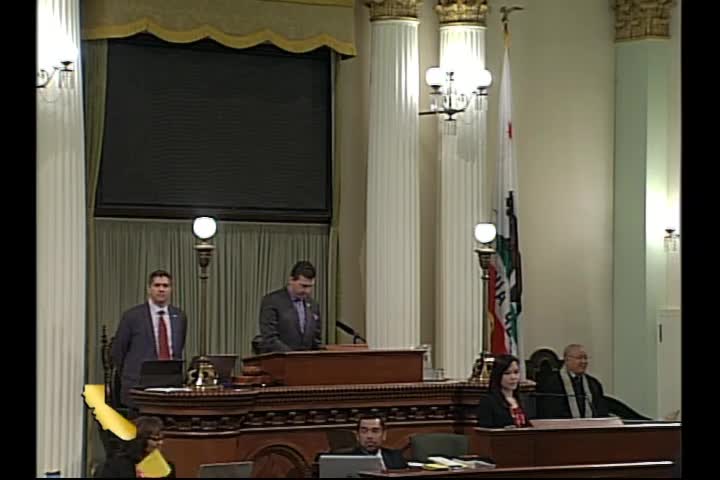 2MIN
Assembly Floor
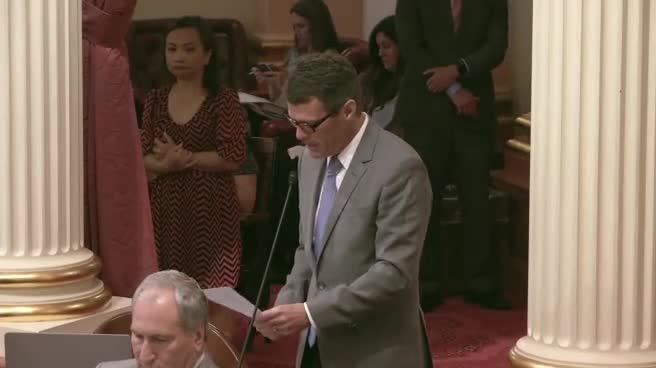 1MIN
Senate Floor
 6MIN
Senate Standing Committee on Energy, Utilities and Communications
Bill Author

Bill Co-Author(s):