AB 1294: Solid waste: plastic products.
- Session Year: 2017-2018
- House: Assembly
- Latest Version Date: 2017-10-11
Existing law prohibits the sale of a plastic product, as defined, labeled as compostable, home compostable, or marine degradable unless it meets specified ASTM International standard specifications, the OK Compost HOME certification, as specified, or a standard adopted by the department, or unless the plastic product is labeled with a qualified claim for which the department has adopted an existing standard, and the plastic product meets that standard. Existing law prohibits the sale of a plastic product that is labeled as biodegradable, degradable, decomposable, or as otherwise specified. Existing law, until January 1, 2018, requires a manufacturer or supplier of plastic products making an environmental marketing claim relating to the recycled content of a plastic food container product to maintain specified information and documentation in written form in its records in support of that claim. Existing law provides for the imposition of a civil penalty by a city, county, or the state for a violation of those provisions.
This bill would extend indefinitely the provision concerning recycled content marketing claims.
Existing law prohibits the sale of a plastic product, as defined, labeled as compostable, home compostable, or marine degradable unless it meets specified ASTM International standard specifications, the OK Compost HOME certification, as specified, or a standard adopted by the department, or unless the plastic product is labeled with a qualified claim for which the department has adopted an existing standard, and the plastic product meets that standard. Existing law prohibits the sale of a plastic product that is labeled as biodegradable, degradable, decomposable, or as otherwise specified. Existing law, until January 1, 2018, requires a manufacturer or supplier of plastic products making an environmental marketing claim relating to the recycled content of a plastic food container product to maintain specified information and documentation in written form in its records in support of that claim. Existing law provides for the imposition of a civil penalty by a city, county, or the state for a violation of those provisions.
This bill would postpone the repeal of the provision concerning recycled content marketing claims until January 1, 2028. extend indefinitely the provision concerning recycled content market claims.
Existing law prohibits the sale of a plastic product, as defined, labeled as compostable, home compostable, or marine degradable unless it meets specified ASTM International standard specifications, the OK Compost HOME certification, as specified, or a standard adopted by the department, or unless the plastic product is labeled with a qualified claim for which the department has adopted an existing standard, and the plastic product meets that standard. Existing law prohibits the sale of a plastic product that is labeled as biodegradable, degradable, decomposable, or as otherwise specified. Existing law, until January 1, 2018, requires a manufacturer or supplier of plastic products making an environmental marketing claim relating to the recycled content of a plastic food container product to maintain specified information and documentation in written form in its records in support of that claim. Existing law provides for the imposition of a civil penalty by a city, county, or the state for a violation of those provisions.
This bill would postpone the repeal of the provision concerning recycled content marketing claims until January 1, 2028.
(a)For purposes of this section, plastic food container product means a product made of plastic that includes a tray, clamshell container, or other receptacle and that is used, or intended to be used, to hold food.
(b)A manufacturer or supplier making an environmental marketing claim relating to the recycled content of a plastic food container product shall maintain information and documentation, which shall be in written form in its records, of both of the following in support of that claim:
(1)The recycled content for materials has been recovered or otherwise diverted from the solid waste stream either during the manufacturing process (preconsumer) or after consumer use (postconsumer).
(2)The recycled content claim conforms to the uniform standards for recycled content contained in the Federal Trade Commission Guides for the Use of Environmental Marketing Claims (16 C.F.R. Part 260).
(c)A manufacturer or supplier shall furnish the information and documentation that it is required to maintain pursuant to this section to any member of the public upon request or provide the information and documentation by furnishing a link to a document on its Internet Web site containing the information and documentation.
(d)This section does not limit the requirements of this chapter or any other provision of law.
(e)This section shall remain in effect only until January 1, 2028, and as of that date is repealed, unless a later enacted statute, that is enacted before January 1, 2028, deletes or extends that date.(a)For purposes of this section, plastic food container product means a product made of plastic that includes a tray, clamshell container, or other receptacle and that is used, or intended to be used, to hold food.
(b)A manufacturer or supplier making an environmental marketing claim relating to the recycled content of a plastic food container product shall maintain information and documentation, which shall be in written form in its records, of both of the following in support of that claim:
(1)The recycled content for materials has been recovered or otherwise diverted from the solid waste stream either during the manufacturing process (preconsumer) or after consumer use (postconsumer).
(2)The recycled content claim conforms with to the uniform standards for recycled content contained in the Federal Trade Commission Guides for the Use of Environmental Marketing Claims (16 C.F.R. Part 260).
(c)A manufacturer or supplier shall furnish the information and documentation that it is required to maintain pursuant to this section to any member of the public upon request or provide the information and documentation by furnishing a link to a document on its Internet Web site containing the information and documentation.
(d)This section does not limit the requirements of this chapter or any other provision of law.
(e)This section shall remain in effect only until January 1, 2018, 2028, and as of that date is repealed, unless a later enacted statute, that is enacted before January 1, 2018, 2028, deletes or extends that date.
REVISIONS: HeadingLine 1.|
Date
|
Status
|
|---|---|
| Oct 11, 2017 | Chaptered by Secretary of State - Chapter 664, Statutes of 2017. |
| Oct 11, 2017 | Approved by the Governor. |
| Sep 26, 2017 | Enrolled and presented to the Governor at 3 p.m. |
| Sep 15, 2017 | In Assembly. Ordered to Engrossing and Enrolling. |
| Sep 14, 2017 | Read third time. Passed. Ordered to the Assembly. |
| Sep 13, 2017 | Read second time. Ordered to third reading. |
| Sep 12, 2017 | From inactive file. |
| Jun 29, 2017 | From Consent Calendar. |
| Jun 27, 2017 | Read second time. Ordered to Consent Calendar. |
| Jun 26, 2017 | From committee: Be placed on second reading file pursuant to Senate Rule 28.8 and ordered to consent calendar. |
| Jun 7, 2017 | From committee: Do pass and re-refer to Com. on APPR. with recommendation: To Consent Calendar. (Ayes 7. Noes 0.) (June 7). Re-referred to Com. on APPR. |
| May 18, 2017 | Referred to Com. on EQ. |
| May 4, 2017 | In Senate. Read first time. To Com. on RLS. for assignment. |
| May 4, 2017 | Read third time. Passed. Ordered to the Senate. (Ayes 76. Noes 0. Page 1394.) |
| Apr 27, 2017 | Read second time. Ordered to Consent Calendar. |
| Apr 26, 2017 | From committee: Do pass. To Consent Calendar. (Ayes 16. Noes 0.) (April 26). |
| Apr 18, 2017 | Re-referred to Com. on APPR. |
| Apr 17, 2017 | Read second time and amended. |
| Apr 6, 2017 | From committee: Amend, and do pass as amended and re-refer to Com. on APPR. (Ayes 10. Noes 0.) (April 3). |
| Mar 24, 2017 | Coauthors revised. |
| Mar 20, 2017 | Coauthors revised. |
| Mar 13, 2017 | Referred to Com. on NAT. RES. |
| Feb 19, 2017 | From printer. May be heard in committee March 21. |
| Feb 17, 2017 | Read first time. To print. |
|
Date
|
Description
|
Location
|
Votes
|
|
|---|---|---|---|---|
| Sep 14, 2017 | Assembly 3rd Reading AB1294 Berman et al. By Hill | Senate Floor |
Passed |
|
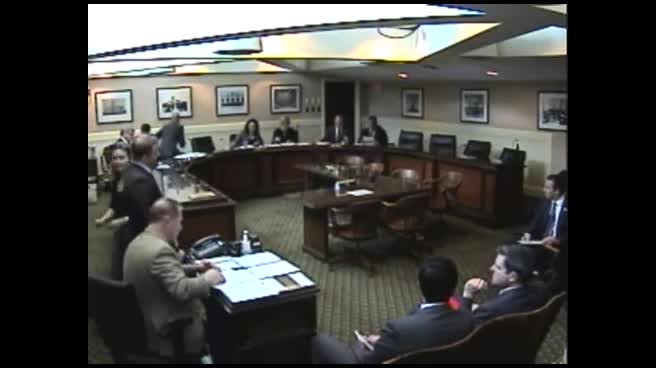
| Jun 7, 2017 | Do pass, but first be re-referred to the Committee on [Appropriations] with the recommendation: To Consent Calendar | Senate Standing Committee on Environmental Quality |
Passed |
|
| May 4, 2017 | AB 1294 BERMAN Consent Calendar Second Day Regular Session | Assembly Floor |
Passed |
|
| Apr 26, 2017 | Do pass. To Consent Calendar. | Assembly Standing Committee on Appropriations |
Passed |
|
| Apr 3, 2017 | Do pass as amended and be re-referred to the Committee on [Appropriations] | Assembly Standing Committee on Natural Resources |
Passed |
This list shows positions taken on this bill by organizations on the date displayed, which is linked to the original source.
Positions by individuals are not included.
|
Organization
|
Position
|
Date
|
|---|---|---|
| Association of Plastic Recyclers | ** Support | Sep 13, 2017 |
| Californians Against Waste | ** Support | Sep 13, 2017 |
| Global Plastics | ** Support | Sep 13, 2017 |
| Integrated Waste Management Task Force | ** Support | Sep 13, 2017 |
| legislative task force | ** Support | Jun 5, 2017 |
| Los Angeles County Solid Waste Management Committee | ** Support | Sep 13, 2017 |
| Northern California Recycling Association | ** Support | Sep 13, 2017 |
Office of Senate Floor Analyses (916) 651-1520 Fax: (916) 327-4478 | AB |
THIRD READING
Bill No: AB 1294
:
SENATE ENVIRONMENTAL QUALITY COMMITTEE: 7-0, 6/7/17
AYES: Wieckowski, Stone, Gaines, Hill, Lara, Skinner, Stern
SENATE APPROPRIATIONS COMMITTEE: Senate Rule 28.8
ASSEMBLY FLOOR: 76-0, 5/4/17 (Consent) - See last page for vote
SOURCE: Californians Against Waste
DIGEST:
This bill removes the January 1, 2018 sunset date on the law that requires plastic food container manufacturers to maintain specified records if they make marketing claims relating to the recycled content of their product.
Existing law:
- Prohibits products, under the Plastic Products law (Public Resources Code §42355 et seq.), from being sold that are labeled, e.g., “compostable” or “marine biodegradable,” unless they meet uniform and recognized standards, such as certain American Society for Testing and Materials standards.
- Prohibits a manufacturer or supplier from selling a plastic food or beverage container that is advertised with a specific recycled content amount unless the manufacturer or supplier maintains specified information to substantiate the claim. Sunsets this provision on January 1, 2018.
This bill removes the January 1, 2018 sunset date on the law that requires plastic food container manufacturers to maintain specified records if they make marketing claims relating to the recycled content of their product.
Background
- Federal law. Under federal law, unfair or deceptive acts or practices in or affecting commerce are declared unlawful. The Federal Trade Commission has published guidelines that help explain how the guidelines apply to environmental advertising and marketing, such as claims regarding degradability and recycling content.
- AB 837 (Nestande, Chapter 525, Statutes of 2012). AB 837 required manufacturers and suppliers of plastic food containers to verify recycled content claims on their products. AB 837 was intended to promote truth in advertising and limit “greenwashing,” which refers to making false or inaccurate claims that products, brands, or corporate policies are environmentally preferable to other products. State law also prohibits a person from falsely labeling a plastic product as compostable or biodegradable.
Comments
Purpose of bill. According to the author, “Many consumers value products with an environmental benefit, so we need to ensure that the environmental claims for plastic containers are accurate. Moreover, accurate labeling benefits a manufacturer that has made or chooses to make an investment/commitment to use recycled content. By extending this truth in marketing provision applicable to plastic food containers, AB 1294 ensures that consumers will continue to trust and rely on such marketing claims.”
FISCAL EFFECT: Appropriation: Fiscal Com.: Local:
Californians Against Waste (source)
Association of Plastic Recyclers
California Chapters of the Solid Waste Association of North America’s Legislative Task Force
Global Plastics
Los Angeles County Solid Waste Management Committee/Integrated Waste Management Task Force
Northern California Recycling Association
OPPOSITION: (Verified 9/13/17)
None received
ASSEMBLY FLOOR: 76-0, 5/4/17
AYES: Acosta, Aguiar-Curry, Arambula, Baker, Berman, Bloom, Bocanegra, Bonta, Brough, Burke, Caballero, Calderon, Cervantes, Chau, Chávez, Chen, Chiu, Choi, Chu, Cooley, Cooper, Cunningham, Dababneh, Dahle, Daly, Eggman, Flora, Fong, Frazier, Friedman, Gallagher, Eduardo Garcia, Gipson, Gloria, Gomez, Gonzalez Fletcher, Gray, Grayson, Harper, Holden, Irwin, Jones-Sawyer, Kalra, Kiley, Lackey, Levine, Limón, Low, Maienschein, Mathis, Mayes, McCarty, Medina, Melendez, Mullin, Muratsuchi, Nazarian, Obernolte, O'Donnell, Quirk, Quirk-Silva, Reyes, Ridley-Thomas, Rodriguez, Rubio, Salas, Santiago, Steinorth, Mark Stone, Thurmond, Ting, Voepel, Waldron, Weber, Wood, Rendon
NO VOTE RECORDED: Travis Allen, Bigelow, Cristina Garcia, Patterson
9/13/17 19:11:59
**** END ****
SENATE COMMITTEE ON ENVIRONMENTAL QUALITY
Senator Wieckowski, Chair
2017 - 2018 Regular
Bill No: AB 1294
Author: | Berman and Acosta | ||
Version: | 4/17/2017 | Hearing Date: | 6/7/2017 |
Urgency: | No | Fiscal: | Yes |
Consultant: | Joanne Roy | ||
SUBJECT: Solid waste: plastic products.
ANALYSIS:
Existing law:
- Under the Plastic Products law (Public Resources Code §42355 et seq.), prohibits products from being sold that are labeled, e.g., “compostable” or “marine biodegradable,” unless they meet uniform and recognized standards, such as certain American Society for Testing and Materials (ASTM) standards.
- Prohibits a manufacturer or supplier from selling a plastic food or beverage container that is advertised with a specific recycled content amount unless the manufacturer or supplier maintains specified information to substantiate the claim. Sunsets this provision on January 1, 2018.
This bill removes the January 1, 2018 sunset date on the law that requires plastic food container manufacturers to maintain specified records if they make marketing claims relating to the recycled content of their product.
Background
- Federal law. Under federal law, unfair or deceptive acts or practices in or affecting commerce are declared unlawful. The Federal Trade Commission has published guidelines that help explain how the guidelines apply to environmental advertising and marketing, such as claims regarding degradability and recycling content.
- AB 837 (Nestande, Chapter 525, Statutes of 2012). AB 837 required manufacturers and suppliers of plastic food containers to verify recycled content claims on their products. AB 837 was intended to promote truth in advertising and limit “greenwashing,” which refers to making false or inaccurate claims that products, brands, or corporate policies are environmentally preferable to other products. State law also prohibits a person from falsely labeling a plastic product as compostable or biodegradable.
Comments
Purpose of Bill. According to the author, “Many consumers value products with an environmental benefit, so we need to ensure that the environmental claims for plastic containers are accurate. Moreover, accurate labeling benefits a manufacturer that has made or chooses to make an investment/commitment to use recycled content. By extending this truth in marketing provision applicable to plastic food containers, AB 1294 ensures that consumers will continue to trust and rely on such marketing claims.”
SOURCE:
Californians Against Waste
SUPPORT:
Association of Plastic Recyclers
Global Plastics
Northern California Recycling Association
California Chapters of the Solid Waste Association of North America’s
Legislative Task Force
OPPOSITION:
None received
-- END --
Date of Hearing: April 26, 2017
ASSEMBLY COMMITTEE ON APPROPRIATIONS
Lorena Gonzalez Fletcher, Chair
ABPCA Bill Id:AB 1294
Author:(Berman) – As Amended Ver:April 17, 2017
Policy Committee: | Natural Resources | Vote: | 10 - 0 |
|
| ||
|
|
Urgency: No State Mandated Local Program: No Reimbursable: No
SUMMARY:
This bill removes the January 1, 2018, sunset date on the law that requires plastic food container manufacturers to maintain specified records if they make marketing claims relating to the recycled content of their product.
FISCAL EFFECT:
- The ongoing continuation of minor penalty revenue, likely less than $25,000 annually, after January 1, 2018, to the Department of Justice, resulting from civil penalties (GF).
- The ongoing continuation of minor penalty revenue, likely less than $50,000 annually statewide, after January 1, 2018, to the offices of city attorneys, city prosecutors, and district attorneys (local accounts).
COMMENTS:
- Purpose. According to the author, by removing the sunset on the truth in marketing provision applicable to plastic food containers, this bill ensures consumers will continue to trust and rely on marketing claims regarding recycled content.
- Background. AB 837 (Nestande), Chapter 525, Statutes of 2012, required manufacturers and suppliers of plastic food containers to verify recycled content claims on their products. AB 837 was intended to promote truth in advertising and limit "greenwashing," which refers to making false or inaccurate claims that products, brands, or corporate policies are environmentally preferable to other products. State law also prohibits a person from falsely labeling a plastic product as compostable or biodegradable. Many California consumers make the choice to support companies that manufacture products made from recycled materials to minimize the environmental impacts of their purchases.
- Federal law. Under federal law, unfair or deceptive acts or practices in or affecting commerce are declared unlawful. The Federal Trade Commission has published guidelines that help explain how the guidelines apply to environmental advertising and marketing, such as claims regarding degradability and recycling content.
- Analysis Prepared by: Jennifer Galehouse / APPR. / (916) 319-2081
Date of Hearing: April 3, 2017
ASSEMBLY COMMITTEE ON NATURAL RESOURCES
Cristina Garcia, Chair
ABPCA Bill Id:AB 1294 (
Author:Berman) – As Introduced Ver:February 17, 2017
SUBJECT: Solid waste: plastic products
SUMMARY: Extends the sunset, from January 1, 2018 to January 1, 2028, for a provision of law that requires manufacturers of plastic food containers that make environmental marketing claims relating to the recycled content to maintain specified records relating to the claim.
EXISTING LAW:
- Imposes civil liability and criminal penalties for any unlawful, unfair, or fraudulent business act or any unfair, deceptive, untrue, or misleading advertising.
- Prohibits a person from selling a food or beverage container that is labeled "compostable" or "marine degradable," unless the container meets specific American Society for Testing and Materials (ASTM) standards. Authorizes a city, county, or the state to impose civil liability in the amount of $500 for the first violation of this law, $1,000 for the second violation, and $2,000 for the third and any subsequent violation.
- Prohibits a manufacturer or supplier from selling a plastic food or beverage container that is advertised with a specific recycled content amount unless the manufacturer or supplier maintains specified information to substantiate the claim. Sunsets this provision on January 1, 2018.
FISCAL EFFECT: Unknown
COMMENTS:
- Author statement:
Many consumers value products with an environmental benefit. Accordingly, the information provided to consumers in the form of environmental claims for plastic containers must be accurate. Moreover, accurate labeling benefits a manufacturer that has made or chooses to make an investment/commitment to use recycled content. By extending the sunset on the truth in marketing provision applicable to plastic food containers, AB 1294 ensures that consumers will continue to trust and rely on such marketing claims.
- Background. AB 837 (Nestande), Chapter 525, Statutes of 2012, required manufacturers and suppliers of plastic food containers to verify recycled content claims on their products. AB 837 was intended to promote truth in advertising and limit "greenwashing," which refers to making false or inaccurate claims that products, brands, or corporate policies are environmentally preferable to other products. State law also prohibits a person from falsely labeling a plastic product as compostable or biodegradable.
Many California consumers make the choice to support companies that manufacture products made from recycled materials to minimize the environmental impacts of their purchases. This bill extends the requirements of AB 837 for 10 years, to ensure that consumers have accurate information about the products they purchase.
- Federal law. Under federal law, unfair or deceptive acts or practices in or affecting commerce are declared unlawful. The Federal Trade Commission has published guidelines that help explain how the guidelines apply to environmental advertising and marketing, such as claims regarding degradability and recycling content.
- Suggested amendment. Given the ongoing need for accurate and verifiable information for consumers, the committee may wish to amend the bill to remove the sunset rather than extending it.
REGISTERED SUPPORT / OPPOSITION:
Support
Association of Plastic Recyclers
Californians Against Waste (sponsor)
Global Plastics
Opposition
None on file
Analysis Prepared by: Elizabeth MacMillan / NAT. RES. /
Discussed in Hearing
View Older Hearings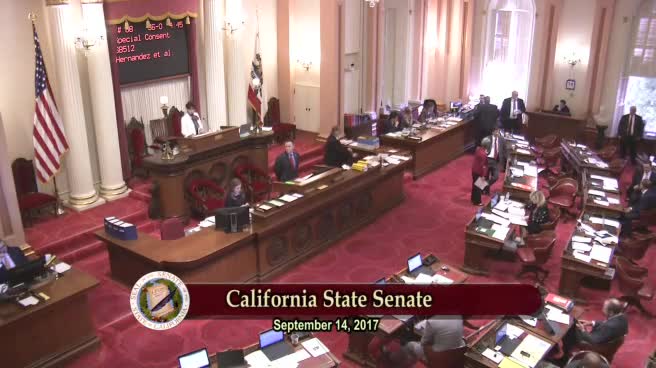


Bill Co-Author(s):