AB 1309: Employment without reinstatement: failure to enroll or report: fee.
- Session Year: 2017-2018
- House: Assembly
- Latest Version Date: 2017-09-23
The Public Employees Retirement Law (PERL) creates the Public Employees Retirement System, which provides defined benefits to its members based on age at retirement, service credit, and final compensation. Existing law permits a retired person to serve without reinstatement from retirement or loss or interruption of benefits provided by the system if certain conditions are met. If a retired person is employed without reinstatement without meeting those conditions, PERL requires the retired person to reimburse the system for any retirement allowance received and requires both the retired person and the employer to make contributions due and, to the extent each is determined to be at fault, contribute toward reimbursement of the system for administrative expenses incurred. Existing law requires fees and other amounts received by the Board of Administration of the Public Employees Retirement System pursuant to PERL to be credited to the Public Employees Retirement Fund, a continuously appropriated fund.
This bill would authorize the board to assess an employer that fails to enroll, solely for the administrative recordkeeping purposes of the system, a retired member employed without reinstatement within 30 days after the effective date of hire, or that fails to report the pay rate and number of hours worked by the retired member within 30 days of the last day of the pay period in which the retired member worked, a $200 fee per month, as specified. The bill would prohibit an employer from passing those fees on to an employee. By authorizing increased deposits into a continuously appropriated fund, the bill would make an appropriation.
(a)A person who has been retired under this system, for service or for disability, may not be employed in any capacity thereafter by the state, the university, a school employer, or a contracting agency, unless the employment qualifies for service credit in the University of California Retirement Plan or the State Teachers Retirement Plan, unless he or she has first been reinstated from retirement pursuant to this chapter, or unless the employment, without reinstatement, is authorized by this article. A retired person whose employment without reinstatement is authorized by this article shall acquire no service credit or retirement rights under this part with respect to the employment.
(b)Any retired member employed in violation of this article shall:
(1)Reimburse this system for any retirement allowance received during the period or periods of employment that are in violation of law.
(2)Pay to this system an amount of money equal to the employee contributions that would otherwise have been paid during the period or periods of unlawful employment, plus interest thereon.
(3)Contribute toward reimbursement of this system for administrative expenses incurred in responding to this situation, to the extent the member is determined by the executive officer to be at fault.
(c)Any public employer that employs a retired member in violation of this article shall:
(1)Pay to this system an amount of money equal to employer contributions that would otherwise have been paid for the period or periods of time that the member is employed in violation of this article, plus interest thereon.
(2)Contribute toward reimbursement of this system for administrative expenses incurred in responding to this situation, to the extent the employer is determined by the executive officer of this system to be at fault.
(d)If an employer fails to enroll, solely for the administrative recordkeeping purposes of the system, a retired member employed in any capacity, without reinstatement, within 30 days of the effective date of hire, the board may assess the employer a fee of two hundred dollars ($200) per retired member per month until the retired member is enrolled in those administrative aspects of the system.
(e)If an employer fails to report the pay rate and number of hours worked of a retired member employed in any capacity, without reinstatement, within 30 days following the last day of the pay period in which the retired member worked, the board may assess the employer a fee of two hundred ($200) per retired member per month until the information is reported.
(f)An employer shall not pass on to an employee any fees assessed pursuant to subdivisions (d) and (e).
|
Date
|
Status
|
|---|---|
| Sep 23, 2017 | Chaptered by Secretary of State - Chapter 261, Statutes of 2017. |
| Sep 23, 2017 | Approved by the Governor. |
| Sep 7, 2017 | Enrolled and presented to the Governor at 3 p.m. |
| Aug 31, 2017 | In Assembly. Ordered to Engrossing and Enrolling. |
| Aug 31, 2017 | Read third time. Passed. Ordered to the Assembly. |
| Jun 27, 2017 | Read second time. Ordered to third reading. |
| Jun 26, 2017 | From committee: Be ordered to second reading pursuant to Senate Rule 28.8. |
| Jun 13, 2017 | From committee: Do pass and re-refer to Com. on APPR. (Ayes 5. Noes 0.) (June 12). Re-referred to Com. on APPR. |
| May 24, 2017 | Referred to Com. on P.E. & R. |
| May 11, 2017 | In Senate. Read first time. To Com. on RLS. for assignment. |
| May 11, 2017 | Read third time. Passed. Ordered to the Senate. (Ayes 72. Noes 5. Page 1475.) |
| May 4, 2017 | Read second time. Ordered to third reading. |
| May 3, 2017 | From committee: Do pass. (Ayes 16. Noes 0.) (May 3). |
| Apr 20, 2017 | From committee: Do pass and re-refer to Com. on APPR. (Ayes 7. Noes 0.) (April 19). Re-referred to Com. on APPR. |
| Mar 22, 2017 | In committee: Set, first hearing. Hearing canceled at the request of author. |
| Mar 13, 2017 | Referred to Com. on P.E., R., & S.S. |
| Feb 19, 2017 | From printer. May be heard in committee March 21. |
| Feb 17, 2017 | Read first time. To print. |
|
Date
|
Description
|
Location
|
Votes
|
|
|---|---|---|---|---|
| Aug 31, 2017 | Assembly 3rd Reading AB1309 Cooley By Leyva | Senate Floor |
Passed |
|
| Jun 12, 2017 | Do pass, but first be re-referred to the Committee on [Appropriations] | Senate Standing Committee on Public Employment and Retirement |
Passed |
|
| May 11, 2017 | AB 1309 COOLEY Assembly Third Reading | Assembly Floor |
Passed |
|
| May 3, 2017 | Do pass. | Assembly Standing Committee on Appropriations |
Passed |
|
| Apr 19, 2017 | Do pass and be re-referred to the Committee on [Appropriations] | Assembly Standing Committee on Public Employees, Retirement, and Social Security |
Passed |
This list shows positions taken on this bill by organizations on the date displayed, which is linked to the original source.
Positions by individuals are not included.
|
Organization
|
Position
|
Date
|
|---|---|---|
| California Public Employees' Retirement System | ** Support | Jun 28, 2017 |
| CalPERS | * Support | May 3, 2017 |
Office of Senate Floor Analyses (916) 651-1520 Fax: (916) 327-4478 | AB |
THIRD READING
Bill No: AB 1309
:
SENATE PUBLIC EMP. & RET. COMMITTEE: 5-0, 6/12/17
AYES: Pan, Morrell, Leyva, Moorlach, Portantino
SENATE APPROPRIATIONS COMMITTEE: Senate Rule 28.8
ASSEMBLY FLOOR: 72-5, 5/11/17 - See last page for vote
SOURCE: California Public Employees’ Retirement System
DIGEST:
This bill allows the California Public Employees’ Retirement System to assess employers a $200 fee per retired member each month for failure to report the hiring and payroll information of members working in retirement.
ANALYSIS:
Existing law:
- Authorizes a retired annuitant to serve without reinstatement from retirement and without incurring a loss or interruption of benefits provided by the retirement system upon appointment by a public employer during an emergency to prevent stoppage of public business, or because the retired annuitant has skills needed to perform work of limited duration.
- Establishes the California Public Employees’ Pension Reform Act of 2013 (PEPRA) which, among other provisions, limits retired annuitants from working more than 960 hours or 120 days per year for any public employer in the same public retirement system from which the retiree receives benefits.
- Requires, generally, that a retiree must wait 180 days after retirement before returning to work.
- Specifies that annuitant pay rates are limited to the maximum published pay schedule for the vacant position, and that California Public Employees’ Retirement System (CalPERS) members cannot be concurrently employed as a retired annuitant under a separate employment-after-retirement provision.
- Specifies that retired members may not accrue service credit or make contributions to CalPERS during their post-retirement employment.
- Clarifies that upon employee qualification of enrollment into CalPERS membership, an employer is responsible for the penalty for failure to enroll an employee, and cannot pass that cost onto the employee.
- Requires all employers to provide CalPERS with immediate notice of any change in employment status.
- Requires that any retired member employed in violation of existing law must:
- Reimburse the system for any retirement allowance received during the period or periods of employment that are in violation of law.
- Pay to CalPERS the amount of money equal to the employee contributions, plus interest, that would otherwise have been paid during the period or periods of unlawful employment.
- Reimburse any administrative expenses incurred in responding to the situation, as specified.
- Specifies that any public employer who employs a retired member in violation of law shall:
- Pay to the system the amount equal to employer contributions that would have otherwise been paid, plus interest, for the period or periods of unlawful employment.
- Contribute towards reimbursement of this system for the administrative expenses incurred in responding to the situation, as specified.
This bill:
- Authorizes CalPERS to assess a fee of $200 per month, per retired member when the employer fails to enroll, solely for the administrative recordkeeping purposes of the system, a retired member who is employed without reinstatement within 30 days after the effective date of hire, until the retired member is enrolled.
- Authorizes CalPERS to assess a $200 fee per month, per retired member, when the employer fails to report the pay rate and number of hours worked by a retired member employed in any capacity, without reinstatement, within 30 days following the last day of the pay period in which the employee worked until the information is reported.
- Prohibits the employer from passing on to an employee any fees assessed pursuant to this bill.
Background
Current law allows retired CalPERS members to return to employment with CalPERS employers while receiving a retirement allowance under certain specified conditions. These include a waiting period of 180 days between the date of retirement and when the member may return to work, a limitation of 960 working hours per year, and a stipulation that retired members may not accrue service credit or make contributions to CalPERS during their post-retirement employment.
Existing statute requires CalPERS to reinstate a retired annuitant who exceeds the 960 hour limitation to active service and suspend their retirement allowance and other benefits. Employers receive information through circular letters and CalPERS’ public agency and school employer manual of their obligation to enroll for tracking purposes any retired members working during retirement at the time they are hired.
This bill authorizes CalPERS to assess a fee to incentivize employers to enroll and provide timely information on retired annuitants working during retirement. AB 1309 prohibits employers from passing onto employees any fees assessed pursuant to this bill.
Related/Prior Legislation
AB 340 (Furutani, Chapter 296, Statutes of 2012), established PEPRA and required comprehensive statewide pension reform, including specifying under what conditions a retired person may serve without reinstatement.
FISCAL EFFECT: Appropriation: Fiscal Com.: Local:
California Public Employees’ Retirement System (source)
OPPOSITION: (Verified 6/27/17)
None received
ARGUMENTS IN SUPPORT: According to the author’s office, “When an employer enrolls and reports pay rate and hours worked for a retired member…[CalPERS will] issue letters to the employer and retired member as they near the 960-hour limit on post-retirement employment. Thus, it is critical that employers follow this requirement to guarantee retired members don’t violate post-retirement rules.”
CalPERS writes, “Recent CalPERS audit findings have found numerous employers failed to timely and accurately enroll or report the payrate and hours worked of retired members, in disregard of existing reporting requirements. This, at times, has led to otherwise preventable post-retirement employment violations that have required retired members’ reinstatement to active service. The Board voted to seek this statutory authority to help ensure employers and retired members remain in compliance with existing post-retirement employment restrictions.”
ASSEMBLY FLOOR: 72-5, 5/11/17
AYES: Acosta, Aguiar-Curry, Arambula, Baker, Berman, Bigelow, Bloom, Bocanegra, Bonta, Burke, Caballero, Calderon, Cervantes, Chau, Chávez, Chen, Chiu, Choi, Chu, Cooley, Cooper, Cunningham, Dababneh, Daly, Eggman, Flora, Fong, Frazier, Friedman, Gallagher, Cristina Garcia, Eduardo Garcia, Gipson, Gloria, Gomez, Gonzalez Fletcher, Gray, Grayson, Holden, Irwin, Jones-Sawyer, Kalra, Kiley, Lackey, Levine, Limón, Low, Maienschein, Mathis, McCarty, Medina, Melendez, Mullin, Muratsuchi, Nazarian, Obernolte, Quirk, Quirk-Silva, Reyes, Ridley-Thomas, Rodriguez, Rubio, Salas, Santiago, Steinorth, Mark Stone, Thurmond, Ting, Voepel, Weber, Wood, Rendon
NOES: Travis Allen, Brough, Harper, Mayes, Waldron
NO VOTE RECORDED: Dahle, O'Donnell, Patterson
6/28/17 14:51:03
**** END ****
SENATE COMMITTEE ON
PUBLIC EMPLOYMENT AND RETIREMENT
Dr. Richard Pan, Chair
2017 - 2018 Regular
Bill No: AB 1309 Hearing Date: 6/12/17
Author: | Cooley | ||
Version: | 2/17/17 As introduced | ||
Urgency: | No | Fiscal: | Yes |
Consultant: | Korinne Sugasawara | ||
Subject: Employment without reinstatement: failure to enroll or report: fee
SOURCE: California Public Employees’ Retirement System
ASSEMBLY VOTES:
Assembly Floor: | 72 - 5 |
Assembly Appropriations Committee: | 16 - 0 |
Assembly Public Employees, Retirement/Soc Sec Committee: | 7 - 0 |
DIGEST: This bill allows the California Public Employees’ Retirement System to assess employers a $200 fee per retired member each month for failure to report the hiring and payroll information of members working in retirement.
ANALYSIS:
Existing law:
- Authorizes a retired annuitant to serve without reinstatement from retirement and without incurring a loss or interruption of benefits provided by the retirement system upon appointment by a public employer during an emergency to prevent stoppage of public business, or because the retired annuitant has skills needed to perform work of limited duration.
- Establishes the California Public Employees’ Pension Reform Act of 2013 (PEPRA) which, among other provisions, limits retired annuitants from working more than 960 hours or 120 days per year for any public employer in the same public retirement system from which the retiree receives benefits.
- Generally requires that a retiree must wait 180 days after retirement before returning to work.
- Specifies that annuitant pay rates are limited to the maximum published pay schedule for the vacant position, and that California Public Employees’ Retirement System (CalPERS) members cannot be concurrently employed as a retired annuitant under a separate employment-after-retirement provision.
- Specifies that retired members may not accrue service credit or make contributions to CalPERS during their post-retirement employment.
- Clarifies that upon employee qualification of enrollment into CalPERS membership, an employer is responsible for the penalty for failure to enroll an employee, and cannot pass that cost onto the employee.
- Requires all employers to provide CalPERS with immediate notice of any change in employment status.
- Requires that any retired member employed in violation of existing law must:
- Reimburse the system for any retirement allowance received during the period or periods of employment that are in violation of law.
- Pay to CalPERS the amount of money equal to the employee contributions, plus interest, that would otherwise have been paid during the period or periods of unlawful employment.
- Reimburse any administrative expenses incurred in responding to the situation, as specified.
- Specifies that any public employer who employs a retired member in violation of law shall:
- Pay to the system the amount equal to employer contributions that would have otherwise been paid, plus interest, for the period or periods of unlawful employment.
- Contribute towards reimbursement of this system for the administrative expenses incurred in responding to the situation, as specified.
This bill:
- Authorizes CalPERS to assess a fee of $200 per month, per retired member when the employer fails to enroll, solely for the administrative recordkeeping purposes of the system, a retired member who is employed without reinstatement within 30 days after the effective date of hire, until the retired member is enrolled.
- Authorizes CalPERS to assess a $200 fee per month, per retired member, when the employer fails to report the pay rate and number of hours worked by a retired member employed in any capacity, without reinstatement, within 30 days following the last day of the pay period in which the employee worked until the information is reported.
- Prohibits the employer from passing on to an employee any fees assessed pursuant to this bill.
Background
Current law allows retired CalPERS members to return to employment with CalPERS employers while receiving a retirement allowance under certain specified conditions. These include a waiting period of 180 days between the date of retirement and when the member may return to work, a limitation of 960 working hours per year, and a stipulation that retired members may not accrue service credit or make contributions to CalPERS during their post-retirement employment.
Existing statute requires CalPERS to reinstate a retired annuitant who exceeds the 960 hour limitation to active service and suspend their retirement allowance and other benefits. Employers receive information through circular letters and CalPERS’ public agency and school employer manual of their obligation to enroll for tracking purposes any retired members working during retirement at the time they are hired.
This bill authorizes CalPERS to assess a fee to incentivize employers to enroll and provide timely information on retired annuitants working during retirement. AB 1309 prohibits employers from passing onto employees any fees assessed pursuant to this bill.
Related/Prior Legislation
AB 340 (Furutani, Chapter 296, Statutes of 2012) established PEPRA and required comprehensive statewide pension reform, including specifying under what conditions a retired person may serve without reinstatement.
FISCAL EFFECT: Appropriation: Yes Fiscal Com.: Yes Local: No
According to the Assembly Appropriations Committee, this bill will result in “modest increased fee revenue paid by public agencies.”
SUPPORT:
California Public Employees’ Retirement System (source)
OPPOSITION:
None received.
ARGUMENTS IN SUPPORT:
According to the author’s office, "When an employer enrolls and reports pay rate and hours worked for a retired member…[CalPERS will] issue letters to the employer and retired member as they near the 960-hour limit on post-retirement employment. Thus, it is critical that employers follow this requirement to guarantee retired members don’t violate post-retirement rules.”
CalPERS writes, “Recent CalPERS audit findings have found numerous employers failed to timely and accurately enroll or report the payrate and hours worked of retired members, in disregard of existing reporting requirements. This, at times, has led to otherwise preventable post-retirement employment violations that have required retired members’ reinstatement to active service. The Board voted to seek this statutory authority to help ensure employers and retired members remain in compliance with existing post-retirement employment restrictions.”
ASSEMBLY THIRD READING
ATR Bill Id:AB 1309
Author:(Cooley)
As Introduced Ver:February 17, 2017
Majority vote
Committee | Votes | Ayes | Noes |
Public Employees | 7-0 | Rodriguez, Travis Allen, Gallagher, Cervantes, Cooley, Cooper, O'Donnell | |
Appropriations | 16-0 | Gonzalez Fletcher, Bigelow, Bloom, Bocanegra, Bonta, Brough, Calderon, Chau, Eggman, Fong, Friedman, Gallagher, Eduardo Garcia, Muratsuchi, Obernolte, Reyes |
|
SUMMARY: Authorizes the California Public Employees' Retirement System (CalPERS) to assess employers a $200 fee each month per retired member for failure to report the hiring and payroll information of members working in retirement. Specifically, this bill:
- Authorizes, solely for administrative recordkeeping purposes, CalPERS to assess an employer a $200 fee per month and per employee until the retired member is enrolled, when the employer fails to enroll a retired member who is employed without reinstatement within 30 days after the effective date of hire.
- Authorizes CalPERS to assess an employer a $200 fee per month and per employee when the employer fails to report the pay rate and number of hours worked by a retired member employed in any capacity, without reinstatement, within 30 days following the last day of the pay period in which the retired member worked, until the information is reported.
- Prohibits employers from passing the fee on to an employee.
EXISTING LAW:
- Established the California Public Employees' Pension Reform Act of 2013 (PEPRA) which, among other provisions, revised public employee retirement benefits, and limited all employees who retire from public service from working more than 960 hours, or 120 days per year, for any public employer in the same public retirement system from which the retiree receives benefits.
- Requires, under specified conditions, a retiree to wait 180 days prior to returning to work.
- Provides that appointments of retired CalPERS members must be temporary, have specialized skills, and that they are permitted to exceed the 960-hour work limitation only one time.
- Specifies that annuitant pay rates are limited to the maximum published pay schedule for the vacant position, and that CalPERS members cannot be concurrently employed as a retired annuitant under a separate employment-after-retirement provision.
- Clarifies that upon employee qualification of enrollment into CalPERS membership, an employer is responsible for the penalty for failure to enroll an employee, and is prohibited from passing that cost on to the employee.
- Requires all employers to provide CalPERS with immediate notice of any change in employment status.
- Specifies that any retired member employed in violation of existing law must:
- Reimburse the system for any retirement allowance received during the period or periods of unlawful employment.
- Pay an amount of money equal to the employee contributions, plus interest that would have been paid during the period or periods of unlawful employment.
- Reimburse the system for administrative costs incurred.
- Specifies that any public employer that employs a retired person in violation of existing law must:
- Pay to the system an amount of money equal to employer contributions that would have been paid for the period or periods of time that the member is unlawfully employed.
- Reimburse the system for administrative costs incurred.
- Prohibits a retired person who is employed without reinstatement, from acquiring service credit or retirement rights with respect to the employment.
FISCAL EFFECT: According to the Appropriations Committee, this bill would result in modest increased fee revenue paid by public agencies. Between 2007-08 and 2012-13, CalPERS audits identified on average 12 cases per year where a public agency failed to report the hiring and payroll information of a retired annuitant. Had this bill been in place during these years, CalPERS would have collected an average of $2,400 per year in fee revenue from state and local public agencies.
Analysis Prepared by: Michael Bolden / P.E.,R., & S.S. / (916) 319-3957 FN: 0000262
Date of Hearing: May 3, 2017
ASSEMBLY COMMITTEE ON APPROPRIATIONS
Lorena Gonzalez Fletcher, Chair
ABPCA Bill Id:AB 1309
Author:(Cooley) – As Introduced Ver:February 17, 2017
Policy Committee: | Public Employees, Retirement/Soc Sec | Vote: | 7 - 0 |
|
| ||
|
|
Urgency: No State Mandated Local Program: No Reimbursable: No
SUMMARY:
This bill allows the California Public Employees’ Retirement System (CalPERS) to assess employers a $200 fee each month per retired member for failure to report the hiring and payroll information of members working in retirement.
FISCAL EFFECT:
Modest increased fee revenue paid by public agencies. Between 2007-08 and 2012-13, CalPERS audits identified on average 12 cases per year where a public agency failed to report the hiring and payroll information of a retired annuitant. Had AB 1309 been in place during these years, CalPERS would have collected an average $2,400 per year in fee revenue from state and local public agencies.
COMMENTS:
- Retired Annuitants. Existing law allows CalPERS members to retire and return to employment with CalPERS employers while continuing to receive a retirement allowance. However, there are restrictions on this work, and retired members do not accrue service credit during their post-retirement employment, and they do not make contributions to CalPERS during this time.
- CalPERS’ Cost Assessments. Under current law, CalPERS can assess an employer $200 each time an employer fails to timely complete or correct payroll and contribution information for active members. This fee is imposed each month until the payroll and contribution information is completed or corrected.
- Purpose. According to CalPERS, AB 1309 will give CalPERS the authority to assess a fine on employers that do not properly report information on retired annuitants. CalPERS points out that this fee authority already exists in situations where an employer doesn’t properly report certain information on active members, and recent audits have found what could have been preventable violations of reporting requirements for retired annuitants.
Analysis Prepared by: Luke Reidenbach / APPR. / (916) 319-2081
Discussed in Hearing
 2MIN
Senate Floor
 6MIN
Senate Standing Committee on Public Employment and Retirement
 1MIN
Assembly Floor
 1MIN
Assembly Standing Committee on Appropriations
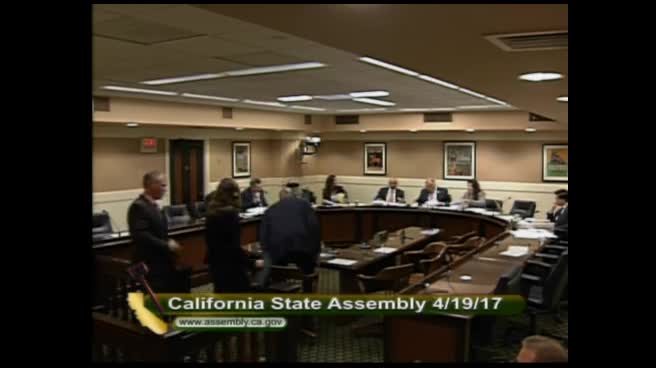 2MIN
Assembly Standing Committee on Public Employees, Retirement, and Social Security
Bill Author

Bill Co-Author(s):