AB 1317: Carl Moyer Memorial Air Quality Standards Attainment Program.
- Session Year: 2017-2018
- House: Assembly
- Latest Version Date: 2017-10-10
Existing law establishes the Carl Moyer Memorial Air Quality Standards Attainment Program, which is administered by the State Air Resources Board, to provide grants to offset the incremental cost of eligible projects that reduce emissions of air pollutants from covered sources. Existing law defines the term covered source for purposes of the program.
This bill would revise the definition of covered source to include stationary irrigation or water conveyance engines.
Existing law establishes the Carl Moyer Memorial Air Quality Standards Attainment Program, which is administered by the State Air Resources Board, to provide grants to offset the incremental cost of eligible projects that reduce emissions of air pollutants from vehicular sources in the state and for the funding of a fueling infrastructure demonstration program and technology development efforts. Existing law delineates criteria for eligible grant applicants under the program. covered sources. Existing law defines the term covered source for purposes of the program.
This bill would additionally authorize as an eligible grant applicant under the program an operator or owner of point or mobile emissions sources on lands that are wholly or partially under easement for conservation and habitat purposes with the United States Fish and Wildlife Service or the Department of Fish and Wildlife and are located within the boundaries of the grassland ecological area, as defined by the County of Merced. revise the definition of covered source to include stationary irrigation or water conveyance engines.
Existing law establishes the Carl Moyer Memorial Air Quality Standards Attainment Program, which is administered by the State Air Resources Board, to provide grants to offset the incremental cost of eligible projects that reduce emissions of air pollutants from vehicular sources in the state and for the funding of a fueling infrastructure demonstration program and technology development efforts. Existing law delineates criteria for eligible grant applicants under the program.
This bill would additionally authorize as an eligible grant applicant under the program an operator or owner of point or mobile emissions sources on lands that are wholly or partially under easement for conservation and habitat purposes with the United States Fish and Wildlife Service or the Department of Fish and Wildlife and are located within the boundaries of the grassland ecological area, as defined by the County of Merced.
(a)As used in this chapter, the following terms have the following meanings:
(1)[Reserved]
(2)Btu means British thermal unit.
(3)Commission means the State Energy Resources Conservation and Development Commission.
(4)Cost-effectiveness means dollars provided to a project pursuant to subdivision (d) of Section 44283 for each ton of covered emission reduction attributed to a project or to the program as a whole. In calculating cost-effectiveness, one-time grants of funds made at the beginning of a project shall be annualized using a time value of public funds or discount rate determined for each project by the state board, taking into account the interest rate on bonds, interest earned by state funds, and other factors as determined appropriate by the state board. Cost-effectiveness shall be calculated by dividing annualized costs by average annual emissions reduction. The state board, in consultation with the districts and concerned members of the public, shall establish appropriate cost-effective limits for oxides of nitrogen, particulate matter, and reactive organic gases and a reasonable system for comparing the cost-effectiveness of proposed projects as described in subdivision (a) of Section 44283.
(5)Covered emissions include emissions of oxides of nitrogen, particulate matter, and reactive organic gases from any covered source.
(6)Covered engine includes any internal combustion engine or electric motor and drive powering a covered source.
(7)Covered source includes onroad vehicles, off-road nonrecreational equipment and vehicles, locomotives, marine vessels, agricultural sources of air pollution, as defined in Section 39011.5, stationary irrigation or water conveyance engines, and, as determined by the state board, other categories necessary for the state and districts to meet air quality goals.
(8)Covered vehicle includes any vehicle or piece of equipment powered by a covered engine.
(9)District means a county air pollution control district or an air quality management district.
(10)Fund means the Air Pollution Control Fund established pursuant to Section 43015.
(11)Incremental cost means the cost of the project less a baseline cost that would otherwise be incurred by the applicant in the normal course of business. Incremental costs may include added lease, energy, or fuel costs pursuant to Section 44283 as well as incremental capital costs.
(12)Liquidated means that all moneys for a specified fiscal year have been spent by a district to reimburse grantees for valid and eligible project invoices and district administrative costs. Payments withheld from the grantee by a district until all contractual reporting requirements are met may be excluded from these amounts for the purposes of liquidation.
(13)Mobile Source Air Pollution Reduction Review Committee means the Mobile Source Air Pollution Reduction Review Committee created by Section 44244.
(14)New very low emission vehicle means a heavy-duty vehicle that qualifies as a very low emission vehicle when it is a new vehicle, where new vehicle has the same meaning as defined in Section 430 of the Vehicle Code, or that is modified with the approval and warranty of the original equipment manufacturer to qualify as a very low emission vehicle within 12 months of delivery to an owner for private or commercial use.
(15)NOx means oxides of nitrogen.
(16)Program means the Carl Moyer Memorial Air Quality Standards Attainment Program created by subdivision (a) of Section 44280.
(17)Recaptured means those moneys that are returned to a district or the state board by a grantee because that grantee did not meet contractual obligations.
(18)Repower means replacing an engine with a different engine. The term repower, as used in this chapter, generally refers to replacing an older, uncontrolled engine with a new, emissions-certified engine, although replacing an older emissions-certified engine with a newer engine certified to lower emissions standards may be eligible for funding under this program.
(19)Retrofit means making modifications to the engine and fuel system so that the retrofitted engine does not have the same specifications as the original engine.
(20)Returned means those moneys sent by a district to the state board for reallocation because those moneys are not liquidated by a liquidation deadline.
(21)Schoolbus project means the purchase of new schoolbuses or the repower or retrofit of emissions control equipment for existing schoolbuses.
(22)Very low emission vehicle means a heavy-duty vehicle with emissions significantly lower than otherwise applicable baseline emission standards or uncontrolled emission levels pursuant to Section 44282.
(b)This section shall remain in effect only until January 1, 2024, and as of that date is repealed, unless a later enacted statute, that is enacted before January 1, 2024, deletes or extends that date.
SEC. 2.Section 44275 of the Health and Safety Code, as amended by Section 7 of Chapter 610 of the Statutes of 2015, is amended to read:44275.(a)As used in this chapter, the following terms have the following meanings:
(1)[Reserved]
(2)Btu means British thermal unit.
(3)Commission means the State Energy Resources Conservation and Development Commission.
(4)Cost-effectiveness means dollars provided to a project pursuant to subdivision (d) of Section 44283 for each ton of NOx reduction attributed to a project or to the program as a whole. In calculating cost-effectiveness, one-time grants of funds made at the beginning of a project shall be annualized using a time value of public funds or discount rate determined for each project by the state board, taking into account the interest rate on bonds, interest earned by state funds, and other factors as determined appropriate by the state board. Cost-effectiveness shall be calculated by dividing annualized costs by average annual emissions reduction of NOx in this state.
(5)Covered engine includes any internal combustion engine or electric motor and drive powering a covered source.
(6)Covered source includes onroad vehicles of 14,000 pounds gross vehicle weight rating (GVWR) or greater, off-road nonrecreational equipment and vehicles, locomotives, diesel marine vessels, stationary agricultural engines, stationary irrigation or water conveyance engines, and, as determined by the state board, other high-emitting diesel engine categories.
(7)Covered vehicle includes any vehicle or piece of equipment powered by a covered engine.
(8)District means a county air pollution control district or an air quality management district.
(9)Fund means the Air Pollution Control Fund established pursuant to Section 43015.
(10)Incremental cost means the cost of the project less a baseline cost that would otherwise be incurred by the applicant in the normal course of business. Incremental costs may include added lease or fuel costs pursuant to Section 44283 as well as incremental capital costs.
(11)Liquidated means that all moneys for a specified fiscal year have been spent by a district to reimburse grantees for valid and eligible project invoices and district administrative costs. Payments withheld from the grantee by a district until all contractual reporting requirements are met may be excluded from these amounts for the purposes of liquidation.
(12)Mobile Source Air Pollution Reduction Review Committee means the Mobile Source Air Pollution Reduction Review Committee created by Section 44244.
(13)New very low emission vehicle means a vehicle that qualifies as a very low emission vehicle when it is a new vehicle, where new vehicle has the same meaning as defined in Section 430 of the Vehicle Code, or that is modified with the approval and warranty of the original equipment manufacturer to qualify as a very low emission vehicle within 12 months of delivery to an owner for private or commercial use.
(14)NOx means oxides of nitrogen.
(15)Program means the Carl Moyer Memorial Air Quality Standards Attainment Program created by subdivision (a) of Section 44280.
(16)Recaptured means those moneys that are returned to a district or the state board by a grantee because that grantee did not meet contractual obligations.
(17)Repower means replacing an engine with a different engine. The term repower, as used in this chapter, generally refers to replacing an older, uncontrolled engine with a new, emissions-certified engine, although replacing an older emissions-certified engine with a newer engine certified to lower emissions standards may be eligible for funding under this program.
(18)Retrofit means making modifications to the engine and fuel system such that the retrofitted engine does not have the same specifications as the original engine.
(19)Returned means those moneys sent by a district to the state board for reallocation because those moneys are not liquidated by a liquidation deadline.
(20)Schoolbus project means the purchase of new schoolbuses or the repower or retrofit of emissions control equipment for existing schoolbuses.
(21)Very low emission vehicle means a vehicle with emissions significantly lower than otherwise applicable baseline emission standards or uncontrolled emission levels pursuant to Section 44282.
(b)This section shall become operative on January 1, 2024.
SECTION 1.Section 44281 of the Health and Safety Code, as amended by Section 8 of Chapter 610 of the Statutes of 2015, is amended to read:44281.(a)Eligible projects include, but are not limited to, any of the following:(1)Purchase of new very low or zero-emission covered vehicles or covered heavy-duty engines.(2)Emission-reducing retrofit of covered engines, or replacement of old engines powering covered sources with newer engines certified to more stringent emissions standards than the engine being replaced, or with electric motors or drives.(3)Purchase and use of emission-reducing add-on equipment that has been verified by the state board for covered vehicles.(4)Development and demonstration of practical, low-emission retrofit technologies, repower options, and advanced technologies for covered engines and vehicles with very low emissions of NOx.(5)Light- and medium-duty vehicle projects in compliance with guidelines adopted by the state board pursuant to Title 13 of the California Code of Regulations.(b)No project shall be funded under this chapter after the compliance date required by any local, state, or federal statute, rule, regulation, memoranda of agreement or understanding, or other legally binding document, except that an otherwise qualified project may be funded even if the state implementation plan assumes that the change in equipment, vehicles, or operations will occur, if the change is not required by the compliance date of a statute, regulation, or other legally binding document in effect as of the date the grant is awarded. No project funded by the program shall be used for credit under any state or federal emissions averaging, banking, or trading program. No covered emission reduction generated by the program shall be used as marketable emission reduction credits or to offset any emission reduction obligation of any person or entity. Projects involving new engines that would otherwise generate marketable credits under state or federal averaging, banking, and trading programs shall include transfer of credits to the engine end user and retirement of those credits toward reducing air emissions in order to qualify for funding under the program. A purchase of a low-emission vehicle or of equipment pursuant to a corporate or a controlling boards policy, but not otherwise required by law, shall generate surplus emissions reductions and may be funded by the program.(c)The program may also provide funding toward the installation of fueling or energy infrastructure to fuel or power covered sources.(d)(1)Eligible applicants may be any individual, company, or public agency that owns one or more covered vehicles that operate primarily within California or otherwise contribute substantially to the NOx, particulate matter (PM), or reactive organic gas (ROG) emissions inventory in California.(2)An eligible applicant may be an operator or owner of point or mobile emissions sources on lands that satisfy all of the following:(A)Wholly or partially under easement for conservation and habitat purposes with the United States Fish and Wildlife Service or the Department of Fish and Wildlife.(B)Within the boundaries of the grassland ecological area, as defined by the County of Merced.(e)It is the intent of the Legislature that all emission reductions generated by this chapter shall contribute to public health by reducing, for the life of the vehicle being funded, the total amount of emissions in California.(f)This section shall remain in effect only until January 1, 2024, and as of that date is repealed, unless a later enacted statute, that is enacted before January 1, 2024, deletes or extends that date.SEC. 2.Section 44281 of the Health and Safety Code, as amended by Section 20 of Chapter 401 of the Statutes of 2013, is amended to read:44281.(a)Eligible projects are any of the following:(1)Purchase of new very low or zero-emission covered vehicles or covered engines.(2)Emission-reducing retrofit of covered engines, or replacement of old engines powering covered sources with newer engines certified to more stringent emissions standards than the engine being replaced, or with electric motors or drives.(3)Purchase and use of emission-reducing add-on equipment for covered vehicles.(4)Development and demonstration of practical, low-emission retrofit technologies, repower options, and advanced technologies for covered engines and vehicles with very low emissions of NOx.(b)No new purchase, retrofit, repower, or add-on equipment shall be funded under this chapter if it is required by any local, state, or federal statute, rule, regulation, memoranda of agreement or understanding, or other legally binding document, except that an otherwise qualified project may be funded even if the state implementation plan assumes that the change in equipment, vehicles, or operations will occur, if the change is not required by a statute, regulation, or other legally binding document in effect as of the date the grant is awarded. No project funded by the program shall be used for credit under any state or federal emissions averaging, banking, or trading program. No emission reduction generated by the program shall be used as marketable emission reduction credits or to offset any emission reduction obligation of any entity. Projects involving new engines that would otherwise generate marketable credits under state or federal averaging, banking, and trading programs shall include transfer of credits to the engine end user and retirement of those credits toward reducing air emissions in order to qualify for funding under the program. A purchase of a low-emission vehicle or of equipment pursuant to a corporate or a controlling boards policy, but not otherwise required by law, shall generate surplus emissions reductions and may be funded by the program.(c)The program may also provide funding toward installation of fueling or electrification infrastructure as provided in Section 44284.(d)(1)Eligible applicants may be any individual, company, or public agency that owns one or more covered vehicles that operate primarily within California or otherwise contribute substantially to the NOx emissions inventory in California.(2)An eligible applicant may be an operator or owner of point or mobile emissions sources on lands that satisfy all of the following:(A)Wholly or partially under easement for conservation and habitat purposes with the United States Fish and Wildlife Service or the Department of Fish and Wildlife.(B)Within the boundaries of the grassland ecological area, as defined by the County of Merced.(e)It is the intent of the Legislature that all emission reductions generated by this chapter shall contribute to public health by reducing, for the life of the vehicle being funded, the total amount of emissions in California.(f)This section shall become operative on January 1, 2024.(a)Eligible projects include, but are not limited to, any of the following:
(1)Purchase of new very low or zero-emission covered vehicles or covered heavy-duty engines.
(2)Emission-reducing retrofit of covered engines, or replacement of old engines powering covered sources with newer engines certified to more stringent emissions standards than the engine being replaced, or with electric motors or drives.
(3)Purchase and use of emission-reducing add-on equipment that has been verified by the state board for covered vehicles.
(4)Development and demonstration of practical, low-emission retrofit technologies, repower options, and advanced technologies for covered engines and vehicles with very low emissions of NOx.
(5)Light- and medium-duty vehicle projects in compliance with guidelines adopted by the state board pursuant to Title 13 of the California Code of Regulations.
(b)No project shall be funded under this chapter after the compliance date required by any local, state, or federal statute, rule, regulation, memoranda of agreement or understanding, or other legally binding document, except that an otherwise qualified project may be funded even if the state implementation plan assumes that the change in equipment, vehicles, or operations will occur, if the change is not required by the compliance date of a statute, regulation, or other legally binding document in effect as of the date the grant is awarded. No project funded by the program shall be used for credit under any state or federal emissions averaging, banking, or trading program. No covered emission reduction generated by the program shall be used as marketable emission reduction credits or to offset any emission reduction obligation of any person or entity. Projects involving new engines that would otherwise generate marketable credits under state or federal averaging, banking, and trading programs shall include transfer of credits to the engine end user and retirement of those credits toward reducing air emissions in order to qualify for funding under the program. A purchase of a low-emission vehicle or of equipment pursuant to a corporate or a controlling boards policy, but not otherwise required by law, shall generate surplus emissions reductions and may be funded by the program.
(c)The program may also provide funding toward the installation of fueling or energy infrastructure to fuel or power covered sources.
(d)(1)Eligible applicants may be any individual, company, or public agency that owns one or more covered vehicles that operate primarily within California or otherwise contribute substantially to the NOx, particulate matter (PM), or reactive organic gas (ROG) emissions inventory in California.
(2)An eligible applicant may be an operator or owner of point or mobile emissions sources on lands that satisfy all of the following:
(A)Wholly or partially under easement for conservation and habitat purposes with the United States Fish and Wildlife Service or the Department of Fish and Wildlife.
(B)Within the boundaries of the grassland ecological area, as defined by the County of Merced.
(e)It is the intent of the Legislature that all emission reductions generated by this chapter shall contribute to public health by reducing, for the life of the vehicle being funded, the total amount of emissions in California.
(f)This section shall remain in effect only until January 1, 2024, and as of that date is repealed, unless a later enacted statute, that is enacted before January 1, 2024, deletes or extends that date.
SEC. 2.Section 44281 of the Health and Safety Code, as amended by Section 20 of Chapter 401 of the Statutes of 2013, is amended to read:44281.(a)Eligible projects are any of the following:
(1)Purchase of new very low or zero-emission covered vehicles or covered engines.
(2)Emission-reducing retrofit of covered engines, or replacement of old engines powering covered sources with newer engines certified to more stringent emissions standards than the engine being replaced, or with electric motors or drives.
(3)Purchase and use of emission-reducing add-on equipment for covered vehicles.
(4)Development and demonstration of practical, low-emission retrofit technologies, repower options, and advanced technologies for covered engines and vehicles with very low emissions of NOx.
(b)No new purchase, retrofit, repower, or add-on equipment shall be funded under this chapter if it is required by any local, state, or federal statute, rule, regulation, memoranda of agreement or understanding, or other legally binding document, except that an otherwise qualified project may be funded even if the state implementation plan assumes that the change in equipment, vehicles, or operations will occur, if the change is not required by a statute, regulation, or other legally binding document in effect as of the date the grant is awarded. No project funded by the program shall be used for credit under any state or federal emissions averaging, banking, or trading program. No emission reduction generated by the program shall be used as marketable emission reduction credits or to offset any emission reduction obligation of any entity. Projects involving new engines that would otherwise generate marketable credits under state or federal averaging, banking, and trading programs shall include transfer of credits to the engine end user and retirement of those credits toward reducing air emissions in order to qualify for funding under the program. A purchase of a low-emission vehicle or of equipment pursuant to a corporate or a controlling boards policy, but not otherwise required by law, shall generate surplus emissions reductions and may be funded by the program.
(c)The program may also provide funding toward installation of fueling or electrification infrastructure as provided in Section 44284.
(d)(1)Eligible applicants may be any individual, company, or public agency that owns one or more covered vehicles that operate primarily within California or otherwise contribute substantially to the NOx emissions inventory in California.
(2)An eligible applicant may be an operator or owner of point or mobile emissions sources on lands that satisfy all of the following:
(A)Wholly or partially under easement for conservation and habitat purposes with the United States Fish and Wildlife Service or the Department of Fish and Wildlife.
(B)Within the boundaries of the grassland ecological area, as defined by the County of Merced.
(e)It is the intent of the Legislature that all emission reductions generated by this chapter shall contribute to public health by reducing, for the life of the vehicle being funded, the total amount of emissions in California.
(f)This section shall become operative on January 1, 2024.
|
Date
|
Status
|
|---|---|
| Oct 10, 2017 | Chaptered by Secretary of State - Chapter 634, Statutes of 2017. |
| Oct 10, 2017 | Approved by the Governor. |
| Sep 13, 2017 | Enrolled and presented to the Governor at 4 p.m. |
| Sep 6, 2017 | In Assembly. Ordered to Engrossing and Enrolling. |
| Sep 6, 2017 | Read third time. Passed. Ordered to the Assembly. |
| Sep 5, 2017 | Read second time. Ordered to third reading. |
| Sep 1, 2017 | From committee: Do pass. (Ayes 7. Noes 0.) (September 1). |
| Aug 21, 2017 | In committee: Referred to APPR. suspense file. |
| Jul 13, 2017 | In committee: Hearing postponed by committee. |
| Jul 6, 2017 | From committee: Do pass and re-refer to Com. on APPR. (Ayes 6. Noes 0.) (July 5). Re-referred to Com. on APPR. |
| Jun 28, 2017 | From committee: Do pass and re-refer to Com. on EQ. (Ayes 12. Noes 0.) (June 27). Re-referred to Com. on EQ. |
| May 24, 2017 | Referred to Coms. on T. & H. and EQ. |
| May 11, 2017 | In Senate. Read first time. To Com. on RLS. for assignment. |
| May 11, 2017 | Read third time. Passed. Ordered to the Senate. (Ayes 77. Noes 0. Page 1484.) |
| May 4, 2017 | Read second time. Ordered to Consent Calendar. |
| May 3, 2017 | From committee: Do pass. To Consent Calendar. (Ayes 16. Noes 0.) (May 3). |
| Apr 18, 2017 | From committee: Do pass and re-refer to Com. on APPR. with recommendation: To Consent Calendar. (Ayes 13. Noes 0.) (April 17). Re-referred to Com. on APPR. |
| Apr 17, 2017 | From committee chair, with author's amendments: Amend, and re-refer to Com. on TRANS. Read second time and amended. |
| Mar 16, 2017 | Referred to Com. on TRANS. |
| Feb 19, 2017 | From printer. May be heard in committee March 21. |
| Feb 17, 2017 | Read first time. To print. |
|
Date
|
Description
|
Location
|
Votes
|
|
|---|---|---|---|---|
| Sep 6, 2017 | Assembly 3rd Reading AB1317 Gray By Cannella | Senate Floor |
Passed |
|
| Sep 1, 2017 | Do pass | Senate Standing Committee on Appropriations |
Passed |
|
| Aug 21, 2017 | Placed on suspense file | Senate Standing Committee on Appropriations |
Passed |
|
| Jul 5, 2017 | Do pass, but first be re-referred to the Committee on [Appropriations] | Senate Standing Committee on Environmental Quality |
Passed |
|
| Jun 27, 2017 | Do pass, but first be re-referred to the Committee on [Environmental Quality] | Senate Standing Committee on Transportation and Housing |
Passed |
|
| May 11, 2017 | AB 1317 GRAY Consent Calendar Second Day Regular Session | Assembly Floor |
Passed |
|
| May 3, 2017 | Do pass. To Consent Calendar. | Assembly Standing Committee on Appropriations |
Passed |
|
| Apr 17, 2017 | Do pass and be re-referred to the Committee on [Appropriations] with recommendation: To Consent Calendar | Assembly Standing Committee on Transportation |
Passed |
This list shows positions taken on this bill by organizations on the date displayed, which is linked to the original source.
Positions by individuals are not included.
|
Organization
|
Position
|
Date
|
|---|---|---|
| Audubon California | ** Support | Sep 4, 2017 |
| California Association Of Resource Conservation Districts | ** Support | Sep 4, 2017 |
| California Waterfowl Association | ** Support | Sep 4, 2017 |
| Coalition For Clean Air | ** Support | Sep 4, 2017 |
| Defenders Of Wildlife | ** Support | Sep 4, 2017 |
| Ducks Unlimited | ** Support | Sep 4, 2017 |
| Grassland Water District | ** Support | Sep 4, 2017 |
| Natural Resources Defense Council | ** Support | Sep 4, 2017 |
| Resource Conservation Districts | ** Support | Sep 4, 2017 |
| San Joaquin Valley Air Pollution Control District | ** Support | Sep 4, 2017 |
Office of Senate Floor Analyses (916) 651-1520 Fax: (916) 327-4478 | AB |
THIRD READING
Bill No: AB 1317
:
SENATE TRANS. & HOUSING COMMITTEE: 12-0, 6/27/17
AYES: Beall, Cannella, Allen, Atkins, Bates, Gaines, McGuire, Mendoza, Morrell, Roth, Skinner, Wiener
NO VOTE RECORDED: Wieckowski
SENATE ENVIRONMENTAL QUALITY COMMITTEE: 6-0, 7/5/17
AYES: Stone, Gaines, Hill, Lara, Skinner, Stern
NO VOTE RECORDED: Wieckowski
SENATE APPROPRIATIONS COMMITTEE: 7-0, 9/1/17
AYES: Lara, Bates, Beall, Bradford, Hill, Nielsen, Wiener
ASSEMBLY FLOOR: 77-0, 5/11/17 (Consent) - See last page for vote
SOURCE: Grassland Water District
DIGEST:
This bill makes well pumps eligible for funding under the Carl Moyer Memorial Air Quality Standards Attainment (Carl Moyer) Program.
ANALYSIS: Existing law establishes the Carl Moyer Program under the State Air Resources Board (ARB). This program provides grants through the state’s 35 local air quality management and air pollution control districts (air districts) for deployment of engines, equipment, and emission-reduction technologies that are cleaner than required by current laws or regulations. The Carl Moyer Program provides approximately $60 million for projects each year throughout the state.
This bill adds stationary irrigation or water conveyance engines (e.g., well pumps) to the “covered sources” that are eligible for Carl Moyer Program funding.
Background
The Grasslands Water District (GWD), sponsor of this bill, conveys water exclusively for habitat and wildlife purposes to the Grassland Ecological Area (GEA). The GEA encompasses nearly 200,000 acres of wetland and upland ecosystem habitat between Highways 5 and 99 in southwest Merced County. The wetlands in the GEA are designated as critically important habitat area by two international treaties and numerous wildlife organizations. Two-thirds of the GEA is privately owned and maintained almost exclusively as managed wetlands at 250 duck clubs with over 2,500 landowners. The remaining area is managed by the state Department of Fish and Wildlife and the US Fish and Wildlife Service. Most of the private lands have entered into conservation easement agreements with either or both the federal or state agencies to permanently protect the area as habitat.
GWD states that past applications for grant funding from the Carl Moyer Program have been denied as ineligible. Although stationary agricultural equipment is eligible for program funding, similar equipment that is not located on agricultural land is not. GWD states that “our landowners are using the same technologies as neighboring agricultural partners…the only difference is what side of a fence the emission source is located on.”
Existing law establishes the Carl Moyer Program under ARB. This program provides grants through the state’s 35 local air quality management air districts for deployment of engines, equipment, and emission-reduction technologies that are cleaner than required by current laws or regulations. The Carl Moyer Program provides approximately $60 million for projects each year throughout the state.
When the Carl Moyer Program was initially established (AB 1571, Villaraigosa, Chapter 923, Statutes of 1999), it was funded by General Fund appropriations. Subsequent legislation expanding the program to additional pollutants and engines (AB 923, Firebaugh, Chapter 707, Statutes of 2004) established permanent funding through a 75-cent tire fee and by authorizing air districts to levy a $2 surcharge on vehicle registrations in their jurisdictions. The program also receives a portion of the smog abatement fee ($6) included in the annual registration of newer vehicles. ARB disburses these funds to air districts, who implement the programs in their local jurisdictions.
The Carl Moyer Program requires a project to meet a cost-effectiveness test in order to be eligible for funding. The air district reviewing the application calculates the project’s cost-effectiveness by dividing the annualized cost of the potential project (dollars per year) by the annual weighted surplus emission reductions the project will achieve (tons per year). A project must obtain early or additional emission reductions beyond those required by existing federal or state laws or regulations. The program funds projects that reduce covered emissions from covered sources. “Covered emissions” include oxides of nitrogen (NOx), particulate matter (PM), and reactive organic gases from any covered source. “Covered sources” include cleaner on-road trucks, school and transit buses, off-road equipment, marine vessels, locomotives, agricultural equipment, light-duty vehicle scrap, and lawn mowers.
Comments
- Purpose. The author states that the Carl Moyer Program has been an extremely successful tool for incentivizing landowners, vehicle and equipment operators, infrastructure investors, and others to adopt cleaner than required emission technologies. A significant source of emissions, however, is currently ineligible for Carl Moyer Program funding because it does not fit into either the “agriculture” or the “off-road mobile emissions” category: water conveyance equipment on land used primarily for wildlife habitat. This omission makes it more difficult for landowners to replace or upgrade highly polluting technologies, with negative consequences for air quality, and creates a disincentive to manage land for habitat in the high habitat-value area of the Pacific Flyway.
- Carl Moyer Program was recently overhauled. AB 8 (Perea, 2013), which extended the fees that fund the Moyer Program, also required ARB and local air districts to convene a working group to evaluate the program. ARB and the air districts convened two public meetings in 2014 and then worked collaboratively to draft statutory language to implement the program improvements identified by the workgroup. Those efforts culminated in SB 513 (Beall, 2015). SB 513 included changes such as adjusting the cost-effectiveness calculation, revising provisions relating to leveraging of other funding sources, and expanding program eligibility to include repowering of school buses and alternative fuel and electric infrastructure projects. The Senate Transportation and Housing Committee is not aware that well pumps arose as a topic of discussion in either the public workgroup process or during legislative deliberations on SB 513.
- Expanding an already oversubscribed program. ARB indicates that the Carl Moyer Program is oversubscribed, calling into question whether it is appropriate to expand program eligibility at this time. The Bay Area air district, for example, indicates that its 2016-17 funds were oversubscribed by more than $3 million, and that its program ran out of funds in March of this year. The sponsor notes that the San Joaquin air district portion is not oversubscribed, however, and in fact supports this bill. Although this bill originally applied very narrowly to an area of Merced County, the author accepted amendments in the Assembly Transportation Committee to expand eligibility statewide.
- Program impact. According to the sponsor, roughly a dozen non-agricultural wellhead projects have been submitted to the Carl Moyer Program in the past five years. Project costs vary depending on the type of project, i.e., converting to clean diesel or upgrading to electric. The sponsor anticipates that this bill makes several hundred additional projects eligible for Moyer funding. The sponsor believes that the majority of these projects would fall within the San Joaquin air district’s jurisdiction. The author notes that making these projects eligible does not necessarily mean that every landowner with an eligible project would apply. The author also notes that this bill does not require air districts to fund well pump projects, but simply makes these projects eligible for funding.
FISCAL EFFECT: Appropriation: Fiscal Com.: Local:
According to the Senate Appropriations Committee:
- Significant, unknown cost pressures to accommodate newly eligible well pump.
Grassland Water District (source)
Audubon California
California Association of Resource Conservation Districts
California Waterfowl Association
Coalition for Clean Air
Defenders of Wildlife
Ducks Unlimited
Natural Resources Defense Council
Resource Conservation Districts
San Joaquin Valley Air Pollution Control District
None received
ARGUMENTS IN SUPPORT: Grassland Water District, sponsor of this bill, states that this bill provides the dual benefits of improving air quality and removing a disincentive for habitat management.
ASSEMBLY FLOOR: 77-0, 5/11/17
AYES: Acosta, Aguiar-Curry, Travis Allen, Arambula, Baker, Berman, Bigelow, Bloom, Bocanegra, Bonta, Brough, Burke, Caballero, Calderon, Cervantes, Chau, Chávez, Chen, Chiu, Choi, Chu, Cooley, Cooper, Cunningham, Dababneh, Daly, Eggman, Flora, Fong, Frazier, Friedman, Gallagher, Cristina Garcia, Eduardo Garcia, Gipson, Gloria, Gomez, Gonzalez Fletcher, Gray, Grayson, Harper, Holden, Irwin, Jones-Sawyer, Kalra, Kiley, Lackey, Levine, Limón, Low, Maienschein, Mathis, Mayes, McCarty, Medina, Melendez, Mullin, Muratsuchi, Nazarian, Obernolte, Quirk, Quirk-Silva, Reyes, Ridley-Thomas, Rodriguez, Rubio, Salas, Santiago, Steinorth, Mark Stone, Thurmond, Ting, Voepel, Waldron, Weber, Wood, Rendon
NO VOTE RECORDED: Dahle, O'Donnell, Patterson
9/4/17 12:53:39
**** END ****
SENATE COMMITTEE ON APPROPRIATIONS
Senator Ricardo Lara, Chair
2017 - 2018 Regular Session
AB 1317 (Gray) - Carl Moyer Memorial Air Quality Standards Attainment Program
Version: April 17, 2017 | Policy Vote: T. & H. 12 - 0, E.Q. 6 - 0 |
Urgency: No | Mandate: No |
Hearing Date: August 21, 2017 | Consultant: Narisha Bonakdar |
This bill meets the criteria for referral to the Suspense File.
Bill Summary:
AB 1317 makes well pumps eligible for funding under the Carl Moyer Memorial Air Quality Standards Attainment (Carl Moyer) Program.
Fiscal Impact:
- Significant, unknown cost pressures to accommodate newly eligible well pump.
Background:
Existing law establishes the Carl Moyer Program under the state Air Resources Board (ARB). This program provides grants through the state’s 35 local air quality management and air pollution control districts (air districts) for deployment of engines, equipment, and emission-reduction technologies that are cleaner than required by current laws or regulations. The Carl Moyer Program provides approximately $60 million for projects each year throughout the state.
When the Carl Moyer Program was initially established (AB 1571, Villaraigosa, Chapter 923 of 1999), it was funded by General Fund appropriations. Subsequent legislation expanding the program to additional pollutants and engines (AB 923, Firebaugh, Chapter 707 of 2004) established permanent funding through a 75-cent tire fee and by authorizing air districts to levy a $2 surcharge on vehicle registrations in their jurisdictions. The program also receives a portion of the smog abatement fee ($6) included in the annual registration of newer vehicles. ARB disburses these funds to air districts, who implement the programs in their local jurisdictions.
The Carl Moyer Program requires a project to meet a cost-effectiveness test in order to be eligible for funding. The air district reviewing the application calculates the project’s cost-effectiveness by dividing the annualized cost of the potential project (dollars per year) by the annual weighted surplus emission reductions the project will achieve (tons per year). A project must obtain early or additional emission reductions beyond those required by existing federal or state laws or regulations. The program funds projects that reduce covered emissions from covered sources. “Covered emissions” include oxides of nitrogen (NOx), particulate matter (PM), and reactive organic gases from any covered source. “Covered sources” include cleaner on-road trucks, school and transit buses, off-road equipment, marine vessels, locomotives, agricultural equipment, light-duty vehicle scrap, and lawn mowers.
Proposed Law:
This bill makes well pumps eligible for funding under the Carl Moyer Memorial Air Quality Standards Attainment (Carl Moyer) Program.
Related Legislation:
AB 1274 (O’Donnell, 2017) expands the current smog check exemption from cars up to six years old, to cars up to eight years old, assesses an additional fee on exempted cars, and directs the revenue to the Carl Moyer Program. This bill will also be heard in this committee today.
SB 513 (Beall, Chapter 610, Statutes of 2015) made a number of changes to update the Carl Moyer Program to account for new types of clean technologies that did not exist when the original program regulations were written, based on recommendations of a working group.
Staff Comments:
Notwithstanding the Constitution…Staff notes and concurs with the Senate Environmental Quality Committee’s assessment of the constitutionality of this bill. Both case law and the Constitution suggest that using vehicle fees to fund non- vehicular projects is unlawful and unconstitutional. As such enacting this bill may subject the state to costly litigation
Expanding an already oversubscribed program. ARB indicates that the Carl Moyer Program is oversubscribed, calling into question whether it is appropriate to expand program eligibility at this time. The Bay Area air district, for example, indicates that its 2016-17 funds were oversubscribed by more than $3 million, and that its program ran out of funds in March of this year. The sponsor notes that the San Joaquin air district portion is not oversubscribed, however, and in fact supports this bill. Although this bill originally applied very narrowly to an area of Merced County, the author accepted amendments in the Assembly Transportation Committee to expand eligibility statewide.
Program impact. According to the sponsor, roughly a dozen non-agricultural wellhead projects have been submitted to the Moyer Program in the past five years. Project costs vary depending on the type of project, i.e., converting to clean diesel or upgrading to electric. The sponsor anticipates that this bill would make several hundred additional projects eligible for Moyer funding. The sponsor believes that the majority of these projects would fall within the San Joaquin air district’s jurisdiction. The author notes that making these projects eligible does not necessarily mean that every landowner with an eligible project would apply. The author also notes that this bill does not require air districts to fund well pump projects, but simply makes these projects eligible for funding.
Bang for the buck. According to ARB, replacing pumps is among the most cost-effective measures to reduce emissions. The numbers in the table below include all non-off-road engine replacements in the agricultural sector so it is impossible to tease out exactly how much can be attributed directly to stationary irrigation or water conveyance engines. Assuming all other things are equal, in comparison to other types of expenditures, these replacements are anywhere from 1.6 times as cost-effective in the case of locomotive projects and 2.5 times as cost-effective as on-road projects.
-- END --
SENATE COMMITTEE ON ENVIRONMENTAL QUALITY
Senator Wieckowski, Chair
2017 - 2018 Regular
Bill No: AB 1317
Author: | Gray | ||
Version: | 4/17/2017 | Hearing Date: | 7/5/2017 |
Urgency: | No | Fiscal: | Yes |
Consultant: | David Ernest García | ||
SUBJECT: Carl Moyer Memorial Air Quality Standards Attainment Program.
ANALYSIS:
Existing law:
- Pursuant to California Constitution Article XIII C, provides requirements for voter approval for local tax levies. (Also known as Proposition 218 (1996) and amended by Proposition 26 (2010))
- Pursuant to Sinclair Paint Co. v. State Board of Equalization, 15 Cal. 4th 866 (1997) and prior to Proposition 26 (2010), provides that a levy is a legitimate fee as long as the revenue of the levy does not exceed the costs of the regulatory activity and the levy is not imposed for an unrelated revenue purpose, and the levy allocated to the payer bears a fair or reasonable relationship to the payer’s burdens on or benefits from the regulatory activity (i.e., the Sinclair Paint test).
- Defines “motor vehicle” as a vehicle that is self-propelled. (Vehicle Code (VEH) §415)
- Defines “vehicle” as “a device by which any person or property may be propelled, moved, or drawn upon a highway, excepting a device moved exclusively by human power or used exclusively upon stationary rails or tracks.” (VEH §670)
- Establishes the state Carl Moyer Memorial Air Quality Standards Attainment Program (Carl Moyer Program), which is administered by the California Air Resources Board (ARB), to fund the incremental cost of eligible projects that reduce emissions of air pollutants from vehicular sources in the state and for funding a fueling infrastructure demonstration program and technology development efforts. Authorizes the funding of projects reducing NOx, particulate matter (PM), and reactive organic gasses emissions under the Carl Moyer Program until January 1, 2024. (Health and Safety Code (HSC) §44275 et seq.)
- Authorizes a local air district that has been designated as nonattainment by the state to levy a fee of up to $2 on motor vehicles registered within the air district. Provides that a district may only levy this fee if the district board adopts a resolution providing for both the fee and a corresponding program for the reduction of air pollution from motor vehicles. (HSC §44223)
- Authorizes a local air district that has been designated as nonattainment by the state to increase the fee to a maximum of $6 on motor vehicles under specified conditions including adopting a resolution that the funds will be used for the reduction of air pollution from motor vehicles pursuant to the California Clean Air Act. (HSC §44225)
- Requires those local air districts, upon approval by the local district board, to use the revenue from that fee to implement specified programs that the district determines “remediate air pollution harms created by motor vehicles on which the surcharge is imposed.” (HSC §44229)
- Defines “covered source” under the Carl Moyer Program to be “onroad vehicles, off-road nonrecreational equipment and vehicles, locomotives, marine vessels, agricultural sources of air pollution, as defined in Section 39011.5, and, as determined by the state board, other categories necessary for the state and districts to meet air quality goals.” (HSC §44275)
This bill:
- Includes in the definition of covered source under the Carl Moyer Program, “stationary irrigation or water conveyance engines,” both pre- and post-2024.
Background
- Carl Moyer Program/AB 923: Brief History. AB 1571 (Villaraigosa, Brulte, Chapter 923, Statutes of 1999) established the state Carl Moyer Program through which ARB provides grants to offset the incremental costs of purchasing or retrofitting engines in order to reduce specified air emissions.
AB 923 (Firebaugh, Chapter 707, Statutes of 2004) authorized an increase in the surcharge local air districts may levy on motor vehicle registrations within their jurisdictions from $4 to $6, expanded the types of emissions covered by the Carl Moyer Program to include emissions of particulate matter and reactive organic gases from defined covered sources in the state, prohibited projects funded with Carl Moyer Program grants to be used as credits under emission banking or trading programs, revised how Carl Moyer Program funds are distributed to local air districts, authorized ARB to update and adopt regulations to implement the bill, and increased the California Tire Fee by $0.75 to fund programs under ARB and local air districts to mitigate or remediate air pollution caused by tires.
AB 8 (Perea, Skinner, Chapter 401, Statutes of 2013), included a provision extending the fees to fund the Carl Moyer Program until January 1, 2024. AB 8 also required ARB to convene a workgroup to evaluate the program. ARB and the local air districts convened two public meetings of the workgroup, in June and October 2014, to solicit input from stakeholders. ARB and the local air districts then worked together to develop statutory language to implement the program improvements identified by the workgroup. This bill is the result of those efforts. - Carl Moyer Program: Overview. ARB administers the state Carl Moyer Program, which provides grants through the state’s 35 local air quality management and air pollution control districts (local air districts) for deployment of engines, equipment, and emission-reduction technologies that are cleaner than required by current laws or regulations. According to ARB, the Carl Moyer Program provides about $60 million for projects each year statewide. The program pays up to 85% of the cost to repower engines and up to 100% to purchase an ARB-verified retrofit device. Maximum grant amounts vary for purchase of new vehicles and equipment.
- Statewide Carl Moyer Program. Funding sources for the statewide Carl Moyer Program is funded with the tire sale charge and fines and penalties from the Air Pollution Control Fund. These are General Fund moneys; these are not special trust moneys. Special trust moneys are regulatory fees or administrative fees and must have a nexus as to how they are being spent. Because these are General Fund moneys, they may be used for any purpose as appropriated by the Legislature.
- Local Carl Moyer Programs. Funding sources for local Carl Moyer Programs are the motor vehicle registration fee (up to $6). The motor vehicle registration fee is a regulatory fee and has a special trust nexus attached to it. These moneys can only be spent for limited regulatory purposes affecting motor vehicle air pollution.
- Statewide Carl Moyer Program. Funding sources for the statewide Carl Moyer Program is funded with the tire sale charge and fines and penalties from the Air Pollution Control Fund. These are General Fund moneys; these are not special trust moneys. Special trust moneys are regulatory fees or administrative fees and must have a nexus as to how they are being spent. Because these are General Fund moneys, they may be used for any purpose as appropriated by the Legislature.
Comments
- Purpose of Bill. According to the author, “the purpose of this bill is to expand eligibility for the Carl Moyer Program to include polluting emissions sources used for water conveyance, regardless of whether the purpose of the irrigation is agricultural in nature, to allow for landowners whose primary purpose is habitat management to apply for competitive grants for emissions sources upgrades.”
- Bang for buck. According to ARB, replacing pumps is among the most cost-effective measures to reduce emissions. The numbers in the table below include all non-off-road engine replacements in the agricultural sector so it is impossible to tease out exactly how much can be attributed directly to stationary irrigation or water conveyance engines. Assuming all other things are equal, in comparison to other types of expenditures, these replacements are anywhere from 1.6 times as cost-effective in the case of locomotive projects and 2.5 times as cost-effective as on-road projects.
Emission Reductions, Funding and Cost-Effectiveness by Source
Category Group (Fiscal Years 2005-06 – 2013-14)
Project Category Group | Ozone Precursors NOx+ROG (tons) | PM10 (tons) | Funded Engines | Funding Amount | Average Cost Effectiveness (dollars/ton reduced) |
On Road | 8,220 | 236 | 4,156 | $120,668,441 | $11,495 |
Off-Road Agriculture | 10,484 | 439 | 2,022 | $105,206,496 | $8,664 |
Off-Road Other | 24,440 | 675 | 1,841 | $165,456,990 | $9,797 |
Stationary/Portable Agriculture | 20,526 | 546 | 3,162 | $55,998,831 | $4,624 |
Marine | 13,487 | 437 | 1,203 | $94,895,197 | $9,846 |
Locomotive | 6,830 | 189 | 179 | $72,410,129 | $7,271 |
Car Scrap | 2,529 | 15 | 25,704 | $24,837,715 | $10,623 |
- Fees versus Taxes: Legal Consideration. Regulatory fees, such as those that fund the Carl Moyer Program, established prior to 2010 are subject to the Sinclair Paint test, which establishes whether a levy is a fee or a tax.
Sinclair Paint Co. v. State Board of Equalization, 15 Cal. 4th 866 (1997) considered the legitimacy of a fee levied to support the implementation of the Childhood Lead Poisoning Prevention Act, which provided evaluation, screening, and medical follow-up services to children at risk of lead poisoning. The program was entirely supported by fees imposed on former and current manufacturers of lead or products containing lead, based on the manufacturers “market share” responsibility for the contamination. The California Supreme Court in Sinclair Paint found that a levy is a legitimate fee as long as the revenue of the levy does not exceed the costs of the regulatory activity and the levy is not imposed for an unrelated revenue purpose, and the levy allocated to the payer bears a fair or reasonable relationship to the payer’s burdens on or benefits from the regulatory activity. The Sinclair Paint test is a two-part test: 1) nexus and 2) proportionality.- Nexus. The Sinclair Paint nexus test, which is derived from the case above, requires that a clear nexus must exist between an activity for which a fee is used and the adverse effects related to the activity on which that fee is levied. In order to use the locally imposed motor vehicle fees to pay for remediation of air pollution harm created by motor vehicles, it appears that the funds should be used only to decrease the emissions or the harms directly caused by motor vehicles.
- Proportionality. The Sinclair Paint test also has a proportionality component, which requires those burdened with the fee proportionally benefit from the fee – if assessing a fee to reduce emissions from motor vehicles and motor vehicles are the only item assessed the fee, then 100% of those funds are from motor vehicles. However, not all of the revenue from the fee is used to fund motor vehicle projects. Some of those funds are used to pay for reducing emissions from non-motor vehicle sources, such as locomotives and stationary agriculture equipment, which are not assessed a motor vehicle fee.
- Nexus. The Sinclair Paint nexus test, which is derived from the case above, requires that a clear nexus must exist between an activity for which a fee is used and the adverse effects related to the activity on which that fee is levied. In order to use the locally imposed motor vehicle fees to pay for remediation of air pollution harm created by motor vehicles, it appears that the funds should be used only to decrease the emissions or the harms directly caused by motor vehicles.
Previous legislation adding non-vehicular sources of air pollution to the Carl Moyer Program created a Sinclair Paint test legal issue and AB 1317 exacerbates that problem by adding further non-vehicular projects to the statute.
- Proposition 22 (2010): The Local Taxpayer, Public Safety, and Transportation Protection Act. In 2010, voters also approved Proposition 22. The initiative added Article XIX to the California Constitution.
- Vehicle fuel taxes. Section 2 of Article XIX of the California Constitution restricts taxes imposed on vehicle fuels to be used for “the research, planning, construction, improvement, maintenance, and operation of public streets and highways (and their related public facilities for nonmotorized traffic), including the mitigation of their environmental effects, the payment for property taken or damaged for such purposes, and the administrative costs necessarily incurred in the foregoing purposes.”
Section 2 also allows vehicle fuel taxes to be used for “the research, planning, construction, and improvement of exclusive public mass transit guideways (and their related fixed facilities), including the mitigation of their environmental effects, the payment for property taken or damaged for such purposes, the administrative costs necessarily incurred in the foregoing purposes, and the maintenance of the structures and the immediate right-of-way for the public mass transit guideways, but excluding the maintenance and operating costs for mass transit power systems and mass transit passenger facilities, vehicles, equipment, and services.” - Vehicle use fees. Vehicle fees, such as those used to fund the Carl Moyer Program, are limited in their use under Section 3 of Article XIX of the California Constitution, which states that “revenues from fees and taxes imposed by the State upon vehicles or their use or operation, over and above the costs of collection and any refunds authorized by law, shall be used … [for] the state administration and enforcement of laws regulating the use, operation, or registration of vehicles used upon the public streets and highways of this State, including the enforcement of traffic and vehicle laws by state agencies and the mitigation of the environmental effects of motor vehicle operation due to air and sound emissions.”
- Vehicle fuel taxes. Section 2 of Article XIX of the California Constitution restricts taxes imposed on vehicle fuels to be used for “the research, planning, construction, improvement, maintenance, and operation of public streets and highways (and their related public facilities for nonmotorized traffic), including the mitigation of their environmental effects, the payment for property taken or damaged for such purposes, and the administrative costs necessarily incurred in the foregoing purposes.”
Section 3 also allows those vehicle fees to be used for the same purposes as vehicle fuel taxes (see 3a). Neither Section 2 nor Section 3 state that fees on vehicles can be used to mitigate the environmental effects from other sources emitting the same air and sound emissions as vehicles, so using those moneys for non-vehicular projects is unconstitutional.
- Emission type vs. emission source. Despite failing the Sinclair Paint test and being unconstitutional post-Proposition 22, proponents of using vehicle fees to fund non-motor vehicle projects with revenue from motor vehicle fees argue it is appropriate because the same types of emissions that come from motor vehicles are being addressed. Doing so, it is argued, relieves the pressure of needing to further reduce vehicular emissions.
Despite the logic of that argument and the value of the projects proposed to be added to the Carl Moyer Program by AB 1317, both case law and the Constitution suggest using vehicle fees to fund non- vehicular projects is unlawful and unconstitutional.
This issue has been raised by this Committee before. In 2013, the Senate Environmental Quality Committee analysis for SB 11 (Pavley), which failed in the Assembly Transportation Committee, raised issues with Carl Moyer Program moneys being used in a similar manner as proposed by AB 1317. The issue was also raised in the Senate Environmental Quality Committee analysis for SB 513 (Beall, Chapter 610, Statutes of 2015).
Given the outstanding questions about the constitutionality and legality of using Carl Moyer Program moneys to reduce emissions from non-vehicular sources, the Committee may wish to hold this bill.
Related/Prior Legislation: See Background
DOUBLE REFERRAL:
This measure was heard in Senate Transportation and Housing Committee on June 27, 2017, and passed out of committee with a vote of 12-0.
SOURCE:
Grassland Water District
Grassland Resources Conservation District
SUPPORT:
Audubon California
California Association of Resource Conservation Districts
California Waterfowl Association
Coalition for Clean Air
Defenders of Wildlife
Ducks Unlimited
Natural Resources Defense Council
OPPOSITION:
None received
-- END --
SENATE COMMITTEE ON TRANSPORTATION AND HOUSING
Senator Jim Beall, Chair
2017 - 2018 Regular
Bill No: Hearing Date: 6/27/2017
Author: | Gray | ||
Version: | 4/17/2017 | ||
Urgency: | No | Fiscal: | Yes |
Consultant: | Erin Riches | ||
SUBJECT: .
DIGEST: This bill makes well pumps eligible for funding under the Carl Moyer Memorial Air Quality Standards Attainment (Carl Moyer) Program.
ANALYSIS:
Existing law establishes the Carl Moyer Program under the state Air Resources Board (ARB). This program provides grants through the state’s 35 local air quality management and air pollution control districts (air districts) for deployment of engines, equipment, and emission-reduction technologies that are cleaner than required by current laws or regulations. The Carl Moyer Program provides approximately $60 million for projects each year throughout the state.
When the Carl Moyer Program was initially established (AB 1571, Villaraigosa, Chapter 923 of 1999), it was funded by General Fund appropriations. Subsequent legislation expanding the program to additional pollutants and engines (AB 923, Firebaugh, Chapter 707 of 2004) established permanent funding through a 75-cent tire fee and by authorizing air districts to levy a $2 surcharge on vehicle registrations in their jurisdictions. The program also receives a portion of the smog abatement fee ($6) included in the annual registration of newer vehicles. ARB disburses these funds to air districts, who implement the programs in their local jurisdictions.
The Carl Moyer Program requires a project to meet a cost-effectiveness test in order to be eligible for funding. The air district reviewing the application calculates the project’s cost-effectiveness by dividing the annualized cost of the potential project (dollars per year) by the annual weighted surplus emission reductions the project will achieve (tons per year). A project must obtain early or additional emission reductions beyond those required by existing federal or state laws or regulations. The program funds projects that reduce covered emissions from covered sources. “Covered emissions” include oxides of nitrogen (NOx), particulate matter (PM), and reactive organic gases from any covered source. “Covered sources” include cleaner on-road trucks, school and transit buses, off-road equipment, marine vessels, locomotives, agricultural equipment, light-duty vehicle scrap, and lawn mowers.
This bill adds stationary irrigation or water conveyance engines (e.g., well pumps) to the “covered sources” that are eligible for Carl Moyer Program funding.
COMMENTS:
- Purpose. The author states that the Carl Moyer Program has been an extremely successful tool for incentivizing landowners, vehicle and equipment operators, infrastructure investors, and others to adopt cleaner than required emission technologies. A significant source of emissions, however, is currently ineligible for Carl Moyer Program funding because it does not fit into either the “agriculture” or the “off-road mobile emissions” category: water conveyance equipment on land used primarily for wildlife habitat. This omission makes it more difficult for landowners to replace or upgrade highly polluting technologies, with negative consequences for air quality, and creates a disincentive to manage land for habitat in the high habitat-value area of the Pacific Flyway.
- Background. The Grasslands Water District (GWD), sponsor of this bill, conveys water exclusively for habitat and wildlife purposes to the Grassland Ecological Area (GEA). The GEA encompasses nearly 200,000 acres of wetland and upland ecosystem habitat between Highways 5 and 99 in southwest Merced County. The wetlands in the GEA are designated as critically important habitat area by two international treaties and numerous wildlife organizations. Two-thirds of the GEA is privately owned and maintained almost exclusively as managed wetlands at 250 duck clubs with over 2,500 landowners. The remaining area is managed by the state Department of Fish and Wildlife and the US Fish and Wildlife Service. Most of the private lands have entered into conservation easement agreements with either or both the federal or state agencies to permanently protect the area as habitat.
GWD states that past applications for grant funding from the Carl Moyer Program have been denied as ineligible. Although stationary agricultural equipment is eligible for program funding, similar equipment that is not located on agricultural land is not. GWD states that “our landowners are using the same technologies as neighboring agricultural partners…the only difference is what side of a fence the emission source is located on.”
- Carl Moyer Program was recently overhauled. AB 8 of 2013, which extended the fees that fund the Moyer Program, also required ARB and local air districts to convene a working group to evaluate the program. ARB and the air districts convened two public meetings in 2014 and then worked collaboratively to draft statutory language to implement the program improvements identified by the workgroup. Those efforts culminated in SB 513 (Beall) of 2015. SB 513 included changes such as adjusting the cost-effectiveness calculation, revising provisions relating to leveraging of other funding sources, and expanding program eligibility to include repowering of school buses and alternative fuel and electric infrastructure projects. The committee is not aware that well pumps arose as a topic of discussion in either the public workgroup process or during legislative deliberations on SB 513.
- Expanding an already oversubscribed program. ARB indicates that the Carl Moyer Program is oversubscribed, calling into question whether it is appropriate to expand program eligibility at this time. The Bay Area air district, for example, indicates that its 2016-17 funds were oversubscribed by more than $3 million, and that its program ran out of funds in March of this year. The sponsor notes that the San Joaquin air district portion is not oversubscribed, however, and in fact supports this bill. Although this bill originally applied very narrowly to an area of Merced County, the author accepted amendments in the Assembly Transportation Committee to expand eligibility statewide.
- Program impact. According to the sponsor, roughly a dozen non-agricultural wellhead projects have been submitted to the Moyer Program in the past five years. Project costs vary depending on the type of project, i.e., converting to clean diesel or upgrading to electric. The sponsor anticipates that this bill would make several hundred additional projects eligible for Moyer funding. The sponsor believes that the majority of these projects would fall within the San Joaquin air district’s jurisdiction. The author notes that making these projects eligible does not necessarily mean that every landowner with an eligible project would apply. The author also notes that this bill does not require air districts to fund well pump projects, but simply makes these projects eligible for funding.
- Double-referred. This bill has also been referred to the Environmental Quality Committee.
Related Legislation:
AB 1274 (O’Donnell, 2017) — expands the current smog check exemption from cars up to six years old, to cars up to eight years old, assesses an additional fee on exempted cars, and directs the revenue to the Carl Moyer Program. This bill will also be heard in this committee today.
SB 513 (Beall, Chapter 610, Statutes of 2015) made a number of changes to update the Carl Moyer Program to account for new types of clean technologies that did not exist when the original program regulations were written, based on recommendations of a working group.
Assembly Votes:
Floor: 77-0
Appr: 16-0
Trans: 13-0
FISCAL EFFECT: Appropriation: No Fiscal Com.: Yes Local: No
POSITIONS: (Communicated to the committee before noon on Wednesday,
June 21, 2017.)
SUPPORT:
Audubon California
California Association of Resource Conservation Districts
California Waterfowl Association
Coalition for Clean Air
Defenders of Wildlife
Ducks Unlimited
Natural Resources Defense Council
San Joaquin Valley Air Pollution Control District
OPPOSITION:
None received.
-- END --
Date of Hearing: May 3, 2017
ASSEMBLY COMMITTEE ON APPROPRIATIONS
Lorena Gonzalez Fletcher, Chair
ABPCA Bill Id:AB 1317
Author:(Gray) – As Amended Ver:April 17, 2017
Policy Committee: | Transportation | Vote: | 13 - 0 |
|
| ||
|
|
Urgency: No State Mandated Local Program: No Reimbursable: No
SUMMARY:
This bill adds stationary irrigation or water conveyance engines (well pumps) to the list of equipment that is eligible for Carl Moyer Memorial Air Quality Attainment Program (Moyer Program) incentive funding.
FISCAL EFFECT:
No additional state costs.
COMMENTS:
- Purpose. According to the author, many farmers in the Central Valley successfully compete for Moyer Program grants to replace diesel-powered well pumps on their properties and that the equipment is specifically covered by the Moyer Program because it serves an agricultural purpose.
The author points out, however, that landowners whose properties are located on lands held under state or federal conservation easements and that use identical equipment to convey water for non-agricultural purpose are unable to compete for Moyer Program grant funding.
The author believes that because the equipment is similar in nature, it is unfair to exclude landowners from competing for Moyer Program grant funds simply because they have chosen to place their properties under a conservation easement. This bill expands the definition of "covered source" to include stationary irrigation or water conveyance engines to include equipment on property that is not in agricultural use.
- Background. The Carl Moyer Program is a voluntary grant program that reduces air pollution from vehicles and equipment by providing incentive funds to private companies and public agencies to purchase cleaner -than-required engines, equipment, and emission reduction technologies. The program has been implemented since 1998 through a partnership between the Air Resources Board (ARB ) and California ’s 35 local air pollution control and air quality management districts. By funding emission reductions that are surplus -- earlier and/or beyond what is required by regulation --the Moyer Program complements California’s regulations.
The Moyer Program provides about $60 million for projects each year statewide, funded through tire fees and smog impact vehicle registration fees. The program pays up to 85% of the cost to repower engines and up to 100% to purchase an ARB -verified retrofit devices. Maximum grant amounts vary for purchase of new vehicles and equipment.
- Related Legislation. AB 1274 (O'Donnell) expands smog abatement fees and require the additional funds to be used for the Carl Moyer Program. This bill is pending in this Committee.
Analysis Prepared by: Jennifer Galehouse / APPR. / (916) 319-2081
Date of Hearing: April 17, 2017
ASSEMBLY COMMITTEE ON TRANSPORTATION
Jim Frazier, Chair
ABPCA Bill Id:AB 1317 (
Author:Gray) – As Amended Ver:April 17, 2017
SUBJECT: Carl Moyer Memorial Air Quality Standards Attainment Program
SUMMARY: Adds stationary irrigation or water conveyance engines (well pumps) to the list of equipment that is eligible for Carl Moyer Memorial Air Quality Attainment Program (Moyer Program) incentive funding.
EXISTING LAW:
- Establishes the Moyer Program pursuant to AB 1571 (Villaraigosa), Chapter 923, Statutes of 1999, administered by the California Air Resources Board (ARB) and local air districts, to fund the incremental cost of cleaner-than-required vehicles, engines, and equipment with the primary objective being to achieve air quality improvements that would not otherwise occur through regulations or other legal mandates. The Moyer Program is funded by vehicle registration surcharges adopted by local air districts in non-attainment areas.
- Expands the Moyer Program pursuant to AB 923 (Firebaugh), Chapter 707, Statutes of 2004, to cover additional pollutants and engines and by imposing a $1 fee on tire sales.
- Extends the date for each of the various fees and surcharges that support the Moyer Program until January 1, 2024, pursuant to AB 8 (Perea), Chapter 401, Statutes of 2013.
- Authorizes a local air district in non-attainment areas to levy a fee of up to $2 on motor vehicles registered within the air district.
- Authorizes a local air district in non-attainment areas to increase the fee to a maximum of $6 on motor vehicles, under specified conditions.
FISCAL EFFECT: Unknown
COMMENTS: The Moyer Program was created in 1998 to help fleet owners replace, repower, or retrofit engines, vehicles, and equipment to achieve air quality improvements that would not otherwise occur through regulations or other mandates. The Moyer Program is funded by vehicle registration surcharges adopted by local air districts in non-attainment areas. Eligible applicants include individuals, companies, or public agencies that own one or more covered sources that operate primarily within California.
The Moyer Program is implemented through a partnership between ARB and local air districts. ARB manages program funds, develops program guidelines and protocols, and establishes criteria for vehicle and equipment projects. Air districts solicit, evaluate, select, fund, and monitor specific eligible projects in their areas. Large air districts must ensure that at least one-half of funds are spent on projects to reduce pollution and toxic exposure in environmental justice communities.
According to the author, many farmers in the Central Valley successfully compete for Moyer Program grants to replace diesel-powered well pumps on their properties and that the equipment is specifically covered by the Moyer Program because it serves an agricultural purpose. The author points out, however, that landowners whose properties are located on lands held under state or federal conservation easements and that use identical equipment to convey water for non-agricultural purpose are unable to compete for Moyer Program grant funding. The author believes that because the equipment is similar in nature, it is unfair to exclude landowners from competing for Moyer Program grant funds simply because they have chosen to place their properties under a conservation easement.
To address this issue, the author introduced this bill to add "stationary irrigation or water conveyance engines" to the list of sources that are covered under the Moyer Program. By making this change, landowners in the author's district, who are currently unable to compete for program funding to replace their diesel well pumps, would be able to submit an application and be considered to receive grant monies to replace this equipment.
Committee comments: By making stationary irrigation or water conveyance well pump engines eligible for Moyer Program this bill has the potential to offer immediate relief to certain landowners in the Central Valley who have been unable to replace high-polluting, well pump equipment which will help address significant air quality problems in that area.
Committee concern: It is important to note that this bill does not take into account longstanding concerns with respect the use of Carl Moyer funds. For example, regulatory fees established prior to 2010 (due to Proposition 26) are subject to the Sinclair Paint nexus test, which helps determine whether a levy is a fee or a tax. This test requires that there be a clear nexus between the use of a mitigation fee and the adverse effects related to the activity on which the fee is levied. While the Moyer Program authorizes air districts to charge a motor vehicle fee, which in turn funds the program, there are concerns that these fees, particularly for the stationary equipment at issue in this bill, do not meet the Sinclair Paint test nexus, because the monies are going for non-motor vehicle projects. While this bill does not create a Sinclair Paint test nexus issue, it could be viewed as exacerbating one.
Related legislation: AB 1274 (O'Donnell) would expand smog abatement fees and require that they be used to fund the Carl Moyer Program. AB 1274 is awaiting a hearing in this committee.
Previous legislation: AB 8 (Perea), Chapter 401, Statutes of 2013, extended programs that accelerate the turnover of older vehicles and equipment and invest in the development and deployment of advanced technologies necessary to achieve the California’s air quality, climate, and energy goals until January 1, 2024.
SB 513 (Beall), Chapter 610, Statutes of 2013, updated the Moyer Program as well as local incentive programs.
AB 1507 (Lieu), Chapter 571, Statutes of 2010, required ARB, by July 1, 2011, to revise project guidelines for a project that reduces GHG emissions to allow funds from specified programs and funding sources to be used for a project also funded under the Moyer Program or the goods Movement Emission Reduction Program without those additional public funds being factored into the criteria emission reduction cost-effectiveness calculations under either of those programs.
AB 923 (Firebaugh), Chapter 707, Statutes of 2004, expanded the Moyer Program to include agricultural sources of air pollution as well as cars and light-duty trucks and to include hydrocarbon and particulate matter pollution. AB 923 also provided additional funding for the Moyer Program from an adjustment to the tire fee, and authorized local air districts to increase motor vehicle registration fees by up to $2 for programs to reduce air pollution.
AB 1571 (Villaraigosa), Chapter 923, Statutes of 1999, established the Moyer Program through which ARB provides grants to offset the incremental costs of purchasing or retrofitting engines in order to reduce specified emissions.
REGISTERED SUPPORT / OPPOSITION:
Support
Grassland Water District (Sponsor)
Audubon California
California Association of Resource Conservation Districts
California Waterfowl Association
Coalition for Clean Air
Defenders of Wildlife
Natural Resources Defense Council
Opposition
None received
Analysis Prepared by: Victoria Alvarez / TRANS. /
Discussed in Hearing
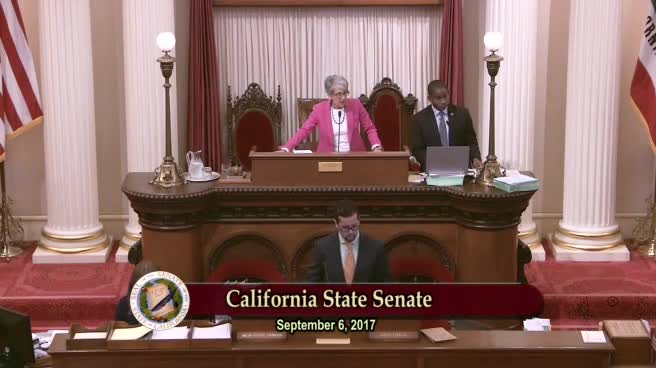 3MIN
Senate Floor
 1H
Senate Standing Committee on Appropriations
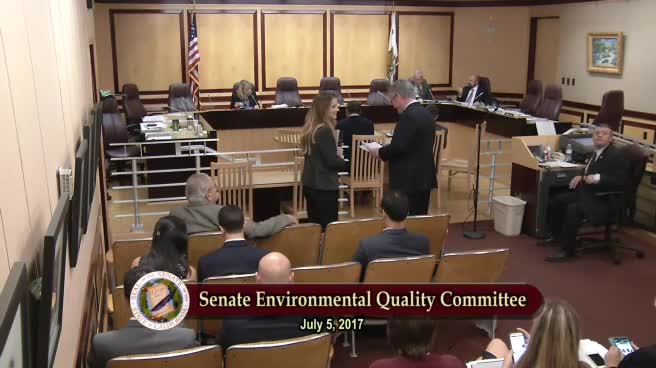 8MIN
Senate Standing Committee on Environmental Quality
 2MIN
Senate Standing Committee on Transportation and Housing
Bill Author

Bill Co-Author(s):