AB 1332: Juveniles: dependents: removal.
- Session Year: 2017-2018
- House: Assembly
- Latest Version Date: 2017-10-11
Existing law authorizes the removal of a child from the physical custody of his or her parent or guardian with whom the child resides at the time the dependency petition was initiated if the court finds by clear and convincing evidence that one of several circumstances is present, including, among others, that there is or would be a substantial danger to the physical health, safety, protection, or physical or emotional well-being of the minor if the minor were returned home, and there are no reasonable means by which the minors physical health can be protected without removing the minor from the minors parents or guardians physical custody.
This bill would prohibit the removal of a child from the physical custody of his or her parent with whom the child did not reside at the time the petition was initiated, unless the juvenile court finds clear and convincing evidence that there would be a substantial danger to the physical health, safety, protection, or physical or emotional well-being of the child for the parent to live with the child or otherwise exercise the parents right to physical custody, and there are no reasonable means available by which the childs physical and emotional health can be protected without removing the child from the childs parents physical custody. By increasing the number of children who may be removed from their parents and subsequently placed in out-of-home care under the supervision of the county, this bill would impose a state-mandated local program.
This bill would incorporate additional changes to Section 361 of the Welfare and Institutions Code proposed by SB 233 to be operative only if this bill and SB 233 are enacted and this bill is enacted last.
The California Constitution requires the state to reimburse local agencies and school districts for certain costs mandated by the state. Statutory provisions establish procedures for making that reimbursement.
This bill would provide that no reimbursement is required by this act for a specified reason.
Existing law authorizes the removal of a child from the physical custody of his or her parent or guardian with whom the child resides at the time the dependency petition was initiated if the court finds by clear and convincing evidence that one of several circumstances is present, including, among others, that there is or would be a substantial danger to the physical health, safety, protection, or physical or emotional well-being of the minor if the minor were returned home, and there are no reasonable means by which the minors physical health can be protected without removing the minor from the minors parents or guardians physical custody.
This bill would authorize prohibit the removal of a child from the physical custody of his or her parent with whom the child did not reside at the time the petition was initiated, if unless the juvenile court finds clear and convincing evidence that it would pose there would be a substantial danger to the physical safety or health, safety, protection, or physical or emotional well-being of the child for the parent to live with the child or otherwise exercise the parents right to legal and physical custody, and there are no reasonable means available to protect the child. by which the childs physical and emotional health can be protected without removing the child from the childs parents physical custody. By increasing the number of children who may be removed from their parents and subsequently placed in out-of-home care under the supervision of the county, this bill would impose a state-mandated local program.
Existing law, when a court orders removal of a child, the court to first determine whether there is a parent of the child, with whom the child was not residing at the time that the events or conditions arose that brought the child within the dependency jurisdiction of the juvenile court, who desires to assume custody of the child. Existing law requires, if that parent requests custody, the court to place the child with the parent unless it finds that placement with that parent would be detrimental to the safety, protection, or physical or emotional well-being of the child.This bill would state that the fact that a parent with whom the child was not residing at the time that the events or conditions arose that brought the child within the dependency jurisdiction of the juvenile court, fails to come forward and request custody or is otherwise unwilling or unable to assume custody of the child, and as a result, the child requires out-of-home placement, is prima facie evidence that the parent presents a detriment to the safety, protection, and physical well-being of the child.The California Constitution requires the state to reimburse local agencies and school districts for certain costs mandated by the state. Statutory provisions establish procedures for making that reimbursement.
This bill would provide that no reimbursement is required by this act for a specified reason.
Existing law authorizes the removal of a child from the physical custody of his or her parent or guardian with whom the child resides at the time the dependency petition was initiated if the court finds by clear and convincing evidence that one of several circumstances is present, including, among others, that there is or would be a substantial danger to the physical health, safety, protection, or physical or emotional well-being of the minor if the minor were returned home, and there are no reasonable means by which the minors physical health can be protected without removing the minor from the minors parents or guardians physical custody.
This bill would authorize the removal of a child from the physical custody of his or her parent with whom the child did not reside at the time the petition was initiated, if the juvenile court finds clear and convincing evidence that it would pose a substantial danger to the physical safety or physical or emotional well-being of the child for the parent to live with the child or otherwise exercise the parents right to legal and physical custody, and there are no reasonable means available to protect the child. By increasing the number of children who may be removed from their parents and subsequently placed in out-of-home care under the supervision of the county, this bill would impose a state-mandated local program.
Existing law, when a court orders removal of a child, the court to first determine whether there is a parent of the child, with whom the child was not residing at the time that the events or conditions arose that brought the child within the dependency jurisdiction of the juvenile court, who desires to assume custody of the child. Existing law requires, if that parent requests custody, the court to place the child with the parent unless it finds that placement with that parent would be detrimental to the safety, protection, or physical or emotional well-being of the child.
This bill would state that the fact that a parent with whom the child was not residing at the time that the events or conditions arose that brought the child within the dependency jurisdiction of the juvenile court, fails to come forward and request custody or is otherwise unwilling or unable to assume custody of the child, and as a result, the child requires out-of-home placement, is prima facie evidence that the parent presents a detriment to the safety, protection, and physical well-being of the child.
The California Constitution requires the state to reimburse local agencies and school districts for certain costs mandated by the state. Statutory provisions establish procedures for making that reimbursement.
This bill would provide that no reimbursement is required by this act for a specified reason.
(a)(1)In all cases in which a minor is adjudged a dependent child of the court on the ground that the minor is a person described by Section 300, the court may limit the control to be exercised over the dependent child by any parent or guardian and shall by its order clearly and specifically set forth all those limitations. Any limitation on the right of the parent or guardian to make educational or developmental services decisions for the child shall be specifically addressed in the court order. The limitations may not exceed those necessary to protect the child. If the court specifically limits the right of the parent or guardian to make educational or developmental services decisions for the child, or, for the nonminor dependent, if the court finds the appointment of a developmental services decisionmaker to be in the best interests of the nonminor dependent, the court shall at the same time appoint a responsible adult to make educational or developmental services decisions for the child or nonminor dependent until one of the following occurs:
(A)The minor reaches 18 years of age, unless the child or nonminor dependent chooses not to make educational or developmental services decisions for himself or herself, or is deemed by the court to be incompetent.
(B)Another responsible adult is appointed to make educational or developmental services decisions for the minor pursuant to this section.
(C)The right of the parent or guardian to make educational or developmental services decisions for the minor is fully restored.
(D)A successor guardian or conservator is appointed.
(E)The child is placed into a planned permanent living arrangement pursuant to paragraph (5) of subdivision (g) of Section 366.21, Section 366.22, Section 366.26, or subdivision (i) of Section 366.3, at which time, for educational decisionmaking, the foster parent, relative caretaker, or nonrelative extended family member as defined in Section 362.7, has the right to represent the child in educational matters pursuant to Section 56055 of the Education Code, and for decisions relating to developmental services, unless the court specifies otherwise, the foster parent, relative caregiver, or nonrelative extended family member of the planned permanent living arrangement has the right to represent the child or nonminor dependent in matters related to developmental services.
(2)An individual who would have a conflict of interest in representing the child or nonminor dependent shall not be appointed to make educational or developmental services decisions. For purposes of this section, an individual who would have a conflict of interest means a person having any interests that might restrict or bias his or her ability to make educational or developmental services decisions, including, but not limited to, those conflicts of interest prohibited by Section 1126 of the Government Code, and the receipt of compensation or attorneys fees for the provision of services pursuant to this section. A foster parent shall not be deemed to have a conflict of interest solely because he or she receives compensation for the provision of services pursuant to this section.
(3)If the court limits the parents educational rights pursuant to this subdivision, the court shall determine whether there is a responsible adult who is a relative, nonrelative extended family member, or other adult known to the child who is available and willing to serve as the childs educational representative before appointing an educational representative or surrogate who is not known to the child.
If the court cannot identify a responsible adult who is known to the child and available to make educational decisions for the child, subparagraphs (A) to (E), inclusive, of paragraph (1) do not apply, and the child has either been referred to the local educational agency for special education and related services, or has a valid individualized education program, the court shall refer the child to the local educational agency for appointment of a surrogate parent pursuant to Section 7579.5 of the Government Code.
If the court cannot identify a responsible adult to make educational decisions for the child, the appointment of a surrogate parent as defined in subdivision (a) of Section 56050 of the Education Code is not warranted, and there is no foster parent to exercise the authority granted by Section 56055 of the Education Code, the court may, with the input of any interested person, make educational decisions for the child.
(4)If the court appoints a developmental services decisionmaker pursuant to this section, he or she shall have the authority to access the childs or nonminor dependents information and records pursuant to subdivision (u) of Section 4514 and subdivision (y) of Section 5328, and to act on the childs or nonminor dependents behalf for the purposes of the individual program plan process pursuant to Sections 4646, 4646.5, and 4648 and the fair hearing process pursuant to Chapter 7 (commencing with Section 4700) of Division 4.5, and as set forth in the court order.
If the court cannot identify a responsible adult to make developmental services decisions for the child or nonminor dependent, the court may, with the input of any interested person, make developmental services decisions for the child or nonminor dependent. If the child is receiving services from a regional center, the provision of any developmental services related to the courts decision must be consistent with the childs or nonminor dependents individual program plan and pursuant to the provisions of the Lanterman Developmental Disabilities Services Act (Division 4.5 (commencing with Section 4500)).
(5)All educational and school placement decisions shall seek to ensure that the child is in the least restrictive educational programs and has access to the academic resources, services, and extracurricular and enrichment activities that are available to all pupils. In all instances, educational and school placement decisions shall be based on the best interests of the child. If an educational representative or surrogate is appointed for the child, the representative or surrogate shall meet with the child, shall investigate the childs educational needs and whether those needs are being met, and shall, prior to each review hearing held under this article, provide information and recommendations concerning the childs educational needs to the childs social worker, make written recommendations to the court, or attend the hearing and participate in those portions of the hearing that concern the childs education.
(6)Nothing in this section in any way removes the obligation to appoint surrogate parents for students with disabilities who are without parental representation in special education procedures as required by state and federal law, including Section 1415(b)(2) of Title 20 of the United States Code, Section 56050 of the Education Code, Section 7579.5 of the Government Code, and Rule 5.650 of the California Rules of Court.
(b)(1)Subdivision (a) does not limit the ability of a parent to voluntarily relinquish his or her child to the State Department of Social Services, to a county adoption agency, or to a licensed private adoption agency at any time while the child is the subject of a petition to declare him or her, or is, a dependent child of the juvenile court, if the department, county adoption agency, or licensed private adoption agency is willing to accept the relinquishment.
(2)When accepting the relinquishment of a child described in paragraph (1), the department or a county adoption agency shall comply with Section 8700 of the Family Code and, within five court days of accepting the relinquishment, shall file written notice of that fact with the court and all parties to the case and their counsel.
(3)When accepting the relinquishment of a child described in paragraph (1), a licensed private adoption agency shall comply with Section 8700 of the Family Code and, within 10 court days of accepting the relinquishment, shall file or allow another party or that partys counsel to file with the court one original and five copies of a request to approve the relinquishment. The clerk of the court shall file the request under seal, subject to examination only by the parties and their counsel or by others upon court approval. If the request is accompanied by the written agreement of all parties, the court may issue an ex parte order approving the relinquishment. Unless approved pursuant to that agreement, the court shall set the matter for hearing no later than 10 court days after filing, and shall provide notice of the hearing to all parties and their counsel, and to the licensed private adoption agency and its counsel. The licensed private adoption agency and any prospective adoptive parent or parents named in the relinquishment shall be permitted to attend the hearing and participate as parties regarding the strictly limited issue of whether the court should approve the relinquishment. The court shall issue an order approving or denying the relinquishment within 10 court days after the hearing.
(c)A dependent child shall not be taken from the physical custody of his or her parents or guardian or guardians with whom the child resides at the time the petition was initiated, unless the juvenile court finds clear and convincing evidence of any of the following circumstances listed in paragraphs (1) to (5), inclusive, and, in an Indian child custody proceeding, paragraph (6):
(1)There is or would be a substantial danger to the physical health, safety, protection, or physical or emotional well-being of the minor if the minor were returned home, and there are no reasonable means by which the minors physical health can be protected without removing the minor from the minors parents or guardians physical custody. The fact that a minor has been adjudicated a dependent child of the court pursuant to subdivision (e) of Section 300 shall constitute prima facie evidence that the minor cannot be safely left in the physical custody of the parent or guardian with whom the minor resided at the time of injury. The court shall consider, as a reasonable means to protect the minor, each of the following:
(A)The option of removing an offending parent or guardian from the home.
(B)Allowing a nonoffending parent or guardian to retain physical custody as long as that parent or guardian presents a plan acceptable to the court demonstrating that he or she will be able to protect the child from future harm.
(2)The parent or guardian of the minor is unwilling to have physical custody of the minor, and the parent or guardian has been notified that if the minor remains out of their physical custody for the period specified in Section 366.26, the minor may be declared permanently free from their custody and control.
(3)The minor is suffering severe emotional damage, as indicated by extreme anxiety, depression, withdrawal, or untoward aggressive behavior toward himself or herself or others, and there are no reasonable means by which the minors emotional health may be protected without removing the minor from the physical custody of his or her parent or guardian.
(4)The minor or a sibling of the minor has been sexually abused, or is deemed to be at substantial risk of being sexually abused, by a parent, guardian, or member of his or her household, or other person known to his or her parent, and there are no reasonable means by which the minor can be protected from further sexual abuse or a substantial risk of sexual abuse without removing the minor from his or her parent or guardian, or the minor does not wish to return to his or her parent or guardian.
(5)The minor has been left without any provision for his or her support, or a parent who has been incarcerated or institutionalized cannot arrange for the care of the minor, or a relative or other adult custodian with whom the child has been left by the parent is unwilling or unable to provide care or support for the child and the whereabouts of the parent is unknown and reasonable efforts to locate him or her have been unsuccessful.
(6)In an Indian child custody proceeding, continued custody of the child by the parent or Indian custodian is likely to result in serious emotional or physical damage to the child, and that finding is supported by testimony of a qualified expert witness as described in Section 224.6.
(A)For purposes of this paragraph, stipulation by the parent, Indian custodian, or the Indian childs tribe, or failure to object, may waive the requirement of producing evidence of the likelihood of serious damage only if the court is satisfied that the party has been fully advised of the requirements of the federal Indian Child Welfare Act (25 U.S.C. Sec. 1901 et seq.), and has knowingly, intelligently, and voluntarily waived them.
(B)For purposes of this paragraph, failure to meet non-Indian family and child-rearing community standards, or the existence of other behavior or conditions that meet the removal standards of this section, will not support an order for placement in the absence of the finding in this paragraph.
(d)A dependent child shall not be taken from the physical custody of his or her parents with whom the child did not reside at the time the petition was initiated, unless the juvenile court finds clear and convincing evidence that there would be a substantial danger to the physical health, safety, protection, or physical or emotional well-being of the child for the parent to live with the child or otherwise exercise the parents right to physical custody, and there are no reasonable means by which the childs physical and emotional health can be protected without removing the child from the childs parents physical custody.
(e)The court shall make a determination as to whether reasonable efforts were made to prevent or to eliminate the need for removal of the minor from his or her home or, if the minor is removed for one of the reasons stated in paragraph (5) of subdivision (c), whether it was reasonable under the circumstances not to make any of those efforts, or, in the case of an Indian child custody proceeding, whether active efforts as required in Section 361.7 were made and that these efforts have proved unsuccessful. The court shall state the facts on which the decision to remove the minor is based.
(f)The court shall make all of the findings required by subdivision (a) of Section 366 in either of the following circumstances:
(1)The minor has been taken from the custody of his or her parent or guardian and has been living in an out-of-home placement pursuant to Section 319.
(2)The minor has been living in a voluntary out-of-home placement pursuant to Section 16507.4.
SEC. 1.5.Section 361 of the Welfare and Institutions Code is amended to read:361.(a)(1)In all cases in which a minor is adjudged a dependent child of the court on the ground that the minor is a person described by Section 300, the court may limit the control to be exercised over the dependent child by any parent or guardian and shall by its order clearly and specifically set forth all those limitations. Any limitation on the right of the parent or guardian to make educational or developmental services decisions for the child shall be specifically addressed in the court order. The limitations may not exceed those necessary to protect the child. If the court specifically limits the right of the parent or guardian to make educational or developmental services decisions for the child, or, for the nonminor dependent, if the court finds the appointment of a developmental services decisionmaker to be in the best interests of the nonminor dependent, the court shall at the same time appoint a responsible adult to make educational or developmental services decisions for the child or nonminor dependent until one of the following occurs:
(A)The minor reaches 18 years of age, unless the child or nonminor dependent chooses not to make educational or developmental services decisions for himself or herself, or is deemed by the court to be incompetent.
(B)Another responsible adult is appointed to make educational or developmental services decisions for the minor pursuant to this section.
(C)The right of the parent or guardian to make educational or developmental services decisions for the minor is fully restored.
(D)A successor guardian or conservator is appointed.
(E)The child is placed into a planned permanent living arrangement pursuant to paragraph (5) of subdivision (g) of Section 366.21, Section 366.22, Section 366.26, or subdivision (i) of Section 366.3, at which time, for educational decisionmaking, the foster parent, relative caretaker, or nonrelative extended family member as defined in Section 362.7, has the right to represent the child in educational matters pursuant to Section 56055 of the Education Code, and for decisions relating to developmental services, unless the court specifies otherwise, the foster parent, relative caregiver, or nonrelative extended family member of the planned permanent living arrangement has the right to represent the child or nonminor dependent in matters related to developmental services.
(2)An individual who would have a conflict of interest in representing the child or nonminor dependent shall not be appointed to make educational or developmental services decisions. For purposes of this section, an individual who would have a conflict of interest means a person having any interests that might restrict or bias his or her ability to make educational or developmental services decisions, including, but not limited to, those conflicts of interest prohibited by Section 1126 of the Government Code, and the receipt of compensation or attorneys fees for the provision of services pursuant to this section. A foster parent shall not be deemed to have a conflict of interest solely because he or she receives compensation for the provision of services pursuant to this section.
(3)Regardless of the person or persons currently holding the right to make educational decisions for the child, a foster parent, relative caregiver, nonrelated extended family member, or resource family shall retain rights and obligations regarding accessing and maintaining health and education information pursuant to Sections 49069.3 and 49076 of the Education Code and Section 16010 of this code.
(4)(A)If the court limits the parents educational rights pursuant to this subdivision, the court shall determine whether there is a responsible adult who is a relative, nonrelative extended family member, or other adult known to the child who is available and willing to serve as the childs educational representative before appointing an educational representative or surrogate who is not known to the child.
(B)If the court cannot identify a responsible adult who is known to the child and available to make educational decisions for the child, subparagraphs (A) to (E), inclusive, of paragraph (1) do not apply, and the child has either been referred to the local educational agency for special education and related services, or has a valid individualized education program, the court shall refer the child to the local educational agency for appointment of a surrogate parent pursuant to Section 7579.5 of the Government Code.
(C)If the court cannot identify a responsible adult to make educational decisions for the child, the appointment of a surrogate parent as defined in subdivision (a) of Section 56050 of the Education Code is not warranted, and there is no foster parent to exercise the authority granted by Section 56055 of the Education Code, the court may, with the input of any interested person, make educational decisions for the child.
(5)(A)If the court appoints a developmental services decisionmaker pursuant to this section, he or she shall have the authority to access the childs or nonminor dependents information and records pursuant to subdivision (u) of Section 4514 and subdivision (y) of Section 5328, and to act on the childs or nonminor dependents behalf for the purposes of the individual program plan process pursuant to Sections 4646, 4646.5, and 4648 and the fair hearing process pursuant to Chapter 7 (commencing with Section 4700) of Division 4.5, and as set forth in the court order.
(B)If the court cannot identify a responsible adult to make developmental services decisions for the child or nonminor dependent, the court may, with the input of any interested person, make developmental services decisions for the child or nonminor dependent. If the child is receiving services from a regional center, the provision of any developmental services related to the courts decision must be consistent with the childs or nonminor dependents individual program plan and pursuant to the provisions of the Lanterman Developmental Disabilities Services Act (Division 4.5 (commencing with Section 4500)).
(6)All educational and school placement decisions shall seek to ensure that the child is in the least restrictive educational programs and has access to the academic resources, services, and extracurricular and enrichment activities that are available to all pupils. In all instances, educational and school placement decisions shall be based on the best interests of the child. If an educational representative or surrogate is appointed for the child, the representative or surrogate shall meet with the child, shall investigate the childs educational needs and whether those needs are being met, and shall, prior to each review hearing held under this article, provide information and recommendations concerning the childs educational needs to the childs social worker, make written recommendations to the court, or attend the hearing and participate in those portions of the hearing that concern the childs education.
(7)Nothing in this section in any way removes the obligation to appoint surrogate parents for students with disabilities who are without parental representation in special education procedures as required by state and federal law, including Section 1415(b)(2) of Title 20 of the United States Code, Section 56050 of the Education Code, Section 7579.5 of the Government Code, and Rule 5.650 of the California Rules of Court.
(b)(1)Subdivision (a) does not limit the ability of a parent to voluntarily relinquish his or her child to the State Department of Social Services, to a county adoption agency, or to a licensed private adoption agency at any time while the child is the subject of a petition to declare him or her, or is, a dependent child of the juvenile court, if the department, county adoption agency, or licensed private adoption agency is willing to accept the relinquishment.
(2)When accepting the relinquishment of a child described in paragraph (1), the department or a county adoption agency shall comply with Section 8700 of the Family Code and, within five court days of accepting the relinquishment, shall file written notice of that fact with the court and all parties to the case and their counsel.
(3)When accepting the relinquishment of a child described in paragraph (1), a licensed private adoption agency shall comply with Section 8700 of the Family Code and, within 10 court days of accepting the relinquishment, shall file or allow another party or that partys counsel to file with the court one original and five copies of a request to approve the relinquishment. The clerk of the court shall file the request under seal, subject to examination only by the parties and their counsel or by others upon court approval. If the request is accompanied by the written agreement of all parties, the court may issue an ex parte order approving the relinquishment. Unless approved pursuant to that agreement, the court shall set the matter for hearing no later than 10 court days after filing, and shall provide notice of the hearing to all parties and their counsel, and to the licensed private adoption agency and its counsel. The licensed private adoption agency and any prospective adoptive parent or parents named in the relinquishment shall be permitted to attend the hearing and participate as parties regarding the strictly limited issue of whether the court should approve the relinquishment. The court shall issue an order approving or denying the relinquishment within 10 court days after the hearing.
(c)A dependent child shall not be taken from the physical custody of his or her parents or guardian or guardians with whom the child resides at the time the petition was initiated, unless the juvenile court finds clear and convincing evidence of any of the following circumstances listed in paragraphs (1) to (5), inclusive, and, in an Indian child custody proceeding, paragraph (6):
(1)There is or would be a substantial danger to the physical health, safety, protection, or physical or emotional well-being of the minor if the minor were returned home, and there are no reasonable means by which the minors physical health can be protected without removing the minor from the minors parents or guardians physical custody. The fact that a minor has been adjudicated a dependent child of the court pursuant to subdivision (e) of Section 300 shall constitute prima facie evidence that the minor cannot be safely left in the physical custody of the parent or guardian with whom the minor resided at the time of injury. The court shall consider, as a reasonable means to protect the minor, each of the following:
(A)The option of removing an offending parent or guardian from the home.
(B)Allowing a nonoffending parent or guardian to retain physical custody as long as that parent or guardian presents a plan acceptable to the court demonstrating that he or she will be able to protect the child from future harm.
(2)The parent or guardian of the minor is unwilling to have physical custody of the minor, and the parent or guardian has been notified that if the minor remains out of their physical custody for the period specified in Section 366.26, the minor may be declared permanently free from their custody and control.
(3)The minor is suffering severe emotional damage, as indicated by extreme anxiety, depression, withdrawal, or untoward aggressive behavior toward himself or herself or others, and there are no reasonable means by which the minors emotional health may be protected without removing the minor from the physical custody of his or her parent or guardian.
(4)The minor or a sibling of the minor has been sexually abused, or is deemed to be at substantial risk of being sexually abused, by a parent, guardian, or member of his or her household, or other person known to his or her parent, and there are no reasonable means by which the minor can be protected from further sexual abuse or a substantial risk of sexual abuse without removing the minor from his or her parent or guardian, or the minor does not wish to return to his or her parent or guardian.
(5)The minor has been left without any provision for his or her support, or a parent who has been incarcerated or institutionalized cannot arrange for the care of the minor, or a relative or other adult custodian with whom the child has been left by the parent is unwilling or unable to provide care or support for the child and the whereabouts of the parent is unknown and reasonable efforts to locate him or her have been unsuccessful.
(6)In an Indian child custody proceeding, continued custody of the child by the parent or Indian custodian is likely to result in serious emotional or physical damage to the child, and that finding is supported by testimony of a qualified expert witness as described in Section 224.6.
(A)For purposes of this paragraph, stipulation by the parent, Indian custodian, or the Indian childs tribe, or failure to object, may waive the requirement of producing evidence of the likelihood of serious damage only if the court is satisfied that the party has been fully advised of the requirements of the federal Indian Child Welfare Act (25 U.S.C. Sec. 1901 et seq.), and has knowingly, intelligently, and voluntarily waived them.
(B)For purposes of this paragraph, failure to meet non-Indian family and child-rearing community standards, or the existence of other behavior or conditions that meet the removal standards of this section, will not support an order for placement in the absence of the finding in this paragraph.
(d)A dependent child shall not be taken from the physical custody of his or her parents with whom the child did not reside at the time the petition was initiated, unless the juvenile court finds clear and convincing evidence that there would be a substantial danger to the physical health, safety, protection, or physical or emotional well-being of the child for the parent to live with the child or otherwise exercise the parents right to physical custody, and there are no reasonable means by which the childs physical and emotional health can be protected without removing the child from the childs parents physical custody.
(e)The court shall make a determination as to whether reasonable efforts were made to prevent or to eliminate the need for removal of the minor from his or her home or, if the minor is removed for one of the reasons stated in paragraph (5) of subdivision (c), whether it was reasonable under the circumstances not to make any of those efforts, or, in the case of an Indian child custody proceeding, whether active efforts as required in Section 361.7 were made and that these efforts have proved unsuccessful. The court shall state the facts on which the decision to remove the minor is based.
(f)The court shall make all of the findings required by subdivision (a) of Section 366 in either of the following circumstances:
(1)The minor has been taken from the custody of his or her parent or guardian and has been living in an out-of-home placement pursuant to Section 319.
(2)The minor has been living in a voluntary out-of-home placement pursuant to Section 16507.4.
SEC. 2.Section 1.5 of this bill incorporates amendments to Section 361 of the Welfare and Institutions Code proposed by both this bill and Senate Bill 233. That section shall only become operative if (1) both bills are enacted and become effective on or before January 1, 2018, (2) each bill amends Section 361 of the Welfare and Institutions Code, and (3) this bill is enacted after Senate Bill 233, in which case Section 1 of this bill shall not become operative.
SEC. 3.To the extent that this act has an overall effect of increasing the costs already borne by a local agency for programs or levels of service mandated by the 2011 Realignment Legislation within the meaning of Section 36 of Article XIII of the California Constitution, it shall apply to local agencies only to the extent that the state provides annual funding for the cost increase. Any new program or higher level of service provided by a local agency pursuant to this act above the level for which funding has been provided shall not require a subvention of funds by the state or otherwise be subject to Section 6 of Article XIIIB of the California Constitution.
(a)(1)In all cases in which a minor is adjudged a dependent child of the court on the ground that the minor is a person described by Section 300, the court may limit the control to be exercised over the dependent child by any parent or guardian and shall by its order clearly and specifically set forth all those limitations. Any limitation on the right of the parent or guardian to make educational or developmental services decisions for the child shall be specifically addressed in the court order. The limitations may not exceed those necessary to protect the child. If the court specifically limits the right of the parent or guardian to make educational or developmental services decisions for the child, or, for the nonminor dependent, if the court finds the appointment of a developmental services decisionmaker to be in the best interests of the nonminor dependent, the court shall at the same time appoint a responsible adult to make educational or developmental services decisions for the child or nonminor dependent until one of the following occurs:
(A)The minor reaches 18 years of age, unless the child or nonminor dependent chooses not to make educational or developmental services decisions for himself or herself, or is deemed by the court to be incompetent.
(B)Another responsible adult is appointed to make educational or developmental services decisions for the minor pursuant to this section.
(C)The right of the parent or guardian to make educational or developmental services decisions for the minor is fully restored.
(D)A successor guardian or conservator is appointed.
(E)The child is placed into a planned permanent living arrangement pursuant to paragraph (5) of subdivision (g) of Section 366.21, Section 366.22, Section 366.26, or subdivision (i) of Section 366.3, at which time, for educational decisionmaking, the foster parent, relative caretaker, or nonrelative extended family member as defined in Section 362.7, has the right to represent the child in educational matters pursuant to Section 56055 of the Education Code, and for decisions relating to developmental services, unless the court specifies otherwise, the foster parent, relative caregiver, or nonrelative extended family member of the planned permanent living arrangement has the right to represent the child or nonminor dependent in matters related to developmental services.
(2)An individual who would have a conflict of interest in representing the child or nonminor dependent shall not be appointed to make educational or developmental services decisions. For purposes of this section, an individual who would have a conflict of interest means a person having any interests that might restrict or bias his or her ability to make educational or developmental services decisions, including, but not limited to, those conflicts of interest prohibited by Section 1126 of the Government Code, and the receipt of compensation or attorneys fees for the provision of services pursuant to this section. A foster parent shall not be deemed to have a conflict of interest solely because he or she receives compensation for the provision of services pursuant to this section.
(3)If the court limits the parents educational rights pursuant to this subdivision, the court shall determine whether there is a responsible adult who is a relative, nonrelative extended family member, or other adult known to the child who is available and willing to serve as the childs educational representative before appointing an educational representative or surrogate who is not known to the child.
If the court cannot identify a responsible adult who is known to the child and available to make educational decisions for the child, subparagraphs (A) to (E), inclusive, of paragraph (1) do not apply, and the child has either been referred to the local educational agency for special education and related services, or has a valid individualized education program, the court shall refer the child to the local educational agency for appointment of a surrogate parent pursuant to Section 7579.5 of the Government Code.
If the court cannot identify a responsible adult to make educational decisions for the child, the appointment of a surrogate parent as defined in subdivision (a) of Section 56050 of the Education Code is not warranted, and there is no foster parent to exercise the authority granted by Section 56055 of the Education Code, the court may, with the input of any interested person, make educational decisions for the child.
(4)If the court appoints a developmental services decisionmaker pursuant to this section, he or she shall have the authority to access the childs or nonminor dependents information and records pursuant to subdivision (u) of Section 4514 and subdivision (y) of Section 5328, and to act on the childs or nonminor dependents behalf for the purposes of the individual program plan process pursuant to Sections 4646, 4646.5, and 4648 and the fair hearing process pursuant to Chapter 7 (commencing with Section 4700) of Division 4.5, and as set forth in the court order.
If the court cannot identify a responsible adult to make developmental services decisions for the child or nonminor dependent, the court may, with the input of any interested person, make developmental services decisions for the child or nonminor dependent. If the child is receiving services from a regional center, the provision of any developmental services related to the courts decision must be consistent with the childs or nonminor dependents individual program plan and pursuant to the provisions of the Lanterman Developmental Disabilities Services Act (Division 4.5 (commencing with Section 4500)).
(5)All educational and school placement decisions shall seek to ensure that the child is in the least restrictive educational programs and has access to the academic resources, services, and extracurricular and enrichment activities that are available to all pupils. In all instances, educational and school placement decisions shall be based on the best interests of the child. If an educational representative or surrogate is appointed for the child, the representative or surrogate shall meet with the child, shall investigate the childs educational needs and whether those needs are being met, and shall, prior to each review hearing held under this article, provide information and recommendations concerning the childs educational needs to the childs social worker, make written recommendations to the court, or attend the hearing and participate in those portions of the hearing that concern the childs education.
(6)Nothing in this section in any way removes the obligation to appoint surrogate parents for students with disabilities who are without parental representation in special education procedures as required by state and federal law, including Section 1415(b)(2) of Title 20 of the United States Code, Section 56050 of the Education Code, Section 7579.5 of the Government Code, and Rule 5.650 of the California Rules of Court.
(b)(1)Subdivision (a) does not limit the ability of a parent to voluntarily relinquish his or her child to the State Department of Social Services, to a county adoption agency, or to a licensed private adoption agency at any time while the child is the subject of a petition to declare him or her, or is, a dependent child of the juvenile court, if the department, county adoption agency, or licensed private adoption agency is willing to accept the relinquishment.
(2)When accepting the relinquishment of a child described in paragraph (1), the department or a county adoption agency shall comply with Section 8700 of the Family Code and, within five court days of accepting the relinquishment, shall file written notice of that fact with the court and all parties to the case and their counsel.
(3)When accepting the relinquishment of a child described in paragraph (1), a licensed private adoption agency shall comply with Section 8700 of the Family Code and, within 10 court days of accepting the relinquishment, shall file or allow another party or that partys counsel to file with the court one original and five copies of a request to approve the relinquishment. The clerk of the court shall file the request under seal, subject to examination only by the parties and their counsel or by others upon court approval. If the request is accompanied by the written agreement of all parties, the court may issue an ex parte order approving the relinquishment. Unless approved pursuant to that agreement, the court shall set the matter for hearing no later than 10 court days after filing, and shall provide notice of the hearing to all parties and their counsel, and to the licensed private adoption agency and its counsel. The licensed private adoption agency and any prospective adoptive parent or parents named in the relinquishment shall be permitted to attend the hearing and participate as parties regarding the strictly limited issue of whether the court should approve the relinquishment. The court shall issue an order approving or denying the relinquishment within 10 court days after the hearing.
(c)A dependent child shall not be taken from the physical custody of his or her parents or guardian or guardians with whom the child resides at the time the petition was initiated, unless the juvenile court finds clear and convincing evidence of any of the following circumstances listed in paragraphs (1) to (5), inclusive, and, in an Indian child custody proceeding, paragraph (6):
(1)There is or would be a substantial danger to the physical health, safety, protection, or physical or emotional well-being of the minor if the minor were returned home, and there are no reasonable means by which the minors physical health can be protected without removing the minor from the minors parents or guardians physical custody. The fact that a minor has been adjudicated a dependent child of the court pursuant to subdivision (e) of Section 300 shall constitute prima facie evidence that the minor cannot be safely left in the physical custody of the parent or guardian with whom the minor resided at the time of injury. The court shall consider, as a reasonable means to protect the minor, each of the following:
(A)The option of removing an offending parent or guardian from the home.
(B)Allowing a nonoffending parent or guardian to retain physical custody as long as that parent or guardian presents a plan acceptable to the court demonstrating that he or she will be able to protect the child from future harm.
(2)The parent or guardian of the minor is unwilling to have physical custody of the minor, and the parent or guardian has been notified that if the minor remains out of their physical custody for the period specified in Section 366.26, the minor may be declared permanently free from their custody and control.
(3)The minor is suffering severe emotional damage, as indicated by extreme anxiety, depression, withdrawal, or untoward aggressive behavior toward himself or herself or others, and there are no reasonable means by which the minors emotional health may be protected without removing the minor from the physical custody of his or her parent or guardian.
(4)The minor or a sibling of the minor has been sexually abused, or is deemed to be at substantial risk of being sexually abused, by a parent, guardian, or member of his or her household, or other person known to his or her parent, and there are no reasonable means by which the minor can be protected from further sexual abuse or a substantial risk of sexual abuse without removing the minor from his or her parent or guardian, or the minor does not wish to return to his or her parent or guardian.
(5)The minor has been left without any provision for his or her support, or a parent who has been incarcerated or institutionalized cannot arrange for the care of the minor, or a relative or other adult custodian with whom the child has been left by the parent is unwilling or unable to provide care or support for the child and the whereabouts of the parent is unknown and reasonable efforts to locate him or her have been unsuccessful.
(6)In an Indian child custody proceeding, continued custody of the child by the parent or Indian custodian is likely to result in serious emotional or physical damage to the child, and that finding is supported by testimony of a qualified expert witness as described in Section 224.6.
(A)For purposes of this paragraph, stipulation by the parent, Indian custodian, or the Indian childs tribe, or failure to object, may waive the requirement of producing evidence of the likelihood of serious damage only if the court is satisfied that the party has been fully advised of the requirements of the federal Indian Child Welfare Act (25 U.S.C. Sec. 1901 et seq.), and has knowingly, intelligently, and voluntarily waived them.
(B)For purposes of this paragraph, failure to meet non-Indian family and child-rearing community standards, or the existence of other behavior or conditions that meet the removal standards of this section, will not support an order for placement in the absence of the finding in this paragraph.
(d)A dependent child shall not be taken from the physical custody of his or her parents with whom the child did not reside at the time the petition was initiated, unless the juvenile court finds clear and convincing evidence that there would be a substantial danger to the physical health, safety, protection, or physical or emotional well-being of the child for the parent to live with the child or otherwise exercise the parents right to physical custody, and there are no reasonable means by which the childs physical and emotional health can be protected without removing the child from the childs parents physical custody.
(e)The court shall make a determination as to whether reasonable efforts were made to prevent or to eliminate the need for removal of the minor from his or her home or, if the minor is removed for one of the reasons stated in paragraph (5) of subdivision (c), whether it was reasonable under the circumstances not to make any of those efforts, or, in the case of an Indian child custody proceeding, whether active efforts as required in Section 361.7 were made and that these efforts have proved unsuccessful. The court shall state the facts on which the decision to remove the minor is based.
(f)The court shall make all of the findings required by subdivision (a) of Section 366 in either of the following circumstances:
(1)The minor has been taken from the custody of his or her parent or guardian and has been living in an out-of-home placement pursuant to Section 319.
(2)The minor has been living in a voluntary out-of-home placement pursuant to Section 16507.4.
SEC. 1.5.Section 361 of the Welfare and Institutions Code is amended to read:361.(a)(1)In all cases in which a minor is adjudged a dependent child of the court on the ground that the minor is a person described by Section 300, the court may limit the control to be exercised over the dependent child by any parent or guardian and shall by its order clearly and specifically set forth all those limitations. Any limitation on the right of the parent or guardian to make educational or developmental services decisions for the child shall be specifically addressed in the court order. The limitations may not exceed those necessary to protect the child. If the court specifically limits the right of the parent or guardian to make educational or developmental services decisions for the child, or, for the nonminor dependent, if the court finds the appointment of a developmental services decisionmaker to be in the best interests of the nonminor dependent, the court shall at the same time appoint a responsible adult to make educational or developmental services decisions for the child or nonminor dependent until one of the following occurs:
(A)The minor reaches 18 years of age, unless the child or nonminor dependent chooses not to make educational or developmental services decisions for himself or herself, or is deemed by the court to be incompetent.
(B)Another responsible adult is appointed to make educational or developmental services decisions for the minor pursuant to this section.
(C)The right of the parent or guardian to make educational or developmental services decisions for the minor is fully restored.
(D)A successor guardian or conservator is appointed.
(E)The child is placed into a planned permanent living arrangement pursuant to paragraph (5) of subdivision (g) of Section 366.21, Section 366.22, Section 366.26, or subdivision (i) of Section 366.3, at which time, for educational decisionmaking, the foster parent, relative caretaker, or nonrelative extended family member as defined in Section 362.7, has the right to represent the child in educational matters pursuant to Section 56055 of the Education Code, and for decisions relating to developmental services, unless the court specifies otherwise, the foster parent, relative caregiver, or nonrelative extended family member of the planned permanent living arrangement has the right to represent the child or nonminor dependent in matters related to developmental services.
(2)An individual who would have a conflict of interest in representing the child or nonminor dependent shall not be appointed to make educational or developmental services decisions. For purposes of this section, an individual who would have a conflict of interest means a person having any interests that might restrict or bias his or her ability to make educational or developmental services decisions, including, but not limited to, those conflicts of interest prohibited by Section 1126 of the Government Code, and the receipt of compensation or attorneys fees for the provision of services pursuant to this section. A foster parent shall not be deemed to have a conflict of interest solely because he or she receives compensation for the provision of services pursuant to this section.
(3)Regardless of the person or persons currently holding the right to make educational decisions for the child, a foster parent, relative caregiver, nonrelated extended family member, or resource family shall retain rights and obligations regarding accessing and maintaining health and education information pursuant to Sections 49069.3 and 49076 of the Education Code and Section 16010 of this code.
(3)(4)(A)If the court limits the parents educational rights pursuant to this subdivision, the court shall determine whether there is a responsible adult who is a relative, nonrelative extended family member, or other adult known to the child who is available and willing to serve as the childs educational representative before appointing an educational representative or surrogate who is not known to the child.
If(B)If the court cannot identify a responsible adult who is known to the child and available to make educational decisions for the child, subparagraphs (A) to (E), inclusive, of paragraph (1) do not apply, and the child has either been referred to the local educational agency for special education and related services, or has a valid individualized education program, the court shall refer the child to the local educational agency for appointment of a surrogate parent pursuant to Section 7579.5 of the Government Code.
If(C)If the court cannot identify a responsible adult to make educational decisions for the child, the appointment of a surrogate parent as defined in subdivision (a) of Section 56050 of the Education Code is not warranted, and there is no foster parent to exercise the authority granted by Section 56055 of the Education Code, the court may, with the input of any interested person, make educational decisions for the child.
(4)(5)(A)If the court appoints a developmental services decisionmaker pursuant to this section, he or she shall have the authority to access the childs or nonminor dependents information and records pursuant to subdivision (u) of Section 4514 and subdivision (y) of Section 5328, and to act on the childs or nonminor dependents behalf for the purposes of the individual program plan process pursuant to Sections 4646, 4646.5, and 4648 and the fair hearing process pursuant to Chapter 7 (commencing with Section 4700) of Division 4.5, and as set forth in the court order.
If(B)If the court cannot identify a responsible adult to make developmental services decisions for the child or nonminor dependent, the court may, with the input of any interested person, make developmental services decisions for the child or nonminor dependent. If the child is receiving services from a regional center, the provision of any developmental services related to the courts decision must be consistent with the childs or nonminor dependents individual program plan and pursuant to the provisions of the Lanterman Developmental Disabilities Services Act (Division 4.5 (commencing with Section 4500)).
(5)(6)All educational and school placement decisions shall seek to ensure that the child is in the least restrictive educational programs and has access to the academic resources, services, and extracurricular and enrichment activities that are available to all pupils. In all instances, educational and school placement decisions shall be based on the best interests of the child. If an educational representative or surrogate is appointed for the child, the representative or surrogate shall meet with the child, shall investigate the childs educational needs and whether those needs are being met, and shall, prior to each review hearing held under this article, provide information and recommendations concerning the childs educational needs to the childs social worker, make written recommendations to the court, or attend the hearing and participate in those portions of the hearing that concern the childs education.
(6)(7)Nothing in this section in any way removes the obligation to appoint surrogate parents for students with disabilities who are without parental representation in special education procedures as required by state and federal law, including Section 1415(b)(2) of Title 20 of the United States Code, Section 56050 of the Education Code, Section 7579.5 of the Government Code, and Rule 5.650 of the California Rules of Court.
(b)(1)Subdivision (a) does not limit the ability of a parent to voluntarily relinquish his or her child to the State Department of Social Services, to a county adoption agency, or to a licensed private adoption agency at any time while the child is the subject of a petition to declare him or her, or is, a dependent child of the juvenile court, if the department, county adoption agency, or licensed private adoption agency is willing to accept the relinquishment.
(2)When accepting the relinquishment of a child described in paragraph (1), the department or a county adoption agency shall comply with Section 8700 of the Family Code and, within five court days of accepting the relinquishment, shall file written notice of that fact with the court and all parties to the case and their counsel.
(3)When accepting the relinquishment of a child described in paragraph (1), a licensed private adoption agency shall comply with Section 8700 of the Family Code and, within 10 court days of accepting the relinquishment, shall file or allow another party or that partys counsel to file with the court one original and five copies of a request to approve the relinquishment. The clerk of the court shall file the request under seal, subject to examination only by the parties and their counsel or by others upon court approval. If the request is accompanied by the written agreement of all parties, the court may issue an ex parte order approving the relinquishment. Unless approved pursuant to that agreement, the court shall set the matter for hearing no later than 10 court days after filing, and shall provide notice of the hearing to all parties and their counsel, and to the licensed private adoption agency and its counsel. The licensed private adoption agency and any prospective adoptive parent or parents named in the relinquishment shall be permitted to attend the hearing and participate as parties regarding the strictly limited issue of whether the court should approve the relinquishment. The court shall issue an order approving or denying the relinquishment within 10 court days after the hearing.
(c)A dependent child shall not be taken from the physical custody of his or her parents or guardian or guardians with whom the child resides at the time the petition was initiated, unless the juvenile court finds clear and convincing evidence of any of the following circumstances listed in paragraphs (1) to (5), inclusive, and, in an Indian child custody proceeding, paragraph (6):
(1)There is or would be a substantial danger to the physical health, safety, protection, or physical or emotional well-being of the minor if the minor were returned home, and there are no reasonable means by which the minors physical health can be protected without removing the minor from the minors parents or guardians physical custody. The fact that a minor has been adjudicated a dependent child of the court pursuant to subdivision (e) of Section 300 shall constitute prima facie evidence that the minor cannot be safely left in the physical custody of the parent or guardian with whom the minor resided at the time of injury. The court shall consider, as a reasonable means to protect the minor, each of the following:
(A)The option of removing an offending parent or guardian from the home.
(B)Allowing a nonoffending parent or guardian to retain physical custody as long as that parent or guardian presents a plan acceptable to the court demonstrating that he or she will be able to protect the child from future harm.
(2)The parent or guardian of the minor is unwilling to have physical custody of the minor, and the parent or guardian has been notified that if the minor remains out of their physical custody for the period specified in Section 366.26, the minor may be declared permanently free from their custody and control.
(3)The minor is suffering severe emotional damage, as indicated by extreme anxiety, depression, withdrawal, or untoward aggressive behavior toward himself or herself or others, and there are no reasonable means by which the minors emotional health may be protected without removing the minor from the physical custody of his or her parent or guardian.
(4)The minor or a sibling of the minor has been sexually abused, or is deemed to be at substantial risk of being sexually abused, by a parent, guardian, or member of his or her household, or other person known to his or her parent, and there are no reasonable means by which the minor can be protected from further sexual abuse or a substantial risk of sexual abuse without removing the minor from his or her parent or guardian, or the minor does not wish to return to his or her parent or guardian.
(5)The minor has been left without any provision for his or her support, or a parent who has been incarcerated or institutionalized cannot arrange for the care of the minor, or a relative or other adult custodian with whom the child has been left by the parent is unwilling or unable to provide care or support for the child and the whereabouts of the parent is unknown and reasonable efforts to locate him or her have been unsuccessful.
(6)In an Indian child custody proceeding, continued custody of the child by the parent or Indian custodian is likely to result in serious emotional or physical damage to the child, and that finding is supported by testimony of a qualified expert witness as described in Section 224.6.
(A)Stipulation For purposes of this paragraph, stipulation by the parent, Indian custodian, or the Indian childs tribe, or failure to object, may waive the requirement of producing evidence of the likelihood of serious damage only if the court is satisfied that the party has been fully advised of the requirements of the federal Indian Child Welfare Act (25 U.S.C. Sec. 1901 et seq.), and has knowingly, intelligently, and voluntarily waived them.
(B)Failure For purposes of this paragraph, failure to meet non-Indian family and child-rearing community standards, or the existence of other behavior or conditions that meet the removal standards of this section, will not support an order for placement in the absence of the finding in this paragraph.
(d)A dependent child shall not be taken from the physical custody of his or her parents with whom the child did not reside at the time the petition was initiated, unless the juvenile court finds clear and convincing evidence that there would be a substantial danger to the physical health, safety, protection, or physical or emotional well-being of the child for the parent to live with the child or otherwise exercise the parents right to physical custody, and there are no reasonable means by which the childs physical and emotional health can be protected without removing the child from the childs parents physical custody.
(d)(e)The court shall make a determination as to whether reasonable efforts were made to prevent or to eliminate the need for removal of the minor from his or her home or, if the minor is removed for one of the reasons stated in paragraph (5) of subdivision (c), whether it was reasonable under the circumstances not to make any of those efforts, or, in the case of an Indian child custody proceeding, whether active efforts as required in Section 361.7 were made and that these efforts have proved unsuccessful. The court shall state the facts on which the decision to remove the minor is based.
(e)(f)The court shall make all of the findings required by subdivision (a) of Section 366 in either of the following circumstances:
(1)The minor has been taken from the custody of his or her parent or guardian and has been living in an out-of-home placement pursuant to Section 319.
(2)The minor has been living in a voluntary out-of-home placement pursuant to Section 16507.4.
SEC. 2.Section 1.5 of this bill incorporates amendments to Section 361 of the Welfare and Institutions Code proposed by both this bill and Senate Bill 233. That section shall only become operative if (1) both bills are enacted and become effective on or before January 1, 2018, (2) each bill amends Section 361 of the Welfare and Institutions Code, and (3) this bill is enacted after Senate Bill 233, in which case Section 1 of this bill shall not become operative.
SEC. 2.SEC. 3.To the extent that this act has an overall effect of increasing the costs already borne by a local agency for programs or levels of service mandated by the 2011 Realignment Legislation within the meaning of Section 36 of Article XIII of the California Constitution, it shall apply to local agencies only to the extent that the state provides annual funding for the cost increase. Any new program or higher level of service provided by a local agency pursuant to this act above the level for which funding has been provided shall not require a subvention of funds by the state or otherwise be subject to Section 6 of Article XIIIB of the California Constitution.
(a)(1)In all cases in which a minor is adjudged a dependent child of the court on the ground that the minor is a person described by Section 300, the court may limit the control to be exercised over the dependent child by any parent or guardian and shall by its order clearly and specifically set forth all those limitations. Any limitation on the right of the parent or guardian to make educational or developmental services decisions for the child shall be specifically addressed in the court order. The limitations may not exceed those necessary to protect the child. If the court specifically limits the right of the parent or guardian to make educational or developmental services decisions for the child, or, for the nonminor dependent, if the court finds the appointment of a developmental services decisionmaker to be in the best interests of the nonminor dependent, the court shall at the same time appoint a responsible adult to make educational or developmental services decisions for the child or nonminor dependent until one of the following occurs:
(A)The minor reaches 18 years of age, unless the child or nonminor dependent chooses not to make educational or developmental services decisions for himself or herself, or is deemed by the court to be incompetent.
(B)Another responsible adult is appointed to make educational or developmental services decisions for the minor pursuant to this section.
(C)The right of the parent or guardian to make educational or developmental services decisions for the minor is fully restored.
(D)A successor guardian or conservator is appointed.
(E)The child is placed into a planned permanent living arrangement pursuant to paragraph (5) of subdivision (g) of Section 366.21, Section 366.22, Section 366.26, or subdivision (i) of Section 366.3, at which time, for educational decisionmaking, the foster parent, relative caretaker, or nonrelative extended family member as defined in Section 362.7, has the right to represent the child in educational matters pursuant to Section 56055 of the Education Code, and for decisions relating to developmental services, unless the court specifies otherwise, the foster parent, relative caregiver, or nonrelative extended family member of the planned permanent living arrangement has the right to represent the child or nonminor dependent in matters related to developmental services.
(2)An individual who would have a conflict of interest in representing the child or nonminor dependent shall not be appointed to make educational or developmental services decisions. For purposes of this section, an individual who would have a conflict of interest means a person having any interests that might restrict or bias his or her ability to make educational or developmental services decisions, including, but not limited to, those conflicts of interest prohibited by Section 1126 of the Government Code, and the receipt of compensation or attorneys fees for the provision of services pursuant to this section. A foster parent shall not be deemed to have a conflict of interest solely because he or she receives compensation for the provision of services pursuant to this section.
(3)If the court limits the parents educational rights pursuant to this subdivision, the court shall determine whether there is a responsible adult who is a relative, nonrelative extended family member, or other adult known to the child who is available and willing to serve as the childs educational representative before appointing an educational representative or surrogate who is not known to the child.
If the court cannot identify a responsible adult who is known to the child and available to make educational decisions for the child, subparagraphs (A) to (E), inclusive, of paragraph (1) do not apply, and the child has either been referred to the local educational agency for special education and related services, or has a valid individualized education program, the court shall refer the child to the local educational agency for appointment of a surrogate parent pursuant to Section 7579.5 of the Government Code.
If the court cannot identify a responsible adult to make educational decisions for the child, the appointment of a surrogate parent as defined in subdivision (a) of Section 56050 of the Education Code is not warranted, and there is no foster parent to exercise the authority granted by Section 56055 of the Education Code, the court may, with the input of any interested person, make educational decisions for the child.
(4)If the court appoints a developmental services decisionmaker pursuant to this section, he or she shall have the authority to access the childs or nonminor dependents information and records pursuant to subdivision (u) of Section 4514 and subdivision (y) of Section 5328, and to act on the childs or nonminor dependents behalf for the purposes of the individual program plan process pursuant to Sections 4646, 4646.5, and 4648 and the fair hearing process pursuant to Chapter 7 (commencing with Section 4700) of Division 4.5, and as set forth in the court order.
If the court cannot identify a responsible adult to make developmental services decisions for the child or nonminor dependent, the court may, with the input of any interested person, make developmental services decisions for the child or nonminor dependent. If the child is receiving services from a regional center, the provision of any developmental services related to the courts decision must be consistent with the childs or nonminor dependents individual program plan and pursuant to the provisions of the Lanterman Developmental Disabilities Services Act (Division 4.5 (commencing with Section 4500)).
(5)All educational and school placement decisions shall seek to ensure that the child is in the least restrictive educational programs and has access to the academic resources, services, and extracurricular and enrichment activities that are available to all pupils. In all instances, educational and school placement decisions shall be based on the best interests of the child. If an educational representative or surrogate is appointed for the child, the representative or surrogate shall meet with the child, shall investigate the childs educational needs and whether those needs are being met, and shall, prior to each review hearing held under this article, provide information and recommendations concerning the childs educational needs to the childs social worker, make written recommendations to the court, or attend the hearing and participate in those portions of the hearing that concern the childs education.
(6)Nothing in this section in any way removes the obligation to appoint surrogate parents for students with disabilities who are without parental representation in special education procedures as required by state and federal law, including Section 1415(b)(2) of Title 20 of the United States Code, Section 56050 of the Education Code, Section 7579.5 of the Government Code, and Rule 5.650 of the California Rules of Court.
(b)(1)Subdivision (a) does not limit the ability of a parent to voluntarily relinquish his or her child to the State Department of Social Services, to a county adoption agency, or to a licensed private adoption agency at any time while the child is the subject of a petition to declare him or her, or is, a dependent child of the juvenile court, if the department, county adoption agency, or licensed private adoption agency is willing to accept the relinquishment.
(2)When accepting the relinquishment of a child described in paragraph (1), the department or a county adoption agency shall comply with Section 8700 of the Family Code and, within five court days of accepting the relinquishment, shall file written notice of that fact with the court and all parties to the case and their counsel.
(3)When accepting the relinquishment of a child described in paragraph (1), a licensed private adoption agency shall comply with Section 8700 of the Family Code and, within 10 court days of accepting the relinquishment, shall file or allow another party or that partys counsel to file with the court one original and five copies of a request to approve the relinquishment. The clerk of the court shall file the request under seal, subject to examination only by the parties and their counsel or by others upon court approval. If the request is accompanied by the written agreement of all parties, the court may issue an ex parte order approving the relinquishment. Unless approved pursuant to that agreement, the court shall set the matter for hearing no later than 10 court days after filing, and shall provide notice of the hearing to all parties and their counsel, and to the licensed private adoption agency and its counsel. The licensed private adoption agency and any prospective adoptive parent or parents named in the relinquishment shall be permitted to attend the hearing and participate as parties regarding the strictly limited issue of whether the court should approve the relinquishment. The court shall issue an order approving or denying the relinquishment within 10 court days after the hearing.
(c)(1)A dependent child shall not be taken from the physical custody of his or her parents or guardian or guardians with whom the child resides at the time the petition was initiated, unless the juvenile court finds clear and convincing evidence of any of the following circumstances listed in subparagraphs (A) to (E), paragraphs (1) to (5), inclusive, and, in an Indian child custody proceeding, subparagraph (F): paragraph (6):
(A)(1)There is or would be a substantial danger to the physical health, safety, protection, or physical or emotional well-being of the minor if the minor were returned home, and there are no reasonable means by which the minors physical health can be protected without removing the minor from the minors parents or guardians physical custody. The fact that a minor has been adjudicated a dependent child of the court pursuant to subdivision (e) of Section 300 shall constitute prima facie evidence that the minor cannot be safely left in the physical custody of the parent or guardian with whom the minor resided at the time of injury. The court shall consider, as a reasonable means to protect the minor, each of the following:
(i)(A)The option of removing an offending parent or guardian from the home.
(ii)(B)Allowing a nonoffending parent or guardian to retain physical custody as long as that parent or guardian presents a plan acceptable to the court demonstrating that he or she will be able to protect the child from future harm.
(B)(2)The parent or guardian of the minor is unwilling to have physical custody of the minor, and the parent or guardian has been notified that if the minor remains out of their physical custody for the period specified in Section 366.26, the minor may be declared permanently free from their custody and control.
(C)(3)The minor is suffering severe emotional damage, as indicated by extreme anxiety, depression, withdrawal, or untoward aggressive behavior toward himself or herself or others, and there are no reasonable means by which the minors emotional health may be protected without removing the minor from the physical custody of his or her parent or guardian.
(D)(4)The minor or a sibling of the minor has been sexually abused, or is deemed to be at substantial risk of being sexually abused, by a parent, guardian, or member of his or her household, or other person known to his or her parent, and there are no reasonable means by which the minor can be protected from further sexual abuse or a substantial risk of sexual abuse without removing the minor from his or her parent or guardian, or the minor does not wish to return to his or her parent or guardian.
(E)(5)The minor has been left without any provision for his or her support, or a parent who has been incarcerated or institutionalized cannot arrange for the care of the minor, or a relative or other adult custodian with whom the child has been left by the parent is unwilling or unable to provide care or support for the child and the whereabouts of the parent is unknown and reasonable efforts to locate him or her have been unsuccessful.
(F)(6)In an Indian child custody proceeding, continued custody of the child by the parent or Indian custodian is likely to result in serious emotional or physical damage to the child, and that finding is supported by testimony of a qualified expert witness as described in Section 224.6.
(i)(A)For purposes of this subparagraph, paragraph, stipulation by the parent, Indian custodian, or the Indian childs tribe, or failure to object, may waive the requirement of producing evidence of the likelihood of serious damage only if the court is satisfied that the party has been fully advised of the requirements of the federal Indian Child Welfare Act (25 U.S.C. Sec. 1901 et seq.), and has knowingly, intelligently, and voluntarily waived them.
(ii)(B)For purposes of this subparagraph, paragraph, failure to meet non-Indian family and child-rearing community standards, or the existence of other behavior or conditions that meet the removal standards of this section, will not support an order for placement in the absence of the finding in this subparagraph. paragraph.
(2)A dependent child may be taken from the physical custody of his or her parents with whom the child did not reside at the time the petition was initiated, if the juvenile court finds clear and convincing evidence that it would pose a substantial danger to the physical safety or physical or emotional well-being of the child for the parent to live with the child or otherwise exercise the parents right to legal and physical custody, and there are no reasonable means available to protect the child.(d)A dependent child shall not be taken from the physical custody of his or her parents with whom the child did not reside at the time the petition was initiated, unless the juvenile court finds clear and convincing evidence that there would be a substantial danger to the physical health, safety, protection, or physical or emotional well-being of the child for the parent to live with the child or otherwise exercise the parents right to physical custody, and there are no reasonable means by which the childs physical and emotional health can be protected without removing the child from the childs parents physical custody.
(d)(e)The court shall make a determination as to whether reasonable efforts were made to prevent or to eliminate the need for removal of the minor from his or her home or, if the minor is removed for one of the reasons stated in subparagraph (E) of paragraph (1) of paragraph (5) of subdivision (c), whether it was reasonable under the circumstances not to make any of those efforts, or, in the case of an Indian child custody proceeding, whether active efforts as required in Section 361.7 were made and that these efforts have proved unsuccessful. The court shall state the facts on which the decision to remove the minor is based.
(e)(f)The court shall make all of the findings required by subdivision (a) of Section 366 in either of the following circumstances:
(1)The minor has been taken from the custody of his or her parent or guardian and has been living in an out-of-home placement pursuant to Section 319.
(2)The minor has been living in a voluntary out-of-home placement pursuant to Section 16507.4.
SEC. 2.Section 361.2 of the Welfare and Institutions Code is amended to read:361.2.(a)(1)When a court orders removal of a child pursuant to Section 361, the court shall first determine whether there is a parent of the child, with whom the child was not residing at the time that the events or conditions arose that brought the child within the provisions of Section 300, who desires to assume custody of the child. If that parent requests custody, the court shall place the child with the parent unless it finds that placement with that parent would be detrimental to the safety, protection, or physical or emotional well-being of the child. The fact that the parent is enrolled in a certified substance abuse treatment facility that allows a dependent child to reside with his or her parent shall not be, for that reason alone, prima facie evidence that placement with that parent would be detrimental.(2)The fact that a parent with whom the child was not residing at the time that the events or conditions arose that brought the child within the provisions of Section 300, fails to come forward and request custody or is otherwise unwilling or unable to assume custody of the child, and as a result, the child requires out-of-home placement, is prima facie evidence that the parent presents a detriment to the safety, protection, or physical or emotional well-being of the child.(b)If the court places the child with that parent it may do any of the following:(1)Order that the parent become legal and physical custodian of the child. The court may also provide reasonable visitation by the noncustodial parent. The court shall then terminate its jurisdiction over the child. The custody order shall continue unless modified by a subsequent order of the superior court. The order of the juvenile court shall be filed in any domestic relation proceeding between the parents.(2)Order that the parent assume custody subject to the jurisdiction of the juvenile court and require that a home visit be conducted within three months. In determining whether to take the action described in this paragraph, the court shall consider any concerns that have been raised by the childs current caregiver regarding the parent. After the social worker conducts the home visit and files his or her report with the court, the court may then take the action described in paragraph (1), (3), or this paragraph. However, nothing in this paragraph shall be interpreted to imply that the court is required to take the action described in this paragraph as a prerequisite to the court taking the action described in either paragraph (1) or (3).(3)Order that the parent assume custody subject to the supervision of the juvenile court. In that case the court may order that reunification services be provided to the parent or guardian from whom the child is being removed, or the court may order that services be provided solely to the parent who is assuming physical custody in order to allow that parent to retain later custody without court supervision, or that services be provided to both parents, in which case the court shall determine, at review hearings held pursuant to Section 366, which parent, if either, shall have custody of the child.(c)The court shall make a finding either in writing or on the record of the basis for its determination under subdivisions (a) and (b).(d)Part 6 (commencing with Section 7950) of Division 12 of the Family Code shall apply to the placement of a child pursuant to paragraphs (1) and (2) of subdivision (e).(e)When the court orders removal pursuant to Section 361, the court shall order the care, custody, control, and conduct of the child to be under the supervision of the social worker who may place the child in any of the following:(1)The home of a noncustodial parent as described in subdivision (a), regardless of the parents immigration status.(2)The approved home of a relative, regardless of the relatives immigration status.(3)The approved home of a nonrelative extended family member as defined in Section 362.7.(4)The approved home of a resource family as defined in Section 16519.5.(5)A foster home considering first a foster home in which the child has been placed before an interruption in foster care, if that placement is in the best interest of the child and space is available.(6)A home or facility in accordance with the federal Indian Child Welfare Act (25 U.S.C. Sec. 1901 et seq.).(7)A suitable licensed community care facility, except a runaway and homeless youth shelter licensed by the State Department of Social Services pursuant to Section 1502.35 of the Health and Safety Code.(8)With a foster family agency, as defined in subdivision (g) of Section 11400 and paragraph (4) of subdivision (a) of Section 1502 of the Health and Safety Code, to be placed in a suitable family home certified or approved by the agency, with prior approval of the county placing agency.(9)A child of any age who is placed in a community care facility licensed as a group home for children or a short-term residential therapeutic program as defined in subdivision (ad) of Section 11400 and paragraph (18) of subdivision (a) of Section 1502 of the Health and Safety Code, shall have a case plan that indicates that placement is for purposes of providing short term, specialized, and intensive treatment for the child, the case plan specifies the need for, nature of, and anticipated duration of this treatment, pursuant to paragraph (2) of subdivision (c) of Section 16501.1, and the case plan includes transitioning the child to a less restrictive environment and the projected timeline by which the child will be transitioned to a less restrictive environment. If the placement is longer than six months, the placement shall be documented consistent with paragraph (3) of subdivision (a) of Section 16501.1 and shall be approved by the deputy director or director of the county child welfare department.(A)A child under six years of age shall not be placed in a community care facility licensed as a group home for children, or a short-term residential therapeutic program except under the following circumstances:(i)When the facility meets the applicable regulations adopted under Section 1530.8 of the Health and Safety Code and standards developed pursuant to Section 11467.1 of this code, and the deputy director or director of the county child welfare department has approved the case plan.(ii)The short term, specialized, and intensive treatment period shall not exceed 120 days, unless the county has made progress toward or is actively working toward implementing the case plan that identifies the services or supports necessary to transition the child to a family setting, circumstances beyond the countys control have prevented the county from obtaining those services or supports within the timeline documented in the case plan, and the need for additional time pursuant to the case plan is documented by the caseworker and approved by a deputy director or director of the county child welfare department.(iii)To the extent that placements pursuant to this paragraph are extended beyond an initial 120 days, the requirements of clauses (i) and (ii) shall apply to each extension. In addition, the deputy director or director of the county child welfare department shall approve the continued placement no less frequently than every 60 days.(iv)In addition, when a case plan indicates that placement is for purposes of providing family reunification services, the facility shall offer family reunification services that meet the needs of the individual child and his or her family, permit parents to have reasonable access to their children 24 hours a day, encourage extensive parental involvement in meeting the daily needs of their children, and employ staff trained to provide family reunification services. In addition, one of the following conditions exists:(I)The childs parent is also under the jurisdiction of the court and resides in the facility.(II)The childs parent is participating in a treatment program affiliated with the facility and the childs placement in the facility facilitates the coordination and provision of reunification services.(III)Placement in the facility is the only alternative that permits the parent to have daily 24-hour access to the child in accordance with the case plan, to participate fully in meeting all of the daily needs of the child, including feeding and personal hygiene, and to have access to necessary reunification services.(B)A child who is 6 to 12 years of age, inclusive, may be placed in a community care facility licensed as a group home for children or a short-term residential therapeutic program under the following conditions.(i)The short-term, specialized, and intensive treatment period shall not exceed six months, unless the county has made progress or is actively working toward implementing the case plan that identifies the services or supports necessary to transition the child to a family setting, circumstances beyond the countys control have prevented the county from obtaining those services or supports within the timeline documented in the case plan, and the need for additional time pursuant to the case plan is documented by the caseworker and approved by a deputy director or director of the county child welfare department.(ii)To the extent that placements pursuant to this paragraph are extended beyond an initial six months, the requirements of this subparagraph shall apply to each extension. In addition, the deputy director or director of the county child welfare department shall approve the continued placement no less frequently than every 60 days.(10)Any child placed in a short-term residential therapeutic program shall be either of the following:(A)A child who has been assessed as meeting one of the placement requirements set forth in subdivisions (b) and (e) of Section 11462.01.(B)A child under 6 years of age who is placed with his or her minor parent or for the purpose of reunification pursuant to clause (iv) of subparagraph (A) of paragraph (9).(11)Nothing in this subdivision shall be construed to allow a social worker to place any dependent child outside the United States, except as specified in subdivision (f).(f)(1) A child under the supervision of a social worker pursuant to subdivision (e) shall not be placed outside the United States prior to a judicial finding that the placement is in the best interest of the child, except as required by federal law or treaty.(2)The party or agency requesting placement of the child outside the United States shall carry the burden of proof and shall show, by clear and convincing evidence, that placement outside the United States is in the best interest of the child.(3)In determining the best interest of the child, the court shall consider, but not be limited to, the following factors:(A)Placement with a relative.(B)Placement of siblings in the same home.(C)Amount and nature of any contact between the child and the potential guardian or caretaker.(D)Physical and medical needs of the dependent child.(E)Psychological and emotional needs of the dependent child.(F)Social, cultural, and educational needs of the dependent child.(G)Specific desires of any dependent child who is 12 years of age or older.(4)If the court finds that a placement outside the United States is, by clear and convincing evidence, in the best interest of the child, the court may issue an order authorizing the social worker to make a placement outside the United States. A child subject to this subdivision shall not leave the United States prior to the issuance of the order described in this paragraph.(5)For purposes of this subdivision, outside the United States shall not include the lands of any federally recognized American Indian tribe or Alaskan Natives.(6)This subdivision shall not apply to the placement of a dependent child with a parent pursuant to subdivision (a).(g)(1)If the child is taken from the physical custody of the childs parent or guardian and unless the child is placed with relatives, the child shall be placed in foster care in the county of residence of the childs parent or guardian in order to facilitate reunification of the family.(2)In the event that there are no appropriate placements available in the parents or guardians county of residence, a placement may be made in an appropriate place in another county, preferably a county located adjacent to the parents or guardians community of residence.(3)Nothing in this section shall be interpreted as requiring multiple disruptions of the childs placement corresponding to frequent changes of residence by the parent or guardian. In determining whether the child should be moved, the social worker shall take into consideration the potential harmful effects of disrupting the placement of the child and the parents or guardians reason for the move.(4)When it has been determined that it is necessary for a child to be placed in a county other than the childs parents or guardians county of residence, the specific reason the out-of-county placement is necessary shall be documented in the childs case plan. If the reason the out-of-county placement is necessary is the lack of resources in the sending county to meet the specific needs of the child, those specific resource needs shall be documented in the case plan.(5)When it has been determined that a child is to be placed out of county either in a group home or with a foster family agency for subsequent placement in a certified foster family home, and the sending county is to maintain responsibility for supervision and visitation of the child, the sending county shall develop a plan of supervision and visitation that specifies the supervision and visitation activities to be performed and specifies that the sending county is responsible for performing those activities. In addition to the plan of supervision and visitation, the sending county shall document information regarding any known or suspected dangerous behavior of the child that indicates the child may pose a safety concern in the receiving county. Upon implementation of the Child Welfare Services Case Management System, the plan of supervision and visitation, as well as information regarding any known or suspected dangerous behavior of the child, shall be made available to the receiving county upon placement of the child in the receiving county. If placement occurs on a weekend or holiday, the information shall be made available to the receiving county on or before the end of the next business day.(6)When it has been determined that a child is to be placed out of county and the sending county plans that the receiving county shall be responsible for the supervision and visitation of the child, the sending county shall develop a formal agreement between the sending and receiving counties. The formal agreement shall specify the supervision and visitation to be provided the child, and shall specify that the receiving county is responsible for providing the supervision and visitation. The formal agreement shall be approved and signed by the sending and receiving counties prior to placement of the child in the receiving county. In addition, upon completion of the case plan, the sending county shall provide a copy of the completed case plan to the receiving county. The case plan shall include information regarding any known or suspected dangerous behavior of the child that indicates the child may pose a safety concern to the receiving county.(h)Whenever the social worker must change the placement of the child and is unable to find a suitable placement within the county and must place the child outside the county, the placement shall not be made until he or she has served written notice on the parent or guardian, the childs attorney, and, if the child is 10 years of age or older, on the child, at least 14 days prior to the placement, unless the childs health or well-being is endangered by delaying the action or would be endangered if prior notice were given. The notice shall state the reasons that require placement outside the county. The child or parent or guardian may object to the placement not later than seven days after receipt of the notice and, upon objection, the court shall hold a hearing not later than five days after the objection and prior to the placement. The court shall order out-of-county placement if it finds that the childs particular needs require placement outside the county.(i)If the court has ordered removal of the child from the physical custody of his or her parents pursuant to Section 361, the court shall consider whether the family ties and best interest of the child will be served by granting visitation rights to the childs grandparents. The court shall clearly specify those rights to the social worker.(j)If the court has ordered removal of the child from the physical custody of his or her parents pursuant to Section 361, the court shall consider whether there are any siblings under the courts jurisdiction, or any nondependent siblings in the physical custody of a parent subject to the courts jurisdiction, the nature of the relationship between the child and his or her siblings, the appropriateness of developing or maintaining the sibling relationships pursuant to Section 16002, and the impact of the sibling relationships on the childs placement and planning for legal permanence.(k)(1)An agency shall ensure placement of a child in a home that, to the fullest extent possible, best meets the day-to-day needs of the child. A home that best meets the day-to-day needs of the child shall satisfy all of the following criteria:(A)The childs caregiver is able to meet the day-to-day health, safety, and well-being needs of the child.(B)The childs caregiver is permitted to maintain the least restrictive family setting that promotes normal childhood experiences and that serves the day-to-day needs of the child.(C)The child is permitted to engage in reasonable, age-appropriate day-to-day activities that promote normal childhood experiences for the foster child.(2)The foster childs caregiver shall use a reasonable and prudent parent standard, as defined in paragraph (2) of subdivision (a) of Section 362.04, to determine day-to-day activities that are age appropriate to meet the needs of the child. Nothing in this section shall be construed to permit a childs caregiver to permit the child to engage in day-to-day activities that carry an unreasonable risk of harm, or subject the child to abuse or neglect.(l)This section shall become operative on January 1, 2017.SEC. 3.SEC. 2.To the extent that this act has an overall effect of increasing the costs already borne by a local agency for programs or levels of service mandated by the 2011 Realignment Legislation within the meaning of Section 36 of Article XIII of the California Constitution, it shall apply to local agencies only to the extent that the state provides annual funding for the cost increase. Any new program or higher level of service provided by a local agency pursuant to this act above the level for which funding has been provided shall not require a subvention of funds by the state or otherwise be subject to Section 6 of Article XIIIB of the California Constitution.
(a)(1)In all cases in which a minor is adjudged a dependent child of the court on the ground that the minor is a person described by Section 300, the court may limit the control to be exercised over the dependent child by any parent or guardian and shall by its order clearly and specifically set forth all those limitations. Any limitation on the right of the parent or guardian to make educational or developmental services decisions for the child shall be specifically addressed in the court order. The limitations may not exceed those necessary to protect the child. If the court specifically limits the right of the parent or guardian to make educational or developmental services decisions for the child, or, for the nonminor dependent, if the court finds the appointment of a developmental services decisionmaker to be in the best interests of the nonminor dependent, the court shall at the same time appoint a responsible adult to make educational or developmental services decisions for the child or nonminor dependent until one of the following occurs:
(A)The minor reaches 18 years of age, unless the child or nonminor dependent chooses not to make educational or developmental services decisions for himself or herself, or is deemed by the court to be incompetent.
(B)Another responsible adult is appointed to make educational or developmental services decisions for the minor pursuant to this section.
(C)The right of the parent or guardian to make educational or developmental services decisions for the minor is fully restored.
(D)A successor guardian or conservator is appointed.
(E)The child is placed into a planned permanent living arrangement pursuant to paragraph (5) of subdivision (g) of Section 366.21, Section 366.22, Section 366.26, or subdivision (i) of Section 366.3, at which time, for educational decisionmaking, the foster parent, relative caretaker, or nonrelative extended family member as defined in Section 362.7, has the right to represent the child in educational matters pursuant to Section 56055 of the Education Code, and for decisions relating to developmental services, unless the court specifies otherwise, the foster parent, relative caregiver, or nonrelative extended family member of the planned permanent living arrangement has the right to represent the child or nonminor dependent in matters related to developmental services.
(2)An individual who would have a conflict of interest in representing the child or nonminor dependent shall not be appointed to make educational or developmental services decisions. For purposes of this section, an individual who would have a conflict of interest means a person having any interests that might restrict or bias his or her ability to make educational or developmental services decisions, including, but not limited to, those conflicts of interest prohibited by Section 1126 of the Government Code, and the receipt of compensation or attorneys fees for the provision of services pursuant to this section. A foster parent shall not be deemed to have a conflict of interest solely because he or she receives compensation for the provision of services pursuant to this section.
(3)If the court limits the parents educational rights pursuant to this subdivision, the court shall determine whether there is a responsible adult who is a relative, nonrelative extended family member, or other adult known to the child who is available and willing to serve as the childs educational representative before appointing an educational representative or surrogate who is not known to the child.
If the court cannot identify a responsible adult who is known to the child and available to make educational decisions for the child, subparagraphs (A) to (E), inclusive, of paragraph (1) do not apply, and the child has either been referred to the local educational agency for special education and related services, or has a valid individualized education program, the court shall refer the child to the local educational agency for appointment of a surrogate parent pursuant to Section 7579.5 of the Government Code.
If the court cannot identify a responsible adult to make educational decisions for the child, the appointment of a surrogate parent as defined in subdivision (a) of Section 56050 of the Education Code is not warranted, and there is no foster parent to exercise the authority granted by Section 56055 of the Education Code, the court may, with the input of any interested person, make educational decisions for the child.
(4)If the court appoints a developmental services decisionmaker pursuant to this section, he or she shall have the authority to access the childs or nonminor dependents information and records pursuant to subdivision (u) of Section 4514 and subdivision (y) of Section 5328, and to act on the childs or nonminor dependents behalf for the purposes of the individual program plan process pursuant to Sections 4646, 4646.5, and 4648 and the fair hearing process pursuant to Chapter 7 (commencing with Section 4700) of Division 4.5, and as set forth in the court order.
If the court cannot identify a responsible adult to make developmental services decisions for the child or nonminor dependent, the court may, with the input of any interested person, make developmental services decisions for the child or nonminor dependent. If the child is receiving services from a regional center, the provision of any developmental services related to the courts decision must be consistent with the childs or nonminor dependents individual program plan and pursuant to the provisions of the Lanterman Developmental Disabilities Services Act (Division 4.5 (commencing with Section 4500)).
(5)All educational and school placement decisions shall seek to ensure that the child is in the least restrictive educational programs and has access to the academic resources, services, and extracurricular and enrichment activities that are available to all pupils. In all instances, educational and school placement decisions shall be based on the best interests of the child. If an educational representative or surrogate is appointed for the child, the representative or surrogate shall meet with the child, shall investigate the childs educational needs and whether those needs are being met, and shall, prior to each review hearing held under this article, provide information and recommendations concerning the childs educational needs to the childs social worker, make written recommendations to the court, or attend the hearing and participate in those portions of the hearing that concern the childs education.
(6)Nothing in this section in any way removes the obligation to appoint surrogate parents for students with disabilities who are without parental representation in special education procedures as required by state and federal law, including Section 1415(b)(2) of Title 20 of the United States Code, Section 56050 of the Education Code, Section 7579.5 of the Government Code, and Rule 5.650 of the California Rules of Court.
(b)(1)Subdivision (a) does not limit the ability of a parent to voluntarily relinquish his or her child to the State Department of Social Services, to a county adoption agency, or to a licensed private adoption agency at any time while the child is the subject of a petition to declare him or her, or is, a dependent child of the juvenile court, if the department, county adoption agency, or licensed private adoption agency is willing to accept the relinquishment.
(2)When accepting the relinquishment of a child described in paragraph (1), the department or a county adoption agency shall comply with Section 8700 of the Family Code and, within five court days of accepting the relinquishment, shall file written notice of that fact with the court and all parties to the case and their counsel.
(3)When accepting the relinquishment of a child described in paragraph (1), a licensed private adoption agency shall comply with Section 8700 of the Family Code and, within 10 court days of accepting the relinquishment, shall file or allow another party or that partys counsel to file with the court one original and five copies of a request to approve the relinquishment. The clerk of the court shall file the request under seal, subject to examination only by the parties and their counsel or by others upon court approval. If the request is accompanied by the written agreement of all parties, the court may issue an ex parte order approving the relinquishment. Unless approved pursuant to that agreement, the court shall set the matter for hearing no later than 10 court days after filing, and shall provide notice of the hearing to all parties and their counsel, and to the licensed private adoption agency and its counsel. The licensed private adoption agency and any prospective adoptive parent or parents named in the relinquishment shall be permitted to attend the hearing and participate as parties regarding the strictly limited issue of whether the court should approve the relinquishment. The court shall issue an order approving or denying the relinquishment within 10 court days after the hearing.
(c)(1)A dependent child shall not be taken from the physical custody of his or her parents or guardian or guardians with whom the child resides at the time the petition was initiated, unless the juvenile court finds clear and convincing evidence of any of the following circumstances listed in paragraphs (1) to (5), subparagraphs (A) to (E), inclusive, and, in an Indian child custody proceeding, paragraph (6): subparagraph (F):
(1)(A)There is or would be a substantial danger to the physical health, safety, protection, or physical or emotional well-being of the minor if the minor were returned home, and there are no reasonable means by which the minors physical health can be protected without removing the minor from the minors parents or guardians physical custody. The fact that a minor has been adjudicated a dependent child of the court pursuant to subdivision (e) of Section 300 shall constitute prima facie evidence that the minor cannot be safely left in the physical custody of the parent or guardian with whom the minor resided at the time of injury. The court shall consider, as a reasonable means to protect the minor, each of the following:
(A)(i)The option of removing an offending parent or guardian from the home.
(B)(ii)Allowing a nonoffending parent or guardian to retain physical custody as long as that parent or guardian presents a plan acceptable to the court demonstrating that he or she will be able to protect the child from future harm.
(2)(B)The parent or guardian of the minor is unwilling to have physical custody of the minor, and the parent or guardian has been notified that if the minor remains out of their physical custody for the period specified in Section 366.26, the minor may be declared permanently free from their custody and control.
(3)(C)The minor is suffering severe emotional damage, as indicated by extreme anxiety, depression, withdrawal, or untoward aggressive behavior toward himself or herself or others, and there are no reasonable means by which the minors emotional health may be protected without removing the minor from the physical custody of his or her parent or guardian.
(4)(D)The minor or a sibling of the minor has been sexually abused, or is deemed to be at substantial risk of being sexually abused, by a parent, guardian, or member of his or her household, or other person known to his or her parent, and there are no reasonable means by which the minor can be protected from further sexual abuse or a substantial risk of sexual abuse without removing the minor from his or her parent or guardian, or the minor does not wish to return to his or her parent or guardian.
(5)(E)The minor has been left without any provision for his or her support, or a parent who has been incarcerated or institutionalized cannot arrange for the care of the minor, or a relative or other adult custodian with whom the child has been left by the parent is unwilling or unable to provide care or support for the child and the whereabouts of the parent is unknown and reasonable efforts to locate him or her have been unsuccessful.
(6)(F)In an Indian child custody proceeding, continued custody of the child by the parent or Indian custodian is likely to result in serious emotional or physical damage to the child, and that finding is supported by testimony of a qualified expert witness as described in Section 224.6.
(A)Stipulation
(i)For purposes of this subparagraph, stipulation by the parent, Indian custodian, or the Indian childs tribe, or failure to object, may waive the requirement of producing evidence of the likelihood of serious damage only if the court is satisfied that the party has been fully advised of the requirements of the federal Indian Child Welfare Act (25 U.S.C. Sec. 1901 et seq.), and has knowingly, intelligently, and voluntarily waived them.
(B)Failure(ii)For purposes of this subparagraph, failure to meet non-Indian family and child-rearing community standards, or the existence of other behavior or conditions that meet the removal standards of this section, will not support an order for placement in the absence of the finding in this paragraph. subparagraph.
(2)A dependent child may be taken from the physical custody of his or her parents with whom the child did not reside at the time the petition was initiated, if the juvenile court finds clear and convincing evidence that it would pose a substantial danger to the physical safety or physical or emotional well-being of the child for the parent to live with the child or otherwise exercise the parents right to legal and physical custody, and there are no reasonable means available to protect the child.
(d)The court shall make a determination as to whether reasonable efforts were made to prevent or to eliminate the need for removal of the minor from his or her home or, if the minor is removed for one of the reasons stated in paragraph (5) of subparagraph (E) of paragraph (1) of subdivision (c), whether it was reasonable under the circumstances not to make any of those efforts, or, in the case of an Indian child custody proceeding, whether active efforts as required in Section 361.7 were made and that these efforts have proved unsuccessful. The court shall state the facts on which the decision to remove the minor is based.
(e)The court shall make all of the findings required by subdivision (a) of Section 366 in either of the following circumstances:
(1)The minor has been taken from the custody of his or her parent or guardian and has been living in an out-of-home placement pursuant to Section 319.
(2)The minor has been living in a voluntary out-of-home placement pursuant to Section 16507.4.
SEC. 2.Section 361.2 of the Welfare and Institutions Code is amended to read:361.2.(a)(1)When a court orders removal of a child pursuant to Section 361, the court shall first determine whether there is a parent of the child, with whom the child was not residing at the time that the events or conditions arose that brought the child within the provisions of Section 300, who desires to assume custody of the child. If that parent requests custody, the court shall place the child with the parent unless it finds that placement with that parent would be detrimental to the safety, protection, or physical or emotional well-being of the child. The fact that the parent is enrolled in a certified substance abuse treatment facility that allows a dependent child to reside with his or her parent shall not be, for that reason alone, prima facie evidence that placement with that parent would be detrimental.
(2)The fact that a parent with whom the child was not residing at the time that the events or conditions arose that brought the child within the provisions of Section 300, fails to come forward and request custody or is otherwise unwilling or unable to assume custody of the child, and as a result, the child requires out-of-home placement, is prima facie evidence that the parent presents a detriment to the safety, protection, or physical or emotional well-being of the child.
(b)If the court places the child with that parent it may do any of the following:
(1)Order that the parent become legal and physical custodian of the child. The court may also provide reasonable visitation by the noncustodial parent. The court shall then terminate its jurisdiction over the child. The custody order shall continue unless modified by a subsequent order of the superior court. The order of the juvenile court shall be filed in any domestic relation proceeding between the parents.
(2)Order that the parent assume custody subject to the jurisdiction of the juvenile court and require that a home visit be conducted within three months. In determining whether to take the action described in this paragraph, the court shall consider any concerns that have been raised by the childs current caregiver regarding the parent. After the social worker conducts the home visit and files his or her report with the court, the court may then take the action described in paragraph (1), (3), or this paragraph. However, nothing in this paragraph shall be interpreted to imply that the court is required to take the action described in this paragraph as a prerequisite to the court taking the action described in either paragraph (1) or (3).
(3)Order that the parent assume custody subject to the supervision of the juvenile court. In that case the court may order that reunification services be provided to the parent or guardian from whom the child is being removed, or the court may order that services be provided solely to the parent who is assuming physical custody in order to allow that parent to retain later custody without court supervision, or that services be provided to both parents, in which case the court shall determine, at review hearings held pursuant to Section 366, which parent, if either, shall have custody of the child.
(c)The court shall make a finding either in writing or on the record of the basis for its determination under subdivisions (a) and (b).
(d)Part 6 (commencing with Section 7950) of Division 12 of the Family Code shall apply to the placement of a child pursuant to paragraphs (1) and (2) of subdivision (e).
(e)When the court orders removal pursuant to Section 361, the court shall order the care, custody, control, and conduct of the child to be under the supervision of the social worker who may place the child in any of the following:
(1)The home of a noncustodial parent as described in subdivision (a), regardless of the parents immigration status.
(2)The approved home of a relative, regardless of the relatives immigration status.
(3)The approved home of a nonrelative extended family member as defined in Section 362.7.
(4)The approved home of a resource family as defined in Section 16519.5.
(5)A foster home considering first a foster home in which the child has been placed before an interruption in foster care, if that placement is in the best interest of the child and space is available.
(6)A home or facility in accordance with the federal Indian Child Welfare Act (25 U.S.C. Sec. 1901 et seq.).
(7)A suitable licensed community care facility, except a runaway and homeless youth shelter licensed by the State Department of Social Services pursuant to Section 1502.35 of the Health and Safety Code.
(8)With a foster family agency, as defined in subdivision (g) of Section 11400 and paragraph (4) of subdivision (a) of Section 1502 of the Health and Safety Code, to be placed in a suitable family home certified or approved by the agency, with prior approval of the county placing agency.
(9)A child of any age who is placed in a community care facility licensed as a group home for children or a short-term residential therapeutic program as defined in subdivision (ad) of Section 11400 and paragraph (18) of subdivision (a) of Section 1502 of the Health and Safety Code, shall have a case plan that indicates that placement is for purposes of providing short term, specialized, and intensive treatment for the child, the case plan specifies the need for, nature of, and anticipated duration of this treatment, pursuant to paragraph (2) of subdivision (c) of Section 16501.1, and the case plan includes transitioning the child to a less restrictive environment and the projected timeline by which the child will be transitioned to a less restrictive environment. If the placement is longer than six months, the placement shall be documented consistent with paragraph (3) of subdivision (a) of Section 16501.1 and shall be approved by the deputy director or director of the county child welfare department.
(A)A child under six years of age shall not be placed in a community care facility licensed as a group home for children, or a short-term residential therapeutic program except under the following circumstances:
(i)When the facility meets the applicable regulations adopted under Section 1530.8 of the Health and Safety Code and standards developed pursuant to Section 11467.1 of this code, and the deputy director or director of the county child welfare department has approved the case plan.
(ii)The short term, specialized, and intensive treatment period shall not exceed 120 days, unless the county has made progress toward or is actively working toward implementing the case plan that identifies the services or supports necessary to transition the child to a family setting, circumstances beyond the countys control have prevented the county from obtaining those services or supports within the timeline documented in the case plan, and the need for additional time pursuant to the case plan is documented by the caseworker and approved by a deputy director or director of the county child welfare department.
(iii)To the extent that placements pursuant to this paragraph are extended beyond an initial 120 days, the requirements of clauses (i) and (ii) shall apply to each extension. In addition, the deputy director or director of the county child welfare department shall approve the continued placement no less frequently than every 60 days.
(iv)In addition, when a case plan indicates that placement is for purposes of providing family reunification services, the facility shall offer family reunification services that meet the needs of the individual child and his or her family, permit parents to have reasonable access to their children 24 hours a day, encourage extensive parental involvement in meeting the daily needs of their children, and employ staff trained to provide family reunification services. In addition, one of the following conditions exists:
(I)The childs parent is also under the jurisdiction of the court and resides in the facility.
(II)The childs parent is participating in a treatment program affiliated with the facility and the childs placement in the facility facilitates the coordination and provision of reunification services.
(III)Placement in the facility is the only alternative that permits the parent to have daily 24-hour access to the child in accordance with the case plan, to participate fully in meeting all of the daily needs of the child, including feeding and personal hygiene, and to have access to necessary reunification services.
(B)A child who is 6 to 12 years of age, inclusive, may be placed in a community care facility licensed as a group home for children or a short-term residential therapeutic program under the following conditions.
(i)The short-term, specialized, and intensive treatment period shall not exceed six months, unless the county has made progress or is actively working toward implementing the case plan that identifies the services or supports necessary to transition the child to a family setting, circumstances beyond the countys control have prevented the county from obtaining those services or supports within the timeline documented in the case plan, and the need for additional time pursuant to the case plan is documented by the caseworker and approved by a deputy director or director of the county child welfare department.
(ii)To the extent that placements pursuant to this paragraph are extended beyond an initial six months, the requirements of this subparagraph shall apply to each extension. In addition, the deputy director or director of the county child welfare department shall approve the continued placement no less frequently than every 60 days.
(10)Any child placed in a short-term residential therapeutic program shall be either of the following:
(A)A child who has been assessed as meeting one of the placement requirements set forth in subdivisions (b) and (e) of Section 11462.01.
(B)A child under 6 years of age who is placed with his or her minor parent or for the purpose of reunification pursuant to clause (iv) of subparagraph (A) of paragraph (9).
(11)Nothing in this subdivision shall be construed to allow a social worker to place any dependent child outside the United States, except as specified in subdivision (f).
(f)(1) A child under the supervision of a social worker pursuant to subdivision (e) shall not be placed outside the United States prior to a judicial finding that the placement is in the best interest of the child, except as required by federal law or treaty.
(2)The party or agency requesting placement of the child outside the United States shall carry the burden of proof and shall show, by clear and convincing evidence, that placement outside the United States is in the best interest of the child.
(3)In determining the best interest of the child, the court shall consider, but not be limited to, the following factors:
(A)Placement with a relative.
(B)Placement of siblings in the same home.
(C)Amount and nature of any contact between the child and the potential guardian or caretaker.
(D)Physical and medical needs of the dependent child.
(E)Psychological and emotional needs of the dependent child.
(F)Social, cultural, and educational needs of the dependent child.
(G)Specific desires of any dependent child who is 12 years of age or older.
(4)If the court finds that a placement outside the United States is, by clear and convincing evidence, in the best interest of the child, the court may issue an order authorizing the social worker to make a placement outside the United States. A child subject to this subdivision shall not leave the United States prior to the issuance of the order described in this paragraph.
(5)For purposes of this subdivision, outside the United States shall not include the lands of any federally recognized American Indian tribe or Alaskan Natives.
(6)This subdivision shall not apply to the placement of a dependent child with a parent pursuant to subdivision (a).
(g)(1)If the child is taken from the physical custody of the childs parent or guardian and unless the child is placed with relatives, the child shall be placed in foster care in the county of residence of the childs parent or guardian in order to facilitate reunification of the family.
(2)In the event that there are no appropriate placements available in the parents or guardians county of residence, a placement may be made in an appropriate place in another county, preferably a county located adjacent to the parents or guardians community of residence.
(3)Nothing in this section shall be interpreted as requiring multiple disruptions of the childs placement corresponding to frequent changes of residence by the parent or guardian. In determining whether the child should be moved, the social worker shall take into consideration the potential harmful effects of disrupting the placement of the child and the parents or guardians reason for the move.
(4)When it has been determined that it is necessary for a child to be placed in a county other than the childs parents or guardians county of residence, the specific reason the out-of-county placement is necessary shall be documented in the childs case plan. If the reason the out-of-county placement is necessary is the lack of resources in the sending county to meet the specific needs of the child, those specific resource needs shall be documented in the case plan.
(5)When it has been determined that a child is to be placed out of county either in a group home or with a foster family agency for subsequent placement in a certified foster family home, and the sending county is to maintain responsibility for supervision and visitation of the child, the sending county shall develop a plan of supervision and visitation that specifies the supervision and visitation activities to be performed and specifies that the sending county is responsible for performing those activities. In addition to the plan of supervision and visitation, the sending county shall document information regarding any known or suspected dangerous behavior of the child that indicates the child may pose a safety concern in the receiving county. Upon implementation of the Child Welfare Services Case Management System, the plan of supervision and visitation, as well as information regarding any known or suspected dangerous behavior of the child, shall be made available to the receiving county upon placement of the child in the receiving county. If placement occurs on a weekend or holiday, the information shall be made available to the receiving county on or before the end of the next business day.
(6)When it has been determined that a child is to be placed out of county and the sending county plans that the receiving county shall be responsible for the supervision and visitation of the child, the sending county shall develop a formal agreement between the sending and receiving counties. The formal agreement shall specify the supervision and visitation to be provided the child, and shall specify that the receiving county is responsible for providing the supervision and visitation. The formal agreement shall be approved and signed by the sending and receiving counties prior to placement of the child in the receiving county. In addition, upon completion of the case plan, the sending county shall provide a copy of the completed case plan to the receiving county. The case plan shall include information regarding any known or suspected dangerous behavior of the child that indicates the child may pose a safety concern to the receiving county.
(h)Whenever the social worker must change the placement of the child and is unable to find a suitable placement within the county and must place the child outside the county, the placement shall not be made until he or she has served written notice on the parent or guardian, the childs attorney, and, if the child is 10 years of age or older, on the child, at least 14 days prior to the placement, unless the childs health or well-being is endangered by delaying the action or would be endangered if prior notice were given. The notice shall state the reasons that require placement outside the county. The child or parent or guardian may object to the placement not later than seven days after receipt of the notice and, upon objection, the court shall hold a hearing not later than five days after the objection and prior to the placement. The court shall order out-of-county placement if it finds that the childs particular needs require placement outside the county.
(i)If the court has ordered removal of the child from the physical custody of his or her parents pursuant to Section 361, the court shall consider whether the family ties and best interest of the child will be served by granting visitation rights to the childs grandparents. The court shall clearly specify those rights to the social worker.
(j)If the court has ordered removal of the child from the physical custody of his or her parents pursuant to Section 361, the court shall consider whether there are any siblings under the courts jurisdiction, or any nondependent siblings in the physical custody of a parent subject to the courts jurisdiction, the nature of the relationship between the child and his or her siblings, the appropriateness of developing or maintaining the sibling relationships pursuant to Section 16002, and the impact of the sibling relationships on the childs placement and planning for legal permanence.
(k)(1)An agency shall ensure placement of a child in a home that, to the fullest extent possible, best meets the day-to-day needs of the child. A home that best meets the day-to-day needs of the child shall satisfy all of the following criteria:
(A)The childs caregiver is able to meet the day-to-day health, safety, and well-being needs of the child.
(B)The childs caregiver is permitted to maintain the least restrictive family setting that promotes normal childhood experiences and that serves the day-to-day needs of the child.
(C)The child is permitted to engage in reasonable, age-appropriate day-to-day activities that promote normal childhood experiences for the foster child.
(2)The foster childs caregiver shall use a reasonable and prudent parent standard, as defined in paragraph (2) of subdivision (a) of Section 362.04, to determine day-to-day activities that are age appropriate to meet the needs of the child. Nothing in this section shall be construed to permit a childs caregiver to permit the child to engage in day-to-day activities that carry an unreasonable risk of harm, or subject the child to abuse or neglect.
(l)This section shall become operative on January 1, 2017.
SEC. 3.To the extent that this act has an overall effect of increasing the costs already borne by a local agency for programs or levels of service mandated by the 2011 Realignment Legislation within the meaning of Section 36 of Article XIII of the California Constitution, it shall apply to local agencies only to the extent that the state provides annual funding for the cost increase. Any new program or higher level of service provided by a local agency pursuant to this act above the level for which funding has been provided shall not require a subvention of funds by the state or otherwise be subject to Section 6 of Article XIIIB of the California Constitution.
|
Date
|
Status
|
|---|---|
| Oct 11, 2017 | Chaptered by Secretary of State - Chapter 665, Statutes of 2017. |
| Oct 11, 2017 | Approved by the Governor. |
| Sep 25, 2017 | Enrolled and presented to the Governor at 12 p.m. |
| Sep 14, 2017 | Senate amendments concurred in. To Engrossing and Enrolling. |
| Sep 14, 2017 | Senate amendments concurred in. To Engrossing and Enrolling. (Ayes 79. Noes 0. Page 3380.). |
| Sep 13, 2017 | Assembly Rule 77(a) suspended. |
| Sep 13, 2017 | In Assembly. Concurrence in Senate amendments pending. May be considered on or after September 15 pursuant to Assembly Rule 77. |
| Sep 12, 2017 | Read third time. Passed. Ordered to the Assembly. |
| Sep 11, 2017 | Read second time. Ordered to third reading. |
| Sep 8, 2017 | Read third time and amended. Ordered to second reading. |
| Jul 18, 2017 | Read second time. Ordered to third reading. |
| Jul 17, 2017 | From committee: Be ordered to second reading pursuant to Senate Rule 28.8. |
| Jun 28, 2017 | From committee: Do pass and re-refer to Com. on APPR. with recommendation: To Consent Calendar. (Ayes 6. Noes 0.) (June 27). Re-referred to Com. on APPR. |
| Jun 14, 2017 | From committee: Do pass and re-refer to Com. on JUD. (Ayes 4. Noes 0.) (June 13). Re-referred to Com. on JUD. |
| May 24, 2017 | Referred to Coms. on HUMAN S. and JUD. |
| May 11, 2017 | In Senate. Read first time. To Com. on RLS. for assignment. |
| May 11, 2017 | Read third time. Passed. Ordered to the Senate. (Ayes 77. Noes 0. Page 1484.) |
| May 4, 2017 | Read second time. Ordered to Consent Calendar. |
| May 3, 2017 | From committee: Do pass. To Consent Calendar. (Ayes 16. Noes 0.) (May 3). |
| Apr 26, 2017 | From committee: Do pass and re-refer to Com. on APPR. with recommendation: To Consent Calendar. (Ayes 7. Noes 0.) (April 25). Re-referred to Com. on APPR. |
| Apr 4, 2017 | From committee: Do pass and re-refer to Com. on HUM. S. with recommendation: To Consent Calendar. (Ayes 11. Noes 0.) (April 4). Re-referred to Com. on HUM. S. |
| Mar 29, 2017 | Re-referred to Com. on JUD. |
| Mar 28, 2017 | From committee chair, with author's amendments: Amend, and re-refer to Com. on JUD. Read second time and amended. |
| Mar 27, 2017 | In committee: Hearing postponed by committee. |
| Mar 13, 2017 | Referred to Coms. on JUD. and HUM. S. |
| Feb 19, 2017 | From printer. May be heard in committee March 21. |
| Feb 17, 2017 | Read first time. To print. |
|
Date
|
Description
|
Location
|
Votes
|
|
|---|---|---|---|---|
| Sep 14, 2017 | AB 1332 BLOOM Concurrence in Senate Amendments | Assembly Floor |
Passed |
|
| Sep 12, 2017 | Assembly 3rd Reading AB1332 Bloom By Jackson | Senate Floor |
Passed |
|
| Jun 27, 2017 | Do pass, but first be re-referred to the Committee on [Appropriations] with the recommendation: To Consent Calendar | Senate Standing Committee on Judiciary |
Passed |
|
| Jun 13, 2017 | Do pass, but first be re-referred to the Committee on [Judiciary] | Senate Standing Committee on Human Services |
Passed |
|
| May 11, 2017 | AB 1332 BLOOM Consent Calendar Second Day Regular Session | Assembly Floor |
Passed |
|
| May 3, 2017 | Do pass. To Consent Calendar. | Assembly Standing Committee on Appropriations |
Passed |
|
| Apr 25, 2017 | Do pass and be re-referred to the Committee on [Appropriations] with recommendation: To Consent Calendar | Assembly Standing Committee on Human Services |
Passed |
|
| Apr 4, 2017 | Do pass and be re-referred to the Committee on [Human Services] with recommendation: To Consent Calendar | Assembly Standing Committee on Judiciary |
Passed |
This list shows positions taken on this bill by organizations on the date displayed, which is linked to the original source.
Positions by individuals are not included.
|
Organization
|
Position
|
Date
|
|---|---|---|
| California State PTA | ** Support | Sep 11, 2017 |
| County Of Los Angeles | ** Support | Sep 11, 2017 |
| County Welfare Directors Association of California | ** Support | Sep 11, 2017 |
| liuna local 777 & 792 | ** Support | Sep 11, 2017 |
| Los Angeles County Board of Supervisors | ** Support | Mar 30, 2017 |
| Los Angeles County Board of Supervisors Co-sponsor | ** Support | Apr 21, 2017 |
| LUINA Local 777 & 792 | ** Support | Apr 21, 2017 |
| National Association of Social Workers | ** Support | Sep 11, 2017 |
| National Association of Social Workers, CA Chapter | ** Support | Apr 21, 2017 |
CONCURRENCE IN SENATE AMENDMENTS
CSA1 Bill Id:AB 1332
Author:(Bloom)
As Amended Ver:September 8, 2017
Majority vote
ASSEMBLY: | 77-0 | (May 11, 2017) | SENATE: | 40-0 | (September 12, 2017) |
Original Committee Reference: JUD.
SUMMARY: Establishes a specific standard for removal of a dependent child from the physical custody of a noncustodial parent. Specifically, this bill provides that a dependent child may not be taken from the custody of a parent with whom the child did not reside at the time the dependency petition was initiated, unless the juvenile court finds clear and convincing evidence that it would be a substantial danger to the physical health, safety, protection, or physical or emotional well-being of the child for the parent to live with the child or otherwise have physical custody of the child, and there are no reasonable means by which the child's physical and emotional health can be protected without removing the child from the parent's physical custody.
The Senate amendments add language to protect against chaptering out SB 233 (Beall) of the current legislative session.
EXISTING LAW:
- Allows a juvenile court to adjudicate a child a dependent of the court as the result of abuse or neglect, as specified. (Welfare & Institutions Code Section 300. Unless stated otherwise, all further statutory references are to that code.)
- Allows a court to limit control that a parent may have over a dependent child. (Section 361(a).)
- Allows a court to make any and all reasonable orders for the care, supervision, custody, conduct, maintenance, and support of a dependent child, including medical treatment, subject to further order of the court. (Section 362(a).)
- Prevents a dependent child from being removed from the physical custody of his or her parent or guardian with whom the child resided when the dependency petition was initiated, unless the court finds by clear and convincing evidence that, among other things, it would be a substantial danger to the physical health, safety, protection, or physical or emotional well-being of the child if the child was returned home, and there are no reasonable means by which the child's physical and emotional health can be protected without removing the child from the parent's physical custody. (Section 361(c).)
FISCAL EFFECT: According to the Senate Appropriations Committee, pursuant to Senate Rule 28.8, negligible state costs.
COMMENTS: The chief priority of the child welfare system is to protect children from abuse and neglect. To do so, a child may be made a dependent of the juvenile court and, if necessary, removed from his or her parents' custody. In addition, the court may make any and all reasonable orders for the care and custody of the child. While the law is specific about when children may be removed from the parents with whom they reside, it provides only more general provisions about the power of the juvenile court to provide for dependent children, but does not specifically state how a child can be removed from the custody of a noncustodial parent. This bill clarifies when a child may be removed from a noncustodial parent, based on the same standard of removal from a custodial parent. The author states that this bill is necessary because the limited ability of dependency courts today to "remove abusive non-custodial parents presents a dangerous loophole in protecting a child from a parent that presents a detriment to the safety of a child."
Juvenile Court Empowered to Protect Dependent Children, But Must Recognize Parents' Constitutional Rights to Raise Their Children: The purpose of the child welfare system is to "provide maximum safety and protection for children who are currently being physically, sexually, or emotionally abused, being neglected, or being exploited, and to ensure the safety, protection, and physical and emotional well-being of children who are at risk of that harm." (Section 300.2.) While the "safety, protection, and physical and emotional well-being of the child" is paramount, the focus of the system is also on the "preservation of the family," that is keeping children with their parents or extended family whenever possible. (Ibid.)
The juvenile court's power to protect children is moderated by the parents' fundamental constitutional right to the care, custody, and management of their child, which "will not be disturbed except in extreme cases where a parent acts in a manner incompatible with parenthood." (In re Marquis D. (1995) 38 Cal. App. 4th 1813, 1828.) As a result, a child may not be removed from a parent's custody without a very clear need to protect the child. And if a child is removed, that removal is reviewed often and the child is to be returned home whenever it is not necessary for the child's protection to remain away from his or her parents.
Parents' rights are protected regardless of whether they are custodial or noncustodial parents. A noncustodial parent may not have physical custody of a child at all times, but he or she may have some custodial rights and likely also has legal custody of the child. These rights are protected as fundamental rights. For example, if a juvenile court assumes jurisdiction over a child, both parents, regardless of whether the child lived with one or both parents at the time of removal, are required to be notified of all proceedings involving the child, receive copies of all reports, and be represented by counsel. (Sections 302, 317.)
The law is very clear on how and when a dependent child may be removed from a custodial parent. Section 361(c) allows a court to remove a child from the physical custody of the parent with whom the child resided when the dependency petition was initiated only if the court finds by clear and convincing evidence that, among other things, it would be a substantial danger to the physical health, safety, protection, or well-being of the child if the child was returned home, and there are no reasonable means by which the child's physical and emotional health can be protected without removing the child from the parent's physical custody. However, that provision does not, by its own terms, apply to any parent that the child was not residing with at the time of removal. The statute is silent about when a child can be removed from a parent with whom the child was not residing at the time the dependency petition was initiated.
Recent Case Suggests Clarity in Law Regarding Removal of Child From a Noncustodial Parent is Warranted: A recent appellate court case, In re Dakota J. (2015) 242 Cal. App. 4th 619, raised the issue of when a dependent child can be removed from a parent with whom the child was not residing at the time the dependency petition was initiated. The trial court, in reliance on Section 361(c), removed the children from the mother, who was not the custodial parent. The appellate court reversed, holding that the plain language of the statute only applied to parents with whom the children had resided. However, the court noted that the children could still be removed under other statutes, including Section 361(a), which allows a court to limit control that a parent may have over a dependent child, and Section 362(a), which allows a court to make any and all reasonable orders for the care, supervision, custody, conduct, maintenance, and support of a dependent child. As a result, the court remanded the case and allowed the trial court to consider whether the children could be removed from their mother based on statutory grounds other than Section 361(c).
This Bill Provides Needed Clarity on When a Child May be Removed From a Noncustodial Parent: Even if there are other methods to remove a child from a parent with whom the child did not reside at the time the dependency petition was filed, providing clear statutory authority on when and how a child may be removed from that parent will provide important guidance to the courts and child welfare personnel on how to protect children, while still ensuring that the fundamental parental rights of noncustodial parents are protected. This bill does so by allowing removal from a parent with whom the child did not reside on the same basis as removal of a child from the custodial parent. A child may only be removed from the custody of a parent with whom the child did not reside at the time the dependency petition was filed if the court finds clear and convincing evidence that it would be a substantial danger to the physical health, safety, protection, or physical or emotional well-being of the child for the parent to live with the child or otherwise have physical custody of the child, and there are no reasonable means by which the child's physical and emotional health can be protected without removing the child from the parent's physical custody. This standard protects children from harm, but also protects the constitutional rights of parents – both custodial and noncustodial – to raise their children as they see fit, provided they do not harm those children.
Analysis Prepared by: Leora Gershenzon / JUD. / (916) 319-2334 FN: 0002199
Office of Senate Floor Analyses (916) 651-1520 Fax: (916) 327-4478 | AB |
THIRD READING
Bill No: AB 1332
: 9/8/17
SENATE HUMAN SERVICES COMMITTEE: 4-0, 6/13/17
AYES: Wiener, Glazer, Newman, Nguyen
NO VOTE RECORDED: Berryhill
SENATE JUDICIARY COMMITTEE: 6-0, 6/27/17
AYES: Jackson, Moorlach, Anderson, Hertzberg, Stern, Wieckowski
NO VOTE RECORDED: Monning
SENATE APPROPRIATIONS COMMITTEE: Senate Rule 28.8
ASSEMBLY FLOOR: 77-0, 5/11/17 (Consent) - See last page for vote
County Welfare Directors Association of California
DIGEST:
This bill enables the removal of a child from the physical custody of a parent with whom the child did not reside, by providing the juvenile court with statutory authority to find clear and convincing evidence that there would be a substantial danger to the physical health, safety, protection, or physical or emotional well-being of the child if placed with that parent.
Senate Floor Amendments of 9/8/17 resolve chaptering conflicts within Welfare and Institutions Code 361 between this bill and SB 233 (Beall).
Existing law:
- Establishes the jurisdiction of the dependency court over children who have suffered or are at substantial risk of suffering serious physical harm inflicted non accidentally upon the child by the child’s parent or guardian or as a the result of the failure or inability of his or her parent or guardian to provide adequate supervision.
- States that the purpose of foster care law is to provide maximum safety and protection for children who are currently being physically, sexually, emotionally abused, neglected, or exploited, and to ensure the safety, protection, and well-being of children who are at risk of harm.
- States the intent of the Legislature to preserve and strengthen a child’s family ties whenever possible and to reunify a foster youth with his or her biological family whenever possible, or to provide a permanent placement alternative, such as adoption or guardianship.
- Requires a social worker, within 30 days of taking a child into temporary custody or whenever appropriate to identify and locate all adults who are related to the child by blood, adoption, or affinity within the fifth degree of kinship and to inform them of their right to participate in the care and placement of the child, as specified.
- Requires preferential consideration be given to a request by a relative to have the child placed with the relative if the child has been removed from the physical custody of the child's parent(s).
- Prevents a dependent child from being removed from the physical custody of his or her parent or guardian with whom the child resided when the dependency petition was initiated, unless the court finds by clear and convincing evidence that, among other things, it would be a substantial danger to the physical health, safety, protection, or physical or emotional wellbeing of the child if the child was returned home, and there are no reasonable means by which the child's physical and emotional health can be protected without removing the child from the parent’s physical custody.
This bill prevents a dependent child from being removed from the physical custody of his or her parents with whom the child did not reside at the time the petition was initiated, unless the juvenile court finds clear and convincing evidence that there would be a substantial danger to the physical health, safety, protection, or physical or emotional well-being of the child for the parent to live with the child or otherwise exercise the parent’s right to physical custody, and there are no reasonable means by which the child’s physical and emotional health can be protected without removing the child from the child’s parent’s physical custody.
Background
California’s child welfare system is designed to protect children who are abused, neglected or exploited, or judged to be at risk of those acts, by providing intensive services to families in order to keep them together. If maintaining the family is determined not to be in the best interest of a child, the child is removed and the child welfare agency arranges for and monitors temporary or permanent placement of the child in the safest and least restrictive environment possible. Approximately 61,400 children were in out-of-home foster care placement through the child welfare system as of October 1, 2016, according to data produced by UC Berkeley’s Child Welfare Indicators Web site.
Placement with relatives. Federal and state laws establish a priority for children who are removed from care to be placed with a relative rather than a non-relative, if a suitable relative is willing to care for the child. Federal law (42 U.S.C. § 671(a)(19)) requires the state to consider giving preference to an adult relative over a non-related caregiver when determining a placement for a child, provided that the relative meets all relevant state child protection standards. Various state statutes ensure that relatives must meet the same criteria for approval as nonrelatives.
Welfare and Institutions Code (WIC) Section 361.3 requires in any case in which a child is removed from the physical custody of his or her parents, that preferential consideration shall be given to a request by a relative of the child for placement of the child with the relative, regardless of the relative’s immigration status. The statute lays out factors for the court to consider in determining whether placement with a relative is appropriate, including:
- The best interest of the child, including special physical, psychological, educational, medical or emotional needs.
- Wishes of the parent, relative and child, if appropriate.
- Placement of siblings in the same home, as specified.
- The nature and duration of the relationship between the child and the relative.
- The ability of the relative to provide a safe and stable home environment, protect the child from his or her parents, help the child participate in reunification activities, and other factors.
State law requires courts to give “preferential consideration” to a grandparent, aunt, uncle or adult sibling, meaning that the relative seeking placement shall be the first placement to be considered and investigated. (WIC 361.3 (c)) Other relatives also may be considered to receive placement of the child, but not on a preferential basis.
Non-custodial parents. State law requires that when a court removes a child for allegations of abuse or neglect, it must first determine whether there is a parent of the child, with whom the child was not residing at the time of the event that prompted the child’s removal, who wants to assume custody of the child (WIC 361.2(a)). If that parent requests custody, the court is required to place the child with the parent – unless it finds that placement would be “detrimental to the safety, protection, or physical or emotional well-being of the child.”
The issue of removing children from the custody of a noncustodial parent was the subject of scrutiny during a 2015 court case, In re Dakota J. (242 Cal. App. 4th 619). In Dakota, the mother of three children had kept her daughter living with her, but she had arranged for her two sons to live with a paternal relative. The mother was suffering from serious mental illness including paranoid delusions, putting her daughter at risk. The juvenile court removed all three children from her custody. The Court of Appeals later reversed the decision ruling that because the boys did not live with their mother, the court did not have authority to remove the boys under WIC Section 361 (c), which permits removal of a child from a parent with whom the child resides to protect the health, safety and well-being of the child.
The Appellate Court held that the juvenile court may remove children from the custody of noncustodial parents under WIC Section 361(a) which authorizes the court to “limit the control to be exercised over the dependent child by any parent or guardian,” and Section 362(a) which authorizes the court to “make any and all reasonable orders for the care, supervision, custody, conduct, maintenance, and support” of a dependent child. However, the Appellate ruling raised concern among judicial officers in Los Angeles County, which is sponsoring this bill.
In September 2016, Judge Frank Menetrez wrote an opinion article in the Los Angeles Daily Journal, explaining the dilemma and calling for a Legislative fix. “The (law) needs to be amended so that it expressly provides for removal from noncustodial parents and specifies what findings are required,” he wrote.
FISCAL EFFECT: Appropriation: Fiscal Com.: Local:
County of Los Angeles (co-source)
County Welfare Directors Association of California (co-source)
California State PTA
LIUNA Local 777 & 792
National Association of Social Workers
None received
ARGUMENTS IN SUPPORT: The County of Los Angeles, a sponsor of this bill, writes that “dependency courts do not have clear statutory guidance to remove a child from an abusive parent with whom the child does not reside at the time the dependency petition is initiated. Furthermore, there is no statutory guidance allowing the juvenile court to make a detriment finding against a non-custodial parent who does not request custody of a child who has been removed from their custodial parent. Instead, it allows even an abusive or negligent non-custodial parent to avoid a detriment finding by merely not asking for custody…”
ASSEMBLY FLOOR: 77-0, 5/11/17
AYES: Acosta, Aguiar-Curry, Travis Allen, Arambula, Baker, Berman, Bigelow, Bloom, Bocanegra, Bonta, Brough, Burke, Caballero, Calderon, Cervantes, Chau, Chávez, Chen, Chiu, Choi, Chu, Cooley, Cooper, Cunningham, Dababneh, Daly, Eggman, Flora, Fong, Frazier, Friedman, Gallagher, Cristina Garcia, Eduardo Garcia, Gipson, Gloria, Gomez, Gonzalez Fletcher, Gray, Grayson, Harper, Holden, Irwin, Jones-Sawyer, Kalra, Kiley, Lackey, Levine, Limón, Low, Maienschein, Mathis, Mayes, McCarty, Medina, Melendez, Mullin, Muratsuchi, Nazarian, Obernolte, Quirk, Quirk-Silva, Reyes, Ridley-Thomas, Rodriguez, Rubio, Salas, Santiago, Steinorth, Mark Stone, Thurmond, Ting, Voepel, Waldron, Weber, Wood, Rendon
NO VOTE RECORDED: Dahle, O'Donnell, Patterson
Office of Senate Floor Analyses (916) 651-1520 Fax: (916) 327-4478 | AB |
THIRD READING
Bill No: AB 1332
:
SENATE HUMAN SERVICES COMMITTEE: 4-0, 6/13/17
AYES: Wiener, Glazer, Newman, Nguyen
NO VOTE RECORDED: Berryhill
SENATE JUDICIARY COMMITTEE: 6-0, 6/27/17
AYES: Jackson, Moorlach, Anderson, Hertzberg, Stern, Wieckowski
NO VOTE RECORDED: Monning
SENATE APPROPRIATIONS COMMITTEE: Senate Rule 28.8
ASSEMBLY FLOOR: 77-0, 5/11/17 (Consent) - See last page for vote
County Welfare Directors Association of California
DIGEST:
This bill enables the removal of a child from the physical custody of a parent with whom the child did not reside, by providing the juvenile court with statutory authority to find clear and convincing evidence that there would be a substantial danger to the physical health, safety, protection, or physical or emotional well-being of the child if placed with that parent.
Existing law:
- Establishes the jurisdiction of the dependency court over children who have suffered or are at substantial risk of suffering serious physical harm inflicted non accidentally upon the child by the child’s parent or guardian or as a the result of the failure or inability of his or her parent or guardian to provide adequate supervision.
- States that the purpose of foster care law is to provide maximum safety and protection for children who are currently being physically, sexually, emotionally abused, neglected, or exploited, and to ensure the safety, protection, and well-being of children who are at risk of harm.
- States the intent of the Legislature to preserve and strengthen a child’s family ties whenever possible and to reunify a foster youth with his or her biological family whenever possible, or to provide a permanent placement alternative, such as adoption or guardianship.
- Requires a social worker, within 30 days of taking a child into temporary custody or whenever appropriate to identify and locate all adults who are related to the child by blood, adoption, or affinity within the fifth degree of kinship and to inform them of their right to participate in the care and placement of the child, as specified.
- Requires preferential consideration be given to a request by a relative to have the child placed with the relative if the child has been removed from the physical custody of the child's parent(s).
- Prevents a dependent child from being removed from the physical custody of his or her parent or guardian with whom the child resided when the dependency petition was initiated, unless the court finds by clear and convincing evidence that, among other things, it would be a substantial danger to the physical health, safety, protection, or physical or emotional wellbeing of the child if the child was returned home, and there are no reasonable means by which the child's physical and emotional health can be protected without removing the child from the parent’s physical custody.
This bill prevents a dependent child from being removed from the physical custody of his or her parents with whom the child did not reside at the time the petition was initiated, unless the juvenile court finds clear and convincing evidence that there would be a substantial danger to the physical health, safety, protection, or physical or emotional well-being of the child for the parent to live with the child or otherwise exercise the parent’s right to physical custody, and there are no reasonable means by which the child’s physical and emotional health can be protected without removing the child from the child’s parent’s physical custody.
Background
California’s child welfare system is designed to protect children who are abused, neglected or exploited, or judged to be at risk of those acts, by providing intensive services to families in order to keep them together. If maintaining the family is determined not to be in the best interest of a child, the child is removed and the child welfare agency arranges for and monitors temporary or permanent placement of the child in the safest and least restrictive environment possible. Approximately 61,400 children were in out-of-home foster care placement through the child welfare system as of October 1, 2016, according to data produced by UC Berkeley’s Child Welfare Indicators Web site.
Placement with relatives. Federal and state laws establish a priority for children who are removed from care to be placed with a relative rather than a non-relative, if a suitable relative is willing to care for the child. Federal law (42 U.S.C. § 671(a)(19)) requires the state to consider giving preference to an adult relative over a non-related caregiver when determining a placement for a child, provided that the relative meets all relevant state child protection standards. Various state statutes ensure that relatives must meet the same criteria for approval as nonrelatives.
Welfare and Institutions Code (WIC) Section 361.3 requires in any case in which a child is removed from the physical custody of his or her parents, that preferential consideration shall be given to a request by a relative of the child for placement of the child with the relative, regardless of the relative’s immigration status. The statute lays out factors for the court to consider in determining whether placement with a relative is appropriate, including:
- The best interest of the child, including special physical, psychological, educational, medical or emotional needs.
- Wishes of the parent, relative and child, if appropriate.
- Placement of siblings in the same home, as specified.
- The nature and duration of the relationship between the child and the relative.
- The ability of the relative to provide a safe and stable home environment, protect the child from his or her parents, help the child participate in reunification activities, and other factors.
State law requires courts to give “preferential consideration” to a grandparent, aunt, uncle or adult sibling, meaning that the relative seeking placement shall be the first placement to be considered and investigated. (WIC 361.3 (c)) Other relatives also may be considered to receive placement of the child, but not on a preferential basis.
Non-custodial parents. State law requires that when a court removes a child for allegations of abuse or neglect, it must first determine whether there is a parent of the child, with whom the child was not residing at the time of the event that prompted the child’s removal, who wants to assume custody of the child (WIC 361.2(a)). If that parent requests custody, the court is required to place the child with the parent – unless it finds that placement would be “detrimental to the safety, protection, or physical or emotional well-being of the child.”
The issue of removing children from the custody of a noncustodial parent was the subject of scrutiny during a 2015 court case, In re Dakota J. (242 Cal. App. 4th 619). In Dakota, the mother of three children had kept her daughter living with her, but she had arranged for her two sons to live with a paternal relative. The mother was suffering from serious mental illness including paranoid delusions, putting her daughter at risk. The juvenile court removed all three children from her custody. The Court of Appeals later reversed the decision ruling that because the boys did not live with their mother, the court did not have authority to remove the boys under WIC Section 361 (c), which permits removal of a child from a parent with whom the child resides to protect the health, safety and well-being of the child.
The Appellate Court held that the juvenile court may remove children from the custody of noncustodial parents under WIC Section 361(a) which authorizes the court to “limit the control to be exercised over the dependent child by any parent or guardian,” and Section 362(a) which authorizes the court to “make any and all reasonable orders for the care, supervision, custody, conduct, maintenance, and support” of a dependent child. However, the Appellate ruling raised concern among judicial officers in Los Angeles County, which is sponsoring this bill.
In September 2016, Judge Frank Menetrez wrote an opinion article in the Los Angeles Daily Journal, explaining the dilemma and calling for a Legislative fix. “The (law) needs to be amended so that it expressly provides for removal from noncustodial parents and specifies what findings are required,” he wrote.
FISCAL EFFECT: Appropriation: Fiscal Com.: Local:
County of Los Angeles (co-source)
County Welfare Directors Association of California (co-source)
California State PTA
LIUNA Local 777 & 792
National Association of Social Workers
OPPOSITION: (Verified 7/17/17)
None received
ARGUMENTS IN SUPPORT: The County of Los Angeles, a sponsor of this bill, writes that “dependency courts do not have clear statutory guidance to remove a child from an abusive parent with whom the child does not reside at the time the dependency petition is initiated. Furthermore, there is no statutory guidance allowing the juvenile court to make a detriment finding against a non-custodial parent who does not request custody of a child who has been removed from their custodial parent. Instead, it allows even an abusive or negligent non-custodial parent to avoid a detriment finding by merely not asking for custody…”
ASSEMBLY FLOOR: 77-0, 5/11/17
AYES: Acosta, Aguiar-Curry, Travis Allen, Arambula, Baker, Berman, Bigelow, Bloom, Bocanegra, Bonta, Brough, Burke, Caballero, Calderon, Cervantes, Chau, Chávez, Chen, Chiu, Choi, Chu, Cooley, Cooper, Cunningham, Dababneh, Daly, Eggman, Flora, Fong, Frazier, Friedman, Gallagher, Cristina Garcia, Eduardo Garcia, Gipson, Gloria, Gomez, Gonzalez Fletcher, Gray, Grayson, Harper, Holden, Irwin, Jones-Sawyer, Kalra, Kiley, Lackey, Levine, Limón, Low, Maienschein, Mathis, Mayes, McCarty, Medina, Melendez, Mullin, Muratsuchi, Nazarian, Obernolte, Quirk, Quirk-Silva, Reyes, Ridley-Thomas, Rodriguez, Rubio, Salas, Santiago, Steinorth, Mark Stone, Thurmond, Ting, Voepel, Waldron, Weber, Wood, Rendon
NO VOTE RECORDED: Dahle, O'Donnell, Patterson
Senator Hannah-Beth Jackson, Chair
2017-2018 Regular Session
Bill No: AB 1332 (Author:Bloom)
Version: March 28, 2017
Hearing Date: June 27, 2017
Fiscal: Yes
Urgency: No
Consultant:MS
SUBJECT
Juveniles: dependents: removal
DESCRIPTION
This bill would enable the removal of a child from the physical custody of a parent with whom the child did not reside, by providing the juvenile court with statutory authority to find by clear and convincing evidence that there would be a substantial danger to the physical health, safety, protection, or physical or emotional well-being of the child if placed with that parent.
By increasing the number of children who may be removed from their parents and subsequently placed in out-of-home care under the supervision of the county, this bill would impose a state-mandated local program.
BACKGROUND
Abused and neglected children who have been removed from their homes fall under the jurisdiction of the child welfare system. Under existing law, a dependent child may only be removed from the physical custody of his parent(s) or guardian(s) with whom the child resides at the time the petition was initiated, if the juvenile court finds clear and convincing evidence that, among other things, there is or would be substantial danger to the physical health, safety, protection, or physical or emotional well-being of the minor if the minor were returned home, and there are no reasonable means by which the minor’s physical health can be protected without removing the minor from the minor’s parent’s or guardian’s physical custody. (Welf. & Inst. Code Sec. 361(c)(1).) This system seeks to ensure the safety and protection of these children, and where possible, preserve and strengthen families through visitation and family reunification. (Welf. & Inst. Code Sec. 300 et seq.) It is the state’s goal to reunify a foster youth with his or her biological family whenever possible. In instances where this reunification is not possible, it is the state’s goal to provide a permanent placement alternative, such as adoption or guardianship. (Welf. & Inst. Code Sec. 16000.)
With these goals of reunification and permanency, the Legislature has enacted a number of laws that prioritize placement of children in the dependency system with a responsible parent, guardian, relative, or nonrelative extended family member (NREFM). In cases where the child was not residing with one parent at the time the abuse or neglect occurred, existing law provides for the placement of the child with that noncustodial parent, as long as that parent desires to assume custody of the child and the court finds such placement would not be detrimental to the safety, protection, or physical or emotional well-being of the child. (Welf. & Inst. Code Sec. 361.2) The court may then order this noncustodial parent to become the legal and physical custodian of the child, subject the parent to the supervision of the juvenile court, order services be provided, or place the child with another caregiver but order visitation with the noncustodial parent. (Id.) This helps facilitate the Legislature’s goal of preserving and strengthening families through visitation and family reunification.
Though the dependency statutory scheme provides a variety of provisions for keeping a child with a noncustodial parent or other family member, there is a lack of clarity in the statutes regarding the juvenile court’s authority to remove a child from a noncustodial parent. The Welfare and Institutions Code only explicitly provides for removal from a parent or guardian with whom the child was residing at the time the petition was filed. (Welf. & Inst. Code Sec. 361(c)(1).) This lack of clarity has resulted in a recent superior court decision where the juvenile court ordered removal of a daughter and two sons from the legal and physical custody of their mother because of mental health conditions that created a substantial risk of harm to her children. The Court of Appeal reversed the removal decision, because although the mother had legal and physical custody of her sons, they lived with a paternal relative and only saw their mother when she visited them there. The Court of Appeal decided, based on Welfare and Institution Code Section 361(c), that because the sons were not in her physical custody, the juvenile court did not have the authority to remove them. The Court of Appeal determined that the mother had recognized her situation and thus made arrangements for her sons to live with a relative, who provided them with a safe and stable home. Thus, the Court of Appeal determined that the removal was contrary to the language of the statute and a punitive decision. (In re Dakota J. (2015) 242 Cal.App.4th 619.)
This bill seeks to clarify the juvenile court’s authority to remove a child from the physical custody of a noncustodial parent. This bill establishes a specific standard for such removal, providing that a dependent child may not be taken from the custody of a parent with whom the child does not reside at the time the dependency petition was initiated, unless the juvenile court finds clear and convincing evidence that it would be a substantial danger to the physical health, safety, protection, or physical or emotional well-being of the child for the parent to live with the child or otherwise have physical custody of the child, and there are no reasonable means by which the child’s physical and emotional health can be protected without removing the child from the parent’s physical custody.
CHANGES TO EXISTING LAW
Existing law establishes the jurisdiction of the dependency court over children who have suffered or are at substantial risk of suffering serious physical harm inflicted non-accidentally upon the child by the child’s parent or guardian, or as a result of the failure or inability of his or her parent or guardian to provide adequate supervision. (Welf. & Inst. Code Sec. 300 et seq.)
Existing law provides that the purpose of the dependency system is to provide maximum safety and protection for children who are currently being physically, sexually, or emotionally abused, being neglected, or being exploited, and to ensure the safety, protection, and physical and emotional well-being of children who are at risk of that harm. This may include the provision of a full array of social and health services to help the child and family and to prevent reabuse of children. The focus shall be on the preservation of the family as well as the safety, protection, and physical and emotional well-being of the child. (Welf. & Inst. Code Sec. 300.2.)
Existing law provides that it is the intent of the Legislature to preserve and strengthen a child’s family ties whenever possible and to reunify a foster youth with his or her biological family whenever possible, or to provide a permanent placement alternative, such as adoption or guardianship. (Welf. & Inst. Code Sec. 16000.)
Existing law provides that a social worker shall, within 30 days of taking a child into temporary custody identify and locate all adults who are related to the child by blood, adoption, or affinity within the fifth degree of kinship and to inform them of their right to participate in the care and placement of the child, as specified. An exception is provided for this notification when that relative’s history of family or domestic violence makes notification inappropriate. (Welf. & Inst. Code Sec. 309(e).)
Existing law provides that in any case in which a child is removed from the physical custody of his or her parents due to abuse or neglect, preferential consideration shall be given to a request by a relative of the child for placement of the child with the relative, regardless of the relative’s immigration status. In determining whether placement with the relative is appropriate, the social worker and court shall consider:
- the best interest of the child, including special physical, psychological, educational, medical, or emotional needs;
- the wishes of the parent, the relative, and child, if appropriate;
- placement of siblings and half siblings in the same home, unless that placement is found to be contrary to the safety and well-being of any of the siblings;
- the good moral character of the relative and any other adult living in the home, including whether any individual residing in the home has a prior history of violent criminal acts or has been responsible for acts of child abuse or neglect;
- the nature and duration of the relationship between the child and the relative, and the relative’s desire to care for, and provide legal permanency for the child, if reunification is not successful; and
- the ability of the relative to provide a safe, secure, and stable environment for the child while exercising proper and effective care and control of the child, and facilitating visitation with the child’s parents and other relatives as ordered by the court. (Welf. & Inst. Sec. 361.3(a).)
Existing law provides that a dependent child shall not be taken from the physical custody of his or her parents or guardian or guardians with whom the child resides at the time the petition was initiated, unless the juvenile court finds clear and convincing evidence that, among other things, there is or would be substantial danger to the physical health, safety, protection, or physical or emotional well-being of the minor if the minor were returned home, and there are no reasonable means by which the minor’s physical health can be protected without removing the minor from the minor’s parent’s or guardian’s physical custody. The court shall consider, as a reasonable means to protect the minor, each of the following:
- the option of removing an offending parent or guardian from the home;
- allowing a nonoffending parent or guardian to retain physical custody as long as that parent or guardian presents a plan acceptable to the court demonstrating that he or she will be able to protect the child from future harm. (Welf. & Inst. Code Sec. 361(c)(1).)
This bill would provide that a dependent child shall not be taken from the physical custody of his or her parents with whom the child did not reside at the time the petition was initiated, unless the juvenile court finds clear and convincing evidence that there would be a substantial danger to the physical health, safety, protection, or physical or emotional well-being of the child for the parent to live with the child or otherwise exercise the parent’s right to physical custody, and there are no reasonable means by which the child’s physical and emotional health can be protected without removing the child from the child’s parent’s physical custody.
COMMENT
- Stated need for this bill
According to the Author:
Every child deserves the opportunity to live in a safe environment, and to feel a sense of permanency. Children need access to a variety of resources to succeed, and the best interest of the child should always be considered in juvenile court proceedings. Courts need statutory guidance on removing a child from an abusive parent so we can ensure fair protection for children throughout the state.
The National Association of Social Workers – California Chapter writes in support:
Under current law, dependency courts do not have clear statutory guidance on how to remove a child from an abusive parent with whom the child does not reside at the time the dependency petition is initiated. WIC [sic] only allows the juvenile court to make a “detriment” finding by clear and convincing evidence regarding a non-custodial parent if that non-custodial parent requests custody of the child. A detriment finding can be avoided by the non-custodial parent, keeping the child from possible adoption when necessary. Current law would allow even an abusive or significantly negligent non-custodial parent to avoid a detriment finding in court despite receiving proper notice of the proceedings, thus preventing permanence for a child. This crucial legislation would give dependency courts the ability to protect the well-being of California’s children.
- Removal of a child from the care of a custodial parent
Though the dependency statutory scheme provides a variety of provisions for keeping a child with a noncustodial parent or other family member, there is a lack of clarity in the juvenile court’s authority to remove a child from a noncustodial parent. The Welfare and Institutions Code only explicitly provides for removal from a parent or guardian with whom the child was residing at the time the petition was filed. (Welf. & Inst. Code Sec. 361(c)(1).) The Welfare and Institutions Code further provides options for protecting the child without removal by requiring the court to consider the option of removing an offending parent or guardian from the home, as well as allowing a nonoffending parent or guardian to retain physical custody as long as that parent or guardian presents a plan acceptable to the court demonstrating that he or she will be able to protect the child from future harm. (Welf. & Inst. Code Sec. 361(c)(1).)
These considerations combined with provisions for the court first determining whether there is a parent of the child with whom the child was not residing at the time that the events or conditions that resulted in removal occurred, who desires to assume custody of the child, suggests that this statutory scheme is set up to allow a non-offending parent to retain physical and legal custody of a dependent child. (Welf. & Inst. Code Secs. 361(c)(1), 361.2.) Yet, this current statutory framework does not provide clarity on what the juvenile court is allowed to decide if the parent committing the abuse or neglect is not the parent with primary physical custody. Existing law only directs the court as to what to do when the offending parent or guardian has physical custody of the dependent child.
As currently written, the law provides for situations where both parents have physical custody and one parent is the offending parent. This is reflected by the law requiring the court to consider whether removing an offending parent from the home or allowing the nonoffending parent to retain physical custody, with the provision of a plan that the parent will be able to protect the child from future harm. However, situations where parents do not cohabitate and one parent has primary physical custody do not seem to be clearly provided for under existing law. This is evident in provisions of law that the child be residing with the parent from whom removal is sought at the time the petition is filed. (Welf. & Inst. Code Sec. 361(c)(1).) Furthermore, this lack of authority was confirmed by the Court of Appeal’s decision in In re Dakota J. (See background)
This bill would apply the same standard used for removal of a child from the custody of a custodial parent to the removal of a child from the custody of a noncustodial parent. This change would clarify dependency courts’ ability to apply existing law regarding custodial parents also to noncustodial parents. This would ensure that the child welfare system requirements apply regardless of whether the child resides with the offending parent or guardian at the time the petition is filed.
- Preference for relative placement
In addition to existing law providing preference for placement with a noncustodial parent who was not responsible for the offenses, existing law also provides a placement preference for relatives of the dependent child. Specifically, existing law provides that in any case in which a child is removed from the physical custody of his or her parents due to abuse or neglect, preferential consideration shall be given to a request by a relative of the child for placement of the child with the relative. (Welf. & Inst. Sec. 361.3(a).)
Nothing in this bill would change the existing preference for relative placement. Therefore, in cases like In re Dakota J., if a relative was willing to take physical custody of the children such placement would be provided preference under existing law. Additionally, nothing in this bill would prevent the custodial parent who was not committing the abuse or neglect from keeping custody of their children, as long as provided conditions are met. (Welf. & Inst. Code Sec. 361.2.)
- Eligibility for reunification services
Though the Court of Appeal determined the removal of the children for whom she had sought her own relative placement for was punitive, the court should still have this authority even in instances where a parent has arranged for a safe and suitable placement. Reunification services cannot be ordered without the involvement of the dependency court. The removal of a parent’s children in a case like In re Dakota J. provides the offending parent with access to mental health services, parenting classes, and other supports that allow the parent to work towards regaining custody of their children by learning how they can create a safe and supportive environment for their children. (Welf. & Inst. Code Sec. 300.2.) Thus, by clarifying the dependency court’s ability to remove a child from a noncustodial parent when the safety and well-being of the child depends on it, this bill also would clarify a noncustodial parent’s eligibility for the reunification supports and services that are a part of our child welfare system.
Support: California State PTA; Laborers’ International Union of North America Locals 777 & 792; National Association of Social Workers – California Chapter; Ventura County Board of Supervisors
Opposition: None Known
HISTORY
Source: Los Angeles County; County Welfare Directors Association
Related Pending Legislation:
AB 404 (Mark Stone, 2017) would adopt changes to further facilitate the implementation of Continuum of Care Reform recommendations. Specifically, this bill would adopt changes related to licensing of private adoption agencies, to foster family agencies, resource families, resource family approval, and short-term residential therapeutic programs. Additionally, this bill would make changes regarding the effective dates of certain provider rates provided for under CCR. This bill is currently in the Senate Human Services Committee.
AB 1446 (Cooley, 2017) would require periodic court review of the actions taken by the social worker to locate a placement consistent with the case plan for a dependent child or nonminor dependent in any instant where the child or nonminor is residing for more than 15 consecutive calendar days in emergency shelter care, a temporary shelter care facility, or a transitional shelter care facility, or due to the lack of placement is temporarily residing in a homeless shelter, hotel, or other similar facility. This bill would require the periodic reviews to be held at least every 15 days and to include review of efforts made by the social worker to identify and locate adult relatives of the child or nonminor dependent (NMD). This bill is currently in the Senate Judiciary Committee.
Prior Legislation:
SB 1336 (Jackson, Ch. 890, Stats. 2016) clarified how a social worker exercises due diligence in locating family to release a dependent child or nonminor dependent to. Require that whenever a child is removed from a parent or guardian’s custody, the court shall make a finding as to whether the social worker has exercised due diligence in conducting the investigation, as specified, to identify, locate, and notify the child’s relatives, including both maternal and paternal relatives.
AB 1997 (Mark Stone, Ch. 612, Stats. 2016) adopted changes needed to further facilitate implementation of Continuum of Care Reform. Specifically, this bill adopted changes regarding accreditation and licensure of Foster Family Agencies and Short-Term Residential Treatment Centers, adopted changes regarding Resource Family approval, and changes regarding certification of out-of-state group homes.
AB 403 (Mark Stone, Ch. 773, Stats. 2015) established a sunset for existing licensure, rate setting and other provisions for group homes and Foster Family Agencies (FFAs), and established interim provisions. It provided for licensure of Short Term Residential Treatment Centers (STRTCs) and FFAs and required the California Department of Social Services (CDSS) to develop a new payment structure for STRTCs and FFAs, as specified. This bill established the framework for the codification of a number of recommendations included in the CDSS report, California’s Child Welfare Continuum of Care Reform.
Prior Vote:
Senate Human Services Committee (Ayes 4, Noes 0)
Assembly Floor (Ayes 77, Noes 0)
Assembly Appropriations Committee (Ayes 16, Noes 0)
Assembly Human Services Committee (Ayes 7, Noes 0)
Assembly Judiciary Committee (Ayes 11, Noes 0)
**************
SENATE COMMITTEE ON HUMAN SERVICES
Senator Wiener, Chair
2017 - 2018 Regular
Bill No: AB 1332
Author: | Bloom | ||
Version: | March 28, 2017 | Hearing Date: | June 13, 2017 |
Urgency: | No | Fiscal: | Yes |
Consultant: | Mareva Brown | ||
Subject: Juveniles: dependents: removal
SUMMARY
This bill enables the removal of a child from the physical custody of a parent with whom the child did not reside, by providing the juvenile court with statutory authority to find clear and convincing evidence that there would be a substantial danger to the physical health, safety, protection, or physical or emotional well-being of the child if placed with that parent.
ABSTRACT
Existing law:
- Establishes the jurisdiction of the dependency court over children who have suffered or are at substantial risk of suffering serious physical harm inflicted non accidentally upon the child by the child’s parent or guardian or as a the result of the failure or inability of his or her parent or guardian to provide adequate supervision. (WIC 300, et seq.)
- States that the purpose of foster care law is to provide maximum safety and protection for children who are currently being physically, sexually, emotionally abused, neglected, or exploited, and to ensure the safety, protection, and physical and emotional well-being of children who are at risk of harm. (WIC 300.2)
- States the intent of the Legislature to preserve and strengthen a child’s family ties whenever possible and to reunify a foster youth with his or her biological family whenever possible, or to provide a permanent placement alternative, such as adoption or guardianship. (WIC 16000)
- Requires a social worker, within 30 days of taking a child into temporary custody or whenever appropriate to identify and locate all adults who are related to the child by blood, adoption, or affinity within the fifth degree of kinship and to inform them of their right to participate in the care and placement of the child, as specified. (WIC 309(e))
- Requires preferential consideration be given to a request by a relative to have the child placed with the relative if the child has been removed from the physical custody of the child's parent(s). (WIC 361.3(a))
- Prevents a dependent child from being removed from the physical custody of his or her parent or guardian with whom the child resided when the dependency petition was initiated, unless the court finds by clear and convincing evidence that, among other things, it would be a substantial danger to the physical health, safety, protection, or physical or emotional wellbeing of the child if the child was returned home, and there are no reasonable means by which the child's physical and emotional health can be protected without removing the child from the parent’s physical custody. (WIC 361 (c))
This bill:
- Prevents a dependent child from being removed from the physical custody of his or her parents with whom the child did not reside at the time the petition was initiated, unless the juvenile court finds clear and convincing evidence that there would be a substantial danger to the physical health, safety, protection, or physical or emotional well-being of the child for the parent to live with the child or otherwise exercise the parent’s right to physical custody, and there are no reasonable means by which the child’s physical and emotional health can be protected without removing the child from the child’s parent’s physical custody.
FISCAL IMPACT
An analysis by the Assembly Committee on Appropriations identified a negligible fiscal effect from implementation of this bill.
BACKGROUND AND DISCUSSION
Purpose of the bill:
State law requires removal of a child from a parent in cases of abuse or neglect, and establishes a preference for placement with another relative in such cases. However, if a parent that the child does not live with also presents a risk of abuse or neglect, the author states that state law is unclear about whether the court can refuse to place the child with the noncustodial parent. The author states “dependency courts currently do not have statutory guidance to remove a child from an abusive non-custodial parent, which is a dangerous loophole in protecting a child.” The author states that a legislative fix is needed to ensure child safety.
Background
California’s child welfare system is designed to protect children who are abused, neglected or exploited, or judged to be at risk of those acts, by providing intensive services to families in order to keep them together. If maintaining the family is determined not to be in the best interest of a child, the child is removed and the child welfare agency arranges for and monitors temporary or permanent placement of the child in the safest and least restrictive environment possible.
Approximately 61,400 children were in out-of-home foster care placement through the child welfare system as of October 1, 2016, according to data produced by UC Berkeley’s Child Welfare Indicators website.
Placement with Relatives
Federal and state laws establish a priority for children who are removed from care to be placed with a relative rather than a non-relative, if a suitable relative is willing to care for the child. Federal law (42 U.S.C. § 671(a)(19)) requires the state, in order to receive federal funding, to consider giving preference to an adult relative over a non-related caregiver when determining a placement for a child, provided that the relative meets all relevant state child protection standards. Various state statutes ensure that relatives must meet the same criteria for approval as nonrelatives.
WIC 361.3 requires in any case in which a child is removed from the physical custody of his or her parents, that preferential consideration shall be given to a request by a relative of the child for placement of the child with the relative, regardless of the relative’s immigration status. The statute lays out factors for the court to consider in determining whether placement with a relative is appropriate, including:
- The best interest of the child, including special physical, psychological, educational, medical or emotional needs.
- Wishes of the parent, relative and child, if appropriate.
- Placement of siblings in the same home, as specified.
- The nature and duration of the relationship between the child and the relative.
- The ability of the relative to provide a safe and stable home environment, protect the child from his or her parents, help the child participate in reunification activities, and other factors.
State law requires courts to give “preferential consideration” to a grandparent, aunt, uncle or adult sibling, meaning that the relative seeking placement shall be the first placement to be considered and investigated. (WIC 361.3 (c)) Other relatives also may be considered to receive placement of the child, but not on a preferential basis.
Non-custodial parents
State law requires that when a court removes a child for allegations of abuse or neglect, it must first determine whether there is a parent of the child, with whom the child was not residing at the time of the event that prompted the child’s removal, who wants to assume custody of the child (WIC 361.2(a)). If that parent requests custody, the court is required to place the child with the parent – unless it finds that placement with that parent would be “detrimental to the safety, protection, or physical or emotional well-being of the child.”
The issue of removing children from the custody of a noncustodial parent was the subject of scrutiny during a 2015 court case, In re Dakota J. (242 Cal. App. 4th 619). In Dakota, the mother of three children had kept her daughter living with her, but she had arranged for her two sons to live with a paternal relative. The mother was suffering from serious mental illness including paranoid delusions, putting her daughter at risk. The juvenile court removed all three children from her custody. The court of Appeals later reversed the decision ruling that because the boys did not live with their mother, the court did not have authority to remove the boys under WIC 361 (c), which permits removal of a child from a parent with whom the child resides to protect the health, safety and well-being of the child.
The Appellate court held that the juvenile court may remove children from the custody of noncustodial parents under WIC 361(a) which authorizes the court to “limit the control to be exercised over the dependent child by any parent or guardian,” and 362(a) which authorizes the court to “make any and all reasonable orders for the care, supervision, custody, conduct, maintenance, and support” of a dependent child. However, the Appellate ruling raised concern among judicial officers in Los Angeles County, which is sponsoring this bill.
In September 2016, Judge Frank Menetrez wrote an opinion article in the Los Angeles Daily Journal, explaining the dilemma and calling for a Legislative fix. “The (law) needs to be amended so that it expressly provides for removal from noncustodial parents and specifies what findings are required,” he wrote.
Related legislation:
SB 1336 (Jackson, Chapter 890, Statutes of 2016) required the courts to make a determination as to whether a social worker has exercised due diligence in conducting an investigation to identify, locate, and notify relatives of a child placed in the child welfare system.
SB 213 (Mitchell, 2017) streamlines the process to place a child with a relative or foster parent when the prospective foster parent has a criminal history that is eligible for an exemption to the prohibition against placement. It also permits placement of a child into a relative’s home pending the granting of the exemption under certain circumstances. The bill is pending hearing in the Assembly.
AB 1761 (Hall, Chapter 765, Statutes of 2014) clarified that the placement priority for relatives and nonrelative extended family members applies both prior to the detention hearing and also after the detention hearing and prior to the dispositional hearing.
COMMENTS
Double-referral: This bill is double-referred to the Senate Judiciary Committee if it passes this committee.
State law is clear that a social worker’s first preference for placing a child is to consider the noncustodial parent. Recent laws have underscored the obligation to place children with families and streamlined that process. If the parent with whom the child does not live is not a party to the petition to remove the child, some judges have argued it is required that they place the child with that parent.
When there are concerns about the safety of a child being placed with a noncustodial parent, California’s counties have bridged this gap in statute using various legal interpretations to avoid placement. Although there is some concern that this bill may not provide a fix for all counties, the bill’s sponsors – Los Angeles County and the County Welfare Directors Association – say it provides a mechanism for a court to decide not to place a child with a parent who is not involved in the original removal case when there are safety concerns.
PRIOR VOTES
Assembly Floor: | 77 - 0 |
Assembly Appropriations Committee: | 16 - 0 |
Assembly Judiciary Committee: | 11 - 0 |
POSITIONS
Support:
County of Los Angeles (Co-Sponsor)
County Welfare Directors Association of California (Co-Sponsor)
National Association of Social Workers
California State PTA
LIUNA Local 777 & 792
Oppose:
None received.
-- END --
Date of Hearing: May 3, 2017
ASSEMBLY COMMITTEE ON APPROPRIATIONS
Lorena Gonzalez Fletcher, Chair
ABPCA Bill Id:AB 1332
Author:(Bloom) – As Amended Ver:March 28, 2017
Policy Committee: | Judiciary | Vote: | 11 - 0 |
Human Services | 7 - 0 | ||
|
|
Urgency: No State Mandated Local Program: Yes Reimbursable: No
SUMMARY:
This bill prohibits a child from being removed from the physical custody of a parent with whom the child did not reside at the time a petition for dependency was initiated, unless the court finds evidence that there would be substantial danger to the physical health, safety, protection, or physical or emotional well-being of the child for the parent to live with the child or otherwise exercise the parent’s right to physical custody, and there are no reasonable means to protect the child’s physical and emotional health without removing the child from the parent’s physical custody, and makes technical changes.
FISCAL EFFECT:
Negligible fiscal effect.
COMMENTS:
- Background. Existing law specifies what necessitates the removal of a child from the custody of a custodial parent, meaning the parent with whom the child lives when a petition for dependency is initiated. Specifically, state law states that in order for a dependent child to be taken from the physical custody of a custodial parent, the juvenile court must find clear and convincing evidence of certain circumstances, including the existence of, or potential for, substantial danger to the physical health, safety, protection, or physical or emotional well-being of the minor if the minor were returned home, among others.
However, state law is silent on the removal of a child from the physical custody of a noncustodial parent. In practice, it is reported that courts applied provisions relating to custodial parents to noncustodial parents in the absence of other clear requirements established in state law. As a result of this ambiguity, a case was appealed and the appellate court overturned the juvenile court’s finding that relied on applying the provisions for a custodial parent to a noncustodial parent.
- Purpose. This bill would specify that the same standards and provisions that are applied when determining whether to remove a child from a custodial parent also apply to noncustodial parents. According to the author. “Every child deserves the opportunity to live in a safe environment and to feel a sense of permanency. Children need access to a variety of resources to succeed, and the best interest of the child should always be considered in juvenile court proceedings. Currently in California, a child may be placed with an abusive non-custodial parent because there is currently no statutory guidance for the physical removal of a child.”
Analysis Prepared by: Jessica Peters / APPR. / (916) 319-2081
Date of Hearing: April 25, 2017
ASSEMBLY COMMITTEE ON HUMAN SERVICES
Blanca Rubio, Chair
ABPCA Bill Id:AB 1332 (
Author:Bloom) – As Amended Ver:March 28, 2017
SUBJECT: Juveniles: dependents: removal
SUMMARY: Prohibits a child from being removed from the physical custody of a parent with whom the child did not reside at the time a petition for dependency was initiated, unless the court finds evidence that there would be substantial danger to the physical health, safety, protection, or physical or emotional well-being of the child for the parent to live with the child or otherwise exercise the parent’s right to physical custody, and there are no reasonable means to protect the child’s physical and emotional health without removing the child from the parent’s physical custody, and makes technical changes.
EXISTING LAW:
- Establishes a state and local system of child welfare services, including foster care, for children who have been adjudged by the court to be at risk or have been abused or neglected, as specified. (WIC 202)
- States that the purpose of foster care law is to provide maximum safety and protection for children who are currently being physically, sexually, emotionally abused, neglected, or exploited, and to ensure the safety, protection, and physical and emotional well-being of children who are at risk of harm. (WIC 300.2)
- States the intent of the Legislature to preserve and strengthen a child’s family ties whenever possible and to reunify a foster youth with his or her biological family whenever possible, or to provide a permanent placement alternative, such as adoption or guardianship. (WIC 16000)
- Requires a social worker, within 30 days of taking a child into temporary custody or whenever appropriate to identify and locate all adults who are related to the child by blood, adoption, or affinity within the fifth degree of kinship and provide for the purposes of informing them of their right to participate in the care and placement of the child, as specified. (WIC 309(e))
- Requires preferential consideration be given to a request by a relative to have the child placed with the relative if the child has been removed from the physical custody of the child's parent(s). (WIC 361.3(a))
- Allows a court to limit control that a parent may have over a dependent child and prohibits limitations from exceeding that which is necessary to protect the child. (WIC 361 (a))
- Allows a court to make any and all reasonable orders for the care, supervision, custody, conduct, maintenance, and support of a dependent child, including medical treatment, subject to further order of the court. (WIC 362 (a))
- Prevents a dependent child from being removed from the physical custody of his or her parent or guardian with whom the child resided when the dependency petition was initiated, unless the court finds by clear and convincing evidence that, among other things, it would be a substantial danger to the physical health, safety, protection, or physical or emotional wellbeing of the child if the child was returned home, and there are no reasonable means by which the child's physical and emotional health can be protected without removing the child from the parent’s physical custody. (WIC 361 (c))
FISCAL EFFECT: Unknown.
COMMENTS:
Child Welfare Services: The purpose of California’s Child Welfare Services (CWS) system is to protect children from abuse and neglect and provide for their health and safety. When children are identified as being at risk of abuse, neglect or abandonment, county juvenile courts hold legal jurisdiction and children are served by the CWS system through the appointment of a social worker. Through this system, there are multiple opportunities for the custody of the child, or his or her placement outside of the home, to be evaluated, reviewed and determined by the judicial system, in consultation with the child's social worker, to help provide the best possible services to the child. The CWS system seeks to help children who have been removed from their homes reunify with their parents or guardians, whenever appropriate, or unite them with other individuals they consider to be family. There are currently over 64,000 children and youth in California’s child welfare system.
Dependency court procedure: Historically, it has been the policy of California that when a child is removed from his or her parent’s or parents’ custody, preserving familial ties is of the utmost importance. As such, social workers and county welfare agencies are often tasked with finding appropriate placements with relative caregivers, including another parent, grandparents, siblings or nonrelative extended family members.
When a child is removed from his or her parent’s or parents’ custody, he or she is temporarily placed within the jurisdiction of the child welfare system until a determination about the child’s welfare is made. Within 48 hours of being taken into temporary custody, a child’s social worker must file a petition with the court requesting a detention hearing to determine if further detention of the child is in order. If further detention is required, the court must hold a jurisdictional hearing where, if the allegations of child abuse and neglect are substantiated, the child is removed from the custody of his or her parents and deemed a dependent of the juvenile court. Finally, a disposition hearing determines the parameters of the family reunification plan, including where and with home the child will live, be it with relatives or in a foster family home.
Removal from custodial and noncustodial parents: Current law is clear on what necessitates the removal of a child from the custody of a custodial parent, meaning the parent with whom the child lives when a petition for dependency is initiated. Welfare and Institutions Code (WIC) 361(c) states that in order for a dependent child to be taken from the physical custody of a custodial parent, the juvenile court must find clear and convincing evidence of certain circumstances, including the existence of or potential for substantial danger to the physical health, safety, protection, or physical or emotional well-being of the minor if the minor were returned home, among others. This particular part of statute applies to parents with whom the child resided when a petition for dependency was initiated; however, current law is silent on the removal of a child from the physical custody of a noncustodial parent.
The issue of removing children from the custody of a noncustodial parent was the subject of scrutiny during a recent court case, In re Dakota J. (2015) 242 Cal. App. 4th 619. According to an October 2016 article in the Los Angeles Daily Journal,
“The case involved a mother who had one daughter and two sons but only her daughter lived with her. Although the mother had obtained legal and physical custody of the boys…she later arranged for the boys to live with a paternal relative. Thus, although she was legally entitled to physical custody of the boys, the mother was a ‘noncustodial parent,’ because the boys did not live with her… The mother suffered from serious mental illness including paranoid delusions, which created a substantial risk of harm to her daughter, who was in her care. But at disposition, the juvenile court removed not only the girl but also the two boys from the mother’s custody, even though the boys did not reside with her. The court of Appeals reversed [the decision]. Consequently, because the boys did not live with their mother, the court held that the removal of the boys from her pursuant to WIC 361(c) was invalid.”
The court held that the juvenile court may remove children from the custody of noncustodial parents, citing WIC 361(a) which authorizes the court to “limit the control to be exercised over the dependent child by any parent or guardian,” and 362(a) which authorizes the court to “make any and all reasonable orders for the care, supervision, custody, conduct, maintenance, and support” of a dependent child. However, while In re Dakota J. recognized the power of juvenile courts to remove children from noncustodial parents, current statute is silent on the factual findings necessary to order to remove a child from the custody of a noncustodial parent, e.g. clear and convincing evidence of harm or potential for harm, etc.
Need for this bill: According to the author’s office, “Every child deserves the opportunity to live in a safe environment and to feel a sense of permanency. Children need access to a variety of resources to succeed, and the best interest of the child should always be considered in juvenile court proceedings. Currently in California, a child may be placed with an abusive non-custodial parent because there is currently no statutory guidance for the physical removal of a child.”
PRIOR LEGISLATION
SB 1336 (Jackson), Chapter 890, Statutes of 2016, required the courts to make a determination as to whether a social worker has exercised due diligence in conducting an investigation to identify, locate, and notify relatives of a child placed in the child welfare system.
SB 316 (Mitchell), 2016, would have clarified and simplified rules for criminal background checks for foster care placements and made the rules consistent with federal law. This bill was held in the Senate Rules Committee.
AB 1761 (Hall), Chapter 765, Statutes of 2014, clarified that the placement priority for relatives and nonrelative extended family members applies both prior to the detention hearing and also after the detention hearing and prior to the dispositional hearing.
SECOND COMMITTEE OF REFERENCE. This bill was previously heard in the Assembly Committee on Judiciary on April 4, 2017and was approved on an 11-0 vote.
REGISTERED SUPPORT / OPPOSITION:
Support
Los Angeles County Board of Supervisors Co-sponsor
County Welfare Directors Association
LUINA Local 777 & 792
National Association of Social Workers, CA Chapter
Opposition
None on file.
Analysis Prepared by: Kelsy Castillo / HUM. S. / (916) 319-2089
Date of Hearing: April 4, 2017
ASSEMBLY COMMITTEE ON JUDICIARY
Mark Stone, Chair
ABPCA Bill Id:AB 1332
Author:(Bloom) – As Amended Ver:March 28, 2017
PROPOSED CONSENT
SUBJECT: DEPENDENT CHILDREN: REMOVAL FROM NONCUSTODIAL PARENTS
KEY ISSUE: SHOULD THE STANDARD FOR REMOVAL OF A DEPENDENT CHILD FROM A NONCUSTODIAL PARENT, WHEN THERE IS CLEAR AND CONVINCING EVIDENCE THAT REMOVAL IS NECESSARY TO PROTECT THE CHILD, BE CLARIFIED AND MADE CONSISTENT WITH THE STANDARD FOR REMOVAL OF A CHILD FROM A CUSTODIAL PARENT?
SYNOPSIS
The chief priority of the child welfare system is to protect children from abuse and neglect. To do so, a child may be made a dependent of the juvenile court and the court may make any and all reasonable orders for the care and custody of the child. In addition to that more general provision, existing law specifically provides that, if necessary, a child may be removed from his or her parents, provided that there is clear and convincing evidence that it would be a substantial danger to leave the child with the parents and there is no reasonable way to protect the child and leave the child with the parents. This standard protects children from abuse and also protects the fundamental rights of parents to raise their children. While the law is specific about when children may be removed from their custodial parents, it does not specifically state when a child may be removed from a noncustodial parent. This bill, sponsored by Los Angeles County Board of Supervisors and the County Welfare Directors Association of California, clarifies when a child may be removed from a noncustodial parent, based on the same substantial danger standard, and clear and convincing evidence, required for removal from a custodial parent. The author states that this bill is necessary because the limited ability of dependency courts today to "remove abusive non-custodial parents presents a dangerous loophole in protecting a child from a parent that presents a detriment to the safety of a child."
SUMMARY: Establishes a specific standard for removal of a dependent child from the physical custody of a noncustodial parent. Specifically, this bill provides that a dependent child may not be taken from the custody of a parent with whom the child did not reside at the time the dependency petition was initiated, unless the juvenile court finds clear and convincing evidence that it would be a substantial danger to the physical health, safety, protection, or physical or emotional well-being of the child for the parent to live with the child or otherwise have physical custody of the child, and there are no reasonable means by which the child's physical and emotional health can be protected without removing the child from the parent’s physical custody.
EXISTING LAW:
- Allows a juvenile court to adjudicate a child a dependent of the court as the result of abuse or neglect, as specified. (Welfare & Institutions Code Section 300. Unless stated otherwise, all further statutory references are to that code.)
- Allows a court to limit control that a parent may have over a dependent child. (Section 361 (a).)
- Allows a court to make any and all reasonable orders for the care, supervision, custody, conduct, maintenance, and support of a dependent child, including medical treatment, subject to further order of the court. (Section 362 (a).)
- Prevents a dependent child from being removed from the physical custody of his or her parent or guardian with whom the child resided when the dependency petition was initiated, unless the court finds by clear and convincing evidence that, among other things, it would be a substantial danger to the physical health, safety, protection, or physical or emotional well-being of the child if the child was returned home, and there are no reasonable means by which the child's physical and emotional health can be protected without removing the child from the parent’s physical custody. (Section 361 (c).)
FISCAL EFFECT: As currently in print this bill is keyed fiscal.
COMMENTS: The chief priority of the child welfare system is to protect children from abuse and neglect. To do so, a child may be made a dependent of the juvenile court and, if necessary, removed from his or her parents' custody. In addition, the court may make any and all reasonable orders for the care and custody of the child. While the law is specific about when children may be removed from the parents with whom they reside, it provides only more general provisions about the power of the juvenile court to provide for dependent children, but does not specifically state how a child can be removed from the custody of a noncustodial parent. This bill clarifies when a child may be removed from a noncustodial parent, based on the same standard of removal from a custodial parent. The author states that this bill is necessary because the limited ability of dependency courts today to "remove abusive non-custodial parents presents a dangerous loophole in protecting a child from a parent that presents a detriment to the safety of a child."
Juvenile Court Empowered to Protect Dependent Children, But Must Recognize Parents' Constitutional Rights to Raise Their Children: The purpose of the child welfare system is to "provide maximum safety and protection for children who are currently being physically, sexually, or emotionally abused, being neglected, or being exploited, and to ensure the safety, protection, and physical and emotional well-being of children who are at risk of that harm." (Section 300.2.) While the "safety, protection, and physical and emotional well-being of the child" is paramount, the focus of the system is also on the "preservation of the family," that is keeping children with their parents or extended family whenever possible. (Ibid.)
The juvenile court's power to protect children is moderated by the parents' fundamental constitutional right to the care, custody, and management of their child, which "will not be disturbed except in extreme cases where a parent acts in a manner incompatible with parenthood." (In re Marquis D. (1995) 38 Cal. App. 4th 1813, 1828.) As a result, a child may not be removed from a parent's custody without a very clear need to protect the child. And if a child is removed, that removal is reviewed often and the child is to be returned home whenever it is not necessary for the child's protection to remain away from his or her parents.
Parents' rights are protected regardless of whether they are custodial or noncustodial parents. A noncustodial parent may not have physical custody of a child at all times, but he or she may have some custodial rights and likely also has legal custody of the child. These rights are protected as fundamental rights. For example, if a juvenile court assumes jurisdiction over a child, both parents, regardless of whether the child lived with one or both parents at the time of removal, are required to be notified of all proceedings involving the child, receive copies of all reports, and be represented by counsel. (Sections 302, 317.)
The law is very clear on how and when a dependent child may be removed from a custodial parent. Section 361 (c) allows a court to remove a child from the physical custody of the parent with whom the child resided when the dependency petition was initiated only if the court finds by clear and convincing evidence that, among other things, it would be a substantial danger to the physical health, safety, protection, or well-being of the child if the child was returned home, and there are no reasonable means by which the child's physical and emotional health can be protected without removing the child from the parent’s physical custody. However, that provision does not, by its own terms, apply to any parent that the child was not residing with at the time of removal. The statute is silent about when a child can be removed from a parent with whom the child was not residing at the time the dependency petition was initiated.
Recent Case Suggests Clarity in Law Regarding Removal of Child From a Noncustodial Parent is Warranted: A recent appellate court case, In re Dakota J. (2015) 242 Cal. App. 4th 619, raised the issue of when a dependent child can be removed from a parent with whom the child was not residing at the time the dependency petition was initiated. The trial court, in reliance on Section 361 (c), removed the children from the mother, who was not the custodial parent. The appellate court reversed, holding that the plain language of the statute only applied to parents with whom the children had resided. However, the court noted that the children could still be removed under other statutes, including Section 361 (a), which allows a court to limit control that a parent may have over a dependent child, and Section 362 (a), which allows a court to make any and all reasonable orders for the care, supervision, custody, conduct, maintenance, and support of a dependent child. As a result, the court remanded the case and allowed the trial court to consider whether the children could be removed from their mother based on statutory grounds other than Section 361 (c).
This Bill Provides Needed Clarity on When a Child May be Removed From a Noncustodial Parent: Even if there are other methods to remove a child from a parent with whom the child did not reside at the time the dependency petition was filed, providing clear statutory authority on when and how a child may be removed from that parent will provide important guidance to the courts and child welfare personnel on how to protect children, while still ensuring that the fundamental parental rights of noncustodial parents are protected. This bill does so by allowing removal from a parent with whom the child did not reside on the same basis as removal of a child from the custodial parent. A child may only be removed from the custody of a parent with whom the child did not reside at the time the dependency petition was filed if the court finds clear and convincing evidence that it would be a substantial danger to the physical health, safety, protection, or physical or emotional well-being of the child for the parent to live with the child or otherwise have physical custody of the child, and there are no reasonable means by which the child's physical and emotional health can be protected without removing the child from the parent’s physical custody. This standard protects children from harm, but also protects the constitutional rights of parents – both custodial and noncustodial – to raise their children as they see fit, provided they do not harm those children.
In support of the bill, the County Welfare Directors Association of California writes that this bill will remedy the gap in the law exposed by In re Dakota J. and "ensure the protection of children in circumstances where" the noncustodial parent poses a danger to the children.
REGISTERED SUPPORT / OPPOSITION:
Support
County Welfare Directors Association of California (co-sponsor)
Los Angeles County Board of Supervisors (co-sponsor)
Opposition
None on file
Analysis Prepared by: Leora Gershenzon / JUD. / (916) 319-2334
Discussed in Hearing
View Older Hearings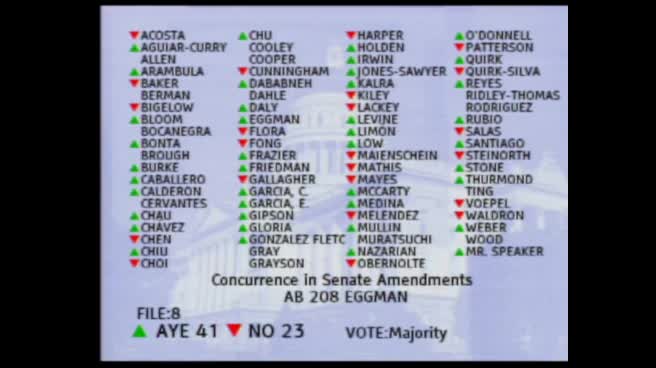
Bill Author

Bill Co-Author(s):