AB 1337: Fish and Game Commission: meetings and hearings: live broadcast.
- Session Year: 2017-2018
- House: Assembly
- Latest Version Date: 2018-04-24
The California Constitution establishes the Fish and Game Commission and provides for the delegation to the commission of powers relating to the protection and propagation of fish and game. Existing law requires the commission to hold no fewer than 8 regular meetings per calendar year and authorizes the commission to hold special meetings or hearings to receive additional input from the Department of Fish and Wildlife and the public. Existing law requires the Fish and Game Commission to form a marine resources committee and a wildlife resources committee from its membership consisting of at least one commissioner for each committee.
This bill would require the commission to provide a live video broadcast on its Internet Web site of every commission meeting or hearing that is open and public and every meeting or hearing conducted by the marine resources committee, wildlife resources committee, or tribal committee that is open and public.
In order to promote public participation and create greater transparency and access, the commission shall provide a live video broadcast on its Internet Web site of every meeting or hearing conducted by the commission that is open and public and every meeting or hearing conducted by the marine resources committee, wildlife resources committee, or tribal committee that is open and public.
In order to promote public participation and create greater transparency and access, the commission shall provide a live video broadcast on its Internet Web site of every meeting or hearing conducted by the commission that is open and public and every meeting or hearing conducted by the marine resources committee, wildlife resources committee, or tribal committee that is open and public.
|
Date
|
Status
|
|---|---|
| Aug 15, 2018 | Last day to consider Governor's veto pursuant to Joint Rule 58.5. |
| May 15, 2018 | Consideration of Governor's veto pending. |
| May 14, 2018 | Vetoed by Governor. |
| Apr 30, 2018 | Enrolled and presented to the Governor at 3:30 p.m. |
| Apr 23, 2018 | In Assembly. Ordered to Engrossing and Enrolling. |
| Apr 23, 2018 | Read third time. Passed. Ordered to the Assembly. |
| Apr 10, 2018 | Read second time. Ordered to third reading. |
| Apr 9, 2018 | From inactive file. |
| Sep 16, 2017 | Ordered to inactive file at the request of Senator McGuire. |
| Jul 11, 2017 | Read second time. Ordered to third reading. |
| Jul 10, 2017 | From committee: Do pass. (Ayes 7. Noes 0.) (July 10). |
| Jun 27, 2017 | From committee: Do pass and re-refer to Com. on APPR. with recommendation: To Consent Calendar. (Ayes 8. Noes 0.) (June 27). Re-referred to Com. on APPR. |
| May 18, 2017 | Referred to Com. on N.R. & W. |
| May 4, 2017 | In Senate. Read first time. To Com. on RLS. for assignment. |
| May 4, 2017 | Read third time. Passed. Ordered to the Senate. (Ayes 76. Noes 0. Page 1394.) |
| Apr 27, 2017 | Read second time. Ordered to Consent Calendar. |
| Apr 26, 2017 | From committee: Do pass. To Consent Calendar. (Ayes 16. Noes 0.) (April 26). |
| Apr 4, 2017 | From committee: Do pass and re-refer to Com. on APPR. with recommendation: To Consent Calendar. (Ayes 13. Noes 0.) (April 4). Re-referred to Com. on APPR. |
| Mar 13, 2017 | Referred to Com. on W.,P., & W. |
| Feb 19, 2017 | From printer. May be heard in committee March 21. |
| Feb 17, 2017 | Read first time. To print. |
|
Date
|
Description
|
Location
|
Votes
|
|
|---|---|---|---|---|
| Apr 23, 2018 | Assembly 3rd Reading AB1337 Patterson et al. By Galgiani | Senate Floor |
Passed |
|
| Jul 10, 2017 | Do pass | Senate Standing Committee on Appropriations |
Passed |
|
| Jun 27, 2017 | Do pass, but first be re-referred to the Committee on [Appropriations] with the recommendation: To Consent Calendar | Senate Standing Committee on Natural Resources and Water |
Passed |
|
| May 4, 2017 | AB 1337 PATTERSON Consent Calendar Second Day Regular Session | Assembly Floor |
Passed |
|
| Apr 26, 2017 | Do pass. To Consent Calendar. | Assembly Standing Committee on Appropriations |
Passed |
|
| Apr 4, 2017 | Do pass and be re-referred to the Committee on [Appropriations] with recommendation: To Consent Calendar | Assembly Standing Committee on Water, Parks, and Wildlife |
Passed |
This list shows positions taken on this bill by organizations on the date displayed, which is linked to the original source.
Positions by individuals are not included.
|
Organization
|
Position
|
Date
|
|---|---|---|
| California Chamber Of Commerce | ** Support | Apr 11, 2018 |
| California Manufacturers & Technology Association | ** Support | Apr 11, 2018 |
| California Sportsman's Lobby | ** Support | Apr 11, 2018 |
| Crossroads of the West Gun Shows | ** Support | Apr 11, 2018 |
| national federation of independent business - california | ** Support | Apr 11, 2018 |
| National Shooting Sports Foundation | ** Support | Apr 11, 2018 |
| Outdoor Sportsmen'S Coalition Of California | ** Support | Apr 11, 2018 |
| Safari Club International | ** Support | Apr 11, 2018 |
| Safari Club International Foundation | ** Support | Mar 30, 2017 |
| western wood preservers' institute | ** Support | Apr 11, 2018 |
GOVERNOR'S VETO
GV Bill Id:AB 1337
Author:(Patterson and Cooley)
As Enrolled Ver:April 24, 2018
2/3 vote
Committee | Votes | Ayes | Noes |
Water, Parks and Wildlife | 13-0 | Eduardo Garcia, Gallagher, Bigelow, Choi, Chu, Friedman, Gloria, Harper, Levine, Rubio, Salas, Thurmond, Wood | |
Appropriations | 16-0 | Gonzalez Fletcher, Bigelow, Bloom, Bocanegra, Bonta, Brough, McCarty, Chau, Eggman, Fong, Friedman, Eduardo Garcia, Gray, Muratsuchi, Obernolte, Reyes |
ASSEMBLY: | 76-0 | (May 4, 2017) | SENATE: | 38-0 | (April 23, 2017) |
SUMMARY: Requires all Fish and Game Commission meetings, including special and subcommittee meetings, and hearings to be live broadcast. Specifically, this bill would require the Fish and Game Commission to provide a live video broadcast on its internet website of every commission meeting or hearing that is open and public, and every meeting or hearing conducted by the marine resources committee, wildlife resources committee, or tribal committee that, similarly, is open and public.
EXISTING LAW:
- Requires the commission to hold no fewer than eight regular meetings per calendar year and that these meetings be accessible by the public and located throughout the state.
- Authorizes the commission to hold special meetings or hearings to receive additional input from the Department of Fish and Wildlife and the public.
- Requires the Fish and Game Commission to form a marine resources committee and a wildlife resources committee (subcommittees), from its membership consisting of at least one commissioner for each committee.
FISCAL EFFECT: According to the Assembly Appropriations Committee:
- Increased annual costs of approximately $120,000 (Fish and Game Preservation Fund) to comply with the provisions of this bill. This estimate may increase in the future if the number of special meetings or subcommittee meetings increases.
- Under its current contract to provide live video broadcasts of its business meetings, the Commission spends approximately $9,700 for two-day meetings, and $5,800 for one-day meetings. This bill requires the Commission to provide video coverage for an additional 13 one-day meetings per year. This estimate includes $5,800 for 11 of the additional meetings (including the Predator Policy Working Group) and $1,250 in travel costs for eight of the meetings. Tribal Committee meetings are held in conjunction with regular Commission business meetings, so no additional travel costs were estimated for these meetings. The Commission also hosts two teleconference meetings each year to adopt ocean and inland salmon regulations. These meetings are generally scheduled at four separate locations throughout the state. It is assumed that each teleconference location would require video coverage so $23,500 is estimated to webcast each meeting with an additional one day of travel expense ($1,250).
COMMENTS:
Author's Statement: Currently, California law requires the Department of Fish and Game to webcast their full commission meetings however, subcommittee meetings are not webcast. This bill would expand this requirement to the three subcommittees which are the Wildlife Resources Committee, the Marine Resources Committee, and the Tribal Committee. This will allow more people to have accountability. This bill will give every Californian the opportunity to stay involved in decisions that are made by these subcommittees, and provides necessary transparency to our state government.
Comments: The Fish and Game Commission (commission) contracts with a private vendor to provide live video broadcasts (webcast) of its six annual commission business meetings (February, April, June, August, October and December). This is current practice of the commission and has been in place for several years. Over the years, this practice has been important for residents and concerned participants who have not been able to attend the statewide rotating meetings, to provide a venue for public participation. In many cases, issues of statewide importance were covered in one part of the state or another, with comments drawn from other areas of the state.
The commission's subcommittees (marine resources, wildlife resources, and tribal) each meet three times per year, and rotate their meetings throughout the state. These meetings are not typically webcast, and may be held in remote areas of the state. Generally, 13 special or subcommittee meetings are held in four locations per year.
The issue was brought before the Assembly Budget Subcommittee No. 3 in May of 2016. The committee discussed a cost-estimate of about $5,000 to $8,000 to webcast each meeting. The issue was ultimately not successful in the budget.
Arguments in Support: Supporters argue that this bill will allow the public more participation in commission special committee and subcommittee meetings, many of which are held in remote areas of the state.
This bill requires the Fish and Game Commission to provide a live video broadcast of its public meetings, including meetings of the Marine Resource Committee, the Wildlife Resources Committee and the Tribal Committee.
Public meetings of the full Commission, where official actions are taken, are already live broadcast. I believe broadcasts of committee level meetings should be reserved only for those times when there is extraordinary interest by the public. This is a matter which properly resides within the sound discretion of the Commission.
Analysis Prepared by: Catherine Freeman / W., P., & W. / (916) 319-2096 FN: 0002936
Office of Senate Floor Analyses (916) 651-1520 Fax: (916) 327-4478 | AB |
THIRD READING
Bill No: AB 1337
:
SENATE NATURAL RES. & WATER COMMITTEE: 8-0, 6/27/17
AYES: Hertzberg, Stone, Allen, Atkins, Hueso, Jackson, Stern, Vidak
NO VOTE RECORDED: Monning
SENATE APPROPRIATIONS COMMITTEE: 7-0, 7/10/17
AYES: Lara, Bates, Beall, Bradford, Hill, Nielsen, Wiener
ASSEMBLY FLOOR: 76-0, 5/4/17 (Consent) - See last page for vote
DIGEST:
This bill requires all Fish and Game Commission (Commission) meetings and hearings that are open and public, including subcommittee meetings, to be live webcast.
Existing law:
- Provides that, pursuant to Fish and Game Code Section 110 (a), the Commission shall hold no few than eight regular meetings, to receive and consider public input on new or amendments to regulations, per calendar year. These meetings occur in various parts of California and enable the public to have input prior to the adoption of new or changed hunting or fishing regulations.
- Directs, pursuant to Sections 105-106 of the Fish and Game Code, the Commission to form a Marine Resources Committee and a Wildlife Resources Committee from its membership to deal more directly those particular issues. Each of these committees has three meetings per year, each in a different region of California. In addition, the Tribal Committee, which is not in statute, meets at a similar frequency to other Commission committees.
- Provides, under the Bagley-Keene Act (Government Code §§ 11120-11132), a specific avenue for public engagement and comment whenever boards or commissions are making decisions on regulations or policy. The Act requires several actions by all state boards and commissions related to public engagement and meetings, including to:
- Provide public notice of their meetings
- Prepare agendas
- Accept public testimony
- Conduct meetings in public unless specifically authorized to meet in closed session
This bill requires the Commission to provide a live video broadcast on its Web site of:
- Every full Commission meeting or hearing that is open and public.
- Every meeting or hearing conducted by the marine resources committee, wildlife resources committee, or tribal committee that is open and public.
Background
The first wildlife conservation agency in the United States was the California Fish and Game Commission, which has been in existence since 1870. In 1945, a California constitutional amendment delegated to the Commission the power to regulate the taking or possession of birds, mammals, fish, amphibians, and reptiles. This includes the regulatory power to determine the limits on the number of animals taken and restrictions on methods of capture for game animals and sport fish. The Commission is made up of five appointed commissioners and exists within the California Natural Resources Agency.
For each Commission meeting, a “Public Forum” item is included on the agenda, pursuant to the Bagley-Keene Act, for any member of the public to address and/or ask questions of the Commission. These comments and questions are limited to items relating to the implementation of its policies or any other matter within the jurisdiction of the Commission. As a general rule, action cannot be taken on issues not listed on the agenda. For items on the agenda, the public is asked to speak when that agenda item comes up, which reserves public forum for subjects not on the agenda. Submittal of written comments is encouraged to ensure that all comments will be included in the record before the Commission.
Currently, full Commission meetings are broadcasted live on and are accessible to the public on the Commission’s Web site. The Wildlife Resources Committee, Marine Resources Committee, and the Tribal Committee meetings, however, are not broadcast, although they do currently post on the Commission’s Web site the agenda, prior to each meeting, and both meeting documents and audio files after each meeting.
Comments
How do people who do not come to the committee meetings in person engage in the issues? The current process for public engagement without attendance at Marine Resources, Wildlife Resources, or Tribal Committee meetings is for members of the public to submit written comments by email, hand delivery, or mail to the Commission approximately two weeks prior to the meeting day. The meetings themselves rotate in location around the state in an effort to enhance the public’s ability to participate in person. For example, in the past two years (2016 and 2017) the Marine Resources Committee has met or will meet in Marina, Santa Rosa, San Clemente, Los Alamitos, and Petaluma; the Wildlife Resources Committee has or will meet in Redding, Sacramento, Riverside, and Woodland; the Tribal Committee has or will meet in Rohnert Park, Smith River, Atascadero, Geyserville, Bakersfield, and Eureka. Attendance at Marine Resources Committee meetings is estimated to be 50-70 people, while attendance at Tribal and Wildlife Resource Committees is estimated to be closer to 30 people.
The use of live webcasts, with or without interactive programs, to broaden public participation among those California residents who are not present at the meetings is a timely matter for many California agencies. For example, live broadcasts with interactive programs have been used by the California Energy Commission and Public Utilities Commission for a multiple years, as well as the California Environmental Protection Agency. These programs include the use of platforms that enable people to call in to comment and ask questions during the appropriate public forum time. For example, in certain cases a member of the public can log into the live broadcast on the internet, and select a toggle button that signifies their desire to participate in the public comment item of the agenda, and a moderator will “un-mute” that person when it is their turn to speak. Other systems use online tools to allow the public to comment or ask questions through real-time written statements. Some agencies run their own centralized systems, while in other cases, the agency contracts a third party company to provide the live broadcast and interactive platform. In general, these programs can be accessed by phone or by internet, with a login required on the Web site.
How difficult will it be to expand the use of live broadcasts from the full Commission to the specific committees? Full Commission meetings are already broadcast live through the Commission Web site and the Commission uses a private vendor for these live webcasts. Tribal Committee meetings are currently held in conjunction with regular Commission business meetings, which will likely make additional live broadcasting simpler for logistics and possibly at lower costs than other committee meetings.
It is an open question how best to engage the public in issues related to fish and wildlife, and how improved access could be best measured. To engage more people in fish and wildlife issues, there will likely be some initial troubleshooting. Live webcasts provide an opportunity to those who have Internet access, whereas interactive systems that include the ability for the public to listen or submit questions over a phone system may reach a wider audience in some cases.
FISCAL EFFECT: Appropriation: Fiscal Com.: Local:
According to the Senate Appropriations Committee, the Commission will have increased annual costs of approximately $120,000 (Fish and Game Preservation Fund) to comply with the provisions of this bill. This estimate may increase in the future if the number of special meetings or subcommittee meetings increases.
Furthermore, under the Commission’s current contract to provide live video broadcasts of its business meetings, the Commission spends approximately $9,700 for two-day meetings, and $5,800 for one-day meetings. This bill requires the Commission to provide video coverage for an additional 13 one-day meetings per year. This estimate includes $5,800 for 11 of the additional meetings (including the Predator Policy Working Group) and $1,250 in travel costs for eight of the meetings. Tribal Committee meetings are held in conjunction with regular Commission business meetings, so no additional travel costs were estimated for these meetings. The Commission also hosts two teleconference meetings each year to adopt ocean and inland salmon regulations. These meetings are generally scheduled at four separate locations throughout the state. It is assumed that each teleconference location would require video coverage so $23,500 is estimated to webcast each meeting with and additional one day of travel expense ($1,250).
California Chamber of Commerce
California Manufacturers & Technology Association
California Sportsman’s Lobby
Crossroads of the West Gun Shows
National Federation of Independent Business – California
National Shooting Sports Foundation
Outdoor Sportsmen’s Coalition of California
Safari Club International
Western Wood Preservers’ Institute
OPPOSITION: (Verified 4/10/18)
None received
ARGUMENTS IN SUPPORT: The authors argue that the size of California makes it difficult for the average citizen to attend the committee meetings for Marine Resources, Wildlife Resources, or Tribal issues, and that live webcasts of all meetings would promote public participation. The authors further state that “this lack of transparency undermines the purpose of the meetings, which is to encourage public participation and oversight of the Commission.”
ASSEMBLY FLOOR: 76-0, 5/4/17
AYES: Acosta, Aguiar-Curry, Arambula, Baker, Berman, Bloom, Bocanegra, Bonta, Brough, Burke, Caballero, Calderon, Cervantes, Chau, Chávez, Chen, Chiu, Choi, Chu, Cooley, Cooper, Cunningham, Dababneh, Dahle, Daly, Eggman, Flora, Fong, Frazier, Friedman, Gallagher, Eduardo Garcia, Gipson, Gloria, Gomez, Gonzalez Fletcher, Gray, Grayson, Harper, Holden, Irwin, Jones-Sawyer, Kalra, Kiley, Lackey, Levine, Limón, Low, Maienschein, Mathis, Mayes, McCarty, Medina, Melendez, Mullin, Muratsuchi, Nazarian, Obernolte, O'Donnell, Quirk, Quirk-Silva, Reyes, Ridley-Thomas, Rodriguez, Rubio, Salas, Santiago, Steinorth, Mark Stone, Thurmond, Ting, Voepel, Waldron, Weber, Wood, Rendon
NO VOTE RECORDED: Travis Allen, Bigelow, Cristina Garcia, Patterson
4/11/18 10:07:53
**** END ****
SENATE COMMITTEE ON
Senator Ricardo Lara, Chair
2017 - 2018 Regular Session
AB 1337 (Patterson) - Fish and Game Commission: meetings and hearings: live broadcast
Version: | Policy Vote: |
Urgency: | Mandate: |
Hearing Date: | Consultant: |
This bill does not meet the criteria for referral to the Suspense File.
Bill Summary:
AB 1337 requires all Fish and Game Commission (Commission) meetings and hearings that are open and public, including special and subcommittee meetings, to be live webcast.
Fiscal Impact:
Increased annual costs of approximately $120,000 (Fish and Game Preservation Fund) to comply with the provisions of this bill. This estimate may increase in the future if the number of special meetings or subcommittee meetings increases.
Background:
- The Commission contracts with a private vendor to provide live video broadcasts (webcast) of its six annual commission business meetings (February, April, June, August, October and December). This is current practice of the Commission and has been in place for several years. Over the years, this practice has been important for residents and concerned participants who have not been able to attend the statewide rotating meetings. In many cases, issues of statewide importance were covered in one part of the state or another, with comments drawn from other areas of the state.
The Commission’s subcommittees (marine resources, wildlife resources, and tribal) each meet three times per year, and rotate their meetings throughout the state. These meetings are not typically webcast, and may be held in remote areas of the state.
Proposed Law:
This bill requires all Commission meetings and hearings that are open and public, including special and subcommittee meetings, to be live webcast.
Staff Comments:
Fiscal impact. Under its current contract to provide live video broadcasts of its business meetings, the Commission spends approximately $9,700 for two-day meetings, and $5,800 for one-day meetings. This bill requires the Commission to provide video coverage for an additional 13 one-day meetings per year. This estimate includes $5,800 for 11 of the additional meetings (including the Predator Policy Working Group) and $1,250 in travel costs for eight of the meetings. Tribal Committee meetings are held in conjunction with regular Commission business meetings, so no additional travel costs were estimated for these meetings. The Commission also hosts two teleconference meetings each year to adopt ocean and inland salmon regulations. These meetings are generally scheduled at four separate locations throughout the state. It is assumed that each teleconference location would require video coverage so $23,500 is estimated to webcast each meeting with and additional one day of travel expense ($1,250).
-- END --
SENATE COMMITTEE ON NATURAL RESOURCES AND WATER
Senator Robert Hertzberg, Chair
2017 - 2018 Regular
Bill No: AB Hearing Date: June 27, 2017
Author: | Patterson | ||
Version: | February 17, 2017 | ||
Urgency: | No | Fiscal: | Yes |
Consultant: | Mike Peterson | ||
Subject: Fish and Game Commission: meetings and hearings: live broadcast
BACKGROUND AND EXISTING LAW
1. The first wildlife conservation agency in the United States was the California Fish and Game Commission (the Commission), which has been in existence since 1870. In 1945, a California constitutional amendment delegated to the Commission the power to regulate the taking or possession of birds, mammals, fish, amphibians, and reptiles. This includes the regulatory power to determine the limits on the number of animals taken and restrictions on methods of capture for game animals and sport fish. The Commission is made up of five appointed commissioners and exists within the California Natural Resources Agency.
2. The Commission holds open public meetings each year to receive and consider input from individuals and groups on new or amendments to regulations. Pursuant to Fish and Game Code §110 (a), the Fish and Game Commission shall hold no few than 8 regular meetings per calendar year. These meetings occur in various parts of California and enable the public to have input prior to the adoption of new or changed hunting or fishing regulations.
3. Further, pursuant to §§105-106 of the Fish and Game Code, existing law directs the Commission to form a Marine Resources Committee and a Wildlife Resources Committee from its membership to deal more directly those particular issues. Each of these committees has three meetings per year, each in a different region of California. In addition, the Tribal Committee, which is not in statute, meets at a similar frequency to other Commission committees.
4. The Bagley-Keene Act (Government Code §§ 11120-11132) provides a specific avenue for public engagement and comment whenever boards or commissions are making decisions on regulations or policy. The act requires several actions by all state boards and commissions related to public engagement and meetings, including to:
A) Provide public notice of their meetings
B) Prepare agendas
C) Accept public testimony
D) Conduct meetings in public unless specifically authorized to meet in closed session
.
5. For each Commission meeting, a “Public Forum” item is included on the agenda, pursuant to the Bagley-Keene Act, for any member of the public to address and/or ask questions of the Commission. These comments and questions are limited to items relating to the implementation of its policies or any other matter within the jurisdiction of the Commission. As a general rule, action cannot be taken on issues not listed on the agenda. For items on the agenda, the public is asked to speak when that agenda item comes up, which reserves public forum for subjects not on the agenda. Submittal of written comments is encouraged to ensure that all comments will be included in the record before the Commission.
6. Currently, full Commission meetings are broadcasted live on and are accessible to the public on the Commission’s website. The Wildlife Resources Committee, Marine Resources Committee, and the Tribal Committee meetings, however, are not broadcast, although they do currently post on the Commission’s website the agenda, prior to each meeting, and both meeting documents and audio files after each meeting.
PROPOSED LAW
This bill would require the commission to provide a live video broadcast on its Web site of:
- Every full commission meeting or hearing that is open and public
- Every meeting or hearing conducted by the marine resources committee, wildlife resources committee, or tribal committee that is open and public.
ARGUMENTS IN SUPPORT
The authors argue that the size of California makes it difficult for the average citizen to attend the committee meetings for Marine Resources, Wildlife Resources, or Tribal issues, and that live webcasts of all meetings would promote public participation. The authors further state that “this lack of transparency undermines the purpose of the meetings, which is to encourage public participation and oversight of the Commission.”
ARGUMENTS IN OPPOSITION
None Received
COMMENTS
- How do people who do not come to the committee meetings in person engage in the issues? The current process for public engagement without attendance at Marine Resources, Wildlife Resources, or Tribal Committee meetings is for members of the public to submit written comments by email, hand delivery, or mail to the Fish and Game Commission approximately two weeks prior to the meeting day. The meetings themselves rotate in location around the state in an effort to enhance the public’s ability to participate in person. For example, in the past two years (2016 & 2017) the Marine Resources Committee has met or will meet in Marina, Santa Rosa, San Clemente, Los Alamitos, and Petaluma; the Wildlife Resources Committee has or will meet in Redding, Sacramento, Riverside, and Woodland; the Tribal Committee has or will meet in Rohnert Park, Smith River, Atascadero, Geyserville, Bakersfield, and Eureka. Attendance at Marine Resources Committee meetings is estimated to be 50-70 people, while attendance at Tribal and Wildlife Resource Committees is estimated to be closer to 30 people.
- The use of live webcasts, with or without interactive programs, to broaden public participation among those California residents who are not present at the meetings is a timely matter for many California agencies. For example, live broadcasts with interactive programs have been used by the California Energy Commission and Public Utilities Commission for a multiple years, as well as the California Environmental Protection Agency. These programs include the use of platforms that enable people to call in to comment and ask questions during the appropriate public forum time. For example, in certain cases a member of the public can log into the live broadcast on the internet, and select a toggle button that signifies their desire to participate in the public comment item of the agenda, and a moderator will “un-mute” that person when it is their turn to speak. Other systems use online tools to allow the public to comment or ask questions through real-time written statements. Some agencies run their own centralized systems, while in other cases, the agency contracts a third party company to provide the live broadcast and interactive platform. In general, these programs can be accessed by phone or by internet, with a login required on the website.
- How difficult will it be to expand the use of live broadcasts from the full Commission to the specific committees? Full Commission meetings are already broadcast live through the Commission website and the Commission uses a private vendor for these live webcasts. Although fiscal implications are not the jurisdiction of this committee, it may provide context for the committee to note that according to Assembly Appropriations, the Commission spends approximately $9,700 for live broadcast of two-day meetings and $5,800 for live broadcasts of one-day meetings. This bill would require the Commission to provide live video coverage for an additional 13 one-day meetings per year. However, Tribal Committee meetings are currently held in conjunction with regular Commission business meetings, which will likely make additional live broadcasting simpler for logistics and possibly at lower costs than other committee meetings.
- It is an open question how best to engage the public in issues related to fish and wildlife, and how improved access could be best measured. To engage more people in fish and wildlife issues, there will likely be some initial troubleshooting. Live webcasts provide an opportunity to those who have internet access, whereas interactive systems that include the ability for the public to listen or submit questions over a phone system may reach a wider audience in some cases. It may be that members of the public who want to engage in those issues under the jurisdiction of the Fish and Game Commission are better reached using one method over another.
- Geographic scope and interactive components of such programs will be considered in an additional bill in this committee. Another bill, AB 816 (Kiley), has passed the California Assembly and will be heard in the Senate Natural Resources & Water Committee in two weeks. This bill shares similar goals to AB 1337 because it focuses on live webcasting of meetings, but AB 816 would apply to more agencies, committees, and commissions (all department, board, and commission public meetings of the Natural Resources Agency and California Environmental Protection Agency), and would include a mandate that live webcasts include mechanisms for remote participation in the form of listener questions and comments, but would only apply to public meetings held on-site.
SUPPORT
California Chamber of Commerce
California Manufacturers & Technology Association
California Sportsman’s Lobby
Crossroads of the West Gun Shows
National Federation of Independent Business – California
National Shooting Sports Foundation
Outdoor Sportsmen’s Coalition of California
Safari Club International
Western Wood Preservers’ Institute
OPPOSITION
None Received
-- END --
Date of Hearing: April 26, 2017
ASSEMBLY COMMITTEE ON APPROPRIATIONS
Lorena Gonzalez Fletcher, Chair
ABPCA Bill Id:AB 1337
Author:(Patterson) – As Introduced Ver:February 17, 2017
Policy Committee: | Water, Parks and Wildlife | Vote: | 13 - 0 |
|
| ||
|
|
Urgency: No State Mandated Local Program: No Reimbursable: No
SUMMARY:
This bill requires all Fish and Game Commission (Commission) meetings and hearings that are open and public, including special and subcommittee meetings, to be live webcast.
FISCAL EFFECT:
Increased annual costs of approximately $120,000 (Fish and Game Preservation Fund) to comply with the provisions of this bill. This estimate may increase in the future if the number of special meetings or subcommittee meetings increases.
Under its current contract to provide live video broadcasts of its business meetings, the Commission spends approximately $9,700 for two-day meetings, and $5,800 for one-day meetings. This bill requires the Commission to provide video coverage for an additional 13 one-day meetings per year. This estimate includes $5,800 for 11 of the additional meetings (including the Predator Policy Working Group) and $1,250 in travel costs for eight of the meetings. Tribal Committee meetings are held in conjunction with regular Commission business meetings, so no additional travel costs were estimated for these meetings. The Commission also hosts two teleconference meetings each year to adopt ocean and inland salmon regulations. These meetings are generally scheduled at four separate locations throughout the state. It is assumed that each teleconference location would require video coverage so $23,500 is estimated to webcast each meeting with and additional one day of travel expense ($1,250).
COMMENTS:
- Purpose. According to the author, currently the Commission is required only to webcast the full Commission meetings. This bill expands this requirement to the Wildlife Resources, Marine Resources, and Tribal subcommittees.
- Background. The Commission contracts with a private vendor to provide live video broadcasts (webcast) of its six annual commission business meetings (February, April, June, August, October and December). This is current practice of the Commission and has been in place for several years. Over the years, this practice has been important for residents and concerned participants who have not been able to attend the statewide rotating meetings. In many cases, issues of statewide importance were covered in one part of the state or another, with comments drawn from other areas of the state.
The Commission’s subcommittees (marine resources, wildlife resources, and tribal) each meet three times per year, and rotate their meetings throughout the state. These meetings are not typically webcast, and may be held in remote areas of the state.
Analysis Prepared by: Jennifer Galehouse / APPR. / (916) 319-2081
Date of Hearing: April 4, 2017
ASSEMBLY COMMITTEE ON WATER, PARKS, AND WILDLIFE
Eduardo Garcia, Chair
ABPCA Bill Id:AB 1337 (
Author:Patterson) – As Introduced Ver:February 17, 2017
SUBJECT: Fish and Game Commission: meetings and hearings: live broadcast
SUMMARY: Requires all Fish and Game Commission meetings, including special and subcommittee meetings, and hearings to be live broadcast. Specifically, this bill:
Would require the Fish and Game Commission to provide a live video broadcast on its internet website of every commission meeting or hearing that is open and public, and every meeting or hearing conducted by the marine resources committee, wildlife resources committee, or tribal committee that, similarly, is open and public.
EXISTING LAW:
- Requires the commission to hold no fewer than eight regular meetings per calendar year and that these meetings be accessible by the public and located throughout the state.
- Authorizes the commission to hold special meetings or hearings to receive additional input from the Department of Fish and Wildlife and the public.
- Requires the Fish and Game Commission to form a marine resources committee and a wildlife resources committee (subcommittees), from its membership consisting of at least one commissioner for each committee.
FISCAL EFFECT: Unknown
COMMENTS:
Author’s Statement: Currently, California law requires the Department of Fish and Game to webcast their full commission meetings however, subcommittee meetings are not webcast. AB 1337 would expand this requirement to the three subcommittees which are the Wildlife Resources Committee, the Marine Resources Committee, and the Tribal Committee. This will allow more people to have accountability. AB 1337 will give every Californian the opportunity to stay involved in decisions that are made by these subcommittees, and provides necessary transparency to our state government.
Comments: The Fish and Game Commission (commission) contracts with a private vendor to provide live video broadcasts (webcast) of its six annual commission business meetings (February, April, June, August, October and December). This is current practice of the commission and has been in place for several years. Over the years, this practice has been important for residents and concerned participants who have not been able to attend the statewide rotating meetings, to provide a venue for public participation. In many cases, issues of statewide importance were covered in one part of the state or another, with comments drawn from other areas of the state.
The commission’s subcommittees (marine resources, wildlife resources, and tribal) each meet three times per year, and rotate their meetings throughout the state. These meetings are not typically webcast, and may be held in remote areas of the state. Generally, 13 special or subcommittee meetings are held in four locations per year.
The issue was brought before the Assembly Budget Subcommittee No. 3 in May of 2016. The committee discussed a cost-estimate of about $5,000 to $8,000 to webcast each meeting. The issue was ultimately not successful in the budget.
Arguments in Support: Supporters argue that this bill will allow the public more participation in commission special committee and subcommittee meetings, many of which are held in remote areas of the state.
REGISTERED SUPPORT / OPPOSITION:
Support
California Chamber of Commerce
California Sportsman’s Lobby
Crossroads of the West Gun Shows
National Shooting Sports Foundation
Outdoor Sportsmen’s Coalition of California
Safari Club International
Safari Club International Foundation
Opposition
None on file.
Analysis Prepared by: Catherine Freeman / W., P., & W. /
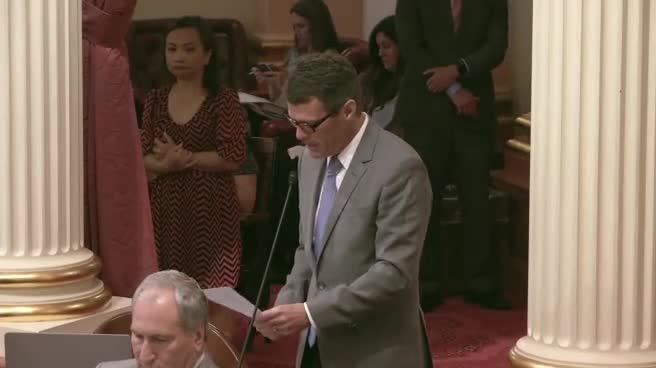


Bill Co-Author(s):