AB 1348: Farmer Equity Act of 2017.
- Session Year: 2017-2018
- House: Assembly
- Latest Version Date: 2017-10-09
Existing law requires the Department of Food and Agriculture, headed by the Secretary of Food and Agriculture, to promote and protect the agricultural industry of the state.
This bill would enact the Farmer Equity Act of 2017 and would require the department to ensure the inclusion of socially disadvantaged farmers and ranchers, as defined, in the development, adoption, implementation, and enforcement of food and agriculture laws, regulations, and policies and programs, as specified. The bill would require the secretary to create a position within the departments executive office to support the departments efforts to include socially disadvantaged farmers and ranchers in its policies and programs, as specified.
The bill would require the department on or before January 1, 2020, to submit a report to the Governor and the Legislature on efforts to serve socially disadvantaged farmers and ranchers and female farmers and ranchers in California and include recommendations to the Governor and the Legislature on how to improve processes to include socially disadvantaged farmers and ranchers.
Existing law requires the Department of Food and Agriculture, headed by the Secretary of Food and Agriculture, to promote and protect the agricultural industry of the state.
This bill would enact the Farmer Equity Act of 2017 and would require the department to be the coordinating agency in state government for socially disadvantaged farmer and rancher programs and would require the department to ensure the inclusion of socially disadvantaged farmers and ranchers, as defined, in the development, adoption, implementation, and enforcement of food and agriculture laws, regulations, and policies and programs, as specified. The bill would require the secretary to create a position within the departments executive office to support the departments efforts to include socially disadvantaged farmers and ranchers in its policies and programs, as specified.
The bill would require the department on or before July 1, 2019, January 1, 2020, to submit a report to the Governor and the Legislature on its efforts to serve socially disadvantaged farmers and ranchers and reduce barriers to greater participation in relevant state programs. The bill would require the report to identify community-based groups providing services to socially disadvantaged farmers and ranchers and to female farmers and ranchers in California and include recommendations to the Governor and the Legislature that the department deems necessary. The bill would require the department to also make the report publicly available on its Internet Web site. on how to improve processes to include socially disadvantaged farmers and ranchers.
Existing law requires the Department of Food and Agriculture, headed by the Secretary of Food and Agriculture, to promote and protect the agricultural industry of the state.
This bill would enact the Farmer Equity Act of 2017 and would require the department to be the coordinating agency in state government for socially disadvantaged farmer and rancher programs and would require the department to ensure the inclusion of socially disadvantaged farmers and ranchers, as defined, in the development, adoption, implementation, and enforcement of food and agriculture laws, regulations, and policies and programs, as specified.
The bill would require the department on or before July 1, 2019, to submit a report to the Governor and the Legislature on its efforts to serve socially disadvantaged farmers and ranchers and reduce barriers to greater participation in relevant state programs. The bill would require the report to identify community-based groups providing services to socially disadvantaged farmers and ranchers and to include recommendations to the Governor and the Legislature that the department deems necessary. The bill would require the department to also make the report publicly available on its Internet Web site.
Existing law provides for the regulation, inspection, and licensing of poultry plants. Existing law prohibits a person from operating a poultry plant unless he had obtained a license.This bill would make a nonsubstantive change to the latter provision.Existing law provides for the regulation, inspection, and licensing of poultry plants. Existing law prohibits a person from operating a poultry plant unless he had obtained a license.
This bill would make a nonsubstantive change to the latter provision.
This article shall be known, and may be cited, as the Farmer Equity Act of 2017.
511.(a)The Legislature finds and declares all of the following:
(1)California recognizes the importance of investing in the long-term prosperity of our food and farming system, starting with our farmers.
(2)Farmers of color have historically not had equitable access to land and other resources necessary to conduct farming in California, and that legacy of prejudice persists.
(3)Female farmers represent less than a quarter of all farmers in the state. Only 2 percent of California farmers are women of color, according to the United States Department of Agriculture Census of Agriculture.
(4)Socially disadvantaged farmers and ranchers tend to farm fewer acres but have a greater diversity of crops in California.
(5)According to the United States Department of Agriculture Census of Agriculture, on average, socially disadvantaged farmers and ranchers in California receive less in federal payments than their White counterparts and also earn less.
(6)Despite the barriers, an increasing number of socially disadvantaged farmers and ranchers are attempting to farm throughout California, across rural and urban settings.
(7)Existing federal agricultural policies have failed to provide sufficient and appropriate technical assistance and financial support, including farmer cooperative creation, for socially disadvantaged farmers and ranchers.
(b)It is therefore the intent of the Legislature that the secretary should support socially disadvantaged farmers and ranchers and include this support in the departments vision and its relevant policies.
512.For purposes of this article, the following terms have the following meanings:
(a)Secretary refers to the Secretary of Food and Agriculture.
(b)Socially disadvantaged farmer or rancher means a farmer or rancher who is a member of a socially disadvantaged group.
(c)Socially disadvantaged group means a group whose members have been subjected to racial, ethnic, or gender prejudice because of their identity as members of a group without regard to their individual qualities. These groups include all of the following:
(1)African Americans.
(2)Native Indians.
(3)Alaskan Natives.
(4)Hispanics.
(5)Asian Americans.
(6)Native Hawaiians and Pacific Islanders.
(d)Urbanized area, as used by the United States Census Bureau, refers to a population of at least 50,000 people.
513.(a)The department shall ensure the inclusion of socially disadvantaged farmers and ranchers, including socially disadvantaged farmers and ranchers in urbanized areas, in the development, adoption, implementation, and enforcement of food and agriculture laws, regulations, and policies and programs.
(b)The secretary shall create a position within the departments executive office to support the efforts of this section and Section 514. The person appointed to that position shall report to the secretary.
(c)The department shall do all of the following:
(1)Consult with the Secretaries of the California Environmental Protection Agency, the Natural Resources Agency, the Business, Consumer Services, and Housing Agency, and the California Health and Human Services Agency, and all other interested members of the public and private sectors of the state on opportunities for socially disadvantaged farmers and ranchers and to coordinate state programs.
(2)Disseminate information regarding opportunities provided by, including, but not limited to, the United States Department of Agriculture, the United States Environmental Protection Agency, the General Accounting Office, the Office of Management and Budget, and other federal agencies for socially disadvantaged farmers and ranchers.
(3)Evaluate boards, committees, commissions, and advisory panels created pursuant to this code for opportunities for inclusion of socially disadvantaged farmers and ranchers, except those established pursuant to Article 8 (commencing with Section 58841) of Chapter 1 of Part 2 of Division 21, Article 7 (commencing with Section 59721) of Chapter 2 of Part 2 of Division 21, and Division 22 (commencing with Section 63901).
514.(a)On or before January 1, 2020, the department shall submit a report to the Governor and the Legislature on efforts to serve socially disadvantaged farmers and ranchers and all female farmers and ranchers in California. The report shall include recommendations to the Governor and the Legislature on how to improve processes to include socially disadvantaged farmers and ranchers.
(b)The report to be submitted to the Legislature pursuant to subdivision (a) shall be submitted in compliance with Section 9795 of the Government Code.
This article shall be known, and may be cited, as the Farmer Equity Act of 2017.
511.(a)The Legislature finds and declares all of the following:
(1)California recognizes the importance in of investing in the long-term prosperity of our food and farming system, starting with our farmers.
(2)Farmers of color have historically not had equitable access to land and other resources necessary to conduct farming in California, and that legacy of prejudice persists.
(3)Female farmers represent less than a quarter of all farmers in the state. Only 2 percent of California farmers are women of color, according to the United States Department of Agriculture Census of Agriculture.
(4)Socially disadvantaged farmers and ranchers tend to farm fewer acres but have a greater diversity of crops in California.
(5)According to the United States Department of Agriculture Census of Agriculture, on average, socially disadvantaged farmers and ranchers in California receive less in federal payments than their White counterparts and also earn less.
(6)Despite the barriers, an increasing number of socially disadvantaged farmers and ranchers are attempting to farm throughout California, across rural and urban settings.
(7)Existing federal agricultural policies have failed to provide sufficient and appropriate technical assistance and financial support, including farmer cooperative creation, for socially disadvantaged farmers and ranchers.
(b)It is therefore the intent of the Legislature that the secretary should support socially disadvantaged farmers and ranchers and include this support in the departments vision and its relevant policies.
512.For purposes of this article, the following terms have the following meanings:
(a)Secretary refers to the Secretary of Food and Agriculture.
(b)Socially disadvantaged farmer or rancher means a farmer or rancher who is a member of a socially disadvantaged group.
(c)Socially disadvantaged group means a group whose members have been subjected to racial, ethnic, or gender prejudice because of their identity as members of a group without regard to their individual qualities. These groups include all of the following:
(1)African Americans.
(2)Native Indians.
(3)Alaskan natives. Natives.
(4)Hispanics.
(5)Asian Americans.
(6)Native Hawaiians and Pacific Islanders.
(d)Urbanized area, as used by the United States Census Bureau, refers to a population of at least 50,000 people.
513.(a)The department shall ensure the inclusion of socially disadvantaged farmers and ranchers, including socially disadvantaged farmers and ranchers in urbanized areas, in the development, adoption, implementation, and enforcement of food and agriculture laws, regulations, and policies and programs.
(b)The secretary shall create a position within the departments executive office to support the efforts of this section and Section 514. The person appointed to that position shall report to the secretary.
(c)The department shall do all of the following:
(1)Consult with the Secretaries of the California Environmental Protection Agency, the Natural Resources Agency, the Business, Consumer Services, and Housing Agency, and the California Health and Human Services Agency, and all other interested members of the public and private sectors of the state on opportunities for socially disadvantaged farmers and ranchers and to coordinate state programs.
(2)Disseminate information regarding opportunities provided by, including, but not limited to, the United States Department of Agriculture, the United States Environmental Protection Agency, the General Accounting Office, the Office of Management and Budget, and other federal agencies for socially disadvantaged farmers and ranchers.
(3)Evaluate boards, committees, commissions, and advisory panels created pursuant to this code for opportunities for inclusion of socially disadvantaged farmers and ranchers. ranchers, except those established pursuant to Article 8 (commencing with Section 58841) of Chapter 1 of Part 2 of Division 21, Article 7 (commencing with Section 59721) of Chapter 2 of Part 2 of Division 21, and Division 22 (commencing with Section 63901).
514.(a)On or before January 1, 2020, the department shall submit a report to the Governor and the Legislature on efforts to serve socially disadvantaged farmers and ranchers and all female farmers and ranchers in California. The report shall include recommendations to the Governor and the Legislature on how to improve processes to include socially disadvantaged farmers and ranchers.
(b)The report to be submitted to the Legislature pursuant to subdivision (a) shall be submitted in compliance with Section 9795 of the Government Code.
This article shall be known, and may be cited, as the Farmer Equity Act of 2017.
511.(a)The Legislature finds and declares all of the following:
(1)California recognizes the importance in investing in the long-term prosperity of our food and farming system, starting with our farmers.
(2)Farmers of color have historically not had equitable access to land and other resources necessary to conduct farming in California, and that legacy of prejudice persists.
(3)Female farmers represent less than a quarter of all farmers in the state. Only 2 percent of California farmers are women of color, according to the United States Department of Agriculture Census of Agriculture.
(3)(4)Socially disadvantaged farmers and ranchers tend to farm fewer acres but have a greater diversity of crops in California.
(4)(5)According to the United States Department of Agriculture Census of Agriculture, on average, socially disadvantaged farmers and ranchers in California receive less in federal payments than their white White counterparts and also earn less.
(5)(6)Despite the barriers, an increasing number of socially disadvantaged farmers and ranchers are attempting to farm throughout California, across rural and urban settings.
(6)(7)Existing federal agricultural policies have failed to provide sufficient and appropriate technical assistance and financial support, including farmer cooperative creation, for socially disadvantaged farmers and ranchers.
(b)It is therefore the intent of the Legislature that the secretary should support socially disadvantaged farmers and ranchers and include this support in the departments vision and its relevant policies.
512.For purposes of this article, the following terms have the following meanings:
(a)Secretary refers to the Secretary of Food and Agriculture.
(b)Socially disadvantaged farmer or rancher, rancher means a farmer or rancher who is a member of a socially disadvantaged group.
(c)Socially disadvantaged group, group means a group whose members have been subjected to racial or ethnic racial, ethnic, or gender prejudice because of their identity as members of a group without regard to their individual qualities. These groups include all of the following:
(1)African Americans.
(2)Native Indians.
(3)Alaskan natives.
(4)Hispanics.
(5)Asian Americans.
(6)Native Hawaiians and Pacific Islanders.
(d)Urbanized area, as used by the United States Census Bureau, refers to a population of at least 50,000 people.
513.(a)The department shall be the coordinating agency in state government for socially disadvantaged farmer and rancher programs and shall ensure the inclusion of socially disadvantaged farmers and ranchers among parties involved ranchers, including socially disadvantaged farmers and ranchers in urbanized areas, in the development, adoption, implementation, and enforcement of food and agriculture laws, regulations, and policies and programs.
(b)The secretary shall create a position within the departments executive office to support the efforts of this section and Section 514. The person appointed to that position shall report to the secretary.
(b)(c)The secretary department shall do all of the following:
(1)Consult with the Secretaries of the California Environmental Protection Agency, the Natural Resources Agency, the Business, Consumer Services, and Housing Agency, and the California Health and Human Services Agency, and all other interested members of the public and private sectors of the state. state on opportunities for socially disadvantaged farmers and ranchers and to coordinate state programs.
(2)Coordinate the departments efforts and share information regarding socially disadvantaged farmer and rancher programs with the Disseminate information regarding opportunities provided by, including, but not limited to, the United States Department of Agriculture, the United States Environmental Protection Agency, the General Accounting Office, the Office of Management and Budget, and other federal agencies. agencies for socially disadvantaged farmers and ranchers.
(3)Review and evaluate any information from the United States Department of Agriculture related to its Office of Advocacy and Outreach, and the Farm Service Agency, Natural Resources Conservation Service, Agriculture Marketing Service, National Institute of Food and Agriculture, Food and Nutrition Service, Animal and Plant Health Inspection Service, and National Agricultural Statistics Service.(3)Evaluate boards, commissions, and panels created pursuant to this code for opportunities for inclusion of socially disadvantaged farmers and ranchers.
514.(a)On or before July 1, 2019, January 1, 2020, the department shall submit a report to the Governor and the Legislature on its efforts to serve socially disadvantaged farmers and ranchers and reduce barriers to greater participation in relevant state programs. and all female farmers and ranchers in California. The report shall identify community-based groups providing services to socially disadvantaged farmers and ranchers and include recommendations to the Governor and the Legislature that the department deems necessary. The department shall also make the report publicly available on its Internet Web site. on how to improve processes to include socially disadvantaged farmers and ranchers.
(b)The report to be submitted pursuant to subdivision (a) shall be submitted in compliance with Section 9795 of the Government Code.
REVISIONS: HeadingLine 2.This article shall be known, and may be cited, as the Farmer Equity Act of 2017.
511.(a)The Legislature finds and declares all of the following:
(1)California recognizes the importance in investing in the long-term prosperity of our food and farming system, starting with our farmers.
(2)Farmers of color have historically not had equitable access to land and other resources necessary to conduct farming in California, and that legacy of prejudice persists.
(3)Socially disadvantaged farmers and ranchers tend to farm fewer acres but have a greater diversity of crops in California.
(4)According to the United States Department of Agriculture Census of Agriculture, on average, socially disadvantaged farmers and ranchers in California receive less in federal payments than their white counterparts and also earn less.
(5)Despite the barriers, an increasing number of socially disadvantaged farmers and ranchers are attempting to farm throughout California, across rural and urban settings.
(6)Existing federal agricultural policies have failed to provide sufficient and appropriate technical assistance and financial support, including farmer cooperative creation, for socially disadvantaged farmers and ranchers.
(b)It is therefore the intent of the Legislature that the secretary should support socially disadvantaged farmers and ranchers and include this support in the departments vision and its relevant policies.
512.For purposes of this article, the following terms have the following meanings:
(a)Secretary refers to the Secretary of Food and Agriculture.
(b)Socially disadvantaged farmer or rancher, means a farmer or rancher who is a member of a socially disadvantaged group.
(c)Socially disadvantaged group, means a group whose members have been subjected to racial or ethnic prejudice because of their identity as members of a group without regard to their individual qualities. These groups include all of the following:
(1)African Americans.
(2)Native Indians.
(3)Alaskan natives.
(4)Hispanics.
(5)Asian Americans.
(6)Native Hawaiians and Pacific Islanders.
(d)Urbanized area, as used by the United States Census Bureau, refers to a population of at least 50,000 people.
513.(a)The department shall be the coordinating agency in state government for socially disadvantaged farmer and rancher programs and shall ensure the inclusion of socially disadvantaged farmers and ranchers among parties involved in the development, adoption, implementation, and enforcement of food and agriculture laws, regulations, and policies and programs.
(b)The secretary shall do all of the following:
(1)Consult with the Secretaries of the California Environmental Protection Agency, the Natural Resources Agency, the Business, Consumer Services, and Housing Agency, and the California Health and Human Services Agency, and all other interested members of the public and private sectors of the state.
(2)Coordinate the departments efforts and share information regarding socially disadvantaged farmer and rancher programs with the United States Department of Agriculture, the United States Environmental Protection Agency, the General Accounting Office, the Office of Management and Budget, and other federal agencies.
(3)Review and evaluate any information from the United States Department of Agriculture related to its Office of Advocacy and Outreach, and the Farm Service Agency, Natural Resources Conservation Service, Agriculture Marketing Service, National Institute of Food and Agriculture, Food and Nutrition Service, Animal and Plant Health Inspection Service, and National Agricultural Statistics Service.
514.(a)On or before July 1, 2019, the department shall submit a report to the Governor and the Legislature on its efforts to serve socially disadvantaged farmers and ranchers and reduce barriers to greater participation in relevant state programs. The report shall identify community-based groups providing services to socially disadvantaged farmers and ranchers and include recommendations to the Governor and the Legislature that the department deems necessary. The department shall also make the report publicly available on its Internet Web site.
(b)The report to be submitted pursuant to subdivision (a) shall be submitted in compliance with Section 9795 of the Government Code.
SECTION 1.Section 24741 of the Food and Agricultural Code is amended to read:24741.A person shall not operate a poultry plant unless he or she has obtained a license pursuant to this chapter.A person shall not operate a poultry plant unless he or she has obtained a license pursuant to this chapter.
|
Date
|
Status
|
|---|---|
| Oct 9, 2017 | Chaptered by Secretary of State - Chapter 620, Statutes of 2017. |
| Oct 9, 2017 | Approved by the Governor. |
| Sep 19, 2017 | Enrolled and presented to the Governor at 3 p.m. |
| Sep 11, 2017 | Senate amendments concurred in. To Engrossing and Enrolling. |
| Sep 6, 2017 | In Assembly. Concurrence in Senate amendments pending. May be considered on or after September 8 pursuant to Assembly Rule 77. |
| Sep 6, 2017 | Read third time. Passed. Ordered to the Assembly. |
| Sep 5, 2017 | Read second time. Ordered to third reading. |
| Sep 1, 2017 | From committee: Do pass. (Ayes 5. Noes 2.) (September 1). |
| Jul 17, 2017 | In committee: Referred to APPR. suspense file. |
| Jul 6, 2017 | From committee: Do pass and re-refer to Com. on APPR. (Ayes 4. Noes 0.) (July 6). Re-referred to Com. on APPR. |
| Jun 20, 2017 | From committee chair, with author's amendments: Amend, and re-refer to committee. Read second time, amended, and re-referred to Com. on AGRI. |
| Jun 14, 2017 | Referred to Com. on AGRI. |
| Jun 1, 2017 | In Senate. Read first time. To Com. on RLS. for assignment. |
| May 31, 2017 | Read third time. Passed. Ordered to the Senate. (Ayes 72. Noes 4. Page 1919.) |
| May 30, 2017 | Read second time. Ordered to third reading. |
| May 26, 2017 | Coauthors revised. |
| May 10, 2017 | In committee: Set, first hearing. Referred to APPR. suspense file. |
| Apr 27, 2017 | From committee: Do pass and re-refer to Com. on APPR. (Ayes 9. Noes 0.) (April 26). Re-referred to Com. on APPR. |
| Apr 20, 2017 | Re-referred to Com. on AGRI. |
| Apr 19, 2017 | From committee chair, with author's amendments: Amend, and re-refer to Com. on AGRI. Read second time and amended. |
| Apr 3, 2017 | Re-referred to Com. on AGRI. |
| Mar 30, 2017 | From committee chair, with author's amendments: Amend, and re-refer to Com. on AGRI. Read second time and amended. |
| Mar 30, 2017 | Referred to Com. on AGRI. |
| Feb 19, 2017 | From printer. May be heard in committee March 21. |
| Feb 17, 2017 | Read first time. To print. |
|
Date
|
Description
|
Location
|
Votes
|
|
|---|---|---|---|---|
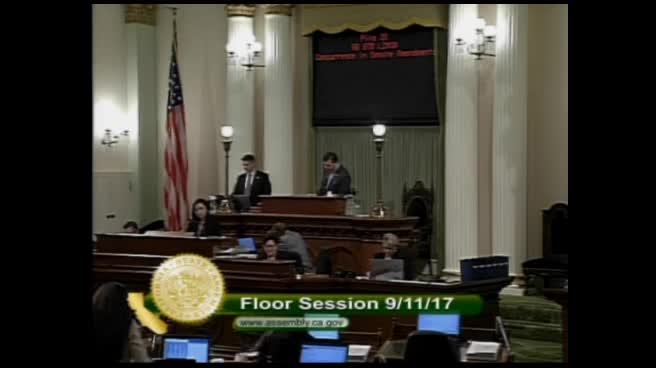
| Sep 11, 2017 | AB 1348 AGUIAR-CURRY Concurrence in Senate Amendments | Assembly Floor |
Passed |
|
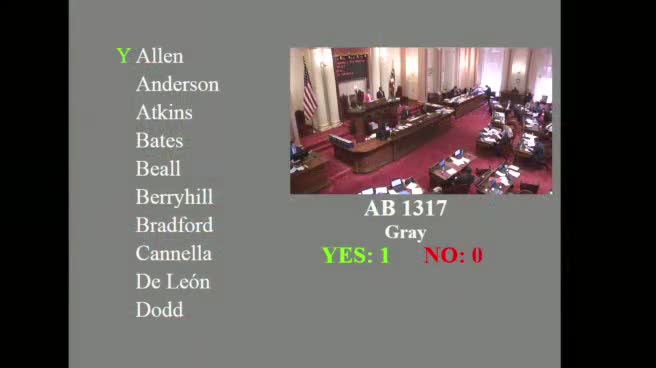
| Sep 6, 2017 | Assembly 3rd Reading AB1348 Aguiar-Curry et al. By Galgiani | Senate Floor |
Passed |
|
| Sep 1, 2017 | Do pass | Senate Standing Committee on Appropriations |
Passed |
|
| Jul 17, 2017 | Placed on suspense file | Senate Standing Committee on Appropriations |
Passed |
|
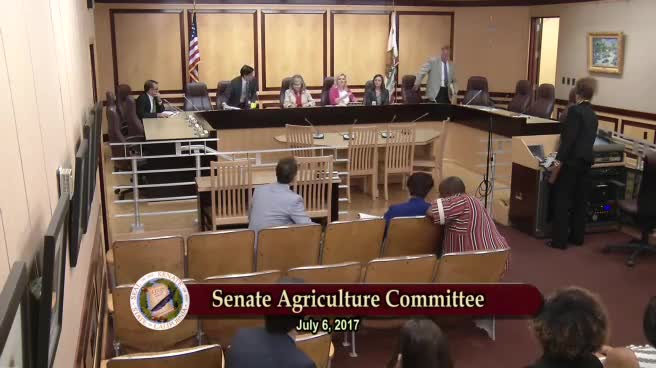
| Jul 6, 2017 | Do pass, but first be re-referred to the Committee on [Appropriations] | Senate Standing Committee on Agriculture |
Passed |
|
| May 31, 2017 | AB 1348 AGUIAR-CURRY Assembly Third Reading | Assembly Floor |
Passed |
|
| May 26, 2017 | Do pass. | Assembly Standing Committee on Appropriations |
Passed |
|
| Apr 26, 2017 | Do pass and be re-referred to the Committee on [Appropriations] | Assembly Standing Committee on Agriculture |
Passed |
This list shows positions taken on this bill by organizations on the date displayed, which is linked to the original source.
Positions by individuals are not included.
|
Organization
|
Position
|
Date
|
|---|---|---|
| Agriculture and Land-Based Training Association | ** Support | Sep 5, 2017 |
| asian american farmers alliance | ** Support | Sep 5, 2017 |
| Asian Farmers Alliance | ** Support | Apr 26, 2017 |
| california alliance of farmers' markets | ** Support | Sep 5, 2017 |
| California Association Of Resource Conservation Districts | ** Support | Sep 5, 2017 |
| California Certified Organic Farmers | ** Support | Apr 26, 2017 |
| California Climate and Agriculture Network | ** Support | Sep 5, 2017 |
| California Farmers Union | ** Support | Sep 5, 2017 |
| California Farmlink | ** Support | Sep 5, 2017 |
| Carbon Cycle Institute | ** Support | Sep 5, 2017 |
| Center for Agroecology and Sustainable Food Systems | ** Support | Apr 26, 2017 |
| Center for Land-Based Learning | ** Support | Sep 5, 2017 |
| center for urban education about sustainable agriculture | ** Support | Sep 5, 2017 |
| Coalicin Rural | ** Support | Apr 26, 2017 |
| coalicion rural | ** Support | Sep 5, 2017 |
| Coastside Farmers' Markets | ** Support | Sep 5, 2017 |
| Community Alliance for Agroecology | ** Support | Sep 5, 2017 |
| Community Alliance With Family Farmers | ** Support | Sep 5, 2017 |
| Ecological Farming Association | ** Support | Sep 5, 2017 |
| Farms to Grow, Inc. | ** Support | Sep 5, 2017 |
| Feed the Hunger Foundation | ** Support | Sep 5, 2017 |
| Fresno Economic Opportunities Commission | ** Support | Sep 5, 2017 |
| Friends of the Earth U.S. | ** Support | Sep 5, 2017 |
| Full Belly Farm | ** Support | Sep 5, 2017 |
| Grassroots House | ** Support | Sep 5, 2017 |
| Hmong Innovating Politics | ** Support | Sep 5, 2017 |
| Mandela MarketPlace | ** Support | Sep 5, 2017 |
| National Hmong American Farmers | ** Support | Sep 5, 2017 |
| National Young Farmers Coalition | ** Support | Sep 5, 2017 |
| Northern California Community Loan Fund | ** Support | Sep 5, 2017 |
| Occidental Arts & Ecology Center | ** Support | Sep 5, 2017 |
| PAN | * Support | Jul 6, 2017 |
| PAN North America | * Support | Apr 26, 2017 |
| Pesticide Action Network, North America | ** Support | Sep 5, 2017 |
| Pie Ranch | ** Support | Sep 5, 2017 |
| Puenta de la Costa Sur | ** Support | Apr 26, 2017 |
| puente de la costa sur | ** Support | Sep 5, 2017 |
| Rural Coalition | ** Support | Sep 5, 2017 |
| Rural Communities Resource Center | ** Support | Sep 5, 2017 |
| San Diego Food System Alliance | ** Support | Sep 5, 2017 |
| San Joaquin Valley Rural Development Center | ** Support | Apr 26, 2017 |
| san joaquin valley rural development center, csu fresno | ** Support | Sep 5, 2017 |
| Slow Food Los Angeles | ** Support | Sep 5, 2017 |
| Sustainable Economies Law Center | ** Support | Sep 5, 2017 |
| yisrael family urban farm | ** Support | Sep 5, 2017 |
CONCURRENCE IN SENATE AMENDMENTS
CSA1 Bill Id:AB 1348
Author:(Aguiar-Curry)
As Amended Ver:June 20, 2017
Majority vote
ASSEMBLY: | 72-4 | (May 31, 2017) | SENATE: | 31-8 | (September 6, 2017) |
Original Committee Reference: AGRI.
SUMMARY: This bill would require the California Department of Food and Agriculture (CDFA) to ensure the inclusion of socially disadvantaged farmers and ranchers (SDF) in the development, adoption, implementation, and enforcement of food and agriculture laws, regulations, and policies and programs.
The Senate amendments exempt Marketing Orders, Commission and Councils from CDFA's evaluation boards, committees, commissions, and advisory panels for opportunities for inclusion of SDF.
EXISTING LAW requires CDFA to promote and protect the agricultural industry of the state.
Federal law:
- Defines socially disadvantaged group as a group whose members have been subjected to racial or ethnic prejudice because of their identity as members of a group without regard to their individual qualities. Some sections of federal code also include gender.
- Defines SDF as a farmer or rancher who has been subjected to racial or ethnic prejudices because of their identity as a member of a group without regard to their individual qualities. This term means a farmer or rancher who is a member of a socially disadvantaged group. Specifically, a group whose members have been subjected to racial or ethnic prejudice because of their identity as members of a group without regard to their individual qualities. The groups include African Americans, American Indians or Alaskan natives, Hispanics, and Asians or Pacific Islanders.
- Requires the Secretary of the United States Department of Agriculture (USDA) to provide outreach and technical assistance to encourage and assist SDF to own and operate farms and ranches and to participate in agricultural programs.
FISCAL EFFECT: According to the Assembly Appropriations Committee, this bill has ongoing annual costs of approximately $140,000 for CDFA for one additional position supporting the proposed program.
COMMENTS: A 1994 USDA study showed that the largest loans from USDA went to corporations and white male farmers. The loans given to farmers who were African American averaged 25% less than those given to white farmers. Additionally, the majority of disaster payments, 97%, went to white farmers, while less than 1% of disaster payments went to African American farmers.
Instances such as these led to the codification of SDF in the USDA's 1990 Farm Bill, creating the Outreach and Assistance for Socially Disadvantaged and Veteran Farmers and Ranchers Program (Program). The Program provides grants to organizations that work with historically underserved and socially disadvantaged farmers and assists them in owning and operating farms.
The author states that across urban and rural settings, California's farmers and ranchers are diverse. California has the largest population of Asian-American farmers, and ranks third in the nation of Hispanic farmers. While diversity in farmers continues to increase annually, data from the 2012 census shows that farmers of color tend to farm smaller farms, earn less money on average, and receive 36% less in government funding than their white counterparts.
Currently, the CDFA does not have focused outreach, technical assistance, resources, or decision-making space for socially disadvantaged farmers.
This bill will support socially disadvantaged farmers in California by codifying the definition of Socially Disadvantaged Group and SDF, and establishing CDFA as the coordinating agency for SDF Programs.
This bill would exempt the marketing boards, advisory panels, committees, and commissions, as specified, from the provisions of this bill. These marketing programs were created to provide a means for an agricultural industry, working within a defined organizational structure and under government oversight, to collectively address production, marketing, research, and educational issues of a particular agricultural commodity. They are distinctly different from other boards and panels within CDFA in that they are industry-funded programs funded through grower and/or handler assessment fees. The industry pays for all costs of the marketing program, including all costs for governmental oversight. Due to the fact that these are not government-funded programs, it is argued that these specific agricultural marketing programs should be exempt from the provisions in this bill.
This bill is substantially similar to the version passed by the Assembly.
Analysis Prepared by: Victor Francovich / AGRI. / (916) 319-2084 FN: 0001698
Office of Senate Floor Analyses (916) 651-1520 Fax: (916) 327-4478 | AB |
THIRD READING
Bill No: AB 1348
:
SENATE AGRICULTURE COMMITTEE: 4-0, 7/6/17
AYES: Galgiani, Wilk, Dodd, Pan
NO VOTE RECORDED: Berryhill
SENATE APPROPRIATIONS COMMITTEE: 5-2, 9/1/17
AYES: Lara, Beall, Bradford, Hill, Wiener
NOES: Bates, Nielsen
ASSEMBLY FLOOR: 72-4, 5/31/17 - See last page for vote
SOURCE: Rural Coalition/Coalición Rural
DIGEST:
This bill requires the California Department of Food and Agriculture (CDFA) to ensure the inclusion of socially disadvantaged farmers and ranchers in the development, adoption, implementation, and enforcement of food and agriculture laws, regulations, and policies and programs.
ANALYSIS: Existing law requires CDFA, headed by the Secretary of CDFA, to promote and protect the agricultural industry of the state.
This bill:
- Makes findings and declarations in regards to the importance of food, farming, and socially disadvantaged farmers and the failure of existing federal policies to provide support to socially disadvantaged farmers and ranchers.
- Defines “socially disadvantaged group” to mean a group whose members have been subject to racial, ethnic, or gender prejudice. Groups include African Americans, Native Indians, Alaskan Natives, Hispanics, Asian Americans, and Native Hawaiians and Pacific Islanders.
- Requires CDFA to ensure the inclusion of socially disadvantaged farmers and ranchers in the development, adoption, implementation, and enforcement of food and agriculture laws, regulations, and policies and programs.
- Requires the secretary to create a new position within CDFA’s executive office to support these efforts.
- Requires CDFA to:
- Consult with the secretaries of the California Environmental Protection Agency; the Natural Resources Agency; the Business, Consumer Services, and Housing Agency; and the California Health and Human Services Agency on opportunities for socially disadvantaged farmers and ranchers and to coordinate state programs.
- Disseminate information regarding opportunities provided by USDA, United States Environmental Protection Agency, the General Accounting Office, the Office of Management and Budget, and other federal agencies for socially disadvantaged farmers and ranchers.
- Evaluate boards, committees, commissions, and advisory panels for opportunities for inclusion of socially disadvantaged farmers and ranchers, except for those established in the California Marketing Act of 1937, the Agricultural Producers Marketing Law, and Marketing Advisory and Promotional Agency Laws.
- Requires CDFA, by January 1, 2020, to submit a report to the Governor and the Legislature on efforts to serve socially disadvantaged farmers and ranchers.
Background
The Office of Advocacy and Outreach within the United States Department of Agriculture (USDA) works to enhance minority and veteran access to USDA programs. Specifically, the Office administers the Outreach and Technical Assistance for Socially Disadvantaged and Veteran Farmers and Ranchers Program (2501 Program), which was established by the Food, Agriculture, Conservation, and Trade Act of 1990.
The 2501 Program’s primary purpose is to “enhance the coordination of outreach, technical assistance, and education efforts, to reach socially disadvantaged and veteran farmers, ranchers and forest landowners in a linguistically appropriate manner and to improve their participation in the full range of USDA programs.” Since 2010, USDA has provided more than $74 million in grants to over 300 eligible community-based and nonprofit organizations, higher education institutions, and tribal entities to provide outreach and technical assistance to socially disadvantaged and veteran farmers and ranchers.
The USDA Farm Service Agency (FSA) has also established a similar office titled “Minority and Socially Disadvantaged Farmers Assistance” to help these farmers apply for FSA loan applications.
According to the most recent 2012 USDA National Agriculture Statistics Survey, less than 20% of California farms are operated by women. In terms of race or ethnicity, 12% of California farm operators are Spanish, Hispanic, or Latino; 2% are American Indian or Alaska Native; 6% are Asian; 0.6% are Black or African American; and 0.4% are Native Hawaiian or other Pacific Islander.
Comments
Discrimination and USDA program participation. In 1994, USDA commissioned a consulting firm, D.J. Miller & Associates, to analyze the participation of minority and female farmers in Farm Service Agency programs and payments. The report found that minority farmers received less than their fair share of USDA money for crop payments, disaster payments, and loans. The largest loans went to corporations and white male farmers (90% combined). Loans to black males averaged 25% less than those given to white males, and 97% of disaster payments went to white farmers. In 1997, a class action lawsuit was filed on behalf of black farmers against USDA for discrimination and failure to respond to discrimination complaints. The suit settled out of court in 1999, and USDA has since paid over $2 billion in cash relief, tax payments, and debt relief.
2501 Program. The definition of socially disadvantaged farmer and the creation of the 2501 Program at USDA were established in law in 1990 to address issues of discrimination and access. As previously stated, this program funds approved entities to provide outreach and technical assistance to socially disadvantaged and veteran farmers and ranchers. This bill codifies the definition of socially disadvantaged farmer or rancher in state law and requires CDFA to ensure the inclusion of socially disadvantaged farmers and ranchers in the development, adoption, implementation, and enforcement of food and agriculture laws, regulations, and policies and programs.
Marketing boards. This bill exempts the marketing boards, advisory panels, committees, and commissions within the Food and Agricultural Code sections pertaining to the California Marketing Act of 1937, the Agricultural Producers Marketing Law, and Marketing Advisory and Promotional Agency Laws from the provisions of this bill. These marketing programs were created to provide a means for an agricultural industry, working within a defined organizational structure and under government oversight, to collectively address production, marketing, research, and educational issues of a particular agricultural commodity. They are distinctly different from other boards and panels within CDFA in that they are industry-funded programs funded through grower and/or handler assessment fees. The industry pays for all costs of the marketing program, including all costs for governmental oversight. Due to the fact that these are not government-funded programs, it is argued that these specific agricultural marketing programs should be exempt from the provisions in this bill.
Related/Prior Legislation
AB 376 (Chávez, 2017) requires, by July 1, 2018, the California Labor and Workforce Development Agency, the California Department of Veterans Affairs, and CDFA to post information on their respective Web sites to assist, educate, train, and otherwise support California’s military veterans to enter into farming or ranching careers in California. Currently enrolled and to the Governor.
FISCAL EFFECT: Appropriation: Fiscal Com.: Local:
According to the Senate Appropriations Committee, CDFA would incur annual General Fund costs of $139,000 to implement the provisions of this bill.
Rural Coalition/Coalición Rural (source)
Agriculture and Land-Based Training Association
Asian American Farmers Alliance
California Alliance of Farmers’ Markets
California Association of Resource Conservation Districts
California Climate and Agriculture Network
California Farmers Union
California FarmLink
Carbon Cycle Institute
Center for Agroecology and Sustainable Food Systems, UC Santa Cruz
Center for Land-Based Learning
Center for Urban Education about Sustainable Agriculture
Coastside Farmers’ Markets
Community Alliance for Agroecology
Community Alliance with Family Farmers
Ecological Farming Association
Farms to Grow, Inc.
Feed the Hunger Foundation
Fresno Economic Opportunities Commission
Friends of the Earth U.S.
Full Belly Farm
Grassroots House
Hmong Innovating Politics
Mandela MarketPlace
National Hmong American Farmers
National Young Farmers Coalition
Northern California Community Loan Fund
Occidental Arts & Ecology Center
Pesticide Action Network, North America
Pie Ranch
Puente de la Costa Sur
Rural Communities Resource Center
San Diego Food System Alliance
San Joaquin Valley Rural Development Center, CSU Fresno
Slow Food Los Angeles
Sustainable Economies Law Center
Yisrael Family Urban Farm
None received
ARGUMENTS IN SUPPORT: According to the author, “AB 1348 helps farmers and ranchers of color succeed by providing them with resources, outreach, and technical assistance. Farmers and ranchers of color have historically been underserved in agriculture, such as being denied land ownership and receiving less in government aid. California has the largest population of Asian-American farmers, and ranks third in the nation of Hispanic farmers. However, while the diversity of California’s farmers continues to increase, the census shows that farmers of color continue to manage smaller farms and earn less money. This bill ensures that California has a plan to help more of our farmers succeed.”
ASSEMBLY FLOOR: 72-4, 5/31/17
AYES: Acosta, Aguiar-Curry, Arambula, Baker, Berman, Bigelow, Bloom, Bocanegra, Bonta, Brough, Burke, Caballero, Calderon, Cervantes, Chau, Chávez, Chen, Chiu, Chu, Cooley, Cooper, Cunningham, Dababneh, Dahle, Daly, Flora, Fong, Frazier, Friedman, Cristina Garcia, Eduardo Garcia, Gipson, Gloria, Gomez, Gonzalez Fletcher, Gray, Grayson, Holden, Irwin, Jones-Sawyer, Kalra, Lackey, Levine, Limón, Low, Maienschein, Mathis, Mayes, McCarty, Medina, Mullin, Muratsuchi, Nazarian, O'Donnell, Patterson, Quirk, Quirk-Silva, Reyes, Ridley-Thomas, Rodriguez, Rubio, Salas, Santiago, Steinorth, Mark Stone, Thurmond, Ting, Voepel, Waldron, Weber, Wood, Rendon
NOES: Travis Allen, Gallagher, Harper, Obernolte
NO VOTE RECORDED: Choi, Eggman, Kiley, Melendez
9/5/17 9:50:43
**** END ****
SENATE COMMITTEE ON
Senator Ricardo Lara, Chair
2017 - 2018 Regular Session
AB 1348 (Aguiar-Curry) - Farmer Equity Act of 2017
Version: | Policy Vote: |
Urgency: | Mandate: |
Hearing Date: | Consultant: |
This bill meets the criteria for referral to the Suspense File.
Bill Summary:
AB 1348 would require the California Department of Food and Agriculture (CDFA) to ensure the inclusion of socially disadvantaged farmers and ranchers in the development, adoption, implementation, and enforcement of food and agriculture laws, regulations, and policies and programs.
Fiscal Impact:
CDFA would incur annual General Fund costs of $139,000 to implement the provisions of the bill.
Background:
According to the most recent 2012 USDA National Agriculture Statistics Survey, women operate less than 20 percent of California farms. In terms of race or ethnicity, 12 percent of California farm operators are Spanish, Hispanic, or Latino; 2 percent are American Indian or Alaska Native; 6 percent are Asian; 0.6 percent are Black or African American; and 0.4 percent are Native Hawaiian or other Pacific Islander.
Proposed Law: This bill would do, among other things, do the following:
- Require CDFA to ensure the inclusion of socially disadvantaged farmers and ranchers, as defined, in the development, adoption, implementation, and enforcement of food and agriculture laws, regulations, and policies and programs, and require the department to create a new position within its executive office to support these efforts.
- Require CDFA to:
- Consult with the secretaries of the California Environmental Protection Agency; the Natural Resources Agency; the Business, Consumer Services, and Housing Agency; and the California Health and Human Services Agency on opportunities for socially disadvantaged farmers and ranchers and to coordinate state programs.
- Disseminate information regarding opportunities provided by USDA, USEPA, the General Accounting Office, the Office of Management and Budget, and other federal agencies for socially disadvantaged farmers and ranchers.
- Evaluate boards, committees, commissions, and advisory panels for opportunities for inclusion of socially disadvantaged farmers and ranchers, except for those established in the California Marketing Act of 1937, the Agricultural Producers Marketing Law, and Marketing Advisory and Promotional Agency Laws.
- Require CDFA, by January 1, 2020, to submit a report to the governor and the legislature on efforts to serve socially disadvantaged farmers and ranchers.
Related Legislation:
AB 376 (Chávez) would require, by July 1, 2018, the California Labor and Workforce Development Agency, the California Department of Veterans Affairs, and the California Department of Food and Agriculture to post information on their respective websites to assist, educate, train, and otherwise support California’s military veterans to enter into farming or ranching careers in California. The bill is currently pending on the Senate Floor.
Staff Comments:
This bill would (1) codify the definition of socially disadvantaged farmer or rancher in state law, and (2) require CDFA to ensure the inclusion of socially disadvantaged farmers and ranchers in the development, adoption, implementation, and enforcement of food and agriculture laws, regulations, and policies and programs. As noted previously, the bill would require CDFA to hire one position to ensure inclusion of socially disadvantaged farmers and ranchers and report, as specified, to the Legislature and the Governor. To perform these obligations, the Department would require one manger position at the cost of $139,000 annually.
-- END --
SENATE COMMITTEE ON AGRICULTURE
Senator Cathleen Galgiani, Chair
2017 - 2018 Regular
Bill No: AB 1348 Hearing Date: 7/6/17
Author: | Aguiar-Curry | ||
Version: | 6/20/17 Amended | ||
Urgency: | No | Fiscal: | Yes |
Consultant: | Anne Megaro | ||
Subject: Farmer Equity Act of 2017
SUMMARY
:
This bill would require the California Department of Food and Agriculture to ensure the inclusion of socially disadvantaged farmers and ranchers in the development, adoption, implementation, and enforcement of food and agriculture laws, regulations, and policies and programs.
BACKGROUND AND EXISTING LAW
:
The Office of Advocacy and Outreach within the United States Department of Agriculture (USDA) works to enhance minority and veteran access to USDA programs. Specifically, the office administers the Outreach and Technical Assistance for Socially Disadvantaged and Veteran Farmers and Ranchers Program (2501 Program), which was established by the Food, Agriculture, Conservation, and Trade Act of 1990.
The 2501 Program’s primary purpose is to “enhance the coordination of outreach, technical assistance, and education efforts, to reach socially disadvantaged and veteran farmers, ranchers and forest landowners in a linguistically appropriate manner and to improve their participation in the full range of USDA programs.” Since 2010, USDA has provided more than $74 million in grants to over 300 eligible community-based and nonprofit organizations, higher education institutions, and tribal entities to provide outreach and technical assistance to socially disadvantaged and veteran farmers and ranchers.
The USDA Farm Service Agency (FSA) has also established a similar office titled “Minority and Socially Disadvantaged Farmers Assistance” to help these farmers apply for FSA loan applications.
According to the most recent 2012 USDA National Agriculture Statistics Survey, less than 20% of California farms are operated by women. In terms of race or ethnicity, 12% of California farm operators are Spanish, Hispanic, or Latino; 2% are American Indian or Alaska Native; 6% are Asian; 0.6% are Black or African American; and 0.4% are Native Hawaiian or other Pacific Islander.
PROPOSED LAW
:
This bill:
- Makes findings and declarations in regards to the importance of food, farming, and socially disadvantaged farmers and the failure of existing federal policies to provide support to socially disadvantaged farmers and ranchers.
- Defines “socially disadvantaged group” to mean a group whose members have been subject to racial, ethnic, or gender prejudice. Groups include African Americans, Native Indians, Alaskan Natives, Hispanics, Asian Americans, and Native Hawaiians and Pacific Islanders.
- Requires the California Department of Food and Agriculture (CDFA) to ensure the inclusion of socially disadvantaged farmers and ranchers in the development, adoption, implementation, and enforcement of food and agriculture laws, regulations, and policies and programs.
- Requires the secretary to create a new position within CDFA’s executive office to support these efforts.
- Requires CDFA to:
- Consult with the secretaries of the California Environmental Protection Agency; the Natural Resources Agency; the Business, Consumer Services, and Housing Agency; and the California Health and Human Services Agency on opportunities for socially disadvantaged farmers and ranchers and to coordinate state programs.
- Disseminate information regarding opportunities provided by USDA, USEPA, the General Accounting Office, the Office of Management and Budget, and other federal agencies for socially disadvantaged farmers and ranchers.
- Evaluate boards, committees, commissions, and advisory panels for opportunities for inclusion of socially disadvantaged farmers and ranchers, except for those established in the California Marketing Act of 1937, the Agricultural Producers Marketing Law, and Marketing Advisory and Promotional Agency Laws.
- Requires CDFA, by January 1, 2020, to submit a report to the governor and the legislature on efforts to serve socially disadvantaged farmers and ranchers.
ARGUMENTS IN SUPPORT:
According to the author, “AB 1348 helps farmers and ranchers of color succeed by providing them with resources, outreach, and technical assistance. Farmers and ranchers of color have historically been underserved in agriculture, such as being denied land ownership and receiving less in government aid. California has the largest population of Asian-American farmers, and ranks third in the nation of Hispanic farmers. However, while the diversity of California’s farmers continues to increase, the census shows that farmers of color continue to manage smaller farms and earn less money. This bill ensures that California has a plan to help more of our farmers succeed.”
COMMENTS
:
Discrimination and USDA program participation. In 1994, USDA commissioned a consulting firm, D.J. Miller & Associates, to analyze the participation of minority and female farmers in Farm Service Agency programs and payments. The report found that minority farmers received less than their fair share of USDA money for crop payments, disaster payments, and loans. The largest loans went to corporations and white male farmers (90% combined). Loans to black males averaged 25% less than those given to white males, and 97% of disaster payments went to white farmers. In 1997, a class action lawsuit was filed on behalf of black farmers against USDA for discrimination and failure to respond to discrimination complaints. The suit settled out of court in 1999, and USDA has since paid over $2 billion in cash relief, tax payments, and debt relief.
2501 Program. The definition of socially disadvantaged farmer and the creation of the Outreach and Technical Assistance for Socially Disadvantaged and Veteran Farmers and Ranchers Program at USDA were established in law in 1990 to address issues of discrimination and access. As previously stated, this program funds approved entities to provide outreach and technical assistance to socially disadvantaged and veteran farmers and ranchers. This bill would codify the definition of socially disadvantaged farmer or rancher in state law and require CDFA to ensure the inclusion of socially disadvantaged farmers and ranchers in the development, adoption, implementation, and enforcement of food and agriculture laws, regulations, and policies and programs.
Marketing Boards. This bill would exempt the marketing boards, advisory panels, committees, and commissions within the Food and Agricultural Code sections pertaining to the California Marketing Act of 1937, the Agricultural Producers Marketing Law, and Marketing Advisory and Promotional Agency Laws from the provisions of this bill. These marketing programs were created to provide a means for an agricultural industry, working within a defined organizational structure and under government oversight, to collectively address production, marketing, research, and educational issues of a particular agricultural commodity. They are distinctly different from other boards and panels within CDFA in that they are industry-funded programs funded through grower and/or handler assessment fees. The industry pays for all costs of the marketing program, including all costs for governmental oversight. Due to the fact that these are not government-funded programs, it is argued that these specific agricultural marketing programs should be exempt from the provisions in this bill.
RELATED LEGISLATION
:
AB 376 (Chávez) of 2017. Would require, by July 1, 2018, the California Labor and Workforce Development Agency, the California Department of Veterans Affairs, and the California Department of Food and Agriculture to post information on their respective websites to assist, educate, train, and otherwise support California’s military veterans to enter into farming or ranching careers in California. Currently in the Senate Appropriations Committee.
PRIOR ACTIONS
:
Assembly Floor: | 72 - 4 |
Assembly Appropriations Committee: | 14 - 1 |
Assembly Agriculture Committee: | 9 - 0 |
SUPPORT
:
Rural Coalition/Coalición Rural (sponsor)
Agriculture and Land-Based Training Association
Asian American Farmers Alliance
California Association of Resource Conservation Districts
California Climate and Agriculture Network
California FarmLink
Center for Agroecology and Sustainable Food Systems, UC Santa Cruz
Center for Urban Education about Sustainable Agriculture
Coastside Farmers’ Markets
Community Alliance for Agroecology
Community Alliance with Family Farmers
Ecological Farming Association
Farms to Grow, Inc.
Feed the Hunger Foundation
Fresno Economic Opportunities Commission
Friends of the Earth U.S.
Grassroots House
Hmong Innovating Politics
Mandela MarketPlace
National Hmong American Farmers
National Young Farmers Coalition
Northern California Community Loan Fund
Pesticide Action Network, North America
Pie Ranch
Puente de la Costa Sur
Rural Communities Resource Center
San Joaquin Valley Rural Development Center, CSU Fresno
San Diego Food System Alliance
Slow Food Los Angeles
Sustainable Economies Law Center
Yisrael Family Urban Farm
OPPOSITION
:
None received
-- END --
ASSEMBLY THIRD READING
ATR Bill Id:AB 1348
Author:(Aguiar-Curry)
As Amended Ver:April 19, 2017
Majority vote
Committee | Votes | Ayes | Noes |
Agriculture | 9-0 | Caballero, Mathis, Aguiar-Curry, Flora, Gray, Irwin, Jones-Sawyer, Quirk, Salas | |
Appropriations | 14-1 | Gonzalez Fletcher, Bigelow, Bloom, Bocanegra, Bonta, Calderon, McCarty, Quirk, Fong, Friedman, Eduardo Garcia, Gray, Muratsuchi, Reyes | Gallagher |
SUMMARY: This bill creates the Farmers Equity Act to ensure that socially disadvantaged farmers and ranchers (SDF), as defined, are included in state food and agriculture policymaking. As part of this effort, the California Department of Food and Agriculture (CDFA) must hire one position to support an inclusion program, must consult with other state agencies and distribute relevant information, and must submit a report to the Governor and the Legislature, by January 1, 2020, on CDFA's efforts to serve this population.
EXISTING LAW requires CDFA to promote and protect the agricultural industry of the state.
Federal law:
- Defines socially disadvantaged group as a group whose members have been subjected to racial or ethnic prejudice because of their identity as members of a group without regard to their individual qualities. Some sections of federal code also includes gender.
- Defines SDF as a farmer or rancher who has been subjected to racial or ethnic prejudices because of their identity as a member of a group without regard to their individual qualities. This term means a farmer or rancher who is a member of a socially disadvantaged group. Specifically, a group whose members have been subjected to racial or ethnic prejudice because of their identity as members of a group without regard to their individual qualities. The groups include African Americans, American Indians or Alaskan natives, Hispanics, and Asians or Pacific Islanders.
- Requires the Secretary of the US Department of Agriculture (USDA) to provide outreach and technical assistance to encourage and assist SDF to own and operate farms and ranches and to participate in agricultural programs.
FISCAL EFFECT: According to the Assembly Appropriations Committee, this bill has ongoing annual costs of approximately $140,000 for CDFA for one additional position supporting the proposed program.
COMMENTS: A 1994 USDA study showed that the largest loans from USDA went to corporations and white male farmers. The loans given to farmers who were African American averaged 25% less than those given to white farmers. Additionally, the majority of disaster payments, 97%, went to white farmers, while less than 1% of disaster payments went to African American farmers.
Instances such as these led to the codification of SDF in the USDA's 1990 Farm Bill, creating the Outreach and Assistance for Socially Disadvantaged and Veteran Farmers and Ranchers Program (Program). The Program provides grants to organizations that work with historically underserved and socially disadvantaged farmers and assists them in owning and operating farms.
The author states that across urban and rural settings, California's farmers and ranchers are diverse. California has the largest population of Asian-American farmers, and ranks third in the nation of Hispanic farmers. While diversity in farmers continues to increase annually, data from the 2012 census shows that farmers of color tend to farm smaller farms, earn less money on average, and receive 36% less in government funding than their white counterparts.
Currently, the CDFA does not have focused outreach, technical assistance, resources, or decision-making space for socially disadvantaged farmers.
This bill will support socially disadvantaged farmers in California by codifying the definition of Socially Disadvantaged Group and SDF, and establishing CDFA as the coordinating agency for SDF Programs.
Analysis Prepared by: Victor Francovich / AGRI. / (916) 319-2084 FN: 0000598
Date of Hearing: May 10, 2017
ASSEMBLY COMMITTEE ON APPROPRIATIONS
Lorena Gonzalez Fletcher, Chair
ABPCA Bill Id:AB 1348
Author:(Aguiar-Curry) – As Amended Ver:April 19, 2017
Policy Committee: | Agriculture | Vote: | 9 - 0 |
|
| ||
|
|
Urgency: No State Mandated Local Program: No Reimbursable: No
SUMMARY:
This bill creates the Farmers Equity Act to ensure that socially disadvantaged farmers and ranchers, as defined, are included in state food and agriculture policymaking. As part of this effort, the California Department of Food and Agriculture (CDFA) must hire one position to support an inclusion program, must consult with other state agencies and distribute relevant information, and must submit a report to the Governor and the Legislature, by January 1, 2020, on CDFA’s efforts to serve this population.
FISCAL EFFECT:
Ongoing annual costs of approximately $140,000 for CDFA for one additional position supporting the proposed program.
COMMENTS:
Purpose and Background. AB 1348 aims support socially disadvantaged farmers by establishing CDFA as the coordinating agency for programs that provide outreach, technical assistances, and resources to this population. The author notes that across urban and rural settings, California’s farmers and ranchers are diverse. California has the largest population of Asian-American farmers, and ranks third in the nation of Hispanic farmers. While diversity in farmers continues to increase annually, data from the 2012 census shows that farmers of color tend to farm smaller farms, earn less money on average, and receive 36% less in government funding than their white counterparts.
Analysis Prepared by: Luke Reidenbach / APPR. / (916) 319-2081
Date of Hearing: April 26, 2017
ASSEMBLY COMMITTEE ON AGRICULTURE
Anna Caballero, Chair
ABPCA Bill Id:AB 1348
Author:(Aguiar-Curry) – As Amended Ver:April 19, 2017
SUBJECT: Farmer Equity Act of 2017.
SUMMARY: This bill creates the Farmers Equity Act to ensure that socially disadvantaged farmers and ranchers (SDF) are included in state food and agriculture policy making. Specifically, this bill:
- Makes findings and declarations that farmers of color have not had equitable access to land and other resources in California; that women farmers represent less than a quarter of all farmers in the state; that only 2% of California farmers are women of color in California; that SDFs receive less in federal payments and earn less then farmers on average; that an increasing number of SDFs are attempting to farm in rural and urban areas; and, that the Federal program for SDFs does not provide sufficient technical and financial support.
- Defines SDF to mean a farmer who is a member of a socially disadvantaged group.
- Defines a socially disadvantaged group to mean a group whose members have been subjected to racial, or ethnic, or gender prejudice because of their identity as members of a group without regard to their individual qualities. These groups include all of the following:
- African Americans;
- Native Indians;
- Alaskan natives;
- Hispanics;
- Asian Americans; and,
- Native Hawaiians and Pacific Islanders.
- Defines urban areas as a population of more than 50,000, per the United States (US) Census Bureau.
- Requires the California Department of Food and Agriculture (CDFA) to include SDF, from both rural and urban areas, in making food and agricultural law, regulations, policies and programs.
- Requires CDFA's executive office to have a position to support a SDF inclusion program.
- Requires CDFA to do the following:
- Consult with the Secretaries of the California Environmental Protection Agency, the Natural Resources Agency, the Business, Consumer Services and Housing Agency, and the California Health and Human Services Agency, and all other, as specified, on opportunities for SDF and coordination of state programs;
- Distribute information regarding services provided for SDF by US federal agencies, as specified; and,
- Evaluate boards, commissions and panels within food and agriculture code for opportunities for inclusion of SDF.
- Requires, on or before January 1, 2020, CDFA to submit a report to the Governor and the Legislature on CDFA efforts to serve SDF and women farmers and ranchers, and recommendations on how to improve processes to include SDFs.
EXISTING LAW requires CDFA to promote and protect the agricultural industry of the state.
Federal law:
- Defines socially disadvantaged group as a group whose members have been subjected to racial or ethnic prejudice because of their identity as members of a group without regard to their individual qualities. Some sections of federal code also includes gender.
- Defines SDF as a farmer or rancher who has been subjected to racial or ethnic prejudices because of their identity as a member of a group without regard to their individual qualities. This term means a farmer or rancher who is a member of a socially disadvantaged group. Specifically, a group whose members have been subjected to racial or ethnic prejudice because of their identity as members of a group without regard to their individual qualities. The groups include African Americans, American Indians or Alaskan natives, Hispanics, and Asians or Pacific Islanders.
- Requires the Secretary of the US Department of Agriculture (USDA) to provide outreach and technical assistance to encourage and assist SDF to own and operate farms and ranches and to participate in agricultural programs.
FISCAL EFFECT: Unknown
COMMENTS: A 1994 USDA study showed that the largest loans from USDA went to corporations and white male farmers. The loans given to farmers who were African American averaged 25% less than those given to white farmers. Additionally, the majority of disaster payments, 97%, went to white farmers, while less than 1% of disaster payments went to African American farmers.
Instances such as these led to the codification of SDF in the USDA’s 1990 Farm Bill, creating the Outreach and Assistance for Socially Disadvantaged and Veteran Farmers and Ranchers Program (Program). The Program provides grants to organizations that work with historically underserved and socially disadvantaged farmers and assists them in owning and operating farms.
The author states that across urban and rural settings, California’s farmers and ranchers are diverse. California has the largest population of Asian-American farmers, and ranks third in the nation of Hispanic farmers. While diversity in farmers continues to increase annually, data from the 2012 census shows that farmers of color tend to farm smaller farms, earn less money on average, and receive 36% less in government funding than their white counterparts.
Currently, the CDFA does not have focused outreach, technical assistance, resources, or decision-making space for socially disadvantaged farmers.
This bill will support socially disadvantaged farmers in California by codifying the definition of Socially Disadvantaged Group and SDF, and establishing CDFA as the coordinating agency for SDF Programs.
REGISTERED SUPPORT / OPPOSITION:
Support
Agriculture & Land-Based Training Association (ALBA)
Asian Farmers Alliance
California Alliance of Farmers’ Markets
California Association of Resource Conservation Districts
California Certified Organic Farmers (CCOF)
California Climate and Agriculture Network (CalCAN)
California FarmLink
Center for Agroecology and Sustainable Food Systems
Center for Land-Based Learning
Center for Urban Education about Sustainable Agriculture
Coastside Farmers’ Markets
Community Alliance for Agroecology
Community Alliance with Family Farmers
Ecological Farming Association
Farms to Grow, Inc.
Feed the Hunger Foundation
Fresno Economic Opportunities Commission
Friends of the Earth
Grassroots House
National Hmong American Farmers
National Young Farmers Coalition
Northern California Community Loan Fund
Pesticide Action Network
Pie Ranch
Puenta de la Costa Sur
Rural Coalition/Coalición Rural
Rural Communities Resource Center
San Diego Food System Alliance
San Joaquin Valley Rural Development Center
Slow Food Los Angeles
Sustainable Economies Law Center
Opposition
None of file.
Analysis Prepared by: Victor Francovich / AGRI. / (916) 319-2084
Discussed in Hearing
 53SEC
Assembly Floor
 3MIN
Senate Floor
 1H
Senate Standing Committee on Appropriations
 6MIN
Senate Standing Committee on Agriculture
 1MIN
Assembly Floor
 1H
Assembly Standing Committee on Appropriations
 23MIN
Assembly Standing Committee on Agriculture
Bill Author




