AB 1367: Improper signature-gathering tactics.
- Session Year: 2017-2018
- House: Assembly
- Latest Version Date: 2017-10-15
Existing law makes it a crime punishable by a fine, imprisonment, or both a fine and imprisonment, for a person to make a false affidavit concerning any initiative, referendum, or recall petition or the signatures appended to a petition.
This bill would make it a crime punishable by a fine, imprisonment, or both a fine and imprisonment, for a person, company, organization, company official, or other organizational officer in charge of a person who circulates an initiative, referendum, or recall petition and who knowingly directs an affiant to make a false affidavit concerning the initiative, referendum, or recall petition or the signatures appended to the petition or who knows or reasonably should know that an affiant has made a false affidavit concerning the initiative, referendum, or recall petition or the signatures appended and submits the section of the petition that contains the false affidavit. By establishing a new crime, the bill would impose a state-mandated local program.
The California Constitution requires the state to reimburse local agencies and school districts for certain costs mandated by the state. Statutory provisions establish procedures for making that reimbursement.
This bill would provide that no reimbursement is required by this act for a specified reason.
Existing law makes it a crime punishable by a fine, imprisonment, or both a fine and imprisonment, for a person to make a false affidavit concerning any initiative, referendum, or recall petition or the signatures appended to a petition.
This bill would make it a crime punishable by a fine, imprisonment, or both a fine and imprisonment, for a person, company, organization, company official, or other organizational officer in charge of a person who circulates an initiative, referendum, or recall petition and who knowingly directs or permits the person an affiant to make a false affidavit concerning the initiative, referendum, or recall petition or the signatures appended to the petition. petition or who knows or reasonably should know that an affiant has made a false affidavit concerning the initiative, referendum, or recall petition or the signatures appended and submits the section of the petition that contains the false affidavit. By establishing a new crime, the bill would impose a state-mandated local program.
The California Constitution requires the state to reimburse local agencies and school districts for certain costs mandated by the state. Statutory provisions establish procedures for making that reimbursement.
This bill would provide that no reimbursement is required by this act for a specified reason.
Existing law makes it a crime punishable by a fine, imprisonment, or both a fine and imprisonment, for a person to make a false affidavit concerning any initiative, referendum, or recall petition or the signatures appended to a petition.
This bill would make it a crime punishable by a fine, imprisonment, or both a fine and imprisonment, for a person, company, organization, company official, or other organizational officer in charge of a person who circulates an initiative, referendum, or recall petition who knowingly directs or permits the person to make a false affidavit concerning the initiative, referendum, or recall petition or the signatures appended to the petition. By establishing a new crime, the bill would impose a state-mandated local program.
The California Constitution requires the state to reimburse local agencies and school districts for certain costs mandated by the state. Statutory provisions establish procedures for making that reimbursement.
This bill would provide that no reimbursement is required by this act for a specified reason.
(a)Every person is punishable by a fine not exceeding five thousand dollars ($5,000), or by imprisonment pursuant to subdivision (h) of Section 1170 of the Penal Code for 16 months or two or three years, or in a county jail not exceeding one year, or by both that fine and imprisonment, who makes any false affidavit concerning an initiative, referendum, or recall petition or the signatures appended to an initiative, referendum, or recall petition.
(b)A person, company, organization, company official, or other organizational officer in charge of a person who circulates an initiative, referendum, or recall petition and who does either of the following is punishable by a fine not exceeding five thousand dollars ($5,000), or by imprisonment in a county jail not exceeding one year, or by both the fine and imprisonment:
(1)Knowingly directs an affiant to make a false affidavit concerning an initiative, referendum, or recall petition or the signatures appended to an initiative, referendum, or recall petition.
(2)Knows or reasonably should know that an affiant has made a false affidavit concerning an initiative, referendum, or recall petition or the signatures appended to an initiative, referendum, or recall petition and submits the section of the petition that contains the false affidavit.
SEC. 2.No reimbursement is required by this act pursuant to Section 6 of Article XIIIB of the California Constitution because the only costs that may be incurred by a local agency or school district will be incurred because this act creates a new crime or infraction, eliminates a crime or infraction, or changes the penalty for a crime or infraction, within the meaning of Section 17556 of the Government Code, or changes the definition of a crime within the meaning of Section 6 of Article XIIIB of the California Constitution.
(a)Every person is punishable by a fine not exceeding five thousand dollars ($5,000), or by imprisonment pursuant to subdivision (h) of Section 1170 of the Penal Code for 16 months or two or three years, or in a county jail not exceeding one year, or by both that fine and imprisonment, who makes any false affidavit concerning an initiative, referendum, or recall petition or the signatures appended to an initiative, referendum, or recall petition.
(b)A person, company, organization, company official, or other organizational officer in charge of a person who circulates an initiative, referendum, or recall petition and who knowingly directs or permits the person to make a false affidavit concerning an initiative, referendum, or recall petition or the signatures appended to an initiative, referendum, or recall petition, does either of the following is punishable by a fine not exceeding five thousand dollars ($5,000), or by imprisonment in a county jail not exceeding one year, or by both the fine and imprisonment. imprisonment:
(1)Knowingly directs an affiant to make a false affidavit concerning an initiative, referendum, or recall petition or the signatures appended to an initiative, referendum, or recall petition.
(2)Knows or reasonably should know that an affiant has made a false affidavit concerning an initiative, referendum, or recall petition or the signatures appended to an initiative, referendum, or recall petition and submits the section of the petition that contains the false affidavit.
SEC. 2.No reimbursement is required by this act pursuant to Section 6 of Article XIIIB of the California Constitution because the only costs that may be incurred by a local agency or school district will be incurred because this act creates a new crime or infraction, eliminates a crime or infraction, or changes the penalty for a crime or infraction, within the meaning of Section 17556 of the Government Code, or changes the definition of a crime within the meaning of Section 6 of Article XIIIB of the California Constitution.
(a)Every person is punishable by a fine not exceeding five thousand dollars ($5,000), or by imprisonment pursuant to subdivision (h) of Section 1170 of the Penal Code for 16 months or two or three years, or in a county jail not exceeding one year, or by both that fine and imprisonment, who makes any false affidavit concerning any an initiative, referendum, or recall petition or the signatures appended thereto. to an initiative, referendum, or recall petition.
(b)A person, company, organization, company official, or other organizational officer in charge of a person who circulates an initiative, referendum, or recall petition who knowingly directs or permits the person to make a false affidavit concerning an initiative, referendum, or recall petition or the signatures appended to an initiative, referendum, or recall petition, is punishable by a fine not exceeding five thousand dollars ($5,000), or by imprisonment in a county jail not exceeding one year, or by both the fine and imprisonment.
SEC. 2.No reimbursement is required by this act pursuant to Section 6 of Article XIIIB of the California Constitution because the only costs that may be incurred by a local agency or school district will be incurred because this act creates a new crime or infraction, eliminates a crime or infraction, or changes the penalty for a crime or infraction, within the meaning of Section 17556 of the Government Code, or changes the definition of a crime within the meaning of Section 6 of Article XIIIB of the California Constitution.
|
Date
|
Status
|
|---|---|
| Oct 15, 2017 | Chaptered by Secretary of State - Chapter 848, Statutes of 2017. |
| Oct 15, 2017 | Approved by the Governor. |
| Sep 12, 2017 | Enrolled and presented to the Governor at 2:30 p.m. |
| Sep 5, 2017 | Senate amendments concurred in. To Engrossing and Enrolling. (Ayes 54. Noes 20.). |
| Aug 31, 2017 | In Assembly. Concurrence in Senate amendments pending. May be considered on or after September 2 pursuant to Assembly Rule 77. |
| Aug 31, 2017 | Read third time. Passed. Ordered to the Assembly. |
| Jun 27, 2017 | Read second time. Ordered to third reading. |
| Jun 26, 2017 | From committee: Be ordered to second reading pursuant to Senate Rule 28.8. |
| Jun 6, 2017 | From committee: Do pass and re-refer to Com. on APPR. (Ayes 4. Noes 0.) (June 6). Re-referred to Com. on APPR. |
| May 22, 2017 | From committee chair, with author's amendments: Amend, and re-refer to committee. Read second time, amended, and re-referred to Com. on E. & C.A. |
| May 18, 2017 | Referred to Com. on E. & C.A. |
| May 4, 2017 | In Senate. Read first time. To Com. on RLS. for assignment. |
| May 4, 2017 | Read third time. Passed. Ordered to the Senate. (Ayes 76. Noes 0. Page 1395.) |
| Apr 27, 2017 | Read second time. Ordered to Consent Calendar. |
| Apr 26, 2017 | From committee: Do pass. To Consent Calendar. (Ayes 16. Noes 0.) (April 26). |
| Apr 5, 2017 | From committee: Do pass and re-refer to Com. on APPR. with recommendation: To Consent Calendar. (Ayes 7. Noes 0.) (April 5). Re-referred to Com. on APPR. |
| Mar 13, 2017 | Referred to Com. on E. & R. |
| Feb 19, 2017 | From printer. May be heard in committee March 21. |
| Feb 17, 2017 | Read first time. To print. |
|
Date
|
Description
|
Location
|
Votes
|
|
|---|---|---|---|---|
| Sep 5, 2017 | AB 1367 BERMAN Concurrence in Senate Amendments | Assembly Floor |
Passed |
|
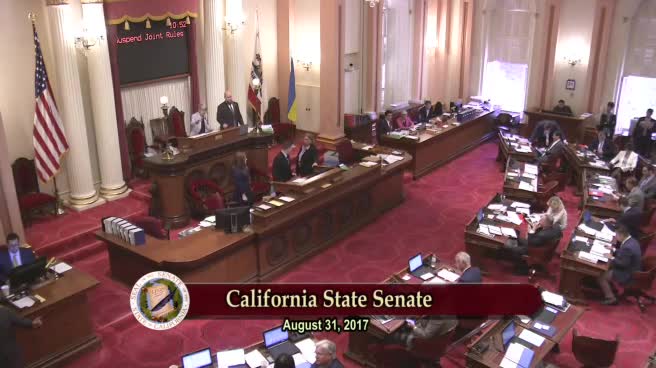
| Aug 31, 2017 | Assembly 3rd Reading AB1367 Berman By Leyva | Senate Floor |
Passed |
|
| Jun 6, 2017 | Do pass, but first be re-referred to the Committee on [Appropriations] | Senate Standing Committee on Elections and Constitutional Amendments |
Passed |
|
| May 4, 2017 | AB 1367 BERMAN Consent Calendar Second Day Regular Session | Assembly Floor |
Passed |
|
| Apr 26, 2017 | Do pass. To Consent Calendar. | Assembly Standing Committee on Appropriations |
Passed |
|
| Apr 5, 2017 | Do pass and be re-referred to the Committee on [Appropriations] with recommendation: To Consent Calendar | Assembly Standing Committee on Elections and Redistricting |
Passed |
This list shows positions taken on this bill by organizations on the date displayed, which is linked to the original source.
Positions by individuals are not included.
|
Organization
|
Position
|
Date
|
|---|---|---|
| California District Attorneys Association | ** Support | Jul 13, 2017 |
CONCURRENCE IN SENATE AMENDMENTS
CSA1 Bill Id:AB 1367
Author:(Berman)
As Amended Ver:May 22, 2017
Majority vote
ASSEMBLY: | 76-0 | (May 4, 2017) | SENATE: | 29-11 | (August 31, 2017) |
Original Committee Reference: E. & R.
SUMMARY: Provides that a person, company, organization, company official, or other organizational officer in charge of a person who circulates an initiative, referendum, or recall petition who knowingly directs an affiant to make a false affidavit or who knows or reasonably should know that an affiant has made a false affidavit concerning an initiative, referendum, or recall petition or the signatures appended thereto is punishable by a fine not exceeding $5,000, by imprisonment in a county jail not exceeding one year, or by both the fine and imprisonment.
The Senate amendments delete a provision that would have allowed a person, company, organization, official, or officer to be charged with a crime for knowingly permitting a person to make a false affidavit concerning a petition, and instead provide that it is a crime if a person, company, organization, official, or officer knows or reasonably should know that the affiant made a false affidavit and submits the section of the petition that contains the false affidavit.
EXISTING LAW provides that a person who makes a false affidavit concerning an initiative, referendum, or recall petition or the signatures appended thereto is punishable by a fine not exceeding $5,000, or by imprisonment for 16 months or two or three years or in a county jail not exceeding one year, or by both the fine and imprisonment.
FISCAL EFFECT: According to the Senate Appropriations Committee, pursuant to Senate Rule 28.8, negligible state costs.
COMMENTS: According to the author, "Under existing law, only signature gatherers face stiff penalties for making false statements on the declaration attached to the petitions they are circulating. However, those who oversee the signature gatherer can knowingly direct or permit these people to make false declarations without consequence. AB 1367 would ensure that if there is unscrupulous activity, such as false statements on declarations, all of those involved may be able to be held accountable. By making this change, the bill will strengthen the initiative process consistent with its populist roots."
Twenty-four states allow voters to enact laws through ballot initiatives. Courts have ruled that states cannot prohibit the use of paid circulators to collect signatures on a petition, concluding that such a restriction would violate the First Amendment's right of free speech (Meyer v. Grant (1988), 486 U.S. 414). As a result, it is not uncommon for petition drives to employ paid signature gatherers to collect the number of signatures necessary to qualify a measure for the ballot.
While some petition circulators are paid on an hourly or salaried basis, it is common for petition circulators to be paid based on the number of signatures that they collect. While these per-signature payments may create incentives for circulators to collect more signatures, they also may create financial incentives to commit fraud, since circulators are only paid for the signatures they collect. Under current law, when petition circulators make false or misleading statements about a proposed ballot measure, or engage in other illegal signature-gathering tactics in an attempt to get voters to sign a petition, those circulators may face criminal penalties. It is unclear, however, whether that misconduct can result in signatures being invalidated. Furthermore, state law generally does not create liability for the supervisors of petition circulators when those circulators violate the law.
Since state law does not explicitly provide for supervisors to be responsible for the misconduct of the petition circulators that they supervise, and since state law does not explicitly provide for signatures to be disqualified when those signatures are obtained through improper means, it could be argued that state law lacks sufficient incentives for supervisors of signature gathering drives to ensure that their circulators are collecting signatures in accordance with state law. By holding the employers and supervisors accountable for knowingly allowing misconduct by the signature gatherers under their supervision, this bill may help improve accountability and enforcement of the state's laws governing the collection of signatures on petitions. Holding the employers of signature gatherers accountable may enable easier tracking and subsequent prosecution, especially in cases when the signature gatherers are from out of state.
The Senate amendments clarify the conduct of supervisors of petition circulators that can result in criminal charges under this bill, generally allowing such charges only if the supervising entity knowingly directs the circulator to make a false affidavit, or if the entity knows or reasonably should know about the false affidavit and the entity nonetheless submits the section of the petition that contains the false affidavit. This bill, as amended in the Senate, is generally consistent with Assembly actions.
Analysis Prepared by: Bish Paul / E. & R. / (916) 319-2094 FN: 0001077
Office of Senate Floor Analyses (916) 651-1520 Fax: (916) 327-4478 | AB |
THIRD READING
Bill No: AB 1367
:
SENATE ELECTIONS & C.A. COMMITTEE: 4-0, 6/6/17
AYES: Anderson, Allen, Hertzberg, Leyva
NO VOTE RECORDED: Stern
SENATE APPROPRIATIONS COMMITTEE: Senate Rule 28.8
ASSEMBLY FLOOR: 76-0, 5/4/17 (Consent) - See last page for vote
DIGEST:
This bill makes it a crime for specified persons or organizations to knowingly direct or permit someone who circulates initiative, referendum, or recall petitions to make false affidavits concerning the petitions.
ANALYSIS: Existing law provides that any person who makes any false affidavit concerning any initiative, referendum, or recall petition, or the signatures appended thereto, is guilty of a crime punishable by a fine not exceeding $5,000, or by imprisonment in the state prison for 16 months or two or three years, or in a county jail not exceeding one year, or by both the fine and imprisonment.
This bill provides that a person, company, organization, company official, or other organizational officer in charge of a person who circulates an initiative, referendum, or recall petition and who does either of the following is punishable by a fine not exceeding $5,000, or by imprisonment in a county jail not exceeding one year, or by both the fine and imprisonment:
- Knowingly directs an affiant to make a false affidavit concerning an initiative, referendum, or recall petition or the signatures appended to an initiative, referendum, or recall petition.
- Knows or reasonably should know that an affiant has made a false affidavit concerning an initiative, referendum, or recall petition or the signatures appended to an initiative, referendum, or recall petition and submits the section of the petition that contains the false affidavit.
Background
Paid Petition Circulators. According to a Los Angeles Times report from August 2016, temporary workers hired by a handful of private firms collect millions of signatures to qualify initiatives for the ballot. The report indicates that according to campaign finance records filed with the Secretary of State (SOS), in 2016 alone, groups in California spent $45.8 million gathering signatures for the 15 measures that qualified by petition, an average of $4 a signature.
Misleading Voters. In the past few years, there have been reported cases of deliberate efforts to mislead voters by signature gatherers, but Senate Elections and Constitutional Committee staff is unaware of any recent situations in which signature gatherers were prosecuted for misleading voters. According to an investigative report by The Mercury News in 2015, the California Apartment Association reportedly paid signature gatherers as much as $12 per signature for an anti-rent control initiative in Richmond. The report indicated that paid petition gatherers – many flown in from out of state – who canvassed the East Bay area were willfully misleading voters by characterizing their campaign as “pro renter.”
The same report also cites two other cases. In 2014, signature gatherers for a Waste Management-sponsored petition that gave the company exclusive rights to haul Oakland's garbage and recycling were reported to be misrepresenting the benefits of the proposed initiative by saying a competing plan by the city would raise rates. Another reported case of voter misinformation involved petitioners for the 2014 statewide initiative to divide California into six states falsely claiming that the initiative would keep the state intact in order to gather signatures.
Comments
- According to the author, under existing law, only signature gatherers face stiff penalties for making false statements on the declaration attached to the petitions they are circulating. However, those who oversee the signature gatherer can knowingly direct or permit these people to make false declarations without consequence. AB 1367 would ensure that if there is unscrupulous activity, such as false statements on declarations, all of those involved may be able to be held accountable. By making this change, the bill will strengthen the initiative process consistent with its populist roots.
- Enforcement of State Laws Governing Signature Gathering: Twenty-four states allow voters to enact laws through ballot initiatives. Courts have ruled that states cannot prohibit the use of paid circulators to collect signatures on a petition, concluding that such a restriction would violate the First Amendment's right of free speech (Meyer v. Grant (1988), 486 U.S. 414). As a result, it is not uncommon for petition drives to employ paid signature gatherers to collect the number of signatures necessary to qualify a measure for the ballot.
While some petition circulators are paid on an hourly or salaried basis, it is common for petition circulators to be paid based on the number of signatures that they collect. While these per-signature payments may create incentives for circulators to collect more signatures, they also may create financial incentives to commit fraud, since circulators are only paid for the signatures they collect. Under existing law, when petition circulators make false or misleading statements about a proposed ballot measure, or engage in other illegal signature-gathering tactics in an attempt to get voters to sign a petition, those circulators may face criminal penalties. It is unclear, however, whether that misconduct can result in signatures being invalidated. Furthermore, state law generally does not create liability for the supervisors of petition circulators when those circulators violate the law.
Since state law does not explicitly provide for supervisors to be responsible for the misconduct of the petition circulators that they supervise, and since state law does not explicitly provide for signatures to be disqualified when those signatures are obtained through improper means, it could be argued that state law lacks sufficient incentives for supervisors of signature gathering drives to ensure that their circulators are collecting signatures in accordance with state law. By holding the employers and supervisors accountable for knowingly allowing misconduct by the signature gatherers under their supervision, AB 1367 may help improve accountability and enforcement of the state's laws governing the collection of signatures on petitions. Holding the employers of signature gatherers accountable may enable easier tracking and subsequent prosecution, especially in cases when the signature gatherers are from out of state.
Related/Prior Legislation
SB 1094 (Hernandez, 2016) would have made numerous significant changes to provisions of state law governing state initiatives, including providing that the signatures on a state initiative petition section are invalid if they are solicited and submitted by a person who engages in intentional fraud, misrepresentation, or other illegal conduct concerning the circulation of the petition, as specified. SB 1094 was vetoed by the Governor.
SB 1686 (Denham, 2008), which was substantially similar to this bill, was approved unanimously by both houses of the Legislature, but was vetoed by Governor Schwarzenegger. The Governor's veto message did not express any policy objections to the bill, but instead stated that due to "[t]he historic delay in passing the 2008-2009 State Budget," he was "only signing bills that are the highest priority for California," and that SB 1686 "[did] not meet that standard."
AB 857 (Fong, 2013) would have made numerous significant changes to provisions of state law governing state initiatives similar to those proposed by SB 1094. AB 857 was vetoed by the Governor.
AB 1914 (Torrico, 2008) would have made a proponent of an initiative, referendum, or recall civilly liable for unlawful conduct by circulators of the initiative, referendum, or recall petition unless the proponent notified the elections official when becoming aware of that unlawful conduct. AB 1914 was held on the Senate Appropriations Committee's suspense file.
FISCAL EFFECT: Appropriation: Fiscal Com.: Local:
California District Attorneys Association
OPPOSITION: (Verified 6/26/17)
None received
ASSEMBLY FLOOR: 76-0, 5/4/17
AYES: Acosta, Aguiar-Curry, Arambula, Baker, Berman, Bloom, Bocanegra, Bonta, Brough, Burke, Caballero, Calderon, Cervantes, Chau, Chávez, Chen, Chiu, Choi, Chu, Cooley, Cooper, Cunningham, Dababneh, Dahle, Daly, Eggman, Flora, Fong, Frazier, Friedman, Gallagher, Eduardo Garcia, Gipson, Gloria, Gomez, Gonzalez Fletcher, Gray, Grayson, Harper, Holden, Irwin, Jones-Sawyer, Kalra, Kiley, Lackey, Levine, Limón, Low, Maienschein, Mathis, Mayes, McCarty, Medina, Melendez, Mullin, Muratsuchi, Nazarian, Obernolte, O'Donnell, Quirk, Quirk-Silva, Reyes, Ridley-Thomas, Rodriguez, Rubio, Salas, Santiago, Steinorth, Mark Stone, Thurmond, Ting, Voepel, Waldron, Weber, Wood, Rendon
NO VOTE RECORDED: Travis Allen, Bigelow, Cristina Garcia, Patterson
7/13/17 8:35:54
**** END ****
SENATE COMMITTEE ON
ELECTIONS AND CONSTITUTIONAL AMENDMENTS
Senator Henry Stern, Chair
2017 - 2018 Regular
Bill No: 1367 Hearing Date: 6/6/17
Author: | Berman | ||
Version: |
| ||
Urgency: | Fiscal: | ||
Consultant: | |||
Subject:
DIGEST
This bill makes it a crime for specified persons or organizations to knowingly direct or permit someone who circulates initiative, referendum, or recall petitions to make false affidavits concerning the petitions.
ANALYSIS
Existing law:
- Provides that any person who makes any false affidavit concerning any initiative, referendum, or recall petition, or the signatures appended thereto, is guilty of a crime punishable by a fine not exceeding $5,000, or by imprisonment in the state prison for 16 months or two or three years, or in a county jail not exceeding one year, or by both the fine and imprisonment.
This bill:
- Provides that a person, company, organization, company official, or other organizational officer in charge of a person who circulates an initiative, referendum, or recall petition and who does either of the following is punishable by a fine not exceeding $5,000, or by imprisonment in a county jail not exceeding one year, or by both the fine and imprisonment:
- Knowingly directs an affiant to make a false affidavit concerning an initiative, referendum, or recall petition or the signatures appended to an initiative, referendum, or recall petition.
- Knows or reasonably should know that an affiant has made a false affidavit concerning an initiative, referendum, or recall petition or the signatures appended to an initiative, referendum, or recall petition and submits the section of the petition that contains the false affidavit.
BACKGROUND
Paid Petition Circulators. According to a Los Angeles Times report from August 2016, temporary workers hired by a handful of private firms collect millions of signatures to qualify initiatives for the ballot. The report indicates that according to campaign finance records filed with the Secretary of State (SOS), in 2016 alone, groups in California spent $45.8 million gathering signatures for the 15 measures that qualified by petition, an average of $4 a signature.
Misleading Voters: In the past few years, there have been reported cases of deliberate efforts to mislead voters by signature gatherers, but committee staff is unaware of any recent situations in which signature gatherers were prosecuted for misleading voters. According to an investigative report by The Mercury News in 2015, the California Apartment Association reportedly paid signature gatherers as much as $12 per signature for an anti-rent control initiative in Richmond. The report indicated that paid petition gatherers – many flown in from out of state – who canvassed the East Bay area were willfully misleading voters by characterizing their campaign as “pro renter.”
The same report also cites two other cases. In 2014, signature gatherers for a Waste Management-sponsored petition that gave the company exclusive rights to haul Oakland's garbage and recycling were reported to be misrepresenting the benefits of the proposed initiative by saying a competing plan by the city would raise rates. Another reported case of voter misinformation involved petitioners for the 2014 statewide initiative to divide California into six states falsely claiming that the initiative would keep the state intact in order to gather signatures.
COMMENTS
- According to the author: Under existing law, only signature gatherers face stiff penalties for making false statements on the declaration attached to the petitions they are circulating. However, those who oversee the signature gatherer can knowingly direct or permit these people to make false declarations without consequence. AB 1367 would ensure that if there is unscrupulous activity, such as false statements on declarations, all of those involved may be able to be held accountable. By making this change, the bill will strengthen the initiative process consistent with its populist roots.
- Enforcement of State Laws Governing Signature Gathering: Twenty-four states allow voters to enact laws through ballot initiatives. Courts have ruled that states cannot prohibit the use of paid circulators to collect signatures on a petition, concluding that such a restriction would violate the First Amendment's right of free speech (Meyer v. Grant (1988), 486 U.S. 414). As a result, it is not uncommon for petition drives to employ paid signature gatherers to collect the number of signatures necessary to qualify a measure for the ballot.
While some petition circulators are paid on an hourly or salaried basis, it is common for petition circulators to be paid based on the number of signatures that they collect. While these per-signature payments may create incentives for circulators to collect more signatures, they also may create financial incentives to commit fraud, since circulators are only paid for the signatures they collect. Under existing law, when petition circulators make false or misleading statements about a proposed ballot measure, or engage in other illegal signature-gathering tactics in an attempt to get voters to sign a petition, those circulators may face criminal penalties. It is unclear, however, whether that misconduct can result in signatures being invalidated. Furthermore, state law generally does not create liability for the supervisors of petition circulators when those circulators violate the law.
Since state law does not explicitly provide for supervisors to be responsible for the misconduct of the petition circulators that they supervise, and since state law does not explicitly provide for signatures to be disqualified when those signatures are obtained through improper means, it could be argued that state law lacks sufficient incentives for supervisors of signature gathering drives to ensure that their circulators are collecting signatures in accordance with state law. By holding the employers and supervisors accountable for knowingly allowing misconduct by the signature gatherers under their supervision, AB 1367 may help improve accountability and enforcement of the state's laws governing the collection of signatures on petitions. Holding the employers of signature gatherers accountable may enable easier tracking and subsequent prosecution, especially in cases when the signature gatherers are from out of state.
RELATED/PRIOR LEGISLATION
SB 1094 (Hernandez of 2016), would have made numerous significant changes to provisions of state law governing state initiatives, including providing that the signatures on a state initiative petition section are invalid if they are solicited and submitted by a person who engages in intentional fraud, misrepresentation, or other illegal conduct concerning the circulation of the petition, as specified. SB 1094 was vetoed by the Governor.
SB 1686 (Denham of 2008), which was substantially similar to this bill, was approved unanimously by both houses of the Legislature, but was vetoed by Governor Schwarzenegger. The Governor's veto message did not express any policy objections to the bill, but instead stated that due to "[t]he historic delay in passing the 2008-2009 State Budget," he was "only signing bills that are the highest priority for California," and that SB 1686 "[did] not meet that standard."
AB 857 (Fong of 2013), would have made numerous significant changes to provisions of state law governing state initiatives similar to those proposed by SB 1094. AB 857 was vetoed by the Governor.
AB 1914 (Torrico of 2008), would have made a proponent of an initiative, referendum, or recall civilly liable for unlawful conduct by circulators of the initiative, referendum, or recall petition unless the proponent notified the elections official when becoming aware of that unlawful conduct. AB 1914 was held on the Senate Appropriations Committee's suspense file.
PRIOR ACTION
Assembly Floor: | 76 - 0 |
Assembly Appropriations Committee: | 16 - 0 |
Assembly Committee: | 7 - 0 |
POSITIONS
Sponsor: Author
Support: California District Attorneys Association
Oppose: None received
-- END --
Date of Hearing: April 26, 2017
ASSEMBLY COMMITTEE ON APPROPRIATIONS
Lorena Gonzalez Fletcher, Chair
ABPCA Bill Id:AB 1367
Author:(Berman) – As Introduced Ver:February 17, 2017
Policy Committee: | Elections and Redistricting | Vote: | 7 - 0 |
|
| ||
|
|
Urgency: No State Mandated Local Program: Yes Reimbursable: No
SUMMARY:
This bill makes it a crime to knowingly direct or permit a person to make a false affidavit concerning an initiative, referendum, or recall petition, or the associated signatures collected to qualify the initiative, referendum, or recall petition for the ballot. This bill specifies that this crime is punishable by a fine not to exceed $5,000, and/or by imprisonment in a county jail not to exceed one year.
FISCAL EFFECT:
Potential nonreimbursable local costs for incarceration, partially offset to some extent by fine revenues.
COMMENTS:
- Background. Existing law provides that any person who makes any false affidavit concerning any initiative, referendum, or recall petition, or the signatures appended thereto, is punishable by a fine not exceeding $5,000, and/or by imprisonment in the state prison for 16 months or two or three years or in a county jail not exceeding one year.
- Purpose. According to the author, “under existing law, only signature gatherers face stiff penalties for making false statements on the declaration attached to the petitions they are circulating. However, those who oversee the signature gatherer can knowingly direct or permit these people to make false declarations without consequence. AB 1367 would ensure that if there is unscrupulous activity, such as false statements on declarations, all of those involved may be able to be held accountable. By making this change, the bill will strengthen the initiative process consistent with its populist roots.”
Analysis Prepared by: Jessica Peters / APPR. / (916) 319-2081
Date of Hearing: April 5, 2017
ASSEMBLY COMMITTEE ON ELECTIONS AND REDISTRICTING
Evan Low, Chair
ABPCA Bill Id:AB 1367 (
Author:Berman) – As Introduced Ver:February 17, 2017
SUBJECT: Improper signature-gathering tactics.
SUMMARY: Provides that a person, company, organization, company official, or other organizational officer in charge of a person who circulates an initiative, referendum, or recall petition who knowingly directs or permits the person to make a false affidavit concerning an initiative, referendum, or recall petition or the signatures appended thereto is punishable by a fine not exceeding $5,000, by imprisonment in a county jail not exceeding one year, or by both the fine and imprisonment.
EXISTING LAW provides that any person who makes any false affidavit concerning any initiative, referendum, or recall petition, or the signatures appended thereto, is punishable by a fine not exceeding $5,000, or by imprisonment in the state prison for 16 months or two or three years or in a county jail not exceeding one year, or by both the fine and imprisonment.
FISCAL EFFECT: Unknown. State-mandated local program; contains a crimes and infractions disclaimer.
COMMENTS:
- Purpose of the Bill: According to the author:
Under existing law, only signature gatherers face stiff penalties for making false statements on the declaration attached to the petitions they are circulating. However, those who oversee the signature gatherer can knowingly direct or permit these people to make false declarations without consequence. AB 1367 would ensure that if there is unscrupulous activity, such as false statements on declarations, all of those involved may be able to be held accountable. By making this change, the bill will strengthen the initiative process consistent with its populist roots.
- History of the Initiative Process: Californians adopted the initiative process on October 10, 1911, becoming the tenth state to adopt this form of direct democracy. Citizens' initiatives started as a revolt against Legislatures that were perceived to be beholden to railroads and special interests. Direct democracy was intended as a way for people to enact new laws or repeal existing statutes they believed were unfair. According to the Secretary of State’s records, between 1912 and 2016, a total of 1952 initiatives have been circulated for signature, of which 376 have qualified for the ballot, and 132 have been approved by the voters.
According to a Los Angeles Times report from August 2016, temporary workers hired by a handful of private firms collect millions of signatures to qualify initiatives for the ballot. The report indicates that according to campaign finance records filed with the Secretary of State, in 2016 alone, groups in California spent $45.8 million gathering signatures for the 15 measures that qualified by petition, an average of $4 a signature.
- Enforcement of State Laws Governing Signature Gathering: Twenty-four states allow voters to enact laws through ballot initiatives. Courts have ruled that states cannot prohibit the use of paid circulators to collect signatures on a petition, concluding that such a restriction would violate the First Amendment's right of free speech (Meyer v. Grant (1988), 486 U.S. 414). As a result, it is not uncommon for petition drives to employ paid signature gatherers to collect the number of signatures necessary to qualify a measure for the ballot.
While some petition circulators are paid on an hourly or salaried basis, it is common for petition circulators to be paid based on the number of signatures that they collect. While these per-signature payments may create incentives for circulators to collect more signatures, they also may create financial incentives to commit fraud, since circulators are only paid for the signatures they collect. Under current law, when petition circulators make false or misleading statements about a proposed ballot measure, or engage in other illegal signature-gathering tactics in an attempt to get voters to sign a petition, those circulators may face criminal penalties. It is unclear, however, whether that misconduct can result in signatures being invalidated. Furthermore, state law generally does not create liability for the supervisors of petition circulators when those circulators violate the law.
Since state law does not explicitly provide for supervisors to be responsible for the misconduct of the petition circulators that they supervise, and since state law does not explicitly provide for signatures to be disqualified when those signatures are obtained through improper means, it could be argued that state law lacks sufficient incentives for supervisors of signature gathering drives to ensure that their circulators are collecting signatures in accordance with state law. By holding the employers and supervisors accountable for knowingly allowing misconduct by the signature gatherers under their supervision, AB 1367 may help improve accountability and enforcement of the state's laws governing the collection of signatures on petitions. Holding the employers of signature gatherers accountable may enable easier tracking and subsequent prosecution, especially in cases when the signature gatherers are from out of state. - Misleading Voters: In the past few years, there have been reported cases of deliberate efforts to mislead voters by signature gatherers, but committee staff is unaware of any recent situations in which signature gatherers were prosecuted for misleading voters. According to an investigative report by The Mercury News in 2015, the California Apartment Association reportedly paid signature gatherers as much as $12 per signature for an anti-rent control initiative in Richmond. The report indicated that paid petition gatherers – many flown from out of state – who canvassed the East Bay area were willfully misleading voters by characterizing their campaign as “pro renter.”
The same report also cites two other cases. In 2014, signature gatherers for a Waste Management-sponsored petition that gave the company exclusive rights to haul Oakland's garbage and recycling were reported to be misrepresenting the benefits of the proposed initiative by saying a competing plan by the city would raise rates. Another reported case of voter misinformation involved petitioners for the 2014 statewide initiative to divide California into six states falsely claiming that the initiative would keep the state intact in order to gather signatures.
- Previous Legislation: SB 1094 (Hernandez) of 2016, would have made numerous significant changes to provisions of state law governing state initiatives, including providing that the signatures on a state initiative petition section are invalid if they are solicited and submitted by a person who engages in intentional fraud, misrepresentation, or other illegal conduct concerning the circulation of the petition, as specified. SB 1094 was vetoed by Governor Brown.
AB 857 (Fong) of 2013, would have made numerous significant changes to provisions of state law governing state initiatives similar to those proposed by SB 1094. AB 857 was vetoed by Governor Brown.
AB 1914 (Torrico) of 2008, would have made a proponent of an initiative, referendum, or recall civilly liable for unlawful conduct by circulators of the initiative, referendum, or recall petition unless the proponent notified the elections official when becoming aware of that unlawful conduct. AB 1914 was held on the Senate Appropriations Committee's suspense file.
SB 1686 (Denham) of 2008, which was substantially similar to this bill, was approved unanimously by both houses of the Legislature, but was vetoed by Governor Schwarzenegger. The Governor's veto message did not express any policy objections to the bill, but instead stated that due to "[t]he historic delay in passing the 2008-2009 State Budget," he was "only signing bills that are the highest priority for California," and that SB 1686 "[did] not meet that standard."
REGISTERED SUPPORT / OPPOSITION:
Support
California District Attorneys Association
Opposition
None on File.
Analysis Prepared by: Bish Paul / E. & R. / (916) 319-2094
Discussed in Hearing
View Older Hearings
Bill Author

Bill Co-Author(s):